Realignment Rumors: On Today’s Pac-10/Big 12 Rumblings

Posted by jstevrtc on June 3rd, 2010

Andrew Murawa is the RTC correspondent for the Pac-10 and Mountain West Conferences and an occasional contributor.

That sound you just heard may have been the proverbial first domino creaking a little. Today, Orangebloods.com columnist Chip Brown reported that, in advance of the Pac-10 meetings which begin this weekend in San Francisco, the Pac-10 is set to invite six Big 12 schools to join in the creation of the first superconference of the new era of college sports. Brown reports that Colorado, Oklahoma, Oklahoma State, Texas, Texas A&M and Texas Tech will be the schools invited, leaving Baylor, Iowa State, Kansas, Kansas State, Missouri and Nebraska behind. All this comes on the heels of the Big 12 meetings, wrapping up on Friday, which opened with a plea by commissioner Dan Beebe for a united front among member institutions and a commitment to the conference. Obviously, this rumor has huge ramifications for the Big 12 and the Pac-10, but the ripple effect of such a move would be felt across the college sports landscape. We’ll take a look here at the specifics of this rumor and how this rumor could affect other conferences around the country.

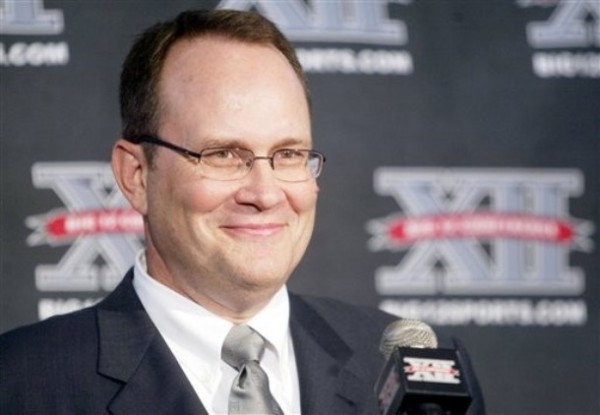
Why is this man smiling? Beebe has his work cut out for him. (AP/Mike Fuentes)

The Pac-16. Or Big 16. Or the Great New Superconference

According to the Brown article, which cites multiple unnamed sources, the new conference would be divided into two eight-team divisions with the six Big 12 schools joining Arizona and Arizona State in an Eastern or Inland Division and Cal, Oregon, Oregon State, Stanford, UCLA, USC, Washington and Washington State forming the Western or Coastal Division. Then, with the aid of Fox Sports Net, already an operating partner with the Big Ten Network and television partner with both the Pac-10 and Big 12 conferences, the league would create its own cable network akin to the BTN. Perhaps coupled with new television contracts with ABC/ESPN, Fox, CBS, Turner or any other bidders, the projected revenues of the new conference (which would encompass seven of the top 20 television markets in the country) could rival those of the SEC or even the Big Ten.

Read the rest of this entry »

Share this story

Dominos Falling Into Place: ACC Signs Television Deal With ESPN

Posted by rtmsf on May 19th, 2010

Andrew Murawa is the RTC correspondent for the Mountain West and Pac-10 conferences and an occasional contributor.

Although not official yet, it has been reported that ESPN and the ACC have come to an agreement on a new TV deal, with ESPN reportedly outbidding FoxSportsNet to the tune of $1.86 billion over twelve years for exclusive rights to ACC football and basketball. The new deal for the ACC will more than double their previous television revenues from their contracts with Raycom and ESPN; the previous ACC deal was for about $67 million per season, while the new deal will bring the ACC about $155 million per season.

The size of the new contract is seen as a major victory for the ACC, and is rumored to be the result of a bidding war between ESPN and Fox. However, Fox did not get a chance to match ESPN’s final offer because the ACC found ESPN’s brand to be too attractive to lose out on should ESPN drop out of the bidding. As for Raycom, they are expected to continue broadcasting some ACC games, which they will buy from ESPN (much like ESPN bought the rights to individual games from Raycom in the past), but the ACC Tournament will likely be exclusive to ESPN in the future.  An interesting side note of the new TV deal: Jim Young of ACCSports.com reports that there will be a new name for the league’s syndication package with Raycom: the ACC Network. However, for now this will not be a business venture similar to the remarkably successful Big Ten Network, rather just the regional syndication of games shown on Raycom.

As no official announcement has been made by either party, there are likely continuing negotiations on the fine print, and plenty of questions remain. With rumors swirling about ACC teams perhaps jumping to one conference or another (Maryland and Virginia are among the most recently rumored schools that the Big Ten is interested in, while schools like Clemson, Florida State, Georgia Tech and Miami have been mentioned in conjuction with possible SEC expansion), there will potentially be binding clauses in the contract allowing ESPN buyout options should the makeup of the conference change during the lifetime of the deal. There are also questions as to when and where ESPN will televise games and the fate of things like FSN’s ACC Sunday Night Hoops feature. It is possible that Fox will continue to purchase games from ESPN for broadcast on their networks. Once a final announcement is delivered, hopefully we’ll get answers to these things.

Read the rest of this entry »

Share this story

The Big 12 And Pac-10 — An Alliance?

Posted by jstevrtc on May 12th, 2010

Andrew Murawa is the RTC correspondent for the Pac-10 and Mountain West Conferences and an occasional contributor.

Much has been made of the Big Ten’s interest in expanding beyond their current 11 teams and all the consequences that such expansion could have on other conferences throughout the country. But, given that the other BCS conferences are multi-million dollar organizations and that the continued competitiveness and even existence of these organizations may depend on their actions both before and after the Big Ten comes to its decision, it should come as no surprise that conference commissioners and athletic directors of their respective member institutions are considering their options in a game of moves and countermoves. It is probably no coincidence that the first speculative report to surface indicating that the Big Ten has made its choices and offered up its first invitations came on the heels of reports at the end of last week that the Big 12 and Pac-10 had met to discuss a possible alliance, a big innovation that makes a lot of sense for both conferences.

Big 12/Pac-10

Representatives from the two conferences met in Phoenix last Wednesday in what Big 12 commissioner Dan Beebe described as “an informal meeting” to discuss a possible alliance. The two main planks of this possible alliance are rumored to be scheduling preferences in the future and, most importantly, joint television negotiations and ventures. As rumors have swirled of the Big Ten and possibly SEC poaching some Big 12 teams, and with the Pac-10 exploring its own expansion options, a “strategic alliance,” between the two conferences, as Pac-10 commissioner Larry Scott put it, could be a boon to both.

The conference generals will do what they have to do in the spirit of self-preservation.

Aside from the potential benefits that an alliance between the conferences could bring, there is a lot of common ground between the two, as they are the only two BCS conferences made up entirely of member schools located west of the Mississippi and Pac-10 deputy commissioner Kevin Weiberg was Beebe’s predecessor at the Big 12. Weiberg was also instrumental in helping launch the Big Ten Network, a bit of experience that may come in handy as these two conferences discuss possibly launching a network of their own, a joint venture between the two that would allow them to show more (or potentially all) of their football and basketball games that don’t get picked up by national or regional networks.

Read the rest of this entry »

Share this story

On Conference Realignment and the Consolidation of Power

Posted by rtmsf on April 27th, 2010

Andrew Murawa is the RTC correspondent for the Pac-10 and Mountain West Conferences and an occasional contributor.

Overview

College sports fans dodged a major bullet last week when the NCAA announced that the men’s basketball tournament would only be expanding to 68 entrants, rather than the 96-team field that had been widely rumored. However, the face of college sports as we know it is still in jeopardy, as the specter of widespread conference realignment still looms, with the much-speculated-upon expansion of the Big Ten as the key domino that could start a wave of changes leaving the college sports landscape drastically altered.

The elephant in the room issue is the consolidation of power away from the existing six BCS conferences and into a smaller number of “superconferences” with the possibility looming that once any realignment sorts itself out and we’ve got four 16-team conferences, those conferences break away from the NCAA and form their own structure. As Kansas athletic director Lew Perkins puts it: “At some time, the major conferences are going to have their own quasi-NCAA. They’re going to do their own thing.” Former Syracuse AD Jake Crouthamel was even more specific, saying that eventually the Big Ten, ACC, SEC and Pac-10 would expand and ultimately leave the NCAA, even to the point of forming their own competing basketball tournament: “If you look at the history of what’s been going on for the last decade, I think it’s leading in that direction.”
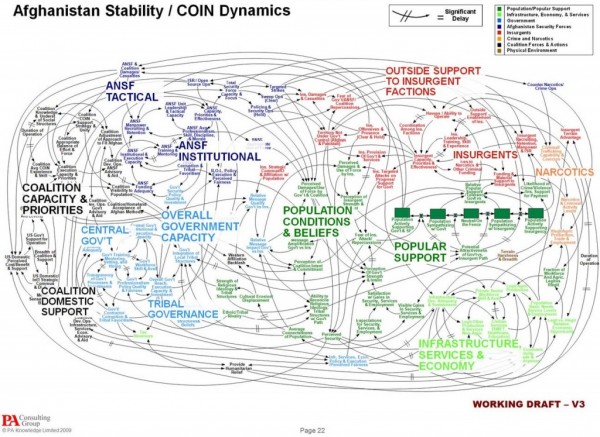
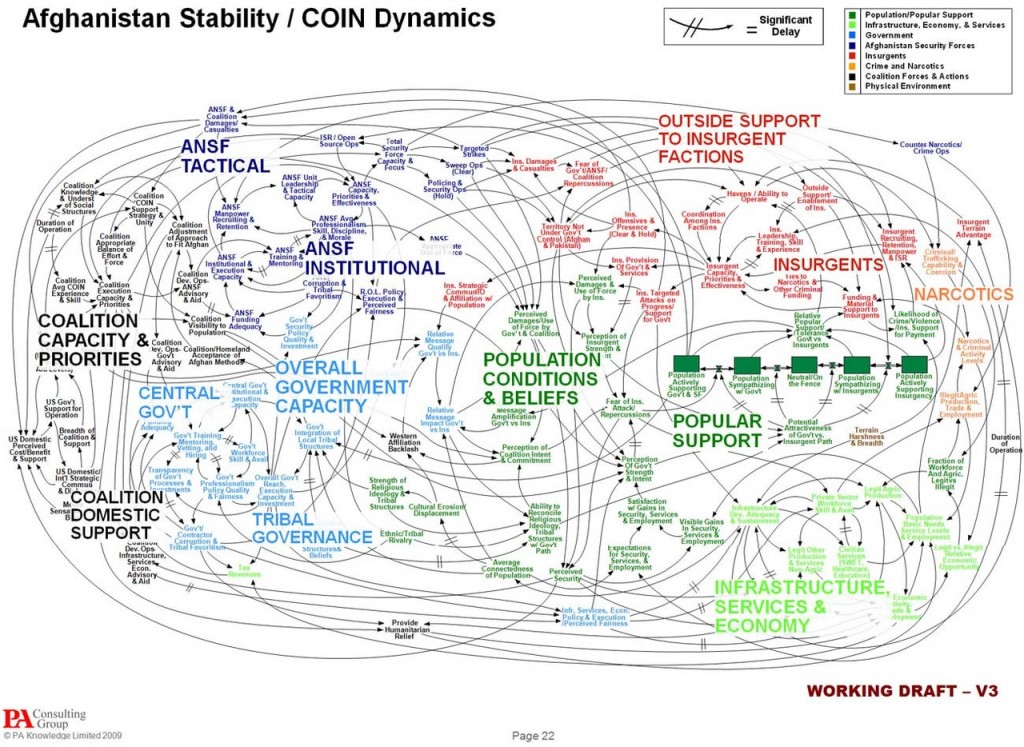
We Promise It Won't Get This Complicated

The potential expansion of conferences detailed below is not the first shot fired in the consolidation of power, but the next step in an already-existing series of moves that has widened the financial gap between the biggest athletic departments and the rest of the supporting cast. And, as those at the top get bigger and bigger, the underdogs not only fall behind in terms of funding, but they may ultimately be left completely behind: no more Boise State and Utah to steal BCS bowl spots from big-money institutions during the winter, and no more Butler and George Mason sneaking into the Final Four in the spring. While that type of doomsday scenario is still several decision points down the line, what happens in the Big Ten over the next twelve months or so could be the monumental tipping point to drastically move things in that direction.

At present, the most widely rumored targets for Big Ten expansion are Pittsburgh, Rutgers and Syracuse from the Big East and Nebraska and Missouri from the Big 12, although as always occurs when the Big Ten thinks about expansion, Notre Dame is in the mix and likely their number one choice. With the Pac-10 also in the midst of contemplating expansion within the next year, these moves could send a ripple effect throughout all of the Division I conferences causing some conferences to get bigger, others to contract, and even some to disappear.  While the specifics remain conjecture and speculation at this point, there are enough common-sense scenarios out there to fuel theories to create one of the most helter-skelter flowcharts ever seen. We’ll take a look conference-by-conference at what could happen, and what kind of fallout might be created by each move, starting with our eleven midwestern friends.

Big Ten

Big Ten commissioner Jim Delany confirmed last Wednesday that his conference is considering not only expanding to 12, but also perhaps even 14 or 16 teams. While some of the rationale for the expansion would be the addition of a football championship game for more revenue, the accumulation of more content and more markets for the Big Ten Network is probably more important to their plans. Delany noted that while discussions for this expansion are ongoing, the 12-18 month timetable that was originally announced in December is still the current framework.

Starting with the first domino, there is little doubt that the Fighting Irish would be the Big Ten’s first choice and the most logical fit for the conference, in terms of geography, academics and, frankly, football. Notre Dame and the Big Ten have flirted with each other many times in the past, but there is likely a greater chance that they will consummate their relationship this time around than any time before. For the Big Ten, the attraction is obvious: a huge fan base in historic “Big Ten country,” a ton of athletic history, and excellent academics. For Notre Dame, however, the question is a lot tougher. The Irish have been a football independent throughout their history and current athletic director Jack Swarbrick recently said that their “highest priority is maintaining football independence.” Notre Dame is currently in the middle of a television contract with NBC for the rights to broadcast home football games, a contract that runs through 2015 and an issue that will need to be confronted somehow if the Irish are eventually invited and accept Big Ten membership. The amount of the NBC deal (about $15 million annually) is not prohibitive enough to prevent them from considering membership in the Big Ten, whose member schools currently receive about $20 million annually from their television contracts. It is even possible that if the Big Ten and Notre Dame can come to an agreement, all this expansion talk will end right there: Notre Dame joins up, the Big Ten stops at 12 teams, the Big East poaches a team from CUSA like Central Florida as an additional football school and geographic partner to South Florida or a basketball-only school from the A-10 like Rhode Island or Massachusetts and the end-of-the-world scenario is averted. At present, however, it is being reported that Notre Dame is not being considered in the Big Ten’s expansion plans (a report that nobody in their right mind believes), but if Notre Dame is interested, the Big Ten will certainly be interested as well.
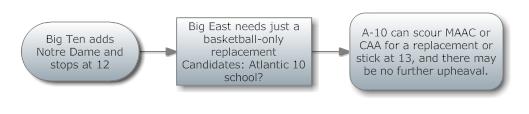
Figure 1: Big Ten Best Case Scenario

However, it is also realistic that with or without Notre Dame, the Big Ten is aiming for 14 or 16 teams to become the first superconference. While the addition of teams such as Missouri and Nebraska makes the most geographic sense, this expansion thing is not really about logic but about dollars, and Delany seems most interested in all the potential viewers that the bigger east coast markets present — notably Rutgers and Syracuse, but also Pittsburgh and potentially Connecticut. Adding three or even all four of those schools would effectively kill Big East football as we know it and potentially damage the Big East basketball enough to persuade a fence-sitting Notre Dame to leap off onto the Big Ten side as well. Swarbick himself admitted in March that “there are things that are large enough to challenge our ability to remain independent and remain in the Big East.” All four (or even three) of those flagship Big East programs bolting for the Big Ten could be one of those “large enough” things.

Read the rest of this entry »

Share this story

Step Right Up For the Brad Stevens Sweepstakes

Posted by rtmsf on April 7th, 2010

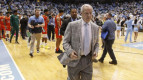
Forget the Coach K to the New Jersey Nets rumors (seriously, how cool would it be to watch Krzyzewski turn down increasingly ridiculous offers…  $15M: nah.  $25M: no way.  $50M: sure I’ll think about it.  $100M: ok, but only if you throw in something for Collins and Wojo.), the hottest coaching commodity that we’ve seen in a great number of years is none other than Butler’s 33-year old wunderkind, Brad Stevens.  Everyone in college basketball circles would love to be in his position right now, with a limitless number of suitors and a potential preseason top-five team returning in 2010-11.  If you’re Stevens and you decide to leave, you can ask your new employer for the moon; if you’re him and you decide to stay, you can ask your current employer for Venus.  No matter what his final decision will be, he can make demands that few ADs, Barry Collier included, can afford to turn down. 

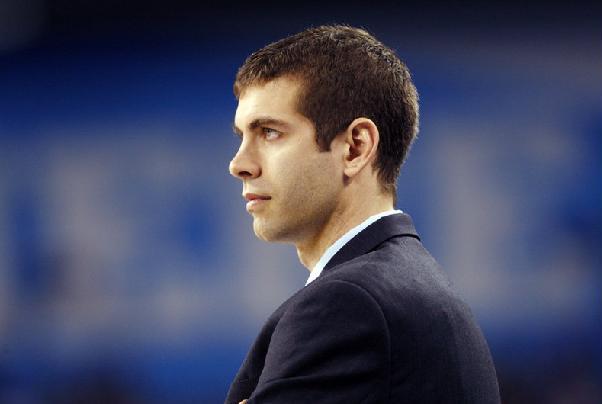
The Butler Money Man (Indy Star/R. Scheer)

Given that environment, there are currently three open positions with enough name recognition, cash and prestige to lure Stevens away from his home state of Indiana.  Let’s break down each of those situations plus a fourth alternative of staying at Butler for a while longer. 

Oregon.  Oregon has made no bones about its desire to get a big name to replace Ernie Kent this year.  Tom Izzo and Tubby Smith have already reportedly turned down the Ducks and Phil Knight’s mattress stuffed with cash, but both of those guys are old-timers (relatively speaking) who have climbed the mountaintop before.  Stevens is 33 years old and makes a good living at Butler (~$400k annually), but he has two young children and when you’re facing the prospect of generational wealth as he would at UO (~$2-3M), it clouds the somewhat feel-good picture of staying at Butler for the ‘fit.’

  • Pluses: Obviously, money and top-rate facilities in the form of the brand-new Matthew Knight Arena (opening Winter 2010-11) and the adjoining practice facility.  A commitment to basketball through Phil Knight’s largesse.  A down Pac-10 will make for an easier ascendency to the top in the next two seasons.  Oregon loves its Ducks — strong statewide support.  Did we mention the money? — five mediocre years there and he’s still sitting on a huge bankroll. 
  • Minuses:  In its heart of hearts, Oregon is a football school.  Recruiting to Eugene isn’t easy outside of the Pacific Northwest, and an Indiana guy would probably be out of his element there.  He’s looking at a rebuilding situation next season — the Ducks will not be very good for a while.  Oregon basketball feels more like a stepping-stone appointment rather than a destination one.  It rains an awful lot there.

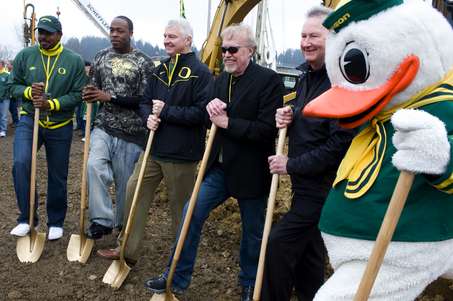
Can Knight Shovel Enough Dough Stevens' Way?

Wake Forest.  With today’s firing of Dino Gaudio after three seasons and two NCAA trips, it’s clear that Demon Deacon AD Ron Wellman has bigger things in mind.  The school has a small but passionate fanbase that would hire the Easter Bunny if they thought he could beat Duke and Carolina on a regular basis.  Wake has money to spend, but there’s no bottomless pot of (black and) gold of which Wellman can draw from like Oregon.  Still, the ACC is still the most prestigious basketball league in America, and Wake is a prime situation for the right coach.

  • Pluses:  Tobacco Road: few places in the country match the commitment and passion of the fans in this part of the country about college basketball.  Stevens would find a similar situation to what he left in Indiana.  There is enough talent in the Carolinas and Atlanta to support another top twenty program in this area on talent alone — Wake could provide the platform for Stevens to make that leap and pay him handsomely for the privilege.  Like Butler, Wake is a small, private university with a commitment to academics, so he wouldn’t be making a huge change in comfort level.
  • Minuses:  Tobacco Road: did we mention that three of the last six champions and two Hall of Fame coaches reside about 80 miles down the road in Durham and Chapel Hill?  Many a coach has come to NC State and Wake Forest with high hopes only to learn that harsh reality the hard way.  Getting wins in the ACC won’t be as easy a proposition as it was in the Horizon League.  Butler is a low pressure job, but Wake demands a lot from its coaches — perhaps more than can reasonably be expected.

Read the rest of this entry »

Share this story

NCAA Basketball 2010: The BCS Version

Posted by nvr1983 on April 2nd, 2010

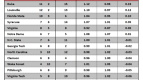
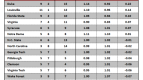
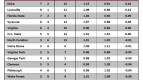
With all the talk about the coming 96-team tournament, many in the sports media have forgotten that there is already another ridiculous major college sport championship in place: the BCS. We took you through this process in a post last year, but it’s worth going over again as the blogosphere is ablaze with opinions on changing our beloved NCAA Tournament.

Here are the basic ground rules:

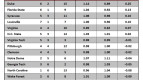
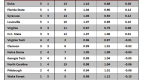
  1. We are following the BCS Football guidelines as closely as possible. Obviously there are some differences. A college basketball team is expected to win more than 9 games (we kept a cut-off at a 75% winning percentage). We replaced the Notre Dame rule with the Duke rule since they both have sketchy TV contracts (Notre Dame with NBC and Duke with ESPN).
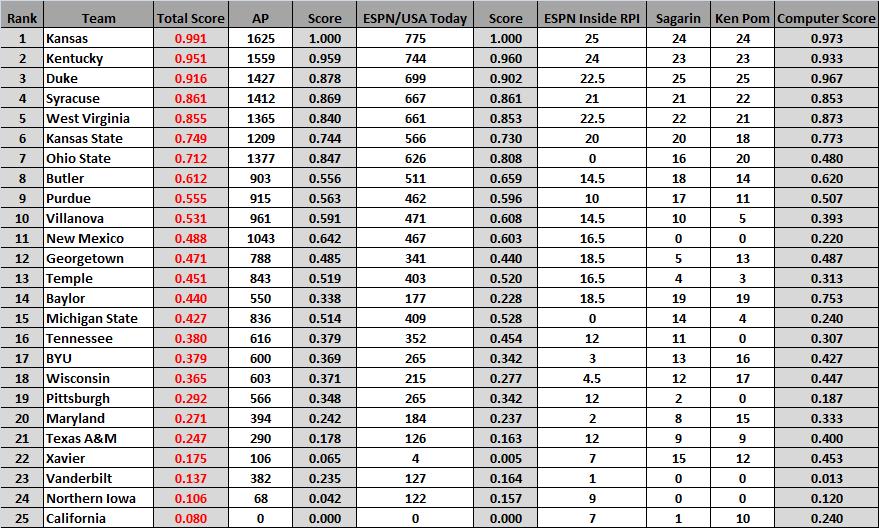
  2. I used the AP and ESPN/USA Today polls as the human polls and ESPN.com’s InsiderRPI, KenPom.com, and Sagarin’s ratings as the computer polls. The computer polls include data from the NCAA Tournament, but as you will see it didn’t affect the results that significantly.
  3. We used the traditional BCS calculations for determining each team’s score weighing the two human polls and the combined computer poll average as 1/3 of a team’s total score each.

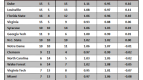
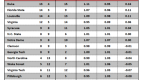
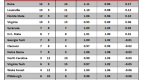
Here are the results:

We will let you digest that for a minute and will provide more information/analysis and the BCS Bowls after the jump.

Read the rest of this entry »

Share this story

Conference Report Card – Sweet Sixteen Edition

Posted by rtmsf on March 23rd, 2010

It’s the Monday after the first two rounds, so that means it’s time for conference report cards!  With only eleven of the 32 BCS conference teams remaining, we have a feeling that the major conferences aren’t going to perform so well in this year’s grading.  But you never know.  It all depends on the individual matchups and our mood as we break out the red marker.  We review the conferences with multiple bids below…

It’s Time to be Graded, Fellas…

WCC (2 bids, 1 remaining, 3-1 record, expected PASE = 1.4 wins)

Obviously, any time a WCC team makes the Sweet Sixteen it’s a great year for the conference.  It’s especially great this time around because #10 St. Mary’s shows that the conference has some talent and depth in its league beyond the same old Zags.  With two relatively low seeds (Gonzaga was a #8), many people were expecting the league to go oh-fer in the Dance this year, but now one week later the Gaels are a popular darkhorse pick to come out of the South Region as a true F4 Cinderella.

Verdict: A.  The only thing that would have made this an A+ would have been if Gonzaga had upset #1 Syracuse.  Every additional win from here on out is just gravy.

Big 10 (5 bids, 3 remaining, 7-2 record, expected PASE = 7.1 wins)

The Big Ten is having a good tournament after a somewhat disappointing regular season, and every year the league does this everyone acts surprised.  #2 Ohio State rolled in its two games and appears a very strong contender to get to the Final Four after Northern Iowa blew up the Midwest Region.  #4 Purdue and #5 Michigan State both survived extremely close games that support the contention that the Big Ten style of play (gutting out close games) helps when it comes Tourney time.  OSU and MSU are on a likely collision course to the regional finals for an all-Big Ten extravaganza, but even if nobody wins another game, the league has already reached this year’s expectations.

Verdict: A-.  Minnesota wasn’t expected to do much and they didn’t, but #4 Wisconsin was upset by a vastly underrated #12 Cornell in the second round.  That upset is more than compensated by Purdue’s showing against #5 Texas A&M, a game where it was clear just how much they missed Robbie Hummel yet they still found a way to win.  OSU and MSU give the Big Ten the most Sweet Sixteen teams of any league this season.

Pac-10 (2 bids, 1 remaining, 3-1 record, expected PASE = 1.2 wins)

West coast bias reared its head as the two Pac-10 invitees won first round games over Big East squads to move into the next round.  #11 Washington then followed that up with a pasting of #3 New Mexico, while #8 Cal was simply outclassed by Duke’s talent.  The way Washington is playing right now (nine in a row), we wouldn’t automatically assume a loss to WVU in the Sweets, but regardless of that result the league has already far outperformed what most people expected this year (which was an 0-2 record).

Verdict: B+.  The league was undoubtedly way, way down this year, but UW and Cal gave it back a wee bit of respectability with their showings over the weekend.

Read the rest of this entry »

Share this story

RTC Region by Region Tidbits: 03.19.10

Posted by rtmsf on March 19th, 2010

Each day this week during the first two rounds of the NCAA Tournament we’re asking some of our top correspondents to put together a collection of notes and interesting tidbits about each region.  If you know of something that we should include in tomorrow’s submission, hit us up at rushthecourt@yahoo.com.

South Region Notes (Patrick Sellars)

Midwest Region Notes (Tom Hager)

  • Tennessee head coach Bruce Pearl says that Ohio is a lot like his previous team, UW-Milwaukee.  In addition to being an extremely confident group, they Bobcats rely heavily on three point shooting.
  • President Obama is at the 96.6th percentile of ESPN brackets after the first round.  However, he did have Georgetown going to the Elite Eight, so his chances at the grand prize may be less promising.
  • For one of the first times all season, Cole Aldrich will be going up against somebody who is actually bigger than him in UNI’s Jordan Eglseder.  The Panthers’ big man was arrested earlier in the year on DUI charges, and his numbers have taken a slight dip since his return, but he will play a huge role in any upset bid by Northern Iowa.
  • CBS Sports’ Gregg Doyel said that this Northern Iowa team is like other memorable cinderellas such as George Mason and Davidson.  His reasoning?  He has gone on record saying how UNI has no chance of winning,and that is what he said about the Patriots a few years ago.
  • Despite playing for two previous teams before the Bobcats, Mike Freeman says that no player typifies Ohio basketball more than Armon Bassett.  Bassett was a key catalyst for Ohio’s rout of Georgetown, and he has 148 points in his last five games.

East Region Notes (Ryan Restivo from SienaSaintsBlog)

  • Don’t look now but Kentucky coach John Calipari said he is concerned about Wake Forest who outrebounded Texas by 25 in their win Thursday. “They got 20 offensive rebounds against Texas, who prides itself in that toughness and that rebounding,” Calipari told the AP. “I just watched tape and, you know, you get sick to your stomach.” The Demon Deacons have momentum and nothing to lose against the Wildcats, the New Orleans Times-Picayune points out.
  • Cornell waited for its moment for two years and finally put on a show over Temple using players that were largely overlooked by major college basketball.
  • Wisconsin barely survived its first-round game against Wofford, who caught a tough break to end their first NCAA Tournament appearance.
  • Is Washington soft? No way. The Seattle Times said Coach Lorenzo Romar let his players play in the final seconds and won the game his way.
  • Darington Hobson hurt his wrist but he still has New Mexico thinking big.
  • Missouri shut down Clemson’s Trevor Booker in their win today. CBSSports asks, will Bob Huggins and West Virginia be able to handle the pressure?

West Region Notes – (Andrew Murawa)

Share this story

RTC Bracket Prep: South Region

Posted by nvr1983 on March 15th, 2010

This is the first of our four quick-and-dirty region breakdowns. This will serve to help the quick triggers who like to fill out their brackets first thing on Monday morning. For the rest of you, we’ll be providing more detailed game-by-game analysis throughout the rest of the week.

Reliant Stadium Hosts the South Regional

Region: South

Favorite: Duke, #1 seed, 29-5. Yeah, I know it isn’t shocking that they are the favorites especially in what many are calling the weakest of the four regions, but the Blue Devils have a solid combination of perimeter talent (albeit limited in numbers) and interior players (quantity more than quality, but still something). With the way Jon Scheyer has been playing this season and the sudden re-emergence of Kyle Singler in the ACC Tournament, Coach K and the Blue Devils should have their sights set on Indianapolis.

Should They Falter: Villanova, #2 seed, 24-7. A Final Four team last year, the Wildcats had the appearance of a Final Four team a month ago (many will still pick them now), but after losing five of their last seven games to close the season some of that luster has worn off. Still we would be remiss not to list them here as all but one of those losses came on the road (neutral site in one case to a #6 seed) against a team that is in the NCAA, another team with a top-3 seed and another to a UConn team back when Jim Calhoun’s players still cared.

Grossly Overseeded: California, #8 seed, 23-10. I know they won the Pac-10 regular season, but as you may have heard the Pac-10 was awful this year. When we asked Mike Montgomery about the possibility that the Bears might miss the NCAA Tournament this year he was perturbed. While he might have made it into the NCAA Tournament it does not erase the fact that they did not beat a single team in the top 50 of the RPI ratings. The Bears might deserve a spot in the NCAA Tournament, but I think most people would agree that they have not earned a seed this high.

Grossly Underseeded: Siena, #13 seed, 27-6. This might be where they deserve to be seeded based on their resume this year, but this is the team with the most “growth potential.” The Saints struggled in their conference final, but they have won first round games as an underdog in each of the past two years. Last year they knocked off Ohio State as a #9 seed and the year before knocked off Vanderbilt as a #13 seed. With an experienced squad they would be a tough out as a #13 seed in any bracket.

Sweet Sixteen Sleeper (#12 seed or lower): Siena. Like we said they won their first round games each of the past two years and there might not be a team more set-up to be upset in the first round than the Robbie Hummel-less Purdue Boilermakers. If they get past Matt Painter’s crew, they will play the winner of the Texas A&M and Utah State. It won’t be an easy second round game, but since it is in Spokane, Washington, we can’t imagine that either team will have a huge following there (although Utah State could conceivably travel up there).

Read the rest of this entry »

Share this story

Morning Five: 03.11.10 Edition

Posted by rtmsf on March 11th, 2010

  1. Folks, if there was ever a day in our history where we actually fit the word ubiquitous in our little slogan at the top of the screen there, today is that day (ok, maybe tomorrow and Saturday too).  Nevertheless, we will be providing coast to coast coverage at no fewer than six of the major conference tournaments today and throughout the weekend — ACC, Big East, Big 12, Pac-10, Conference USA and the WAC (tomorrow we’ll add the Mountain West to our slate) .  We’ll be reporting from each venue with RTC Live (see RTC Live box above left), but we’ll also provide nightly diaries from our correspondents on site as well.  Whether in the comments, the live-blogs or lurking, we hope to have you stop by throughout the weekend.
  2. From the that-didn’t-take-very-long department, Jeff Goodman reported last night that Iowa State’s Craig Brackins is expected to announce his intention to go pro within the next few days.  Iowa State’s season probably ended in an 82-75 loss to Texas in the Big 12 Tournament first round yesterday evening.  Brackins’ teammate, Marquis Gilstrap, had applied for a sixth year of eligibility, but the NCAA denied his request and he too has finished his career as a Cyclone.
  3. The SEC Tournament begins today, and the league may re-visit how it seeds its teams as soon as next year given that schools such as East #3 Tennessee and #4 Florida went 12-0 against the SEC West this season but still did not earn a bye into the quarterfinals.  If you include the two SEC East teams who received byes — Kentucky and Vanderbilt — these four teams went an incredible 24-0 against the western half of the conference.  Re-seeding teams #1-#12 would reward the four best teams in the league rather than the two best in each division.
  4. You undoubtedly know that Oregon’s Ernie Kent has told his players that he’s out as the coach of the Ducks and that he predicted his team would win the Pac-10 Tournament this week, but did you know that former Seton Hall coach PJ Carlesimo is angling for the job?  Will Latrell Sprewell also be joining the staff as an assistant?
  5. In case you missed it elsewhere, we have the potential for one of the greatest feel-good stories in NCAA Tournament history this coming weekend at Montana if Anthony Johnson’s wife, Shaunte Nance-Johnson, can help her team (the Lady Grizzlies) make it to the NCAAs in much the same way her husband did last night (a ridiculous 42-point shooting exhibition).  Even if she doesn’t put the team on her back — she is a reserve, after all — the fact that she  was the one who resurrected AJ’s career a few years ago when he was out of basketball completely is cause for celebration.  We don’t know for a fact that a husband/wife pair have never played in the NCAA Tournament at the same time, but the odds of it are minuscule and we’d absolutely love to see it happen for both of them.  Sorry, Sacramento State/Montana State, no offense intended, but we here at RTC (America?) will be rooting for Montana on Friday to move into the Big Sky Championship game and beyond.
Share this story