Friday, March 12
12pm - Ohio St vs. Michigan (ESPN)
2pm - Wisconsin vs. Illinois (ESPN)
3:30pm - Ole Miss vs. Tennessee (ESPN360)
4pm - Tulsa vs. UTEP (CBS CS)
4:45pm - Lafayette vs. Lehigh (ESPN2)
6:30pm - Xavier vs. Dayton
7pm - Georgetown vs. Marquette (ESPN)
7pm - Maryland vs. Va Tech (ESPN2)
7pm - Kansas vs. Texas A&M (ESPN360)
9pm - Notre Dame vs. WVU (ESPN)
9:30pm - Kansas St vs. Baylor (ESPN360)
11:30pm - BYU vs. UNLV (CBS CS)
Backdoor Cuts is a weekly college basketball discussion between RTC correspondents Dave Zeitlin, Steve Moore and Mike Walsh that occasionally touches on relevant subjects. This week the guys debate the merit of conference tournaments — and you can guess where the Ivy Leaguer stands.
DAVE ZEITLIN: Let me start by saying that I love everything about March. The weather is better. The food is tastier. People are friendlier. Even this German kid is less annoying. Such is the power of college basketball. From the first day of the conference tournaments until the final lyric of One Shining Moment (which is, as you probably guessed, “one shining moment”), wall-to-wall college hoops takes a hold of you and doesn’t let go until your eyes are bloodshot, your voice is hoarse and all your dreams are of Digger Phelps’ ties. And if I just made watching college basketball sound creepy, that wasn’t my intention. Everything about March Madness is perfect. Well, almost everything…
You guys may disagree, but I think conference tournaments need to be changed. More specifically, I find it unfair that automatic NCAA bids go to conference tourney champs as opposed to the winners of the regular season. Did I just pour a bucket of cold water over my gooey-gushy first paragraph? Maybe.
Don’t get me wrong: I’m still delighted to watch the final few minutes of any conference championship game and get even more excited when there’s an upset involved. It just doesn’t make sense that a team that gets hot over a few days gets rewarded over the team that already proved it’s the best in the conference over the regular season. Read this recent column by Jeff Goodman if you disagree. Or read this disgustingly pretentious column I wrote in college. You’ll come around.
Every Game Counts?
Now, you guys may be thinking I’m just saying all this because I’m an Ivy Leaguer and the Ivy League is the only conference in America that doesn’t have a tournament. I guess that’s part of it. Over the years, I’ve come to appreciate the value of league play with so many titles coming down to a thrilling regular season finale between Penn and Princeton. But even now, as Penn has floundered to the bottom of the league standings, I wouldn’t feel right about my Quakers having a chance to go dancing just by going on a three-game winning streak. I mean, come on, they have 20 losses. I love the idea that every team can win a national championship, but don’t you think the regular season should hold just a little value?
I’m not saying get rid of tournaments. I just think there should be some compromises. Make it so it’s a privilege (not a right) to play in the conference tournament, kind of like the way it is in Division II or III. Sorry but if you’re in the bottom half of your league, you don’t deserve the chance to steal a bid from a 25-win team just so you can play in Dayton on Tuesday. And how about home games and byes for top seeds in every league?
All that said, I have no problem with the big-conference tournaments (other than the fact I can never tell which of the NCAA locks are actually trying). The Big East Tournament at the Garden, especially, has given me many great memories over the years. And any team that runs the table against the nation’s giants over the course of a few days (remember Georgia?) deserves a bid in my mind. So by all means, keep the money pouring in for those leagues. It’s just the one-bid conferences (where revenue isn’t as much of an issue) that seem to be doing a disservice to the NCAA Tournament — and mostly their own teams.
So what do you guys think? At the very least can we agree that the changes I suggested would be much better than that heinous 96-team NCAA tournament proposal?
MIKE WALSH: First off, let me go on record as saying that I’d rather be strangled with one of Digger Phelps’ aforementioned ties while he was still wearing it than see the tournament expanded to 96 teams. In a world where everyone gets a trophy just for trying, I think a little disappointment is good for the teams whose bubbles burst each year. Sorry, Rhode Island, better luck next year! And let’s be honest with ourselves, stretching the field to 96 teams is just another way to get more power conference schools in the Big Dance – or would we have to call it the Bigger Dance? And who doesn’t want to see Rutgers get in? Those kids try so hard…
Big Red Freshness Lasts Right Through It. Cornell 95, Brown 76. It probably took a little longer than the nervous Big Red faithful hoped to put away the pesky Brown Bears tonight, but in the end, it was simply a formality because Cornell players were so narrowly focused on winning their third straight Ivy League title and NCAA bid that there was no way they were going to lose this game tonight. How focused were they? Try a season-best 57% shooting and an utterly ridonkulous 20-30 from deep tonight. At one point during the conflagration of shot-making by the Big Red, they hit eight treys in a row en route to an 11-13 first half. But it was the second half where Cornell exhibited its dominance, using a 14-4 run early to take control of the game and ensure another title coming to Ithaca this season. All five starters reached double figures, but it was lesser-known forward Jon Jaques who took the scoring honors with 20/7 tonight (including six threes). In all, four players had four or more threes, which we figure has to be some kind of a record for versatile and voluminous shooting! Cornell will now wait to see where their NCAA seed lies, but the smart money is on a #12 seed when the brackets are released. Anyone up for a #12/#5 upset this year?
Will 3d Time Be the Charm For Cornell? (Ithaca Journal/G. Ertl)
RTC Live.
Wichita State 73, Missouri State 63. On Quarterfinal Friday in St. Louis, top seed Northern Iowa defeated Drake, Bradley upset Creighton and Illinois State won the nightcap. And in the game you followed here on RTC Live, Wichita State held off Missouri State, 73-63. A close, hard-fought and well-played game, the Shockers were paced by Garrett Stutz, whose play in the paint helped them overcome hot outside shooting of the Bears. Stutz finished with 19 points and 6 rebounds, and converted on back-to-back possessions during a key stretch of the second half to help them pull away. The Shockers advance to play the Redbirds of Illinois State tomorrow afternoon here in St. Louis.
Conference Tourneys. Eight conference tourneys tonight, and a ridiculous thirteen tomorrow. Let’s see what was interesting…
Ohio Valley. The top two teams — Murray State and Morehead State — both advanced tonight to the finals on Saturday. Murray has put together a phenomenal 29-win season, so it’d be a shame to see them miss out on the NCAAs, but Morehead is the only OVC team to have beaten the Racers this year. It was Morehead tonight, though, not Murray, who had the comfortable win in the semis. Should be a great one on Saturday for the auto-bid.
Atlantic Sun. #6 seed Mercer continues to use its home court advantage to knock off higher-seeded teams with tonight’s victory over #2 Jacksonville. #5 East Tennessee State was able to get by #8 Kennesaw State whom had knocked off top seed Belmont last night. So it’ll be Mercer vs. ETSU for the automatic bid. The Bucs will be playing in their third A-Sun title game in four years, and will be looking to win back-t0-back NCAA bids despite having not finished first in the regular season in either of the last two years.
Horizon. In the Horizon second round tonight, #7 Detroit continues to turn heads with another upset win behind Eli Holman’s dub-dub (16/11), while #4 Milwaukee earned the pleasure of facing #1 Butler in the semifinals on Saturday by defeating #5 Cleveland State. The Titans will play #2 Wright State in the other semifinal — neither of the top two seeds have played yet in this tournament, while Detroit has already played two games and Milwaukee one.
Unless half of the Cornell basketball team (the starting half) suffers serious food poisoning or takes a sudden interest in the illicit pleasures of Federal Hill in Providence, we should have our first 2010 NCAA Tournament bid secured at around 9 pm eastern tonight. With the Big Red’s twelfth Ivy League victory likely this evening, Steve Donahue’s team will have clinched their third straight regular season title (and NCAA bid).
Winning is Gorges (CDS/T. Chou)
In filling the vacuum left by the Penn and Princeton boondoggles, it’s been a phenomenal run for the men from Ithaca as Cornell has won 36 Ivy games over the past three seasons. Their Ivy scoring margin of +15.6 this year is the best seen in the league since the great Quaker teams at the turn of the millennium, with eight of Cornell’s eleven wins this year virtually in the books by the first timeout. We’d love to build up some drama about tonight’s game at Brown, but Cornell has defeated the Bears by a 22-point average margin of victory in the last five games between the two teams; given that this is Donahue’s best team of his career, we doubt that tonight’s the night for the 12-19 (5-7) Rhodies to shock the world (ed. note: the previous game this year was closer than the 14-point margin indicates, but we expect Cornell to come strong tonight with their NCAA bid on the line).
The one thing Cornell has so far failed to do in their three-year reign of Ivy dominance is to win a game against an RPI top-50 opponent (0-8), which squares with their 0-2 record in the NCAA Tournament (Ls to Missouri and Stanford). But they’re getting closer, as a closely-contested January game against #1 Kansas in Allen Fieldhouse showed. The core group of seniors — guard Louis Dale, forward Ryan Wittman, and center Jeff Foote — have been playing together for so long (and so well) that they know what each other is going to do before they’ve even thought of it yet. In an era of elite teams led by young players not far removed from the Prom and Selective Service sign-ups, the opportunity is ripe for the Big Red to catch an overconfident, sloppy team in the first round of the Dance this year.
In Zach Hayes’ latest RTC Bracketology, he has Cornell as a #13 seed playing #4 seed Temple, while Joe Lunardi has the Big Red as a #12 seed playing #5 Georgetown. While neither of those particular teams fit the criteria as a young, undisciplined team, there are others in that seed range who do (Tennessee in particular comes to mind). With a little luck in the draw this year, the Ivy League champion could be on the cusp of more than just its third straight trip to the NCAAs but also its first-ever win in Tournament history.
RTC Live is back for a rare Friday night edition. Normally we “take the night off” given the relatively light slate, but tonight is a special occasion. Tonight the unofficial playoff for the Ivy League title and first official NCAA tournament bid commences when Cornell travels to Cambridge, MA to take on Harvard.
When these two teams met on January 30th, it was one of the most highly anticipated Ivy League match-ups in years. Cornell came in 17-3 having won 15 of 16 with its only losses coming against Seton Hall (10 points) and on the road against a pair of top-5 foes in Syracuse(15 points) and Kansas (5 points). Harvard came in 14-3 having won 7 straight with its only losses coming on the road against Army (3 points), UConn(6 points), and Georgetown (16 points). Many were expecting one of best games of the season featuring a match-up of Ivy League Player of the Year favorites Ryan Wittman and Jeremy Lin. Wittman and the Big Red lived up to their billing, but Lin and the Crimson apparently forgot to bring their game with them to Ithaca as they were embarrassed 86-50 while Lin managed to outscore Wittman (19-11), but committed a season-high 8 turnovers (of the team’s 25) with only 1 assist. With Wittman having a relatively quiet game the Big Red were led by seven-foot senior center Jeff Foote, who had 16 points, 9 rebounds, 4 assists, and 3 blocks. Following the blowout, it appeared as if the two teams were headed in opposite directions as the Crimson lost their next game to a surprisingly good Princeton team before bouncing back with 3 straight wins. The Big Red appeared poised to run the table in the Ivy League before stumbling in a shocking loss at Penn before bouncing back to win a hard-fought game at Princeton the following night. All this left the Ivy League with 3 teams sitting near the top of the conference: Cornell at 7-1, Princeton at 6-1, and Harvard at 6-2. The game is being billed as the biggest in the history of Harvard basketball (please, no snickering) and the athletic department is going to try to use a “Fade to Black” theme where the fans wear white shirts in the first half then taking them off to reveal black shirts in the second half [Ed. Note: Another benefit is layering for the New England winter night.] while the audio system will play Jay Z’s “Run This Town” and AC/DC’s “Back in Black” before the start of the 2nd half when the fans will reveal their black shirts in an attempt to throw off the Big Red (who happened to almost win at Kansas, which we think would be slightly more daunting than the visual “hallucination” of having the fans in the stands change their shirts from white to black at halftime).
What Happened Tonight? On a random Friday night in February when most people were watching the opening of the Winter Olympics and the epic fail of the cauldron-lighting, we very well may have had the wildest evening of the year in the 2009-10 college basketball season. Normally, there’s no reason to even recap games from Friday nights throughout the year, but tonight we wouldn’t be doing our job if we weren’t here. Could both the Game of the Year and the Upset of the Year have been tonight? If you missed it, we’ll try to do our best to get you caught up…
Jermaine Dixon & Brad Wanamaker Are Giddy After Beating WVU
Game of the Year? #23 Pittsburgh 98, #4 West Virginia 95 (3OT). In a game that was reminiscent of the six-overtime epic from last year’s Big East Tournament, Pitt made a miraculous comeback to beat #4 West Virginia in triple-overtime, 98-95. Thanks to three consecutive missed free throws by WVU on 1-and-1 opportunities, Pitt was able to cut the lead in regulation to three with 30 seconds left. Nasir Robinson stole West Virginia’s pass, and after a missed out-of-bounds call by the referees, Ashton Gibbs sent the crowd into a frenzy with a three-pointer. The Panthers carried their momentum to a five-point lead in the first overtime, and had a chance to ice the game with seven seconds left. Gibbs then went to the free-throw line with the Panthers up by two, but missed the second free throw attempt and West Virginia’s Darryl Bryant took the ball and made a clutch three-pointer with three seconds left to force a second overtime. WVU was forced to make another comeback when they were down by three points with 20 seconds left when Gary McGhee fouled Da’Sean Butler on a three point attempt. After Butler made all three free throws, the fans at the Peterson Events Center became witness to a third overtime. West Virginia had a one-point lead with less than a minute to go when Pitt’s Gilbert Brownsank a pair of free throws. After two missed shots by WVU, the Panthers escaped with a three-point win. With the victory, Pitt moved to a tie with the Mountaineers for third place in the Big East. There was no RTC for the student section tonight, but with their third consecutive win, Pitt may have moved up to an overall four seed tonight. As for the Mountaineers, they need to work on their free throw shooting before they meet Georgetown and Villanova at season’s end. If you missed the game and highlights, we suggest you go here to watch the last six minutes of regulation plus the OTs.
Two Conference Unbeatens Go Down…
Penn Fans RTC Against Cornell (photo credit: Ed Hille)
Pennsylvania 79, #22 Cornell 64. In his recap of this game, ESPN’s Doug Gottlieb called this the upset of the year in college basketball. His reasons: Cornell has all five starters back (including four seniors) from last year and are the two-time defending Ivy league champions; they were undefeated in conference play up until tonight and had beaten all of their Ivy opponents by an average of 25 points. Penn, on the other hand, had their coach fired earlier this year and had only won four games all year. KenPom ranks Penn 308th… out of 347 D1 teams. Mr. Gottlieb makes a good case. After Penn took a single-point lead into halftime, sure, a few eyebrows were raised. It was the 15-0 Quaker run to start the second half that turned heads. After that run, the closest the Big Red got was five. That tends to happen when you play the kind of defense that allows your opponent to shoot 56.3% from the field, including 52.4% from behind the three-point arc. Jack Eggleston and Zack Rosen had the nights of their lives, shooting a combined 14-24 and 7-10 from three-point range, posting 24 and 22 points, respectively. A couple of weeks ago Cornell was the feel-good story of the year, enjoying that shiny new ranking and the head-tilted awwwws of the college hoops world, as well as an assumed Ivy League title and NCAA Tournament bid. Now, it’s all in danger. The ranking’s gone, come Monday. Their tournament lives will be determined by their next two games, both on the road — tomorrow at now-first-place Princeton and next Friday at Harvard, the latter rather pissed and looking to avenge the 36-point pasting they took from the Big Red on January 30th. That one could very well determine the whole thing. The Pennsylvania supporters pulled an admirable RTC after this one, and we could hardly blame them. Man, we’re going to have to all chip in for (Back Door Cuts contributor) Dave Zeitlin’s electro-shock therapy as a result of this, aren’t we?
Bowling I and Theory of Softball?? Pete Thamel of the NYT as usual is all over the Binghamton report that came out yesterday exposing the unsavory lengths that their athletic department was willing to go in order to have an NCAA Tournament-caliber basketball program. Meanwhile former head coach Kevin Broadus remains on PAID administrative leave at the university awaiting a decision on his future there. How can he have any future whatsoever given these findings?
Quick, do you know how many teams currently have undefeated conference records? If you said nine, then you either came here yesterday or you’re fibbing. John Stevens wrote an article discussing each of those nine teams and the likelihood that they’ll get through conference play without a blemish. Hint: the Princeton Tigers (4-0 in the Ivy League) will not.
The New York Daily News reported yesterday that Rick Pitino was interested in the Nets head coaching job, which would make sense considering that they’re likely to have John Wall (and possibly Lebron James?) coming to the tri-state area in the near future. Pitino responded with a great quote — “there’s not an ounce of truth to [the report],” which, knowing Pitino, means that he was clawing at the possibility of leaving Louisville as soon as possible. We’ve all been to this dance with Pitino before, but Gary Parrish put it in the starkest terms when he compared it to asking the pretty gal to a middle school dance.
UConn’s Jim Calhounwill be back on the bench Saturday when his Huskies play Cincinnati. His team went 3-4 in his absence, with wins over St. John’s, DePaul, and somehow, Texas. What shouldn’t be forgotten, though, is that his team was already 2-3 in the Big East prior to his departure, and in the last six games he coached (including a loss to Michigan), the Huskies’ efficiency margin was -3.3 points per 100 possessions. How did replacement coach George Blaney do in his seven-game tenure? The Huskies’ efficiency margin on his watch was -2.1 points per 100 possessions. So before UConn fans start blaming Blaney for any of the team’s inadequacies this season (a la Pete Gaudet at Duke in 1994-95), they should be careful to examine the entire picture first.
We were anxiously awaiting someone to take up the mantle of supporting the idea of NCAA96, and leave it to Gregg Doyel to be the advocate. Some of his points are solid — in particular, the nearsighted “tradition” argument. But the one that really doesn’t make sense to us is the explanation he gives for keeping the “crappy teams” in. He must not have read our seminal work on the matter, published last week. See, the problem isn’t that “crappy teams” like Vermont, Bucknell and Davidson would get into the Big Dance; it’s that sub-.500 BCS conference teams like Miami (FL), Alabama, Oklahoma and Washington would get in. And we don’t want them in — those teams are not good enough, no matter how you evaluate them. If the NCAA96 implementation would reward strong regular season play for mid-majors whom would otherwise be shut out, we could get on board with it. But you, us, Gregg and the dog all know that’s not why this will be happening — the majority of the additional 31 spots will go to BCS teams. And that’s truly crap.
Pardon the baseball reference, but we know that if a guy’s throwing a no-hitter you’re not supposed to talk to him about it. In fact, you’re supposed to just stay away from him, let him sit in the dugout alone, and act like nothing special is happening. We don’t go for such superstitions around here, so let’s check out the teams that are currently undefeated in their conferences, and who has the best chance to actually pull off a perfect conference campaign.
Last season, there were only two teams that streaked through their conference schedules without a blemish — Memphis went 16-0 in the CUSA, and Gonzaga tallied a perfect 14-0 in the WCC. Memphis kept it going three games into this conference season, but back on January 20th UTEP showed the Tigers that they were having none of that, and snapped Memphis’ conference winning streak at 64 games. The Zags stumbled ten days later at San Francisco after winning their first six WCC games this season.
Can Aldrich, Collins, and the rest of the Jayhawks run the conference table?
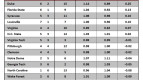
Right now (before Thursday night’s games), there are no less than eight teams with perfect conference records. We list them here along with the next time they’ll put it on the line, and our prediction as to when they’ll drop their first conference game — if at all:
Today’s completely unsubstantiated rumor is that Kansas will be busing students the 85 miles over to Manhattan, Kansas, for ESPN Gameday on Saturday morning (as K-State tries to set a new record for Gameday attendance). If there’s any truth whatsoever to this, we fear a little for the lives of those young Jayhawks.
Did Kentucky’s DeMarcus Cousins“cold-cock” a South Carolina student as they were RTCing after the Gamecocks’ big win over Kentucky the other night? Video evidence is inconclusive, but at least one radio broadcaster and a student say they witnessed it. For whatever that’s worth.
Gary Parrish reminds us that in the volatile world of college basketball polling, we shouldn’t be so quick to dismiss the polls around this time of year because they offer a window into the teams that will be left standing in early April. This is an accurate point to a certain extent, but it’s more fun to take the reverse view and think about which teams in the Top Ten will flame out early in March (best guesses: WVU, Duke, Michigan State).
Finally, UNC-Wilmington fired their head coach last night. Benny Moss, with a record of 41-74 in four years at the school, was coming off a 39-point pasting at the hands of Hofstra on Wednesday night, and his teams were making a habit of regularly getting run out of the gym. Moss is the fifth head coach to lose his job during the season this year, further validating a troubling trend (even at the mid-major level) of ADs impatiently cutting their losses in the middle of the season.
Last week, RTC spoke with Seth Davis of Sports Illustrated and CBS to talk about a variety of topics on college basketball and a new promotion for Coke Zero. This is not the first time we have spoken with Seth as we interviewed him last March for the launch of his book “When March Went Mad” about the 1979 championship game between Magic Johnson and Larry Bird. Before the interview officially began, Seth expressed his displeasure about not getting linked every day in the Morning Five. We would give you the transcript of that discussion, but Chinese government regulations prohibit us from doing so.
Ed. Note: This interview took place last week, but due to some transcribing issues we are just putting it up now.
Seth Davis: Man of Intrigue
RTC: I guess we will start with your alma mater. Duke is looking strong again this year, but is different than they usually look as they are not relying on the outside shooting as much as a complete game. A lot of people have been talking up Duke. Do you think this is the year they can make it back to the Final Four?
SD: I do. I think they are legit. It’s kind of funny. Here they are ranked 5th or 6th in the country, putting together a great record, and there is not a lot of buzz about Duke right now. It’s funny to say that because they are so ubiquitous on television, but I think that we have all seen them get off to these great starts the past few years before they fall in the tournament. This team does things that those teams did not primarily defend and rebound. Those things are very important assets to carry into the tournament because at some point you are going to have an “off” shooting night and I think back for example to when they lost in the 2nd round to West Virginia. I think West Virginia was like +16 on the boards. At some point the shots aren’t going to fall. This team has the ability to overcome that so I don’t know from strictly a talent standpoint if I would put them on the Texas, Kentucky, and Kansas level, but do I think of them on a short list of contenders to get to the Final Four? Absolutely. I think by the way they will have a great chance of getting a #1 seed if they win the ACC regular season and then win the [ACC] tournament. I would be surprised if they aren’t a #1 seed.
RTC: Sticking with a US News & World Report College Rankings theme. Another team that has really made a lot of news this year is Cornell with a lot of close losses to very good teams, but that doesn’t impact their RPI and NCAA seeding as much as some people would think. How good is this team? How high do you think they could be seeded and how far could they go in the NCAA tournament?
You may not remember this exercise, but as part of the season preview over at Vegas Watch, we pitched in on an analysis of each BCS conference team + a few others using the 2008-09 Pomeroy ratings and manually adjusting each team based on returnees and recruiting classes. Here are some of our notable misses that we overshot — UNC, Washington, Iowa, Auburn, LSU, Oregon State, UCLA and Oklahoma. Coming next will be some of the teams we undershot.
Is Friday night’s game between Harvard and Cornell in Ithaca, NY, the game of the year in college basketball? The WSJ thinks it might be.
Stewart Mandel is back from football to ask where all the great hoops dynasties have gone? Not sure how much we agree with this assessment, though. Carolina and UCLA are clearly down, but Kentucky and Kansas are clearly up. There’s always a power vacuum and someone can fill it (usually one of the traditional powers).
BYU will ‘go pink‘ in Saturday’s home game against rival Utah to support Coaches vs. Cancer, of special interest to the Cougar program because of head coach Dave Rose’s battle over the summer with pancreatic cancer. Here is a visual representation of what the jerseys and shoes should look like.
The (Big) Red Scare. #1 Kansas 71, Cornell 66. Normally, an early January game between a top-ranked Kansas squad and…well, pretty much any Ivy League school sounds about as thrilling as getting the measles twice. Tonight was different. Cornell came into Kansas’ dreaded Allen Fieldhouse already with a few wins over big-conference teams like Alabama, Massachusetts, and St. John’s. They were riding the momentum of a ten-game winning streak and could boast a kid in Ryan Wittman who is nothing close to a kept secret any more. Wittman (24/4/3 assts), a 6′6 long-range bomber averaging 19 PPG and 44% from distance, had appeared on various “best outside shooters” lists (including ours) and already had people wondering if Cornell was actually good enough to get in as an at-large team this year. But this is no ordinary place or opponent. This is Kansas, and this is Allen Fieldhouse, they of the 50-game home winning streak and current #1-ranking that, to be honest, hasn’t really been challenged yet. It was close from the start; neither team led by more than three in the first half, and Cornell actually led at the break by that margin. You still had the feeling, though, that this was one of those games in which Kansas would come out in the second half and end it early. We’ve all seen this game before, right? A team hangs around for a half by playing the best 20 minutes of basketball they’ve ever played, like Mike McD thinking he’s going to complete his run on Teddy KGB’s place. We all know it’s a matter of time until Kansas turns over the two aces and sends whatever upstart they’re facing back to law school, a bratty Gretchen Mol, and Joey Knish’s delivery truck, right? But when Cornell jumped on the Jayhawks to start the second half and extended their lead to eight, panic began to take root. With Kansas up 53-47 with 9:45 left, the calls, texts, and more frequent network updates started. When Kansas had still failed to reclaim the lead with under five minutes left, it was on. Upset alert. #1 is in trouble. And it’s an Ivy League team. I mean, come on — ESPN even broke off of a DUKE GAME to provide bonus coverage! Kansas, elevated by the home crowd, would eventually break free from Cornell’s expert control of the pace and take a 61-60 lead with 4:03 left, and you got the feeling that Cornell was done. They would actually take the lead once more at 64-63 with less than a minute left, but Sherron Collins decided it was time to take over. Handling the ball almost exclusively for Kansas, Collins (33/4/3) scored his team’s last eight points and four out of five FTs down the stretch. Give Cornell credit for going for the kill, though. Down 66-64, they found Wittman off a screen with 29 seconds left and he was never thinking about a two. He would miss that three, and a later one to tie, and Kansas would eventually prevail. This was probably the worst thing that could happen to the rest of the Big 12, since now Kansas has learned (if they weren’t aware before) not to take their position for granted, and they know there’s no such thing as a night off. Coaches secretly love these close games early in the season because it empowers and tempers your squad, making them tougher for eventual tournament games. As for Cornell…if the committee still considers “quality losses,” it doesn’t get much more quality than this one — to #1 Kansas, in their house, a 50-game home win streak on the line. The Big Red will probably gain Top 25 votes from this, and it should actually help their curb appeal. So, hands up, who wants to see Cornell opposite them as a first round opponent on Selection Sunday?? Yeah, we thought not.
Evan Turner Triumphantly Returns. Ohio State 79, Indiana 54. OSU wasn’t going to lose this game at home regardless of whether Turner played or not, but his presence on the court was apparent in terms of inspiring confidence in his teammates and his ability to share the ball. He played twenty minutes, contributed 8/4/5 assts while committing three fouls, but most importantly, he didn’t really appear rusty out there other than the first few sets. The only thing that kept him from playing more than half the game was early foul trouble, but the most important takeaway from this blowout game was that it was obvious to anyone who has watched the Buckeyes play without Turner that everyone else appeared comfortable again. Jon Diebler in particular was the primary beneficiary, as he had a 21/3 assts/3 stls night on 5-8 from three without having to worry about running the offense (along with William Buford) nearly as much. Turner said afterwards that the eight-week prognosis originally suggested by OSU officials was a bit of a hedge, and he was only out of commission for 4.5 weeks, but all that matters now is that Turner is back in the lineup and OSU should be back in contention for the Big Ten title and the Top 25 in short order.
Unreal Score of the Night. Seattle 99, Oregon State 48. Right now Craig Robinson’s numbers are looking even worse than his brother-in-law’s, as Seattle — barely a D1 school, as a brand-new Independent — came into Corvallis and obliterated the Beavers in their own building. A 58-21 second half is simply unconscionable for a Pac-10 team playing at home against a mid-major of any kind. Seriously, even Gonzaga with Adam Morrison, Dan Dickau and Austin Daye all starting shouldn’t be able to do what the Redhawks did to Oregon State tonight. Cameron Dollar should be proud of his team with road wins over Utah and OSU this season already, and circle 1/26 on your calendar as Seattle will visit crosstown rival Washington for another program-making shot at glory.
Very busy Saturday: Saturday, December 19 is one of the busiest days of the season for the Horizon League as eight of the 10 teams will be in action. The only teams not playing are Valparaiso and Loyola. Big games include Xavier at Butler, West Virginia at Cleveland State, and Youngstown State at Green Bay in a conference tilt. (…)
With the midway point of the season approaching, this conference is Oakland’s to lose now that ORU is on the injured reserve. Keep an eye on IUPUI, as they may make Oakland work for a championship. Everyone else is playing for fourth. (…)
Louisiana Tech continues to lead the league after posting a pair of victories. Utah State notched a pair of victories while Idaho narrowly escaped NAIA opponent Eastern Oregon. Hawai’i picked up a victory over visiting Chicago State to break over the .500 mark. In all, eight of the nine teams now stand at .500 or better with the lone outcast residing in Las Cruces, N.M. The league now sports a 48-35 record as the teams head down the final stretch towards conference play. (…)
There hasn’t been much action on the floor recently as the Ivy League geniuses are in the middle of final exams — but there was one huge move off the floor when Penn fired head coach Glen Miller after an 0-7 start. The firing has generated rare attention to the league from the national media, and most of it has been negative. Believe me, I understand why people are saying that the Ivy League should hold itself to higher standards. But after following the team closely for the last few years, I must say that I firmly believe Penn made the right decision. (…)
Early on in league play things are shaping up as expected but it is very early. The one mark that stands out is Iona at 0-2. The Gaels, off their win against Albany, are 5-2 out of conference with wins over Creighton ( in the Old Spice) and at Providence on their resume. They played both MAAC games at home but dropped meetings with St. Peter’s and Siena. (…)
Watching the hottest team in the SoCon live gives you a different perspective on how good this team really can be. Two days later they defeated Louisville on the road and ran their win streak to nine straight games thanks to 23 points from Mike Williams. In the college insider mid-major top 25 rankings the Catamounts are currently ranked 8th and are receiving votes in the national Top 25 poll. Keep a close eye on this team as they head on the road to play Clemson before Christmas. (…)
Backdoor Cuts is a college basketball discussion between correspondents Dave Zeitlin and Steve Moore (and this week guest player Mike Walsh) that will appear every Wednesday in Rush the Court. This week they challenge each other to write about the conference challenges while excessively using the word “challenge” — before the new guy decides to monopolize the column for “Holy War” purposes.
DAVE ZEITLIN: With the Big Ten/ACC challenge finished, the SEC/Big East challenge coming up and the Pac-10/Big 12 challenge going on forever, we thought it was time to hear who your favorite RTC writers believe to be the best conference this season. Let’s call this the Dave Zeitlin/Steve Moore Challenge. Only nobody wins. And there’s no hard work or sweat involved (except maybe for Steve, whose fingers sweat when he types too fast). Here goes anyway:
Before the season started, it seemed like the Big East and ACC would be a little bit down, while the SEC and Big 10 would be a little bit up — and I think, for the most part, that’s held up so far. But even with Coach Cal (Steve’s hero), Billy Donovan and everyone’s favorite orange Jew leading a reloaded SEC East, I don’t think the conference has made up enough ground from its woeful 2008-09 performance (when only two teams finished in the top 50 of the RPI). The ACC is clearly down after losing the challenge to the Big 10 for the first time ever, and, despite their challenge triumph, I don’t think the Big 10 should stand at the top, especially after Evan Turner’s unfortunate injury. The Pac-10? Please.
So where does that leave us? I think the discussion at this point should come down to the Big East and the Big 12. The Big East may be a little down from last year when they were stacked top to bottom, but the conference still has three teams (Villanova, Syracuse and West Virginia) in the top 10. The Big 12, meanwhile, might boast the best two teams in the nation (Kansas and Texas) while also featuring teams like Texas Tech, which is coming off the biggest win in the coaching career of Pat Knight, who I like far better than his father.
So … Big East or Big 12? Big 12 or Big East? Even though I grew up watching the Big East and rooting for ‘Cuse, I’m going to give the nod to the Big 12 right now. Now I’ll let Steve crunch some numbers for you and disagree with me.
As the official RTC correspondent for the ACC, I can say that the Big Ten/ACC Challenge didn’t really say much about the strength (or lack thereof of the ACC). Duke is still a better team than Wisconsin, but playing in Madison is tough. The real swing came at the bottom of the ACC (Florida State, Virginia, etc.), which is much weaker than the bottom of the Big Ten.
For my money, the Big East is the best conference in the country, and it’ll be hard for anyone to compete with that over the next few seasons. Continuing — and this is a very abstract belief on my part with no real evidence to back it up — the league seems to have more programs that are intent on competing year-to-year, i.e. not necessarily recruiting guys who are clear one-and-doners, but going more for the long-term kids. Look at the roster Jay Wright has at Villanova, or Syracuse, or West Virginia. Lots of sophomores, juniors and even the rarest of college basketball species: SENIORS! Sure, the bottom of the Big East is pretty putrid (see DePaul, South Florida), even though they all have winning records right now on a steady cupcake diet.
Texas and Kansas are obviously great teams, and the Big 12 is clearly in the discussion. But it’s really hard to even have this debate so early in the year. Texas Tech’s win over Washington was nice, but I can’t take the Big 12/Pac-10 Challenge seriously considering how terrible the Pac-10 is this season.
That’s it for my abstract, totally baseless arguments on the subject. At least for now. I’m tired, and have no brain space for stats and numbers. I’ll leave that to the Ivy Leaguer…
DAVE ZEITLIN: Everyone these days has a voice. And sometimes, it seems, most people try to use that voice in the most loud and obnoxious way possible. This column won’t be like that. Yes, this column will be a running dialogue between two people (myself and fellow RTC contributor Steve Moore) that will focus on angles, trends, players, coaches, fans and everything else in our favorite sport (which, if you haven’t already guessed, is college basketball). But we promise not to Stephen A. Smith you, or act like these guys. When we do have debates, they will be civil and funny — and in most cases, I will be right. But, really, our goals with this column are simple. If we can just generate excitement about college basketball, get fans of this site thinking, and end the threat of nuclear war forever, we will have done our job.
Why should you read us? Well, for starters, the column will appear in THE place to get your college basketball news, rushthecourt.net (that’s a plug, people). Secondly, we’re both award-winning sportswriters for Philadelphia-area newspapers (yes, we know no one reads newspapers; why do you think we’re writing this column?). Thirdly, we both really, really like college basketball. (Like a lot. Like in unhealthy ways. Like we may or may not sacrifice non-vital organs for the chance to touch Gus Johnson’s larynx.) And finally, you should feel bad for us since we both root for mid-major teams that have little to no chance of winning a NCAA tournament game. I root for the mighty Penn Quakers of the Ivy League (hence the name of this column), while Steve roots for Boston University, whose best all-time basketball player is Mike Eruzione, who played hockey. This column is our salvation.
Throughout the season, we will flood you with topics from around the college basketball landscape, while splicing in semi-informed opinions and slightly irrelevant historical and pop culture references. But we wanted to start with an interesting news story that is just coming across the wire: a study that finds that college basketball referees tend to show biases in certain situations. The study basically says that a) refs favor the home team; b) refs try to even the score; c) refs do like to make “make-up” calls; and d) Duke gets every call no matter what because how can you not be terrified of this man? I have a few thoughts on this right off the bat, but I’ll let Steve — the Robin to my Batman, or Billy Packer to my Jim Nantz — take the ball and run with this one to start.
STEVE MOORE: First of all, how come you get to be Batman? Secondly, I’ve touched Gus Johnson’s larynx, and it wasn’t all that memorable. Bill Raftery’s onions, however…well that’s a different story.
Anyway, Dave did a good job of introducing our lame attempt at analysis and humor, so I won’t try to one-up him there. Except to point out that people do read newspapers (like my grandfather), and that Mike Eruzione is a national hero who doesn’t appreciate being mocked. I asked him.
Now to the topic at hand. I didn’t need a professor to tell me that referees are biased, especially toward home teams or when they know people are watching on TV. The question really is: Does it matter? I would argue that it doesn’t, and that it’s actually better for the game this way.
Do you really want your officials to not have a mind of their own? With all these debates about out or safe, strike or ball, or handball-that-destroyed-the-hopes-of-an-entire-Guiness-drinking-nation, we always hear people say “I just want them to get the call right.” Well in basketball, the only calls we have that are similar to those are whether a shot is released before the buzzer — and we already allow replay for that situation. Everything else is subjective, and open to interpretation by reasonable men (and women) who work just as hard as the players.
Every basketball fan knows that the home crowd sways officials — that’s why there’s such a thing as homecourt advantage. And make-up calls are a part of the game that we may scream about as fans, but they work out in favor of your team just as often as they hurt (unless you’re playing Duke). I was all set to come out and say that officials should be fair and never let the crowd influence them, etc., etc. And I’m sure none of them do it consciously. But think about it: Would you really want every game officiated by a robot? By an objective observer who doesn’t understand anything about flow, rhythym, or a certain spot in the game? Whether you like it or not, a foul in the first half is not the same as a foul in the second half — and it shouldn’t be. Let the players play. That’s another mantra we always hear. Well, by the strict definition of the rule book, there is likely at least one foul on EVERY POSSESSION in a college game. Everyone moves their feet on screens, everyone travels, everyone palms the ball, and everyone uses their hands on defense. But smart officials understand what they’re looking at, and know when something needs to be called.
Are there bad refs? Of course. Do good refs have bad nights? Absolutely. But part of the fun of being a hoops fan are those throwaway arguments, like “you’ll never get that call on the road.” Why do you think places like Cameron are so tough for opponents? It’s because officials get a little gun-shy with the whistle since they don’t want to hear it from the crowd. It’s human nature, and it’s part of what makes college basketball great.
Dave Zeitlin is the RTC correspondent for the Ivy League and a featured columnist. Click here for all of our 2009-10 Season Preview materials..
Predicted Order of Finish (with projected records in parentheses):
Cornell (14-0)
Princeton (9-5)
Penn (8-6)
Columbia (7-7)
Harvard (7-7)
Yale (6-8)
Brown (3-11)
Dartmouth (2-12)
All-Conference Team:
Louis Dale (G), Sr., Cornell
Jeremy Lin (G), Sr. Harvard
Ryan Wittman (F), Sr., Cornell
Matt Mullery (F), Sr., Brown
Jeff Foote (C), Sr., Cornell
6th Man. Tyler Bernardini (G), Jr., Penn
Impact Newcomer. Brian Grimes (F), Jr., Columbia
What You Need to Know. Fueled by three star seniors (Louis Dale, Ryan Wittman and Jeff Foote), the reigning Ivy League rookie of the year (Chris Wrobleski), and two major transfers (Mark Coury from Kentucky and Max Groebe from UMass), Cornell is coming into the 2009-10 season as the heavy favorite to capture its third straight conference crown — and perhaps win a game or two in the NCAA tournament. Head coach Steve Donahue’s squad is so deep and talented (they also boast a pair of experienced seniors in Geoff Reeves and Alex Tyler), their toughest challenge may be finding significant minutes for all their heavy hitters. Penn and Princeton, the powerhouses that owned the Ivy League for two decades until Cornell rose to the top, are both trying to return to their glory days but might have to wait a year to make a serious run at the crown. Princeton should improve on its 8-6 league mark with the continued development of point guard Doug Davis, who averaged 12.3 points per game as a rookie last season, and the addition of Ian Hummer, who may be the best freshman in the league. This is an important year for rebuilding Penn, which clears out some mediocre seniors and hands the keys of the team to junior guard Tyler Benardini and sophomore point guard Zack Rosen, the last two Big 5 rookies of the year. Columbia has some nice incoming talent with Brian Grimes, who sat out last season with an ACL tear after transferring in from La Salle, and Loyola Marymount import Max Craig, who is 7 feet tall and not a stiff. Harvard coach Tommy Amaker has one of the best players in the league in Jeremy Lin and a couple of good recent recruiting classes, but the Crimson are coming off a 6-8 conference season. Yale has been a consistent threat under longtime coach James Jones, finishing above .500 for nine straight seasons. The Bulldogs will need to put a lot of the burden on senior guard Alex Zampier (13.2 ppg) to keep that streak alive. Matt Mullery shot a ridiculous 60 percent for Brown last year, but the Bears will be hard-pressed to significantly improve their 3-11 league record. And finally, after an impressive 7-7 Ivy season by its standards, Dartmouth should tumble back down the league standings with the loss of Alex Barnett and his 19.4 points per game.
We’re back for the final weekend of regular season Boom Goes the Dynamite for this college basketball season. The highlights of the weekend are obviously the two top 10 match-ups (in Pittsburgh on Saturday and in Chapel Hill on Sunday). We would love to provide you with another RTC Live from those site, but apparently we’re not big enough for them yet. (The onus is on you to spread the word.)
In any event, we’re going to make lemonade out of those lemons so we’ll be providing coverage from our bi-coastal offices covering all the action. Today is loaded with 15 of the top 25 playing with the other 10 playing on Sunday. We will be trying out best to provide you with wall-to-wall coverage of the top teams in action as well as RTC Live from several different locations:
West Coast Conference at 9 PM EST for Santa Clara-San Diego with Mike Vernetti courtside
In addition to our on-site correspondents we will be focusing in on a few key games for the majority of the day while also channel surfing over to the other games when the situation merits it. Here are the primary games that we will be covering today:
#1 UConn at #4 Pittsburgh at Noon on CBS
Michigan at Minnesota at Noon on ESPN and ESPN360.com
#25 Syracuse at #15 Marquette at 2 PM on ESPN360.com
#12 Missouri at Texas A&M at 2 PM on ESPN2 and ESPN360.com
California at #21 Arizona State at 2 PM on CBS
Oklahoma State at #5 Oklahoma at 3:30 PM on ABC
Texas at #9 Kansas at 4 PM on CBS
Washington State at #13 Washington at 5:30 PM on CBS
Wright State at #22 Butler at 7 PM on ESPNU
#6 Louisville at West Virginia at 9 PM on ESPN and ESPN360.com
As you can tell it’s a pretty ambitious schedule so we are asking you, our loyal legion of RTC followers, to help alert all of us if something interesting is happening. You can contribute by leaving a message in the comment section so we all can follow it.
11:30 PM: ESPN GameDay is live from Morgantown, WV and they’re doing their own version of Make Your Case. I feel a little bit like Bill Simmons after ESPN stole his Mount Rushmore, but they aren’t paying me a million dollars a year.
11:45 PM: A couple pieces of NCAA tournament news to wrap-up before we focus on our TV for the next 12 hours: Cornell became the first team to officially get into the tournament last night by winning the Ivy League title and 3 others will join them when the Atlantic Sun, Big South, and Ohio Valley have their championship games today.
John Stevens is a featured columnist for RTC. His column appears on Tuesdays throughout the season.
Could it really be that, as of this coming weekend, we are only five weeks from Selection Sunday? That means we’re only four weeks from putting crowns on the heads of conference tournament champions and even closer than that to anointing some regular season champs. It doesn’t seem possible, but here we are. I think this also means the Ivy League announces its tournament representative, like, what, tomorrow?!? OK, maybe not that quickly. But it’ll all be here pretty darn soon.
After much cunning, good timing, and top-flite negotiation, the boys and I have made the Vegas hotel reservations (deals abound like you wouldn’t believe) and locked in our flights (deals aren’t as great as ya might be hearing) for the annual Vegas excursion for the first two rounds. The Vegas-related e-mail chatter has increased. Ah, how I love it. And since I’m here in the RTC Midwestern Compound, all this Vegas talk provides a wonderful antidote, a perfect bridge from now to the first tip in March, over what we hope are the last strains of what’s been one hell of a winter.
The RTC MW Compound is nice, but does not have a view like this. (credit: gpsmagazine.com)
That said, let’s take another peek inside the collective head of the Vegas oddsmakers and see what they’re thinking. Most of you probably know, but for the untrained, the way the money line works is that if you see a team with, say, +1000 beside them then that means if you bet $100 on them, you get $1000 back, plus your bet. The lower the x is in +(x), the bigger the favorite. If you should ever see a team with a negative (-1000) that means you have to bet $1000 on them to win $100. That doesn’t apply to this list, though.
Yep, it’s still Carolina. They’ve given up another $30 since the last time we checked, going from +220 to +250. But it looks like someone in Sin City has found something to like about the oft-bewildering Connecticut Huskies, since their value has been cut in half from +1000 to +500. Odd that Vegas would basically feel twice as good about UConn, seeing as how the Huskies seem to lose focus so easily at times. It can’t just be about the #1 ranking, because the last time we looked at this, UNC had just taken their first loss and actually extended their lead as favorite over the next-closest contender. Connecticut is a fine team and undoubtedly a title contender, but that’s a big move. I wonder what else it’s based on?
Mr. Calhoun can’t explain it, either. But he ain’t arguing. (credit: daylife.com)
Call me crazy, but I still think Louisville is an attractive option at +1800 even though they’ve been “demoted” a couple hundred bucks since last time and they have the occasional problem staying focused, as well. The chance to win 18x your money isn’t a bad value for the current #5 team in the country, eh? I also think UCLA is playing better recently than the mere $200 bump Vegas has allotted them (+2000 to +1800). Heck, even Memphis (+2000 from +3000), a very athletic bunch playing very well of late, can’t be ignored; come on, like you wouldn’t plop down a little dough for the chance to win twenty times your cash on that team. But as far as I’m concerned, along with Rick Pitino’s Cardinals, I think the best bet on the board comes in the form of the Oklahoma Sooners (+1500), a current #2-ranked team that Vegas will give you fifteen times your money for if they take it all. Not a bad deal for a team that has who I consider the national POY (in spite of, uh, THIS) surrounded by an incredibly athletic and hungry surrounding cast. The only thing in the college basketball world bigger than the value you can get for the Sooners and Cardinals is perhaps Andy Kennedy’s head.
Another interesting matter is the continued presence of Gonzaga and an unranked Georgetown team high on the list. I was all about Gonzaga earlier this year — and why not? They have a good coach, exceptional guard play, solid inside game, what we thought was a budding star in Austin Daye…and yet they can barely stay afloat in the Top 25. Everyone thought this was going to be the year Gonzaga, as a program, took that next step into adulthood…what happened? True, the season’s far from over but all the evidence we have up to now has to make you wonder why they’re ranked 19th in the AP poll but still sit as the 9th favorite according to Vegas. And for some reason here sits Georgetown, careening downward like an Acula class submarine, GONE from the Top 25 but still perched here as Vegas’ 12th choice. These oddsmakers usually know their stuff — I wonder what they still see in the Zags and Hoyas?
One final thing I definitely have to mention…even with all of the lines up there that it seems strange that they’d even mention (Georgia at +50000? Texas Tech at +17500?), maaaaan…to just throw more dirt on Indiana like that, actually bothering to list them at +99999?!? That’s got to be classified as cruel and unusual!! Haven’t they endured enough for one year?
The next time we check this will probably be in a month, as we take a final look right before the tournament starts. My hombres and I have our suite waiting and our sportsbook seats reserved, and we’ll be touching down the night of the play-in game…so hey, if you see something on the odds board you like, feel free to send us some dough, and we’ll put it in play for you, ya know? Come on…you can trust us!
Mr. Stevens promises your money will not be used for…tips. (credit: chinadaily.com)
For those of your who haven’t been spending as much time on Rush the Court the past few months as you should (looking at myself in the mirror), we thought we would offer you a quick guide to what we have been working on over the past few months.
General Overview: Some top quality writing/prognosticating to get you in the spirit for the run from today until the early morning hours of April 7th, 2009.
- Finally, It’s Here: New RTC feature columnist John Stevens offers his thoughts about the upcoming season.
- A Little Preseason Bracketology: RTC co-editor (Do we even have titles?) rtmsf does his best Joe Lunardi impression and makes a surprising pick for his national champion. I’m smelling an attempt to make the RTC preseason bracketology championship the new Madden cover.
- Vegas Odds – Preseason Check-In: For the degenerate gamblers out there, RTC co-founder rtmsf offers an analysis of the Las Vegas odds for the 2009 NCAA champions for pure academic purposes. . .
- Preseason Polls Released: The surprisingly employed (I’m running out of titles here) rtmsf analyzes the AP and Coaches polls going into the season with a deeper look at unanimous #1 UNC’s early schedule.
- ESPN Full Court: 562 Games of Gooey, Delicious Goodness*: Once again, rtmsf comes through with the entire ESPN Full Court schedule with a Steve Nash-style assist from Patrick Marshall of Bluejay Basketball.
Big Early Season News: While there are several big stories going into this season, there were 2 major stories that have come out recently that you should know about before you start watching games.
- Tyler Hansbrough Out Indefinitely: Who? Oh yeah, that guy. Everybody’s favorite for national POY and NBA Draft Day snub (get ready for the annual Dick Vitale rant) Psycho T will be out for a while, but we think the Tar Heels will be ok by March.
- Jai Lucas Leaving Florida: In a story that isn’t getting nearly the attention that the Psycho T story has (for good reason), Billy Donovan has lost last season’s starting point guard on the eve of the new season. While it appears that Lucas was probably heading towards a role as a backup point guard on the Gators, the timing of this announcement is surprising. It will be interesting to see what the Gators will do if freshman guard Erving Walker struggles in adjusting to SEC basketball.
As the season progresses, we will have more features and content including updates from all 31 conferences. We hope all of you are looking forward to the new season as much as we are and even if your team looks like it will struggle to make it to the NIT, remember the words of Kevin Garnett, who incidentally didn’t play a minute of college basketball (that’s another post), “Anything is possible!”
Marty Leon is the RTC correspondent for the Patriot and Ivy Leagues.
Predicted Order of Finish:
Cornell (20 – 9) (12-2)
Penn (19-9) (10-4)
Harvard (12-16) (8-6)
Brown (13-15) (7-7)
Yale (13-16) (7-7)
Dartmouth (14-13) (6-8)
Princeton (13-14) (4-10)
Columbia (6-22) (2-12)
What You Need to Know (WYN2K). In the conference of the true student-athlete, Cornell looks to be the heavy favorite after a 14-0 league record last season. They posess a huge home court advantage, playing their games in snowy Ithaca and return the league’s player of the year in Louis Dale. Penn will be nipping at their heels trying to regain their championship form, while Harvard, with the best freshmen crop in the league, looks to be third best. Beyond that, a logjam ensues where anyone can beat anyone on a given night. Dartmouth has a possible player of the year in Alex Barnett and Zach Rosen out of Penn should be the best rookie.
Predicted Champion.Cornell (#15 NCAA) should come away with the title, as they have all the pieces to the puzzle. Besides Dale, Ryan Whitman is one of the country’s best 3-point shooters, and 7 footer Jeff Forte provides huge frontcourt presence. Cornell will be a #15 seed at best, as they were pounded by Stanford 77-53 in the NCAA tournament last year. Here’s a video of their clinching game against Harvard last year.
Others Considered.Penn could challenge Cornell as they provide three super sophomores. Tyler Bernardini returns after a rookie of the year season, while forward Jack Eggleston and point guard Harrison Gaines are back. Though very talented, this team will need to rely too much on youth to go the distance. Harvard falls in the same boat, as Coach Amaker has recruited the Ivy League version of the “fab five.” We can’t count out Yale and Brown who are also capable of beating these three teams.
Important Games.
Penn @ Harvard (1/31/09)
Cornell @ Penn (2/7/09)
Penn @ Cornell (3/6/09)
RPI Boosters.
Penn @ UNC (11/15/08)
Villanova @ Penn (12/2/08)
Cornell @ Syracuse (12/3/08)
Cornell @ Minnesota (12/6/08)
Cornell @ St. Joseph’s (12/22/08)
Harvard @ Boston College (1/7/09)
Temple @ Penn (1/14/09)
Neat-O Stats.
1. Intensity - Every league game is crucial with no conference tourney to fall back on.
2. Scholarships – None given in this league. All need based financial aid. Coaches still successfully recruit nationwide.
3. Family Feud – Yale coach James Jones and Columbia coach Joe Jones are brothers.
4. Roots – Hall of Fame coaches Al McGuire of Marquette and Dave Gavitt of Providence began their coaching careers at Dartmouth.
5. Vermont Connection – Brown coach Jesse Agel and assistants TJ Sorrentine and Kyle Cieplicki were all part of the Vermont team that shocked Syracuse in the 2005 NCAA tournament.
65 Team Era. Since 1985, the Ivy has gone 3-24 (.111) in the NCAA Tournament, with all three of the wins coming within five seasons of each other (1994 – Penn; 1996 & 1998 – Princeton). The Ivy is now on an ten-year drought without a win in the NCAAs, and eight of those losses have been by double-digits. Ouch.
Final Thoughts. If you want to see the purest college basketball, the Ivy League is one of the few places left where true scholar-athletes are on the floor. On a rare occasion, the league winner makes a decent showing in the NCAA Tournament, but that won’t be the case this season. No team is athletic enough to compete with the big boys in March. The real story out of the Ivy this year is second year coach Tommy Amaker’s troubles at Harvard. After being vindicated of improper recruiting charges, the NY Times ran an article questioning Amaker’s coaching methods after he dismissed several players for no other reason than he passed over them. The question is, “Is Amaker trying to bring big-time coaching philosophies to a school where winning isn’t the number one priority?”
Ed. Note: Don’t like ESPN’s Prestige Rankings? Provide your comment on how to improve them here. We’re going to take this information and create a new set of rankings based on additional factors (and getting rid of the moronic NIT appearance = NCAA appearance (1 point) criterion).
The first thing I always do when looking at any list is to see the scoring system used and ESPN sure picked an interesting system. I’ll break it into segments with some analysis:
• National title … 25
• Title game loss … 20
• National semifinal loss … 15
• Elite Eight loss … 10
- All four of these things seems pretty reasonable. I think that most fans would value the post-season performances in a way that is pretty close to the points awarded although it seems like a Final 4 berth is considered a great accomplishment for any program (even for the Duke’s and North Carolina’s of the college basketball world). I probably would have bumped up the national title, title game loss, and national semifinal loss by 5 points to give a 10 point spread between an Elite 8 loss and a national semifinal loss.
• Best W-L record in conference’s regular season … 5
• 30-plus wins in a season … 5
• Sweet 16 loss … 5
- This is where the scoring starts to get questionable. I’m assuming the “Best W-L record in conference’s regular season” is lawyerspeak for regular season conference champion. I’m glad that ESPN has decided that the America East regular season champion deserves more points for their in-conference performance than the regular season runner-ups in the ACC, Big East, and SEC. The 5 points for the 30-plus win season may seem like a lot, but in fact they are very rare (Duke leads with 9 such seasons and I could only count/remember 16 programs with any 30-win seasons since the start of the 1984-85 season) so that seems reasonable (as does the 5 points for a Sweet 16 loss although 16 programs achieve are awarded this each season while approximately the same number have achieved it for a 30-win season during the entire era). My main question with the 5-point awards is if they really consider all regular season conference titles the same as it is easier to win certain titles than others. One interesting note about this methodology is that Princeton with 10 regular season Ivy League titles is awarded 50 points with this methodology while Duke with 9 30-plus win seasons is only awarded 45 points for that feat (ignoring the fact that Duke probably won the regular season conference title most of those years).
• Conference tournament title … 3
• AP first-team All-American … 3
• Losing in NCAA second round … 3
- I’m assuming that the Ivy League regular season champ automatically gets the 3 points for winning the conference tournament title since they don’t have a post-season tournament. This only further skews the points Princeton and UPenn get in this system as they receive 80 points and 96 points respectively for their Ivy League titles not to mention the 20-win seasons they racked up beating up on Cornell, Columbia, Harvard, and Brown. I’m perfectly fine with the AP 1st-team AA points as at most 5 teams a year will have a player earn that distinction. Perhaps they should have thrown in a National POY bonus as that player is the one who usually defines the season (Ralph Sampson, Christian Laettner, etc.). Likewise, I’m in agreement with the 3 points for the 2nd round NCAA tournament loss.
• Player in top 10 of NBA draft … 2
• NCAA first-round win as a 12-16 seed … 2
• NIT title … 2
• AP second-team All-American … 2
- This is where it starts to get really weird. Let’s get the reasonable things out of the way first. Top 10 pick worth 2 points? Ok. That seems fine even if the draft was dominated by high schoolers and Euros for a few years. In the future, the one-and-done rule might make this benefit the schools that are willing to take the one-and-done guys even if it does hurt their APR. That is unless those guys start going to Europe. Cinderella getting 2 points for a 1st-round upset? Fine with this too even if we will all remember the Hampton upset of Iowa State more than we will remember the annual 5-12 upsets. AP second-team AA worth 2 points? Ok with this one too even if I think once you start getting to the 2nd team the players selected start getting more dependent on the voters. I’m too lazy to check this out (perhaps rtmsf can do it), but I’d be willing to venture there is a lot more variation in the guys selected to the 2nd team by various publications/groups than there is with the 1st team. Now for the crazy one. . .Awarding 2 points for a NIT title? Maybe in the 1950s, but today winning the NIT only makes you the butt-end of every more successful team in your conference. How many message board threads have trolls made mocking the 65th (now 66th) best team in country? I’ll admit that the NIT champs would probably beat the 13-16 seeds most of the time, but is there really any pride in being the small fish (mediocre team) in the big ponds (power conference) that can beat up on the plankton (13-16 seeds)? I’d give the NIT champ 1 point overall, which leads into the next big problem. . .
• 20-29 wins in a season … 1
• NCAA tournament berth … 1
• Postseason NIT berth … 1
• AP third-team All-American … 1
- Let’s get the easy ones out of the way. No problems here with the 20-29 wins or AP 3rd team AA getting 1 point. I would probably differentiate between 20-24 wins, which is usually a solid season, and 25-29 wins, which usually will put you into consideration for a top 4 seed if you’re from a power conference. Like I said before the further down the AA list you go, the more variation you will have by publication/group, but it’s not really worth arguing about for 1 point. The thing worth arguing about is giving the same number of points for a NCAA tournament berth and a postseason NIT berth. To borrow an over-used phrase from John McEnroe, “You cannot be serious!” While I recognize that in this system the NIT team can only receive 2 points from the tournament (if they win), it is ridiculous to even consider invitations to the 2 tournament similar when the entire selection special is based on camera crews camping out in rooms with bubble teams to see if they got into the NCAA tournament. Maybe the ESPN stat whizzes have access to different camera feeds than I do, but it seems like the players, coaches, and families are happier when they get into the NCAA tournament than when they find out they are going to the NIT (even if Madison Square Garden is a slight upgrade from Boise, Idaho–unless we’re talking NBA). That’s just one man’s interpretation of the reactions I see although I could probably point out that a few years ago Georgetown declined an invitation to the NIT because they wanted to give their players more time to study for exams. . .in March. I wonder why Georgetown didn’t turn down its #2 seed this year. Do John Thompson III and the Georgetown AD not care about those same exams any more?
• NCAA first-round loss to a 12-16 seed … -2
• Losing season … -3
• Ban from NCAA tournament … -3
- No problem with the first two although I wonder if a losing season is counted against you if you have it expunged from your record and throw your long-time assistant coach under the bus? Also, I’d consider a 15-16 season a disappointment while I would consider 8-20 a complete embarrassment, so I’d probably make the less than 10-win season a significantly bigger penalty. I think the NCAA tournament ban should be a much larger penalty in this scoring system as the public (and press) reaction tends to be pretty bad (see below).
This is only a 3 point deduction per year?
>> Minimum 15 seasons in Division I
** Ties are broken by overall winning percentage since the 1984-85 season
- After all the issues with the scoring system, I’m not going to complain about these minor qualifiers and tiebreakers. Both of them seem reasonable and none of the top 50 teams were tied.
Now that we’ve looked the methodology it’s time to pick apart the rankings to see what ESPN got right and what they screwed up. Duke is the run-away winner as even the most ardent Duke-hater (feel free to chime in here rtmsf) would agree that Coach K’s Blue Devils have been the most dominant program of the era even if their results have been underwhelming the past few years. The Blue Devils are followed by the Jayhawks in 2nd and the Tar Heels in 3rd. I’m not going to argue much with this although I would have UNC in 2nd just because I consider Kansas a team that historically underperforms in the tournament (Mario Chalmers’ shot and Danny and the Miracles not withstanding). Now onto the rankings I am utterly confused by.
Overated:
- UNLV: 8th?!? I loved Jerry Tarkanian’s Runnin’ Rebs, who may have been one of the best college teams ever even if they lost/threw the 1991 national semifinal against Duke, but there is no way this has been the 8th most prestigious program in the country over the past 20+ years just like Memphis isn’t in that category. ESPN provides a pretty clear summary of why UNLV shouldn’t be in the top 10: “2 NCAA sanctions; 10 coaches since 1984-85; 0 NCAA tourney wins between 1992 and 2007″. I’d keep UNLV in the top 20, but they definitely don’t belong in the top 10 with that track record.
- Xavier: The Muskeeters (at #17) have a nice Atlantic-10 program, but the fact that they have never made a Final 4 should automatically keep them out of the top 25. The Musketeers are buoyed by 21 combined conference titles, but have not really been a threat in the NCAA tournament having only racked up 15 NCAA tournament wins. Interestingly, Xavier came in 2 spots ahead of Cincinnati even though Xavier is widely considered the red-headed stepchild in the city.
- Temple: I don’t mean to sound like Billy Packer ripping on the mid-majors (sorry, if you’re not a BCS conference, you’re a mid-major in my eyes), but the Owls never made the Final 4 despite five trips there under John Chaney. I think they’re a very good program, but like Xavier, Temple shouldn’t be in the Top 25 without a Final 4 appearance.
- Murray State: Now this is the point where I rip the little guy. I was absolutely stunned when I saw this one. The Racers always seem to be one of those teams you see at the bottom of the bracket and maybe every once in a while you decide to take a chance on them to pull off the huge upset. Unfortunately, if you’re one of those people, you’ve only been rewarded once (1988 against 3rd-seeded NC State). The Racers piled up the points by dominating the Ohio Valley Conference racking up 22 (or 24 depending on your addition skills) conference titles and twelve 20+ win seasons (thanks to an easy conference schedule). Somehow this manages to put them above Villanova, Oklahoma State, Georgia Tech, and Wake Forest.
Underrated:
- Maryland: The Terps (28th) are killed by the fact that they play in the ACC and have lost out on a ton of points thanks to playing in the same conference as Duke and UNC. Although Gary Williams hasn’t had good teams the past few years, the Terps run especially in the Juan Dixon era should have been enough to propel them into the top 20. How does this program only rank 2 spots ahead of Murray State?
- Utah: I don’t think the Utes would be able to move up much higher, but it would be interesting to see how high they would be on this list if they didn’t have the misfortune of playing Kentucky so many times in the 1990s. While the Utes benefited playing in a softer conference than some of their peers on the list (SEC and ACC), the Mountain West has been a fairly strong conference in recent years.
- Florida: I’m not sure how much higher the Gators could move up because of their relative lack of success (not counting Lon Kruger’s 1994 Final 4 run) before Joakim Noah and company ran off back-to-back titles, but it seems like that alone should be enough to crack the top 20 especially when programs like Xavier and Temple are ranked ahead of them despite not making a single Final 4 appearance. The Gators probably belong in the top 15 although that may be more of a recency effect, but it just seems that there recent run puts them at a level that isn’t that much different than UNLV with its run with Larry Johnson.
Other points of interest:
- Coach K’s current program (Duke) ranks #1. The program he left (Army) comes in tied for 298th, or as it is more commonly referred to “DFL”. Hopefully the Duke athletic department program has a better succession plan in place than Army did when Coach K decides to leave the sidelines.
- I found this rather amusing from personal experience. Boston University comes in at 108th ahead of programs such as Clemson, Providence (with a Final 4 appearance), Washington, and USC.
- In the current SportsNation voting, Kentucky is in the lead (good work out of the Sea of Blue crowd) with Duke in 4th even though they have the most #1 votes (something tells me they were left off a lot of ballots or voted 25th). The three teams I singled out as being overrated in the top 25 were moved down quite a bit. Note: I thought they were overrated even before I saw the online voting.