04.09.09 Fast Breaks

Posted by rtmsf on April 9th, 2009

Would the word flood be an appropriate representation?

  • Early Entry Fatigue.  LSU’s Tasmin Mitchell will test the waters, but he won’t sign with an agent.  Ditto for Memphis’ Shawn Taggart.  And Miami (FL)’s Dwayne Collins has the same idea.   UCLA’s Jrue Holiday is a bit of a surprise given how he struggled at the end of the season, but he too will take a dip
  • Curry Watch.  One player who has yet to throw his hat in the ring is Davidson’s Stephen Curry.  Will he be back to make a run at Pete Maravich’s all-time scoring record next season?
  • Nice raise.  Alabama’s new coach Anthony Grant will earn $1.8M annually through the term of his seven-year contract.
  • Nobody?  It’s really hard for us to believe that nobody currently in D1 wanted this guy after he did a pretty good job keeping the Arizona program together this season. 
  • Xavier Coaching Search.  Word is that assistant coach Chris Mack is the most likely candidate to take over for the departed Sean Miller. 
Share this story

2009-10 Insanely Too Early Rankings

Posted by rtmsf on April 7th, 2009

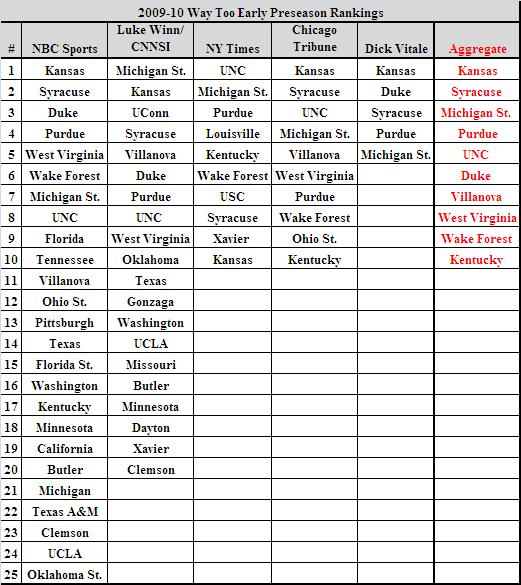
This is admittedly a really stupid exercise given that it’s not very easy to project how these teams will look in six months, but everyone does it anyway, so as your full-service college basketball service provider, we feel obligated to disseminate the information for you.  Send us more links as they come available and we’ll add them to the list.

Update: here are some insanely too early all-americans for 2009-10, courtesy of CHN.

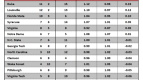
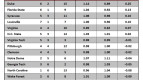
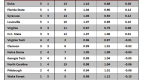
Update 2: here are the new aggregate rankings, taking into account Parrish, Goodman and Katz’s rankings.

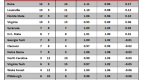
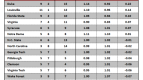
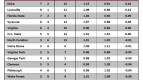
Note: for the aggregate ranking, we only aggregated the top ten, and teams that were named on every list were ranked higher than those ranked on all but one, all but two, etc.  Then teams were ranked within that criterion (ie, KU, Syracuse, MSU and Purdue were each ranked by all five lists, but UNC was only ranked on four).

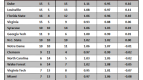
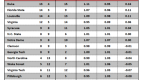
2009-10-way-too-early-rankings

Some very quick notes on these rankings:

  • Clearly most everyone thinks Kansas is going to keep Sherron Collins and Cole Aldrich around for another year.   Fair pick there, but Pete Thamel at the NYT must think differently in that regard.
  • Same thing with Syracuse and Jonny Flynn.
  • North Carolina will probably lose Lawson and Ellington, but we all know they’ll still be a top ten team next year.  Undoubtedly Vitale would have had them there if he’d bothered to list more than five teams.
  • Duke will likely lose G-Henderson, but they’ll have more than enough coming back and entering the program to keep themselves squarely in the top 10.  Not sure what the NYT and Chicago Tribune are thinking there.
  • Wake Forest and Kentucky are wildcards at this point.  Wake could end up losing both Al-Farouq Aminu and Jeff Teague, which would put the Deacs back in the NIT, while Kentucky could end up with largely the same team it had last year if none of the top recruits follow Calipari to Lexington.  These are two huge stay-tuneds.
  • People overrate Tourney performance.  Texas, UCLA, Cal, Texas A&M… even Florida should be strong next year.  St. Mary’s if they keep Patty Mills and Davidson if they keep Stephen Curry as well.
Share this story

Why Villanova Will Win…

Posted by nvr1983 on April 3rd, 2009

As part of our ongoing attempt to bring you the best college basketball coverage anywhere, we enlisted the editors from the finest team-specific blogs we could find to write posts explaining why their team will win tomorrow.

Our first submission is brought to you by Pete of LetsGoNova.com.

Make no mistake about it: Villanova is the underdog tomorrow. North Carolina is favored by 7.5 points in Vegas and by 4 points by KenPom (with a 66 percent chance of victory).

More intuitively, common sense tells us the Tarheels are the superior team. North Carolina features five likely future first-round draft picks: Ed Davis, Danny Green, Tyler Hansbrough, Wayne Ellington, and Ty Lawson will all cash big NBA paychecks.

Villanova might sneak Dante Cunningham into this year’s second round, but that’s pretty much it in terms of NBA prospects as of right now. (Corey Fisher, Scottie Reynolds, and Corey Stokes are also plausible NBA candidates, but are not quite there yet.)

The Tar Heels have lost just four games this season compared to seven for Villanova. While the Wildcats squeaked by Pittsburgh last weekend in one of the all-time great NCAA tournament games, North Carolina blew out Blake Griffin and Oklahoma, with a 12-point margin of victory in a game that was not even that close.

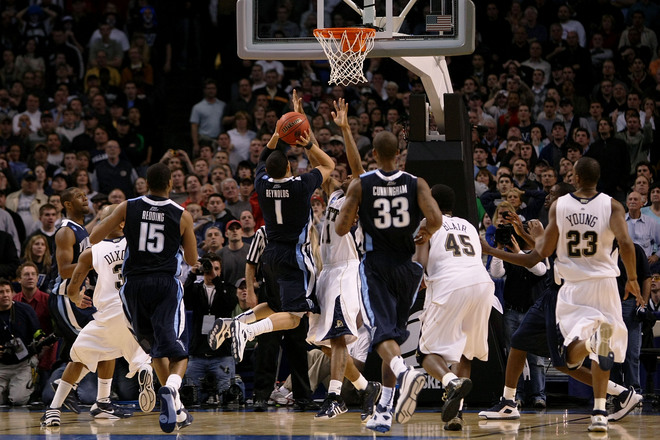
Carolina has not really been challenged in the tournament so far, winning four blow-outs. Villanova trailed American by double digits in the second half before coming up with the win. The ‘Cats also played Pittsburgh to a virtual draw for 39 minutes and 55 seconds before Scottie Reynolds entered the pantheon of great NCAA tournament buzzer-beaters to win the game.

Reynolds hits "The Shot" (Credit: Getty Images)

Reynolds hits "The Shot" (Credit: Getty Images)

Villanova was able to blow out both UCLA and Duke, which is a good sign.

North Carolina also will enjoy a tremendous coaching edge. I don’t care how much you like Jay Wright; Roy Williams is one of the all-time greats. I don’t think there can be much debate about that.

Positives for Villanova include a rapid, intense improvement in quality of play late in the season, a versatile bunch of players who can multitask on the court, a superior half-court defense, and a likely favorable crowd in Detroit, especially if Michigan State wins the opener.

Conventional wisdom also says that the Wildcats play “tougher” than the Heels, but I am not so sure toughness matters so much when your opponent has a lineup full of NBA players. (I do think it matters some.) We shall see.

So, in the face of these long odds, how can Villanova actually win the game?

Read the rest of this entry »

Share this story

RTC Bracket Second Round Results: Best Team of the Modern Era (1985-2008)

Posted by rtmsf on April 1st, 2009

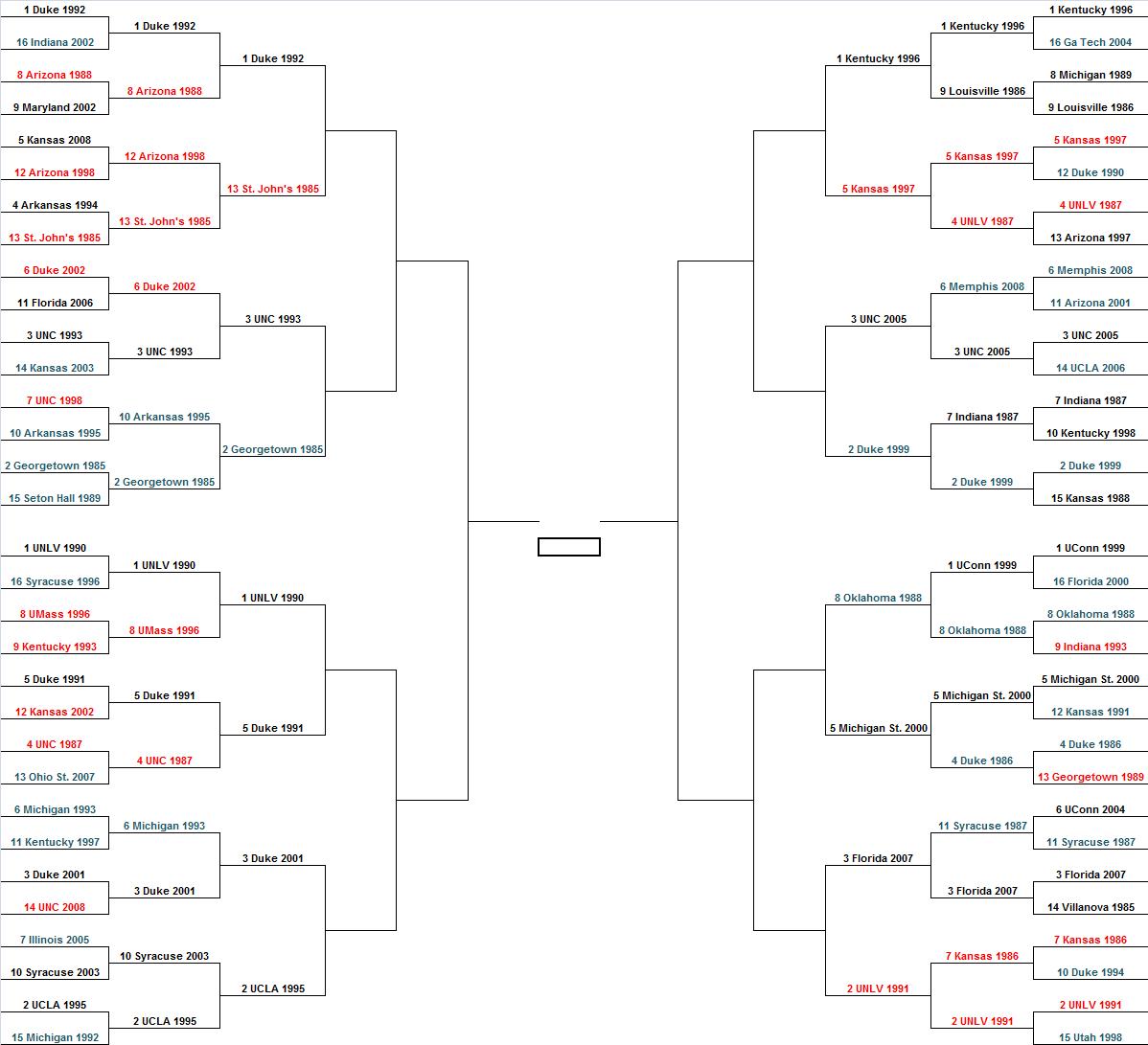
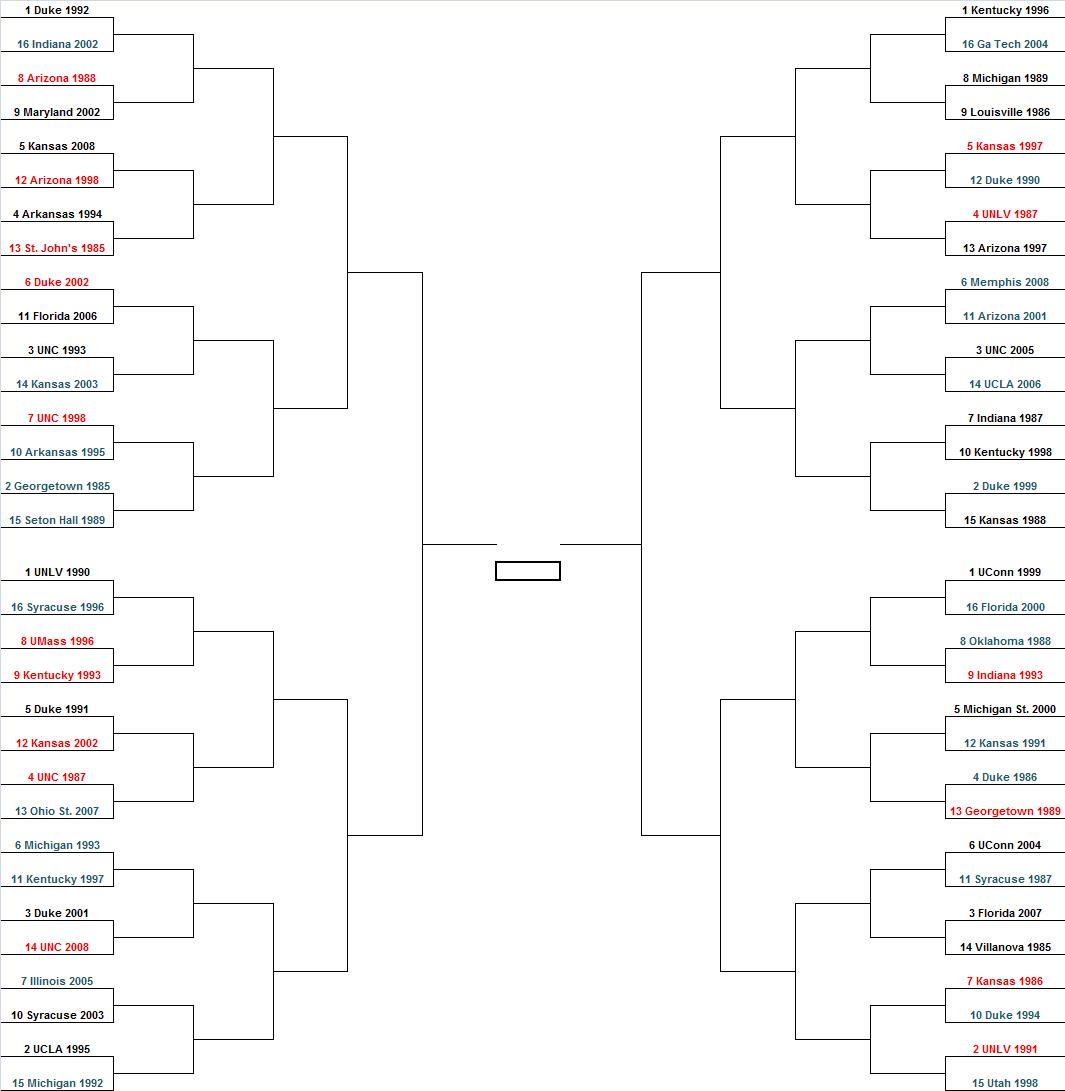
Now we’re starting to get to the good stuff.  Below is our sweetest of Sweet Sixteens in the RTC Modern Bracket.

We have ten national champions still alive, three runners-up and three at-large teams. There were a couple of minor upsets, but one of our #1 seeds has already exited this Dance.

Explanations of each game below the bracket.

ncaa-modern-bracket-r16

Instant Analysis

#1 Duke 1992 def. #8 Arizona 1988 – Lute Olson‘s Wildcats keep this game closer than you might expect thanks to Sean Elliott, Steve Kerr and Anthony Cook, but Coach K’s trio of Christian Laettner, Bobby Hurley and Grant Hill pull away in the last 5 minutes. Against most teams Elliott is a nightmare match-up, but Duke has Grant Hill who while not quite at the level he was at in 1994 still can play some solid defense. In the end, Arizona, like many teams, doesn’t have an answer for Laettner who wills the Blue Devils into Sweet 16.

#13 St. John’s 1985 def. #12 Arizona 1998 – While I’m not sure that either of these teams can be considered a Cinderella, we get our match-up of double digit teams. Lute Olson’s defending champs came into the game supremely confident after having knocked off a very good Kansas 2008 team with their next match-up against a team that didn’t even make the the NCAA title game, but Lou Carnesecca’s Redmen have other ideas. Arizona’s heralded backcourt of Miles Simon and Mike Bibby simply run into a better version of themselves in Chris Mullin and Mark Jackson and the Wildcats have no answer for Walter Berry. Next up for Lou Carnesecca, Coach K and the 1992 Blue Devils.

Read the rest of this entry »

Share this story

RTC Bracket First Round Results: Best Team of the Modern Era (1985-2008)

Posted by rtmsf on March 30th, 2009

Welcome back.  The RTC Braintrust got together tonight and hammered out our 32 first round winners for the RTC Modern Bracket, one step closer to picking the team that we believe is the very best squad of the last quarter-century.

A reminder: we used resume/body of work to select and seed our 64 finalists, but that criterion now takes a step back to how we think teams would perform in head-to-head matchups.  So if your favorite team won a title but had a relatively weak inside game, don’t be surprised if a runner-up or at-large from another year with superb inside play knocks you out of the bracket.  Yes, we’re looking at you, Illinois fans.

Quick analysis of the numbers: fourteen of our 24 national champions survived the first round, but only eight of our runners-up made it through their first game.  Ten of our sixteen at-large teams also survived.

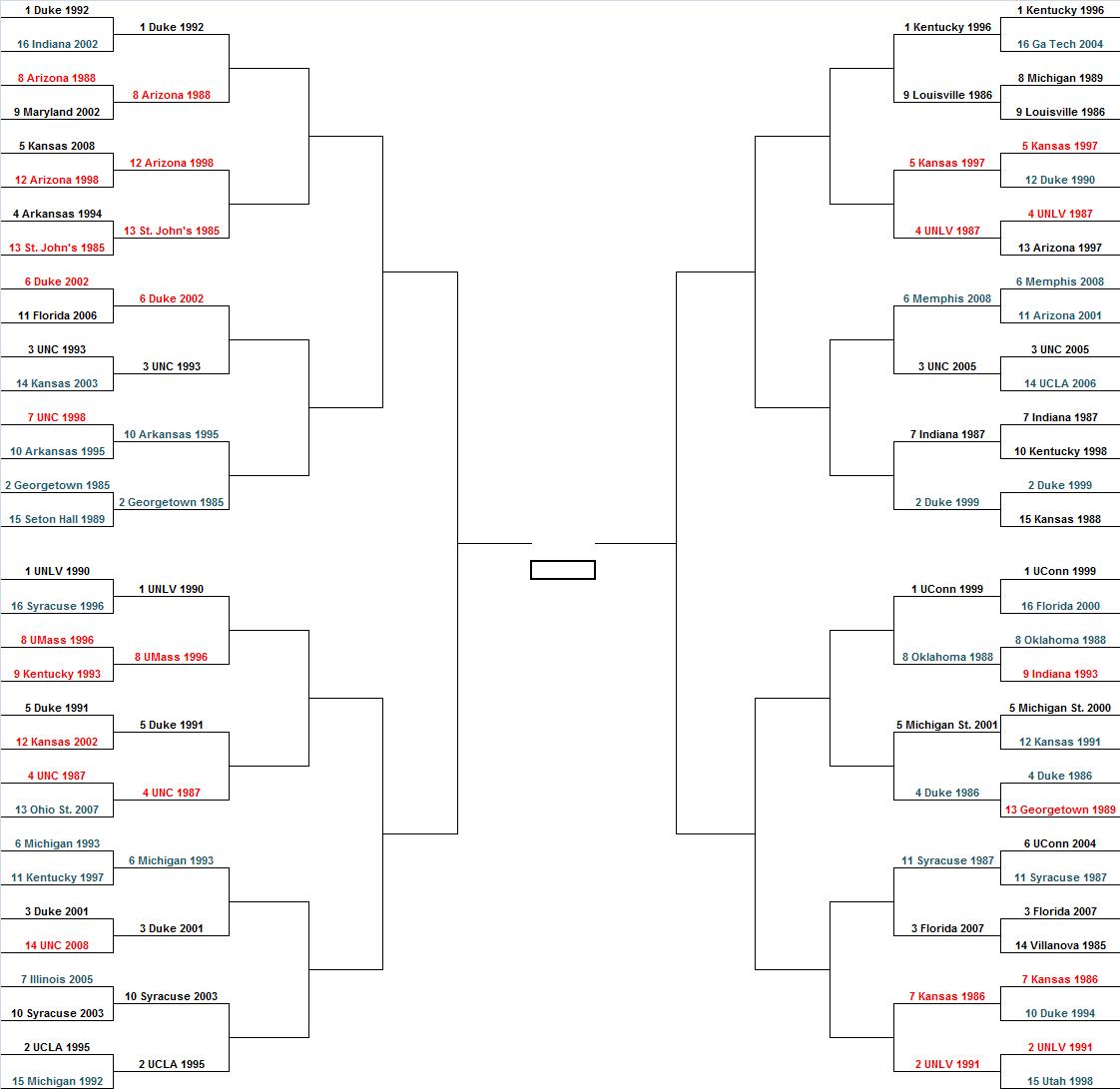
And now, the updated bracket through the first round of matchups, with brief explanations of how we analyzed each game below.

ncaa-modern-bracket-r32-v2

Instant Analysis

#1 Duke 1992 def. #16 Indiana 2002 – Coach K’s best team picked apart the Cinderella Hoosiers while the two Hills – Thomas and Grant – made life miserable for Jared Jeffries.

#8 Arizona 1988 def. #9 Maryland 2002 –   In a very close contest, Steve Kerr and Sean Elliott got it done from the perimeter despite Juan Dixon’s heroics to keep Maryland in the game.

#12 Arizona 1998 def. #5 Kansas 2008 – Upset Alert!  The defending champs led by Mike Bibby, Miles Simon and Michael Dickerson, took care of a Kansas team that could not bottle up the Arizona guards (think 2.5 Derrick Roses).

#13 St. John’s 1985 def. #4 Arkansas 1994 – Arkansas didn’t want to face a team with a superb PG in this matchup, and they faced one of the best of his generation in Mark Jackson.  Jackson continually hit Chris Mullin and Walter Berry for open looks to pull off the upset over the national champion Hawgs.

Read the rest of this entry »

Share this story

RTC Bracket: Best Team of the Modern Era (1985-2008)

Posted by rtmsf on March 30th, 2009

We’ve been sitting on this idea for some time now, and we figured that the relatively quiet week prior to the 2009 Final Four would be the best time to unveil it for your vetting, review and diligence.  So the plan is this: each weekday we’ll advance one round until we get to a Modern Era Final Four on Friday.  On Sunday following the F4, we’ll release our two finalists and the Modern Era champion will be crowned on this year’s Championship Monday.

Let’s get down to it with our criteria for selection of the 64 teams:

  • We selected the 24 national champions (noted in black).
  • Next, we selected the 24 national runners-up (noted in blue-gray)
  • Finally, we selected the 16 best at-large teams of the last 24 years (noted in red).

You’re undoubtedly wondering how we chose the last group of sixteen at-large teams, and that’s a fair question.  There was no single measure (such as making the F4) that guaranteed inclusion to or exclusion from our at-large field, but we considered each team’s body of work in a particular season when doing so.  Criteria such as overall record, conference record, AP poll ranking, NCAA seed, postseason success, general reputation at the time, and team history were included.  Similar to selecting and seeding the field every year, the last few teams looked largely the same on paper and in our memories.  Some of them will without question inspire debate, but that’s ok, because the point of this entire exercise is to do so.

The same is true for how we seeded each team in the field.  As much as possible, we tried to stay away from the Team A would beat Team B analysis (that’s next!), focusing mostly on the team’s full body of work.  Of course, comparing teams between eras and even years is nearly impossible in many cases, so there’s a fair amount of subjectiveness that went into the seed placements.  Bear with us on that.  Additionally, as much as possible, we tried to avoid early-round matchups between the same school and teams from the same season, while still keeping a reasonable amount of competitive balance among the regions.

Enough chatter, here’s our Modern Era bracket.  Please leave us comments below telling us your choices for the first round winners.  We won’t guarantee that we’ll listen, but you’ll likely know something about these matchups that we don’t.  Feel free, and we’ll be back tomorrow with the next round!

Update: here are the First Round results.

ncaa-modern-bracket-field-v5

Overall Top Four Seeds:  Duke 1992, Kentucky 1996, UNLV 1990, UConn 1999

Last Four At-Larges: UNC 2008, St. John’s 1985, Georgetown 1989, Kansas 2002

First Four Left Out: UCLA 2008, Arkansas 1991, Michigan St. 2001, St. Joseph’s 2004

Breakdown by School (total, at-large):

  • Duke (8, 1)
  • Kansas (7, 3)
  • North Carolina (5, 3)
  • Arizona (4, 2)
  • Kentucky (4, 1)
  • Florida (3, 0)
  • Indiana (3, 1)
  • Michigan (3, 0)
  • Syracuse (3, 0)
  • UNLV (3, 2)
  • Arkansas (2, 0)
  • Connecticut (2, 0)
  • Georgetown (2, 1)
  • UCLA (2, 0)
  • Georgia Tech (1, 0)
  • Illinois (1, 0)
  • Louisville (1, 0)
  • Maryland (1, 0)
  • Massachusetts (1, 1)
  • Memphis (1, 0)
  • Michigan St. (1, 0)
  • Ohio St. (1, 0)
  • Oklahoma (1, 0)
  • Seton Hall (1, 0)
  • St. John’s (1, 1)
  • Utah (1, 0)
  • Villanova (1, 0)

Be sure to check back on Tuesday morning for the First Round results of the RTC Modern Era bracket.

Share this story

Villanova and Pittsburgh put the madness back in March Madness

Posted by nvr1983 on March 29th, 2009

After nearly 10 days of college basketball critics bemoaning the lack of excitement in this year’s edition of March Madness, two of the Big East’s best teams answered all of those critics by submitting an all-time classic. After one of the strangest 10 seconds you will ever see, Scottie Reynolds made an end-to-end run that might replace the Danny Ainge and Tyus Edney versions on NCAA Tournament highlight reels from now on as this was on a much bigger stage with a trip to the Final 4 on the line. Even with Reynolds miracle, Pittsburgh still had its shot, but a 75-foot desperation heave by Levance Fields was off-target and the Villanova fans which filled TD BankNorth had their biggest moment since 1985 when Rollie Massimino, who attended the games in Boston, guided the Wildcats to their only national championship.

It was a game that showed off everything that the Big East was this year: tough, physical, surprisingly high-scoring, and always entertaining. The Wildcats came out of the gates strong and held a 22-12 lead with 9:27 left before the #1 seeded Panthers joined the fight. Relying on its three stars (DeJuan Blair, Sam Young, and Fields), Jamie Dixon‘s squad cut the lead to 2 with an 8-0 spurt in 1:09. From that point forward, the two team traded punches like world-class heavyweights (back when being a heavyweight actually meant something) as neither team was able to stretch their lead beyond 5 points. Villanova relied on a balanced attack (Dwayne Anderson with 17 points, Reynolds with 15 points, Dante Cunningham with 14 points, and Shane Clark with 11 points) while Pittsburgh relied heavily on its two 1st team All-Big East performers (Young with 28 points and 7 rebounds and Blair with 20 points ant 10 rebounds) to keep it in the game.

A tight game throughout. . .

A tight game throughout. . .

After trading haymakers for nearly 37 minutes without either team achieving any separation, Pittsburgh appeared to have a chance to do so coming out of a Villanova timeout with a 4-point lead and the ball out of bounds with 3:05 left.  Instead, that’s just when the madness started. Jermaine Dixon, who had hit a tough jumper just moments earlier  (with a shot that was reminiscent of one that his brother Maryland star Juan Dixon used to hit not too many years ago) to give the Panthers the lead, had the ball stolen from him and in an attempt to recover fouled Dwyane Anderson for the conventional 3-point play. A Sam Young turnover and a Corey Fisher lay-up later, the Wildcats had the lead with 2:16 left, but Fields hit a pair of free throws to give the Panthers the lead back. The Wildcats showed their mettle by scoring the next 5 points to take a 4-point lead with 47 seconds left. As he has done all night long, Young provided the answer for the Panthers with a clutch 3-pointer (“Onions!” as Bill Raftery would say) with 40 seconds left to cut the lead back to 1. A pair of Fisher free throws and a Reggie Redding free throw allowed the Wildcats to stretch the lead back to 4 with 20 seconds left.

Read the rest of this entry »

Share this story

Conference Report Card – Sweet 16 Edition

Posted by rtmsf on March 25th, 2009

We’re back with the second annual review of how the major conferences are doing after one weekend of the NCAA Tournament.  As we all are aware, the Dance eliminates the pretenders – that means you, Wake and Washington – so that the teams with legitimate chops remain standing.  Chalk has predominantly ruled this tournament so far, but that doesn’t keep us from evaluating which conferences are performing better or worse than expectations.   We review the conferences with multiple bids below…
Simpsons Chalkboard

Big East  (7 bids, 5 remaining, 11-2 record)

The Big East was the most powerful conference all year and they are proving it in the postseason.  West Virginia was the only first round loser, and Marquette was outlasted by a tough-as-nails Missouri team in the second round.  All other Big East teams advanced to the Sweet Sixteen, setting a new record for the total number from one conference (5).  What’s more is that each of these teams are F4-caliber; there isn’t a single Cinderella in the group.  It wouldn’t surprise us if this league managed to get 75% of the F4 entrants this year, and we fully expect all five to play into the national quarterfinals.

Verdict:  A.  The Big East’s expected # of wins for the tournament is 16.2, and there’s a solid chance that the league will bust through twenty wins this season in setting another new record.

Big 12  (6 bids, 3 remaining, 9-3 record)

For the second consecutive year, the Big 12 had another great first round (6-0), culminating in their three best teams making it to the Sweet Sixteen.  The league hasn’t had an upset yet, and the three losing teams – Texas, Oklahoma St., and Texas A&M, acquitted themselves nicely in five of their six games (lone exception: TAMU vs. UConn).  Kansas, Missouri and Oklahoma all have tough but winnable games if they play well, and the Big 12 should reasonably expect to see one of them playing into next weekend.  For a “down” year in the league, this is a great performance.

Verdict: A.  The Big 12 already has nine wins against an expected performance of 10.57 wins, which basically means they’re doing really well so far.

Atlantic 10  (3 bids, 1 remaining, 3-2 record)

The A10 got three teams into the Dance and made the most of its opportunity, winning two first round games (one an upset with #11 Dayton over #6 WVU), and sending Xavier to yet another Sweet Sixteen.  We don’t feel that XU has much of a chance to advance the league’s banner further against Pitt, but never count out a Sean Miller team.  Xaviercruised to the Sweets against two good teams.

Verdict: A-.  The league was expected to win 2.52 games and they’ve already won three, so anything beyond that is gravy.  How pathetic is it that the A10 is outperforming the SEC by a country mile?

Horizon (2 bids, 0 remaining, 1-2 record)

The Horizon had a chance to make some serious noise in this Tournament, but typically-solid Butler couldn’t hold up its end of the bargain when it lost to #8 LSU (who was probably underseeded).  However, Cleveland St. so far has had the upset of the Dance with its throttling of #4 Wake Forest, so we’re going to give them the benefit of the doubt here.

Read the rest of this entry »

Share this story

ATB: NCAA First Weekend Thoughts

Posted by rtmsf on March 24th, 2009

afterbuzzer1

First Weekend Storylines. Like most of you guys, we figure we watched approximately 38 hours of basketball last weekend over the first four days of the NCAA Tournament.  Since we were in Vegas taking advantage of the sportsbooks’ multiple huge-screen tvs, we pretty much saw pieces of every game on the dance card.  Here are some of our thoughts and observations based on the sensory overload (speaking of sensory, that chick making bedroom eyes at the burger in the McDonald’s commercial is ridiculously difficult to remove from the internal hard drive).

Coach K, Your Filet o’ Sole Has Arrived.  From our point of view, at least in terms of the elite teams of each conference, there was never any question that the Big East was much stronger than that of the ACC this year.  The fact that anyone was even questioning this seemed odd.  This year, the Big East had six teams (of seven bids) with a reasonable shot to make a run at the F4 – UConn, Pitt, Syracuse, Louisville, Villanova and Marquette, and the first five of that group is still standing (the most ever by a single conference in the Sweets, btw); the ACC had three (of seven bids) – Duke, UNC and Wake Forest, but only the twin towers of Tobacco Road royalty are left dancing.   The simple fact of the matter is that the ACC’s middle – comprised of Clemson, Florida St., Maryland, BC and Virginia Tech (NIT) – were only “solid” teams that had significant weaknesses due to personnel or other issues.  Conversely, the equivalent caliber teams from the Big East (with the notable exception of WVU) were left out of the Big Dance.  This group includes Providence, Cincinnati, Georgetown and Notre Dame, and there shouldn’t be any dissent as to the fact that each of these teams would have competed for the middle of the ACC with the above group and several would have also earned bids on the basis of the occasional upset (see: Maryland and BC).  Sitting where we are now, with five Big East teams a mere two wins away from the F4, it wouldn’t shock us to see all four slots filled by a BE team.  This is still an unlikely scenario, but keep in mind that only Villanova is considered an underdog to reach the next round (Syracuse is a pick’em against Oklahoma), and all five of these teams are more than capable.

footinmouth

#1 Seeds. UConn looked absolutely dominant in its two games, and while not much can be discerned from a 56-pt dismantling of Chattanooga, the 92-66 beatdown of a Texas A&M team that was coming on strong must be viewed with awe.   The Huskies will get the best team in the Big Ten next – Purdue – but we have trouble believing that the Boilers will challenge Jim Calhoun’s team at this point.  Suddenly a #1/#2 matchup against Memphis in the regional finals looks very appealing.  UNC bombed Radford in its first round game before riding a partisan crowd’s energy and Ty Lawson’s toe to a breakaway win over LSU in the second round, 84-70.   The Heels should put away Gonzaga easily in the next round (we doubt Heytvelt will dominate Hansbrough this time around), but a regional final against either Oklahoma or Syracuse could present all kinds of problems for the Tar Heels.   Louisville and Pittsburgh both struggled to put opponents away in both their first and second round games.   Both of these teams sometimes have trouble scoring, and we have to wonder when a prolonged scoring drought against a good team will be enough to end their run to the title.   Pitt should have a relatively easy go of it with its next game against Xavier, but we’re looking at Louisville’s next game against Arizona and wondering what might happen if the trio of Budinger, Wise and Hill are all making shots.

Read the rest of this entry »

Share this story

Boom Goes the Dynamite: NCAA Tournament Day Three

Posted by nvr1983 on March 21st, 2009

dynamiteAfter a relatively weak set of 1st round games (except for very late last night), we’re looking to forward to our beloved tournament returning to form with a strong set of 2nd round games. One of the benefits of the lack of shocking upsets in the first round games is that we get a good set of 2nd round games that won’t be blowouts. Right? Anyways, here is your slate of games.

  • 1:05 PM: #6 UCLA at #3 VillanovaRTC Live will be there
  • 3:20 PM: #10 Maryland vs. #2 Memphis
  • 3:35 PM: #9 Texas A&M vs. #1 UConn
  • 5:40 PM: #5 Purdue vs. #4 Washington
  • 5:45 PM: #8 LSU vs. #1 UNC
  • 5:50 PM: #10 Michigan vs. #2 Oklahoma
  • 8:10 PM: #12 Western Kentucky vs. #4 Gonzaga

  • 8:15 PM: #7 Texas vs. #2 Duke

We’ll be starting this post around 3:20 so head over to the aforementioned RTC Live before that time for our coverage of the start of round 2.

3:23 PM: Memphis starts off like they did in the 1st round with a 35-second violation that wasn’t called because Maryland stole the ball as the shot clock expired. Greivis Vasquez just got called for his first foul 57 seconds into the game. That’s definitely something to watch for.

3:27 PM: Nice run by Memphis to silence any of the early doubts after their ugly opening game. This is the Memphis team I put in the Final 4.

3:40 PM: Sorry for the delay. I was busy responding to an e-mail from the NCAA trying to get you coverage from the NCAA East Regional (they’re pretty myopic in Indianapolis). Anyways, back to the game. . . John Calipari has to be  pleased with this start. His Tigers have come out much sharper than they did against Cal State-Northridge.

Read the rest of this entry »

Share this story