Friday, March 19 (all CBS)
12:25pm - Minnesota vs. Xavier
12:30pm - Cornell vs. Temple
2:30pm - Siena vs. Purdue
2:35pm - Missouri vs. Clemson
4:45pm - Utah St vs. Texas A&M
7:10pm - FSU vs. Gonzaga
7:15pm - Ga Tech vs. Okla St
7:20pm - NMSU vs. Michigan St
9:30pm - Syracuse vs. Vermont
9:40pm - Houston vs. Maryland
9:45pm - Louisville vs. California
Rob Dauster of Ballin is a Habit is spending the week as the RTC correspondent at the Big East Tournament. In addition to live-blogging select games throughout the tournament, he will post a nightly diary with his thoughts on each day’s action. Here is his submission on the First Round games.
South Florida 58, DePaul 49
South Florida looked really good in the first half. In the second half, a scrappy DePaul team started hitting some shots and made it somewhat exciting. But in the first half, USF looked absolutely dominant. They got just about whatever they wanted offensively, they hit the offensive glass, they scored in transition, and they held DePaul to merely 15 points.
Jarrid Famous could be a very good player one day. Great frame, good size and athleticism, but he needs a post game. I like his aggressiveness as well; he had seven offensive rebounds.
In one of the stranger stats I’ve ever seen, South Florida scored 58 points. 50 of them came in the paint, and six at the foul line, meaning that the Bulls got just one basket outside of the paint.
The most entertaining part of this game was actually the battle of the bands in an empty gym before tipoff. In my opinion, USF clinched it with a stirring rendition of “You Can Call Me Al”.
Where to start about the Huskies? They turned it over 20 times; they went 6-18 from the foul line; they clearly had no interest in playing this game; Jerome Dyson packed it in three games ago, as he finished with four points and nine turnovers this afternoon. All around, it was ugly.
St. John’s is going to be a good team next year given they learn how to hold onto a lead. They will have ten seniors on their team, and the only rotation player they are losing is Anthony Mason, Jr. I’ve already got them slotted as my sleeper pick. They have size, they have athleticism, they have a stud in DJ Kennedy, and they have a couple experienced PGs.
Will UConn accept an NIT bid? Did Jim Calhoun just coach his last game in Storrs? Is Kemba Walker going pro? All questions you should keep in mind over the next month. Another thing to think about with the Huskies – they have not won a Big East Tournament game since the 2005 first round against Georgetown. Jerome Dyson is 0-4 in the Big East Tournamen and 0-1 in the NCAA Tournament. The only year he was on the team and the Huskies had any postseason success was last year’s Final Four run, while he was injured.
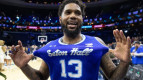
Welcome back to RTC’s coverage of the first day of the Big East tournament. Tonight, we are bringing you coverage of the 10-15 game between Providence and Seton Hall. Providence is an interesting team. They can score as well as anyone in the conference, but defense is far from their forte. If you do tune in tonight, be sure to keep an eye on Jamine Peterson, a 6′6″ combo forward that is a double double machine. For Seton Hall, there is still a chance at receiving an at-large berth. If Jeremy Hazell and company can win two games, they will more than likely be dancing.
So hit the jump, leave a comment, and join us as we follow the biggest and best conference tournament.
Rob Dauster of Ballin is a Habit is the RTC correspondent for the Big East Conference.
Season in Review
The Big East regular season ended on Saturday, and I think it is safe to say that the league had a bit of an unpredictable season. Don’t believe me? Show me a season preview that had Syracuse winning the league, Pitt getting a double-bye, UConn playing on Tuesday, and with South Florida and Notre Dame finishing above UConn and Cincinnati. See? Unpredictable.
But what does that mean? Was the Big East better from top to bottom than it was last year? Did teams like Marquette, USF, and Notre Dame benefit from a down year? The one thing that is for sure is that the top of the Big East is nowhere near the top of last year’s Big East. Five Sweet 16 teams and three No. 1 seeds is a pretty phenomenal feat. But last year the conference only sent seven teams to the tournament, and there is a very good chance that number will be surpassed this season.
The way the Big East bubble is shaping up right now, five teams are in – Syracuse, Villanova, West Virginia, Pitt and Georgetown. Louisville and Marquette should be ok, but a loss on Wednesday and things could get dicey depending on how the rest of the bubble plays out. If Notre Dame happens to lose their first Big East Tournament game (to either Seton Hall or Rutgers), then the Irish could be in trouble as they will likely be right on the cut line. That gives us eight that are reasonably safe.
It is possible, however, for the Big East to get two more teams in. If today was Selection Sunday, then Seton Hall may actually be in the tournament. While they have 11 losses, the average RPI of the team’s that have beaten the Pirates is 26 and they have not lost to a team with an RPI below 64. Add into that mix that the Pirates have wins over Louisville, Notre Dame, Pitt, at Cornell and an RPI of 53. Its not a great profile, but its a very weak bubble this year. That could be enough. The other team that still has a shot of an at-large bid is UConn, simply because the Huskies have more good wins than most of the bubble teams. That said, they also have 14 losses. UConn will likely need to make it to the Big East semis for any kind of real shot at a bid.
The Big East Conference released their all-conference teams today, and there isn’t much there that I disagree with. (Note: there are six players on the first team because one of those six will win POY; POY, COY, and ROY will be announced on Tuesday between Big East Tournament sessions)
Close Calls. In two closer-than-expected games, #12 Michigan State and #18 Pittsburgh held on to their positions in the Big Ten and Big East, respectively, with quite a bit still on the line. For MSU, it’s a shot at a shared Big Ten regular season title; for Pitt, it was a double-bye in the Big East Tournament next week.
#18 Pittsburgh 73, Providence 71. In a closely contested game throughout, it was Ashton Gibbs who saved Pittsburgh from what would have been their worst loss of the season at full strength (the IU loss in December was without several players). With 3.5 seconds remaining, Gibbs (25/4/3 assts) received the ball at the right hash mark on the opposite end of his basket, took two dribbles before stopping and pulling up from about 28 feet to drain a game-winning three at the horn. The bucket moved the Panthers to 12-5 in the Big East, and with a win over Rutgers this weekend in combination with a Villanova loss to WVU, the preseason-unranked kids from the Steel City would be the #2 seed in next week’s Big East Tournament. Simply amazing considering the talent in that league this year.
Ashton Gibbs: "I Got This." (PPG/M. Freed)
#12 Michigan State 67, Penn State 65. We’re really not going to fall into this trap that Tom Izzo likes to set for us seemingly every year. His teams always win a bunch of games, but many of those wins seem to come by a mere point or two, and they also lose a few more than you might expect. Then the Spartans get into the NCAA Tournament and the very same players who were somewhat underwhelming during the regular season put it all together for another run to the Final Four. So we’ll reserve judgment on this year’s MSU team until we see what happens later this month. Tonight Penn State had the ball with five seconds remaining but they were unable to get a shot off to win or tie the game. With the win, MSU moves to 13-4 in the Big Ten and the Spartans will host rival Michigan this weekend to try to tie Ohio State (and possibly Purdue) for the top record in the league.
Should Washington Join the Bubble Conversation Along With Ole Miss, Dayton and Arizona State?
Washington 86, Oregon 72. With an RPI of #53, twenty wins, and a better strength of schedule than its bubble peers Mississippi State and Virginia Tech, shouldn’t the Huskies at least be in the conversation? They’ve beaten Texas A&M, Portland and Cal, which is a resume of quality Ws at least as good as Mississippi State (best win: Old Dominion), Dayton (best win: Xavier) and Virginia Tech (best win: Clemson). We’re well aware how down the Pac-10 has been this year, but just because everyone has already seemed to decide that it’s a one-bid league shouldn’t make it necessarily so. The resumes need to speak for themselves, and we’re having trouble understanding the difference between the above teams. Quincy Pondexter had 34/10/6 assts in tonight’s win.
#903. Philadelphia 76, Goldey-Beacom 65. It’s not D1, but we don’t really care. Anyone who wins 903 games deserves all the accolades he can get, and RTC is happy to oblige (especially when their fans oblige us with a well-deserved RTC). With local coaching luminaries such as Villanova’s Jay Wright and Temple’s Fran Dunphy in attendance, the 68-year old coach Herb Magee thrilled an SRO crowd by avenging the school’s only CACC conference loss as he officially became the all-time leader in NCAA wins, passing Bob Knight’s 902. His Rams move to 23-6 overall and 15-1 in the conference as they look to make another run in the Division II Tournament next month. Magee won a national title at the school in 1970 and has averaged over twenty victories a year ever since, yet he says he has no plans to slow down as long as he’s healthy, inviting everyone back in “four and a half years” for the next celebration at 1,000. After the game fans were given t-shirts with Magee’s name and the number 903 on the front — if anyone can send us one of these, we’d be exceptionally grateful. Congratulations, Coach Magee — a class act, through and through.
Fans RTC After Magee Won his 903d Game Tonight (Phila. Inquirer)
The Wild and Wonderful Big East. #13 Georgetown 70, Louisville 60. As soon as you think you have this league figured out, it surprises you again. Come on, who wasn’t saying at halftime of this game tonight that the Cards were surging and the Hoyas were cooked. It’s ok, you don’t have to admit it to us, but that’s what we were thinking too. Um, we guess the Hoyas weren’t thinking that. Georgetown used a 24-5 run to start the second half and silence the Freedom Hall crowd behind Austin Freeman’s 29/4/4 assts, the vast majority of which came in that half. The rest of the game was academic, as Rick Pitino’s team fell back into its old habit of Edgar Sosa (24/8 assts) and Samardo Samuels (11/6) doing most of the shooting (and scoring). Both of these teams are now 9-6 and one game behind West Virginia for magical double-bye that the Big East Tournament offers its top four seeds. Georgetown has two winnable home games vs. Notre Dame and Cincy sandwiching a tough road game at WVU, while Louisville has three pretty tough games remaining (UConn and Marquette away, Syracuse at home). As for the long-term viability of these two teams, both have warts, but Georgetown’s better offensive balance and big-game ability carries a lot more weight with us — if having to choose now, Louisville looks like a first-round upset waiting to happen, while the Hoyas are a Sweet Sixteen team so long as their starters stay on the floor.
Upset of the Night. Evansville 55, #24 Northern Iowa 54. How badly must suspended UNI center Jordan Eglseder feel now? Although the Panthers are still safely within the NCAA field even if they lose in Arch Madness next week, this loss to the hapless Evansville Purple Aces will have a serious impact on their seeding two Sundays from now. Evansville, who has won only two games in the MVC all season but beat the top two teams (UNI and Wichita State) on their home court, held Nothern Iowa to 33% shooting and only 5-27 from three, one of their three worst performances of the season. The few Evansville fans who were there actually RTC’d, but we haven’t yet found any photographic or video evidence of this yet.
RTC Live will be coming to you from downtown Providence Tuesday night for a battle between a top-five Syracuse powerhouse and an upset-minded Providence team. Syracuse enters play tonight fresh off their monumental victory last Thursday at Georgetown but enter the Dunkin Donuts Center hoping to avoid a letdown in their sandwich game between the emotional win over the Hoyas and this coming Saturday’s hyped visit from Villanova to the Carrier Dome. The Orange are led by sensational Iowa State transfer Wesley Johnson and the pinpoint long-range shooting of Andy Rautins. Productive big men are also imperative to Jim Boeheim’s success this season from the punishing Arinze Onuaku to the athleticism of Kris Joseph. Providence is hoping they can post a memorable win akin to their stunning upset over #1 Pittsburgh in 2009 at the Dunk. If the Friars win tonight, they must defend in the halfcourt and shoot well from outside, most notably Sharaud Curry and Marshon Brooks. Also, keep an eye on how sophomore Jamine Peterson handles the forwards of Syracuse down in the post. We could have a high-scoring, high-flying, up and down marathon tonight in the Big East. Hope you’ll join me courtside for Syracuse vs. Providence here on RTC Live tonight at 7 PM.
Even though ESPN likes to hype up its Bracketbuster day the fact is that the last few weeks of the season act like an elimination tournament with teams moving in and out of the NCAA Tournament while other teams move up and down on a daily basis. While each and every game could theoretically have an impact on the Bubble and NCAA seeding there are a few games that matter more than the others which we will feature over the next two weeks leading up to the conference tournaments. We will feature these in two posts per week. The first will be a post released on Sunday night for games from Monday through Thursday and the second will be a post released on Thursday night for games from Friday through Sunday.
Fifth #8 West Virginia at UConn at 7 PM on ESPN on Monday – The Mountaineers will need a miracle to get a #1 seed, but this is a “must-win” if UConn wants to get into the NCAA Tournament. After this game the Huskies do not have another opponent that would impress the Selection Committee until they begin the Big East Tournament. Despite the fact that their “ceiling” is probably a #2 seed this game is also very important for the Mountaineers who need to be careful here because they finish with a tricky stretch with this game being following by games at home against Cincinnati and Georgetown then a trip to Villanova before the Big East Tournament. If the Mountaineers do not finish strong (at least 2-2) they could be looking at a #4 seed in the NCAA Tournament.
Ebanks is the X-factor for West Virginia
Fourth #22 Texas A&M at #24 Baylor at 9 PM on ESPNU on Wednesday – This is one game that does not feature a bubble team since both of these teams are in the NCAA Tournament, but this game does have big seeding implications. Right now these teams are competing for the #3 spot in the Big 12 behind Kansas and Kansas State. Both of these teams could fall anywhere from a #5 seed to a #8 seed and the difference for both could well be this game. Texas A&M has been playing well lately with only one loss this month (by 5 to Kansas). Up until Saturday when they lost in Stillwater, Baylor had not lost since they traveled to College Station. Now the Bears welcome the Aggies to Waco hoping to return the favor as inhospitable hosts. Both teams have favorable schedules down the stretch (read: no Kansas or Kansas State) so the winner of this has the inside track along with Texas for that coveted #3 seed in the Big 12 Tournament to avoid Kansas in the semifinals and get a higher seed in the NCAA Tournament.
Third Oklahoma State at #21 Texas at 9 PM on ESPN2 on Wednesday – The Cowboys picked up a big win on Saturday against Baylor, which should put them on the inside of the Bubble, but they are entering a difficult 3-game stretch: at Texas, home against Kansas, and at Texas A&M. Winning 2 of 3 should ensure that the Cowboys get in to the NCAA Tournament, but if they lose all 3 games (not an unreasonable proposition) they will be sweating it out on Selection Sunday. As for the Longhorns, we are not sure what to say about them at this point. Outside of UNC there has not been a more disappointing team in the nation–the Tar Heels have a safe lead in this category–yet we know that they are the one underachieving team that nobody wants to see in the pod when the brackets come out. Right now people have them in the #5-6 range, but they have a 4 very winnable games to finish the regular season (at Texas A&M and Baylor will be challenging as both teams took the Longhorns to OT in Austin earlier this year, but the Longhorns should expect to win those games). If they can get their act together, this team could get back to a #3-4 seed given their 3 wins (and counting) against the RPI top 25. If they don’t they could slip down to the #8-9 range, which could make for a very interesting 2nd round match-up in the NCAA Tournament for a #1 seed.
On Saturday February 13, Coach Keno Davis brings his Providence College Friars, a team led by senior guard Sharaud Curry but powered by freshmen, sophomores and JUCOs, to the Wachovia Center in downtown Philadelphia to play the #5 ranked Villanova University Wildcats in the 85th meeting between the two schools. Coach Davis runs the most up-tempo offense in the conference, and since Villanova is second behind Providence, expect at least one of the teams to break the century mark in a game that will mix long-range shooting with outlet passes and breakout buckets. The skies over Philadelphia, a city buried under nearly four feet of snow from two separate mid-winter storms in the last eight days, should be clear, but the forecast inside the Wachovia Center is for a blizzard of field goal attempts from both teams. Join us at 2 pm, as RTC goes inside the Wachovia Center for Villanova and Providence.
Welcome back, everyone! Boom Goes the Dynamite returns for the fourth weekend of the year with a blockbuster Saturday of games that are so good that we’re getting them up today as a reminder to join us tomorrow afternoon. With noon-to-night coverage and the fact that most of the country is completely frozen over again, we expect that you’ll be right there with us on the couch, eating a bunch of bad food and breaking down zone offenses. We hope to see you then!
Here are the games we plan on keeping an eye on…
12 PM: La Salle at #15 Temple on ESPN2 and ESPN360.com
12 PM: Marquette at #19 Connecticut on Big East Network HD and ESPN Full Court
12 PM: Louisville at #9 West Virginia on ESPN and ESPN360.com
1 PM: #7 Duke at #11 Georgetown on CBS – RTC Live
2 PM: #4 Syracuse at DePaul on Big East Network and ESPN Full Court
2 PM: Indiana at Illinois on ESPN2 and ESPN360.com
3 PM: FSU at Boston College on Raycom and ESPN Full Court
3 PM: #25 Northern Iowa at Missouri State
4 PM: Baylor at #6 Texas on Big 12 Network and ESPN Full Court
4 PM: #23 Vanderbilt at #1 Kentucky on ESPN and ESPN360.com A 4 PM: Arkansas at #20 Mississippi on SEC Network and ESPN Full Court
6 PM: Notre Dame at Rutgers on ESPN2 and ESPN360.com
6 PM: New Mexico at TCU on CBS College Sports
7 PM: #2 Kansas at #13 Kansas State on ESPN and ESPN360.com
7 PM: Georgia at South Carolina on Fox Sports (regional) and ESPN Full Court
7 PM: Northwestern at #5 Michigan State on Big Ten Network
8 PM: Providence at Cincinnati on ESPN U
9 PM: Utah at #10 BYU on Mountain Network
9:30 PM: #8 Gonzaga at San Francisco on Fox Sports (regional)- RTC Live
We will be dividing the day into three shifts with nvr1983 starting things off then rtmsf will handle the afternoon games before John Stevens takes you into the night with late night coverage of all the day’s big games.
10:50 AM: Apparently ESPN forgot to pay the electricity bill as the lights just went out on Jason Williams. (As a college basketball fan, I refuse to call him Jay. Jason Williams was a great player. Jay Williams crashed his motorcycle.)
11:00 AM: Dear College Students of America, This is how you show up for a College GameDay. I don’t want to call anybody out, but the Kansas State fans are crushing what I saw when I went to GameDay at UNC last year. To be fair, a game against in-state rival Kansas is much, much more important than a disappointing Miami team. This seems more like a College Football GameDay and that’s what we need for the basketball version too. Right now the pressure is on Illinois, Kentucky, Washington, Syracuse, and Duke to match this atmosphere when GameDay comes to town later this year.
11:10 AM: Does anybody have a link to where we can buy one of those Frank Martin t-shirts?
11:15 AM: According to the Kansas State website, the previous record for College Basketball GameDay attendance was 6,700 at Clemson last year before they played Duke. I haven’t heard an official number for today. Bramlage Coliseum holds 12,528 and I would think they are well over half full.
11:20 AM: Is Coach K advocating for abolishing the requirement for players to spend one year in college or wanting them to stay in school for more than one semester, which is all they really have to do to be eligible to play in their freshman year? It sounds more like the former. Jay Bilas is right that this issue is more a NBA/business issue.
11:22 AM: If you’re wondering who Hubert Davis and Digger Phelps are going to pick to win the Kansas-Kansas State game, their clothes might be a pretty good clue. Hubert is wearing a purple shirt and a purple tie. Digger is wearing a purple shirt and a purple tie and he he has a purple highlighter. . .
Last week, RTC spoke with Seth Davis of Sports Illustrated and CBS to talk about a variety of topics on college basketball and a new promotion for Coke Zero. This is not the first time we have spoken with Seth as we interviewed him last March for the launch of his book “When March Went Mad” about the 1979 championship game between Magic Johnson and Larry Bird. Before the interview officially began, Seth expressed his displeasure about not getting linked every day in the Morning Five. We would give you the transcript of that discussion, but Chinese government regulations prohibit us from doing so.
Ed. Note: This interview took place last week, but due to some transcribing issues we are just putting it up now.
Seth Davis: Man of Intrigue
RTC: I guess we will start with your alma mater. Duke is looking strong again this year, but is different than they usually look as they are not relying on the outside shooting as much as a complete game. A lot of people have been talking up Duke. Do you think this is the year they can make it back to the Final Four?
SD: I do. I think they are legit. It’s kind of funny. Here they are ranked 5th or 6th in the country, putting together a great record, and there is not a lot of buzz about Duke right now. It’s funny to say that because they are so ubiquitous on television, but I think that we have all seen them get off to these great starts the past few years before they fall in the tournament. This team does things that those teams did not primarily defend and rebound. Those things are very important assets to carry into the tournament because at some point you are going to have an “off” shooting night and I think back for example to when they lost in the 2nd round to West Virginia. I think West Virginia was like +16 on the boards. At some point the shots aren’t going to fall. This team has the ability to overcome that so I don’t know from strictly a talent standpoint if I would put them on the Texas, Kentucky, and Kansas level, but do I think of them on a short list of contenders to get to the Final Four? Absolutely. I think by the way they will have a great chance of getting a #1 seed if they win the ACC regular season and then win the [ACC] tournament. I would be surprised if they aren’t a #1 seed.
RTC: Sticking with a US News & World Report College Rankings theme. Another team that has really made a lot of news this year is Cornell with a lot of close losses to very good teams, but that doesn’t impact their RPI and NCAA seeding as much as some people would think. How good is this team? How high do you think they could be seeded and how far could they go in the NCAA tournament?
Wednesday Night of Upsets. Although all four of these games were upsets using the Vegas sense of the word, only UT and UConn were what we’d call significant ones. Still, it’s not often that we see three unranked teams pull wins over ranked teams on a random Wednesday night.
Is Kevin Stallings' Vandy Team the Most Underrated in America? (AP/Wade Payne)
#23 Vanderbilt 85, #14 Tennessee 76. Behold, the value of senior leadership. On a night when A.J. Ogilvy and Jeffrey Taylor could only combine for 22 points on 7-18 shooting, senior Jermaine Beal stepped up to lead Vanderbilt to a message-sending road win in one of the toughest places to play in America. The Commodores earned their tenth straight win behind Beal’s 25 points on 8-12 from the field, which included 4-6 from beyond the arc. Those four treys were half of Vandy’s total of eight, which came on 14 attempts (57.1%). Tennessee, by contrast, could only manage 6-20 (30%) from three, often settling for shots from deep when there were better ones to be had. J.P. Prince led UT with 22/4/3, and Wayne Chism owned the boards in this physical game, pulling down 16 boards in addition to his eight points. Still, Vanderbilt was able to out-rebound the Vols, 37-35 — a major reason why Tennessee just suffered their first home loss of the season. At the start of last night, Kentucky was the only undefeated team in the nation; now, Vanderbilt is the only undefeated team (5-0) in the SEC, a game ahead of UK in the East. Eleven days ago, the Commodores did what Kentucky couldn’t — win at South Carolina — but they’ll visit Lexington this Saturday.
New Mexico 76, #10 BYU 72. The two best teams in the underrated Mountain West Conference faced off tonight with more than just conference pride on the line. BYU came into the game riding a 15-game winning streak, and New Mexico was trying to get its swagger back after starting 0-2 in the conference including an almost unheard-of loss at their home venue, The Pit. The swagger might just be back, as the Lobos endured a horrid shooting night from their star Darington Hobson (5/14 on 1-11 FG) in giving the Cougars their first loss in conference play. Stepping up in his place was Dairese Gary, who scored a career-high 25 points, including nine in the last minute-plus to seal the win. BYU’s star Jimmer Fredette did his part for the visiting team, but the New Mexico defense made him work for it, resulting in an 8-21 shooting night for 27/7 assts. New Mexico has shown this season that they can play with anybody — beating four ranked teams — but losses to Oral Roberts, SDSU and UNLV show that they sometimes lose their focus. Expect to see both of these teams remain at the top of the MWC standings during the next month, with the rematch scheduled for February 27 in Provo.
Charlotte 74, #15 Temple 64. In a great way, the A-10 is a mess. Charlotte’s win over Temple on Wednesday means there are three teams (Temple, Charlotte, and Xavier) at the top of the league with identical 5-1 conference records, Richmond and Rhode Island just a game back at 4-2, and three other teams have three wins apiece. The 49ers’ Derrio Green went nuts for 26 points on 9-15 shooting, including a three (one of his four) with two minutes left that lifted a four point lead up to seven, and quelled a last comeback attempt by the Owls. An under-the-weather Juan Fernandez tallied just 3 points in only 24 minutes for Temple, although Lavoy Allen (12/14/2) and Ryan Brooks (20/3/2) did all they could against a Charlotte zone defense that threw up traps at any possible chance at any location on the floor. Temple was up 32-38 at the half, but just couldn’t decipher that 49er zone which forced The Owls into a poor shooting night (34.8% FG, 31.4% 3FG). Charlotte took their first lead with seven minutes left, lost it for thirty seconds, and never trailed again after regaining it.
Providence 81, #19 Connecticut 66. Someone needs to tell these schools that Connecticut 2010 is not Connecticut 2004 or even 2009, and they don’t need to be RTCing every time they beat the Huskies (see below). Trust us, they’re going to lose several more games this year. According to Gavin Edwards, once the Huskies got a ten-point lead in the first half, they thought the game was won. Providence, however, had other ideas, and used old-fashioned hustle and grit to storm back and dominate the last eight minutes of the game to blow UConn out of the building. Despite PC’s porous defense this season, they were able to hold Connecticut to 39% shooting and 4-18 from three. Kemba Walker (17/8/7 assts) and Stanley Robinson (14/4) were able to get theirs, but Jerome Dyson was poor (3-14 FG) and nobody else stepped up. For Providence, Jamine Peterson had 23/14/4 stls and Sharaud Curry chipped in with 18 points, but this game ultimately came down to the who-wanted-it-more factor, and that team tonight was clearly the Friars. Now, about that RTC…
Sunday you were probably there with every other college sports fan glued to your television at 8 pm as the bowl pairings were announced, right? Orrrr… not, as it came in dead last in its time slot on Fox. So why weren’t you there with your pencil and brackets bowl matchup worksheets in hand? Because you knew that there is only one more college football game that matters this season, and you already knew who was playing for it (i.e., traditional powers Alabama and Texas). Other than to the fans of the individual schools who can take a holiday-season vacation to (hopefully) a warmer clime, the other 477 bowls are utterly meaningless to the crowning of a national champion, a jury-rigged travesty that continues to barf on itself seemingly every year as teams who win every single one of their games are considered unworthy for a shot at the ultimate prize (particular hilarity reserved for when a non-trad BCS team such as Cincinnati is left out).
Why Mess With Perfection?
We Can Actually Learn Something From NCAA Football… Well, Sorta
The best argument that the BCS apologists make every year is that their system values the regular season, and this is true to a certain extent. The problem is that it overvalues the regular season at the expense of the postseason. It values the regular season so much that it excludes worthy teams from its national championship picture based on ambiguous metrics that include computer rankings and vaguely-tuned in coaches and sportswriters who have been shown to not put equitable and informed efforts into their ballots. Consider that last year’s basketball computer rankings — both Sagarin and KenPom — could have placed Memphis against UNC in the “BCS title game” at the end of the regular season. Given their personnel losses, did anyone actually believe Memphis was a Final Four team last year, much less a title contender? Of course not. Thank goodness for small favors… and the NCAA Tournament.
This is why, when those of us who favor a college football playoff argue in favor of it, we push for an 8-team or 16-team playoff. Like the current format of the NCAA Tournament, such an entity would allow for every realistic potential NCAA football champion to have a shot at glory. Cincy, Boise and TCU this year – check. Utah last year – check. Boise again in 2006 – check. And so on back through the running comedy that has been the BCS over the last twelve years. The reason that we support this system (over a 32-team playoff, for example) is that it allows for college football to crown a tested and worthy champion while also respecting the integrity of a national championship by only including deserving and excellent teams.
70% of BCS Teams Do Not Belong in the NCAA Tournament
When we read today that the NCAA is considering expansion of March Madness to 96 teams from its current 65, effectively folding the NIT into the Big Dance and adding another week to the Tournament, we really cannot get on board with this idea. Why not? Because put simply, the additional teams that will be invited are not worthy. Every year there are certainly a few bubble teams that have a great case for inclusion in the field of 65; but there aren’t 32 of them, and if we add another layer of middling BCS teams, we only serve to cheapen what is right now the greatest spectacle for excitement in all of sports while simultaneously further minimizing the importance of the regular season. Seriously, why even have a 16-game ACC schedule if you’ll get a bid by winning six or seven games?
Only a Handful of Bubble Teams Deserve Entry
Let’s look at this from a numbers perspective. Consider last year’s NIT field (presumably the #66-#97-ranked teams, discounting for the regular season champion clause). We’ll focus exclusively on BCS teams here because they are the most likely beneficiaries of the new setup. By our calculation, if the 2009 NCAA Tournament had included the NIT field, almost half (15) of the additional teams would have come from the BCS conferences, which would mean that FIFTY-ONE of the SEVENTY-THREE(70%) BCS conference teams would have been invited to the NCAA Tournament. So what’s the profile threshold that would have gotten you a bid last year using this format?
Bubble Team(19-12, 9-10) – the typical team in this group lost to nearly everyone they were supposed to, beat very few elite teams, and mostly built up the majority of their wins in a soft nonconference schedule. They finished anywhere between 7th-10th in their conference and, on average, won one game in the conference tournament. There was nothing particularly interesting or compelling about any of these teams, and the odds of any of them making a run to the Round of 32, much less the Sweet Sixteen, would have been minimal. See below breakdown for a detailed look at the fifteen BCS teams that would have been invited last season.
So why add them? The answer that the coaches want to expand the NCAA Tournament is not satisfactory (of course they do!). The answer that media executives also want to expand it also falls on deaf ears (they are selling a product and can’t be relied upon to act in the best interests of the game). Whoever is seriously listening to this idea really needs to be removed from his or her post. Why would you mess with something that already works so damn well? As Mike DeCourcy so succinctly put it in today’s article, this is a “horrible idea” and would end up being a “disaster.” Couldn’t agree more, Mike.
2009 NIT BCS Team Breakdown
*note – all records and stats are prior to the 2009 NIT (conf reg season finish)
ACC – 7 NCAA teams, 2 NIT teams
Virginia Tech (18-14, 8-10) – lost 7 of their last 9 games (t-7).
Miami (FL) (18-12, 7-10) – lost 8 of their last 12 games (t-7).
Big East – 7 NCAA teams, 3 NIT teams
Georgetown (16-14, 7-12) – is this a joke? Georgetown couldn’t beat anyone in the Big East; finished 4-11 in their last fifteen games. (t-11)
Notre Dame (18-14, 9-11) – ND at one point lost seven Big East games in a row; five of their final six wins were against teams rated #80 or below. (t-9)
Providence (19-13, 11-9) – at least PC had a winning Big East record, right? (t-7)
Big Ten – 7 NCAA teams, 2 NIT teams
Penn State (22-11, 11-9) – PSU had a reasonable argument for inclusion last year with their resume, and they showed it by winning the NIT. (t-4)
Northwestern (17-13, 8-11) - NW did not and their resume was in no way supportive of an NCAA berth last year. (9)
Big 12 – 6 NCAA teams, 3 NIT teams
Kansas State (21-11, 9-8) – K-State is another bubble team that could have arguably received a bid to the Big Dance last year (t-4).
Baylor (20-14, 8-12) - Baylor, on the other hand, went 2-10 in their last twelve regular season games prior to making a Big 12 Tourney run (10).
Nebraska (18-12, 8-9) – lost five of their last eight and was sorely lacking in quality wins over the course of the season (9).
Pac-10 – 6 NCAA teams, 1 NIT team
Washington State (17-15, 9-11) – a mediocre Pac-10 team who lost to nearly every good team it played last season. (7)
SEC – 3 NCAA teams, 4 NIT teams
South Carolina (21-9, 10-7) – best wins of the year were against who? Kentucky and Florida? (t-1 East)
Auburn (22-11, 11-7) – at least the Tigers finished strong, winning 9 of their last 11 games. (2 West)
Florida (23-10, 10-8) – again, the Gators beat and lost to a bunch of other mediocre SEC teams – how is that NCAA-worthy? (3 East)
Kentucky (20-13, 9-9) – losing 8 of their final 11 regular season games does not an NCAA team make. (t-4 East)
Out of the above group, there are maybe 3-4 teams that had a reasonable argument to be included in the field of 65 teams. Other than that, do we really want teams like the 2009 versions of Georgetown, Kentucky, Northwestern, Notre Dame, Miami (FL), and Baylor getting bids to the Big Dance? Let those teams stay in the NIT where they belong. Please.
Ed. Note: sorry for the delay on Sunday’s ATB, but the travel schedule got in the way…
Over the weekend, there was something in the neighborhood of 145 college basketball games. Many were several times more compelling than watching Tim Tebow praise God one more time in another blowout Florida win or seeing the Charlie Weis Bataan death march at Notre Dame (although the Iron Bowl was good). With that in mind, we’re here to sort through our Thanksgiving leftovers to award the teams that most and least deserve a scrumptious plate of tofurkey and leeks (ok, maybe that menu was at your house, not ours).
Turkey Sandwiches. Usually better the second time around. And the third time. And the fourth… Unless you’re Ben Howland and UCLA, and you’re starting to wonder if that mayo tastes a little spoiled after the fourth helping. After UCLA dropped its third game in a row at the 76 Classic (and fourth on the year), questions are swirling as to what is wrong with his Bruins. It’s not just that UCLA has four losses; it’s that these losses are to mid-majors like Cal State Fullerton, Portland, Butler and now Long Beach State. Butler and Portland are NCAA-worthy, but the others? Let’s examine what’s wrong, and see if anything can be done to fix it. For starters, the UCLA offense — often a challenge in Howland’s era — is on life support this season. Nobody on this team appears to be able to shoot the ball, and that includes from the field (44%), three (26%) and the line (56%). Guards Malcolm Lee and Jerime Anderson were hot-shot recruits in the backcourt, but neither of them can break 40% from the field; there was a big fuss about Nikola Dragovic’s return to the team after an accusation of assault, and he’s hitting a frigid 25% of his attempts. Good grief – when Michael Roll (23 pts in the LBSU game) is your “star” player, you have serious offensive issues. But it’s not just the offense this season, as bad as that has been. It’s also the defense, which is traditionally a Howland staple and has him contemplating changing his usual tough man-to-man for a zone. UCLA is giving up 45% shooting to teams (worst in the Pac-10) and when they’ve needed to get the stop — witness the CS Fullerton and Butler games — they came up empty. So the question is whether this team can turn it around, and we’re not sure that it can in time to stop the bleeding. #1 Kansas is on the agenda next weekend, and Mississippi State and Notre Dame soon thereafter. The Pac-10, as we all know by now, is incredibly weak, but if you can’t beat Long Beach and Fullerton, you’re not going to beat Arizona and Washington either. There is a ton of work to be done here, and if Howland can turn it around by March, we’ll be right there at the front of the line to give him accolades. Until then, though, UCLA basketball doesn’t take kindly to this stuff, so he’d better get moving quickly…
Pumpkin Pie. A meal unto itself, making yourself fat and happy with pasty goodness. Has anyone — and we mean anyone — looked better than West Virginia through the first three weeks of the season? Let’s look at the short list: Syracuse and Duke. That’s it – those are the only two teams who have looked as dominant as WVU in our estimation. Yesterday Bob Huggins and his Mountaineers left Anaheim with what they were expected to do: win the 76 Classic. Few expected them to do it by facing upstart WCC foe Portland in the championship game, as the Pilots crushed UCLA and outlasted Minnesota to get there, but there was Eric Reveno’s crew facing off against WVU in the finals. The Pilots ran into a buzzsaw on Sunday, though, as Tournament MVP Da’Sean Butler posted 26 points and Portland shot just 5-24 from behind the three-point arc, clearly bothered by West Virginia’s athleticism and close-out pressure defense. With the return of sophomore Devin Ebanks – after his mysterious stint in coach Huggins’ doghouse –- the Mountaineers look fine-tuned and ready to compete with anyone in the nation. Of course, it’s only November, and we’ve been down this road with Huggins before, so stay prepared for anything.
Mac n’ Cheese. Gooey deliciousness. That’s how Northwestern must be feeling after winning the Chicago Invitational over two tough teams, Notre Dame and Iowa State. Maybe that NCAA Tournament bid isn’t a pipe dream after all since losing Kevin Coble and Jeff Ryan to injuries, because it’s clear that Northwestern has decided that it will not go quietly. John Shurna led the Wildcats with 23/7/4 assts while helping to harass ISU star Craig Brackins into a 6-16 FG, 18/9 night (he’s capable of much more). As it stands, Northwestern is now 5-1, with its sole loss to Butler and a good chance to enter Big Ten play at 11-1 (tomorrow night’s ACC/B10 game against NC State is winnable).
Green Bean Casserole. #2 Michigan State gets the green bean casserole leftovers because, like the dish, they held up fairly well after a disappointing start in the Legends Classic. The Spartans recovered from their shocking upset loss to Florida on Friday night in the semifinal round by taking it out on UMass in the consolation game 106-68 on Saturday. RTC Live was there if you want more details, but MSU used a 30-3 first half run to dominate the Minutemen, and ended up the game shooting a red-hot 58% and hitting fourteen threes. Tom Izzo set a new record for wins at Michigan State with his 341st win on this night, passing his mentor Jud Heathcote.
Warm Rolls. It’s comforting and makes you feel all fuzzy inside, just like family; the First Bro-in-Law had his warm fuzzies at Oregon State’s game in DC with GW on Saturday. Craig Robinson’s Oregon State team got its first decent win of the season 64-57 against the previously unbeaten Colonials as the First Family looked on. OSU’s Seth Tarver lit up the stat sheet with 18/7/3 assts/3 stls, but given how badly the Beavers have played to this point, President Obama may want to make plans for several visits to the west coast in January and February.
Yesterday the calendar moved into September and we’re all foaming at the mouth around here to get started on the 2009-10 season preview materials, but we realize it doesn’t make much sense to start really gearing up on that until October. Nevertheless, one feature we want to start that we’ll be publishing weekly all the way up to the start of the season is our RTC 2009-10 Impact Players series. Each week we’re going to pick a geographic area of the country and break down the five players who we feel will have the most impact on their teams (and by the transitive property, college basketball) this season. Our criteria is once again subjective – there are so many good players in every region of the country that it’s difficult to narrow them down to only five in each – but we feel at the end of this exercise that we’ll have discussed nearly every player of major impact in the nation. Just to be fair and to make this not too high-major-centric, we’re also going to pick a mid-major impact player in each region as our sixth man. We welcome you guys, our faithful and very knowledgeable readers, to critique us in the comments where we left players off. The only request is that you provide an argument – why will your choice be more influential this season than those we chose?
Joe Trapani – Jr, F – Boston College. Al Skinner hit the jackpot when Vermont transfer Joe Trapani elected to join the BC basketball program for the 2008-09 season after a successful debut campaign with the Catamounts, averaging 11.4 points and 4.4 rebounds per game and earning America East all-rookie team honors. Trapani wanted to challenge himself at a higher level of competition, transferring to nearby Chestnut Hill where the 6’8 forward made quite an impression in his sophomore season, upping his scoring average to 13.4 ppg and rebounds to 6.6 per contest. Trapani earned a spot on this list mostly due to his all-around game; in fact, the skilled big man led the Eagles in assists in four games. His best performance may have come against Kyle Singler and Duke at home, an upset win for BC in which Trapani registered 20 points, seven rebounds and five blocks. Not many 6’8 forwards can score, rebound, dish and shoot 36% from deep. His inside-outside game reminded many of the Eagle faithful of the recently departed Jared Dudley and will be even more vital to the Eagles success in 2009-10 without leading scorer Tyrese Rice. While the rest of the roster returns, it is Trapani who must lead the way if BC wants to make a return trip to the NCAA Tournament. Rakim Sanders, Corey Raji, Biko Paris and other Eagles will contribute, but Trapani’s model of consistency and constant leadership makes him indispensable to Skinner and the BC program.
Arinze Onuaku – Sr, F/C – Syracuse. The Syracuse behemoth is one of the most puzzling players in all of college basketball. There are two statistics that jump out at you when analyzing Onuaku’s 2008-09 junior season with the Orange: 67% and 30%. Incredibly, that was Onuaku’s field goal and free throw percentage last year… in order. That’s right, Onuaku was an insanely efficient 178-267 from the floor, higher than Blake Griffin, Tyler Hansbrough, Luke Nevill, Patrick Patterson, DeJuan Blair or anyone in college basketball. On the flip side, his free throw shooting (37-124) was abysmal and downright embarrassing, meaning if Onuaku doesn’t improve in this area mightily over the summer and into the upcoming season, Hack-A-Onuaku will be explored greatly by Big East coaches in 2009-10. The big man MUST improve to at least 50% if he doesn’t want to greatly cost the Orange. Onuaku’s impact to Syracuse is mostly positive, though. The field goal percentage speaks for itself, along with 10.3 PPG, 7.3 RPG and a 19/12 double-double against Cole Aldrich and Kansas last season. With Jonny Flynn, Eric Devendorf and Paul Harris gone to riches (just kidding for two of them), Onuaku will be relied on heavily by coach Jim Boeheim to be a reliable force in the paint by blocking shots, staying out of foul trouble, scoring with efficiency and scooping up rebound after rebound. With Blair and Thabeet departed, nobody can have as much of an impact down low at Onuaku both in the Big East conference and in the entire Northeast region.
Jerome Dyson – Sr, G – UConn. When Jerome Dyson knocked knees with an unidentified Syracuse player and crumpled to the floor during a routine win for the 23-1 Huskies on Feb. 11, you could almost hear the collective groan from the UConn faithful throughout the Northeast. You see, the dirty little secret for UConn was that Dyson at 34.8% was one of the only two players on the roster (AJ Price at 40.2% was the other) who could reliably nail a three-pointer for the Huskies. UConn was never going to be confused for a team of marksmen, but it’s no coincidence that a team who was shooting a robust 36.4% from deep on the season at the time of injury shot a horrid 29.8% from outside the rest of the way. It was painfully obvious in the F4 loss to Michigan St. that once the Huskies got in the hole, the three-pointer – a useful offensive weapon in comeback attempts – simply wasn’t available to them (2-6 for the game). Dyson should be back at 100% this season, as his meniscus injury is completely healed and he has a chip on his shoulder from seasons lost. With four key contributors gone from last year’s team, Jim Calhoun will be looking at his senior guard to put the team on his back and take the lead in crunch time. This shouldn’t be much of a problem considering Dyson’s scorer’s mentality and natural abilities. If UConn is going to avoid a major letdown from its 31-win season, it’ll be largely due to the poise and play of the player who has always seemed just on the cusp of greatness, but due to some bad decisions mixed in with worse luck, has never quite made it there.
Kemba Walker – Soph, G – UConn. Kemba Walker is the latest in a long string of NYC-bred point guards who is set for stardom in the Big East. As a freshman backing up AJ Price in 2008-09, it was easily apparent to anyone watching that Walker was the player with the quicker first step, better touch around the basket, and ultimately, brighter future. As such, he’s a projected first rounder whenever he decides to come out for the NBA Draft. However, perhaps typical of many Big Apple products, his outside jumper is still a work in progress (27.1% from deep last year), but he needn’t rely on 22-footers because he can get to the cup and finish with anybody of any size (52% on twos, which is phenomenal for a six-foot guard). Walker had some ups and downs during his freshman year, but the reason he’s on our Northeast Region squad has a lot to do with his performance in the Elite Eight against Missouri where he sliced and diced the Tiger defense so effectively (23/5/5) that we should be forgiven for thinking he was the best player on the floor. Several of our braintrust believe that he could double his offensive output this season en route to becoming an all-american playmaker for the Huskies in the mold of former point guards Chris Smith and Khalid El-Amin. Regardless of postseason accolades, we should expect the UConn backcourt of Jerome Dyson and Kemba Walker to be one of the very best in the nation this year.
Ricky Harris – Sr, G – UMass. While the Minutemen may have underachieved in 2008-09, the scoring production provided by Ricky Harris on a game-by-game basis did not go unnoticed. With point guard Chris Lowe and shot-blocking extraordinaire Tony Gaffney departed, Harris will be the centerpiece for Massachusetts in Chris Kellogg’s second year as the Minutemen head coach. Harris reached the top six in scoring in both his sophomore and junior campaigns at 18.2 ppg, so predicting a 20+ ppg senior season out of Harris is not outside the realm of possibility. He could very well challenge Dayton big man Chris Wright for A-10 POY this year and should be the #1 scoring force and premier outside shooter in the entire conference. Want more proof? This past season Harris became the 40th UMass player to accumulate 1,000 points in his college career and has scored in double-figures in 61 of his last 66 games along with 28 career contests with 20+ points. He lit up ACC foe Boston College for 35 points on 12-19 FG and 6-11 3PT in an overtime loss. While his rebounding and passing game leaves much to be desired, Harris will make or break whether the Minutemen surprise in a weaker Atlantic 10 and reach a postseason tournament this season. Now that Tyrese Rice and A.J. Price are no longer amateurs, nobody in the entire Northeast region can match his scoring potential on any given night. Harris’ ability to catch fire and will the Minutemen to victory earns him a spot on our all-Northeast squad.
DJ Rivera (MM) – Sr, G – Binghamton. Our mid-major “sixth man” for this region shouldn’t be viewed as a slight of any kind. We recognize that Rivera, the 6′4 do-anything guard from upstate New York can capably play with anyone in the Northeast region. In fact, the player who was openly snubbed by America East coaches when it came to conference POY votes last season might just be the top mid-major player in the entire country in 2009-10. You know the story: the nephew of Philly legend Hank Gathers, Rivera transferred from St. Joe’s after his sophomore year, received a hardship waiver from the NCAA, and proceeded to dominate the America East unlike anyone has, um, ever? Rivera showed his clutch abilities by averaging 25/11 against league rival Vermont in two games last year, and even dropped 20/5 on 9-14 FGs against Duke in Binghamton’s first-round blowout loss to the Devils. He’s an absolute stud, and we expect that after briefly flirting with the NBA Draft, he’ll be back with an enormous chip on his shoulder this season given the way the rest of his league treated him. It’s our wager that Rivera, with a substantial amount of his team returning, will make a run at a national scoring title (#5 returning scorer in the NCAA) and another trip to the NCAA Tournament to solidify his standing.
Honorable Mention. Tim Ambrose, Albany. Will Harris, Albany. Rakim Sanders, BC. John Holland, BU. Corey Lowe, BU. Ryan Wittman, Cornell. Louis Dale, Cornell. Jeremy Lin, Harvard. Matt Janning, Northeastern. Sharaud Curry, Providence. Ryan Rossiter, Siena. Alex Franklin, Siena. Edwin Ubiles, Siena. Andy Rautins, Syracuse. Wesley Johnson, Syracuse. Stanley Robinson, UConn. Marqus Blakely, Vermont.
Ed. Note: Check the category team of the 2000s for our other entries in this feature.
As we move into the top three teams of the 2000s, we reach rarefied air. The team we review today at the third spot was one of the absolute toughest to place, for reasons that will be described below.
#3 — Florida
Overview. When Billy Donovan arrived at Florida in 1996 he brought with him all of two years of head coaching experience, a mere 35-20 record as the head bull at Marshall. In its previous 81 seasons, the Florida program had gone through 18 different head coaches and known the joys of only a single Final Four, coming in 1994 under Lon Kruger. Nevertheless, much was expected of Donovan. Because of his leadership skills displayed as a point guard at Providence and an assistant at Kentucky (serving head coach Rick Pitino in both capacities), Donovan was quickly anointed as the Next Big Thing in terms of young, up-and-coming college coaches. He delivered quickly, getting the Gators to the championship game in 2000 (falling to Tom Izzo and the Flintstones) and establishing himself as an unbelievable recruiter. But, despite the Blue Devil-like stable of stars, Florida in the early 2000s couldn’t manage past the second round at best in the NCAA Tournament; true, they had made themselves into a formidable power in the SEC, culminating in their first-ever (?!?) SEC Tournament title in 2005 – the first of three straight – but because of their troubles in the Big Dance people began to wonder if Donovan really had what it took to “win the big one.” The best evidence to this was the fact that in each of their appearances from 2001 to 2005, Florida lost to a lower-ranked opponent, and usually quite handily. The only non-double-digit loss during that span was a double-overtime defeat to Creighton in a 12-vs-5 game in the first round in 2002. Those Florida teams may have had top-flight recruits but seemed to lack a physical toughness (with the possible exception of David Lee) required of a true NCAA title contender, and this resulted in the Gators frequently getting pushed around in early tournament games.
Just as soon as people began to truly doubt Donovan, though, the coaching “potential” and the talent on the floor seemed to meld perfectly in the 2005-2006 season. While fellows like Al Horford, Joakim Noah, Taurean Green, and Corey Brewer were all prized recruits during their high school careers, they weren’t quite as highly regarded as some of the players Donovan had on his comparatively disappointing squads mentioned above. What those fellows did indeed possess was the physical toughness, killer instinct, and coachability that Donovan’s system requires, and this perfect fit resulted in Florida’s first national basketball championship in 2006. Donovan and his Florida program still had their detractors who claimed that they merely lucked into an easy draw — four of their six victories in that tournament came against teams seeded 7th or worse — and that their 2006 title was just a fluke. Surprisingly, the “Oh-Fours” (the collective nickname that Brewer, Horford, Noah, and Green had given themselves for obvious reasons) all decided to return to campus the following year despite the certain looming promise of NBA riches. Flipping a gigantic middle finger to the aforementioned detractors, they proved that the previous season’s title was certainly no fluke by becoming the first repeat champions in 15 years. When considering the two straight titles, Billy Donovan’s recruiting prowess, and his intact image as a young coach with an increasingly bright future, everyone from ESPN anchors to sports-talk radio hosts began tossing around that dangerous word — “dynasty.”
Then, just like Keyser Soze, poof — they were gone. Proving that Florida is a program so bipolar that it should be on Lithium, after repeating as champs, the Gators missed the last two tournaments of the 00s. So, let’s recap the decade in order: a final, five early exits to lower-ranked teams, two national championships, two missed tournaments. Florida basketball…your prescription is ready.
Pinnacle. This has to be the night of the repeat championship in 2007. The second title officially took care of any idiots who felt the 2005-06 championship was a fluke. Also, we know how hard it is to repeat in this sport. A case could be made that the true pinnacle was that pep rally after the first championship when the Oh-Fours all announced that they were coming back to college the next year, and of course after the second title everyone pretty much knew that those guys were gone. But in this era of college basketball I don’t see how there can be any higher pinnacle than the very moments right after repeating as national champions — a peak brought into even greater relief by the decline that followed.
Tailspin. It started on Selection Sunday in 2008. Yes, Florida lost a lot of talent after the second championship, to say the least; they were left with a 2007-08 team consisting of two juniors, three sophomores, and seven incoming freshmen. But with Walter Hodge, Marreese Speights and arguably the nation’s best recruiting class headed to Gainesville for the 2007-08 season, you’d think they could at least have made it back to the NCAA Tournament (to their credit, they did post a 24-12 record, 8-8 SEC). The 2008-09 squad was also a young one, with 11 of the 14 players in either their freshman or sophomore years, but there was enough talent there to make the Dance. To be honest, Florida basketball is still in its tailspin.
Will Billy the Kid Find Another Group Like the Oh-Fours?
Outlook for 2010s:Grade: A-. I wouldn’t go shedding any tears for Donovan or his Gator program. Donovan will always get big-time talent, and, above all, it’s big-time talent that wins championships. Most likely, Florida fans can rely on this continued steady diet of…unsteadiness, meaning a cycle of deep tournament runs followed by NIT births. But if Donovan can find a way to keep the player defections (for whatever reason) to a minimum and get to the point where he can develop teams with some upperclassman leadership, you’ll see a longer string of consecutive years where Florida doesn’t just have great incoming freshman classes but a solid foundation of a few juniors and seniors — and it’s in this manner that legendary runs are built for a program. It could very well begin with the upcoming season as Kenny Boynton and Erik Murphy come to town to lend their assistance, comprising a smaller yet still highly skilled recruiting class. Most likely they’ll all have people forgetting how to pronounce “Calathes” by Christmas.
Is there a worse time of year for roundball fans than July/August? Well, is there? Let’s see what’s been cooking over the last week or so…
Economics, NCAA Style. Have you guys heard that we’re in a recession – that the economy may not exactly be whirring along at a blistering pace? Inevitably, college athletic departments are starting to feel the crunch nearly as much as your local Citibastard – some are cutting expenses such as chartered flights and media guides, while even the venerable and uber-rich Stanford athletic department is cutting employees. Meanwhile, schools such as UCLA, Cal, and others are instituting high-dollar seat licensing fees (we’re talking hundreds of thousands) to finance their stadium renovations and attend their games for the next quarter-century. Crisis is another word for opportunity, and we’re wondering if the current economic climate will only provide leverage for the NCAA haves (Florida, Texas, Ohio St., UCLA, etc.) to exploit and exacerbate the widening gap between themselves and the have-nots by using private equity as the hammer. The NCAA ADs have given lip service to construct a more equitable model of competition for its member institutions, but like the Yankees/Red Sox freight train in MLB, the arms race inertia is already accelerating downhill and moving too quickly to be stopped. The final solution may ultimately have to be a separation of BCS schools from the remainder of D1, and to get there, you have to pay to play.
2009 ACC/Big Ten Challenge. Last year we had very high hopes that the Big Ten would finally get off the mat and win one of these challenges. Alas, MSU took its first of two emasculations at the hands of UNC last year in Ford Field, and the Midwesterners lost 6-5. This year’s schedule is out, and unfortunately for the Big Ten, our first glance reveals that the odds are significantly in the ACC’s favor to win this event again. The Monday and Tuesday night games (Nov. 30 and Dec. 1) favor home teams Virginia, NC State, UNC, Purdue and Iowa, but we’d expect the ACC to break serve by Maryland winning in Bloomington for an early 4-2 lead. Even with a Dec. 2 slate that favors the Big Ten, with Michigan and OSU holding serve at home to match Clemson, we’d expect Minnesota to get a road win at Miami (FL) only for the league to fall on its face again when Duke does what it does and rips Wisconsin a new one in the Kohl Center. The ACC wins again, 6-5. We have it coming down to three road winners, with the ACC taking two of them (Maryland and Duke). How do you see it?
UConn Savior? This was quiet over the weekend but we find it to be a significant piece of news out of the UConn program, which is that the oft-confounding Ater Majok has committed that he will indeed play for Jim Calhoun’s Huskies next season. Majok’s eligibility has been a wild ride for UConn faithful, beginning a year-plus ago with his verbal commitment and two semesters of classwork in Storrs, only to be followed by a flirtation with the NBA Draft (withdrawing) and lucrative professional options overseas. The versatile 6′10 forward will help Calhoun shore up a somewhat inexperienced frontcourt led by returnees Stanley Robinson and Gavin Edwards, and if the reports of his potential are true, could provide an offensive force on the blocks to relieve some of the pressure from the very talented perimeter tandem of Kemba Walker and Jerome Dyson. Major good news for the UConn program, which has taken its share of hits the past few months.
We think we’ve isolated what Gladwell’s problem derives from on the fallacious full-court press argument he made last week. Put simply, he’s drinking the Rick Pitino kool-aid. We don’t blame him, Pitino is an engaging guy who can sell ice cubes to eskimos, and Gladwell wouldn’t be the first to slurp it all up (ask Karen Sypher or any Boston Celtic fan ca. 1997-98). But it appears that Pitino is his sole source of information when it comes to how underdogs win basketball games, and somehow Coach P has convinced Gladwell that much of his collegiate success is based on undertalented yet hungry players who were able to maniacally pressure Goliaths into turnovers and easy buckets. It’s almost as if Gladwell doesn’t realize that Pitino has been a Goliath for most of his career, nor does he realize that there are probably better ways of accomplishing a similar result (i.e., slowing games down to a crawl). In this week’s back-and-forth with Bill Simmons, Gladwell writes:
You’re right. I am a bit obsessed with the full-court press at the moment. I just did a story for The New Yorker about how underdogs beat favorites, which had a lot about basketball in it. For the story, I went down to Louisville and had a long chat with Rick Pitino. He argued that the press is the best chance an underdog has of being competitive with stronger teams, and I think his record proves the case. That Providence team he took to the Final Four in 1984 has to have been just about the least talented team EVER to reach that level. Then, of course, Pitino takes one of his first Louisville teams to the Final Four in 2006 and this season’s team to the Elite Eight, and no one’s going to argue that either of those teams were filled with future Hall of Famers.
First of all, it was 1987, not 1984, when Pitino’s Providence team went to the F4, and we contend that it was Pitino’s early-adoption of the just-instituted three-point shot that gave his team a competitive advantage that season more than their use of full-court pressure defense. PC set records that still stand today at the school for taking (665) and making (280) threes (over 8 per game), led by their sharpshooting guards Delray Brooks and of course, Billy Donovan. Traditional powers from the early to mid-80s such as Georgetown and Louisville were slower to utilize the new shot, and as such, they quickly became less relevant over the next several years until they realized its value. Providence’s full-court press was important to achieving that success, but the three-point shot was decidedly more important.
Secondly, least talented team EVER to make the F4? George Mason 2006, Wisconsin 2000, LSU 1986, among others… say hello.
Finally, his record proves the case? How? Pitino is a masterful recruiter, and this is nothing new to anyone who has followed college hoops during the last twenty years. While it’s true that his BU and Providence teams weren’t particularly talented, his teams dating from 1992-97 at Kentucky and 2002-09 at Louisville were mostly loaded. We thought the argument Gladwell tried to make here is that the full-court press levels the playing field for the Davids of the world vs. the Goliaths, right? How is using Rick Pitino’s teams, the majority of which were exceptionally athletic AND talented, as your example of this? The 2005 Louisville team (Pitino’s fourth season at the school, btw) went 33-5, had an all-american wing playmaker in Francisco Garcia and a very good point guard named Taquan Dean to go along with the standard Pitino cast of numerous replaceable parts – all long, lean and athletic. That team was a #2 seed (corrected: #4 seed) in a region where the common perception was that the Cards were a better team than the #1 seeded Washington Huskies. This is supposed to be a scrappy group of underdogs? And who among our faithful readers is going to swallow the argument that the 2009 Louisville team (a #1 seed and preseason favorite along with UNC and UConn) wouldn’t have been nearly as good without their press, as Gladwell implies. What about Earl Clark? Terrence Williams? Does he not realize that these two were among the best dozen or so players in college basketball this season?
And what about this indefensible jewel regarding Louisville center (and freshman all-american) Samardo Samuels?
When we were talking, Pitino called over Samardo Samuels, who is, of course, Jamaican — his point being that this was his ideal kind of player, someone who substituted for a lack of experience with a lot of hunger. There is something weird, isn’t there — and also strangely beautiful — about a coach who deliberately seeks out players who aren’t the most talented?
Right. The same player who was the 2008 USA Today POY at the high school level and rated #9 overall in his class by Rivals isn’t the most talented. Jamal Mashburn, Tony Delk, Antoine Walker, Ron Mercer, Derek Anderson, David Padgett, Juan Palacios, Derrick Caracter, Jerry Smith and many others were also lesser-talented players whom Pitino plucked from the bottom of the barrel because of their innate hunger (not talent). (Amir Johnson, Sebastian Telfair and most recently Jeremy Tyler are additional lesser-talented players whom Pitino sought for their hunger only to be disappointed when they headed straight to the pros… because they were less talented.)
Yeah, Samuels is Undertalented
Gladwell has fallen hard for the Pitino pitch. Here’s more.
There are two other things here that fascinate me. After my piece ran in The New Yorker, one of the most common responses I got was people saying, well, the reason more people don’t use the press is that it can be beaten with a well-coached team and a good point guard. That is (A) absolutely true and (B) beside the point. The press doesn’t guarantee victory. It simply represents the underdog’s best chance of victory. It raises their odds from zero to maybe 50-50. I think, in fact, that you can argue that a pressing team is always going to have real difficulty against a truly elite team. But so what? Everyone, regardless of how they play, is going to have real difficulty against truly elite teams. It’s not a strategy for being the best. It’s a strategy for being better. I never thought Louisville — or, for that matter, Missouri — had a realistic shot at winning it all in the NCAAs this year. But if neither of those teams pressed, they wouldn’t have been there in the first place.
Let’s break this down again, because it’s clear that Gladwell does not understand why he’s wrong about this. Louisville and Missouri have elite talent and elite athletes at the college level. Their pressure defense only makes them better because they’re already really good to begin with. These two teams are not and never were underdogs in the David mold. They’re excellent college basketball teams and that statement would be true no matter what style of defense they chose to play. The elite teams that Gladwell mentions a pressing team will always have trouble against – yeah, what he’s failing to recognize is that Louisville and Mizzou are the Goliaths in that scenario.
A true David in the college game is a team that is outclassed from a talent and/or athletic perspective. Often it’s both. If a team deficient in one or both of these areas tries to press a legitimate Goliath such as a UConn, Michigan St. or Oklahoma this year, they’d have gotten crucified. A pressing team at the collegiate level must, must, must have good athletes (and enough of them) to become successful; otherwise, the elite guards populating rosters on the Goliaths will absolutely destroy it. There’s a reason that the few pressing teams that pull major upsets in the NCAA Tourney, while somewhat lacking on skill, are always full of guys who can run, jump and terrorize teams with their long arms and defensive activity. We’re thinking of Bruce Pearl’s teams at UW-Milwaukee and Mike Anderson’s UAB teams as good examples. Short on individual talent, but long on athleticism.
So what do you do if you’re a David who is short on both? Gladwell suggests that full-court pressure evens things up, and uses his junior high girls basketball example as evidence to that fact. The problem, which we covered in our previous examination of this topic, is that at the collegiate level, a team that is significantly less skillful and less athletic than its opponent will suffer extreme humiliation by employing this strategy. The proper way to combat this is to instead slow the game down, limit possessions, run an efficient offense and play hard-nosed halfcourt defense. Princeton did this to UCLA, Bucknell did this to Kansas, Vermont did this to Syracuse, and there are many, many other successful examples. Seriously, does anyone in their right minds believe that those three teams could have pulled the upsets by pressing the Goliath?
It’s preposterous, yet that’s what Gladwell would have us believe.
You Need Athletes to Make This Work
The bottom line is this. Successful pressing requires athletes at the elite level of college basketball. If you do not have athletes (and most Davids don’t), then you will get run ouf of the gym as Goliath scores layup after dunk after layup on your smaller, slower team. Your best strategy is instead to slow the game down and limit possessions while playing smart basketball on both ends. We see upsets like this nearly every year in the NCAA Tournament. The one caveat, however, is if you have players who can match up reasonably well with a Goliath from an athletic standpoint, then you may consider pressing as a viable strategy. The problem with this, of course, is that it’s fairly rare in the college game that a true David will have that kind of athletic stable at their disposal. If you’re lucky enough to have both talent and athletes to run a press (as Pitino has had throughout much of his career, along with Nolan Richardson and some others), then such a strategy can devastate opponents – the real question should be why more Goliaths don’t institute the full-court press, rather than Davids. This is why we continue to argue that full-court pressure defense is a better strategy for an elite team rather than an underdog – those teams already have the proper tools of talent and athleticism to employ it.
First Weekend Storylines. Like most of you guys, we figure we watched approximately 38 hours of basketball last weekend over the first four days of the NCAA Tournament. Since we were in Vegas taking advantage of the sportsbooks’ multiple huge-screen tvs, we pretty much saw pieces of every game on the dance card. Here are some of our thoughts and observations based on the sensory overload (speaking of sensory, that chick making bedroom eyes at the burger in the McDonald’s commercial is ridiculously difficult to remove from the internal hard drive).
Coach K, Your Filet o’ Sole Has Arrived. From our point of view, at least in terms of the elite teams of each conference, there was never any question that the Big East was much stronger than that of the ACC this year. The fact that anyone was even questioning this seemed odd. This year, the Big East had six teams (of seven bids) with a reasonable shot to make a run at the F4 – UConn, Pitt, Syracuse, Louisville, Villanova and Marquette, and the first five of that group is still standing (the most ever by a single conference in the Sweets, btw); the ACC had three (of seven bids) - Duke, UNC and Wake Forest, but only the twin towers of Tobacco Road royalty are left dancing. The simple fact of the matter is that the ACC’s middle – comprised of Clemson, Florida St., Maryland, BC and Virginia Tech (NIT) - were only “solid” teams that had significant weaknesses due to personnel or other issues. Conversely, the equivalent caliber teams from the Big East (with the notable exception of WVU) were left out of the Big Dance. This group includes Providence, Cincinnati, Georgetown and Notre Dame, and there shouldn’t be any dissent as to the fact that each of these teams would have competed for the middle of the ACC with the above group and several would have also earned bids on the basis of the occasional upset (see: Maryland and BC). Sitting where we are now, with five Big East teams a mere two wins away from the F4, it wouldn’t shock us to see all four slots filled by a BE team. This is still an unlikely scenario, but keep in mind that only Villanova is considered an underdog to reach the next round (Syracuse is a pick’em against Oklahoma), and all five of these teams are more than capable.
#1 Seeds. UConn looked absolutely dominant in its two games, and while not much can be discerned from a 56-pt dismantling of Chattanooga, the 92-66 beatdown of a Texas A&M team that was coming on strong must be viewed with awe. The Huskies will get the best team in the Big Ten next – Purdue - but we have trouble believing that the Boilers will challenge Jim Calhoun’s team at this point. Suddenly a #1/#2 matchup against Memphis in the regional finals looks very appealing. UNC bombed Radford in its first round game before riding a partisan crowd’s energy and Ty Lawson’s toe to a breakaway win over LSU in the second round, 84-70. The Heels should put away Gonzaga easily in the next round (we doubt Heytvelt will dominate Hansbrough this time around), but a regional final against either Oklahoma or Syracuse could present all kinds of problems for the Tar Heels. Louisville and Pittsburgh both struggled to put opponents away in both their first and second round games. Both of these teams sometimes have trouble scoring, and we have to wonder when a prolonged scoring drought against a good team will be enough to end their run to the title. Pitt should have a relatively easy go of it with its next game against Xavier, but we’re looking at Louisville’s next game against Arizona and wondering what might happen if the trio of Budinger, Wise and Hill are all making shots.
Bubble Situation 31 Automatic Bids 27 Lock At-Large Spots 7 Open Bubble Spots for Saint Mary’s, Auburn, Arizona, South Carolina, New Mexico, Creighton, San Diego State, USC, Michigan, Minnesota, Penn State, Maryland, UNLV.
Next Four In: San Diego State, Minnesota, Michigan, Dayton Last Four In: Penn State, Maryland, Creighton, Arizona Last Four Out: Saint Mary’s, New Mexico, South Carolina, USC Next Four Out: Auburn, Virginia Tech, UNLV, Providence
Automatic bids: Binghamton, Temple, North Carolina, East Tennessee State, Missouri, Louisville, Portland State, Radford, Michigan State, Cal State Northridge, VCU, Memphis, Cleveland State, Cornell, Siena, Buffalo, Morgan State, Northern Iowa, Utah, Robert Morris, Morehead State, Arizona State, American, LSU, Chattanooga, Stephen F. Austin, Alabama State, North Dakota State, Western Kentucky, Gonzaga, Utah State.
Bids per conference: Big Ten (8), ACC (7), Big East (7), Big 12 (6), Pac-10 (5), Atlantic 10 (3), Mountain West (3), SEC (2), Missouri Valley (2), Horizon (2).
Next update: Sunday morning. Last update: Sunday afternoon.