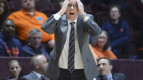
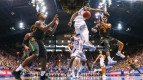
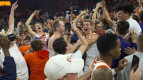
Close Calls. In two closer-than-expected games, #12 Michigan State and #18 Pittsburgh held on to their positions in the Big Ten and Big East, respectively, with quite a bit still on the line. For MSU, it’s a shot at a shared Big Ten regular season title; for Pitt, it was a double-bye in the Big East Tournament next week.
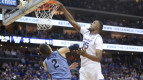
#18 Pittsburgh 73, Providence 71. In a closely contested game throughout, it was Ashton Gibbs who saved Pittsburgh from what would have been their worst loss of the season at full strength (the IU loss in December was without several players). With 3.5 seconds remaining, Gibbs (25/4/3 assts) received the ball at the right hash mark on the opposite end of his basket, took two dribbles before stopping and pulling up from about 28 feet to drain a game-winning three at the horn. The bucket moved the Panthers to 12-5 in the Big East, and with a win over Rutgers this weekend in combination with a Villanova loss to WVU, the preseason-unranked kids from the Steel City would be the #2 seed in next week’s Big East Tournament. Simply amazing considering the talent in that league this year.
Ashton Gibbs: "I Got This." (PPG/M. Freed)
#12 Michigan State 67, Penn State 65. We’re really not going to fall into this trap that Tom Izzo likes to set for us seemingly every year. His teams always win a bunch of games, but many of those wins seem to come by a mere point or two, and they also lose a few more than you might expect. Then the Spartans get into the NCAA Tournament and the very same players who were somewhat underwhelming during the regular season put it all together for another run to the Final Four. So we’ll reserve judgment on this year’s MSU team until we see what happens later this month. Tonight Penn State had the ball with five seconds remaining but they were unable to get a shot off to win or tie the game. With the win, MSU moves to 13-4 in the Big Ten and the Spartans will host rival Michigan this weekend to try to tie Ohio State (and possibly Purdue) for the top record in the league.
Should Washington Join the Bubble Conversation Along With Ole Miss, Dayton and Arizona State?
Washington 86, Oregon 72. With an RPI of #53, twenty wins, and a better strength of schedule than its bubble peers Mississippi State and Virginia Tech, shouldn’t the Huskies at least be in the conversation? They’ve beaten Texas A&M, Portland and Cal, which is a resume of quality Ws at least as good as Mississippi State (best win: Old Dominion), Dayton (best win: Xavier) and Virginia Tech (best win: Clemson). We’re well aware how down the Pac-10 has been this year, but just because everyone has already seemed to decide that it’s a one-bid league shouldn’t make it necessarily so. The resumes need to speak for themselves, and we’re having trouble understanding the difference between the above teams. Quincy Pondexter had 34/10/6 assts in tonight’s win.
Big 12 Home Teams No Longer Unbeatable. We saw the stat floating around on one of the ESPN360 feeds for the first time over the weekend, and by the early part of this week it was ubiquitous. Undoubtedly last week somebody in the Big 12’s stats department realized that the league’s home teams had only lost a single game all season (Northern Iowa’s victory at Iowa State in early December) and began marketing it as unassailable proof of the conference’s superiority. It’s a manufactured statistic, but anytime people start repeating such a meme it takes on a life of its own. By last night, after Kansas State and Colorado’s home wins to move the league to 114-1 on the year in their own buildings, you might have thought from listening to the announcers on the night’s games that we were in the midst of an epic realignment of the balance of power of the sport. Sigh… such is the 24-hour national news cycle. At any rate, tonight’s three games featured three really good Big 12 teams going on the road to a conference rival, and collectively those three teams — #1 Texas, #3 Kansas, Missouri — made mincemeat of that stat. Let’s not speak of it again.
#1 Texas 90, Iowa State 83. Texas’ freshman crew continues to impress, as they combined for 46/11/7 assts in UT’s 16th consecutive win to start the season. This game was close for about a half, but UT came out and wrested control of the game in the second half behind Avery Bradley’s scoring (16 of his 24 in the 2d) and if this kid is going to keep playing like his last two games (22-28 from the floor, 7-7 from three), then Kansas’ Xavier Henry is going to have some serious competition for Big 12 FrOY this season. Up next to stay unbeaten: rival Texas A&M at home.
#3 Kansas 84, Nebraska 72. Kansas found itself down double-figures very early on the road in this one, but the Jayhawks were able to stay composed and use their superior depth and experience to pull away from pesky Nebraska late behind turnovers and strong interior play. Cole Aldrich didn’t have a huge game (6/9/3 blks), but he didn’t need to, because Marcus Morris came off the bench to provide 19/7, including several timely plays during they key stretch where KU pulled away. Kansas doesn’t utilize the three-point shot to a great degree, but the Jayhawks hit thirteen tonight, including 4-5 from Sherron Collins (22/5 assts).
Missouri 94, Texas Tech 89 (OT). Mizzou used its fullcourt press to force 18 Red Raider turnovers and get a great game from Marcus Denmon off the bench (20/6) to win a key road game in Lubbock tonight. The Tigers very nearly blew it, though, letting an 11-pt lead slip away in the final four minutes of regulation and allowing the game to be sent to overtime on two FTs by Tech’s John Roberson. Then in the overtime period, it was Texas Tech’s Nick Okorie who had two FTs to give his team the lead, only to miss both of them with 20.4 seconds remaining and allowing Mizzou to hang on.
Clemson, You Simply Cannot RTC in This Situation!! #19 Clemson 83, #13 North Carolina 64. Surprisingly, this was over very early. Clemson came out and jumped on UNC with two large Trevor Booker-sized feet, and for the rest of the game the Tar Heels were one big turnover machine (25 total). Closest UNC came in the second half was 12. Booker’s 24/9/4 assts led Clemson to only their fifth win in sixteen tries against the Tar Heels, and their first since 2004. Message to Clemson fans: we at RTC agree that this was an important win and dealing with UNC has caused you some recent frustration. But you were FAVORED in this game, and UNC was only six spots ahead of you in the rankings. We hope you enjoy the win, because you deserved it. But this version of Gathering at the Paw (which we thought was a football tradition only) does not meet our criteria as a valid RTC. You simply cannot RTC when you’re the favored team!
Jamie Dixon, COY. #20 Pittsburgh 67, #15 Connecticut 57. On Tuesday night we saw Evan Turner inject himself right back into the Player of the Year race with his late-game tour-de-force in stealing that win at Purdue. Wednesday night gave us all a good look at a man who is likely the favorite for Coach of the Year (we just got some mean looks from people in Lexington) at this point — a certain Jamie Dixon of the University of Pittsburgh. Going to Hartford and playing Connecticut is a tough task for anyone, but getting UConn coming off a loss makes that trip even more treacherous. The Panthers didn’t care. They started the game by streaking to an early ten-point lead, immediately putting UConn on the defensive. The Panthers then led by 32-39 at the half and, even though they shot a tepid 39% from the field (23-59, and 4-12 from three-point range), held off the Huskies for the first part of the second half, causing the Hartford crowd to grow restless. Just like you knew they would, Connecticut then made their run, a 10-0 stretch that gave UConn a one point lead at 47-46. It was back-and-forth until the 5:00 mark, at which point Pitt took a lead (52-51) that they would not relinquish for the remainder. The stats show that Pittsburgh was able to hold off UConn by outrebounding them 26-13 in the second half and by hitting 17-20 at the free throw line. We say, however, that it was the intrinsic toughness of this Panthers squad that earned them this victory. To outwork UConn on the glass (both offensive and defensive) in their own building, to drive the lane and take contact with abandon in the way they did…that takes guts. And that’s a product of what Dixon has instilled in this team. If you’ve heard his players do interviews over the last couple of weeks, you’ve noticed that these Pittsburgh kids love talking about how great the chemistry is on their team and how much they’ve bought into Dixon’s mindset and vision for their squad. Everyone knows you have to have quality players (the “Jimmies and Joes”) to be competetive at all, especially in a cut-throat conference like the Big East. But team chemistry is the ultimate catalyst for success. Coaches can go whole seasons without having their players “buy into” what they’re trying to teach. Dixon has achieved this with a team that lost 60% of its scoring from last year and had been forgotten about by just about everyone up until they started their current seven-game win streak, the last three coming on the road in-conference against Syracuse, Cincinnati, and Connecticut. The Huskies now find themselves going out of conference to Michigan this Sunday, needing a win to stay ranked…and relevant.
Zach Hayes is RTC’s resident bracketologist plus author of the weekly Ten Tuesday Scribbles and Bubble Watch columns.
With college football crowning another faux-national champion Thursday night in Pasadena, the college sports scene can officially shift its axis to basketball. While a number of college basketball diehards such as yours truly were knee-deep in mid-major box scores and enthralling non-conference tournaments since the season tipped off in mid-November, it’s perfectly understandable for our college football-fan brethren out there to have been entranced in the gridiron scene during this time. For many folks out there, college basketball truly begins when a football champion is crowned and conference play heats up, when Rece and the gang show up on our TVs every Saturday morning at 11 AM and the bubble begins to take its early shape. For those people, you sure missed plenty of exciting hoops action. To get you caught up in what has gone down thus far on the hardwood, here’s a summary for your enjoyment, divvied up into the six major conferences and all the rest:
ACC
What we’ve learned: There was much back-and-forth debate entering this season whether Duke or North Carolina represented the class of this conference. After two solid months of play, it’s fairly evident Duke has separated themselves from their bitter rival as the class of the ACC. While the Tar Heels may top Duke skill-wise up front, Carolina simply does not boast the backcourt to even contend with the Dukies’ tandem of Jon Scheyer and Nolan Smith. The primary knock on Duke heading into this season was point guard play with Elliot Williams transferring to Memphis. As a true sharp-shooting 2-guard who creates his shots coming off screens in Redick-like fashion, could Scheyer handle the responsibility of running the Duke offense? The answer has been resounding in the affirmative: 19.7 PPG, 46% FG, 92% FT, 43% 3pt and an otherworldly 4.8 A/TO ratio that currently leads the nation. Another key to Duke’s early season success has been Coach K’s willingness to adjust his defense to fit his roster. Rather than employing the normal Duke on-ball pressure attack, Krzyzewski is utilizing more of a sagging defense that plays into the frontcourt depth Duke enjoys with six players that receive time at 6’8 or taller.
Scheyer Has His Devils Looking Great This Season
What’s still to be determined: After Duke and Carolina (and let’s not go overboard following the Heels loss to Charleston, they’re still clearly the second best team in this conference), who will emerge as the third contender behind the top two dogs? An ever-shifting proposition, the current edge probably goes to Florida State despite their utter lack of point guard play. The Seminoles are one of the tallest teams in the nation and have a few capable long-range shooters that get open looks when defenses collapse on Solomon Alabi and Chris Singleton. Plus, they’re off to a head start with a December win at ACC foe Georgia Tech. Plenty of folks think Clemson could be that team behind powerful big man Trevor Booker, but they lack a second scoring option and I can’t stop thinking back to their collapse at home to an inexperienced Illinois squad. It would be unwise to count out Gary Williams, and the jury’s still out on Virginia Tech and Miami due to their soft schedules, so I’ll give the current edge to Wake Forest as that third team. The road win at Gonzaga’s on-campus arena stands out, Ish Smith has turned into a fine point guard and Al-Farouq Aminu has as much pure talent as anyone in this conference.
NCAA Locks: Duke, North Carolina.
Likely bids: Clemson, Florida State, Wake Forest.
Bubble teams: Georgia Tech, Maryland, Miami (FL), Virginia Tech.
Make other plans for March: Boston College, North Carolina State, Virginia.
Big East
What we’ve learned: The NCAA picture is shaping up quite similarly to last season when Louisville (regular season champion), Pittsburgh and Connecticut all received #1 seeds. There will be much back-and-forth debate about whether the top three teams this season — Syracuse, West Virginia and Villanova -- holds the edge in this conference, but does it really matter? Right now you’d be hard-pressed to find someone who doesn’t think Kansas, Texas, Kentucky and Purdue are the likely #1 seeds (of course plenty could change, we have two months of games left), while those top contenders in the Big East are likely all on the second seed line. Even of greater importance though is the obvious revelation that Jamie Dixon can coach basketball. You wouldn’t be alone if you counted out Pittsburgh following a near-loss to Wofford, a 47-point output at home vs. New Hampshire and a second half butt-kicking at the hands of Indiana, but those losses came without their most athletic player, Gilbert Brown, and their best defender, Jermaine Dixon. Those two have returned to action with the most improved Big East player Ashton Gibbs (who recently broke the all-time Pitt record for consecutive free throws made) as a fearsome trio that has carried the Panthers to road wins over previously-undefeated Syracuse and fringe-top 25 Cincinnati. If Dixon is able to coax his Panthers into a NCAA Tournament team after losing such enormous production and leadership in Sam Young, DeJuan Blair and Levance Fields, there is little debate on his merits as National Coach of the Year.
RTC contributor and bracketologist Zach Hayes will deliver ten permeating thoughts every Tuesday as the season progresses.
1. More than the countless Big East tournament runs at the Garden, or the contention for conference regular season titles on a yearly basis, or reaching upper-echelon status in college basketball playing with no flashy All-American recruits, Jamie Dixon is proving his worth as a coach this year more than ever. Few teams lost as much talent, leadership, and production as senior point guard Levance Fields, dominating big man DeJuan Blair and outside threat Sam Young. The departure of these three mainstays plus two projected starters for 2009-10, Jermaine Dixon and Gilbert Brown, beginning the year MIA prompted many preseason prognosticators (including myself) to deem Pittsburgh a non-contender in the rugged Big East. My mistake, Jamie. The Panthers just finished one of their most difficult Big East road stretches of the year with two statement victories at previously undefeatedSyracuse and at fringe-ranked Cincinnati. Sophomore Ashton Gibbs is taking his experience from playing under Dixon at the U19 Games to good use, running the Pitt offense with superb efficiency, shooting the ball lights out from deep and breaking the all-time Pitt record for consecutive free throws made in the process. Brown has his academics in order and used his athleticism to make a few back-breaking baskets against Cincy last night. Dixon provides stellar defense and outside shooting. It remains to be seen whether Pitt can stay at the top of the Big East with less talent than the other squads, but we do know that Dixon’s team will play smarter and tougher than any opponent. And that always gives them a fighting chance.
2. The most significant win this New Year’s week had to be Purdue running away fromWest Virginia to remain unblemished and surpass the Mountaineers as a projected #1 seed at this stage of the season. Purdue and coach Matt Painter have constructed their program unlike many of their other counterparts atop the rankings on a weekly basis. There’s no Xavier Henry, Avery Bradley, Devin Ebanks or John Wall walking through the doors of Mackey Arena to play for the Boilers for one or two years; instead, their 2009-10 highly ranked squad features a group of players that have been together for three straight seasons, such a rarity in the age of one-and-done players and the glorification of NBA riches. This specific group of players- Robbie Hummel, Chris Kramer, JaJuan Johnson, E’Twaun Moore, Keaton Grant- have practiced and played together for three straight years now, stepping up the ladder slowly but surely in the college hoops landscape. They took the Big Ten by surprise in 2007-08 before falling in the second round to Xavier and climbed up another step by reaching the Sweet 16 a season ago. This year they hope to reach the top and cut down the nets in nearby Indianapolis with a group of kids that have been through the ups and downs of a college basketball season together more than once- a group of lightly-recruited but tough-minded individuals that will utilize defensive intensity and offensive efficiency to reach the ultimate goal Hummel, Johnson, Moore and others been striving for since arriving in West Lafayette.
3. Think about this for a second: Despite losing three four-year starters that all played 30+ MPG and notched 10+ PPG, Marquette coach Buzz Williams would probably tell you that his Golden Eagles should be staring at a 12-2 (2-0) record with wins over top-ten Villanova and West Virginia and another top-25 team in Florida State. Typical of young, inexperienced squads, Marquette has simply been unable to close games this season against stellar competition. If Darius Johnson-Odom and Jimmy Butler don’t miss two front ends of 1-and-1 opportunities, Da’Sean Butler’s game-winning shot never happens and Marquette has the second most impressive road win in the country this season (just behind Pitt stunning Syracuse). Up two Saturday against Villanova, Johnson-Odom again stepped to the line up two points and 2:35 left on the clock. Both of those attempts bricked, and, couple that with a bunny missed by Butler at the buzzer, the Golden Eagles again fell just short. Rewind back to November in the Old Spice Classic where Marquette held a 30-18 lead at half against FSU and a 10-point cushion midway through the second half, but squandered the lead. I haven’t even included the NC State game where Marquette lead by 11 at the intermission. Closing out games has been a devastating problem for Buzz Williams’ squad this season, and these close losses could very well cost Marquette a spot in the field come March if they’re sitting on the bubble.
New Year’s Football? Coulda fooled us, as there were nearly 200 basketball games over the last four days in every corner of America. And here’s the rub — a couple dozen of those games held more value than all those meaningless bowls over the same time period. The bowls are fun for the players and the fans of the teams involved (another reason to tailgate), but they have absolutely no (as in zero; as in 0.00%) bearing on the national title picture in football. At least games like West Virginia @ Purdue and Louisville @ Kentucky and William & Mary @ Hofstra have implications toward invitation and seeding in the NCAA Tournament in March. These games matter. The bowls (save Thursday night) do not. Let’s see what some of the highlights of the long weekend were.
Unbeaten No More. Two of the remaining six undefeated teams lost over the weekend — one expected, one unexpected. On Friday afternoon, a New Year’s Day tilt between the #4 (Purdue) and #6 (West Virginia) teams in America resulted in the Boilermakers running away with the game 77-62. JaJuan Johnson was awesome on the interior (25/10), completely outplaying the WVU big men Da’Sean Butler (17/7) and Devin Ebanks (11/6) and showing that when he, Robbie Hummel (18/2) and E’Twaun Moore (15/3 assts) are clicking, the Boilermakers can play with anybody in America. Oddly, WVU shot the ball ok enough to win, and was absolutely scorching from deep (9-12 3FG), but it was the 17 turnovers that did them in. Time and time again a poor possession on the WVU end (in large part because of their lack of a true PG) led to Purdue points on the other end. This game was arguably the ‘biggest’ game of the preconference schedule, and Purdue made a real statement as to its legitimacy in this one.
The unexpected loss was #5 Syracuse, who has looked so fantastic this season, dropping a game to rebuilding Pittsburgh on Saturday. There were quite a few people in the preseason who were writing off Pitt after what was admittedly huge personnel losses from last season, but those people obviously don’t know or care to know that Jamie Dixon is a phenomenal coach (same as Bo Ryan at Wisconsin). He always figures out how to win with the team he’s got. His guards attacked the Syracuse zone to the tune of ten threes while holding their own on the boards and forcing Syracuse to miss most of theirs (1-13 from deep). A 55-point second half behind Ashton Gibbs’ 24 /8 and Jermaine Dixon’s 21/5/4 assts/5 stls for the game gave Pitt its defining win for the season, and it was clear throughout the second twenty minutes that the Panthers were the more aggressive team. Syracuse’s Wes Johnson (19/6) didn’t have his usual double-double, but the Cuse players are going to have to remember that Big East foes know how to play against their zone and will need to adjust accordingly.
There are four unbeatens remaining. You may have heard of them. #1 Kansas, #2 Texas, #3 Kentucky, #4 Purdue.
Bluegrass Bloody Brawl. #3 Kentucky 71, Louisville 62. This was an ugly, ugly game, and the tone was set from the first eight seconds when it was clear that one of Rick Pitino’s primary strategies was going to be to rough up the young Wildcats in an attempt to get in their heads. It worked with Louisville’s first target, Eric Bledsoe, as he was sent to the bench almost immediately, but it never fazed DeMarcus Cousins (18/18/3 assts) or John Wall (17/4), who were subject to repeated hacks and hard fouls throughout. This game was a turnover-filled foulfest that included five techs, but when Louisville came back to take a one-point lead at 42-41, it was Wall (who later said he’s not even close to fulfilling his potential) who once again took over the game and made several key plays to give the Wildcats breathing room. This put UK at 15-0 and at its best start in forty years, making the Wildcat faithful apoplectic over the possibility of what lies ahead. UK will most certainly lose a game or several in the SEC, but what’s even more amazing to us is that John Calipari is now 86-6 over the last two-plus seasons. Those are John Wooden/Coach K in their prime type of numbers (before you get all crazy, we’re not saying Calipari is as good as those guys… yet).
Backdoor Cuts is a college basketball discussion between RTC correspondents Dave Zeitlin, Steve Moore and Mike Walsh. This week the disgruntled fans each pick a new team to root for — and start a friendly competition in the process.
DAVE ZEITLIN: So I know what I want for Chanukah (or, as you guys like to call it, Weird Christmas). I’ve decided I want a new college basketball team to root for.
Now, don’t get me wrong, Penn will always be my No. 1 team and I know better days lie ahead. But let’s be honest: the only thing my Quakers are competing for this year is whether or not they can become the worst team in Division I (if they aren’t already). Combine this with the fact that my favorite baseball team is the Mets (don’t say anything, Steve), my favorite football team (the Giants) just gave up approximately 3,500 points in one game (seriously, Steve, be quiet) and neither of my fantasy football teams made the playoffs…and I forget where that sentence was going because I just started crying. Please, Fake Santa of Chanukah, give me a winning team to root for this holiday season. Just one.
Here’s my own criteria for picking a new team: I want the school to be relatively close — as in, driving distance from my home in Philadelphia (sorry, most of the country). Obviously, the team can’t be any kind of rival of Penn’s (as much as I like Fran Dunphy at Temple). It can’t be a perennial favorite to win a national championship (that’s no fun) but it also can’t be a team that has no shot of winning it all (rooting for one-mid major is enough). And even though I’ve followed this conference most of my life, it can’t be any team from the Big East. (Before going to Penn, I was a big Syracuse fan; I’d feel like an abusive boyfriend going back to them now, but I’d feel like even more of a jerk rooting for one of their rivals.)
So where that does that leave me? Based on my complex formula, I think I have to go with a middle-of-the-pack ACC school. And after careful consideration, I realize there’s only one that makes sense. And the winner is…drumroll please…I don’t hear a drumroll…seriously, give me a drumroll…fine, I guess when you’re writing by yourself and there are no drummers nearby, you’re just not going to get one…Maryland!
Fear the Zeitlin!
I’ll explain more about why I chose the Terps later. But, first, I want to hear who you guys would pick, considering you both root for teams that aren’t making the Big Dance. We can even make this a competition throughout the season. A Chanukah/Christmas competition. Or something.
STEVE MOORE: You may have gotten one of your Weird Christmas wishes when your boy Glen Miller got fired today. Maybe Penn can adopt the Princeton offense (too soon?).
Last night in the CBE Classic semifinals, we saw the traditional powers Texas and Pittsburgh impose their will on inferior teams that were hanging around into the second half. Rick Barnes’ Longhorns looked like a young, undisciplined team that should have been embarrassed with itself in the first half; and a dominating defensive juggernaut during the second stanza when the Horns eviscerated the outmatched Iowa Hawkeyes with and out-of-the-locker-room 17-0 run to put the game away. In three games, as well as Texas has been playing offensively (all wins by 25+ pts), it’s been their tough-nosed defense that has been masterful. Teams are shooting 29% from two and 17% from three against the deep, rangy Horns, and it will be up to Pitt coach Jamie Dixon to help his team find the seams in that defense. Pitt, of course, returns none of its major stars from last year, but Dixon’s teams always compete, and so far this season sophomore Ashton Gibbs (17 PPG) and freshman Travon Woodall (11/4/7 APG) have been playing well. On paper, the CBE Classic final appears to be a mismatch, but we’re interested to see if Dixon can successfully employ a strategy to slow down the talented Horns. Join us tonight for another RTC Live from Kansas City.
A series of unfortunate events came down the pike to ruin what had previously been an exciting day when ESPN released it’s 24 Hours of Hoops schedule for November 17. Let’s briefly cover each so that we can move on to more pleasant things (hopefully tomorrow).
We woke up to the news that Pitt’s best returning player, Jermaine Dixon, broke his right foot for the second time this summer while playing in a pickup game. Given that it’s already mid-September and the doctors are telling him that it’ll take at least eight weeks to heal, this news clearly puts Jamie Dixon’s squad behind the 8-ball going into October practice and the first few games of the season. We would be completely shocked if Pitt fell off the map this year because Dixon is such an excellent coach, but on paper the 09-10 team already appears to be the weakest of his seven-year tenure. Losing their only returning starter for a while near the start of the season cannot help. And what’s up with that right foot – is this mere coincidence or does he have a problem there?
From the crime blotter, Wisconsin freshman guards Jeremy Glover and Diamond Taylor are now off the team (Glover was dismissed; Taylor withdrew) after their arrest for allegedly stealing ipods, a cell phone and $400 in cash last week from a UW dorm. The two players were expected to provide backcourt depth this season for Bo Ryan’s team, but he’ll need to lean more heavily on returnees Trevon Hughes and Jason Bohannon than anticipated.
Finally, as you’ve probably heard by now, NCAA President-cum-Reformer Myles Branddied today from pancreatic cancer. As the head honcho of the NCAA over the last six years, we’ve certainly had our fair share of criticism directed at his leadership, mostly with respect to investigations of alleged violations and selective enforcement of the rules. But there can be no question that we completely respect and admire the work that Brand did in terms tying academic performance of athletes at the sport-level (and soon, coach-level) to key athletic assets such as scholarships and postseason appearances. The Academic Progress Report (APR) that Brand initiated to achieve this end definitely contains some loopholes, but at the very least, he has schools, ADs and coaches thinking about performance of their players in the classroom, which is a far, far cry from where it was ten years ago. RTC lauds Myles Brand for this impressive and hopefully lasting achievement, and we hope that to honor his legacy, his replacement will continue to tweak the APR, giving it teeth, so that schools will take it seriously. RIP, Mr. Brand.
Intro. Welcome back. We wanted to use this post to wrap up the loose ends with an endeavor such as this one. Let’s talk about our methodology, the teams who were easiest/most difficult to place, the Memphis quandary, and the teams who were on the outside of the top ten looking in. As always, feel free to disagree in the comments.
Defending Our Methodology. One of the more interesting things about releasing these rankings has been the reaction from various fan bases. Some have been very measured in their response and criticism (such as the people in Lawrence, Kansas) while others have been a little more vitriolic (fans of another program in the center of the country). Most of the criticism has been directed at our methodology. There seemed to be quite a bit of confusion on this, so let’s clear it up immediately. Some people have misinterpreted our table (below) as if the listed criteria were all considered totally and equally in how we ranked teams. Nothing could be further from the truth – rather, the table was intended to be used as a tool showing the universe of relevant statistics that our panel might find useful when making their decisions. There was no formula that a panelist was obliged to follow – instead, each panelist had complete discretion to consider or ignore any statistic he deemed important (or irrelevant). Once each panelist submitted his list, we then took a holistic view of the world when determining where to rank certain teams. Obviously we all considered winning percentage, NCAA Tournament success, conference achievements, etc., but in varying degrees. That’s what makes these debates work – while one panelist may think that the NCAA Tournament is all that really matters and wants to weight teams almost exclusively on that metric, another panelist may want to give more substantial weight to the regular season. Here’s the thing, though – reasonable minds always differ, and both conclusions are completely ok. We believe that this sort of subjective analysis – review the available stats, pre-rank a list, reconvene to discuss, finalize the rankings – gives such a ranking system more credibility than simply weighting and re-weighting a formula until everything “feels” right. For those of you who wanted a completely “objective” ranking system… well, here’s an example we did last spring that shows how the BCS formula would have applied to the NCAA Tournament. Hint: F4 participants Villanova and UConn wouldn’t have even been invited to the Ball. In sum, we think that our methodology resulted in a solid, defensible list of the top ten programs of the 2000s. Not everyone can be happy, but we’re comfortable with the results.
Hardest Teams to Peg. There were three teams that the panel had the hardest time nailing down – #4 Duke, #5 Michigan St., and #8 Memphis. Both Duke and MSU received a #1 vote in our initial analyses, although to be fair, those were outliers among the panel. Memphis was equally contentious, with half of the panel initially placing the Tigers in the top seven, while the other half didn’t even have them ranked at all. It probably makes sense that we’ve received the most criticism based on these difficult-to-peg teams.
Easiest Teams to Peg. On the other hand, the top three teams – #1 UNC, #2 Kansas, #3 Florida – were unanimous in order (although not in ranking). Every panelist rated those three in the same order relative to one another, and the lowest any of the four teams were rated was fourth. Interestingly, criticism died down on the placement of these teams. Perhaps our panel was representative of what Average College Basketball Fan would choose as well?
What About Memphis? After the news that the NCAA vacated Memphis’ 38 wins and title appearance from the 2008 season, there was some buzz about what we should do with our list. By our estimation, Memphis was rated as the #8 program of the 2000s, but if we removed that year, they most undoubtedly would have dropped out of the top ten. After some internal discussion, we’re unwilling to go there. There are a couple of reasons for this. First and foremost, we don’t want to. We watched Memphis play its way into the national finals, we saw Derrick Rose clang his first FT with nine seconds left, and we remember the shocked look on Calipari’s face in the interview room afterwards. We also remember Michael Redd’s shooting in 99, Marcus Cambyblocking everything in sight in 96, C-Webb calling timeout in 93, and several other vacated performances over the years. Those games and moments happened. They’re seared into our memory. The NCAA can vacate whatever it wants, but we’re not going to join forces with them in their legal fiction. Which brings us to our second point on this topic. The NCAA’s application of these penalties is so wantonly inconsistent that if we gave credence to this one while ignoring such wholesale violations known to the general public – Sam Gilbert at UCLA and Reggie Bush at USC should immediately come to mind – that we’d be doing our readers a disservice. We recognize that cheating at some level happens nearly everywhere, but our stance is that if the NCAA doesn’t catch it and punish the school prior to the games affected, then we’re not going to join them in their after-the-fact erasures. Sorry. Memphis stays at #8.
The Celebrated RTC Panel
Honorable Mention (in no particular order).
Pittsburgh. Pitt was an oddity when it came to evaluating them for our countdown. There was considerable variance among the voters as to where the Pitt program landed, and because of that they were one of the first teams to whom we awarded this “honorable mention” status. Still, after the votes had been submitted, in the ensuing discussion it wasn’t that hard to move Pittsburgh out of the Top 10. Make no mistake, it’s been an excellent ten years for the Pitt program, but in order to make a decade’s-end Top 10 list there are certain things you simply HAVE to get done. Of their eight trips to the NCAA tournament, six of those saw Pittsburgh with at least a 4-seed (five of them were #3 or better). The result? Zero trips to the Final Four and only one Elite Eight. It’s not like the Panthers didn’t have their chances. True, it’s not easy to lose a coach like Ben Howland(who took Pitt to the Dance in 2002 and 2003) and the program deserves credit for a hire likeJamie Dixon, who didn’t miss a beat. And it’s not easy to lose to a Howland-coached UCLA team in 2007 in a #2-vs-#3 seed Sweet 16 game when you’re playing them in San Jose. But if you want to be considered among the elite, you HAVE to beat 10th-seeded Kent State in the Sweet 16 when you’re a #3 (2002). You HAVE to beat Pacific in the first round of 2005, even if you are on the low side of an #8-vs-#9 game. You CANNOT LOSE to 13th-seeded Bradley in the second round when you’re a 5-seed (2006). And perhaps the most painful — when you’ve earned a 1-seed after an incredible 28-4 season playing in the Big East, when you’re playing in your first Elite Eight in 35 years, you MUST beat the 3-seed, even if it is an in-state rival in the form of a very tough-nosed Villanova squad. Dixon faces a bit of a rebuilding task in the upcoming season, but they ended the 2000s strong. It’s because of that strong finish, that trend of improvement, that people – especially Pittsburgh fans – may be surprised to not see the Panthers in the Top 10 for the last decade. As we start the new decade with the upcoming season, Dixon has the Pittsburgh program poised to move into that elite category. As far as the last decade, though, they came up just short.
Illinois. On three of our personal Team of the 2000s rankings, Illinois barely missed the cut, meaning if the Bruce Weber-led 2005 squad managed to topple North Carolina for a national championship, they’d likely be included in the top ten. Illinois has also flamed out a bit at the tail end of the decade, finishing with a losing record in 2007-08 (16-19) before rebounding to a 24-10 mark in 2008-09 and eventually falling victim to a 12-5 upset by Western Kentucky.Bill Self and Bruce Weber have built a phenomenal program throughout the decade, though. The 2004-05 team featuring Deron Williams, Luther Head, Dee Brown and James Augustine was one of the top teams of the 2000s, flirting with an undefeated mark until Ohio State knocked them off in Columbus, then pulling off one of the most sensational comebacks in NCAA Tournament history in the Elite 8 against Arizona. Illinois has tied or won the Big Ten three times in the 2000s and finished as high as second three more times. What holds Illinois back from garnering a spot on the list? They haven’t reached the second weekend of the NCAA Tournament or won a conference title since that special 2004-05 campaign. Borderline teams have experienced more success in March, both in the Big Dance and in conference tournament play, than Illinois. For example, Maryland has two Final Fours, a national title and never finished with a losing record in the decade. Illinois hasn’t won the Big Ten Tournament since 2004-05. With packed recruiting classes ahead and a top-notch leader in Weber, Illinois will look to turn around a program that hasn’t been nearly as feared since watching Carolina cut down the nets on that fateful April night four years ago.
Gonzaga. The Zags undoubtedly were the most successful mid-major of the decade (moreso than Xavier and Butler), but their overall profile simply didn’t have enough juice to vault Gonzaga into the top ten. They dominated the WCC, winning the league eight times en route to an average of 26+ wins per year, an outstanding 80% winning percentage, and ten straight NCAA appearances. But when it came to the NCAAs, Mark Few’s squads were only able to make it to the Sweet Sixteen four times. And how many times in the decade were they able to advance past the third round? Um, try zero. Nevertheless, we believe that Gonzaga rates a tick higher than other such notable programs as Louisville, Wisconsin, Arizona and Oklahoma (all of whom made one F4) because they were so consistently good despite their scheduling limitations. The worst Zag team (2006-07) still had 23 wins, and as a result of the weaker schedule of the WCC, their average NCAA seed was easily one of the lowest on our list. Yet, as we all know, Gonzaga has tried to load up on high-impact RPI games during the nonconference slate, and we give them credit for that. Fans of the other programs may quibble with this selection, but we can live with including at least one mid-major for consideration as the Team of the 2000s, and Gonzaga is our choice.
Arizona. The obvious question here for Wildcat fans is how can a team that made the NCAA tournament every year for the past decade (and 25 straight if you don’t take away their vacated 1999 appearance) not be considered one of the top ten programs of the 2000s behind four teams that failed to make the tournament twice, two teams that failed to make the tournament three times, and another team that failed to make the tournament four times? While the answer probably won’t satisfy Wildcat fans, it comes down to a few key things for us:
Barely having a winning percentage at 70% despite playing in the Pac-10. Save the whining, West Coast people. The Pac-10 has only been one of the best conferences in the nation once in the past decade (2008 comes immediately to mind).
Averaging 1.7 wins per NCAA Tournament appearance, which is lower than any other team in the top 10. The only team that they are close to is Syracuse and the Orange have a national title (wouldn’t be in the top 10 without it).
Mediocre performance in the Pac-10. The Wildcats had 2.5 regular season conference titles (one being a split title) and 1 postseason conference title (since it was started in 2002). Like we said before, the Pac-10 might have the most attractive co-eds in the nation (although the SEC has a strong case), but the Pac-10 pales in comparison to the ACC, Big East, Big 12, SEC, and the Big 10 over the past decade in terms of the quality of their basketball teams.
You could argue that the Wildcats got lucky with many of those NCAA tournament bids, most notably two years ago when they got in ahead of an Arizona State team that had a very strong case for being in above their rival.
Pitt’s Jamie Dixon picked up some great news today when it was announced that Centenary’s Chase Adams, a 5′10 waterbug point guard originally from Baltimore, is transferring to play for the Panthers and he will be eligible immediately. With Centenary’s recent decision to move down from D1 to D3, all of its players were given the option to transfer to another school without penalty. Dixon must be ecstatic because his returning backcourt is relatively inexperienced (Ashton Gibbs was the presumed incumbent), but now he’ll be adding the 2009 Summit League DPOY, a player who was eighth nationally in steals per game (2.7). This goes along with some nice numbers in scoring (14.6), rebounds (4.2) and assists (4.5) per game. It sounds as if Adams will fit the Panther ethos of hard work and defense to a T…
Get lost, Frodo and company. Liv Tyler, you can stay. But recognize, today, it’s the USA U19s who are the toast of New Zealand.
In an event we’ve had a fun time following this summer at RTC, the USA Under-19 squad took the gold medal at the Under-19 World Championships in Auckland, New Zealand over the weekend, going a perfect 9-0 for the tournament. Tyshawn Taylor (Kansas) led the Americans with 18p/2r/6a/5s in the finals against the U19s from Greece, with UTEP’s Arnett Moultrie adding 10p/9r/2a. The USA placed two players on the All-Tournament Team (which, in New Zealand, is apparently called the “All-Star Five”), namely Taylor, and Butler’s Gordon Hayward. The title is the Americans’ first in this competition since 1991. Incidentally, if you’d like another name to watch out for (we had previously told you about Rutgers’ Mike Rosario who played for the Puerto Rico U19s and the 54 he plopped on last-place France), don’t forget Croatia’s Mario Delas. He was named the tournament’s MVP and is currently set to go 18th on nbadraft.net’s 2011 mock draft.
Sing it proud, guys. (Credit: usabasketball.com)
The final against Greece was indicative of the entire tournament for the US squad in that it was a true team effort. In the final, all but one player on the team played at least 11 minutes and there were seven players who contributed at least seven points. Jamie Dixon (Pitt), Matt Painter (Purdue) and Chris Lowery (Southern Illinois) crafted a US team with players suited for those crazy, confounded international rules, not to mention one that produced an extremely balanced attack, and they brought home the hardware.
Of course, the big question is what each individual player will take from this experience — besides a sweet gold medal which looks a little like a NYC subway MetroCard tied to a lanyard, and what I’m sure are some lovely photos of the NZ countryside — and how he’ll apply it to the rest of his college career. Travel of this nature can only help to broaden a young man’s mind; and we all know that everyone wants to beat the tar out of the United States whenever they get the chance and that everyone guns for us. That’s a sentiment some guys on this team (like Taylor from Kansas, Darius Miller from Kentucky, eventually Seth Curry from Duke) might be used to, and while that environment provides invaluable experience for everyone involved, it’s especially good for players from smaller programs. Doesn’t look like Moultrie or Hayward had a problem with it, eh? It’ll also be interesting to see if Southern Illinois makes a jump forward this year with Lowery having spent quality time around two of the best in the business in Dixon and Painter. In any event, great work all around, gentlemen! Enjoy showin’ off the new bling.
I’m beginning to think that there is some bizarre Arizona-USC connection going on after USC announced that former interim Wildcat coach Kevin O’Neill was going to take over as the Trojans new head coach. You may remember O’Neill from the Lute Olson fiasco after the 2007-2008 season, but O’Neill also has prior coaching experience at the college (171-180 in 12 seasons) and pro level (helpful if you’re running a program like the one Tim Floyd apparently ran in LA the past few years).
To recap the action at Arizona and USC the past two years:
O’Neill takes over for Olson on an interim basis, but then Lute stabs him in the back and comes back for a short period before eventually retiring. O’Neill goes to work for the Memphis Grizzlies for a season.
Arizona hires Russ Pennell to take over for Olson after O’Neill is let go.
Tim Floyd guides the Trojans to respectability before O.J. Mayo comes to town. The Trojans manage to make it back to the NCAA tournament the year after Mayo leaves.
Arizona decides not to renew Pennell’s contract and starts searching for big name to take over. They decide on Floyd, who briefly decides to take the job before changing his mind. Arizona eventually hires Xavier head coach Sean Miller.
Floyd resigns leaving USC scrambling to find a head coach as it loses multiple recruits who decide to go to other programs. USC gets turned down by several big names including Jamie Dixon and Reggie Theus before selecting O’Neill.
O’Neill led the Wildcats to a 19-15 record and yet another NCAA tournament bid in his single season in Tucson, but according to some sources had difficulty connecting with the Wildcat players. While that may be a problem at some programs, I’m sure that the administration at USC will appreciate having a coach of one of their two major programs who follows the rules. While we would normally consider USC one of the best positions in the country, O’Neill has his work cut out for him with recruits leaving in droves and NCAA sanctions on the horizon.
Buzz: Memphis Offers Bruce Pearl $21M over 7 Years. News out of Tennessee is contradictory depending on which end of the state you’re on, but we’re reading that Memphis has targeted Bruce Pearl as the man to keep the uptempo Memphis style moving forward. UT is scrambling to make sure they don’t lose their most talented basketball property.
Buzz: Jamie Dixon Considering the USC Job? On its face, this sounds absurd, but when you learn that Dixon is a North Hollywood kid whose wife is a graduate of USC, this rumor starts to make a little more sense. We’d still be utterly shocked to see this happen, as USC is a football school first, second, and third, but it’s worth mentioning and tracking.
After nearly 10 days of college basketball critics bemoaning the lack of excitement in this year’s edition of March Madness, two of the Big East’s best teams answered all of those critics by submitting an all-time classic. After one of the strangest 10 seconds you will ever see, Scottie Reynolds made an end-to-end run that might replace the Danny Ainge and Tyus Edney versions on NCAA Tournament highlight reels from now on as this was on a much bigger stage with a trip to the Final 4 on the line. Even with Reynolds miracle, Pittsburgh still had its shot, but a 75-foot desperation heave by Levance Fields was off-target and the Villanova fans which filled TD BankNorth had their biggest moment since 1985 when Rollie Massimino, who attended the games in Boston, guided the Wildcats to their only national championship.
It was a game that showed off everything that the Big East was this year: tough, physical, surprisingly high-scoring, and always entertaining. The Wildcats came out of the gates strong and held a 22-12 lead with 9:27 left before the #1 seeded Panthers joined the fight. Relying on its three stars (DeJuan Blair, Sam Young, and Fields), Jamie Dixon’s squad cut the lead to 2 with an 8-0 spurt in 1:09. From that point forward, the two team traded punches like world-class heavyweights (back when being a heavyweight actually meant something) as neither team was able to stretch their lead beyond 5 points. Villanova relied on a balanced attack (Dwayne Anderson with 17 points, Reynolds with 15 points, Dante Cunningham with 14 points, and Shane Clark with 11 points) while Pittsburgh relied heavily on its two 1st team All-Big East performers (Young with 28 points and 7 rebounds and Blair with 20 points ant 10 rebounds) to keep it in the game.
A tight game throughout. . .
After trading haymakers for nearly 37 minutes without either team achieving any separation, Pittsburgh appeared to have a chance to do so coming out of a Villanova timeout with a 4-point lead and the ball out of bounds with 3:05 left. Instead, that’s just when the madness started. Jermaine Dixon, who had hit a tough jumper just moments earlier (with a shot that was reminiscent of one that his brother Maryland star Juan Dixon used to hit not too many years ago) to give the Panthers the lead, had the ball stolen from him and in an attempt to recover fouled Dwyane Anderson for the conventional 3-point play. A Sam Young turnover and a Corey Fisher lay-up later, the Wildcats had the lead with 2:16 left, but Fields hit a pair of free throws to give the Panthers the lead back. The Wildcats showed their mettle by scoring the next 5 points to take a 4-point lead with 47 seconds left. As he has done all night long, Young provided the answer for the Panthers with a clutch 3-pointer (“Onions!” as Bill Raftery would say) with 40 seconds left to cut the lead back to 1. A pair of Fisher free throws and a Reggie Redding free throw allowed the Wildcats to stretch the lead back to 4 with 20 seconds left.
We’re back for the Elite 8 today. As we mentioned yesterday, the tournament up to this point hasn’t been as exciting as we are used to, but perhaps all this chalk means that we will get a phenomenal last three rounds. The match-ups today look like they will produce some solid action (particularly in Boston) so we’re definitely looking forward to that.
4:40 PM: #3 Missouri vs. #1 UConn
7:05 PM: #3 Villanova vs. #1 Pittsburgh
In the first game, it will be interesting to see how Missouri’s frenetic style holds up against UConn and what impact Hasheem Thabeet will have in that style of game. One guy to look out for on UConn is Kemba Walker who might thrive in an up-tempo game. In the nightcap, we have two of the Big East’s top teams going against each other in a rematch of a game that Villanova won behind Reggie Redding’s 18 points and 7 rebounds. DeJuan Blair only had 9 points and 8 rebounds in 23 foul-riddled minutes. An interesting subplot to this game is that some are heralding it as a look at the future of Big East coaching with Jamie Dixon pitted against Jay Wright.
3:55 PM: I love college basketball, but is it a good idea to encourage people in Detroit to spend their last dollar to get tickets? Isn’t that what caused this financial crisis (outside of the idiots on Wall Street playing around with CDOs and credit default swaps)?
4:15 PM: I’m guessing this is the part of the NCAA tournament where CBS uses human interest stories as filler.
4:38 PM: Here we go… let’s hope for a group of E8 games like in 2005 (where three of the four went to OT)…
4:43 PM: The problem I see with Mizzou pulling the major upset in this game is that UConn is very comfortable playing this style. A matchup against Pitt would have been a more interesting contrast for Mizzou to take advantage of.
4:46 PM: Horrid start for Mizzou and fantastic start (obviously) for UConn. The Huskies are already 6-7 from the field with several wide-open shots available. The thing about Missouri is that theie pressure can get them back into games, but it’s going to be tough to turn over AJ Price and Kemba Walker.
Because of the NCAA’s refusal to give us a media credential (or discuss the issue and our side of the case), we were forced to go to today’s open practice to get an up-close look at the teams. As an aside, if anybody has extra tickets for the games in Boston for the Sweet 16 or the Elite 8 (in case your team gets cheated by the refs), send me an e-mail at rushthecourt@gmail.com and I might be able to take them off your hands.
The guys who don't want me covering the game
Let’s get one thing out of the way. The East Region open practice might have been the most boring 5 hours of my life (not counting lectures). There’s a reason the NCAA makes this event free (outside of the fact that they more than make up for it through the $8 programs, $5 Cokes, and $23 baseball caps). The crowd was 95% white males in their mid-30s or above along with a handful of kids chasing autographs from players who they were looking up during the practices checking to see which ones had the best stats. My favorites were the old guys sitting behind me who kept on commenting on how good Gary McGhee and Brian Zoubek were (the tallest guys on the court) and what outstanding pros they were going to be. Anyways, here are my thoughts and pictures (some pictures are from my iPhone because I forgot to charge my digital camera) from each team’s “practice”.
The East Region: A Look Back, A Look Ahead (By Dave Zeitlin and Steve Moore)
A look back: Here are some of the bests and worsts of the first two rounds of the East Region – as well as some other haphazard notes …
Most impressive team remaining:Villanova. The Wildcats’ dismantling of UCLA was a sight to behold.
Shakiest team remaining:Pittsburgh. I sat next to a diehard Pitt fan at a sports bar Friday. I knew it was a bad sign when he turned to me disgusted midway through the second half and said, “Just root for East Tennessee State. I know you want to.”
Don’t forget about us: In Xavier’s opening-round win over Portland State, the Musketeers shot 54 percent from the field and committed just seven turnovers. In their second-round win, they held Wisconsin to 25 percent shooting. Xavier has now won at least one game in six of the last seven NCAA Tournaments.
Don’t forget about us either:Duke is back in the Sweet 16. Oh, how we missed you.
Best performance: Pitt’s Sam Young was electric against Oklahoma State, scoring 32 points, grabbing eight rebounds and blocking three shots.
We’d like to apologize for our coverage yesterday. We had some technical/communication issues regarding the post yesterday, but I’ll be back covering the games today so everything should be back to normal. Here’s a quick rundown of the games we’ll be covering today:
Early Games
12:15 PM: #14 Stephen F. Austin vs. #3 Syracuse
12:25 PM: #9 Tennessee vs. #8 Oklahoma State
12:30 PM: #11 Utah State vs. #6 Marquette
12:30 PM: #14 North Dakota State vs. #3 Kansas
Afternoon Games
2:45 PM: #11 Temple vs. #6 Arizona State
2:55 PM: #16 East Tennessee State vs. #1 Pittsburgh
3:00 PM: #14 Cornell vs. #3 Missouri
3:00 PM: #11 Dayton vs. #6 West Virginia
Evening Games
7:10 PM: #16 Morehead State vs. #1 Louisville
7:10 PM: #12 Arizona vs. #5 Utah
7:20 PM: #10 USC vs. #7 Boston College
7:25 PM: #13 Portland State vs. #4 Xavier
Late Night Games
9:40 PM: #9 Siena vs. #8 Ohio State
9:40 PM: #13 Cleveland State vs. #4 Wake Forest
9:50 PM: #15 Robert Morris vs. #2 Michigan State
9:55 PM: #12 Wisconsin vs. #5 Florida State
Quite frankly, today’s slate looks a lot more interesting than what was on yesterday. There are 3 games in each of the 4 groups that seem like they will be entertaining except for the afternoon set where only the 6/11 match-ups really catch my eyes. Feel free to leave your thoughts or questions on any of these games or the ones from yesterday in the comment section. I’ll be back around noon to cover the day’s action.
12:15 PM: Ok. We’re about to get underway. I was a little delayed by the fact that the bus to RTC East decided to pick up 3 people in wheelchairs, which slowed down my trip significantly (had to get them in/out during 6 stops). Is anybody rooting for Stephen F. Austin just because they can’t stand Eric Devendorf?
12:20 PM: “The best look the Lumberjacks have had so far”? That was only their 2nd possession of the game. The crows is awful in Miami. I know its early, but there is nobody there. I have to say the NCAA did a pretty poor job with their pod placement. I’ll have to double check, but Miami is probably the worst pod location in terms of distance from the participating schools (and the fact that they don’t care about sports in Miami).
12:30 PM: Rough start for Stephen F. Austin in Miami. Already down 10-2. Hopefully they can keep it close although this was probably the game that was the most likely to be a blowout in this group.
12:35 PM: Did anybody pick upsets in this group of games? I have North Dakota State and Utah State.
12:40 PM: Good game in Dayton (Ok State 14, Tennessee 13 with 12:20 left in the first half). In Boise, Lazar Hayward is up 7-5 on Utah State.
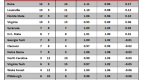
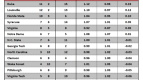
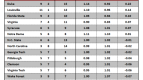
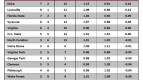
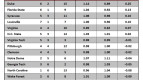
With the release of the brackets on Sunday evening there has been quite a bit of controversy (Arizona over St. Mary’s being the predominant gripe) and there have been some interesting moments with Jay Bilas and Digger Phelps ganging up on Dick Vitale and almost bringing him to tears. However, it was nothing compared to the furor that we saw when the BCS released its final poll that determined the BCS bowl games and more importantly the national championship. We thought it would be a fun exercise to try to make a mock BCS basketball system. I used the AP and ESPN/USA Today polls as the human polls and ESPN.com’s InsiderRPI, KenPom.com, and Sagarin’s ratings as the computer polls. There are a couple polls I excluded for other reasons: Kenneth Massey’s (wasn’t updated yet) and Jerry Palm’s (not free). I did not throw out the high and low computer polls for two reasons: (1) we only had 3 available and (2) they were fairly similar with a few exceptions (Gonzaga in the RPI, but they weren’t going to be a factor anyways because of Memphis). ESPN.com’s InsiderRPI didn’t include the games from Sunday, but after looking at the final results they would not have had any impact on the rankings based on the teams involved. Here are the results:
We’re back for the final weekend of regular season Boom Goes the Dynamite for this college basketball season. The highlights of the weekend are obviously the two top 10 match-ups (in Pittsburgh on Saturday and in Chapel Hill on Sunday). We would love to provide you with another RTC Live from those site, but apparently we’re not big enough for them yet. (The onus is on you to spread the word.)
In any event, we’re going to make lemonade out of those lemons so we’ll be providing coverage from our bi-coastal offices covering all the action. Today is loaded with 15 of the top 25 playing with the other 10 playing on Sunday. We will be trying out best to provide you with wall-to-wall coverage of the top teams in action as well as RTC Live from several different locations:
West Coast Conference at 9 PM EST for Santa Clara-San Diego with Mike Vernetti courtside
In addition to our on-site correspondents we will be focusing in on a few key games for the majority of the day while also channel surfing over to the other games when the situation merits it. Here are the primary games that we will be covering today:
#1 UConn at #4 Pittsburgh at Noon on CBS
Michigan at Minnesota at Noon on ESPN and ESPN360.com
#25 Syracuse at #15 Marquette at 2 PM on ESPN360.com
#12 Missouri at Texas A&M at 2 PM on ESPN2 and ESPN360.com
California at #21 Arizona State at 2 PM on CBS
Oklahoma State at #5 Oklahoma at 3:30 PM on ABC
Texas at #9 Kansas at 4 PM on CBS
Washington State at #13 Washington at 5:30 PM on CBS
Wright State at #22 Butler at 7 PM on ESPNU
#6 Louisville at West Virginia at 9 PM on ESPN and ESPN360.com
As you can tell it’s a pretty ambitious schedule so we are asking you, our loyal legion of RTC followers, to help alert all of us if something interesting is happening. You can contribute by leaving a message in the comment section so we all can follow it.
11:30 PM: ESPN GameDay is live from Morgantown, WV and they’re doing their own version of Make Your Case. I feel a little bit like Bill Simmons after ESPN stole his Mount Rushmore, but they aren’t paying me a million dollars a year.
11:45 PM: A couple pieces of NCAA tournament news to wrap-up before we focus on our TV for the next 12 hours: Cornell became the first team to officially get into the tournament last night by winning the Ivy League title and 3 others will join them when the Atlantic Sun, Big South, and Ohio Valley have their championship games today.