Team of the 2000s: Wrap-Up and Honorable Mention

Posted by rtmsf on August 23rd, 2009

teamof2000(2)

Direct Links to the Top Ten.

1.  UNC
2.  Kansas
3.  Florida
4.  Duke
5.  Michigan St.
6.  UConn
7.  UCLA
8.  Memphis
9.  Syracuse
10.  Maryland

Intro.  Welcome back.  We wanted to use this post to wrap up the loose ends with an endeavor such as this one.  Let’s talk about our methodology, the teams who were easiest/most difficult to place, the Memphis quandary, and the teams who were on the outside of the top ten looking in.   As always, feel free to disagree in the comments.

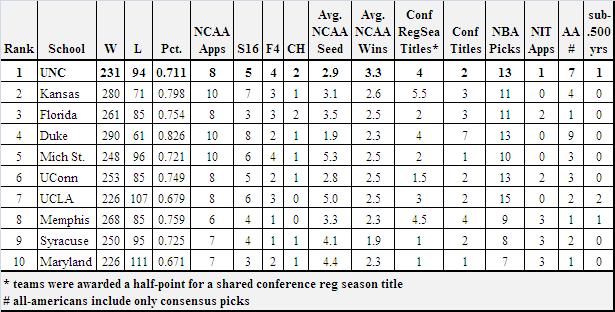
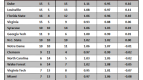
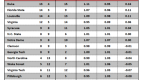
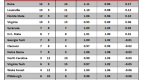
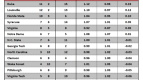
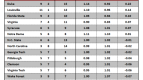
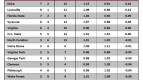
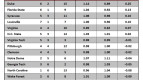
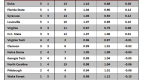
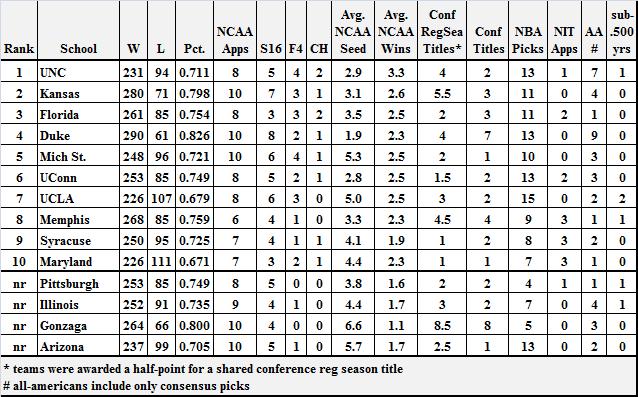
Defending Our Methodology.  One of the more interesting things about releasing these rankings has been the reaction from various fan bases. Some have been very measured in their response and criticism (such as the people in Lawrence, Kansas) while others have been a little more vitriolic (fans of another program in the center of the country). Most of the criticism has been directed at our methodology. There seemed to be quite a bit of confusion on this, so let’s clear it up immediately.  Some people have misinterpreted our table (below) as if the listed criteria were all considered totally and equally in how we ranked teams. Nothing could be further from the truth – rather, the table  was intended to be used as a tool showing the universe of relevant statistics that our panel might find useful when making their decisions.  There was no formula that a panelist was obliged to follow – instead, each panelist had complete discretion to consider or ignore any statistic he deemed important (or irrelevant).  Once each panelist submitted his list, we then took a holistic view of the world when determining where to rank certain teams.  Obviously we all considered winning percentage, NCAA Tournament success, conference achievements, etc., but in varying degrees.  That’s what makes these debates work – while one panelist may think that the NCAA Tournament is all that really matters and wants to weight teams almost exclusively on that metric, another panelist may want to give more substantial weight to the regular season.  Here’s the thing, though – reasonable minds always differ, and both conclusions are completely ok.  We believe that this sort of subjective analysis – review the available stats, pre-rank a list, reconvene to discuss, finalize the rankings – gives such a ranking system more credibility than simply weighting and re-weighting a formula until everything “feels” right.  For those of you who wanted a completely “objective” ranking system… well, here’s an example we did last spring that shows how the BCS formula would have applied to the NCAA Tournament.   Hint: F4 participants Villanova and UConn wouldn’t have even been invited to the Ball. In sum, we think that our methodology resulted in a solid, defensible list of the top ten programs of the 2000s.  Not everyone can be happy, but we’re comfortable with the results.
team2000s final list

Hardest Teams to Peg.  There were three teams that the panel had the hardest time nailing down – #4 Duke, #5 Michigan St., and #8 Memphis.  Both Duke and MSU received a #1 vote in our initial analyses, although to be fair, those were outliers among the panel.  Memphis was equally contentious, with half of the panel initially placing the Tigers in the top seven, while the other half didn’t even have them ranked at all.  It probably makes sense that we’ve received the most criticism based on these difficult-to-peg teams.

Easiest Teams to Peg.  On the other hand, the top three teams – #1 UNC, #2 Kansas, #3 Florida – were unanimous in order (although not in ranking).  Every panelist rated those three in the same order relative to one another, and the lowest any of the four teams were rated was fourth.  Interestingly, criticism died down on the placement of these teams.  Perhaps our panel was representative of what Average College Basketball Fan would choose as well?

What About Memphis? After the news that the NCAA vacated Memphis’ 38 wins and title appearance from the 2008 season, there was some buzz about what we should do with our list.  By our estimation, Memphis was rated as the #8 program of the 2000s, but if we removed that year, they most undoubtedly would have dropped out of the top ten.    After some internal discussion, we’re unwilling to go there.  There are a couple of reasons for this.  First and foremost, we don’t want to.  We watched Memphis play its way into the national finals, we saw Derrick Rose clang his first FT with nine seconds left, and we remember the shocked look on Calipari’s face in the interview room afterwards.  We also remember Michael Redd’s shooting in 99, Marcus Camby blocking everything in sight in 96, C-Webb calling timeout in 93, and several other vacated performances over the years.  Those games and moments happened.  They’re seared into our memory.  The NCAA can vacate whatever it wants, but we’re not going to join forces with them in their legal fiction.  Which brings us to our second point on this topic.  The NCAA’s application of these penalties is so wantonly inconsistent that if we gave credence to this one while ignoring such wholesale violations known to the general public – Sam Gilbert at UCLA and Reggie Bush at USC should immediately come to mind – that we’d be doing our readers a disservice.  We recognize that cheating at some level happens nearly everywhere, but our stance is that if the NCAA doesn’t catch it and punish the school prior to the games affected, then we’re not going to join them in their after-the-fact erasures.  Sorry.  Memphis stays at #8.
The Celebrated RTC Panel

Honorable Mention (in no particular order).

  • Pittsburgh.  Pitt was an oddity when it came to evaluating them for our countdown.  There was considerable variance among the voters as to where the Pitt program landed, and because of that they were one of the first teams to whom we awarded this “honorable mention” status.  Still, after the votes had been submitted, in the ensuing discussion it wasn’t that hard to move Pittsburgh out of the Top 10.  Make no mistake, it’s been an excellent ten years for the Pitt program, but in order to make a decade’s-end Top 10 list there are certain things you simply HAVE to get done.  Of their eight trips to the NCAA tournament, six of those saw Pittsburgh with at least a 4-seed (five of them were #3 or better).  The result?  Zero trips to the Final Four and only one Elite Eight.  It’s not like the Panthers didn’t have their chances.  True, it’s not easy to lose a coach like Ben Howland (who took Pitt to the Dance in 2002 and 2003) and the program deserves credit for a hire like Jamie Dixon, who didn’t miss a beat. And it’s not easy to lose to a Howland-coached UCLA team in 2007 in a #2-vs-#3 seed Sweet 16 game when you’re playing them in San Jose.  But if you want to be considered among the elite, you HAVE to beat 10th-seeded Kent State in the Sweet 16 when you’re a #3 (2002).  You HAVE to beat Pacific in the first round of 2005, even if you are on the low side of an #8-vs-#9 game.  You CANNOT LOSE to 13th-seeded Bradley in the second round when you’re a 5-seed (2006).  And perhaps the most painful — when you’ve earned a 1-seed after an incredible 28-4 season playing in the Big East, when you’re playing in your first Elite Eight in 35 years, you MUST beat the 3-seed, even if it is an in-state rival in the form of a very tough-nosed Villanova squad.  Dixon faces a bit of a rebuilding task in the upcoming season, but they ended the 2000s strong.  It’s because of that strong finish, that trend of improvement, that people – especially Pittsburgh fans – may be surprised to not see the Panthers in the Top 10 for the last decade.  As we start the new decade with the upcoming season, Dixon has the Pittsburgh program poised to move into that elite category.  As far as the last decade, though, they came up just short.
  • Illinois. On three of our personal Team of the 2000s rankings, Illinois barely missed the cut, meaning if the Bruce Weber-led 2005 squad managed to topple North Carolina for a national championship, they’d likely be included in the top ten. Illinois has also flamed out a bit at the tail end of the decade, finishing with a losing record in 2007-08 (16-19) before rebounding to a 24-10 mark in 2008-09 and eventually falling victim to a 12-5 upset by Western Kentucky. Bill Self and Bruce Weber have built a phenomenal program throughout the decade, though. The 2004-05 team featuring Deron Williams, Luther Head, Dee Brown and James Augustine was one of the top teams of the 2000s, flirting with an undefeated mark until Ohio State knocked them off in Columbus, then pulling off one of the most sensational comebacks in NCAA Tournament history in the Elite 8 against Arizona. Illinois has tied or won the Big Ten three times in the 2000s and finished as high as second three more times. What holds Illinois back from garnering a spot on the list? They haven’t reached the second weekend of the NCAA Tournament or won a conference title since that special 2004-05 campaign. Borderline teams have experienced more success in March, both in the Big Dance and in conference tournament play, than Illinois. For example, Maryland has two Final Fours, a national title and never finished with a losing record in the decade. Illinois hasn’t won the Big Ten Tournament since 2004-05. With packed recruiting classes ahead and a top-notch leader in Weber, Illinois will look to turn around a program that hasn’t been nearly as feared since watching Carolina cut down the nets on that fateful April night four years ago.
  • Gonzaga. The Zags undoubtedly were the most successful mid-major of the decade (moreso than Xavier and Butler), but their overall profile simply didn’t have enough juice to vault Gonzaga into the top ten. They dominated the WCC, winning the league eight times en route to an average of 26+ wins per year, an outstanding 80% winning percentage, and ten straight NCAA appearances.  But when it came to the NCAAs, Mark Few’s squads were only able to make it to the Sweet Sixteen four times.  And how many times in the decade were they able to advance past the third round?  Um, try zero.    Nevertheless, we believe that Gonzaga rates a tick higher than other such notable programs as Louisville, Wisconsin, Arizona and Oklahoma (all of whom made one F4) because they were so consistently good despite their scheduling limitations.  The worst Zag team (2006-07) still had 23 wins, and as a result of the weaker schedule of the WCC, their average NCAA seed was easily one of the lowest on our list.  Yet, as we all know, Gonzaga has tried to load up on high-impact RPI games during the nonconference slate, and we give them credit for that.  Fans of the other programs may quibble with this selection, but we can live with including at least one mid-major for consideration as the Team of the 2000s, and Gonzaga is our choice.
  • Arizona.  The obvious question here for Wildcat fans is how can a team that made the NCAA tournament every year for the past decade (and 25 straight if you don’t take away their vacated 1999 appearance) not be considered one of the top ten programs of the 2000s behind four teams that failed to make the tournament twice, two teams that failed to make the tournament three times, and another team that failed to make the tournament four times?  While the answer probably won’t satisfy Wildcat fans, it comes down to a few key things for us:
  1. Barely having a winning percentage at 70% despite playing in the Pac-10. Save the whining, West Coast people. The Pac-10 has only been one of the best conferences in the nation once in the past decade (2008 comes immediately to mind).
  2. Averaging 1.7 wins per NCAA Tournament appearance, which is lower than any other team in the top 10. The only team that they are close to is Syracuse and the Orange have a national title (wouldn’t be in the top 10 without it).
  3. Mediocre performance in the Pac-10. The Wildcats had 2.5 regular season conference titles (one being a split title) and 1 postseason conference title (since it was started in 2002). Like we said before, the Pac-10 might have the most attractive co-eds in the nation (although the SEC has a strong case), but the Pac-10 pales in comparison to the ACC, Big East, Big 12, SEC, and the Big 10 over the past decade in terms of the quality of their basketball teams.
  4. You could argue that the Wildcats got lucky with many of those NCAA tournament bids, most notably two years ago when they got in ahead of an Arizona State team that had a very strong case for being in above their rival.

RTC 09-10 Class Schedule: Kentucky Wildcats

Posted by zhayes9 on August 22nd, 2009

seasonpreview 09-10

Ed. Note: for all of the posts in the RTC 09-10 Class Schedule series, click here.

Just a mere five months ago, the once proud and feared Kentucky basketball program was mired in a state of chaos. The Billy Gillispie era at the university turned out about as well as the Harriet Miers Supreme Court nomination. Mystifying losses at storied Rupp Arena to such powers as Gardner-Webb and VMI, puzzling interviews with ESPN’s Jeannine Edwards making the blog rounds and exposing Gillispie as a clown, point guards refusing to enter games, rumors of bar scenes of an inebriated Gillispie making a mockery of his reputation and, worse of all, the Wildcats missing the NCAA Tournament in 2009 only to falter in the NIT. After Gillispie was fired, both parties sued each other and now Gillispie is releasing a book that nobody will read. It’s been a whacky offseason in Big Blue Country, and even though their new savior has some issues of his own, the Kentucky basketball program has experienced an unfathomable turnaround over the summer from the laughing stock of college basketball to a legitimate contender to win a national title.

The hiring of John Calipari and the return of forward Patrick Patterson has rejuvenated Kentucky to the point of being widely considered the favorites in an improving SEC this season. The addition of two top-five recruits- point guard John Wall and power forward DeMarcus Cousins– along with Gillispie’s recruits staying on board and a decent core returning from last season’s squad means expectations are once again sky-high in Lexington. Nobody is thinking about Billy Gillispie but rather the school’s first Final Four berth since the Jeff Sheppard era of 1998.

4380904013555_John_Calipari[1]

Here’s the official schedule for a Kentucky team that may be the most exciting to watch this season in all of college basketball:

Non-Conference Schedule Rank: 7. The non-conference schedule in John Calipari’s first season features some big names and decent tests, but no overwhelmingly challenging road games are included on the slate. The only true road game is a trip to Bloomington in early December to take on a rebuilding Indiana squad that Kentucky should run out of the building. Emotions will be high for both the North Carolina and Louisville visits during the non-conference season. North Carolina has embarrassed Kentucky handily in two previous meetings and the Wildcats will be eager to exact revenge on their rival Cardinals following last season’s Edgar Sosa miracle (not to mention the coaches aren’t exactly best friends). The schedule also includes a trip to Cancun to take on Cinderella Cleveland State and the Stanford/Virginia winner, none of those teams posing close to a threat. One team that could surprise Kentucky is their opponent in the SEC/Big East Invitational in New York: the Connecticut Huskies. UConn did lose a boatload of scoring and rebounding, but Jerome Dyson, Kemba Walker and Stanley Robinson could be enough to hang with Kentucky’s immense talent. At least for a while.

Cupcake City: While Gillispie was prone to the shocking early-season upset, we suspect Calipari will have his team 100% prepared offensively and defensively every single night throughout the campaign. Kentucky has eight games at home against mid-major or low-major competition this season and one visit to Louisville to take on UNC-Asheville. They should sprint through this slate and remain a decent bet to run the table in non-conference play.

Read the rest of this entry »

08.21.09 Fast Breaks

Posted by rtmsf on August 21st, 2009

It has been a loooooong week around these parts, but now that we’ve crowned a Team of the 2000s, let’s move on to some other goings-on and nuggets of news floating around the college hoops world…

  • Comings and Goings.  There have been a few announcements of players who are out for the upcoming semester as we’re heading into fall matriculation.  The most notable are Villanova wing Reggie Redding and Florida big men Eloy Vargas and Adam Allen.  Redding was suspended by the university arising out of an incident where marijuana was allegedly found in his car at an accident, but he is expected to return for the spring semester.  Allen recently had surgery for a stress fracture and Vargas is academically ineligible for the fall semester.  Although neither were major contributors for Florida in 08-09, they were expected to provide depth in the frontcourt this season.  On the flip side, former Dookie Elliot Williams received his waiver from the NCAA and will be eligible to suit up immediately for his hometown Memphis Tigers this season. 
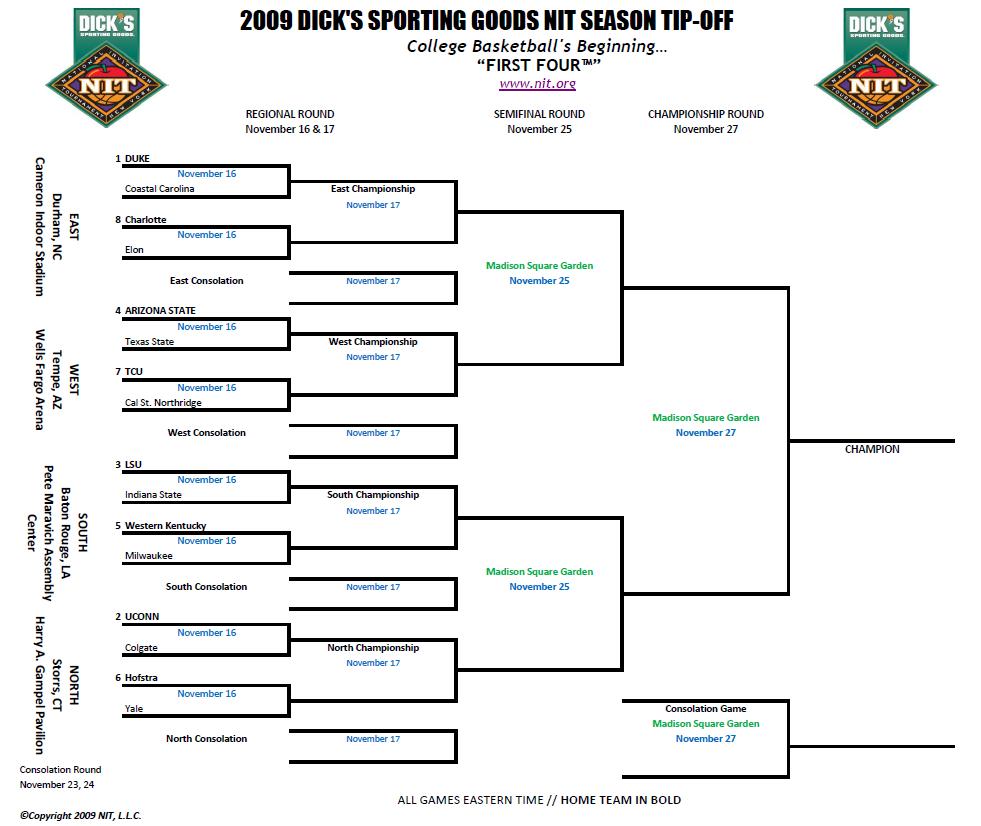
  • 2009 NIT Bracket.  The pairings were announced a week ago, but we’re just now getting around to analyzing it.  They’ve seeded the top four teams by region (#1 Duke, #2 UConn, #3 LSU, and #4 Arizona St) in a solid, if not spectacular, field.  But did anyone else notice that they mismatched the seedings?  Take a closer look at the thumbnail below.  If the top eight seeds win their first game, then we should be left with pairings of 1/8, 2/7, 3/6 and 4/5, right?  In this NIT bracket, #1 Duke would play #8 Charlotte, so that’s ok; but, #2 UConn would play #6 Hofstra, #3 LSU would play #5 WKU, and #4 Arizona St. would play #7 TCU.  What’s the point of this?  If you’re going to take the time to seed teams by expectation, you should probably do it properly rather than trying to slot teams based on regional travel convenience.  Sigh…   For what it’s worth, Duke seems to always win this thing, but depending on how quickly replacement players develop on the other top seeds, any of the others could surprise.

2009 NIT Brackets

Team of the 2000s: #1 – North Carolina

Posted by rtmsf on August 21st, 2009

teamof2000(2)

Ed. Note: check the category team of the 2000s for our other entries in this feature.

And so we reach the pinnacle.  Ladies and gentlemen, prep yourselves, as this will come as a complete shocker… but your #1 program of the last decade is the North Carolina Tar Heels.  We know that you were probably thinking it was Gonzaga or Pittsburgh, but alas, the fine programs from Washington and Pennsylvania will have to wait another decade for the RTC Good Hoopskeeping seal of approval.

Be sure to check back Monday as we’ll do some clean-up on the series, including a look at some of the programs who just missed the top ten.

#1 – North Carolina

team2000sunc2

Overview.  Maybe we should just call it the Decade of Roy Williams.  After all, most of Carolina’s success in the 2000s is directly attributable to Ol’ Roy.  If you consider his 111 more wins at Kansas, three more trips to the NCAA’s second weekend and two additional F4s in the decade, you’re looking at a coaching juggernaut.  But Roy isn’t North Carolina and UNC isn’t Roy – it only feels that way.  This is about UNC, and despite a one-season blip in 2001-02 that time has forgotten, mostly accounting for their relatively poor overall winning percentage, the Heels have the goods in almost every other way.  Were they as consistent as Duke or Michigan State?  Nope.  Were they as much of a conference titan as KU or their hated rival in Durham?  Nope again.  But their numbers stack up very well in all categories across the board, and they’ve utterly dominated the second half of the 2000s in much the same way that Duke/Kentucky lorded over their respective halves of the 90s.  From 2005-09, the Heels have won two national championships with completely different casts, went to another F4, lost in OT in an Elite Eight and lost in the second round against the biggest Cinderella of the last quarter-century.  Not.  Too.  Shab.  The Heels didn’t have as much success during the first half of the decade, but they still managed to tack on another F4 as an absurd #8 seed in 2000, as well as two other second round appearances and an NIT appearance.  All the while continuing to produce a slew of  all-americans and NBA draft picks.  What separates Carolina in our eyes is the second championship that Roy hung next to the others in 2009.  Florida’s 06/07 back-to-back was extremely impressive, because everyone knows just how difficult it is to repeat in college basketball.  But in our view, it’s even more impressive to endure massive defections of NBA talent the likes of which UNC had from 2005-07 and still be able to climb the mountaintop a mere four years later.  A reasonable argument could be made that UNC was the best team in the country in four of the last five seasons (2005, 2007, 2008, 2009), and it wouldn’t necessarily render you a nutjob to contemplate it.  So North Carolina is our choice for the top program of the 2000s, and with the second championship currently shimmering in the Chapel Hill sunlight, we’re not convinced that any other school should be higher.

unc title 2005

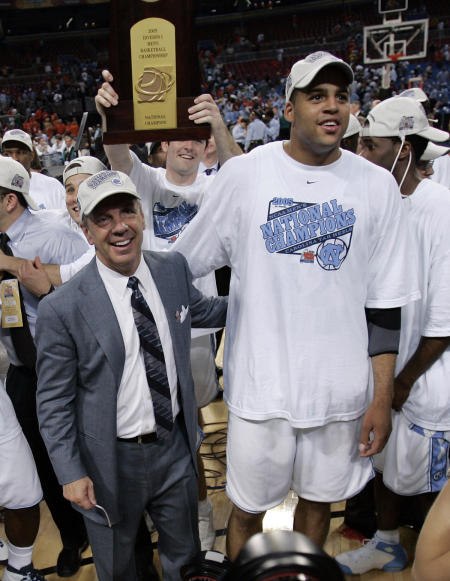
Pinnacle.  The 2005 national championship.  Just three short years removed from the worst Carolina season in modernity (more on this later), UNC was once again the king of the college basketball world.  What seemed a million and one miles away under Matt Doherty’s tenure felt like a natural outcome under the coolest of cats, Roy Williams.  One of the very proudest fanbases in America could once again claim basketball supremacy, and after what they had been through, it must have felt like raining gold coins from heaven.   Carolina’s fourth national championship team was led by Sean May, Rashad McCants and Ray Felton, but it was a long, lean freshman by the name of Marvin Williams who saved the Heels from a trademarked (at the time) Roy collapse when he rebounded a wild reverse layup from the sometimes-erratic McCants and punched it back in for a 72-70 lead.  A Felton steal later and several desperation three attempts by the Illini, and the monkey was most definitely off of Roy’s back.  His back is so light right now that he turned around and did it again in 2009 and looks primed to have several more shots at it before he retires a Carolina hero.

Tailspin.   Without question, the 2001-02 UNC team represents the worst season for a traditional powerhouse school in two decades.  But just as Duke was Team of the 1990s despite the Pete Gaudet Incident; UNC made up for its one bad year with plenty of success the rest of the decade.  In ACC circles, UNC’s record of 8-20 is still brought up as a euphemism for terrible.  And that team was terrible – eight of their twenty losses were of the 20+ point variety as teams who had long been pushed around by UNC wasted no time in returning the favor, if only for a year.  It began with three straight opening losses to the likes of Hampton, Davidson and Indiana, continued with a series of whippings by Kentucky, Maryland, Wake Forest, Duke and Ohio (at home), but the most embarrassing part of the entire season had to be the Heels’ last game of the year in the ACC Tournament.  Deciding that UNC simply couldn’t stack up talent-wise with the defending national champion Blue Devils (who had defeated them by a total of 54 pts in their regular season meetings), Matt Doherty decided to slow the game down to a veritable crawl, holding the ball until under-ten on the shot clock before running a play.  The typically entertaining and high-scoring Duke-Carolina showdown was bastardized into a 28-22 at the half Big Ten game.  Doherty got one more year to turn the ship around, but a near-mutiny at the end of the 2002-03 season led to the Roy Williams era.

wheresdook

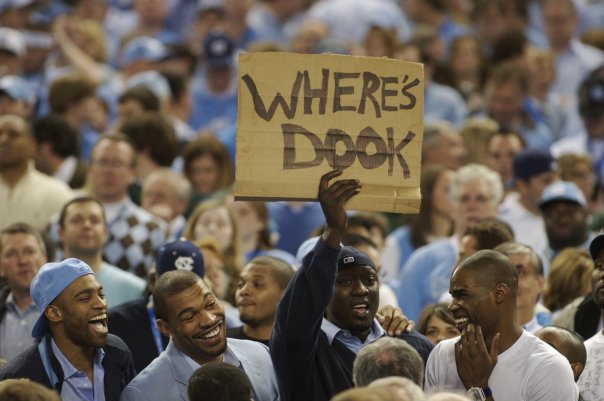
Outlook for 2010s:  Grade: A+.   Roy Williams is 59 years old and is showing no signs of slowing down.  Unlike other coaches his age, he seems to embrace recruiting and it pays off year after year with NBA caliber talent coming through his program.  By our count, Williams has recruited an absurd THIRTY McDonald’s All-Americans in his twenty-one years of coaching (average: 1.4 per year) at Kansas and UNC, and there are no signs of this receding (14 at Carolina already, including four incoming freshman for 2009-10).  Duke is the only other program with thirty or more.  Furthermore, there’s absolutely no chance of Williams taking any other job, NBA or college – he’ll be at UNC until retirement.  We fully expect UNC to continue to make F4s and compete for championships throughout the next decade, and the Heels may be right here on top of this list again ten years from now.

RTC 09-10 Class Schedule: Michigan State Spartans

Posted by zhayes9 on August 20th, 2009

seasonpreview 09-10

Ed. Note: for all of the posts in the RTC 09-10 Class Schedule series, click here.

As we continue our ongoing feature RTC’s Class Schedule for the upcoming 2009-10 season, let’s delve into the slate for the national runner-up of a season ago out of the Big 10: Michigan State. The Spartans entered last season with expectations to win their first regular season conference title since 2000-01 and accomplished said feat with a 15-3 Big 10 record, overcoming two stunning losses at home to Penn State and Northwestern along the way. The Spartans entered the tournament with high hopes as a #2 seed and, after dodging two bullets from USC and Kansas, smoked #1 seed Louisville and edged past Connecticut in the national semifinals before running into the buzzsaw known as North Carolina. With 2008-09’s successful season in the past, Tom Izzo is moving on with his point guard (Kalin Lucas), sharpshooter (Durrell Summers), enigma (Raymar Morgan), sophomore stud (Delvon Roe) and emerging big man (Draymond Green) all in the fray. Michigan State fans will accept nothing less than Tom Izzo’s sixth Final Four appearance this season in East Lansing.

Let’s take an in-depth look at the game-by-game journey Michigan State will have to endure if they wish to meet such lofty expectations. The official schedule can be found here:

4390903142044_Ohio_St_v_Michigan_St[1]

Non-Conference Schedule Rank: 9.5. Tom Izzo never backs down from a challenge. Last season, Izzo traveled to the loaded Old Spice Classic, a trip halted by a stunning defeat at the hands of Maryland. He also faced Texas in Houston and North Carolina at Ford Field for the ACC/Big Ten challenge. Both the latter contests will also be featured in the 2009-10 edition of Michigan State’s non-conference slate, but this time as true road games rather than semi-neutral floors. That’s right, on December 1 the Spartans will play UNC in Chapel Hill and, on December 22, Texas in Austin. Rarely do you see a team with the status of Michigan State play such challenging road contests in non-conference play. Victories in either venue will provide Izzo with a significant quality win to tout during arguments for top seeds in March. Izzo also signed up his Spartans for the Legends Classic in November in Atlantic City where he’ll face Florida and either Rutgers or Massachusetts in the final (you’d think it would be Florida-Michigan State in the final, but I digress). Another program with a perennially loaded non-conference slate is Gonzaga. Mark Few’s team will travel to East Lansing for one of the top November contests, even with Austin Daye, Jeremy Pargo and Josh Heytvelt departed.

Cupcake City: In between the two road games in North Carolina and Texas, Michigan State packed in some much-deserved cupcakes. The challengers will be Wofford, The Citadel (that game being played in Charleston, oddly enough), Oakland and IPFW. While The Citadel had a surprising 20-win campaign last year, the only team that may be able to stay on the floor with Michigan State is Oakland, a 23-13 squad from a year ago that nearly toppled North Dakota State in the Summit final. Michigan State will also face Florida Gulf Coast and Texas-Arlington at home.

Read the rest of this entry »

Memphis: Vacate-ion’s All I Ever Wanted…

Posted by rtmsf on August 20th, 2009

It seems as if the Derrick Rose saga is about to come to end, as multiple reports are suggesting that the NCAA will vacate all 38 of Memphis’ wins from the 2007-08 season as a result of using an ineligible player (Rose) and allowing Rose’s brother to fly around the country for free on the team charter.  The report, which will be published Thursday, reportedly will not provide for additional sanctions against the Memphis program, leaving Josh Pastner and his gutted program a fighting chance to emerge from the Calipari era with some dignity intact.

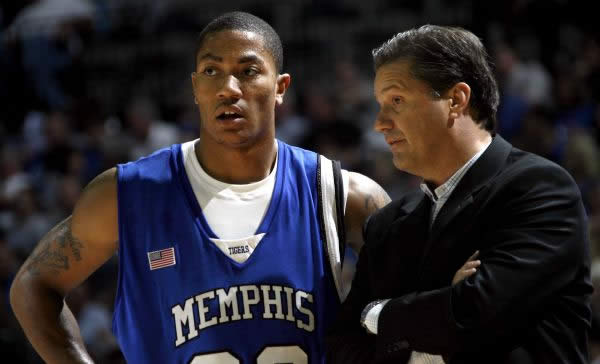
calipari and rose

Speaking of Coach Cal (and UK fans will remind us that correlation isn’t causation), he now becomes the first head coach in the history of college basketball to have had NCAA-mandated removals of Final Four appearances at different schools.  You should recall that Calipari’s only other F4 appearance in 1996 was later vacated because of Marcus Camby’s prodigious affinity for cashmoney and bling.  This latest Derrick Rose situation makes Calipari programs two-for-two, and, interestingly, the Memphis Tiger program two-for-three on removed Final Four appearances.  Keep polishing that 1973 runner-up trophy, Tigers, it’ll be a while until the next one.

Here’s the list of F4 teams whose appearance was later vacated by the NCAA that 2007-08 Memphis joins.

  • Ohio St. (1999) – Jim O’Brien
  • Minnesota (1997) – Clem Haskins
  • UMass (1996) – John Calipari
  • Michigan (1992 & 1993) – Steve Fisher
  • Memphis (1985) – Dana Kirk
  • UCLA (1980) – Larry Brown
  • Villanova (1971) – Jack Kraft
  • St. Joseph’s (1961) – Jack Ramsay

Do you guys believe in karma?  This list is populated by four national runners-up and five other semifinalists, but the NCAA has to date still managed to avoid vacating a national championship team.  And without question, the Rose/Calipari Memphis team was the closest finalist on this list to actually cutting down the nets.  Maybe there was a little more magic to the Mario Miracle dagger than we understood at the time?

Team of the 2000s: #2- Kansas

Posted by zhayes9 on August 19th, 2009

teamof2000(2)

Ed. Note: Check the category team of the 2000s for our other entries in this feature.

Stepping away from this decade’s rankings for a moment, one could make the argument that the runner-up recipient on our list would top a list of the greatest college basketball programs of all-time. Sure, UCLA and Kentucky fans may quibble, but the combination of legendary players (Lovelette, Chamberlain, Manning, Pierce), pantheon coaches (Naismith, Allen, Brown, Williams) and an arena that every true college basketball fan should visit (Allen Fieldhouse) could surely provide enough ammunition to make an argument to head an all-time list. The successes of this program’s basketball has extended into the current decade, complete with Final Fours, national championship heartbreaks and a comeback for the ages. Let’s take a closer look:

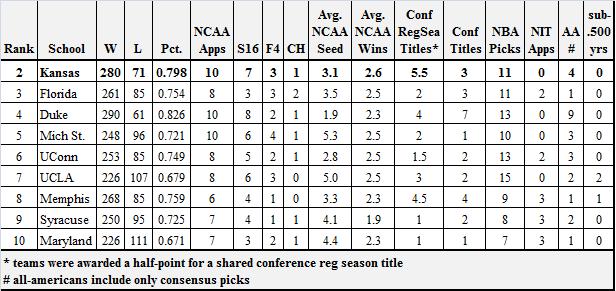
#2 – Kansas

team2000skansas

Overview. As one can tell from the chart above, Kansas has been the model of consistency over the course of the decade. Not even a Hall-of-Fame coach departing for his alma mater could deter the Jayhawks program in the 2000s. In fact, Kansas is the only school to reach the top-five in every single category considered, including a runner-up rank in Sweet 16s and Final Fours reached with seven and three, respectively. Other teams on the list have gone without a losing campaign and reached the NCAA Tournament each season, but none of those schools lost a coach midway through the decade. After Roy Williams departed, Kansas made a tremendous hire, luring Illinois coach Bill Self to Lawrence. He’s responded by capturing a Big 12 regular season title each season with the exception of 2003-04, a year in which he finished second and reached the Elite Eight (ho hum). The peak for Kansas may have come in the early part of the decade under Williams, though. The Jayhawk squads from 2001-03 were truly memorable. The 2001-02 club is still the only team in Big 12 history to finish conference play undefeated, a Drew Gooden-led group that finished first in the nation in field goal and winning percentage. A year later, Kansas led the nation in scoring margin and reached the national title game.

Pinnacle. KU’s only national championship in the decade would not have occurred if Derrick Rose or Chris Douglas-Roberts had sunk one more measly free throw during the thrilling 2008 National Championship Game in San Antonio. You know the story: Memphis leads Kansas 60-51 with two minutes left, the national title within their grasp…only to experience heartbreak of the highest order. Give the Jayhawks credit, though, for going perfect from the field and line during those waning minutes. Mario Chalmers’ game-tying three-point shot with 2.1 seconds left will forever be etched in the mind of college basketball fans and may be the single greatest moment in Kansas basketball history (from the wayback machine: RTC’s “morning after” analysis of the game). And that’s saying something. Long known for NCAA Tournament chokes, (we’ll delve into that in a bit) Bill Self finally reached the pinnacle, a pinnacle that is still going strong today. That national title squad was stripped of nearly every contributing player besides sixth man Sherron Collins and little-used big man Cole Aldrich, yet Self’s superb coaching led Kansas to another Big 12 title and Sweet 16 appearance in 2008-09. As the preseason #1 team in the land entering the next decade, the pinnacle has yet to conclude.

Tailspin. Many fans would immediately point to the heartbreaking loss to Syracuse in the 2003 National Championship game (you remember the infamous Hakim Warrick block), a last hurrah for Kirk Hinrich, Nick Collison and Roy Williams gone awry. But I’d be shocked if diehard Kansas fans didn’t select the consecutive first round losses in 2005 and 2006 to Bucknell (as a #3 seed) and Bradley (as a #4 seed) as the lowest points of the decade. The 2004-05 Kansas team completely collapsed after starting the season 20-1 and reaching the top spot in the polls, a squad led by Wayne Simien, Keith Langford and Aaron Miles during Self’s second season. They would go on to lose six of their last nine games before the shocking Bucknell last-second upset. The following season was different yet finished eerily similar. After a rough start, KU rebounded to win 15 of their last 17 games and the Big 12 tournament before falling to Bradley in the opening round. After the loss, Bill Self was labeled a perennial March choke artist and many questioned whether the Kansas program could ever return to prominence.

4884312_Kansas_v_GT[1]

Outlook for 2010s: Grade: A+. Kansas has returned to prominence. The Jayhawks enter the 2009-10 season as the near-unanimous favorite to raise another rafter in Allen Fieldhouse, a feat that would complete the quickest rebuilding job in the sport’s history. Aldrich appears to be one of the early favorites to win the Naismith Award and Self lured another McDonald’s All-American into the fray for next season in talented wing Xavier Henry, coupled with two more top-ten players at their respective positions in Elijah Johnson and Thomas Robinson to go with Tyshawn Taylor, Marcus Morris and Collins. Self is a recruiting machine and appears to be the frontrunner for Harrison Barnes, the top player in next year’s class. Kansas is the height of the coaching chain and, barring an unforeseen flameout, Self should be the KU coach for years and years to come (especially after rejecting a monster package from his alma mater, Oklahoma State). The March monkey is off his back and the future is extremely bright for one of the most storied programs in college basketball.

RTC’s 09-10 Class Schedule: Kansas Jayhawks

Posted by zhayes9 on August 19th, 2009

seasonpreview 09-10

Ed. Note: for all of the posts in the RTC 09-10 Class Schedule series, click here.

I’m extremely proud to introduce a new feature here at Rush the Court, one you’ll be seeing every few days or so up until the much-anticipated opening tip in November, called RTC’s 09-10 Class Schedule. The premise is simple: dissect and analyze the schedules of the most notable teams in the nation this season, from the easiest to the hardest stretch, the most intense rivalry to the early season tune-ups, upset watch to RTC potential. If your team is lingering around the expected preseason top-25, their schedule will be scrutinized in the next couple of months. There’s no rhyme or reason to the madness (we won’t be going conference-by-conference or ranking each team), just a prominent school every few days as the releases begin to trickle out from the respective schools.

We figured it would be appropriate to begin the feature with the team expected to represent the class of college basketball in the 2009-10 campaign: Kansas. Here’s the official team schedule:

Non-Conference Schedule Rank (ranked 1 thru 10, 10 being the most difficult): 8. Bill Self realizes he must challenge his Jayhawks if they wish to reach the promised land in April this season, and while the Big 12 certainly provides distinct challenges, Self has loaded the non-conference slate with three games against potential top-15 competition and two more storied programs on the fringe of being ranked. Kansas will take on Michigan and California at home in back-to-back contests in December, two teams returning plenty of talent from a season ago and featuring playmakers like Manny Harris and Jerome Randle. Self also scheduled a home-and-home with Tennessee (last season’s barn burner) and the Jayhawks will make their return trip on January 10 in one of the more anticipated non-conference games this season. Other than Tennessee and a trip to Philly to take on Temple, Kansas’ only true road game during non-conference play is a meeting with UCLA as part of the Big 12/Pac 10 Hardwood Series. They also travel a short ways to St. Louis for a matchup with Memphis. While Kansas playing such big name schools sounds sexy, neither should pose an enormous conundrum for a loaded KU squad. Overall, give Self credit for challenging his team rather than padding the record. The RPI will notice when they’re battling for a #1 seed in February and March.

Cupcake City: The Jayhawks may have scheduled their fair share of below-average competition, but Self did a fairly decent job of bringing teams to Lawrence with a recent history of success. Even the typical November and December schools are somewhat formidable in the big picture (they may not be against KU, of course): Radford, Belmont and Cornell have recent tournament experience, Oakland is the favorite in the Summit and La Salle is one of the sleepers in the Atlantic 10. The portion of the schedule covered with frosting, though, has to be November 19- December 2 with Central Arkansas, Tennessee Tech and Alcorn State coming to Lawrence. I’m not going out on a limb when I say some lopsided scores could be in order.

Read the rest of this entry »

Team of the 2000s: #3 – Florida

Posted by jstevrtc on August 18th, 2009

teamof2000(2)

Ed. Note: Check the category team of the 2000s for our other entries in this feature.

As we move into the top three teams of the 2000s, we reach rarefied air.  The team we review today at the third spot was one of the absolute toughest to place, for reasons that will be described below.

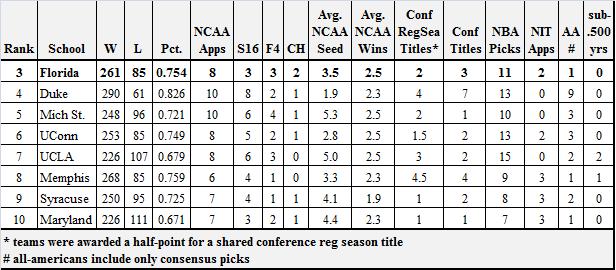
#3 — Florida

team2000sflorida

Overview.  When Billy Donovan arrived at Florida in 1996 he brought with him all of two years of head coaching experience, a mere 35-20 record as the head bull at Marshall.  In its previous 81 seasons, the Florida program had gone through 18 different head coaches and known the joys of only a single Final Four, coming in 1994 under Lon Kruger.  Nevertheless, much was expected of Donovan.  Because of his leadership skills displayed as a point guard at Providence and an assistant at Kentucky (serving head coach Rick Pitino in both capacities), Donovan was quickly anointed as the Next Big Thing in terms of young, up-and-coming college coaches.  He delivered quickly, getting the Gators to the championship game in 2000 (falling to Tom Izzo and the Flintstones) and establishing himself as an unbelievable recruiter.  But, despite the Blue Devil-like stable of stars, Florida in the early 2000s couldn’t manage past the second round at best in the NCAA Tournament; true, they had made themselves into a formidable power in the SEC, culminating in their first-ever (?!?) SEC Tournament title in 2005 – the first of three straight – but because of their troubles in the Big Dance people began to wonder if Donovan really had what it took to “win the big one.”  The best evidence to this was the fact that in each of their appearances from 2001 to 2005, Florida lost to a lower-ranked opponent, and usually quite handily.  The only non-double-digit loss during that span was a double-overtime defeat to Creighton in a 12-vs-5 game in the first round in 2002.  Those Florida teams may have had top-flight recruits but seemed to lack a physical toughness (with the possible exception of David Lee) required of a true NCAA title contender, and this resulted in the Gators frequently getting pushed around in early tournament games.

74728926_UCLA_v_Florida
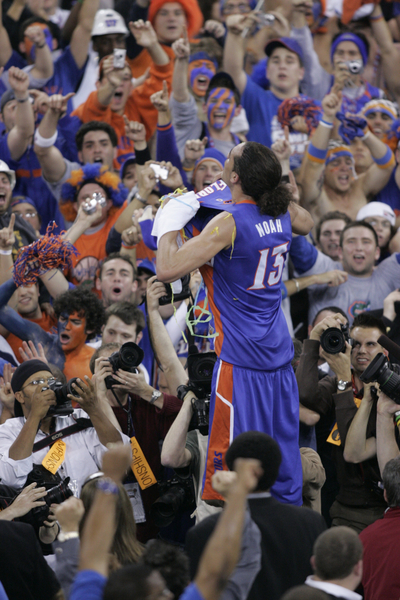
Just as soon as people began to truly doubt Donovan, though, the coaching “potential” and the talent on the floor seemed to meld perfectly in the 2005-2006 season.  While fellows like Al Horford, Joakim Noah, Taurean Green, and Corey Brewer were all prized recruits during their high school careers, they weren’t quite as highly regarded as some of the players Donovan had on his comparatively disappointing squads mentioned above.  What those fellows did indeed possess was the physical toughness, killer instinct, and coachability that Donovan’s system requires, and this perfect fit resulted in Florida’s first national basketball championship in 2006.  Donovan and his Florida program still had their detractors who claimed that they merely lucked into an easy draw — four of their six victories in that tournament came against teams seeded 7th or worse — and that their 2006 title was just a fluke.  Surprisingly, the “Oh-Fours” (the collective nickname that Brewer, Horford, Noah, and Green had given themselves for obvious reasons) all decided to return to campus the following year despite the certain looming promise of NBA riches.  Flipping a gigantic middle finger to the aforementioned detractors, they proved that the previous season’s title was certainly no fluke by becoming the first repeat champions in 15 years.  When considering the two straight titles, Billy Donovan’s recruiting prowess, and his intact image as a young coach with an increasingly bright future, everyone from ESPN anchors to sports-talk radio hosts began tossing around that dangerous word — “dynasty.”

Then, just like Keyser Soze, poof — they were gone.  Proving that Florida is a program so bipolar that it should be on Lithium, after repeating as champs, the Gators missed the last two tournaments of the 00s.  So, let’s recap the decade in order:  a final, five early exits to lower-ranked teams, two national championships, two missed tournaments.  Florida basketball…your prescription is ready.

Pinnacle.  This has to be the night of the repeat championship in 2007.  The second title officially took care of any idiots who felt the 2005-06 championship was a fluke.  Also, we know how hard it is to repeat in this sport.  A case could be made that the true pinnacle was that pep rally after the first championship when the Oh-Fours all announced that they were coming back to college the next year, and of course after the second title everyone pretty much knew that those guys were gone.  But in this era of college basketball I don’t see how there can be any higher pinnacle than the very moments right after repeating as national champions — a peak brought into even greater relief by the decline that followed.

Tailspin.  It started on Selection Sunday in 2008.  Yes, Florida lost a lot of talent after the second championship, to say the least; they were left with a 2007-08 team consisting of two juniors, three sophomores, and seven incoming freshmen.  But with Walter Hodge, Marreese Speights and arguably the nation’s best recruiting class headed to Gainesville for the 2007-08 season, you’d think they could at least have made it back to the NCAA Tournament (to their credit, they did post a 24-12 record, 8-8 SEC).  The 2008-09 squad was also a young one, with 11 of the 14 players in either their freshman or sophomore years, but there was enough talent there to make the Dance.  To be honest, Florida basketball is still in its tailspin.

Will Billy the Kid Find Another Group Like the Oh-Fours?

Will Billy the Kid Find Another Group Like the Oh-Fours?

Outlook for 2010s: Grade: A-.  I wouldn’t go shedding any tears for Donovan or his Gator program.  Donovan will always get big-time talent, and, above all, it’s big-time talent that wins championships.  Most likely, Florida fans can rely on this continued steady diet of…unsteadiness, meaning a cycle of deep tournament runs followed by NIT births.  But if Donovan can find a way to keep the player defections (for whatever reason) to a minimum and get to the point where he can develop teams with some upperclassman leadership, you’ll see a longer string of consecutive years where Florida doesn’t just have great incoming freshman classes but a solid foundation of a few juniors and seniors — and it’s in this manner that legendary runs are built for a program.  It could very well begin with the upcoming season as Kenny Boynton and Erik Murphy come to town to lend their assistance, comprising a smaller yet still highly skilled recruiting class.  Most likely they’ll all have people forgetting how to pronounce “Calathes” by Christmas.

2010 ESPN College Gameday Sites Announced

Posted by zhayes9 on August 18th, 2009

Saturday mornings in the winter have become a schedule of habit for yours truly- stumble out of bed, put the coffee in the pot and settle down on the couch for another edition of College Gameday: Hoops Edition. The likely candidates will return for another run in 2010 including Rece Davis as the host and Hubert Davis, Digger Phelps, Bob Knight and Jay Bilas (assuming Erin Andrews will once again be involved) providing analysis and heated bracket discussion. While I’d love to see Hubert tied up behind the Bristol studios with his mouth taped shut and replaced by someone smart like Doug Gottlieb or Steve Lavin (or anyone who doesn’t think the eye test is the best way to determine NCAA Tournament teams), the Gameday crew has grown on me. Bilas has always been the most informative and intelligent analyst on the network covering college basketball, and once you can look past how big of a buzzkill Bob Knight is, he provides tremendous insight. Much like Chris Fowler on the football counterpart, Davis does a formidable job moderating and challenging his partners.

Here’s the schedule for this season:

January 16th: Storrs, CT- Notre Dame at Connecticut (women’s)
January 23rd: Clemson, SC – Duke at Clemson
January 30th: Manhattan, KS – Kansas at Kansas State (7 p.m.)
February 6th: Champaign, IL – Michigan State at Illinois
February 13th: Lexington, KY- Tennessee at Kentucky
February 20th: Seattle, WA – UCLA at Washington
February 27th: Syracuse, NY- Villanova at Syracuse
March 6th: Durham, NC – North Carolina at Duke

The women’s game doesn’t surprise me; in fact, I viewed it as inevitable for Gameday to make a trip to Storrs this season to commemorate the perfect season for UConn. And why not? I’ve never watched a full women’s college game in my life, and don’t plan on tuning in to that particular edition because Geno Auriemma will be prominently involved, but it’s well deserved. As for the other men’s contests, I think ESPN did a nice job considering they can only work with Saturday games and make the schedule in August rather than on a weekly basis, i.e., college football. You have potential top-ten teams in Duke, Kansas, Michigan State and Villanova entering raucous environments in Clemson, Manhattan, Champaign and Syracuse, respectively. Expect some memorable RTC moments on Saturday nights this season.

Some quick thoughts:

Best Game- UNC-Duke always gets us tingly inside, but the best game takes place in SEC country this season- Tennessee-Kentucky. The Big Blue will be rocking in appreciation of their highly-anticipated top-five team under new coach John Calipari and will surely bring the heat for their most hated sweaty headman, Bruce Pearl. These two bitter rivals will be the top two teams in the SEC this season. Tyler Smith and Wayne Chism battling down low with DeMarcus Cousins and Patrick Patterson will be tremendous to watch.

Likely Stinker- Most would vote for a possible 57-56 final in Champaign as the likely stinker, but I’ll go with Villanova-Syracuse. Some believe the Orange could surprise with the addition of Wesley Johnson, but Villanova is loaded and took care of Syracuse late last season at the Dome even with Jonny Flynn, Eric Devendorf and Paul Harris around. This one has the potential for blowout city rather than upset city.

Who Knows Game- Kansas State isn’t likely anything more than a bubble team this season, yet Gameday is making the trip to Manhattan to see preseason #1 Kansas battle the Wildcats in what should be an insane environment. You’d think the Jayhawks’ immense talent would be able to wipe the floor with Kansas State, but don’t underestimate Denis Clemente, Jacob Pullen and stud frosh Wally Judge. Feels like this could either be an 18-2 KU run to start the game or the most memorable upset of the conference season.

Missing Powers- A little bit surprised to see Texas without an appearance on Gameday. I love their makeup this year under Rick Barnes and coupled with a strong Big 12 + Austin providing a worthy destination = surprised at their absence. Purdue was snubbed. Butler was also a candidate to get some national TV love.

Cult of Personalities- As I mentioned before, the battle between Bruce Pearl and John Calipari, especially coming off the Josh Selby rumors/saga, will be eaten up by ESPN. It’s not exactly Rick Pitino-Calipari, but the storylines will develop.

Plus, we get more halfcourt shots. And those are always fun.