Posted by KCarpenter on January 19th, 2011

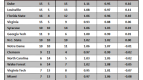
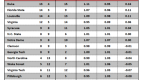
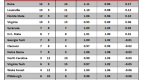
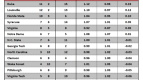
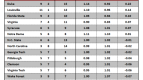
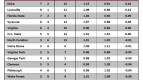
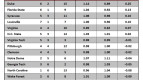
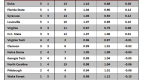
Pittsburgh, as Syracuse most recently learned, is a contender to win the national championship because they do one thing incredibly well and a lot of other things at a pretty high level. The one excellent thing they do is crash the offensive boards. They lead the nation in offensive rebounding rate, which is the driving force behind their current position as the most efficient offense in the country. The Panthers do a lot of other things well– shooting, defensive rebounding, controlling turnovers– but nothing they do, in terms of advanced stats, really jumped out at me until I noticed that they are second in the nation in assists to field goals made. 69.8% of Pittsburgh’s field goals are assisted. This is interesting and pretty cool, but I began to wonder if it even mattered.
Assists are really weird, because in a way that’s not true of any other individual stat, they don’t really measure individual performance at all. To get a credited assist, the passer’s teammate has to knock down shots. Surround a healthy Kyrie Irving with four clones of someone who shoots as well as I do, and as crisp, creative, and well-timed as his passes are, he is not going to get too many assists, solely because, well, I am a terrible shooter.The box score for this game will show he got no assists. Did Kyrie have a bad game? Were his passes worse than usual?

Jamie Dixon's Team Moves the Ball Well
No, probably not, and that’s a tricky question. From close to the beginning of basketball box scores, assists have been tracked. In fact, in the early days of individual statistics, assists were really about the only thing tracked besides points and rebounds. Why do we even track assists? Maybe just because we always have. On some level, it’s easy to see what assists are supposed to do: assists are supposed to be a measure of play-making through passing. But as I mentioned, assists really aren’t all that great at measuring true ball movement because the statistic is hopelessly tangled up with field goal percentage. A team that makes more shots should generally have more assists. We don’t keep track of who made a great pass that led to a missed shot, and that really throws off our view of skilled passing and playmaking, which, after all, assists are supposed to measure.
There are more problems than that. We largely assume that assists are almost always positive. Passing is good. The problem is that sometimes it isn’t. Let’s suppose that we are on the fast-break, and I have the ball and my man beat. It would be easy for me to hit an uncontested layup. Instead, I drop the ball back to you, and you hit a slightly more difficult uncontested mid-range shot. I decreased the chance of us scoring with that pass, but got credited with the assist. That was a bad assist and these happen all the time. If you don’t believe me, watch Rajon Rondo “gun” for assists the next time you watch the Boston Celtics play.
Read the rest of this entry »
| behind the numbers, Regular Features
| Tagged: alcorn st, california, cleveland st, duquesne, florida a&m, jamie dixon, ken pomeroy, louisville, michigan st, minnesota, northwestern, oklahoma st, pittsburgh, purdue, syracuse, usc