Cupcakes Wanted: Inquire Within

Posted by nvr1983 on April 15th, 2011

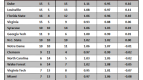
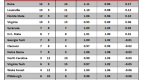
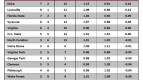
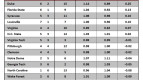
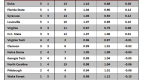
Every March the topic of scheduling rears its ugly head as fans and analysts rip teams for their soft non-conference schedules. Did you ever wonder how teams come up with those schedules? Surely it involves putting together the team statistician, the chairman of mathematics, and the chairman of computer sciences at the university to crunch the numbers to come up with the optimal schedule to allow their school to appease that all-important Selection Committee on Selection Sunday, right? It turns out that it really isn’t that advanced. In some ways, it comes down to a representative of the basketball program putting up a request and basically announcing “call me if you are interested”.


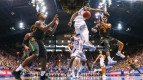
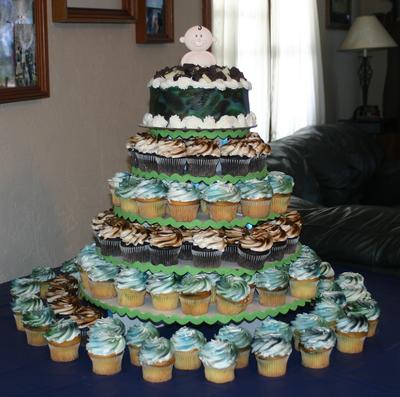
It's cupcake city, baby!

As John Ezekowitz noted it is basically “NCAA Basketball’s Craigslist” where teams try to figure out how to fill their schedules and potentially offer monetary incentives in what are commonly known as “guarantee games”. Essentially a guarantee game is one in which a lesser team is paid (often rather handsomely) to travel to a better team’s arena for a game (read Kyle Whelliston’s account of one such game for more details). These games have often been derided as being against the spirit of the game. Obviously the financial incentive for the proverbial “sacrificial lamb” is a little unseemly and viewed by some as unsportsmanlike. Then there is the competitiveness issue as these games often are blowouts. Some coaches, including Lefty Driesell in our interview with him before this season, have expressed unhappiness at the fact that it does not allow for the traditional home-and-home match-ups that could generate a lot of buzz and ticket revenue for the smaller program, but the bigger program does not want to do so because frankly there is nothing in it for them. If they go on the road and win, who cares? They beat a team that means nothing on the national level and they lost the ability to sell themselves in front of a major recruit. And if they lose on the road? The world ends for a few days as boosters and fans call for the coach’s head and the players have their Facebook walls and Twitter accounts bombarded by all sorts of profane messages.

Read the rest of this entry »

Is One-and-Done On Its Last Legs?

Posted by rtmsf on April 14th, 2011

God, let’s hope so.

Hopefully We're Putting This Era to Bed Soon

This site has been on record for a number of years fully in support of a two-and-done NBA rule that would have several corresponding effects.  A brief outline:

  • Here, we explain why having stars develop their marketability in UNC, Texas or UCLA uniforms rather than sitting the bench for a couple of years in the NBA is not only better for the individual player and NBA teams using the NCAA as its minor league, but also for the sport of college basketball.  Casual fans get more excited when they recognize the star players on the marquee teams (think: John Wall vs. Avery Bradley).
  • As we explained in this piece, college coaches who publicly support the preps-to-pros or MLB model (where a player can go pro either out of HS or three years later) are either being disingenuous to appear like they truly care about players’ best interests, or they’re forgetting just how frustrating and wasteful it was. After spending years recruiting elite players only to have them bail to the pros in late spring of their senior year, coaches were left scrambling to find last-minute replacements and having to explain to their fans why they had huge holes in their lineups the next year (see: Shaun Livingston, Gerald Green, JR Smith, et al).
  • And in this analysis, we showed that although having elite freshman talent might seem like the right thing to do, it probably won’t win you a championship in the current environment.  Depending on what Terrence Jones, Brandon Knight and Jeremy Lamb do this month, as few as five and as many as eight one-and-dones have played in the Final Four in the last five years, with Lamb the only player to have won a title (as a second banana behind a NPOY candidate, mind you).

As we approach the expiration of the NBA’s Collective Bargaining Agreement between owners and players at the end of June, we’ve anticipated that an extension of the one-and-done rule to two years would be a significant chip on the bargaining table.  A report last week from Yahoo! Sports suggests that “about two-thirds” of NBA owners want to see such a rule implemented in the new deal next season.  The players’ union is against it for obvious reasons, but as this PBT article outlines, if it comes down to a situation where major-dollar negotiations hinge on protecting its union-member veterans in exchange for requiring another year of college for future members, we know which outcome is the most likely.


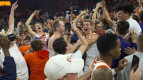
Teams Like This Make the Sport Popular (AP)

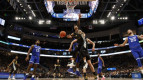
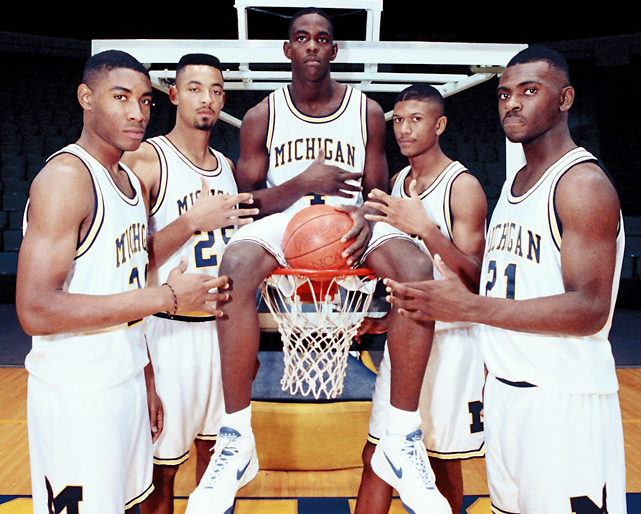
What does it mean?  The game of college basketball is probably as popular as it’s ever been in terms of whole numbers, but among the all-important casual fans, it perhaps pales to what it was two decades ago when most players stayed a minimum of two years.  We can’t tell you how many times we’ve talked to some of these folks about college hoops only to have them shrug their shoulders with indifference and say something like,”I just don’t like having to learn the new good players every year.  There’s no continuity.”  We can argue just how truthful that statement might be, but the important part is that the perception exists. The possibility of another transcendent team like Michigan’s Fab Five (where fans got to know every single starter intimately for two solid seasons) simply hasn’t been possible in the last fifteen years; with the strong possibility of a two-and-done rule taking hold soon, college basketball fans will finally get back to the glory days of watching great teams develop over a longer and more natural period of time.  If you love the game (or even if you only like it), this should be something we can all get behind.

Morning Five: 04.14.11 Edition

Posted by rtmsf on April 14th, 2011

  1. Add Illinois forward Jereme Richmond to the group of disappointing freshmen exhibiting their selfishness by skipping the year-end team banquet in favor of “preparing” for the NBA Draft.  As if spending two to three hours eating, laughing and commiserating with your teammates will derail that dream.  Kansas guard Josh Selby did the same thing last week, as he was “working out” in Las Vegas during the KU banquet and couldn’t be bothered with celebrating a 35-3 season with his team.  Interestingly, both players routinely found themselves in their head coach’s doghouse this season, and each at times seemed to think he was a lot better than he was actually performing — Richmond averaged 7/5 RPG in 22 MPG, while Selby went for 8/2 APG in roughly the same amount of time last season.  This is yet another reason why the one-and-done rule needs to go; it gives players like these two prima donnas a false sense of their talent based on high school rankings made not even a year ago.  Speaking of Selby in particular, Gary Parrish deconstructs the Rivals #1 recruit’s draft prospects (being compared to Willie Warren, ouch!) and how he got there — very instructive stuff.
  2. Of course, the biggest NBA Draft news of Wednesday was Arizona’s Derrick Williams taking his prodigious talents to the League.  Thanks to a great March including a game-saving plays against Memphis and Texas and a statement performance against Duke in the Sweet Sixteen, Williams has shot up most draft boards to the point where he’s considered one of the top two picks in the draft.  He will sign with an agent, leaving no doubt that his fantastic two-year career in Tucson is now over.  He will also undoubtedly go down as one of the players who led Arizona back into the national consciousness, something that probably didn’t seem possible so soon a couple of short  years ago.
  3. And a couple more…  Butler’s Shelvin Mack has decided to test the waters but will not sign with an agent, while Memphis’ Wesley Witherspoon announced that he will return for his senior year.  Mack in particular is an interesting case — he performed extremely well last summer against both professional players and his peers, and although he struggled with his shot for much of last season, he came on very strong in the Bulldogs’ run in this year’s NCAA Tournament.  He’s considered a late first round/early second round pick.  Witherspoon is making a good decision, as he had an injury-plagued junior year that didn’t allow him to show the true talent that he possesses — coming back healthy for a senior season will do him a lot of good.  One other note with respect to testing the waters, John Calipari is encouraging all three of his draftable players — Terrence Jones, Brandon Knight and DeAndre Ligginsto explore their professional options over the next few weeks.
  4. Note we said “weeks” with respect to the UK players exploring their options above.  The actual deadline for a player to return to school is May 8 this year, which gives players some, but not a lot, of time to assess their prospects before making a final decision.  Yet with today’s shameful ruling by the NCAA Legislative Council to further reduce the amount of time players have to make such a life-altering decision, it begs the question as to who these people are actually working for — the student-athletes that need valid information about their prospects, or the coaches who want to get out onto the golf course (as Mike DeCourcy eloquently argues)?  MD is much more tactful than we’ll be here, but in case you’re wondering where this all came from, a certain ACC coach got very annoyed by having to wait until the very last day of the deadline in 2008 (which was then mid-June) to see what his players would do.  The irony is that Ty Lawson, Danny Green and Wayne Ellington ultimately stayed in school, and that coach won a national title the next season because of their late decisions.  Makes sense, right?
  5. Enough about that.  How about a little post-championship analysis from Luke Winn to finish things off?  The Brooklyn Bohemian comes strong as always with a put-it-to-rest analysis of whether Butler’s miserable shooting night in the title game was a result of an off night or great defense.  You’ll need to read it to see his conclusion, but you should open the link assured that he leaves very little room for debate about the correct one.

Conference Report Card: Pac-10

Posted by Brian Goodman on April 13th, 2011
Andrew Murawa is the RTC correspondent for the Pac-10 and Mountain West conferences. We will be publishing a series of conference report cards over the next week for conferences that received multiple NCAA bids to recap the conference, grade the teams, and look at the future for the conference.

Conference Recap:

After an awful 2009-10 season in which the Pac-10 had to limp into a second NCAA Tournament bid when Washington hit the gas pedal down the stretch, the four tournament bids the conference received this year was a huge improvement. With Arizona advancing to the Elite Eight, the Pac-10 advanced a team beyond the Sweet 16 for the first time in three seasons, and the conference was a much deeper collection of teams than last year. And without a doubt, that came as a result of the enhanced talent level across the conference. Coming into the season, there were just 17 seniors on rosters across the conference, and the youngsters showed vast  improvement this year, notably Derrick Williams (an All-American and national player of the year candidate), Isaiah Thomas, Tyler Honeycutt, and Klay Thompson with several other players making big strides in their games. While the Pac-10 still struggled to gain national respect, it was clear to fans that the level of play is on the rebound from its 2009-2010 nadir.

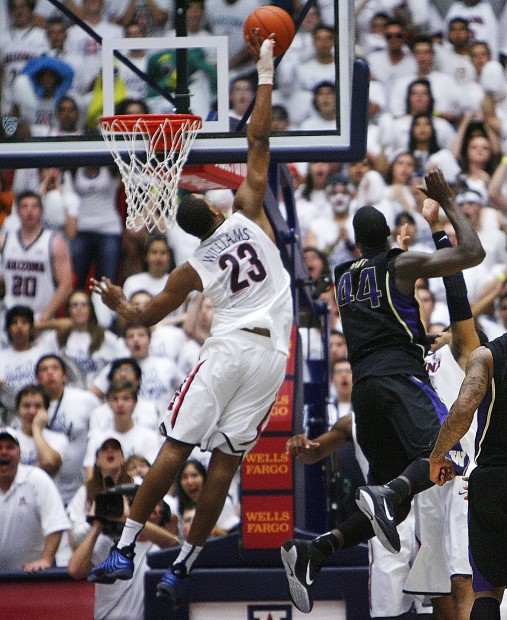
The Pac-10 was Derrick Williams' personal playground in 2011, and the Wildcats displayed perhaps the most impressive performance of the NCAA Tournament in their dismantling of Duke. (AZ Daily Star/M. Popat)

Read the rest of this entry »

Season in Review: The Best of RTC

Posted by rtmsf on April 13th, 2011

It’s been a great season here at RTC, our Year the Fourth covering this great sport, and before we pack up the boxes and head to our summer hideaways in the Hamptons, Aspen and Santa Barbara, respectively, we wanted to share a little bit of our “best of” for the 2010-11 season.

Some RTC Season Highlights

RTC Live

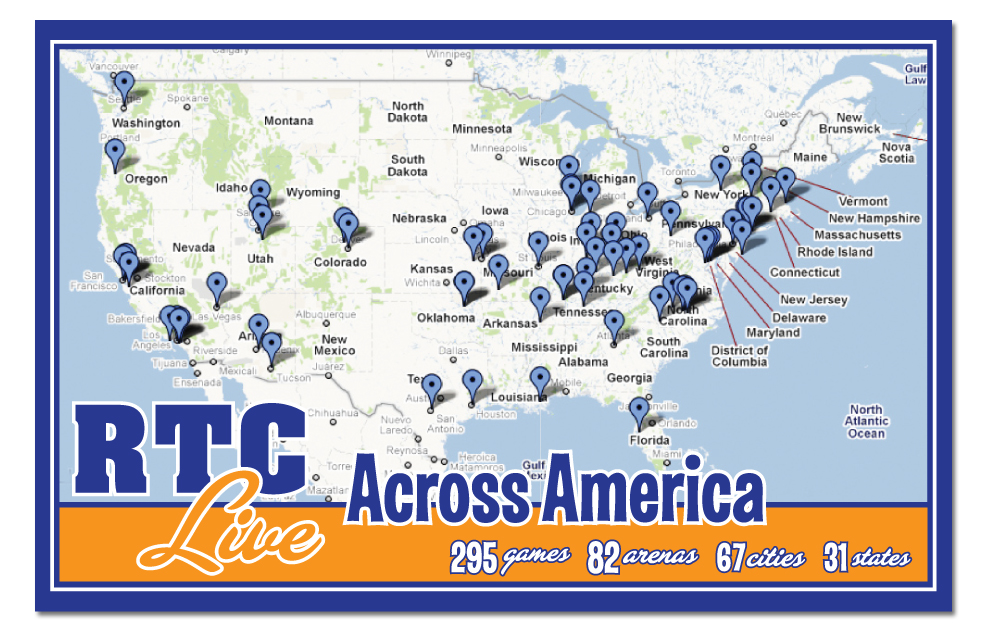
Through our network of correspondents from coast to coast, we were able to cover a grand total of 295 games at 82 different venues this year.  We saw every single NCAA Tournament team at least once, and 78 other schools just for kicks.  We witnessed the Final Four quartet of Connecticut, Butler, Kentucky and VCU a total of 56 times, and we sat courtside at every one of UConn’s unprecedented 14-0 neutral site victories this season — from Maui to New York, then Washington to Anaheim, ultimately culminating in Houston.  Perhaps most proudly, we managed to send someone to each of the fourteen NCAA Tournament sites this year, an accomplishment we hope is merely the first in a long line of such successes.

We put together a short video encompassing some of the photos we took along the way.  See you on the road next season!

Read the rest of this entry »

Conference Report Card: Big Ten

Posted by Brian Goodman on April 13th, 2011


John Templon is the RTC correspondent for the Big Ten conference. We will be publishing a series of conference report cards over the next week for conferences that got multiple NCAA bids to recap the conference, grade the teams, and look at the future for the conference.

Conference Recap

  • Coming into the season, the Big Ten was considered the best conference in America. Michigan State was expected to be in the Final Four again and Purdue, Ohio State, and Illinois were expected to be among the nation’s elite. Then the season started and the conference slipped a bit. The Big Ten didn’t live up to its lofty billing, with the exception of Ohio State, which sat at #1 in the polls for a large part of the season. Of course, Robbie Hummel’s knee injury didn’t help Purdue. Illinois wilted under the weight of too much talent and not enough leadership, whereas Michigan State just never seemed to find its footing against a difficult schedule.
  • As conference play went on, all the teams beat up on each other, creating a mess in the middle and leading to four teams (Michigan, Illinois, Michigan State and Penn State) receiving seeds between 8-10 in the NCAA Tournament. The conference went 2-2 in those games. But the disappointment in the NCAA Tournament came from the top seeds that failed to live up to expectations. Ohio State, the #1 overall seed, was dispatched by Kentucky in the Sweet 16 in Newark. Then again, that was better than Purdue managed to do, as the Boilermakers fell to VCU in Chicago. Wisconsin made it to New Orleans, but Brad Stevens outcoached Bo Ryan and the Badgers lost to a lower-seeded team once again.
  • Those losses meant the Big Ten finished a season of much promise with zero teams in the Elite Eight. Much like the conference’s well-publicized bowl game problems, the postseason left a sour taste after many teams played good basketball during the regular season.
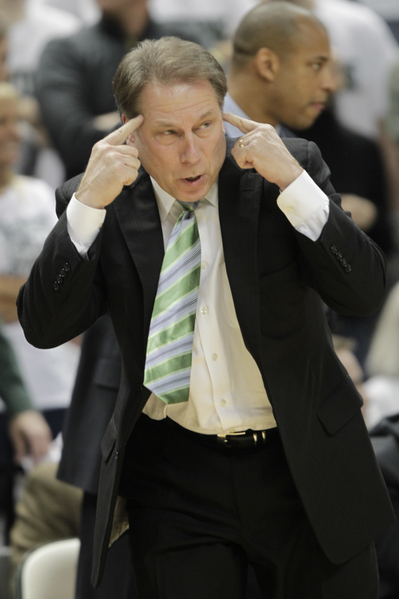
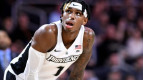
The postseason was a struggle for everyone in the Big Ten, even Final Four regular Tom Izzo and his Spartans, which had to make a late run to even crack the field.

Team-by-Team Grades

A’s:

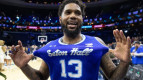
  • Michigan (A): Before the season the Wolverines were expected to compete with Iowa and Indiana to avoid the basement in the Big Ten standings. By the end of it, they were scaring #1 seed Duke in the third round of the NCAA Tournament. It was a remarkable job by JohnBeilein to get a young team ready to play. Darius Morris was the engine of the turnaround. The sophomore point guard scored 15.0 points per game and dished out 6.7 assists per game while leading a team composed of mostly freshman and sophomores. Tim HardawayJr., a freshman, was the team’s only other double-digit scorer at 13.9 points per game. Michigan didn’t have a single senior on its roster this season and, with two more talented backcourt recruits in CarltonBrundidge and TreyBurke coming in, it appears to be ready to be a big player in the conference moving forward although they are still waiting on Morris to officially decide on whether he will enter the NBA Draft.
  • Ohio State (A-): The Buckeyes didn’t get it done in the NCAA Tournament, but they were the #1 team in the polls for most of the season and had the best freshman in the country in Jared Sullinger. The loss to Kentucky certainly put a damper on the season. Still, Ohio State went 34-3 with its only two regular season losses being at Purdue and Wisconsin in conference play. David Lighty, DallasLauderdale, and JonDiebler all graduate, but if Sullinger is serious about sticking around the Buckeyes will be a national title favorite again next season. Especially considering they have two McDonald’s All-Americans in point guard ShannonScott and center AmirWilliams coming in along with small forwards SamThompson and LaQuintonRoss. It’s Thad Matta’s typical reload instead of rebuild plan.
  • Penn State (A-): Qualifying for the NCAA Tournament for the first time in a decade makes the Nittany Lions’ season a success. Even though they lost to in-state rival Temple in the second round, 66-64, it was a thrilling game to end a satisfying season that included victories over Wisconsin (twice), Illinois, and Michigan State (twice). Oh, and a loss to Maine. Talor Battle finally got his chance to go to the NCAA Tournament and finished his career with 2,213 points, 624 rebounds, and 517 assists. He’ll certainly be missed next season along with frontcourt veterans David Jackson and JeffBrooks. Thus, Penn State has some size coming in with two 6’11 centers in PatAckerman and PeterAlexis, but the program is probably due for a bit of a backslide.

Read the rest of this entry »

Morning Five: 04.13.11 Edition

Posted by rtmsf on April 13th, 2011

  1. A number of players made NBA stay/go decisions on Tuesday, beginning with RTC NPOY Kemba Walker, who formally announced that he will be heading to the League after his junior season, the most celebrated in UConn men’s basketball history.  The point guard projected as a lottery pick will sign with an agent soon, leaving no possibility of an encore performance in Storrs.  On the other side of the country involving a player in the same high school class as Walker, UCLA point guard Malcolm Lee announced that he too is leaving for the NBA and will sign with an agent.  Despite being a top recruit three seasons ago, Lee never quite became the superstar he was supposed to be, and is currently only projected as a second round pick in this summer’s draft.  UCLA head coach Ben Howland had counseled Lee to return for his senior season, but he decided that it was time to move on from Westwood (maybe he didn’t want to play in the LA Sports Arena — we wouldn’t blame him).
  2. Two other athletic phenoms will also be entering this year’s NBA Draft, as Georgia’s Travis Leslie and Florida State’s Chris Singleton announced on Tuesday their intentions to leave college a year early.  Leslie formally made his announcement yesterday, joining all-SEC forward Trey Thompkins in leaving Mark Fox’s program, while Singleton hasn’t officially announced yet but was apparently outed by his school’s media relations department in this report about his upcoming Wednesday press conference.  Both players are likely first round selections.
  3. In a phenomenal indication as to just how difficult it is perceived to win at The U, Harvard’s Tommy Amaker decided on Tuesday he’d rather stay in Cambridge as the head coach of the Crimson rather than moving south to Coral Gables as the Hurricanes seek to replace Frank Haith.  Amaker must figure that if he can get Harvard to the NCAA Tournament next season (a distinct possibility), he’ll have a much better choice of winning jobs at his disposal — probably a smart move.  Now, Miami is said to be looking at Mike Davis (Alabama-Birmingham), Tony Barbee (Auburn), Donnie Jones (UCF), Billy Kennedy (Murray State) and Rob Jeter (Wisconsin-Milwaukee) as possible new candidates.
  4. There was a big piece of transfer news on Tuesday, as former Utah star Will Clyburn announced that he will be matriculating at Iowa State next year and become eligible to play in Ames for the 2012-13 season.  Expressing a desire to move closer to his home town of Chicago (and having played JuCo ball at nearby Marshalltown CC), the all-MWC forward who averaged 17/8 last season is excited to join a program under Fred Hoiberg that he feels is moving in the right direction.
  5. Billy Donovan’s Florida staff suddenly looks like a dream team of sorts as the school announced the hiring of former Arkansas head coach John Pelphrey and former St. John’s head coach Norm Roberts on Tuesday.  Pelphrey and Donovan, of course, are very close, with the duo coming up together at Marshall and earning their stripes later at Florida in the 1990s, building UF into a national power before Pelphrey moved on to South Alabama and Arkansas.  Both Pelphrey and Roberts found themselves in tough situations, but it’s safe to say that these will be short-lived stopovers for them until other big-name schools offer them another chance.  It’s certainly better than sitting on your couch.

More Thoughts on the USD Scandal and the NCAA’s Response…

Posted by rtmsf on April 12th, 2011

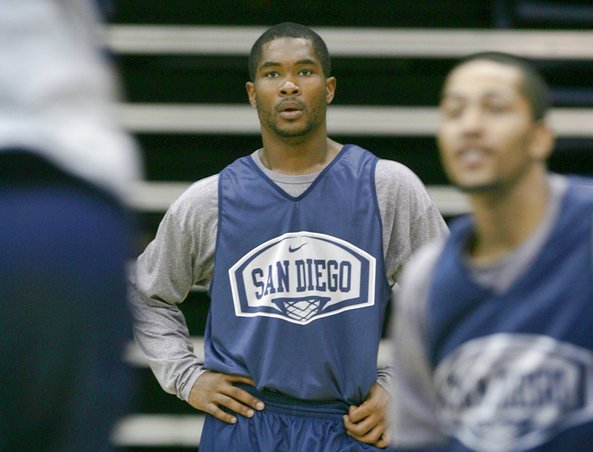
With the news released today that former University of San Diego star Brandon Johnson was allegedly a co-conspirator in an ongoing criminal scheme involving point shaving, illegal bookmaking and marijuana trafficking, the NCAA was once again sideswiped by the harsh reality that its games are particularly vulnerable to these and other such enterprises.  This is the second such conspiracy uncovered by federal authorities in the last three years — remember that former Toledo guard Sammy Villegas admitted in 2008 to attempting to fix games during the 2004-05 and 2005-06 seasons and is currently awaiting sentencing in Ohio.

Johnson is Toast -- Are There Others?

As we’ve been on record stating through educated inference and others’ statistical analyses examining betting tendencies, we believe that this sort of thing happens a whole lot more than the NCAA would like to believe.  Here’s what we know.  We know that approximately one percent of games (~30) per season fall into a statistical outlier against the spread that does not appear to be explained through the normal ebb and flow of the game.  We know that the NCAA itself says that 1.6% of its men’s basketball players self-report illicit solicitations to influence the point spread in their games.  We know that these players are not paid beyond room, board and incidentals.  And we also know that with the proliferation of offshore gaming and the ubiquity of legal gambling in our society (lotteries, card rooms, casinos, horse racing, etc.), the stigma of gambling is probably at an all-time low in American history.  With all of these factors working against the NCAA’s stated core value of preserving the integrity of its contests, how is it that we’re only seeing one of these scandals pop up every few years?  The easy answer is that the non-existence of such scandals proves that education and enforcement is working, but color us mighty skeptical.  We fear that the more truthful answer is that it’s happening repeatedly right under our noses, but the NCAA and federal law enforcement simply do not have the resources or focus to catch it until it gets out of hand (e.g., an absurd ten people were involved in this!).

In a formal statement this afternoon, NCAA President Mark Emmert had this to say:

Read the rest of this entry »

Time For The Hall of Fame To Reevaluate Itself

Posted by nvr1983 on April 12th, 2011

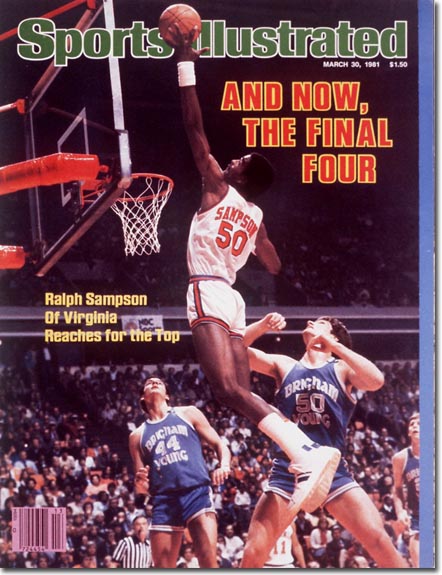
A little over a week ago, the Naismith Hall of Fame announced its Class of 2011 during the NCAA Final Four festivities in Houston. Chris Mullin, Dennis Rodman, and Arvydas Sabonis were among the individuals selected to join the list of luminaries in Springfield, Massachusetts in August. We would have a difficult time arguing against any of the individuals selected this year or previous years, but when we looked at the list of those currently enshrined in the Hall of Fame we were shocked to see which players the HOF voting committee (done anonymously) left out. Cases can certainly be made for at least a dozen individuals who have not already been inducted to the Hall, with many of them being some of the African-American pioneers of the game who played in less well-recognized venues and leagues, but the two who stand out for us — Ralph Sampson and Christian Laettner — do not fall into that group by any measure.


Sampson soared over the competition in college

Both players already meet the Naismith Hall of Fame’s requirement of being retired for five years, so they are eligible for selection. There will be some who will argue that neither player had a great NBA career, and we will not even try to argue that because there is little debate that both had disappointing pro careers although both had their moments. But that misses the point of the Hall of Fame. It is not solely a forum to recognize achievement at the professional level. As its own site states, since 1959 it has “honored and celebrated the game’s greatest moments and brightest stars.” There is nothing on its website stating that it is specifically for professional basketball either at the NBA level or overseas. Another argument you will hear is that both Sampson and Laettner were exceptional college basketball players who already have been honored at the National Collegiate Basketball Hall of Fame in Kansas City, Missouri in the past two years. Once again, that misses the point, as there are multiple coaches in both Halls of Fame, including Mike Krzyzewski, Jim Calhoun, and Lute Olson, none of whom ever coached at the professional level. The fact that neither player has been selected yet is simply a travesty and raises questions about the utility of the Naismith Hall of Fame when two of the greatest college basketball players of all-time (probably both in the top ten on most lists) are not included.

Read the rest of this entry »

BYU To Fredette: Don’t Attend Classes

Posted by jstevrtc on April 12th, 2011

The season may be over, but Jimmer-mania is still going strong on the BYU campus. A little too strong, it turns out.

According to an article yesterday by Sporting News’ DeAntae Prince, Jimmer Fredette has been asked by officials at BYU to stop going to class because of the disruption entailed by his presence and the lack of focus exhibited by other students when he would show up. In his attempts to attend lectures like any other college student trying to finish up his final year, because of his popularity, Fredette was evidently set upon regularly by swarms of admirers wanting autographs or some other interaction with the Cougars’ superstar. Prince’s article also notes that this phenomenon was not limited to the BYU campus, but extended to the rest of the city of Provo as well.

We Wonder What Will Happen If He's Drafted By the Jazz

It might be the dream of many college students to be told by officials at their school, “You’re too famous. Everyone loves you so much that you don’t have to come to class anymore. We’ll figure something out,” but this is a shame. It got so bad that Fredette will now have to finish his coursework online. How ironic that certain people within the school and city that Fredette represented and played so hard for have made it so that he can’t really attend the school or live normally in the town.

The most shocking account in Prince’s piece came from Fredette’s father, Al, who once asked his son what he does when he goes out. Al remembered, “He said he wears a hoodie and tries not to make eye contact.”