Thursday, March 11
12pm - G'town vs. Syracuse (ESPN)
12:30pm - Kansas vs. Texas Tech (ESPN2)
2pm - Marquette vs. Villanova (ESPN)
7pm - Okla St vs. Kansas St (ESPN360)
7pm - Notre Dame vs. Pitt (ESPN)
7pm - UNC vs. Ga Tech (ESPN2)
7:30pm - Tulsa vs. Marshall (CBS CS)
9pm - WVU vs. Cincinnati (ESPN)
9:30pm - Texas vs. Baylor (ESPN2)
9:30pm - Ariz St vs. Stanford (FSN)
12am - Washington vs. Oregon St (FSN)
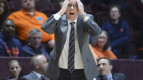
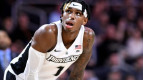
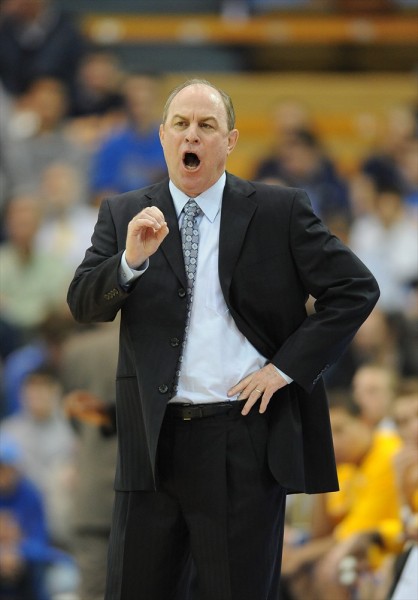
The sputtering Ben Howlands took yet another hit today in a season that is quickly turning into a nightmare for the bluebloods from Westwood. UCLA announced this afternoon during the coach’s regular press conference that starting center Drew Gordon, one of the few bright spots on the team so far this season, will be transferring. It’s no secret that Gordon and Howland had gone at each other over the last year-plus since the player’s arrival on campus, but this particular decision appears to have been precipitated by a quiet two-game suspension from practice that the coach levied on Gordon earlier this week (Andy Katz states it was for “conduct detrimental to the team“). According to his father, even though the suspension may have been the proverbial straw, Gordon has different ideas about how to best utilize his talents, citing an “up-and-down” system other than the methodical Bruin offense as a better fit. To which we say, did Drew Gordon ever watch UCLA play prior to committing there? An up-and-down system it is not, nor has it ever been, under Howland. As for where he’s headed, other than stating that transfer to another Pac-10 school was out of the question, there is no obvious leader for Gordon’s services (he hails from San Jose in NorCal).
Gordon was a member of the nation’s deepest and strongest recruiting class in America in 2008, with five players ranked in the Rivals top fifty. But we honestly have trouble remembering a class that has been a bigger bust than this one. The reason that UCLA took three losses in the 76 Classic last weekend is directly attributable to the fact that the core of sophomores that remained — Malcolm Lee, Jerime Anderson, J’Mison Morgan, and Gordon — haven’t lived up to their billing. The fifth member of that class, Jrue Holiday, had a lackluster freshman season (9/4/4 assts) before heading off to NBA riches. But it has been Gordon among the remaining four who has shown promise as the most efficient player on the UCLA roster this season, averaging 11/5/2 blks and shooting 57% in a little under 25 minutes per game. With the loss of Gordon, who was one of the only post options at Howland’s disposal, he will have to hope for support from freshman bigs Reeves Nelson (7/5 in 15 MPG) and Brendan Lane (3/2 in 9 MPG) unless J’Mison Morgan (2 pts and 1 reb all season) can find the game that had national powers Kentucky, Louisville and much of the SEC and Big 12 recruiting him two years ago. Given the obstacles that UCLA is already facing this season, we’re just not convinced that the Bruins can turn things around to get back to the NCAA Tournament for the sixth consecutive year.
Ed. Note: sorry for the delay on Sunday’s ATB, but the travel schedule got in the way…
Over the weekend, there was something in the neighborhood of 145 college basketball games. Many were several times more compelling than watching Tim Tebow praise God one more time in another blowout Florida win or seeing the Charlie Weis Bataan death march at Notre Dame (although the Iron Bowl was good). With that in mind, we’re here to sort through our Thanksgiving leftovers to award the teams that most and least deserve a scrumptious plate of tofurkey and leeks (ok, maybe that menu was at your house, not ours).
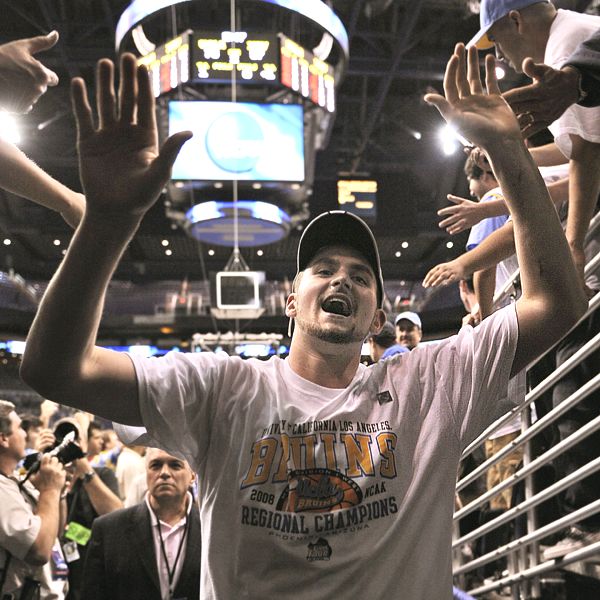
Turkey Sandwiches. Usually better the second time around. And the third time. And the fourth… Unless you’re Ben Howland and UCLA, and you’re starting to wonder if that mayo tastes a little spoiled after the fourth helping. After UCLA dropped its third game in a row at the 76 Classic (and fourth on the year), questions are swirling as to what is wrong with his Bruins. It’s not just that UCLA has four losses; it’s that these losses are to mid-majors like Cal State Fullerton, Portland, Butler and now Long Beach State. Butler and Portland are NCAA-worthy, but the others? Let’s examine what’s wrong, and see if anything can be done to fix it. For starters, the UCLA offense — often a challenge in Howland’s era — is on life support this season. Nobody on this team appears to be able to shoot the ball, and that includes from the field (44%), three (26%) and the line (56%). Guards Malcolm Lee and Jerime Anderson were hot-shot recruits in the backcourt, but neither of them can break 40% from the field; there was a big fuss about Nikola Dragovic’s return to the team after an accusation of assault, and he’s hitting a frigid 25% of his attempts. Good grief – when Michael Roll (23 pts in the LBSU game) is your “star” player, you have serious offensive issues. But it’s not just the offense this season, as bad as that has been. It’s also the defense, which is traditionally a Howland staple and has him contemplating changing his usual tough man-to-man for a zone. UCLA is giving up 45% shooting to teams (worst in the Pac-10) and when they’ve needed to get the stop — witness the CS Fullerton and Butler games — they came up empty. So the question is whether this team can turn it around, and we’re not sure that it can in time to stop the bleeding. #1 Kansas is on the agenda next weekend, and Mississippi State and Notre Dame soon thereafter. The Pac-10, as we all know by now, is incredibly weak, but if you can’t beat Long Beach and Fullerton, you’re not going to beat Arizona and Washington either. There is a ton of work to be done here, and if Howland can turn it around by March, we’ll be right there at the front of the line to give him accolades. Until then, though, UCLA basketball doesn’t take kindly to this stuff, so he’d better get moving quickly…
Pumpkin Pie. A meal unto itself, making yourself fat and happy with pasty goodness. Has anyone — and we mean anyone — looked better than West Virginia through the first three weeks of the season? Let’s look at the short list: Syracuse and Duke. That’s it – those are the only two teams who have looked as dominant as WVU in our estimation. Yesterday Bob Huggins and his Mountaineers left Anaheim with what they were expected to do: win the 76 Classic. Few expected them to do it by facing upstart WCC foe Portland in the championship game, as the Pilots crushed UCLA and outlasted Minnesota to get there, but there was Eric Reveno’s crew facing off against WVU in the finals. The Pilots ran into a buzzsaw on Sunday, though, as Tournament MVP Da’Sean Butler posted 26 points and Portland shot just 5-24 from behind the three-point arc, clearly bothered by West Virginia’s athleticism and close-out pressure defense. With the return of sophomore Devin Ebanks – after his mysterious stint in coach Huggins’ doghouse –- the Mountaineers look fine-tuned and ready to compete with anyone in the nation. Of course, it’s only November, and we’ve been down this road with Huggins before, so stay prepared for anything.
Mac n’ Cheese. Gooey deliciousness. That’s how Northwestern must be feeling after winning the Chicago Invitational over two tough teams, Notre Dame and Iowa State. Maybe that NCAA Tournament bid isn’t a pipe dream after all since losing Kevin Coble and Jeff Ryan to injuries, because it’s clear that Northwestern has decided that it will not go quietly. John Shurna led the Wildcats with 23/7/4 assts while helping to harass ISU star Craig Brackins into a 6-16 FG, 18/9 night (he’s capable of much more). As it stands, Northwestern is now 5-1, with its sole loss to Butler and a good chance to enter Big Ten play at 11-1 (tomorrow night’s ACC/B10 game against NC State is winnable).
Green Bean Casserole. #2 Michigan State gets the green bean casserole leftovers because, like the dish, they held up fairly well after a disappointing start in the Legends Classic. The Spartans recovered from their shocking upset loss to Florida on Friday night in the semifinal round by taking it out on UMass in the consolation game 106-68 on Saturday. RTC Live was there if you want more details, but MSU used a 30-3 first half run to dominate the Minutemen, and ended up the game shooting a red-hot 58% and hitting fourteen threes. Tom Izzo set a new record for wins at Michigan State with his 341st win on this night, passing his mentor Jud Heathcote.
Warm Rolls. It’s comforting and makes you feel all fuzzy inside, just like family; the First Bro-in-Law had his warm fuzzies at Oregon State’s game in DC with GW on Saturday. Craig Robinson’s Oregon State team got its first decent win of the season 64-57 against the previously unbeaten Colonials as the First Family looked on. OSU’s Seth Tarver lit up the stat sheet with 18/7/3 assts/3 stls, but given how badly the Beavers have played to this point, President Obama may want to make plans for several visits to the west coast in January and February.
The nation’s presumptive #1 player in the Class of 2010, Harrison Barnes, will make his college choice official this afternoon at 4pm ET on ESPNU. Nervous but hopeful coaches and fans from his top choices of Iowa State, UNC, Duke, UCLA, Oklahoma and Kansas will all be tuning in at the end of the work day to hear whether it will be their favorite school that makes a huge leap in Final Four potential and a national title chances in 2010-11. According to Seth Davis, nobody but nobody knows what Barnes is going to do this afternoon, so let’s briefly break down each of his choices (in no particular order) to see what makes the most sense for the 6′7 superstar from Ames, Iowa.
Iowa State – Never count out the hometown school. ISU is a stone’s throw from Ames High School, and Barnes is undoubtedly familiar with the campus, players and coaches to a degree much more than the others. In fact, his mother works there. Stud inside force Craig Brackins is likely to be in the NBA in 2010-11, but Barnes could potentially be seen as a savior in much the same way Michael Beasley was for the Kansas State program in 2007-08. Similarly, his presence at ISU, even for one season, could impact the recruiting fortunes of the Cyclones for the next five years.
UNC – Roy Williams never lacks for talent, but he could use an elite scoring wing next season to supplement his formidable size inside. The 6′10 freshman John Henson is currently playing that role, so there could be a little bit of an overlap if Henson develops into a very nice player this year and sticks around in 2010-11. Still, Roy has often had multiple Burger Boys at each position, so it wouldn’t shock us if Barnes signs with UNC today and if you’re listening to people around Barnes, MJ (who else?) is his idol.
Duke – Necessity, meet invention. If Duke lands Barnes this afternoon, the Devils will immediately shoot to the top of the 2010-11 ratings. We’ve covered this before, but assuming that Kyle Singler sticks around for his senior year, there’s no other team in America who will have the firepower that a lineup of Kyrie Irving, Seth Curry, Harrison Barnes, Kyle Singler and Mason (or Miles) Plumlee could bring to bear. That’s a NASTY lineup, and Barnes is tailor-made for Duke’s system of slashing and shooting. If Barnes is ok with leaving his home state (and we think he is), this is our projection as to where he lands.
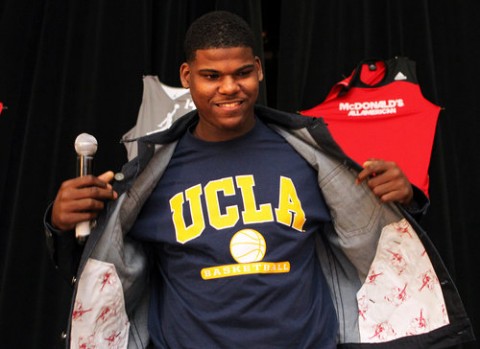
UCLA – Ultimately, this choice depends on how much the winters of Ames suck compared to those in Westwood (and we’re pretty sure they do). If Barnes had an unbelievable visit at UCLA, this is a possible choice, but we wouldn’t call it probable. Plus, some of the same issues that UNC has about obvious playing time exist, with the young forward corps of Drew Gordon, Tyler Honeycutt and Malcolm Lee likely to return in 2010-11.
Oklahoma - Jeff Capel has been a surpisingly good recruiter thus far as the head coach at Oklahoma, and the mere fact that Barnes is listing OU as a finalist belies that point. With Blake Griffin and Willie Warren, Capel will have had consecutive all-americans who both stayed in school for at least two seasons. And with Tony Crocker entering his senior season, the minutes will be plentiful on the wing should Barnes alight to Norman. Still, we just don’t see it happening. Other than the hometown school, one of these five out-of-state schools isn’t like the others, so it would be a tremendous coup if Capel pulls this one off.
Kansas – Bill Self is clearly hoping that if he loses star freshman wing Xavier Henry after one season, he’ll have Barnes waiting in the wings to replace him in 2010. And it makes sense. Regardless of what happens this year, KU will definitely lose team leader Sherron Collins and probably lose Cole Aldrich inside. The Henry brothers are also possibilities. Just to be clear, Kansas doesn’t re-build, but it would be unreasonable to expect next season to be as rife with possibility as the current one, even with Barnes on board. The minutes will be there if Henry leaves, but Barnes can’t possibly know that now.
Here’s our completely speculative projection of Barnes’ list a mere 2.5 hours before he unveils his top choice.
Duke - everything makes sense for Barnes there – title contention, PT, academics.
Iowa State – the hometown school is always in play.
UNC - Roy is a master salesman, but how does he explain the Henson situation?
Kansas - Bill Self could be telling him that Henry is likely to leave, therefore the wing is all Barnes all the time.
UCLA - the weather won’t supplant the other issues (minutes, perceived style of play).
Oklahoma – Capel should be happy to have just gotten onto his list.
Over the course of the last ten weeks we’ve broken down sixty players from around the country whom we expect will have the biggest impact on college basketball this season. We performed this exercise geographically, choosing five high-major and one mid-major player from each of the somewhat arbitrary ten regions of the country. If you’d like to read through the individual regions (and we highly encourage that), you can check all ten here.
If you don’t have the time or inclination to read through all of the previous posts, we’ll summarize here for you by rating the strongest to the weakest regions.
(ed. note: we started this so long ago that Binghamton still had a promising basketball program, and DJ Rivera still had a place to play)
1. Lower Midwest Region (OH, IN, IL, IA, NE, KS)
Overview. This seemed pretty clear just at a first glance. Aldrich, Collins and Harangody are three of the 1st team AAs on the RTC preseason list, and Brackins and Turner are on the 2d team. This group has unbelievable scoring ability, size and experience. The only weak link is the mid-major inclusion of Eldridge, who is a fine player, but not in the class of the rest of these superstars. The nation’s heartland is the epicenter of college basketball talent this year.
Best Players Left Out. Where to start? The depth in this region is incredible. Gordon Hayward and Matt Howard at Butler, Robbie Hummell and E’Twaun Moore at Purdue, even Lance Stephenson at Cincinnati. The #6-10 players in this region would probably be better than all but a few of the other regions.
2. Mid-South Region (KY, TN, MO, AR, OK)
Overview. It was a very close call between this region and the South Atlantic, but we felt that the guard play of Warren and Wall with Anderson on the wing would compensate for what this team gives up in size. And it doesn’t give up much, considering Patterson, Smith and Jordan are all exceptional inside. Tough call, but Wall is the likely #1 pick, so he’s the x-factor.
Best Players Left Out. Plenty of raw size here, including Samardo Samuels at Louisville, Michael Washington at Arkansas and DeMarcus Cousins at Kentucky. Throw in the skilled size of AJ Ogilvy at Vanderbilt and Wayne Chism at Tennessee and this area will punish you on the interior.
3. South Atlantic Region (DC, VA, NC, SC, GA)
Overview. This is the third region that’s chock full of NBA talent – each of the rest below have smatterings of it, but not nearly as much. Aminu, Booker and Singler all define skilled versatility, while Monroe could end up the best big in the entire country if he wants it enough. Sanders is a little undersized but relentless as well.
Best Players Left Out. Ed Davis at UNC was a lighting rod topic, as some felt that he’d be an all-american this year with his length and skill set. Derrick Favors and Gani Lawal are two others. A good argument could be made that this region had the best players left out, but it sorta depends on how this year plays out due to their relative youth and inexperience.
Ryan ZumMallen of LBPostSports.com is the RTC correspondent for the Big West and Pac-10 Conferences.
Predicted Order of Finish:
California (13-5)
Washington (12-6)
UCLA (11-7)
Oregon (10-8)
Arizona (10-8)
Stanford (8-10)
Oregon State (8-10)
Washington State (7-11)
Arizona State (6-12)
USC (5-13)
All-Conference Team:
Nic Wise (G), Arizona
Jerome Randle (G), Cal
Patrick Christopher (F), Cal
Landry Fields (F), Stanford
Michael Dunigan (C), Oregon
Impact Newcomer. Abdul Gaddy (G), Washington
What You Need to Know. A legendary NCAA powerhouse, the Pac-10 Conference practically owned property in the Final Four in recent years. Last season, though, no team made it to the promised land with a flurry of budding superstars bolting for the NBA – leaving the Pac-10 fumbling to reload with a full clip. This season, the number of quality players is as high as ever, but they’re largely too young or inexperienced to consider the Pac-10 a national power this season. While UCLA and Arizona look to rebuild their storied histories from near scratch, only Washington and California return enough experienced talent to warrant much confidence, and its no coincidence that these two teams have been picked as preseason favorites to vie for the conference title.
Predicted Champion. California(NCAA Seed: #5) – Arizona attempts to begin a new legacy with the replacement of their iconic coach. UCLA starts from scratch after losing the core that took them to national heights. USC is facing stiff sanctions and has a tough season ahead of them after losing an array of stars. By comparison, California is a picture of consistency. The Bears return two all-conference first team players who will likely battle each other for POY honors this season. In Jerome Randle and Patrick Christopher, Cal boasts two experienced leaders who can each carry the team when need be. Add to that a deep bench and the nation’s best shooters, and this team is built for a Pac-10 championship, and beyond…
Ed. Note: the previous posts in this series (Northeast, Mid-Atlantic, Atlantic South, Deep South, Mid-South, Lower Midwest, Upper Midwest and Mountains) are located here.
It’s time for the ninth installment of our RTC 2009-10 Impact Players series, the group of hot, dry, desert-y states known as the Southwest Region. Each week we’ll pick a geographic area of the country and break down the five players who we feel will have the most impact on their teams (and by the transitive property, college basketball) this season. Our criteria is once again subjective – there are so many good players in every region of the country that it’s difficult to narrow them down to only five in each – but we feel at the end of this exercise that we’ll have discussed nearly every player of major impact in the nation. Just to be fair and to make this not too high-major-centric, we’re also going to pick a mid-major impact player in each region as our sixth man. We welcome you guys, our faithful and very knowledgeable readers, to critique us in the comments where we left players off. The only request is that you provide an argument – why will your choice be more influential this season than those we chose?
Rihards Kuksiks – F, Jr – Arizona State. Advice to Pac-10 coaches writing up their scouting reports for when they go up against Arizona State this season: when Rihards Kuksiks enters the building, get a man on him. Don’t bother waiting until the game actually starts. You don’t want him getting comfortable, because he’s the kind of shooter who can change a game just that quickly. The guy can touch the ball a few times and the next thing you know you’re down nine before the first TV timeout. Or you get a little comfortable with your late-game lead and after Kuksiks gets a couple of touches the lead is gone and you’re wondering how time can tick so slowly. You want numbers? Fine. Kuksiks is third in terms of returning individual leaders in 3-point field goal percentage (44.3%) in the country among players who hit at least two threes a game and finished 8th in that category last year. A recent article on FoxSports.com by Jeff Goodman reveals some other incredible stats: in games decided by 2 points or less, Kuksiks shot 47% from behind the 3-point line; against ranked opponents he shot 46% from beyond the arc, and in the loss to Syracuse in the NCAA Tournament’s second round last year, he put up his career high in points with 20, with 18 of those coming from long range. In other words, the man steps up during big games. If the numbers don’t interest you, then consider the fact that many of these threes are not from a hair behind the line. They are often from distance. And they are often clutch (ask Arizona about a couple of late ones he nailed in that February game last year). Most importantly, watch the form. It should be an instructional video. He gets good height on his jumper but doesn’t overdo it, and you can see how he gets his legs into the shot. He releases the ball out in front just a little bit, but then the follow-through is a perfect example of that “reach into the cookie jar” that basketball coaches start teaching kids from the moment they can lift a basketball. By the way, he’s 6′6 and more than happy to mix it up in the paint, if needed. My favorite bit about Kuksiks comes from an interview he did for a site called EuropeanProspects.com in which he was asked what kind of player he was. The first words out of his mouth? “I am a sharpshooter.” This is confidence, not cockiness, from the big man from Riga, Latvia. But I think it’s just fine if there actually is a little cockiness there. Long-range shooters are like neurosurgeons. They’re often asked to do the most difficult things in their field…and if I get to the point where I need to depend on one, I want them a little bit cocky.
UCLA and Washington Can’t Even Hold Full Practices. But for different reasons. At UCLA, five players (Malcolm Lee, Jerime Anderson, James Keefe, Brendan Lane and Mike Moser) all have had minor injuries that are holding them out of practice. None are serious enough to worry about, but is this a sign of bad luck or Howland toughening up his troops in Westwood? At UW, seven players, including Quincy Pondexter and Venoy Overton, have been out sick with the flu so far this very young season.
Breakable in the Big East. St. John’s star Anthony Mason, Jr., has re-aggravated a hamstring injury that he originally suffered while on a Labor Day trip to Canada, and will miss the next 4-6 weeks, possibly missing their first 3-4 games. The wing player sat all but three games last season after tearing a tendon in his foot, and is expected to play a big role in the Red Storm’s plans for this season. UConn guard Jerome Dyson suffered a less-serious contusion on his left knee over the weekend, the same knee that he tore the ACL in last February. He should be fine, according to Jim Calhoun.
To get our readers excited for the endless possibilities of 2009-10, I’ve compiled an extensive list of the top 65 college basketball games of the upcoming season. Any true college hoops fan knows why we selected the number 65. Splitting up this season preview feature into three posts the next three Mondays (November/December, January and February/March), hopefully this list will provide you with the most vital of dates to circle on your calendar. Coaches are realizing more and more the importance of compiling a respectable non-conference slate to boost RPI/SOS numbers and provide their team adequate experience and preparation for the grind of conference play. Let’s lead off with the first batch of potentially memorable meetings during the first two months of the season:
Ed. Note: we are not including projected matchups from the preseason tournaments in these 65 games because those will be analyzed separately.
November 17- Gonzaga at Michigan State (#59 overall)- The featured game in ESPN’s 24-hour hoops marathon pits a backcourt-laden Gonzaga squad in the first of many difficult road tests against a top-five Michigan State team. The State backcourt of Kalin Lucas, Durrell Summers, Chris Allen and Korie Lucious will be given a true test from the Bulldogs trio of scoring senior Matt Bouldin, deep marksman junior Stephen Gray and emerging sophomore Demetri Goodson.
November 17- Memphis vs. Kansas in St. Louis (#64 overall)- A young and largely inexperienced Memphis team will receive a stiff test right away with the likely #1 team in the nation- Kansas. Guards Doneal Mack and Roburt Sallie must shoot well from deep for the Tigers to stay competitive. Former JUCO standout Will Coleman and burly senior Pierre Henderson-Niles will have their hands full down low with likely All-American Cole Aldrich.
November 19- North Carolina vs. Ohio State in NYC (#39 overall)- November and December means one thing: plenty of electrifying non-conference action at Madison Square Garden. This semifinal matchup could prove the best. Ohio State has their entire team returning besides the underwhelming B.J. Mullens and return defensive stalwart David Lighty from injury. They could definitely surprise the inexperienced Heels, who should have a distinct frontcourt advantage with Dallas Lauderdale sidelined.
December 1- Michigan State at North Carolina(#10 overall)- The Spartans and Heels meet in a rematch of the national title game that once again headlines this year’s ACC/Big Ten challenge. State may be able to avenge those two harsh defeats a year ago by taking advantage of the point guard mismatch. With Ty Lawson no longer around, Kalin Lucas could dominate against Larry Drew or Dexter Strickland. On the flip side, Draymond Green should have his hands full with a loaded UNC frontline.
December 5- North Carolina at Kentucky (#8 overall)- Notice a trend with this list so far? Roy Williams has challenged his team with an extremely difficult non-conference schedule, and this early season matchup in Lexington should be one of the best on the early season. There will be loads of projected lottery picks on the floor in this one, from North Carolina’s Ed Davis to Kentucky’s John Wall and DeMarcus Cousins.
It’s no secret that the high school Class of 2008 was one of the weakest in recent memory. Coming into the 2008-09 regular season, could you realistically point to any one player who would impact their team enough to become another Derrick Rose or a Michael Beasley (class of 2007), a Greg Oden or a Kevin Durant (class of 2006)? No way, right? The consensus #1 player, Brandon Jennings, high-tailed it to Europe when it became apparent he wasn’t going to become eligible to play college ball at Arizona, where he proceeded to burn up foreign nets at the clip of 6 ppg and 2 apg in limited action (17 mpg). The rest of the elite remained stateside, but from Jrue Holiday on down to his teammate Malcolm Lee at UCLA, the collegians too had middling degrees of success. We use the RSCI top 20 ratings provided by Statsheet for our table below.
The last two summers (here are 2007 and 2008), we’ve taken it upon ourselves to review how these one-and-dones did during their freshman year to determine whether their presence on campus for a mere 6-8 months was worth it for the schools involved. As it turned out this time around, only four college freshmen (+ Jennings) thought they were ready for the NBA Draft after only one season, so let’s take a look at how things turned out for them and their teams last year.
2009 One-and-Dones
Memphis – Worth It. After losing three starters from their 2008 national runner-up team, Memphis could have slid back into relative mediocrity by Tiger standards – very good, but not great. One-and-doner Tyreke Evans prevented that from happening. He averaged 17/5/4 assts/2 stls in 29 mpg and was the most efficient player on the team. He also showed that he was a gamer, dropping 33 huge points in the Tigers’ loss to Missouri and leading a furious comeback from 24 points down in that contest. More importantly, Memphis was 6-3 and ranked #24 in the nation when Evans moved from the shooting guard to the point guard slot; the Tigers then ran off 27 straight wins en route to a #2 seed and another Sweet Sixteen appearance, much of it due to Evans’ command of the team. Furthermore, prior to John Calipari’s departure, Memphis was building a pretty impressive reputation as a successful stopover for NBA-level point guards. Is there any coincidence that John Wall followed Calipari to Kentucky after seeing what Evans and Rose were able to do at Memphis? We’d have to say that Tyreke Evans coming to Memphis for one year was most definitely worth it for that program.
USC – Worth It. USC knew when they signed Demar DeRozan that they were unlikely to have this acrobatic swingman on campus for more than one year. For much of that year, however, it wasn’t looking like a good fit. Three points in a loss vs. Seton Hall. A 2-9 shooting night against Missouri. Six turnovers and fouling out of another loss at Washington. But around midseason, as things began to click in DeRozan’s game, USC benefitted. He provided a consistent threat on the wing and may arguably have been the Trojans’ top option in the last six weeks of the season. His season numbers were good – 14/6 on 52% shooting – but his stats from February on were better – 16/7 on 54% shooting with 22 of his season-total 51 assists coming in the last nine games. USC rode DeRozan’s playmaking abilities to win its first-ever Pac-10 Tournament and a convincing win over BC in the NCAAs before succumbing to national runner-up Michigan St in the second round. Or, in others words, more than what OJ Mayo was able to produce as a one-and-doner in 2007. Notwithstanding all the choas that has enveloped this program in the interim, we’d have to say that getting DeRozan to USC for one year was worth it.
Ohio St. – Not Worth It. For the third year in a row, Thad Matta lost a one-and-done player whose actual performance during his only season in Columbus didn’t really mesh with what you might expect from an elite prospect. He lost Daequan Cook in 2007 (along with stars Greg Oden and Mike Conley, Jr.), Kosta Koufos last year, and BJ Mullens this season. To date, we’ve yet to see any indication that Mullens has any discernible basketball skill other than being big (7′0). He averaged 9/5 in about 20 mpg with only two starts over the course of the season, but as an indication of how much Matta ultimately valued him, Mullens’ minutes tailed off considerably in the last 6-8 games. His defense was often considered suspect (37 blks all season) and he earned a reputation for loafing and failing to get back downcourt after an offensive possession. OSU had a solid season, mostly on the back of super-soph Evan Turner, but it’s difficult to construct an argument that Mullens brought much of anything to the Buckeye program other than an ability to get drafted in the first round. Ultimately, that may have been all Matta wanted to get from him, as he’s shown a substantial willingness to take one-and-dones every year that he can. Still, we don’t think that Mullens was on balance a good pickup for the Buckeyes, so we’re saying that he wasn’t worth it.
UCLA – Not Worth It. After Kevin Love’s departure from Westwood as a one-and-done, we thought UCLA might continue that trend this season with another superb guard ranked #2 in his class named Jrue Holiday. We were wrong. Holiday is exceptionally athletic, but he never seemed to ‘get it’ with respect to how Ben Howland runs his team and expects his players to execute. When we watched Holiday play, we saw a player who had a tendency to play out of control and get frustrated when things weren’t going his way (in other words, like most freshmen). Had Holiday stuck around for another couple of years at UCLA, he probably could have tamed his tendencies to become an elite guard in college basketball, but we’ll never know. After averaging a mere 9/4/4 assts as a starter who seriously tailed off down the stretch (single figure points in 10 of his last 13 games) ending in a second round NCAA blowout loss to Villanova, Howland may be questioning why he bothered to take this player for only one season. His contributions to the program were minimal and his general unhappiness with the program could actually end up hurting UCLA’s recruiting in the future more than it ever helps to have gotten him. Unlike Demar DeRozan across town at USC, Holiday wasn’t worth it.
*Brandon Jennings – Push. Of course, this is a weird situation because Jennings didn’t play for an American college last season, instead deciding to go to the Italian leagues and get paid for his services. He would have been drafted higher last season had he been eligible to come out, but then again, so would have all these one-and-doners except for Evans (who at #4 is about where he would have been last year). Playing in Europe didn’t hurt him very much despite his paltry stats, but it didn’t appear to help him, either, in any way other than financially. It’ll be interesting to watch how he develops in the NBA now. You’d have to believe that Jennings’ previously indomitable confidence would be somewhat tempered after spending a year as the backup-cum-waterboy. We’re quite certain he had images in his head of going to Italy and winning MVP in his rookie season, but the broken American basketball system doesn’t exactly inspire schoolboy humility. Will that carry over to his development as an NBA player, or will he be able to accept his European comeuppance and use that to improve his game in the next few years? There’s no way of knowing at this point.
One-and-Dones: Historical Snapshot
As stated above, RTC has done this for the three years in which the one-and-done rule has been in existence. We’ve made a qualitative determination as to whether recruiting a particular one-and-done was worth it for each program, and what we’ve found is that so far it’s been a roughly equivalent proposition. Of the 24 one-and-dones in three years, we’ve found thirteen instances (57%) where the player in question was either worth it or well worth it, “it” being the trouble of landing a top player and dealing with the disruption and potential hole he leaves in the program after one season. Additionally, in seven of the thirteen ‘worth it’ instances, we found that the player was such a great boost to the program in terms of success and marketing that the residual effects of his presence there will be felt for many years after he’s gone (e.g., OSU and Memphis making it to the NCAA Championship Game). On the other hand, we can only count ten occasions (42%) where a one-and-done player wasn’t worth the trouble of getting him into the program. So let’s look at it this way… if you were a college coach and you knew you had a historically better than even chance that recruiting a John Wall or Derrick Favors would end up making your program better, and a 25-30% chance of truly elevating your program into an elite echelon, there’s no question you do it, right? What’s the downside? Your player doesn’t do a whole lot, leaves after one year and you end up where you were before he got there. Exactly. Not only is recruiting one-and-dones worth the risk (so long as you’re doing it legally, Tim Floyd), but if you’re not doing it then you’re putting yourself at a serious competitive disadvantage.
Story of the Night. UCLA’s freshman class. Last year’s freshman class arguably boasted the best player in the country in Kevin Love, but this year’s version, while lacking in equivalent star power, may more than compensate for Love’s loss with its depth and diversity of skills. Jrue Holiday was the only rookie starter tonight in UCLA’s win against Prairie View A&M, but his four classmates (Drew Gordon, Malcolm Lee, Jerime Anderson and J’Mison Morgan) each came off the bench and contributed aplenty. The quintet accounted for 41% of the minutes, 44% of the points, 44% of the rebounds and 43% of the assists tonight in the 82-58 win. Ok, and 54% of the turnovers, but still, not a bad start for this freshman class of Bruins. As for the game itself, it appears that UCLA still knows how to rebound (41-18) and the defense is still stingy – Prairie View was held to a mere 23% shooting in the first half; the fact that they shot 42% for the game indicates that either UCLA lost focus in the second half or Prairie View settled down – we’re leaning toward the former as an explanation. Darren Collison led the way as he hit five threes en route to a 19/3/4 asst night. The Bruins will play Miami (OH) tomorrow night in the second round of the CvC in a game that should combine for about 50 total pts. Once again, ESPN isn’t allowing embedded videos so we’ll have to settle for linked highlights.
Other Games.S. Illinois 80, UMass 73. We thought this would be the best game of the night, and it looks like we were right, as S. Illinois got themselves down nine at halftime to UMass before storming back behind nine threes in the second half to pull away in the last few minutes to win another home game. Bryan Mullins had a huge night for SIU, going for 16/13/4 stls for the home team, but Kevin Dillard’s four threes in the second half didn’t hurt. UMass was led by Ricky Harris with 24/5, but the stat that jumped off the Minutemen’s page was starting PG Chris Lowe’s TEN turnovers (with zero assists). Michigan 76, Northeastern 56. Gotta admit that we thought this game had upset potential, and we couldn’t have been more wrong. Michigan’s Manny Harris followed up his impressive season debut with nearly a trip-dub (26/10/8 assts), as UM held Northeastern to 29% shooting (17% from three) for the game. UM Hoops points out that, if Michigan is going to threaten this year, they’ll need to shore up their work on the boards. Northeastern grabbed twenty offensive rebounds tonight (amazingly, they only had 29 total boards), and with UCLA looming on the horizon next week in MSG (probably), the Wolverines will need to repair that deficiency. Miami (OH) 70, Weber St. 66. So in the other half of the Westwood bracket, Miami (OH) won a game on a three by Kenny Hayes (24 pts) with 1.7 seconds left on the clock, despite losing nearly every major statistical category in the game. The Redhawks were outshot (by 10% FG), outrebounded (by 7), outassisted (by 3), and yet they still prevailed. How? Turnovers, kids. Seven additional TOs by Weber St. gave Miami just enough extra possessions to sneak by. Miami will play UCLA tomorrow night for the right to play at MSG, and we expect Charlie Coles to have something up his sleeve to make this game interesting for a while.
WYN2K. This is not the same Pac-10 conference as last year, plain and simple. Gone are lottery picks OJ Mayo (USC), Russell Westbrook (UCLA), Kevin Love (UCLA), Brook Lopez (Stanford) and Jerryd Bayless (Arizona). Gone are Robin Lopez (Stanford) and Ryan Anderson (Cal), also first-rounders. Gone are Luc Richard Mbah a Moute (UCLA) and Davon Jefferson (USC), who went in the second round and not at all, respectively. This year’s Pac-10 transition isn’t just limited to players. There are new coaches at Oregon St. (Craig Robinson), Stanford (Johnny Dawkins), Cal (Mike Montgomery) and Arizona (Russ Pennell). It’s safe to say that no other major conference will look as significantly different from last year as the Pac-10 in 2008-09.
Predicted Champion.UCLA (NCAA #1). Perhaps the only consistency in the Pac-10 this year will be he continued dominance of Ben Howland’s UCLA Bruins over the rest of this conference. After three straight Final Fours and another superb recruiting class matriculating in Westwood, Howland has built his program to the enviable point where he can lose two lottery picks and another starter as early entries to the NBA Draft and not expect his program to suffer major slippage. While we don’t believe that this version of UCLA will be as good of a team as the 2007-08 edition, the Bruins’ position relative to the rest of the conference may actually be stronger this time around. He returns an all-american PG, Darren Collison, who has played in three F4s and led the nation in 3FG% last year (.525, min. 80 attempts). More importantly, Collison has a chip on his shoulder after a miserable national semifinal performance against Memphis last year (2 pts, 5 tos, 5 fouls) - when he’s directing his team effectively, there are few teams in America that can overcome their bruising defense and efficient offense. The national #1 recruiting class is headlined by all-world guard Jrue Holiday, who is expected to start from day one. His talent, along with a cadre of perimeter (Malcolm Lee, Jerime Anderson) and inside players (J’Mison Morgan, Drew Gordon), will give Howland numerous lineup options to throw at opponents. Furthermore, UCLA returns a finally-healthy Josh Shipp and Alfred Aboya to provide experience and a steady hand at crunch time. As we said before, we don’t believe this UCLA team will be as good as last year’s squad, but it probably doesn’t have to be. The Pac-10 has dropped in talent significantly, and UCLA should be able to roll through to another fantastic record and possible high RPI rating to garner another #1 seed out west. Here’s a pretty good indication of why Darren Collison is so important for this team.
NCAA Teams. We’re not sure that we see more than four NCAA teams in the Pac-10 this year, which sent six to the Big Dance last season and arguably deserved seven (Arizona St.). In the best-case scenario, things come together for certain teams and the league hopes for five on Selection Sunday, but there’s a more realistic chance that there will only be three NCAA selections made on that day.
Arizona St.(NCAA #4) – Herb Sendek’s coaching resume shows that once he gets a program to the 20-win plateau for the first time, it typically stays there. In other words, there’s absolutely no reason to believe that ASU, who is returning its top eight players from a 21-13 NIT quarterfinalist, will regress this season. The key player, of course, is James Harden, a coulda-been-one-and-done, who lit up the conference for 18/5/3 assts, including 41% from behind the arc (and 53% overall). Harden is a future lottery pick in a league where the only other potential such picks are freshmen (DeRozan, Holiday). Pac-10 teams are not going to enjoy their trips to Tempe this year.
USC(NCAA #8) – We struggled in making this selection, but the thing that pushes USC into the top three of the Pac-10 is simply, talent. Other than UCLA, no other program has as much pure talent that it can put on the floor. Undisciplined, maddening talent – sure – but that’s Tim Floyd for ya. Demar DeRozan wll be a highlight reel for his one year in LA, but he has considerable help next to him, assuming they can all learn to share the ball and play together. Daniel Hackett, Taj Gibson and Dwight Lewis are all talented players, and if UNC transfer Alex Stepheson is deemed eligible to play for the Trojans this year, USC has enough talent to make a run at the Pac-10 title. We don’t expect that to happen because Ben Howland is Ben Howland and Tim Floyd is Tim Floyd, but the talent differential excuse doesn’t hold water anymore.
Washington St.(NCAA #10) – We’re taking a bit of a risk with Wazzu at fourth and a bubble team for the NCAAs, but we truly believe that Tony Bennett is a system coach. Like Bo Ryan at Wisconsin, the names on the backs of the jerseys are largely irrelevant to the success of the program. They’re going to run their slower-than-Xmas stuff no matter which faces are running around out there, and in so doing, dare the rest of the Pac-10 to figure it out. Now we’re not saying that the losses of Derrick Low, Kyle Weaver and Robbie Cowgill won’t hurt – after all, that trio was the most decorated group of players in Washington St. history; but with center Aron Baynes returning along with guard Taylor Rochestie and small forward Daven Harmerling, Bennett has more than enough experience to continue confounding skeptics up in Pullman.
NIT Teams.
Washington (NIT) – This program has seemed to be in a funk ever since Brandon Roy left the dreary environs of Seattle. If the Huskies are going to take advantage of a weaker Pac-10 to make a run at the NCAA Tournament (or the NIT), they’re going to have to get another superb season from PF Jon Brockman (18/12 on 54% FG). But that won’t be enough without improved performances from Quincy Pondexter and Justin Dentmon on the perimeter. Freshman Isaiah Thomas is getting some hype from Husky fans – perhaps he can push them over the top.
Others.
California – The story here is obviously Mike Montgomery’s return to college coaching at his former employer’s bitterest rival. Had Cal held onto star player Ryan Anderson, we would have considered the Bears as a bubble NCAA team. We do think Monty will get there eventually, as he did at Long Beach St. and Stanford (not exactly powerhouses when he arrived), but he’s not a quick-fix guy and it will take time to undo the culture of mediocrity left by Ben Braun.

Arizona – On talent alone, with Chase Budinger, Nic Wise and Jordan Hill, the Wildcats should be a top three Pac-10 team. However, with the fiasco that unfolded last month and the eyebrow-raising hire of the fomer Arizona State radio announcerRuss Pennell as the head coach, we’re not sure anyone will actually want to play for UA this season. Putting them seventh was a gift.
Oregon – We still can’t figure out how Ernie Kent got a big contract extension, but we suppose it doesn’t take much to satisfy people in Eugene. At least until Mark Few takes an interest in coaching in the Pac-10. With only one significant player returning, the 5′6 Tajuan Porter, and nine new faces, we just don’t see the Ducks making a return trip to the NCAAs this season.
Stanford – We think Johnny Dawkins is in for a surprise in Palo Alto this season. Nobody has any clue as to how good of a coach he will be, but we can say with a degree of certainty that the only thing keeping the Cardinal afloat last year was the interior presence of the comical Lopez twins. The guardplay was relatively abysmal (39.5% shooting), and oh, well, now the Lopezes are gone. Good luck with that, JD.
Oregon St. – Hey, did you guys hear that new head coach Craig Robinson is Barack Obama’s bro-in-law? Wehadn’teither. Screw Corvallis, with Robinson’s financial resume, he should be in DC helping Barry fix the economy. Seriously though, last year, OSU might have been the worst major conference team we’d ever seen (Indiana has a shot at bettering that this year). Ferguson had success at Brown, though, which is a herculean task in its own right, so maybe he can get a few Ws in Corvallis this season. Three or four would be miraculous.

RPI Boosters.
Washington v. Kansas (11.24.08)
UCLA @ Texas (12.04.08)
USC @ Oklahoma (12.04.08)
Arizona @ Texas A&M (12.05.08)
Gonzaga @ Washington St. (12.10.08)
Arizona v. Gonzaga (12.14.08)
Kansas @ Arizona (12.23.08)
Notre Dame @ UCLA (02.07.09)
Important Games.
UCLA @ USC (01.11.09)
Arizona St. @ UCLA (01.17.09)
USC @ Washington St. (01.24.09)
USC @ UCLA (02.04.09)
USC @ Arizona St. (02.15.09)
Washington @ UCLA (02.19.09)
Arizonan @ Arizona St. (02.22.09)
Neat-O Stat. The Pac-10, with only ten conference members, is the only BCS league that plays a true round-robin schedule of home/away games with every other team. We like this because it gives a true measure of the strength of each team relative to one another in the conference. There are no plans on the horizon to expand the Pac-10 to twelve members (for football reasons, the NCAA requires twelve teams to have a postseason championship game).
65 Team Era. The Pac-10 has traditionally been the weakest of the six major conferences in its NCAA Tournament performance, going 127-96 (.570) over the era. The league simply doesn’t put as many teams into the Tournament as its peers, earning 4.1 bids per year – the next lowest is the Big 12 with 4.8 per year, and the “Super Six” average is 5 bids per year. As might be expected as a correlation to that fact, the Pac-10 is also last among the six conferences in #1 seeds (12), S16s (36) and F4s (9). UCLA can’t do it all, folks!
Final Thoughts. UCLA has led the re-emergence of the Pac-10 conference as a basketball powerhouse the last several seasons, but turmoil among several previously consistent programs (Arizona, Stanford) has put the possibility of UCLA and the Nine Dwarves back into the conversation. One thing that we can be certain of is that Ben Howland will win and win big as long as he’s residing in Westwood. He hasn’t won a national title yet, but it seems a foregone conclusion that one of these years he’ll break through and win the brass ring. The rest of the Pac-10 is going to have to figure out a way to recruit on par with UCLA as well as perform in March before this league will be considered a national power again. We know that Pac-10 schools can attract star talent across the spectrum, but can they be coached up to taste national success?