Another preseason preview gives us reason to roll out the 2011-12 edition of Thirty Reasons We Love College Basketball, our annual compendium of YouTube clips from the previous season 100% guaranteed to make you wish games were starting tonight. We’ve captured the most compelling moments from the 2010-11 season, many of which will bring back the goosebumps and some of which will leave you shaking your head in frustration. For the complete list of this year’s reasons, click here. Enjoy!
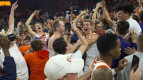
#14 – Where Indiana ’76 Still Intact Happens
We also encourage you to re-visit the entire archive of this feature from the 2008-09, 2009-10, and 2010-11 seasons.
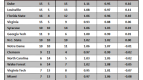
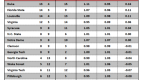
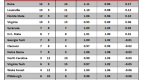
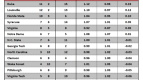
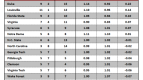
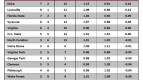
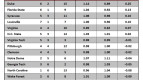
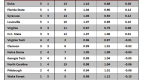
With the the release of today’s ESPN/USA Today preseason poll and next week’s Associated Press preseason poll college basketball fans across the country can go into full-fledged sniping mode at where their favorite team is ranked or where a rival is ranked (that is unless you are North Carolina in which case your only complaint is that you did not get every single #1 vote). We thought it would be interesting to take a look at the historical trends of how teams perform throughout the regular season as compared to where the selected media and coaches rank those teams coming into the season.
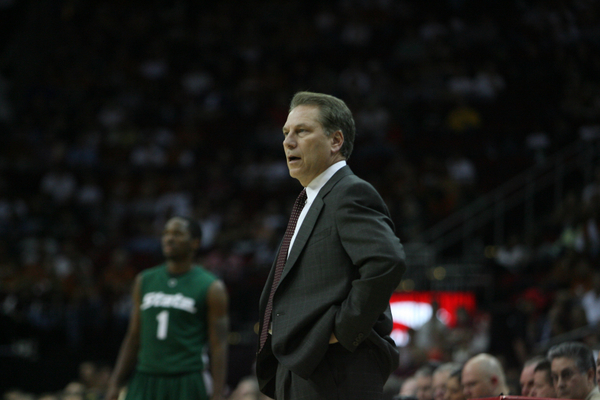
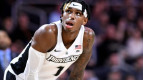
You May Be Surprised With Where Tom Izzo's Teams Rank
Obviously, there are some limitations here like the fact that we are basing this off regular season results and ignoring postseason success and that we are relying on the opinions of those coaches and writers to determine how successful a team is. On the first issue, we will agree that most college basketball fans (casual and otherwise) will probably remember a team’s success based on their performance in March rather than the overall body of work. We like to think that we are a bit more nuanced in our approach to basketball and think that a team’s overall performance is more than just six games in March. Consequently, we feel that their regular-season performance is probably a better indicator of how good they were. If you feel strongly the other way, leave your reasoning in the comment section and we may reconsider our view. The second issue is more legitimate and we seriously considered using the end-of-season KenPom.com rankings as the basis for overall performance, but in the end we decided to compare apples-to-apples and include coach/media bias in the preseason and end-of-season rankings. Of course, we may go back and do this exercise with the Pomeroy rankings in the near future.
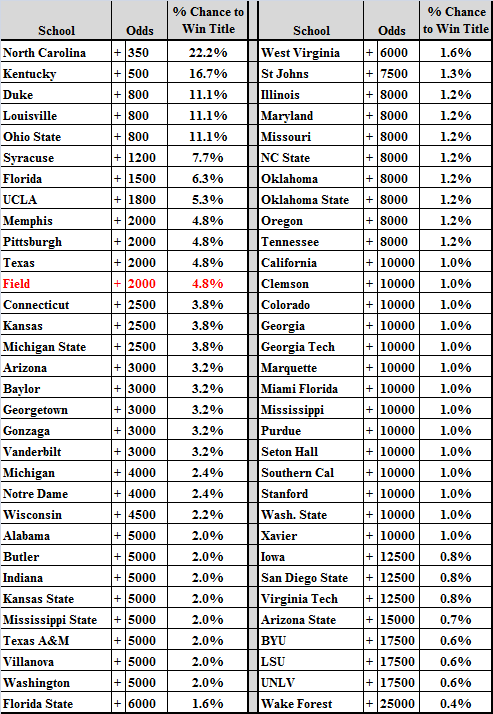
Practices are in full effect, we’re halfway through our preseason conference primers, and real game action begins just over 18 days from now. The so-called experts among us believe that North Carolina, Kentucky and Connecticut comprise the top tier of teams in America; with Syracuse, Ohio State, Duke and Louisville generally considered the next tier of challengers. But none of us — not Goodman, not Parrish, not Decourcy, not Winn, not Davis, not Katz, not O’Neil, and certainly none of the AP, Coaches’, or RTC pollsters, are in danger of losing our jobs if we’re wrong. Such do-or-die pressure to be right isn’t a necessary condition of this profession, but that’s definitely not true with Vegas oddsmakers. For those guys, all it takes is one particularly terrible line and your head could be on the chopping block as a result. As we’ve said before, sports books typically aren’t in the business of losing money, so even though you should read through these odds with a healthy dose of salt, it’s always interesting to see how they’re thinking.
First the odds (taken from The Greek as of October 19, 2011), then our analysis after the jump: (ed. note: for those unfamiliar with futures odds, +350 represents the amount of money a potential gambler would receive back if he placed a $100 wager on that team and it won. He would, in other words, win back 3.5 times his original wager.)
Ed. Note: this column originally ran on October 15, 2010. We received such a positive response from it that we’re running it again this year, and quite possibly every year until changes are made.
Blasphemer. Defiler. Hater.
These are the words you’re going to use to describe us after you read this column. In fact, you may already be using them simply by scanning the title. What’s wrong with this joint, you might say? Isn’t Midnight Madness day a ritualistic celebration of the return of college hoops — a singularly original basketball-only event that juices up the masses of fans from coast to coast yearning for the shortened fall days where the lonely bounce of an orange ball in a far-away gym represents that all is right with the world again?
To this we respond: well, yeah… it was.
Charlie Brown Represents a Bygone Era of Midnight Madnesses
Forgive us for going all Charlie Brown Christmas on you, as we’re definitely going to sound like our dad when we say these things, but the “good old days” of Midnight Madness were simply better. What was once a localized phenomenon driven by student interest and an excuse to go crazy on a random Tuesday night has become an over-the-top, over-produced, over-compensated can-you-top-this Lady Gaga show filled with indoor fireworks, race cars, people dangling from the rafters and the rest of it.
This isn’t a Kanye concert or Cirque du Soleil, folks; it’s a basketball practice.
Give us Lefty Driesell and his car headlights illuminating a track at 12:01 am or hell, even Dick Vitale losing his mind after drinking so much coffee that his very DNA was jittery. Give us a countdown clock that actually counts down to something and a student body that’s had enough down time to get, shall we say, socially lubricated. Give us a grand introduction without all the peripherals followed by a high-wire dunk contest and a spirited scrimmage. Give us hope that we’re going to be in for a special year as we leave the arena at 1:30 am on a cool fall night, because hope always wears a little better with a group of buddies heading back to the dorms in the wee hours of the morning.
Zach Hayes is an editor, contributor and bracketologist for Rush the Court.
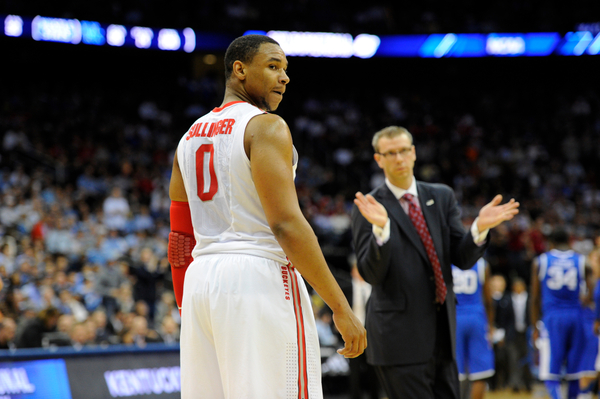
In the immediate aftermath of Ohio State’s premature outing in the Sweet 16 last March, with emotions running high and thoughts clearly unfiltered, Jared Sullinger made a promise. The Columbus native swore to anyone who would listen that such a bitter ending to a once-promising season meant he’d be back in scarlet and gray next year.
Of course, this is a common habit in college basketball. Superstars from across the nation see their season’s come to a dramatic conclusion and promise revenge before the voices of agents, endorsements and draft advisors enter the picture. Once the dramatics have died down and the options are juggled, the superstar thanks his school for the opportunity and moves on to NBA riches.
Except Jared Sullinger was serious. The Columbus native was not about to see his collegiate career end three rounds too early. Instead, the top freshman in the country next season shed some weight, refined a lacking mid-range game and returns to Ohio State as dedicated and headstrong as ever. Those NBA prospects can wait one more year.
Jared Sullinger is the early favorite for national player of the year
Team Outlook: Sullinger’s stunning decision catapults the Buckeyes to a familiar state as preseason Big Ten favorites. He’s joined by fellow sophomore Aaron Craft at the point, a wildly intelligent and steady presence at such a vital position. The top scoring option on the perimeter is senior William Buford, a potential first round pick that improved his shot-making. Only Sullinger utilized more possessions when on the floor than DeShaun Thomas last season. After shooting 54% from inside the arc with promising rebound rates, Thomas is primed for a breakout campaign if he shows more discretion. Look for freshman center Amir Williams to act as the primary operator in the post if Sullinger expands his game, while LaQuinton Ross, Shannon Scott and Jordan Sibert should all get looks from Thad Matta before he inevitably trims his rotation. Don’t under-estimate the loss of ultimate glue guy David Lighty and sharpshooter Jon Diebler; this unit won’t be quite the powerhouse they were in 2010-11.
Non-Conference Schedule Rank: 6.5. The Buckeyes don’t leave home until mid-December, but they do welcome both Florida and Duke to Columbus in November. The contest vs. Florida is part of ESPN’s Tip-Off Marathon with the Gators aiming for an ounce of revenge after last season’s beatdown in Gainesville. Stalwart defender Aaron Craft will have his hands full with Florida sparkplug Erving Walker. Ohio State also drew top-ten Duke and their plethora of scoring wings in the ACC/Big Ten Challenge. Both squads are similar in that they lost key components from last year, but expectations remain sky high. December presents two road tests to Kansas and South Carolina. The Jayhawks don’t appear vintage this season, but it remains a formidable task for any visitor in Allen Fieldhouse.
Cupcake City: Rather than fill his buy games with mid-majors that won’t weigh down their RPI, Matta instead scheduled the dregs of Division I: Jackson State, North Florida, VMI, Texas Pan-American, South Carolina Upstate and Lamar. Even Horizon opponents like Wright State and Valparaiso aren’t expected to challenge Detroit or Butler in that league. Rather than risk a confidence-crippling upset against a plucky mid-major that’ll play into March, Ohio State instead opted for a sprinkling of glorified scrimmages around the likes of Florida, Duke and Kansas.
Toughest Early Season Test: Bill Self’s seven consecutive Big 12 titles is one of the most underappreciated streaks in sports. To claim the crown in a power conference for almost a decade in an era of one-and-done and constant turnover is a remarkable feat. Before we all quit on the Jayhawks because they lost the Morris twins and failed to secure a loaded freshman class, let’s keep Self ‘s streak in mind. This is a long and winding way of predicting that Ohio State will lose to Kansas in Lawrence when they meet on December 10. Whether it’s Tyshawn Taylor, Thomas Robinson, Elijah Johnson or a collective effort, it’s foolish to predict Kansas’ demise at this point until it actually happens.
Andrew Murawa is the RTC Pac-12 and Mountain West correspondent and a frequent columnist.
It’s that time of year again. Off in the distance, it could be a mirage, or it could be the start of college basketball season. It’s probably a mirage, but the Great Sports Desert (you know, that time of year between the end of the NBA Finals and the start of college football when normal American males actually have time to get stuff done) ends Thursday, as college football kicks off its 142nd season. And given the offseason that college football has had, it couldn’t come any sooner. Unfortunately, given all the scandals and arrests and the like, according to my source at the NCAA, it appears that literally every college football player will be ineligible for the coming year (at least I assume that is true – it’s not a very good source). As a result, football programs across this great nation have been scrambling for some last minute replacements. And, since we here at RTC are nothing if not diligent, we’ve spent the last few weeks scouring college football camps across the country while other lesser outlets have been reporting on things like a little scuffle in Baton Rouge and something-or-other about Miami (I’ll admit, I never got through that whole article, but I think I got the gist of it – Miami is a nice place to go to school, right?). Anyway, since we’re the only ones who seem to be on top of this sea change in college football, we’ll let you all in on some of our wisdom as we preview college basketball’s richer, more-spoiled sibling, with RTC’s official 2011 College Football All-American team.
Offense
High School Star Aaron Craft Will Fill In Nicely for Terrelle Pryor at OSU
QB:Aaron Craft (6’2″, 190 lbs), Ohio State: In light of the Buckeye football program’s recent troubles, new head coach Luke Stickell turns the reins over to the sophomore Craft. He’s not the quickest or fleetest of foot, but he is accurate, he’s tough and he’s a leader. There has been plenty of talk about the Heisman Trophy campaign of North Carolina’s Kendall Marshall, but until he takes better care of the ball (last year, he turned the ball over on almost 30% of all possessions), we’ll give the nod to Craft, who at least has the advantage of having played QB for three years in high school.
RB:Jordan Taylor (6’1″, 195 lbs), Wisconsin: The newest Badger tailback may not have the size of former greats like Ron Dayne and John Clay, but Taylor is a tough and smart runner who excels at finding a crease and finishing through contact.
Jimmer Fredette will be moving up to the next level soon, and what we’re talking about there has nothing to do with basketball. The Jimmer announced his engagement to his girlfriend (and BYU cheerleader) Whitney via Twitter over the weekend with a photo and statement summarizing his excitement. Subsequently, jokes — most of them well-meaning, it seemed — began to fly throughout the tweetosphere regarding how Whitney is a senior at BYU and therefore still under the school’s honor code, so she’d have to play, er, a sort of defense a little longer, a subject on which she could educate him. Ah, those clever Twitter kids. In all seriousness, we extend our congratulations to the pair.
What do you have when you take a Marquette guy who loves advanced statistics and wants to apply them to college basketball, a possible brand new and downright compelling new statistic developed by that fellow that could help determine the most valuable players in college hoops (and finds that Jordan Taylor of his rival Wisconsin is atop the list!), a college basketball blog we love, and combine all that into a Luke Winn article? You have what we call a good time, friends. Ever heard of Ken Horton from Central Connecticut State? Familiarize yourself. Is Taylor more valuable than Jared Sullinger or Tu Holloway? Hmmm. See for yourself. All we can say is God bless you, John Pudner.
What’s Oklahoma State boss Travis Ford got up his sleeve? Via Twitter last week he made a cryptic reference to some “exciting non-conference schedule information” as well as “a possible roster addition early next week.” Well, now that’s this week, and there’s some speculation that the surprise may come in the rather large form of 7’0”, 235-pound Marek Soucek from the Czech Republic, a highly sought-after recruit whose name happens to now appear in the OSU student directory. Actually, Soucek hasn’t left the Czech Republic yet. What’s going on here? John Helsley of The Oklahoman wonders, too.
Everyone obviously knows about the Georgetown vs Bayi fight during the Hoyas’ trip to China from a couple of weeks ago. While the fiasco itself is likely ever to be pointed to by historians as a high-impact moment in the arc of Sino-American relations, it is interesting to examine reasons that might have led to such an event. Tom Gold is a sociology professor from UC Berkeley and is something of an expert on events in the (so-called) Far East; in a recent interview with Asian American Press, Dr. Gold discussed the thinking that may have been behind this from the Chinese viewpoint. A short piece, but it contains some interesting takes.
Retirement, schmetirement, let’s play ball. That’s evidently the mindset of San Diego State’sSteve Fisher, who just signed a four-year extension with the Aztecs, according to a late-night report from ESPN’s Andy Katz. As Katz points out, leading the school to its first-ever Sweet 16 could have served as an appropriate exiting point for Fisher, and then you throw in that the coach was treated for prostate cancer just over three years ago and his star from last season is gone…well, such an extension might come to some as a surprise. We doubt anyone in San Diego’s complaining, though, and if we’re talking about good health and normal blood tests (look at Katz, dropping some PSA knowledge!), we’re glad to see this happen.
The new APR rule is a fact. 930 Or Bust is happening. So let’s talk about it.
On the ESPN blog last week, Diamond Leung, a gentleman we’re happy to file under Official Friend Of RTC, posted an article in which he listed the 12 teams that would not have been eligible to compete if the new APR standard had been applied to the 2011 NCAA Tournament. #1-seed Ohio State? Watching from home. Kawhi Leonard and San Diego State? Sorry, they’d have been studying for finals and not playing basketball. Leung also noted how eventual champion Connecticut would not be invited to the 2012 edition to defend its title since, according to the latest numbers, over the 2006-07 to 2009-10 academic periods the Huskies managed an APR of just 893. They could go undefeated throughout the entire 2011-12 season and it wouldn’t matter. In that scenario they’d win as many NCAA Tournament games as Centenary.
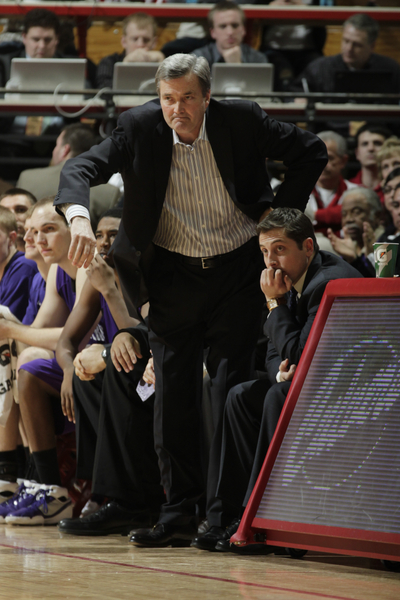
Bill Carmody and Northwestern (18-13) May Have Been Dancing Last Year, Had the New APR Rule Been In Play
Mr. Leung’s article got us thinking: if there would have been 12 fewer teams in the Dance last March, who would have replaced them? Among the unlucky 12, seven were automatic qualifiers through conference tournament titles and five were at-large entries. A quick examination of who would have replaced the disqualified teams shows how putting a binary, all-or-nothing, you’re-in-or-you’re out emphasis on a specific number would have affected the Tournament; as you’ll see, the reverberations go deeper than just the aforementioned 12 teams.
With the completion of the NBA Draft and the annual coaching and transfer carousels nearing their ends, RTC is rolling out a new series, RTC Summer Updates, to give you a crash course on each Division I conference during the summer months. Our latest update comes courtesy of our Big Ten correspondent, Will Green.
Readers’ Take
Summer Storylines
Sully’s Back, But With Demands – In the year 2011, in the age of ‘now,’ in a profit-first educate-yourself-later society, amidst a flittering of teenage NBA draft picks, ferocious freshman phenomenon Jared Sullinger decided to stay in school. How quaint. Of course, there’s absolutely nothing quaint about Sullinger, his (rightly) assumed sense of on-court leadership, his brutally physical style of play, or that Ja Rule–esque snarl that makes him look like a squirrel who just ate a questionable nut. But seriously, it’s highly unlikely that anyone other than Jordan Taylor will stand in the way of Sullinger winning the Big Ten Player of the Year Award, and rightfully so. He has spent the better part of the off-season slimming down and getting faster. The best player on the best team in the conference simply can’t suffer a slump; he’s worked too hard and has clearly made a commitment to improving his game before leaving for the pros. The question is less about what Sullinger’s level of performance will be than it is about the effect his performance will have on other members of his team. Last year, his 17 /10 were a reflection of consistent contribution that was also part of a greater team-wide cohesion. Jon Diebler, David Lighty and even Dallas Lauderdale each had pronounced and vital roles on last year’s team. They’re all gone now. While some of the supporting cast and several new stars-in-the-making will join Sullinger, will increased reliance upon him make OSU more of a one-man show? Or will the Buckeyes continue to roll out a team-focused squad with four scorers in double figures and a core group of five guys who notch 30 minutes a game? Whatever happens, Sullinger will be back and he will be better than last year. Consider yourself warned.
Welcome, Nebraska – On July 1, Nebraska officially joined the B1G, an acronym whose ludicrousness we continue to subconsciously validate by pronouncing it ‘Bih-one-ggg’. If you’re scoring at home, UNL’s entry makes for 12 teams in the Big Ten, a conference that shouldn’t be confused with the Big 12, which only has ten teams now since Nebraska left it. Now that we’ve all scratched our heads for second, we should pause to consider how massive the amount of potential football revenue must have been to persuade the intransigent Big Ten to alter its ranks. The Cornhuskers’ inclusion marks only the second change in league makeup since the 1950s. So how will the other 11 schools adjust to the adjustment? Football-wise, they should all watch their backs. On the basketball court, though, it probably won’t have a big (or should we say, a ‘B1G’) impact. Sadly for Husker fans, their roundball team loses two of their top three scorers and has some major offensive issues to solve in a league whose tempo of play limits even the country’s very best offenses. Head coach Doc Sadler continues to recruit a healthy mix of transfers and high school players, but over his five-year tenure nine of them have left due to reasons other than matriculation or the NBA. Nebraska has had some encouraging moments in recent years, including a five game improvement in Big 12 play from 2009 to 2010 (from 2-14 to 7-9). The team’s defensive efficiency would’ve finished fourth and it’s adjusted tempo would’ve finished fourth slowest in last year’s Big Ten. In some respects, Nebraska feels like a perfect match for the conference. And yet, for many of those same reasons, it might be a little out-matched in its first few years.
Ed DeChellis Leaves For Navy – Nowadays, stories like these are rarer than that bloody slice of carpaccio you once had at a fancy restaurant: a coach leaving a higher paying, higher-infrastructure, higher strength-of-schedule situation for a middle of the pack team in a unambiguously low-major conference. Make no mistake: Ed DeChellis didn’t become the new head coach at Navy. He stopped being the head coach at Penn State. Unless they’re ousted via scandal or especially egregious results you simply don’t hear about power six coaches voluntarily leaving for a “lesser” job. And yet, that’s exactly what happened. Or is it? The answer to that question centers around just how much “less” of a job the Navy coaching position really is, and if anything DeChellis might have done warranted the move. The wink-wink nudge-nudge consensus is that while DeChellis didn’t necessarily knock anyone’s socks off, the school refuses to take basketball seriously. Some have lambasted the athletic department’s commitment to DeChellis and the program overall at a school that’s known best for intense linebackers and an 84 year-old Italian-American man. It will be interesting to observe new head coach Patrick Chambersin his first few seasons and see whether or not he runs into a similar set of struggles as DeChellis did during his tenure. If the holistic drawbacks of coaching in University Park really outweigh the benefits to the extent that someone would walk away from the position, then PSU has bigger problems to fix than figuring out how to win in the Big Ten this season. But if anyone can overcome whatever said “drawbacks” may or may not be, it’s Chambers.
The Buckeyes, led by big man Jared Sullinger, are easy favorites in the Big Ten.
It’s a somewhat weird time to come out with a Top 15 list for the 2011-12 season, but the folks in the City of Angels would be remiss if they didn’t do things a little differently. There are no major surprises in this version, but Alabama at #11 is a bit ambitious for an NIT team. The Big East carries the day with four teams — #4 Connecticut, #5 Syracuse, #13 Pittsburgh, and #15 Louisville — which are the same four (albeit in a different order) our conference correspondent Brian Otskey chose in his summer update yesterday. The team that is consistently showing up in everyone’s top ten because of its returning talent but despite consecutive First Round upsets as high seeds is #6 Vanderbilt. The trio of Jeffery Taylor, John Jenkins and Festus Ezeli are all-SEC talents, but we’re going to need to see a little more evidence of getting over their mental hangups before believing that Kevin Stallings’ team is better than the likes of #7 Arizona or #8 Wisconsin.
We may have missed out on this until now, but you shouldn’t. CBS Sports’ Dennis Dodd and Brett McMurphy are halfway through a five-part series examining cheating in college football, and it’s clear that, put rather simply, cheating pays off. In part three, an examination of the five-year program outcomesafter major violations, the writers found that winning percentages actually rose. Although their analysis doesn’t touch on college hoops, we all know that athletic departments are often rather insular places — some of the findings from this analysis will without question apply to basketball programs facing similar demands for success and a common enemy (the NCAA). It’s a thoughtful series of pieces, and we highly recommend that you keep up with it.
The hits keep on coming at Wake Forest, as the Demon Deacon basketball program, still reeling from the ouster of head coach Dino Gaudio last summer, lost two more players on Monday. Rising senior/perennial disappointment Ty Walker and rising sophomore Melvin Tabb were suspended from the squad indefinitely, with no reasons stated other than to say the causes were not academically-related. You probably recall that Tony Woods, one of the other highly touted recruits along with Walker in the Class of 2008, was booted after getting into a fight with his girlfriend that resulted in a misdemeanor assault charge against him. He was also suspended at Wake indefinitely, eventually left school, and is expected to suit up at Texas next season. Wake was one of the worst power conference programs in America last season; head coach Jeff Bzdelik has a huge rebuilding project ahead of him for the Deacs to merely rise back up to respectability.
While on the subject of disappointments, Mississippi State’s Renardo Sidney has transformed himself Jerod Ward-style from one of the elite players in his class to someone many scouts believe may have peaked at the age of 16. The Jackson (MS) Clarion-Ledger caught up with Sidney as he is spending his summer working out at John Lucas’ facility in Houston, and having already lost 23 pounds, he seems motivated to get back into shape. At his playing weight of 270 lbs. last season, he averaged 14/8 but often appeared winded and uninterested for several plays at a time. There’s not much question that Sidney has the requisite size and touch to play this game for pay, but second and third chances won’t come easily, so he’d serve himself well to come into next season at a chiseled 250 lbs. and enjoy the spoils of hard work that will accompany it.
Oregon State’s Roberto Nelson came to Corvallis as the most highly-rated recruit to enter the Beaver program in years. After two-thirds of a freshman season in 2010-11 where he averaged 8/2 APG in about 17 minutes per contest, big things are expected for the talented Southern California native. During a recent summer foreign tour called “Beavers Without Borders” in Macedonia, as the below video shows, Nelson destroyed a glass backboard with a dunk in a game that seemed more pick-up than organized (start at the 2:00 mark). The ensuing spill Nelson took as a result of his force was no joke, as he celebrated his powerful jam in the aftermath with a bloodied and broken nose. This isn’t the Jordan Crawford/LeBron dunk from a couple of summers ago, but expect to see this one shown on numerous Pac-12 broadcasts next season.



 Another preseason preview gives us reason to roll out the 2011-12 edition of Thirty Reasons We Love College Basketball, our annual compendium of YouTube clips from the previous season 100% guaranteed to make you wish games were starting tonight. We’ve captured the most compelling moments from the 2010-11 season, many of which will bring back the goosebumps and some of which will leave you shaking your head in frustration. For the complete list of this year’s reasons, click here. Enjoy!