RTC 2010-11 Impact Players – Southwest Region

Posted by rtmsf on November 1st, 2010

Welcome to our RTC Impact Players series.  The braintrust has gone back and forth on this and we’ve finally settled on a group of sixty players throughout ten geographic regions of the country (five starters plus a sixth man) to represent the who and where of players you should be watching this season.  Seriously, if you haven’t seen every one of these players ball at least once by the end of February, then you need to figure out a way to get a better television package.  As always in a subjective analysis such as this, some of our decisions were difficult; many others were quite easy.  What we can say without reservation is that there is great talent in every corner of this nation of ours, and we’ll do our best to excavate it over the next five weeks in this series that will publish on Mondays and Thursdays.  Each time, we’ll also provide a list of some of the near-misses as well as the players we considered in each region, but as always, we welcome you guys, our faithful and very knowledgeable readers, to critique us in the comments.

You can find all previous RTC 2010-11 Impact Players posts here.

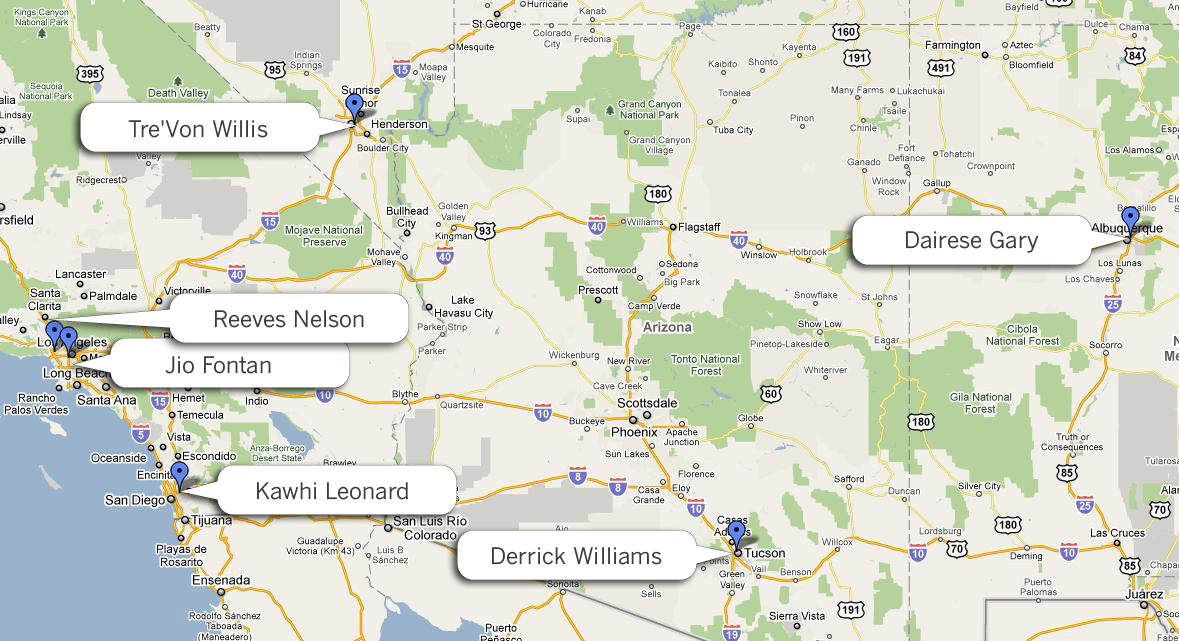
Southwest Region (NM, AZ, NV, HI, SoCal)
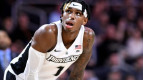
  • Jio Fontan – Soph, G – USC. Last year, USC was the talk of the college basketball world for a stretch, when senior point guard Mike Gerrity, a transfer from Charlotte, took over the team in December and promptly led the Trojans to an upset blowout victory over then #8 Tennessee in his first game of the season. The Trojans went on to win their next five games, including the inaugural Diamond Head Classic, with Gerrity serving as a big spark. In 2010-11, head coach Kevin O’Neill and his team will welcome another Division I transfer to the active roster over the winter break, and they hope to sustain the bump in talent they’ll get when Fontan joins the team as a midseason transfer from Fordham. In fact, Fontan was in the midst of an on-campus visit last December 19 when Gerrity was leading the Trojans to their win over the Volunteers and he committed to the school just days later, perhaps seeing the blueprint for his own success in Gerrity’s. Luckily enough for O’Neill and the Trojans, Fontan will have more than just the one semester of eligibility that Gerrity had.  But while their paths to the USC roster may seem similar, their games are different. Fontan is more of a combo-guard, capable of running an offense, but more adept at creating for himself than being a pure distributor. Not that he isn’t capable of handing out assists – he averaged more than four assists per night during his one season plus five games at Fordham – but Fontan is at his best with the ball in his hands, able to both blow by defenders and hit from long range, scoring the ball to the tune of 15.3 points per game in his freshman season on his way to Atlantic 10 rookie of the year honors. Paired with established frontcourt returners Nikola Vucevic and Alex Stepheson and a talented group of newcomers, including 5’7 point guard Maurice Jones who will handle the lead guard duties until Fontan is eligible, Fontan will be surrounded by far more talent than he ever was in his time at Fordham. And if things go as well as could be hoped for, Fontan will have a chance to reprise Gerrity’s Trojan debut, as Southern Cal will travel to Kansas (and then, three days later, they’ll play the return game in the Tennessee series) for Fontan’s first game, giving USC a chance to make another big mid-season splash on the national stage.
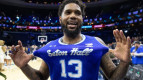
  • Tre’Von Willis* – Sr, G – UNLV. For a good part of last summer, Tre’Von Willis, the star shooting guard for the Runnin’ Rebels, may have thought that his collegiate career was over thanks to his June 29 arrest for felony battery involving an ugly incident with a woman in nearby Henderson, Nevada.  Willis ultimately copped to a plea agreement of a lesser charge of misdemeanor domestic battery, and in interviews since the incident he has shown considerable sincerity and self-awareness in suggesting that he placed himself in a bad situation.  After he serves a mandated three-game suspension meted by coach Lon Kruger, Willis will likely be back in action for UNLV’s second regular season game against Southeastern Louisiana.  And it’s a good thing that he will be, as the Rebel program has eyes on putting together its best season since the understated head coach rolled into town several years ago.  Considering that the Rebs have been to a Sweet Sixteen and won 30 games in a season under his tutelage (both in 2006-07), those are lofty goals.  But they are also realistic ones so long as some of the injury problems that Willis and several others have recently endured are controlled.  Willis in particular continues to experience knee pain as a result of arthroscopic surgery in August to repair cartilage, a recurring problem which caused the capable scorer to lose some of his lift at the end of last season and definitely impacted his effectiveness.  As an example, after scoring twenty or more points ten times through mid-February, Willis only hit the figure one more time during the last eight games of the year, a sure indication that he was not at 100%.  The hope is that his summer surgery,  a new outlook on opportunity as a result of his legal troubles, a sprinkling of maturity (he also had a daughter) and much-needed rest will encourage Willis to come back with an all-America caliber season.  He was chosen as a first-team all-MWC guard in 2009-10 when he contributed an all-around game of 17.2 PPG, 3.9 RPG and 3.5 APG while increasing his previously-sketchy shot selection to the point where he added nearly 10% (from 38% to 48%) on his field goal percentage.  If he can truly put everything from last summer behind him and remain healthy for an entire season, the new Aria Hotel may not be the only must-see on The Strip this winter.
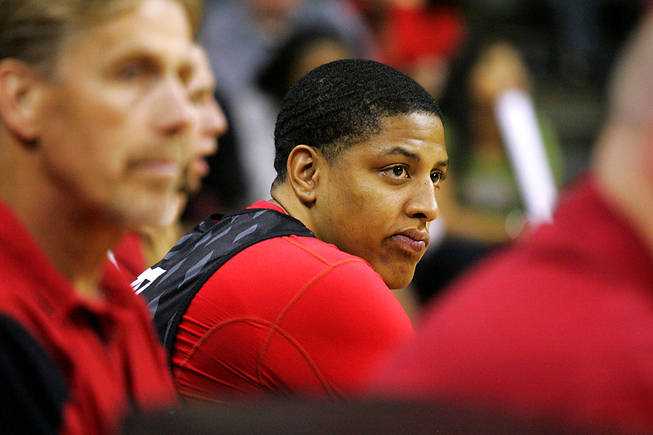
Tre'Von Willis Has to Sit Three Games (LV Sun/S. Morris)

Read the rest of this entry »

Share this story

Vegas Odds to Win It All: Preseason Check-In

Posted by rtmsf on October 20th, 2010

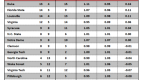
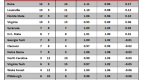
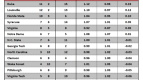
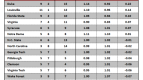
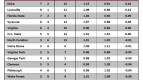
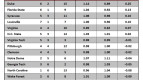
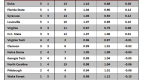
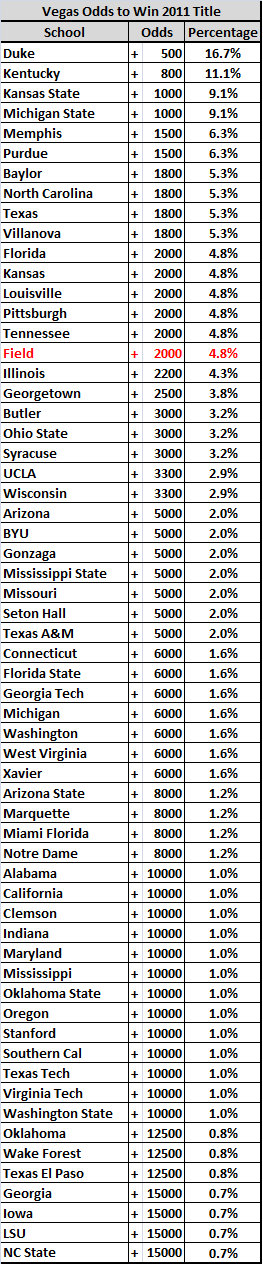
We’re now formally into the dog days of practice around the country, which means that we’re under three weeks away from the first games of the season in the 2kSports Coaches vs. Cancer Classic (beginning Nov. 8 at Pitt, Texas, Maryland and Illinois).  Our excitement is tempered somewhat by the fact that it’s still almost 80 degrees outside and it certainly doesn’t feel like the start of the season should be so close.  Yet it is.  Speaking of places that are hot, one entity that never sleeps on college basketball especially when there’s money to be made, is Las Vegas.  The sports books offer futures lines pretty much year-round, and although there’s only limited conclusions that should be drawn when analyzing these odds, keep in mind that the desert oasis didn’t arise from sand because they were in the business of losing money.  More often than not, they have a keen general awareness of the teams to hold and the teams to fold heading into the season.

Below are the current odds listed on The Greek as of Tuesday, October 19.  Some brief analysis follows the list.

Read the rest of this entry »

Share this story

In Their Words: Life at the Mid-Major Level (part three)

Posted by rtmsf on October 5th, 2010

Andrew Murawa is the RTC correspondent for the Pac-10 and Mountain West Conferences and an occasional contributor.

To read the entire In Their Words series, click here.

Part Three: SCHEDULING

Over the summer, we’ve spent time hearing about some of the next big-name recruits on their way to college basketball: Jared Sullinger and Harrison Barnes, Anthony Davis and Michael Gilchrist. We’ve heard the big-time schools announce their high profile games on their upcoming schedules: Kentucky going to the Maui Invitational and visiting North Carolina, Michigan State hosting Texas and going to Duke. But for the vast majority of Division I programs, they’ve been flying under the radar. There are at present 73 teams that participate in basketball in the six BCS conferences, but there are 347 total programs in Division I. Of those other 274 programs, there are certainly quite a few big-name programs: last year’s national runner-up Butler comes to mind immediately, as does Gonzaga, Memphis and a handful of other schools in conferences like the Atlantic 10 and the Mountain West. But, we were also interested in how the other half (or really, how the other three-quarters) lives, so we spent some time talking to coaches, athletic directors and other people around the country affiliated with some of those other schools — those non-BCS schools, those “mid-majors” — and we asked them about how they recruit, how they create a schedule, how they market their programs, and quite a few other things. Over the next eight weeks, we’ll let them tell you their story, in their own words.

To begin, let me introduce and thank this week’s cast of characters:

  • Tommy Dempsey, Head Coach, Rider – Dempsey enters his fifth season as the head man at Rider, following two seasons as an assistant. He has compiled an 83-75 record over that time and coached NBA lottery pick Jason Thompson during his time there.
  • Murry Bartow, Head Coach, East Tennessee State – Bartow is entering his eighth season as the Buccaneers head coach, after having previously succeeded his father Gene Bartow as the head coach at UAB. Bartow has posted a 118-72 record in his years at ETSU and has racked up 241 total wins and four NCAA appearances in his 13 seasons as a head coach.
  • Larry Williams, Athletic Director, Portland: Williams has been the AD at Portland for six years now following a five year stint as the head of licensing and product marketing at his alma mater Notre Dame. Williams was a two-time All-American offensive lineman with the Irish before starting 44 games in the NFL.
  • Eric Brown, Assistant Coach, Long Beach State – Brown enters his fifth year as an assistant on head coach Dan Monson’s staff, after previously having spent time on coaching staffs at Cal-State Northridge, USC and Iowa State.
  • Chris Caputo, Assistant Coach, George Mason – Caputo is entering his sixth season as an assistant coach for the Patriots after spending the previous three seasons as an administrative assistant and video coordinator under head coach Jim Larranaga.
  • Eric Reveno, Head Coach, Portland – Reveno heads into his fifth season at Portland having turned around a program from a team that was 18-45 in his first two seasons to a team on the rise with a 40-24 record over the last two seasons. Reveno spent his previous nine seasons as an assistant at Stanford, his alma mater where he was a Pac-10 Conference All-Academic Team selection as a senior.

Last time out, the topic was recruiting. This time around, we’ll take a look at how mid-major programs feel about putting together their non-conference schedules and the different strategies that are used in order to line up games. It’s a part of the sport that doesn’t get talked about a whole lot, but it can have a big impact on how the program is perceived, and in turn, can impact a program’s ability to recruit successfully. One theme emerges as pretty unanimous: this is not a part of the job that is a lot of fun.

Tommy Dempsey, Head Coach, Rider: It’s brutal.

Murry Bartow, Head Coach, East Tennessee State: It is tough. Recruiting is number one certainly, but scheduling is not an easy thing.

Larry Williams, Athletic Director, Portland: It really is, next to recruiting, the hardest thing we do in trying to run a basketball program.

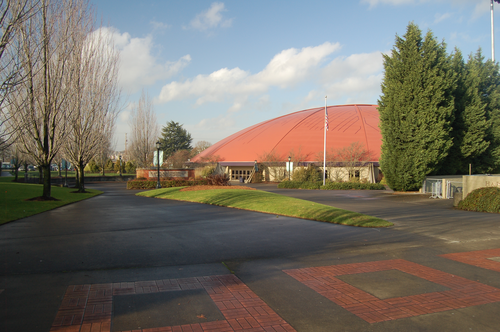
It's Not Easy to Get Teams to Visit Places Like the Chiles Center (Portland)

While just about everyone at the mid-major level agrees that the scheduling process ranges from unpleasant to demoralizing, each program is able to develop their own strategies for filling in a schedule.

Eric Brown, Assistant Coach, Long Beach State: Different programs have different philosophies. You have home-and-home series where a school will come to your place one year and you agree to go to their school the following year. There are guarantee games where the larger school will pay you to go play them or you can pay a smaller school to come play you. And there are tournaments. There are different ways to do it.

To begin with, a school has to decide what it wants from its non-conference slate, and what it can reasonably get. Non-conference schedules are generally filled in with a combination of home-and-home agreements (where each school in the game will agree to play one game against the opposing team on their own home floor and the opponent’s home floor), guarantee games (where one team, usually a bigger school, will pay another team to come to their arena for a game), early season tournaments and other neutral-site events. At Long Beach State, they have shown over the past couple of years that they aren’t afraid to take on a scary-looking schedule. Last season they played the toughest non-conference schedule in the country, with games at Notre Dame, Texas, Kentucky and Duke and neutral site contests against Clemson, West Virginia and UCLA. It doesn’t get any easier for the 49ers this season, with road trips to Washington, Utah State, North Carolina and Arizona State combined with neutral site games against St. Mary’s and Clemson (with two others to be determined by the results of an early-season tournament), and a home game against San Diego State.

Brown: We try to play some home-and-home series with teams in our region and then Coach (Dan) Monson’s philosophy is, given that the way our conference is set up and that every year only one team from our conference is going to the NCAA Tournament, his philosophy is to go play bigger schools so that when we get into our conference or into the NCAA Tournament, we’re not shell-shocked. We’ll play three guarantee games against three bigger schools, three BCS conference schools, where they’ll pay us to go play them. We also like to get into a tournament because they can guarantee three games where they only count as one game against your schedule. Like for instance last year, we were at the 76 Classic in Anaheim and this year we’re going to the Paradise Jam in the Virgin Islands.

Chris Caputo, Assistant Coach, George Mason: As far as Coach (Jim) Larranaga’s philosophy, he looks for balance in the schedule. You’ve got to play a certain amount of home games, a certain amount of road games and some sort of preseason event that is on a neutral site. I think that’s the key thing for us.

Balance in the schedule is the ideal for most mid-majors, mixing a handful of tough games with games against teams that they should beat, and finding a relatively equal number of road games for every home game on the schedule. But it is hard to achieve balance in a schedule when it is very difficult to get high-major and BCS-conference schools to come to your place, especially when you’ve had some previous years of success.

Read the rest of this entry »

Share this story

Morning Five: 09.30.10 Edition

Posted by rtmsf on September 30th, 2010

  1. Jamie Dixon may have lassoed the highest-rated recruit in the history of Pittsburgh basketball yesterday, as 6’9, 200-pound junior forward Khem Birch verbally committed to his Panther program.  The athletic player originally from Canada is rated in the top five in both the Rivals and Scout rankings for the class of 2012, and he will undoubtedly be a force in the Big East in a couple of years.  Anyone expecting Pitt to “come back to earth” anytime soon is dreaming — so long as Dixon is there, the Panthers are going to remain a force not just in the conference but nationally.  We shudder to think what Dixon will be able to do if he starts getting top ten players at Pitt on a regular basis.
  2. Tomorrow is October, and these player profiles will be everywhere soon enough.  Here are a few to whet your appetite.  UNC’s John Henson (whom Gary Parrish expects to become the biggest breakout star of the year), San Diego State’s Kawhi Leonard (whom Mike DeCourcy reports is in much better shape than his freshman year, where he still averaged 13/11), and Florida State’s Derwin Kitchen and Michael Snaer (whom Jim Henry suggests will be the keys to FSU’s third straight NCAA Tournament bid).
  3. Mike DeCourcy points out that the Big East was a ridiculously tight league last season, with over a quarter of its games coming down to a single possession.  That may not mean much until you learn that a league like the Big 12 had similarly close games only half as much last year.  Marquette in particular seemed to have had a lot of those games, and it turns out that 13 of their 21 Big East games last year were three points or fewer (including four OT contests).  What we wouldn’t give for a single Marquette-Notre Dame game right now…
  4. Here’s a look at two coaches in vastly different situations at their respective schools who are using the art of recruiting blue-chip prospects to substantiate their coaching existences.  John Pelphrey would appear to be on the hot seat at Arkansas after three lackluster seasons, but according to Gary Parrish, he’s bought himself at least two more years with a strong incoming class that will arrive in Fayetteville in 2011.  On the flip side of things, Ohio State’s Thad Matta is in no danger of losing his job in large part because he continues to haul in fantastic players to his program year after year (Jared Sullinger only the latest stud of many).
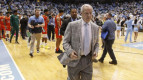
  5. Former UNC head coach and Hall of Famer Dean Smith made an appearance at the Charlotte Bobcats’ training camp on Wednesday.  One of his former pupils, Larry Brown, is currently the head coach of the team and, of course, His Airness is the majority owner of the club.  This was the first public appearance for the legendary coach since the summer release of information from his family that he was suffering from a degenerative memory disease, but the 79-year old Smith was in good enough condition to keep up appearances — he made sure to wear a bright Carolina blue jacket to the camp (ed note: send us a photo if you’ve got one).
Share this story

The RTC Big Four State Tournament: First Round (day 2)

Posted by rtmsf on September 2nd, 2010

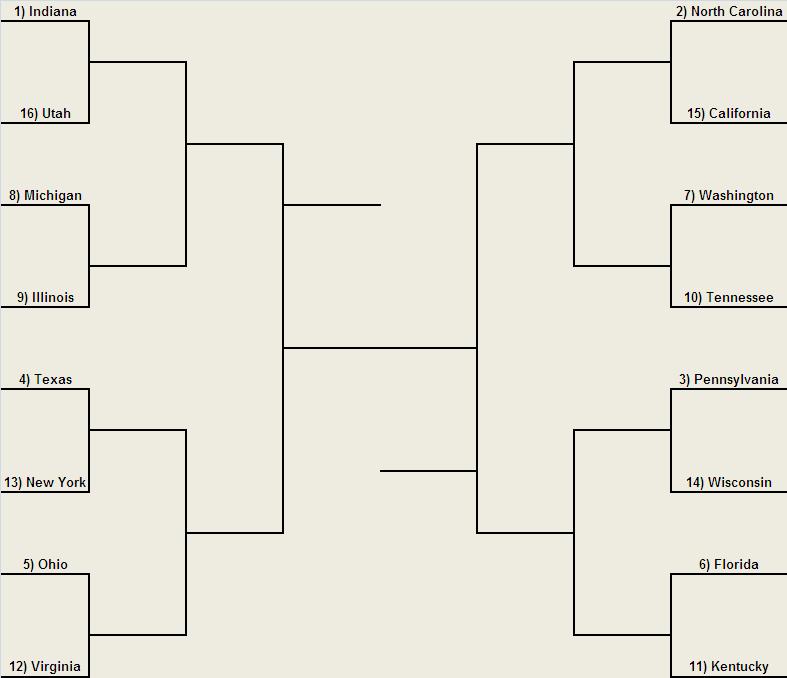
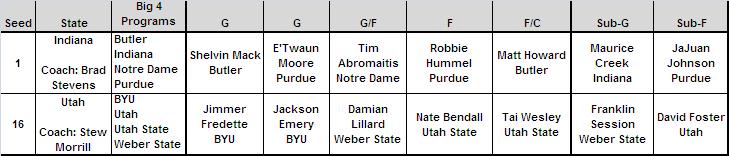
Yesterday we introduced our 2010 RTC Big Four State Tournament, and it was great to see some of the responses and feedback on it.  We’re convinced this is going to be a fun series.  Today we’re back for the second day of First Round games (the right side of the below bracket), including our analysis and projected winner, but we encourage you guys to make your picks for each game in the accompanying polls.

In case you missed yesterday’s post explaining what we’re talking about, here’s our selection criteria:

  1. Similar to the Fanhouse post, we picked the top four programs in each of the 33 states (including DC) with at least that many D1 universities.
  2. We then chose the top sixteen states based on the current status and power of those four programs within each state.
  3. Next, we chose a starting lineup ”dream team” of players from those programs in each state, thinking about how to best integrate them by position (three guards & two bigs; or vice versa).
  4. We also chose two subs — one guard and one big man — as well as a head coach.
  5. We limited each school to two starters and one bench player for a maximum of three per team (sorry, Duke).  We also made sure to include at least one player from each of the four chosen programs (hi, Seattle).
  6. Finally, we seeded the sixteen teams into our bracket and analyzed the matchups.  We encourage you to use the polls below to do likewise.

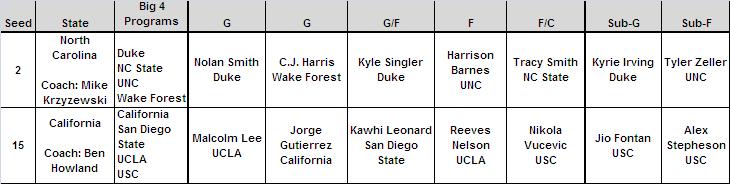
#2 North Carolina vs. #15 California

The first thought we had when analyzing this matchup is… that’s all you got, Cali?  Good grief — the nation’s most populous state by far can only muster a lineup of players that includes Jorge Gutierrez as a starter?   No offense to the ponytailed energizer bunny from Cal, but this game is a mismatch from start to finish.  Sadly, even if we had included every single one of California’s 24 D1 schools and added some studs like Stanford’s Jeremy Green, LMU’s Drew Viney and Vernon Teel, Santa Clara’s Kevin Foster, San Jose State’s Adrian Oliver and the St. Mary’s backcourt of Mickey McConnell and Matthew Dellavadova, the Tar Heel Staters still wipe the floor with this team.  Maybe California could draft Kobe Bryant, Tyreke Evans and Stephen Curry to their squad?  There’s simply too much talent on Coach K’s team from top to bottom (sound familiar?) for his team to sweat this one too terribly much.  The only area that North Carolina has a problem with California is in the post, where SDSU’s Kawhi Leonard can take advantage of the slighter frames of the NC bigs to put in some work.  But the speed, athleticism and scoring punch of the #2 seed is far too powerful here.  North Carolina rolls in a blowout.

RTC Choice: North Carolina 82, California 59.

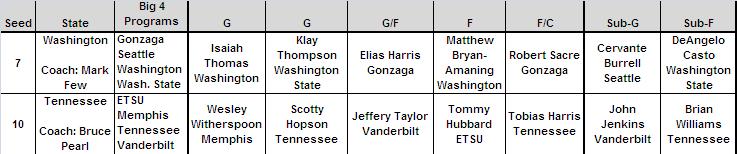
#7 Washington vs. #10 Tennessee


The matchups at the two guard spots and the wing are tantalizing in this game. The fatal flaw with the boys from the Volunteer State is their lack of a true point guard. Adding Melvin Goins or Brad Tinsley to the roster would have meant sacrificing one of Wesley Witherspoon, Scotty Hopson, Jeffery Taylor or bench ace John Jenkins, and it’s hard to blame coach Pearl for not making that move. Luckily for him, his team is loaded with intriguing first round talent, albeit at times inconsistent and frustrating talent. It also helps that Washington’s point man, Isaiah Thomas, isn’t much of a distributor either. Although Elias Harris may be limited by the length of Taylor, it’s his Zag teammate Robert Sacre that’s primed for a monster performance being guarded by Brian Williams at 2-3 inches shorter and the inexperienced Tobias Harris. Plus, we haven’t even mentioned Klay Thompson, a popular choice for Pac-10 Player of the Year.  It’ll be a well-played back-and-forth game, but we have the Washingtonians moving on.

RTC Choice: Washington 81, Tennessee 77.

#3 Pennsylvania vs. #14 Wisconsin

Read the rest of this entry »

Share this story

Morning Five: 08.31.10 Edition

Posted by rtmsf on August 31st, 2010

  1. Checking in on the latest conference re-re-realignment talk from Utah, the current word is that BYU is still intent on going independent in football but is looking more and more like a candidate to move to the WCC in basketball and all other sports.  Yes, you read that right.  The West Coast Conference, the tightly-knit eight-team conference of tiny private religious institutions that max out at nearly 9,000 students (Loyola Marymount and San Francisco, whereas BYU at 33,000 students is nearly four times that enrollment) and has remained at eight teams for three decades.  Andy Katz makes the case that this move makes sense in basketball, and we can’t really argue with his logic, except for one little thing — you know what makes more sense?  Staying in the Mountain West, where, with recent additions of Nevada and Fresno State to go with San Diego State, UNLV and New Mexico, the league is on the verge of overtaking the Pac-10 for hoops superiority out west.  We should know something very soon — the deadline for BYU to leave the Mountain West is Wednesday.
  2. Getting back to the conference that BYU originally threatened to move to prior to its implosion, the WAC, feeling jilted and unloved after Nevada and Fresno State’s unceremonious dumping earlier this month, is threatening to sue the two schools if each refuses to pay a disputed $5M exit fee each by the October 25 deadline.  Furthermore, the WAC says that they have the contractual right to not release the two renegades until after the 2011-12 academic year, an interesting assertion given that Fresno and Nevada’s stated positions are that they’re leaving next summer.  This is going to get more interesting before it dies down, because there’s no question that this particular tussle has gotten personal among key players at some of these schools.
  3. There’ll be a boatload of these player profiles coming out in the next two months, but it just means that the season is slowly approaching.  Here are a few from the last few days: Texas’ Jordan Hamilton, Mizzou’s Kim English, Purdue’s E’Twaun Moore, and Louisville’s Preston Knowles.
  4. Jeff Jacobs, a UConn columnist at the Hartford Courant, suggests that Ater Majok’s presumed leaving of the program has nothing to do with impending sanctions that may have involved his recruitment, as we wrote could be possible yesterday.  But in the same paragraph, he also says that there have been “whispers” in the program involving Majok, so we’re not sure what to believe here.  UConn is expected to announce its response to the NCAA’s allegations later this week.
  5. Austin Rivers is the #1 prospect in the Class of 2011, according to Rivals, and he showed the skill that he possesses in a recent summer league game where he crossed over and scored on #1 pick John Wall, followed by ripping him clean on defense on the other end.  One blogger makes a reasonable case as to why Rivers will end up playing for Coach K at Duke in the fall of 2011.
Share this story

Making Sense of the Mountain West/WAC Debacle

Posted by rtmsf on August 21st, 2010

Andrew Murawa is the RTC correspondent for the Mountain West and Pac-10 Conferences and an occasional contributor.

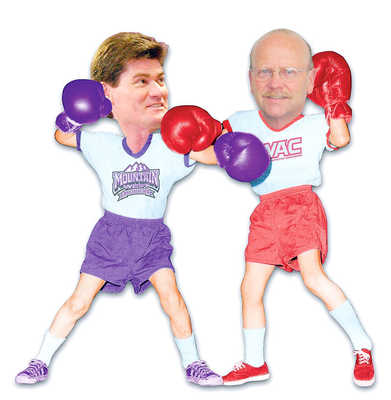
When last we left the BYU-instigated MWC/WAC soap opera, the Cougars’ plans to escape the MWC in favor of football independence and a WAC home for all other sports had been thwarted by Fresno State and Nevada’s decisions to leave the WAC for the MWC, leaving the six remaining WAC schools twisting in the wind and BYU, although still a desirable quanitity, undecided as to where it would wind up. In the days since, some of the details of the MWC-induced defections have surfaced, some new rumors have arisen and the futures of the WAC and BYU remain undecided. And so, a recap of the events and whispers of the last few days:

Our Money is on Thompson (left) In This One (Idaho Statesman)

  1. Thursday morning, WAC commissioner Karl Benson gave his first public comments on the Fresno State and Nevada decisions to leave the conference, and he promptly blasted them, saying that their decisions were “selfish acts” that left the conference’s future very much in doubt. He also clarified that Nevada president Milt Glick did not, in fact, sign the agreement that would have levied a $5 million penalty on the institution for leaving the conference, but did give a verbal agreement to the proposition, and Benson expects that the verbal agreement will be binding. Fresno State’s president John Welty, along with the presidents of the other six WAC institutions, signed the agreement. According to Benson, the two institutions will have to pay up within 60 days. Furthermore, because both schools missed the July 1 deadline for filing to leave the WAC, they will be expected to play the next two seasons in the conference before heading to the Mountain West.
  2. It also came out on Thursday that Utah State had also been invited to join the MWC, but had turned it down, partially due to the $5 million buyout and in part because they wanted to be in the same conference as BYU. Since then, it has been reported that Utah State is again in negotiations with the MWC about possible membership, and since Nevada and Fresno State have already left the WAC, the $5 million buyout penalty is no longer in effect. If Utah State winds up leaving the WAC, it will likely be the final nail in the coffin, as the WAC needs six members who have been together for five continuous years in order to retain its automatic bid to the NCAA Tournament. If USU leaves, the WAC would be down to five teams, and it would be the next little domino that would push the remaining WAC schools to plan a different future.
  3. While Utah State looks to take care of itself, Hawai’i is contemplating its own future sans the WAC, and that future may include independence, football-wise. Given the difficult travel logistics in scheduling Hawai’i, they may be better off scheduling a combination of road guarantee-games, a handful of home-and-home series and several games at the ends of seasons welcoming BCS squads as sort of a pre-Bowl bowl game. For other sports, including basketball, Hawai’i is considering perhaps joining a conference like the WCC, although the attractiveness of adding such a geographic outlier to any smaller conference is very much in question.
  4. If, by some stroke of luck, the WAC is able to keep all six of its remaining institutions on board (and about the only reasonable selling point they have now is that they could split the $10 million that may be owed by Fresno State and Nevada among the remaining teams), the WAC is still looking at taking a huge step backwards. With very few desirable FBS football schools in the west as potential targets for the conference, among the schools being discussed as possible additions to the conference are names like Cal Poly, UC Davis, Sacramento State, Texas State and Texas-San Antonio, none of whom have been major factors in Division I men’s basketball.
  5. The biggest outstanding question in all of this mess is at BYU: after triggering this landslide, where exactly do they wind up? Commissioner Benson remains hopeful that BYU will still be coming to the WAC, but at this point that is little more than wishful thinking – there is absolutely no reason for BYU to take its non-football sports to that mess anymore. If football independence is still on the table, the only way that will happen is if BYU agrees to join the WCC for its non-football sports, however BYU has very little in common with the schools in that conference. While all of those WCC schools are religious schools, they are all also very small schools, but BYU has an enrollment of more than 30,000 students. In the end, while nothing is set in stone yet, MWC officials have become more and more confident over the past few days that BYU will wind up back in the MWC, at least until it comes up with a better plan a few years down the road.
  6. One interesting rumor that has been bandied about the past couple of days has been a potential MWC/Conference USA agreement to join forces in some as yet undetermined way. Among the possibilities discussed have been a full merger of the two leagues (23 teams), a combination of the most-desirable teams into something like a 20-team league, an alliance between the two leagues resulting in a championship game between the two conferences with the winner of that game earning a BCS bid, or simply a scheduling alliance between the two conferences. At this point, all of this is conjecture, but there was a “strategic” meeting between officials from both conferences on Thursday, although MWC commissioner Craig Thompson claimed that it was a previously planned meeting that had nothing to do with the events of the previous days.  This claim that should be taken with a grain of salt, given that Thompson also suggested this week that the invitations of Fresno State and Nevada to join the MWC had nothing to do with the rumors of BYU’s plans to leave for the WAC.

So, while there is plenty still to be sorted out here, we presently stand with a Mountain West Conference that looks like this (or at least will look like this in 2012): Air Force, Boise State, BYU, Colorado State, Fresno State, Nevada, New Mexico, San Diego State, TCU, UNLV and Wyoming, with the possibility that the addition of Utah State (bringing the conference to 12 teams) will create a very strong basketball conference of relatively like-minded institutions all reasonably well geographically suited to one another. The fact that the football side of the conference looks solid as well is just an ancillary bonus (at least to this basketball-minded blog). However, even if BYU slinks back to the MWC for a few additional years, they are still very much the squeaky wheel here, unsatisfied with their current crowd. While having their own dedicated cable network, The MTN, is a plus for the conference, there is still the feeling that relying solely on that channel, plus a handful of games on CBS College Sports Network and Versus, the conference is leaving money on the table. However, that television contract is going nowhere soon, as it runs through the 2015-16 season. At some point, BYU is going to find a more suitable partner for its plans, and when that happens, the MWC will be saying goodbye to BYU all over again, this time for good.

Share this story

Did the Mountain West Just Cannibalize the WAC?

Posted by rtmsf on August 19th, 2010

Andrew Murawa is the RTC correspondent for the Mountain West and Pac-10 Conferences and an occasional contributor.

Just a few hours ago, the Mountain West Conference was being left for dead. BYU was on its way to football independence and a WAC address for the rest of its sports, Boise State was potentially considering changing its mind about a move to the MWC, and we were contemplating a landscape in college athletics without the MWC, inarguably the most successful football non-BCS conference and also one of the most successful non-BCS basketball conferences. But MWC commissioner Craig Thompson was able to get quick agreements from Fresno State and Nevada to leave the WAC and join the MWC possibly beginning in 2011, although it could be pushed back to 2012 for financial considerations.

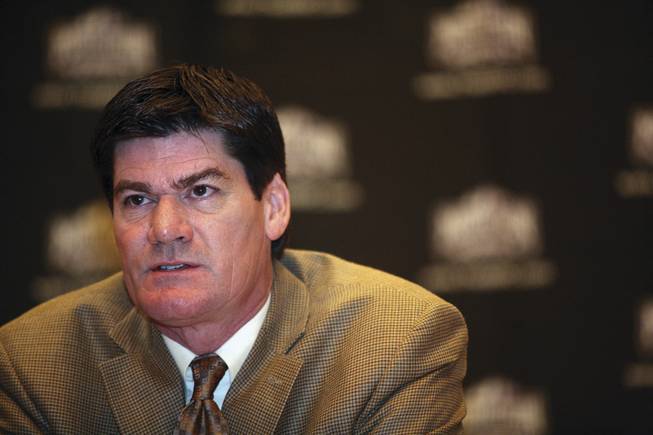
Thompson May Have Just Saved His League

The status of BYU is still somewhat in doubt as no official announcement regarding their future has been made. As of now, according to Thompson, “BYU is a member of the Mountain West Conference.” Given that the WAC is now comprised of just six teams, it is possible that BYU may reconsider and remain in the MWC as if nothing happened. Certainly the MWC would take them back without a second thought. Or, if BYU is still set on independence for its football program, it may look into the WCC as a potential home for it non-football teams.

Earlier in the day, it had been reported that all the schools in the WAC had last week signed a five-year agreement to remain in the WAC with a $5 million buyout penalty for leaving, and, as it turns out, it was BYU who instigated the buyout, hoping it was assuring a safe landing place for the Cougar non-football sports when they left the MWC. However, it turns out that Nevada never signed the agreement, although they did verbally agree to it, so they will have to pay some sort of exit fee, with the $5 million being the ceiling. However, if the WAC ceases to exist (a distinct possibility), it is possible that both Fresno State, who apparently signed the agreement, and Nevada will not have to pay the buyout penalty at all. If they wind up having to pay fees to the WAC for leaving, the MWC will aid those schools in paying their buyout penalties. According to Thompson, “We’re not going to bankrupt them to come into the Mountain West Conference.”

Read the rest of this entry »

Share this story

BYU Sets Off New Wave of Realignment Positioning

Posted by rtmsf on August 18th, 2010

Andrew Murawa is the RTC correspondent for the Mountain West and Pac-10 Conferences and an occasional contributor. 

The Who, What, When, Where and Why

Just when you thought we were done with conference realignment talk, at least for the summer, out of nowhere comes a stunner that rocks the Mountain West Conference and could set in motion a new chain of events that could leave us without what had turned into arguably the best non-BCS conference in the nation.  No official announcement has been made, but as of mid-day on Wednesday, it seemed that BYU would leave the MWC beginning in 2011, play football as an independent and join up with the WAC for all other sports. The Salt Lake Tribune has reported the move as a “done deal,” pending approval by the Church of Jesus Christ of Latter-day Saints, the owner of the school.  However, the Mountain West, fighting for its life, immediately responded by officially inviting Fresno State and Nevada to join the conference, invitations which, if accepted, would pretty much cripple the WAC before BYU even arrived, and perhaps forcing BYU to reconsider the wisdom of such a move.

Maybe BYU Can After All?

BYU has been displeased with the television revenues associated with the Mountain West Conference and their dedicated cable television network, The Mountain, estimated to be somewhere around $2 million last season for football only. Comparatively, Utah, which just received and accepted in June an invitation to join the Pac-10, is expected to take home somewhere north of $15 million a season in football television revenues when it begins play in that league  in 2011. BYU was apparently shocked that it was passed over when the Pac-10 expanded, and shocked again when the Big 12 passed on inviting the school as well, so it began exploring the possibility of taking the matter into its own hands.

BYU already has its own television network, and athletic director Tom Holmoe notes that it has its own state-of-the-art broadcast facility and equipment, including their own HD production truck.  “There is nothing better than that west of the Mississippi. Nothing. For broadcasting,” said Holmoe at a meeting with reports on the BYU campus on July 16, according to Jay Drew of the Salt Lake Tribune. “And it is first class. The things that we can do with that, the opportunities and possibilities. Nobody in the country has that ability.” Aside from the prospect of broadcasting their own games, BYU is reportedly in negotiations with ESPN for its football rights.

Is the Mountain West Kaput?

The invitations issued by the MWC to Fresno State and Nevada make a lot of sense in not only strengthening the MWC but also perhaps killing the BYU defection before it starts.  The specifics of these invitations still need to be sorted out, as the MWC has a couple of things going against it:  (1) the remaining WAC schools reportedly signed an agreement just last week that imposes a $5 million buyout penalty on any school leaving the conference in the next five years; and, (2) the WAC has a television contract with ESPN that may be more attractive (if presently slightly less financially rewarding) than The Mountain. It is unknown at this time whether the MWC in the interest of self-preservation has attempted to sweeten the pot for Fresno State and Nevada by potentially ponying up some cash to pay their buyout fees or if other machinations are in the works. It had been reported earlier in the day that Fresno State and Nevada had already declined offers to join the MWC.

Read the rest of this entry »

Share this story

Morning Five: 05.28.10 Edition

Posted by rtmsf on May 28th, 2010

  1. Fall guys?  Two UConn assistant coaches resigned last night in light of an announcement that UConn will make later this morning (10am) about its findings with respect to the Nate Miles scandal from two seasons ago.  Pat Sellers and Beau Archibald will undoubtedly be implicated as possible violators in that press conference, which will outline the allegations that the program is facing as a result of Miles’ recruitment.  This will be very interesting to observe, as UConn just handed Jim Calhoun a contract extension a few weeks ago, and it wouldn’t make sense they would have done so unless they believe that his hands are clean here.
  2. One of UCLA’s leading returnees, Malcolm Lee, will have arthroscopic surgery soon to repair cartilage in his right knee.  He is expected to be out for 4-6 weeks and it should not impact his play for next season.  Ben Howland’s team has suffered numerous injuries, transfers and the like in the last calendar year, so the news that Lee will be back better than ever for 2010-11 has to be welcome to UCLA fans.
  3. In light of the Kansas ticket office scandal, as expected, no other major program in America has any problems whatsoever with their ticket policies.  In other news,  BP has this thing under control.
  4. Sometimes it pays to get nailed with a scandal or two under your belt.  Just ask Kelvin Sampson.
  5. Andy Glockner gives us a list of the players we should be watching outside the BCS programs next season.  It’s a great list, and he definitely nails it in starting with San Diego State’s uber-talented Kawhi Leonard.
Share this story