Team of the 2000s: Wrap-Up and Honorable Mention

Posted by rtmsf on August 23rd, 2009

teamof2000(2)

Direct Links to the Top Ten.

1.  UNC
2.  Kansas
3.  Florida
4.  Duke
5.  Michigan St.
6.  UConn
7.  UCLA
8.  Memphis
9.  Syracuse
10.  Maryland

Intro.  Welcome back.  We wanted to use this post to wrap up the loose ends with an endeavor such as this one.  Let’s talk about our methodology, the teams who were easiest/most difficult to place, the Memphis quandary, and the teams who were on the outside of the top ten looking in.   As always, feel free to disagree in the comments.

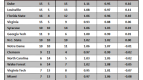
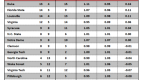
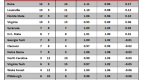
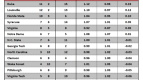
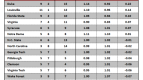
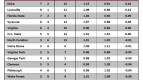
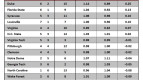
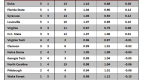
Defending Our Methodology.  One of the more interesting things about releasing these rankings has been the reaction from various fan bases. Some have been very measured in their response and criticism (such as the people in Lawrence, Kansas) while others have been a little more vitriolic (fans of another program in the center of the country). Most of the criticism has been directed at our methodology. There seemed to be quite a bit of confusion on this, so let’s clear it up immediately.  Some people have misinterpreted our table (below) as if the listed criteria were all considered totally and equally in how we ranked teams. Nothing could be further from the truth – rather, the table  was intended to be used as a tool showing the universe of relevant statistics that our panel might find useful when making their decisions.  There was no formula that a panelist was obliged to follow – instead, each panelist had complete discretion to consider or ignore any statistic he deemed important (or irrelevant).  Once each panelist submitted his list, we then took a holistic view of the world when determining where to rank certain teams.  Obviously we all considered winning percentage, NCAA Tournament success, conference achievements, etc., but in varying degrees.  That’s what makes these debates work – while one panelist may think that the NCAA Tournament is all that really matters and wants to weight teams almost exclusively on that metric, another panelist may want to give more substantial weight to the regular season.  Here’s the thing, though – reasonable minds always differ, and both conclusions are completely ok.  We believe that this sort of subjective analysis – review the available stats, pre-rank a list, reconvene to discuss, finalize the rankings – gives such a ranking system more credibility than simply weighting and re-weighting a formula until everything “feels” right.  For those of you who wanted a completely “objective” ranking system… well, here’s an example we did last spring that shows how the BCS formula would have applied to the NCAA Tournament.   Hint: F4 participants Villanova and UConn wouldn’t have even been invited to the Ball. In sum, we think that our methodology resulted in a solid, defensible list of the top ten programs of the 2000s.  Not everyone can be happy, but we’re comfortable with the results.
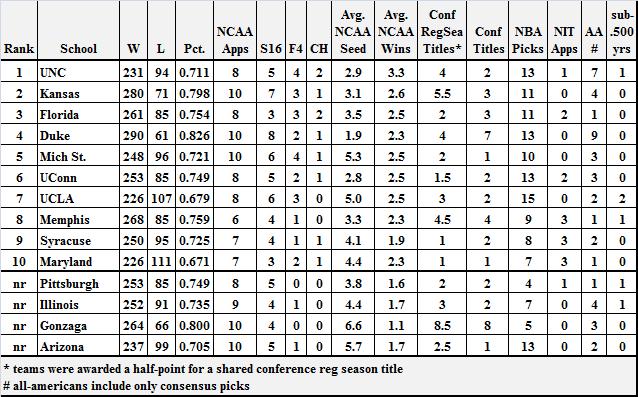
team2000s final list

Hardest Teams to Peg.  There were three teams that the panel had the hardest time nailing down – #4 Duke, #5 Michigan St., and #8 Memphis.  Both Duke and MSU received a #1 vote in our initial analyses, although to be fair, those were outliers among the panel.  Memphis was equally contentious, with half of the panel initially placing the Tigers in the top seven, while the other half didn’t even have them ranked at all.  It probably makes sense that we’ve received the most criticism based on these difficult-to-peg teams.

Easiest Teams to Peg.  On the other hand, the top three teams – #1 UNC, #2 Kansas, #3 Florida – were unanimous in order (although not in ranking).  Every panelist rated those three in the same order relative to one another, and the lowest any of the four teams were rated was fourth.  Interestingly, criticism died down on the placement of these teams.  Perhaps our panel was representative of what Average College Basketball Fan would choose as well?

What About Memphis? After the news that the NCAA vacated Memphis’ 38 wins and title appearance from the 2008 season, there was some buzz about what we should do with our list.  By our estimation, Memphis was rated as the #8 program of the 2000s, but if we removed that year, they most undoubtedly would have dropped out of the top ten.    After some internal discussion, we’re unwilling to go there.  There are a couple of reasons for this.  First and foremost, we don’t want to.  We watched Memphis play its way into the national finals, we saw Derrick Rose clang his first FT with nine seconds left, and we remember the shocked look on Calipari’s face in the interview room afterwards.  We also remember Michael Redd’s shooting in 99, Marcus Camby blocking everything in sight in 96, C-Webb calling timeout in 93, and several other vacated performances over the years.  Those games and moments happened.  They’re seared into our memory.  The NCAA can vacate whatever it wants, but we’re not going to join forces with them in their legal fiction.  Which brings us to our second point on this topic.  The NCAA’s application of these penalties is so wantonly inconsistent that if we gave credence to this one while ignoring such wholesale violations known to the general public – Sam Gilbert at UCLA and Reggie Bush at USC should immediately come to mind – that we’d be doing our readers a disservice.  We recognize that cheating at some level happens nearly everywhere, but our stance is that if the NCAA doesn’t catch it and punish the school prior to the games affected, then we’re not going to join them in their after-the-fact erasures.  Sorry.  Memphis stays at #8.
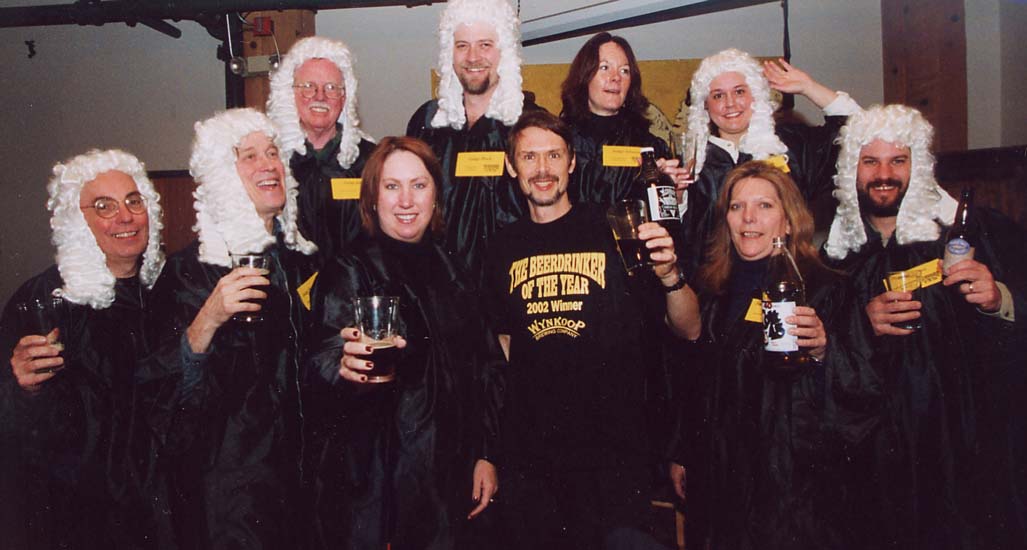
The Celebrated RTC Panel

Honorable Mention (in no particular order).

  • Pittsburgh.  Pitt was an oddity when it came to evaluating them for our countdown.  There was considerable variance among the voters as to where the Pitt program landed, and because of that they were one of the first teams to whom we awarded this “honorable mention” status.  Still, after the votes had been submitted, in the ensuing discussion it wasn’t that hard to move Pittsburgh out of the Top 10.  Make no mistake, it’s been an excellent ten years for the Pitt program, but in order to make a decade’s-end Top 10 list there are certain things you simply HAVE to get done.  Of their eight trips to the NCAA tournament, six of those saw Pittsburgh with at least a 4-seed (five of them were #3 or better).  The result?  Zero trips to the Final Four and only one Elite Eight.  It’s not like the Panthers didn’t have their chances.  True, it’s not easy to lose a coach like Ben Howland (who took Pitt to the Dance in 2002 and 2003) and the program deserves credit for a hire like Jamie Dixon, who didn’t miss a beat. And it’s not easy to lose to a Howland-coached UCLA team in 2007 in a #2-vs-#3 seed Sweet 16 game when you’re playing them in San Jose.  But if you want to be considered among the elite, you HAVE to beat 10th-seeded Kent State in the Sweet 16 when you’re a #3 (2002).  You HAVE to beat Pacific in the first round of 2005, even if you are on the low side of an #8-vs-#9 game.  You CANNOT LOSE to 13th-seeded Bradley in the second round when you’re a 5-seed (2006).  And perhaps the most painful — when you’ve earned a 1-seed after an incredible 28-4 season playing in the Big East, when you’re playing in your first Elite Eight in 35 years, you MUST beat the 3-seed, even if it is an in-state rival in the form of a very tough-nosed Villanova squad.  Dixon faces a bit of a rebuilding task in the upcoming season, but they ended the 2000s strong.  It’s because of that strong finish, that trend of improvement, that people – especially Pittsburgh fans – may be surprised to not see the Panthers in the Top 10 for the last decade.  As we start the new decade with the upcoming season, Dixon has the Pittsburgh program poised to move into that elite category.  As far as the last decade, though, they came up just short.
  • Illinois. On three of our personal Team of the 2000s rankings, Illinois barely missed the cut, meaning if the Bruce Weber-led 2005 squad managed to topple North Carolina for a national championship, they’d likely be included in the top ten. Illinois has also flamed out a bit at the tail end of the decade, finishing with a losing record in 2007-08 (16-19) before rebounding to a 24-10 mark in 2008-09 and eventually falling victim to a 12-5 upset by Western Kentucky. Bill Self and Bruce Weber have built a phenomenal program throughout the decade, though. The 2004-05 team featuring Deron Williams, Luther Head, Dee Brown and James Augustine was one of the top teams of the 2000s, flirting with an undefeated mark until Ohio State knocked them off in Columbus, then pulling off one of the most sensational comebacks in NCAA Tournament history in the Elite 8 against Arizona. Illinois has tied or won the Big Ten three times in the 2000s and finished as high as second three more times. What holds Illinois back from garnering a spot on the list? They haven’t reached the second weekend of the NCAA Tournament or won a conference title since that special 2004-05 campaign. Borderline teams have experienced more success in March, both in the Big Dance and in conference tournament play, than Illinois. For example, Maryland has two Final Fours, a national title and never finished with a losing record in the decade. Illinois hasn’t won the Big Ten Tournament since 2004-05. With packed recruiting classes ahead and a top-notch leader in Weber, Illinois will look to turn around a program that hasn’t been nearly as feared since watching Carolina cut down the nets on that fateful April night four years ago.
  • Gonzaga. The Zags undoubtedly were the most successful mid-major of the decade (moreso than Xavier and Butler), but their overall profile simply didn’t have enough juice to vault Gonzaga into the top ten. They dominated the WCC, winning the league eight times en route to an average of 26+ wins per year, an outstanding 80% winning percentage, and ten straight NCAA appearances.  But when it came to the NCAAs, Mark Few’s squads were only able to make it to the Sweet Sixteen four times.  And how many times in the decade were they able to advance past the third round?  Um, try zero.    Nevertheless, we believe that Gonzaga rates a tick higher than other such notable programs as Louisville, Wisconsin, Arizona and Oklahoma (all of whom made one F4) because they were so consistently good despite their scheduling limitations.  The worst Zag team (2006-07) still had 23 wins, and as a result of the weaker schedule of the WCC, their average NCAA seed was easily one of the lowest on our list.  Yet, as we all know, Gonzaga has tried to load up on high-impact RPI games during the nonconference slate, and we give them credit for that.  Fans of the other programs may quibble with this selection, but we can live with including at least one mid-major for consideration as the Team of the 2000s, and Gonzaga is our choice.
  • Arizona.  The obvious question here for Wildcat fans is how can a team that made the NCAA tournament every year for the past decade (and 25 straight if you don’t take away their vacated 1999 appearance) not be considered one of the top ten programs of the 2000s behind four teams that failed to make the tournament twice, two teams that failed to make the tournament three times, and another team that failed to make the tournament four times?  While the answer probably won’t satisfy Wildcat fans, it comes down to a few key things for us:
  1. Barely having a winning percentage at 70% despite playing in the Pac-10. Save the whining, West Coast people. The Pac-10 has only been one of the best conferences in the nation once in the past decade (2008 comes immediately to mind).
  2. Averaging 1.7 wins per NCAA Tournament appearance, which is lower than any other team in the top 10. The only team that they are close to is Syracuse and the Orange have a national title (wouldn’t be in the top 10 without it).
  3. Mediocre performance in the Pac-10. The Wildcats had 2.5 regular season conference titles (one being a split title) and 1 postseason conference title (since it was started in 2002). Like we said before, the Pac-10 might have the most attractive co-eds in the nation (although the SEC has a strong case), but the Pac-10 pales in comparison to the ACC, Big East, Big 12, SEC, and the Big 10 over the past decade in terms of the quality of their basketball teams.
  4. You could argue that the Wildcats got lucky with many of those NCAA tournament bids, most notably two years ago when they got in ahead of an Arizona State team that had a very strong case for being in above their rival.

Share this story

RTC 09-10 Class Schedule: Michigan State Spartans

Posted by zhayes9 on August 20th, 2009

seasonpreview 09-10

Ed. Note: for all of the posts in the RTC 09-10 Class Schedule series, click here.

As we continue our ongoing feature RTC’s Class Schedule for the upcoming 2009-10 season, let’s delve into the slate for the national runner-up of a season ago out of the Big 10: Michigan State. The Spartans entered last season with expectations to win their first regular season conference title since 2000-01 and accomplished said feat with a 15-3 Big 10 record, overcoming two stunning losses at home to Penn State and Northwestern along the way. The Spartans entered the tournament with high hopes as a #2 seed and, after dodging two bullets from USC and Kansas, smoked #1 seed Louisville and edged past Connecticut in the national semifinals before running into the buzzsaw known as North Carolina. With 2008-09’s successful season in the past, Tom Izzo is moving on with his point guard (Kalin Lucas), sharpshooter (Durrell Summers), enigma (Raymar Morgan), sophomore stud (Delvon Roe) and emerging big man (Draymond Green) all in the fray. Michigan State fans will accept nothing less than Tom Izzo’s sixth Final Four appearance this season in East Lansing.

Let’s take an in-depth look at the game-by-game journey Michigan State will have to endure if they wish to meet such lofty expectations. The official schedule can be found here:

4390903142044_Ohio_St_v_Michigan_St[1]

Non-Conference Schedule Rank: 9.5. Tom Izzo never backs down from a challenge. Last season, Izzo traveled to the loaded Old Spice Classic, a trip halted by a stunning defeat at the hands of Maryland. He also faced Texas in Houston and North Carolina at Ford Field for the ACC/Big Ten challenge. Both the latter contests will also be featured in the 2009-10 edition of Michigan State’s non-conference slate, but this time as true road games rather than semi-neutral floors. That’s right, on December 1 the Spartans will play UNC in Chapel Hill and, on December 22, Texas in Austin. Rarely do you see a team with the status of Michigan State play such challenging road contests in non-conference play. Victories in either venue will provide Izzo with a significant quality win to tout during arguments for top seeds in March. Izzo also signed up his Spartans for the Legends Classic in November in Atlantic City where he’ll face Florida and either Rutgers or Massachusetts in the final (you’d think it would be Florida-Michigan State in the final, but I digress). Another program with a perennially loaded non-conference slate is Gonzaga. Mark Few’s team will travel to East Lansing for one of the top November contests, even with Austin Daye, Jeremy Pargo and Josh Heytvelt departed.

Cupcake City: In between the two road games in North Carolina and Texas, Michigan State packed in some much-deserved cupcakes. The challengers will be Wofford, The Citadel (that game being played in Charleston, oddly enough), Oakland and IPFW. While The Citadel had a surprising 20-win campaign last year, the only team that may be able to stay on the floor with Michigan State is Oakland, a 23-13 squad from a year ago that nearly toppled North Dakota State in the Summit final. Michigan State will also face Florida Gulf Coast and Texas-Arlington at home.

Read the rest of this entry »

Share this story

2010 ESPN College Gameday Sites Announced

Posted by zhayes9 on August 18th, 2009

Saturday mornings in the winter have become a schedule of habit for yours truly- stumble out of bed, put the coffee in the pot and settle down on the couch for another edition of College Gameday: Hoops Edition. The likely candidates will return for another run in 2010 including Rece Davis as the host and Hubert Davis, Digger Phelps, Bob Knight and Jay Bilas (assuming Erin Andrews will once again be involved) providing analysis and heated bracket discussion. While I’d love to see Hubert tied up behind the Bristol studios with his mouth taped shut and replaced by someone smart like Doug Gottlieb or Steve Lavin (or anyone who doesn’t think the eye test is the best way to determine NCAA Tournament teams), the Gameday crew has grown on me. Bilas has always been the most informative and intelligent analyst on the network covering college basketball, and once you can look past how big of a buzzkill Bob Knight is, he provides tremendous insight. Much like Chris Fowler on the football counterpart, Davis does a formidable job moderating and challenging his partners.

Here’s the schedule for this season:

January 16th: Storrs, CT- Notre Dame at Connecticut (women’s)
January 23rd: Clemson, SC – Duke at Clemson
January 30th: Manhattan, KS – Kansas at Kansas State (7 p.m.)
February 6th: Champaign, IL – Michigan State at Illinois
February 13th: Lexington, KY- Tennessee at Kentucky
February 20th: Seattle, WA – UCLA at Washington
February 27th: Syracuse, NY- Villanova at Syracuse
March 6th: Durham, NC – North Carolina at Duke

The women’s game doesn’t surprise me; in fact, I viewed it as inevitable for Gameday to make a trip to Storrs this season to commemorate the perfect season for UConn. And why not? I’ve never watched a full women’s college game in my life, and don’t plan on tuning in to that particular edition because Geno Auriemma will be prominently involved, but it’s well deserved. As for the other men’s contests, I think ESPN did a nice job considering they can only work with Saturday games and make the schedule in August rather than on a weekly basis, i.e., college football. You have potential top-ten teams in Duke, Kansas, Michigan State and Villanova entering raucous environments in Clemson, Manhattan, Champaign and Syracuse, respectively. Expect some memorable RTC moments on Saturday nights this season.

Some quick thoughts:

Best Game- UNC-Duke always gets us tingly inside, but the best game takes place in SEC country this season- Tennessee-Kentucky. The Big Blue will be rocking in appreciation of their highly-anticipated top-five team under new coach John Calipari and will surely bring the heat for their most hated sweaty headman, Bruce Pearl. These two bitter rivals will be the top two teams in the SEC this season. Tyler Smith and Wayne Chism battling down low with DeMarcus Cousins and Patrick Patterson will be tremendous to watch.

Likely Stinker- Most would vote for a possible 57-56 final in Champaign as the likely stinker, but I’ll go with Villanova-Syracuse. Some believe the Orange could surprise with the addition of Wesley Johnson, but Villanova is loaded and took care of Syracuse late last season at the Dome even with Jonny Flynn, Eric Devendorf and Paul Harris around. This one has the potential for blowout city rather than upset city.

Who Knows Game- Kansas State isn’t likely anything more than a bubble team this season, yet Gameday is making the trip to Manhattan to see preseason #1 Kansas battle the Wildcats in what should be an insane environment. You’d think the Jayhawks’ immense talent would be able to wipe the floor with Kansas State, but don’t underestimate Denis Clemente, Jacob Pullen and stud frosh Wally Judge. Feels like this could either be an 18-2 KU run to start the game or the most memorable upset of the conference season.

Missing Powers- A little bit surprised to see Texas without an appearance on Gameday. I love their makeup this year under Rick Barnes and coupled with a strong Big 12 + Austin providing a worthy destination = surprised at their absence. Purdue was snubbed. Butler was also a candidate to get some national TV love.

Cult of Personalities- As I mentioned before, the battle between Bruce Pearl and John Calipari, especially coming off the Josh Selby rumors/saga, will be eaten up by ESPN. It’s not exactly Rick Pitino-Calipari, but the storylines will develop.

Plus, we get more halfcourt shots. And those are always fun.

Share this story

Summer Bracketology: 07.23.09

Posted by zhayes9 on July 22nd, 2009

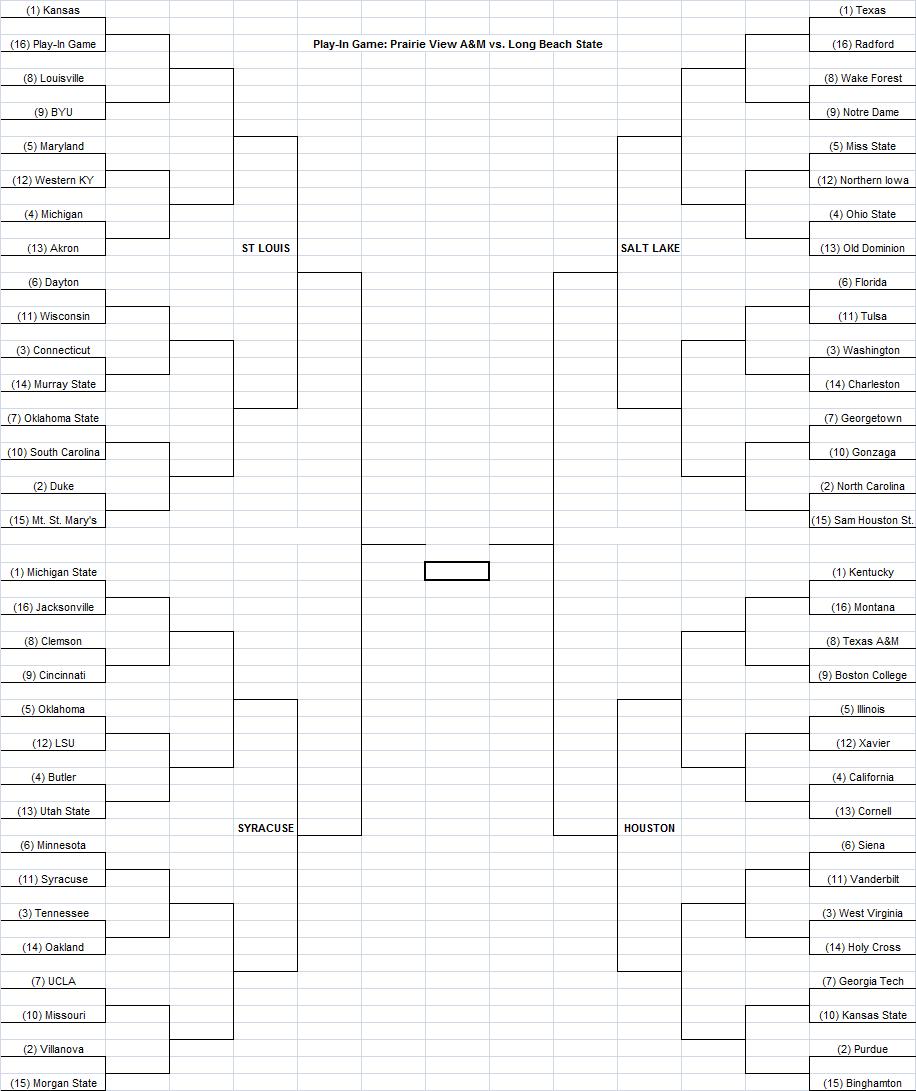
Did you all miss Bracketology as much as I did? While the intense days of February and March seem like eons away, here’s a dose of bracket madness to keep you college basketball diehards happy in the heart of Summer 2009. Some brief notes regarding the bracket:

– The preseason #1 seeds are (in order) Kansas, Kentucky, Texas and Michigan State. As the number one overall seed, Kansas plays the closest to home in St. Louis, Kentucky is placed in Houston as higher priority over Texas, and so on. The only #2 seed that was considered for a top seed was Purdue, but I gave the slight Big Ten edge to last year’s national runner-up from East Lansing.

– They lost Tyler Hansbrough, Wayne Ellington, Ty Lawson, Danny Green…and North Carolina is still a #2 seed? It’s true. Due to an outstanding recruiting class, an overall decrease in talent across the board in college basketball (especially from upperclassmen) and returnees like Ed Davis, Larry Drew and Deon Thompson expected to make a significant leap in production, North Carolina will most likely be at the top with Duke as preseason ACC favorites.

– The other difficult call was in the Pac-10 between Washington and California. While the Golden Bears return all of their talent from an overachieving season, I’m in love with the Huskies backcourt of Isaiah Thomas and Abdul Gaddy. As the returning champions, I gave them the slight nod as the #3 seed in the Salt Lake region, with Cal sliding to a #4 seed.

– This might be painful to swallow for all the Big Ten haters out there (I’m definitely not one of them), but it’s going to be the best conference in the land this season. Michigan State and Purdue are both potential number ones, Ohio State returns nearly everyone besides the disappointing B.J. Mullens, Illinois returns a talented group (losing Frazier and Meachem could hurt initially), and both Minnesota and Michigan have plenty returning. You can never discount Wisconsin either.

– The last team in? Vanderbilt from the SEC. The last team out? Pittsburgh from the Big East. Really, I wanted to put the Panthers in, but they lost DeJuan Blair, Levance Fields, Sam Young, Jermaine Dixon and Tyrell Biggs. That’s just too much to overcome, even if Jamie Dixon is their head coach and the Petersen Events Center is one of the most difficult places to play.

– The Pac-10 has only three teams in at this point. I expect them to receive more bids when it’s all said and done, but right now I just can’t put anyone else in the field besides Washington, Cal and UCLA. Both Arizona and USC are total messes. Washington State, Arizona State and Oregon State appear to be NIT clubs at this point.

07.22.09 bracketology

Last Four In: Wisconsin, Vanderbilt, Syracuse, LSU

Last Four Out: Pittsburgh, Seton Hall, Mississippi, Miami (FL)

Next Four Out: Marquette, Creighton, Florida State, Arizona

Bids per conference: Big East (8), ACC (7), Big 12 (7), Big Ten (7), SEC (7), Pac-10 (3), Atlantic 10 (2).

Automatic bids: Binghamton, Dayton, North Carolina, Jacksonville, Kansas, Villanova, Montana, Radford, Michigan State, Long Beach State, Old Dominion, Tulsa, Butler, Cornell, Siena, Akron, Morgan State, Northern Iowa, BYU, Mount St. Mary’s, Murray State, Washington, Holy Cross, Kentucky, College of Charleston, Sam Houston State, Prairie View A&M, Oakland, Western Kentucky, Gonzaga, Utah State.

Share this story

06.24.09 Fast Breaks

Posted by rtmsf on June 24th, 2009

What’s this?  Two days in a row with FBs?  Indeed.  There’s a lot to get caught up on…

  • Duke Downer.  The biggest news today was the news that Duke point guard Elliot Williams (he of the happy, happy feet) will be leaving the Duke program so that he can move closer to Memphis, his hometown.  Reportedly his mother is facing a life-threatening illness there and Williams wants to be nearby for support as she battles her disease.  He plans on petitioning the NCAA to waive the one-year transfer obligation so that he will be able to play immediately at his new school (presumably Memphis).  This is undoubtedly a major blow to Coach K’s backcourt in 2009-10, as he’ll now be left with only Jon Scheyer and Nolan Smith to log minutes there.  Big things were expected of Williams based on his insertion into the starting lineup at midseason and his excellent all-around play down the stretch.  Duke fans are largely crushed by this news, given the unfortunate circumstances causing it as well as the huge, gaping hole in the backcourt it leaves (while, ironically, the perfect fix named Seth Curry can only wait and watch next season).  In other Duke news that came out today, Coach K is the highest paid Duke employee by far ($3.6M last year) – no surprise there.
  • Like Father, Not Like Son.  A bit of a surprise today is that Jeffrey Jordan (you know, that Mike guy’s son) is ending his basketball career at Illinois to focus on his studies.  This comes on the heels of news from earlier this year that Jordan’s hard work and commitment to the program had resulted in a scholarship for the rest of his time at the school.  Guess he’d had enough.  Actually, we can totally understand this.  Jordan was undeniably under more pressure to perform than any walk-on turned scholarship player in the history of college basketball, and although it made for nice copy, it’s safe to say that Jordan probably didn’t love the sport anywhere near the same as his famous dad.  He probably reached a personal epiphany of some kind that included a heart-to-heart with pops, and once MJ gave him the blessing, he’s now free to pursue the activities he truly enjoys.  Good for him.  And good for him for working his tail off in his two years at Illinois to go from walk-on to scholarship to expected contributor, despite limited talent.
  • Vegas, Baby.  The WAC has followed its mid-major brethren WCC and Mountain West Conferences by moving its postseason tournament to Las Vegas, where the Orleans Arena will host beginning in 2011.  This comes on the heels of a very successful WCC Tournament at the Orleans last year, where a sold-out, raucous arena was shown on national television for St. Mary’s vs. Gonzaga.  The MWC already holds its conference tournament at the Thomas & Mack Center down the street, and this move by the WAC means that Vegas will become the basketball destination for every legitimate conference (save the Pac-10) west of the Rockies every March.  Sounds like a really fun environment for fans of these leagues.
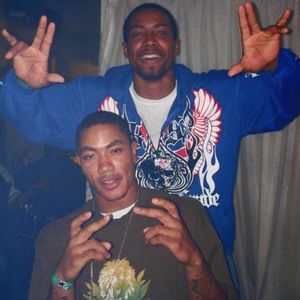
  • No, No, NoEveryone got this wrongDerrick Rose wasn’t flashing a gang sign in the below pic, he was practicing universal remote hand signals for the letter “B” on the SAT exam.

derrick rose hand signals

Share this story

05.26.09 Fast Breaks

Posted by rtmsf on May 26th, 2009

It’s been a while since we updated things (Wall to Kentucky), so let’s get caught up this evening…

  • RIP Wayman. You’ve undoubtedly heard the sad news about 44-year old Wayman Tisdale’s passing on May 15.  Obviously, we never met Tisdale, but everyone agrees that he was a person who touched the lives of many through his athletic and musical career.  ESPN takes a look back here, and CNNSI reflected on his legacy in the state of Oklahoma here.   Jeff Goodman tells a story about Tisdale following through on a promise to a budding jouralist (him).   Tisdale’s public memorial service was last Wednesday.
  • Smoke, then Fire.  We mentioned previously that it’s unfathomable to us that USC wouldn’t take Renardo Sidney, given their astonishing and proven ability to look the other way.  Maybe they knew that Rodney Guillory’s associate, Louis Johnson, was chirping like a parrot to anyone who will listen that he witnessed Tim Floyd handing Guillory a cool grand in return for the delivery of OJ Mayo.  Now Mayo’s talking to the feds about Guillory, and at least one writer thinks the whole darned ship is going up in flames.  The million-dollar question is whether the NCAA investigators have the sack to do it.  (our response: yes, but half-assed).  Update: Noel Johnson, a 2009 signee, left the program today, leaving Dwight Lewis, and um, Lil Romeo?
  • Transfers. Iowa’s Jeff Peterson (11 ppg) will transfer to Arkansas for the 2010-11 season; Indiana’s Nick Williams (9/5) will return to the South to play for Ole Miss (he was the Alabama POY in 2008); and, Clark Kellogg’s kid, Alex, will leave Providence for Ohio University (Bobcats, not Buckeyes) to play his senior season.  In corollary news, Oklahoma’s Juan Pattillo was shown the door by Jeff Capel for undisclosed team violations.
  • NBA Draft News.  Duke’s Gerald Henderson made it official and signed with an agent, forgoing his final year in Durham.  Xavier’s Derrick Brown, a borderline first-rounder, is highly unlikely to return to XU next season.  Meanwhile, word last week was that Florida’s Nick Calathes signed a contract for $1.1M/year (+ a home, car and tax credits) to play in Greece (where he holds dual citizenship), and Clemson’s Terrence Oglesby is leaving school after his sophomore year to pursue a pro career in Europe (he’s also a dual citizen with Norway).  Southern Miss’s Jeremy Wise will not return either.  BYU’s Jonathan Tavernari decided to wise up and will return to the Cougs for his senior season, as will Arkansas leading scorer Michael Washington.  FYI, now that the draft lottery is set (Clips win!), the new mocks are coming out.  Here’s NBADraft.net’s Top 14.
  • Obligatory Kentucky News.  It’s out with the old and in with the new, as three scholarship at Kentucky are given the pink slip to make room for Calipari’s motherlode of talent.  The buzz is already loud for Kentucky as the preseason #1 next year, but we’re a little surprised Jodie Meeks hasn’t made his decision yet (he’s unlikely to move up to the first round).
  • Coaching News.  Illinois top man Bruce Weber got a $500k raise and a three-year extension based on his stellar work in Champaign last season.  Villanova’s Jay Wright talked to and then withdrew from the search for a new Philadelphia 76ers head man.  Wazzu’s new man Ken Bone signed with the school for seven years and $650k per year, according to school records.   Michigan’s John Beilein will chair the NCAA’s Ethics Comittee, featuring Johnny Dawkins, Jeff Capel and the omnipresent Dave Odom…  does anyone else find it odd that Beilein’s charge here is to clarify the rules as written, even though he used legal loopholes to get out of his stated buyout with WVU when he left for greener pastures?   Finally, here’s a rather-suspect list of the top ten coaches in America today – it omits Bill Self and John Calipari, which leads us to believe that the author did not watch the 2008 national championship game.
  • Other Errata.  CJ Henry is officially enrolled at Kansas and will get to play with his brother, super-wing Xavier Henry, next season in Lawrence.
  • Former Tennessee guard Ramar Smith (whom Coach Bruce Pearl kicked off the team in 2008) was arrested for robbery (the holy trinity: money, guns and marijuana) last week, and he’s currently awaiting trial.
  • Luke Winn gives us a glimpse at what Mississippi St. will look like next year (with John Riek and Renardo Sidney in the fold).
  • Please tell us that some irate Kentucky fan with rivers of money will buy these and burn them.
  • What WILL we do with those nefarious message board posters!?!?
  • Campbell University will rejoin the Big South (its former home until 1994), leaving the Atlantic Sun after the 2010-11 academic year.
  • The Big Sky is moving to a Friday/Saturday conference weekend model to save costs beginning next season.
  • This is a sad story, but we’re glad that the authorities found this Olympic champion safe and sound.
  • Well, sucks for them (next, USC?).
Share this story

Will 2009 be the Year the Big 10 Finally Challenges the ACC?

Posted by nvr1983 on April 23rd, 2009

Yesterday the pairings for the 2009 ACC/Big 10 Challenge were announced, and cries of rejoice went up from Iowa City through Evanston over to State College as the Big 10 schools realized that they have a fighting chance at actually winning their first Challenge in the eleven years of its existence.   Let’s take a look at the matchups and show you the games where the land-grant institutions (+NW) from the midwest can actually make this happen.

acc-big-10-logo
Penn St. @ Virginia
– PSU is coming off of an NIT Championship and will return its best player, Talor Battle, along with a strong corps of juniors.  UVa will still be learning new coach Tony Bennett’s system.  This is a winnable road game for the Big Ten, and PSU will win it.

Maryland @ Indiana – Assuming Greivis Vasquez returns to school (he should), Maryland should be able to pull away from Indiana relatively easily.  Even moreso if they nab Lance Stephenson.  Tom Crean has a nice recruiting class coming in, but it’s heavy on volume, not stars, and Maryland should get this one.

Michigan St. @ UNC – Goodness, haven’t we seen enough of this already?  We don’t care who UNC loses or Michigan St. keeps.  It’s in Chapel Hill, and even that doesn’t matter.  UNC wins.

Northwestern @ NC State – NW wasn’t terribly far from being an NCAA team this year, and they return most everyone; NC State was pretty far from it and they may lose Brandon Costner.  The gut says this is a winnable game for the Wildcats, but you never know with those guys.  If the Big Ten expects to win this year’s challenge, though, they’ll need this one, so we’re giving it to them.

Virginia Tech @ Iowa – Todd Lickliter’s extremely young team should make a leap of progress next season, but we’re still not sure they’re ready for Malcolm Delaney and Jeff Allen.  ACC gets the road win.

Wake Forest @ Purdue – Best game of the Challenge, with two black/gold teams taking each other on.  While Wake has proven it can look dominant in November/December before crumbling in February/March, Purdue will be super-jacked for this one.  Look for Hummell and Moore to outplay Teague and Aminu as the home team wins.

BC @ Michigan – In Y2 of John Beilein’s rebuild in Ann Arbor, he worked miracles.  Next year his best two players (Harris and Sims) return, and Crisler Arena will become a place nobody wants to play.  Big 10 win.

Duke @ Wisconsin – these are the games where the home team camps out for weeks in anticipation of beating the Devils, only to watch as Duke eviscerates said home team by 18 pts in the first half on their way to a laugher.  Wisconsin will think it can win this game; Duke knows better.

Florida St. @ Ohio St. – For the first time in four years, OSU won’t be bringing in some 7-foot top recruit, but they won’t need it because they’re bringing back everyone else, including star Evan Turner.  FSU will lose their star Toney Douglas and Uche Echefu, and while they’ll be very good next year, they’ll still be adjusting to life without those players at that time.  OSU at home gets the W.

Illinois @ Clemson – This game is a tossup because both teams bring back a substantial amount of talent as well as bring in strong recruiting classes.  We have a feeling that Illinois is about to become relevant nationally again, but we’re not sure Clemson is ready to cede their spotlight.  Especially in December, when Clemson excels.  We’re going with the home team here.

Minnesota @ Miami (FL) – Tubby welcomes back every player of consequence from an NCAA squad while bringing in a top 12 recruitng class.   Miami isn’t that tough to play at anyway, but especially when Frank Haith loses three of his top five players (incl. Jack McClinton).  Minnesota wins.

There you have it.  Final results (projected):

Big Ten: 6
ACC: 5

The key tossup games in our eyes are Northwestern @ NC State and Illinois @ Clemson.  The Big Ten will need to win one of those two to supplant the ACC for the title of this challenge for the first time in, um, ever.

Share this story

Marcus Jordan to UCF

Posted by nvr1983 on April 7th, 2009

Lost in the news of his dad’s alma mater UNC winning the national title was another piece of  interesting news from the Jordan family. Yesterday, Marcus Jordan, the younger son of Michael Jordan, committed to play for UCF in Orlando, FL. According to recruiting services, the youngest Jordan isn’t quite the same caliber of player his father was (obviously), but is still a solid recruit (ESPN Insider/Scouts (Insider access required) rates him as an 87 while Rivals rates him as a 3-star recruit).

Credit: Suntimes.com

Credit: Suntimes.com

According to reports, Jordan was also considering Toledo, Iowa, and Davidson (imagine what the Wildcat fans would have been like with MJ and Dell Curry in the crowd if Stephen Curry decided to come back). In the end, he chose the Knights in part because he could play early and make an impact (unlike his brother Jeffrey Jordan who just got a scholarship from Illinois as a sophomore) along with the fact that his high school teammate A.J. Rompza had a very good freshman year (All-Freshman team in Conference USA) and likely had good things to say about the program.

As for impact this will have on UCF (17-14 overall and 7-9 in Conference USA), it certainly won’t have as big of an impact as John Calipari ditching Memphis and leaving them for dead, but he may give them some much needed depth (leading scorer Jermaine Taylor is a senior and averaged 26.2 PPG with the next highest scorer only averaging 9.8 PPG).

Share this story

RTC Bracket First Round Results: Best Team of the Modern Era (1985-2008)

Posted by rtmsf on March 30th, 2009

Welcome back.  The RTC Braintrust got together tonight and hammered out our 32 first round winners for the RTC Modern Bracket, one step closer to picking the team that we believe is the very best squad of the last quarter-century.

A reminder: we used resume/body of work to select and seed our 64 finalists, but that criterion now takes a step back to how we think teams would perform in head-to-head matchups.  So if your favorite team won a title but had a relatively weak inside game, don’t be surprised if a runner-up or at-large from another year with superb inside play knocks you out of the bracket.  Yes, we’re looking at you, Illinois fans.

Quick analysis of the numbers: fourteen of our 24 national champions survived the first round, but only eight of our runners-up made it through their first game.  Ten of our sixteen at-large teams also survived.

And now, the updated bracket through the first round of matchups, with brief explanations of how we analyzed each game below.

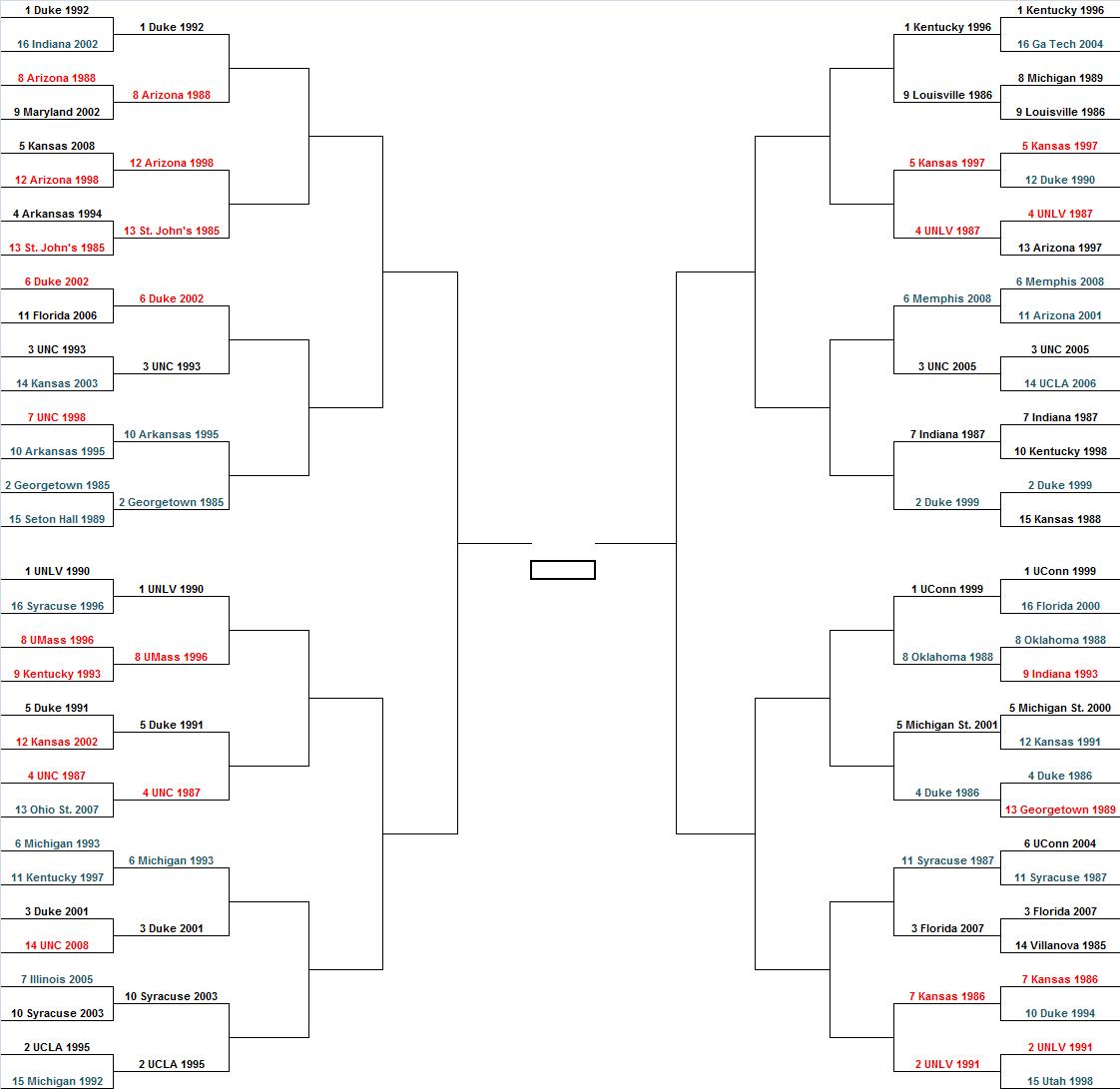
ncaa-modern-bracket-r32-v2

Instant Analysis

#1 Duke 1992 def. #16 Indiana 2002 – Coach K’s best team picked apart the Cinderella Hoosiers while the two Hills – Thomas and Grant – made life miserable for Jared Jeffries.

#8 Arizona 1988 def. #9 Maryland 2002 –   In a very close contest, Steve Kerr and Sean Elliott got it done from the perimeter despite Juan Dixon’s heroics to keep Maryland in the game.

#12 Arizona 1998 def. #5 Kansas 2008 – Upset Alert!  The defending champs led by Mike Bibby, Miles Simon and Michael Dickerson, took care of a Kansas team that could not bottle up the Arizona guards (think 2.5 Derrick Roses).

#13 St. John’s 1985 def. #4 Arkansas 1994 – Arkansas didn’t want to face a team with a superb PG in this matchup, and they faced one of the best of his generation in Mark Jackson.  Jackson continually hit Chris Mullin and Walter Berry for open looks to pull off the upset over the national champion Hawgs.

Read the rest of this entry »

Share this story

RTC Bracket: Best Team of the Modern Era (1985-2008)

Posted by rtmsf on March 30th, 2009

We’ve been sitting on this idea for some time now, and we figured that the relatively quiet week prior to the 2009 Final Four would be the best time to unveil it for your vetting, review and diligence.  So the plan is this: each weekday we’ll advance one round until we get to a Modern Era Final Four on Friday.  On Sunday following the F4, we’ll release our two finalists and the Modern Era champion will be crowned on this year’s Championship Monday.

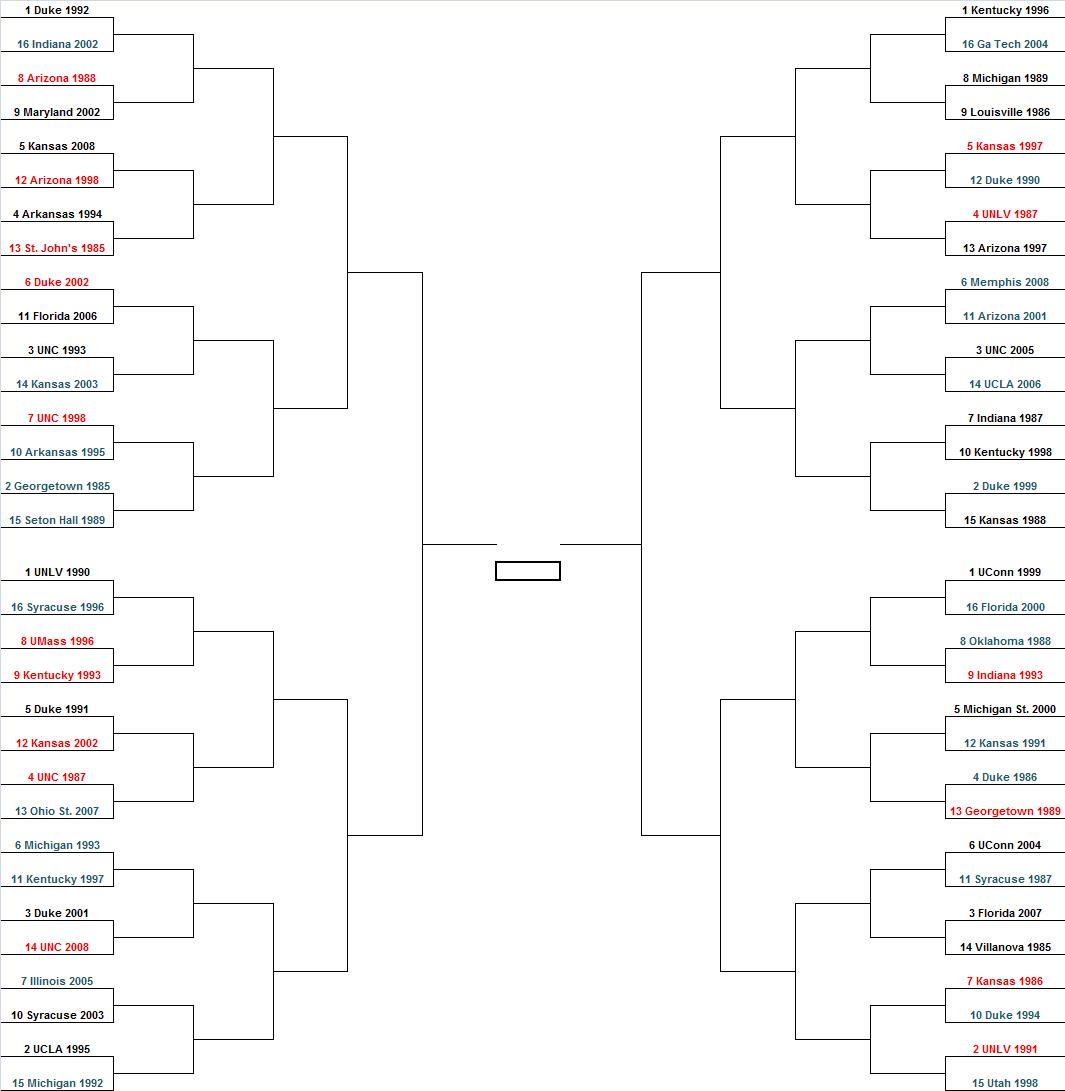
Let’s get down to it with our criteria for selection of the 64 teams:

  • We selected the 24 national champions (noted in black).
  • Next, we selected the 24 national runners-up (noted in blue-gray)
  • Finally, we selected the 16 best at-large teams of the last 24 years (noted in red).

You’re undoubtedly wondering how we chose the last group of sixteen at-large teams, and that’s a fair question.  There was no single measure (such as making the F4) that guaranteed inclusion to or exclusion from our at-large field, but we considered each team’s body of work in a particular season when doing so.  Criteria such as overall record, conference record, AP poll ranking, NCAA seed, postseason success, general reputation at the time, and team history were included.  Similar to selecting and seeding the field every year, the last few teams looked largely the same on paper and in our memories.  Some of them will without question inspire debate, but that’s ok, because the point of this entire exercise is to do so.

The same is true for how we seeded each team in the field.  As much as possible, we tried to stay away from the Team A would beat Team B analysis (that’s next!), focusing mostly on the team’s full body of work.  Of course, comparing teams between eras and even years is nearly impossible in many cases, so there’s a fair amount of subjectiveness that went into the seed placements.  Bear with us on that.  Additionally, as much as possible, we tried to avoid early-round matchups between the same school and teams from the same season, while still keeping a reasonable amount of competitive balance among the regions.

Enough chatter, here’s our Modern Era bracket.  Please leave us comments below telling us your choices for the first round winners.  We won’t guarantee that we’ll listen, but you’ll likely know something about these matchups that we don’t.  Feel free, and we’ll be back tomorrow with the next round!

Update: here are the First Round results.

ncaa-modern-bracket-field-v5

Overall Top Four Seeds:  Duke 1992, Kentucky 1996, UNLV 1990, UConn 1999

Last Four At-Larges: UNC 2008, St. John’s 1985, Georgetown 1989, Kansas 2002

First Four Left Out: UCLA 2008, Arkansas 1991, Michigan St. 2001, St. Joseph’s 2004

Breakdown by School (total, at-large):

  • Duke (8, 1)
  • Kansas (7, 3)
  • North Carolina (5, 3)
  • Arizona (4, 2)
  • Kentucky (4, 1)
  • Florida (3, 0)
  • Indiana (3, 1)
  • Michigan (3, 0)
  • Syracuse (3, 0)
  • UNLV (3, 2)
  • Arkansas (2, 0)
  • Connecticut (2, 0)
  • Georgetown (2, 1)
  • UCLA (2, 0)
  • Georgia Tech (1, 0)
  • Illinois (1, 0)
  • Louisville (1, 0)
  • Maryland (1, 0)
  • Massachusetts (1, 1)
  • Memphis (1, 0)
  • Michigan St. (1, 0)
  • Ohio St. (1, 0)
  • Oklahoma (1, 0)
  • Seton Hall (1, 0)
  • St. John’s (1, 1)
  • Utah (1, 0)
  • Villanova (1, 0)

Be sure to check back on Tuesday morning for the First Round results of the RTC Modern Era bracket.

Share this story