Behind the Numbers: Structures and Strategies

Posted by KCarpenter on March 23rd, 2011

 
Kellen Carpenter is an RTC contributor.
 
Nate Silver isn’t always right, but I’m beginning to wonder why I would ever bet against him. Last week, Silver published a consideration of seeding where he argued that because of the structure of the bracket, the eighth and ninth seeds are at a considerable disadvantage compared to much lower-seeded teams. This makes intuitive sense because the way the bracket is constructed the eight and nine have to play a top-seeded team before everyone but the sixteen seed. Still, it sounds funny and it is odd that a twelve seed has a better statistical chance of making the Sweet Sixteen than any other seed between seven and sixteen. I was intellectually able to read and understand this logic, yet I ignored the fact that because of this quirk in seeding, George Mason was worse off in terms of having a shot at making the Sweet Sixteen than Virginia Commonwealth or Richmond

The Spiders Perhaps Weren't As Much of a Surprise After All

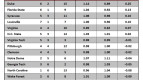
One eight seed made the Sweet Sixteen. The rest of the Sweet Sixteen party crashers? Two eleven seeds, a ten, and a twelve, including Virginia Commonwealth and Richmond. If you tally up the rest of the seeds, this looks pretty much like Silver’s predicted distribution. The structural inequalities of the bracket should have told us to expect more second round (excuse me, “third round” upsets) from the seeds in the 10-12 range. Of course, are these even really upsets? The Pittsburgh loss to Butler was a genuine shock but the rest of the “upsets” really seem to fall upon the coin flip in the flat part of the s-curve.  Silver notes that the composite computer “power ratings” show essentially the same difference between first and second seeds as between the fifth and thirteenth seeds. What this means is what we knew all along: the best teams are in a whole separate class from the bulk of the teams in the tournament, while the majority of teams are at close to the same level. This is a long way to get to this essential point: We shouldn’t be surprised to see VCU, Richmond, Marquette or Florida State in the Sweet Sixteen.

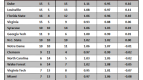
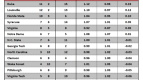
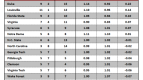
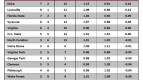
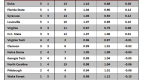
We also shouldn’t act like the bracket design is done affecting who makes the Final Four and who wins the championship.  Ken Pomeroy was quick to run the log5 probabilities of the remaining sixteen and had some interesting findings. While you would think that winning two games would have increased every team’s chances of winning it all, you’d only be mostly right. San Diego State and Kentucky actually saw their chances at a championship drop as the biggest obstacles in their path to the championship refused to be upset. Conversely, Kansas’s location in the decimated Southwest Region has made them a near-prohibitive favorite to make the Final Four. Likewise, Pittsburgh’s ignoble fall in an already weak Southeast Region has given the Wisconsin Badgers a real shot at a championship. The Badgers’ calculated chances of winning it all went from a mere 2.5% to 9.5%. Of course, technically, that’s a tiny increase in proportion to the change in VCU’s chances. The Rams went from having a 0.0005% chance at a championship to a 0.2% chance at winning the big one. While those are still long odds, their chances of winning increased 400-fold. So that’s worth something.

Read the rest of this entry »

Share this story

NCAA Regional Reset: West Region

Posted by rtmsf on March 22nd, 2011

 
We’re down to sixteen teams, so it’s time to visit with each of our regional experts and analyze what happened in each of the four regions and what should be expected this coming weekend. Every one of these predictions is guaranteed to be absolutely and totally correct.

Region: West

The Honda Center Has a Great Regional This Year

New Favorite:   #1 Duke, 32-4.  Duke was the original favorite, and they’re still the favorite. And with the addition of Kyrie Irving since the last time we spoke, they’re even more of a favorite, even if the freshman point guard is clearly not back to the level he was at prior to his injury. With Nolan Smith on the top of his game, Kyle Singler ready to do whatever he’s asked to do for the team, and a variety of role players ready to fill in around the edges, the Blue Devils remain the team to beat.

Horse of Darkness:  #2 San Diego State,  34-2. When, exactly, can a team that is a #2 seed, with a top-10 national ranking and a 34-2 record be considered an underdog? Well, when that team has won two NCAA Tournament games in its history and is in a regional with three teams that have won a combined 183 games in the Tournament, including 22 Final Four appearances and seven championships. Throw in the timidity with which the Aztecs played down the stretch in their third round double-overtime victory over Temple, and despite SDSU’s prodigious talent, they’re a pretty significant underdog in this region.

Biggest Surprise (1st Weekend):  #5 Arizona, 29-7. Well, given the Wildcats are the only team in the region to outperform their seed to this point, they’re the obvious choice. But even more surprising is how they got here, advancing to the Sweet 16 with a one-point win over Texas in a game where All-American candidate Derrick Williams had one of his worst games of the season, hitting just four-of-14 field goals, missing an additional six free throws (although he did get to the line 15 times), turning the ball over four times and fighting through some second half foul trouble. But other Wildcats stepped up, sophomore Solomon Hill and freshman Jordin Mayes in particular, and the Longhorns stepped aside, and Sean Miller’s club is still alive.

Completely Expected (1st Weekend):  San Diego State. The more I think about it, the Aztecs are the only choice here. Duke’s first weekend was somewhat unexpected from the start, once it was announced that Irving would return, and their closer-than-expected win over Michigan was another bit of a surprise. Connecticut surprised a bit by showing no signs of slowing down after a grueling Big East Tournament, destroying Bucknell before pulling away from Cincinnati late. And we talked about Arizona above. By comparison, it wasn’t all that big of a surprise that the Aztecs, with no history of success in the NCAA Tournament, might falter a bit in closing out a good team. And the fact that they got through that game anyway is just about what we expected.  

I’m Exceptionally Smart and Prescient: If you listened to me, you set aside a block of time on Friday afternoon to focus on Arizona and Memphis, and you were rewarded with an excellent game that had a little bit of everything you could want in a NCAA Tournament game, with the underdog getting out to an early lead, the favorite making a big charge to get back into it, and a back-and-forth, edge-of-your-seat battle down the stretch, ended by a great player making a great play in the waning moments. And the fact that it was not without a little bit of controversy is all the better.

Except When I Make Stupid Predictions: Like taking Oakland as a Sweet 16 sleeper. While the Grizzlies played Texas close enough to make it interesting, they just didn’t have the ability to keep the Longhorns from scoring at will against their defense.

Read the rest of this entry »

Share this story

NCAA Third Round Game Analysis – Saturday

Posted by Brian Otskey on March 19th, 2011

Saturday promises to be a great day of matchups in the Third Round of the NCAA Tournament.  On paper at least, there isn’t a single one of the eight scheduled games that shouldn’t be competitive.

#4 Kentucky vs. #5 West Virginia – East Region Third Round (at Tampa, FL) – 12:15 pm ET on CBS.

At first glance, West Virginia would appear to match up fairly well with Kentucky. The Mountaineers employ two fifth-year seniors while Kentucky trots out three freshmen in their slim rotation. Bob Huggins is 7-1 all-time against John Calipari, including last year’s Elite Eight triumph over the top-seeded Wildcats. The frontline of Kentucky, featuring only one consistent rebounding presence in Josh Harrellson, would seem to match up poorly against the assembly line of Mountaineer forwards and centers that finished sixth in the nation in offensive rebounding percentage. The reason we think Kentucky bucks this conventional wisdom is twofold: 1) a predominantly young Kentucky team may have discarded of their lackluster performance in the first round when they secretly felt showing up would be enough to defeat Princeton, and 2) the Wildcats are much more adept against a zone defense than they were last season because of the shooting ability of Brandon Knight and Doron Lamb. A key factor in West Virginia’s win over Clemson in the first round was the changing defenses Bob Huggins showed the Tigers, including a 2-3 and a 1-3-1 zone at various instances. Kentucky is eleventh overall in the nation in three-point percentage at just under 40% as a team and we think Knight will be on the board a lot earlier than the final offensive play of the game this time around. Kentucky simply has much more offensive firepower than West Virginia, who will have to out-tough, out-physical and out-rebound the Wildcats to advance to the Sweet Sixteen. John Calipari’s teams never receive enough credit for being solid defensively. Against a WVU offense that shoots just 48% from two and 34% from three, we believe Kentucky’s efforts on both ends of the floor will be sufficient.

The RTC Certified Pick: Kentucky.

#2 Florida vs. #7 UCLA – Southeast Region Third Round (at Tampa, FL) – 2:45 pm ET on CBS.

The Gators stomped all over UC Santa Barbara on Thursday while UCLA narrowly avoided what would have been an epic implosion, holding off Michigan State after nearly blowing all of a 23-point lead with under nine minutes to play. Aside from a couple of losses to Kentucky down the stretch, Florida has been playing great basketball coming into this tournament and it continued in their first NCAA game. To advance to the Sweet Sixteen, Florida has to stick to what they do best, scoring inside while knocking down some timely threes. The Gators have the height to match up with the turnover-prone UCLA forwards and should also enjoy an edge in the backcourt with a much better team three point percentage behind Erving Walker, as well as Kenny Boynton when he’s hot. The Bruins turned the ball over 16 times against Michigan State and a similar performance will result in plenty of fast break points and extra opportunities for the Gators. UCLA’s strength is up front, both offensively and defensively, but Florida can match the height and depth of the Bruins’ frontcourt. Reeves Nelson and Tyler Honeycutt need to have solid games for UCLA to be in the game down the stretch, otherwise Vernon Macklin and Chandler Parsons could take over on the boards and in the paint. These two teams are similarly constructed but the Gators have had more consistent guard play, especially from Walker. This is a really good matchup for Florida, in our opinion, and the Gators should advance from Tampa to the regional semifinals.

The RTC Certified Pick: Florida.

#12 Richmond vs. #13 Morehead State – Southwest Region Third Round (at Denver, CO) – 5:15 pm ET on CBS.

In yesterday’s interview session, Morehead State guard Terrance Hill referred to getting to the Sweet Sixteen as a goal for his team all season, “like Butler did last year.”  And his statement personified just how important this game is to non-BCS schools like Richmond and MSU — by winning one more game and advancing to the regional semifinals, it’s roughly equivalent in terms of status and prestige to a major program like Duke or Kentucky making the Final Four.  Given the fact that for both schools a power conference bully isn’t standing in their way to the regionals, neither wants to give an inch in pursuing the opportunity.  Still, even though Richmond isn’t a BCS school, they are a member of a high-mid league and Chris Mooney has a corps of four seniors in Kevin Anderson, Justin Harper, Dan Geriot and Kevin Smith who have been to consecutive NCAA Tournaments and have won ninety games in the last four years.  The offensive options available to Mooney are significantly better than those at the disposal of Morehead’s Donnie Tyndall, and it’s unlikely that the Spiders will be as careless with the ball as Louisville was on Thursday afternoon.  While Kenneth Faried is likely to pull down twenty rebounds against the slight Richmond front line, the Spider perimeter players are very good at locking down the opposing three-ball, holding opponents to a mere 30.5% (Morehead nailed nine, including the game winner, against Louisville).  Furthermore, MSU isn’t very good at stopping the three on their end, as Louisville was able to knock down ten, and UR, led by Anderson (42.7%), Harper (46.5%) and Darien Brothers (39.7%) makes a living as a team in bombing away.  With a trip to the Sweet Sixteen on the line, the smart money is on the team that isn’t as likely to have celebrated too hard — Morehead State won the biggest game in its history on Thursday; Richmond beat Vandy.  Who would you choose?

The RTC Certified Pick: Richmond.

Read the rest of this entry »

Share this story

NCAA Second Round Game Analysis – Thursday

Posted by rtmsf on March 17th, 2011

Now that the Play-In First Four games are finished, let’s get back to normalcy with the best weekend of the year beginning this afternoon.  Sixteen games, eight sites, four television channels, and several million brackets busted by roughly 3:30 PM eastern time.

#5 West Virginia vs. #11 Clemson – East Region Second Round (at Tampa, FL) – 12:15 pm ET on CBS

Expect a low-scoring, gritty and physical opener for Thursday’s NCAA Tournament action, and not just because the tip time is barely after noon and Clemson arrived in Tampa just before the sun came up on Wednesday. Both of these teams pride themselves in their toughness defensively and play extremely hard on every possession. Clemson specializes in limiting opposing offenses inside the arc behind senior forward Jerai Grant prowess in the paint, while West Virginia limits their competition to below 30% shooting from the three-point line. While both Brad Brownell and Bob Huggins have a history of trotting out stalwart defenses, the edge offensively has to side with the Mountaineers. Kevin Jones has been playing his best basketball of the season as of late, posting three double-doubles in his last four outings. Casey Mitchell is a 38% gunner from deep that is tremendous off screens in catch and shoot situations where he barely needs any room to fire. Deniz Kilicli and John Flowers have aided what has turned out to be the sixth best offensive rebounding team in the nation, no surprise coming from a Huggins-coached squad. Clemson is merely middle of the pack in Division I in allowing offensive rebounds, so the Mountaineer frontline may be able to churn out extra possessions for their perimeter weapons throughout this game. Limiting Grant is certainly a challenge, but the WV frontline should be up to the task. Combine tired legs with Mitchell feasting on a perimeter defense that just surrendered 12 threes to UAB and the edge in this 5/12 matchup has to side with the Mountaineers.

The RTC Certified Pick: West Virginia.

#8 Butler vs. #9 Old Dominion – Southeast Region Second Round (at Washington, D.C.) – 12:40 pm ET on truTV.

Both teams have won their past nine games en route to conference tournament championships. Defense has been the key for each club during their winning streaks with Butler giving up 58 PPG and ODU at 57.7 PPG against over their last nine games. Old Dominion is one of the best rebounding teams in the nation and that is where they have to take advantage of the Bulldogs. This game will be played almost exclusively in the half court with both teams preferring a slower pace. Butler ranks #11 in defensive rebounding percentage but the Monarchs are the best offensive rebounding team in the land. Blaine Taylor’s team must win this battle and protect the basketball in order to advance. They struggle at times with turnovers and lots of giveaways will negate their expected edge on the glass. Look for the Monarchs to work inside utilizing star big man Frank Hassell as well as Keyon Carter and Kent Bazemore. Butler allows 48.7% FG inside the arc and that could hurt them against the frontcourt-oriented Monarchs. Butler shoots almost 21 threes per game behind Shelvin Mack, Zach Hahn and even Matt Howard (44%). Add in the recent play of Shawn Vanzant and you have a team playing as well as they have all year. ODU is very poor against the three, their biggest vulnerability. Bazemore is a terrific defender and needs to come up big on that end against the Bulldog guards. Both teams are experienced and obviously did well in last year’s tournament so they won’t be intimidated by the big stage. While the focus will be on Howard vs. Hassell in the post, this game could be determined by guard play.

The RTC Certified Pick: Butler.

#4 Louisville vs. #13 Morehead State – Southwest Region Second Round (at Denver, CO) – 1:40 pm ET on TBS.

We’re quite sure that Louisville head coach Rick Pitino could only shake his head in disgust when he saw his team’s opening matchup on Thursday.  An in-state mid-major whose greatest strength — a dominant glass-eater by the name of Kenneth Faried — bears stark contrast with his Cards’ greatest weakness, interior play.  Over the years, Pitino has mastered the art of using team defensive principles to stymie players like Faried by throwing two and three bodies at him everywhere on the floor.  The Cards will need to again, because Faried’s nonstop motor and Rodman-esque knack for finding the ball is the best in the nation (he corrals 20% of offensive rebounds and 31% of defensive rebounds while he’s on the floor), something his players know all too well after facing Morehead State (and Faried) in the same round two seasons ago (Faried went for 14/11 in a 20-point loss).  He’s gotten better, and so has his team.  The good news for Pitino is that MSU is often sloppy with the ball, committing nearly fifteen turnovers a game, and the Eagles don’t defend the three very well (36.9%), which will allow ample opportunities for the Louisville shooters to get good looks from deep.  Two seasons ago a stronger Louisville team went into halftime only up two points on a weaker Morehead State team; expect a similar situation this year, as the relative strengths and weaknesses offset each other.  Ultimately, the Cards will find enough points through hustle and desire to fend off the school located two hours east, but we’ll forgive Pitino if he lambastes the committee for giving him this dangerous opponent for the second time in three years.

The RTC Certified Pick: Louisville.

#7 Temple vs. #10 Penn State – West Region Second Round (at Tucson, AZ) – 2:10 pm ET on TNT.

While the Owls are 25-7 and the higher seed here, this is not a team that is at full strength. They have played their last eight games without center Michael Eric, who will not return this year, and the last seven without swingman Scootie Randall, who is holding out hope that he will be able to go Thursday. The Nittany Lions, meanwhile, are at full strength, but their full strength means that their five starters are ready to play a whole lot of minutes, with only sporadic contributions from the bench, which averages less than eight total points per game. And given the pace at which Penn State plays (their games average just 60 possessions, in the bottom two percent of the nation), a pace which Temple will have little objection to, we’ll have a low-scoring, limited possession, defensive battle that will likely come down to seeing which of the two teams makes the most plays in the final few minutes. Because of that, the Lions may have the edge. Not only do they have four seniors amongst their five main players, but Talor Battle is an explosive scorer given the limited number of possessions he works with. And, among their five man rotation, only Andrew Jones is a poor free throw shooter. For Temple to counteract the experience of the Lions, they’ll need to get plenty of inside production from physical freak Lavoy Allen, while perimeter players like Ramone Moore, Khalif Wyatt and point guard Juan Fernandez will have to take advantage of a PSU defense that likes to pack it in and force their opponents to beat them with their jump shot. Unfortunately for the Owls, even if Randall does make it back for this game, their most efficient offensive player does not figure to have his legs back, and Temple may come up a bit short.

The RTC Certified Pick: Penn State

Read the rest of this entry »

Share this story

Behind the Numbers: Against the Numbers

Posted by KCarpenter on March 15th, 2011

This is the one time of the year where people take an incredible interest in college basketball statistics. Folks who don’t know their Ken Pomeroy from their Jeff Sagarin rankings are suddenly asking how valuable a low turnover percentage is and if there is any evidence it correlates with tempo despite being allegedly tempo-free. Fortunately, there are lots of smart stat people who are willing to lend an analytic hand. If that’s what you are looking for, then let me point you in the right direction. 

Sullinger & His Buckeyes Perform Well in the Metrics

I obviously place a great deal of trust in respect in Ken Pomeroy’s statistical rankings that use Pythagorean expectation-based offensive and defensive efficiencies. Well, Ken has upped the ante by running a log5 analysis of the tournament field which breaks down the expectation of a given team to reach each round. Even more fun, Neil Paine at Basketball Reference ran Monte Carlo Simulation of the tournament 10,000 times using Pomeroy’s values and posted the very interesting results. Jeff Sagarin’s list uses scoring margin and a clever use of the Elo rating system (originally designed to rank chess players) to come up with his list of things to pick. Naturally, Nate Silver can’t resist weighing in with his method of making picks, which basically does for March Madness what Five Thirty Eight did for electoral math. His system, much like his polling methodology, is a weighted aggregation of different sources like Ken Pomeroy and Sagarin’s ranking plugged in with other factors that Silver thinks are important like geography, player ranking, and pre-season ranking. The sources he pulls from are exhaustive and smart while his methodology is well-reasoned. That said, it’s worth mentioning that a dumb “wisdom of the crowds” type list, such as ESPN’s national bracket (an average of all individual brackets) tends to outperform the majority of individual brackets.

Now, here’s the question: are you trying to predict the winner of games or are you trying to win a pool? These are not the same thing and it’s important to make the distinction. The national bracket, as I mentioned, usually gets a lot of the answers right. For the big questions, common sense is usually close enough. You want to know who has the best chance of winning the NCAA? Ohio State.  Pretty much every system, rankings, and analytics have Ohio State as the best team in the country. I happen to think this as well. I also think that the four number one seeds have the best chance of making it to the Final Four. Lots of folks agree with me and lots of analytics back it up.

Read the rest of this entry »

Share this story

Bracket Prep: West Region

Posted by rtmsf on March 14th, 2011

Andrew Murawa is an RTC contributor.  He will analyze the West Region throughout the NCAA Tournament.

Throughout Monday, we’ll be releasing our Bracket Prep analyses of each of the four NCAA Tournament regions.  The order will be as follows — please check back throughout the day for all four (all times eastern).

  • West – 9 am
  • Southeast – 11 am
  • Southwest – 1 pm
  • East – 3 pm

Region:  WEST

Favorite: #1 Duke (29-4, 13-3 ACC). They shouldn’t be regarded as a big favorite here, but given that the school that is the #2 seed here has never won an NCAA Tournament game, and the #3 seed if coming off five games in five days, the ACC Champion should again be a favorite to reach the Final Four.

Should They Falter: #2 San Diego State (32-2, 14-2 MWC). Provided the Aztecs can notch their first ever Tournament victory, things set up pretty nicely for them. Their experience with Jimmer Fredette should give them confidence in a potential matchup with Kemba Walker and Connecticut in the Sweet 16 round, and if they see Duke in the regional final, they’ll be the most  athletic team on the court.

Grossly Overseeded: #8 Michigan (20-13, 9-9 Big Ten). The Wolverines bounced back from a six-game losing streak in January to win nine of their last 13, but for a team that figured to be on the bubble going into the Selection Show, an eight seed is shocking.

Grossly Underseeded: #4 Texas (27-7, 13-3 Big 12). Saying Texas is “grossly underseeded” is grossly overstating it, but I’m having a hard time seeing anybody else in this region that is underseeded, and Texas at least has an argument for getting a #3 over a team like BYU. However, a 4-4 record down the stretch turned a team that was in the conversation for a #1 seed in late February into a #4 seed with a tough road ahead.

Sweet Sixteen Sleeper (#12 seed or lower): #13 Oakland (25-9, 17-1 Summit). The Grizzlies feature future NBA big man Keith Benson on a veteran team that is playing in its second straight NCAA Tournament. And Oakland won’t be fazed by playing a major conference team like Texas, as they played the 4th toughest non-conference schedule in the nation, and even knocked off Tennessee in Knoxville in mid-December.

Final Four Sleeper (#4 seed or lower): #5 Arizona, 27-7. Wildcat forward Derrick Williams is on the very short list of the best players in the nation, and if Sean Miller can get production from a couple of other players on his roster, guys like Momo Jones, Solomon Hill or Kevin Parrom, this Wildcat team could be a tough out. However, if they’re going to get to the Final Four, they’d potentially have to go through Memphis, Texas, Duke and San Diego State or UConn to get there – in other words, they’ll have to earn it.

Read the rest of this entry »

Share this story

RTC Live: BYU vs. San Diego State (Mountain West Championship)

Posted by rtmsf on March 12th, 2011

Game #215.  A third clash of the Mountain West titans occurs tonight in the desert.  Jimmer’s 52 and the high NCAA seed on the line makes this must-see television.

We’re back for one last battle in Vegas, as BYU and San Diego State renew their rivalry with the Aztecs hoping to avenge their only two losses on the season. BYU, for their part, still has a potential #1 seed on its mind, and it would also love to leave the MWC with their trophy. We’ll get to see SDSU’s potent frontcourt provide the stiffest challenge for BYU’s Brandon Davies-less roster, and we’ll get to see if the Aztecs have anyone who can slow Jimmer Fredette, fresh off the performance of his career in the semifinals. And if this championship game can in any way live up to their precedent set by the semifinals, we could be in for a classic. Stop by and chat us up if you get a chance, it should be a fun couple hours of basketball.

Read the rest of this entry »

Share this story

RTC Live: Mountain West Semifinals

Posted by rtmsf on March 11th, 2011

Games #202-203.  It’s a blockbuster Friday night in Las Vegas as four very good teams battle for NCAA inclusion and positioning.

9 pm.  New Mexico vs. BYU.  Friday night in Vegas feature two good looking matchups in the semifinals. Last year’s first semifinal game in the MWC featured New Mexico and San Diego State, and there are quite a few parallels that can be drawn from that game to this year’s first semifinal between New Mexico and BYU. Last year SDSU entered the tournament as a #4 seed that needed to do some work in order to assure themselves a spot in the NCAA tournament, while New Mexico was the conference regular season champion who still had their doubters. This year New Mexico takes on the underdog role, having come into the tourney as a #5 seed and likely needing to win the tournament, as the Aztecs did last year, in order to ensure themselves a spot in the NCAA Tournament. Meanwhile, BYU is taking on the role of the #1 seed that still needs to prove itself, especially in the wake of the loss of Brandon Davies. Last year the underdog sprung the upset and went on to win the conference title and automatic bid. Can New Mexico reprise SDSU’s performance from last year?

11:30 pm.  UNLV vs. San Diego State.  In the nightcap, UNLV and San Diego State will square off with the Rebels looking to avenge last season’s loss in the conference championship game. In fact, the Rebs have lost four straight to the Aztecs, including two six-point losses this season. UNLV has been on fire from deep lately, knocking down 49.4% of their threes over the last five games, but the Aztecs have been excellent defending the three, holding opponents to 30.7% on the season. In fact, UNLV has made just two of their 33 attempts from behind the arc against SDSU this season, an amazing statistic. Not only will the Rebels have to improve their accuracy from deep, they’ll need to get good production from their three-headed center of Quintrell Thomas, Brice Massamba and Carlos Lopez against the tough Aztec front line.

Read the rest of this entry »

Share this story

Conference Tournament Daily Diary: Thursday

Posted by Brian Goodman on March 11th, 2011

RTC is pleased to announce that we’ll be covering all of the major conference tournaments this year — the ACC, Big East, Big Ten, Big 12, Pac-10, and SEC — in addition to the strongest two high-middies, the Atlantic 10 and the Mountain West.  Each day for the rest of this week, we’re asking our correspondents to provide us with a Daily Diary of the sights and sounds from the arena at each site.  Equal parts game analysis and opinion, the hope is that this will go beyond the tiresome game recaps you can find elsewhere and give you an insightful look into Championship Week.  Today’s coverage:  ACC, Big East, Big 12, Big Ten, Mountain West & Pac-10.

ACC Tournament – by Kellen Carpenter

  • Miami-Virginia.  This was a truly bizarre game that I’m still not sure makes any sense.  Greensboro Coliseum was surprisingly packed for a 12 pm game between the 8 and 9 seed. Both teams boasted sizable and vocal fanbases who were each treated to a game of runs. Miami jumped out ahead, leading by six at the half, and then one of the weirdest second halves I have ever seen happened. Miami only scored eight points over the first 18 minutes of the second half. Virginia, rallying strongly, jumped out to a 50-39 lead with 2:15 left on the clock. Then Miami went nuts.  No, really. I’m still not sure what happened. The crowd was whipped into a frenzy by a series of weird, truly improbably events. Miami cut the eleven point deficit and forced an overtime which the Hurricanes suddenly dominated and walked away with a truly unexpected win. For a the first game of the ACC Tournament, it was not just a dinger, but a hum-dinger. Whenever you can get a crowd of Floridians and Virginians to scream their heads off in the early afternoon in North Carolina, you’ve put on quite a show. Beyond that, nothing about this game mattered.
  • Wake-BC.  After the drama of the Miami and Virginia game, any game with a team that had only managed to win one ACC game over the course of the season was bound to be a letdown. What was surprising to me, was the letdown in crowd energy. Winston-Salem, home of Wake’s campus, is a mere 20 minutes away, yet it seemed like the Demon Deacons had fewer fans present than Miami. Boston College had a very small and quiet contingent who seemed happy to quietly watch as the Eagles just took apart Wake. It really wasn’t much of a game, with the hyper-efficient Boston College offense firing on all cylinders (well, excepting the Raji cylinder). Reggie Jackson scored 27 points on 13 shots. Joe Trapani scored 22 points on 12 shots.  Nicholas Biko scored 21 points on 12 shots. Wake Forest’s porous defense could do little to stop them, and their impotence on the offensive end doomed them. Freshman Travis McKie was a bright spot, going 6-8 in the first half while the rest of his team struggled. But, for some stupefying reason, McKie only got two shots in the second half, one of these being a put-back dunk of his own manufacture. If there is a silver lining to that second half, it’s the fact that Wake actually managed to outscore BC, 36-34. Sadly, this was clearly not enough to make up for the 16 point deficit incurred in the first half. My favorite part of this game, was clearly the few, loud Wake Forest fans sitting directly behind me. One woman seemed particularly keen on trying to coach Travis McKie’s admittedly poor free throw shooting (2-5). Every time he got to the line she would yell “Bend your knees! Follow through!” If only he had listened? The season is mercifully over for Wake, and BC will get it’s chance at tougher competition tomorrow when they take on Clemson.
  • NC State-Maryland.  There were, as you might expect, an alarming number of loud, red-wearing people at this game. Maryland jumped out to an early lead which energized/enraged these loud, red-wearing fans. In response, the N.C. State band played Cee-Lo’s “Eff You,” which, when you think about it, is a perfect pep band song: catchy and insulting to the other team, while the lack of singing effectively makes it family friendly. Well-played, Wolf Pack band. That said, the pep band arrangement of the Teenage Mutant Ninja Turtles theme song was pretty excellent as well. And if the bands played with flair, the teams did too. There was more speed, athleticism, and acrobatic drives on display in this game than in the first two games combined. Cross-overs, spin moves, and behind the back dribbles on the fast break had the crowd frequently on its collective feet. Does Tracy Smith have the MVB (Most Valuable Beard) of this tournament? It’s hard to see anyone overtaking him. Maryland looked in command the whole game, but since Miami’s Miracle, there was a palpable nervousness in the crowd until the buzzer finally went off.
  • Virginia Tech-Georgia Tech. Virginia Tech controlled this game from the start and once it became clear that Georgia Tech could never catch up, the crowd that had gathered for the previous game started to vanish. Virginia Tech’s fans were consistently loud and even when the Hokies’ lead exceeded twenty, the fans took every call against them as if the game depended on it. Meanwhile, the Georgia Tech fans seemed resigned to his fate. Georgia Tech never managed to score more than a point per minute in the first half. It was one of the worst performances I’ve ever seen in a tournament setting, and remember, I watched the Wake Forest game earlier today. Virginia Tech played well enough, but I couldn’t help but be concerned about the minutes that the starters were playing. Malcolm Delaney played 39 minutes despite the massive lead VT held throughout. He only sat for the final minute of the game and that was after he had taken a needless hard foul. You have to wonder how such long minutes on consecutive days are going to affect the Hokies hopes of going deep into this tournament. Well, you don’t have to worry, but I would.

Big East Tournament – by Rob Dauster

Read the rest of this entry »

Share this story

RTC Live: Mountain West Quarterfinals

Posted by rtmsf on March 10th, 2011

Games #185-188.  RTC Live is in Vegas for a big-time afternoon of MWC basketball in the desert.

While the Mountain West Tournament started on Wednesday night with the 8/9 game between TCU and Wyoming, the meat of the matter kicks off Thursday with an interesting set of quarters beginning at noon in Vegas. BYU will get things started in the morning by facing TCU, a matchup which the Cougars should have little trouble with. The second quarterfinal of the day between Colorado State and New Mexico may be the most interesting one. The loser of that game is almost certainly NIT bound (at best), while the winner gets a crack at BYU in the semifinals where a win would go a long way towards getting them back into the NCAA at-large conversation. In the evening, we’ve got San Diego State and Utah kicking off at 6pm PST, followed by UNLV, playing in front of a largely partisan and raucous home crowd, against Air Force. It should be the beginning of a fun three days in Vegas, and we hope you’ll stop in to chat about some good MWC hoops.

Read the rest of this entry »

Share this story