Preseason Polls Released

Posted by rtmsf on October 31st, 2008

Prediction:  by the end of the first week of December, UNC will no longer be #1 in the major media polls.

No way, there’s too much pressure and they have too many good teams to handle before we even get our advent calendars.  Oh, and did you hear, a small piece of their offense will be out for a while with a stress reaction?  Even if this substantial piece never misses a game, which is extremely unlikely, he’s going to miss practice and be out of ‘game shape’ for a while.  And no, we’re not talking about Marcus Ginyard, but his loss hurts too.

Here’s Carolina’s early schedule – you tell us how they’re going to come out of this unscathed…

  • v. Penn  (11.15.08) – easy enough at home, right?
  • v. Kentucky (11.18.08) – this home game suddenly becomes extremely interesting if TH is out or still ailing – Patrick Patterson will wipe up the inside.
  • @ UCSB  (11.21.08) – UNC fans will remember the west coast stopover game before Maui in 2004-05 well.  Trap game.
  • @ Chaminade  (11.24.08) – Maui Invitational first round – easy W.
  • v.  Alabama (probably) (11.25.08) – UNC should be careful to not sleep on an athletic Bama team, but will probably win regardless.
  • v. Notre Dame/Texas (probably) (11.26.08) – either of these teams could defeat a less-than-full-strength UNC in Maui.
  • v. UNC-Asheville  (11.30.08) – easy home win.
  • @ Michigan St. (Detroit) (12.03.08) – 40,000 people could watch this game at Ford Field, and UNC will absolutely need to be at full strength to win this game vs. MSU.

There are at least three opportunities for the major upset here, and if Hansbrough and/or Ginyard are out for any of those games, go ahead and mark it down.  UNC will not enter the second week of December #1 and unbeaten.

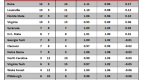
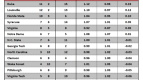
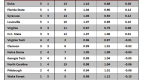
Now, on to the polls, where UNC was a unanimous #1 in the AP Poll for the first time EVER (nope, not even 1991 UNLV, 1992 Duke or 2007 Florida), and also unanimous in the Coach’s Poll.  No pressure or anything…  FYI – UNC has been preseason #1 six times in its history (incl. this year) – the results of those seasons are: 1982 (Natl. Champs), 1984 (S16), 1987 (E8), 1994 (R32), 2008 (F4) – all that’s missing is a first-round loss or a title game loss.

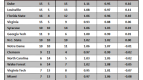
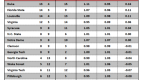
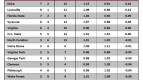
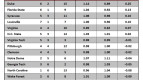
Here are the polls.

We plan on doing some broader-based analytics of preseason polls in a general sense next week, but for now, here are a few things that we noticed right away.

  • Biggest jumps from AP to Coaches – Georgetown (+4) and Duke (+3)
  • Biggest drops from AP to Coaches – USC (-3) and Wake Forest (-3)
  • Coaches tend to vote by available talent + belief in other coaches’ abilities – what does this say about Tim Floyd and Dino Gaudio in relation to JT3 and Coach K?
  • Overrated – UConn, Duke, Oklahoma, USC
  • Underrated – Wisconsin, Florida, Georgetown, Gonzaga
  • All 25 teams in both polls are duplicates, but it’s interesting that Xavier was #26 in the AP vs. #30 in the Coaches.
  • We’re a little surprised to not see St. Mary’s and Baylor ranked over teams like Villanova and Kansas, but whatever, that’s their poll, not ours.
  • Alabama gets 16 AP votes but a donut in the Coaches – Mark Gottfried, much?  And LSU is getting too much love for simply getting a new coach.
  • Conference Breakdown – Big East (7 + 2 others receiving votes); ACC (4), Big 10 (3), Big 12 (3), Pac-10 (3), SEC (2), CUSA (1), SoCon (1), WCC (1).
Share this story

10.30.08 Fast Breaks

Posted by rtmsf on October 30th, 2008

What are you going as for Halloween this year?  We hear the Kelvin Sampson costumes are boss in Bloomington…

Share this story

Is the 2008-09 Big East the Best Conference Ever?

Posted by rtmsf on October 27th, 2008

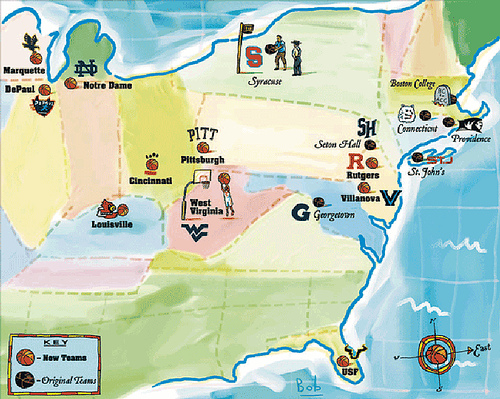
We’re barely over a week into practice and there’s already been some talk that this year’s version of the Big East, with as many as four legitimate F4 contenders (UConn, Pitt, Louisville & Notre Dame) and another five or six legitimate NCAA Tournament teams, could be the deepest, most competitive conference of all-time.  When put in those terms, it’s difficult to disagree… but you know us, we don’t take kindly to sweeping claims of superiority without some measurable statistical basis to back it up.

(photo credit: Bob Eckstein)

The problem is figuring out how to measure such a thing.  Take last year’s Pac-10, for example.  The conference was widely considered by pundits to be the strongest, deepest conference in America.  Computer ratings tended to agree.  At various points during the season, as many as eight of its ten schools were touted as NCAA-caliber teams.  Six ultimately were invited to the NCAA Tournament, but only three of those made it to the Sweet Sixteen, with UCLA the sole conference representative in the Final Four.  Was the Pac-10 stronger than the Big East, who had six teams ranked in the final AP poll last year (vs. three for the Pac-10) and had two more teams invited to the Big Dance but only found itself with a pair standing on the second weekend (and zero in the F4)?  Or was the Pac-10 superior to the Big 12, who had the strongest NCAA showing of the major conferences with a 6-0 first round ultimately resulting in Kansas cutting down the nets?  It’s hard to say, because depending on how you set the parameters, you can make fair and defensible arguments for the strength of multiple conferences in any given year (our friends dealing with the BCS go through this every year). 

Just thinking back to last season, we could break it down this way.  AP poll?  Big East.  NCAA Tournament success?  Big 12.  Computer rankings?  Pac-10.  Pundits?  Take your pick, but leaning Pac-10.    Choosing which source to buy into is based on personal taste, but for the sake of this post, we’ll admit that there is no perfect measurement and focus exclusively on Jeff Sagarin’s computer ratings.  Using his data, we like that we can take stock year over year in relative terms.

(photo credit: sportsbubbler.com) 

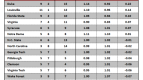
So here’s our question: how good does the Big East need to be from top-to-bottom this year to be statistically considered the top conference of the last decade (Sagarin’s archive only goes back to the 1998-99 season – we requested data back to 1984-85, to no avail)?  For the sake of comparison, here are the top ten conferences by Sagarin’s computer ratings of the last ten years.   

As you can see, the 2008 version of the Big East wasn’t bad from top-to-bottom, but it was still a good distance away from the top ten conferences of the last decade.  The problem is that when people talk about how strong conferences are, are they really talking about team #10 or team #12 or team #16 in the cellar?  Of course not – they’re really talking about the NCAA-caliber teams, i.e., the top half of the conference.  So how does this list change if we only consider the top half of the major conferences of the last ten years (also represented graphically)?

It’s interesting to imagine if the Big East were still an eight-team conference like the old days, as last year’s top half alone would have rated the league as the second-best conference of the last decade (2004 ACC at 87.31 would still be #1).  As it stands, though, the Big East’s mammoth size probably ensures that from a statistical standpoint (Law of Large Numbers, much?), it will never be able to have enough great teams to overcome what some of the smaller conferences have been able to do.

Nothing is conclusive here, but we feel safe in saying that the 2008-09 Big East is unlikely to rise to the top of either of these lists, but it wouldn’t shock us if the conference ended up in the top ten (esp. the top-half list).  Notwithstanding where the conference Sagarin ratings finish, there shouldn’t be any question using the eyes and ears test that the Big East will be the most competitive and interesting conference in America this season.

Share this story

2008 NBA Draft Musings

Posted by rtmsf on June 27th, 2008

Thanks to N-Bug’s liveblog of the NBA Draft last night, we felt like we were almost in the building sniffing David Stern’s manscent and Darrell Arthur’s ire.  What’s the record for lowest pick of someone in the Green Room?  The best we can muster is Rashard Lewis at #32 ten years ago.  Anyone got a lower pick left stewing in the Green Room all night?

Unfounded Rumors of a Kidney Problem Sunk Arthur’s Stock (photo credit: AP)

Darrell Arthur’s Kidney.  The story of last night’s draft, of course, was the unsubstantiated rumor of a serious undisclosed kidney problem that arose during Darrell Arthur’s medical tests.  Luke Winn details the report much better than we can here, but suffice it to say that it now appears that this kidney issue was a complete red herring, and the Memphis Grizzlies (through two subsequent trades) got an absolute steal at the #27 slot.  Winn suggests that the whispers about Arthur’s health could have cost him in the neighborhood of $1.3M over the course of his rookie contract.  Shouldn’t we just go ahead and put Slim Shady at the top of next year’s ROY contenders (Paul Pierce-style) based upon this slight alone?  He’ll have gobs of additional motivation, that’s for sure. 

One-and-Done Redux.  We’ve written about 1-and-dones until we’re blue in the face, but let’s face it, the Class of 2007 is arguably one of the greatest HS classes of all-time.  Four of the top five picks, seven of the top fourteen, and a record ten of the thirty first-rounders were freshmen.  Throw in the eight sophomores chosen in the first round, and that means 72% of the guaranteed contracts that went to American players were to players with 2 years or less of college experience.  Only five seniors were chosen in the first round, and the first at #12 overall, Jason Thompson from Rider, resulted in a perplexed “who?” from much of the crowd and viewing audience.  Again, there is no question that the NBA rule helped in terms of marketing these players.  Thanks to the Season of the Freshman, every basketball fan in America is now intimately familiar with the games of Derrick Rose, Michael Beasley, OJ Mayo, Kevin Love, and so on.  If they’d all gone pro after high school, we’d have little to no clue what those teams were getting.

Mayo Posing as Stringer Bell (photo credit: SI.com) 

Beautiful Disasters.  Two of the one-and-dones who were bound and determined to stay in the draft no matter what anyone told them were DeAndre Jordan and Bill Walker.  (note: we were happy to see that our feelings of overratedness (see: HoopsAddict podcast at 34:30) with Jordan and Anthony Randolph were corroborated on draft night, although not so much with Russell Westbrook, chosen fourth!)  Both got drafted in the second round (#35 and #47 respectively) but last night had to be severely disappointing to both players, as Jordan was being talked about as a lottery pick earlier this draft season, and Walker last year (before blowing out his knee again).  Does Walker with his former #1 player in his class pedigree and seemingly constant knee injuries remind anyone else of Randy Livingston?  But the prize for biggest clowns of the draft go to USC’s Davon Jefferson and Mississippi State’s Jamont Gordon, both of whom were undrafted last night.  As for Jefferson, this one-and-done prospect declared early, signed with an agent (assuring he couldn’t return to USC), and then proceeded to float his way through the pre-draft camp.  He was a possible second-rounder at that point, but his uninspired effort in Orlando ensured that he would be left on the outside looking in.  Gordon’s situation was even worse, as he completely skipped the pre-draft camp (incredulously assuming he was a first-rounder), also signed with an agent, and otherwise did nothing to show that he was a serious candidate for the draft.  Ok, we get it, you reallyreallyreallyreally want to play in the NBA, and you reallyreallyreallyreally think you’re good enough… but you guys really need to start doing some listening when people who make these decisions (scouts, GMs, draftniks) are telling you otherwise.  Good luck in the D-League, guys.   

Katz discusses some of the other early entry disappointments in last night’s draft. 

Sideshow Bob Was Drafted by the Suns Last Night (photo credit: SI.com)

Conference Call.  A year ago Pac-10 coaches were telling us that they had far and away the most talent in the nation, suggesting that there are as many as a dozen first-round picks on their squads in 2007-08.  Well, it turns out they weren’t that far off, as there were seven first rounders last night, including three of the top five (#3 Mayo, #4 Westbrook, #5 Love, #10 Brook Lopez, #11 Jerryd Bayless, #15 Robin Lopez, #21 Ryan Anderson), and twelve players chosen overall.  Also keep in mind that several other probable first rounders from the Pac-10, such as Darren Collison (UCLA), Chase Budinger (Arizona) and Jeff Pendergraph (Arizona St.) elected to stay in college another year.  The Big 12 was next with nine players chosen, including four first rounders and five (!!) players – tying the 2006 UConn Huskies and 2007 Florida Gators – from the National Champs (#13 Brandon Rush, #27 Darrell Arthur, #34 Mario Chalmers, #52 Darnell Jackson, #56 Sasha Kaun).  Throw in former Jayhawk JR Giddens (#30) and an astonishing six players passed through the KU program en route to this draft.  The SEC had six draft picks, and the Big East and ACC had four each.  The usually-pathetic Big 10 once again finished last among the BCS conferences with only three picks.  See table below.


Not NBA Material.  We reserve this spot to formally bid adieu to some of the notable collegians who have entertained us for the last four years, but whom the NBA has decided are not worthy to play in their league.  Drew Neitzel (Michigan St.), Demarcus Nelson (Duke), David Padgett (Louisville), Josh Duncan (Xavier), and Pat Calathes (St. Joseph’s) are but a few of the names we’ll probably never see again unless they become coaches someday.  The honor of the biggest undrafted name, though, goes to Tennessee star and cancer survivor Chris Lofton, who holds the all-time mark in the SEC for three-pointers, and ranks third in NCAA history on that measure.  If there’s one guy we’d bank on finding his way to an NBA court near you in the next couple of years (even for a cup of coffee), it would probably be this kid.  He stares toughness and grit directly in the eyes before they walk away in shame. 

Share this story

06.09.08 Fast Breaks

Posted by rtmsf on June 9th, 2008

Coming out of another slow weekend on the news front…

  • This NY Times story about Bol Kong, a Sudanese expatriate and college basketball player in British Columbia who has lived in Canada since age 7, shows once again the ridiculous of some of our leaders’ anti-terror measures.
  • Following up on the Orlando Predraft Camp, DraftExpress gives their wrap-up takes here and also takes a really interesting look at some historical tidbits of the predraft measurements (yes, Shaq was always a beast).
  • Chad Ford has his updated draft list – OJ Mayo is movin’ on up (maybe because of Lebron’s agent?)…
  • Gary Parrish writes something about buying a BMW at the NBA Draft… whereas Luke Winn breaks down the top eight fence-sitters as the early entry deadline to return to school approaches on June 16.
  • Echoing what we were wondering about the media’s culpability on the OJ Mayo situation, BruinsNation takes the LA Times to task for completely dropping the ball on what is going on over at USC. Keep up the pressure, fellas.
  • From the what-else-is-new category, South Carolina’s Devan Downey’s assault charges were dropped. Curtis Lowery, the assaulted, must have gotten got to.
  • Longtime Big East commish Mike Tranghese, who wiht Dave Gavitt shepherded the league into the ESPN era in basketball, created a football conference where there previously was none, and is responsible for the current 16-team abomination in hoops, is retiring at the end of the 08-09 school year. The lesser-known but very effective Pac-10 commish, Tom Hansen, will also be retiring next summer.
  • Speaking of the Big East, the World’s Most Famous Arena, Madison Square Garden, wants to once again host NCAA Tournament games beginning in 2012.
Share this story

FIU Still an NBA Breeding Ground

Posted by rtmsf on April 21st, 2008

Spring is in the air, the F4 is well into our rearview mirror and we’re gearing up for nightly visits with Ernie, Chuck and The Jet on Inside the NBA (with occasional stop-ins from Magic, Reggie and several others, of course). This means it’s playoff time in the Association, which also means its time for RTC’s second annual review of the pedigree of the key contributors for all sixteen playoff teams. Yes, second annual. That’s the first time we’ve been able to say that and it feels invigorating.

Where Are All the Auburn Players, Chuck?

As the three of you who were around at the beginning of this blog may recall from last year’s post, we learned that 56% of key contributors on playoff teams went to a BCS conference school, another 18% came from other levels of college basketball, and 26% were foreign and/or never stepped foot on a college campus. We also learned that the historically best schools tend to produce the most contributing pros on playoff teams, as Duke, Kentucky, UConn, UNC and UCLA led the way with the most players last year. But that trend was bucked somewhat when one considers that teeny little Florida International University managed to produce two players who were key contributors to playoff teams, more than such notable programs as Syracuse, Louisville and Indiana.

So what about this year? For ease of analysis, we did what we always do – we created excel tables! Remember, all data only considers what we call key contributors – players who played in at least half of its team’s games and averaged over 10 minutes per game. For the starters data, we used the starting lineups as announced in the first game of each playoff series last weekend (therefore, Gilbert Arenas is not represented, having only played 13 games this year and coming off the bench in the first game of the playoffs). We ended up with 158 key contributors and 80 starters over sixteen teams.

Quick Hits:

  • Roughly the same number of key contributors on this year’s playoff teams (25%) never stepped foot on a college campus as compared to last year (26%). We expect that the foreign cohort will stay roughly the same (15%/16%) or even rise a little in the future, but with the NBA’s new one-and-done rule now in the second year of its implementation, the high school-only crowd (11%/14%) should continue to dwindle in the next five years.
  • Last year Duke, UConn and Kentucky each had six players contributing to playoff teams. This year, only UNC has as many as five contributors, all of whom are starters (R. Wallace, J. Stackhouse, M. Williams, A. Jamison, B. Haywood). There are five other schools with four contributors each, and seven schools with three each. After UNC’s five starters, only Duke (C. Boozer, G. Hill, S. Battier), UConn (R. Allen, C. Butler, R. Hamilton) and Wake Forest (T. Duncan, J. Howard, C. Paul) have as many as three starters in the playoffs this year (although we’d take Wake’s three over anybody else’s).
  • The cream rises, doesn’t it? Of the top 13 schools mentioned with three or more contributors this year, they account for 38 of the last 60 Final Four teams (63%) and 10 of the last 15 national champions (67%).
  • Which school doesn’t belong (again)? Thanks to Raja Bell and Carlos Arroyo, little Florida International once again made its name onto the list among all the heavyweights with two key contributors. FIU has more players contributing in the playoffs than the likes of hoops stalwarts Ohio St. (0), Louisville (0), and Indiana (0).

More Quick Hits:

  • Considering only the 118 players who went to college in some capacity, the six BCS conferences account for 69% of key contributors and 50% of playoff starters. This is a dropoff from last season (76%/77%), which shows some of the variability that goes into comparing different playoff teams in a year-over-year manner – four of the sixteen teams in this year’s NBA playoffs are different.
  • Take a look at the top three conferences above – the ACC, Pac-10 and SEC. They look roughly equivalent when comparing them by number of key contributors (17/15/15), but when you consider them by starters (13/3/8), you see a rift develop. It appears that all three leagues produce a lot of NBA talent (47 players), but the ACC appears the best in producing playoff-caliber starting talent. The SEC is solid at doing so, but the Pac-10 appears to excel in producing backups for good teams. By the same token, the Big East may not have as much NBA talent on good teams this year (only 11), but they tend to be starters (8).
  • The mid-major and low-major D1 conferences account for 29% of key contributors and 27% of starters this year, somewhat above last year’s totals (24%/13%). Speaking of mid-majors, take a look at the Atlantic 10 again – with 8 key contributors and 5 starters, this league arguably outdoes a certain midwestern conference with eleven members. Other than the A10, only the MAC and the Sun Belt are mid-majors with multiple starters in the playoffs this year.
  • Devean George (Augsburg College), Ben Wallace (Virginia Union) and Jamario Moon (Meridian (MS) Community College) represent the three non-D1 players who contribute for playoff teams.

Well, that’s all that jumped out at us in reviewing the key contributor and starter lists. If you see something else we missed, just put it in the comments. And if there’s a calculation you’d like to see, let us know and we can try to figure that out as well.

Share this story

Conference Report Card (Sweet 16 Edition)

Posted by rtmsf on March 26th, 2008

Yes, kiddies, the grades are in from the first two rounds, and it’s obvious that some of you haven’t been doing your homework (ahem, SEC), and others of you are instead choosing to rely on your good looks and history (ahem, ACC).  Still more of you are riding the coattails of your top students (ahem, Pac-10), while some of you have a tendency to perform well early while faltering late (ahem, Big East).  Some of you guys there in the back of the class – the quiet ones – it appears you have been doing a little better than we expected (ahem, Big 10); there may even be top of the class potential here (ahem, Big 12)! 
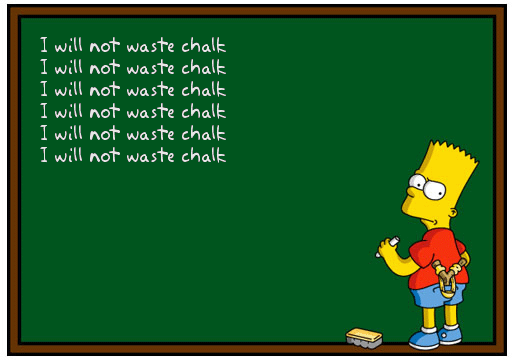
Simpsons Chalkboard

 How do Conferences Stack Up So Far?

Big 12 (6 bids, 2 remaining, 7-4 record)

The Big 12 looked really good in the first round, going 5-1 and only losing one game where Baylor played pretty well.  The second round was only 2-3 for the league, but the twin powers of Kansas and Texas continued to roll, inspiring confidence that one or both will end up playing in the final weekend as well.   Oklahoma and K-State took it on the chin that round, but Texas A&M pushed UCLA to the brink of elimination.  This league has performed very well given its teams’ relatively lower seeding, already exceeding its predicted win total (6.7) with a substantial chance to really destroy it. 

Verdict: this league was probably a little underrated all year in the middle of the pack, but everyone knew what Kansas and Texas were capable of.  Still, a solid to superb performance so far for this league.

Grade:  A-

Big 10 (4 bids, 2 remaining, 5-2 record)

Yes, we know we’ve crushed the Big 10 all season long, and we’re still not convinced this league is worth a damn as a whole.  But we certainly have to give it up for its performance in the first two rounds, going 3-1 in the first round and 2-1 in the second to push half of its bids into the Sweet 16.  Furthermore, both Wisconsin and Michigan St. have looked really solid in doing so.  With an average seed of 5.5, the Big 10 has already achieved its expected win value (4.8 wins), and probably has a fair chance to get at least one more next weekend. 

Verdict:  the Big 10 run probably stops this weekend, but the teams that made the Tourney have performed admirably as a whole (exception: Indiana and their disgraceful collapse this year).   

Grade:  B+ 

Big East (8 bids, 3 remaining, 10-5 record)

The Big East started off tremendously, going a strong 7-1 in the first round, with only UConn dropping out in an upset loss to San Diego.  The second round wasn’t as kind, as Georgetown and Marquette lost close games with Davidson and Stanford, respectively.  As two of the league’s hotter teams, Pitt and Notre Dame’s poor performances in the second round were also surprising.    If it weren’t for the two Cinderellas (WVU and Villanova) taking the place of three protected seeds who were eliminated (Pitt, ND, Georgetown), the Big East could have had a disastrous second round, getting only Louisville into the Sweet 16. 

We can’t shake the feeling that this conference should have had at least five teams in the regionals this year, though, given the relative weakness of most of the other conferences.   Still, its average seed of 5.4 (including four protected seeds of #4 or higher) suggests an expected win total of about 9.6 (1.2 wins per team) through the tournament, and the conference has already achieved that mark with at least two winnable games (WVU and Louisville) upcoming.

Verdict:  major opportunity lost to put 5 or even 6 teams into the Sweet 16 this year.  Three is a nice compromise, especially considering two of them are Cinderellas. 

Grade:  B

Pac-10 (6 bids, 3 remaining, 6-3 record)

The Pac-10 this year is a classic case of haves and have-nots.  First-class teams such as UCLA, Stanford and Wazzu are all still alive (although UCLA and Stanford should feel particularly thankful), while the second-class teams (Arizona, Oregon, USC) were rather easily dismissed in the first round.  Its average seed (5.5) predicts 7.2 wins, and we’re not sure that the league will get there.  Stanford and Wazzu have extremely tough games in the next round against Texas and UNC, respectively, while even UCLA has proven vulnerable and may run into trouble against Xavier or WVU in the regional finals.  No Pac-10 team in the F4 during a year where it was clearly a deep conference with beauceaux NBA talent would be a huge disappointment. 

Verdict:  so far, treading water.  Last second escapes by its big boys don’t exactly inspire confidence for later rounds.  Wazzu has looked the most impressive, but Arizona and Oregon probably didn’t belong in this tournament at all. 

Grade:  B-

ACC (4 bids, 1 remaining, 4-3 record)

Like everyone else, we watched in shock as Billy Packer harangued the NCAA Selection Committee chairman for only including four ACC teams even though the league enjoyed the #1 RPI rating.  Thank God for small favors.    This league stunk up the joint for the most part, as Duke tried to lay its golden egg on Thursday night before getting exposed for good on Saturday, and Clemson manifested its annual collapse into one game against Villanova.  Miami beat St. Mary’s and fought hard against Texas, but they just aren’t that good.  Which leaves UNC, which has been and continues to be the only real class of the league this year.  The ACC’s average seed was 3.8, which means if the league is to reach its expected win value of 6.4, it’s all on UNC’s ample shoulders as the sole survivor.

Verdict:  this league was garbage this year and we all knew it.  UNC may ultimately make the overall record look good, but this wasn’t a good conference and it showed in its performance in the NCAAs.   

Grade:  C

SEC (6 bids, 1 remaining, 4-5 record)

Speaking of terrible leagues, the SEC was a total and complete disaster this year.  Tennessee is the class of the conference, but even they haven’t been playing very well and are an underdog as the only remaining SEC team in the next round.  The SEC went 3-3 in the first round, and 1-2 in the second round, making it the only major conference with a losing record to date.  Georgia, Kentucky, Mississippi St…  they all fought hard, but they simply weren’t very good teams this year.  And what can you say about Vandy other than they’re a complete joke away from Memorial Coliseum?  Ugh. 

Verdict:  it wasn’t as apparent just how bad this league was until we saw the results of the last weekend.  Without Florida and a stronger Kentucky, the SEC remains the seven dwarves.     

Grade:  D

Mid-Majors (14 bids, 3 remaining, 9-11 record)

The NCAA screwed the mid-majors this year by pitting six of them in games against each other in the first round, but the little guys still pushed through and managed to put three teams into the Sweet 16 – Davidson, Xavier and Western Kentucky.  We have to wonder what would have happened had teams such as Drake, Gonzaga and S. Alabama gotten a chance to play one of the big boys.  Only Xavier has a significant shot to continue advancing (v. WVU next).   

Verdict:  definitely better than last year, when only two (Butler and S. Illinois) made it to the regionals.  Would have liked to have seen a little more fight from the likes of St. Mary’s, George Mason, Temple and St. Joseph’s, though.     

Grade:  C

Share this story

West Regional Analysis

Posted by nvr1983 on March 19th, 2008

For our second-to-last regional analysis we look to the West, which has 2 of the most storied programs in the history of the sport as its top two seeds.

Teams
#1 UCLA: The Bruins seem to be the popular pick among analysts. We can clearly see why. They have experience (and no UF to go through this year), an inside game, an outside game, and a solid coach. Ben Howland has done an excellent job getting the Bruins to play defense, which has long been a trademark of Howland’s teams. When you combine that commitment to defense with talented offensive players and the easiest region in the tournament, you have all the makings of a championship team. The big question with UCLA is their health. Pac-10 POY and uber-freshman Kevin Love (lower back spasms) and his sidekick inside Luc Richard Mbah a Moute (sprained ankle) will have to be near 100% for them to cut down the nets in San Antonio. Schedule/Roster.

#2 Duke: Coach K (everyone’s favorite leader who happens to coach basketball) has done an outstanding job utilizing this flawed team’s strengths while managing go cover up its huge hole in the inside most of the season. The Blue Devils have several outstanding perimeter players in Kyle Singler, Greg Paulus, DeMarcus Nelson, and Jon Scheyer, but they have absolutely nothing inside unless they drive by their guy on the perimeter. While ESPN (and the rest of the media) would love to have the Blue Devils advance to the Final 4, we think they rely on the outside shot too much. One of the nights they will have an off night and unless it’s in the first round, their opponents are too talented and the Blue Devils are too weak on the inside for Coach K’s squad to overcome it. Schedule/Roster.

#3 Xavier: When the casual basketball fan first looks at the bracket, this seed might confuse them. However, the Musketeers have been solid all year-long and they are ranked #12 in both polls. The Musketeers play solid defense and have an extremely balanced attack with 6 players averaging between 10 and 11.7 PPG. They should be a formidable team in the West and could give the Blue Devils all they can handle if both teams get that far. Schedule/Roster.

#4 Connecticut: Before you get too excited about Jim Calhoun’s Huskies, you should realize that this isn’t a typical Connecticut team well other than their star point guard having a history of trouble with the law (A.J. Price joins the proud legacy of Khalid El-Amin and Marcus Williams). Price has turned into the leader of the Huskies. If Calhoun’s team is going to uphold his tradition of doing well in the tournament, Price will need help from shot-blocking savant Hasheem Thabeet and the teams 4 other players who average double figures (most notably Jeff Adrien). The Huskies will be hard-pressed to get by the Bruins in the Sweet 16 where their season will likely end, which is assuming they even get by a game San Diego team in the first round. Schedule/Roster.

#5 Drake: After graduating 4 starters from last year’s team, Drake vastly exceeded expectations this year going 28-4. To be honest, before this year we never would have imagine Drake with a seed this high. One interesting note is that Drake starts Klayton Korver (younger brother of former Creighton star Kyle Korver). We thing the Korvers have a Roger Clemens-like obsession with naming their kids. Schedule/Roster.

#6 Purdue: You have to admit that it’s sort of weird watching the Boilermakers without seeing the comb-over. We like Purdue’s talent and hustle, but we think they are a year away from making a run in the tournament. Schedule/Roster.

#7 West Virginia: Bob Huggins has done a good job keeping the program at a respectable level and avoiding the Morgantown cops. They face a tough matchup in the first round against a very athletic Arizona team. Win or lose we are predicting there will be couches on fire in West Virginia after the game. Schedule/Roster.

#8 BYU: The Cougars are led by Lee Cummard and Trent Plaisted along with strong team defense. The Cougars are a legit team that gave UNC a tough game earlier in the year after knocking off Louisville. If they survive their first round game against the Aggies, they will have to play UCLA in a virtual home game for the Bruins. Schedule/Roster.

#9 Texas A&M: After starting the season 15-1, the Aggies have been up and down. The question is which team will show up in Anaheim. Regardless of which teams show up, we can’t see them getting by UCLA in the 2nd round. Schedule/Roster.

#10 Arizona: Kevin O’Neill managed to get the Wildcats into the NCAA tournament despite the unexpected and temporary absence by Arizona legend Lute Olson. While the media has widely killed the Wildcats inclusion in the tournament, we think they are very dangerous primarily because of their strong schedule and NBA-quality talent (Jerryd Bayless and Chase Budinger). Schedule/Roster.

#11 Baylor: One of the feel good stories of the tournament, Scott Drew has turned this program around. Baylor relies on 5 guards and 1 forward for their offense. If you couldn’t tell, they (like Duke) doesn’t have much on the inside. Unfortunately for Baylor, their players aren’t as good as Duke’s. Schedule/Roster.

#12 Western Kentucky: Led by Courtney Lee (20.4 PPG), the Hilltoppers snuck in under the radar most of this year playing in the same conference as South Alabama. Lee will have to have a big game if Western Kentucky is going to knock off Drake in the first round. Schedule/Roster.

#13 San Diego: This is one of the most interesting teams in the tournament. They have shown people that they can beat big name schools this year (wins versus Kentucky and Gonzaga). Despite being the third best team in the West Coast Conference this year, the Toreros will be a stiff challenge for a UConn team that isn’t your typical Jim Calhoun powerhouse. One thing is certain is that the Toreros will not be in awe of the Huskies having played a strong non-conference schedule this year. Schedule/Roster.

#14 Georgia: The media’s darling last week will be put in an interesting situation in the first round. Can you have a SEC team be a legitimate underdog against an Atlantic 10 team in the NCAA tournament? The answer is yes, but can anybody outside of Athens, GA root for them? We say no. We hope Dennis Felton and the Bulldogs enjoyed their ride. Schedule/Roster.

#15 Belmont: Belmont will get a few minutes of fame playing against TV favorite Duke. Unfortunately, they won’t be on TV long as they will likely fall way behind Duke early in the game and their game is paired against the USC-Kansas State game. Schedule/Roster.

#16 Mississippi Valley State: Jerry Rice’s alma mater will last all of about 5-10 minutes against a UCLA team playing in Anaheim, CA. That’s about all you need to know about them. Schedule/Roster.

Share this story

Conference Tourney Mini-Previews: Pac-10

Posted by rtmsf on March 12th, 2008

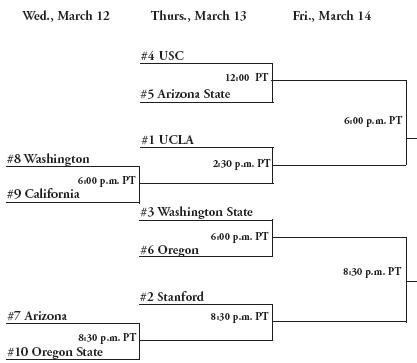
Next Up:  Pac-10 Tournament.  The best conference in America this year should provide us with more entertainment this weekend, as there are arguably nine teams who have enough talent to make a run and win this thing.  One question – why is it in the Staples Center every year?  Memo to the Pac-10 commisioners: there are other NBA arenas in Phoenix, Oakland, Portland and Seattle that would also make great venues for this event. 

Where:  Staples Center, Los Angeles, CA
When:
  Wednesday-Saturday

Pac-10 Tourney Bracket

The Favorite(s).  Vegas Watch doesn’t have the Pac-10 odds up yet, but UCLA is sitting on a 94% chance at a #1 seed in the NCAAs, and they’re playing about ten miles from campus, so we’re going to go ahead and anoint them the easy favorite here.  There is some evidence that Ben Howland teams don’t take this tournament seriously, though, with three first-game losses in his four years at UCLA (although the Bruins did win the Pac-10 Tourney in 2006). 

The Darkhorse.  Take your pick.  The #9 seed, Cal, just played within a blown call and a circus shot of beating UCLA at Pauley last week.  The #7 seed, Arizona, took Kansas to overtime at Lawrence.  The #4 seed, USC, starts two potential lottery picks.  We could go on, but you get the point.  The Pac-10 is loaded, and anybody but the hapless Oregon St. Beavers could make a run at this title. 

Bubble Buster Game.  Arizona v. Stanford in round two.  Arizona has a tremendous computer profile with the #2 strength of schedule in the nation and a #29 RPI according to KenPom, but that 17-13 (8-10) record leaves a lot to be desired.  They’ll beat OSU tonight, but they really need to beat Stanford tomorrow to get to .500 in conference and add one more quality win to their resume.   If the Cardinal mails it in like they did last weekend at USC, Arizona should have a very good chance to win that game.  Oregon (#54 RPI) could also stand to beat Wazzu, but they’re terrible away from home this year, so we don’t expect that to happen.

Cinderella.  USC.  The Trojans have been playing a lot better lately, and if UCLA dumps the first game again, they should have a relatively easy path to the finals on Saturday.  Even if UCLA doesn’t dump that game, they’ve already defeated the Bruins once and played them very tough in another game.  Also, playing in familiar environs doesn’t hurt. 

Games We Want to See.   Basically, all of them.  No other league has as much individual talent or intriguing contrasts in style of play as the Pac-10, so this should be a great tournament.  If it comes down to it, though, we’re hoping for a third matchup between the two LA schools, followed by Stanford getting another shot against the Bruins on Saturday. 

Champion.  We’re not sure Stanford will ever recover from their collapse and screwing in Westwood last week, nor do we have enough faith that the Bruins will put their best foot forward in this event.  Wazzu and ASU are good choices to fill the void, but we really like the way USC has been playing in recent weeks, and we think maybe they’ll put it all together this weekend to make a nice run (only to get overconfident and drop their first round game next week, of course).  So our champion is USC.    

Share this story

ATB: Weekend Wrap

Posted by rtmsf on January 28th, 2008

ATB v.4

Still Unbeaten. #1 Memphis and #2 Kansas remained unbeaten through the weekend, and until both lose a game, this will be the top storyline for the last six weeks of the regular season. This is the latest point in a season that two teams have been undefeated since 2005 (Illinois and Boston College), and there are no signs that either team is slowing down soon. Kansas, the top defensive efficiency team in America, knocked the stuffing out of Nebraska 84-49, but we figure the Big 12 (#2 conf in both KenPom and Sagarin) is too tough as a conference for the Jayhawks to go 16-0 this year (est. KenPom chances of running the table = 38.5%). The real intrigue is whether Memphis (#2 defensive efficiency) will run the table until March, and given that they handled Gonzaga 81-73 in a workmanlike manner on Saturday, we’re feeling like Calipari’s team has a great shot at getting into the postseason unblemished (est. KenPom = 58.3%). He’s no stranger to this kind of pressure, either; remember, in 1996, UMass was 26-0 and #1 deep into February before finally losing a late A10 game to GW. That year also happens to represent Calipari’s sole trip to the F4, before Marcus Camby’s “homemade” bling ultimately led to its vacation by the NCAA. Both teams face somewhat tough opponents on the road Wednesday, however (Memphis @ Houston; Kansas @ Kansas St.), but if they survive those tests we might have a situation similar to 2004 when both Stanford and St. Joseph’s made it to the first week of March unbeaten. It must be noted, though, that neither of those teams made it to the F4.

The Truth About Duke. We were absolutely sure that Duke was going to lose at Maryland yesterday. After watching the first half, where James Gist and Bambale Osby seemingly scored inside at will, we were beyond absolutely convinced that the Terps were on track to beat their second top five opponent in eight days. So what happened? Duke 93, Maryland 84. We’re not going to pile on Gary Williams and his squad for their typical carelessness with the ball, etc., here – that’s what they do, and they were still able to beat UNC in Chapel Hill last weekend. No, we’re going to give all the credit to Duke for their hustle, resilience and clutch play down the stretch last night. It was funny, once Duke got the lead with 12 minutes remaining, we knew in our gut that the game was over. Sure enough, Duke methodically pulled away by getting after the loose balls, battling on the boards despite being undersized, and forcing some of those poor Maryland turnovers. We generally try to avoid the stereotypical “Duke is smarter” BS that you hear the Dick Vitale and Mike Patricks of the world prattle on about, but this year we have to give it to them. Duke plays with a very high basketball IQ, they absolutely get after you defensively, and they simply don’t beat themselves. They just don’t have enough of an inside attack to win another national championship this year, but Duke haters everywhere should prepare themselves for another depressing February and a #1 seed for the Devils in March.

Conference Muddling. The middle of the six BCS conferences are about as wide open as we can remember. In the ACC, after Duke (5-0) and Carolina (4-1), who is the third best team? There are nine other teams with either three or two wins. The Big East is even worse – after Georgetown (6-1) and Louisville (5-2), there are eleven teams with four or three wins, including an absurd six teams with identical 4-3 records. The Big 12, Pac-10 and SEC are a little better, but it’s the Big 10 that is the only league exhibiting true have/have-not behavior. Five teams have five-plus wins, five teams have two or fewer wins, and poor Iowa sits in the middle at 3-5.

Saturday Games. Here are the games that caught our attention on Saturday.

  • Notre Dame 90, #23 Villanova 80. As soon as we think we’ve got ND figured out, they do something like this.
  • Connecticut 68, #8 Indiana 63. We watched this game and still can’t figure this one out.
  • Texas-Pan American 54, NJIT 42. 0-21 now… Circle the home date v. 4-19 Longwood on 2/4 as the breakthrough win.
  • NC State 69, Florida St. 66. This was pretty much a must-win for the Pack.
  • #19 Texas A&M 59, Oklahoma St. 56. OSU continues to struggle in the Big 12 (1-4).
  • Arizona 84, Washington 69. Arizona is starting to look like the third best team in the Pac-10.
  • Louisville 67, St. John’s 57. Terrence Williams with triple 8s (8/8/8 assts).
  • UNLV 72, San Diego St. 69. A key road win in the Mtn West for Vegas.
  • Virginia Tech 81, Boston College 73 (OT). Would the real BC please stand up?
  • Oklahoma 77, Baylor 71. BU’s first B12 loss is at the hands of the surging Sooners (Blake Griffin with 17/15).
  • Purdue 60, #11 Wisconsin 56. Very nice home win for the young Boilers (6-1 in the B10).
  • Mississippi St. 88, #15 Ole Miss 68. MSU is starting to look a little like that team SEC:TGTBTD predicted back in September.
  • Rutgers 77, #17 Pittsburgh 64. Nice egg-laying by Pitt in this one.
  • Kansas St. 82, Iowa St. 57. KSU continues to surge (Beastley 33/15).
  • #18 Drake 58, Northern Iowa 54. The class of the MVC continues to roll…
  • #6 Washington St. 56, #25 Arizona St. Heartbreaking home loss for the Sun Devils.
  • #22 Stanford 82, California 77. Once again, it appears as if Cal is the odd man out in the Pac-10.
  • Richmond 80, #14 Dayton 63. Two straight blowout losses for the Flyers – what happened?
  • #10 Georgetown 58, West Virginia 57. GTown just keeps sneaking by…
  • #3 Tennessee 85, Georgia 69. Lofton came out of his shooting slump with 7 threes.
  • #12 Texas 73, Texas Tech 47. DJ Augustin with 19 as Bob Knight continues to teach mediocrity.
  • #21 Marquette 79, Depaul 71. MU’s backcourt combined for 44 pts.
  • Arkansas 68, LSU 52. The John Brady firing watch continues…
  • USC 95, Oregon 86 (OT). Forget what we said last week about Oregon always winning at home – tough weekend for the Ducks.
  • #7 UCLA 85, Oregon St. 62. What’s laughable is that OSU thought they were in this game at halftime (43-39).

Sunday Games. A few more…

  • #20 Xavier (OH) 77, Massachusetts 65. UMass has really fallen off, but Xavier continues to look fantastic.
  • Florida 86, #16 Vanderbilt 64. Let’s remove Vandy and Ole Miss in favor of Florida and Miss St. in this week’s blogpoll, shall we?
  • #9 Michigan St. 77, Michigan 62. We just can’t get a sense as to how good this MSU team really is (6-1 in the B10, but that one loss was so hideous!).
  • Miami (FL) 75, Clemson 72. Miami really needed this win to avoid a freefall in the conference race.
  • Syracuse 71, Providence 64. Both teams needed this one, Cuse got it.
  • Georgia Tech 92, Virginia 82 (OT). Tremendous ending in regulation in this one, but Virginia has now earned itself last place in the ACC.
Share this story