In Their Words: Life at the Mid-Major Level (part three)

Posted by rtmsf on October 5th, 2010

Andrew Murawa is the RTC correspondent for the Pac-10 and Mountain West Conferences and an occasional contributor.

To read the entire In Their Words series, click here.

Part Three: SCHEDULING

Over the summer, we’ve spent time hearing about some of the next big-name recruits on their way to college basketball: Jared Sullinger and Harrison Barnes, Anthony Davis and Michael Gilchrist. We’ve heard the big-time schools announce their high profile games on their upcoming schedules: Kentucky going to the Maui Invitational and visiting North Carolina, Michigan State hosting Texas and going to Duke. But for the vast majority of Division I programs, they’ve been flying under the radar. There are at present 73 teams that participate in basketball in the six BCS conferences, but there are 347 total programs in Division I. Of those other 274 programs, there are certainly quite a few big-name programs: last year’s national runner-up Butler comes to mind immediately, as does Gonzaga, Memphis and a handful of other schools in conferences like the Atlantic 10 and the Mountain West. But, we were also interested in how the other half (or really, how the other three-quarters) lives, so we spent some time talking to coaches, athletic directors and other people around the country affiliated with some of those other schools — those non-BCS schools, those “mid-majors” — and we asked them about how they recruit, how they create a schedule, how they market their programs, and quite a few other things. Over the next eight weeks, we’ll let them tell you their story, in their own words.

To begin, let me introduce and thank this week’s cast of characters:

  • Tommy Dempsey, Head Coach, Rider – Dempsey enters his fifth season as the head man at Rider, following two seasons as an assistant. He has compiled an 83-75 record over that time and coached NBA lottery pick Jason Thompson during his time there.
  • Murry Bartow, Head Coach, East Tennessee State – Bartow is entering his eighth season as the Buccaneers head coach, after having previously succeeded his father Gene Bartow as the head coach at UAB. Bartow has posted a 118-72 record in his years at ETSU and has racked up 241 total wins and four NCAA appearances in his 13 seasons as a head coach.
  • Larry Williams, Athletic Director, Portland: Williams has been the AD at Portland for six years now following a five year stint as the head of licensing and product marketing at his alma mater Notre Dame. Williams was a two-time All-American offensive lineman with the Irish before starting 44 games in the NFL.
  • Eric Brown, Assistant Coach, Long Beach State – Brown enters his fifth year as an assistant on head coach Dan Monson’s staff, after previously having spent time on coaching staffs at Cal-State Northridge, USC and Iowa State.
  • Chris Caputo, Assistant Coach, George Mason – Caputo is entering his sixth season as an assistant coach for the Patriots after spending the previous three seasons as an administrative assistant and video coordinator under head coach Jim Larranaga.
  • Eric Reveno, Head Coach, Portland – Reveno heads into his fifth season at Portland having turned around a program from a team that was 18-45 in his first two seasons to a team on the rise with a 40-24 record over the last two seasons. Reveno spent his previous nine seasons as an assistant at Stanford, his alma mater where he was a Pac-10 Conference All-Academic Team selection as a senior.

Last time out, the topic was recruiting. This time around, we’ll take a look at how mid-major programs feel about putting together their non-conference schedules and the different strategies that are used in order to line up games. It’s a part of the sport that doesn’t get talked about a whole lot, but it can have a big impact on how the program is perceived, and in turn, can impact a program’s ability to recruit successfully. One theme emerges as pretty unanimous: this is not a part of the job that is a lot of fun.

Tommy Dempsey, Head Coach, Rider: It’s brutal.

Murry Bartow, Head Coach, East Tennessee State: It is tough. Recruiting is number one certainly, but scheduling is not an easy thing.

Larry Williams, Athletic Director, Portland: It really is, next to recruiting, the hardest thing we do in trying to run a basketball program.
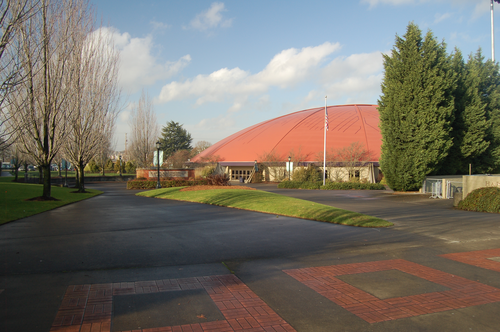
It's Not Easy to Get Teams to Visit Places Like the Chiles Center (Portland)

While just about everyone at the mid-major level agrees that the scheduling process ranges from unpleasant to demoralizing, each program is able to develop their own strategies for filling in a schedule.

Eric Brown, Assistant Coach, Long Beach State: Different programs have different philosophies. You have home-and-home series where a school will come to your place one year and you agree to go to their school the following year. There are guarantee games where the larger school will pay you to go play them or you can pay a smaller school to come play you. And there are tournaments. There are different ways to do it.

To begin with, a school has to decide what it wants from its non-conference slate, and what it can reasonably get. Non-conference schedules are generally filled in with a combination of home-and-home agreements (where each school in the game will agree to play one game against the opposing team on their own home floor and the opponent’s home floor), guarantee games (where one team, usually a bigger school, will pay another team to come to their arena for a game), early season tournaments and other neutral-site events. At Long Beach State, they have shown over the past couple of years that they aren’t afraid to take on a scary-looking schedule. Last season they played the toughest non-conference schedule in the country, with games at Notre Dame, Texas, Kentucky and Duke and neutral site contests against Clemson, West Virginia and UCLA. It doesn’t get any easier for the 49ers this season, with road trips to Washington, Utah State, North Carolina and Arizona State combined with neutral site games against St. Mary’s and Clemson (with two others to be determined by the results of an early-season tournament), and a home game against San Diego State.

Brown: We try to play some home-and-home series with teams in our region and then Coach (Dan) Monson’s philosophy is, given that the way our conference is set up and that every year only one team from our conference is going to the NCAA Tournament, his philosophy is to go play bigger schools so that when we get into our conference or into the NCAA Tournament, we’re not shell-shocked. We’ll play three guarantee games against three bigger schools, three BCS conference schools, where they’ll pay us to go play them. We also like to get into a tournament because they can guarantee three games where they only count as one game against your schedule. Like for instance last year, we were at the 76 Classic in Anaheim and this year we’re going to the Paradise Jam in the Virgin Islands.

Chris Caputo, Assistant Coach, George Mason: As far as Coach (Jim) Larranaga’s philosophy, he looks for balance in the schedule. You’ve got to play a certain amount of home games, a certain amount of road games and some sort of preseason event that is on a neutral site. I think that’s the key thing for us.

Balance in the schedule is the ideal for most mid-majors, mixing a handful of tough games with games against teams that they should beat, and finding a relatively equal number of road games for every home game on the schedule. But it is hard to achieve balance in a schedule when it is very difficult to get high-major and BCS-conference schools to come to your place, especially when you’ve had some previous years of success.

Read the rest of this entry »

RTC Conference Primers: #30 – MEAC

Posted by rtmsf on October 5th, 2010

RTC is still seeking a MEAC correspondent.  If you are interested in covering this league, email us for further information at rushthecourt@yahoo.com.

Predicted Order of Finish

  1. Morgan State (13-3)
  2. South Carolina State (12-4)
  3. Norfolk State (10-6)
  4. Delaware State (9-7)
  5. Bethune-Cookman (9-7)
  6. Maryland-Eastern Shore (8-8)
  7. Hampton (8-8)
  8. Howard (7-9)
  9. North Carolina A&T (6-10)
  10. Coppin State (4-12)
  11. Florida A&M (2-14)
  12. Savannah State (*provisional member — ineligible for postseason and league awards)
  13. North Carolina Central (*provisional member — ineligible for postseason and league awards)

All-Conference Team

  • CJ Reed (G) — Bethune-Cookman
  • Hillary Haley (G) – Maryland-Eastern Shore
  • DeWayne Jackson (F) — Morgan State
  • Kyle O’Quinn (F) — Norfolk State
  • Kevin Thompson (F) — Morgan State

6th Man

  • Darnell Porter (G) — South Carolina State

Impact Newcomer

  • Dominique Sutton (F) — North Carolina Central.  NCCU isn’t yet playing a complete MEAC schedule nor is it eligible for postseason play this year, but the Eagle program is already making noise on the recruiting trail with the announcement of high-major transfer Sutton returning to Durham to suit up for his hometown team.  As of this writing, the 6’5 junior forward who averaged 7.2 PPG and 5.8 RPG as a full-time starter last season for Kansas State was practicing with the team and awaiting an NCAA decision on whether he can play this season.  He moved back east to be closer to his girlfriend and two daughters in Durham, and the wing player who terrorizes the glass on the offensive end (especially given his size) will automatically become one of the best players in the MEAC as soon as he is eligible.

Bozeman is Building Quite the Program in Baltimore

What You Need To Know

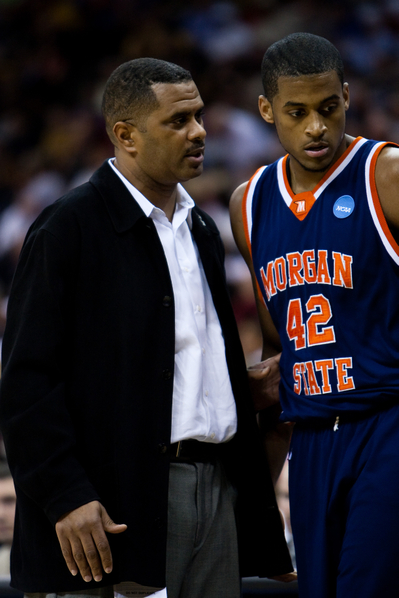
  • All Morgan, All the Time. Todd Bozeman has built a powerhouse in Baltimore to the tune of three straight regular season titles, two straight NCAA bids, and a 46-6 record against MEAC teams the last three seasons.  But like all consistently great programs, Morgan doesn’t re-build anymore as much as re-load.  From Jamar Smith to Marquis Kately to Reggie Holmes to the next generation (Thompson and Jackson), Bozeman continually has high-mid major talent playing for him.  The Bears’ strategy is clear — play a tough non-conference schedule to build up their RPI (beating DePaul, Maryland and Arkansas in recent years), dominate the MEAC, and get back to the NCAA Tournament.  Morgan State earned #15 seeds the last two seasons, but they haven’t yet been matched up against the right team in order to pull off the upset — #2 seeds Oklahoma (2009) and West Virginia (2010) were simply too powerful inside for them to handle.  Could it come this season?

Read the rest of this entry »

Where 2010-11 Happens: Reason #29 Why We Love College Basketball

Posted by rtmsf on October 5th, 2010

Shamelessly cribbing from the clever NBA catch phrase, we here at RTC will present you with the 2010-11 edition of Thirty Reasons We Love College Basketball as we ramp up to the start of the season a little over a month from now.  We’ll be bringing you players to watch for this season and moments to remember from last season, courtesy of the series of dump trucks, wires and effluvia known as YouTube.  If you want to have some fun while killing time, we encourage you to re-visit the entire archive of this feature from the 2008-09 and 2009-10 seasons.  Enjoy.

#29- Where NPOY Happens

Fool Me Once, Shame On You; Fool Me Twice, Shame on Pearl…

Posted by rtmsf on October 5th, 2010

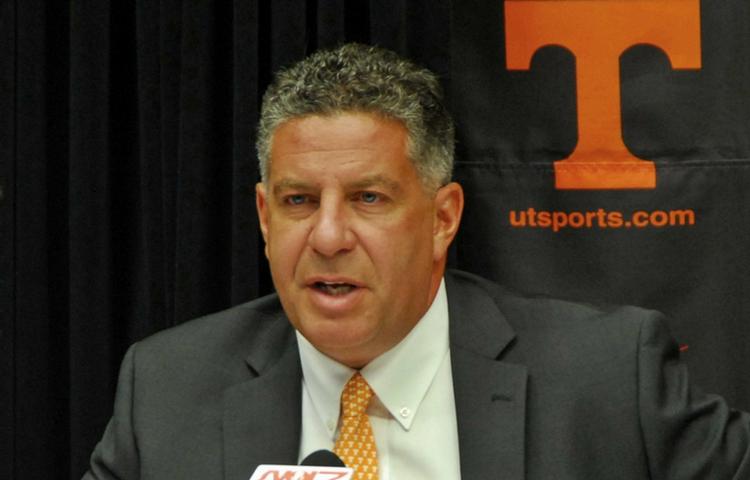
Andy Katz and Dana O’Neil filed a report today that pretty well destroys the argument that Bruce Pearl’s self-described ‘mistake’ in having former Tennessee recruits Josh Selby and Aaron Craft over to his house was a one-time thing.  This new information begs several questions, not least of which is whether this is a modus operandi for Pearl in his usual recruiting strategies, and how many other unknown occurrences might there be?  According to the story:

Kevin Fitzgerald, the compliance director at the University of Wisconsin-Milwaukee — where Pearl previously coached — confirmed that the university self-reported a violation on Aug. 19, 2004, after “Coach Pearl invited a prospect [and his parents] to his daughter’s graduation party hosted at his house, a violation of 13.05.5.3.”

Pearl Seems to Have a Lot of Secrets

The recruit in question was independently confirmed as 6’9 forward Mike Shachtner, a three-time academic all-american who graduated from Wisconsin-Green Bay in 2009.  Schachtner is currently playing ball overseas and refused to comment for Katz/O’Neil’s story, but it’s fairly clear that if UWM reported it to the NCAA and Pearl later confirmed it today, it happened.  We honestly have no idea if the NCAA will use this information to punish Pearl, and by proxy, UT, for violating the same rule twice (and lying about it the second time — at least we have a better understanding as to the ‘why’ now), but it would seem incredibly difficult to believe the NCAA won’t at least take it into consideration when meting out its punishment.

The other thing that we have to wonder about is whether Tennessee brass were aware of this violation when the school hired Pearl back in 2005.  It’d be astonishing if UT as part of its due diligence failed to request all self-reported violations under Pearl’s tenure at UWM, so we have to assume that they did.  Imagine if Pearl somehow was able to keep that information to himself during his original interviews and subsequent contract negotiations?  Given that Pearl’s existing deal with Tennessee is extremely restrictive in terms of  the elements of “cause” for the program to justify firing him, it would seem to our untrained eyes that if he kept secret that rather relevant information, they would have grounds to void the contract for misrepresentation under false pretense.  A lot of speculation here, but an interesting thought nonetheless.

Pearl Needs to Step Up His Housing Game

No matter what comes out of this, we wonder if anyone else sees the obvious problem here?  Put simply, Pearl needs to trick out his casa a little better.  We now know of three players he was recruiting during their junior years who visited his crib, but none of the three ultimately signed with the guy.  Put in the infinity pool, buy a Bose stereo system for the deck, go for the 66-inch 3D television, offer free iPads to the first hundred visitors if that’s what it takes… because whatever he’s doing when he takes recruits to his house for a short visit isn’t working out too well.

Morning Five: 10.05.10 Edition

Posted by rtmsf on October 5th, 2010

  1. Luke Winn wrote a piece on a little-known coach named Bill Fenlon, the head man at Division III DePauw University, and you’re wondering why.  Remember the flap several weeks back when the Harvard Sports Analysis Collective released its findings on 2009-10 game data that showed there is no significant difference in the coaching strategies to foul or not foul on the last possession?  Well, a decade ago Fenlon did a similar analysis where he calculated the mathematical odds of fouling/not fouling while up three points with seven seconds or less left on the clock.  The 2,728 word paper ultimately found that there is a 19% chance of the game going to overtime by playing strong defense; but only a 5% chance of OT if a team fouls correctly in that situation.  This flies in the face of the  conclustion of the HSAC study, but one possible explanation is that, due to data limitations, the HSAC had to consider all possible last possessions (rather than those with seven seconds or less).  Very interesting stuff from Winn, as always.
  2. The Summit League is planning a site visit to Great West member North Dakota during the first two days of November to assess whether the school might be a good future candidate for league expansion.  This would appear to be a good fit, as North Dakota State and South Dakota State are current members of the league and South Dakota is set to join next year.  Nothing like cornering the Dakota collegiate sports market!  All kidding aside, there may be a conference battle brewing over the Fighting Sioux as this push by the Summit appears to be precipitated by the Big Sky’s recent interest in UND as well.
  3. Illinois head coach Bruce Weber spent a full day last week tooling about the nation’s capital as part of his charity work for Coaches vs. Cancer and the American Cancer Society.  The Illini are among the top ten fundraisers in CvC, and Weber has made a point of the maxim to “give something back” now that he has reached the upper echelon of his profession.  Great to see this.
  4. There was a time where we honestly believed that Richmond, once the darlings of the CAA, had made a mistake in joining the higher-up-the-food-chain Atlantic 10.  No longer, and the reason: head coach Chris Mooney.  Under the legendary Dick Tarrant and (later) John Beilein, the Spiders made six NCAA Tournaments from 1984-98 and won games as every seed from the spectrum of #12-#15 — in other words, the seeds that usually don’t win NCAA Tournament games.  It took some time, but it appears that Mooney has gotten UR acclimated to the A-10 and the Spiders should be able to regularly play the role of favorite against some other future giant-killers themselves.
  5. Oregon’s Matthew Knight Arena is set to open to the public in January, but two Ducks — EJ Singler and Jeremy Jacob — took an early tour recently with goofy hardhats in tow.  Place looks sick, especially the part about the highest-resolution big screen used in any arena in America.  Now, if Oregon can just find some decent players in order to put fans in those plush seats and show highlights on that ridiculous jumbotron.

RTC 2010-11 Impact Players – Northeast Region

Posted by rtmsf on October 4th, 2010

It’s October.  The leaves are starting to turn colors.  Halloween candy is already in the stores.  There have been a few nights where you may have even turned on the heat.  Midnight Madness is less than two weeks away and RTC is ready to jump into the 2010-11 Season Preview materials headfirst, like a ten-foot stack of those leaves that you just raked into a giant pile.  For the second October in a row, we’re going to bring you our RTC Impact Players series.  The braintrust has gone back and forth on this throughout September and we’ve finally settled on a group of sixty players throughout ten geographic regions of the country (five starters plus a sixth man) to represent the who and where of players you should be watching this season.  Seriously, if you haven’t seen every one of these players ball at least once by the end of February, then you need to figure out a way to get a better television package.  As always in a subjective analysis such as this, some of our decisions were difficult; many others were quite easy.  What we can say without reservation is that there is great talent in every corner of this nation of ours, and we’ll do our best to excavate it over the next five weeks in this series that will publish on Mondays and Thursdays.  Each time, we’ll also provide a list of some of the near-misses as well as the players we considered in each region, but as always, we welcome you guys, our faithful and very knowledgeable readers, to critique us in the comments.  We begin in the top right corner of the country also known as the Northeast.

Northeast Region (ME, NH, VT, MA, RI, CT, NY)


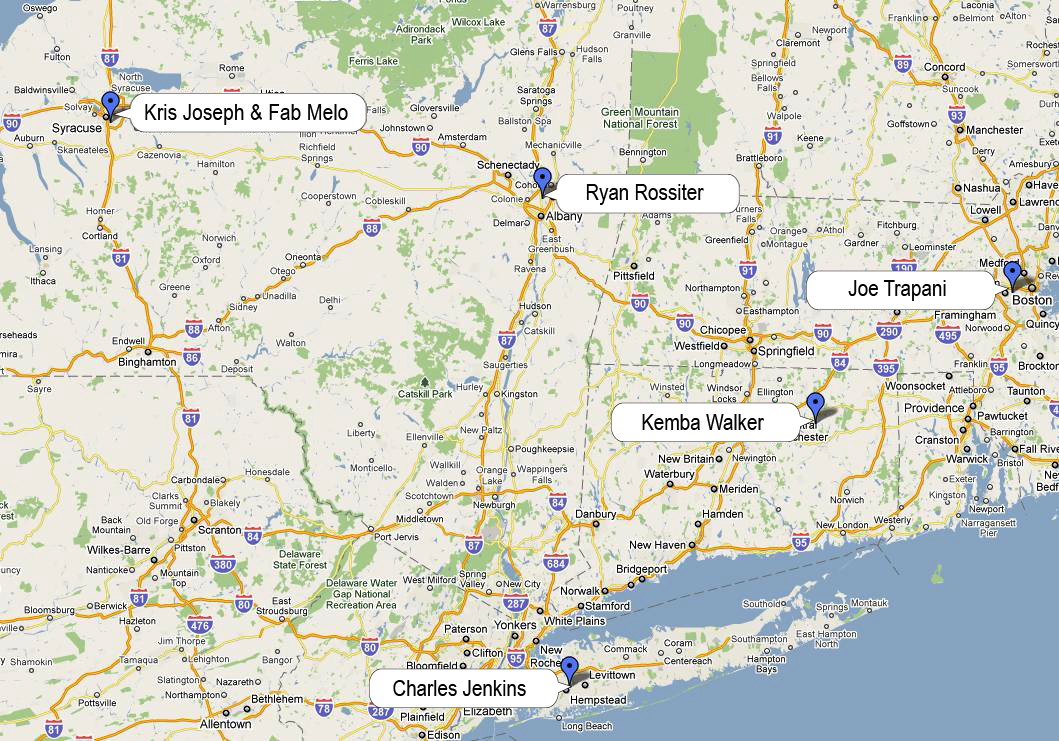
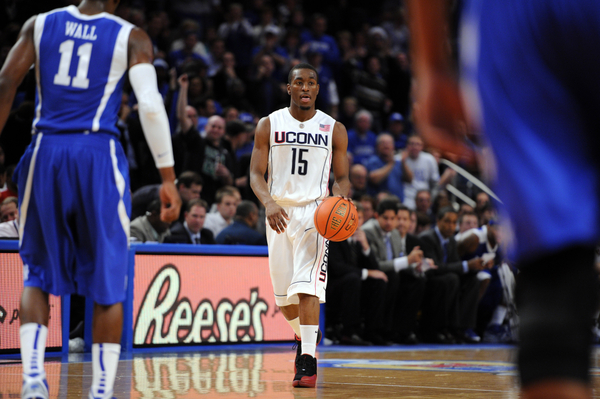
  • Kemba Walker – Jr, G – Connecticut. Kemba Walker is a two-time RTC Impact Player, as he was slotted in this position prior to his sophomore campaign last season.  Many, ourselves included, expected the exceptionally quick point guard to have a breakout 2009-10 season that would result in the NBA Draft come June, but like the entire UConn program last season, things didn’t work out exactly as planned.    He’s your classic Boogie Down point guard in that he carries himself with a swagger borne on the playgrounds of New York City, he looks to attack the goal first and foremost off the bounce, and he often exhibits problems subjugating his own scoring in favor of keeping everyone else involved.  Still, there’s no denying the pure talent Walker possesses — he’s virtually unguardable in the open court with the ball in his hand, and his scoring (14.6 PPG), passing (4.9 APG), defense (2.1 SPG) and outside shooting (34% 3FG, up 7%) have all improved.  One problem area was that he was a turnover machine in the first half of last season (totaling 69 miscues through January 23), but after that the light appeared to click on and he cleaned up his handle the rest of the way with nine games of two TOs or fewer.  Even if he’s learned the value of possession, though, there are still areas of concern.  As the lead guard taking over for AJ Price last season, he presided over the tumultuous team chemistry of a proud program that suffered one of its worst seasons in Jim Calhoun’s tenure at UConn.  Also troubling was that his renowned ability to get to the rim and finish at a high rate fell off considerably (52% as a freshman; 43% last year), suggestive of  greater defensive focus placed on him and a tendency to over-penetrate.  NBA draftniks still like Walker as a late first-rounder when he decides to come out, so if he can finally make the expected leap from a very good collegiate point guard to a great one, expect to see him standing tall with David Stern on the stage at MSG next June (he is also on track to graduate in May 2011).

Walker Has a Heavy Load to Carry This Season

  • Charles Jenkins, Sr, G – Hofstra. For the Hofstra Pride, it begins and ends with Jenkins. After getting over some early season injuries last season, Jenkins took over and led his team in scoring in 16 of its last 18 games. He was the only player on the team to average double figures last season (20.6 PPG), and was clearly their go-to player in almost every situation. As a result, he’s earned plenty of accolades, bringing home last season’s CAA Player of the Year award as well as taking home his second straight Haggerty Award (presented to the best player in the New York Metropolitan area) and earning an Associated Press All-American honorable mention. He’s on track to wrap up his career on Long Island as the school’s all-time leading scorer, but he is also currently eighth on the school’s all-time assist list as well, a testament to just how much he does for this team. For a Pride squad that only returns three players that averaged more than two points per game last season (senior center Greg Washington and senior swing Nathaniel Lester are the other two), Jenkins will need to pick right back up where he left off last season when he scored 20 or more in the last nine games. Jenkins will play a ton of minutes (he played 39 or more minutes 18 times last season), take a bunch of shots (only once against a D1 opponent last season did he fail to take more than ten field goal attempts), and he’ll score plenty of points in a variety of ways. While he is an excellent three-point shooter (hitting 41% from deep last year – a nice improvement from his first two seasons), Jenkins is at his best when he puts the ball on the floor and gets into the lane, scoring with a variety of moves, creating easy looks for teammates or, ideally, drawing fouls and getting to the line where he excels as an 80-plus percent shooter. Jenkins has shown an ability over his career to play heavy minutes and carry the load of expectations without wearing down, and he’ll need to do it all one more time for the Pride to compete with teams like Old Dominion, Virginia Commonwealth and George Mason for a CAA title and Jenkins’ first NCAA Tournament bid in an otherwise outstanding college career.

Read the rest of this entry »

RTC Conference Primers: #31 – SWAC

Posted by Brian Goodman on October 4th, 2010

David Ely is an occasional contributor.

Predicted Order of Finish

  1. Jackson State (15-3)
  2. Arkansas-Pine Bluff (13-5)
  3. Alabama State (12-6)
  4. Texas Southern (11-7)
  5. Alabama A&M (9-9)
  6. Prairie View A&M (9-9)
  7. Mississippi Valley State (9-9)
  8. Grambling State (7-11)
  9. Southern (3-15)
  10. Alcorn State (2-16)

All-Conference Team

  • Junior Treasure (G) — Texas Southern
  • Tyrone Hansen (G) — Jackson State
  • Savalance Townsend (G) — Arkansas-Pine Bluff
  • De’Suan Dixon (F) — Jackson State
  • Shannon Behling (F) — Mississippi Valley State

6th Man:

  • Cornelius Hester (G) — Alabama A&M

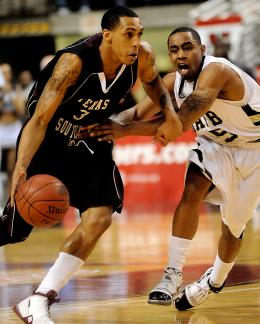
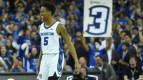
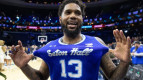
Junior Treasure (with ball) is the best among the bevy of guards featured in the SWAC. (AP/Val Horvath)

Read the rest of this entry »

Where 2010-11 Happens: Reason #30 Why We Love College Basketball

Posted by rtmsf on October 4th, 2010

Shamelessly cribbing from the clever NBA catch phrase, we here at RTC will present you with the 2010-11 edition of Thirty Reasons We Love College Basketball as we ramp up to the start of the season a little over a month from now.  We’ll be bringing you players to watch for this season and moments to remember from last season, courtesy of the series of dump trucks, wires and effluvia known as YouTube.  If you want to have some fun while killing time, we encourage you to re-visit the entire archive of this feature from the 2008-09 and 2009-10 seasons.  Enjoy.

#30- Where You Must Be Joking, Right Happens

Morning Five: 10.04.10 Edition

Posted by rtmsf on October 4th, 2010

  1. It has indeed been a very tough summer for Tom Izzo, what with his players finding various forms of trouble, even more injuries, and his own highly-publicized courtship with the Cleveland Cavaliers.  Fanhouse’s Matt Snyder writes that if there’s anyone in college basketball coaching circles who can handle adversity and still come out the other end with a Final Four-caliber team, it’s Izzo.  You’ll hear no disagreement from us on that count, but much of that will also depend on which two players were allegedly involved in an August sexual assault and whether the university itself will explore its own punishment options (see #2).
  2. A situation involving two unnamed St. Louis players that is eerily similar to the one going on in East Lansing caught our eye near the end of last week.  In that incident that dates from the spring, two SLU players were accused by a woman of sexual assault but the local prosecutor failed to find enough evidence to substantiate her claim and bring charges against them.  Subsequently the university, operating under looser rules of evidence, charged the players based on violations of the student code of conduct, and both could be facing major suspensions or expulsions if their appeals are not rendered favorable.  The conclusion of this situation is definitely worth watching especially in light of the allegations surrounding the above MSU players.
  3. Pete Thamel’s piece on Nurideen Lindsey’s long road from the rough and tumble streets of Philadelphia is a great read — we hope that Lindsey manages to avoid the trouble that he escaped in Philly (two of his brothers were killed) next year when he returns back to the northeast (from Redlands Community College in El Reno, Oklahoma) to play for Steve Lavin at St. John’s (as he probably will).
  4. Dan Hanner of YABB does a great job elucidating the numbers to echo some of the concerns we spoke of last week with respect to Harrison Barnes’ addition to North Carolina.  He’s a phenomenal player and blue-chip recruit, but how does his addition to the team address their primary issues, i.e., spotty guard play (especially at the point) and the losses of Ed Davis, Deon Thompson and the Wear twins?  Short answer — it doesn’t.
  5. Memphis freshman Will Barton on Friday night: “We’re going to win the national championship this year, I’m guaranteeing it!”  Ahh yes, the hubris and folly of youth.  His response to everyone ridiculing him for that comment on Twitter Sunday night: “Everybody making a big fuss abt me guaranteeing we win the national championship but I don’t see what the big deal is. What was I suppose 2 say? We gonna go 2 NCAA tournament. Think big & do it bigger.”  We think we’re going to enjoy covering this guy.

Recruiting Rumor Mill: 10.04.10 Edition

Posted by nvr1983 on October 4th, 2010

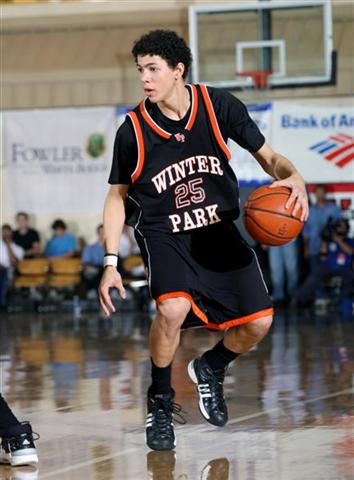
  • The big news of the week was clearly Austin Rivers committing to Duke in a move that was  surprising not so much for the destination as when he made it, especially given his recent announcement about taking official visits to UNC and Kansas. Coming off last season’s title and with the long list of returning rotation players (including Seth Curry finally becoming eligible) the addition of Rivers has many people in Durham thinking “three-peat”. That might be premature, but it is enough to make people in Chapel Hill and many other college campuses across the nation feel nauseous.

    Coming soon to Cameron

  • John Pelphrey‘s job at Arkansas may be in jeopardy, but the future of the Razorback program seems to be in good hands after Pelphrey landed Ky Madden to go along with a recruiting class that already included B.J. Young and could wind up being a top five class by the time the class of 2011 arrives on campus next fall.
  • We know that Tom Crean is working hard at getting Indiana back to being a perennial contender in the Big Ten, but we are beginning to wonder about his methods. A few weeks ago we reported that Crean had secured a commitment from James Blackmon Jr., a rising freshman, from near Bloomington. Now, Crean has secured another class of 2014 commitment, this time from Trey Lyles, one of Blackmon’s AAU teammates. To be fair, we don’t know much about Lyles other than the fact that he is 6’9 coming out of middle school, which we are assuming meant that he towered over his competition. Still we find the trend a little disturbing and have delved into this issue two years ago. It will be interesting to see how many of these commitments are actually offered scholarships when their senior year rolls around three years from now. As for now, here’s a look at Indiana’s future below:
  • We couldn’t actually find any decent footage of Lyles so you will just have to settle for the photo below (he’s the tall one):

    Trey Lyles towers over his middle school competition (Credit: IndyStar.com / Joe Vitti)
  • Speaking of Indiana, it appears that the student body and Facebook nearly got the program into hot water with a Facebook campaign trying to lure Cody Zeller to become a Hoosier. We have seen this type of stunt before, but this time someone listed Victor Oladipo, a freshman on the team, and Austin Etherington, an Indiana recruit, as two of the three administrators purportedly without their knowledge. Read the rest of this entry »