Where 2010-11 Happens: Reason #22 Why We Love College Basketball

Posted by rtmsf on October 13th, 2010

Shamelessly cribbing from the clever NBA catch phrase, we here at RTC will present you with the 2010-11 edition of Thirty Reasons We Love College Basketball as we ramp up to the start of the season a little over a month from now.  We’ll be bringing you players to watch for this season and moments to remember from last season, courtesy of the series of dump trucks, wires and effluvia known as YouTube.  If you want to have some fun while killing time, we encourage you to re-visit the entire archive of this feature from the 2008-09 and 2009-10 seasons.  Enjoy.

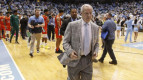
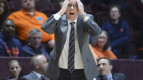
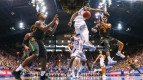
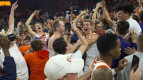
#22– Where Good Teams Find a Way Happens

Morning Five: 10.13.10 Edition

Posted by rtmsf on October 13th, 2010

  1. Things do not continue to improve for Baylor’s Scott Drew.  Last week his star player LaceDarius Dunn’s basketball future was placed in question over allegations of aggravated assault against his girlfriend, while yesterday Jeff Goodman reported that the Bear program is being investigated by the NCAA concerning the recruitment of Hanner Perea, a 6’9 high school junior from Colombia (the country, not the phonetically-same Missouri/South Carolina city) currently playing in Indiana.  The primary issue ONCE AGAIN COMES DOWN TO TEXT MESSAGES!!!!  Baylor assistant coach Mark Morefield was already serving a suspension for text message-related violations, so what did he do during July’s quiet period?  He of course sent multiple text messages to Perea’s high school and AAU coaches, a rather unbelievable example of Pavlovian conditioning if we’ve ever seen one.  Baylor has already self-reported the latest violations, according to Goodman’s report, and we can only hope that Morefield’s SMS package was turned off on the latest cell plan provided by the university.
  2. Are we getting closer to an NCAA decision on the eligibility of Kentucky star recruit Enes Kanter?  Only the NCAA knows that for certain, but NYT’s Pete Thamel writes that the club team in Turkey is standing by its original assertion that it holds bank statements and documentation proving that Kanter was paid well beyond “reasonable and necessary expenses” during his time with the club.  Their representative, Nedim Karakas, says that they promised not to show these documents, however, until the NCAA has made its final decision.  It’s hard to know whom to believe here, but we’re having trouble understanding why the NCAA would care in the least what the Turkish club team does or does not do with its documentation, right?  What are we missing here?
  3. Tuesday was KU Media Day and Bill Self told the assembled scribes that he expects his star recruit Josh Selby’s eligibility decision to come sooner rather than later, and he expects it to be positive.  Selby is currently practicing with the team and will be able to suit up on Friday night at Late Night in the Phog at Allen Fieldhouse.  In our view, Selby is the difference between a Kansas team making another serious run at the Final Four and one that will be pleased with playing into the second weekend.
  4. It’s looking more and more like the Pac-10 will go to a two-division system in both basketball and football starting in 2011-12.  Final decisions have not yet been made, but this report from Andy Katz suggests that Stanford and Cal are the final hurdle for the league to split into six-team North and South divisions — the Washingtons, Oregons and NorCals in the North, and Utah/Colorado, the Arizonas and SoCals in the South.  The hoops schedule would remain at eighteen games, with home-and-homes guaranteed against each team’s rival (UCLA vs. USC, for example) with six other home-and-homes and four one-games rotated on a yearly basis.
  5. This dumbfounded us, but did you know that Arizona State’s Herb Sendek, himself a branch on the incredibly fecund tree of Rick Pitino (yes, we went there), has a total of eight former assistants who are now head coaches in Division 1 basketball, more than any other coach?  The names on the Sendek tree:  Thad Matta (Ohio State), Sean Miller (Arizona), Mark Phelps (Drake), John Groce (Ohio), Larry Hunter (Western Carolina), Ron Hunter (IUPUI), Jim Christian (TCU), Charlie Coles (Miami (OH)).   Louisville’s Rick Pitino and Rice’s Ben Braun currently have six each.

In Their Words: Life at the Mid-Major Level (part four)

Posted by rtmsf on October 12th, 2010

Andrew Murawa is the RTC correspondent for the Pac-10 and Mountain West Conferences and an occasional contributor.

To read the entire In Their Words series, click here.

Part Four: SCHEDULING

Over the summer, we’ve spent time hearing about some of the next big-name recruits on their way to college basketball: Jared Sullinger and Harrison Barnes, Anthony Davis and Michael Gilchrist. We’ve heard the big-time schools announce their high profile games on their upcoming schedules: Kentucky going to the Maui Invitational and visiting North Carolina, Michigan State hosting Texas and going to Duke. But for the vast majority of Division I programs, they’ve been flying under the radar. There are at present 73 teams that participate in basketball in the six BCS conferences, but there are 347 total programs in Division I. Of those other 274 programs, there are certainly quite a few big-name programs: last year’s national runner-up Butler comes to mind immediately, as does Gonzaga, Memphis and a handful of other schools in conferences like the Atlantic 10 and the Mountain West. But, we were also interested in how the other half (or really, how the other three-quarters) lives, so we spent some time talking to coaches, athletic directors and other people around the country affiliated with some of those other schools — those non-BCS schools, those “mid-majors” — and we asked them about how they recruit, how they create a schedule, how they market their programs, and quite a few other things. Over the next eight weeks, we’ll let them tell you their story, in their own words.

To begin, let me introduce and thank this week’s cast of characters:

  • Murry Bartow, Head Coach, East Tennessee State – Bartow is entering his eighth season as the Buccaneers head coach, after having previously succeeded his father Gene Bartow as the head coach at UAB. Bartow has posted a 118-72 record in his years at ETSU and has racked up 241 total wins and four NCAA appearances in his 13 seasons as a head coach.
  • Chris Lang, Writer, Lynchburg News & Advance: Lang has been the beat writer for Liberty University since 2005 after having spent eight years as the Sports Editor at the Arizona Daily Sun in Flagstaff, Arizona.
  • Tommy Dempsey, Head Coach, Rider – Dempsey enters his fifth season as the head man at Rider, following two seasons as an assistant. He has compiled an 83-75 record over that time and coached NBA lottery pick Jason Thompson during his time there.
  • George Ivory, Head Coach, Arkansas-Pine Bluff – Ivory enters his third season in Pine Bluff, where he has turned the Golden Lions into winners. UAPB turned around an 0-11 start last season by finishing 18-5 over their last 23 games, winning UAPB’s first SWAC tournament title in 43 years and advancing to the NCAA tournament before losing to eventual national-champion Duke.
  • Jason James, Head Coach, Tennessee-Martin – James enters his second season as the head coach at UT-Martin following eight seasons as an assistant coach there. His first season was rough, to the tune of 4-25, after he was appointed head coach in the wake of scandal with the previous head coach. But James, the recruiter who brought Lester Hudson to UT-Martin, has plans to begin to turn things around this season.
  • Dale Layer, Head Coach, Liberty – Layer enters his second season at Liberty after having spent a season as an assistant at the university in 2007-08. In between, he spent a year at Marquette and previously he spent seven seasons as the head coach at Colorado State. He has compiled a 118-122 record in his eight seasons as a Division I head coach.
  • Eric Brown, Assistant Coach, Long Beach State – Brown enters his fifth year as an assistant on head coach Dan Monson’s staff, after previously having spent time on coaching staffs at Cal-State Northridge, USC and Iowa State.

Last time we talked about the difficult process that mid-major basketball programs go through when putting together their non-conference schedules, and we’ll get more of that here. When teams have a hard time finding quality opponents who are willing to come to their place, their choices get relegated to playing insanely tough opponents (like with Long Beach State who we discussed last time), playing a ton of road games as is normal for many mid-majors, or watering down the schedule with teams in the bottom reaches of Division I and even lower divisions of basketball. At East Tennessee State, for example, they had trouble finding anybody to come to Johnson City to play them, with Tennessee Tech and NAIA-school Milligan College the only non-conference home games on their schedule.
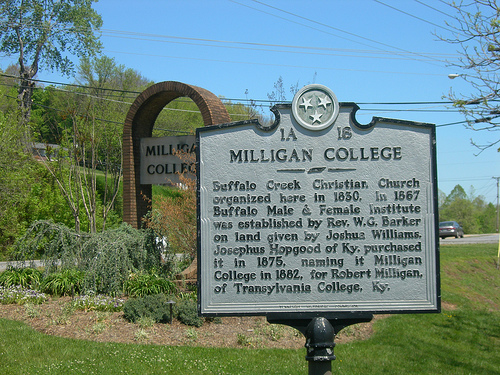
It's Tough When Scheduling NAIA is a Viable Option

Murry Bartow, Head Coach, East Tennessee State: Yup. That’s all we’ve got is two non-conference home games, and one of those in a non-DI school. But we just really struggled, more this year than I ever have as a head coach, to get home-and-homes started. And again, to get games is easy. To go on the road is easy. To get people to be willing to play you at home is not an easy thing.

Chris Lang, Beat Writer for Liberty, Lynchburg News & Advance: Between Liberty and Virginia or Virginia Tech, the biggest difference is scheduling. They can’t get anyone to come here to play men’s basketball games. There’s a reason they play three or four NAIA or non-DI’s a year, because you can’t get anyone. If you’re Coach Layer, you can take money game after money game, but do you want to put your team through that and never get a chance to play at home and get used to your home court? I know for this year’s schedule they have five non-conference home games and only two of them are against Division I teams. They got George Mason and William & Mary to come here, but it is very difficult.

The difficulties in scheduling, and specifically the difficulties in getting home games, lead to problems in terms of winning games. No matter the level of competition, it is hard to win on the road. So, the more road games a team has to play, the more likely losses can begin piling up.

Tommy Dempsey, Head Coach, Rider: The thing is, the leagues at mid-major level are just so balanced, and you can’t get non-conference home games, so in order to have a great year, you have to either dominate your league or win a lot of non-conference road games. And over time, those two things have been very difficult to do. It is hard to dominate a league that is so balanced where every night you can get beat. And non-conference road games are very difficult to win. So it makes having that 22- to 25-win year hard -– you had better be really, really good. And that’s why you see so many of the mid-majors at the end of non-conference play under .500 and so many of them hovering around .500.

And when mid-major programs lose games early, whether they be against big BCS teams on the road or in tournaments 0r even in their home games, it can hurt the confidence of the players, and it can diminish the support of the fans.

Bartow: The fans just have to be realistic. As a head coach, you don’t want to come out in the paper and be negative, you don’t want to come out and say, “hey fans, we’re going to lose a lot of these games,” but fans have to be realistic, fans have to understand the big picture. Again, when I go into these games, I hope we can win them all, I hope we can go undefeated, but I’m also old enough and experienced enough as a head coach to know when you go in and play Kentucky or Ole Miss on the road or Dayton on the road, chances are, you’re going to lose those games. So you just have to understand the big picture of what you’re trying to get done and fans have to be understanding as well.

At Arkansas-Pine Bluff, they worked their way through a rough 0-11 start to last season during a tough non-conference stretch featuring 11 straight road games with eight of them against BCS conference teams, before being able to turn it around and eventually earn their way into the NCAA tournament.
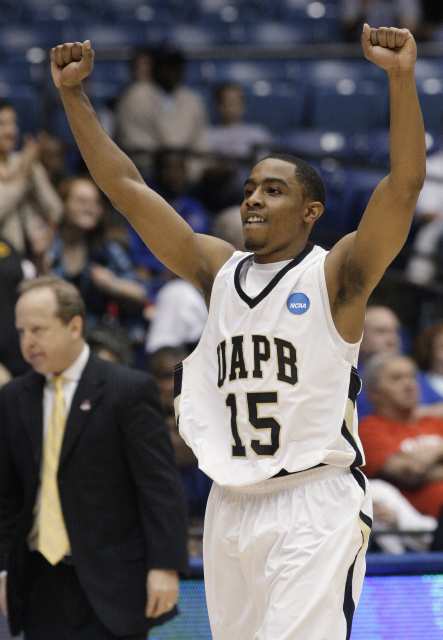
Is the UABP Model of Scheduling the Right One?

George Ivory, Head Coach, Arkansas-Pine Bluff: Our team was good about it. You come to school and you want to play against tough competition. We started 0-11, but our minds were always positive. One thing we did last year that was maybe a little different than the year before was to just focus on our academics and the guys understood that their number one goal when coming to college was to get a degree. So we focused on that and it kept a lot of tension off of the 0-11 stretch for our guys.

The Arkansas-Pine Bluff model, a model similar to Long Beach State’s plan, is to play tough teams to toughen your squad up for conference play and the postseason. And many coaches found at least some validity to such a plan.

Read the rest of this entry »

RTC Conference Primers: #23 – Southland Conference

Posted by Brian Goodman on October 12th, 2010

Russell Burnett is the RTC correspondent for the Southland Conference.

Predicted Order of Finish

East Division

  1. Southeastern Louisiana (13-3)
  2. Nicholls State (10-6)
  3. Lamar (9-7)
  4. Northwestern State (6-10)
  5. McNeese State (5-11)
  6. Central Arkansas (3-13)

West Division

  1. Stephen F. Austin (13-3)
  2. Sam Houston State (12-4)
  3. Texas State (9-7)
  4. UTSA (7-9)
  5. A&M-Corpus Christi (6-10)
  6. Texas-Arlington (3-13)

All-Conference Team (key stats from last season in parentheses)

  • Anatoly Bose (F) – Nicholls State (21.1 ppg, 86 three-pointers made)
  • Gilberto Clavell (F) – Sam Houston (17.1 ppg, 6.4 rpg)
  • A.J. Stewart (C) – Texas State (5.7 PPG in 2008-09 for Kentucky)
  • Anthony Miles (G) – Lamar (14 ppg, 3.0 apg)
  • Devin Gibson (G) – UT-San Antonio (12.5 ppg, 4.4 apg)

Sixth Man

  • Cameron Johnson (F) – Texas State (14.6 ppg, 7.9 rpg)

Impact Newcomer

  • A.J. Stewart (F) – Texas State pulled in several transfers, but none bigger than the 6’9 Kentucky transfer. Having played in 29 games for the Wildcats as a sophomore, Stewart could have a big impact in a league not known for fielding a plethora of big men. Stewart led Arlington Country Day (Fla.) High School to three straight state championships.

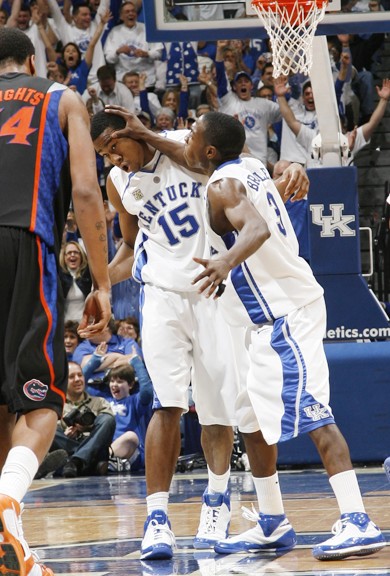
A.J. Stewart, formerly a bench player with Kentucky, hopes to celebrate an expanded role with Texas State. (ukwildcatcountry.com)

What You Need to Know

  • The Southland is a two-division league and made a change during the offseason. Stephen F. Austin moved from the East Division to the West and Lamar jumped from the West to the East.
  • The Merrell Center in Katy is the site of the 2011 Southland Conference Basketball Tournament. This is the third straight year the tournament has been played at a neutral site.
  • The five-year transition process for Central Arkansas‘ athletic department is over. The school has now gained Division I active membership and will be eligible for postseason play in the Southland Conference and at the national level.
  • There was a shake-up on the coaching front of a couple of teams in the offseason. Central Arkansas hired former Razorback great Corliss Williamson as its head coach, while Sam Houston State promoted assistant Jason Hooten after longtime coach Bob Marlin took over the helm at Louisiana-Lafayette.

Predicted Champion

Stephen F. Austin (NCAA seed: #15). The Lumberjacks were beaten in the tournament championship game by rival Sam Houston State last year. Head Coach Danny Kaspar always has his team in contention and this year his team-oriented style of play could reap benefits as the conference is void of any big-time NBA caliber talent. It could be a toss-up with Stephen F. Austin and Sam Houston, but both teams should come out of the West bloodied, but not beaten.

    Read the rest of this entry »
    Where 2010-11 Happens: Reason #23 Why We Love College Basketball

    Posted by rtmsf on October 12th, 2010

    Shamelessly cribbing from the clever NBA catch phrase, we here at RTC will present you with the 2010-11 edition of Thirty Reasons We Love College Basketball as we ramp up to the start of the season a little over a month from now.  We’ll be bringing you players to watch for this season and moments to remember from last season, courtesy of the series of dump trucks, wires and effluvia known as YouTube.  If you want to have some fun while killing time, we encourage you to re-visit the entire archive of this feature from the 2008-09 and 2009-10 seasons.  Enjoy.

    #23- Where Big Ten 6, ACC 5 Happens

    Morning Five: 10.12.10 Edition

    Posted by rtmsf on October 12th, 2010

    1. Unfortunately, there will be more and more of this over the next few weeks as players get back to full practice sessions.  Penn State forward Sasa Borovnjak injured his knee last week during a workout and will have to miss the 2010-11 season due to a torn ACL.  This leaves head coach Ed DeChellis with only two returning players taller than 6’8, a proposition fraught with pitfalls in the rough-and-tumble Big Ten.
    2. Mike DeCourcy brings up the legal doctrine of respondent superior in a roundabout way in describing how the NCAA might evaluate UConn’s (and Jim Calhoun’s) defenses to over $14,000 in impermissible benefits.  His quote: “your program, your problem” rings true, and we wonder if we’re starting to look at a potentially ugly situation where the longtime coach who essentially built the program from scratch doesn’t know when it’s time to move on for the betterment and long-term stability of said program.
    3. Luke Winn ranks his top sixteen backcourts for the upcoming 2010-11 seasonDuke is quite obviously #1, with Michigan State, Georgetown and Villanova coming next in order.  Sounds about right.
    4. Fanhouse does a nice prognosticative (?) roundup of the major preseason publications that are already on the newsstands, finding that there’s (as always) a good deal of groupthink involved.  Not necessarily a bad thing, as last year’s Final Four teams were all ranked in the preseason top eleven of the AP poll, but we’re partial to publications that take a bit of a chance, and Blue Ribbon’s pick of Ohio State to get to the Four behind Jon Diebler, David Lighty, William Buford and Jared Sullinger is what we’re talking about.
    5. This is a good read from Steve Irvine at The Birmingham News about UAB’s Aaron Johnson, the Blazers’ senior leader and point guard who has experienced more than his share of ups and downs growing up in a tough Chicago neighborhood with eleven (!!!) brothers and sisters.  He’s set to graduate next spring and already has his sights on giving back to his family if he’s fortunate enough to find a professional paycheck somewhere down the line.  The 5’9 wisp of a player who averaged 10/5 APG last season will have trouble finding steady work stateside, but with his work ethic and perseverence we figure he’ll find that paycheck eventually.  Stories like this get us every time, so we’re definitely rooting for the kid.

    Wake Forest Releases Tony Woods

    Posted by nvr1983 on October 11th, 2010

    Earlier today Wake Forest announced that they would release beleaguered center Tony Woods from his scholarship at his request so he could pursue other options for the continuation of his college basketball career and education. Woods had already been suspended by Wake Forest after his arrest on charges that he had assaulted the mother of his 8 month-old son.  Woods subsequently pleaded guilty and was given a 60-day suspended sentence, ordered to complete an anger management course, and perform 100 hours of community service. His departure leaves the Demon Deacons even more thin in the frontcourt even if he only averaged 5 points and 3 rebounds per game last year as they had already lost their top player Al-Farouq Aminu to the NBA Draft. Woods has not mentioned which schools he is looking at, but we expect that there will be plenty of schools in the market for a 6’11” post player with two years of ACC experience.

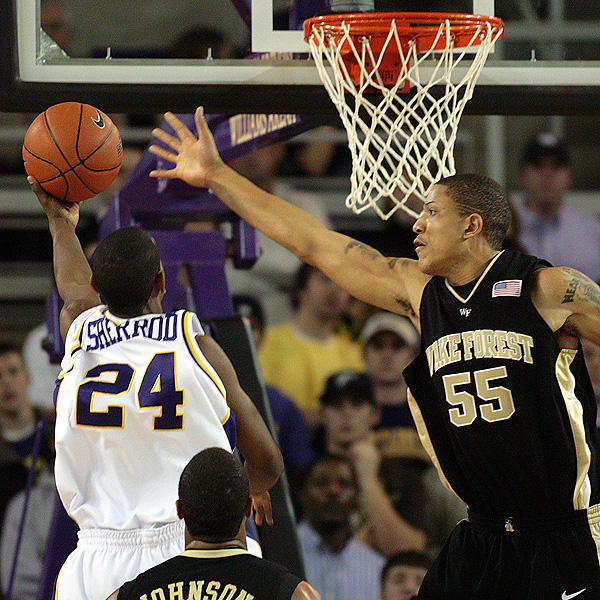
    Where will Tony Woods go next? (Credit: AP/Karl DeBlaker)

    RTC 2010-11 Impact Players – South Atlantic Region

    Posted by rtmsf on October 11th, 2010

    It’s October.  The leaves are starting to turn colors.  Halloween candy is already in the stores.  There have been a few nights where you may have even turned on the heat.  Midnight Madness is imminent and RTC is full bore into the 2010-11 Season Preview materials.  For the second October in a row, we’re bringing you our RTC Impact Players series.  The braintrust has gone back and forth on this and we’ve finally settled on a group of sixty players throughout ten geographic regions of the country (five starters plus a sixth man) to represent the who and where of players you should be watching this season.  Seriously, if you haven’t seen every one of these players ball at least once by the end of February, then you need to figure out a way to get a better television package.  As always in a subjective analysis such as this, some of our decisions were difficult; many others were quite easy.  What we can say without reservation is that there is great talent in every corner of this nation of ours, and we’ll do our best to excavate it over the next five weeks in this series that will publish on Mondays and Thursdays.  Each time, we’ll also provide a list of some of the near-misses as well as the players we considered in each region, but as always, we welcome you guys, our faithful and very knowledgeable readers, to critique us in the comments.

    You can find all previous RTC 2010-11 Impact Players posts here.

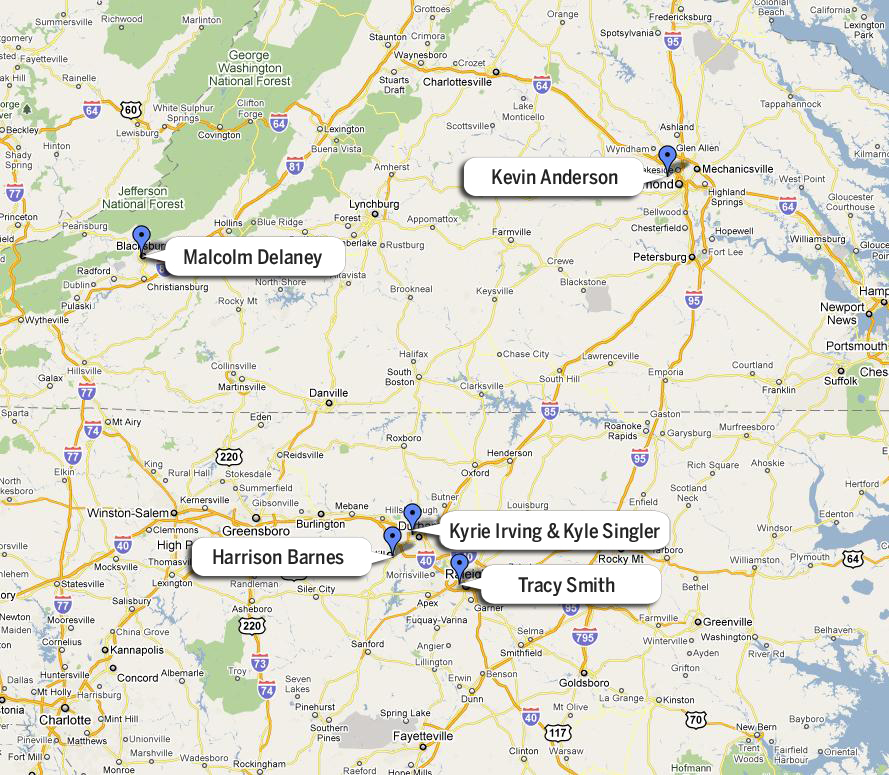
    South Atlantic Region (VA, NC, SC)

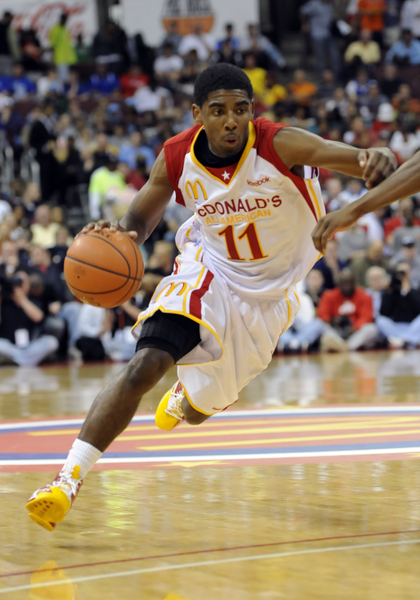
    • Kyrie Irving – Fr, G – Duke. To get an idea how highly touted Kyrie Irving is, consider this: coming off a season where Duke won the national title and only lost one key playmaker on offense, most people believe that the Blue Devils will run their offense through the talented freshman from New Jersey who many recruiting experts rank among the best to ever come from the state that has produced so many great college players, including Duke legends Bobby Hurley and Jason Williams. His development during his sophomore year of high school when ESPN analysts stated that he “would be a top 300 player nationally in the 2010 class” and then said a few months later “could be an impact player in the Atlantic 10 or a high-major role player” to his senior year when he was a top five recruit (#1 according to some services) and those same recruiting analysts were stating “it will be shocking if he isn’t an all-conference performer and possible all-american his freshman season” portends the potential for his development into a truly special player. Irving is one of the rare players who arrives on campus with the ability to both score and distribute the ball to his teammates. After all the talk about how Coach K had lost his edge in recruiting, Irving might be his most dynamic recruit since Williams arrived in Durham back in 1999. Despite only being on campus for a few months, his Blue Devil teammates have probably already begun to appreciate his high basketball IQ, competitiveness, and all-around ability.  Even though many will question his inclusion on our Impact Player team over his more proven teammate Nolan Smith, Irving has demonstrated a skill set in high school that goes beyond what Smith has demonstrated even with three additional years of experience under the watchful eye of Coach K. If Irving is able to make a smooth transition from the high school game to the college game (and having Singler, Smith, Seth Curry, and the Plumlees around should help), his game could make the Blue Devils heavy favorites to repeat when March arrives. With Irving’s game we don’t think it will be question of if but rather when he feels truly comfortable at the college level, so all the Duke haters should be preparing for a long season ahead.

    Kyrie Irving Could be the Best Duke Guard Since J-Will

    • Malcolm Delaney – Sr, G – Virginia Tech. If you’re a Hokies fan and a Twitter fiend, back on May 8th you were probably just a little surprised but very happy that Malcolm Delaney tweeted that he was going to put off NBA riches for a year and return to school for his senior season. Nobody, however, could have been happier than Virginia Tech head coach Seth Greenberg. We shudder to think at the number of blood pressure medications that man must be taking these days, having seemingly been the victim of more last-second heartbreakers and burst NCAA Tournament bubbles (are we allowed to refer to “the bubble” in October?) than any one man should ever be expected to endure, but the return of Delaney to Blacksburg should have lowered Greenberg’s systolic by about 20 points. It probably went back up over the summer, though, after Greenberg lost two of his forwards for the season — specifically presumptive sixth man J.T. Thompson to a left ACL tear and Allan Chaney to viral myocarditis (a condition slightly less than 0.6% of all people in America have) — and has another one in Cadarian Raines recovering from surgery in March to repair a re-fractured left foot. The importance of Delaney, then, and the impact he’ll have in this geographical region become obvious. VT will have to go small, and that means more touches for Malcolm, who we’re guessing will have no problem taking on more responsibility in terms of both scoring and rebounding, and we’re saying this about the top scorer in the ACC last season (20.2 PPG). He played an average of 35.8 MPG last year (4th ACC, 58th nationally) and we wonder if he’ll even sit at all this season. Most importantly, if the Hokies are going to attempt to return to only their second NCAA Tournament in the last 15 years (and what would be Delaney’s first), Greenberg will be counting on emotional and vocal leadership on the floor and in the locker room from Delaney, his RTC South Atlantic Impact Player and ACC Player of the Year candidate.

    Read the rest of this entry »
    RTC Conference Primers: #24 – Ivy League

    Posted by Brian Goodman on October 11th, 2010

    Howard Hochman is the RTC correspondent for the Ivy League.


    Predicted Order of Finish

    Most publications and prognosticators see Princeton as the most obvious choice to win the conference crown. They base this on the fact that the Tigers return all of their key players – a group that took eventual champion Cornell down to the wire in both games last season. However, I believe the collection of sophomores up in Cambridge, even with leader Kyle Casey getting a late start due to injury, will improve dramatically and thus wear the crown come March. And for those of you unfamiliar with Ivy hoops, this is the one conference where being regular season champ really does matter, as there is no postseason conference tournament. Here is how I see it:

    1. Harvard (12-2)
    2. Princeton (11-3)
    3. Penn (10-4)
    4. Cornell (9-5)
    5. Yale (5-9)
    6. Brown (4-10)
    7. Columbia (3-11)
    8. Dartmouth (2-12)

    All-Conference Team (key stats from last season in parentheses)

    • Kyle Casey (F) – Harvard (10.4 PPG, 5.1 RPG)
    • Doug Davis (G) –  Princeton (12.7 PPG)
    • Brandyn Curry (G) – Harvard ( 7.3 PPG,  3.5 APG)
    • Christian Webster (G) –  Harvard (8.8 PPG)
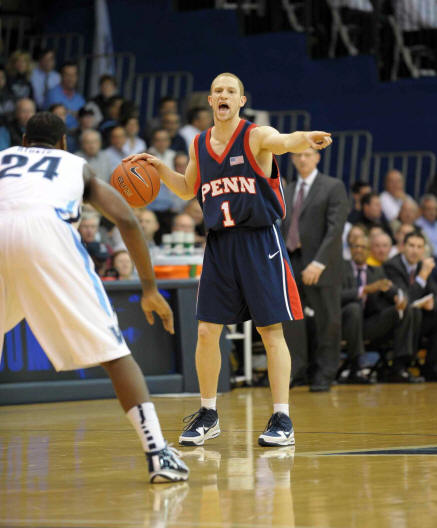
    • Zack Rosen (G) – Penn (17.7 PPG, 4.5 APG)

    6th Man

    • Dan Mavraides (G) – Princeton (11.5 PPG,  4.3 RPG)

    Impact Newcomer

    In a league that does not offer athletic scholarships, ferreting out an incoming freshman that will have the greatest impact is not an easy task. After all, one does not find a lot of McDonald’s All-Americans on any of the Ivy rosters. Given that, we look to Ithaca where Cornell, under new coach Bill Courtney, looks to retool. And the freshman that could make the biggest splash is none other than Dwight Tarwater. This 6’6 forward from Knoxville, Tennessee, comes with some impressive credentials. He was a two-time all-state selection and as a senior was named Division II-A Mr. Basketball. His stats were equally impressive, averaging 23.2 points and 10.1 rebounds per game. He shot 61% from the field and 78% from the free-throw line.

    Honorable mention in this category goes to the entire Yale class of 2014. This quintet is led by home-grown product 6’3 guard Isaiah Salafia, who was a McDonald’s nominee as a senior. Coach James Jones calls him his most athletic recruit with all the tools to become a star.

    Zach Rosen is unquestionably the Ivy League’s best player, but what about his supporting cast? (Penn Athletics)

    What You Need to Know

    • New Men on Campus: There are four new coaches taking the reins this fall. Bill Courtney (Cornell) and Kyle Smith (Columbia) come with respected recruiting resumes. The former built the team at George Mason that went to the Final Four; the latter helped build the St.Mary’s program out west – that’s Australian for hoops, mate – that gave Gonzaga all they could handle the past Few years. Then there is Jerome Allen at Penn who had the interim tag removed over the summer. While this Quaker legend was a popular choice, it remains to be seen if he has enough game experience to lead the red and blue to what their fans believe is their rightful place on top of the standings. And finally, Paul Cormier returns to Dartmouth. He was at the helm when the Big Green competed, but a return to glory is not in the immediate future.

    Read the rest of this entry »
    Where 2010-11 Happens: Reason #24 Why We Love College Basketball

    Posted by rtmsf on October 11th, 2010

    Shamelessly cribbing from the clever NBA catch phrase, we here at RTC will present you with the 2010-11 edition of Thirty Reasons We Love College Basketball as we ramp up to the start of the season a little over a month from now.  We’ll be bringing you players to watch for this season and moments to remember from last season, courtesy of the series of dump trucks, wires and effluvia known as YouTube.  If you want to have some fun while killing time, we encourage you to re-visit the entire archive of this feature from the 2008-09 and 2009-10 seasons.  Enjoy.

    #24- Where Closing a Historic Old Barn Happens