Sunday, March 21 (all CBS)
12:10pm - Syracuse vs. Gonzaga
2:20pm - Ohio State vs Georgia Tech
2:30pm - Maryland vs Michigan State
2:40pm - West Virginia vs Missouri
2:50pm - Wisconsin vs Cornell
4:50pm - Pittsburgh vs Xavier
5:00pm - Purdue vs Texas A&M
5:15pm - Duke vs California
What’s the best part of the college basketball season kicking off? The early-season tournaments, of course! Coaches vs. Cancer, Preseason NIT, Maui Invitational, Anaheim Classic…these are our first opportunities to see the top teams in the nation, gauge exactly how much of a force they could pose this season, evaluate the progression of upperclassmen and estimate the talent level of the much-ballyhooed freshmen. The preseason tournament fields this season are not quite as loaded as in year’s past (you’ll recall last season Maui featured three top-ten teams, although two — Texas and Notre Dame — didn’t pan out), but there’s plenty of potential for memorable early-season classics. Let’s delve into the cream of the crop in November:
2K Sports Classic Benefiting Coaches vs. Cancer(Regionals: November 9-11, NYC: November 19-20)
* RTC Live will be at the California subregional and the NYC semis and finals.
The Field: The powers-that-be decided to avoid any clunker matchups at MSG in mid-November, so they’ve given the four hosts — North Carolina, California, Ohio State and Syracuse – an automatic pass to the semifinals in NYC, so don’t expect any Gardner-Webb Cinderella stories invading the Big Apple. The tournament kicks off Monday and Wednesday at all four sites with Syracuse battling Albany and Robert Morris, California taking on Murray State and Detroit, North Carolina facing Florida International and North Carolina Central and Ohio State matched up against Alcorn State and James Madison. The semifinal games are set for November 19 with Syracuse vs. California as the under-card and North Carolina vs. Ohio State in the nightcap.
The Sleeper: The bigger news, in my opinion, that came out of the Carrier Dome last Wednesday when Syracusestunningly fell to Le Moyne was not the final score, but Wesley Johnson scoring 34 points after a clunker in the exhibition opener. Big-time programs have been stunned in exhibitions before — you’ll recall Michigan State fell to Grand Valley State a few years back and still reached the Sweet 16 — and Syracuse was primarily experimenting with a man-to-man defense that Jim Boeheim could very well scrap for the season. Johnson exploding for 34 points shows he could be the go-to scorer Syracuse needs with Jonny Flynn and Eric Devendorf no longer manning the orange.
The Pick: I’ve been on their bandwagon all off-season so why not? My pick is Ohio State. Dallas Lauderdale keeps saying he should be ready to play. They return all-around performer Evan Turner who has a triple-double in his plans this season. William Buford and Jon Diebler can shoot the lights out and should really extend the Carolina defense. Receive steady point guard play from P.J. Hill and Jerime Simmons and that’s a possible top-ten team. I’ll take the Buckeyes to knock off UNC and California.
CBE Classic(Regionals: November 15-19, Kansas City: November 23-24)
*RTC Live will be at the semis and finals.
The Field: Much like the 2K Sports Classic, the semifinals are already set for Kansas City pitting Texas against Iowa and Pittsburgh against Wichita State. The four regional games are as follows: Texas facing UC Irvine and Western Carolina, Binghamton and Eastern Kentucky visiting Pittsburgh, Fairleigh Dickinson and Arkansas-Monticello taking on Wichita State and Iowa getting Duquesne and UTSA. The one possible upset here (not that it matters) is a high-scoring Duquesne team upsetting Big Ten bottom-feeder Iowa.
The Sleeper: It’s really hard to see Texas not annihilating this field, but could Wichita State knock off Pittsburgh? The Panthers won’t have Gilbert Brown (suspension) and possibly Jermaine Dixon (foot injury) for this one while already attempting to overcome the loss of DeJuan Blair, Levance Fields and Sam Young. Gregg Marshall returns seven of his top ten scorers for a squad that could linger near the top of the MVC led by senior guard Clevin Hannah and junior forward J.T. Turley, who is poised to become a star. If the Shockers can contain freshman forward Dante Taylor, they could live up to their name and pull a shocker in Kansas City.
The Pick: I have Texas ranked #2 in my preseason top-25 and they don’t have much sterling competition in this field. Pittsburgh was depleted by losses and may not even be an NCAA tournament team this season, Wichita State is a few rungs behind Creighton and Northern Iowa in the MVC and Texas’ first round opponent, Iowa, won’t be able to stay on the floor with the supremely talented Longhorns. Rick Barnes’ team is extremely deep at every position and could be a national title contender if Florida transfer Jai Lucas or newly-eligible J’Covan Brown provides stability at point guard. Damion James and Dexter Pittman are constant double-double threats inside.
Dave Zeitlin is the RTC correspondent for the Ivy League and a featured columnist. Click here for all of our 2009-10 Season Preview materials..
Predicted Order of Finish (with projected records in parentheses):
Cornell (14-0)
Princeton (9-5)
Penn (8-6)
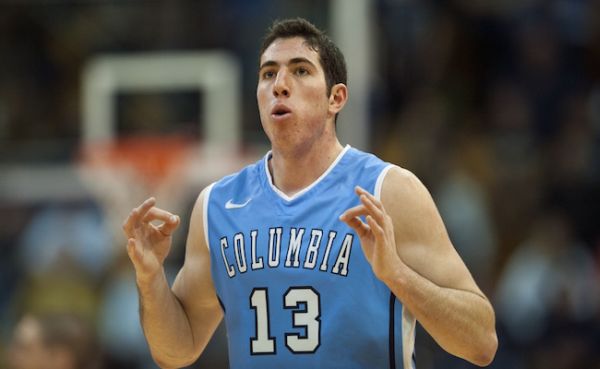
Columbia (7-7)
Harvard (7-7)
Yale (6-8)
Brown (3-11)
Dartmouth (2-12)
All-Conference Team:
Louis Dale (G), Sr., Cornell
Jeremy Lin (G), Sr. Harvard
Ryan Wittman (F), Sr., Cornell
Matt Mullery (F), Sr., Brown
Jeff Foote (C), Sr., Cornell
6th Man. Tyler Bernardini (G), Jr., Penn
Impact Newcomer. Brian Grimes (F), Jr., Columbia
What You Need to Know. Fueled by three star seniors (Louis Dale, Ryan Wittman and Jeff Foote), the reigning Ivy League rookie of the year (Chris Wrobleski), and two major transfers (Mark Coury from Kentucky and Max Groebe from UMass), Cornell is coming into the 2009-10 season as the heavy favorite to capture its third straight conference crown — and perhaps win a game or two in the NCAA tournament. Head coach Steve Donahue’s squad is so deep and talented (they also boast a pair of experienced seniors in Geoff Reeves and Alex Tyler), their toughest challenge may be finding significant minutes for all their heavy hitters. Penn and Princeton, the powerhouses that owned the Ivy League for two decades until Cornell rose to the top, are both trying to return to their glory days but might have to wait a year to make a serious run at the crown. Princeton should improve on its 8-6 league mark with the continued development of point guard Doug Davis, who averaged 12.3 points per game as a rookie last season, and the addition of Ian Hummer, who may be the best freshman in the league. This is an important year for rebuilding Penn, which clears out some mediocre seniors and hands the keys of the team to junior guard Tyler Benardini and sophomore point guard Zack Rosen, the last two Big 5 rookies of the year. Columbia has some nice incoming talent with Brian Grimes, who sat out last season with an ACL tear after transferring in from La Salle, and Loyola Marymount import Max Craig, who is 7 feet tall and not a stiff. Harvard coach Tommy Amaker has one of the best players in the league in Jeremy Lin and a couple of good recent recruiting classes, but the Crimson are coming off a 6-8 conference season. Yale has been a consistent threat under longtime coach James Jones, finishing above .500 for nine straight seasons. The Bulldogs will need to put a lot of the burden on senior guard Alex Zampier (13.2 ppg) to keep that streak alive. Matt Mullery shot a ridiculous 60 percent for Brown last year, but the Bears will be hard-pressed to significantly improve their 3-11 league record. And finally, after an impressive 7-7 Ivy season by its standards, Dartmouth should tumble back down the league standings with the loss of Alex Barnett and his 19.4 points per game.
WYN2K. For possibly the first time in two decades, the Ivy League basketball championship is wide open. The twin towers of power – Penn and Princeton – have held the Ivy title on one of their campuses each of the last twenty seasons. This year, however, Princeton will be recovering from the Joe Scott disaster (18-24 in three seasons culminating in an atrocious 2-12 debacle last year), while Penn will have to deal with the loss of the core group that won three straight Ivy championships. Penn has enough returning to make another run at the title, but don’t expect another 13-1 blitzkrieg through the league, as several other contenders will make their own push toward an NCAA bid.
Predicted Champion.Penn (#14 seed NCAA). Ok, ok, so we’re too chicken to pick anybody else here. We know that on paper there are other Ivy schools with more returning talent (ahem, Yale), but consider the weight of history that Penn has behind it – 5 of the last 6 titles… 7 of the last 9… 10 of the last 15. Every other champion during that time was Princeton. With the Tigers almost completely out of the picture, how can we not make our pick for Penn? Despite losing two-time Ivy POY Ibrahim Jabber and Mark Zoller, the Quakers still have the most depth of any team in the league to go along with the best home court advantage at the Palestra. This year’s squad will be led by Brian Grandieri and Justin Reilly, the latter of whom showed some decent post skills during the NCAA Tourney loss to Texas A&M last year. Sorry, Ivy faithful, but we just can’t pick against Penn until someone outside of Princeton knocks them off their perch.
Others Considered. Should Penn crash and burn this year, Princeton assuredly will not be the beneficiary, which means that a team not used to winning this title will be doing so for the first time in a generation. We like Yale as next in line. The Bulldogs return four starters plus their top two reserves, including prohibitive POY favorite Eric Flato, a do-it-all guard who nailed 71 treys last season. The only reason to lend a skeptic’s glance toward Yale is their maddening tendency to lose “shoulda” games, such as when they dropped a home game vs. Columbia immediately prior to a big showdown at Penn last year, effectively ending their conference title hopes. Cornell is another team that appears ready to make the leap on paper, but simply hasn’t been able to get past the monolith in Philly. Coach Steve Donahue is a tidy 0-14 in his career vs. the Quakers, which doesn’t exactly inspire confidence in winning a conference race that depends solely on regular season performance. Still, the Big Red, who was the last non-P&P team to make the NCAA Tourney back in 1988, has a nice set of guards returning (Ryan Wittman and Louis Dale) along with the 2006 ROY Adam Gore (redshirted last year) and USC transfer Collin Robinson.
Games to Watch. Since the Ivy League decides its champion via round-robin and not a conference tournament, there are a few key home-and-homes to watch this season.
Penn @ Cornell (02.09.08) & Cornell @ Penn (03.07.08)
RPI Booster Games. Last year the Ivy League went 2-17 against BCS schools, but surprisingly, middle-of-the-packers Cornell (defeated Northwestern 64-61) and Brown (defeated Providence 51-41) were the two winners. Penn, on the other hand, was 0-5 – go figure. There are 23 games on the slate this year, and here are a few highlights.
Yale @ Stanford (11.20.07)
Virginia @ Penn (11.23.07)
Brown @ Northwestern (11.24.07)
Michigan @ Harvard (12.01.07)
Cornell @ Syracuse (12.20.07)
Penn @ Miami (FL) (01.02.08)
Odds of Multiple NCAA Bids. Zippo.
Neat-o Stat. With the hiring of Tommy Amaker at Harvard and Sydney Johnson at Princeton, six of the eight head coaches in the Ivy League are now black. Unthinkable a generation ago, this means that the Ivy has a higher percentage of black head honchos (75%) than all but the two historically black D1 conferences, the SWAC and MEAC. We’re not sure if that will necessarily translate to more wins at those two schools, but it can’t be a bad thing in terms of inspring qualified minority hiring practices at other schools (ed. note – we guess that assumes Amaker is qualified. Apologies).
64/65-Team Era. The Ivy League has gone 3-23 (.115) over the era, with all three wins concentrated in the mid- to late-90s. The Ivy tends to receive a favorable seed from the NCAA committee, averaging a #12.8 over this period, which equates to an expected value of around seven wins. This shows that the league has really underperformed compared with its seed over the years. Of the three wins, two belong to Princeton (1996 – #13 Princeton 43, #4 UCLA 41; 1998 – #5 Princeton 69, #12 UNLV 57) and one to Penn (1994 – #11 Penn 90, #6 Nebraska 80). With that said, the league’s NCAA representative (well, Penn, really) has in recent years consistently played its first round opponent tough before ultimately succumbing to superior talent.
2003 – #11 Penn down four to #6 Oklahoma St. with 2:25 remaining
2006 – #15 Penn down one to #2 Texas with 6 mins left
2007 – #14 Penn tied with #3 Texas A&M with 11 minutes to go
Nothing says thrilling like Gus Johnson, so we’ll leave you his call of 1996 Princeton-UCLA.
Final Thought. We actually look at this year’s Ivy a little bit like we look at the Big South. You have one program (Penn and Winthrop, respectively) that has clearly been the class of the league for the better part of a decade going through some serious changes, and you have a smattering of challengers ready to stake their claims on the league crown. The problem in both cases is more psychological than physical – can the likes of Yale and Cornell overcome the mental hurdles that Penn has constructed for them over the years by winning a key game in late February on the road when it really counts? It should make for an interesting winter in our nation’s smartest league, that’s for sure.