Friday, March 19 (all CBS)
12:25pm - Minnesota vs. Xavier
12:30pm - Cornell vs. Temple
2:30pm - Siena vs. Purdue
2:35pm - Missouri vs. Clemson
4:45pm - Utah St vs. Texas A&M
7:10pm - FSU vs. Gonzaga
7:15pm - Ga Tech vs. Okla St
7:20pm - NMSU vs. Michigan St
9:30pm - Syracuse vs. Vermont
9:40pm - Houston vs. Maryland
9:45pm - Louisville vs. California
Big Red Freshness Lasts Right Through It. Cornell 95, Brown 76. It probably took a little longer than the nervous Big Red faithful hoped to put away the pesky Brown Bears tonight, but in the end, it was simply a formality because Cornell players were so narrowly focused on winning their third straight Ivy League title and NCAA bid that there was no way they were going to lose this game tonight. How focused were they? Try a season-best 57% shooting and an utterly ridonkulous 20-30 from deep tonight. At one point during the conflagration of shot-making by the Big Red, they hit eight treys in a row en route to an 11-13 first half. But it was the second half where Cornell exhibited its dominance, using a 14-4 run early to take control of the game and ensure another title coming to Ithaca this season. All five starters reached double figures, but it was lesser-known forward Jon Jaques who took the scoring honors with 20/7 tonight (including six threes). In all, four players had four or more threes, which we figure has to be some kind of a record for versatile and voluminous shooting! Cornell will now wait to see where their NCAA seed lies, but the smart money is on a #12 seed when the brackets are released. Anyone up for a #12/#5 upset this year?
Will 3d Time Be the Charm For Cornell? (Ithaca Journal/G. Ertl)
RTC Live.
Wichita State 73, Missouri State 63. On Quarterfinal Friday in St. Louis, top seed Northern Iowa defeated Drake, Bradley upset Creighton and Illinois State won the nightcap. And in the game you followed here on RTC Live, Wichita State held off Missouri State, 73-63. A close, hard-fought and well-played game, the Shockers were paced by Garrett Stutz, whose play in the paint helped them overcome hot outside shooting of the Bears. Stutz finished with 19 points and 6 rebounds, and converted on back-to-back possessions during a key stretch of the second half to help them pull away. The Shockers advance to play the Redbirds of Illinois State tomorrow afternoon here in St. Louis.
Conference Tourneys. Eight conference tourneys tonight, and a ridiculous thirteen tomorrow. Let’s see what was interesting…
Ohio Valley. The top two teams — Murray State and Morehead State — both advanced tonight to the finals on Saturday. Murray has put together a phenomenal 29-win season, so it’d be a shame to see them miss out on the NCAAs, but Morehead is the only OVC team to have beaten the Racers this year. It was Morehead tonight, though, not Murray, who had the comfortable win in the semis. Should be a great one on Saturday for the auto-bid.
Atlantic Sun. #6 seed Mercer continues to use its home court advantage to knock off higher-seeded teams with tonight’s victory over #2 Jacksonville. #5 East Tennessee State was able to get by #8 Kennesaw State whom had knocked off top seed Belmont last night. So it’ll be Mercer vs. ETSU for the automatic bid. The Bucs will be playing in their third A-Sun title game in four years, and will be looking to win back-t0-back NCAA bids despite having not finished first in the regular season in either of the last two years.
Horizon. In the Horizon second round tonight, #7 Detroit continues to turn heads with another upset win behind Eli Holman’s dub-dub (16/11), while #4 Milwaukee earned the pleasure of facing #1 Butler in the semifinals on Saturday by defeating #5 Cleveland State. The Titans will play #2 Wright State in the other semifinal — neither of the top two seeds have played yet in this tournament, while Detroit has already played two games and Milwaukee one.
Unless half of the Cornell basketball team (the starting half) suffers serious food poisoning or takes a sudden interest in the illicit pleasures of Federal Hill in Providence, we should have our first 2010 NCAA Tournament bid secured at around 9 pm eastern tonight. With the Big Red’s twelfth Ivy League victory likely this evening, Steve Donahue’s team will have clinched their third straight regular season title (and NCAA bid).
Winning is Gorges (CDS/T. Chou)
In filling the vacuum left by the Penn and Princeton boondoggles, it’s been a phenomenal run for the men from Ithaca as Cornell has won 36 Ivy games over the past three seasons. Their Ivy scoring margin of +15.6 this year is the best seen in the league since the great Quaker teams at the turn of the millennium, with eight of Cornell’s eleven wins this year virtually in the books by the first timeout. We’d love to build up some drama about tonight’s game at Brown, but Cornell has defeated the Bears by a 22-point average margin of victory in the last five games between the two teams; given that this is Donahue’s best team of his career, we doubt that tonight’s the night for the 12-19 (5-7) Rhodies to shock the world (ed. note: the previous game this year was closer than the 14-point margin indicates, but we expect Cornell to come strong tonight with their NCAA bid on the line).
The one thing Cornell has so far failed to do in their three-year reign of Ivy dominance is to win a game against an RPI top-50 opponent (0-8), which squares with their 0-2 record in the NCAA Tournament (Ls to Missouri and Stanford). But they’re getting closer, as a closely-contested January game against #1 Kansas in Allen Fieldhouse showed. The core group of seniors — guard Louis Dale, forward Ryan Wittman, and center Jeff Foote — have been playing together for so long (and so well) that they know what each other is going to do before they’ve even thought of it yet. In an era of elite teams led by young players not far removed from the Prom and Selective Service sign-ups, the opportunity is ripe for the Big Red to catch an overconfident, sloppy team in the first round of the Dance this year.
In Zach Hayes’ latest RTC Bracketology, he has Cornell as a #13 seed playing #4 seed Temple, while Joe Lunardi has the Big Red as a #12 seed playing #5 Georgetown. While neither of those particular teams fit the criteria as a young, undisciplined team, there are others in that seed range who do (Tennessee in particular comes to mind). With a little luck in the draw this year, the Ivy League champion could be on the cusp of more than just its third straight trip to the NCAAs but also its first-ever win in Tournament history.
Dave Zeitlin is the RTC correspondent for the Ivy League and a featured columnist. Click here for all of our 2009-10 Season Preview materials..
Predicted Order of Finish (with projected records in parentheses):
Cornell (14-0)
Princeton (9-5)
Penn (8-6)
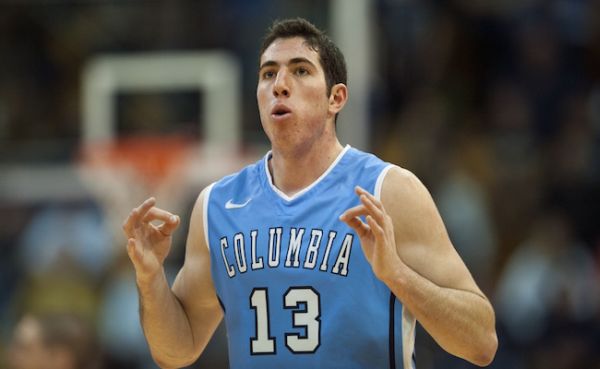
Columbia (7-7)
Harvard (7-7)
Yale (6-8)
Brown (3-11)
Dartmouth (2-12)
All-Conference Team:
Louis Dale (G), Sr., Cornell
Jeremy Lin (G), Sr. Harvard
Ryan Wittman (F), Sr., Cornell
Matt Mullery (F), Sr., Brown
Jeff Foote (C), Sr., Cornell
6th Man. Tyler Bernardini (G), Jr., Penn
Impact Newcomer. Brian Grimes (F), Jr., Columbia
What You Need to Know. Fueled by three star seniors (Louis Dale, Ryan Wittman and Jeff Foote), the reigning Ivy League rookie of the year (Chris Wrobleski), and two major transfers (Mark Coury from Kentucky and Max Groebe from UMass), Cornell is coming into the 2009-10 season as the heavy favorite to capture its third straight conference crown — and perhaps win a game or two in the NCAA tournament. Head coach Steve Donahue’s squad is so deep and talented (they also boast a pair of experienced seniors in Geoff Reeves and Alex Tyler), their toughest challenge may be finding significant minutes for all their heavy hitters. Penn and Princeton, the powerhouses that owned the Ivy League for two decades until Cornell rose to the top, are both trying to return to their glory days but might have to wait a year to make a serious run at the crown. Princeton should improve on its 8-6 league mark with the continued development of point guard Doug Davis, who averaged 12.3 points per game as a rookie last season, and the addition of Ian Hummer, who may be the best freshman in the league. This is an important year for rebuilding Penn, which clears out some mediocre seniors and hands the keys of the team to junior guard Tyler Benardini and sophomore point guard Zack Rosen, the last two Big 5 rookies of the year. Columbia has some nice incoming talent with Brian Grimes, who sat out last season with an ACL tear after transferring in from La Salle, and Loyola Marymount import Max Craig, who is 7 feet tall and not a stiff. Harvard coach Tommy Amaker has one of the best players in the league in Jeremy Lin and a couple of good recent recruiting classes, but the Crimson are coming off a 6-8 conference season. Yale has been a consistent threat under longtime coach James Jones, finishing above .500 for nine straight seasons. The Bulldogs will need to put a lot of the burden on senior guard Alex Zampier (13.2 ppg) to keep that streak alive. Matt Mullery shot a ridiculous 60 percent for Brown last year, but the Bears will be hard-pressed to significantly improve their 3-11 league record. And finally, after an impressive 7-7 Ivy season by its standards, Dartmouth should tumble back down the league standings with the loss of Alex Barnett and his 19.4 points per game.
As part of our ongoing quest to provide you with the best college basketball coverage in the nation, we have enlisted the help of some of the finest team-specific bloggers on the planet to help us. With the NCAA Selection Show coming up on March 15th there are still several teams on the proverbial “bubble”. We figured it might be interesting to see what kind of nonpartisan arguments these bloggers could make for their team deserving a spot in the NCAA tournament. We welcome any discussion of their arguments and praise or criticism of their reasoning in the comment section. If your team is on the “bubble” and you would like to submit something, please contact us at rushthecourt@gmail.com.
Right now, the Providence Friars deserve an at-large bid for the NCAA tournament. The big reason? 10 conference wins (possibly 11 if they can knock off Villanova on the road Thursday night) in arguably the “Greatest Conference in the History of the Universe” (or something like that). While it’s true the Friars have a few warts in their computer numbers, it can be argued that they have no bad losses. Providence has done a great job beating all the teams it should have, and have also picked up a few signature wins along the way.
Technically One Bad Loss
The one loss that is going to be consistently brought up come Selection Sunday is the Friars’ first game of the season against Northeastern. However, there is a perfectly cromulent reason for this loss. First off, this was the debut of the new Providence coach Keno Davis, who was bringing an entirely new system to a veteran team who mostly played 3 years under former coach Tim Welsh. Things obviously took some time to gel, and I have no doubt in my mind that PC would defeat Northeastern soundly if they came back to THE DUNK today. Another huge turnaround from how this team performed against Northeastern and early on in the season is a healthy Sharaud Curry.
Rust be Gone
Point guard Sharaud Curry missed all of last season due to a broken foot. In most of the non-conference schedule this year, Curry was clearly not himself. His quickness wasn’t quite there, and he had several poor shooting nights (averaged only 8 PPG shooting shot 30% including 1/8 FG and 2 points versus Northeastern). However in Big East conference play, Curry has arguably been Providence’s MVP. In 17 conference games, Curry is averaging 13.9 PPG, ranks #1 in FT% (87%), #2 in three-point FG% (44%), and #3 in assist/turnover ratio (2.5). A healthy Sharaud Curry clearly makes a difference on this team, which is why the early season non-conference losses should not be so heavily weighted.
The 10 Wins
For most of the Big East season, everyone was quick to point out how Providence had not beaten anyone of note in the conference. However, nobody seems to want to give them credit for what they have done on the road. The Friars are a solid 4-4 away from home in Big East games (with a chance to get to 5 Ws against Nova), beating Cincinnati, Seton Hall, USF, and Rutgers. While those teams aren’t the powerhouses of the conference, winning on the road in the Big East always tough — just ask Georgetown and Cincinnati after last night. Combine that with an amazing win versus #1 Pittsburgh and another big home win against #15 Syracuse, PC has performed very well in the BBBE (Big Bad Big East). They are guaranteed to finish in the top half of the standings, which should count for something.
The Biggest Blemish: RPI
As of Wednesday morning, Providence has an unsightly 69 RPI ranking. The team is hurt by a few things:
The aforementioned home loss to Northeastern. As BaseLineStats.com recently posted, “Don’t you dare lose at home: The story of the ‘new’ RPI”
Playing fellow Rhode Island teams Bryant (#304 in RPI) and Brown (#314) are just murder on PC’s RPI. Throw in another team over 300 (Dartmouth at #310), and the RPI is going to take a big hit.
I don’t trust RPI as far as I can throw it, but hopefully the committee doesn’t put too much stock into it.
The Friars could also be penalized by their 3-7 record versus teams in the RPI #26-100 (which could surely change in the last two weeks as teams move in and out). Four of those losses came early on during the non-conference schedule. However, a 7-5 record over the last 12 Big East games proves just how different this Friar team is than they were back in November/December.
Ed. Note: Don’t like ESPN’s Prestige Rankings? Provide your comment on how to improve them here. We’re going to take this information and create a new set of rankings based on additional factors (and getting rid of the moronic NIT appearance = NCAA appearance (1 point) criterion).
The first thing I always do when looking at any list is to see the scoring system used and ESPN sure picked an interesting system. I’ll break it into segments with some analysis:
• National title … 25
• Title game loss … 20
• National semifinal loss … 15
• Elite Eight loss … 10
- All four of these things seems pretty reasonable. I think that most fans would value the post-season performances in a way that is pretty close to the points awarded although it seems like a Final 4 berth is considered a great accomplishment for any program (even for the Duke’s and North Carolina’s of the college basketball world). I probably would have bumped up the national title, title game loss, and national semifinal loss by 5 points to give a 10 point spread between an Elite 8 loss and a national semifinal loss.
• Best W-L record in conference’s regular season … 5
• 30-plus wins in a season … 5
• Sweet 16 loss … 5
- This is where the scoring starts to get questionable. I’m assuming the “Best W-L record in conference’s regular season” is lawyerspeak for regular season conference champion. I’m glad that ESPN has decided that the America East regular season champion deserves more points for their in-conference performance than the regular season runner-ups in the ACC, Big East, and SEC. The 5 points for the 30-plus win season may seem like a lot, but in fact they are very rare (Duke leads with 9 such seasons and I could only count/remember 16 programs with any 30-win seasons since the start of the 1984-85 season) so that seems reasonable (as does the 5 points for a Sweet 16 loss although 16 programs achieve are awarded this each season while approximately the same number have achieved it for a 30-win season during the entire era). My main question with the 5-point awards is if they really consider all regular season conference titles the same as it is easier to win certain titles than others. One interesting note about this methodology is that Princeton with 10 regular season Ivy League titles is awarded 50 points with this methodology while Duke with 9 30-plus win seasons is only awarded 45 points for that feat (ignoring the fact that Duke probably won the regular season conference title most of those years).
• Conference tournament title … 3
• AP first-team All-American … 3
• Losing in NCAA second round … 3
- I’m assuming that the Ivy League regular season champ automatically gets the 3 points for winning the conference tournament title since they don’t have a post-season tournament. This only further skews the points Princeton and UPenn get in this system as they receive 80 points and 96 points respectively for their Ivy League titles not to mention the 20-win seasons they racked up beating up on Cornell, Columbia, Harvard, and Brown. I’m perfectly fine with the AP 1st-team AA points as at most 5 teams a year will have a player earn that distinction. Perhaps they should have thrown in a National POY bonus as that player is the one who usually defines the season (Ralph Sampson, Christian Laettner, etc.). Likewise, I’m in agreement with the 3 points for the 2nd round NCAA tournament loss.
• Player in top 10 of NBA draft … 2
• NCAA first-round win as a 12-16 seed … 2
• NIT title … 2
• AP second-team All-American … 2
- This is where it starts to get really weird. Let’s get the reasonable things out of the way first. Top 10 pick worth 2 points? Ok. That seems fine even if the draft was dominated by high schoolers and Euros for a few years. In the future, the one-and-done rule might make this benefit the schools that are willing to take the one-and-done guys even if it does hurt their APR. That is unless those guys start going to Europe. Cinderella getting 2 points for a 1st-round upset? Fine with this too even if we will all remember the Hampton upset of Iowa State more than we will remember the annual 5-12 upsets. AP second-team AA worth 2 points? Ok with this one too even if I think once you start getting to the 2nd team the players selected start getting more dependent on the voters. I’m too lazy to check this out (perhaps rtmsf can do it), but I’d be willing to venture there is a lot more variation in the guys selected to the 2nd team by various publications/groups than there is with the 1st team. Now for the crazy one. . .Awarding 2 points for a NIT title? Maybe in the 1950s, but today winning the NIT only makes you the butt-end of every more successful team in your conference. How many message board threads have trolls made mocking the 65th (now 66th) best team in country? I’ll admit that the NIT champs would probably beat the 13-16 seeds most of the time, but is there really any pride in being the small fish (mediocre team) in the big ponds (power conference) that can beat up on the plankton (13-16 seeds)? I’d give the NIT champ 1 point overall, which leads into the next big problem. . .
• 20-29 wins in a season … 1
• NCAA tournament berth … 1
• Postseason NIT berth … 1
• AP third-team All-American … 1
- Let’s get the easy ones out of the way. No problems here with the 20-29 wins or AP 3rd team AA getting 1 point. I would probably differentiate between 20-24 wins, which is usually a solid season, and 25-29 wins, which usually will put you into consideration for a top 4 seed if you’re from a power conference. Like I said before the further down the AA list you go, the more variation you will have by publication/group, but it’s not really worth arguing about for 1 point. The thing worth arguing about is giving the same number of points for a NCAA tournament berth and a postseason NIT berth. To borrow an over-used phrase from John McEnroe, “You cannot be serious!” While I recognize that in this system the NIT team can only receive 2 points from the tournament (if they win), it is ridiculous to even consider invitations to the 2 tournament similar when the entire selection special is based on camera crews camping out in rooms with bubble teams to see if they got into the NCAA tournament. Maybe the ESPN stat whizzes have access to different camera feeds than I do, but it seems like the players, coaches, and families are happier when they get into the NCAA tournament than when they find out they are going to the NIT (even if Madison Square Garden is a slight upgrade from Boise, Idaho–unless we’re talking NBA). That’s just one man’s interpretation of the reactions I see although I could probably point out that a few years ago Georgetown declined an invitation to the NIT because they wanted to give their players more time to study for exams. . .in March. I wonder why Georgetown didn’t turn down its #2 seed this year. Do John Thompson III and the Georgetown AD not care about those same exams any more?
• NCAA first-round loss to a 12-16 seed … -2
• Losing season … -3
• Ban from NCAA tournament … -3
- No problem with the first two although I wonder if a losing season is counted against you if you have it expunged from your record and throw your long-time assistant coach under the bus? Also, I’d consider a 15-16 season a disappointment while I would consider 8-20 a complete embarrassment, so I’d probably make the less than 10-win season a significantly bigger penalty. I think the NCAA tournament ban should be a much larger penalty in this scoring system as the public (and press) reaction tends to be pretty bad (see below).
This is only a 3 point deduction per year?
>> Minimum 15 seasons in Division I
** Ties are broken by overall winning percentage since the 1984-85 season
- After all the issues with the scoring system, I’m not going to complain about these minor qualifiers and tiebreakers. Both of them seem reasonable and none of the top 50 teams were tied.
Now that we’ve looked the methodology it’s time to pick apart the rankings to see what ESPN got right and what they screwed up. Duke is the run-away winner as even the most ardent Duke-hater (feel free to chime in here rtmsf) would agree that Coach K’s Blue Devils have been the most dominant program of the era even if their results have been underwhelming the past few years. The Blue Devils are followed by the Jayhawks in 2nd and the Tar Heels in 3rd. I’m not going to argue much with this although I would have UNC in 2nd just because I consider Kansas a team that historically underperforms in the tournament (Mario Chalmers’ shot and Danny and the Miracles not withstanding). Now onto the rankings I am utterly confused by.
Overated:
- UNLV: 8th?!? I loved Jerry Tarkanian’s Runnin’ Rebs, who may have been one of the best college teams ever even if they lost/threw the 1991 national semifinal against Duke, but there is no way this has been the 8th most prestigious program in the country over the past 20+ years just like Memphis isn’t in that category. ESPN provides a pretty clear summary of why UNLV shouldn’t be in the top 10: “2 NCAA sanctions; 10 coaches since 1984-85; 0 NCAA tourney wins between 1992 and 2007″. I’d keep UNLV in the top 20, but they definitely don’t belong in the top 10 with that track record.
- Xavier: The Muskeeters (at #17) have a nice Atlantic-10 program, but the fact that they have never made a Final 4 should automatically keep them out of the top 25. The Musketeers are buoyed by 21 combined conference titles, but have not really been a threat in the NCAA tournament having only racked up 15 NCAA tournament wins. Interestingly, Xavier came in 2 spots ahead of Cincinnati even though Xavier is widely considered the red-headed stepchild in the city.
- Temple: I don’t mean to sound like Billy Packer ripping on the mid-majors (sorry, if you’re not a BCS conference, you’re a mid-major in my eyes), but the Owls never made the Final 4 despite five trips there under John Chaney. I think they’re a very good program, but like Xavier, Temple shouldn’t be in the Top 25 without a Final 4 appearance.
- Murray State: Now this is the point where I rip the little guy. I was absolutely stunned when I saw this one. The Racers always seem to be one of those teams you see at the bottom of the bracket and maybe every once in a while you decide to take a chance on them to pull off the huge upset. Unfortunately, if you’re one of those people, you’ve only been rewarded once (1988 against 3rd-seeded NC State). The Racers piled up the points by dominating the Ohio Valley Conference racking up 22 (or 24 depending on your addition skills) conference titles and twelve 20+ win seasons (thanks to an easy conference schedule). Somehow this manages to put them above Villanova, Oklahoma State, Georgia Tech, and Wake Forest.
Underrated:
- Maryland: The Terps (28th) are killed by the fact that they play in the ACC and have lost out on a ton of points thanks to playing in the same conference as Duke and UNC. Although Gary Williams hasn’t had good teams the past few years, the Terps run especially in the Juan Dixon era should have been enough to propel them into the top 20. How does this program only rank 2 spots ahead of Murray State?
- Utah: I don’t think the Utes would be able to move up much higher, but it would be interesting to see how high they would be on this list if they didn’t have the misfortune of playing Kentucky so many times in the 1990s. While the Utes benefited playing in a softer conference than some of their peers on the list (SEC and ACC), the Mountain West has been a fairly strong conference in recent years.
- Florida: I’m not sure how much higher the Gators could move up because of their relative lack of success (not counting Lon Kruger’s 1994 Final 4 run) before Joakim Noah and company ran off back-to-back titles, but it seems like that alone should be enough to crack the top 20 especially when programs like Xavier and Temple are ranked ahead of them despite not making a single Final 4 appearance. The Gators probably belong in the top 15 although that may be more of a recency effect, but it just seems that there recent run puts them at a level that isn’t that much different than UNLV with its run with Larry Johnson.
Other points of interest:
- Coach K’s current program (Duke) ranks #1. The program he left (Army) comes in tied for 298th, or as it is more commonly referred to “DFL”. Hopefully the Duke athletic department program has a better succession plan in place than Army did when Coach K decides to leave the sidelines.
- I found this rather amusing from personal experience. Boston University comes in at 108th ahead of programs such as Clemson, Providence (with a Final 4 appearance), Washington, and USC.
- In the current SportsNation voting, Kentucky is in the lead (good work out of the Sea of Blue crowd) with Duke in 4th even though they have the most #1 votes (something tells me they were left off a lot of ballots or voted 25th). The three teams I singled out as being overrated in the top 25 were moved down quite a bit. Note: I thought they were overrated even before I saw the online voting.
O.J. Mayo worked out with the Miami Heat on Saturday and according to Chad Ford looked very good in dominating Tyrone Brazelton. Apparently, Mayo has become good friends with Dwayne Wade and combined with this workout it increases the possibility that Miami may select Mayo #2 overall, which would mean that the prior unaninimous #1 pick Michael Beasley may fall all the way to Minnesota at #3. Even Kevin McHale can’t screw that up, can he?
Maybe UCLA won’t suck next year. Josh Shipp has decided to return to UCLA for his senior year. Perhaps NBA scouts viewed tapes of his late-season play.
CNNSI.com with a piece on Oregon State’s Craig Robinson (you may have heard of his brother-in-law Barack something) that uses a change metaphor (real original)
In related news, Brown hired Jesse Agel to replace the departed Robinson as head coach.
Cal State Fullerton signed Bob Burton to a 5-year extension thanks to its first NCAA bid in 30 years.
Duquesne lands Morakinyo Williams, a transfer from Kentucky, who (say it with me) “wanted a chance to play more minutes and make a bigger impact”. Williams played 29 minutes last year (that’s a total not per game) and averaged 0.8 PPG and 1.0 RPG (read: impact player)
Since there is a rather important game tonight and I need to get something done today before that, I will keep this relatively short. As you may or may not be aware, there are other things going on in the college basketball universe today and we’re here to keep you informed.
- Oklahoma State preparing to offer Self a job: Somehow Bill Self has managed to keep this brewing media storm to a minimum leading up to tonight’s game. That certainly wasn’t the case the last time a Kansas team was in the Final 4 and its coach was a potential candidate for another position. I don’t think it will play a factor in the game, but it is something to watch for in the early minutes of the game to see if it is affecting the Jayhawks. If you happen to forget, don’t worry because the CBS guys will probably remember you about a hundred times before, during, and after the game tonight.
- Oregon State to name Craig Robinson as its new coach: This normally wouldn’t be particularly noteworthy as Corvallis hasn’t exactly been a college basketball hotbed lately although it has some history with two Final 4 appearances (most recently in 1963) and two well-known NBA players (Gary Payton and A.C. Green). However, since this is an election year and because Robinson is the brother of Michelle Obama (wife of probable Democratic Presidential nominee Barack Obama), we figure this will get a decent amount of ink. Robinson had a mediocre record (30-28) during his 2 seasons at Brown. We think Barack’s brother-in-law is in for a very rude awakening as the Pac-10 is a little different from the Ivy League. Robinson certainly has his work cut out for him as the Beavers went 6-25 last year including earning the distinction of being the first team since 1978 to go winless in Pac-10 competition. Maybe I’m a little weird, but my first thought when I heard the news was if it would be a recruiting violation to use Barack to recruit players.
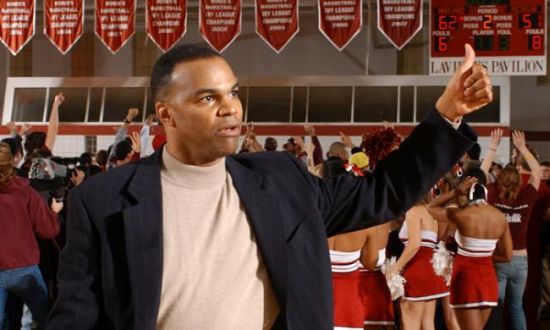
- Xavier’s Lavender arrested: Ok. Let me get this straight. You’re a good college player, who might have a prayer at making a NBA roster if you play well at the Chicago pre-draft camp and things fall right. Getting caught with pot while being “drunk and disorderly” is pretty low on the list, right? Have fun in Europe, Drew. We suspect that his agent will probably try to get him on a team based out of Amsterdam.
- Gordon to declare for NBA Draft: This would have been higher up on the list except everybody knew it from the moment the Hoosiers went out in the first round. We enjoyed seeing Eric in Bloomington for the first two-thirds of the season before he went in the tank much like the rest of his team.
WYN2K. For possibly the first time in two decades, the Ivy League basketball championship is wide open. The twin towers of power – Penn and Princeton – have held the Ivy title on one of their campuses each of the last twenty seasons. This year, however, Princeton will be recovering from the Joe Scott disaster (18-24 in three seasons culminating in an atrocious 2-12 debacle last year), while Penn will have to deal with the loss of the core group that won three straight Ivy championships. Penn has enough returning to make another run at the title, but don’t expect another 13-1 blitzkrieg through the league, as several other contenders will make their own push toward an NCAA bid.
Predicted Champion.Penn (#14 seed NCAA). Ok, ok, so we’re too chicken to pick anybody else here. We know that on paper there are other Ivy schools with more returning talent (ahem, Yale), but consider the weight of history that Penn has behind it – 5 of the last 6 titles… 7 of the last 9… 10 of the last 15. Every other champion during that time was Princeton. With the Tigers almost completely out of the picture, how can we not make our pick for Penn? Despite losing two-time Ivy POY Ibrahim Jabber and Mark Zoller, the Quakers still have the most depth of any team in the league to go along with the best home court advantage at the Palestra. This year’s squad will be led by Brian Grandieri and Justin Reilly, the latter of whom showed some decent post skills during the NCAA Tourney loss to Texas A&M last year. Sorry, Ivy faithful, but we just can’t pick against Penn until someone outside of Princeton knocks them off their perch.
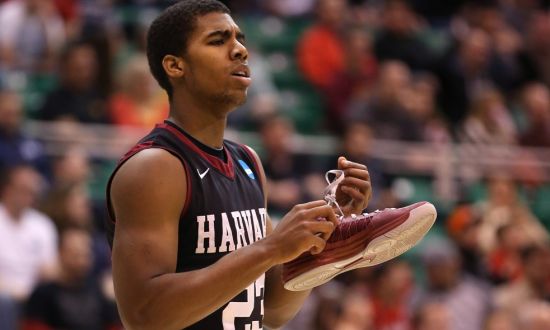


Others Considered. Should Penn crash and burn this year, Princeton assuredly will not be the beneficiary, which means that a team not used to winning this title will be doing so for the first time in a generation. We like Yale as next in line. The Bulldogs return four starters plus their top two reserves, including prohibitive POY favorite Eric Flato, a do-it-all guard who nailed 71 treys last season. The only reason to lend a skeptic’s glance toward Yale is their maddening tendency to lose “shoulda” games, such as when they dropped a home game vs. Columbia immediately prior to a big showdown at Penn last year, effectively ending their conference title hopes. Cornell is another team that appears ready to make the leap on paper, but simply hasn’t been able to get past the monolith in Philly. Coach Steve Donahue is a tidy 0-14 in his career vs. the Quakers, which doesn’t exactly inspire confidence in winning a conference race that depends solely on regular season performance. Still, the Big Red, who was the last non-P&P team to make the NCAA Tourney back in 1988, has a nice set of guards returning (Ryan Wittman and Louis Dale) along with the 2006 ROY Adam Gore (redshirted last year) and USC transfer Collin Robinson.
Games to Watch. Since the Ivy League decides its champion via round-robin and not a conference tournament, there are a few key home-and-homes to watch this season.
Penn @ Cornell (02.09.08) & Cornell @ Penn (03.07.08)
RPI Booster Games. Last year the Ivy League went 2-17 against BCS schools, but surprisingly, middle-of-the-packers Cornell (defeated Northwestern 64-61) and Brown (defeated Providence 51-41) were the two winners. Penn, on the other hand, was 0-5 – go figure. There are 23 games on the slate this year, and here are a few highlights.
Yale @ Stanford (11.20.07)
Virginia @ Penn (11.23.07)
Brown @ Northwestern (11.24.07)
Michigan @ Harvard (12.01.07)
Cornell @ Syracuse (12.20.07)
Penn @ Miami (FL) (01.02.08)
Odds of Multiple NCAA Bids. Zippo.
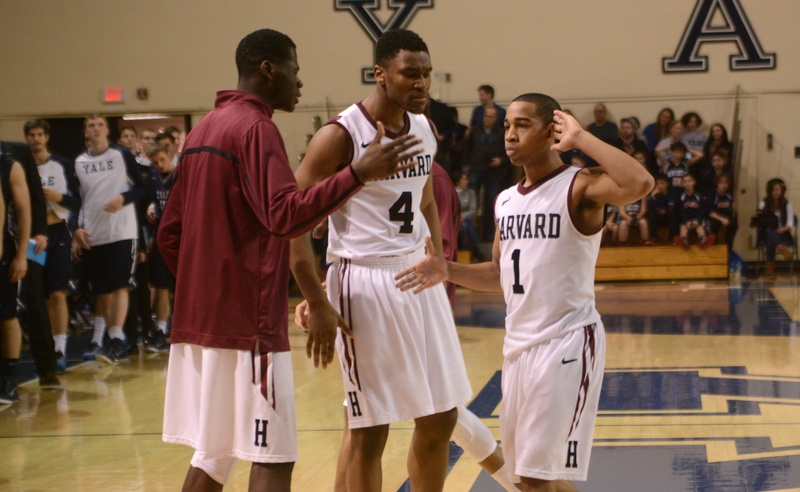
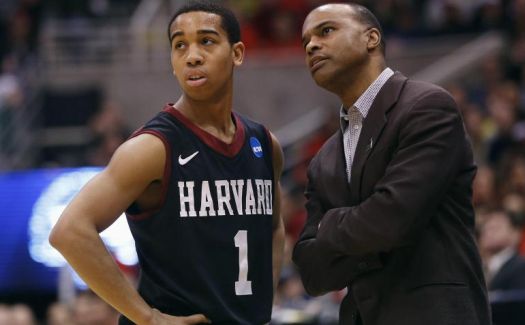
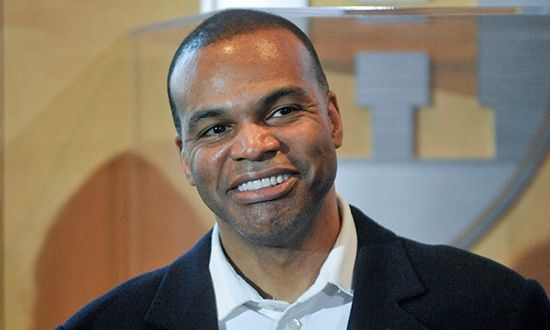
Neat-o Stat. With the hiring of Tommy Amaker at Harvard and Sydney Johnson at Princeton, six of the eight head coaches in the Ivy League are now black. Unthinkable a generation ago, this means that the Ivy has a higher percentage of black head honchos (75%) than all but the two historically black D1 conferences, the SWAC and MEAC. We’re not sure if that will necessarily translate to more wins at those two schools, but it can’t be a bad thing in terms of inspring qualified minority hiring practices at other schools (ed. note – we guess that assumes Amaker is qualified. Apologies).
64/65-Team Era. The Ivy League has gone 3-23 (.115) over the era, with all three wins concentrated in the mid- to late-90s. The Ivy tends to receive a favorable seed from the NCAA committee, averaging a #12.8 over this period, which equates to an expected value of around seven wins. This shows that the league has really underperformed compared with its seed over the years. Of the three wins, two belong to Princeton (1996 – #13 Princeton 43, #4 UCLA 41; 1998 – #5 Princeton 69, #12 UNLV 57) and one to Penn (1994 – #11 Penn 90, #6 Nebraska 80). With that said, the league’s NCAA representative (well, Penn, really) has in recent years consistently played its first round opponent tough before ultimately succumbing to superior talent.
2003 – #11 Penn down four to #6 Oklahoma St. with 2:25 remaining
2006 – #15 Penn down one to #2 Texas with 6 mins left
2007 – #14 Penn tied with #3 Texas A&M with 11 minutes to go
Nothing says thrilling like Gus Johnson, so we’ll leave you his call of 1996 Princeton-UCLA.
Final Thought. We actually look at this year’s Ivy a little bit like we look at the Big South. You have one program (Penn and Winthrop, respectively) that has clearly been the class of the league for the better part of a decade going through some serious changes, and you have a smattering of challengers ready to stake their claims on the league crown. The problem in both cases is more psychological than physical – can the likes of Yale and Cornell overcome the mental hurdles that Penn has constructed for them over the years by winning a key game in late February on the road when it really counts? It should make for an interesting winter in our nation’s smartest league, that’s for sure.