Saturday, March 20 (all CBS)
1:05pm - Villanova vs. St. Mary's
3:20pm - Butler vs. Murray St
3:35pm - Tennessee vs. Ohio
5:40pm - Kansas vs. Northern Iowa
5:45pm - Baylor vs. Old Dominion
5:50pm - New Mexico vs. Washington
8:10pm - Kansas St vs. BYU
8:15pm - Kentucky vs. Wake Forest
 

Morning Five: 01.11.10 Edition

January 11th, 2010

  1. #1 Kansas Goes Down.  Given the circumstances involving Bruce Pearl’s team, a lot will be written about this game in the next 24 hours.  Here are some of the better takes we’ve found.  Mike DeCourcy calls the Tennessee win miraculous, Luke Winn points out (correctly) that Cole Aldrich cannot be a forgotten man in the KU offense, and we over here at RTC had a bit of take on that game as well…
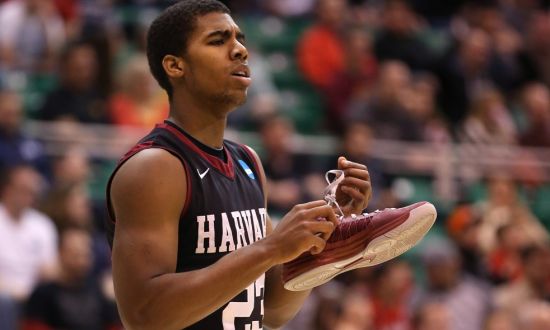
  2. You don’t see this often, and it was hidden in the Friday night news feeds, but Dartmouth head coach Terry Dunn was fired (“forced to resign”) after his entire team mutinied by signing a document stating they refused to play for him anymore.  The players then took the court on Saturday and were run out of the gym by thirty against Harvard.
  3. Injured center Gregory Echinique announced that he is transferring from the Rutgers program, and one possible destination for the talented big man from Venezuela is Tom Crean’s Indiana program.
  4. From last week, CBS/FSN announcer Tim Brando apparently (allegedly?) got into a bizarre email exchange with a Kentucky fan over his comments regarding DeMarcus Cousins’ elbow in the UK-Louisville game.  It doesn’t seem real, but whoever wrote it trashes the SEC and the “limited knowledge” of Kentucky fans outside of their own team.
  5. Midnight Madness on October 1 as well as a shortened regular season could come to fruition if the NCAA Board of Directors proposals are approved this week in Atlanta.  Another key proposal is the elimination of the hire-the-AAU-coach loophole to get a top prospect to attend your school, which is a fantastic piece of legislation if you ask us.
  6. BONUS:  Late-breaking news but DePaul’s Jerry Wainwright will be removed as head coach today, according to Andy Katz.  Wainwright seems like a good guy, and he’s had coaching success at the mid-major level, but he could never get it going there in Chicago.

2009-10 Conference Primers: #28 – Ivy League

October 8th, 2009

seasonpreview

Dave Zeitlin is the RTC correspondent for the Ivy League and a featured columnist.   Click here for all of our 2009-10 Season Preview materials..

Predicted Order of Finish (with projected records in parentheses):

  1. Cornell (14-0)
  2. Princeton (9-5)
  3. Penn (8-6)
  4. Columbia (7-7)
  5. Harvard (7-7)
  6. Yale (6-8)
  7. Brown (3-11)
  8. Dartmouth (2-12)

All-Conference Team:

  • Louis Dale (G), Sr., Cornell
  • Jeremy Lin (G), Sr. Harvard
  • Ryan Wittman (F), Sr., Cornell
  • Matt Mullery (F), Sr., Brown
  • Jeff Foote (C), Sr., Cornell

6th Man. Tyler Bernardini (G), Jr., Penn

Impact Newcomer. Brian Grimes (F), Jr., Columbia

ivy league logo

What You Need to Know.  Fueled by three star seniors (Louis Dale, Ryan Wittman and Jeff Foote), the reigning Ivy League rookie of the year (Chris Wrobleski), and two major transfers (Mark Coury from Kentucky and Max Groebe from UMass), Cornell is coming into the 2009-10 season as the heavy favorite to capture its third straight conference crown — and perhaps win a game or two in the NCAA tournament.  Head coach Steve Donahue’s squad is so deep and talented (they also boast a pair of experienced seniors in Geoff Reeves and Alex Tyler), their toughest challenge may be finding significant minutes for all their heavy hitters. Penn and Princeton, the powerhouses that owned the Ivy League for two decades until Cornell rose to the top, are both trying to return to their glory days but might have to wait a year to make a serious run at the crown. Princeton should improve on its 8-6 league mark with the continued development of point guard Doug Davis, who averaged 12.3 points per game as a rookie last season, and the addition of Ian Hummer, who may be the best freshman in the league. This is an important year for rebuilding Penn, which clears out some mediocre seniors and hands the keys of the team to junior guard Tyler Benardini and sophomore point guard Zack Rosen, the last two Big 5 rookies of the year. Columbia has some nice incoming talent with Brian Grimes, who sat out last season with an ACL tear after transferring in from La Salle, and Loyola Marymount import Max Craig, who is 7 feet tall and not a stiff.  Harvard coach Tommy Amaker has one of the best players in the league in Jeremy Lin and a couple of good recent recruiting classes, but the Crimson are coming off a 6-8 conference season. Yale has been a consistent threat under longtime coach James Jones, finishing above .500 for nine straight seasons. The Bulldogs will need to put a lot of the burden on senior guard Alex Zampier (13.2 ppg) to keep that streak alive.  Matt Mullery shot a ridiculous 60 percent for Brown last year, but the Bears will be hard-pressed to significantly improve their 3-11 league record. And finally, after an impressive 7-7 Ivy season by its standards, Dartmouth should tumble back down the league standings with the loss of Alex Barnett and his 19.4 points per game.

Read the rest of this entry »


Make Your Case: Providence Friars

March 5th, 2009

makecase1

As part of our ongoing quest to provide you with the best college basketball coverage in the nation, we have enlisted the help of some of the finest team-specific bloggers on the planet to help us. With the NCAA Selection Show coming up on March 15th there are still several teams on the proverbial “bubble”. We figured it might be interesting to see what kind of nonpartisan arguments these bloggers could make for their team deserving a spot in the NCAA tournament. We welcome any discussion of their arguments and praise or criticism of their reasoning in the comment section. If your team is on the “bubble” and you would like to submit something, please contact us at rushthecourt@gmail.com.

Providencesubmitted by Dave at FriarBlog.com.

Right now, the Providence Friars deserve an at-large bid for the NCAA tournament. The big reason? 10 conference wins (possibly 11 if they can knock off Villanova on the road Thursday night) in arguably the “Greatest Conference in the History of the Universe” (or something like that). While it’s true the Friars have a few warts in their computer numbers, it can be argued that they have no bad losses. Providence has done a great job beating all the teams it should have, and have also picked up a few signature wins along the way.

Technically One Bad Loss
The one loss that is going to be consistently brought up come Selection Sunday is the Friars’ first game of the season against Northeastern. However, there is a perfectly cromulent reason for this loss. First off, this was the debut of the new Providence coach Keno Davis, who was bringing an entirely new system to a veteran team who mostly played 3 years under former coach Tim Welsh. Things obviously took some time to gel, and I have no doubt in my mind that PC would defeat Northeastern soundly if they came back to THE DUNK today. Another huge turnaround from how this team performed against Northeastern and early on in the season is a healthy Sharaud Curry.

Rust be Gone
Point guard Sharaud Curry missed all of last season due to a broken foot. In most of the non-conference schedule this year, Curry was clearly not himself. His quickness wasn’t quite there, and he had several poor shooting nights (averaged only 8 PPG shooting shot 30% including 1/8 FG and 2 points versus Northeastern). However in Big East conference play, Curry has arguably been Providence’s MVP. In 17 conference games, Curry is averaging 13.9 PPG, ranks #1 in FT% (87%), #2 in three-point FG% (44%), and #3 in assist/turnover ratio (2.5). A healthy Sharaud Curry clearly makes a difference on this team, which is why the early season non-conference losses should not be so heavily weighted.

The 10 Wins
For most of the Big East season, everyone was quick to point out how Providence had not beaten anyone of note in the conference. However, nobody seems to want to give them credit for what they have done on the road. The Friars are a solid 4-4 away from home in Big East games (with a chance to get to 5 Ws against Nova), beating Cincinnati, Seton Hall, USF, and Rutgers. While those teams aren’t the powerhouses of the conference, winning on the road in the Big East always tough — just ask Georgetown and Cincinnati after last night. Combine that with an amazing win versus #1 Pittsburgh and another big home win against #15 Syracuse, PC has performed very well in the BBBE (Big Bad Big East). They are guaranteed to finish in the top half of the standings, which should count for something.

The Biggest Blemish: RPI

  • As of Wednesday morning, Providence has an unsightly 69 RPI ranking. The team is hurt by a few things:
  • The aforementioned home loss to Northeastern. As BaseLineStats.com recently posted, “Don’t you dare lose at home: The story of the ‘new’ RPI”
  • Playing fellow Rhode Island teams Bryant (#304 in RPI) and Brown (#314) are just murder on PC’s RPI. Throw in another team over 300 (Dartmouth at #310), and the RPI is going to take a big hit.
  • I don’t trust RPI as far as I can throw it, but hopefully the committee doesn’t put too much stock into it.

The Friars could also be penalized by their 3-7 record versus teams in the RPI #26-100 (which could surely change in the last two weeks as teams move in and out). Four of those losses came early on during the non-conference schedule. However, a 7-5 record over the last 12 Big East games proves just how different this Friar team is than they were back in November/December.

I think it’s clear that this team belongs.


2008-09 Season Primers: #25 – Ivy

October 16th, 2008

Marty Leon is the RTC correspondent for the Patriot and Ivy Leagues.

Predicted Order of Finish:

  1. Cornell  (20 – 9)  (12-2)
  2. Penn   (19-9)   (10-4)
  3. Harvard   (12-16)   (8-6)
  4. Brown   (13-15)   (7-7)
  5. Yale   (13-16)   (7-7)
  6. Dartmouth   (14-13)   (6-8)
  7. Princeton   (13-14)    (4-10)
  8. Columbia   (6-22)   (2-12)

What You Need to Know (WYN2K).  In the conference of the true student-athlete, Cornell looks to be the heavy favorite after a 14-0 league record last season.  They posess a huge home court advantage, playing their  games in snowy Ithaca and return the league’s player of the year in Louis DalePenn will be nipping at their heels trying to regain their championship form,  while Harvard, with the best freshmen crop in the league, looks to be third best.  Beyond that, a logjam ensues where anyone can beat anyone on a given night.  Dartmouth has a possible player of the year in Alex Barnett and Zach Rosen out of Penn should be the best rookie. 

Predicted Champion.  Cornell (#15 NCAA) should come away with the title, as they have all the pieces to the puzzle.  Besides Dale, Ryan Whitman is one of the country’s best 3-point shooters, and 7 footer Jeff Forte provides huge frontcourt presence.  Cornell will be a #15 seed at best, as they were pounded by Stanford 77-53 in the NCAA tournament last year.  Here’s a video of their clinching game against Harvard last year.

Others Considered.  Penn could challenge Cornell as they provide three super sophomores.  Tyler Bernardini returns after a rookie of the year season, while forward Jack Eggleston and point guard Harrison Gaines are back.  Though very talented,  this team will need to rely too much on youth to go the distance.  Harvard falls in the same boat, as Coach Amaker has recruited the Ivy League version of the “fab five.”  We can’t count out Yale and Brown who are also capable of beating these three teams.

Important Games.

  • Penn @ Harvard  (1/31/09)
  • Cornell @ Penn  (2/7/09)
  • Penn @ Cornell  (3/6/09)

RPI Boosters.

  • Penn @ UNC  (11/15/08)
  • Villanova @ Penn (12/2/08)
  • Cornell @ Syracuse  (12/3/08)
  • Cornell @ Minnesota (12/6/08)
  • Cornell @ St. Joseph’s (12/22/08)
  • Harvard @ Boston College (1/7/09)
  • Temple @ Penn (1/14/09)

Neat-O Stats.

1.  Intensity -  Every league game is crucial with no conference tourney to fall back on. 
2.  Scholarships – None given in this league.  All need based financial aid.  Coaches still successfully recruit nationwide.
3.  Family Feud – Yale coach James Jones and Columbia coach Joe Jones are brothers.
4.  Roots – Hall of Fame coaches Al McGuire of Marquette and Dave Gavitt of Providence began their coaching careers at Dartmouth.
5.  Vermont Connection – Brown coach Jesse Agel and assistants TJ Sorrentine and Kyle Cieplicki were all part of the Vermont team that shocked Syracuse in the 2005 NCAA tournament.

65 Team Era.  Since 1985, the Ivy has gone 3-24 (.111) in the NCAA Tournament, with all three of the wins coming within five seasons of each other (1994 – Penn; 1996 & 1998 – Princeton).  The Ivy is now on an ten-year drought without a win in the NCAAs, and eight of those losses have been by double-digits.  Ouch.

Final Thoughts.  If you want to see the purest college basketball, the Ivy League is one of the few places left where true scholar-athletes are on the floor.  On a rare occasion, the league winner makes a decent showing in the NCAA Tournament, but that won’t be the case this season.  No team is athletic enough to compete with the big boys in March.  The real story out of the Ivy this year is second year coach Tommy Amaker’s troubles at Harvard.  After being vindicated of improper recruiting charges, the NY Times ran an article questioning Amaker’s coaching methods after he dismissed several players for no other reason than he passed over them.  The question is, “Is Amaker trying to bring big-time coaching philosophies to a school where winning isn’t the number one priority?”

Beer & Circus, Indeed…

September 30th, 2007

Note: if you’re not predisposed to a healthy dose of introspection and self-immolation with respect to college athletics, please skip this missive. We hate ourselves and everything we stand for after writing this.

Consider the following quotation:

If you were giving the [athletic] scholarship to an intellectually brilliant kid who happens to play a sport, that’s fine. But they give it to a functional illiterate who can’t read a cereal box, and then make him spend 50 hours a week on physical skills. That’s not opportunity. If you want to give financial help to minorities, go find the ones who are at the library after school. (emphasis added)


Cereal Box

These words were uttered last week in the New York Times by Rutgers literature professor William C. Dowling, who now finds himself embroiled in a brouhaha over the intent and implied racism inherent in his statement. Both the Rutgers university president and athletic director have condemned Dowling’s remarks, and Dowling has shot back at both by accusing them of running an athletic program that openly exploits minority athletes for the university’s gain.

Were it that Dowling was just another old white guy who is completely out of touch with racial politics as it relates to sports in the 21st Century, we might summarily dismiss understand his statement here, but that’s not the case. In fact, Dowling was arrested in the sixties during the freedom rides in the South and his statement above was elicited from a question specifically about minority activity in college athletics (Do big-time college sports provide opportunities to minorities?) – this guy is no racist. For better or worse, if you read his online c.v., you easily find that this guy is about as socially liberal and/or progressive as they come.

William Dowling

Rutgers prof William C. Dowling

But what his statement does is once again expose the dirty little secret of big-time college athletics, a secret that nobody outside of a few academics such as Dowling, Murray Sperber, Andrew Zimbalist and others seem willing to broach. You’ll certainly never hear Dick Vitale or Brent Musberger on fall or winter Saturdays remark as to why Michigan football players average an SAT score of 834 vs. 1271 for the student body or why Duke basketball players average an 887 vs. 1392. Instead, you’re just as likely to hear them refer to players at these schools as quintessential student-athletes who do things “the right way.” After all, exposing the academic hypocrisy at elite institutions such as Michigan and Duke calls into question the integrity of the whole house of cards, and potentially weakens the cash cow on which Vitale, Musberger and others depend.

This is a complex and difficult issue, and we don’t purport to know all the right questions to ask, much less the answers. But to paraphrase Lenny Kravitz, does anybody out there even care? Sure, the standard college fan’s MO is that our guys are solid, upstanding citizens who go to class and caress kittens in their spare time, while your guys are animalistic thugs who don’t even know where classes are held and spend their evenings involved in gunplay and misogyny that would make OJ (Simpson) proud. But it’s not simply a matter of folks caught unawares – what’s quietly whispered among other students and faculty is that the athletes as a general rule are treated differently than the rest of the student body. Class attendance usually isn’t optional, but certain departments and professors are considered amenable to the greater good of the university athletic department, and as such, athletes find themselves in Communications, PE and Sociology majors a disproportionate amount of the time. This doesn’t even contemplate the seemingly endless allegations of university-cum-enabler academic fraud, from Florida State to Tennessee to Minnesota to Georgia and many, many others.

Big House

Nobody Here is Worried about Beer & Circus

And yet… despite our knowledge of this institutionalized hypocrisy by the universities, and despite the internal dyspepsia we experience when watching various players in interviews struggle with the English language, and despite the intellectual and moral disconnect of passing judgment on other schools’ troubled players while minimizing and mitigating our own, we still watch the games. Michigan puts 110,000 fans into the Big House every fall weekend, and millions more watch from home. People like us write blogs devoted to the whimsy of whether Florida will win the SEC East or if Keven Durant will go pro. Yet it’s telling that we’re still waiting to hear where yet another incident of beer & circus mentality at a university has led to decreased fan interest to the point where they turn their backs on the athletic program. Incredibly, if anything, it appears that severe NCAA sanctions embolden fans’ ire toward the dime-droppers and the NCAA rather than those students, faculty and administrators perpetrating the crimes in the first place.

The simple truth is that while all of us love to announce to the world that this stuff bothers us, the truth is that as college sports fans, we just don’t care. Or put more specifically, we don’t care enough to demand change, and we say this to be honest rather than flippant. Like many things in life, such as our gender’s insistence that we value other characteristics in women besides attractiveness, the reality is that all of the other stuff is secondary to the girl’s hotness. Sure, we like it when she’s smart, caring, personable, etc., just as we hope our team’s players will behave responsibly on and off the field/court. But what we really want is to win games (and get with the hottie) so that we can exult in the reflected glory of our team’s success, and whether we do so in an ambiguously irresponsible or immoral manner is less important than the results measured in Ws and Ls. So while we completely agree with Dowling’s point that a better way to assist minorities would be to find true student-athletes who excel in both the classroom and the gym, the harsh reality is that such a priority shift would likely turn the teams that we love into Stanford football (1-11 last season) or Dartmouth basketball (9-18), and what alumnus living outside of the ivory tower wants that?

 

Update:  Dr. Sperber referred us to an article he recently wrote for the Chronicle of Higher Education called “On Being a Fan.”  This article crystallizes the internal conflict of “doublethink” that we feel when we spend our time watching and rooting for college teams while recognizing the hypocrisy of the system.  Sperber states this much better than we can:
Such critics have always had logic on their side. But most have overlooked the inescapable reality that fan attitudes on college sports are beyond reason, even irrational, and that frequently they stem from childhood experiences and family bonding: Many of my students at Indiana said that their earliest memories included sitting on the couch with their family in front of the TV and rooting for the Indiana University Hoosiers. For many other fans, the attachment to a team connects to positive feelings about their college days — indeed, that is the basis of my own loyalty. To overturn such deep emotions with logic and reason is almost impossible.


2007 Athlademic Ratings – Revised

September 5th, 2007

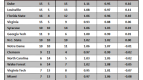
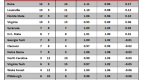
Ok, so thanks to an insightful UCLA fan, we realized that our exuberant reliance on NCSA data to justify our Athlademic Rankings posted last week was giving them way too much credit for properly vetting their data.  So to make sure we get it right this time, we spent the better part of today going through the 2007-08 US News rankings and the 2006-07 Sears Cup rankings ourselves.  Here’s the revised list, in Table A

Table A.  Athlademic Ratings – Division I (revised)

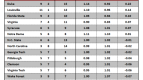
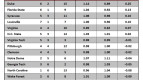
NCSA Revised Rankings

New Arrivals.  In addition to UCLA and USC, we also see the inclusion of Georgia, Texas A&M, Georgia Tech, Minnesota, Tennessee, Rutgers and Auburn onto our list – all driven by strong athletic programs.  High academic schools with relatively weak athletic programs, such as Army, William & Mary and Dartmouth, fell out of the top 50 due to the addition of the above programs. 

Ivy League logo

The Ivies strike a Nice Balance in Athlademics 

Ivy League Balance.   Speaking of Dartmouth, Keggy the Keg and friends are the only Ivy League school that didn’t make our Top 50.  The other seven did, with Princeton (no surprise there) leading the way at #16 overall.  Granted, the high academics of the schools drives their inclusion here, but we shouldn’t discount that these schools rate above many larger BCS schools in terms of the success of its athletic programs.  Cornell has the 55th most successful athletic program, but there are 73 BCS schools, which means Cornell, Princeton (#63) and Harvard’s (#64) athletic programs  are outperforming bigger state schools such as Kansas (#66), Iowa (#68), and Connecticut (#82).

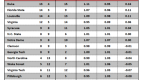
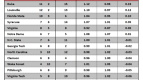
Big 10 – ACC Challenge.    As in, the Big 10 and ACC challenge the rest of the BCS conferences to keep up with it when it comes to athlademics.  We rated all 73 BCS conference schools, keeping those ahead of them in place, and Table B below shows the results. 

Table B.  BCS Conference Athlademic Ratings

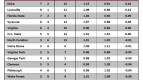
 Conf Ratings

Why is the Big East so bad?  There’s a pretty clear top tier of Big 10, ACC and Pac-10, a middle tier of the SEC and Big 12, and a bottom tier, where the Big East lurks like Gollum all by itself.  The Big East really gets killed on both sides of the equation – it has seven (of 16) third-tier academic schools, as rated by US News (more than the other 5 conferences combined); and seven schools that finished outside of the top 100 in the Sears Cup (Mississippi St. and Kansas St. are the only other two in BCS conferences).  This includes the dubious case of Seton Hall, who was the only BCS conference school of the 73 to not score a single point in the Sears Cup competition for 2006-07.  How is that possible?? 

Seton Hall

Days Long Since Gone at The Hall

Haves and Have-Nots.  The Pac-10 is the greatest example of bifurcation within a conference.  It has five of the top twenty athlademic programs in America (Stanford, UCLA, USC, Cal, Washington), but it also only has five of the top fifty programs - its next highest ranked school is Arizona at #51.  Compare this with the Big 10, who has nine of its eleven members ranked in the top forty, with only Indiana (#53) and Iowa (#58) weighing it down.  Conversely, the Big 12 only has two of its twelve schools ranked in the top forty – Texas (#11) and Texas A&M (#23). 

Non-BCS Stars.  We already mentioned the Ivies, whose eight schools average a 29.9 rating on our list.  But who else steps up to challenge the BCS big boys as an athlademic school?  The Naval Academy (#28) and a couple of the smaller UCs (Irvine (#35) & Santa Barbara (#39)) lead the way.  One surprise inclusion is our Mormon friends at BYU, who used a strong athletic showing to come in at 39th on our list. 

You can do Better.  Not to harp on anyone in particular, but it makes no sense to us that football (read: revenue) schools like Cincinnati (#196 in the Sears Cup), South Florida (#133), Mississippi St. (#120), Kansas St. (#111) and Syracuse (#110) can’t do any better with their overall athletic programs.  Let’s throw in Villanova (#132) and Marquette (#127) for good measure – both schools are wealthy private Catholic institutions, which means they have the resources to spread around the non-revenue sports.  So what’s their excuse? 


Columbia has as many titles as Duke??

May 22nd, 2007

One thing that a casual fan of college basketball may never hear about unless he makes a practice of sifting through the detritus of message boards is the curious case of Helms Foundation titles. Everyone knows about NCAA titles – UCLA has 11, Kentucky 7, Indiana 5, UNC 4, and so on down the list. But not everybody is aware of these Helms championships, and with good reason.

Helms National Champ

National Champions?

In 1936, Bill Schroeder and Paul Helms created the Helms Athletic Foundation (now defunct) in Los Angeles, a panel of experts in college basketball and football who were tasked with designating retroactive “champions” and all-america teams for each year since the inception of the sport (football in 1883; basketball in 1901). Keeping in mind that this group formed in the mid-1930s, they had very little in the way of substantive evidence on which to make their decisions, other than personal recollections and (perhaps) newspaper clippings of the games. This is a surely a long way removed from the modern analysis involving strength of schedules, efficiency ratings and RPIs – analytical tools that results in an invitation for a chance to win the national championship!

We won’t even get into the ridiculousness of the modern BCS rankings in college football, but suffice it to say that given the evidentiary limitations of the times, a Helms title that was given retroactively is at best a loosely educated guess of who may have been the best team during a particular year. Who can honestly say that the Helms Champion 1906 Dartmouth (16-2) squad was better than every other team that season (irrespective, it’s always Drinking Time at Dartmouth)? It’s difficult enough to make such an assessment in today’s environment, even with bountiful video and statistical data on every team available in seconds – imagine doing it without ever seeing a team or their opponents play a single game! Which is, of course, essentially what the Helms Foundation did when making its selections.

Keggy the Keg

Is Keggy the Keg aware of Dartmouth’s National Championship?

So why is this relevant to today’s game, and by proxy, this blog? Ten years ago it wouldn’t have been. But nowadays, this has become a fairly contentious issue amongst some of the game’s bluebloods. Most notably, UNC has inarguably been touting its retroactive 1924 Helms title as a championship on equal footing with its four NCAA titles in its media guides and other media outlets (ESPN, CBS, etc.). It also has a banner celebrating this championship hanging next to its NCAA championship banners in the Dean Dome (see the 1:00 minute mark). And Heel fans can also purchase replica banners, including one honoring the 1924 champions, at a store on Franklin St. in Chapel Hill. In a sport that has always crowned its champions at every level in a tournament format, this does not sit well with members of other traditional powers, especially at Kentucky and Kansas, where the message boards enjoy periodic states of delirium over this issue.

Read the rest of this entry »