Ivy League Season Wrap-Up & Postseason Preview

Posted by Brian Goodman on March 8th, 2012

Michael James is the RTC correspondent for the Ivy League. You can also find his musings on Twitter at@mrjames2006 and @ivybball.

Reader’s Take


A Look Back

In by far the toughest Ivy since the 1970s, Harvard delivered exactly as expected, slogging through the treacherous league slate with a 12-2 mark and a second Ivy title. What wasn’t expected was the company the Crimson would have at the top. The average expectation had no other Ivy teams eclipsing the 10-win plateau, but Penn paid no heed to those projections. After losing to Harvard 56-50 at home to fall two games off the pace, the Quakers ripped off an amazing stretch of seven straight wins to climb even in the loss column after the final Ivy back-to-back weekend. But tradition left Penn with work to do. Its second-most difficult game of the season still remained – the annual meeting with rival Princeton after the rest of the league’s regular seasons had already drawn to a close. The Tigers double-teamed Quaker star Zack Rosen all game, stifling the Penn offense, and executed efficiently on the other end, cruising to a 10-point victory and ending the Quakers’ title hopes.

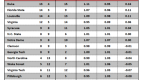
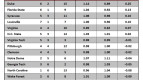
It was a historic year for the league by a variety of metrics. The league has never posted a higher Pomeroy Rating in the efficiency era, has never had seven non-conference wins over Pomeroy Top 100 teams in a season, and has never had a higher ranked team in the Pomeroy era than Harvard at No. 37. It is also currently hanging on to the 13th spot in the Conference RPI rankings, which would eclipse the 2001-02 mark of 14th, and could have as many as four teams earn postseason bids. With so many pivotal seniors, it will be hard for the Ivies to avoid a collective step back, but with a solid incoming freshman class, don’t expect a return to the dark ages of 2008 and 2009.

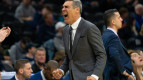
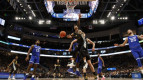
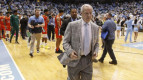
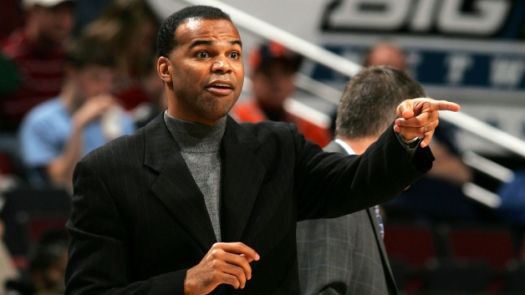
Tommy Amaker and Harvard Paced An Outstanding Ivy League Campaign (AP)

Yale and Princeton each posted solid campaigns, flirting with the RPI Top 100 for most of the season and building postseason-worthy resumes – the former by its quantity of wins and the latter with its quality. Columbia had a great non-conference run followed by an incredibly unlucky Ivy campaign, while Cornell did just the opposite, stumbling a bit outside the league, before putting together a solid 7-7 mark in Ivy play. Brown and Dartmouth had forgettable seasons, but the Bears will return several players from injury and ineligibility while the Big Green will see its talented freshmen continue to grow and mature.

Conference Accolades

Read the rest of this entry »

Share this story

Big 12 Season Recap and Postseason Preview

Posted by Brian Goodman on March 7th, 2012

Steve Fetch is the RTC correspondent for the Big 12. You can also find his musings online at Rock Chalk Talk or on Twitter @fetch9.

Conference Tournament Preview

The big attraction this year for many fans is the chance to see one more KansasMissouri battle before the Tigers leave for the SEC. If Kansas reaches the final, they will likely be a #1 seed in the NCAA Tournament, and there’s still a chance Missouri can nab one if they win the Big 12 Tournament as well. Given the general lack of depth on both teams it might behoove them to lose early and rest up for the NCAA Tournament, but their competitiveness and seed chasing will probably lead to one last matchup.

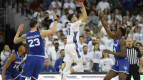
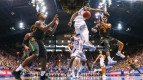
Let's Go For a Third, Shall We? (AP)

The Big 12 has likely locked up five bids in the tournament, with a sixth possibly going to Texas. The Longhorns will need to beat Iowa State Wednesday night to have a shot, and with how soft the bubble is this year, that will probably be enough.

Elsewhere, Baylor can potentially get a #3 seed if they make a run (though with their new uniforms I am wondering if there is a way we can keep them out of the postseason altogether) and Iowa State can probably get away from the dreaded #8/#9 game if they do so as well. Kansas State‘s seeding could range widely depending on its performance this week, but the Wildcats are soundly in the Dance.

Read the rest of this entry »

Share this story

Big East Wrap-Up And Postseason Preview

Posted by Brian Goodman on March 6th, 2012

Brian Otskey is the RTC correspondent for the Big East conference. You can find him on Twitter @botskey.
Conference Tournament Preview

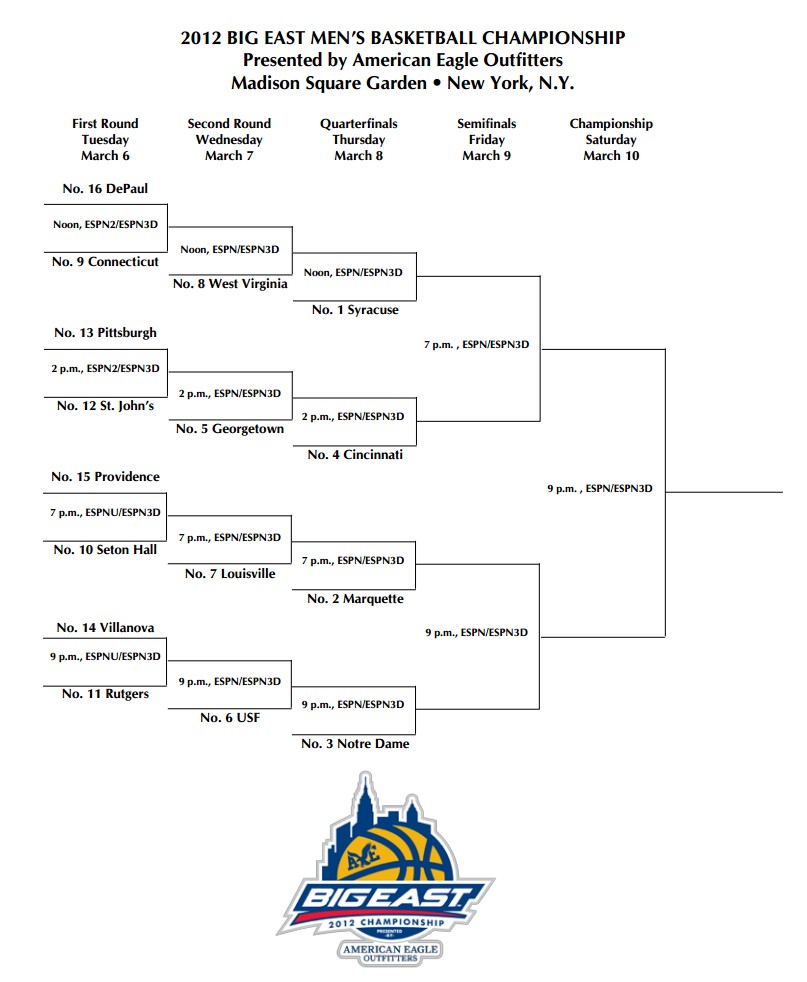
  • Can Anyone Beat Syracuse? – Yes, but only a handful of teams are capable. Notre Dame has proven they can do it and I feel Marquette has a solid chance. Georgetown took the Orange to overtime by slowing the pace and exposing Syracuse’s rebounding issues. In my opinion, those are the only three teams who can knock off the Orange. Given the Madison Square Garden crowd is going to be highly in favor of Syracuse, this is a tall order for any team to pull off.
  • Bubble Teams With Work To Do – South Florida, Seton Hall, Connecticut and West Virginia, the pressure is officially on. I think USF and SH have the most work to do. The Bulls and Pirates won’t feel safe unless they win two games at the Garden and even that may not be enough depending what happens in other conference tournaments. Seton Hall absolutely has to beat Providence and Louisville back to back and then put up a solid showing against Marquette in a quarterfinal game. South Florida has a bye but must knock off Rutgers/Villanova before beating Notre Dame the next night. Connecticut has plenty of top 50 wins and strong computer numbers so I feel they’re safe provided they get by DePaul on Tuesday. As for West Virginia, the win at South Florida on Saturday was critical. The Mountaineers earned a first-round bye and will likely play Connecticut at noon on Wednesday. I think WVU is going to be in regardless, but beating the Huskies should lock up a bid for sure.
  • Is There A Sleeper Team? – I doubt it, but South Florida, Connecticut and even St. John’s would be my candidates. The Bulls can win an ugly game against Notre Dame in the quarterfinals, but UConn may actually have the best draw. The Huskies open up with DePaul, coincidentally the same exact matchup as last season. They’ll face a West Virginia team they’ve beat already in the second round. Should they advance to the quarters, Connecticut will go up against Syracuse. The Huskies have played fairly well against the Orange twice this season and would have a reasonable chance to pull the upset. St. John’s is a team that’s playing better basketball and drew a favorable bracket. It wouldn’t shock me if St. John’s lost its opening round game but, playing on its home floor, the Johnnies could surprise.

Regular Season Recap

You could say this was easily a down year in the Big East, but the conference does have ten teams in contention for the NCAA Tournament as the season winds down, only one fewer than last season. However, the league is clearly not as strong from top to bottom. Syracuse was dominant, but no team came close to challenging the Orange for conference supremacy all year. The Orange were projected to win the league in my preseason conference primer, but it was my second and third place teams who completely flopped. Pittsburgh and Connecticut had highly disappointing seasons, even though the Huskies are still in the NCAA picture. The Panthers finished 16-15 (5-13), good enough for 13th place. Jamie Dixon’s squad was hurt by injuries and a notable defection, but on the court, this team did not defend at a high level. Pitt finished the regular season ranked 161st nationally in defensive efficiency, a far cry from their average of #27 over Dixon’s previous eight seasons on the sidelines at the Petersen Events Center. Ashton Gibbs had a disappointing senior season and the team was never able to put it together at any point.

As for the teams that surprised, you can start with South Florida. The Bulls were nothing more than an afterthought as late as January, but a commitment to defense and the play of freshman point guard Anthony Collins has vaulted the Bulls to the brink of their first NCAA Tournament bid since 1992. Although USF has just one top 50 win, this season has been a rousing success for the men from Tampa, who played all of their home games away from the Sun Dome due to renovations. Stan Heath may have saved his job in the process.

Marquette, Notre Dame and Georgetown were also surprises. Those teams were projected to finish sixth, ninth and tenth, respectively, in our conference preview. Marquette looks like a threat to go very deep in the NCAA Tournament while Notre Dame’s style of play and Georgetown’s defense will keep them in pretty much any game they play. The Golden Eagles have two of the best player in the conference and an unquenchable will to win.

As for the teams that projected out according to form, Cincinnati went 12-6 in the league as predicted, Rutgers went 6-12 and Providence went 3-15. In addition to those three, West Virginia, Seton Hall, St. John’s and DePaul finished about where they were expected to. The Mountaineers and Pirates have a chance for the NCAA’s while St. John’s showed some late-season progress and could be a tough out on their home court at Madison Square Garden this week. Louisville finished 22-9 (10-8), three games worse than where I had projected it. The Cardinals started the year hot, but went just 10-9 after sprinting out to a 12-0 record through December 23.

Villanova was another team that disappointed. The Wildcats weren’t expected to be great, but many thought they could find their way to the NCAA Tournament. Instead, Villanova struggled all year as players who were expected to improve did not before injuries took a huge toll on the Wildcats late in the season. Villanova’s future is relatively bright, but this was definitely a lost season on the Main Line. VU’s streak of seven consecutive NCAA appearances will come to an end unless there is some divine intervention in the form of five wins in five days in New York.

Jim Boeheim And The Orange Have Locked Up A One-Seed, But Will Reports Of Unpunished Failed Drug Tests Knock Them Off Their Path? (Mark Konezny/US Presswire)

Coach of the Year

Jim Boeheim, Syracuse – This was a really tough choice. Do you go with the coach of the best team by far or pick someone like Stan Heath or Mike Brey who led teams projected in the bottom half to finishes closer to the top of the league? Guys like Buzz Williams and John Thompson III also deserve consideration. In the end I chose Boeheim because this year’s Syracuse team was historic. Sure, I picked them to win the league from the start, but in no way did I think this team would go 30-1 (17-1). The Orange are the first team in Big East history to get through the entire regular season with only a single loss. Boeheim has assembled a rotation that can go ten deep and kept the team focused through some off-court distractions. He’s a Hall of Famer for a reason and was the best coach in the league this season.

Player of the Year

Jae Crowder, Marquette – This may be a controversial choice to some, but here’s why I picked Crowder over Kevin Jones. Yes, Jones had better statistics throughout the year, but Crowder has out-played Jones over the last month and plays for a team considerably better than West Virginia. Plus, what fun would it be if we just looked at the statistics and ignored intangibles? Crowder averaged 24.7 points and 9.2 rebounds per game over his last six and won the head-to-head matchup with Jones in convincing fashion on February 24. Crowder put up very similar numbers using 21.9% of his team’s possessions compared to 23.3% for Jones. Not a huge difference, but I feel it matters when one team is 25-6 (14-4) while the other is 19-12 (9-9) and has lost seven of its last 11 games heading into the postseason. Crowder, along with Darius Johnson-Odom, has put Marquette on his back and carried it to heights not seen since Dwayne Wade played at the Bradley Center. He’s played his best ball at the right time while Jones has not led his team in nearly the same manner down the stretch. Crowder is also a better defender (2.4 steals per game) and a more efficient shooter from inside as well as the perimeter. I felt that also helped to push him over the top. I don’t have a problem with either player winning the award, but I usually go for the player on the better team when it’s a close call like this is.

All-Conference First Team

  • Jae Crowder, Marquette (17.6 PPG, 7.9 RPG, 2.4 SPG, 51.2% FG) – Crowder was the do-it-all player for the Golden Eagles, leading them to their best regular season record since a 23-4 mark in 2002-03.
  • Kevin Jones, West Virginia (20.0 PPG, 11.2 RPG, 51.5% FG) – Without Jones, the Mountaineers would be in the bottom third of the league. The senior had the best season of his career, leading the conference in scoring and rebounding pretty much from start to finish.
  • Darius Johnson-Odom, Marquette (18.3 PPG, 40.1% 3FG) – Crowder and DJO form perhaps the most potent one-two punch in college basketball on a team that could be a Final Four sleeper.
  • Kris Joseph, Syracuse (14.1 PPG, 5.0 RPG) – The amazing thing about Syracuse is not one player on a 30-1 (17-1) team is in the top 18 in scoring. Joseph ranks 19th, but came up big when it mattered most, averaging 17 points for the Orange in their six games decided by five points or less.
  • Jeremy Lamb, Connecticut (17.6 PPG, 47.5% FG, 82.6% FT) – Connecticut underachieved, but the best returning player from last year’s national championship squad posted double figures in all but three games for a team that struggled to find its way on the offensive end. A career-high 32 points in a late season win at Villanova just might have saved his team’s season (at least for now).
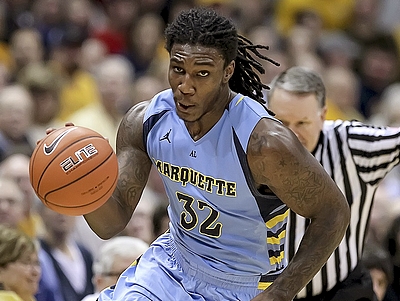
A Late-Season Push Propelled Jae Crowder Past Kevin Jones For Player Of The Year Honors.

All-Conference Second Team

  • Vincent Council, Providence (16.2 PPG, 7.5 APG) – A lot of people may not know about Council, but that’s about to change next season when Providence welcomes in more talent to be on the receiving end of passes from the best assist man in the Big East.
  • Scoop Jardine, Syracuse (8.6 PPG, 4.9 APG, 47.7% FG) – The statistics aren’t eye-popping,  but Jardine was the point guard for a team that lost once in 31 games. He took much better care of the basketball this season and improved his shooting efficiency despite a drop in scoring from last year. On a team with ten legitimate players, he doesn’t need to score in double figures.
  • Jordan Theodore, Seton Hall (16.0 PPG, 6.7 APG, 1.9 SPG) – Not surprisingly, Seton Hall’s season went as Theodore’s did. When he was on, he looked like the best point guard in the conference (29 points, 5 assists against Georgetown). When he wasn’t (10 points, 5 turnovers against DePaul), Seton Hall looked awful. Despite the inconsistency from the senior, Theodore deserves the bulk of the credit for getting the Pirates in the NCAA Tournament conversation.
  • Jason Clark, Georgetown (14.3 PPG, 4.2 RPG, 47.8% FG) – Underappreciated for four seasons in Washington, Clark led his team in scoring and vaulted the Hoyas well into the top 25 after they were projected to be a bubble team in the preseason. Clark was a model of consistency and a great glue guy on a strong defensive team.
  • Jack Cooley, Notre Dame (12.5 PPG, 9.2 RPG, 62.1% FG) – Cooley came out of nowhere to become the anchor in the paint for a Notre Dame team that took the conference by storm. He recorded a double-double in six of his last eight games and would be my pick for most-improved player.

Honorable Mention

  • Dion Waiters, Syracuse (11.9 PPG, 1.9 SPG, 47.1% FG) – Perhaps the best sixth man in the nation, Waiters sees starter’s minutes on one of the elite teams in the nation. A spark on both ends of the floor with his dynamic transition game, Waiters’ improvement is a big factor in Syracuse’s success.
  • Henry Sims, Georgetown (11.1 PPG, 5.6 RPG, 3.4 APG, 1.4 BPG) – It’s not often you see a 6’10” player lead his team in assists, but that’s exactly what Sims did (and by a wide margin). A candidate for most improved player, Sims was a major reason why Georgetown exceeded preseason expectations.
  • Cleveland Melvin, DePaul (17.4 PPG, 7.3 RPG) – Melvin has been a solid player for two years now. It’s too bad he plays on a bad team.
  • Herb Pope, Seton Hall (15.3 PPG, 10.3 RPG) – A very early frontrunner for conference POY honors, Pope’s production really tailed off in conference play.  Still, his presence in the middle and strong rebounding is vital to the Hall’s success.
  • Maalik Wayns, Villanova (17.5 PPG, 4.6 APG, 89.3% FT) – Wayns will never be confused with efficiency, but he’s a guard who can create contact and get to the line with the best of them. One of the better free throw shooters in the nation knows how to play to his strengths.

All-Freshmen Team

  • Moe Harkless, St. John’s (15.0 PPG, 8.6 RPG) – Harkless put up some dominant numbers right away because he was able to see plenty of minutes on a thin team, but he’s a terrific piece to build around as the Johnnies move forward. A special talent.
  • Anthony Collins, South Florida (8.0 PPG, 5.3 APG, 49.3% FG) – Almost singlehandedly, Collins has willed the Bulls to the brink of the NCAA Tournament. After missing five games with an injury, Collins took over the point guard duties and led South Florida to a 12-6 conference record.
  • LaDontae Henton, Providence (14.3 PPG, 8.6 RPG, 40.2% 3FG) – Henton was a surprise on a Friars team that remained competitive despite a poor record. Henton was thrown into the fire right away, playing 37.1 minutes per game on a very thin team. He responded well and didn’t hit a wall late in the season as most freshmen do.
  • D’Angelo Harrison, St. John’s (17.0 PPG) – Harkless’ sidekick actually led St. John’s in scoring and played his best basketball in February.
  • Otto Porter, Georgetown (9.0 PPG, 6.8 RPG, 51.0% FG) – A player with a great motor who has a ton of upside, Porter has a high basketball IQ and the toughness needed to excel in Georgetown’s system. He’s as good of a rebounder as I’ve seen for a freshman.

Defensive Player of the Year

Fab Melo, Syracuse (3.1 BPG) – Melo led the conference by a wide margin in blocks in conference games (3.73), but finished behind Louisville’s Gorgui Dieng in the block totals for all games. Melo’s presence anchoring Syracuse’s zone changed so many shots and made it easier for Syracuse to defend opponents on the perimeter. When he didn’t play against Notre Dame, the Irish went wild from deep because the Orange didn’t have their big man on the back line to defend drives. A case can be made for Dieng, but Melo was a dominant force defensively for the nation’s #2 team.

Game of the Year

January 21 – Notre Dame 67, Syracuse 58: There is no clear-cut winner for this award, but I’m going to go with Syracuse’s only loss of the season. Notre Dame handed the Orange, playing without Fab Melo, their first and only loss of the season. The Fighting Irish shot 50% for the game and won by a score of 67-58, Notre Dame’s first win against a top-ranked opponent in 25 years. However, it was ND’s eighth win all time against a #1 team and seventh in South Bend. It was a magical night for the Irish and the first win in what would become a nine-game winning streak, a decisive run that pushed Notre Dame solidly into the NCAA Tournament field.

Other nominees: Marquette 61, West Virginia 60 (February 24). Syracuse 64, Georgetown 61 (OT, February 8). Notre Dame 67, Louisville 65 (2OT, January 7). Georgetown 73, Marquette 70 (January 4).

An Outstanding Point Guard In Anthony Collins Has USF In The Running For A Tournament Bid.

Power Rankings

  1. Syracuse (30-1, 17-1) – The Orange are playing with house money in New York as they are a lock for a #1 seed in next week’s NCAA Tournament. Syracuse has a tough draw with West Virginia or UConn waiting in the quarters before going up against possibly Cincinnati or Georgetown in the semifinals on Friday night. The only question could be if the Orange play the Big East Tournament on cruise control, knowing their NCAA situation is secure.
  2. Marquette (25-6, 14-4) – Marquette is playing the best basketball of any team outside of central New York. The Golden Eagles won 13 of their last 15 games and can absolutely win this tournament. A BET win could give Buzz Williams’ team a #2 seed in the big dance.
  3. Georgetown (22-7, 12-6) – This team has been solid all year, but its normally stout defense was exposed in late season losses to Seton Hall and Marquette. The Hoyas gave Syracuse all it could handle on February 8 at the Carrier Dome and another meeting at MSG isn’t out of the question. Georgetown will get a nice seed in the NCAA Tournament, but the Hoyas have to bring it defensively in order to avoid another early exit.
  4. Cincinnati (22-9, 12-6) – Despite a horrid non-conference schedule, the Bearcats have plenty of top 50 wins on their resume. I believe this team should be and will be in the NCAA Tournament no matter what happens in New York. Still, beating Georgetown/St. John’s/Pitt in the quarterfinals wouldn’t hurt. Cincinnati won five of its last six games, making a strong case to the NCAA Committee in the process.
  5. Notre Dame (21-10, 13-5) – The Irish lost two of their last three games, but it was a remarkable season for Mike Brey’s squad. Considered to be done after losing Tim Abromaitis, Notre Dame re-invented itself and locked up a tournament bid with a one month long nine-game winning streak. The Fighting Irish are a threat in the bottom part of this week’s bracket.
  6. South Florida (19-12, 12-6) – It was encouraging to see the Bulls go into Louisville and win the game they had to have. It was a wildly successful season for USF. The team completely changed its trajectory when Anthony Collins returned from injury and played at an extremely high level. The Bulls have plenty of work to do this week but pass the eye test to some. It seems crazy, but USF won 12 Big East games and has just one RPI top 50 win. That says a lot about the strength of this year’s Big East.
  7. Louisville (22-9, 10-8) – A few weeks ago, most folks were praising Louisville for getting back on track. Since February 13, it has been a different story. The Cardinals have lost four of their last six games heading into the conference tournamen,t but will still be headed to the NCAA Tournament next week. Louisville’s two wins during this stretch? Overtime at DePaul and a home squeaker over a bad Pitt team. Barring a huge effort to refocus this week, Louisville is ripe for the picking by Seton Hall or Providence in its second round game.
  8. West Virginia (19-12, 9-9) – It wasn’t pretty, but the Mountaineers took care of business at South Florida to get back to .500 in the league. West Virginia is right about where most had them at the beginning of the season despite losing seven of 11 games down the stretch. Kevin Jones had an outstanding year and this team remains a threat in New York and in the NCAA Tournament, assuming it gets there. WVU could win a game or two in the big dance.
  9. Connecticut (18-12, 8-10) – It was a rough year for the Huskies, but they have a chance to start over and turn it around this week at MSG. Connecticut will start exactly where it started a year ago when it beat DePaul, the first of 11 straight victories en route to a national championship. This team won’t do that again, but I could realistically see it winning two or three games this week. I believe the Huskies should be in the NCAA Tournament, but a loss to DePaul would significantly complicate matters.
  10. Seton Hall (19-11, 8-10) – When you have a chance to get to your first NCAA Tournament in six years, it’s not good to shoot yourself in the foot. That’s exactly what Seton Hall did with consecutive late season losses to Rutgers and DePaul. The Pirates were blown out of Chicago in absolutely embarrassing fashion and now probably have to win at least two games to keep their NCAA chances alive. The Hall has quality wins over Georgetown, Connecticut, West Virginia and VCU as well as victories over bubble squads Dayton and St. Joe’s, but those two bad losses will sting. You can put the Pirates to bed if they lose to Providence on Tuesday night, a game that won’t be easy for Seton Hall.
  11. Rutgers (14-17, 6-12) – You can’t win big in the Big East with young players and that’s the issue Rutgers faced this year. Mike Rice is building the program in solid fashion, but Rutgers still has a ways to go. Next year could be the year Rutgers starts to turn the corner and gets into contention for some kind of postseason bid. The Scarlet Knights won’t be an easy out at MSG.
  12. St. John’s (13-18, 6-12) – Mike Dunlap did an admirable job filling in for Steve Lavin this season as the Red Storm saw player defections and persevered with one of the thinnest and youngest rosters you will ever see. St. John’s was competitive and seemed to play better basketball as the season progressed. The Johnnies won three straight games late in the season but enter this week’s tournament on a two game losing streak. Still, I wouldn’t want to play SJU at the Garden.
  13. Pittsburgh (16-15, 5-13) – The departure of Khem Birch and injury to Tray Woodall derailed any hope this team had of turning the season around after early losses to Long Beach State and Wagner. The Panthers floundered in conference play, losing their first seven games. Pitt provided us with some hope when it won four straight from January 25 to February 5 but then proceeded to lose six of its final seven after that. With West Virginia going to the Big 12 next season, will Pittsburgh and Syracuse try to follow suit and settle with the Big East to get out earlier than expected?
  14. Villanova (12-18, 5-13) – What a miserable season for Jay Wright. The Wildcats have been to seven consecutive NCAA Tournaments, but didn’t come close to extending that streak this year. Villanova stumbled right out of the gate, losing four games before mid-December. The future is brighter with everyone coming back next year, but Wright has a lot of work to do in order to get this team on the same page over the summer.
  15. Providence (15-16, 4-14) – Despite losing 14 conference games, the Friars were competitive. Ed Cooley is going to get it going rather quickly in Friartown, especially with a ballyhooed recruiting class coming in next season. LaDontae Henton surprised many observers as a freshman and should be a big piece going forward along with superb point guard Vincent Council, who will lead the team as a senior in 2012-13.
  16. DePaul (12-18, 3-15) – The Blue Demons won only three times in league play but saved their best for last, blowing out Seton Hall this past Saturday in Chicago. Oliver Purnell has clearly established his style of play, now it’s up to him to get better players in the mix. Cleveland Melvin is underappreciated because he plays on this team, but he’s a nice piece to build around. You have to believe Purnell will eventually get DePaul back to respectability, but the process will be a long one.
Share this story

Summit League Tournament Preview & Season Wrap-Up

Posted by Brian Goodman on March 3rd, 2012

Charlie Parks is the Summit League correspondent for RTC. You can follow him on Twitter @CharlieParksRTC.

Summit League Tournament Glance

Looking Back

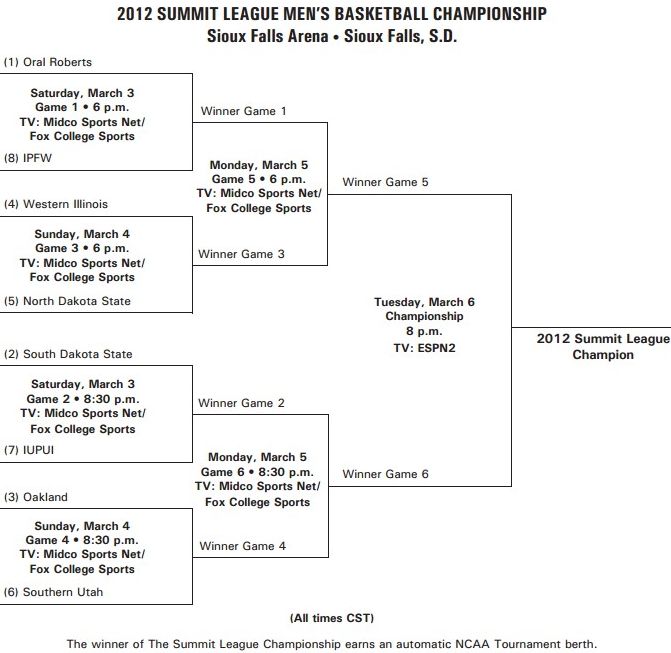
  • One Big Year: This was an unforgettable season for the fans that follow the Summit League. Reggie Hamilton leads the nation in scoring; Alex Young is the NCAA active scoring leader and is looking to move on the NBA; Dominique Morrison led Oral Roberts to a school-best 26-5 record to go along with a crisp 38 RPI to get at-large talk going, and Nate Wolters and company are a serious dark horse contender for an NCAA tournament run with a 24-7 record. The Summit League is making a move into the best-mid-major-conference-talks, something that was unthinkable two years ago.
  • Where Does The Summit Go From Here: With ORU and Southern Utah leaving and Nebraska-Omaha on the way in, the future of the conference and its status in the basketball world is still to be determined. If North Dakota State and Oakland are able to rise up and take the place of ORU, the league can pick up where they left off. However, if things stay the same, and South Dakota State is the only real powerhouse, then the conference could take a step back. Regardless of what lies ahead in 2013, there is still a lot of basketball left in 2012. So here are my regular season awards and a quick preview for the upcoming Summit League tournament …

Conference Accolades:

  • Coach of the Year – Jim Molinari, Western Illinois: With all due respect to Scott Sutton and the amazing job he did this year, I have to go with Jim Molinari from Western Illinois. A year ago, Western Illinois was 7-23 with a 2-16 conference record after finishing the year with 13 straight losses. Molinari has turned things around and has the Leathernecks playing defensive-minded basketball. The Leathernecks offense is more efficient, and the addition of freshman Obi Emegano has helped Western Illinois capture the five-seed in the Summit League tournament.
  • Player of the Year Dominique Morrison, Oral Roberts: My pick for Player of the Year was really a no-brainer. Dominique Morrison was not only the best player in the conference, but one of the best in the nation over the course of the entire season. His 20.3 points per game becomes even more impressive by the fact that he shot 49 percent from the field and 45 percent from beyond the arc. On top of all that, he was clutch. Say what you want about the term “clutch”, but when a bucket needed to be made or when the game was on the line, he found a way. He was the total package this year. Morrison is going to be one of those guys Scott Sutton and the ORU fans will never forget.

Oral Roberts' Dominique Morrison (45) Made The Summit League His Personal Playground. (AP)

All-Conference Team:

  • Forward: Dominique Morrison, Oral Roberts: He will finish his career, along with everyone else on this All-Conference Team, in the top ten in scoring with well over 2,000 points.
  • Forward: Alex Young, IUPUI (20.9 PPG, 5.9 RPG): Young will leave IUPUI as the highest scorer in school history, and the fifth-leading scorer in conference history. He’s a first-round NBA draft pick if I ever saw one.
  • Guard: Nate Wolters, South Dakota State (21.2 PPG, 5.0 RPG, 6.1 APG): The man can flat out play, and he is going to be Summit League Player of the Year next year. The question is, will he be looking to lead South Dakota State to their first ever conference title or a repeat?
  • Guard: Reggie Hamilton, Oakland (25.5 PPG, 5.1 APG): In case you thought this guy was a ball hog, just take a peek at those assist numbers. Put Hamilton on the list of current Summit League players that deserve a shot in the NBA. He’s quick, can run the point, and has deep three point range. Oh, and I forgot to mention he leads the nation in scoring.
  • Center: Jordan Dykstra, South Dakota State (11.6 PPG, 5.1 RPG) I have to give a shout-out to the big men, and he is the best one in the conference. Just a sophomore, Dykstra is going to be a dominant force in the years to come.

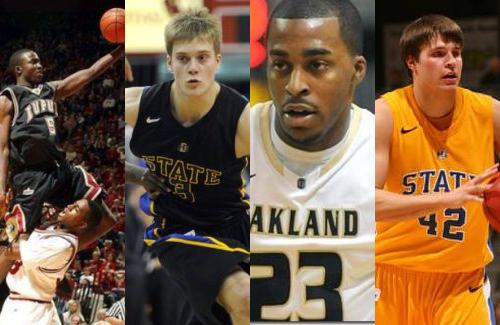
Alex Young, Nate Wolters, Reggie Hamilton and Jordan Dykstra Rounded Out Our RTC Selections for Summit League All-Conference First-Team

As I’ve mentioned before, I will take my starting five over your five starting five any day of the week. I don’t care if it is ACC All-Conference or Big East All-Conference, the Summit League can ball with the best of them. Read the rest of this entry »

Share this story

CAA Tournament Preview & Season Wrap-Up

Posted by Brian Goodman on March 2nd, 2012

Michael Litos is the RTC correspondent for the Colonial Athletic Association. You can follow him on Twitter at @caahoops.

CAA Tournament Glance

Tournament Preview

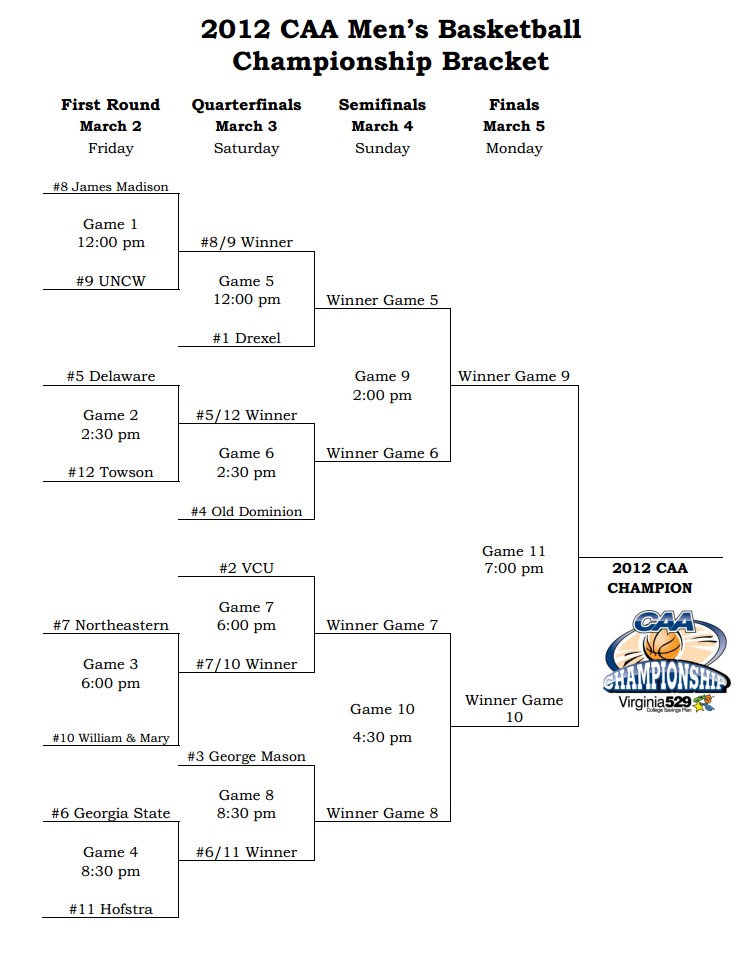
Without question, all eyes are on Drexel and VCU. Both squads finished the regular season in impressive fashion. After dropping its first two conference games, the Dragons won an unprecedented 16 straight to take the regular season title. The Rams are the second seed at 15-3 and have won 14 of 15 games. VCU is two buzzer-threes from 17-1 in conference. Troy Daniels missed a three at the buzzer and the Rams lost to Georgia State, and George Mason’s Sherrod Wright swished a 30-footer to beat VCU on Valentine’s Day.

Nobody really wants to face Old DominionBlaine Taylor, for the tenth time in his 10 seasons at ODU, has his team playing its best basketball in February. And the Monarchs grinding style fits perfectly with the slogging that will occur in the conference tournament. Though their path to a title is the most rigorous one, George Mason has both the most talent and most depth in the conference. Finally, Delaware has quietly won eight straight and can surprise.

But really, this tournament comes down the secret rooting interest of people who want the CAA to get an at-large bid. They want Drexel vs. VCU in the finals on Monday. The reason is clear: because the CAA didn’t have a stellar November, they don’t carry the sufficient resume bulk to make the field. However, you look at these two teams — the eye-test — and they clearly belong.

However, we’re very certain Paul Hewitt and Blaine Taylor have a little something to say in the matter. And while we’re at it — don’t count out Georgia State. Ron Hunter’s team plays outstanding defense, which will keep them in every game.

Season Recap

If the key to a mid-major conference obtaining at large bids into the NCAA tournament resides in separation—the top teams in the conference getting distance between themselves and the bottom of the conference—then the CAA accomplished the mission. Drexel (16-2), VCU (15-3), George Mason (14-4), and Old Dominion (13-5) fairly beat down the rest of the CAA. The top four teams did not lose to a bottom four team.

The Dragons lost their first two games but won 16 straight—an unprecedented feat. VCU lost two of its three games on last second three-point shots—the Rams’ Troy Daniels missed a bomb at the buzzer in a loss to Georgia State, and George Mason’s Sherrod Wright hit a 30-footer at the horn to beat VCU.

The season went remarkably according to plan. The top three teams (Drexel, VCU, Mason) finished in precisely the order expected, and Delaware (12-6) finished in the first division as predicted.

The differences reside with injuries. William & Mary was expected to rise, but a bevy of preseason and early season injuries sank the Tribe to 11th. James Madison finished the season with six healthy players and several phone calls to Hawkeye Pierce. Even head coach Matt Brady couldn’t avoid the big. Brady tore his Achilles tendon during practice when he ran scout team point guard duty. The Dukes fell to the #8 seed.

Georgia State, in its first season under Ron Hunter, surprised. The Panthers were expected to finished 11th but won 11 conference games and 20 overall.

Conference Accolades

  • Coach of the Year: Ron Hunter, Georgia State Opinions may vary based on what you value, but a very strong case can be made that Hunter made the most out of the least. Bruiser Flint was expected to win a tough conference and he did so. A 16-2 CAA record is worthy of acclaim. Shaka Smartlost four of his top five players, but coached VCU to second place and into the at-large conversation—this also merits acclaim. However, Hunter not only turned around the Georgia State ledger, he changed the culture in his first year. Georgia State was the definition of a moribund program, and there is a breath of life in Atlanta. Hunter won 11 CAA games with nothing going in his favor when he walked onto campus. Read the rest of this entry »
Share this story

Missouri Valley Tournament Preview & Season Wrap-Up

Posted by Brian Goodman on March 1st, 2012

Patrick Marshall is the RTC correspondent for the Missouri Valley Conference. You can also find his musings online at White & Blue Review or on Twitter @wildjays.

Arch Madness Preview

League Play Summary

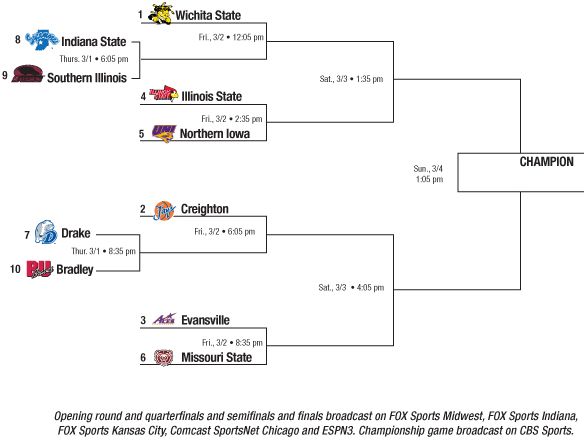
The Missouri Valley Conference broke out of its shell this season, bringing it back to a multiple-bid-conference even before the MVC Tournament this weekend in St. Louis. For the past four seasons, The Valley has only had the automatic bid advance to the NCAA Tournament and was viewed as a falling league after getting four teams into the tournament in 2006. This year, everything changed. With the breakout play of Creighton’s Doug McDermott and the dominance of Wichita State, the MVC has two teams ranked in the Top 25 for the first time since 1983 and the first time ever heading into Arch Madness.

Creighton started off strong this season and looked like the team to beat behind McDermott with early non-conference wins against San Diego State, Northwestern and a blowout of Iowa. A stumble against St. Joseph’s derailed the Jays for a bit, but they rebounded and remained a mainstay in the Top 25 until a three-game losing streak, which included a big loss at home against Wichita State. After heart-stopping victories in three of their last four games of the regular season, they are now back into the Top 25 heading into Arch Madness.

Wichita State played even stronger as the season wore on. After struggling a bit in the Puerto Rico Tip-Off, the Shockers have rolled to win 24 of their final 26 games and have only lost once in 2012 — to Drake in triple-overtime. For the Shockers, it has been a total team effort on the offensive and defensive side of things. Since they did not have a “star” player to add to the hype, it took a while for WSU to break into the rankings.

Teams like Evansville, Missouri State, and Northern Iowa had opportunities this season to make an impact, but came up a little short.

Reader’s Take


Regular Season Awards

  • MVC Player of the Year: Doug McDermott, Creighton (23.1 PPG, 47.9% 3FG, 8.1 RPG)McDermott had some early accolades coming into the season as a third-team preseason All-America by The Sporting News, but blossomed into a National Player of the Year candidate. Although his scoring numbers dropped between non-conference and MVC play, he has still been one of the more dynamic players this season and made Creighton a totally different team. McDermott is still third in the nation in scoring, and once the Bluejays get into the postseason, teams playing against him for the first time could be in for a big surprise. Read the rest of this entry »
Share this story

America East Tournament Preview & Season Wrap-Up

Posted by Brian Goodman on March 1st, 2012

John Templon is the RTC correspondent for America East. You can also find his musings online at NYC Buckets or on Twitter @nybuckets.

Conference Tournament Preview


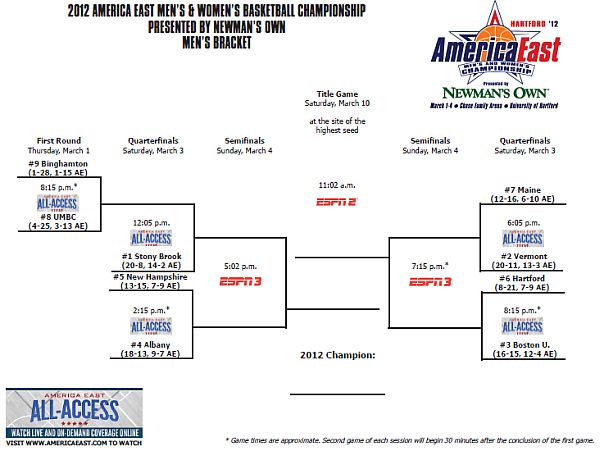
The top four seeds in the America East have been dominating conference play all season. That’s why they’re expected to meet up in the semifinals. The team that could potentially crash the party is six-seed Hartford, which is playing close to home. If the Hawks get hot from three, there’s always a chance to pull an upset, because they love to shoot the long ball. Also, seven-seed Maine has a ton of talent, but crashed at the end of America East play, losing six of its final seven games. The highest seeded team that survives Hartford is going to get the opportunity every team wants, to host 40 minutes of basketball that will ultimately lead to a berth into the NCAA Tournament. It should make for an exciting, gritty long weekend and championship game.

A Look Back

At the beginning of the season the expectations were that Boston University, Stony Brook, Vermont and Albany would be at the top of the standings. At the end of the season, that’s exactly what we’ve got, except they’re in a slightly different order. An injury to D.J. Irving seemed to throw BU off its rhythm a little bit, but the Terriers still finished 12-4 in conference, including a win over Stony Brook and a sweep of Albany.

Vermont benefited from the continuity of having John Becker take over for Mike Lonergan, but an upset loss to Binghamton, the biggest surprise of the conference season, leaves them slightly behind the eight-ball heading into the conference tournament. But it did save the Bearcats from the indignity of needing to win the play-in game on Thursday to avoid a winless season.

The rest of the bottom of the standings worked out pretty much as expected. None of the other teams has managed to crack the upper echelon of the conference. Hartford, after starting the season 0-13, rebounded to finish 7-9 in conference and qualifies as America East’s biggest surprise.

Gerardo Suero's Quickness And Scoring Ability Caused Headaches Across The Conference.

Conference Accolades

  • Player of the Year: Gerardo Suero, Albany He burst onto the scene this season after a long, circuitous route to upstate New York. On the way, he learned a lot of tricks on offense and it showed, as he was incredibly efficient while using the third most possessions in the nation when he was on the court. Suero averaged 21.7 points per game and also contributed 5.7 boards and 3.0 assists.
  • Coach of the Year: Steve Pikiell, Stony Brook Pikiell wins this award because his team finished in first place. It’s tough to deal with expectations and he’s formed a talented rotation into a team that can have a different person beat you on any given night. This is the second time in three seasons that the Seawolves have won the regular season title. This time, Stony Brook needs to finish the deal and qualify for its first ever NCAA Tournament.

All-Conference Team:

  • G Gerardo Suero, Jr. Albany
  • G Darryl Partin, Sr., Boston University This team was supposed to be Partin’s this season, and after a midseason injury to D.J. Irving, it truly was. He did a good job as the go-to guy, holding down the fort and scoring 19.7 points per game until his running mate was ready to go again.
  • G Bryan Dougher, Sr., Stony Brook The designated gunner on the conference’s best team, Dougher shot 37.3% from three and scored 13.4 points per game, the highest of his career, in the fewest minutes per game in his career.
  • F Tommy Brenton, Jr., Stony Brook Brenton isn’t your traditional First Team player, but his defense made him one of the key players in the Seawolves’ rotation. He averaged 7.9 points, 7.8 rebounds, 3.3 assists and 1.5 steals in 29.4 minutes per game this season.
  • F Brian Voelkel, So., Vermont – Voelkel didn’t score much, averaging just 4.9 points per game, but he was amongst the America East leaders in rebounds at 8.3 per game, and assists at 5.0 per game.

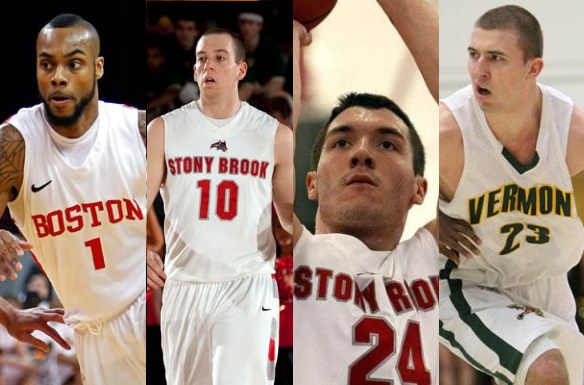
Darryl Partin (far left), Bryan Dougher, Tommy Brenton and Brian Voelkel Rounded Out The America East First Team

Freshman of the Year: Four McGlynn, Vermont McGlynn and his top competition for this award, Maine’s Justin Edwards, look like they’ll be great cornerstones for their respective teams for years to come. McGlynn, though, was more consistent overall this season. He scored 24 points in 27 minutes in a 68-49 win over Stony Brook that was the Catamounts best victory of the season.

Defensive Player of the Year: Tommy Brenton, Stony Brook At 6’5,” Brenton has the ability to cover anyone in America East. He’s an excellent rebounder and his offense comes from his defense. Always taking on Stony Brook’s toughest assignment, he led a defense that finished first in conference play by allowing 0.91 points per possession.

Reader’s Take


Power Rankings

  1. Stony Brook (20-8, 14-2)– The Seawolves have good wins at home over Cornell, Rider and Columbia, but a victory at Northeastern during BracketBusters was the first road win for SBU outside of conference play. Considering how down America East is in general this season, Stony Brook might end up in the play-in game and they could definitely win it.

    Steve Pikiell and Stony Brook Are The Favorites To Win The America East Tournament (AP)

  2. Vermont (20-11, 12-3) – The Catamounts own the America East’s best win – over Old Dominion in overtime – and its worst loss – at Binghamton. This is a solid team, but it needs every player on its game in order to win the slowdown games Vermont likes to play.
  3. Boston University (16-15, 12-4) – The record isn’t great, but most of it can be traced to losing D.J. Irving right before a key stretch in conference play and a lack of options in the frontcourt. Joe Jones did figure out a way to beat top seed Stony Brook once, at home, but they were swept by Vermont, their likely semifinal opponent. The second one was close, 68-67, and gives the Terriers hope they can repeat as champions.
  4. Albany (18-13, 9-7) – Head coach Will Brown has a contract extension, but the length and terms won’t be announced until after the postseason. That makes it sound like he has a lot of incentive to get the Great Danes some wins. The potential is there with Gerardo Suero, Mike Black and Logan Aronhalt. The problem is up front. UA suffered two losses to Stony Brook by a total of 20 points because there’s no one who can handle SBU’s size.
  5. New Hampshire (13-15, 7-9) – The Wildcats are hot, having won five of their last six games, including the last one Albany and UNH played on February 9. They’ve been winning close games over the elite (Albany, Boston U.) and taking care of business against the bottom. It’s straight to the elite teams on Saturday with Albany.
  6. Hartford (8-21, 7-9) – A number of talented freshmen, including Nate Sikma and Mark Nwakamma, give the Hawks something to build upon. There’s also some positive momentum considering the 8-8 finish to the regular season after the winless streak to start. John Gallagher had to spend a lot of time getting his team ready for this level, but it should pay big dividends in 2012-13.
  7. Maine (12-16, 6-10) – So much talent, so little to show for it. Justin Edwards and Alasdair Fraser are great blocks to build around, but they’re going to need some more help. The departures of Gerald McLemore and Raheem Singleton is going to leave holes in the offense next season. What Ted Woodward really needs is for his team to commit to play defense. Maine has allowed six of its last seven opponents to score at least a point per possession and lost each of those games.
  8. UMBC (4-25, 3-13) – Losing Chris De La Rosa at the beginning of the season basically tanked the Retrievers’ season. Along the way, though, Chase Plummer picked up a lot of the slack and walk-on Ryan Cook became an integral part of the rotation. Both those players will be back next season as UMBC tries to find a new way to hold down opponents after surrendering a conference-worst 1.12 points per possession this season.
  9. Binghamton (1-28, 1-15) – All those losses have exposed the fact that changes still need to be made in upstate New York. The Bearcats have left Mark Macon with an almost impossible situation and while there’s some talent on the roster, Robert Mansell’s knee injury and Ben Dickinson’s immature actions on the court leave questions that need to be answered before next season.
Share this story

Checking In On… the Big Ten Conference

Posted by Brian Goodman on February 28th, 2012

Bill Hupp is the RTC correspondent for the Big Ten Conference. Follow him on Twitter at @Bill_Hupp for his thoughts on hoops, food, box fans and life.

Reader’s Take


The Week That Was:

  • Spartan Success: Despite losing guys like Korie Lucious, Kalin Lucas and Delvon Roe, the Michigan State express rolled on. Perhaps no other coach in the country teaches a system and its principles quite like Tom Izzo. Surprise losses on Sunday by both Ohio State and Michigan, however, meant that MSU’s weekend destruction of Nebraska clinched them of the at least a share of the Big Ten title. The more things change, the more they stay the same.
  • Chicago (Evanston) Hope: That wind you felt coming from Chicago might have been a collective sigh of relief from Northwestern fans after senior leader John Shurna sank two free throws with mere seconds to play to help the Wildcats escape Happy Valley with a 67-66 win. Two straight gut-wrenching losses in one week might have been more than Northwestern could have overcome as they sweat out life on the NCAA Tournament bubble.
  • Lousy in Lincoln: It’s no secret that Nebraska has struggled on offense this year. But not since 1961 has Nebraska been so putrid on offense as they were when they were embarrassed by Michigan State, 61-34, at home over the weekend. The Huskers shot under 30% for the game and the loss of leading scorer Bo Spencer to an injured ankle near halftime only hampered their scoring efforts.

The Perennial Lesson In College Basketball 101 Is To Never Count Out The Michigan State Spartans.

Power Rankings

  1. Michigan State (24-5, 13-3) – As good as Michigan State has been this season, how would the Spartans be if Delvon Roe hadn’t been forced to drop basketball due to chronic knee problems? Roe’s presence would have given them more depth and would have taken the load off of Draymond Green at certain points. But it also forced youngsters like Branden Dawson and Adreian Payne to grow up quickly. While they’ve struggled with consistency, those guys are a big part of why the Spartans are Big Ten champs.
  2. Ohio State (23-6, 11-5) – Strange times in Columbus. After riding a 39-game winning streak and destroying most visitors who dared enter Value City Arena, the Buckeyes have now lost two of their last three games at home. Jared Sullinger has seemingly disappeared in big games and crucial moments this season. Read the rest of this entry »
Share this story

Final Conference Meeting Between Kansas And Missouri Etched Into Lore

Posted by Brian Goodman on February 27th, 2012

Steve Fetch is the Big 12 Correspondent for RTC. He filed this report from Allen Fieldhouse chronicling Saturday’s heated battle between Kansas and Missouri. You can follow him on Twitter at @fetch9.

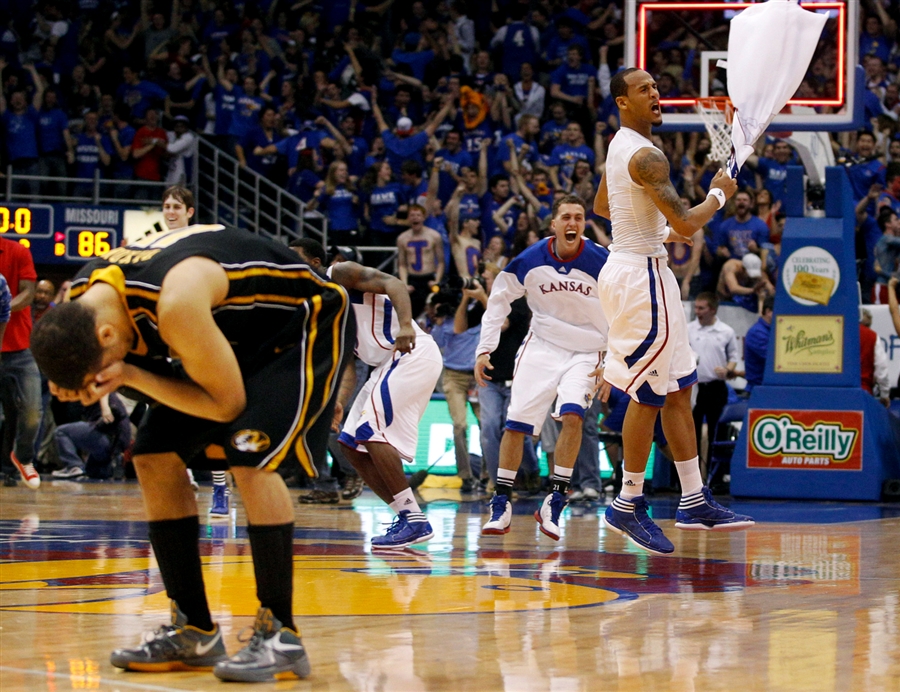
Luck is a funny thing. It was part luck that allowed Missouri to shoot 50% from three over the first 29 minutes of the game. It was part luck that led to them going cold down the stretch. And it certainly was part luck that kept Marcus Denmon’s long heave with 30 seconds left from rattling home. But the luckiest people were the more than 16,000 people in the building who got to witness perhaps the last regular season meeting between Kansas and Missouri.

Kansas Fans Touted Their Adoration Of Fabled Allen Fieldhouse

It’s one of the best rivalries in the country. It’s also one of the most overlooked. Most importantly, it’s based on pure hatred and history dating back to the Civil War. After the game, Missouri Athletic Director Mike Alden expressed his bewilderment at why the series wasn’t going to continue. The explanation isn’t all that complex, but it is fueled by emotion. A continuation of the series outside of the parameters of conference play wouldn’t be the same. Unlike in football, where a Florida-Florida State matchup can have national championship implications, a mid-November meeting between Kansas and Missouri would just be a pit stop before the show that matters. Not to mention the fact that it hardly benefits Kansas to let Missouri back into the Kansas City market and assume all the pressure: win, and they’re supposed to, because they’re Kansas. Lose and it’s the end of the world.

Read the rest of this entry »

Share this story

Checking In On… the Big East Conference

Posted by Brian Goodman on February 27th, 2012
Brian Otskey is the RTC correspondent for the Big East conference. You can find him on Twitter @botskey.
Reader’s Take


The Week That Was

  • Temple In Big East Talks: The Big East may have a new all-sport member as early as this fall if the reports are true that the Temple Owls are in discussions about joining the conference.  Adding Temple to the mix would be terrific for Big East basketball. While Syracuse is irreplaceable, you could make an argument that Temple and Memphis offset the departures of West Virginia and Pittsburgh. The enhanced stature of these two programs in the Big East will help fuel recruiting and could easily make them equal to what WVU and Pitt are right now. Temple will make its fifth consecutive NCAA Tournament appearance next month, its 30th in a storied history. The Owls have made two Final Fours and five Elite Eights, better than both Pittsburgh and West Virginia (WVU has two Final Fours, Pitt has one). Memphis has been to more Final Fours and Elite Eights as well, although two were vacated (1985 and 2008). All in all, I’d argue that the Big East hit a grand slam with Temple and Memphis, should this all go through. The league simply couldn’t have done better given the constraints it faced.
  • Punching Your Ticket And Voiding It In The Same Week: One could argue that Seton Hall and Cincinnati punched their NCAA Tournament tickets with wins over Georgetown and Louisville, respectively, last week. However, both squads lost over the weekend (to Rutgers and South Florida), wiping out the good vibes from huge home wins earlier in the week. As of right now, the Pirates and Bearcats are likely still in the Tournament, but in much more precarious positions than before. In late-season college basketball, nothing is ever a sure thing until all the games are played. A team’s status can change at a moment’s notice.  

Syracuse Senior Scoop Jardine Helped Lead The Orange To A Title-Clinching Win Over Connecticut. (Jessica Hill/AP Photo)

Power Rankings

  1. Syracuse (29-1, 16-1) – The men in orange just keep moving right along, picking up two more wins this past week. Finding a way to win is so cliché, but it has been the theme with this group over the last few weeks. Syracuse has moved its record to 29-1 with seven of their nine wins since the loss to Notre Dame coming by ten points or less. In the win over South Florida, Syracuse overcame 35% shooting and a 20-7 Bulls run to start the game by going on a massive 26-0 run that started about midway through the first half and bled deep into the second. Kris Joseph struggled shooting, but Scoop Jardine picked him up by scoring 15 points. Joseph rebounded in a big way with 21 points at Connecticut while Fab Melo added 11 points and nine rebounds. This team has more weapons than any in the nation, allowing the Orange to overcome off nights by some of their key players. More importantly, Syracuse out-rebounded UConn, 39-35. That’s significant because of what the Huskies bring to the table in their front court and Syracuse’s awful rebounding numbers that have persisted throughout the season. With the win at UConn, Syracuse officially clinched the Big East regular season title, something everyone knew was going to happen as early as when the calendar flipped to January. This week: 3/3 vs. #23 Louisville.
  2. Marquette (24-5, 13-3) – There are teams more talented than Marquette out there, but you will not find one with a greater will to win than this bunch of Golden Eagles. You might as well call them their old nickname, the Warriors, because that’s exactly what they are. Jae Crowder made his case for Big East Player of the Year last week in grand fashion, totaling 53 points in two wins over Rutgers and West Virginia. Crowder dominated West Virginia’s Kevin Jones in their head-to-head matchup and may have moved in front of Jones in the POY race in the process. Crowder certainly plays for a better team and that has to enhance his case even more. Despite Buzz Williams suspending Darius Johnson-Odom, Vander Blue and Junior Cadougan for the first half against West Virginia and Todd Mayo for the second half, Marquette rallied yet again to pull out a victory. I don’t understand the half-suspensions. Sit them down for the whole game if you want to make a statement, but that’s beyond the point. The Golden Eagles shot 50% for the game and forced 19 WVU turnovers, helping to offset 16 Mountaineer offensive rebounds. In the win over Rutgers, Marquette forced 21 turnovers and Johnson-Odom added 21 points alongside Crowder’s 27 as the Golden Eagles shot 54% overall. MU can close out the Big East regular season in grand style and finish with a 15-3 record if it takes care of two tough games in the coming week. This team has a legitimate chance to win the Big East Tournament and go deep in the NCAA’s. This week: 2/29 @ Cincinnati, 3/3 vs. #9 Georgetown. Read the rest of this entry »
Share this story