What’s Trending is a column examining the week that was in college basketball social media. Matthew Eisenberg (@matteise) is your weekly host.
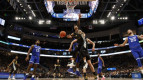
After a January 18 loss at Boise State, Utah State’s record fell to 14-6 (3-4 Mountain West) with a NET Ranking of 83rd and any bubble hope seemingly out of reach. After a stretch of winning 11 of its next 13 games, however, Utah State found itself playing for a Mountain West title over the weekend against San Diego State. After a tightly fought second half, the Aggies had possession with the score tied and the clock winding down…
Sam Merrill’s game-winner was his sixth made three of the game. The star guard played every second of the game, scored 27 points and helped carry the Aggies right into the NCAA Tournament for the second consecutive year. The senior averaged 27.7 points per game in the MW Tournament and is the type of player than can definitely wreck opponent’s dreams next week.
While winning the Mountain West title would have capped a tremendous pre-NCAA Tournament season for the Aztecs, Jon Rothstein outlines below why San Diego State’s loss could end up benefitting the team in the long run. The roughly 125-mile trip from Viejas Arena to Staples Center definitely beats the 2,800 miles between San Diego and Madison Square Garden (if the Aztecs had gotten the #1 Seed in the East Region).
San Diego State's loss to Utah State means that Dayton is in position to be a number one seed in the 2020 NCAA Tournament.
What else does it mean?
The Aztecs could very well be the two seed in the West Region, which would keep them in their region of the country. https://t.co/qBCBDGrCBh
Belmont last year made the NCAA Tournament in head coach Rick Byrd’s final season leading the Bruins. Entering the season, the school needed to not only replace Byrd, but also the team’s two-leading scorers — Dylan Windler (21.3 PPG) and Kevin McClain (16.8 PPG). New head coach Casey Alexander began the season with a shaky loss to Illinois State and an even more surprising defeat at the hands of SIU-Edwardsville, but things started to click by OVC play. Down a point to Murray State on Saturday, Belmont went to a program classic, the backdoor cut. Like last year’s team, the Bruins are dancing.
We are not sure what made John Feinstein decide to file a column on Saturday recommending that a switch from the “one-and-done” model to the baseball model of drafting, but it certainly generated quite a bit of attention. If you aren’t familiar with the baseball model, it essentially lets players enter the draft after high school and if they are selected they can enter become a professional baseball player (even if it is at the minor league level). If they choose not to go the professional route, they are not eligible until they have completed their junior year of college or are 21 years old. As you can imagine, the reaction has mostly been negative for a variety of reasons including the fact that baseball has a well-developed minor league system, which every player is expected to go through before playing for the MLB team that drafted them whereas nearly every first round pick is expected to play for their NBA team immediately. While we agree that the the NCAA/NBA policy regarding early entry, Feinstein’s analysis is too rudimentary to be enforced.
Normally the dismissal of a junior who comes off the bench would not be newsworthy (at least if it did not involve an arrest or NCAA violation), but when it involves Duke it certainly is. Late Thursday, Duke announced that Mike Krzyzewski had dismissed junior Rasheed Sulaimon from the team for being “unable to consistently live up to the standards required to be a member of our program”. While we don’t know what exactly Sulaimon did for Krzyzewski to make him the first player dismissed from the program–it was reportedly a series of events–but it must have occurred after their loss at Notre Dame. What it appears to have come down to is that Sulaimon’s production (10 points, 2.7 rebounds, and 2 assists per game during his career, but declining over the years with less playing time) was not worth the headache. For its part Duke bounced back without Sulaimon for an improbable come-from-behind victory at Virginia on Saturday. As for Sulaimon we are not sure where he will end up next, but what once appeared to be a potential NBA career now looks more like one that will be spent overseas.
While Sulaimon’s dismissal may have been a bigger story in terms of headlines, the bigger news in terms of impact on the court came when Virginia Commonwealth guard Briante Webertore the ACL and MCL in his right knee ending his college career. Weber suffered the injury late in a loss on Saturday against Richmond. It goes without saying that losing their defensive leader, who is just 12 short of the NCAA all-time leader, is a huge blow to VCU and its famed HAVOC defense. Perhaps even more importantly the Rams have now lost their point guard and leader on the court. While VCU is more well-equipped to handle this than you would expect from an Atlantic-10 team, but it certainly puts a cap on their ceiling.
Illinois‘ hopes of making the NCAA Tournament this year already appeared pretty dim and the news that they have indefinitely suspended Rayvonte Rice and Aaron Crosby makes that seem even less likely. The timing of the suspension is interesting because both players have been injured with Rice having already missed seven games and Crosby having missed three games, but according to the school both are ready to return. The school would not elaborate on what the players did, but missing Ricer (17.2 points and 6.9 rebounds per game) and Crosby (7.8 points and 3.6 rebounds per game) for much longer would eliminate whatever slim hopes they have of making it to the NCAA Tournament.
It has been a rough year at Bradley. The team 7-15 including 2-7 in the Missouri Valley and their coach has to pay $1.2 million to his old school for leaving early. On Thursday morning their leading scorer–Warren Jones–was arrested at a strip club for using an older teammate’s ID and underage drinking. In addition to Jones (13.9 points per game), there were also citations levied against Ka’Darryl Bell (7.5 points per game) and Omari Grier (8.2 points per game). The extra salary will probably help Geno Ford sleep easier at night, but it has been a rough few weeks for him.
We looked at the best of the AAC non-conference schedules in Part I, after explaining a bit of what makes for a good non-conference schedule. This season, there’s quite a bit more bad than good, which could drag down the collective RPIs of AAC members and ultimately lead to lower NCAA Tournament seeds come March.
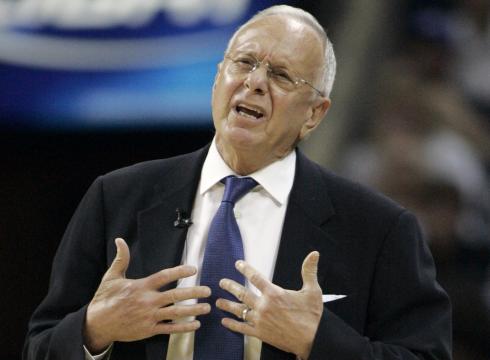
Larry Brown’s SMU Mustangs, a popular sleeper pick, have a lot riding on a trip to Virginia.
The Bad
Cincinnati: The Bearcats return the favor of a visit last season from MW favorite New Mexico with a road trip of their own to The Pit. They also will play former Big East rival and mid-level ACC squad Pitt at Madison Square Garden. Then… well, there’s the rivalry game with Xavier, which seems poised to finish in the bottom half of a newly constituted (read: relatively weaker) Big East; N.C. State, clearly headed toward the bottom of the ACC, and Conference USA also-ran MTSU. That trio might end up in the RPI top 100; it’s highly unlikely any other team on the schedule will come close.
Louisville: If the defending champs can escape Rupp Arena with a win, all will be forgiven by both their fans and the committee, as a road win against Kentucky is perhaps the highest quality victory available in college basketball this year. Southern Miss, which finished with an RPI of #30 last season, is favored to win Conference USA. They face a potential Basketball Hall of Fame Tip-Off final against North Carolina at the Mohegan Sun. They need the Tar Heels to be there, because the rest of their foes are middling teams in weak leagues, with Charleston the most likely to crack the top 100, and several – we’re looking at you, Hofstra and UMKC – seeming likely to end up north of #300.
We are still trying to piece together the news about BYU coach Dave Rose, who reportedly had “cancerous spots” removed during a semi-annual screening that he has after being diagnosed with a pancreatic neuroendocrine tumor in 2009. By its nature, this finding was likely asymptomatic and given the vague nature of the description we do not even know where these “cancerous spots” were located in his gastrointestinal tract. However, based on the report the intervention appears to have been successful and Rose is expected to be back with the team by October 7 when they officially start practice.
After a year spent in NCAA Tournament purgatory for their low APR scores Connecticut seems primed to potentially make a run this coming March. Those plans appear to have taken a slight detour after the school announced that forward Tyler Olander had been suspended indefinitely for what was initially reported to be a violation of team rules (later found out to be a DUI). Although Olander put up modest numbers last season (4.3 points and 3.7 rebounds per game) he was expected to play significant minutes for a team that is lacking on depth on the inside. We are unsure of how long Olander’s suspension will last, but we suspect that it will be for at least a few games since Olander was also arrested in March for trespassing while on Spring Break in Panama City.
One would think that being the head of a program that was embarrassed in front of a national audience less than half a year ago would you a pariah, but that does not appear to be the case of recently disgraced Rutgers athletic director Tim Pernetti. Pernetti, who was widely blamed for the school’s failure to react to Mike Rice’s actions, has somehow landed a job as Chief Business Officer of New York City Football Club. Now we have no idea how prestigious the job is (obviously it is a step down from Rutgers), but the fact that he was able to land a job with a professional sports team (ok, they don’t start playing until 2015) speaks volumes for how easily administrators and business people are willing to overlook such ridiculous behavior.
We have been critical of the ways that colleges recruit and get commitments out of kids who are often still in middle school. So it may come as a surprise that we support the decision by Bradley to sign two brothers who are still in elementary school. The decision to sign the brothers–Johnah and Jarrett Sahrs–is not the result of some ridiculous YouTube video or even some coach looking to make a recruiting splash, but instead it is the result of five year-old Johnah’s 18-month battle with a high-grade neuroblastoma that he has fought with Jarrett, his nine year-old brother by his side. Obviously, these two have much bigger things to deal with than being part of the Bradley basketball team, but it was a nice touch by the school to help lift their spirits.
If you are a Louisville fan and/or want to support a good cause, the school is selling pieces of this past season’s Final Four floor with proceeds going towards pediatric cancer research. With prices ranging for $99.99 for a 9″ x 12″ plaque with a section of floor on it to $499.99 for a 18″ x 13″ piece signed by Rick Pitino (“limited” to only 1,000 pieces) there is a pretty good chance that this sale will top the $200,000 that Kentucky reportedly earned last year for a similar sale. While the $499.99 price might seem ridiculous to some it is going towards a good cause and given the state of the economy (or at least the stock market) we wouldn’t be surprised to see many of those pieces sell.
There were so many early-entry decisions over the past three days that we will have break them into groups. The first group will be the guys who left. Perhaps the most notable is Shane Larkin, who is leaving Miami after a sophomore year in which he took his stock from not being on the NBA’s radar to being a potential first round pick. We are not quite sold on Larkin as a NBA point guard–his limitations were exposed in a few games this season–but we do not see his NBA Draft stock getting much higher especially with how little Miami will be returning next season so it made sense for him to leave. On a smaller scale, but probably more important in terms of the landscape of his conference Ray McCallum Jr. announced that he is leaving Detroit after his junior season. McCallum is in a similar Draft position or possibly a little worse than what Larkin is based on the mock drafts that we have seen, but given the information that his father (Detroit’s coach) has we would expect that he has some pretty good information on where he could expect to be selected. Finally, there is Andre Roberson, Tad Boyle’s first recruit in Boulder, who announced that he will forgo his senior season at Colorado to enter the NBA Draft. Roberson’s draft stock appears to be similar to the other two although Roberson’s position in mock drafts has varied more than the other two.
While a trio of players announced their departure from the college game another trio announced that they will be staying. The most significant in terms of the national championship picture is Adreian Payne, who announced that he will return to Michigan State for his senior season. Out of all of the players considering entering the NBA Draft early opinion on Payne may have been the most divided. He probably could have come out and been a first-round pick, but if he returns and improves his game he should be a lottery pick next year. The next biggest announcement was the Isaiah Austin will be returning to Baylor for his sophomore season. Austin seemed to be a fairly safe bet to be a first-round pick so his decision is a bit surprising, but it has been reported that he was diagnosed with a torn labrum, which would affect his NBA Draft workouts, and he clearly has some areas to work on his game so it doesn’t seem unreasonable. We will leave the question of coming back to Scott Drew to work on those deficiencies for another column. Shabazz Napier may not garner the same headlines as the other two players that we mentioned, but his decision to return to Connecticut for his senior season may have an equally significant impact on his team’s success. We are glad that Napier decided to return to school because he was at best a late second round pick although the fact that he waited so long to announce might suggest that someone was putting thoughts in his head that he could have been a first-round pick. Fortunately he did not listen to those voices and will return to finish his college career in Storrs.
Most of the attention has been focused on NBA Draft decisions, but there were a pair of notable transfers. On Friday, Ahmad Starks announced that he is transferring from Oregon State. Starks, who has one more season of eligibility left is reportedly looking at Bradley or Illinois to be close to his ailing grandmother. Starks would be a huge addition for either program and given the way the family hardship waivers have been getting cleared by the NCAA we have no doubt that he would be able to play next season. The other transfer announcement is more of an update as Rutgers transfer Eli Carter has narrowed his list down to Florida and Maryland. Normally we would assume that Carter would have to sit out a year, but after the NCAA’s ruling on the players at Rice and how they received a waiver due to the abuse they alleged at the school we would not be surprised to see Carter and other Rutgers transfers to try for a similar waiver given the video evidence against Mike Rice.
We may have finally moved past conference realignment, but it appears that conferences are looking at creating their own version of Manifest Destiny as the ACC is looking at expanding its brand into Europe by playing games there. As the article notes the entire idea is in the preliminary stages so a lot of work needs to be done, but other schools have played games overseas with some success. Our big qustion is how this would work at the conference level. It works great when teams are playing glorified exhibition games or when there is well-defined revenue-sharing the way that professional leagues do, but what happens when a school loses a lucrative home-game that could be the difference between them becoming bowl-eligible or being on the right side of the bubble. Obviously pro sports teams deal with this issue too, but they have more well-defined revenue-sharing agreements and have a much stronger central leadership structure that allows them to issue edicts that will be followed.
It is a move that probably will not attract much attention on the coaching carousel, but UNC-Asheville filled its head coaching vacancy as it introduced Nick McDevitt as its next head coach. McDevitt, who played for the school from 1997 to 2001, had been an assistant with the team before taking over the head coaching responsibilities when the former coach left to take a job on the staff at UNC-Wilmington. McDevitt has no experience as a head coach so we are withholding judgement on his ability to coach so hopefully his alma mater gives him a chance to prove himself.
Patrick Marshall is the RTC correspondent for the Missouri Valley Conference. You can also find his musings online at White & Blue Review or on Twitter @wildjays.
Looking Back
A Two-Team Race, Or Is It? Heading into last weekend, it looked to be a two team race between Creighton and Wichita State in the MVC. But don’t count Indiana State out of the mix. The Sycamores’ RPI is high right now and they have won three of their last four games. Also keep an eye out for Evansville, Bradley, and Northern Iowa to be a thorn in the contenders’ sides, hoping to score some upsets to keep things interesting. So far, the Bluejays and the Shockers have been able to mostly avoid those four teams, but Wichita State will play three of its next four games against Bradley, Indiana State and UNI. If you know anything about the Valley, anything can happen when two teams lace them up so this race is far from over yet.
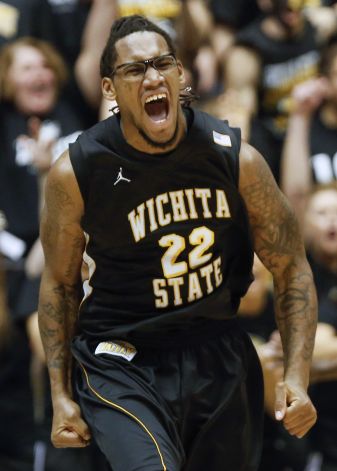
Will Carl Hall’s Return Put Wichita State Over The Top? (Travis Heying/Wichita Eagle)
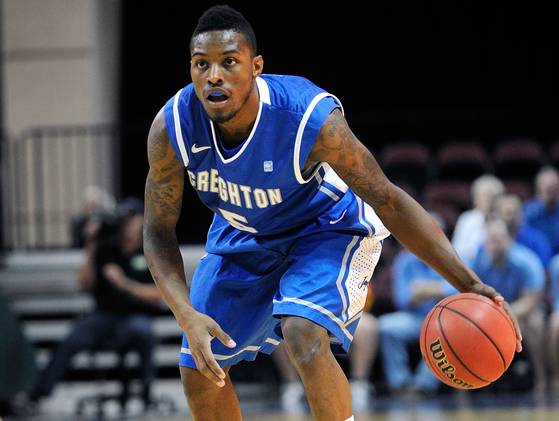
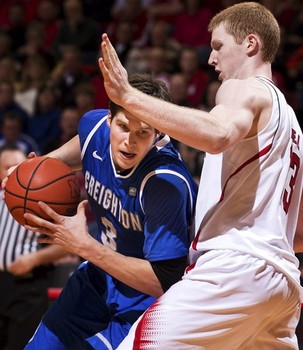
McDermott Continues To Light It Up: Doug McDermott continues to impress the nation with some extraordinary numbers. Since the start of 1996-97 season, no player has averaged more than 20 points per game while shooting better than 50 percent from the three-point line for an entire season. The Creighton junior is currently averaging 24.1 points per game and shooting 52.5% from beyond the arc. In addition, he is averaging 28 points per game and shooting 59.5 percent from deep in five road games this season. His offensive efficiency has continued in the last three games by shooting 62% from the field, 72% from three and averaging a ridiculous 31.6 points per game. He has already scored 29 points or more in seven games this season. He is without question a legitimate National Player of the Year candidate.
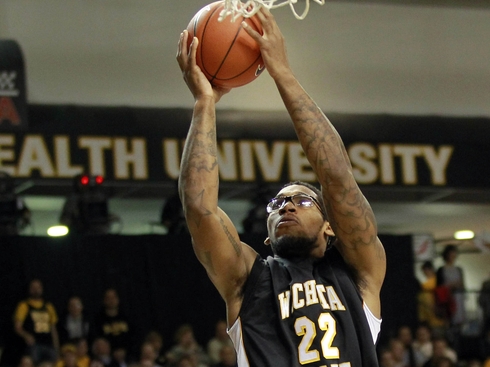
Hall Returns With Fire: Wichita State’s Carl Hall had been out the last several weeks with a thumb injury. Of the injuries that the Shockers have suffered this season, losing Hall hurt the most. After missing the first six games of conference play, he returned this past week and he was ready to play. The senior only scored two points but grabbed 10 rebounds in a victory over Illinois State, but against Creighton, Hall added the scoring back to his game by going for 17 points and 13 rebounds (including six offensive) to lead the Shockers to a narrow victory. The only thing he needs to shake the rust from is his free throw shooting. Hall went 3-of-8 in the two games, including a 1-of-6 disaster against Creighton after starting the season 20-of-23. He may be the difference-maker that Wichita needs if the Shockers are to win an MVC championship.
Power Rankings (Overall, Conference, Last Week)
Wichita State (17-2) (6-1) (2)–The Shockers sit in first right now based on their win over Creighton this past weekend. Do I think they are the better team? I guess I do for now. I will be watching to see how both Creighton and Wichita fare in their next games and how they react to last weekend’s result. Wichita State got a boost from the return of Hall to help offset his 8-of-20 shooting from the three-point line against the Bluejays. Their rebounding has been outstanding, out-boarding their opponent in each conference game this season. They are grabbing almost nine more boards each game than their opponent. Wichita State is now #14 in the RPI and is 6-1 against the top 100 and 3-0 versus the top 50. Read the rest of this entry »
Patrick Marshall is the RTC correspondent for the Missouri Valley Conference. You can also find his musings online at White & Blue Review or on Twitter @wildjays.
Looking Back
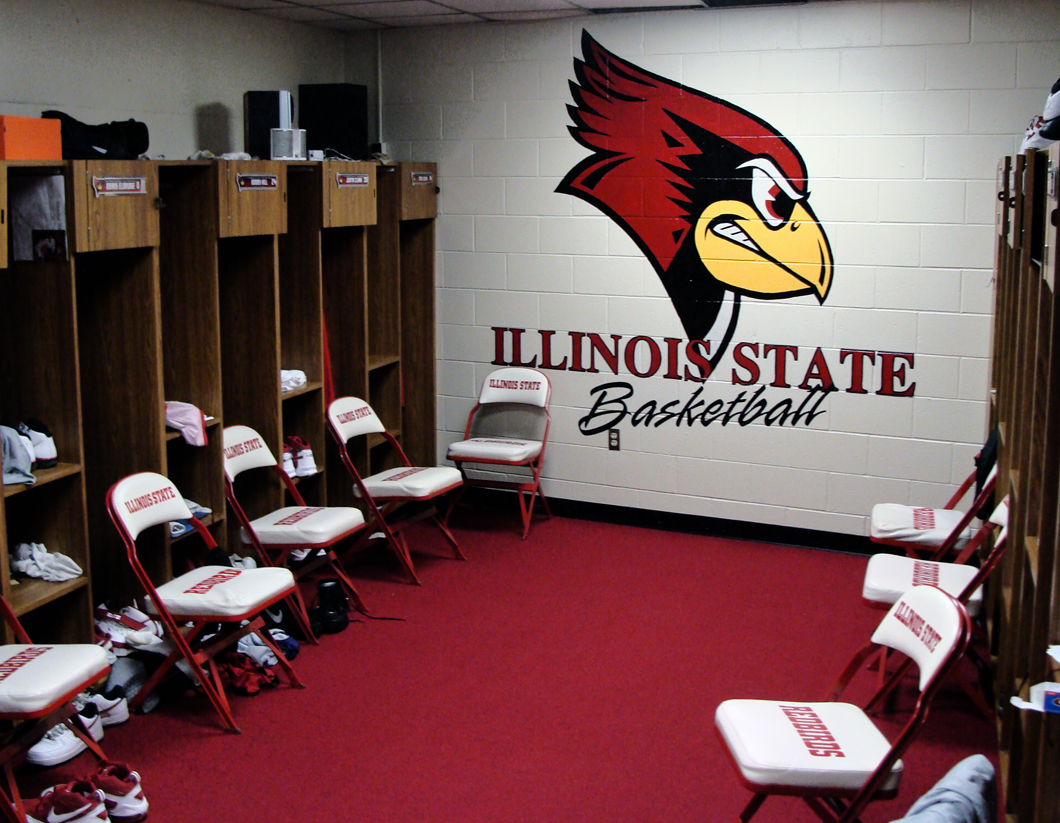
MVC Race Already Heating Up–What a wild first week in Missouri Valley Conference play. Creighton, as expected is sitting at 3-0. Gregg Marshall doesn’t get enough credit for reloading Wichita State and the Shockers are at 3-0 as well. After that, things get really interesting. Indiana State, Evansville, Bradley and Missouri State are all sitting at 2-1. None of those four teams were mentioned in the top echelon at the start of the season, but each of them have wins over others that weren’t expected. The biggest surprises are Northern Iowa sitting at 1-2 and Illinois State sitting at 0-3. The Panthers were expected to be a sleeper in the league this year, but after a tough non-conference slate where they did not win as much as they had hoped, they started off MVC play at 0-2 before defeating Illinois State on Saturday. The Redbirds were expected to be league contenders along with Creighton, but they have had a lot of things go wrong for them this season. While it is still early, some of these situations may build upon themselves making for another crazy season. What it may hurt in the long run, though, are the number of NCAA bids come March.
Illinois State Has Pulled a Disappearing Act This Season
McDermott Still Reaping Rewards–Doug McDermott has been playing very well since Thanksgiving. As a result, he has continued to be recognized for his talent. He received the Lute Olson Midseason Player of the Year award, and ESPN recognized him as its Player of the Month in December. He’s third in the country in scoring at 23.1 points per game, is averaging 7.3 boards per contest, and is shooting 49 percent from beyond the arc. Those are numbers that are hard to ignore. Through his first three conference games, McDermott has also averaged 23 points a game while fighting off sickness over the past two games. He is on the verge of carrying Creighton on his shoulders, but luckily he has not had to since the Bluejays have been pretty balanced and different players have stepped up when needed. He should remain in the National Player of the Year conversation throughout, but it may become tougher to put up the same outstanding numbers in conference play that he did in the non-conference season.
Drugs Become Problem–A few weeks ago, Illinois State’s Geoffrey Allen was indefinitely suspended from the team and was soon after arrested for trying to sell marijuana. The newest incident involving drugs now surrounds Bradley’s Will Egolf. The sixth-year center was arrested as the year rolled over to 2013, accused of possession of a controlled substance. It turns out that he was purchasing Vicodin to help him manage the pain resulting from knee injuries he has suffered over the past few years. Those knee injuries ultimately allowed him to gain a sixth year of eligibility. He did not make the trip to Wichita this past weekend and it now appears that he will be suspended for a minimum of three games, but this transgression could ultimately end his career. These two incidents should raise a red flag to other MVC schools to remain vigilant and aware of what their players are doing and what may be affecting their play. I hope this doesn’t become a trend because it sort of gives the league a black eye.
Reader’s Take
Power Rankings (conference record and last week’s ranking in parentheses)
Creighton (14-1) (3-0) (1)–If you don’t know by now, Creighton is not just a one-man show with Doug McDermott. McDermott sat on the bench during a key stretch in the second half against Indiana State and the Bluejays were able to come back from a deficit and take a lead with the play of Gregory Echenique and Ethan Wragge. Avery Dingman has stepped up with the loss of Josh Jones and everyone is doing their part to contribute to the Bluejays success. Probably the biggest development has been the play of Austin Chatman who took over the point guard duties this season. In the first three conference games, Chatman has 21 assists to only 6 turnovers. A 3.5/1 assist-turnover ratio is pretty good. Read the rest of this entry »
Patrick Marshall is the RTC correspondent for the Missouri Valley Conference. You can also find his musings online at White & Blue Review or on Twitter @wildjays.
Looking Back
Indiana State Raises Profile: There have been a lot of question marks surrounding Indiana State and how good the Sycamores might be this season. It is possible those questions have been answered after a couple of important overtime wins over power conference teams in the Diamond Head Classic in Hawaii. First, they knocked off Mississippi and then after losing to San Diego State, knocked off Miami (FL) in the third-place game. Jake Odum came up big in both of those wins. After battling foot injuries all of last season that kept him from performing at the same level as his freshman year, the junior hit several free throws down the stretch in overtime against Ole Miss and then hit the game-winner against the Hurricanes. The Sycamores might have gained enough momentum out in Hawaii to throw them into the MVC conversation heading into conference play.
Josh Jones Hangs It Up: A few weeks ago, Creighton’s Josh Jones blacked out before a game against Nebraska. It was later determined he had an atrial flutter and needed an invasive procedure to correct it. There were questions at the time as to whether he could come back from the ailment. Unfortunately, as a result of that successful procedure, it was found that he will have to another medical procedure which will force him to finish his basketball career earlier than expected. Jones has been a fighter throughout his basketball career. It was going to be a tough road ahead for Jones anyway, but he’ll be remembered most for his smile and positive attitude. The only good thing out of this is that Creighton will be able to focus on replacing Jones on the court with the remaining players on the roster. Although Jones will be hard to replace, he will still be with the team cheering them on.
The Weak Link In The Conference: I would need to dig back into the record books a little bit, but it has to be a long time since a Missouri Valley Conference school headed into conference play looking for its first win against a Division I team. Missouri State enters MVC play with a 2-10 overall record, but the two wins are against two non-D-I teams: Malone and Philander Smith. The Bears even played on the road at SWAC member Alabama State and lost that game by 12 points. Paul Lusk had the luxury of inheriting a talented team over a season ago, but what has happened since? Injuries have plagued the team, with Jarmar Gulley out before the season began, but also other veteran players like Keith Pickens dealing with injuries. The other problem is that they were already down one scholarship this season because of APR scores. While many may look at Bradley’s downward spiral as a comparison the previous two seasons, this one might be even worse. Eventually, Missouri State has to win a game and I’m sure the other nine teams in the league will not want to be the school that falls to them, as it would be a massive hit to their potential at-large chances.
The Bluejays Will Look To Rally Around Guard Josh Jones, Who Left The Team For Medical Reasons.
Reader’s Take
Power Rankings (last week’s rankings in parentheses)
Creighton (11-1) (1)–The Bluejays took care of business in their non-conference slate with their only blemish coming against Boise State. At this point, that doesn’t look like a bad loss, but yet the questions still hang out there on what might be their best win. Wins over California and Arizona State might look pretty good right now, but it could be the win against Wisconsin that might end up being the key victory for the Bluejays come march. Last season, Gregory Echenique exploded in conference play. After showing signs of dominance down low in the non-conference season, Echenique could be the key to leading Creighton to an MVC regular season championship that has eluded them for the past several years. Read the rest of this entry »
Patrick Marshall is the RTC correspondent for the Missouri Valley Conference. You can also find his musings online at White & Blue Review or on Twitter @wildjays.
Looking Back
Realignment May Finally Hit the MVC—Since 1995, only the Missouri Valley Conference and the Ivy league have not been affected by conference realignment. That may change soon depending on what happens with the seven catholic schools that are breaking away from the Big East. A lot of overtures to an “All-Catholic” league have been on peoples’ wish lists for some time, but many thought that it could never become a reality. Now with these teams looking to start their own league, they need more members. It seems natural that Creighton would be on that list. A lot of scrambling and rumors have led some to believe that Evansville was also looking to head to the Horizon league. While this speculation has been squashed by both Creighton and Evansville officials, you would have to think that if this new league gets big enough, that the Bluejays would be in the mix. The panic button hasn’t been hit yet, but every school in the Valley should have a backup plan just in case the league loses one or more members.
Wichita State’s New Year’s resolution is to get Carl Hall healthy again.
Losses to Top Teams–Wichita State lost to Tennessee last week, but it wasn’t until the practice after that game when they lost Carl Hall to a hand injury that will keep him out of action for a month. Hall has been the steady force for the Shockers while they implement a slew of new players into the mix this season. With the Valley grind so close to its arrival, they will need Hall’s presence and leadership to get on the right foot as conference play gets started. Making matters worse, freshman guard Ron Baker will be sidelined for at least six weeks with a stress fracture in his foot. Baker isn’t as important a player as Hall, but it leaves a 25 minute-per-game gap that will need to be filled as well. Creighton also lost a key player for an undetermined time with guard Josh Jones. Jones blacked out before a game against Nebraska on December 6. An atrial flutter in his heart has sidelined the Bluejays’ sixth man for at least a month. He will have a procedure performed and could be cleared again at some point, but it is hard to tell whether he will be able to come back or if he even would want to. His energy and smile is infectious and his performance on the court, like an 18-point outburst against UAB earlier this season, will be missed and may raise some questions about Creighton’s depth. For Illinois State, they make the news in the wrong way with Geoffrey Allen first being suspended from the team and then arrested for selling marijuana. Although Allen didn’t play much this season, news like this can be a distraction to the team as it moves forward.
Surprise of the Non-conference Season–The MVC has been full of surprises this season, including the notion that Bradley and Southern Illinois look ahead of schedule. Bradley’s second year under Geno Ford appears to be on the right track as the Braves have been able to get some nice wins on the road, something that they had trouble doing the past few seasons. If they can win out in the non-conference season, they could look better than some of the other teams that were expected to be ahead of them. For the Salukis, Barry Hinson put together a schedule that could definitely give a troubled team a big confidence boost. Southern Illinois won’t win any strength of schedule contests, but they have been playing together, winning close games, and even getting some road wins. They both will finish the non-conference season with .500 records or better. The current bottom third of the conference — Indiana State, Drake, and Missouri State — are a bit of a surprise in that they are on the opposite end of things right now. The biggest disappointment has to be Missouri State. The Bears are 0-8 against Division I competition as a result of a lot of injuries. With the road they are going down, they could head into conference play still looking for that first D-I win.
Power Rankings (current record and last week’s ranking in parentheses)
Creighton (10-1) (1)–The Bluejays keep winning and are coming off of a trip to California where they didn’t have the best night of shooting but were still able to come out with a double-figure victory. In all of Creighton’s wins this season, they have had a winning margin by 10 or more points. DougMcDermott continues his spectacular play as of late and has the nation’s best scoring average per 40 minutes over the past two seasons at 29.3 points per game. He has had back-to-back 30-point games, which is a first for Creighton in more than 20 years. Creighton is 8-1 against power conference teams over the past two seasons. Read the rest of this entry »
Patrick Marshall is the RTC correspondent for the Missouri Valley Conference. You can also find his musings online at White & Blue Review or on Twitter @wildjays.
Looking Back
McDermott Looking Like Last Season — If you have been watching any Creighton games this season, it might have seemed that Doug McDermott was starting out a little slowly compared to last season. That may have been expected as more teams have started to regularly double- or even triple-team the All-American. However, it may also have been related to the time he took off in the summer to take a break from hoops more than anything. Over the past three games, McDermott has scored 80 points since the Bluejays’ home loss to Boise State. In the past four games, he has shot 17-of-24 from three-point range, and he is now fifth in the nation in scoring (22.7 PPG) and shooting 52.3% from the three-point line. Right now his minutes per game are running below last season’s as well. Teams will have to decide to pick their poison against McDermott with his skill set both inside or outside. If he continues this torrid pace, it will be hard to deny him strong consideration for eventual National Player of the Year honors.
There’s no denying that Doug McDermott is in one of his patented grooves.
Still Undefeated — Wichita State is still one of only 14 teams in Division I that is still undefeated. Sitting at 9-0, the Shockers are off to their best start in school history. They have never started the season at 10-0, but will have the chance on Thursday night against Tennessee. With all of the holes that Gregg Marshall has had to replace going into this season, it is quite an accomplishment for his team to be off to this great of a start. Whether it is still figuring out the lineup or the depth they are developing, nine players are averaging 14 minutes or more of playing time a game. At the same time, they are dominating opponents with only two games within single digits (VCU & Air Force). Against the rest of their opponents, they have won by an average of 18 points per contest.
Who is Next? — Creighton and Wichita State look to be at the top of their games right now. But really, who is next in the MVC pecking order? The rest of the league has been pretty inconsistent so far as we head into the final two weeks of non-conference play. Fortunately for Illinois State, it is sitting at a solid third due to the schedule it has played, putting it at #45 in the RPI. Amazingly enough, Southern Illinois is sitting at fourth with an RPI of #113. Northern Iowa, despite playing in the stacked Battle 4 Atlantis is sitting 7th in the league with an RPI of #182. By going 0-3 in that tournament, it has been a deep hole that the Panthers have had to get out of. As a league, the MVC is the ninth best conference in the nation, just ahead of the West Coast Conference. These next couple of weeks will hopefully separate some teams in the conference and that can lead into momentum entering conference play to help keep the RPI up.
Reader’s Take
Power Rankings
Creighton (9-1) — Since losing to Boise State on November 28, the Bluejays went on a rampage against their past three opponents — St. Joseph’s, Nebraska and Akron — to a win margin of at least 16 points or more. It has started with the play on the defensive side of things limiting opponents from getting open looks from three as well as hedging off ball screens a lot better. We all know about McDermott, but Grant Gibbs and Austin Chatman have been distributing and holding onto the ball efficiently. Gibbs has had 27 assists and one turnover and Chatman with 13 assists and 4 turnovers during this three game stretch. Gibbs for the season has a ridiculous 7.3/1 assist turnover ratio for the season. Read the rest of this entry »