
RTC 2013-14 Post-NBA Draft Deadline Top 25

Posted by KDoyle on April 30th, 2013

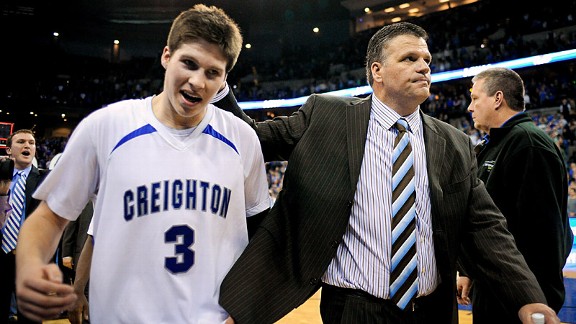
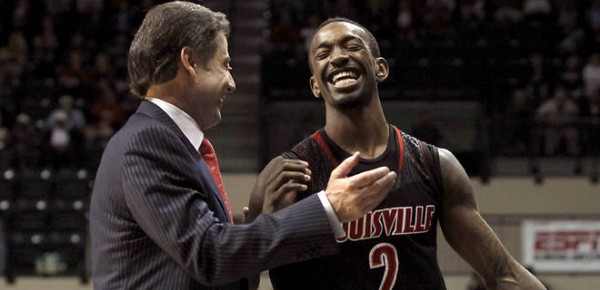
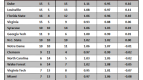
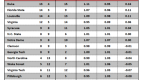
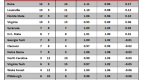
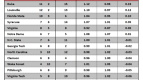
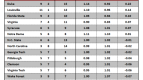
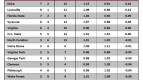
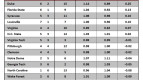
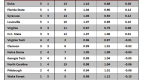
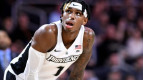
Although we are less than a month removed from Louisville’s win over Michigan in the National Championship game, it certainly isn’t too soon to look ahead to what the 2013-14 season has in store. With this past Sunday the deadline to declare for the June NBA Draft, we now have a much better idea who the top teams in the country should be once the ball is tipped again in November. In looking at the top of our Post-NBA Draft Deadline Top 25, there are three teams bunched together separated by just three votes — in fact, Louisville and Michigan State are knotted together at the top. It isn’t all too often that a team wins it all, graduates its starting point guard, has its best frontcourt player leave for the NBA, and is still perhaps the top team in the nation, but that’s the case for Rick Pitino and his Cardinals. With Russ Smith and Chane Behanan returning, Louisville will be the early favorites to win the AAC — the ACC, keep in mind, doesn’t come for UofL until 2014. Michigan State received good news on Sunday when Adreian Payne announced he would be returning to East Lansing for his senior season. Payne’s return, coupled with the return of Gary Harris — the Big Ten Freshman of the Year — and Keith Appling, make the Spartans a legitimate championship contender next season. Lastly, there’s Kentucky. Did you really think Cal & Co. weren’t going to be up there? They may not be ranked #1 at this point, but with a downright scary recruiting class incoming boasted by the Harrison twins and Julius Randle — perhaps the top Class of 2013 recruit — the Wildcats’ expectations are sky high. Despite not finishing in the Top 25 and losing at Robert Morris in the NIT, Kentucky will enter 2013-14 as a top three team in the RTC .

The usual Quick ‘n Dirty after the jump…
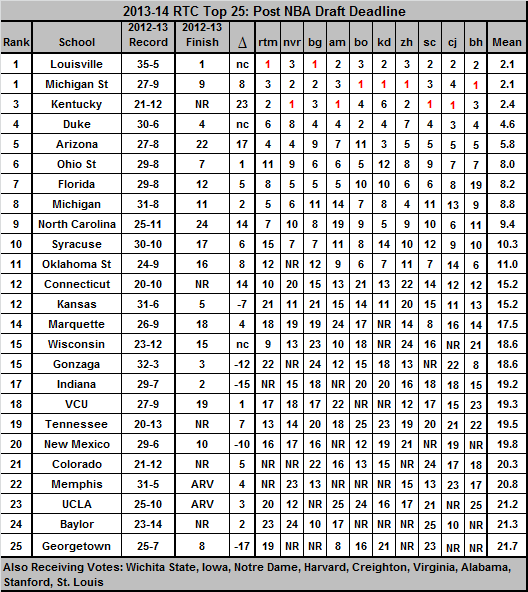
2013-14 RTC Top 25

Quick n’ Dirty:

Whether it is through an exceptional recruiting class, or an impressive finish to the 2012-13 season coupled with a strong nucleus returning, the following four teams surged upward — and for good reason.

Read the rest of this entry »

Division I College Basketball Players Are Incredible Athletes; Not Even The Mighty NFL Can Deny It

Posted by Chris Johnson on April 30th, 2013

Chris Johnson is an RTC Columnist. He can be reached @ChrisDJohnsonn

Height, size and speed are three of the most basic common denominators transcending the walls of sport-specific performances and, at levels as high as Division I and the professional ranks, allowing players to span their natural gifts across multiple athletic endeavors. Jim Brown is the archetypical multi-sport figure, by most accounts the most dominant running back in professional history and an unfairly fast and strong lacrosse player in his own right. He is the measuring stick by which multi-sport predecessors are, well, measured, and basically everything since — Deion Sanders and Bo Jackson are more recent highlights — has fallen well short of Brown’s tremendous accomplishments. Whether because of kids’ general rushed identification of single-sport priorities – and growing pressures, partially or fully imposed by parents, to devote Gladwellian 10,000-hour practice requirements to a specific sport – or a broader recognition that playing two sports professionally is just really hard, the days of Brown-like dominance appear to be behind us.

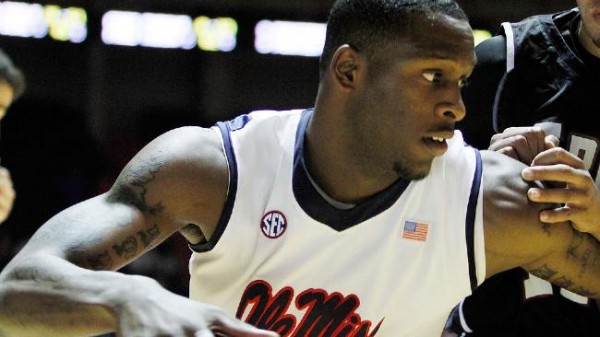
After averaging 14.5 points and 9.7 rebounds for Ole Miss this season, Murphy will try and make it in the NFL (AP Photo).

After averaging 14.5 points and 9.7 rebounds for Ole Miss this season, Murphy will try and make it in the NFL (AP Photo).

Plenty of others have tried to make the leap, and the latest evidence comes by way of former Ole Miss forward Murphy Holloway, who after not playing organized football since his sophomore year in high school signed a free agent contract this weekend with the defending Super Bowl champion Baltimore Ravens. The motivation is plainly evident: Holloway is a big (6’7’’, 240 lbs.), fast and explosive athlete. He spent four years honing his hoop skills – curiously enough, Holloway played for the Rebels for two seasons, transferred to South Carolina for a redshirt year, then returned to Ole Miss to play out the second half of his eligibility scorecard – and after helping lead Marshall Henderson and co. to their first NCAA Tournament in more than a decade, the avenues for a professional basketball career apparently didn’t match the opportunity to join the United States’ most lucrative and nationally unimpeachable sports enterprise.

Read the rest of this entry »

Morning Five: 04.30.13 Edition

Posted by nvr1983 on April 30th, 2013

morning5

  1. In today’s corporate age it seems like just about everything for sale and as Illinois pointed out that includes the name of college basketball’s iconic sites–Assembly Hall. Yesterday, the school announced that its Assembly Hall will now be called the State Farm Center. The deal is scheduled to last for 30 years and generate $60 million so we can certainly understand the financial rationale behind the decision particularly as it gets a facelift. Illinois’ Assembly Hall may not resonate with individuals who are not big-time college basketball fans (more people probably think of Indiana’s Assembly Hall), but we wonder how high up the college basketball arena food chain corporate sponsors can go before they start getting rejected in naming right deals.
  2. Creighton fans who are still on a high following Doug McDermott’s decision to return for his senior and now they may get an added bonus of another year of Grant Gibbs. According to reports, Creighton has a law firm looking into filing a petition that would grant Gibbs to obtain a sixth year of eligibility. Based on the information that we have seen–Gibbs redshirted one year at Gonzaga and sat out for a transfer year–it seems like Gibbs would have a pretty good case so we are not quite sure why this is still in the investigation phase (we will admit we have no idea on the mechanics of applying for an extra year or two of eligibility). If Gibbs is able to play for the Bluejays next year they should be competing for the Big East title.
  3. With the early entry deadline behind us (you can expect to see an updated top 25 from us shortly), Andy Glockner breaks down the winners and losers of the early entry deadline. Most of Glockner’s winners and losers are about what you would have expected before the season ended with a few notable exceptions particularly Oklahoma State and Marquette. The early analysis of who won and lost this period is certainly interesting, but it may be more interesting to revisit this topic in December when we have had a chance to see how teams and players play with or without the early-entry players.
  4. The Maui Invitational has become one of the premier early-season tournaments, but do not expect to see Kentucky travelling out there any time as John Calipari appears to have no interest in playing there. Kentucky and Calipari last made the trip in 2010 (you may remember it as the period when Terrence Jones was briefly projected to be the #1 overall pick), but it appears that is it just too far for Calipari and given his success in recruiting (How many top recruit has Hawaii produced?) we cannot really fault him. The lure of travelling to Hawaii or other exotic locations will certainly appeal to some players and coaches, but with the way that Calipari sells his program as a path to a career in the NBA his decision to forgo Maui certainly makes sense.
  5. With Chris Collins leaving the Duke sidelines on his way to Evanston, a new spot opened up on the Blue Devil bench and after a chain reaction of promotions the newest member of the Duke staff will be Jon Scheyer, who like Collins was a high school legend in Illinois. Scheyer will serve as a special assistant in place of Nate James, who was promoted to the position of assistant coach when Collins left. Honestly, we have no idea what all of these “special” titles mean, but realistically it is just another way for Mike Krzyzewski to build on his coaching tree, which to this point has been underwhelming.

Breaking Down This Year’s Five Biggest NBA Draft Refusals

Posted by Chris Johnson on April 29th, 2013

Chris Johnson is an RTC Columnist. He can be reached @ChrisDJohnsonn

The NBA Draft deadline can be a harrowing time for programs, coaches and their ever-vigilant fan bases. Player defections – particularly those of the lottery breed – not only control the fates of specific teams, they create massive rippling effects on college basketball writ large. Based on who does or doesn’t make their talents available to the most exclusively competitive sports league in North America, college basketball takes on a certain median composite talent distinction. Last season, that measure was low, and fans of all kinds made sure to scream and wail and cry foul about the dearth of “elite talent” and the oncoming barrenness of prospective upside on this year’s draft boards. “No dominant team” was a meme raised just as frequently, and by the end of the season, when two of the nation’s most talented teams navigated the predicted upset-laden waters of the NCAA Tournament and staged an epic final game – and when the nation’s “dominant team,” Louisville, actually won the whole thing – the conversation quickly turned to 2013-14.

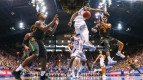
With McDermott back, Creighton has every reason to be excited about its move into the Big East (Getty Images).

With McDermott back, Creighton has every reason to be excited about its move into the Big East (Getty Images).

That brings us to Sunday’s NBA Draft deadline, the real draft deadline, the one that actually forces players to make decisions about their professional futures, rather than the teethless NCAA-imposed early date created for the supposed benefit of coaches’ scholarship and recruiting calculations during the recruiting spring signing period. There were some notable departures this year, National Player of the Year award-sweeping point guard Trey Burke chief among them, but all in all the final count leaves college basketball with an immensely intriguing selection of returning players that – when mixed with one of the most highest-touted recruiting classes of the past 10 or so years – should produce a general quality of play that far exceeds last season’s occasionally-ugly level. I’ve come up with five players (or pairs of players) whose reappearance in the college ranks will contribute most directly to making this season not only hugely appealing for its freshmen stars – as is often the case in the one-and-done era – but experienced and deep and seasoned enough to produce a boundlessly exciting pool of players and teams. We are going to see a host of really good returning players in college basketball next season, and unlike last year, many of these guys won’t come off as totally unfamiliar. There’s some star power here – as in not in the NBA. Rejoice.

Doug McDermott – Creighton. The end of last season, brought upon by a Round of 32 NCAA Tournament loss to Duke, ushered Creighton into a programmatic transition: Beginning this season, the Bluejays will become members of the new Big East. They leave behind a good but measurably inferior Missouri Valley Conference, and the step up in competition promises to be fierce. It would have been a completely reasonable move for McDermott to stare down the present, understand the rigors of a more challenging conference schedule, the increased defensive attention from better athletes across a larger number of quality teams, and cut loose with program and father-coach after a successful three-year career. It would have made the most possible sense.

Read the rest of this entry »

Morning Five: 04.29.13 Edition

Posted by nvr1983 on April 29th, 2013

morning5

  1. There were so many early-entry decisions over the past three days that we will have break them into groups. The first group will be the guys who left. Perhaps the most notable is Shane Larkin, who is leaving Miami after a sophomore year in which he took his stock from not being on the NBA’s radar to being a potential first round pick. We are not quite sold on Larkin as a NBA point guard–his limitations were exposed in a few games this season–but we do not see his NBA Draft stock getting much higher especially with how little Miami will be returning next season so it made sense for him to leave. On a smaller scale, but probably more important in terms of the landscape of his conference Ray McCallum Jr. announced that he is leaving Detroit after his junior season. McCallum is in a similar Draft position or possibly a little worse than what Larkin is based on the mock drafts that we have seen, but given the information that his father (Detroit’s coach) has we would expect that he has some pretty good information on where he could expect to be selected. Finally, there is Andre Roberson, Tad Boyle’s first recruit in Boulder, who announced that he will forgo his senior season at Colorado to enter the NBA Draft. Roberson’s draft stock appears to be similar to the other two although Roberson’s position in mock drafts has varied more than the other two.
  2. While a trio of players announced their departure from the college game another trio announced that they will be staying. The most significant in terms of the national championship picture is Adreian Payne, who announced that he will return to Michigan State for his senior season. Out of all of the players considering entering the NBA Draft early opinion on Payne may have been the most divided. He probably could have come out and been a first-round pick, but if he returns and improves his game he should be a lottery pick next year. The next biggest announcement was the Isaiah Austin will be returning to Baylor for his sophomore season. Austin seemed to be a fairly safe bet to be a first-round pick so his decision is a bit surprising, but it has been reported that he was diagnosed with a torn labrum, which would affect his NBA Draft workouts, and he clearly has some areas to work on his game so it doesn’t seem unreasonable. We will leave the question of coming back to Scott Drew to work on those deficiencies for another column. Shabazz Napier may not garner the same headlines as the other two players that we mentioned, but his decision to return to Connecticut for his senior season may have an equally significant impact on his team’s success. We are glad that Napier decided to return to school because he was at best a late second round pick although the fact that he waited so long to announce might suggest that someone was putting thoughts in his head that he could have been a first-round pick. Fortunately he did not listen to those voices and will return to finish his college career in Storrs.
  3. Most of the attention has been focused on NBA Draft decisions, but there were a pair of notable transfers. On Friday, Ahmad Starks announced that he is transferring from Oregon State. Starks, who has one more season of eligibility left is reportedly looking at Bradley or Illinois to be close to his ailing grandmother. Starks would be a huge addition for either program and given the way the family hardship waivers have been getting cleared by the NCAA we have no doubt that he would be able to play next season. The other transfer announcement is more of an update as Rutgers transfer Eli Carter has narrowed his list down to Florida and Maryland. Normally we would assume that Carter would have to sit out a year, but after the NCAA’s ruling on the players at Rice and how they received a waiver due to the abuse they alleged at the school we would not be surprised to see Carter and other Rutgers transfers to try for a similar waiver given the video evidence against Mike Rice.
  4. We may have finally moved past conference realignment, but it appears that conferences are looking at creating their own version of Manifest Destiny as the ACC is looking at expanding its brand into Europe by playing games there. As the article notes the entire idea is in the preliminary stages so a lot of work needs to be done, but other schools have played games overseas with some success. Our big qustion is how this would work at the conference level. It works great when teams are playing glorified exhibition games or when there is well-defined revenue-sharing the way that professional leagues do, but what happens when a school loses a lucrative home-game that could be the difference between them becoming bowl-eligible or being on the right side of the bubble. Obviously pro sports teams deal with this issue too, but they have more well-defined revenue-sharing agreements and have a much stronger central leadership structure that allows them to issue edicts that will be followed.
  5. It is a move that probably will not attract much attention on the coaching carousel, but UNC-Asheville filled its head coaching vacancy as it introduced Nick McDevitt as its next head coach. McDevitt, who played for the school from 1997 to 2001, had been an assistant with the team before taking over the head coaching responsibilities when the former coach left to take a job on the staff at UNC-Wilmington. McDevitt has no experience as a head coach so we are withholding judgement on his ability to coach so hopefully his alma mater gives him a chance to prove himself.

Morning Five: 04.26.13 Edition

Posted by nvr1983 on April 26th, 2013

morning5

  1. We will start off today by offering our best wishes to ESPN analyst Digger Phelps who revealed that he had surgery and will be treated for bladder cancer. Most of America knows Digger for his work on ESPN including his matching tie and highlighter combinations, but he was also an outstanding coach at Notre Dame from 1971 to 1991 as he was able to knock off the #1 team in the nation seven times during that stretch (a record he shares with Gary Williams) including ending UCLA’s record 88-game winning streak. We do not know much about the stage of the cancer and subsequently the prognosis, but we wish Digger the best as he continues to undergo treatment.
  2. In what might end up being the biggest early-entry decision this year, Doug McDermott announced that he will be returning to Creighton for his senior year. There have been several players with more NBA-level talent than McDermott who made early-entry decisions over the past few weeks, but none of them will have as profound an impact on their school, conference, and the national landscape as McDermott will. The Bluejays will be losing some key pieces (Grant Gibbs and Greg Echenique), but McDermott’s return should make them competitive in the new Big East and a dangerous team in the NCAA Tournament. We are not sure how much McDermott will help his NBA Draft stock by returning, but as Andy Glockner points out the move to the new Big East should give McDermott the ability to showcase his skills against more high-level talent than he had in the Missouri Valley Conference.
  3. The other notable early-entry announcement yesterday came from Baylor where Cory Jefferson announced that he would be returning for his senior year. Jefferson, who showed a dramatic improvement last season, is essentially the polar opposite of McDermott as a NBA prospect in that he is a ridiculous NBA-level athlete, but his offensive game is very limited. We are not sure that Scott Drew is the best person to work on that–at least based on what we have seen from him in terms of in-game adjustments–but an extra year of college basketball should give Jefferson enough time to round out his game to make him a better NBA prospect and a probable first-round pick although with how deep next year’s NBA Draft could be Jefferson needs to continue his upward trajectory to ensure himself a first-round spot.
  4. One of the things that we always have a hard time understanding is the hype surrounding transfers. One example of this is Hunter Mickelson, who is transferring from Arkansas to Kansas. Mickelson was a highly recruited 6’10” Arkansas native who tried to get out of his letter of intent when the coaching change at Arkansas occurred, but was not released by the school only averaged 5.4 points and 3.5 rebounds per game last season in just 16.6 minutes per game. His 2.3 blocks in 17.1 minutes per game as a freshman was impressive, but we are not quite buying the hype on Mickelson yet even if his block per minute numbers compare favorably with what Jeff Withey was able to do (see Jesse Newell’s excellent analysis for a more detailed breakdown of what Mickelson brings to Lawrence). Like Mickelson, Jabari Hinds was a highly touted prospect coming out of high school, but struggled during his two seasons at West Virginia before eventually finding himself on the bench late last season. Now Hinds appears to be headed for Massachusetts where as Jeff Eisenberg points out he could benefit from playing against lower-level talent. Perhaps the most perplexing case of all is Tarik Black, the Memphis big man who put up unremarkable numbers–8.1 points and 4.8 rebounds–last season yet finds himself being heavily recruited by Duke among others. As Gary Parrish points out some of this is supply and demand. At this point there are not many big men who have proven they can play at a high-major level so now there are “at least 20 other high-major programs are all lined up and working like they’re the last 25 dudes in a bar with just one moderately attractive girl”. The part that Parrish leaves out is that the one “lucky” dude/program has to wake up the following morning next to the moderately attractive girl.
  5. With all the movement in the coaching carousel there will inevitably be a few recruits who change their minds about where they want to go to school (see Mickelson above). Two of the bigger moves in the coaching carousel this season were at UCLA and Rutgers both of whom were involved in some recruit movement yesterday. In the case of UCLA they released Allerik Freeman from the national letter of intent he signed last November when Ben Howland was still the coach at UCLA. We are not sure if this decision was mutual or if Freeman was the sole driving force, but given how quickly this went down we would be surprised if Steve Alford was not ok with having an extra scholarship available. On the other end of the country and spectrum was Rutgers who picked up its first recruit of the Eddie Jordan era when junior college guard Craig Brown committed to the school. Rutgers obviously has a very long way to go to be a national-level program again and picking up a junior college guard will not turn many heads in New Jersey, but the speed with which Jordan picked up the commitment is impressive.

Russ Smith’s Return to Louisville Inspires National Title Repeat Potential

Posted by Chris Johnson on April 25th, 2013

Chris Johnson is an RTC Columnist. He can be reached @ChrisDJohnsonn

Most of college basketball’s truly elite programs annually grit their teeth and devise creative scholarship and recruiting stratagems to deal with an extremely unfortunate fact of roster life. The very best and most aspirational players usually aren’t in this here amateur basketball thing purely for the fun of it. They have their professional lives, their financial well-being, and that of their family’s, as overriding motivations to have the best and most NBA-translatable college career possible. They want to not only make it to the next level, but survive and enjoy the same unwavering fan support available at the college level (which, let’s just say professional fan bases are… blah) while earning the salary their talents rightfully warrant. Whereas in some cases the money and professional fame and draft stock considerations recommend a player’s departure after two or even one season, others elect to finish out their four years of eligibility in an uninterrupted cycle. These decisions – stay or go; money and bright lights or infectious fan bases and genuine campus pride; David Stern or Mark Emmert – are never easy, and if there ever were a case to illustrate the inner mental tug-of-war wrought in advance of a player’s draft decision, Louisville’s Russ Smith was an A-List prototype.

A return run to the Final Four, and possibly beyond, was made much more likely with Smith's announcement Wednesday (AP Photo).

A return run to the Final Four, and possibly beyond, was made much more likely with Smith’s announcement Wednesday (AP Photo).

Having already banked a Final Four appearance and national championship in consecutive seasons, won over the affection of his previously irascible head coach (to the point of influencing his racehorse naming rights), and scored boundless national media love over an endearingly reckless two years of mercurial point guard play, Russ Smith finished his national championship season with an utterly brutal decision to make: leave or stay? His erratic shooting and often-horrifying decision-making no doubt gave NBA scouts pause, as did his miniature stature and riverboat-gambler approach on the defensive end, but was it even reasonably possible that an eternally unrestrained Smith would boost his draft stock to any measurable degree in a potential return season? What were the chances Smith just was what he was, and anything he did next season wasn’t going to affect his status in such a way as to greatly improve his fortunes at the next level? Smith put the matter to rest Wednesday, and whether you agree with his decision on principle – whether you think it was in Smith’s best interest to cash in on a season that, in Ken Pomeroy’s wonky efficiency world, ranked better than any other last season – the upside for college hoops itself is tough to deny. Smith is back, and with the possible exception of Kentucky and its relentless fan base, everyone can come together in unison: This is a good thing.

Read the rest of this entry »

Morning Five: 04.25.13 Edition

Posted by rtmsf on April 25th, 2013

morning5

  1. Wednesday was a big day on the NBA Draft early entry front, although perhaps in a few ways that we didn’t anticipate. First and foremost, two of the bigger stars of this season’s NCAA Tournament made their decisions, and — egads! — college basketball will definitely be the beneficiary in 2013-14 because of it. The Midwest Regional’s Most Outstanding Player, Russ Smith, has decided to return to Louisville for his senior season, stating in a press conference that it was time to get “back in the lab” over the summer to revamp his game yet again so that he’ll rise onto first round NBA Draft boards by this time next year (oh, and also graduate and potentially leave school as a Louisville legend). If this offseason’s improvement is anything like that of the last two for the mercurial Cardinal guard, then we’re excited to see what other wrinkles he’s added to his overall game. Put simply, his progression from an incredibly inefficient human cannon to that of a hybrid defensive dynamo/pure scorer has been nothing short of remarkable. It also makes the defending national champs extremely dangerous again next season, with enough talented holdovers to give Rick Pitino a legitimate shot at his third trophy.
  2. The other NCAA Tournament stud who made a decision on Wednesday to return to college is Syracuse’s leading scorer and rebounder, CJ Fair. According to the junior forward, he went back and forth on his decision “at least five teams” in the course of the last week before finally deciding that his draft standing (#22 to #40) was too uncertain to risk dropping to the second round. Fair was without question the Orange’s most consistent player this season, earning all-Big East second team honors in his first full year as a starter. Whether Fair can actually improve his draft stock on what appears to be a considerably weaker Syracuse team next season is open for debate, but he’ll need to continue to show that he has range in his outside shooting (30 threes at a 46.9% clip last year) and improve his finishing ability inside the paint in order to ensure himself a 2014 first round selection. As for Syracuse, his return prevents Jim Boeheim from facing a complete rebuild next season.
  3. A few other players were on the move around the nation Wednesday, with USC’s DeWayne Dedmon deciding to take his seven-foot frame and commensurate seven points and seven rebounds per game to the NBA, or whatever professional league in the world that will have him. Dedmon was already in trouble and had been suspended for his alleged role in a Spokane incident at the end of the season, so new head coach Andy Enfield may not have wanted him back anyway. Over at Indiana,  senior guard Maurice Creek will use the graduate transfer rule to attend another school next season. Creek started his Hoosier career like a house of fire, averaging 16.4 PPG over 12 games in 2009-10, but a series of injuries over the next few seasons steadily reduced his playing time to the point he was a complete afterthought on this year’s team. While on the subject of injuries, Penn State star Tim Frazier has been granted a fifth season of eligibility after rupturing his Achilles tendon four games into the season. Frazier is an all-Big Ten caliber guard who will join an already talented backcourt of DJ Newbill and Jermaine Marshall, the top two scorers returning in the league next season. Could the Nittany Lions be dangerous in 2013-14?
  4. The ACC’s long-term grant of rights (GOR) deal appears to have shored up its member institutions for a while, at least until the Internet becomes the major revenue stream supporting college sports and all these deals are torn up at some point. Still, we’re a fan. For the immediate future, there should be some stability among the power conferences after several years of insanity. The University of Maryland may also be quite the fan of this deal. As the Washington Post reported Wednesday, the improved strength of the league after adding Louisville and Notre Dame and approval of the GOR suggests that the ACC has become more stable in the months after Maryland’s departure. This line of thought could provide Terp attorneys a sliver of hope in arguing at court that the school should not be required to pay the entire $52 million exit fee that the league required upon its departure. Time will tell.
  5. We’ll finish up today with a neat story about a sixth grade teacher named Paul Nadeau from Garden City Elementary School in Cranston, Rhode Island. It turns out that his class had a unit on probability approaching earlier this year, so he took the opportunity to tie in the NCAA Tournament’s unpredictability by assigning his students bracket analyses based on mathematical probabilities and backed up by their persuasive writing. Not only did the students embrace the assignment and often forget that they were, you know, learning, but many of them also got excited for the idea of eventually attending college as well. Joey Brackets is probably safe for now, but he’d better watch himself in about 10 years!

Angel Rodriguez Transfer Puts Bruce Weber in a Tough Spot

Posted by Chris Johnson on April 24th, 2013

Chris Johnson is an RTC Columnist. He can be reached @ChrisDJohnsonn

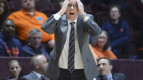
As puzzling as Frank Martin’s decision to leave Kansas State for longtime SEC doormat South Carolina looked last season, and however easily the abrupt departure of an energetic and charismatic sideline presence like Martin could have sent Kansas State into a major funk, the Wildcats wasted no time avoiding any such doomsday scenario by filling the vacancy with deposed Illinois coach Bruce Weber. Whatever the hire lacked in glitz and glamour – and sure, Weber was no one’s idea of a “sexy” coaching commodity – it made up for in stylistic fit. Weber preaches good, hard, physical half-court defense. Kansas State played good, hard, half-court defense under Martin. The disciplined approach at that end of the floor was an assumed feature of the coaching transition: Weber would advance Martin’s defensive ambitions with Martin’s players. Everything would fall into place, Weber would stoke massive excitement among a rabid Little Manhattan fan base in his first year and the Wildcats would keep on going on with nary a concern for their since-defected laser-eyed head coach.

Losing Rodriguez makes another Big 12-contending season a huge ask for Weber (Getty Images).

Losing Rodriguez makes another Big 12-contending season a huge ask for Weber (Getty Images).

The formula wasn’t predictively ideal – Kansas State played top-25-level offense in 2012, per KenPom’s per-possession ranks, but finished 63rd in defensive efficiency – but the Wildcats did, as envisioned, win big in Weber’s first year on the job. Rodney McGruder led a better-than-expected offense, Jordan Henriquez protected the rim and the Wildcats finished the regular season with a share of the Big 12 title. The transition was complete. Weber had smoothed over a nasty divorce with a high-win season, a favorable NCAA Tournament seed and Self-era-unprecedented Big 12 hardware to boot. It was almost perfect.

Read the rest of this entry »

Morning Five: 04.24.13 Edition

Posted by rtmsf on April 24th, 2013

morning5

  1.  As we approach the only NBA Draft early entry deadline that actually matters — in other words, the Association’s draft deadline on Sunday, April 28 — several prominent underclassmen have yet to make their final decisions. With a couple of announcements expected later today, USA Today‘s Scott Gleeson gives a nice rundown of the pros and cons for five notable players — Louisville’s Russ Smith, Creighton’s Doug McDermott, Michigan State’s Adreian Payne, Miami’s Shane Larkin, and Baylor’s Isaiah Austin. Smith, who met with his head coach to discuss his decision on Tuesday, says that he has been losing sleep over the choice to stay or leave Louisville, and that he’s been riding the fence on the topic for the two weeks since the Cardinals won the national title. None of this group is a certain lottery pick, so the question of improvement next season versus a deeper draft is surely weighing heavily on all of their minds. 
  2. There’s been quite a bit of chatter this week about shortening the length of the collegiate shot clock as a mechanism to improve the offensive ineptness that has infected the game in recent seasons — those oft-derided 39-38 games and such. Andy Katz polled a number of high-major Division I coaches and found widespread support for a 30-second shot clock, which makes sense at a certain level. Coaches with generally more talent on their rosters are always going to argue for a faster pace — when things break down, pure talent and athleticism take over (similar arguments were made when the clock was reduced from 45 seconds to its current 35 in 1993). As Mike DeCourcy correctly notes, scoring has plummeted to its current level as a result of numerous factors (Louisville coach Rick Pitino has his own ideas) but the shot clock likely isn’t one of them. In fact, when you mix inexperienced and, frankly, less talented players with improved defensive strategies as a result of advanced scouting techniques (Synergy and the like), what you’re likely to be left with is a devil’s concoction of even more sloppy play as college teams rush to get a shot at the basket. Reducing the shot clock to improve scoring sounds great in theory, but what the NCAA Rules Committee should be discussing are ways to clean up the same game that once regularly produced average team scoring in the 70s (1964-81 with no shot clock; 1987-2003 with a 45- and 35-second shot clock) rather than the 60s (2004-present).
  3. As everyone knows, it’s transfer season, and a few notable names came across the wires yesterday.Marshall’s DeAndre Kane is expected to finish his degree this summer and will use the one-year graduate transfer rule to find (presumably) a higher-major program to showcase his wares for a year. Whoever gets him will receive a high-volume shooter (26.3% of all possessions) who also brings a solid assist (42.0%) and steals (2.8%) rates to bear — quite the free agent pick-up if you ask us. Alabama’s Trevor Lacey, a two-year starter at the point guard position who led the Tide in assists and was second in scoring last year, is also moving on to another as-yet-undetermined program. And then there’s this story about Purdue’s Sandi Marcius, who planned to graduate this summer and himself take advantage of the graduate transfer rule — that is, before he realized that the school wasn’t going to pay for the $7,000 he’d need to actually finish that degree. Stay tuned on this one — it’s likely to get weird.
  4. Let’s all take a moment to welcome new Rutgers head coach Eddie Jordan back to college basketball. The longtime NBA coach hasn’t really been around the sport in over two decades, but at least the former Scarlet Knight (Class of 1977) actually wants to be there in the wake of the Mike Rice fiasco. He was introduced at a news conference yesterday and seemed very excited to get started on his new five-year, $6.25 million contract. He’s going to need to earn every penny of it. With massive player defections, substandard facilities, a move to the best basketball conference in America, and the stink of an amateur hour coaching fiasco still fresh on everyone’s minds, the rebuild at Rutgers will be monumental.
  5. This is a neat story by Eric Prisbell at USA Today about recruiting wunderkind Alex Kline, the now-18-year old who goes by the handle @therecruitscoop on Twitter and who those of us who follow such things have known about for a few years now. As it turns out, Kline is now finishing up his freshman year at Syracuse and his life has become a whirlwind of tips, networking, writing, and homework assignments mixed in with a little bit of fun now and again. Perhaps the most compelling part of his story, though, is his founding of the Mary Kline Classic, a prep all-star event each spring that raises money for cancer research and honors the life of his mother, who passed away from a brain tumor when he was only 10 years old. Keep on keepin’ on, Alex, you’re already doing great things, but it’s obvious much, much more is coming.