A Realignment-Related Decision You Won’t Hate: Bravo, ACC

Posted by Chris Johnson on April 23rd, 2013

Chris Johnson is an RTC Columnist. He can be reached @ChrisDJohnsonn

There are scores of issues in the present configuration of college sports. The NCAA is probably the largest, and the most heavily-critiqued; the entire enterprise is littered with various points of contention. It almost feels like a breaking point – the moment when schools decide they just can’t proscribe themselves to the current rules and regulations, that an entirely new system must be constructed to preserve their continued participation – is being reached. The ongoing Ed O’Bannon lawsuit could bring the very severance and utter dissolution many schools have feared and/or resigned themselves to for years. Others will welcome the potential revolutionary financial shift the O’Bannon suit purports to engender. Successful or not, something is going to happen. It’s ominous and inevitable and suspenseful, akin to the slow and sleep-inducing introductory clutter of a Russian novel, or the first two rounds of the NBA playoffs. An apex is coming, you’re just not sure exactly sure when.
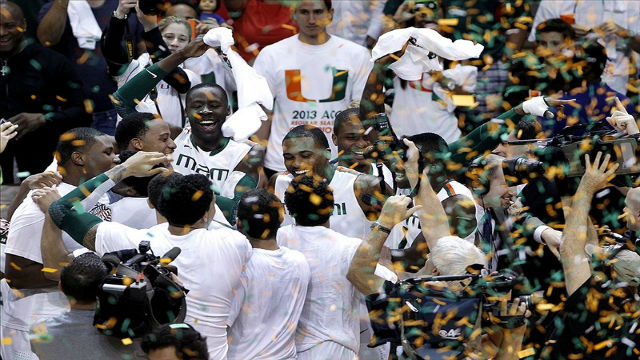
In a rare move of conference unity, the ACC motioned to solidify its league membership by fixing its schools' media rights revenues to the league itself.

In a rare move of conference unity, the ACC motioned to solidify its league membership by fixing its schools’ media rights revenues to the league itself.

A similar logic is just as easily transferred to another flashpoint in college athletics: conference realignment. I know, I know: You cringe at the very mention of the two-word phrase. It has, over the past however so many years, terminated traditional rivalries and ripped proud leagues to shreds and completely redefined the substantive meaning of league membership. Cultural and academic harmony, let alone geographic proximity, are so very blasé. If you’re not chasing football money or a bigger “footprint” or a more lucrative broadcast rights deal, you’re a real-live college athletics conference anachronism. Get with the times, man. None of this stuff is fun to talk about, and at this point you’re probably considering clicking away in fear of whatever new conference switch may have taken place.

Read the rest of this entry »

Morning Five: 04.23.13 Edition

Posted by nvr1983 on April 23rd, 2013

morning5

  1. There have already been plenty of transfers in a little over a month since the season ended, but few transfers will hurt their teams as much as Angel Rodriguez, who announced that he was transferring from Kansas State with two years of eligibility remaining. Rodriguez, who averaged 11.4 points, 5.2 assists, and 2.1 rebounds on his way to an All-Big 12 Second Team selection, stated that his reason for transferring was a desire to be closer to his family in Puerto Rico. We are not sure if this means he plans on going back to Puerto Rico or trying to find a program that was just a shorter trip (possibly Miami, but even that is not a quick trip to get home for Rodriguez). In any event Rodriguez will have to sit out a year (unless there is a family health reason driving his decision), but there should be no shortage of suitors for the services of Rodriguez who appeared to be developing into one of the top point guards in the country.
  2. With conference realignment continuing to change the landscape of college sports at least one conference–the ACC–is trying to protect itself from outside interests. Yesterday, the ACC announced that its 15 member institutions had agreed to a Grant of Rights through the 2026-27 season that gives the ACC the television rights for those schools during that period. In theory this would still allow schools to transfer during that period, but with those schools unable to generate any money for their new conference we cannot imagine many schools being interested in poaching ACC schools. We were unaware of these policies before the ACC’s announcement yesterday, but apparently several of the major conferences already have them in place. We are not sure if this would actually hold up in court, but so far nobody has challenged it. Of course there is a first time for everything, but we hope that something can slow down the ridiculousness that is conference realignment.
  3. For all of the negative publicity that the NCAA gets the one thing that constantly amazes us is how reluctant schools are to fight back against it. As Andy Staples points out there is a movement in that direction, but as you would expect schools are hesitant to do so publicly for fear of retribution from the NCAA. As several administrators have note the NCAA appears to have moved in a direction that may run contrary to what the member institutions, a charge that even Mark Emmert admits to. The question is whether the administrators are willing to actually take a stand and whether they can get enough support behind them to create the type of meaningful change that is needed. We are less than optimistic that it will happen any time soon given the nature of bureaucratic inertia, but it will happen eventually.
  4. Yesterday we mentioned the possible move by the NCAA to move up the start of practice by two weeks, but they may be looking at a more significant move–changing the shot clock from 35 seconds to 30 seconds. Andy Katz polled 37 Division I coaches about the proposed changed and 28 of the 37 favor a shorter shot clock although there are some notable exceptions. The big question is whether or not it would increase scoring and frankly the answer is not that clear. When Ken Pomeroy took a look at the subject in a 2012 post he noted that over time offenses have become more efficient, but have fewer possessions. Still Pomeroy did not necessarily come out in favor of a shorter shot clock, which he addressed directly saying “scoring would remain unchanged and we’d just hear the shot clock buzzer go off more often”. For his part Andy Glockner is also not convinced that shortening the shot clock will lead to any meaningful improvement in the college game. While we would not be opposed to a shorter shot clock we would like to see the NCAA address issues with the flow of the game before jumping to the shot clock.
  5. In terms of first Division I jobs Chris Casey appears to have landed a pretty good one as the new head coach at Niagara. Casey, who left Division II Long Island University, inherits a program that won the MAAC regular season last year with the youngest roster in the conference and returns all, but one rotation player after former coach Joe Minalich left to take over at Hofstra. While Casey has some impressive credentials including a 62-25 record in his three seasons as a head coach and various accolades as an assistant at St. John’s and Central Connecticut State. We do not expect MAAC teams to get much attention, but Niagara should be favored to win the MAAC next season so Casey does have a decent amount of pressure to produce early.

Inconsistent Implementation of Multiyear Scholarships Provides More Ammunition for NCAA Hardliners

Posted by Chris Johnson on April 22nd, 2013

Chris Johnson is an RTC Columnist. He can be reached @ChrisDJohnsonn

The chorus of vitriol aimed at the NCAA will grow louder and louder over the next few months as college sports prepares for the landmark court case that could completely uproot its economic model. Well-reasoned critiques of the organization’s various hot debate points — the amateurism model, NCAA executives’ inflated salaries, the growing broad-scale realization that student-athletes aren’t entitled to the smallest slice of the massive TV revenue pie generated by broadcasts of their athletic competitions across as many television sets as humanly possible, president Mark Emmert – have become synonymous with any discussion of the NCAA, period. Enunciate the four-letter acronym, and be prepared for a deluge of denunciatory comments and generalized screeds about “exploitation” or “uncompensated labor” or, in its most extreme form, “slavery.” I have heard them all, and at this point, I’m ready to table the amateurism discussion for a while. If you’re looking for the next big date on the NCAA calendar, that’s June 20 – when the Ed O’Bannon group will file for class certification and potentially place the NCAA in extremely hot waters, with the very real possibility of inducing a settlement that could lead to direct concessions on the amateurism model everyone loves to hate.

Multi-year scholarships have been applied languidly  across Division I athletics (AP Photo).

Multi-year scholarships have been applied languidly across Division I athletics (AP Photo).

In the interim, there’s another NCAA-related topic that deserves your attention. When the NCAA passed a motion last year to allow Division I institutions the option of offering multiyear scholarships, one of the most frequently cited items on Emmert’s personally touted reform agenda, approval came and went without anyone paying much mind to one important fact: more than half of the 300 + Division I institutions voting on the matter flatly turned it down. According to the NCAA, who received ballots from 90 percent of Division I schools, the 62.12 percent voting against the measure fell just short of the required 65 percent disapproval rate. If the message wasn’t clear then, it certainly is now: most programs were never in favor of offering multiyear grants-in-aid, and the latest accounting on the matter reaffirms that premise in excellent detail. Thanks to some excellent reporting from Brad Wolverton and Joshua Newman of the Chronicle, the statistical realities of multiyear scholarship offerings have been laid bare for all NCAA-critics to supplement their typical dose of amateurism-related harangues with a new topic entirely. To the surprise of almost no one, the results plainly confirm the mixed opinions at the voting table last year.

Nearly two-thirds of the 56 most powerful Division I public universities now offer multiyear awards, according to a Chronicle review of public records. Yet few of those institutions do so for more than a handful of athletes.

It’s important to recognize one hugely important stipulation right off the bat: Emmert and his board of directors pushed this legislation through without any sort of sanction-backed enforcement clause. Schools are merely encouraged, not legislatively mandated, to offer multiyear grants-in-aid. As Wolverton and Newman note, there are select schools beginning to adopt the idea across select sports, and a few – such as Fresno State, which “handed out 425 multiyear awards this year”, one for every scholarship athlete – that have embraced the concept across all categories of Division I student athlete involvement: female, male, revenue-producing, and non-revenue producing. What you might be surprised to learn is the motivation behind using these recently-approved packages is far more nefarious than originally intended.

Read the rest of this entry »

Morning Five: 04.22.13 Edition

Posted by nvr1983 on April 22nd, 2013

morning5

  1. One of the key topics discussed in NCAA reforms has been the use of one-year renewable scholarships that some say provide schools to get rid of student-athletes who are no longer fit in the program’s plans. Last year, the NCAA allowed schools to offer multiyear scholarships, but as The Chronicle of Higher Education points out very few schools have moved in that direction. The schools offer a variety of explanations mostly focusing on not wanting to give 17- or 18-year olds “more entitlement” (as if they coaches and administrators are not living similar lives with high salaries, plenty of benefits, and relatively little oversight). As the article points out schools can include a variety of stipulations–both academic and legal–that provide them a way out if the student-athlete fails to live up to his or her obligation. In our opinion, schools should use the option of multiyear scholarships to their advantage by using them as a tool to help lure recruits to their school over schools that do not offer multiyear scholarships.
  2. We cannot remember many players who went from (non-medical) redshirts for first-round picks in one season, but Kelly Olynyk appears to be on the verge of doing so after declaring that he would be entering the NBA Draft and forgoing his senior year. Olynyk, who had shown flashes of brilliance in international play appeared to be a flop at Gonzaga before sitting out a year and returning with a revamped game, averaged 17.8 points on a ridiculous 63% from the field and 7.3 rebounds per game on his way to becoming a consensus first team All-American. Given the depth of next year’s class and the fact that we don’t expect Olynyk to continue on his meteoric trajectory (a fact that NBA team would probably mark him down for) this seems like a reasonable decision. The West Coast Conference should still be Gonzaga’s to lose, but this should take them out of the discussion as national title contenders.
  3. Midnight Madness could be coming sooner than you had previously expected as NCAA approved a motion to allow schools to start practicing six weeks before their first game instead of the prior rule of practicing four weeks before their first game. The actual amendment is slightly more complicated than that as it allows schools to start practicing six weeks before the first game for a maximum of 30 days of practice (essentially allowing schools to practice five days a week on average for those six weeks). The only thing in the way of starting practices two weeks earlier is a May 2 meeting in which the Board of Directors can strike down the measure. We do not see much harm in the measure (it is the coaches job to make sure their players do not wear down as the season goes on) and it should make for a higher level of play early in the season and we think that everybody is for that.
  4. Chris Collins’ job of getting Northwestern into the NCAA Tournament might have to wait a few years, but he should at least field a competitive team next year as the team’s top player–Drew Crawford–announced on Friday that he would be returning for his senior year. Crawford, who averaged 13.5 points per game last season before undergoing surgery for a torn labrum, will not make the Wildcats a NCAA Tournament team it should keep them out of the Big Ten cellar. Perhaps the biggest effect of Crawford’s return to Evanston on a national level will be his decision not to go to Missouri or Marquette, which were the two schools most often cited as potential destinations for Crawford who will graduate in June and could have transferred without sitting out a year as a graduate student.
  5. Unfortunately for Eddie Jordan he was not afforded the same luxury as his top player–Eli Carter–has decided to transfer from the school and was granted a release on Friday. Carter is the fifth Scarlet Knight player to transfer from the school since the Mike Rice videotapes were released. When combined with players graduating this means that the team will be losing four of its top six players. We are not sure if there was anything that could have been done to prevent this (well outside of not letting Rice stay on as coach to terrorize his players), but the slow process that Rutgers is using to officially hire Jordan (he still has not officially been named the coach) is not helping matters.

Glenn Robinson III and Mitch McGary’s Returns Guarantee No Post-National Final Hangover

Posted by Chris Johnson on April 19th, 2013

Chris Johnson is an RTC Columnist. He can be reached @ChrisDJohnsonn

Compared to the gutting four-man exodus that could have been, Michigan can breathe a collective sigh relief after Thursday’s news that starting forwards Mitch McGary and Glenn Robinson III will extend their college basketball careers for at least one more season. The alternative – McGary and Robinson turning their March spotlights and intriguing individual games into mid-to-late first round draft picks – would have necessitated a full-blown, revamped, freshmen-buoyed rebuilding project. Instead, the Wolverines won’t be rebuilding next season. They will be challenging, and quite possibly winning, a Big Ten championship.

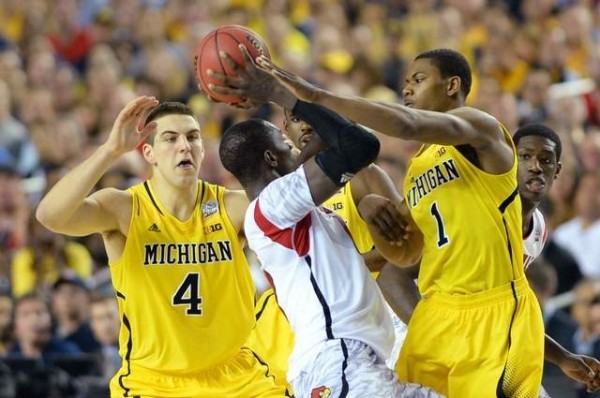
Bringing back two key cogs like McGary and Robinson III gives Michigan enough firepower for a run at a Big Ten championship in 2013-14 (USA TODAY Sports).

Bringing back two key cogs like McGary and Robinson III gives Michigan enough firepower for a run at a Big Ten championship in 2013-14 (USA TODAY Sports).

But, wait, didn’t Trey Burke and Tim Hardaway Jr., two starters on Michigan’s national finalist squad, the former a consensus National Player of the Year, just declare their intentions to do the very thing we are celebrating McGary and Robinson for not doing, for entering the NBA Draft? How can Michigan possibly recover from losing two hugely important perimeter stars from its roster? Those are valid questions to ask for any team who waves goodbye to two pivotal starters, let alone the unanimously considered best player in the country. Not even in Kentucky’s annually warped recruit-draft-restock business is losing a player of Burke’s caliber, and a secondary scorer with Hardaway’s athletic talents and experience, a welcome experience.

Read the rest of this entry »

Morning Five: 04.19.13 Edition

Posted by nvr1983 on April 19th, 2013

morning5

  1. With his Los Angeles Lakers in the NBA Playoffs (for now), Eddie Jordan appears to have reached a deal to become the next head coach at Rutgers, which is nice except the deal will not be finalized until the school’s governing body meets next week. Jordan has apparently agreed to a five-year deal worth a little over $1 million per year, but we have no idea on the bonus structure of the deal is as coaches can greatly increase their income through carefully crafted bonus structures. As for the issue of needing the Board of Governors to sign off on a basketball coach, normally we would say it is a massive waste of time, but given the public relations hit the school took as the result of its last coach they probably should be extra cautious with this hire.
  2. Trey Burke and Tim Hardaway Jr. may not be walking through that door, but fortunately for John Beilein both Mitch McGary and Glenn Robinson III will be as they announced that they would be returning to Michigan in a joint press conference yesterday. The decision by those two to return is not quite as shocking as Marcus Smart’s decision was, but they are both lottery level picks so very few people will have offered them criticism for having left. Instead they will return to make Michigan a preseason top 10 team and a national title contender again next season.
  3. Not to be outdone by its in-state rival Michigan State also received good news yesterday when Gary Harris announced that he will be returning for his sophomore season. Harris, the Big Ten Freshman of the Year, was also predicted to be a lottery pick and probably had less to prove  than either McGary or Robinson, but his return should make the Spartans the #2 team in the country going into next season and sets up a very intriguing early season match-up against Kentucky in the Champions Classic. At this point the only question remaining for the Spartans is whether Adreian Payne will also return. If he does the question of who should be the preseason #1 may get a little more interesting.
  4. The decision by C.J. Wilcox to return to Washington for his senior year may not have as big of an impact on the national scene as the moves in the state of Michigan will, but it could play a big role in determining who wins the Pac-12 next season. Unlike the three other players mentioned so far who announced that they would be returning Wilcox was by no means a guaranteed first round pick so it makes sense for him to return, but as we have seen that is by no means a guarantee that a player will come back.
  5. The grand jury hearing the case of former Kentucky star Richie Farmer (a former Mr. Basketball in the state and a member of “The Unforgettables”) will hear from former employees who worked with Farmer in his role as Kentucky’s Agriculture Commissioner. Farmer faces more than 40 counts of ethics violations while in his former role, but has not been called before the grand jury to testify. With the basketball-crazed culture and the cult-like hero status that Farmer once engendered within the state this is a trial that we expect to be hearing more about in the coming months.

The NBA Draft Is a Complicated Beast; Let’s Just Stay Out of It

Posted by Chris Johnson on April 18th, 2013

Chris Johnson is an RTC Columnist. He can be reached @ChrisDJohnsonn

Every year brings its share of puzzling NBA Draft decisions, and most of the frustration is typically captured by one underlying theme: he left too early. This year’s draft enigma was confusing for an entirely different reason. It was confusing because Marcus Smart, a consensus top-five pick in next month’s draft, elected to return to Oklahoma State for his sophomore season. The commentary on Smart’s decision has been a disconcerting mix of perplexity, misunderstood motives and an unexpected dose of condescending admonishment, with almost no reactive excitement – the best freshman in college basketball, and one of the best players overall, is returning next season, and no one has anything positive to say about it?! Isn’t this the exact development we spend countless words and digital ink groaning about each and every summer?!

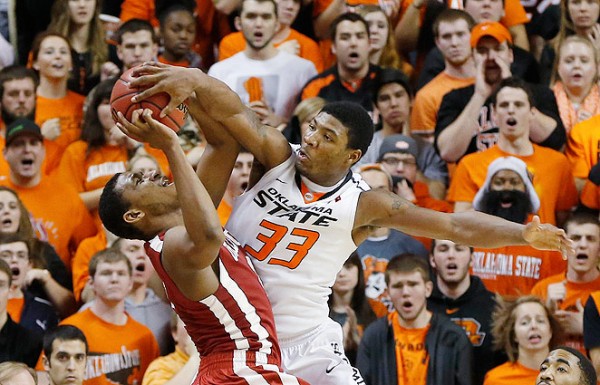
No decision has generated more Buzz than Smart's choice to play another year at Oklahoma State (AP Photo).

No decision has generated more Buzz than Smart’s choice to play another year at Oklahoma State (AP Photo).

The early draft decision headlines have served as collective petri dish dissection of Smart’s purportedly misguided decision. But guess what? Other players are making very important decisions about their professional futures, too, and not all of them are as procedural and predictable and academic as Smart’s relative draft-media monopoly might lead you to believe. I’ll offer you two recent decisions (or non-decisions) that, while nothing close to Smart-level Big 12 rippling waves, will change the ways their respective teams are evaluated entering next season.

First up is James Michael McAdoo, who announced Tuesday he plans to return to North Carolina for his junior season. It’s difficult to fathom now, but McAdoo was once considered among the very best players in the country last summer. He was supposed to help bridge the gap between the Kendall Marshall-Tyler Zeller super team and a new and customarily talented re-tooled Tar Heels group. You probably didn’t hear much about McAdoo last season, for reasons good and not, but as UNC picked up steam in February and into March, and the true latent potential of Marcus Paige and P.J. Hairston began to turn a mediocre transition season into a legitimately scary Third Round proposition, North Carolina offered an entertaining preview of the high-win outfit it can and should rightfully become next season. McAdoo was a major collaborator in coach Williams’ midseason small-ball transformation – wherein UNC eschewed a traditional two-big lineup in favor of using McAdoo at the five and Hairston as a “power forward” – and UNC can rekindle that dynamic next season with a highly touted recruiting class, more experience and a better collective comprehension of the system. The upshot for McAdoo is more wins, a bigger national spotlight and another chance to round out his game for NBA scouts. Good deal.

Read the rest of this entry »

Morning Five: 04.18.13 Edition

Posted by nvr1983 on April 18th, 2013

morning5

  1. As we mentioned yesterday Marcus Smart announced that he would return to Oklahoma State and now he will have some company as Le’Bryan Nash and Markel Brown also announced that they will be returning to Stillwater. We has won’t get into the debate about whether or not Smart should have left because every writer has either chimed in for it, against it, or (our personal favorite) railed against those who were for it or against it. Although they did not rise from a stage in a ridiculous ceremony held in Miami three summers ago it should be cause for celebration as the Cowboys are now legitimate Big 12 contenders. We still would not bet against Bill Self, but the Big 12 race just got a lot more interesting.
  2. The mood in Ann Arbor was not quite as festive, but the decision by Tim Hardaway Jr. to leave Michigan a year early was expected by many. We are not completely sold on Hardaway Jr. ever becoming a NBA starter, but he certainly has the requisite physical skills and a good enough outside shot that he will get some looks from NBA teams. One of the more interesting things about his game is how little it has progressed (at least in terms of his statistics) over his three years at Michigan. We don’t normally advocate players leaving school early unless they think they are guaranteed a NBA roster spot (read: are assured of being a first round pick), but Hardaway Jr. has not shown as much progression from one season to the next as you would hope and this year’s class is weak (and his family should be financially secure) so we think it is a reasonable decision.
  3. If Hardaway Jr or any other Michigan players need any advice they can always turn to team captain Josh Bartelstein, the son of NBA agent Mark Bartelstein who has a fairly impressive list of clients, Based on the advice that Josh offered for the article it sounds like he would be a pretty good place for these players to start. We are sure that plenty of other schools have alumni that offer advice to players about whether or not they should or should not go, but probably very few are able to do so through current players. It will be interesting to see if the Michigan players decide to sign with Josh’s father.
  4. Florida Gulf Coast has had one of the more unique coaching searches for a mid-major given the sudden popularity of “Dunk City”, which the city is still calling itself in press releases. Yesterday the school announced that Kansas assistant coach Joe Dooley would be the school’s head coach. Dooley may not be the huge name that some people thought the school could get, but realistically an assistant at one of the top programs in the country who also has head coaching experience (with a winning record) is a solid get for a school that most people did not know existed two months ago. Dooley has a reputation as a great recruiter although you can argue that being at Kansas helps a lot in doing that, but he should have some advantages (location and a style of play that appeals to recruits if he chooses to keep it) that could help him be successful in his new job.
  5. Yesterday Cincinnati announced that it would be extending Mick Cronin‘s contract, which should not be a surprise, but we have to say we are somewhat surprised by the length of the extension: one year with the possibility of three more years. Cronin, who already has four years left on his contact, can have the extension go from one year to three years if the Bearcats in either of the next two years. Cronin certainly is deserving of an extension given his team’s performance, but we have to wonder why the school would give him such a short extension with the understanding it is planning on keeping him for at least five more years. We just don’t see the point in adding on one year at this point.

Forget Dunk City, Andy Enfield Is Off to a Great Start at USC

Posted by Chris Johnson on April 17th, 2013

Chris Johnson is an RTC Columnist. He can be reached @ChrisDJohnsonn

For all the high-flying showmanship and unexpected brilliance of Florida Gulf Coast’s NCAA Tournament run, and the commensurately growing coaching legend of Eagles head man Andy Enfield, there were skeptics, and most of those skeptics brought forth the same boring but altogether legitimate grievance. Are we really supposed to believe a one-week wonder from Fort Myers, Florida has all of a sudden, by virtue of a fluky Cinderella run, morphed into a prime candidate for a high-profile power conference job? Who made Enfield the next great on-court tactician, something more than a laissez faire personality who unleashed a group of young and brash and under-recruited athletes on an unsuspecting NCAA Tournament? Wasn’t Dunk City more about Brett Comer and company than Enfield himself?

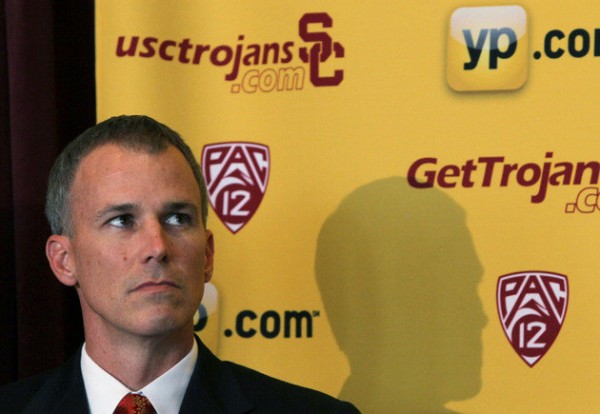
If there are any misgivings about USC hiring Enfield, he's on the right track toward proving why the Trojans made the right choice (Getty Images).

If there are any misgivings about USC hiring Enfield, he’s on the right track toward proving why the Trojans made the right choice (Getty Images).

It is easy to see how Enfield could get tabbed with the “one-week wonder” label. The NCAA Tournament can accomplish many things. One of the most timelessly pervasive is the elevation of otherwise lesser-known coaches into consideration for more prominent jobs. Steve Alford’s No. 3 seed New Mexico lost to Harvard in the Second Round of the NCAA Tournament; UCLA paved the way (forcing Alford to renege on his 10-year contract extension almost immediately) for his arrival. Florida Gulf Coast beat Georgetown and San Diego State; Enfield got a pay raise, a basketball program with promise (if not actual historical success) and a new California lifestyle to boot. March is a magical time.

Read the rest of this entry »

Morning Five: 04.17.13 Edition

Posted by nvr1983 on April 17th, 2013

morning5

  1. In one of the least surprising early entry decisions ever Shabazz Muhammad announced that he would be leaving UCLA after one season during which he became two years older. Muhammad’s recruitment and arrival at UCLA was one of the more controversial ones and portended a career that was more hype than production. After Muhammad was reinstated (in part due to comments made by the boyfriend of a NCAA investigator on a cross-country flight) he showed flashes of ability that reminded people why he was considered the best player in his class for much of his senior year of high school, but those moments were separated by stretches of mediocrity and more ridiculous scandals including the ridiculous Gucci backpack controversy and the recent admission that he was actually a year older than he had previously stated. In the end, Muhammad did not live up to the ridiculous hype given to a recruit of his caliber, but he will probably end up being a lottery pick so we cannot really fault him for heading to the NBA, which he was been destined to do this summer even before he headed to Westwood.
  2. If Muhammad needed any extra motivation to head to the NBA the performance of James Michael McAdoo this past season should help Muhammad feel more secure in his decision to strike while the iron is hot. Now we will start of by admitting that Muhammad was a much more highly touted prospect and produced more as a freshman than McAdoo has done in either of his first two seasons at North Carolina, but McAdoo was considered to be a potential All-American this season. In the end his play was so uninspired that he has decided to return to Chapel Hill for his junior season. Writers and fans can make all of the comments about improving his game that they want, but the fact is that McAdoo probably played himself out of the late lottery this season. With a solid year next season McAdoo could get back into the lottery and make himself more money, but he will have to compete with what is expected to be a much deeper draft class in 2014.
  3. Unfortunately for Roy Williams, McAdoo will not be joined in the locker room by Reggie Bullock, who was named the team’s MVP yesterday and then promptly announced that he would be declaring for the NBA Draft. Bullock showed quite a bit of improvement between his sophomore and junior seasons (or he just started playing on a weaker team that focused more of the offense on him) as his points per game jumped from 8.8 to 13.9 and his shooting (field goal, three-point, and free throw) all improved. At this point Bullock is a borderline late first round pick so it is not unreasonable for him to leave school especially with how loaded next year’s Draft could be, but he needs to shoot well in his workouts if he doesn’t want to have his name called by Adam Silver.
  4. We have no idea who is in Vander Blue‘s ear, but they are costing him a year of free education and are probably sending him straight to Europe or the NBDL as he announced yesterday that he would be entering the NBA Draft. Blue put together a solid junior season, but even the most optimistic projection we have seen for Blue has him projected as a late second round pick. For all of Blue’s ability he cannot reliably hit a college three-pointer (30.3% last season) and he is undersized for a shooting guard, which is a bad combination. While we won’t have to watch Blue deal with the consequences of his decision (don’t watch much NBDL or Euroleague action), we will probably see Marquette suffer as a result of the loss of senior leadership in the backcourt next season.
  5. We already know plenty about the four players we have already mentioned, but there is one intriguing NBA Draft prospect who was highly regarded coming out of high school about  whom we know very little–Norvel Pelle. After failing to meet the NCAA’s academic qualifying standards, Pelle, who was once the #1 center in the class of 2011, has been floating in a no-man’s land and now must prove himself to NBA teams in a series of workouts over the next few months. Pelle certainly has the tools and at 6’1o or 6’11” he is very close to the magic 7′ mark–time to let the hair grow a little–that gets you drafted as long as you can walk and chew gum a the same time (and sometimes even if you can’t) so we don’t doubt that he will get looks from NBA teams, but he needs to prove himself in workouts if he wants to get drafted.

Bonus: Late last night news broke that Oklahoma State star freshman Marcus Smart would be returning for his sophomore season. Honestly, we have no idea why he would do this as he is a top-five pick on every mock draft we have seen. With how loaded next year’s incoming freshman class is there is no guarantee that he will improve his draft position. He clearly has some things that he can work on with his game (29% from 3 and 1.25 assist-to-turnover ratio), but we have no idea why he would have to work on that in Stillwater. Having said that the Big 12 suddenly got a lot more interesting next season.