California Week: Will Improvement on the Offensive Glass Be Key to a Good Season in 2012-13?

Posted by Connor Pelton on June 22nd, 2012

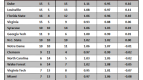
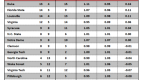
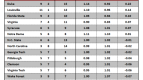
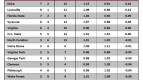
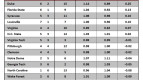
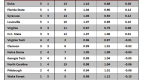
For a team that made the NCAA Tournament in 2011-12, California’s extra scoring opportunities per game rate was quite low. The Golden Bears only averaged 1.9 ESOPG last season, which came in at 91st in the nation and sixth in the Pac-12. That’s not terrible, but it only converts to nearly four points per game, five if you throw a three in there. Take a team like VCU for example. The Rams averaged 7.7 ESOPG last season, meaning that they gained nearly 16 extra points a game if they had converted all of those (and that’s assuming all of the extra buckets came in the form of two-pointers). VCU finished the season with a record of 29-7, and 20 of those 29 wins were decided by 14 points or less. But the Rams earned all of those extra points, mainly because of the great work that coach Shaka Smart and company do stressing the importance of offensive rebounding.

Season

Team

Extra Scoring Chances

National Ranking

2011-12

California

1.9

91

2010-11

California

-1.3

236

2009-10

California

0.6

142

2008-09

California

-0.1

170

2007-08

Golden State

N/A

N/A

2006-07

Golden State

N/A

N/A

2005-06

Golden State

N/A

N/A

2004-05

Golden State

N/A

N/A

2003-04

Stanford

1.5

95

2002-03

Stanford

0.8

117

h/t to TeamRankings for statistics

Allen Crabbe and Richard Solomon will be the key to those extra opportunities in 2012-13. Sophomore forward David Kravish was by far the leader among 2012-13 returnees in offensive rebounding, so he will serve as a catalyst for the other guys. Kravish averaged two ORPG last season, which is a good number, especially for a young and wiry freshman. But after him, things dropped considerably for the Golden Bears. If they can bring their extra scoring opportunities per game up to four, and convert three of those possessions a game for a total of say, seven points, it could be a very good year for Cal. The Bears lost five games by seven points or less in 2011-12, and if they could have won three of those their final regular season record would have been 27-6. Then, all of a sudden your Pac-12 champions are in the mix for top three NCAA seed, not playing in Dayton on the Wednesday before the Tournament even starts. While that may seem like a stretch, it can all be solved with just a few more offensive rebounds each game.

Of course, none of this is as easy as I’m making it sound. This will take an entire team effort, not just by the bigs and coaching staff. An important part of offensive rebounding is having your guards shoot the ball when your forwards and centers are in a position to get that rebound, not sitting on the wing or on top of the free throw line. While Crabbe and Justin Cobbs are great shooters, if they can make sure that their shots come in the rhythm of the offense, the Bears will see their offensive efficiency skyrocket.

Share this story

Morning Five: 06.22.12 Edition

Posted by rtmsf on June 22nd, 2012

  1. Last night marked the end of another season of basketball as the NBA crowned its newest champion, the Miami Heat, and we now head into a four-month dry spell without competitive hoops (the Summer Olympics next month will provide a brief respite). While the evening definitely belonged to LeBron James’ coronation as one of the all-time greats, a pair of his role player teammates joined the short list of players to have won both a national title in college as well as a world title in the NBA. With the Heat’s victory, Kansas’ Mario Chalmers (2008) and Duke’s Shane Battier (2001) have now pulled off the twin feat, increasing the the total number of NBA champs with at least one NCAA champion in its regular rotation to an astonishing 71 percent. Battier in particular has long been considered a more valuable player than his numbers might suggest, but it’s no great secret to suggest that winning players tend to find their ways onto winning teams. Congratulations to Battier, Chalmers, James and the rest of the Miami Heat for their 2012 world championship.
  2. While on the subject of the NBA, it appears that ESPN analyst Jalen Roseis set to become the Gameday replacement for Hubert Davis next season. We’ve said this before, but the metamorphosis of Rose from Fab Five hothead to a solid ESPN analyst is nothing short of phenomenal. Unlike Davis and most of the Gameday crew, Rose isn’t afraid to mix it up a bit — Digger Phelps taking ridiculous positions for the sake of comedy notwithstanding — and could serve to enliven a group that has a tendency to act non-confrontational. From the same article, TBL suggests that former Virginia Tech head coach Seth Greenberg will become a college basketball analyst on the WWL next season as well, with an eye toward replacing Phelps when he finally decides to retire.
  3. We expect to have another post on this topic up later today, but Matt Norlander at CBSSports.com writes that the APR rule which will keep 10 programs out of the postseason in 2012-13 could have a significant deleterious effect on the future of the game if schools don’t take it seriously. The key point is that as many as 60 schools could have been kept out of next year’s postseason if the APR floor of 930 was already in effect (as it will be in 2015). Some of those schools include names like Oklahoma State, Providence, Oregon, Auburn, Arkansas and LSU, and while none of those carry the cachet of Connecticut, the reality of it suggests that a one- or two-year drop in significant academic performance could in fact knock big-time programs such as UCLA or Michigan State out of the NCAA Tournament in some future year. The NCAA has already shown through its refusal of UConn’s appeal that it has no interest in providing exceptions, so this is something everyone involved with college basketball at the ground level will have to carefully monitor.
  4. Louisville announced on Thursday that former rising star forward Rakeem Buckleswill transfer to play for Rick Pitino’s son, Richard, at FIU for his final season. The hard-luck player has suffered a conga line of injuries after a promising freshman year in 2009-10 that ended with him going for 20/9 in an NCAA Tournament loss to California. His sophomore and junior seasons were both cut short by ACL injuries, and he is expected to miss the entire 2012-13 season recovering from his latest ligament tear. Louisville appears to be loaded at his position going into the next two seasons, so we’re sure that Buckles viewed this transfer as an opportunity to head closer to home and find some playing time in a comfortable situation to finish his career.
  5. In clearly one of the great disappointments of this offseason, West Virginia’s hirsute Deniz Kiliclihas decided to shave off his trademark mountain man beard. Citing the summer heat in Morgantown as the primary reason for his shearing, we hope that he allows for plenty of time to bring it back next fall. Right around October 15 is fine with us. Only 112 days now…

A Beardless Kilicli: The Horror, The Horror…

Share this story

Morning Five: 06.13.12 Edition

Posted by rtmsf on June 13th, 2012

  1. Last night the NBA Finals between Miami and OKC began in Oklahoma City, and aside from the fact that Thunder fans have the look and feel of college fans (that tends to happen when you’re the only professional franchise in a traditional college sports state), we found the former collegiate talent on the floor just as compelling. Many NBA fans are not college basketball fans and vice versa, but we’d encourage any of our college-only readers to spend some time this week and next getting a look at how well former collegiate stars such as Kevin Durant, Dwyane Wade, Russell Westbrook, Mario Chalmers, Shane Battier, Udonis Haslem, James Harden, and even Nick Collison have acquitted themselves as pros. This piece we published yesterday takes a look back at some of the accomplishments of these and several other players during their amateur days, with the general sentiment that folks like us will especially this year’s version of June Madness.
  2. While on the subject of basketball in the great state of Oklahoma, there’s more coming that way. Conference USA has decided to move its 2013 conference tournament to Tulsa in light of Memphis’ decision to join the Big East beginning in the 2013-14 season. Although we certainly understand the incentive of the league to punish Memphis for its disloyalty, it feels a bit like cutting off the nose here to spite the face. The last time the C-USA Tournament was held in Tulsa in 2010, the attendance numbers were somewhat disappointing and the Golden Hurricane had a solid squad that year. Whether new head coach Danny Manning will be able to fire up the locals enough to make this decision a success next March is an open question.
  3. It’s never too early to start thinking about next season, and Jeff Goodman is the type of guy who has already played out 2013 in his head before most of us see it on the horizon. In this post he outlines the 55 best non-conference games that are already on the schedule for next season. The top game on his list is a rematch of the first half of the 2012 Final Four, but we’re actually more interested in a certain Champions Classic game that involves a couple of schools that do not play each other regularly. In case you’re wondering — and we know you are — Kentucky vs. Indiana is still nowhere to be found on this list.
  4. Providence appears to be on the way up the standings of the Big East with a top recruiting class coming in for Ed Cooley next season, featuring Ricardo Ledo in the backcourt. For that reason, Friar guard Gerard Coleman began looking elsewhere despite averaging 13/5 last year as a sophomore, and he has decided to resurface 3,000 miles across the country at Gonzaga. Mark Few is getting an athletic scorer who tailed off considerably last year as the losses piled up in Providence, but one who will no doubt benefit from a year watching the game from the bench to better learn about good shot selection (42.4% FG; 23.8% 3FG).
  5. The men’s basketball NCAA Tournament Selection Committee is one of the most scrutinized bodies in all of American sports. Each year the group of dignitaries is shuttered away in an Indianapolis hotel and expected to produce a perfectly balanced and justified bracket to satisfy millions of college basketball fans around the country. The task is a herculean one, fraught with time-sensitive pressure and an overwhelming fear of mistakes. Now that the BCS has decided to move to a four-team playoff in college football, the topic of a similarly situated selection committee is on the table. But, as ESPN.com’s Heather Dinich writes, there is no consensus among college presidents and other NCAA insiders as to how the four lucky teams should be selected. The one thing we can rest assured of is this: future Selection Committee members should just go ahead and change their addresses, because there is an enormous difference between being the first school left out of a 68-team field and a four-team one.
Share this story

Morning Five: 05.17.12 Edition

Posted by rtmsf on May 17th, 2012

  1. Keep moving along. Nothing to see here. That was the stance of ACC commissioner John Swofford on Wednesday in reference to the earth-rumblings regarding Florida State’s rather public dalliance with the Big 12. Taking part in the ACC spring meetings in Amelia Island, Florida, this week, Swofford said that he had spoken with FSU president Eric Barron there and had enjoyed several “positive” conversations which clearly leads him to believe that the Tallahassee school is sticking around. Public statements from officials in positions of power are virtually meaningless these days — especially when it comes to this topic — but we really don’t see Florida State leaving the ACC for a few million dollars when they’d be ceding so much of their existing power to Texas as a result.
  2. Better late than never, but the NCAA announced yesterday that Washington, DC, would become the site of the 2013 East Regional during next year’s NCAA Tournament. Usually the regionals are well settled at this point in time, but reports suggest that the NCAA ran into contractual issues trying to lock up Madison Square Garden (or another NYC-area site) for next year’s tournament. The Verizon Center in downtown DC has served as an NCAA Tournament site several times in the previous decade, and its convenient location built on top of a Metro station makes getting to and from the venue a snap. The other three regional sites in 2013, which have been settled for some time now, are the Staples Center in Los Angeles (West), Cowboys Stadium in Arlington, Texas (South), and Lucas Oil Stadium in Indianapolis (Midwest). Where are you headed?
  3. How much is an elite college basketball head coach worth? USA Today reported on Wednesday that Duke legend Mike Krzyzewski was paid $7.2 million by the university for his work in the calendar year 2010. According to their research, Coach K’s total compensation that year represents the second-highest total by a head coach (basketball or football) since the publication started tracking the figures in 2006 (Rick Pitino earned $8.9 million in 2010-11). K’s total in 2010, where he no doubt met a number of incentives for winning the national championship, blew his $2.0 million base salary up to nearly four times that amount. When you add in Krzyzewski’s corporate sponsorships to that total, you begin to see that the Duke head coach is competitive with some of the sport’s best-paid athletes in terms of compensation.
  4. While on the subject of Krzyzewski, he announced earlier this week that this summer’s Olympic Games in London would be his last as the head coach of Team USA. There’s no question that Coach K has accomplished a couple of important things as the CEO of the men’s national team. First and foremost, he used his otherworldly player management and motivational skills to encourage (at the time) very young players like LeBron James, Dwight Howard, Carmelo Anthony, and Chris Paul to play together and win a gold medal as a selfless unit (both in the Beijing Olympics and the 2010 World Championships). This was no easy task, as the 2008 Redeem Team earned its name after the disastrous bronze medal performance in Athens from the 2004 team. The second thing he was able to do was to satisfy his appetite for coaching the very best players in the world, something that he had flirted with a couple of times previously. This allowed him to stay in his rightful place in college basketball at Duke where he belongs, rather than moving to the NBA for a certainly less-fulfilling experience. Gregg Doyel writes that Coach K was able to do something that not even NCAA/NBA champion Larry Brown could do — keep world-class professional athletes hungry and motivated — and he questions whether the next guy is likely to do the same in 2016.
  5. Former Syracuse assistant coach Bernie Fine’s wife, Laurie Fine, announced at a press conference on Wednesday that she will sue ESPN for libel based on the organization’s reporting that (she claims) made her appear as a monster who allowed her husband to molest children. Fine said during the presser that her life has been “ruined” by these allegations to the point where she can no longer go out in public anywhere in central New York. ESPN came out with a response immediately afterward stating that they stand by their reporting. One of the interesting questions that will help define the course of this claim is whether Fine is considered a “public” personality as the wife of the former SU assistant coach. Public figures face a much more difficult threshold to prove libelous claims against them, whereas private figures stand a much better chance. We won’t speculate on how this case might turn out, but the validity of her entire claim may turn on that argument.
Share this story

Morning Five: 05.11.12 Edition

Posted by nvr1983 on May 11th, 2012

  1. One of the last remaining longtime traditions in Division I college basketball will stay intact with the news released Thursday that the venerable Ivy League will keep its automatic NCAA Tournament bid reserved for its regular season champion. The league had been bouncing around the idea of adding a conference tournament (as every other D-I league has now done) in pursuit of the marquee ESPN broadcast slot during Championship Week and obvious revenue boost. Reasonable minds prevailed this time — after all, the Ivies aren’t exactly hurting for dollars — but Dartmouth was so angry about the decision that the boys from East Hanover are reportedly contemplating a move to replace Butler in the Horizon League.
  2. The NCAA is a tradition-rich organization, but in recent years we have to give them credit for exploring ways to make the NCAA Tournament on its 75th anniversary more fan-friendly. Their latest idea to move both the D-II and D-III championships to the same location as the Final Four (Atlanta in 2013) is a good one. The Sunday between the Final Four and National Championship game is a long, empty one for college basketball junkies, so adding another element of competitive hoops to help fill the time will without question be a success. On the same topic, if you’re interested in leading the direction of the NCAA Tournament for years to come, they’re now accepting applications for the VP of the men’s and women’s tournaments. We’re sure that they’ll get a surplus of strong candidates, but if you care about the future of the best event in all of sports (and we know you do), get creative and throw an app their way.
  3. We’re written about this topic so many times that we’re frankly just exhausted thinking about it any more. But on Thursday the NBA Player’s Association responded to NBA commissioner David Stern’s prior comments about the NBA Draft eligibility rule — colloquially known as the 1-and-done rule — and in summation, they want something in return for raising the age to 20 years old. In other breaking news, water is wet, the sun shines, and gay North Carolinians still can’t marry each other. Snark aside, the NBAPA seeks an increased rookie pay scale and some kind of incentive system for players who stay in school longer, with the argument being that 18- and 19-year olds are giving up two prime wage-earning years if they’re not allowed to play on bad teams mired in the draft lottery. The reasons are obvious why such an increase is good for the NBA, for college basketball, and for the players themselves, but if you’re really interested, here’s our missive on the topic from a couple of years ago.
  4. We all heard a couple of nights ago about the NCAA taking a closer look at the eligibility of Nerlens Noel before he heads off to Kentucky later this summer, another stark example of a player with a coterie of followers surrounding him that may or may not have his collegiate eligibility at the forefront of their minds. In a well-argued piece, Jeff Borzello at CBSSports.com writes that the NCAA/Noel situation is simply another in a long and ongoing string of inquiries that the governing organization must deal with in an era where so many people handling/helping/assisting/counseling/advising elite prospects are difficult to track. “Nearly every high-major recruit could fit in that category,” he writes, and fans of schools who recruit elite players really should give up the persecution act and recognize that the system of AAU basketball combined with a 1-and-done mentality has created this particular, unfortunate reality.
  5. The NCAA released its attendance figures for the 2011-12 season yesterday, and there were a few notable tidbits from last season’s action. John Calipari’s Kentucky Wildcats set a new record for total attendance in a single season (including home, road, and neutral games), with 885,953 fans watching the team over its 40 games. This total defeated a 23-year old record by 1989 Syracuse, when 855,053 fans over 38 games watched the Orangemen led by Sherman Douglas and Derrick Coleman rumble to an Elite Eight finish. The usual suspects remained as the top home crowds (#1 Kentucky, #2 Syracuse, #3 Louisville, #4 UNC), but the biggest year-over-year increase last season belonged to Creighton, who, with All-American sophomore Doug McDermott as a draw, added over 3,000 more fans per contest at home in 2011-12. For all the numbers, check out the NCAA’s report here.
Share this story

Calipari Pushes ‘Nontraditional’ Scheduling Agenda, A Loss For Everyone Involved

Posted by EJacoby on May 8th, 2012

By now, you’ve heard that two of college basketball’s traditional powerhouses have decided to end their annual tradition of playing each other. Kentucky and Indiana have combined for 13 national championships, are two of the strongest and historic programs in basketball history, and could easily both be ranked in the top five to begin next season. Last year they played in two classic games that included some of the best moments of the entire season. Yet, at the height of the rivalry in many years, the schools could not come to an agreement on how to continue their games. While fans on both sides continue to voice their displeasure (synopsis: IU says “convenient”; UK says “trust in Cal”) , the Kentucky coach has now explained his side of the story. Feeling emboldened by his newly-minted national championship, John Calipari wrote an extended blog post over the weekend about his scheduling needs and why they contradict with the purpose of the UK-IU rivalry. While Calipari should be praised for his direct communication with fans and refreshing transparency, his actual argument doesn’t make a whole lot of sense. He states that his primary focus is to best prepare his team for the NCAA Tournament, but in his new “nontraditional” approach he’s stripping his players of valuable competition and fans of exciting matchups to look forward to. Calipari stresses that UK is a players-first program, but the agenda that he’s pushing doesn’t actually seem more beneficial for the players, and it’s not good for college basketball fans, either.

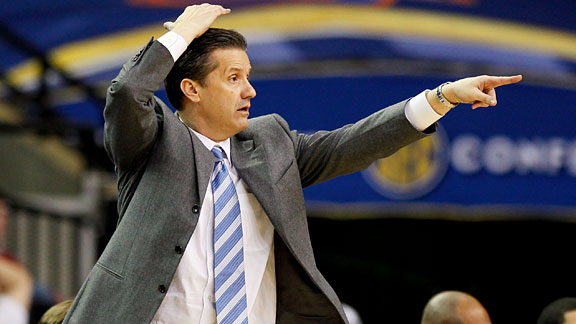
Coach Calipari Directed a Message to UK Fans About Kentucky's Scheduling Tactics (ESPN Photo)

Calipari’s post reinforces the idea that his scheduling desires are motivated by what’s best for his team during each individual season. He says that Kentucky is “going through things that no other program in the history of college basketball has gone through. No other program is losing five or six players a year.” While this is technically true, it’s not logical to give up long-term scheduling deals with other schools just because his team will look different every year. The fact that his team does in fact look different each season (presumably filled with blue-chippers as long as he’s around) would instead lead us to believe that he needs to challenge his teams right away in order to prepare the Wildcats for the rigors of March. Kentucky may still have won the title last season if it hadn’t played a challenging non-conference schedule, but early games against Kansas (neutral), Louisville (home), North Carolina (home), and Indiana (road) seemed to help speed up the learning curve of his precocious freshmen.

No head coach, including Calipari, wants to lose non-conference games. Losing those games can severely impact the RPI, which – as flawed of a measure as we all know it to be – is still the underlying metric that the NCAA Tournament Selection Committee uses to compare and contrast teams. For years fans around the country (with UK fans especially vocal) have decried the “Coach K Method” of scheduling, questioning why Duke rarely challenges itself in the non-conference season to play true road games in an opponent’s building. There’s truth to the criticism – outside of the ACC/Big Ten mandate, Duke might play one other “road” game each season, usually confined to the Duke-friendly alumni corridor of the Mid-Atlantic from DC (Georgetown) through Philadelphia (Temple) to New York (St. John’s). These look like hostile road trips on paper, but plenty of Duke fans who live nearby scoop up tickets to support the Blue Devils, making those games more neutral than you might think. Duke then fills the rest of its non-conference schedule with other neutral site games against teams it should beat and home games against solid mid-majors like Belmont and Davidson, earning wins and good RPI juice in the process.

Read the rest of this entry »

Share this story

NCAA Sticks to Its Guns: UConn Appeal Denied

Posted by rtmsf on April 5th, 2012

In news today that was only surprising to those who believe the NCAA has no spine, the organization denied Connecticut‘s final appeal over its eligibility for the 2013 NCAA Tournament based on its Academic Progress Rate (APR) scores. NCAA legislation enacted last October requires a four-year average APR of 900 or a two-year average of 930 in order to become eligible for next year’s Tournament — UConn’s APRs of 826 in 2009-10 and 978 in 2010-11 average out to a two-year score of 902 (well below the 930 cutoff), and its four-year average of 893 also comes up shy of the eligibility threshold (900). The Husky program argued that its proposed remedial measures, which included the possible forfeiture of NCAA Tournament revenue, greater academic support mechanisms and the existing loss of two scholarships, should be sufficient punishment for the school’s past academic failings. But that appeal was rejected, presumably on the grounds that the NCAA cannot afford to lose further credibility by backtracking on this mandate.

How Will the NCAA's Decision Impact Calhoun?

Connecticut Governor Dannel P. Malloy got involved on Thursday, telling the Hartford Courant:

It’s almost as if they’ve decided to get UConn one way or the other. [The NCAA] can’t get out of their own way. I think I have the same reaction a lot of people have when they understand what’s going on. For the first time in its history, the NCAA is making a retroactive application of a new rule. They modified a rule without modifying the time in which he comes into effect. … They changed the rule and didn’t give people time to adjust to it. … They are breaking their own precedents to bring this about. UConn has cleaned up its act, and now the NCAA is punishing a bunch of kids who have absolutely nothing or very little … to do with the failures of the past.

NCAA spokesperson Eric Christiansen responded to this criticism by saying that “schools have known since 2006 that APRs below 900 could result in serious penalties including postseason restrictions.” Of course, he’s right. UConn and other schools have known about the 900 threshold for a long time — they only started to take it seriously, though, when the NCAA gave it the necessary teeth to impact postseason eligibility through last year’s added legislation. And about the argument that the players from the 2009-10 team that caused so much of the APR problem are no longer around? No disrespect intended toward those former or current Huskies, but how is this different from other rules violations where a school is placed on probation for the actions of a former coach and/or players? The list is long of such situations on the other side of the rule-breaking fence — why should academic issues be treated any differently?

Read the rest of this entry »

Share this story

2011-12 Season Recap: The 12 Most Iconic Moments of the Season

Posted by EJacoby on April 5th, 2012

Evan Jacoby is a regular contributor for RTC. You can find him @evanjacoby on Twitter.

A season in sports often gets remembered by a handful of different memories that fans can recall when thinking back on that year. Sometimes it’s a scene from the regular season, such as the 2004-05 NBA year that included the ‘Malice at the Palace’ brawl between the Indiana Pacers and Detroit Pistons. Other times it’s the final play in the championship, such as the 2001 baseball World Series walk-off base hit by the Arizona Diamondbacks. So what will it be for the 2011-12 year of college basketball? Here’s a reminder of the top moments from the season, which certainly did not lack drama. Which ones will you remember when thinking back on this season? We give you the 12 most iconic moments from 2011-12, in no particular order:

Anthony Davis Blocks Henson at the Buzzer (December 3) – Kentucky freshman Anthony Davis was perhaps the biggest story of this entire season. Taking home nearly every Player of the Year award, Davis’ domination at this level as a freshman was must-see television every time he stepped on the floor. But his rise to true stardom perhaps began when the Wildcats defeated then-#5 North Carolina early in the season at Rupp Arena on a last-second block by the lengthy forward. Davis rejected UNC star John Henson’s final shot attempt to seal the one-point win for Kentucky.

Austin Rivers Silences Carolina Crowd (February 8) – One of the two best buzzer-beaters of the season was Duke freshman Austin Rivers’ silencing of the Dean Smith Center in early February. Down by two at Chapel Hill on the final possession, the freshman knocked down a long three over Tyler Zeller to beat North Carolina and send the Tar Heel crowd into a state of utter shock.

Robinson Rejects Mizzou in Border War (February 25) – In what was the final matchup between Kansas and Missouri as rivals in the Big 12 Conference (Mizzou is off to the SEC next year), the two teams put on a classic showdown in Allen Fieldhouse. Missouri dominated the game until a late KU charge, and it was the All-America forward Thomas Robinson’s rejection of Phil Pressey with seconds left in regulation that sent the game into overtime. Kansas won the game in the extra session to cap off a tremendous game between two top-5 teams.

Watford For the Win! (December 10) – One of the great stories of the season was Indiana’s resurgence as a top team. The Hoosiers had a tremendous year that was highlighted by their victory over #1 Kentucky at home to improve to 9-0 in December. Trailing by two on the final possession, it was this shot by Christian Watford that beat the buzzer and provided us with one of the most memorable shots, and calls, of the season.

Read the rest of this entry »

Share this story

Rushed Reaction (Extended): #1 Kentucky 67, #2 Kansas 59

Posted by rtmsf on April 3rd, 2012

Five Key Takeaways.

  1. Calipari Wins the Big One, Justifies One-and-Done Strategy. Sometimes it’s a very simple game — the team that has the best players wins. But to put it in those stark terms seems to minimize the role that coaching has on the game, especially at the collegiate level. In knockout scenarios like the NCAA Tournament, the best team (or the team having the best players) doesn’t guarantee a win, but John Calipari was able to mold a group of three star freshmen with two sophomores and a senior to put together one of the most dominant seasons in college basketball history (38-2). There’s been a lot of talk during the one-and-done era as to whether a team centered on young but spectacular talent could win it all in the crucible of March — Calipari’s 2011-12 group both justifies his recruiting strategy in targeting those players as well as elevates his own status as a great recruiter/good coach to one that has greatness on both sides of that equation.
  2. Anthony Davis Controlled the Game Defensively. The NPOY had one of the weirdest stat lines you’ll ever see, shooting only 1-10 from the field and scoring six points, but grabbing 16 boards, blocking six shots, dishing five assists, and ripping three steals. He also stayed out of foul trouble to play 36 total minutes. It’s a broken record that we’ve said this so much, but not only does Davis challenge a big number of shots for which he doesn’t get an official block, but he also gets into other teams’ heads because they’re thinking about him every single time they enter the paint. His effect on the game in that way is unquestionable and unquantifiable, yet it causes teams to make plays that they normally wouldn’t make if he wasn’t patrolling around the area. Kansas shot a meager 36% from the field, with really only Tyshawn Taylor having a decent offensive game (if you can excuse his five turnovers, including a killer with just under a minute left).
  3. The Quiet… Lamb Headlines Will Be Out of Control. We were wrong about how this game would go, thinking it would be much closer throughout, but we were right about one thing — that one of the lesser-known players on Kentucky would step up if they were to win the game. It turned out to be Doron Lamb, perhaps along with Darius Miller one of the most overlooked players on the Wildcats. His back-to-back threes when KU had crept back to within 10 points with just over 10 minutes remaining held the Jayhawks at bay and allowed UK sufficient buffer to make some mistakes and still keep a comfortable lead down the stretch. Lamb ended up with a huge 22-point, three-assist evening that helped make up for the vacuum created by Davis’ six-point night.
  4. Kansas Couldn’t Come Back Against This Team. Bill Self’s team did it against Purdue and did it against Ohio State, but Kentucky wasn’t going to be the third act in the KU Comeback Tour. They were valiant in making the game interesting down the stretch, but they’d just built themselves too big of a hole to make the comeback against a Kentucky team that doesn’t have long scoring droughts. One of the major keys to this game was that Elijah Johnson and Travis Releford combined to shoot an awful 6-for-19, and for KU to have had any realistic chance of winning this game, they were going to need production beyond Taylor (19 points) and Robinson (18 points).
  5. Jeff Withey Made Himself Some Money Tonight. Withey will probably be back in Lawrence for his senior season, but we imagine that while Anthony Davis is off next year winning NBA Rookie of the Year, analysts will repeatedly cite how Withey frustrated Davis into a 1-10 shooting night using his long arms and body to bump him froim his favorite spots in the post. Withey himself only shot 2-8 and grabbed seven boards, but his offensive game is a work in progress and he’ll have another year to fine tune it at Kansas.

Star of the Game. Doron Lamb, Kentucky. Lamb’s 22-point, three-assist night provided the necessary offensive support to both help the Wildcats run out to a comfortable 14-point lead at the half, but also to keep the Jayhawks at bay when they made a mini-run in the second half. You could give Anthony Davis the award just about every game for his defense, but we’ll go with the talented sophomore here tonight.

Quotable. “I said this a couple of years ago and everybody got crazy when we had five guys drafted in the first round. This is one of the biggest moments, if not the biggest, in Kentucky history. The reason was, I knew now other kids would look and say, You got to go there.” — John Calipari, justifying his remarks about his 2010 draft class, in that the seeds of this year’s championship were sown on that night. Can’t argue with that (although clearly nights like tonight mean a lot more to UK fans).

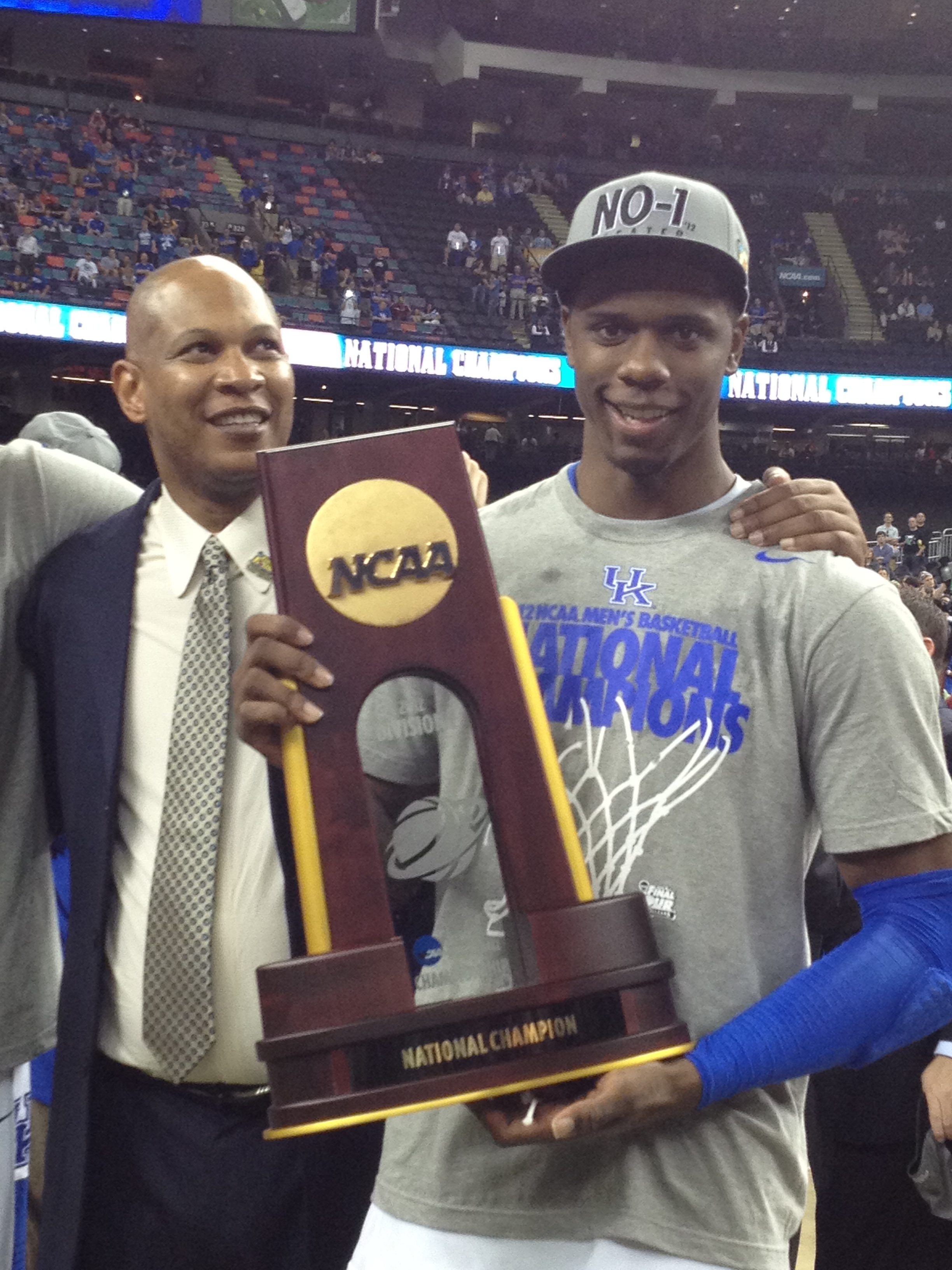
Sights & Sounds. Terrence Jones was kind enough to give us a great shot holding the trophy.

Terrence Jones Is Definitely Enjoying This One

What’s Next? Kentucky takes their nets home and celebrates with what we’re hearing is a burning Lexington right now. Presumably many if not all of the five underclassmen who play minutes for this team will enter the NBA Draft in June. But Calipari mentioned that he’s going recruiting later this week, and if he manages to pull a Nerlens Noel and Shabazz Muhammad out of his hat, he’ll be back in the Final Four with the Wildcats again soon enough. Kansas, on the other hand, will assuredly lose Thomas Robinson along with seniors Taylor and Connor Teahan, but Bill Self has a solid core to build around with Withey and we’re never doubting his coaching abilities again after what he did with this group.

Share this story

Random Sights & Sounds From Final Four Saturday

Posted by rtmsf on April 2nd, 2012

It’s already been a wild weekend in the Big Easy, but there’s more still to come with a championship game to play later tonight. Here are some of the sights and sounds we stumbled into during Friday and Saturday down on the bayou.

The Road Ends Here

Louisville Fans Pre-Partying on Bourbon Street

No Myth: Cats and Cards Can Coexist

Read the rest of this entry »

Share this story