Jeremy Foley should be fired immediately

Posted by rtmsf on May 29th, 2007

Ahhh… the long weekend is over, and in case you missed it, the College World Series brackets came out this weekend.  This ingenious concept – an on-the-field tournament to crown a college champion – just might catch on after all!  Although this blog is devoted to college hoops, we also recognize that each team is part of a larger athletic program in terms of all the normal considerations – fans, dollars, merchandising, and the derivative feedback loops – which merit occasional reflection beyond the hardwood.

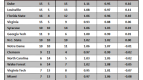
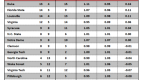
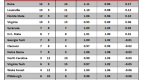
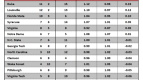
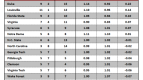
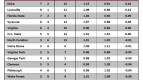
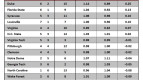
As such, it’s interesting to see which programs had the most successful 2006-07 in a different light than the Stanford Sears Director’s Cup rankings, which the Cardinal dominates every year (twelve in a row going into the 2006-07 academic year).  Recognizing that football and basketball comprise the vast majority of athletic revenues and expenses at Division 1 schools, it still might be interesting and informative to see which programs are also successful at America’s third major sport, baseball.  To start the ball rolling, we took a look at the 2006-07 academic year in the three major college sports. 

Stanford logo

Stanford always wins the Sears Cup, but how does it perform in the big three major sports?

In our analysis, we only considered schools invited to the postseason.  In college baseball and basketball, this is a fair indicator, as roughly 20% of schools are selected for the postseason (NCAA Tournament or CWS) in a given year.  In college football, over half the teams are selected annually for postseason bowls, which skews the definition of “success” somewhat; but we couldn’t figure a way to reliably eliminate some bowls while including others, so we kept them all in.  

Still, even with those rather broad parameters, only six Division 1 schools were invited to the postseason in all three major sports -baseball, basketball and football.  If you guessed large state institutions in (mostly) warm-weather areas, you had a decent chance of naming these six – Arkansas, Louisville, Ohio St., Texas, Texas A&M, UCLA.  Interestingly, Florida won both the football and basketball titles, but was not invited to the College World Series – clearly they should fire an incompetent like Jeremy Foley immediately.  Stanford, who will undoubtedly win the Sears Cup again this year, had a short-lived stay in the NCAA Tournament (for about one tv timeout, as we recall), but did not make the CWS or a bowl game, proving that their emphasis on smaller, non-revenue sports makes all the difference in those standings.
Read the rest of this entry »

Share this story

05.21.07 Fast Breaks

Posted by rtmsf on May 21st, 2007

  • Is Billy Donovan reportedly set to become the highest paid college basketball coach in history?
  • Larry Eustachy is definitely not. Still, $135k will buy a lot of Natty Lite for the Southern Miss coeds.
  • Apparently the Arizona assistant coaches should keep their resumes fresh upon Lute’s retirement.
  • John Pelphrey says his Razorbacks are out of shape. Somewhere Stan Heath chuckles.
  • Tubby Smith is enjoying his “rock star” status over the “pariah” status he previously enjoyed.
  • Speaking of Kentucky, Billy Gillispie has no use for games in Boston.
  • Purdue’s Mackey Barn Arena will cost $82M to reduce its capacity by ~800 seats. Oh, and it’ll also be renovated.
  • USC guard Gabe Pruitt has signed with an agent and is staying in the NBA draft.
Share this story

Vegas Odds: Check-In

Posted by rtmsf on May 16th, 2007

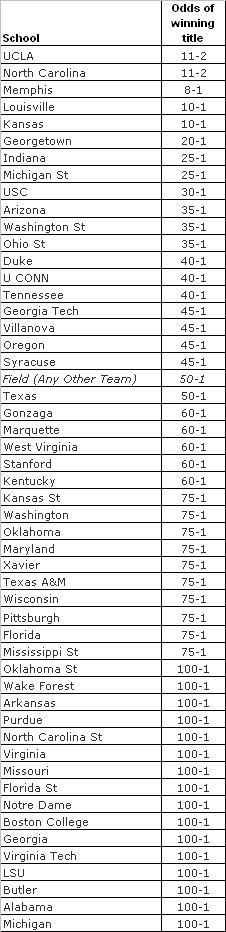
Now that the all the recruits in the Class of 2007 have been tidily gift-wrapped for their respective schools (Patrick Patterson, the lone remaining unsigned star of the class, announced for Kentucky today), we can take a look to see how that impacts the public (read: Vegas) perception of how good teams will be in 2007-08. Granted, we won’t have a true snapshot until the early entry withdrawal deadline has passed next month (June 18), but this should give us a bit of insight into how each team is being evaluated in light of their existing losses and incoming classes (for entertainment purposes only, of course).

05.16.07 Vegas Odds Source: sportsbook.com

Undervalued – with the two best bets at 11:2, it’s obvious that Vegas doesn’t believe there is a prohibitive favorite at this point. Still, getting those odds on UCLA or North Carolina seems like a solid play – we’d expect both of those to go lower as the season progresses next year. If you’re willing to bet that Hibbert & Green return to Georgetown next year, getting the Hoyas at 20:1 is a steal. Tennessee, with a maturing trio of stud sophomores (R. Smith, J. Smith, Chism) and everyone else – ahem, Chris Lofton, returning, is a joke at 40:1. Same with Oregon at 45:1 – yes, they lost Aaron Brooks, but the core of this elite eight team with Hairston, Leunen and Porter, is back. Texas at 60:1 is another steal – they lost Durant, but they keep a young and very talented nucleus of Augustin, Abrams and James in Austin. A couple of SEC schools – Arkansas and Alabama – also jump out at us at 100:1 because they each return a lot of young talent.

Overvalued – what was first noticeable was Ohio St. at 35:1, even allowing for the possibility that Daequan Cook returns to Columbus. Cook + Lewis and Lighty, even with another top five (but clearly lesser) recruiting class coming in, simply isn’t enough to substantiate odds this low. Duke and UConn at 40:1? Seriously? Yes, they’re both returning a lot and Duke at least has an excellent recruiting class incoming, but did anyone watch these teams this year? – this is a “name” pick all the way. We don’t mean to pick on the Big Ten, but Wisconsin loses several of its starters, including its all-american Tucker, and it’s at 75:1? Sell that one if you can. Same with Florida at 75:1 – no way on earth Billy’s kids make a run next year, but check back in 2009. Virginia Tech lost its best two players and its top recruit – 100:1 seems kind here. Another ACC squad – NC State – Vegas realizes this team was 5-11 in the conference last year, and loses its best player (Atsur), right? Maybe they got confused and were putting odds for NCSU winning the NIT, although I didn’t see South Carolina on the list. And everyone knows that no NIT list is complete without the Cocks. (correction: South Carolina is listed at 200:1 odds for the NCAA, not NIT, championship)

Share this story

05.15.07 Fast Breaks

Posted by rtmsf on May 15th, 2007

  • Jai Lucas signs with Florida; Patrick Patterson to follow tomorrow? 
  • We knew it!  Majerus will be living in a hotel this year at SLU. 
  • The Cuse’s next curmudgeonly coach will be…  Mike Hopkins
  • Fear not Cat fans: Tevye Anatevka is on the way.
Share this story

Make Way for the Man… the Footballers are coming.

Posted by rtmsf on May 11th, 2007

Reviewing today’s ESPN article on the ten programs to watch during the next decade, it crystallized a trend that we’ve been noticing and tracking over the last couple of years. Sure, the traditional six superpowers – Duke, Kansas, Kentucky, Indiana, North Carolina and UCLA – were all on that list, and why wouldn’t they be? Any “down” period will not be tolerated very long by their alumni and fans, which ultimately means that these schools will always provide just enough resources at their programs to be considered elite. But what really struck us as interesting is that Florida, Ohio St. and Texas – all traditional football powers – were ranked in the top seven to watch in basketball. Throw in USC as an a school in “others receiving votes,” and we’re left with four of the giants in college football also being considered as major players for the next decade in basketball. When did this shift happen?

Florida Texas LonghornsOhio St. Buckeyes

Ten years ago, or even twenty, what football-first schools could we have said this about? Probably Michigan in the 90s, and perhaps Oklahoma in the 80s, and if you want to go way back, undoubtedly Notre Dame in the 70s. But who else? Using Final Four participants as a rudimentary barometer of program success, we find that only five of the forty F4 participants (12.5%) in the 1970s could be considered football-first schools (Florida St. – 72; Michigan – 76; Notre Dame – 78; Arkansas – 78; Michigan St. – 79). Moving into the eighties, we don’t see much improvement, with only six of the forty teams (15%) in the F4 focusing foremost on football (Iowa – 80; LSU – 81, 86; Georgia – 83; Oklahoma – 88; Michigan – 89).

Things began to change a little during the 90s, as more SEC and Big Ten teams who traditionally considered basketball as a nice little diversion before spring practice began pouring resources into the sport. Eight of the forty F4 participants (20%) were teams from traditional football schools (Arkansas – 90, 94, 95; Michigan 92, 93; Florida – 94; Michigan St. – 99; Ohio St. – 99). Cut to this decade where through eight seasons football school participants have already made up eleven of the 32 F4 participants (34%) – Michigan St. – 00, 01, 05; Florida – 00, 06, 07; Wisconsin – 00; Oklahoma – 02; Texas – 03; LSU – 06; Ohio St. – 07. This is a definite trend over time, and it is no accident.

As the traditionally football-focused schools have figured out that there is a benefit, both financially and in terms of program cache, in having a successful basketball program in addition to their gridiron brethren, schools such as Florida, Texas, Ohio St. and USC have started making inroads in basketball. In fact, over the last two seasons, the football schools have outmanned the traditional basketball schools in F4 representation four to three (with little guy George Mason thrown in for good measure). Since the athletic department budgets at these collegiate goliaths, driven by football, are pushing nearly $100M/year, there is no shortage of top-rate facilities and resources available at these places now. The idea that Florida or Ohio St. could have a better practice facility than that at Kentucky or UNC sounds ridiculous, but that’s become the reality in today’s NCAA. How much have things changed? Look no further than Billy Donovan’s decision to stay at a football school as second banana to Urban Meyer rather than going to Kentucky and become a veritiable deity this spring. We should expect more of this in the future.

Share this story

Top 10 Teams 1998-2007

Posted by rtmsf on May 9th, 2007

ESPN put out its top ten individual teams of the last decade, and we see some definite problems with some of their choices. First of all, only fourteen teams received votes, and we figure that at least four others – Kentucky 1998 (a champion, mind you), Arizona 2001 (runner-up), Duke 2002 and Arizona 1998 – deserve to be mentioned. As it stands, here is our list of the best teams of the past decade:

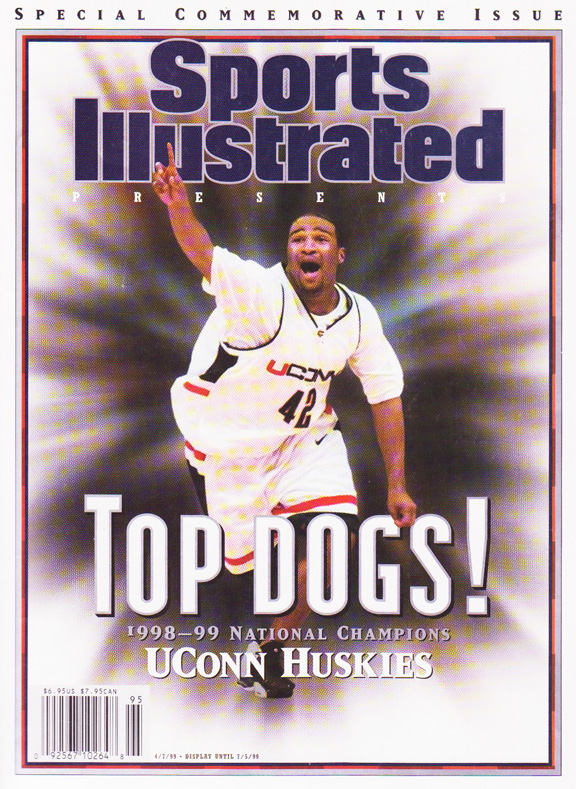
El-Amin and the Huskies shocked the world

El-Amin and the Huskies shocked the world

Team of the last decade?

1. UConn 1999 (34-2) – Nobody on this list had a better season from start to finish as this Huskies team. People tend to forget this team because it was considered at the time a bit of a fluke that they had beaten a loaded Duke team for the title, but they actually had held the #1 position for more weeks that season than Duke. Make no mistake about it, this team was legit across its lineup (Voskuhl, Freeman, Hamilton, El-Amin, Moore), and simply went about its business methodically winning game after game on its way to the championship.

2. Duke 1999 (37-2) – The primary reason UConn 1999 is #1 is because they proved their mettle by beating the sickest team of the last decade in a knockout championship game. Duke 1999 was the last “great” team of its era – along with its counterparts UNLV 1991, Duke 1992, and Kentucky 1996. This Duke team destroyed just about everyone they played all season long, but for a miraculous finish against a very talented Cincinnati squad in Alaska and the UConn “shock the world” game in the title match-up. A couple more baskets by Trajan Langdon and this team would be considered in the top five or ten of all-time.

3. Florida 2007 (35-5) – In terms of effectuating a repeat championship, and the manner in which they did it (virtually unchallenged in the NCAAs for two consecutive years), the 2007 Gators will be mentioned as one of the greatest teams of all-time. Horford, Noah, Brewer, Humphrey and Green were a true definition of “team,” with someone different stepping up in the clutch every time they needed it. However, a mind-boggling (albeit forgivable, considering the pressure on this team) mid-season hangover including ugly road losses against Tennessee and LSU are all that keeps this team from jumping to the top of the list with UConn 1999.

4. (tie) Duke 2001 (35-4) – This Duke championship team exhibits the type of team that wins titles in the 2000s – those with versatile inside/outside players, a solid core of experienced veterans, but not much depth. Battier, J-Will, Dunleavy, Boozer, and Duhon were an all-star cast that makes you wonder what has happened to K’s recruiting in the last few years.

4. (tie) UConn 2004 (33-6) – A belief in our eyes that this team was better than its record is based on Emeka Okafor’s back problems during this season. Coming from behind and closing out a scrappy Duke team in the final three minutes of the semifinals was a testament to just how good this team could be. Read the rest of this entry »

Share this story

Top Ten Programs 1998-2007

Posted by rtmsf on May 7th, 2007

The WWL today began a thought-provoking series of articles about which college hoops programs have been the “best” over the last ten years. We’ll track this over the next few days, chiming in where appropriate. Their expert panel apparently consisted of Katz, Bilas, Forde, Glockner and Lunardi. Good thing that the human smegma known as Dick Vitaletrick wasn’t involved or Duke would have held all ten positions.

Duke came out on top anyway, with Michigan St. and UConn tied for second. Florida, Kansas, UNC, Kentucky, Arizona, Maryland and Syracuse rounded out the list – all eight schools who won titles during this period + Arizona and Kansas. While we tend to agree with the ten programs listed, we would re-arrange the order a bit. Our criteria for excellence is fairly set: first and foremost, NCAA Tournament success matters most. To be considered the best program, you must make it almost every year, you must win while you’re there, and you must go to Final Fours and win championships. Since every one of these programs starts each season with one primary goal – to win the national championship – that must be the foremost consideration. Here’s the ultimate arbiter – would any team’s fans trade their decade of success, however it is measured, for another championship? Of course they would, which is why UConn and Florida with two titles each have been the “best” programs of the last decade in our analysis.

Calhoun NCAA title Billy Donovan title

Calhoun’s Huskies and Donovan’s Gators lead our list.

Multiple Titles

1. UConn – two different titles with two different teams (1999 and 2004), and they beat ESPN’s #1 Duke both times en route to the titles.

2. Florida – we pick UConn over Florida because it is harder to win with two completely different teams than a stacked one which comes back to do it again. But as of now, Florida is without question the Team of the 00s.

Now, we consider the teams with one title during this period. Sorry Kansas and Arizona, but again, their fans would happily trade all their conference titles and #1 seeds for just one Maryland 2002 or Syracuse 2003 run. Especially KU – how long has it been now – coming up on 20 seasons, right? At least Arizona just missed their 1997 title by this rather arbitrary ESPN time frame.

One Title

3. Duke – this is where the Blue Devils belong over the last decade. They have the best resume of the one-title teams, and have avoided significant “down” seasons compared with the other schools (nine straight NCAA Sweet 16s or better from 1998-2006).

4. Michigan St. – the Spartans have been to one additional F4 than Duke, but have mostly been pedestrian (three first round NCAA losses) since their glorious run from 1999-2001.

5. North Carolina – the Doherty years of 2000-2003 (one NCAA win and an 8-20 debacle) aren’t compensated enough by three F4s and one title to overcome Michigan St.

6. Kentucky – we’re talking about one F4 leading to one title in 1998, but the Cats were consistently good, if not great, throughout this period (ten straight NCAA second rounds and four elite eights).

7. Maryland – cf. with the Terps, who although they went to back-to-back F4s in 2001-02 and won their first national title in the latter, they have really fallen hard in recent years – only two NCAA wins in the last four seasons.

8. Syracuse – the other one-title teams would have a decent argument to be included in the top eight even if they’d not won a title , but Syracuse probably would not, having numerous middling seasons surrounding that magical run in 2003.

Best of the Rest

9. Kansas – this would probably have been true for almost any ten-year period throughout the 90s and 00s that you choose because they’re always very good. Kansas just cannot seem to get back over the hump and win another national title despite multiple F4s and several absolutely loaded teams.

10. Arizona – of course, if this list was created last year, Arizona probably would have finished in the top five because of their 1997 title; nevertheless, the Cats have had several excellent teams like Kansas that were good enough to win it all without a truly bad season during this period.

Others considered: UCLA (two F4s), Ohio St. (two F4s), Wisconsin, Gonzaga, Stanford, Illinois, Texas, Oklahoma St.

Share this story

05.07.07 Fast Breaks

Posted by rtmsf on May 7th, 2007

  • But for Winthrop (doh!), Mike Brey might have been given an extension at Notre Dame through 2023 (instead of 2013).   
  • Rick Pitino has also signed an extension with Louisville through 2013.  Six more seasons at Louisville??  The Vegas over/under is three.   
  • The Big Ten is looking to bring future thrillers such as Northwestern vs. Iowa to homes from Malibu to Manhattan (currently starved for midwestern basketball) with its deal to place the Big Ten Network on DirecTv & AT&T cable providers.   
  • There were a host of rumors floating around the message boards this weekend that Billy Donovan had interviewed with the Memphis Grizzlies last week, and was seriously considering their offer of $5M per annum.  Yahoo Sports corroborated this story on Sunday, but it has since been completely debunked, as Donovan did not interview with Memphis and has no interest in the job. 
  • From the looks of it, UCLA is the very early leader for the best class of 2008, already receiving commitments from three of the Rivals top fifty players (login required) (Jerime Anderson, Malcolm Lee and Drew Gordon) and the possibility of two more. 
  • NBA Second Round Predictions – a 5-3 record is pretty pathetic for the first round of the NBA Playoffs, and yes, we realize we’re late, but here are the predictions for Round Two:
    • Pistons over Bulls in 7 – the aging Pistons hold off the young Bulls for one last season 
    • Cavs over Nets in 7 – if we watch more than 5 minutes of this series, have us exported immediately to a country where soccer is watched for fun
    • Spurs over Suns in 6 – this would have been the pick even prior to Nash’s bloody nose Game 1 on Sunday
    • Warriors over Jazz in 6 – the magic carpet ride for Nellie & Co. continues for one more series
Share this story

05.01.07 Fast Breaks

Posted by rtmsf on May 1st, 2007

Share this story

SEC Diversity Redux

Posted by rtmsf on April 27th, 2007

Apparently Gary Parrish hit a sore spot with many SEC fans based on the reaction he received to his article on CBS Sportsline earlier this week. As we stated in our response to his article, not all of the criticism he received is without merit.

Parrish wrote a follow-up article today, which in our opinion, states the essential point that he should have made in the first incarnation. Namely, although it is unfortunate and a bit peculiar that three black coaches left SEC schools (whether willingly or unwillingly) in the past two years, it is not due to racism per se that these coaches are no longer with their schools. In other words, it is not their blackness alone that got these coaches in trouble, for these and other SEC schools have had successful black coaches in the past; it is their blackness in combination with a prevailing perception of not meeting the high expectations of the fans as head coach. As he put it simply, “minority coaches operate on a shorter leash.”

John Brady OR Stan Heath ??

There is merit to this argument, and we wish Parrish had made it more clearly in the first article. There are valid concerns as to why a coaching clown like John Brady at LSU can continue with legitimate employment after ten years of mostly disappointing seasons. Or how a squirrelly little man such as Dave Odom can continue cashing SC’s checks after one NCAA appearance in six years (unless your goal as an SEC program is to win NIT championships, as he’s very accomplished at that). We have absolutely no doubt that black coaches at these schools would have been gone long before these gents. As we noted in our initial response, we’re still not past the point where “diversity” in the SEC amounts to much more than blondes and redheads. However, it must be stated that a very successful black coach at any SEC school – in football or basketball – would be warmly embraced by its fans despite the racial component.

Dave Odom OR Tubby Smith ??

As a final point, let’s also throw out another possible confounding factor in the cases of Tubby Smith and Stan Heath. We’ll leave Rod Barnes out of this discussion, because even Parrish concedes that his record at Ole Miss was lacking. Could part of the reason that Smith and Heath felt so much heat in comparison to coaches like Brady, Gottfried and Odom has something to do with how basketball is treated at those particular schools, rather than attributing all of it to race? Everyone knows that the expectations at UK are through the roof every season. Arkansas, while at heart a football school, could also fairly be described as a basketball school as well. Their fans have supported the hardwood Hawgs dating back to Eddie Sutton’s days there in the 1970s, and they’ve been to multiple Final Fours and won a championship in 1994.

Contrast that with LSU, Alabama and South Carolina, where football is absolutely and undoubtedly king. Basketball is by most fans still considered a stepbrother to the gridiron – sure, the fans want to see the program do “well,” but well is defined in the context of making the NCAAs fairly often, and maybe winning a game or two the years you get there. Those kinds of expectations get football coaches like Dennis Franchione , Gerry DiNardo and Mike Shula fired quickly (and they’re all white!). The level of expectations for basketball at these schools are far from what you see at UK, Arkansas, and as of now, Florida in the SEC. Perhaps this issue trumps all else when it comes to dealing with fan expectations at these particular schools.

Share this story