2010-11 RTC Class Schedule: Michigan State Spartans

Posted by zhayes9 on September 2nd, 2010

Zach Hayes is a editor, contributor and bracketologist at Rush the Court.  To see the entire group of 2010-11 Class Schedules, click here.

If there’s one guarantee when it comes to Michigan State on an annual basis, it’s this: more often than not, the Spartans are playing their best basketball in March when the chips are down and the spotlight shines all that brighter. Since the 1997-98 season, Tom Izzo’s team is an extraordinary 98 games over .500 in Big Ten play and have notched five regular season conference titles, so it’s not as if the Spartans go through the motions for four months before kicking it into high gear in the NCAA Tournament. Still, when Izzo and his program are mentioned on a national scale, it’s normally their spring success that defines the last 13 years at the helm: 9 Sweet 16 berths, 7 Elite 8 appearances, 5 Semifinal Saturday’s and that glorious national title in 2000. Prognosticating is never easy, but judging by the talent returning for Izzo in 2010-11, the Breslin Center rafters may have to clear room for another banner.
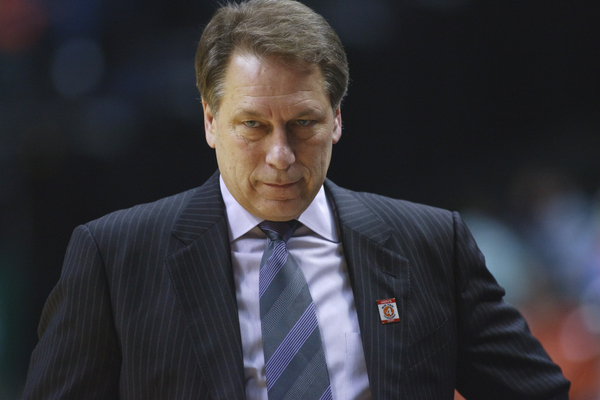
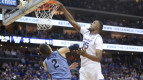
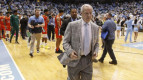
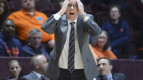
Tom Izzo's teams get the job done in March

Team Outlook: Whether Kalin Lucas would have made the difference in Michigan State upending Butler and Duke in last season’s Final Four is up for contentious debate, but one silver lining Spartan fans realized when Lucas tore his Achilles was that they’d have their former Big Ten Player of the Year back for his senior season. While it should take Lucas weeks into the season to regain full health and confidence, he’s surrounded by a supporting cast that can pick up the slack. Draymond Green will be thrust into a starting role he should handle, a unique point-forward with tremendous court vision that can also score inside. A focused Durrell Summers can explode for three-point binges bordering on unstoppable, although he must mold himself into a stronger and more consistent perimeter defender in the absence of transfer Chris Allen. Delvon Roe may finally prove healthy for an entire campaign and Izzo brought in freshman Adreian Payne to aid him in the post. Pending Izzo’s decision on how to handle a recent drunk driving incident, Korie Lucious proved a capable sub for Lucas in State’s tournament push while Keith Appling is another guard with a bright future off the Spartan bench. Michigan State is talented, deep, phenomenally coached and will play in March atmospheres every night in the rugged Big Ten. A preseason #2 ranking will likely follow when October rolls around for a program and a coach that’s used to winning under the brunt of sky-high expectations and a challenging schedule.

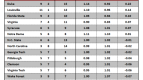
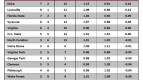
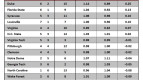
Non-Conference Schedule Rank (ranked 1 thru 10, 10 being the most difficult): 9.5. Combine Izzo’s always-aggressive scheduling strategy with a loaded Big Ten and Michigan State’s slate for the 2010-11 season rivals any Big East death march since that conference expanded. A home date in ESPN’s Tip-Off against South Carolina shouldn’t prove too dramatic of a challenge but the Spartans voyage to Maui will be if a championship goal is met. Believe it or not, Wichita State is a tougher semifinal matchup than Connecticut this season, the preseason Missouri Valley favorite that returns a good chunk of their balanced scoring output. A potential finals meeting with either Kentucky or Washington is waiting should State avoid a “shocking” upset (get it? Wichita State Shockers? Never mind). As a much-needed break a week following Maui, Michigan State gets to face Duke in Cameron Indoor, the loaded preseason #1 team in the nation for what should be the highlight game before the calendar turns to 2011. A week later? The Jimmy V Classic against Syracuse. I’m not done- in late December the Spartans continue their series with Texas on their home floor in East Lansing. That’s the potential to face plenty of stiff competition heading into a treacherous Big Ten.

Cupcake City: As any Divison I coach would at this high of a level, Izzo managed to sneak in a few cupcakes to give his Spartans brief reprieves around those hyped matchups. As the team projected to do the most damage this season, State draws Division II Chaminade in their quarterfinal Maui game. The Spartans open the regular season against Eastern Michigan on November 12 and will face Tennessee Tech in their first game back from the islands. One team that could give the Spartans a bit of a scare is Oakland, last year’s Summit champions that received the tremendous news this spring that Keith Benson would be returning for his senior season. If the Golden Grizzlies secondary pieces can step up following the losses of Johnathon Jones and Derick Nelson, this battle at Auburn Hills could be a sneaky one for Izzo. The only other semi-soft team on the docket is Bowling Green. Combine this non-conference schedule with what’s expected to be a strong in-conference slate and it’d be shocking if the Spartans didn’t finish the season with a top-three SOS, which is always a welcomed RPI booster.

Toughest Early Season Test: This one is fairly obvious, no? One year after being thrown to the wolves at what ended up being an underachieving North Carolina squad, it’s Michigan State once again making the trek to Tobacco Road to face likely-#1 Duke on December 1. When Izzo received the news that Lucas was returning to go with an already established core, he had to know the ACC/Big Ten Challenge would likely pit his Spartans in the most marquee contest possible. I can easily envision Duke pulling off similar to what Kansas accomplished last season- nearly a wire-to-wire spot atop the rankings with two or three slip-ups all season long. Although I’m of the opinion they’ll miss Jon Scheyer, Lance Thomas and Brian Zoubek more than anticipated given how challenging it is to find a team that played their roles so effectively as last season’s Blue Devil squad mastered, there’s truly an unfair amount of talent returning to the defending champs. Kyle Singler and Nolan Smith are both ACC Player of the Year candidates, Coach K lured the top incoming guard in the nation to Durham in Kyrie Irving, they boast the Plumlee brothers in the post and Seth Curry is quite the weapon off the bench. The Spartans will have their hands full in Durham especially if Lucas isn’t playing at 100% to limit Duke’s dynamic frosh.

Read the rest of this entry »

Morning Five: 09.02.10 Edition

Posted by rtmsf on September 2nd, 2010

  1. Remember the Anthony Davis for sale flap a month ago?  Predictably, the threats of lawsuits by the Davis family and Kentucky have died down, but the speculation has not.  On a radio program Tuesday, college basketball writer Gregg Doyel said that he believes that the Chicago Sun-Times “deep throat” source for the allegation that Davis was bought for $200k came from Illinois head coach Bruce Weber.  Here’s the key quote, at the 19:42 mark: “If anybody is behind this, Weber is behind this, because he doesn’t lose very well. And, he unfortunately loses recruits left and right.  Nobody loses more recruits than Bruce Weber. That ought to be on his coat of arms — Bruce Weber: Losing recruits like a son of a gun.”  Wow.
  2. It became official yesterday when UConn announced it, but Ater Majok is heading to Australia to begin a professional career, effective immediately.  We discussed the likelihood of this earlier in the week, openly wondering if his departure has anything to do with the expected response on Thursday or Friday from the university over eight NCAA allegations.  For now, we’ll just have to speculate and read between the lines, but hopefully in the next few days we’ll have more with which to address his departure.
  3. Gary Parrish writes about the BYU move to the WCC (in basketball), and how the little league that could on the Pacific coast may have done more to elevate its profile than any other conference in Realignment Summer.  Yahoo’s Jason King and ourselves can’t disagree — as our correspondent Mike Vernetti wrote yesterday, WCC Commish Jamie Zaninovich may have pulled off the biggest coup we’ve seen in this game in quite some time.  Meanwhile, the WAC wonders what to do with itself after BYU effectively threw the venerable conference to the wolves.
  4. Mizzou took a huge hit yesterday when it was reported that top fifteen incoming recruit Tony Mitchell will not be eligible to play for at least the fall semester, although it’s currently unclear what he needs to do to become eligible for the spring.  So far Missouri hasn’t yet confirmed the information, but according to several sources, Mitchell has missed the deadline to enroll at Missouri this semester.  Jeff Goodman reported yesterday that Mizzou is hopeful that Mitchell will attend a juco for the fall semester in an effort to become eligible.
  5. Tennessee’s SwiperBoy (aka junior forward Renaldo Woolridge) is back with another UT-related rap song, just in time for the “FootVols” kickoff this coming weekend against UT-Martin in Neyland Stadium.  Not that they’d be listening anyway, but SEC fans from Columbia to Fayetteville probably envision their own personal hell as an endless loop of this song, which uses “Rocky Top” as its sample in the background.  There’s nothing too abrasive in the lyrics (if you can’t bear the audio version, here’s a transcript), but SwiperBoy manages to take a shot at the departed Lane Kiffin (“we drivin in a new Lane… 4get the last 1”) — with his third football-related song in the last two years, at least we can say he knows where the bread is buttered in Knoxville.  Here’s the video:
If anybody is behind this (Anthony Daivs article), Weber is behind this, because he doesn’t lose very well.  And, he unfortunately loses recruits left and right.” Doyel said “Nobody loses more recruits than Bruce Weber. That ought to be on his coat of arms — Bruce Weber: Losing recruits like a son of a gun

Jim Boeheim Downs Dogs On Travel Channel Tonight

Posted by jstevrtc on September 1st, 2010

On the rare occasion our TV isn’t tuned to something sports-related, it’s probably on the Travel Channel, and not just because we’re looking for glimpses of that remote-droppingly cute Samantha Brown. If there’s one thing we love about as much as college basketball, it’s travel — and we love when those things come together (best BBQ at the Big 12 Tournament in KC last year? Oklahoma Joe’s, and it’s not close). Imagine our happiness when we saw that Jim Boeheim will appear on Man v. Food tonight, downing hot dogs at Heid’s of Liverpool with show host Adam Richman (can you imagine the lifetime Zantac consumption between those two guys?):

Now, Richman’s a graduate of both Emory and Yale, but we questioned his competence when he referred to the smiling, hot-dog carrying Coach Boeheim as “a handsome devil.”  Hey, we’re just kidding, coach!  To be honest, we were so impressed with your appearance in this one clip, we have to say — we smell a spin-off! It might only be one episode long, but they could call it…Man v. Zone. OK, fine, we’ll show ourselves out.

The RTC Big Four State Tournament: First Round

Posted by rtmsf on September 1st, 2010

A few weeks ago, the four major college basketball programs in the great state of Indiana announced that they would be starting an annual event called the Crossroads Classic, pitting each school against one of its other state rivals (Indiana, Purdue, Notre Dame and Butler) in an annual basketball orgy of Hoosierness.  We here at RTC loved this idea, and immediately started thinking of other states in the union who could put on a similarly extravagant annual show of hoops.  We were about 99.7% finished with our research when Matt Snyder of Fanhouse published this piece listing the top twenty states that could hold similar in-state classics, causing us to scramble to check the integrity of our passwords (“RTC” doesn’t cut it?) and servers throughout the network.

Indiana's New Crossroads Classic Inspired Us

Seriously, though, Snyder did a great job with the idea; he just beat us to the punch with it.  So we went back to the drawing board and thought about ways to use our research in a constructive way that didn’t rip off the Fanhouse post.  What we came up with is what we’re calling the 2010 RTC Big Four State Tournament.  Here’s how it works.

  1. Similar to the Fanhouse post, we picked the top four programs in each of the 33 states (including DC) with at least that many D1 universities.
  2. We then chose the top sixteen states based on the current status and power of those four programs within each state.
  3. Next, we chose a starting lineup “dream team” of players from those programs in each state, thinking about how to best integrate them by position (three guards & two bigs; or vice versa).
  4. We also chose two subs — one guard and one big man — as well as a head coach.
  5. We limited each school to two starters and one bench player for a maximum of three per team (sorry, Duke).  We also made sure to include at least one player from each of the four chosen programs (hi, Seattle).
  6. Finally, we seeded the sixteen teams into our bracket and analyzed the matchups.  We encourage you to use the polls below to do likewise.

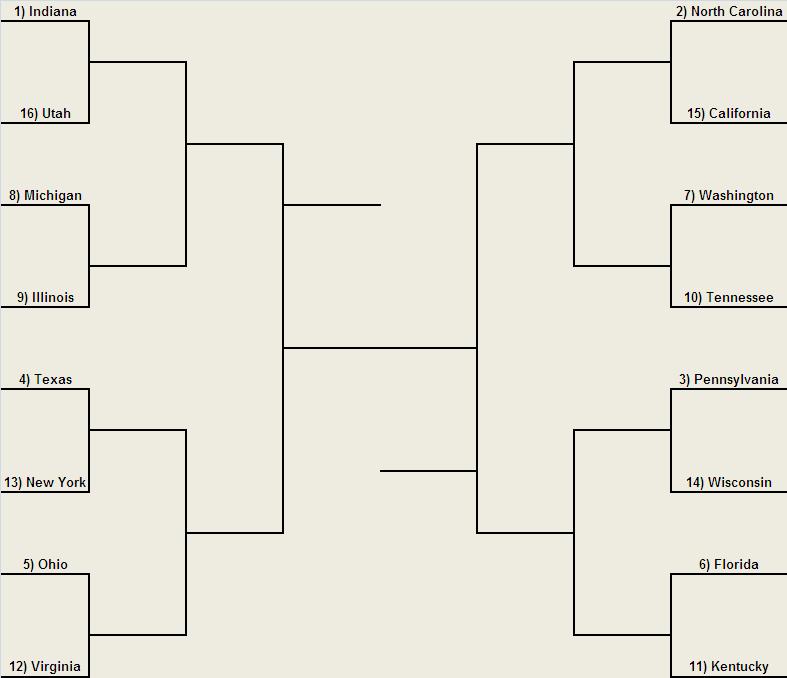
Which state do you think has the strongest cadre of players from among its Big Four programs?  Here’s our bracket:

We’ll analyze the left side of our bracket today, and the right side tomorrow.  Make sure to put your choices in the appropriate poll box.

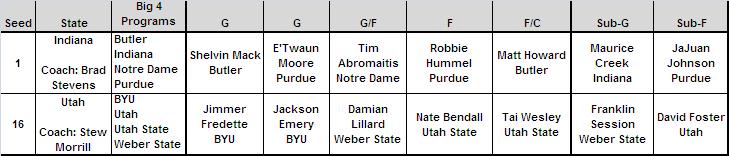
#1 Indiana vs. #16 Utah

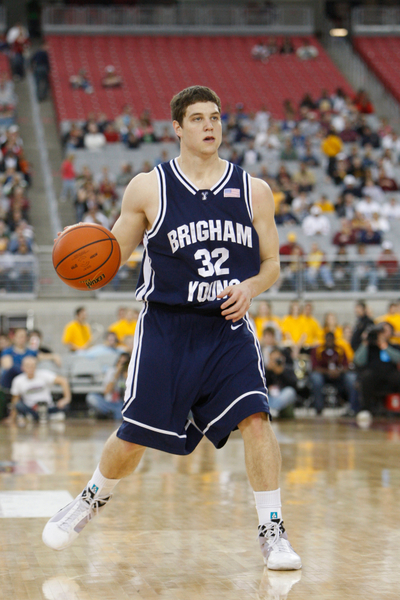
The most lopsided first round battle pits top seeded Indiana against a Utah squad filled with mid-major flavor. For Utah to avoid embarrassing themselves, they’ll need a heroic effort from elite scorer and potential first team All-American Jimmer Fredette. Much like BYU was vulnerable on the rare occasion when Fredette didn’t deliver, this Utah team void of talent from top-shelf Division I programs will need their do-everything point guard to put on his Superman cape. We suspect Fredette will keep Utah competitive for most of the first half. Tai Wesley is crafty enough to lure Matt Howard into foul trouble and, given the season Weber State just concluded, their representatives are far from slouches. In a near carbon copy of BYU’s second round contest with Kansas State, though, it would be a surprise if Fredette didn’t wear down under the intense man-to-man defense of Shelvin Mack and the common double team. Because of our conditions for picking these teams, sure, but an Indiana team loaded enough to bring a talent like JaJuan Johnson off the bench isn’t going to lose to a primarily one-man squad. The Hoosier State representatives pull away and win by 20+.

RTC Choice: Indiana 84, Utah 62.

#4 Texas vs. #13 New York

Read the rest of this entry »

Morning Five: 09.01.10 Edition

Posted by rtmsf on September 1st, 2010

  1. Obviously, the big news of yesterday was BYU’s decision to join the WCC in basketball (and all other sports except football).  It makes sense on a number of levels (religious school, kill the WAC, etc.), but we have to admit that you typically don’t see a school ‘trade down’ in relative strength like this.  But the lure of football independence was just too much for the Cougars to resist, and although we’ll miss BYU in the Mountain West, we’re excited to see if the addition of the LDS school will help bring the WCC to the top of the mid-major heap in hoops.  Our Mountain West and WCC correspondents examined both sides of the move, while Jeff Goodman caught up with the person currently residing in the WCC most impacted by BYU’s entry, Gonzaga’s Mark Few.
  2. Former Duke all-american point guard Bobby Hurley is doing his best to contribute to the collective schadenfreude that the nation feels when members of Coach K’s first two championship teams lose their shirts.  Not long ago we learned that two starters on the 1991 and 1992 title teams, Christian Laettner and Brian Davis, were facing massive debt problems as a result of their failed company, Blue Devil Ventures.  This week Hurley’s horse farm, named Devil Eleven Farm and located in Ocala, Florida, was foreclosed upon after he stopped making payments on the 140-acre property in the spring of 2009.  Clearly both of these situations likely have something to do with the nationwide recession that began in late 2007, but we know some Kentucky and UNC fans somewhere out there who are very much enjoying this news.
  3. Ex-Michigan State star and 1979 national champion Jay Vincent was arraigned yesterday on charges of defrauding investors of $2 million in an internet scam that convinced people to pay him to become home inspectors, where he pleaded not guilty.  Court records, however, show that a plea bargain may already be in the works.  He has until the end of the month to change his plea.
  4. High School Hoop profiles one of the most well-known but not really behind-the-scenes players in the collegiate game: Worldwide Wes.  There’s not a lot of new information here, but it’s interesting to hear some of the top recruits in the class of 2011 talk about the influence (or lack thereof) of WWW on their recruitments.
  5. St. John’s head coach Steve Lavin was a strong recruiter during his time at UCLA in the late 90s and early 2000s, as he put ten players into the NBA Draft during his seven years in Westwood.  So it should come as no surprise that he’s hit the ground running by earning a commitment from his first big name at SJUMaurice Harkless, a 6’7 forward from Queens who originally committed to UConn but later re-opened his commitment, could be a transformative recruit for Lavin’s new program.  If city kids start considering the Johnnies as a viable destination along with the standard regional powers such as UConn, Syracuse, Villanova and a few others, suddenly New York City might have its own college team again.

BYU Leaves For the WCC in Hoops: Two Perspectives

Posted by rtmsf on August 31st, 2010

We asked two of our best contributors to take a look at today’s news that BYU has decided to go independent in football while joining the WCC in all other sports.  As he’s done all summer, our Mountain West correspondent Andrew Murawa breaks down all the moving pieces here in a simple, understandable way.  Additionally, our WCC correspondent, Michael Vernetti, stops by with a profile of the architect of the biggest coup of realignment summer, WCC Commissioner Jamie Zaninovich.

What Does It Mean? by Andrew Murawa

The wait for the next step in conference realignment is over, as BYU announced today its intention to forge ahead as an independent in football while joining up with the West Coast Conference in most other sports, beginning in 2011-12. In the process, the last hopes for the Western Athletic Conference to remain a viable entity have vanished, and the Mountain West Conference has turned its gaze from perhaps earning an automatic bid to the BCS for its conference champion to simple survival.

Jimmer Fredette Won't Get a Chance to Play in the WCC, but We Savor Future BYU-Gonzaga Matchups

A look at the news from the perspective of all the major entities in this move, BYU, the WAC, the MWC and the WCC:

  1. BYU – it appears all along that BYU was set on going independent in football, and just needed to find a soft landing spot for its other sports. In football, they’re working with ESPN on a deal for their television rights and they’ll make a viable schedule out of the remnants of the WAC (Utah State and Hawai’i are already on the schedule for 2011) and whoever else ESPN can convince to play them.  Regardless, they’re certainly not getting a Notre Dame-style sweetheart deal from the BCS and they’ll likely have trouble filling out a schedule decent enough to regularly put them in BCS contention. As for the move to the WCC, this is an excellent destination for a good basketball program, putting the Cougars into a spot where they should be able to compete with Gonzaga for conference supremacy immediately. Given St. Mary’s steady rise, Portland’s continued improvement, Loyola Marymount’s potential and the success of schools like Pepperdine, San Diego and Santa Clara in the past, the Cougars will definitely find some worthwhile competition there. And given that every other school in the league is a religious institution, BYU at least has something in common with its new conference mates (never mind the fact that BYU has a student body of 33,000, while the biggest school in the WCC has an enrollment of less than 9,000). But, the big key for BYU is getting away from what they found to be a limiting television package in the MWC. Now, they’ll be able to make use of their state-of-the-art media center and use it as a nice carrot to make sure that they are able to reach an agreement with ESPN. And, given that the WCC already has a television deal in place with ESPN for basketball and will reportedly retain broadcast rights for games not aired by the WWL, this is likely a big upgrade in terms of the television package for BYU.
  2. WAC – goodbye. If BYU had agreed to join the WAC in its non-football sports, at least there would have been some reason for the continued existence of the conference, but now standing at six teams with schools like Hawai’i and Utah State already considering other options, this venerable conference is on its deathbed as it approaches its 50th birthday. Right now, about the only reason for the remaining schools to stick together is in the hopes of getting the $10 million in buyout money from Fresno State and Nevada, money over which there will clearly be an epic legal battle. WAC commissioner Karl Benson insists that Fresno State and Nevada will have to remain in the conference through 2011-12, but the schools so far beg to differ. With six remaining members, the conference still holds a claim on an automatic bid to the NCAA Tournament for a couple of years, but the defection of one more school (whether it be Utah State to the MWC or Hawai’i to independence) would be the final nail in the coffin.
  3. MWC – saved from extinction a few weeks back by Fresno State and Nevada’s agreement to join the conference, the MWC is certainly hurt by the loss of BYU but it was going to happen sooner or later anyway. The hope of an automatic bid for its conference football champion to the BCS is now a distant memory and the conference is left with its meager television deal with Versus, CBS College Sports and its own network, The Mtn., now minus the Salt Lake City market  (the regional hub of the conference). In order for the conference to remain a viable entity for the future, it will need to fix its issues with its television contracts, but in the short term, it is still a strong league. However, given that the television contract is locked in until 2015-16, the conference may find itself having to fight off other suitors for some of its strongest members. TCU has already been mentioned as a possible target for the Big 12, and there has even been talk of a merger or some kind of alliance between the Mountain West and Conference USA (talk fueled by meetings between the two conferences in the days after the MWC added Fresno State and Nevada). Finally, there is the possibility that the MWC would be interested in adding more teams. They could certainly finish off the WAC by stealing Utah State (a move that would probably thrill Fresno State and Nevada because it would immediately end the $5 million buyout talk) and maybe even New Mexico State. There have been hopeful rumors of adding some of the western CUSA teams (Houston, Tulsa and UTEP, for example), but the MWC’s television deal probably precludes that, so it will be interesting to see what the next move is for a conference that was very recently thought to be a significant up-and-comer.
  4. WCC – first, you have to wonder what Gonzaga thinks of this. They’ve been the alpha dog in the conference for years as the school casting shadows on the rest of the league, and now, they’re potentially just another tiny school bouncing about in behemoth BYU’s wake. Certainly Gonzaga basketball isn’t going anywhere, but they’re no longer the program that can be immediately penciled in as the favorite in the conference every single year. Looking at it from the Zags’ perspective, the addition of BYU adds a couple more high-quality games during the conference season to bolster its strength of schedule and maintain a high RPI -– perhaps they don’t have to go so nuts with their non-conference schedule anymore. As for the conference as a whole, BYU’s presence in basketball is nothing  but good -– more high-profile games, stronger schedules and a big new market.  The league – now at nine teams with the addition of BYU – will go to a 16-game full home-and-home round robin schedule (although they’ll need to figure out the logistics of that, since there is no longer an easy way to schedule travel partners with an odd number of teams) and they’ll need to rearrange their conference tournament (tournament semifinals have been on Sunday and BYU will not play on Sundays). And there is even the potential for further expansion. Pacific had been considered for possible conference membership in 2008, and the Tigers would be a good fit along with the existing Bay Area schools (St. Mary’s, San Francisco, Santa Clara), but Denver and Seattle have also been mentioned as possible new invitees, given that those schools would add new large markets to the conference.  Denver, in particular, would be a natural travel partner for BYU. All things considered, this is an exciting day for fans of schools all around the WCC, even if the size and particular religious affiliation of BYU may give brief pause.

What’s next?

Read the rest of this entry »

A Police Blotter Tuesday

Posted by jstevrtc on August 31st, 2010

As if the start of classes and a looming new season weren’t enough for players and coaches across the nation to think about as we put August behind us, a few players from two of last season’s Final Four squads just added to their own worries and those of their coaches.

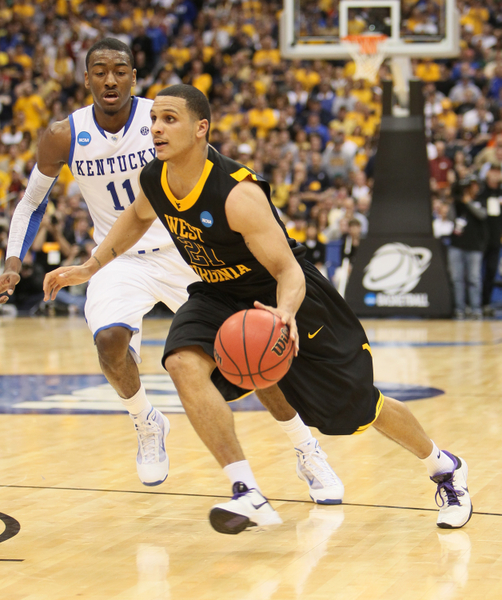
Mazzulla, Leaking Through UK's Defense in the Regional Final.

Mazzulla and Lucious were, of course, vital to their teams’ successes in last year’s NCAA Tournament. Lucious hit the buzzer-beater that put paid to Maryland in the second round and Mazzulla stepped in for an injured Truck Bryant and provided an incredible lift in the Mountaineers’ win over Kentucky in the Elite Eight.

2010-11 RTC Class Schedule: Florida Gators

Posted by rtmsf on August 31st, 2010

Zach Hayes is a editor, contributor and bracketologist at Rush the Court.  To see the entire group of 2010-11 Class Schedules, click here.

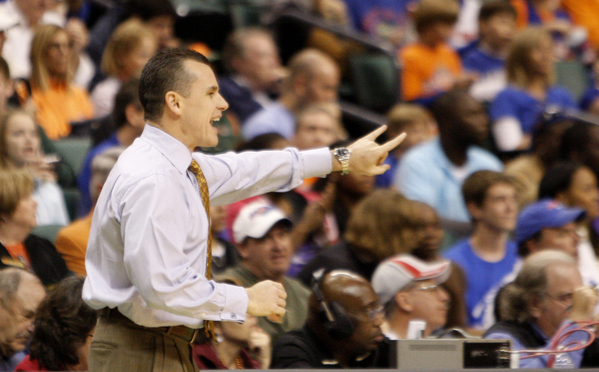
Two NIT berths and one questionable NCAA bid following the first back-to-back title run since the Laettner and Hurley-led Dukies of the early 1990’s, Billy Donovan can finally approach a season without the sour taste of an early NBA/overseas defection, instead focusing on the welcomed expectation of an SEC title. Just as we did with conference rival Kentucky last week, here’s a breakdown of the Florida Gators schedule in their quest to return to the pinnacle of college basketball.

Team Outlook: The moment 6’8 junior forward Alex Tyus opted to complete his four years in Gainesville rather than enter the NBA Draft early, Billy Donovan knew he had a team that could compete for an SEC crown on his hands. Blindsided by the sudden departures of Marreese Speights and Nick Calathes in recent years, Donovan’s only loss would be that of role player Dan Werner. Adding a talented recruiting class led by rugged forward Patric Young and versatile wing Casey Prather to a core returning all five starters meant Donovan finally had some continuity with his program. The group returning isn’t exactly that of Duke, Purdue or Michigan State, though. After all, the Gators finished a mediocre 9-7 in SEC play and lost four of five down the stretch, putting their eventual NCAA Tournament bid in serious jeopardy. Donovan hopes that another year of development for blue chip recruit Kenny Boynton will pay dividends, Tyus and Vernon Macklin can hold down the middle, Erving Walker continues to dish out assists at a high rate and Chandler Parsons pulls some more late-game heroics out of his hat. A successful season followed by Mike Rosario and Bradley Beal entering the fray in 2011 could vault the Gators back to the hoops elite after a three year hiatus.

Donovan Returns All Five Starters From an NCAA Team

Non-Conference Schedule Rank (ranked 1 thru 10, 10 being the most difficult): 8. Coach Donovan struck an appropriate balance of challenging non-conference games and SEC warm-ups for his Gators. Florida will participate in the ESPN College Hoops Tip-Off Marathon with a primetime battle at home against Ohio State. They might be drawing the Buckeyes at the right time with their point guard situation in flux and the Buckeyes looking to form an identity post-Evan Turner. The Florida-Florida State series continues in late November with the Gators traveling to Tallahassee to take on a talented Seminoles team with, once again, NCAA Tournament expectations. Chris Singleton should be a difficult matchup for the Florida frontline. Similar to their December contest with Syracuse in Tampa last year, Donovan scheduled a top-five preseason team in Kansas State in what should be one of the most anticipated non-conference games around the country. A New Year’s Eve trip to the Queen City to face a Xavier team that returns three starters from a Sweet 16 qualifier should prove another stiff test.

Cupcake City: The Gators did apply some frosting to their schedule, but they didn’t go overboard. A few of the games should be relative cakewalks — UNC-Wilmington, North Carolina A&T, Florida Atlantic, Jacksonville and Radford have the makings of easy Gator victories (don’t tell Donovan that after Florida’s stunning home loss to South Alabama last season). There are some sneaky challenges thrown in, too. Morehead State and double-double machine Kenneth Faried will be Murray State’s biggest challenger in the OVC again; they visit Gainesville on November 21. Kent State recoups three of their top four scorers from a team that won the MAC regular season title. With Siena losing talented seniors and their coach, it is Fairfield expected to take the crown in the MAAC. Rhode Island returns enough of a core to contend in the competitive Atlantic 10. The Gators also have tricky road trips to nearby Orlando to take on UCF and Washington, D.C., to face American.

Toughest Early Season Test: The neutral site meeting with Kansas State on December 18 has all the makings to be Florida’s toughest non-conference test and a meeting of two top-ten teams. The Wildcats enter the season with some questions, notably how Jacob Pullen will handle pulling double duty with Denis Clemente no longer around to run the offense and how much the loss of Dominique Sutton to transfer will affect their interior presence and physicality. Even so, most prognosticators would peg K-State to take the Big 12 title with Pullen returning and a breakout expected from forward Curtis Kelly. Frank Martin also trots out a deep frontline that will test Parsons, Tyus, Macklin and the freshman Young inside early in his college career. How Erving Walker defends Pullen on the perimeter could also determine the outcome in front of what should be a primarily pro-Gator crowd.

Read the rest of this entry »

HSAC Analyses: Time Out Before Last Possession Benefits Defense

Posted by jstevrtc on August 31st, 2010

Those folks from the Harvard Sports Analysis Collective have been at it again, continuing what will apparently be a series of analyses of close basketball games. They’ve released two more sets of data, one that says the defense benefits from a time out being called before a team that trails by two points or less takes its last possession, and another that verifies this defensive advantage in situations where the score is tied. The benefit comes from the fact that a foul on the leading/defending team is less likely to be called because a coach has time to communicate with his players and set his defense. This is important because their data from last season also shows that offenses which draw fouls on the defense in these situations score almost twice as much (1.62 points per last possession) on the average than offenses that do not draw fouls (0.878 points).

As college basketball fans, we’re all familiar with the scenario. Close game, just a few seconds left. Team A is up on Team B by two points or less. A time out is called. The last possession then follows, and Team B wants to either score or draw a foul on Team A. The HSAC says that Team A benefits from a time out because if they can set their defense, they’re less likely to have a foul called on them (the actual numbers are below).

Murray State's Danero Thomas says the T.O. did not help Vandy. (MJ Sanchez/AP)

When we first read their write-up about situations where a team trails by two points or less, we wondered if the analysis had been based on the time out being called by the team about to play defense (Team A above). From their site:

Teams were much more likely to draw a foul if they did not call a timeout before that possession. Teams drew fouls on 13 percent of end-of-game possessions when they did not call a timeout. Teams that called a timeout only drew fouls on 8 percent of their possessions. This difference was strongly statistically significant (p=0.001).

We took that to mean that the defense had just called the time out, which would have been a problem, since that’s not usually how it happens, from our experience. If Team A scores late in a game and takes a one- or two-point lead, it’s almost always Team B, the team who just got scored on, who calls the time out. If the HSAC analysis would have only considered the scoring team having called the time out, to us it would have meant a lack of real-world generalizability. If the benefit is that the defense is able to set itself, it shouldn’t matter who calls the time out. We contacted the HSAC about this, who confirmed to us that the analysis was based on either team calling a time out, not just the leading team (Team A).

Read the rest of this entry »

Morning Five: 08.31.10 Edition

Posted by rtmsf on August 31st, 2010

  1. Checking in on the latest conference re-re-realignment talk from Utah, the current word is that BYU is still intent on going independent in football but is looking more and more like a candidate to move to the WCC in basketball and all other sports.  Yes, you read that right.  The West Coast Conference, the tightly-knit eight-team conference of tiny private religious institutions that max out at nearly 9,000 students (Loyola Marymount and San Francisco, whereas BYU at 33,000 students is nearly four times that enrollment) and has remained at eight teams for three decades.  Andy Katz makes the case that this move makes sense in basketball, and we can’t really argue with his logic, except for one little thing — you know what makes more sense?  Staying in the Mountain West, where, with recent additions of Nevada and Fresno State to go with San Diego State, UNLV and New Mexico, the league is on the verge of overtaking the Pac-10 for hoops superiority out west.  We should know something very soon — the deadline for BYU to leave the Mountain West is Wednesday.
  2. Getting back to the conference that BYU originally threatened to move to prior to its implosion, the WAC, feeling jilted and unloved after Nevada and Fresno State’s unceremonious dumping earlier this month, is threatening to sue the two schools if each refuses to pay a disputed $5M exit fee each by the October 25 deadline.  Furthermore, the WAC says that they have the contractual right to not release the two renegades until after the 2011-12 academic year, an interesting assertion given that Fresno and Nevada’s stated positions are that they’re leaving next summer.  This is going to get more interesting before it dies down, because there’s no question that this particular tussle has gotten personal among key players at some of these schools.
  3. There’ll be a boatload of these player profiles coming out in the next two months, but it just means that the season is slowly approaching.  Here are a few from the last few days: Texas’ Jordan Hamilton, Mizzou’s Kim English, Purdue’s E’Twaun Moore, and Louisville’s Preston Knowles.
  4. Jeff Jacobs, a UConn columnist at the Hartford Courant, suggests that Ater Majok’s presumed leaving of the program has nothing to do with impending sanctions that may have involved his recruitment, as we wrote could be possible yesterday.  But in the same paragraph, he also says that there have been “whispers” in the program involving Majok, so we’re not sure what to believe here.  UConn is expected to announce its response to the NCAA’s allegations later this week.
  5. Austin Rivers is the #1 prospect in the Class of 2011, according to Rivals, and he showed the skill that he possesses in a recent summer league game where he crossed over and scored on #1 pick John Wall, followed by ripping him clean on defense on the other end.  One blogger makes a reasonable case as to why Rivers will end up playing for Coach K at Duke in the fall of 2011.