Big Ten M5: 02.15.16 Edition

Posted by Brendan Brody on February 15th, 2016

morning5_bigten

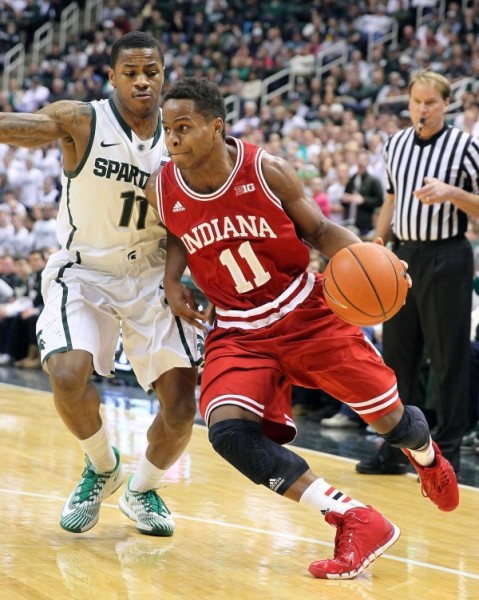
  1. Indiana lost badly to Michigan State on Sunday afternoon, going to 6-6 on the season away from Assembly Hall. The Hoosiers are only one game off of the Big Ten lead, but in allowing Michigan State to put up 48 points in the second half and 1.28 points per possession for the game resuscitated old questions about the Hoosiers’ competence on the defensive end of the floor. The game also was notable for the disappearing act pulled by a scoreless Troy Williams. The junior had been the best player on the floor in the team’s earlier win over Iowa, but he needs to play up to his talent level if the Hoosiers want to make a deep run in March.
  2. It wasn’t all sunshine and lollipops for Michigan State in the win over Indiana, though, as redshirt freshman Kenny Goins left the game in the first half with a knee injury. Tom Izzo fears that his post player will be out of action for the season. Goins had been playing well as a reserve big by taking minutes from Marvin Clark, but now it will be up to the sophomore to come in and produce in the same spots. Look for Gavin Schilling to also get more time, as depth is not a problem this year for Michigan State.
  3. Minnesota lost a close game to Iowa on Sunday night to move to 0-13 in Big Ten play, but there were several bright spots that could be taken away from the game. More specifically, the Gophers held the highly-efficient Hawkeyes to 42.1 percent shooting from the field, and the play of sophomore Bakary Konate. Konate led the team with nine rebounds and has shown increasingly frequent flashes of development. This team is clearly building for the future right now, so being able to hang with one of the best teams in the country shows that, despite a lack of victories, things could get better as early as next season with a core that is gaining experience and returning in 2016-17.
  4. Purdue has had a frightening propensity for blowing early leads this season, but its loss in the closing minutes to Michigan in Ann Arbor on Saturday may have set a new standard for late-game shoddy play. The Wolverines scored the final 11 points of the game after the Boilermakers had led by six with just a few minutes remaining. Purdue got a huge resume win earlier in the week in beating Michigan State, but the Boilermakers need to close strong with some damage in the Big Ten Tournament to move above the projected #4/#5 seed range they’ve been trapped in all the bracket projections.
  5. Things weren’t pretty earlier this season at Wisconsin. Slowly but surely, however, Greg Gard has kept his team’s focus and the Badgers have played their way back into NCAA Tournament contention with an 8-4 conference record. This gives athletic director Barry Alvarez an interesting decision to make with respect to Bo Ryan’s permanent successor. The Badgers have gone 9-4 since Gard took over, and has led some to believe that he should be named the permanent head coach going forward. It’s hard to argue against this notion considering how the team has turned things around and could very well make the NCAA Tournament in what was once appeared to be a lost season.
Share this story

Big Ten Weekend Look Ahead: 02.13.16 Edition

Posted by Alex Moscoso on February 13th, 2016

Finally! After two weekends of mediocre action, Big Ten fans are treated to a packed slate of games with the top six contenders playing against one another or facing teams nipping at their heels. These games will have tremendous implications on the regular season title race, Big Ten tournament seeding and NCAA Tournament at-large bids. So set up camp on that couch this weekend, because there’s plenty of ball to be watched. Here the top Big Ten games of the weekend.

Yogi Ferrell will try and keep his Hoosiers in the Big Ten title race with a win against the Spartans.

Yogi Ferrell will try and keep his Hoosiers in the Big Ten title race with a win against the Spartans.

#18 Purdue at Michigan (Saturday 2:00 PM ET, ESPN2): This is essentially a playoff game to remain in the race for the regular season title — although the winner would still be a considerable long shot. Michigan only has two top 50 KenPom wins this season (Texas and Maryland). Their poor performance against elite competition has typecast the Wolverines as a good-not-great team. If Caris Levert returns to the lineup today, he may provide a spark Michigan needs to get a win over a ranked team and garner some momentum going into the final few weeks of the regular season. The Boilermakers, on the other hand, are not only trying to compete for a Big Ten title but also vying for a protected seed in the NCAA Tournament. This game will be decided by one metric: three-pointers made by Michigan. If the Wolverines don’t get hot from outside the Boilermakers’ front line will simply eat them up. If Purdue can bother the Michigan shooters enough, though, they’ll add another excellent road win on their resume.

Read the rest of this entry »

Share this story

Levy’s Layup Line: Week 11

Posted by Adam Levy on February 12th, 2016

Since 2002, there have only been two seasons when Big Ten home teams won fewer than 60 percent of their conference games (there have in fact been three years when home teams won over 70 percent of their Big Ten games). But that winning percentage has reached a new low this year, as home teams have thus far won only 57.3 percent of the time. With five of the league’s 14 teams as close to guaranteed wins as you can find in a major conference, that number makes sense. Nevertheless, it really highlights the level of disparity and weakness of the Big Ten this season.

It’s Week 11 of the Layup Line.

Michigan State has been a different team with their star back. (AP)

Michigan State has been a different team with their star back. (AP)

REPORT CARD

A: Denzel Valentine

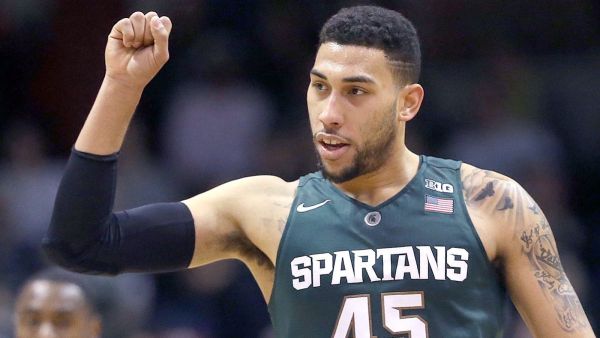
Long time no-see, Mr. Valentine. How fitting for you to earn yourself some report card love on the eve of Valentine’s Day weekend. For those who haven’t been paying attention, Valentine earned his third Player of the Week honor of the season on Monday after dominating Michigan with a near triple-double (21 points, nine rebounds, eight assists). He followed that up on Tuesday by single-handedly bringing his Spartans back from an 18-point deficit against Purdue on the road, only for Sparty to lose by one in overtime (27 points, eight rebounds, 10 assists). Since that horrific loss to Nebraska on January 20, Michigan State is 4-1 and Valentine is averaging 21.2 points, 8.8 rebounds, 7.8 assists and 4.2 threes per game in that span. The chances of him surpassing Iowa’s Jarrod Uthoff as the front-runner for the Big Ten Player of the Year are remote, but Michigan State couldn’t care less. All that matters is that it has its star back and as healthy as ever, ready for the stretch run.

A: Corey Sanders

There are some really good freshmen in the Big Ten this season: Thomas Bryant, Caleb Swanigan, Ethan Happ and Diamond Stone, to name a few. Excluding overall team success, a reasonable argument can be made that none are having a better season than Rutgers’ Corey Sanders. The lone bright spot on a truly awful team, Sanders earned his second Big Ten Freshman of the Week honor after averaging 33.5 points, 5.5 rebounds, 8.5 assists and 2.5 steals per game versus Illinois and Nebraska. He ranks eighth in the Big Ten in points (15.9 PPG), eighth in assists (4.2 APG), first in steals (1.7 SPG) and ninth in minutes (33.4 MPG); among freshmen, he ranks first in points and minutes and is second in assists. If Rutgers wasn’t in jeopardy of going 0-18 in conference play and provided Sanders with a couple of half-decent sidekicks to make them somewhat competent, Sanders would be a shoe-in for Freshman of the Year. Brutal.

Read the rest of this entry »

Share this story

Oklahoma And Kansas Meet With First Place At Stake

Posted by Brian Goodman on February 12th, 2016

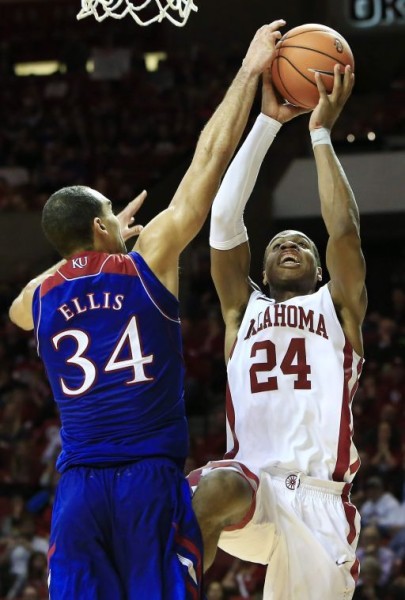
Tomorrow’s 2:30 p.m. ET rematch between Oklahoma and Kansas has been on our radar since the conference schedule was released, but the anticipation skyrocketed when the final horn sounded late into the night following the two teams’ first battle on January 4. From there the hype has only increased, as the Sooners and Jayhawks have fought to a draw through 11 conference games. At the end of the regular season, we could end up looking back on tomorrow’s game as the day the Jayhawks’ decade-long grip on the conference finally loosened. Or, we could learn that the road to the Big 12 title still goes through Lawrence, despite Oklahoma’s deadly trio of shooters and National Player Of The Year frontrunner, Buddy Hield.

To answer two key questions facing each team, we brought in Big 12 microsite contributors Brian Goodman (@BSGoodman) and Chris Stone (@cstonehoops).

Perry Ellis and Buddy Hield will face one another for the eighth time in their careers. (Alonzo Adams/AP)

Perry Ellis and Buddy Hield face one another tomorrow for the eighth time in their careers. (Alonzo Adams/AP)

Two Questions Facing The Sooners:

Brian Goodman: Perry Ellis has been on a roll lately, converting 17 of his last 19 shots inside the arc. Last month, he carried Kansas after halftime in the instant classic and will be leaned upon heavily to have another big game tomorrow. Meanwhile, Oklahoma center Khadeem Lattin leads the Big 12 in blocks percentage during conference play, but he had trouble staying on the court in the Sooners’ last two games against Kansas State and Texas. What do you make of Lattin and Oklahoma’s chances of getting the better of Ellis the second time around?

Chris Stone: Ellis has averaged 18.5 points per game in four matchups against the Sooners since his freshman season (he wasn’t much of a factor in the Kansas offense back then), so how Oklahoma defends him will be a crucial factor in this game. In the first meeting, Lattin and Spangler did a good job of turning Ellis into an inefficient scorer. Although he finished with 27 points in the win, it took him 28 shots to get there. Don’t be surprised if we see a similar kind of night from Ellis in Norman. Bill Self is intent on making him the focal point of the offense, but if the game in Lawrence is any guide, Lattin’s length will make it difficult for Ellis to get as many of the easy buckets he’s used to.

Read the rest of this entry »

Share this story

Otskey’s Big East Observations: 02.12.16 Edition

Posted by Brian Otskey on February 12th, 2016

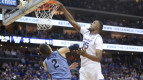
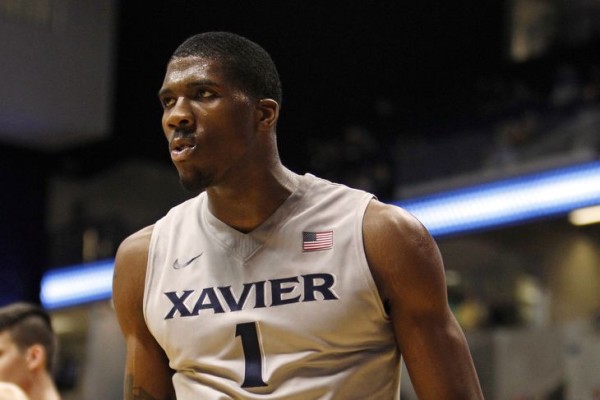
One of the interesting things about a long and grueling conference season is the subtle changes that teams undergo, both good and bad. For a Xavier team that remains in solid position for a top-two Big East finish and a top-three seed in the NCAA Tournament, an issue may be developing. Despite a 9-2 record since losing at Villanova, Xavier has been trending down in efficiency metrics (with both KenPom and others). Defense is the main culprit, specifically on the interior. Wins against St. John’s and Marquette were much closer than they should have been and Chris Mack’s team followed those up with a disappointing loss at Creighton, a game in which it was blitzed from the opening tip. The Musketeers have allowed six of its last seven opponents to shoot better than 50 percent from two-point range. What’s shocking is this had only happened six times in the preceding 23 games. While the better competition in Big East play is certainly a factor, the trend is undoubtedly still alarming. It’s no coincidence that the three teams to beat Xavier have all shot better than 60 percent from inside the arc. Given the makeup of this Musketeers team, the porous interior defending is especially surprising.

Jalen Reynolds and Xavier are scuffling a bit defensively.

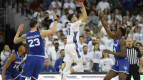
Jalen Reynolds and Xavier are struggling a bit defensively. (AP)

Xavier not only has one of the better frontcourts in the nation, but it also has a stockpile of guards and wings with length and athleticism. Mack’s 1-3-1 zone has been incredibly disruptive at times this season, particularly in limiting penetration by the opponent. Given all this, it’s hard to decipher the exact problem for the X-men, but they would be wise to find a way to stop this trend. It will be notable if the poor defending continues down the stretch, as this team is faced with a brutal late February schedule. The Musketeers have been a complete team on both ends of the floor for most of this season and have a legitimate chance to make a deep NCAA Tournament run. It would be a shame if porous interior defense derails this dream season. Read the rest of this entry »

Share this story

Inside the ACC Numbers: Volume III

Posted by Brad Jenkins (@bradjenk) on February 12th, 2016

Here is the latest edition of our weekly look at the current ACC standings and team performances, where we focus in on which teams are playing better or worse than their records indicate. Each week we delve into advanced metrics to find a few interesting teams or player stats and trends. This week we will also look at which of the Four Factors are most important to winning in the ACC. Finally, we will forecast how the final standings may look and what that means for ACC schools’ postseason aspirations.

Note: All numbers are current for games played through Wednesday, February 10th.

Current Standings

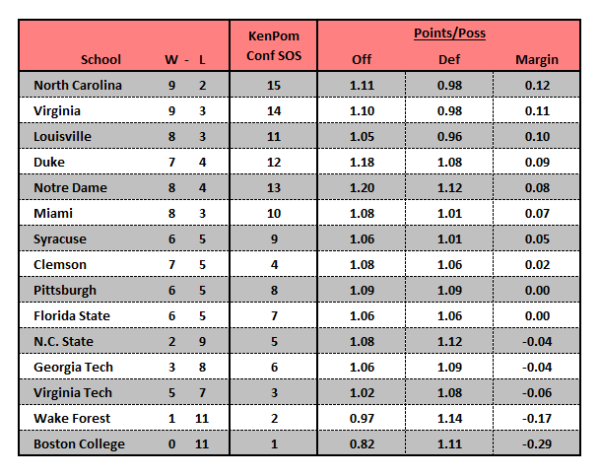
ACCStand-Feb10

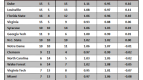
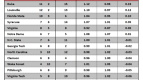
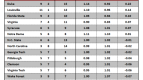
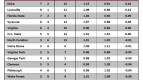
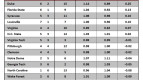
Things have tightened up at the top of the standings as North Carolina has come back to the field following its recent road trip, which included losses to Louisville and Notre Dame. The depth of the ACC is on display here – 10 teams have winning records and all are even or better in points per possession performance. In a bit of bad news for the rest of the league – Virginia’s stingy defense is back! After allowing each of their first eight conference opponents to top 1.00 points per possession, Tony Bennett’s team has held the last four foes to an average of 0.81 PPP. None of those last four opposing offenses have scored over 50 points, and the Cavaliers have now won their last seven contests. It will be interesting to see if Virginia can maintain its defensive acumen this Saturday at Duke, where it will face the nation’s 2nd rated offense. The Blue Devils have been the one ACC school that has been able to handle Bennett’s pack line defense over the last four years, averaging 1.07 points per possession against the Cavaliers in five meetings.

Read the rest of this entry »

Share this story

SEC Saturday Storylines: Is Alabama Really On The Bubble?

Posted by Greg Mitchell on February 12th, 2016

This Saturday will contain more conference title drama in the span of just a few hours than the SEC has had over the past two seasons. The top four teams play each other on a day that could go a long way toward determining which squad arrives in Nashville as the SEC regular season champion. Here are three stories to keep track of with a lot at stake this weekend.

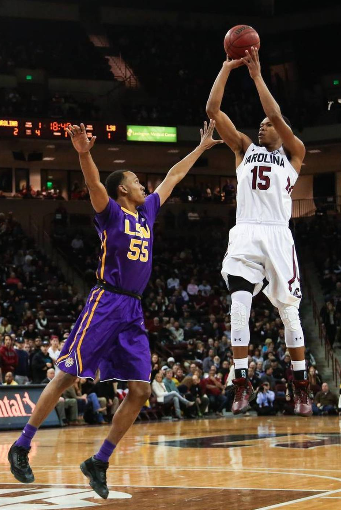
P.J. Dozier and South Carolina downed LSU to set up a crucial match up with Kentucky (thestate.com).

P.J. Dozier and South Carolina downed LSU to set up a crucial matchup with Kentucky (thestate.com).

  1. Which team will have a leg up in the title race on Sunday morning? With the top of the SEC standings muddled as we enter mid-February, the schedule-makers have smiled on us this weekend. KentuckySouth Carolina and LSU all sit at 8-3 with Texas A&M and Florida right behind that trio at 7-4. The Wildcats and Gamecocks will meet in Columbia while the Tigers and Aggies face off in Baton Rouge. The most pressure of the weekend might be on Billy Kennedy’s club, since a fifth straight SEC loss — a situation nobody would have thought possible just a few weeks ago — could put an end to the Aggies’ championship hopes. South Carolina might have the most to gain, however. A win for the Gamecocks could put Frank Martin’s team in a commanding position since its remaining schedule is the most manageable. South Carolina’s remaining road games? At Missouri, Mississippi State and Arkansas. That’s hardly a murderer’s row, even with the trip to Bud Walton thrown in there. There’s a lot of basketball still to come this season, but we may look back on this Saturday as the most pivotal day in the SEC race. Read the rest of this entry »
Share this story

Big Ten M5: 02.12.16 Edition

Posted by Patrick Engel on February 12th, 2016

morning5_bigten

  1. Purdue announced on Thursday that athletic director Morgan Burke will retire when his contract expires on June 30, 2017. Burke, who has held the job in West Lafayette since 1993, is the longest-tenured athletic director in the Big Ten by 12 years. Michael Berghoff, former football player and current chairman of the Purdue Board of Trustees, will lead the search and gave no timetable for making a hire. The Lafayette (IN) Journal & Courier‘s Nathan Baird put together a list of possible candidates for the job.
  2. In more Purdue news, starting point guard P.J. Thompson has sprained ligaments in his left ankle, causing him to miss practice and wear a walking boot. His status for Saturday’s game at Michigan is unclear, although X-rays came back negative. Thompson said he suffered the injury in the second half of the Boilermakers’ overtime win versus Michigan State on Tuesday. The Indianapolis native is on pace to shatter Purdue’s record for assist-to-turnover ratio: The sophomore has 71 assists against 11 turnovers this season.
  3. The James Naismith Trophy released its midseason list for its men’s college basketball Player of the Year award. The list of 35 names includes five Big Ten players: Purdue center A.J. Hammons, Michigan State guard Denzel Valentine, Iowa forward Jarrod Uthoff, Maryland point guard Melo Trimble and Indiana point guard Yogi Ferrell. Trimble, a sophomore, is the only non-senior of the five Big Ten candidates.
  4. Rutgers is in the middle of a 23-game Big Ten losing streak and head coach Eddie Jordan is displeased with the fan base’s impatience. Responding to a question about their disappointment, Jordan’s frustration showed as he defended Rutgers’ direction, saying, “They just have to be more educated in what the real deal is. If they understand what this conference is about, what type of players and teams we’re going up against with injuries and being a young team. If they don’t understand that, I don’t need to read what the reaction is.” Rutgers’ average home game attendance of 4,483 is easily the worst in the Big Ten.
  5. On the opposite end of the spectrum, Wisconsin has won six straight games since a 1-4 start to Big Ten play. Forward Nigel Hayes is tied for fourth in the conference in scoring with 17.3 PPG and has scored at least 20 points in four of the six wins. But Hayes isn’t doing all the work. Junior forward/center Vitto Brown’s newfound consistency has given the Badgers a big lift too. He scored a career-high 18 points in Wednesday’s win over Nebraska and made all three of his three-point attempts. Brown is averaging 14.0 points and 3.5 rebounds per game in Wisconsin’s last four contests. He has made six three-pointers in that stretch after making only eight in the first 20 games of the season.
Share this story

The ABCs Of Why Oregon Is A Final Four Contender

Posted by Mike Lemaire on February 11th, 2016

We’ve been wanting to write about Oregon since the Ducks beat Arizona in Tucson two weeks ago, but coming up with new angles to discuss how good Dana Altman’s team has become is tricky. For the first time since Altman took over the program in 2010, the team is starting to garner real national attention. That of course means that most of the stories about the team’s patchwork roster and intriguing backstories have already been told. Still, the Ducks deserve all the publicity and attention they can get and we on the microsite have been severely lacking in that department, so we decided to make up for it. Rather than regurgitate observations that have already been analyzed to death, though, we instead used the entire alphabet to explain why the Ducks are legitimate Final Four contenders.

Note: This was not as easy as it might look, so we are asking for forgiveness on some of our more obvious reaches.

A is for Altman: It wasn’t very long ago that Oregon was in the middle of an ugly sexual assault scandal and some were calling for Altman’s job. Now he is coaching the best team in the conference and is in consideration for several national coaching awards as well. He gets plenty of criticism for his continued reliance on transfers, especially those from junior college, but players like Chris Boucher, Dwayne Benjamin and Elgin Cook are silencing those critics. He has also made a concerted effort to make his team adaptable and that shows in his willingness to switch up defensive schemes and tinker with lineups. It has all come together this season and now we are watching Altman’s vision come to life.

B is for Blocks: The Ducks do a lot of this, as they are tied with St. John’s for the second-highest block percentage in the country. That elite rim protection is a big reason why Oregon is way more efficient on the defensive end of the floor this season. Boucher leads the country in blocks per game (3.4) and it would be foolish to forget that sophomore Jordan Bell – who is finally rounding into form – was the conference’s best shot-blocker last season.

Chris Boucher, Casey Benson And The Ducks Are Halfway Home To A Pac-12 Title (AP Photo/Chris Pietsch)

Chris Boucher Has Been a Game-Changing Rim Protector                                                     (AP Photo/Chris Pietsch)

C is for Canada: Altman and Oregon have been luring players from north of the border to Eugene for years now (remember Jason Calliste and Devoe Joseph?) but recently he has outdone himself. Ontario native Dillon Brooks is on the short list of PAC-12 Player of the Year candidates, while Montreal product Boucher may be the team’s best NBA prospect. The Ducks’ Canadian flavor would grow even stronger if Dylan Ennis, another Ontario product, were healthy.

D is for Dillon: Brooks has always been considered a good player but the sophomore has raised both his game and draft stock this season. Oregon has made a conscious effort to run its offense through the versatile Brooks, and he’s responded by averaging 16.9 points per game, shooting 48% from the floor, and grabbing 6.0 rebounds per game. He also averages 3.2 assists per game and shoots 80 percent from the free-throw line. He is still a limited shooter from three-point range and can be sloppy with the ball, but the Ducks wouldn’t be nearly as good as they are now if Brooks wasn’t in the midst of a breakout season.

E is for Ennis: The very definition of a college basketball journeyman, Ennis was supposed to use his last year of eligibility to run the Ducks’ offense this season. Instead, a lingering foot issue sidelined him for the rest of the season. He’s likely played his final minute of college basketball, as the NCAA is expected to reject his appeal for a medical redshirt. But rather than sulk or drop out of school, Ennis has been front and center as the team’s biggest cheerleader. That type of support and loyalty can make subtle, crucial differences in team morale.

F is for Frontcourt: The loss of Ennis has left a gaping hole in the depth of the team’s backcourt, but Oregon makes up for it with a frontcourt that may feature the best grouping of five forwards in the country. Boucher and Brooks need no further explanation, but Bell is a defensive monster who is still shaking off the rust from missing the first portion of the season. Senior Dwayne Benjamin isn’t a great rebounder but makes up for it with his floor-stretching shooting talents, while fellow senior Elgin Cook is the perfect swing forward, capable of filling in wherever necessary. Oh and don’t think Cook is just a role player; he is currently Oregon’s second leading scorer.

G is for Gimmes: The importance of succeeding at the free-throw line can never be understated. While the Ducks are shooting six percent worse from the charity stripe this season than they did last (76 percent has come down to 70 percent), the percentage of free-throw attempts in relation to field-goal attempts has risen sharply, from 28 percent to 40 percent. Oregon is getting to the free-throw line far more often, which is a big reason why the offense has been able to overcome its long-range shooting issues. If anything, it might be worth trying to get to the line even more often.

H is for Homecourt Advantage: Here’s the first letter that demanded a real stretch! Considering the Ducks play in a 12,000-seat arena and can barely muster an average of 8,000 fans for conference home games, the fans may not deserve too much praise. But the crowd is starting to come back (with an assist from the school athletic department) and the team is noticing and responding. The Ducks have yet to lose in Eugene and with just three manageable home dates remaining on the schedule (vs. Oregon State, Washington, and Washington State), it doesn’t seem likely they will this season.

I is for Idolization: The second stretch of the piece! But idolization is a pretty good word for Ducks’ guard Casey Benson‘s fascination with watching his brother play. The elder Benson (T.J.) played at Weber State and now coaches at Grand Canyon University, so the younger Benson had a pretty good mentor to learn from. The younger Benson is one of the best decision-makers in college basketball and has become an unexpected linchpin in one of the nation’s most efficient offenses.

J is for Jumpers: Oregon makes a fair amount of them (its 53.3 percent shooting on two-point field goal attempts is best in the conference) and last we checked, making shots is an important part of becoming a good basketball team.

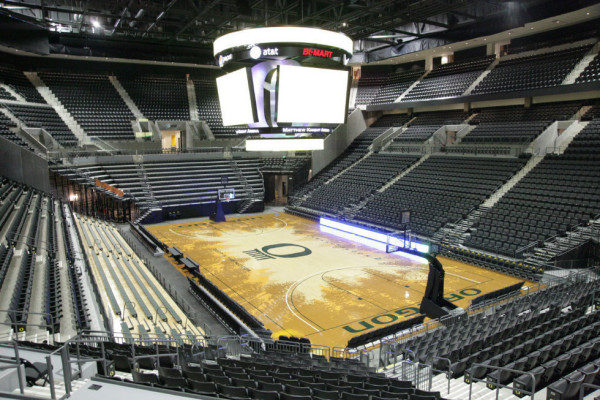
K is for Knight: It is pretty near impossible to mention the success of Oregon athletics without pointing out that a big part of that success is Nike chairman Phil Knight’s deep pockets and profound love for the school’s sports teams. Matthew Knight Arena is a gleaming testament to both Phil’s son and his own generosity. It may also be the coolest court in college basketball.
Knight

Matthew Knight Arena’s Hardwood Is As Distinctive As Any In College Basketball

L is for Luck: According to hoop-math.com, opponents took 418 field goals in transition against Oregon last season and roughly 38 percent of those attempts came from downtown. Opponents made just 30.8 percent of those shots. This season, opponents have taken 255 field goals in transition (basically the same per game average as last season) and once again roughly 38 percent of those attempts have come from downtown. Opponents are now making 44.4 percent of those attempts, however. Oregon can definitely stand to tighten things up in that area, but that number screams regression. If and when that luck runs out, Oregon’s already solid defense might start looking even more efficient.

M is for Mennenga: As in assistant coach Mike Mennenga. Mennenga is in his second season as an assistant in Eugene but his strong ties to Toronto (he used to be a youth basketball coach there) are a big reason why Oregon is so popular with players from up north. We already explained how important Canada has been to Oregon’s success this season, so it is only fair we give Mennenga his due, as well. 

N is for Newcomers: Since Altman took over for Ernie Kent, the roster has seen an average of nearly eight new players each season. This season isn’t the best example of the constant turnover – in part because we never got to see Ennis play extended minutes – but at the risk of sounding redundant, Boucher and Dorsey have worked out pretty well. It takes a gifted coach and stable program to successfully integrate new players year after year. Oregon does it better than almost anyone else.

O is for Opportunity: At the risk of being a buzzkill, it is worth pointing out that there are no dominant teams in college basketball this season. This leaves a very large open window of opportunity for Oregon (and every other team out there) to climb through. If this were last season, Oregon might not even be the first or second best team in the conference, let alone the country. This is nothing to be ashamed of, but let’s not pretend it doesn’t have a big impact on Oregon’s potential tournament success.

P is for Playing Time: Ducks’ freshman Tyler Dorsey was originally committed to conference rival Arizona. But when Arizona took a commitment from Justin Simon and offered other guards, Dorsey knew his potential playing time was in jeopardy and reopened his commitment before eventually landing at Oregon. Playing time was unlikely to be the only reason Dorsey made the switch, but the point is moot now. Dorsey is suiting up for Oregon and is the team’s third-leading scorer and best outside shooter, shooting better than 40 percent from three-point range.

Q is for Quack: You know, like a Duck?

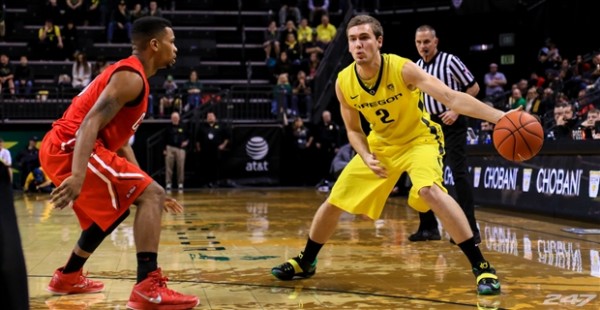
R is for Reckless: One would think that a rotation primarily comprising first or second year players would be more reckless. But in fact the opposite is true, as Oregon takes better care of the ball than almost any team in the country. Casey Benson has turned the ball over just seven times in more than 300 minutes of conference play and Boucher has just nine turnovers in nearly as many minutes. The Ducks lead the conference in turnover margin (+2.88) and are 26th best in the country in the category (ninth best among Power 5 schools).
A Casey Benson Turnover is a Rare Sight These Days

A Casey Benson Turnover is a Rare Sight These Days (Photo: John Sperry, 247Sports)

S is for Stubblefield: As in longtime Altman sidekick and ace recruiter Tony Stubblefield. Hired away from Cincinnati, Stubblefield has been the program’s best recruiter and is at least partially responsible for the commitment of Dorsey last year. He was also the primary recruiter of Oak Hill Academy forward Trevor Manuel, and 247 Sports credits him with successfully enrolling Cook and Brooks in years past.

T is for Transition Defense: Oregon opponents’ effective field-goal percentage in transition is 58.5 percent. This is in part due to the aforementioned problems defending the three-point arc, but what might be news to some is that Oregon ranks among the top 40 teams in the country in percentage of total field goals attempted in transition (18.3%) and effective field-goal percentage defense in non-transition situations (44.4%). In summation, Oregon is good at preventing opponents’ transition opportunities and is really good at defending when the opponents aren’t getting transition opportunities. This is a reminder to Dana Altman to get that transition perimeter defense cleaned up STAT.

U is for Unicorns: Unicorn was the most apt description for the type of once-in-a-generation talent and athlete Kevin Durant was and still is. Now it is being used, albeit slightly more moderately, to describe the 6’10”, 190-pound athletic freak that is Chris Boucher. There aren’t too many players in college basketball with the versatility to block seven shots and make four three-pointers in the same game. Boucher did it against Arizona State on Jan. 31. He is 23 and is essentially a walking string bean, but his arrival has been an obvious boon on both ends of the floor for the Ducks.

V is for Versatility: And versatility is something Oregon has in spades. Take a look at Oregon’s most frequently used lineups over the last five games and you will see Altman experiments with different combinations liberally. Every player in the rotation also plays more than one position. This is not coincidental. Altman readily admits that versatility is an important part of his recruiting strategy and that position-less basketball is the aim. Almost all of the Ducks are matchup problems for the opposition (especially Brooks) and that ability to play different roles is a big reason why the offense is so efficient.

W is for Warriors: To continue that thought, we won’t pretend the Ducks’ attempts to mimic the Warriors’ position-less defense is perfect. Oregon still has issues on the glass and defending the perimeter. But it is interesting to see how many similar pieces Oregon is working with. This excellent analysis of the Warriors’ ground-breaking defense can be applied to Oregon as well (to a lesser degree, obviously). The Ducks have no defensive footprint and can play man-to-man or zone depending on what suits them. They can switch on defense without worrying about size mismatches with Boucher serving as the Bogut-esque anchor. Brooks also has the potential to be an Iguodala-lite disruptor on defense. These similarities may not be perfect, but their potential existence is a definite good thing.

X is for X: This is one of those skip questions on the test and we will take the “X”.

Y and Z: Uhhhh, seems like we ran out of gas. We got nothing. Dana Altman has to hope his team has a more successful finishing flourish in them this March than we did here. And if you read all the way from A through W, you know the Ducks just might.

Share this story

Big 12 Power Rankings: Blowing Bubbles Edition

Posted by Nate Kotisso on February 11th, 2016

When the calendar turns to February, it is required that everyone must talk about bubbles. When engaging in bubble talk, we are obliged to have serious discussions about big bubbles, small bubbles, dish soap, glycerin and various bubble wand shapes. But you must also make mention of the nervous teams on the fringe of the NCAA Tournament bracket. Last week, we discussed the Big 12 bubble picture at considerable length. While we thought that teams like Kansas State and Texas Tech still had some life left in them, we weren’t so positive that they could change their fortunes so quickly. Down starting point guard Kamau Stokes, the Wildcats knocked off #1 Oklahoma on Saturday because Wesley Iwundu decided the offense would run through him. (He also accurately decided his man-to-man defense on Buddy Hield would give his team a better chance at slowing down Oklahoma’s potent offense.) The Red Raiders had solid computer numbers going into last night’s game against Iowa State (RPI: 54, non-conference SOS: 59, two RPI Top 50 wins) but a 3-7 conference record is not where a team wants to be in mid-February. Texas Tech then proceeded to take down the Cyclones in overtime, adding another feather in the cap of a potential at-large profile.
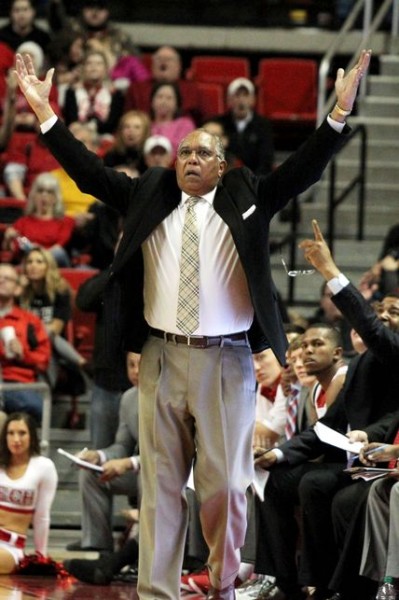

Texas Tech head coach Tubby Smith might have received help from above in last night's upset victory over Iowa State. (Michael C. Johnson/USA TODAY Sports)

Texas Tech head coach Tubby Smith may have received some help from above in last night’s upset victory of Iowa State.
(Michael C. Johnson/USA TODAY Sports)

What does this all mean? It means there are 23 days until the final day of the Big 12’s regular season on March 5. Some teams will rise, some will fall, and some will be Kansas. If you are not Kansas, you, a Big 12 conference member, have been sentenced to death in the wings of a flightless bird. They may not fly, but they sure can claw.

All hail the mighty Jayhawk.

The power rankings are below.

1. Oklahoma — 4 points (Chris & Nate — 1st, Brian — 2nd). Comment: “This is the first week that Brian, Chris and myself have not unanimously voted the Sooners No. 1 in quite some time. I might be turning myself into #thatguy, but… something’s clearly up with Oklahoma, right? The Sooners’ somewhat sluggish play might be because of the rough 48-hour turnaround that Saturday-Big Monday games will do to players, but Texas outscoring the Sooners by 14 in the paint isn’t good. Texas owning the paint with just one legitimate big man inside isn’t good. Oklahoma going ice cold late in a game (sans Buddy) in Norman isn’t good. Am I making a bigger deal from probably nothing? Maybe, but then again, maybe not.” – Nate Kotisso (@natekotisso)

2. Kansas — 5 points (Brian — 1st, Chris & Nate — 2nd). Comment: “The much-maligned Landen Lucas was the most active defensive player for Kansas Tuesday night, hauling in 16 rebounds and blocking four shots. It was the first such performance by a Jayhawk since Jeff Withey in the 2013 Round of 32, when Kansas knocked off North Carolina behind Withey’s 16 points, 16 rebounds and seven blocks. It will probably be a while before those two are mentioned in the same sentence again, so Jayhawk fans are advised to print out these rankings and display them in their offices.” – Brian Goodman (@bsgoodman)

3. West Virginia — 9 points (All voted 3rd). Comment: “Has the Big 12 finally discovered some cracks in the Mountaineers’ press? West Virginia’s last eight opponents have all registered turnover rates below the Mountaineers’ season-long defensive average of 26.1 percent. If coaches are doing a better job of scouting West Virginia, and it looks like they are, the Mountaineers will need to find a way to adjust if they want to stay in the thick of the race.” – BG

4. Texas — 12 points (All voted 4th). Comment: “Weird trivia time! Had Texas knocked off the Sooners a few days ago, they would have been just the second Big 12 team since West Virginia and TCU joined the league to win at Baylor, at West Virginia and at Oklahoma in the same season. The first team to pull this off was 2012-13 Kansas State. Perhaps losing in Norman was for the best.” – NK

5. Baylor — 15 points (All voted 5th). Comment: “With Rico Gathers unavailable because of illness, the Bears got pummeled on both backboards against Kansas State Wednesday night, so they turned to an unlikely source for help: the free throw line. While Baylor had excelled at getting to the stripe this season, entering the game ranked second in the Big 12 in offensive free throw rate, they also entered it ranked just sixth in free throw shooting. Led by Lester Medford‘s 11-for-11 effort, though, Baylor calmly hit 29-for-30 attempts in the 82-72 win, quieting the talk of Kansas State’s narrow chances for an at-large bid – at least for now.” – BG

6. Iowa State — 18 points (All voted 6th). Comment: “While Steve Prohm hopes Jameel McKay‘s suspension will help the Cyclones in the long run, it’s certainly not helping in the short run. Without its sole rim protector against Texas Tech on Wednesday, Iowa State blocked just two shots, allowed the Red Raiders to shoot 80 percent (12-of-15) at the rim and hauled in just 62.5 percent of available defensive rebounds.” – BG

7. Texas Tech — 22 points (Chris & Nate — 7th, Brian — 8th). Comment: “It feels like it might be a while before the Red Raiders move up in our rankings because their 4-7 Big 12 record isn’t close enough to .500. But if it does, we’ll gladly oblige an ascension.” – NK

8. Kansas State — 23 points (Brian — 7th, Chris & Nate — 8th). Comment: “From off the bubble to on it to back off it in the span of five days, it’s been a busy week for the Wildcats. Then again, if you told Bruce Weber this time last year that flirting with an at-large bid would constitute a busy week, chances are he’d take it in a heartbeat.” – BG

9. Oklahoma State — 28 points (Brian & Chris — 9th, Nate — 10th). Comment: “From the Kansas win to Monday’s loss at TCU, these last few weeks have encapsulated Oklahoma State’s tenure under Travis Ford: numerous moments of failure mixed in with brief moments of brilliance. The end is near.” – NK

10. Texas Christian — 29 points (Nate — 9th, Brian & Chris — 10th). Comment: “I voted ninth for the Horned Frogs this week because: a) they share identical conference (2-9) and overall records (11-13) with Oklahoma State; and b) they have a head-to-head win over the Cowboys. The climb out of the Big 12 cellar is nearly complete.” – NK

Big 12 Video/GIF of the Week

This week’s winner was a late entry but wound up being the best regardless. With 1:34 left in overtime and two seconds remaining on the shot clock, Texas Tech’s Keenan Evans grabbed the inbounds pass and hoisted a desperation three from the Southwest Texas area of the midcourt map that smoothly banked in. It’s one of those shots that, when it drops, gives your team a boost. For the other team, however, it represents a dagger to the heart. (h/t The Cauldron)

Five Big 12 Games You Better Watch

  1. Saturday: Kansas at Oklahoma (1:30 PM CT, ESPN)
  2. Saturday: Texas Tech at Baylor (7:00 PM CT, ESPNU)
  3. Saturday: Texas at Iowa State (7:30 PM CT, ESPN2)
  4. Monday: Oklahoma State at Kansas (8:00 PM CT, ESPN)
  5. Wednesday: Oklahoma at Texas Tech (8:00 PM CT, ESPNU)
Share this story