Morning Five: 06.22.12 Edition

Posted by rtmsf on June 22nd, 2012

  1. Last night marked the end of another season of basketball as the NBA crowned its newest champion, the Miami Heat, and we now head into a four-month dry spell without competitive hoops (the Summer Olympics next month will provide a brief respite). While the evening definitely belonged to LeBron James’ coronation as one of the all-time greats, a pair of his role player teammates joined the short list of players to have won both a national title in college as well as a world title in the NBA. With the Heat’s victory, Kansas’ Mario Chalmers (2008) and Duke’s Shane Battier (2001) have now pulled off the twin feat, increasing the the total number of NBA champs with at least one NCAA champion in its regular rotation to an astonishing 71 percent. Battier in particular has long been considered a more valuable player than his numbers might suggest, but it’s no great secret to suggest that winning players tend to find their ways onto winning teams. Congratulations to Battier, Chalmers, James and the rest of the Miami Heat for their 2012 world championship.
  2. While on the subject of the NBA, it appears that ESPN analyst Jalen Roseis set to become the Gameday replacement for Hubert Davis next season. We’ve said this before, but the metamorphosis of Rose from Fab Five hothead to a solid ESPN analyst is nothing short of phenomenal. Unlike Davis and most of the Gameday crew, Rose isn’t afraid to mix it up a bit — Digger Phelps taking ridiculous positions for the sake of comedy notwithstanding — and could serve to enliven a group that has a tendency to act non-confrontational. From the same article, TBL suggests that former Virginia Tech head coach Seth Greenberg will become a college basketball analyst on the WWL next season as well, with an eye toward replacing Phelps when he finally decides to retire.
  3. We expect to have another post on this topic up later today, but Matt Norlander at CBSSports.com writes that the APR rule which will keep 10 programs out of the postseason in 2012-13 could have a significant deleterious effect on the future of the game if schools don’t take it seriously. The key point is that as many as 60 schools could have been kept out of next year’s postseason if the APR floor of 930 was already in effect (as it will be in 2015). Some of those schools include names like Oklahoma State, Providence, Oregon, Auburn, Arkansas and LSU, and while none of those carry the cachet of Connecticut, the reality of it suggests that a one- or two-year drop in significant academic performance could in fact knock big-time programs such as UCLA or Michigan State out of the NCAA Tournament in some future year. The NCAA has already shown through its refusal of UConn’s appeal that it has no interest in providing exceptions, so this is something everyone involved with college basketball at the ground level will have to carefully monitor.
  4. Louisville announced on Thursday that former rising star forward Rakeem Buckleswill transfer to play for Rick Pitino’s son, Richard, at FIU for his final season. The hard-luck player has suffered a conga line of injuries after a promising freshman year in 2009-10 that ended with him going for 20/9 in an NCAA Tournament loss to California. His sophomore and junior seasons were both cut short by ACL injuries, and he is expected to miss the entire 2012-13 season recovering from his latest ligament tear. Louisville appears to be loaded at his position going into the next two seasons, so we’re sure that Buckles viewed this transfer as an opportunity to head closer to home and find some playing time in a comfortable situation to finish his career.
  5. In clearly one of the great disappointments of this offseason, West Virginia’s hirsute Deniz Kiliclihas decided to shave off his trademark mountain man beard. Citing the summer heat in Morgantown as the primary reason for his shearing, we hope that he allows for plenty of time to bring it back next fall. Right around October 15 is fine with us. Only 112 days now…
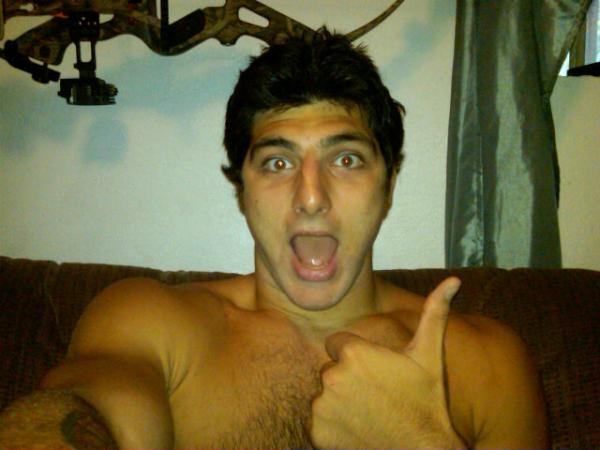
A Beardless Kilicli: The Horror, The Horror…

Share this story

Morning Five: 06.20.12 Edition

Posted by rtmsf on June 20th, 2012

  1. There are many coaching hires where the logical process makes normal and complete sense to everyone – a longtime assistant is promoted to the top job; a big personality moves on to a school to match his ego; a mid-major guy is looking for more resources and talent. Occasionally, though, a random hire has everyone around the industry scratching his head wondering what they missed. It’s not very often that you’ll see a career assistant coach — mostly at the collegiate level, at that — make the jump to NBA head coach, but that’s exactly what St. John’s assistant Mike Dunlap did this week. Other than a handful of games when head coach Steve Lavin was out with prostate cancer last season, Dunlap has spent the last six seasons as an assistant, and the extent of his head coaching experience came at Division II Metro State from 1997-2006. Dunlap reportedly beat out more prominent names such as Jerry Sloan, Brian Shaw, and Quin Snyder for the position, and although according to Jeff Goodman everyone knows he can coach, this is a real gamble on the part of the GOAT as part owner of the Charlotte Bobcats.
  2. If a player only sets foot on your campus for the better part of eight months, is it OK for an alumnus to claim that star as one of his own? That’s the question posed by Grantland’s Bryan Curtis as a Longhorn considering the provenance of one Kevin Durant, one of the NBA’s brightest stars but a player who probably wasn’t around Austin long enough to even witness the bats on Congress Avenue Bridge. Curtis ultimately settles on the answer “yes,” – shocking, we know – but he actually digs up some thoughtful and relevant examples of other prominent Texas grads who were early entries into the work force well before it was fashionable. A couple of those names? Walter Cronkite and Michael Dell.
  3. Stop the presses, but Fab Melo has decided to speak about his suspensions last season at Syracuse. If you recall, the Big East DPOY was suspended twice during the season, including a devastating NCAA Tournament suspension that essentially killed the Orange’s realistic chances at a national title. The reason: (drum roll) academics. Melo is touring around the country in an effort to improve his draft stock, and he decided to talk about his time away from Jim Boeheim’s team during his sophomore year this week. To wit, “They ask, I explain (what) happened — that I came from another country and until four years ago didn’t even speak English.” This is all fine and well, but if we were an NBA scout, we might be willing to look past one indiscretion — but dropping the ball during the most important month of his collegiate career is an altogether different story. Did he forget how to stay eligible between the first part of his sophomore year and his second? Or did he realize he was going to be a millionaire soon and decided to stop caring about classes? That’s the question that should be asked — whether the answer is relevant to his future prospects as a ball player isn’t for us to decide.
  4. With all the bad blood surrounding conference realignment, we’re actually surprised that we haven’t seen what the CAA has decided to do more often. The league announced on Tuesday that departing members Old Dominion and Georgia State – both of which will remain in the league in 2012-13 – will not be eligible to compete for conference championships next year. The CAA’s Council of Presidents voted unanimously to uphold a longstanding rule meant to dissuade schools from jumping ship. VCU, which will join the Atlantic 10 next month, will obviously not be impacted, but this goes to show that conference realignment at its core is something of a bloodsport, and memories of such influential people at the highest levels tend to not easily erase.
  5. We sorta love it when in-state rivalries are exacerbated through the local media, and NC State is only the latest and greatest to use the old standbys — billboards and television ads — to make declarations of grandeur based on nothing more than marketing, spit, and perhaps a little duct tape. Whether you measure it by success or fans, there’s virtually no possible way to justify an assertion that the great state of North Carolina belongs to NC State, but hey, whatever gets the juices running (and it’s still funny). Of course, even if NC State has won the last 10,000 football games against UNC, Duke, and Wake Forest combined, that’s still not what matters in the Tar Heel State any more than Auburn beating Alabama in basketball matters a lick. Kudos to NC State for giving it a shot, but nobody is fooled.
Share this story

Morning Five: 06.19.12 Edition

Posted by rtmsf on June 19th, 2012

  1. Mike Brey has built Notre Dame into an annual fixture in the Top 25 during his tenure in South Bend, and the three-time Big East COY who has led the Irish to six straight 20-win seasons will be rewarded with long term job security as a result. Reports indicate that the school on Tuesday will announce a 10-year extension to Brey’s contract, ostensibly keeping him at the school well into his 60s (he’s currently 53). It’s a proactive move by Notre Dame brass who are looking to shore up a winning program that has arguably been more successful than its football counterpart over the same period, while also signaling to potential poachers that Brey is going to cost quite a bit of coin to attract him away from northern Indiana.
  2. It’s June 19, so what better time than to debate the relative merits for three top contenders for next year’s national title? The gents from CBSSports.com — Jeff Goodman, Gary Parrish, and Matt Norlander — each chose a team on Monday and made their case. Goodman chose Rick Pitino’s Louisville Cardinals; Parrish chose John Calipari’s Kentucky Wildcats; and Norlander chose Tom Crean’s Indiana Hoosiers. If you believe these guys, the Mesopatamia of college basketball in 2012-13 lies somewhere near Otisco, Indiana.
  3. In reading about the way friends, family and even recruiters treated high school star Khadeem Lattin‘s year spent in Spain at Canarias Basketball Academy, we weren’t sure whether to laugh or cry at the absurdity of it all. Despite going to a skills academy run by an American that has sent 41 Europeans to D-I schools over the years, the general consensus stateside was that Lattin was somehow hurting his career by taking the year to hone his skills in a European environment. He was removed from the ESPN rankings altogether per a policy regarding ranking only US players, and his rating was downgraded from four stars to three after a lackluster showing in the spring. And people wonder why the abominable AAU system of prep basketball in the US never improves — they hold all the cards, man.
  4. Sometimes we openly wonder whether the hardship waiver transfer rule has gotten completely out of hand, but in the case of Villanova’s Tony Chennault (a transfer from Wake Forest), we understand why the rule exists. The school announced on Monday that the NCAA had approved Chennault’s waiver request, making him eligible to take over a decimated VU backcourt effective in 2012-13. Chennault’s mother suffered some health issues recently, but more tragically than that, he lost his brother, Mike Jay, recently. Villanova is coming off its toughest season under Jay Wright’s stewardship, but with a solid interior crew surrounded by the talented Chennault and another promising player or two, maybe the Wildcats can find their typical game next season with a different cast of characters.
  5. Finally this morning, we’re about six weeks removed from the start of the 2012 Summer Olympics and players from around the world are preparing to compete in the FIBA World Olympic Qualifying Tournament to earn a spot in London. The Dagger took a look at seven college (or recently graduated) players who will play in that tournament, with a few notable names such as Creighton’s Gregory Echinique (Venezuela), Iowa State’s Melvin Ejim (Nigeria), and Florida State’s Deivydas Dulkys (Lithuania) leading the way. Of course, Kentucky’s Anthony Davis is one of the finalists for the US men’s national team, but his odds of making the final roster remain a long shot at best.
Share this story

Arizona State Week: Q&A With House of Sparky

Posted by rtmsf on June 15th, 2012

It’s been a fun week of Arizona State basketball coverage here on the Pac-12 Microsite, so we’ve decided to close it out with opinions from an insider. Cory Williams from House of Sparky agreed to kindly join us for a Q&A on the state of the ASU program. If you’re reading this, you no doubt already know the great work that they do over there covering the Sun Devils, but consider this a friendly reminder.

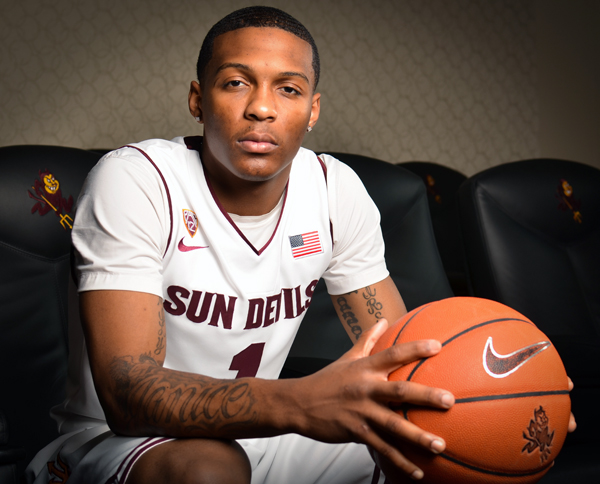
RTC: Sun Devil fans seem to be in one of two camps right now with regards to the basketball program: the optimists and the pessimists. Optimists see the addition of Jahii Carson and the rest of the newcomers as a new beginning for the program. Pessimists see the rampant roster turnover as a sign of something rotten at the core of the program. Is one of those viewpoints more likely to be right than the other?

A Lot of Hopes Will Be Placed on Jahii Carson Next Season

HOS: I will be honest – there haven’t been too many optimists in the ASU basketball camp in the past few years. There have simply been too many defections from this program while the results on the court continue to suffer. These past several seasons, the Pac-12 has been a shadow of its former self. UCLA and Arizona were both struggling to live up to high expectations, presenting a rare opportunity for the Sun Devils: Win some games and build serious momentum in both recruiting and prestige. Instead of an experience-laden roster, however, ASU seems to have complete roster turnover every season. Instead of learning from our mistakes, a new crop of kids have to relearn them again one season later. Instead of developing boys into adults, we have a tendency to give up on them a little too quickly. Jahii Carson might be the start of a new day for the Sun Devils, but we cannot ignore that he will only do as much as the rest of the roster allows. If the talent cannot measure up, Carson will struggle to lead this team to any significant improvement.

RTC: After turning around the program following the Rob Evans era and stringing together three straight 20-win seasons, Herb Sendek has suffered through two of his worst three seasons in his coaching career over the last couple years. Is his seat starting to get warm?
Read the rest of this entry »
Share this story

Morning Five: 06.15.12 Edition

Posted by rtmsf on June 15th, 2012

  1. You’re probably reading this post approximately 8-12 hours after textapocalypse went into effect in college basketball last night. As the midnight bell tolled, a new NCAA rule went into effect allowing coaches to bombard high school sophomores and above with as many phone calls and text messages that they can muster. You might recall that one of the very first posts on this venerable site back in 2007 suggested that the NCAA’s decision to ban text messages in light of news that Billy Gillispie (then at Kentucky) was knocking out 8,000 messages a month was a good idea. Even in those short five years, how people communicate with one another has changed significantly (texting has essentially replaced phone calls between young people), but that doesn’t mean that middle-aged coaches will do any better with it now than they did then. One thing is certain — with social media like Twitter and Facebook today existing side-by-side texts on everyone’s smart phone, there’s bound to be lots of texting hilarity that will ensue from just the auto-correct function alone.
  2. Cincinnati and Xavier decided on Thursday that all the on-court fun the players have had at the Crosstown Shootout (now re-branded as the Crosstown Classic – lolz) in recent years shouldn’t be limited to the student-athletes punching each other on the floor. With the choice to move the game to a neutral site downtown and tickets split down the middle, this two-year move will allow fans to get in zip each other up while enjoying the game from the stands. Look, we understand the logic behind moving the game away from home sites where the vitriol heaved upon the visiting team produces a volatile situation, but is college basketball turning into a sport where only games at neutral sites are those worth having? Between the Kentucky-Indiana ridiculousness and now this, we have to wonder if the sport is losing one of the very things that makes it special (home-and-home rivalry games). What’s next — Duke and Carolina on a Charlotte/Greensboro/Raleigh rotation?
  3. It didn’t take long for former Nebraska head coach Doc Sadler to find a landing spot. Kansas announced on Thursday that Sadler, who has a 149-107 record as a Division I head coach, would take over as the Jayhawks’ Director of Basketball Operations. He replaces Barry Hinson, who left KU after the season to become the new head coach at Southern Illinois. Sadler continues a trend of high-major college coaches keeping their name fresh in the industry by taking assistant positions when they come available. For example, former Arkansas head coach John Pelphrey is currently an assistant at Florida, biding his time until another choice job comes available and an AD is willing to take another chance on him.
  4. Speaking of the Gator program, Florida fans received some excellent news on Thursday when Virginia Tech forward Dorian Finney-Smith announced that he would transfer to Gainesville in light of Seth Greenberg’s firing. Finney-Smith joins Damontre Harris as transfers heading south to play for Billy Donovan, giving the two-time national champion head coach a leg up already on his 2013-14 roster. The 6’8″ player averaged 7/7 last year in 30 minutes per game for Virginia Tech, but he clearly needs to spend the off year working on shot selection (33.2%) and bulking up. Finney-Smith is already an elite per-minute rebounder, but with another 30 pounds on his frame he could easily average double figure boards in two years for the Gators.
  5. The biggest knock on Bruce Weber at Illinois was his recruiting (or lack thereof), especially in the talent-rich Chicago area. As the new head coach at Kansas State, he faces a more difficult recruiting situation in that the nearest major city is Kansas City, a town not exactly known for its prep basketball talent in the same sense as the Windy City. As a result, Weber went on record Thursday stating that he plans to branch out to more places, even as many as all places. Well, except the West Coast. Weber said during a Big 12 coaches’ teleconference that he wants to recruit the Midwest, Texas, the East Coast, and of course, Chicago. All we can think is that Illinois fans must be snickering in their cereal this morning.
Share this story

Morning Five: 06.13.12 Edition

Posted by rtmsf on June 13th, 2012

  1. Last night the NBA Finals between Miami and OKC began in Oklahoma City, and aside from the fact that Thunder fans have the look and feel of college fans (that tends to happen when you’re the only professional franchise in a traditional college sports state), we found the former collegiate talent on the floor just as compelling. Many NBA fans are not college basketball fans and vice versa, but we’d encourage any of our college-only readers to spend some time this week and next getting a look at how well former collegiate stars such as Kevin Durant, Dwyane Wade, Russell Westbrook, Mario Chalmers, Shane Battier, Udonis Haslem, James Harden, and even Nick Collison have acquitted themselves as pros. This piece we published yesterday takes a look back at some of the accomplishments of these and several other players during their amateur days, with the general sentiment that folks like us will especially this year’s version of June Madness.
  2. While on the subject of basketball in the great state of Oklahoma, there’s more coming that way. Conference USA has decided to move its 2013 conference tournament to Tulsa in light of Memphis’ decision to join the Big East beginning in the 2013-14 season. Although we certainly understand the incentive of the league to punish Memphis for its disloyalty, it feels a bit like cutting off the nose here to spite the face. The last time the C-USA Tournament was held in Tulsa in 2010, the attendance numbers were somewhat disappointing and the Golden Hurricane had a solid squad that year. Whether new head coach Danny Manning will be able to fire up the locals enough to make this decision a success next March is an open question.
  3. It’s never too early to start thinking about next season, and Jeff Goodman is the type of guy who has already played out 2013 in his head before most of us see it on the horizon. In this post he outlines the 55 best non-conference games that are already on the schedule for next season. The top game on his list is a rematch of the first half of the 2012 Final Four, but we’re actually more interested in a certain Champions Classic game that involves a couple of schools that do not play each other regularly. In case you’re wondering — and we know you are — Kentucky vs. Indiana is still nowhere to be found on this list.
  4. Providence appears to be on the way up the standings of the Big East with a top recruiting class coming in for Ed Cooley next season, featuring Ricardo Ledo in the backcourt. For that reason, Friar guard Gerard Coleman began looking elsewhere despite averaging 13/5 last year as a sophomore, and he has decided to resurface 3,000 miles across the country at Gonzaga. Mark Few is getting an athletic scorer who tailed off considerably last year as the losses piled up in Providence, but one who will no doubt benefit from a year watching the game from the bench to better learn about good shot selection (42.4% FG; 23.8% 3FG).
  5. The men’s basketball NCAA Tournament Selection Committee is one of the most scrutinized bodies in all of American sports. Each year the group of dignitaries is shuttered away in an Indianapolis hotel and expected to produce a perfectly balanced and justified bracket to satisfy millions of college basketball fans around the country. The task is a herculean one, fraught with time-sensitive pressure and an overwhelming fear of mistakes. Now that the BCS has decided to move to a four-team playoff in college football, the topic of a similarly situated selection committee is on the table. But, as ESPN.com’s Heather Dinich writes, there is no consensus among college presidents and other NCAA insiders as to how the four lucky teams should be selected. The one thing we can rest assured of is this: future Selection Committee members should just go ahead and change their addresses, because there is an enormous difference between being the first school left out of a 68-team field and a four-team one.
Share this story

Morning Five: 06.08.12 Edition

Posted by rtmsf on June 8th, 2012

  1. ESPN.com released its list of the top 10 coaching jobs in college basketball yesterday. This article was a capstone piece to a week’s worth of solid analysis evaluating the best-to-worst coaching jobs in each of the six power conferences, and the overall best/worst mid-major positions as well. Just over a year ago we did a similar analysis here at RTC, ranking the top 20 coaching jobs at the time, using the general criteria of attractiveness of the position to potential suitors. This is a bit of a flash point to many fans of top programs who generally go through life with the attitude of ‘what’s not to like?’ without considering that choosing among the elite schools is a bit like dating Miss America candidates. To paraphrase a line from Garrison Keillor, everyone is above average — the differences are really at the margins. With that said, we believe that ESPN is seriously underrating Duke in terms of its job attractiveness. We understand the point about Coach K as the heart and soul of the program, but that doesn’t make the job any less enticing. What K has built there over three decades is a brand synonymous with elite college basketball — this indisputable fact alone makes the job better than the sixth best in the country. At worst, Duke should be listed as third behind Kentucky and North Carolina; but behind Indiana? Now, that’s just silly.
  2. Earlier this week we learned that Mark Madsen is headed back to the college basketball world to join Johnny Dawkins’ staff as a new assistant coach at Stanford. Mad Dog led the Cardinal to its last Final Four in 1998, and won two NBA titles as a benchwarmer with the Los Angeles Lakers in 2001 and 2002. The Dagger‘s Jeff Eisenberg caught up with Madsen on Wednesday and published this entertaining interview that discusses such disparate topics as his world championship dance moves, recruiting, and the Zen Master, Phil Jackson.
  3. Tennessee’s Jarnell Stokes was one of the best surprises of the 2011-12 conference season, quite literally walking from high school on to the Volunteers’ roster at midseason and immediately becoming the team’s best player in a matter of weeks. This week, he and 22 of his fellow 18-and-under friends are competing for 12 spots on the Team USA Under-18 national team, and his experience of playing in a major collegiate environment for half a season gives him a distinct advantage over the others (all of whom are either still in high school or just graduating). Mike DeCourcy writes that the powerful young player is clearly a “star in the making” for Tennessee, and the additional experience he gains this summer will no doubt give him even more of a leg up on the rest of his contemporaries who have never seen the speed of high D-I basketball.
  4. Luke Winn had better step away from the excel spreadsheets for a while to get ready for the London Olympics next month, because when he starts writing columns about the Herfindahl Index (HHI) to explain trends in college basketball, we know that he’s gone certifiable. It’s certainly not that it doesn’t make any sense — it certainly does — it’s just that we’re worried about the guy. Regardless of his mental health, the HHI is a business analytical tool that typically measures market share concentration, but Winn uses it in his latest column to study offensive balance among national championship teams over the last 16 seasons. Perhaps the most interesting finding from his analysis was that the two Kentucky champions covered in this period (1998 and 2012) also happened to be the most balanced teams of the era — a quirky truth separated by 14 years, a couple of coaches, and quite a bit of talent and experience. Interesting post.
  5. Is NCAA head honcho Mark Emmert on the way out? Sports by Brooks reported on Thursday that it had information on good authority that Emmert was in discussions with LSU (where he served as their chancellor a decade ago) to become a combined president/chancellor with considerable power and prestige under the new position. Emmert, through a spokesman, called the report “complete nonsense,” but it brings up an interesting thought that the pull to become a president of a major state university could be considered a step up from the presidency of the NCAA. We have to admit some ignorance on this point, but LSU isn’t Michigan, and we would think that as president of an organization with a billion dollar budget the likes of the NCAA would be a better gig than whatever Baton Rouge might offer, but maybe we’re just admittedly out of touch on this point. It’ll be interesting to see regardless of whether there’s any fire with this smoke.
Share this story

Morning Five: 06.07.12 Edition

Posted by rtmsf on June 7th, 2012

  1. Coaches who are fired from their plum head coaching positions have to end up somewhere, and two former power conference guys who were not quite able to get it done at that level have resurfaced this week at a pair of unusual destinations. First, former rising star Todd Lickliter, the NABC Coach of the Year at Butler in 2007 but a miserable failure subsequently at Iowa with an overall record of 38-57, was formally hired on Wednesday as the new head coach at NAIA school Marian University, located in the same part of Indianapolis as the program he helped put on the college basketball map a decade ago. Lickliter spent last season as an assistant at Miami (OH), but will look to re-legitimize himself in the NAIA before no doubt angling for future D-I head coaching positions.
  2. The other unusual coaching hire this week was former Colorado and Northern Illinois head coach Ricardo Patton taking a high school gig as the top man at Central High School in Memphis, Tennessee. Patton spent last season as an assistant at Maryland-Eastern Shore, but he has ties to the Memphis area and was interestingly enough a candidate for the Memphis (University of) head coaching position there 15 years ago. The Memphis area churns out top-notch recruits annually so the cynical side of us wonders if Patton is looking for some kind of package deal in the next few years with some future star player he latches on to at Central HS.
  3. An article posited in a recent volume of The Chronicle of Higher Education suggests that conference realignment – at least from the years of 2004-11 – could actually have a significant and measurable impact on the academic standing of the school in addition to the undisputed benefits to the athletic side of things. Really? The authors state that subsequent to realignment colleges became generally more selective, their admissions yield rates were higher, and their incoming college admissions scores were greater. All of those things, if controlled for in the study, make sense, but are we really supposed to believe that Missouri’s move to the SEC or Houston’s to the Big East will make those institutions better academic schools? We’ll wait on the follow-up studies before buying into this one.
  4. Did the ACC recently shoot itself in the foot – either willfully or wantonly – when it decided to include its third-tier media rights in its latest television package with ESPN for an estimated $238 million per year? Forbes’ Chris Smith argues that the league made a grievous error in failing to exclude those properties because it essentially amounts to the conference leaving money on the table and exposes it to future poaching by other leagues (ahem, Big 12) with richer deals. As he puts it, “the ACC is giving away more and getting back less.” Of course, Smith’s analysis fails to take into account the obvious academic benefits, such as BC’s 37% increase in applications after joining the ACC, right?
  5. Wisconsin’s Jared Uthoff made a lot of headlines in April for his personal battle with Bo Ryan and Wisconsin over his transfer papers. Well, the redshirt freshman decided that the battle was for naught as he will move on to Iowa as his next destination and will have to sit out a year regardless of any restrictions imposed upon him by that school in Madison. No disrespect to Ryan and the Badgers intended, but Uthoff’s transfer is something that we encourage among more than everyone involved in college basketball. Let’s hope that he finds the success he hopes for at his next destination.
Share this story

Morning Five: 05.31.12 Edition

Posted by rtmsf on May 31st, 2012

  1. The NBA Draft Lottery was held on Wednesday evening immediately prior to the Eastern Conference Finals between Miami and Boston, and it appears that the winner of the Anthony Davis Sweepstakes will be the New Orleans Hornets. Interestingly, for the eighth straight season, the team with the worst record in the NBA — the Charlotte Bobcats this time around — did not receive the top overall pick. Michael Jordan’s team is relegated to the second slot, where a number of collegiate stars including Kansas’ Thomas Robinson, Florida’s Bradley Beal, Kentucky’s Michael Kidd-Gilchrist, and Connecticut’s Andre Drummond will be in the mix. Keep an eye on NBADraft.net and DraftExpress over the next few weeks to track player movement up and down the board. Also keep in mind that we here at RTC are in the midst of breaking down the top 35 collegians as we head through June into draft season (with an assist from NBADraft.net). We’ve evaluated quite a few of the guys so far who are hovering at the bottom of the first round in most projections, with plenty more to come in the next few weeks.
  2. Conference realignment theater is the longest running show in college basketball, and Luke Winn takes the opportunity to examine a question that far too many schools — especially at the mid-major level — fail to ask themselves: Is an upgrade in conference affiliation actually better for our programs, especially our marquee ones? For a strong basketball mid-major from a one-bid conference like Davidson, would Bob McKillop’s program be better to position itself as the dominant program in a weakened SoCon (possibly losing College of Charleston and Appalachian State); or would the stronger play be to move up to the CAA and hope that the conference remains a multiple-bid league even after removing VCU, Old Dominion and Georgia State from its ranks? It’s a very tough exercise in risk assessment, and one that we don’t envy Davidson administrators having to make.
  3. From the department of they-take-themselves-way-too-seriously, it appears that Kentucky and Indiana still can’t play nice and learn to compromise with each other in a way that will give college basketball fans (which, at last check, was comprised of legions of UK and IU fans) what they want — a regular series between two regional rivals that rank among the top six programs in the history of the sport. After initial talks stalled, records show that Indiana suggested a four-year deal that included the next two games at neutral site Lucas Oil Stadium in Indianapolis, followed by a home-and-home the next two years. Kentucky rejected the offer, citing problems with the initial dates proposed and other red herrings as reasons to not play the game. All hand-wringingn aside, the bottom line is this — so long as Calipari remains in Lexington, the Wildcats will not return to Assembly Hall in Bloomington. It’s up to you to figure out why.
  4. We continue on with our SEC version of the M5 today with news that the league’s head coaches have agreed upon a scheduling format for the new 14-team conference beginning next year. We already knew that the league was moving to an 18-game schedule, but it remained unclear how they planned on instituting the rotation. The answer to that question is that each school will be paired with a ‘permanent’ rival that it will play twice each season, four other schools that it will play twice, and eight schools that it will play once to get to 18 games. The rivalry pairings — Kentucky-Florida, Tennessee-Vanderbilt, South Carolina-Georgia, Auburn-Alabama, Mississippi State-Ole Miss, LSU-Texas A&M, Arkansas-Missouri — make sense with the exception of the addition of the two former Big 12 schools. Forgiving geographic considerations of proximity, it probably would have been better to keep LSU-Arkansas as rivals and pair the two new schools together from our viewpoint. This format will result in an unbalanced schedule, but at least each team will see everyone else in the league once.
  5. Finally, one of those SEC schools goes by the name of Auburn, and at least on the hardwood, the Tigers have been an unmitigated disaster for the better part of a decade. If you’re interested in learning how a school with the financial resources of Auburn ($104M in revenue in 2010-11) cannot figure out how to back its way into an NCAA Tournament bid every now and again (last appearance: 2003), this article by AL.com traces its roots of futility back to an athletic department in chaos eight years ago. While we’re sure that there are downstream issues still present as a result of those mistakes many years ago, what is left out of the article is that basketball simply isn’t taken seriously at a place like Auburn. The fans and boosters don’t demand even so much as mediocrity; so a moribund program is what they’ve gotten.
Share this story

Morning Five: 05.25.12 Edition

Posted by rtmsf on May 25th, 2012

  1. It wouldn’t be the Morning Five without a John Calipari mention, as the sport’s biggest newsmaker spins the media like a top with his almost-daily appearances, interviews, and social media missives. Yesterday on his website the Kentucky head coach wrote that his new scheduling strategy — pushing for more neutral site appearances against marquee opponents — will result in a one-year hiatus in the Kentucky-North Carolina series, but the home-and-home battle between two of the best programs in the country will return in 2013-14. The purpose of this move according to Calipari is to alternate years where the Wildcats will have to travel to Chapel Hill and Louisville, meaning that UK will play at least one tough non-conference road game each year. The Wildcats have also picked up a home/neutral series with Baylor starting next season that will allow them to play in Cowboys Stadium in 2013-14, the site of that year’s Final Four. Perhaps most interestingly, though, is that Calipari says that he’s in negotiations with Duke to begin an annual rotating neutral site game that he says would be on the same weekend each year and become “THE GAME” to watch. We certainly can’t argue with that.
  2.  What we can argue with was a curious comment that Calipari made in his post explaining why he’s so gung ho on scheduling future neutral site games in football stadiums: “I’m convinced we would have won the title two seasons ago if we would have played in a dome during the regular season. Our guys weren’t prepared for it.” At first blush, this sounds reasonable on its face. But closer examination suggests that the head coach is tailoring the facts of his argument to justify what he wants. First of all, the Wildcats lost to West Virginia in the Elite Eight in Syracuse in 2010, which means of course that they had to win a Sweet Sixteen game in the Carrier Dome two days prior — on the same floor, in the same dome, only against a different team (Cornell). Did John Wall and company forget what they’d learned about playing in a dome environment just 48 hours before the loss to WVU? Next, the 2012 team that just won the national championship in the Superdome didn’t play in a dome environment at all in this year’s regular season or in the SEC Tournament. Still, without that ‘necessary’ experience, the Wildcats successively rolled through Indiana, Baylor, Louisville and Kansas to win it all. All in domes. If Calipari wants to play the lack of experience card to forgive the failure of the 2010 Wildcats, he probably should be looking at the ridiculously soft schedule that his Wildcats ran through on its way to a 35-3 record that year. When both teams matched up in the Elite Eight, the Mountaineers were by far the best team UK had faced all season. Kentucky’s lack of experience in playing good teams was the problem; it wasn’t that they hadn’t played in a dome. [Ed. Note: It is unclear which team Calipari was referring to, but the 2010 team was a far superior team if he was talking about winning a national championship.]
  3. From a coach spewing nonsense to players doing likewise… Deadspin published a really interesting piece on Thursday examining in great detail documents from the cottage industry of companies who are tasked with monitoring college athletes’ social networking accounts. The article describes how it works: First, the schools get access to each player’s account through a special tracking mechanism that scans their pages regularly. Then, “once the computers gather all that data, the firms’ software searches it for trigger words and reports back to coaches and athletic department functionaries. This happens in near real-time.” It wouldn’t be Deadspin-worthy unless the examples were equal parts hilarious and horrifying, so we’d just suggest you set aside a few minutes of your time and get over there to poke around. Of particular interest is one company’s documentation and definition of many of the most common trigger words and phrases that could get players in trouble. Let’s just end this by saying that if you’re over 30 years old, you’re probably going to learn a few new slang words or acronyms to test on your buddies during the long weekend.
  4. More conference realignment! And it doesn’t involve yet another rumor about Florida State, Clemson or Miami. No, UT-Arlington, a Southland school who is (we’re not kidding) joining the WAC on July 1, will spend one year in that league before movin’ on up to the Sun Belt, effective next summer. You read that correctly — in a span of 366 days (from June 30, 2012 to July 1, 2013), UT-Arlington will be a member of three different conferences. At the mid-major level, it’s just short of impossible to keep up with who is heading where, but we think that the Sun Belt will also pick up Georgia State and Texas State to replace the losses of FIU, Denver, and North Texas to the WAC and Conference USA. Whether the WAC survives all of this re-shuffling remains to be seen.
  5. A couple of head coaching positions at the mid-major level were filled on Thursday, with Rider and Binghamton inextricably connected through the transition. Binghamton hired Rider head coach Tommy Dempsey to take over for Mark Macon, a former star player at Temple who was unable to dig out of the morass left by his predecessor, Kevin Broadus. Rider acted quickly to fill the vacuum, promoting assistant coach Kevin Baggett to the helm for purposes of continuity. Rider has averaged 18.5 wins per season in the six years that Baggett was an assistant for Dempsey, so it makes sense that the administration wants to keep the momentum moving forward.
Share this story