RTC Summer Update: Ivy League

Posted by Brian Goodman on July 19th, 2011

With the completion of the NBA Draft and the annual coaching and transfer carousels nearing their ends, RTC is rolling out a new series, RTC Summer Updates, to give you a crash course on each Division I conference during the summer months. Our latest update comes courtesy of our Ivy League correspondent, Howard Hochman.

Reader’s Take

Introduction

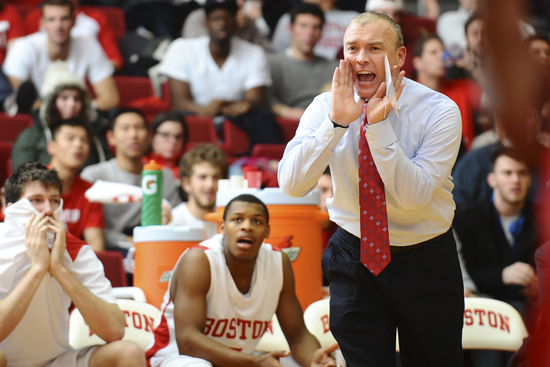
It seems like only yesterday that Doug Davis was hitting his buzzer beating, fall-back, fall-down jumper that turned Harvard followers crimson. And not soon after, Brandon Knight’s last-second layup was a stake in the eye of the Tiger. But we must look forward and we can only hope the 2011-12 Ivy hoop season can provide the same excitement. This year, it appears seven of the Ancient Eight will be battling for second place. Harvard returns everyone, will be favored to go unbeaten in league play, and, in fact, each starter is capable of earning all league honors. But more on that later. First….

Summer News and Notes

  • Providence Coaching Change Trickles Into Ivy Ranks: We have yet to hear a good explanation why a title-winning Princeton coach and alum Sydney Johnson would leave that bucolic and secure setting for traditional basketball hotbed… Fairfield. Now granted, the MAAC is an underrated conference and departing coach Ed Cooley did not exactly leave the cupboard bare after a 25-win season. In my opinion, the move is lateral at best. But never fear, Princetonians, the apple does not fall far from the tree; the Pete Carrill coaching tree, that is. Mitch Henderson, another alum, and most recently Bill Carmody’s right hand man at Northwestern, was immediately signed on, so it would be wise to keep “three-pointer” and “back-door” in your vocabulary.
  • Ancient Eight Coaches Resist GMU Courtship: Speaking of coaches, when Jim Larranaga departed George Mason for the sunny climes and dollars at Miami, the school first looked north to the Ivy League for his replacement. Not surprisingly, Tommy Amaker chose to remain with his talent-laden bunch in Cambridge. What is surprising is that Bill Courtney turned Mason down. You might remember it was Courtney who was the recruiting architect of the Patriots’ Final Four team in 2006. Furthermore, the CAA is most assuredly a step up from the Ivy and enjoyed one of its finest seasons with VCU coming out of nowhere to make a Cinderella run to the Final Four. It makes one think Mr. Courtney likes what he sees on the roster and that the future may be brighter than most imagine at Cornell.
  • Life Outside Campus: Last season, Greg Mangano of Yale was named the RTC Ivy Player of the Year as a junior. After a season in which his double-double average led the Elis to a third-place finish, and after some discussion with his coach, James Jones, Mangano decided to declare for the NBA Draft but did not hire an agent. A few NBA teams showed interest, but fortunately for Yale fans, he listened to the whispers in his ear and withdrew his name and everyone exhaled at Pepe’s Pizza and Louis’ Lunch. As a reward for his outstanding season, Mangano was invited to try out for the World University Games Team, beginning July 31 in Colorado Springs. The Games themselves will take place next month in China, but it won’t be as big a culture shock as most would expect for Mangano. He averaged over 21 points per game during Yale’s recent ten-day swing through the country. Only 12 (out of the 22 high-profile invitees) will make the traveling squad. We will keep you posted.
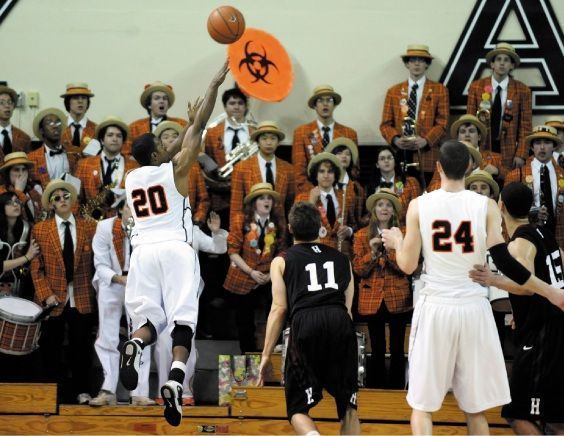
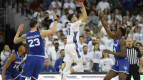
Douglas Davis (20) was one cool customer for Princeton, sinking this heartbreaker to top the Crimson and nearly leading the Tigers to an NCAA Tournament upset over Kentucky (Associated Press/Jessica Hill)

Power Rankings

  1. Harvard: Just let the names Kyle Casey, Keith Wright, Brandyn Curry and Christian Webster roll off your tongue and you have the reasons why last year’s co-title holders should repeat with ease though the middle of the league has gotten stronger. An undefeated run through the league seems reasonable and with some out-of-conference success, a Top 25 ranking appears attainable. Kenyatta Smith, a rebounding machine a la Wes Unseld at 6’7″ and 260 pounds, leads a formidable recruiting class. Pencil in a meaningful Selection Sunday for the first time in Cambridge. Read the rest of this entry »
Share this story

RTC Summer Updates: Conference USA

Posted by Brian Goodman on July 18th, 2011

With the completion of the NBA Draft and the annual coaching and transfer carousels nearing their ends, RTC is rolling out a new series, RTC Summer Updates, to give you a crash course on each Division I conference during the summer months. Our newest update comes courtesy of our Conference USA correspondent, Steve Coulter.

Reader’s Take I

Summer Storylines

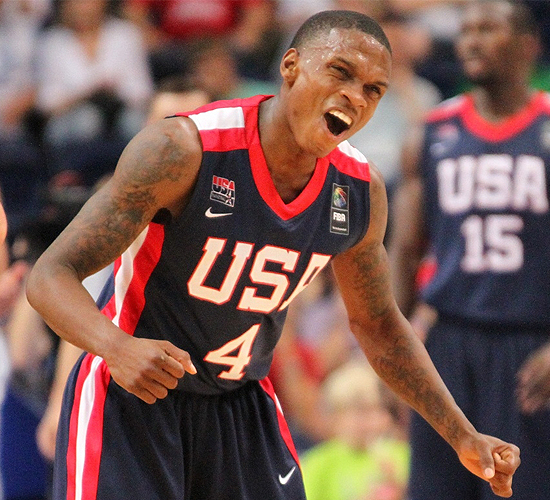
  • Joe Jackson Goes Patriotic: The Memphis guard and MVP of the CUSA Championship was selected as a member of USA Basketball’s U-19 Would Championship squad on June 23. After a week of training camp, Jackson was among the final twelve players selected by the USA Basketball committee. The squad left for Europe on June 30 and returned July 10. While Team USA disappointed in finishing fifth, Jackson more than held his own against some of the top international talent in the world, averaging over 11 points and 4 assists in 9 games. Jackson was accompanied to Latvia for the competition with eleven other collegiate sophomores including Michigan State’s Keith Appling, Villanova’s James Bell, Stanford’s Anthony Brown, Arizona State’s Jahii Carson, Michigan’s Tim Hardaway, Jr., Connecticut’s Jeremy Lamb, Illinois’ Meyers Leonard, Creighton’s Doug McDermott, North Texas’ Tony Mitchell, Butler’s Khyle Marshall and Florida’s Patric Young.

Memphis guard Joe Jackson was a bright spot for Team USA in Latvia, despite a fifth-place finish in the FIBA U-19 World Championships. (Vytautas Mikaitis)

  • Thundering Herd Runs Deep: Marshall already had one of the more loaded backcourts heading into the 2011-12 season with stars Damier Pitts and DeAndre Kane, but with the addition of Justin Coleman, a one-time Louisville commit, the Thundering Herd will certainly have the deepest backcourt the conference has to offer. Coleman sat out last year, but he will be coming off the bench as a shooting guard this season. Along with Coleman, junior college transfers Robert Goff and Dennis Tinnon will be new faces for the Herd. Goff and Tinnon are strong power forwards, looking to aid a weak Marshall frontcourt.
  • Memphis Coaching Legend Larry Finch Passes Away: Former Memphis coach Larry Finch passed away from natural causes at Saint Francis Hospital in Memphis on April 2 at the age of 60. Finch finished his career with the most wins in Tiger basketball history, a record he still holds today. Before leading the Tigers from 1986-97, Finch was a player at Memphis from 1970-73 and worked as an assistant at his alma mater from 1979-86. He passed away as not only a celebrated coach of the game, but a rare influence at the collegiate level. During his 11-year stint as head coach, Finch had seven 20-win seasons, made six NCAA appearances, amassed 220 wins and propelled 7 former players into NBA Draft selections. He finished his career with a loaded resume, having taken his alma mater to the Final Four, getting his jersey retired by the program and becoming the school’s all-time winningest coach.

Power Rankings

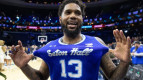
  1. Memphis: Freshman swingman Adonis Thomas, the No. 16 ranked prospect on Scout Inc.’s Top 100, is the conference’s best newcomer and he joins the already lethal Wesley Witherspoon as a scorer on a loaded Tigers roster that includes two of the nation’s best young guards in Joe Jackson and Will Barton. Head coach Josh Pastner can continue his Conference USA dominance this season, but the Tigers need to play solid defense and claim more out of conference wins then they did last season. Otherwise, they will be playing for their NCAA Tournament lives again come March.  As of now, Witherspoon and Barton are two of only four Conference USA prospects in the Top 100, ranking in at No. 79 and No. 80, respectively. Read the rest of this entry »
Share this story

RTC Summer Updates: Western Athletic Conference

Posted by Brian Goodman on July 15th, 2011

With the completion of the NBA Draft and the annual coaching and transfer carousels nearing their ends, RTC is rolling out a new series, RTC Summer Updates, to give you a crash course on each Division I conference during the summer months. Our newest update comes courtesy of our WAC correspondents, Sam Wasson of Bleed Crimson and Kevin McCarthy of Parsing The WAC.

Reader’s Take

Summer Storylines

Revolving Door.  The revolving door in the WAC consists of schools, coaches and players.  Last summer, it was the defection of four schools to the Mountain West and the addition of three schools (Denver, Texas State and UT-San Antonio). This summer, there are no more defections (thankfully) but there have been additions.  Seattle University will join the WAC for basketball starting in the 2012-13 season and the latest development has UT-Arlington joining their old Southland Conference brethren, Texas State and UT-San Antonio, in the WAC for the 2012-13 season.  While it’s still one full season away, the signs are pointing to an eventual East/West split of the WAC.  A pair of hopefuls in Utah Valley and Cal State-Bakersfield could bring the basketball league to 12 teams, but whether that comes to fruition remains to be seen.

Early Entries.  On the personnel front, the WAC once again saw several underclassmen declare for the NBA Draft, but unlike last season, which saw four get drafted, none of the 2011 early entries were selected.  New Mexico State scoring leader Troy Gillenwater was one of those who opted to enter early but he withdrew his name from the draft.  However, he will not be returning to New Mexico State after hiring an agent and will likely seek out options in either the NBDL or overseas.  Greg Smith from Fresno State opted to leave the Bulldogs after just two seasons but the 6’9″, 250-pound center did not hear his name called.  One other big name is no longer with his team and that is Louisiana Tech‘s Olu Ashaolu who has transferred to the University of Oregon.  Ashaolu averaged 14.2 points and 9.4 rebounds per game last season for the injury and suspension-depleted Bulldogs and was one of the conference’s top talents.  Ashaolu will be eligible immediately for the Ducks as he earned his undergraduate degree from LA Tech and because Oregon offers a graduate program not available there.

Coaching Carousel.  For coaching changes, it was a busy offseason for a few teams as Fresno State and Louisiana Tech both opted for a fresh start, hiring new head coaches. Both schools drew high praise for their hires.  The Fresno State Bulldogs lured Texas assistant Rodney Terry to Fresno while their namesake counterparts in Louisiana, the LA Tech Bulldogs, hired Ole Miss assistant Michael White. At just 34 years old, White is one of the youngest head coaches in the country joining familiar names Josh Pastner (Memphis) and Brad Stevens (Butler) at that age.  New Mexico State also saw some major turnover in their staff as the Aggies lost a pair of assistants in Mick Durham, who took the head men’s basketball position at Division II Alaska-Fairbanks, and assistant Gerald Lewis, who returned to his alma mater, SMU, as the Director of Basketball Operations.  The Aggies filled one of the two assistant positions by hiring former Kentucky standout Tony Delk who spent the past two seasons at his alma mater alongside John Calipari and staff in a non-coaching role.  Delk figures to have an immediate impact on recruiting, having played in the NBA and also owning a national championship ring while with the Wildcats.

The Dee Glen Smith Spectrum will have to rock even harder than usual in 2011-12 after Utah State lost several contributors from its sterling campaign last season.

Read the rest of this entry »

Share this story

RTC Summer Update: America East

Posted by Brian Goodman on July 13th, 2011

With the completion of the NBA Draft and the annual coaching and transfer carousels nearing their ends, RTC is rolling out a new series, RTC Summer Updates, to give you a crash course on each Division I conference during the summer months. Our newest update comes courtesy of our America East correspondent, John Templon. John also writes about New York City basketball at Big Apple Buckets.

Reader’s Take I

Summer Storylines

  • Coaches Moving On Up: Vermont and Boston University lost two very talented coaches this summer. The Catamounts’ Mike Lonergan went back to his Washington, D.C., roots and took the job at George Washington. Lonergan – who won a national title at Division III Catholic University in D.C. and also coached at Maryland – should fit in well at GW. Assistant John Becker replaced Lonergan, so there should be strong continuity. On the other hand, BU had to scramble after Pat Chambers was hired by Penn State to replace Ed DeChellis. The Terriers ended up with former Columbia head coach Joe Jones, who spent last season as an assistant at Boston College.
  • Playing With The (Future) Pros: The 2010-11 America East Player of the Year, Boston University’s John Holland, played in the Portsmouth Invitational. He finished tied for ninth in scoring at 15.0 points per game and 18th in rebounding with 6.3 boards per game. He played with former Florida forward Vernon Macklin and former Villanova guard Corey Fisher on the Portsmouth Sports Club team that finished in fourth place. Holland had workouts with a few NBA teams before signing with Chorale de Roanne of France’s Pro A Division.
  • A World of Experience: America East continues to pick up steam as a worldwide conference. Four players in Maine’s incoming recruiting class aren’t originally from the United States and Albany has two players coming in from Australia and another from the Dominican Republic in its 2011 class. Another Australian, Corban Wroe, will be playing for Hartford in the fall. Many of the incoming recruits have experience playing with their respective international squads and incoming Maine freshman Noam Laish was selected as the captain of Israel’s U-18 squad for the European Championships.

Patrick Chambers parlayed last season's tournament berth with BU into a payday at Penn State, sending BU scrambling (credit: Steve McLaughlin).

Power Rankings

  1. Boston University: After making the NCAA Tournament in 2011, the Terriers return all but one of their linchpins. Of course, that one guy is America East Player of the Year John Holland who averaged 19.2 PPG last season. BU will also be going without head coach Pat Chambers, but he certainly didn’t leave the cupboard bare for Joe Jones. Darryl Partin (14.3 PPG) and Jake O’Brien (10.9 PPG, 5.5 RPG) should provide scoring. Also watch out for sophomore guard D.J. Irving. He averaged 8.0 PPG as a freshman and his workload should only increase in 2011-12. The Terriers have won 21 games in each of the past two seasons and a postseason berth is definitely the expectation. Read the rest of this entry »
Share this story

RTC Summer Update: Summit League

Posted by Brian Goodman on July 12th, 2011

With the completion of the NBA Draft and the annual coaching and transfer carousels nearing their ends, RTC is rolling out a new series, RTC Summer Updates, to give you a crash course on each Division I conference during the summer months. The newest update comes from our Summit League correspondent, Charlie Parks.

Reader’s Take – Almost every team in the Summit has its star this year, but to win this conference and have a legitimate shot at upsetting a powerhouse in March, you need a #2 option that is just as reliable in a big situation.

IUPUI appears to have the most talent with Alex Young and Leroy Nobles, as either guy can get you 20-plus easy-looking points at any given moment. But keep in mind, its not just the most talented duo, but also the two guys that give you the best opportunity to win. What doesn’t always show in the stat column can and often does show up in the win column (that little bit of Bobby knight-wisdom was for free).

Summer Storylines

  • Coaching Carousel – There have been a few key coaching changes this offseason in the Summit League. The one that could affect the balance of power the most in the conference is the departure of Ron Hunter  from IUPUI. After 17 years leading the Jags, Hunter took the job at Georgia State. His longtime assistant, Todd Howard, was promoted to fill the vacancy. Hunter led IUPUI to its only NCAA berth back in 2003, but you could sense a change was needed and that Hunter had taken IUPUI as far as it was going to go under his direction. He is a solid coach, but the new scenery may be beneficial for the Jags.
  • More Carousel.  The other coaching change of note is the departure of Dane Fife from IPFW. Fife moved on to accept a position on Tim Izzo’s staff at Michigan State. The move is a big bummer for the Mastodons, who have been steadily improving over the last six years under Fife, culminating in last year’s 18-12 record. His baby-faced assistant, Tony Jasick, now has the challenge of taking IPFW to the next level. IPFW may have taken a small step back in its ongoing quest for a conference title.
  • Sutton Returns to Coaching.  One team that improved with a new coaching change has to be Oral Roberts who hired former Oklahoma State coach Sean Sutton. Sean served at ORU last year in an unofficial manner but he wasn’t able to really interact with players. But this year, the son of one of the legendary coaches in college basketball will try to bring the Golden Eagles back to the top. Sean was known as one of the best recruiters in the country during his long tenure as assistant coach under his father at Oklahoma State, so it will be interesting to see what kind of talent he will be able to attract to Tulsa.
  • Rolling Out The Welcome Mat – Two new teams have joined the Summit League, and Division I: South Dakota and Nebraska-Omaha. Personally, I was hoping for an already established D-I school to join the fray, but The Summit obviously has an agenda by grabbing these start-up teams. UNO is the new “ooey-pooey” of the Summit League, at least as far as nicknames go. South Dakota will begin play this year, whereas UNO will start next season.
  • Keith Benson Goes League – Keith Benson became the first Oakland player ever drafted when he was taken in the second round (48th overall) of the NBA Draft by the Atlanta Hawks. Reviews for Benson have so far been mixed, but he will definitely get his opportunities assuming the NBA plays basketball again.

Read the rest of this entry »

Share this story

RTC Summer Updates: Big East Conference

Posted by Brian Goodman on July 11th, 2011

With the completion of the NBA Draft and the annual coaching and transfer carousels nearing their ends, RTC is rolling out a new series, RTC Summer Updates, to give you a crash course on each Division I conference during the summer months. Our Big East update comes from frequent RTC contributor Brian Otskey, co-author of Get to the Point.

Readers’ Take

Summer Storylines

  • Connecticut Revels In National Championship Glory: Connecticut’s storybook year continued on into the offseason as the Huskies were invited to the White House for an event with President Obama on May 16. The team presented the president with a #1 UConn jersey and posed for photographs after being lauded for their remarkable accomplishment. Connecticut made one of the most improbable runs ever en route to the third national championship in school history, all coming since 1999, going 23-0 outside of Big East regular season play. Nobody could have predicted the way last season unfolded and the NCAA Tournament as a whole was a microcosm of that. Connecticut’s national title made up for a lackluster performance by many of the record 11 Big East teams participating in the tournament. Only one other Big East team (Marquette) managed to make it to the second weekend’s Sweet 16. Life without Kemba Walker has begun in Storrs and while the Huskies will be among the 2011-12 Big East favorites, it’ll be very interesting to see who steps up and how the team performs without its warrior. Jeremy Lamb appears to be ready to take over but the way Shabazz Napier and Alex Oriakhi handle their larger roles will be the difference between a team contending for a Big East title and one that finishes fourth or fifth.

Kemba & Co. Celebrated in Style (H-C/B.Hansen)

  • The Ed Cooley Era Begins In Friartown: After Keno Davis stumbled to an 18-36 Big East record over three seasons in Providence, the Friars desperately needed someone to revive their moribund program. Providence has made only two NCAA Tournaments since its 1997 appearance and the last one was eight seasons ago in 2003-04. Enter Ed Cooley, a Providence-born 41-year-old with the fire in his belly needed to succeed in arguably the toughest job in the Big East Conference. Cooley will instill a system of discipline and fundamentals with a special attention to defense, three attributes of successful programs that were sorely lacking under Davis. Cooley’s Fairfield team ranked #22 in the nation in defensive efficiency last season and he improved the Stags’ record each and every year he was there. Providence, a small Catholic school with hardly any recruiting base along with limited facilities and resources, is an incredibly difficult job even before you have to go up against bigger schools like Syracuse, Louisville and Pittsburgh along with tradition-rich programs such as Georgetown, Villanova and Marquette. Cooley must spend his first season laying the foundation for longer term success. He won’t turn this program around overnight but more discipline on and off the court and hard work on the recruiting trail can turn Providence into a solid Big East competitor. We can’t think of many people better suited than Cooley to get the job done at Providence. While it will be a long and difficult process, brighter days are ahead for the Providence program with Ed Cooley at the helm.
  • Signs Of Life In The New York Area: New coach Steve Lavin and St. John’s brought the buzz back to the Big Apple last winter as the Red Storm earned its first NCAA bid in nine seasons. “Lavinwood” has moved east, but St. John’s now enters a year full of mixed feelings. Cautious optimism as well as uncertainty rules the day with nine new faces, part of the nation’s second-ranked recruiting class, making their way to Queens in 2011-12. Malik Stith is the only returnee of note after Dwayne Polee, II, decided to transfer closer to home at San Diego State. St. John’s may be the most unpredictable team in the Big East entering this season. The potential exists for a terrific year if Lavin can mold all this raw talent into a cohesive unit capable of playing with any team in the conference. However, issues with young players, commonly involving playing time and egos, are also very possible and it takes only one incident to destroy the locker room and wreck the season. The Johnnies have enough talent to make the NCAA Tournament again, but Lavin will have to totally adjust his approach to make that happen. With hardly any experience on the roster, he can’t simply roll the ball out and hope for the best. This season will be the biggest test of Lavin’s coaching career on the court, but he faced an even more difficult challenge last year, coaching the entire season with prostate cancer while keeping it a secret until this spring. Turning St. John’s around with that constantly in the back of his mind is an a commendable achievement and we obviously wish Coach Lavin the best of luck fighting this awful disease.
  • Across the Hudson River in New Jersey, Mike Rice and Rutgers appear to be building a program to be reckoned with down the road. The Scarlet Knights have been a dormant program for 20 years, never once enjoying a winning season in any of its 16 years as a Big East member. That may be about to change, although it appears unlikely that Rutgers will crack the .500 mark in league play this season. The fiery Rice reeled in a top 25 recruiting class and now must build on a season of close calls and what-ifs. Rutgers was competitive last year, but could only manage five Big East victories. It’ll take time for the new players to adjust to the collegiate level but bigger and better things should be expected from Rutgers in the years to come. Rutgers, a large state school, has the capability of becoming a pretty good program. All it needs is a commitment from the administration, facility upgrades and great recruiting. Rice is taking care of the latter, now it’s time for the Rutgers brass to provide him with the resources needed to build a top flight program. Rutgers needs major facility upgrades (a RAC renovation has been talked about for over a year), but fundraising has been a major problem. With New Jersey Governor Chris Christie trying to get the state’s financial house in order, there is going to be a lot of resistance to an ambitious project such as this one at the state’s flagship university.

Read the rest of this entry »

Share this story

The RTC Interview Series: One on One With Ken Pomeroy

Posted by Brian Goodman on July 8th, 2011

Rush The Court is back with another edition of One on One: An Interview Series, which we will bring you periodically throughout the year. If you have any specific interview requests or want us to interview you, shoot us an email at rushthecourt@yahoo.com.

One of the great things about college hoops is that with nearly 350 Division I teams, you can find any and every playing style under the sun. Some teams push the ball at frenetic paces in an effort to wear down the opposition, while others prefer to slow down and make every possession count. Smaller teams rely on outside shooting and bigger teams assert their dominance down low, so in comparing teams to one another, how do you account for such widely varying styles of play? This is the question that cult hero and statistician Ken Pomeroy longs to answer. The solution isn’t always simple, but it boils down to evaluating how teams fare on a possession-to-possession basis, rather than using the commonly-held method of measuring events from game to game. At KenPom.com, fans can track the performance of all 345 Division I teams in his tempo-free style. Over the last few years, his approach has moved from the underground into the mainstream, mentioned by media outlets such as ESPN.com and The Wall Street Journal during the college hoops season.  He is also a regular contributor to Basketball Prospectus and you can follow him on Twitter (@kenpomeroy). In this interview, Ken took a few minutes to talk with us about his methodology and the growth of his website.

RTC: For our readers who are used to the more traditional “counting stats,” what makes your analysis different and worthwhile?

Ken Pomeroy: In all of the statistics I use, I’m trying to equalize opportunities. If you’re going to compare one offense to another, it’s not fair to look at raw points. North Carolina, for instance, has more opportunities to score (than an average team). It’s also not fair to compare defenses for the same reason. We look at rebounding percentage, for instance, which takes into account how many rebounds are available to a player when he’s on the floor to get an appreciation for whether he’s a good rebounder or not. Those are the things I try to do with all these stats.

RTC: One thing that makes your analysis easy to digest is that most of the teams that excel in traditional stats and occupy the top spots in the rankings also excel according to your tempo-free analysis. There are some exceptions, though – what are some schools in recent years that may not have had those alluring traditional stats but were more eye-catching in your analysis?

KenPom darling Belmont compensated for a lack of size with a brigade of long-range shooters like Mick Hedgepeth. (Getty Images)

KP: Wisconsin played at the second-slowest pace in the nation (ed. note – 58 possessions per game, compared to the national average of about 67), but had a very effective offense. They weren’t effective all of the time — they obviously had that ugly game against Penn State in the Big Ten Tournament which called into question just how good their offense was.  Georgetown in their Final Four run in 2007 had an outstanding offense, but played a very slow pace. North Carolina’s 2005 championship team was criticized for their defense based on the points they allowed, but tempo-free, their defense was one of the best in the country. If you win 90-75, it looks like you gave up too many points, but when you factor in that the game was 80 possessions, it reveals a better defensive performance. Read the rest of this entry »

Share this story

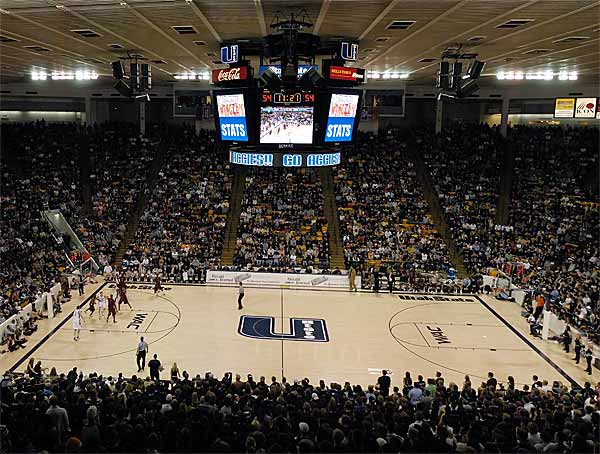
RTC Summer Updates: West Coast Conference

Posted by Brian Goodman on July 5th, 2011

With the completion of the NBA Draft and the annual coaching and transfer carousels nearing their ends, RTC is rolling out a new series, RTC Summer Updates, to give you a crash course on each Division I conference during the summer months. Our first update is from the West Coast Conference and comes courtesy of Will Green, an editor and writer with The Slipper Still Fits.

Readers’ Take One

Summer Storylines

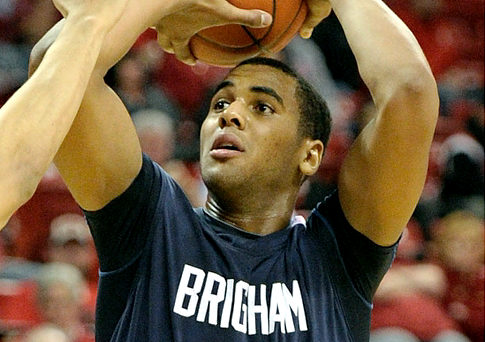
  • Brigham Young University Joins The Conference: When this story was first reported back in September, it was largely forgotten. BYU’s move was a football one with basketball repercussions, not the other way around. If anyone was talking about the Cougars, the dialogue was centered around how much money it would receive from it slew of nationally televised football contests this coming fall, and how many years the vaunted program would remain as an independent before choosing to join another league, securing even more lucrative contracts. The move, however, might make a greater impact on the collegiate basketball landscape than the football one, competitively speaking. For one thing, resident king Gonzaga’s streak of conference championships – which is older than most of your children – or at least its general reputation as the WCC’s top dog, is seriously endangered.  With Jimmer Fredette seizing all available national attention like a Venus flytrap, lost on many fans last year was the fact BYU was not merely a fortuitous program enjoying an unusually good year. The Cougars have been a top 40 RPI team since 2006, with a pair of top 20 finishes. That’s not a second Gonzaga — that’s better than Gonzaga. They also bring by far the largest student body and largest fan base that the league has ever seen. Indeed, the league can leverage BYU’s prominence to grow its influence and scope (more on that later). Despite being a “football move,” BYU’s departure from the Mountain West Conference is not, as so many of the recent realignment moves have been, a casualty of circumstance. The aforementioned “repercussions” became a mutually beneficial improvement for both the Cougars and the league. Credit alert diplomacy and geographical convenience to why commissioner Jamie Zaninovichwas able to lure a team into his league that’s also, statistically speaking, better than any team in his current league.

    Brandon Davies, if Reinstated by BYU, is an X-Factor for the Cougars in 2011-12 (Getty/E. Miller)

  • The League Gets A New TV contract: Over the course of the 2000s, the WCC did a remarkable thing: It became the most widely televised college basketball league of all the leagues in the West, while being only the fourth highest-rated league by RPI of the six in the region. Resident behemoth Pac-12 trusted its games to the insipid hands of Fox Sports’ cluster of regional networks. The Mountain West conference was largely marooned out on “The Mtn,” a network that truncated both its name and its audience by being available in a far more limited number of homes than the heavy-hitting Pac-12. The Western Athletic Conference enjoyed the occasional ESPNU game. The WCC, on the other hand, had its most intriguing matchups beamed into peoples’ living rooms in prime time on Thursday and Saturday nights (and for a time, on Big Monday) via ESPN or ESPN2. Both sides had such a good time putting the whole mess together that when their previous contract expired on June 1, it took exactly one week to renegotiate an eight-year extension. The new deal increases the amount of ESPN games featuring WCC teams by an average of at least five per year, possibly much more, and is spread across Thursday, Saturday and select Monday nights. While some critics contend the new ESPN contract isn’t much of an improvement over the previous one, their voices were provoked loudest during the rather dwarfing aftershock of the Pac-12’s mammoth deal with the same network. While this upcoming season could mark the first time in a long while that the WCC won’t be the most-watched west coast league, the league strengthened its relationship with ESPN and is poised to showcase what should be its most successful year ever in front of its widest audience to date.  In an era of scrambling realignment and a fragile economic landscape, this is a still a huge win.
  • The University of San Diego Suffers A Bribery Scandal: In April, this story looked crippling. San Diego had just finished one of the worst seasons by any WCC team ever when news broke that Toreros’ all-time leading scorer and current Memphis Grizzlies protégé, Brandon Johnson, was allegedly used to solicit current USD player Ken Rancifer on behalf of a delinquent named Steven Goria and several others to fix a game against the University of Portland on February 24. Also revealed was the news that Johnson himself had allegedly fixed a game during his senior season one year earlier. The good news for USD is that the story is quickly losing momentum, due in large part to the recent news that the 2011 team has largely been cleared of wrongdoing (Rancifer turned down the bribe from those attempting to fix the game) Repercussions from the 2010 game will ensue once the FBI is done investigating the entire case, and could involve recruiting sanctions or a postseason ban. Frankly, the Toreros are so deep in the throes of rebuilding that they might not enjoy any such postseason for the NCAA to ban in the first place. All told, this could have been much, much worse for USD. The true damage of the scandal is neither physical nor fiscal, but is still potentially very heavy. While it’s growing steadily, the WCC is not yet a national brand and one dominant negative story can define the WCC and USD for a large group of fans who aren’t very familiar with a non-power six league that’s on TV after they go bed. Show-stealing years from perennial contenders like Gonzaga and BYU, as well as postseason disruptiveness by the likes of St. Mary’s and Santa Clara, would be a good first step toward taking casual fans’ focus off of the scandal. Of course, if USD itself can somehow bounce back from a 6-24 record and win a few games they’re not supposed to, they just might turn themselves into national feel-good story.

Power Rankings Read the rest of this entry »

Share this story

RTC NBA Draft Profiles: Kemba Walker

Posted by Brian Goodman on June 14th, 2011

Player Name: Kemba Walker

School: Connecticut

Height/Weight: 6’1/185 lbs.

NBA Position: Point Guard

Projected Draft Range: High First Round

Overview: Despite his short stature, Kemba Walker was incredibly successful as a three-year player for UConn head coach Jim Calhoun. Hailing from the prolific Rice High School in the Bronx, Walker began his college career playing over 25 minutes per game but only started two games as a freshman. America got a taste of what was to come in the 2009 Elite Eight against Missouri, when a 23-point Walker effort helped propel UConn to the Final Four before losing to Michigan State in the national semifinal. From that point on, he cemented himself as the unquestioned leader of the Huskies. While the Huskies missed the NCAA Tournament in his sophomore campaign, Walker continued to improve by using his outstanding quickness to to up his scoring average (14.6 PPG) and refine his three-point shooting (34.2%). Walker’s junior season was a complete revelation from the get-go, as he dropped jaws in Maui with a tournament total of 90 points against Wichita State, Michigan State and Kentucky. Twenty-point games became the norm (a top-five national scorer at 23.2 PPG), but Walker’s collegiate career will of course be remembered for guiding the Huskies through a scorching hot streak at precisely the right time. UConn won five games in five days to capture the Big East Tournament championship, and with the leadership of Walker and freshman Jeremy Lamb, UConn carried that momentum all the way to the NCAA Tournament title.

Kemba's Dream Season Will Soon Result in NBA Riches

Will Translate to the NBA: Explosiveness is the characteristic that will carry Walker to a successful pro career. He’s incredibly quick off the dribble and keeps the ball on a string. Though he stands only 6’1, early on he realized the importance of creating space to gets shots off. As a result, he has grown quite proficient in executing jab steps, crossovers and step-back jumpers. He was incredibly durable as a junior, regularly playing over 35 minutes per contest, a testament to his conditioning and ability to stay out of foul trouble and avoid mistakes. Many also forget that Walker was a very good rebounder for someone his size (5.4 RPG last season), though of all his many skills, this is one that’s most likely to dissolve at the next level.

Read the rest of this entry »

Share this story

RTC NBA Draft Profiles: Markieff Morris

Posted by Brian Goodman on June 8th, 2011

Over the course of the next month until the NBA Draft on June 23, RTC will be rolling out comprehensive profiles of the 35 collegians we feel have the best chance to hear their names called by David Stern in the first round that night. There won’t be any particular order to the list, but you can scroll back through all the finished profiles by clicking here.

Player Name: Markieff Morris

SchoolKansas

Height/Weight: 6’9/240 lbs.

NBA Position: Power Forward

Projected Draft Range: Mid-First Round

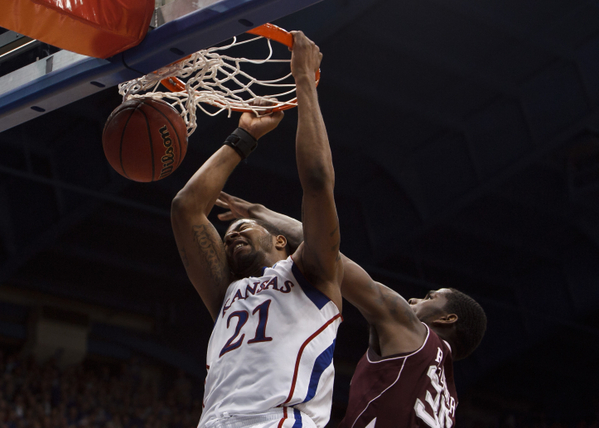
Overview: Markieff Morris is an intriguing mid-first-round prospect who maintained his defensive prowess throughout college while slowly developing an offensive game for Bill Self’s Jayhawks. Accompanying his brother, Marcus, to Kansas after de-commiting from Memphis, Markieff saw less than 20 minutes per game in his first two seasons, as playing time was hard to find behind his brother and Cole Aldrich. In those limited opportunities, however, he proved terrific defensively, averaging over 11 rebounds per 40 minutes and enforcing the paint with his big body and a mean streak. In his sophomore campaign, his offense started to come around,  learning the ability to finish when his teammates were doubled and boosting his field goal percentage up to 56% in 6.8 PPG. In 2010-11, he impressed with considerably more offensive development, showing range to the three-point line (42%) and solidifying his defensive rep as an edgy rebounding bulldog with a Big 12-leading 8.3 RPG.  He also led the Jayhawks in blocks as a junior, but his improved ability to become a scorer in his junior season helped his team become another #1 seed and a Final Four favorite. At the next level, Morris will need to develop a better one-on-one post game, but he already possesses an effective drop-step move that helps him finish in halfcourt sets.

The Lesser-Known Morris Twin Has Many Talents Himself

Will Translate to the NBA: Morris’ defensive versatility and demonstrated shooting range makes him a very appealing option at power forward, especially with thin big-man competition in this draft class. He has the ability to defend multiple positions and rebound at a productive clip, and those skill sets will always have value to an NBA team. Concerns about his body are non-existent, which can’t be said for other draft candidates at his position like Tobias Harris or Kyle Singler. If given the opportunity, he can show that his gradual improvement in his three collegiate seasons is just the tip of the iceberg.

Read the rest of this entry »
Share this story