In 1-and-Done Era, Experience Wins Championships

Posted by rtmsf on April 16th, 2010

(special h/t to Luke Winn for inspiring this analysis with his article here)

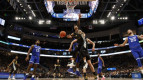
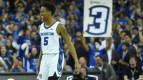
You may have heard  in recent days that Kentucky’s John Calipari has been filling up on the tasty nougat that has risen to the top of the Class of 2010 high school basketball recruiting lists.  Five-star prospect Brandon Knight followed an impressive chorus line of 1-and-done Calipari point guards (D. Rose, T. Evans, J. Wall) by committing to the Wildcats on Wednesday, and Doron Lamb,  another five-star combo guard ranked in the top 25, committed today.  Turkish stud Enes Kanter committed last week, and there are rumors that others, including versatile top 15 forwards Terrance Jones and CJ Leslie, could be next.  All this, and we haven’t even mentioned yet that Michael Gilchrist, the consensus top player in the Class of 2011, has already verballed to go to Kentucky after next season.
Knight is a Great Talent, But Will He Take UK to the Final Four?

The point here is as clear as Ben Roethlisberger’s analgesic salves — high school prospects with dreams of NBA riches a year from now view John Calipari as the pied piper of the NBA Draft.  Follow him down the primrose path, and you will end up playing in the League one year later.  John Wall, DeMarcus Cousins, Eric Bledsoe and Daniel Orton are the trailblazers here.  With all four projected as first rounders in June, the hype of Calipari’s flute-playing squares nicely with reality.  And Kentucky’s regal basketball program is the beneficiary.

Or is it?

We’re big believers that there are external benefits to programs who recruit and enroll 1-and-done players beyond wins, losses and NCAA Tournament success.  In fact, every year we do exactly such an evaluation that includes criteria beyond that scope.  For example, it is our view that the Texas program is still benefitting today from its one year of Kevin Durant on campus in 2007 even though UT only made the second round of the Tournament that season.  The same goes with Michael Beasley at Kansas State in 2008.  Call it the Jordan Effect.  Even if the players who are later inspired to follow Durant and Beasley to those campuses aren’t as good as those two were, there is a significant residual ‘coolness’ effect in recruiting those younger players who can help sustain the quality of the program over time.  To put it in terms of Kentucky, a 12-year old right now may spend the next few years idolizing John Wall in the NBA, and when it comes time for him to make his school choice in five years, the Wildcats and Calipari would have already have an inherent advantage over other schools.

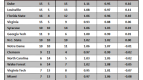
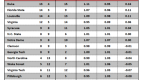
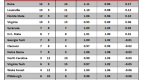
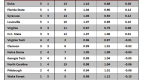
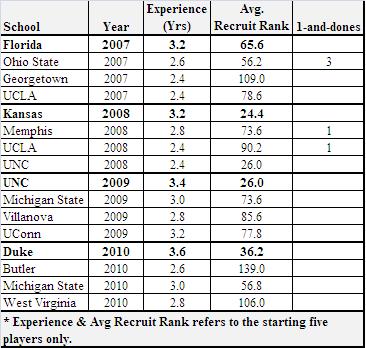
With that said, we know what Kentucky fans hope to get from all of these 1-and-done types, and it’s not just a bunch of springtime recruiting victories.  Eventually it needs to translate to wins, most specifically those in March and April as Winn alludes to in his article.  The question then that we analyze here is whether a focus on recruiting 1-and-doners will get a team to that goal.  The available evidence we have, using admittedly a very small sample size, says that it will not.

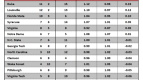
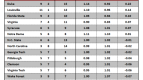
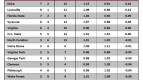
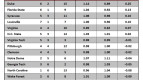
Take a look at the table below, which lists all sixteen Final Four teams from the 1-and-done era (2007-10).

Read the rest of this entry »

Share this story

30 Days of Madness: Walton Dominates Memphis State

Posted by rtmsf on April 2nd, 2010

We’ve been anxiously awaiting the next thirty days for the last eleven months.  You have too.  In fact, if this isn’t your favorite time of year by a healthy margin then you should probably click away from this site for a while.   Because we plan on waterboarding you with March Madness coverage.  Seriously, you’re going to feel like Dick Cheney himself is holding a Spalding-logoed towel over your face.  Your intake will be so voluminous that you’ll be drooling Gus Johnson and bracket residue in your sleep.  Or Seth Davis, if that’s more your style.  The point is that we’re all locked in and ready to go.  Are you?  To help us all get into the mood, we like to click around a fancy little website called YouTube for a daily dose of notable events, happenings, finishes, ups and downs relating to the next month.  We’re going to try to make this video compilation a little smarter, a little edgier, a little historical-er.  Or whatever.  Sure, you’ll see some old favorites that never lose their luster, but you’ll also see some that maybe you’ve forgotten or never knew to begin with.  That’s the hope, at least.  We’ll be matching the videos by the appropriate week, so all of this week we’re heading down memory lane at the Final Four.  Enjoy.

NCAA Final Four

Dateline: 1973 NCAA Championship – UCLA vs. Memphis State

Context: In the 72-year history of the NCAA Tournament, there has never been a more dominant performance than the one Bill Walton laid on Memphis State in 1973.  Walton and his UCLA Bruins came into this game having won 73 consecutive games and the last six national titles.  The big, lanky redhead from San Diego ensured that upstart Memphis State would not be ending that streak.  His 44 points on 21-22 FGs is a record that still stands in the national title game, and the late ankle sprain that he suffered when the game was already put away portended the myriad leg and foot injuries that Walton suffered throughout his professional career.  Take a trip back to a bygone era and enjoy — you’ll probably never see anything quite like this again.

Share this story

Comings & Goings: Oregon Chasing Tubby; Tim Floyd to UTEP – Really?

Posted by rtmsf on March 31st, 2010

The big news today is that Oregon and Mr. Moneybags Phil Knight have made a formal offer to Minnesota’s Tubby Smith, which (you know the drill) Smith vehemently denied.  In an effort to keep Tubby in Minneapolis, the Minnesota president has gotten involved and said that they hope they can put together a contract extension that will result in Smith retiring from basketball at the school.  Another source near the Duck program says that Pitt’s Jamie Dixon has been offered the job.  We’re really not sure what Oregon is thinking here.  Sure, they want a big name, but they need to be realistic about this.  Oregon may have gobs of cash to throw at a prospective coach, but they’re not nearly as important as they must think they are.  Just within the Pac-10, this is probably the fifth best basketball job (behind UCLA, Arizona, Cal and Washington), and if you’ve ever been to Eugene it cannot possibly be the easiest place in the world to recruit mostly african-american players to.  Ernie Kent probably did as well as he possibly could do there.  The play that Knight and friends should make is to scour the nation for the hottest mid-major coach in America and throw whoever that may be (Randy Bennett?  Brad Stevens?  Ben Jacobson?) a wad of cash and the keys to the new Matthew Knight arena.  Give him four years and watch him work his tail off.  You’ve probably got a better shot at long-term success with that strategy that you would ending up with someone like Tubby who has gotten comfortable with his career arc.

Moving on to other coaching news, there were two more interesting items today.  First, former USC coach Tim Floyd has been hired at UTEP to replace Tony Barbee.  Yes, this is the same guy who as head coach at USC was responsible for the OJ Mayo fiasco and other self-reported NCAA violations that ended up costing a promising Trojan team its season.  It’s nice to see that UTEP brass thinks that Floyd will be cleared to coach when the NCAA sanctions come down next month, but mixed messages are coming out of El Paso about what the school expects to hear from the NCAA.

The other piece of news is that Boston College fired Al Skinner after thirteen seasons at the helm in Chestnut Hill.  Citing “philosophical differences,” the BC athletic director said that the information was kept quiet last week as Skinner applied for the St. John’s job that went to Steve Lavin.  Rumored candidates for the job include Harvard’s Tommy Amaker, Cornell’s Steve Donahue and Richmond’s Chris Mooney.

Seton Hall lost its third player to the NBA Draft today when guard Jeremy Hazell decided to test the waters.  Hazell averaged 20.4 PPG this year, which was third-best in the Big East but he is currently projected as a late second-rounder on the current draft boards.  One player who will not be heading to the NBA Draft this year is UCLA’s J’Mison Morgan who was dismissed from the program today.  Morgan’s complete lack of production in two years in Westwood has been nothing short of confounding — the onetime top-50 recruit scored a grand total of 36 points in the 2009-10 season.

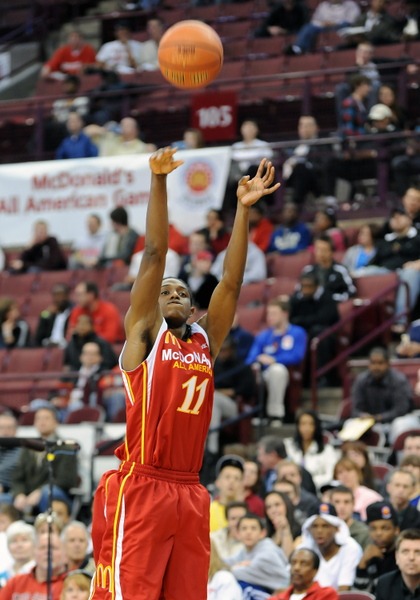
One other interesting rumor coming out of the McDonald’s All-American Game is that Kentucky is apparently telling recruits that all five of their NBA-possiblesJohn Wall, DeMarcus Cousins, Daniel Orton, Eric Bledsoe, Patrick Patterson — are expected to leave for the NBA Draft.  Is UK lying to these players in the hopes that they’ll lure them into the Wildcat fold, or is there any truth to this?  Everyone expects Wall, Cousins and Patterson to be gone, but Bledsoe and Orton as well?

Share this story

Does Home Court at the Final Four Help?

Posted by rtmsf on March 30th, 2010

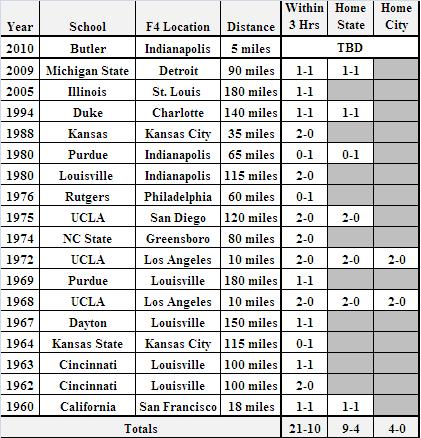
With Butler’s magical run through the West Region to make its first-ever Final Four in its home city of Indianapolis, it got us thinking about whether having home court advantage this deep in the Tournament actually means anything.  It’s great to have the fan support on your side, but when you get this far into the season, all of the teams remaining have won games in hostile environments and are still standing for a more compelling reason (they’re really good!).


We decided to take a historical look at some situations in the last fifty years of the Final Four where we feel that there could have been a home court advantage of some kind for the Final Four and Championship Games.  We tried to limit our choices to a three-hour driving radius from the host venue, but we recognize that some fanbases will travel to the moon to see their team while others can’t be trifled with moving off the couch.  So bear with us.

A brief review found seventeen such instances in the last half-century (Butler @ Indy is #18).  Of special note is that there were only seven situations where a team got to play in its home state (including last year’s Michigan State @ Detroit situation) and only twice where a Final Four school played its games in its home city as Butler will do this coming weekend (UCLA both times).  Here’s the list of what you really want to know, and we’ll break down each instance below that to determine if we think HCA had an impact. 

Final Fours Involving Home Teams

Read the rest of this entry »

Share this story

Comings & Goings: Steve Lavin to St. Johns; Oregon Pursues Izzo

Posted by rtmsf on March 30th, 2010

Pete Thamel of the New York Times is reporting tonight that Steve Lavin is set to be hired at St. John’s soon, as an unnamed source familiar with the proceedings labeled today as a “productive and positive dialogue” between the two parties.  Lavin has spent the last seven seasons as a commentator for ESPN after being fired from UCLA after a disastrous 10-19 season in 2002-03.  He was reportedly close to accepting the NC State position in 2006, but ultimately decided against it to remain in television.  This is a solid hire in our view.  Lavin has name-brand recognition with high school kids who have grown up watching him on ESPN, and he’s always been a strong recruiter anyway.  So long as he can connect with NYC-area kids, he should be successful there.  St. John’s has been down for so long that merely getting to a Sweet Sixteen level of success with regularity would probably give Lavin lifelong job security in Jamaica, NY.  And we’ve always had a bit of feeling that Lavin feels he got a raw deal in Westwood, so he should be all the more motivated to prove his doubters wrong there.

The other big news today was a report out of Eugene that Oregon was prepared to offer Michigan State’s Tom Izzo the richest head coaching contract in college basketball history — greater than Kentucky coach John Calipari’s $32M/8-year deal he received last spring.  Phil Knight is backing the search financially and this squares with the rumors that UO was going to attempt to hire a big name this year.  Izzo said today that he was happy where he’s at, which is currently coaching yet another Spartan team into the Final Four.  It probably won’t be Izzo, but someone will bite on this.  The numbers are simply too large to pass up.

In other coaching carousel news, Marshall’s Donnie Jones has taken the head coaching position at Central Florida.  He replaces Kirk Speraw, who was fired two weeks ago after compiling the all-time wins record in eleven seasons at UCF.  So… does this mean that CUSA FrOY and DPOY Hassan Whiteside is going pro? His mother says that early reports of his going pro are premature and that no decision has yet been made.

We’ve already discussed Kansas center Cole Aldrich and Michigan guard Manny Harris’ decisions to go pro in other spaces, but two other prominent players announced their intentions to go pro today.  Seton Hall sophomore center Herb Pope will test the waters, but is likely to stay in the draft, and UTEP junior center Derrick Caracter will also leave school for professional opportunities.  Pope is projected as a late first rounder, but Caracter at this point is not seen as a legitimate prospect given some of his previous offcourt troubles.

Share this story

ATB: Selected Thoughts on the Final Four Teams

Posted by rtmsf on March 29th, 2010

We’re down to the Four.  Here are some of the thoughts we had about the last couple of days of games while looking ahead to next weekend in Indy…

Forget the Seedings, These Teams Are Good. With a #1, #2 and two #5 seeds making the Final Four this year, the immediate reaction is that we’ve got a wide-open bracket with the potential for a true Cinderella to cut down the nets this year.  Closer examination, however, reveals that all of the four teams left standing were thought pretty highly of in the preseason.  In both the AP and Coaches Polls, Michigan State was ranked #2 behind Kansas, while Duke, West Virginia and Butler all populated the top ten as well (Butler was #11 in the AP).  So while it may have taken some time for Izzo’s Spartans to get it together (like seemingly every year), they eventually did and they’re playing well enought to be a worthy Final Four participant; the same is definitely true for Butler, penalized by the pollsters and Selection Committee for early losses in November and December, but who is playing as well as anyone left right now.  It’s difficult to lose the mindset that a team is a Cinderella or not based on its Tourney seed, but the truth is that these four teams are all playing like #1 and #2 seeds and they have the talent to back it up.

You Can't Get Rid of This Guy (DFP/J. Gonzalez)

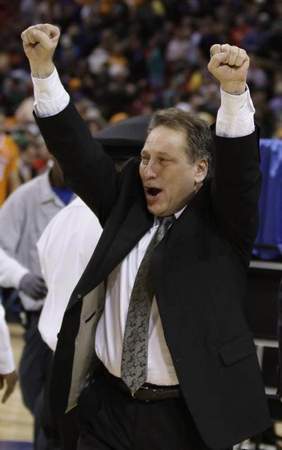
Izzo the Stray CatTom Izzo is like the stray cat in your neighborhood that you can’t get to stay off your front stoop no matter how hard you try.  Just when you think he’s out of your hair for good, he shows up again with that Cheshire grin belying his belief that he’s the luckiest dude alive.  Six Final Fours in twelve years is one better than it was last year (five in eleven), and yet everyone acts completely shocked and amazed that he’s back in the Four with much the same group of players.  How weak are people’s memories?  This is what Izzo does — this trip will make the second time that his team  has reached the final weekend as a #5 seed — and it’s not a mere coincidence.  Everyone knew that he had the talent this season (see above re: preseason ranking), but all of the turmoil surrounding player roles and injuries led people (including us) to believe he wasn’t going to be able to find the combinations to get it done again.  Here’s a bracketing lesson for all of us next year and the years beyond that: Wherever Michigan State is seeded, just put the Spartans in the Final Four and don’t look back.  Your odds are much better doing it that way than actually trying to analyze the matchups and break down the games.  Izzo is a March master, and how anyone can doubt this guy’s abilities is beyond comprehension.

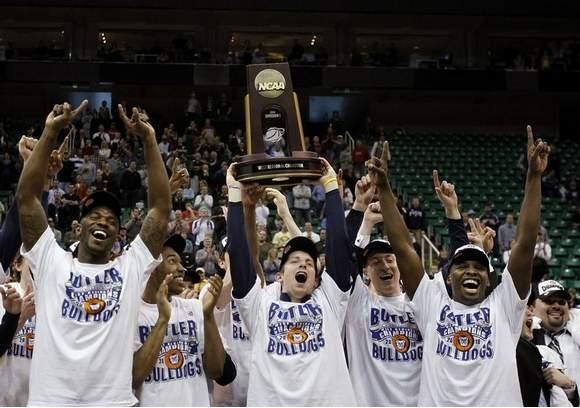
Butler is No George Mason.  To a casual fan, he sees that Butler is in the Final Four this weekend and he’s thinking George Mason all over again.  This lazy thinking is a serious mistake.  Mason was an #11 seed who benefited from catching two teams by surprise in the first two rounds, followed by veritable home games in DC against another Cindy Wichita State in the regional semis and an uber-talented but frustratingly underachieving UConn team in the regional finals.  They deserve all the credit they can muster for winning those games, without question, but things broke well for them to make the run possible.  Butler had to play and beat the top two seeds in its region to make the Final Four this year, and they did it by forcing both Syracuse and Kansas State to bend to their style of play and make numerous atypical mistakes.  Butler’s defense subjugated two of the most efficient offenses in America into their worst performances of the year, and that’s no more a coincidence than Izzo above still having games to play.  Andy Rautins, Scoop Jardine, Denis Clemente and Jacob Pullen (combined 20-52 FGs) are undoubtedly still having nightmares of Butler defenders securing temporary eminent domain over their jockstraps.  The key takeaway here is that Butler will defend Michigan State just like the others, and if they can find enough offense themselves through Gordon Hayward, Shelvin Mack and friends, they are plenty good enough to continue to advance.

Butler Can Win This Thing, Folks (IndyStar)

Bob Huggins, White Knight. One thing we noticed traveling around over the weekend was that every hoophead around the country was unilaterally rooting for West Virginia to take out John Calipari’s Kentucky Wildcats on Saturday night.  In the sports bar we were in during that game, Syracuse, Butler, K-State and Xavier fans were teamed up pulling for the Mountaineers.  We’ve picked up similar anecdotes from around the country since then — nobody wanted Kentucky to win that game.  We believe that this sentiment derives from a general feeling that Calipari is a dirty coach who cheats to get his players, but the irony of everyone outside of the Bluegrass backing Bob Huggins wasn’t lost on us.  Since when is tHuggins Huggins the white knight here to save college basketball from agents, cheaters and bags full of money?  Surely people remember his endless problems at Cincinnati with players failing to graduate, numerous asundry brushes with the law, and failing to exert institutional control?  No?  Look, we get that people don’t like Calipari and, by proxy, Kentucky; but isn’t Huggins quite possibly worse given the history of lawlessness on his teams?

Read the rest of this entry »

Share this story

Comings & Goings: Fordham Pays Pecora; Howland and DePaul?

Posted by rtmsf on March 25th, 2010

The big news today in this area was of course the news that Tony Barbee is leaving UTEP to take the Auburn job.  We handled that separately here.

The other piece of coaching news is that Hofstra’s Tom Pecora has signed with Fordham for a non-puny sum of $705,000 per year.  Wow.  In the same New York Post article, Joe DeLessio says that Paul Hewitt is still the leading candidate to take the St. John’s job but a hefty buyout of $3.5M is holding up things.

In a pre-emptive strike by Northern Iowa to try to hang on to their hot commodity coach Ben Jacobson for as long as possible, the school offered him a big raise and a ten-year contract extension yesterday (which he accepted).  With each passing win in this Tournament, Jacobson’s stock will continue to rise.

Moving from the world of fact to the rumor mill, let’s start with one even more ridiculous than the Tubby to Auburn one last Friday: UCLA’s Ben Howland to DePaul?  Excuse us while we clean up the water we spit out all over the computer screen.  At first blush, this is borderline insanity.  Notwithstanding the fact that Howland is a SoCal guy who has taken that team to three Final Fours in his tenure there, it’s… freakin… DePaul.  We’d give this a 1% chance if we were talking about another traditional powerhouse, like, say, Indiana.  But DePaul?  How can anyone take this seriously?  What are they going to offer him — $10M per year?  And yet, even the Bruin faithful believe there’s more to this than just rumor.  For what it’s worth, Ben Howland stated today that he has “zero interest” in this job, which is about the amount we would expect him to have.

Share this story

March Moment: The Garden in ’71

Posted by jstevrtc on March 24th, 2010

Few college basketball fans are born with their love for the game. For most aficionados, at some point on the way from infancy to college hoops fan, there is a moment. A single play, shot, player, game, or event at which point they say to themselves, “I will always have this in my life.” Because it is the time of the season that carries the most gravitas, these things often happen in March. We asked some of our friends and correspondents: what was the thing that turned you into a lifelong college basketball fan? What was your…March Moment? We’ll be posting some of their answers for the rest of the month.

In this edition, RTC correspondent Ray Floriani remembers a New York City night in 1971 that altered his perception of winning and losing, how he was affected by both, and how it all cemented his love for our game:

NEW YORK CITY – The intensity, excitement and general myraid of emotions packed into that March evening will probably never be duplicated. It was the ultimate heartbreaker. At the same time, this was the one. The game and experience that certifiably had yours truly hooked on basketball, notably college basketball, as the favorite sport. One that transformed a casual observer into a devout follower.

Mention “the Georgia Tech game in the NIT” and any St. Bonaventure fan who can remember gas being under a buck a gallon will recall the year (1971) , the date (March 25), the circumstance and how it played out.  A little background…

The 1970-71 season was my freshman year at St. Bonaventure. The previous March the Bonnies made it to the Final Four and if Bob Lanier hadn’t been injured late in the East Regional final against Villanova, who knows? UCLA’s national championship run might have been interrupted.

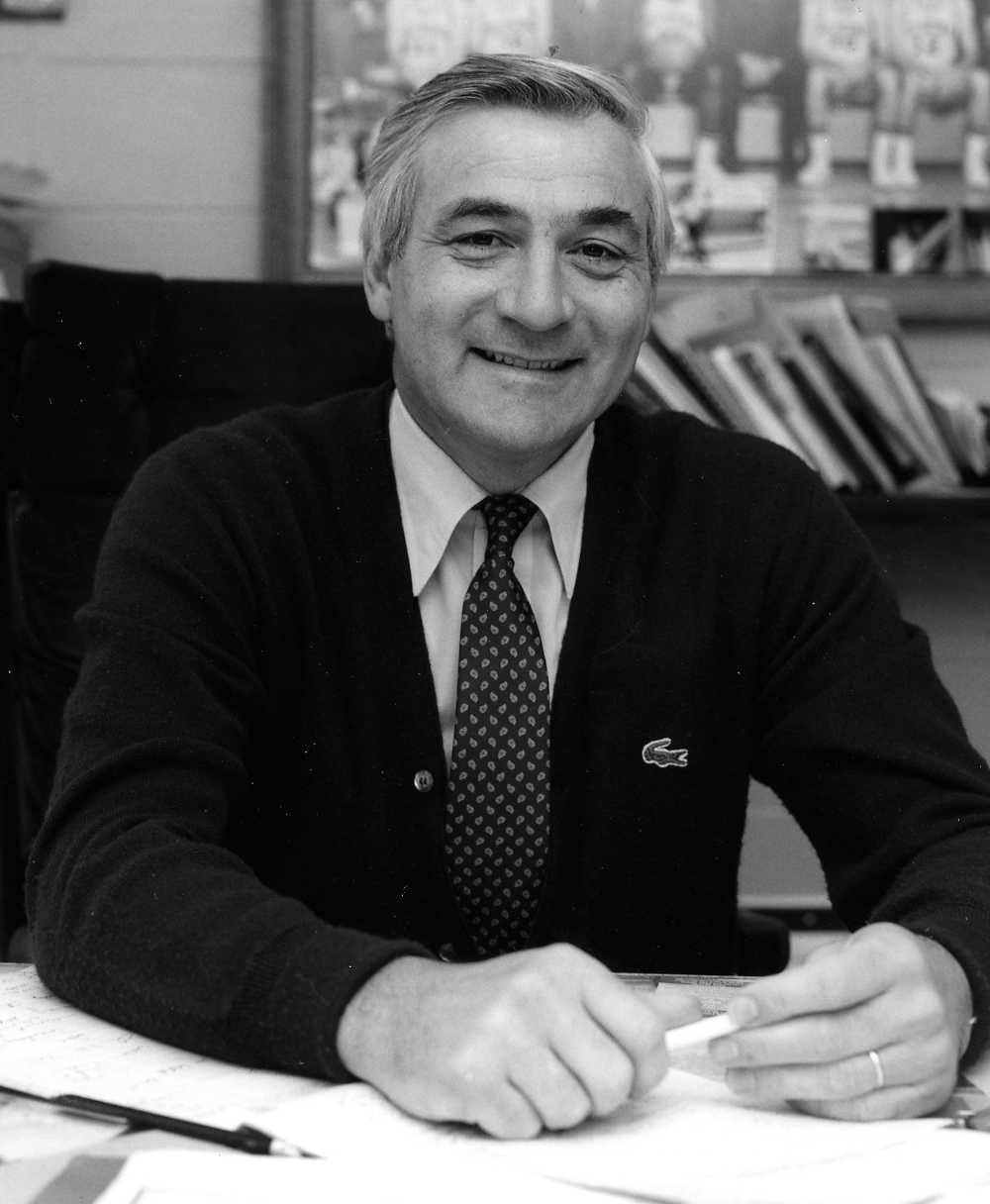
Larry Weise, St. Bonaventure coach from 1961-73

The team lost Lanier and a top notch lead guard in Billy Kalbaugh. There was optimism though as the returnees had experienced winning and approached the season with a positive mindset. Among the veterans returning for coach Larry Weise were Greg Gary, Matt Gantt, Dale Tepas, and Paul Hoffman. Gantt, at 6-5, was the big man.  An incredible leaper, Gantt was the prototype “frequent flyer” who could make life miserable for opponents five (or more) inches taller. Sophomore Carl Jackson was up from the freshman team (they had them back then). Overall, there was talent.

I had the good fortune to get into the program as one of the team managers.  It was a job I did four years in high school and would do four years at Bonaventure. The season went extremely well with the Bonnies, ranked high as 11th at one point, finishing 18-5.  Back then 25 teams made the NCAA tournament and with the East basically a group of independents, as Bonaventure was, you needed a great record to get in.  The Bonnies accepted an NIT bid. Again, in that day it was a 16 team field with all games contested at Madison Square Garden.

Read the rest of this entry »

Share this story

30 Days of Madness: The Night Adam Morrison Cried

Posted by rtmsf on March 23rd, 2010

We’ve been anxiously awaiting the next thirty days for the last eleven months.  You have too.  In fact, if this isn’t your favorite time of year by a healthy margin then you should probably click away from this site for a while.   Because we plan on waterboarding you with March Madness coverage.  Seriously, you’re going to feel like Dick Cheney himself is holding a Spalding-logoed towel over your face.  Your intake will be so voluminous that you’ll be drooling Gus Johnson and bracket residue in your sleep.  Or Seth Davis, if that’s more your style.  The point is that we’re all locked in and ready to go.  Are you?  To help us all get into the mood, we like to click around a fancy little website called YouTube for a daily dose of notable events, happenings, finishes, ups and downs relating to the next month.  We’re going to try to make this video compilation a little smarter, a little edgier, a little historical-er.  Or whatever.  Sure, you’ll see some old favorites that never lose their luster, but you’ll also see some that maybe you’ve forgotten or never knew to begin with.  That’s the hope, at least.  We’ll be matching the videos by the appropriate week, so all of this week we re-visited some of the timeless moments from the regionals of the NCAA Tournament.  Enjoy.

NCAA Regionals

Dateline: 2006 NCAA Regional Semifinals – Gonzaga vs. UCLA

Context: You knew it was going to show up on here sooner or later.  How can it not?  In a game that pitted the two biggest western powers of the era in an Oakland Sweet Sixteen showdown, Gonzaga and NPOY candidate Adam Morrison had run out to a 37-20 first half lead to put Ben Howland’s UCLA Bruins on the brink of a disaster.  But in typical UCLA fashion, the Bruin defense kept them within reach, having closed the gap to nine points with just over three minutes to go in the game at 71-62.  Things weren’t looking good, but the Bruins started chipping away.  Luc Richard Mbah a Moute made two free throws, then followed that up with a layup a little while later.  After a JP Batista and Adam Morrison miss on the other end, Jordan Farmar’s layup brought the game to three points with just under a minute remaining.  We pick it up below as Gonzaga takes the ball out up three with 40.8 seconds remaining.  The amazing finish and the accompanying call from Gus Johnson makes The Night Adam Morrison Cried one of our favorite March Moments of all-time (note: no disrespect intended toward Morrison or the Zags, but the emotion of the moment shows just how incredibly lifting and devastating the Tournament can be).

Share this story

30 Days of Madness: J-Will’s Nineteen Straight Points

Posted by rtmsf on March 22nd, 2010

We’ve been anxiously awaiting the next thirty days for the last eleven months.  You have too.  In fact, if this isn’t your favorite time of year by a healthy margin then you should probably click away from this site for a while.   Because we plan on waterboarding you with March Madness coverage.  Seriously, you’re going to feel like Dick Cheney himself is holding a Spalding-logoed towel over your face.  Your intake will be so voluminous that you’ll be drooling Gus Johnson and bracket residue in your sleep.  Or Seth Davis, if that’s more your style.  The point is that we’re all locked in and ready to go.  Are you?  To help us all get into the mood, we like to click around a fancy little website called YouTube for a daily dose of notable events, happenings, finishes, ups and downs relating to the next month.  We’re going to try to make this video compilation a little smarter, a little edgier, a little historical-er.  Or whatever.  Sure, you’ll see some old favorites that never lose their luster, but you’ll also see some that maybe you’ve forgotten or never knew to begin with.  That’s the hope, at least.  We’ll be matching the videos by the appropriate week, so all of this week we re-visited some of the timeless moments from the regionals of the NCAA Tournament.  Enjoy.

NCAA Regionals

Dateline: 2001 NCAA Tournament Regional Semifinals – Duke vs. UCLA

Context: It was 2001, and Duke was well on its way to Mike Krzyzewski’s third national championship of his career.  In the regional semifinals, the Devils were matched up against a talented UCLA Bruin team led by Earl Watson, Jason Kapono, Matt Barnes and Dan Gadzuric.  With the #1 seed hanging onto a narrow three-point lead in the second half with about fourteen minutes to go, Jason Williams decided to put his team on his back and take care of things himself.  Nineteen straight points later, Duke had a comfortable eight-point lead and UCLA would get no closer the rest of the way.  J-Will, as he was known at the time, ended up with 26 points in the second half on his way to 34 points (including six treys) and four assists in a 76-63 victory for Duke.  It was one of the more magnificent stretches of individual basketball we’ve seen in the NCAA Tournament, and helped propel the Devils to their date with destiny the following weekend.

(note: the video says it was 17 straight points, but this is incorrect.  see here.)

Share this story