
The Loss of Kevin Coble Doesn’t Kill Northwestern’s NCAA Hopes

Posted by rtmsf on July 28th, 2010

John Templon of Chicago College Basketball is the RTC correspondent for the Horizon League.  He is also very familiar with the Chicago area basketball scene.

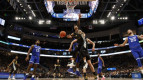
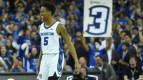
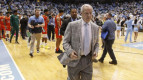
By now you’ve heard that Kevin Coble will not play for the Northwestern Wildcats during the 2010-11 season, or ever again. The recovery from his broken foot is taking longer than expected, and instead of continuing through grueling rehab with the chance of injuring it again during the season which would come with possible life-altering implications, Coble has decided to hang up his basketball shoes. Of course, this story is getting a lot of national attention because of Northwestern’s NCAA Tournament drought and the fact that “everyone” thought that Coble returning was the magic elixir that was going to solve all of the Wildcats’ problems.
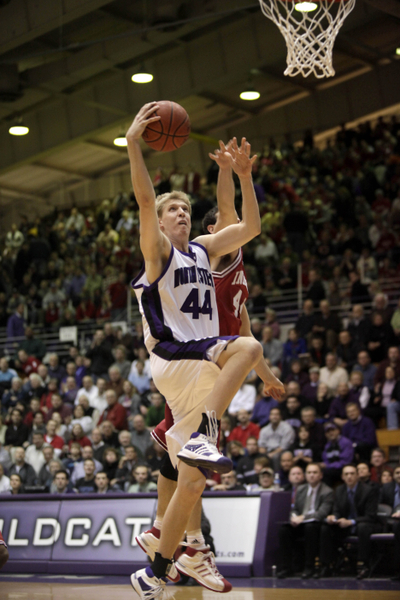
Coble Will Be Missed, But He's Not the Tipping Point

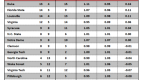
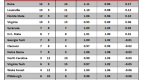
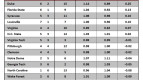
I’m here to tell you that “they” were wrong. Coble’s return wasn’t going to fix the thing that Northwestern has to work on more than anything to make the NCAA Tournament — defense. The Wildcats had one of the most efficient offenses in the country last season. They scored 1.12 points per possession, which ranked 33d in the country according to Ken Pomeroy’s adjusted efficiency statistics. Being the 33d best offense in the country is more than enough to make the NCAA Tournament. The problem was Northwestern’s 169th ranked defense.  If Coble had been able to return at full strength this coming season he still wouldn’t have provided the defensive presence that the Wildcats need. A foot injury is exactly the type of problem that hinders your lateral movement, and it is the key to staying in front of people cutting with the basketball. Even when the doctors say you’re fully recovered, these types of injuries aren’t over. So even if Coble had completed his rehab he’d probably be wondering, “What happens if I try this?” on the basketball court. If you’re taking time to wonder, you’re taking too long.

When Coble was healthy he led the Wildcats in scoring and rebounding, and while his rebounding would be nice to have next season, his scoring wouldn’t have been necessary. Coble was essentially the same player his first three seasons at Northwestern with an offensive rating around 110 in approximately a quarter of the team’s possessions while he was on the court. He also had a rebounding rate of 2.7% on the offensive boards and 15.5% on the defensive boards.  But you know whose numbers were better than that last season? John Shurna. Shurna replaced Coble in the lineup last year and became an even better offensive threat. He’s still improving too. His national team experiences appear to have helped him elevate his game. It’s also worth noting that Drew Crawford as a freshman put up an offensive rating of 107.5 and Michael Thompson put up a ridiculous 115.9 last season. With JerShon Cobb coming in and Alex Marcotullio improving, the Wildcats are surely going to be just as good, if not better, on offense next season.

Read the rest of this entry »

Share this story

Morning Five: 07.20.10 Edition

Posted by rtmsf on July 20th, 2010

  1. The biggest news yesterday came when the NCAA announced that UConn athletic director Jeff Hathaway has been tabbed to take over as the chairman of the Men’s D1 Basketball Committee for the 2011-12 season.  He will succeed the current chairman, Ohio State athletic director Gene Smith, next summer.  This is a peculiar choice given the timing that UConn is currently facing eight major recruiting violations in its men’s basketball program (including a failure to monitor charge, and if you believe this report, a possible 2-3 year probation) and rumors that Hathaway has been considering a move to Maryland, his alma mater.  According to the NCAA, if Hathaway takes the Maryland job, this chairmanship will not follow him.
  2. Ask any middle-aged Duke fan if they remember the name Todd Leary, and without question you’ll get a knowing glance.  In the 1992 Final Four en route to Coach K’s back-to-back titles, Indiana’s Leary gave Blue Devil fans heart palpitations as he single-handedly brought Bob Knight’s Indiana team back from nine down in the final two minutes with three long-balls from all over the court.  Well, from that illustrious moment to this one — Leary pleaded guilty to fraud relating to a mortgage company scheme late last week in Ft. Wayne, and he is on the hook for $300,000 in restitution as well as possible prison time.  Nice.
  3. Did you see Gary Parrish’s summer all-americans?  With three Big 12 players on his first team, it’s going to be another fantastic season in the nation’s heartland.
  4. This is an interesting post from Bylaw Blog (“the unofficial blog of NCAA compliance” — awesome!) that suggests that the NCAA Infractions folks may be reaching a critical mass of knowledge in both football and basketball (about how “the system” actually works) to begin focusing on and targeting the volume cheaters.  We can only hope…
  5. What do Rick Barnes (Big 12), Jeff Bzdelik (ACC), Fran McCaffery (Big Ten), Buzz Williams (Big East), Rick Stansbury (SEC) and Kevin O’Neill (Pac-10) have in common?  These six coaches in the BCS leagues tend to play their starters more than any other coach in that league, according to statistics compiled by Dan Hanner over at YABB in his typically stellar analysis.   (ed. note — Bzdelik’s and McCaffery’s numbers were of course from previous schools)
Share this story

NCAA Ticket Lottery System Under Fire

Posted by rtmsf on July 19th, 2010

Last week a federal appeals court in Chicago reinstated a lawsuit against the NCAA that takes a direct shot at its lottery-based process for distributing the oh-so-coveted Final Four ducats each year.  Many fans who have never attended (or tried to attend) a Final Four may not know this, but depending on the size of the venue, the NCAA offers a good number of tickets for sale to the general public every year.  Next year, with Houston’s Reliant Stadium (and its 71,500 seats) hosting the final weekend, the NCAA is offering 20,000 seats for sale to the public.  A lottery process determines if your application is one of the lucky few.  From the NCAA website:

Only one properly submitted application per individual/household will be accepted for inclusion in the NCAA’s ticket selection process. The NCAA will use a random, selection process to determine successful Men’s Final Four recipients in July 2010.  Those individuals selected to receive tickets will be notified by the end of August.   Individuals not selected to receive tickets will receive a refund of the full application deposit amount by August. Men’s Final Four tickets may not be offered as a prize in a promotion, sweepstakes or contest, or auctioned for fundraising purposes unless authorized in advance by the NCAA.  (emphasis added by RTC

These Will Cost You a Pretty Penny (+ Processing)

The rub of this lawsuit is that the NCAA also requires a nonrefundable $6-$10 processing fee with each application, regardless of whether you “win” or “lose” the tickets.  So if you are one of the many unlucky applicants and your check isn’t fortuitously chosen from the hopper, you will only get a refund for the value of the tickets, not the processing fee.  Due to this nice little Ticketmaster-esque add-on of a few extra bucks to play the game, this “lottery” for Final Four tickets (where everyone loses even when they win) might just be illegal in the state of Indiana. 

The class-action suit (of residents from New York, Arizona and Oregon) argues that the state government of Indiana (where the NCAA is HQ’d) is the only entity within the Hoosier State who may lawfully run a lottery, and as such, the NCAA’s money-making fee structure is in clear violation of the law.  The Court of Appeals decision agreed in stating that people who apply for Final Four tickets are not aware that they are gambling (“pay to play”) when they submit an application, and the NCAA could have avoided this whole mess if they’d simply refunded the processing fees to those who did not win tickets. 

The next phase of the case will be discovery and another chance in front of the District Court, but it seems from our viewpoint that the NCAA is probably going to have to pay something on this whether as part of a large settlement or a judgment against them.  By refusing to refund the processing fee, there’s just something that doesn’t pass the sniff test here, and undoubtedly the Court of Appeals had that in mind in sending the case back.  Going forward, however, it seems as if the NCAA could make a very simple change and resolve this.  Either eliminate the processing fees of those who, you know, don’t actually get processed (the “losers”), or take away the processing fee completely and just add $10 to the face value of every ticket.  Will markedly fewer people submit applications if the lower-level seats are $210 instead of $200; or $190 vs. $180 for uppers?  Not likely. 

Share this story

A Little Summer Madness For Your Basketball Jones

Posted by rtmsf on July 16th, 2010

It’s the middle of summer and hotter than hell pretty much everywhere, and college basketball feels a long way away.  Luckily, CBS College Sports has realized that some of us will watch great college hoops year-round if given the opportunity, and they’re using the next couple of weeks to replay the entire 2010 NCAA Tournament for people of our ilk.  They started this feature last week, but there are still plenty of great games on tap.  Here’s a taste of some of when some of the better games will be on — set your Tivo accordingly…  (although make sure to check the complete listings because most of these games and many others are televised multiple times over the next week).

Um, Why Does Summer Madness Have a Football Field in the Background?

Saturday July 17

  • 4:30 pm – St. Mary’s vs. Villanova (2d Round)
  • 6:30 pm – Murray State vs. Vanderbilt (1st Round)
  • 11 pm – Northern Iowa vs. Kansas (2d Round)

Monday July 19

  • 6 am – Old Dominion vs. Notre Dame (1st Round)
  • 12:30 pm – Michigan State vs. Maryland (2d Round)
  • 6:30 pm – Xavier vs. Pittsburgh (2d Round)
  • 9 pm – Texas A&M vs. Purdue (2d Round)

Tuesday July 20

Wednesday July 21

  • 6 pm – Butler vs. Kansas State (E8)
  • 11 pm – Tennessee vs. Michigan State (E8)

Thursday July 22

  • 12 pm – Baylor vs. Duke (E8)
  • 2 pm – Butler vs. Michigan State (F4)
  • 6 pm – Butler vs. Duke (Ch)

Friday July 23

  • 8:30 pm – Wake Forest vs. Texas (1st Round)
Share this story

First Four Analysis: What About My Bracket?

Posted by rtmsf on July 14th, 2010

If you’re at all like us here at RTC, filling out your bracket is a anxiety-ridden experience that involves countless hours of research, googling, calculating, checking, flip-flopping, ripping, ruminating, stressing, and ultimately conceding.  From the moment the brackets are released at 6 pm ET on Sunday night until well after midnight on Wednesday/Thursday morning, we’re usually no better off in terms of the key toss-up games and later rounds than we were ten seconds after the matchups were announced. 

Does This Resemble You Every Selection Sunday?

You’d think with all the time we put into this sport year-round, we’d have a better initial feel for many of the matchups.  But therein lies the problem.  We have so much information in our heads and at our fingertips that inevitably paralysis by analysis takes hold, and we have to resort to other tried-and-true methods to pick a damn winner.  These methods could include, but are not limited to, playing “home” favorites (Baylor over Duke), picking on league strength (Louisville over Cal), being contrarian (UTEP over Butler), or preferring experienced coaches (Minnesota over Xavier).  Usually, though, late on Wednesday night, mere hours before the early tipoffs of the first round games on Thursday, we go with our gut.  Our gut, of course, meaning we pick up the phone and start calling people.  Because, as we all know, groupthink is always the best sort of think.   

A typical conversation goes something like this:

RTC: You ready to talk about this?
Friend of RTC: (long sigh) Ready as I’m going to be.  Bring it.
RTC: Dude, how are you liking that Florida-BYU game?
Friend of RTC: (even longer sigh) Man, this year is the hardest year we’ve ever had in terms of picking these damn first round games. (said every year
RTC: Right, but what do you see happening there?
Friend of RTC: BYU is going to win… Florida is overrated and Fredette is going to light them up.   That is, unless Donovan figures out that he is the only player that can beat them and actually convinces Boynton and Walker to play some defense.  But the last time I saw the Gators play defense, Joakim Noah was waving pompoms around and screaming like a banshee.  So, BYU.  That’s the clear pick there. 
RTC: (scribbling down Florida into the second round) Yeah, yeah, I think that’s right.

And so it goes.  On and on through every toss-up game until we get to the end and absolutely despise the huge steaming wad of a bracket that we’ve created.  We’re talking absolute, unadulterated loathing here.  How on earth can any self-respecting blogger of the sport have Villanova in the Final Four again — that team has been terrible lately.  Or Kentucky and all its NBA-bound stars losing to the likes of plodding Wisconsin in the Sweets — we must be out of our minds.

This is How We Feel About Our Bracket on Thurs Morning

So maybe the decision that the NCAA made this week to put meaningful games into the Play-In Opening First Round will help people like us, the folks who have trouble making bracket decisions without first seeing every possible word and stat written about the games.  You see, the only way we think that the ubiquitous office and online bracket pools will reasonably continue to work now is if the new deadline is set for Tuesday’s tipoff (presumably at around 7 pm ET).  Of the roughly 90 hours from the unveiling of the bracket to Thursday’s first game start, nearly half of those (42) have been shaved off.  This sea change in available bracket analysis time will require focus and discipline on the part of the uber-analyzers (us) and absolutely no change whatsoever for those who actually win office pools (everyone else).

We’re making a big assumption here, though.  We’re assuming that the standard office pool format will necessarily change to a Tuesday night deadline so as to incorporate those three extra games (two of which may actually impact the later rounds).  It’s worth a quick look to see what the options are as we see them for the pool developers (and keep in mind, we’re not that creative when it comes to this stuff, so offer your suggestions in the comments). 

Option 1 – Office Pools Incorporate First Round Games

Read the rest of this entry »

Share this story

Morning Five: 07.14.10 Edition

Posted by nvr1983 on July 13th, 2010

  1. Of course the biggest news of the summer to date was Monday’s announcement that the NCAA Tournament “First Four” would include four auto-bids along with the last four at-large bids.  Mike DeCourcy got some immediate reactions on the configuration from head coaches Gary Williams, Trent Johnson and Scott Sutton.  Whether politically correct, a compromise, much ado about nothing, or a punt, the two decisions that the NCAA made in the past three months regarding the best thing this sport has to offer shows that they’re listening to the public.  For such a staid institution that has been heavily criticized over the years, this is not a bad thing.
  2. Next year’s DeMarcus Cousins could come in the form of Mississippi State’s Renardo Sidney, so circle your calendars for the December 18 debut of the talented big man in the Atlantis Paradise Island Invitational, where the Bulldogs seek to beef up their RPI standing with a possible game (contract pending) against fellow eternal bubbler Virginia Tech.
  3. New England high school basketball talent no longer an oxymoron?  According to this report by Bostonian Jeff Goodman, the long-underwhelming area of talent may be moving forward in much the same way that the Pacific Northwest has over the last five years.  We’ll have to remain watchful on this one.
  4. Wow, this description by John Feinstein on the book he hoped to do about legendary former UNC coach Dean Smith is stifling in its austerity.  Smith’s memory loss problems were publicly broken last week by the Fayetteville Observer, but it was Feinstein’s tales of trying to discuss past events with Smith for his book that really put things into focus.  Sad, sad story.
  5. Tennessee treasure and women’s head coach Pat Summitt’s son, Tyler, will walk on for UT beginning next season.  He had opportunities to play at the Division III level, but he will use his experience as a member of the men’s team to develop what he hopes will one day turn into a coaching opportunity.  The only question we have is whether he’ll try to coach men’s or women’s ball?
Share this story

Summer Bracketology: 07.12.10

Posted by zhayes9 on July 13th, 2010

Zach Hayes is a contributor, editor and bracketologist at Rush the Court.

Analysis of decision: When the NCAA Tournament Selection Committee opted in April to expand the premier postseason tournament in America to 68 teams rather than the widely expected 96, college basketball fans exhaled and rejoiced. Then the question became what to do with the four play-in games that were instituted as part of this decision. An answer was promised sometime this summer. Today, committee chairman Dan Guerrero unveiled a “hybrid” resolution that first began to pick up serious momentum earlier this month.

The new hybrid format requires the final four at-large teams to play for a seed line to be determined on Selection Sunday and requires the final four automatic qualifiers (the four schools with the lowest RPI’s) to face an identical task likely with #1 seeds facing them should they advance. The committee attempted successfully to compromise the wishes of both smaller schools from conferences such as the SWAC, MEAC and Southland that would have been relegated to the stigmatic play-in games every single year and the final at-large schools that would have put up a fuss should under-.500 Jackson State go dancing rather than their team.

While I would have preferred forcing the final eight at-large teams into the Tuesday/Wednesday games for two nights of scintillating matchups to get fans geared up for the 64-team Big Dance, this compromise should sit well with the majority of hoops fans. Maybe it’s hard for me to get real hot and bothered about anything after the committee only went to 68 teams—after all, beggars can’t be choosers—but this decision does hit the right balance: two games similar to the Tuesday play-in game from years past between small schools and two games between bigger name schools that should generate interest and intrigue. Also, for the first time, we’ll finally know the Last Four In that  have never been previously officially revealed.

I constructed a summer bracket looking at the landscape of the 2010-11 season, but for some context on how a format like this one would have looked last March, one can guess the final two at-large teams left out of the field were Illinois and Mississippi State. These two teams move into the field at whatever spot the committee decides, likely as #12 or #13 seeds. That sets up the possibility of the two at-large games being something like Virginia Tech vs. Rhode Island and Arizona State vs. Seton Hall while the two automatic qualifier games would go to the #16 seeds each as undercards on either Tuesday or Wednesday- Lehigh vs. Arkansas Pine Bluff and Winthrop vs. East Tennessee State.

There have been a  few changes since my post-2010 season bracket a couple of months ago (eligible transfers, recruits changing allegiances, perception changes for certain teams) and a slight tweaking was in order. Here is my official summer Bracketology under the new format:


Read the rest of this entry »

Share this story

The New NCAA Tournament — We Can Live With It

Posted by jstevrtc on July 12th, 2010

Andrew Murawa is the RTC correspondent for the Pac-10 and Mountain West conferences and an occasional contributor.

The NCAA got around to announcing “The Decision” regarding the layout of the now 68-team tournament and specifically the makeup of the competitors in the four “play-in games” today, and the end result?  Punt.

Getting the terminology out of the way first, these games are officially no longer part of the Opening Round, nor are they “play-in games” (not that they ever were). They now make up the entirety of the First Round of the NCAA Tournament, otherwise known as the First Four. Those games that get played on Thursday and Friday? Those are now the Second Round, with the weekend games now the Third Round, with the winners there still advancing to the Sweet Sixteen.

We knew before today that there were three main options that the NCAA was considering: the final eight at-large teams matching up, the lowest eight automatic qualifiers matching up, or some combination of the two. That last one, that’s what we got. And you know what? That’s probably the best decision.

The NCAA dropped back and punted, here -- but the resulting field position isn't that bad.

If the NCAA had chosen to send only the lowest eight qualifiers to these games, there would have been numerous problems, not the least of which would be a continuation of the idea that those first four games aren’t really part of the NCAA Tournament. The teams that advance from one-bid conferences like the MEAC, SWAC, American East and Big Sky (to name just a few of the usual suspects) would battle it out in Dayton in relative anonymity for the right to advance to their chance to get killed by a one-seed, while your typical college basketball fan would ignore the whole thing. In the process, sure, the teams involved would have a better chance at winning a game in the NCAA Tournament and thereby earning themselves an extra share of the proceeds from the tournament, but once the “actual” tournament started, there would be four less automatic qualifiers sticking around for their chance to get on national television and test out their slingshot against Goliath. Then there’s also the fact that after spending $10.8 billion on the rights to the tournament, the first four games of the package would be a total wash for the television networks, stuck broadcasting games like Mississippi Valley State against Northern Arizona to a national television audience of almost four digits.

Read the rest of this entry »

Share this story

NCAA Tournament Gets Hybridized

Posted by jstevrtc on July 11th, 2010

The First Four starts it, the Final Four ends it.

We’ll have a more in-depth discussion on this later this evening, but the new format for the 68-team NCAA Tournament has just been announced.  This article by ESPN’s Andy Katz describes how the NCAA is going with what people call the “hybrid model.”  The last four at-large teams will play each other for the right to get into the main draw, and the last four automatic bid teams will do the same. They’re calling it the “First Four,” or the new official first round.  The seed line will be determined independently for each game, meaning that two teams may be playing for the right to snag a 11-seed and play a six, and another First Four game might have two teams battling for a 12-seed to play a five, and so on.

There will now be no speculating as to who the last four at large teams into the Big Dance are — you’ll know who they are by their presence in one of the Tuesday/Wednesday games.  Unfortunately, there won’t be any “mixing” of the automatic qualifiers and the final at-large teams.  As aforementioned, the at-larges will play each other and the automatic qualifiers will play each other, so you won’t get that small-conference tournament winner relishing their chance to knock off a BCS-conference team who’s among the last four at-larges.  And, interestingly, after several years of seemingly downplaying the importance of a team’s RPI, it’s certainly important now, because that is the instrument that will be used to determine the lowest-rated automatic qualifiers.

The NCAA goes with the hybrid model. We're still evaluating this...

The First Four games will be broadcast on Tru TV, so you better check your cable lineup to make sure you get it.  Also, according to Katz, there was no early indication that the games would be moved from Dayton, the traditional site of all previous play-in games, though we expect that’s where the discussion will move to, now.

Share this story

Morning Five: 07.05.10 Edition

Posted by rtmsf on July 5th, 2010

Here’s hoping everyone had a safe and patriotic ID4 weekend.

  1. Sometime this week — perhaps today, but our bet is on tomorrow — the NCAA will announce that it has decided what to do about the four Play-In Games for next year’s and subsequent NCAA Tournaments.  So far we haven’t caught wind of any leaks from among the Committee (where are ya, Andy Katz?), but we’ll lay odds on each of the three stated options.  1) PiGs populated by #16/#17 seeds (odds – 2:1); 2) PiGs populated by last eight at-large teams (odds – 5:1); 3) mixture of the two (odds – 7:2).  We’re truly hopeful that the Committee will somehow incorporate the last few at-large teams into the play-in mix, but we’re not expecting that to happen.
  2. On Friday, TMZ reported that the NCAA is investigating “two current and two” former Kentucky players for contacts with agents that may have jeopardized their eligibility to play college basketball (note: Sports by Brooks reports one of the players to be John Wall).  Your immediate reaction of “TMZ?” followed by a complete and utter lack of shock that John Calipari’s players would be accused of this, is forgivable?  Well, the truth is that TMZ broke the Tiny Gallon/Oklahoma violation back in March so their credibility on this issue might have more weight than considered at first blush, but it is somewhat disconcerting that the report failed to name anyone as explicitly as they did with Gallon.  UK fans are rightfully skeptical with so few details yet released, but we’re not prepared to dismiss TMZ based on rumor-mongering alone because as far as we know, they’re currently hitting 100% on breaking recruiting violation stories (we know of no other recruiting story they broke that was wrong).
  3. Georgia Athletic Director Damon Evans…  we don’t meant to call you stupid, but you’re all kinds of stupid.
  4. UCLA guards Jerime Anderson and Tyler Lamb had surgeries last week to continue the yearlong injury bug that has befallen the program.  Neither are expected to be out for long, but you never know with the bad luck that the Bruins have experienced lately.
  5. We’re really not sure how we feel about this, but we’re incredibly hopeful that it works out.  Former Tennessee forward Emmanuel Negedu has reportedly been cleared to play next season at New Mexico, providing an immediate lift to Steve Alford’s team as they recover from losing two of the best players in its history this offseason.  Negedu of course collapsed and his heart stopped beating for a while last fall during workouts at UT.
Share this story