Morning Five: 06.18.10 Edition

Posted by rtmsf on June 18th, 2010

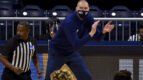
  1. Santa Clara head coach Kerry Keating is requesting that his fellow coaches go “hands-free” this summer (not texting and driving) in light of a recent accident where a young girl was killed on her bicycle by such a driver.  This is something we can get on board with, and we hope that other coaches (and readers) will take it to note.  If you must text, do it while the light is red.
  2. Is the Big 12 sticking at ten for the time being, or will they look at adding someone like, say, Houston?  Texas legislators are pushing for this addition, and with the unbelievable power that the state’s flagship university now holds over the conference, we’d never say never.  But honestly, we’re not really seeing this as a realistic possibility.  UT wants all that Big 12 money for themselves.
  3. As for the Mountain West, they’re sticking at nine for now after adding Boise State but losing Utah in the past two weeks.  Even with the loss of Utah, this league has really started to separate itself as the top mid-major league (if you can even call it that) in both football and basketball.
  4. Bill Russell and KC Jones aren’t walking through that door.  No, this isn’t a reference to the Boston Celtics but rather the San Francisco Dons, who found themselves with a two-year probation that will not include a postseason ban.  The issue was that several athletes spent their scholarship money on non-required textbooks and school supplies.  And… we’re not sure what the problem is.
  5. This article is an interesting look-back at the decision Billy Donovan made three years ago to stay at Florida instead of leaving for the Orlando Magic, but it hasn’t all been peaches and cream in Gainesville, while the Magic have become one of the better teams in the NBA (predictable three years ago given the Dwight Howard factor).  Many folks have Florida with all five starters returning as a top 10-15 squad next season, but this particular college-to-pro situation might have actually worked out.
Share this story

SEC Considering No Divisions in Hoops…

Posted by rtmsf on June 1st, 2010

Since the SEC expanded to twelve teams in 1991, it has utilized the two-division format, with Florida, Georgia, South Carolina, Kentucky, Tennessee and Vanderbilt in the East and Alabama, Auburn, Mississippi State, Ole Miss, Arkansas and LSU in the West.  Each team plays a home-and-home series with the other members of its division annually, and switches home games every other year with the six teams in the other division, making for a fairly clean sixteen-game conference schedule.  According to SEC Commissioner Mike Slive, though, the league is considering doing away with the two divisions altogether (as it has already done in women’s basketball), or at a minimum, keeping the divisions intact but seeding the postseason SEC Tournament according to overall W/L records. 

This SEC Cheerleader is a Fan of Slive's Idea

The driving force for this is the current perception that the SEC East is the varsity squad to the SEC West’s JV group.  Last season, with Kentucky, Tennessee and Vanderbilt leading the way, the SEC East went 27-9 (.750) against the other division, and those same three teams represented three-quarters of the semifinal round in the SEC Tournament.  In the past four seasons, thirteen of the eighteen SEC teams to make the NCAA Tournament came from the East, and all four SEC participants in the 2010 NCAA Tourney were from that division.  So long as coaches such as John Calipari (or whoever is at Kentucky), Bruce Pearl and Billy Donovan are in the same division, it’s difficult to argue that this is a cyclical thing where the SEC West will eventually rise to equal or better standing that its eastern counterparts.  The last true powerhouse program in the West was Nolan Richardson’s Arkansas teams of the early to mid-90s, with the other five programs since making short-term claims but none truly rising to seize the mantle.  For what it’s worth, it should also be noted that the twelve-team ACC and Big 12 conferences have successfully utilized the no-division basketball/two-division football formats for some time now and it seems to work well enough for them. 

Maybe we’re becoming overly cynical and paranoid in our old age, but we wonder if this talk belies something else going on with the conference realignment debate and is actually a pre-emptive maneuver by the SEC brass to prepare for expansion of some sort.  Consider that if the SEC raids the ACC and/or Big 12, as described in options here, what defines a school as eastern or western may suddenly shift a couple hundred miles on the map.  By removing the divisions in basketball and testing possibilities with respect to scheduling and so forth, the SEC would be in better organizational position to accept its new members if or when that ever comes to pass.  If you’re Florida State fan or Texas fan hoping that the call comes from the SEC someday, this seemingly small initiative could actually signal much greater changes down the line. 

Share this story

Morning Five: 05.25.10 Edition

Posted by rtmsf on May 25th, 2010

  1. Some transfer news from the weekend…  Two of the bigger names in college basketball from a celebrity perspective are leaving their respective schools.  Guard Jeff Jordan (MJ’s son, in case you hadn’t heard) is leaving Illinois for his senior season a mere year after he quit the team and returned the first time.  We’re not sure what exactly the deal is with the somewhat indecisive Jordan, but the word is that he’s looking for more PT than the fourteen minutes per game he received last year for the Illini.  The other big transfer name belongs to Percy Miller, aka Lil Romeo, the hip-hop star who presumably sold a lot more albums than he scored points (5) in his two-year USC Trojan career.  The subject of one of RTC’s first-ever posts (#3 actually), it’s not clear whether he will try to continue playing college basketball elsewhere or give it up completely.
  2. Moving to players that actually matter at this level, former Washington guard Elston Turner will re-surface at Texas A&M beginning in 2011-12 and LSU star guard Bo Spencer will be ineligible for the fall semester next season as a result of academic problems.  Turner will have two years of eligibility in College Station, while Spencer will have an opportunity to return to his team next winter if he can get his books in order.
  3. The final notable piece of news with players leaving is that Florida’s Nimrod Tishman is leaving the Gator program after only one year in Gainesville.  He is returning to Israel to play professionally, causing mass lamentations throughout the SEC fanbases from Fayetteville to Columbia.
  4. Is the one-year renewable scholarship a bigger problem than we, or anyone, knows?  If you buy USA Today’s report that over 20% of athletes on the 65 NCAA teams leave the program in a given year, it just might be.  We’d never really given it much thought other than when a new coach comes into town and runs everyone off (see: Calipari, John), but maybe we should start paying attention to this a little more.
  5. We always thought something didn’t smell quite right with the universally-liked and respected Tyler Smith being caught with a firearm in a rental car on New Year’s Day.  Smith finally came out and said that he purchased the gun based on death threats that he was receiving about his three-year old son.  He didn’t go into details as to whom was making the threats or why they would be making them, but he’s now back in Tennessee after playing professionally in Turkey for a few months and waiting to see if his name is called next month in the NBA Draft.
Share this story

What Should the NCAA Do With Its Four Little PiGs?

Posted by rtmsf on May 4th, 2010

This has been discussed repeatedly since the late April announcement that the NCAA Tournament would be moving to a 68-team design beginning in 2011, but we’ve yet to come across a piece that outlines all of the iterations that the new four-PiG format might take.  Hashing it out on the phone with The Kiff (a longstanding member of the Cult of 64) last weekend, we ultimately settled on two major bones of contention — who gets to play in the four play-in games, and how do you structure it so as to maximize interest, revenue and bracketing?  We’ll discuss each of these questions in turn, but first, it’s interesting to read a quote from one prominent member of the NCAA Selection Committee for insights as to what may or may not be on the table here.  Laing Kennedy, the Kent State athletic director who will finish up a five-year term as a member of the NCAA Selection Committee, has this to say about it:

Going from 65 to 68 means four first-round games. Our committee, when we meet in May, will look at some models on how to bracket that. For example, you can have two afternoon and two night games in Dayton, or two games at two different sites.  But the big question to be decided by the committee is which teams should play those play-in games, and how the winners will be seeded into the field.  Speaking individually, I would look at the last eight, and rewarding the AQs [automatic qualifiers].  Those would be highly competitive first games. But those are things we have to look at in May.

Additionally, Greg Shaheen, the NCAA Senior Executive VP who got lit up by the media in the week leading up to the Final Four, said during a radio interview with Doug Gottlieb recently that all options are on the table with respect to logistics but one of the primary considerations of the committee in structuring the new games will be to remove some of the stigma from them.  A noble endeavor, indeed.

How to Avoid the Dreaded Stigma?

With the hope that reasonable minds ultimately will prevail, here are our thoughts on the matter.

Who Plays In It?

This is the part most fans care about, and with good reason — they want to know whether as standard practice they can continue to ignore PiG Tuesday.  As it currently stands, roughly 99.9% of America* fails to so much as recognize that there is a Tuesday night game ostensibly involving NCAA Tournament opponents.  Only the truly anal among us wait until Wednesday to fill out our bracket on the ridiculous off chance that the winner of the PiG is the “right” matchup to give its corresponding #1 team trouble (and you know who you are).  So let’s cut right to it.  For the last ten seasons, there have been only four groups of people who care about this game.

* unscientific sampling of the three guys walking around the office hallway

  1. #16A’s fans, players and families.
  2. #16B’s fans, players and families.
  3. Overly nervous fans of the corresponding #1 seed waiting on an opponent for Friday’s #1/#16 game.
  4. The good citizens of Dayton, Ohio, who keep attending this thing year after year.

Just about six weeks ago, we saw this played out in real time as the “Opening Round” of the NCAA Tournament between Arkansas-Pine Bluff-Winthrop competed directly with the first round of the NIT and several interesting matchups that included UConn-Northeastern, UNC-William & Mary, Texas Tech-Seton Hall and NC State-South Florida.  From that night’s ESPN coverage to the trending Twitter topics and later to the Nielsen ratings, it was painfully clear that on this mid-March evening, the NIT games were the preferred matchups for college hoops fans.  As anyone working at 700 West Washington Street in Indianapolis is surely aware, that should NEVER happen.  Even on its worst night, for an NCAA Tournament game to be overshadowed by another basketball-related sporting event in March should be an impossible achievement, and yet on that particular evening it was not.
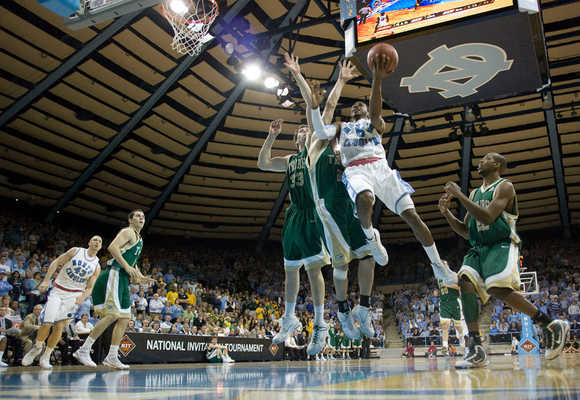
This NIT Contest, Not the NCAA Game, Was the Featured Event of the Night

And therein lies the problem.  Most people, even hardcore college hoops fans like us, don’t consider the Tuesday night PiG to be a legitimate part of the NCAA Tournament.  It involves the two worst-rated teams in the field, which means nobody knows anything about them; and it has zero impact on our brackets, which means there’s no corresponding reason to care to learn about them either.  So the question for the NCAA becomes: how do you legitimize it?  How do you remove that stigma that Shaheen mentioned as problematic?  How do you make people care about the (now) four play-in games on Tuesday so that random NIT games involving struggling national powers don’t take priority over NCAA games on the sports page?  Here are the two viable alternatives as we see them.

Status Quo (x4)

Keeping things as they are now where the #16s play the ‘other’ #16s (or possibly #17s in the new scheme) wouldn’t seem to do much to enhance the legitimacy of the PiGs, but there is precedent for this.  From 1978 to 1985, the NCAA Tournament doubled in size from 32 to 64 teams (can you imagine the outcry in today’s environment??).  There were several fits and starts along the way as it expanded a little more almost every year in-between, but suffice it to say that in 1983, the NCAA invited 52 teams to the ball with the final eight automatic qualifiers slotted as #12 seeds into four play-in games (or the “preliminary round” as they called it then).  In 1984, there were five play-in games with an additional #11 seed added to the mix.  In both of these years, all of the play-in games were played on the Tuesday prior to the first round games, and the teams were sent to PiG sites of Philadelphia’s Palestra or Dayton’s UD Arena depending on relative proximity to the school(s) involved.  The winners advanced to play #5 seeds in the true “first round,” with the one exception of the #11 seed (Northeastern) in 1984 who played a #6 seed in that round.

Read the rest of this entry »

Share this story

Early Entry: High School Edition

Posted by THager on April 24th, 2010

In a potential trendsetting move, Florida recruit Scottie Wilbekin could be heading to Gainesville a year early.  This is not the first time a recruit has left early for college, but his possible early entrance could spark a rise  in high school juniors heading for the greener pastures of the NCAA.  Wilbekin is leaving college early to fill a specific need for Florida coach Billy Donovan, who could use some depth in his backcourt next season.  In addition to missing out on key perimeter recruits Brandon Knight and Ray McCallum, Donovan may also be looking at losing forward Alex Tyus, who is testing the waters of the NBA and is doubtful to come back next season.

Will Wilbekin Play in Gainesville in 2010?

The move would require approval by the NCAA over SAT scores, but according to Wilbekin’s high school coach, he is ready for the challenge.  The 6’2 guard is not only smart enough, but this wouldn’t be the first time Wilbekin has played above his age group.  According to the Orlando Sentinel, Wilbekin was playing for his high school basketball team as a middle school student.  He also played for Nike’s under-16 Florida team against players two years his elder.  Fortunately for the junior, he is a perimeter player and won’t have to go up against more physically mature players in the post.

Insiders have compared the 17-year-old to Andre Dawkins, but the current Duke freshman’s case is different.  Dawkins was technically a HS junior when he bolted for Duke, but he had actually completed four years of high school before going to college.  Dawkins went to a public school for one year before transferring to Atlantic Shores Christian School, a private academy, for three more.  His first season was not ideal, but much of that was out of his control.  The first half of the season was promising, as he actually saw a decent amount of playing time and scored in double figures in six games.  However, after his sister tragically died in a car accident and the ACC season started, Dawkins’ minutes and  production decreased drastically.  Nevertheless, Dawkins proved that leaving early could work, especially considering that his best performances came in the first few weeks of his career.  If Florida starts out the season against some weaker non-conference opponents like Duke, it may be just enough to give Wilbekin some confidence heading into SEC play.

Early entrance like this is already a common practice in college football, but those recruits often enroll for just the spring semester to get some spring practice repetitions.  Louisville’s Amobi Okoye even had success as a 16-year old in college football, but the two sports are hardly comparable when there only five players on a court and the ball is shared more often among the players on the court.  It is a lot of pressure to put on a 17-year old, but Wilbekin is embracing the challenge.  Florida needs more good news like this to get back to the elite status that the Gators enjoyed five years ago.

Share this story

Mike Rosario Will Fit In Well At Florida

Posted by jstevrtc on April 19th, 2010

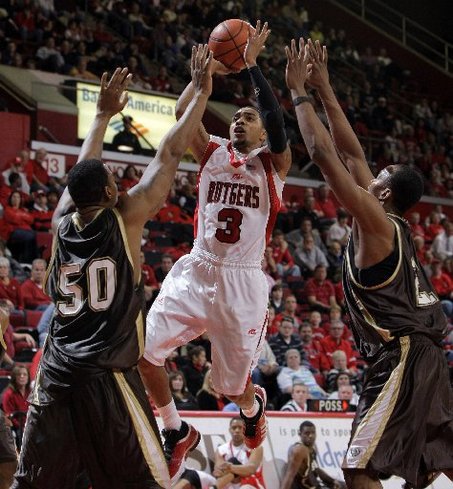
This was a done deal late last week, but rising junior Mike Rosario, recently of Rutgers, is transferring to Florida.  He’ll sit out the mandatory transfer year and start his third season of basketball in the fall of 2011.

Rosario can fill it up, and he'll fit in well at UF. (W. Perlman/Star-Ledger)

Rosario was a highly regarded high school star at the legendary St. Anthony High School in Jersey City, listed as the ninth-ranked shooting guard in the nation as a high school senior and a four-star recruit overall. That promise was definitely realized in his freshman year at Rutgers in 2008-09 as Rosario contributed 16.2 PPG and 3.5 RPG.  But he really came to our attention last summer during the FIBA Under-19 World Championships in Auckland, New Zealand.  Rosario averaged 24.0 PPG playing for the team from Puerto Rico, and while his team finished a respectable fifth place out of 16 teams, Rosario was one of the stars of the tournament.  A game-tough, gritty guard with a knack for scoring, he displayed that knack all over the French U19 team, lighting them up for 54 points and leading PR to a come-from-behind one point victory in that game.  His average of 24.0 PPG led the tournament (which was won by the USA, by the way).

Rosario will fit in well at Florida.  Billy Donovan doesn’t have a quick trigger when it comes to yanking players after they take a bad shot, and Rosario occasionally can put up a questionable one.  Consider, though, that Rosario was asked to carry a lot of the load in the impotent Rutgers offense last season, and his 16.7 PPG last year made him the Knights’ leading scorer, over four points higher than second place Gregory Echenique.  Given a year to gain his bearings in Gainesville, practice with the likes of Kenny Boynton and Erving Walker, and learn Donovan’s way of doing things, Rosario could give Donovan one of the top backcourts in the game in 2011-12.

Share this story

The Effect of a Potential NBA Lockout on NCAA Basketball

Posted by nvr1983 on April 18th, 2010

Since Gordon Hayward‘s half-court heave bounced off the rim in Indianapolis just two weeks ago there has been a spate of early entries. While it is not shocking to see a number of underclassmen enter the NBA Draft before they are probably ready to leave the college ranks, the sheer number of early entries is surprising. As Chad Ford recently pointed out, all 18 of the top-rated prospects on ESPN’s “Big Board” have declared for the first time [Ed. Note: Patrick Patterson has not officially declared, but signs are pointing towards an announcement this week] and all of them still have eligibility left to come back to college (Jan Vesely and Donatas Motiejunas are international players who could have gone to college, but the fact that they opted to enter the draft is not the least bit surprising). Is this just a random occurrence (I mean some year had to have the most underclassman ever declare) or is there something more behind it? It’s true that many of these guys could come back for an extra year or two (or three in some cases), but we have a sneaking suspicion that most of them will keep their names in the draft especially since nearly two-thirds of that group has already signed with an agent or is expected to in the near future.

Cole may or may not be living here next year (Credit: AldrichMansion.com)

The big question for college basketball fans is what caused this mass exodus from campuses across America. College life certainly has not gotten any tougher for these athletes (and that’s for a guy who averaged 2.7 PPG so you can imagine what kind of perks an All-American gets) and while next season’s NBA salary cap is higher than it was expected to be, it is still $1.6 million less than this season’s salary cap. The real reason behind the exodus may have less to do with the college game than a rumor that has been gaining steam over the past six months — there might be a NBA lockout after the 2010-11 season. We would normally dismiss this as purely speculative message board talk, but there have been numerous major media outlets that have published articles recently about the possibility of a lockout:

At this point all of this could just be idle speculation although with the numerous prominent media voices chiming in on it the possibility of a NBA lockout has to be considered. Even though many of these players will have NBA careers that will exceed a decade we can understand their apprehension at having to wait two more years (coming back to college for one year followed by a potential NBA lockout season) before getting an NBA contract. On top of that, there is a good chance that a lockout would result in a significant restructuring of contracts in a way that would not be favorable to the players. Billy Hunter can posture all he wants about the strength and unity of the players, but the owners have much bigger bankrolls than the players do to live off of during a lockout (see Antoine Walker‘s case for a little background on the financial sensibilities of some NBA players) and they also have streams of income coming in from sources outside of basketball. We would not be surprised to see the owners force the players to accept contracts that are more like what NFL players have to deal with — guaranteed up to a certain point with bonuses up front, but the owners having the opportunity to cut the cord at the first sign of a drop-off in a player’s ability.

Read the rest of this entry »
Share this story

In 1-and-Done Era, Experience Wins Championships

Posted by rtmsf on April 16th, 2010

(special h/t to Luke Winn for inspiring this analysis with his article here)

You may have heard  in recent days that Kentucky’s John Calipari has been filling up on the tasty nougat that has risen to the top of the Class of 2010 high school basketball recruiting lists.  Five-star prospect Brandon Knight followed an impressive chorus line of 1-and-done Calipari point guards (D. Rose, T. Evans, J. Wall) by committing to the Wildcats on Wednesday, and Doron Lamb,  another five-star combo guard ranked in the top 25, committed today.  Turkish stud Enes Kanter committed last week, and there are rumors that others, including versatile top 15 forwards Terrance Jones and CJ Leslie, could be next.  All this, and we haven’t even mentioned yet that Michael Gilchrist, the consensus top player in the Class of 2011, has already verballed to go to Kentucky after next season.

Knight is a Great Talent, But Will He Take UK to the Final Four?

The point here is as clear as Ben Roethlisberger’s analgesic salves — high school prospects with dreams of NBA riches a year from now view John Calipari as the pied piper of the NBA Draft.  Follow him down the primrose path, and you will end up playing in the League one year later.  John Wall, DeMarcus Cousins, Eric Bledsoe and Daniel Orton are the trailblazers here.  With all four projected as first rounders in June, the hype of Calipari’s flute-playing squares nicely with reality.  And Kentucky’s regal basketball program is the beneficiary.

Or is it?

We’re big believers that there are external benefits to programs who recruit and enroll 1-and-done players beyond wins, losses and NCAA Tournament success.  In fact, every year we do exactly such an evaluation that includes criteria beyond that scope.  For example, it is our view that the Texas program is still benefitting today from its one year of Kevin Durant on campus in 2007 even though UT only made the second round of the Tournament that season.  The same goes with Michael Beasley at Kansas State in 2008.  Call it the Jordan Effect.  Even if the players who are later inspired to follow Durant and Beasley to those campuses aren’t as good as those two were, there is a significant residual ‘coolness’ effect in recruiting those younger players who can help sustain the quality of the program over time.  To put it in terms of Kentucky, a 12-year old right now may spend the next few years idolizing John Wall in the NBA, and when it comes time for him to make his school choice in five years, the Wildcats and Calipari would have already have an inherent advantage over other schools.

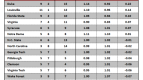
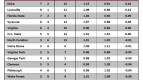
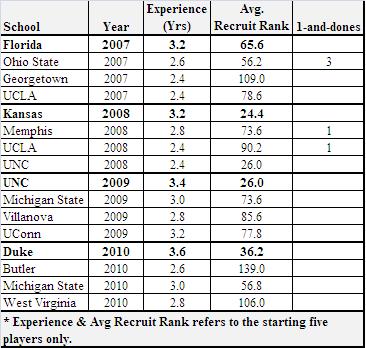
With that said, we know what Kentucky fans hope to get from all of these 1-and-done types, and it’s not just a bunch of springtime recruiting victories.  Eventually it needs to translate to wins, most specifically those in March and April as Winn alludes to in his article.  The question then that we analyze here is whether a focus on recruiting 1-and-doners will get a team to that goal.  The available evidence we have, using admittedly a very small sample size, says that it will not.

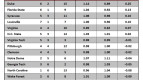
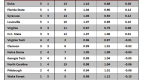
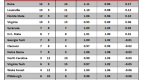
Take a look at the table below, which lists all sixteen Final Four teams from the 1-and-done era (2007-10).

Read the rest of this entry »
Share this story

Morning Five: Tax Day Edition

Posted by rtmsf on April 15th, 2010

  1. Yesterday was the first day of the national spring signing period, and there were a couple of mid-major surprises (Butler Effect or just pater familias?) in addition to everyone else in America signing with John Calipari.  Ok, we’re (partially) kidding on the last part, but Cat fans should get used to a revolving door in Lexington for as long as the 1-and-done rule is still in effect.  Here are the updated Scout.com class rankingsUNC and Memphis both have three 3-star players coming in next season.
  2. Andy Katz introduces us to the 2011 NCAA Tournament Committee chairman, Ohio State AD Gene Smith.  The most interesting part — like seemingly everyone else outside NCAA HQ, he’d prefer that the Tourney stay at 65 teams as well.
  3. A couple of interesting lists here.  First, five players who helped and five players who hurt their stock during the NCAA Tournament, as described by an NBA scout.  This one is five players who should be sticking around for another year, although none of them will be.
  4. Zagsblog is reporting that Rutgers transfer candidate Mike Rosario will visit Florida on Friday.  This would be a solid get for Billy Donovan’s club for the 2011-12 season.
  5. Joe Lunardi has his new 2010-11 Bracketology out, and you’ll note that it assumes a 96-team field.  Enjoy those #12-#21 matchups.

Share this story

Comings & Goings: UK’s ‘Fab Five’ Gone; Gaudio Out at Wake

Posted by rtmsf on April 8th, 2010

HUGE DAY.

John Calipari has a major rebuilding task ahead of him in the 2010-11 season, as his five best players are leaving the program for the bluer waters of the NBA Draft.  In a move that shocked absolutely no one, John Wall, DeMarcus Cousins, Patrick Patterson, Eric Bledsoe and Daniel Orton all declared today, leaving UK with just a handful of returning scholarship players heading into next season.  According to KSR, however, P-Pat has yet to file his papers although he would undoubtedly become a top fifteen pick when he does so.  If all five of these guys stay in this year’s draft, it’s likely that each of them would be selected in the top twenty, a first in the history of the event.  This begs the question, of course, whether we should be impressed by so many draft-worthy players on a single team; or by the curious fact that five top twenty picks couldn’t even make it to the Final Four despite an embarrassment of talent at its disposal.

Ohio State’s National POY Evan Turner also declared that he will enter the draft today, and as the presumed #2 overall pick he is making a good decision.  The multi-talented point forward has a chance to become an outstanding perimeter player at the next level, and we’re very happy that his year turned out the way it did after a horrific fall in December threatened to derail his season and (potentially) career.  Some other names that threw their hats into the ring today were: Kansas’ Xavier Henry, who is expected to fall into the #8-#20 range, Xavier’s Jordan Crawford (late 1st/early 2d round), Cincinnati’s Lance Stephenson (late 1st/early 2d round), Marshall’s Hassan Whiteside (late lottery pick), Oklahoma’s Willie Warren (early 2d round), Dayton’s Chris Wright (mid 2d round), Texas’ Avery Bradley (late 1st round), and Florida’s Alex Tyus (undrafted).  Stephenson is the most interesting case study in why we should never listen to players during the season with respect to this stuff, as he clearly stated earlier this season that his return to Cincinnati for a sophomore campaign was ‘definite.’   He’s already signed with an agent, so that sophomore season will have to occur elsewhere.  Can we just say this again for the record?  Please, please David Stern — negotiate a two-year rule for players after their HS class graduates or none at all.

Moving to coaching news, the surprise of the day was the abrupt dismissal of Wake Forest’s Dino Gaudio by the school on Wednesday.  Gaudio was 61-31 in three seasons at the school, but what sealed his fate were his 1-5 postseason record that included two epic collapses down the stretch of the last two years.  It’s unlikely Wake AD Ron Wellman would make this move without a serious candidate in mind, so we should expect to see this position filled in a matter of days.  In more pleasant news, Cornell’s Steve Donahue accepted the job at Boston College, which makes a lot of sense given his northeastern pedigree, and the Rutgers job may be opening up as soon as Thursday if Fred Hill is canned as a result of his bizarre insubordination in the form of attending a baseball game (JR Inman must be ecstatic!).

Share this story