ACC Summer Recess Recap

Posted by mpatton on August 15th, 2012

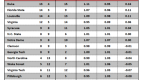
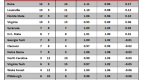
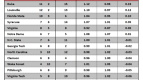
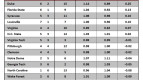
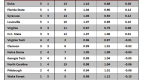
Over the last few weeks, we took a brief look at every team in the conference, focusing on four topics. Where do they stand now: do they have momentum, motivation or a lot of work left to do? Who’s leaving? Who’s returning? And who will be joining the team in the fall?
Boston College Boston College is still rebuilding. It’s a young team that needs more talent, especially further down the roster, but Steve Donahue is getting some solid pieces in place. Rebuilding a team from scratch takes time, so expectations should be low this year but this program appears to be moving in the right direction.
Clemson Tigers Significant roster turnover and a shift in rotation minutes seldom foretells radical improvements in college hoops. Clemson lost a big chunk of its offense and is going to have to rely heavily on sophomores and freshmen next season. Barring a flush of incoming talent, this is usually a recipe for a step backward.
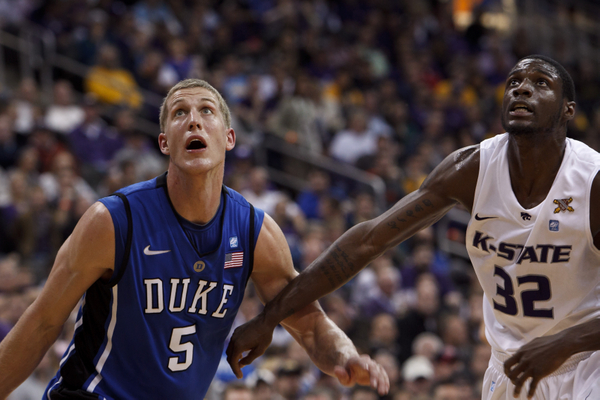
Duke Blue Devils Duke has a lot of questions after a disappointing finish last year. But the Blue Devils also have a lot of talent — especially on the offensive end — coming back. If Duke improves its perimeter defense, the Devils will be primed to make a lot of noise nationally.
Florida State Seminoles The stacked team that produced the best basketball season in Florida State’s ACC history is gone. However, with Snaer leading the team and Leonard Hamilton calling the shots, next season’s title defense is sure to be spirited if not ultimately successful.
Georgia Tech Yellow Jackets Georgia Tech had a rough past season, but given the circumstances, that was pretty much to be expected. Next season, however, the Yellow Jackets are prepared to make folks forget about the recent past. A new home, a settled-in coach and a serious influx of new talent to complement a veteran core means that the program has done everything it can to make things better.  Georgia Tech may not be poised to contend for the conference title immediately, but it seems seriously unlikely they will have the worst record in the conference either.
Maryland Terrapins It was a tumultuous offseason for Maryland, but the Terrapins have a solid young core to build around going forward.
Miami Hurricanes Miami should be the dark horse to win the ACC. They have talent, experience and coaching. Now it’s time to finally put everything together.
NC State Wolfpack NC State finished strong, but can they ride the momentum to their first conference regular season title since 1989? Consistency, staying out of foul trouble and the freshmen are three things to watch.
North Carolina Tar Heels North Carolina has a year of rebuilding ahead. The last time UNC faced trying to replace this much production was during the disastrous 2009-10 season  that ended in the NIT. While it seems unlikely that the Tar Heels will fall that far next season, it’s clear that it will take time before this team is ready to compete on the level of last year’s team.
Virginia Cavaliers After losing the core of players who led Virginia to a great season (albeit a crummy postseason), Virginia is going to be in the process of rebuilding next year. However, bringing in a strong recruiting class to bolster a talented group of returning players means that the Cavaliers will be a real factor in the league next year, if not a clear title contender.
Virginia Tech Hokies The Hokies will struggle with depth in 2012-13, but don’t overlook some of the talent at new coach James Johnson’s disposal. Senior Erick Green should be preseason first team All-ACC and Cadarian Raines looks poised for a breakout season for Virginia Tech.
Wake Forest Demon Deacons It’s true that Wake Forest lost a lot of its rotation. It’s also true that it might not matter. Despite the loss of so many players, WFU held on tightly to its two stars while bringing in what appears to be a talented supporting cast to back them up. The upcoming season might be one of setback or progress, but it doesn’t ultimately matter. Wake Forest is rebuilding and appears to be headed in the right direction (that is, until all these recruits also transfer away or get suspended).
Share this story

Morning Five: 08.14.12 Edition

Posted by rtmsf on August 14th, 2012

  1. After making numerous people mad over the weekend with its ‘top perceived cheater’ query of a sample of the nation’s college basketball coaches, CBSSports.com kept the hits coming on Monday with its follow-up question asking those same coaches whether everyone’s favorite Team USA head honcho, Mike Krzyzewski, has “earned a recruiting advantage” by virtue of his association with the star-studded Olympic squad. Note for the record that the group of writers did not ask if Coach K has a perceived recruiting advantage here — nope, they wanted to know if this is an actual, real-deal, verified by Visa advantage. Accordingly, 71 percent of the respondents affirmed that there is a definite recruiting advantage as a result of Coach K’s association with the Olympic team. On its face, in terms of name recognition and marketing/branding of the Coach K/Duke product with the best basketball players on the planet, the answer should have been 100% — this part is without question. But in terms of actual production on the recruiting trail, Coach K’s last top-rated class (as calculated by RSCI) was in 2002 (Shelden Williams, JJ Redick); prior to that it was in 1999 (Jason Williams, Mike Dunleavy, Carlos Boozer); and before that in 1997 (Shane Battier, Elton Brand, William Avery, Chris Burgess). Since 2006, the first full recruiting year after Krzyewski took over for Team USA, his recruiting classes have been good to great (#3, #3, #11, #8, #9, #2, #10), but none have matched the pinnacle that the Duke head coach was regularly signing a little over a decade ago. So, does Team USA give Krzyzewski an actual recruiting advantage? The intuitive answer is assuredly yes, but the counter-intuitive one — that it makes no difference, or egads, could be a bit of a detriment — certainly has evidence supporting it as well.
  2. The Big East may be on shaky legs as a BCS league these days, but its announcement of its engagement with Bevilacqua Helfant Ventures, a sports media business that most recently negotiated a $3 billion multi-platform deal for the Pac-12, shows that the league doesn’t see it that way. Starting on September 1, the conference will retain an exclusive 60-day negotiating window with ESPN, and after that, it can field offers from other networks. Clearly the league believes that its new and unprecedented bi-coastal setup will be valuable to somebody — they’re already touting the fact that the new conference footprint resides in 13 of the 50 largest television markets holding a population base of 32 million people (reportedly twice that of any other league). Of course, there’s no mention made of penetration into those markets (does anyone in Orlando really care about UCF?), or if anyone will care to watch a San Diego State – Rutgers game, but that’s why the expensive firm was brought in — to deflect those questions. One thing is certain: The bubble of collegiate sports properties is still blowing up, so don’t be surprised if a few months from now we’re all sitting around scratching our heads wondering how the Big East is worth more than the ACC.
  3. The UNC football academic scandal appears to have finally crossed over to the basketball program, at least tangentially. Former two-sport star Julius Peppers‘ academic transcript was (mistakenly?) published on the school’s website Sunday night, where some enterprising NC State fans found it and passed it around like wildfire on the Internet. The transcript is no longer on the site, but assuming it is a legitimate document, it appears that Peppers would not have been eligible to play football or basketball during much of the three academic years when he suited up at UNC. Many of the courses that made him eligible were in the now-infamous African-American Studies major which has been the focus of NCAA investigators. The question that is on everyone’s minds — and frankly it has not yet been satisfactorily answered — is whether the holy grail of Tar Heel basketball was substantially involved in these academic shenanigans (apparently dating back over a decade), and if UNC’s obstinance in thoroughly (and publicly) reviewing this problem represents willful obstruction to protect the program or something much less sinister. Whatever the case, if Peppers turns out to have been an academically ineligible player from 1999-2002, would that mean UNC’s 2000 Final Four (of which Peppers was a key contributor) would be vacated? We’re certain that NC State and Duke fans in the Triangle will stop at nothing to make that happen.
  4. With more schools taking international trips during the summer to build team cohesiveness combined with the ubiquity of worldwide media access and coverage, we should expect to hear increasingly more bizarre stories like the one involving Missouri in The Netherlands over the weekend. According to a school release, during the third quarter of a physical game against the Dutch National Team on Saturday, Frank Haith was ejected for arguing with a referee on what he perceived to be a no-call elbow to the head of freshman Stefan Jankovic. Fearful “for the safety of his players,” and perhaps overreacting a bit, Haith decided to pull his team off the court and call the game over at that point. The Dutch head coach was diplomatic in his response, stating that he “understood” why Haith stopped the game because his technical foul “so suddenly came out of the blue” during game action. As a new league entrant to the SEC next season, we hope that Haith realizes that he’s unlikely to get a single favorable call from January to March 2013 — so he’d probably do well to get used to it.
  5. Jumping to news that will please Missouri fans a little more, Bill Self’s Kansas team just finished its European exhibition tour and to say it went poorly might be putting it a bit too mildly. The Jayhawks finished the trip by losing its last two games to a French professional team, but the second game was interesting in that Self chose to “rest” his upperclassmen for the game’s entirety. This gave his remaining extremely young group of players, led by Perry Ellis’ 16/12, to take center stage, but we also wonder if Self wasn’t using the opportunity to send his veterans — Jeff Withey, Elijah Johnson, and Travis Releford — a clear message that he expects more from them in this, their senior, seasons. As he states in the linked interview, he was willing to live with the second short-handed loss, but he felt that the first loss was “inexcusable” and that his team is “not any good right now.” If we know anything about Self, he’s probably right; but he’s also without a doubt going to have the Jayhawks whipped into shape by January so that they’ll be right at the top of the Big 12 standings once again.
Share this story

Oregon Week: Running Down The Returnees

Posted by Connor Pelton on August 9th, 2012

Oregon returns four players who were part of the extended rotation last year, highlighted by E.J. Singler – a second-team All-Pac-12 player – but also extending down to a center back for his senior season who made tremendous strides towards the end of 2011-12, another senior big man who became a major part of the offense in the second half of conference play, and a junior-to-be point guard who is ready to become the team’s main distributor. We’ll go through all of those guys below, in order of last year’s scoring totals.

E.J. Singler, Shown Here Battling His Brother Kyle Singler For A Rebound, Will Be The Key To Any Duck Success In 2012-13 (credit: Jonathan Ferrey)

E.J. Singler, Senior, Forward (13.6 PPG, 5.6 RPG, 0.4 BPG) – With his brother already starring at Duke, Singler entered his freshman year in Eugene with high expectations. But despite being a major part of the rotation, his freshman campaign could have been classified as a disappointment. However, he bounced back to average 11.7 PPG and 5.6 RPG in his sophomore year, and he was arguably the team’s top defender as well. In 2011-12, Singler combined with guard Devoe Joseph to make a perfect scoring combination. The two kept opponents guessing on the defensive end, and combined with Garrett Sim, were unstoppable throughout stretches of a game. Now that Joseph and Sim have graduated, it will be interesting to see how the offense runs early on with only one known scorer. Johnathan Loyd can shoot the ball, but he is more of a true one guard. The job of replacing the points left by Joseph and Sim will likely fall to incoming freshman Fred Richardson III, and if he can step out and hit the three consistently, the pressure on Singler’s shoulders will be lifted.

Read the rest of this entry »

Share this story

Ranking the 2012 ESPN “College Gameday” Match-ups

Posted by Chris Johnson on August 9th, 2012

Christopher Johnson is an RTC columnist. He can be reached @ChrisDJohnsonn.

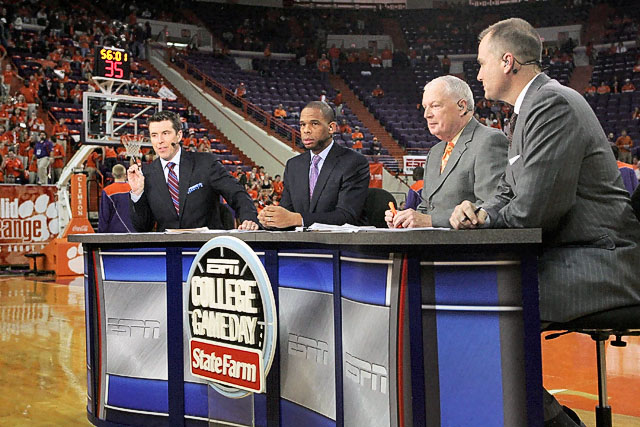
For college hoops fans, winter Saturdays are an overwhelming blur. With so many games spaced out throughout various networks, sitting down and selecting an optimal day-long viewing experience can be somewhat bewildering. When in doubt, the consensus gravitates towards ESPN, where the “College Gameday” crew doles out a constant flow of college hoops action, providing insightful commentary along the way. Starting at 10 AM ET with a studio show staged at that week’s featured game site, a raucous crowd howling in the backdrop, the panel lays out the day’s action, capped with a late-show pick ‘em segment which invariably has the effect of inciting the avid supporters on hand. Then it’s a day’s long succession of enticing fixtures, spanning different leagues, time zones and intrigue levels. The crew — Rece Davis, Digger Phelps, Jay Bilas and for the first time this year Jalen Rose, plus whoever else graces the courtside stage in any given week —  puts a bow on the day’s action with an hour-long recap show, which leads into that week’s marquee matchup. There are few things better than a “Gameday” Saturday: a highly entertaining and energetic crew of college hoops enthusiasts sandwiching a whirlwind of hoop with enlightening breakdowns and analysis about the day’s happenings.

Loved or Hated, Everyone Watches Gameday

In this early-August college hoops lull where the happenings on the gridiron seem to take precedent at most every power conference university, we long dearly for those delightful, couch-side Saturdays. Fortunately, ESPN provided a sneak peak of just how magnificent those Saturdays might be. The network released its “Gameday” schedule Wednesday, and the lineup – at least as far as I can tell from a rather distant August viewpoint – is the best I’ve seen in quite a long time. Maybe ever. The bad news is that January 19, the first Saturday of viewing, seems a pretty long ways away. Not to worry. Before you know it, Midnight Madness will arrive, November and December will slide by and the eight-week selection of action-packed Saturdays will commence. To pique your interest, I’ve put together a ranked list of the eight featured games. There’s no hard and fast criteria here; take this as a simple preferential ordering of which match-ups I feel carry the most appeal. Longstanding rivalries, interesting venues and conference/national title implications will all factor into this 100%-for-fun exercise. On paper, it’s hard to find fault with the selected games. But between now and January, a bad start or two could dampen the hype factor around some of these games. All we can hope is that the scheduled contests maintain their outwardly riveting stature throughout the winter months.

Note: All game times ET.

1. March 9: Syracuse at Georgetown (12 PM), Duke at North Carolina (9 PM)

Read the rest of this entry »

Share this story

ACC Summer Recess: Duke Blue Devils

Posted by mpatton on August 8th, 2012

Over the next four weeks we’ll be taking a step back and looking at each team in the ACC to assess where each program — and the conference as a whole — stands before we totally turn our attention to the 2013-14 season later this fall. Today’s target: Duke.

Where They Stand Now

Duke fans are still reeling from an embarrassing upset bid from CJ McCollum and the Mountain Hawks of Lehigh, but the sour ending to the team’s season overshadowed a very strong year. The Blue Devils showcased the most flaws  it has had since the 2006-07 Duke team that went 22-11, but they managed to keep winning games. They beat a loaded North Carolina team on the road; they finished second in the conference; and, they won a loaded Maui Invitational. Ryan Kelly‘s late season injury stagnated one of the country’s best offenses, leaving Duke with a decent offense and mediocre defense for its last three games. Long story short, the Blue Devils managed to overachieve and disappoint last season.

Mason Plumlee is the Anchor to Duke’s Young, Potentially Great Front Line.

Who’s Leaving

Austin Rivers went to the NBA, Miles Plumlee graduated, Michael Gbinije transferred to Syracuse, and Andre Dawkins will redshirt. Despite frequent deserved criticism during his playing career, the eldest Plumlee’s strength and athleticism in workouts earned him a guaranteed contract with the Pacers. Gbinije saw very little playing time his freshman season, and with the additions of Rasheed Sulaimon and redshirt freshman Alex Murphy, he may not have seen much more next year. Gbinije’s lack of playing time puzzled many Duke fans because his length and athleticism were exactly what Duke’s perimeter defense needed. Fans concerns are probably overreactions: Mike Krzyzewski doesn’t have a history of sticking with experienced guys over more talented freshmen.

Rivers’ departure is harder to evaluate. On paper, it’s terrible. Rivers was the only playmaker on last year’s team. Without consistent play at point guard, Coach K relied on the freshman to create his own shot a lot of the time. However, Rivers’ season had its detractors. While the heat he took for being selfish was over the top, comments Seth Curry made earlier this summer to Shawn Krest certainly point to a lack of chemistry on last year’s team.

Read the rest of this entry »

Share this story

Morning Five: 08.02.12 Edition

Posted by rtmsf on August 2nd, 2012

  1. USA Today‘s Eric Prisbell published a piece on Tuesday with some rather inflammatory quotes about the status of big-time college basketball recruiting. Everybody already knows that agents and runners representing the interests of high school stars with their hands out is a big problem — but is it a 70%-of-the-elite-prospects problem? If you believe Michigan State head coach Tom Izzo‘s math, it is. “I am not saying that cheating is 80 percent of the game. It’s probably 20 percent. But it’s probably 70 percent of the top 20 percent [of player recruitments].” Izzo went on to say that he has “absolutely” lost recruits to other coaches because he was unwilling to play the agent/runner AAU game (which even Sonny Freakin’ Vaccaro says has gotten worse). In the same piece, North Carolina’s Roy Williams also made some interesting comments about stepping away from recruits who were ‘handled’ by AAU influences, saying, “Will I have a legitimate chance if I do it the right way?” There’s a lot of eyebrow-raising information in the article, and we highly suggest you read it — but the obvious question if Izzo’s numbers are anywhere near correct is… who exactly is landing all of these elite recruits if every major coach is on record blasting the system and doing it the right way? It’s not just Central Florida, that’s for sure.
  2. Team USA‘s men’s basketball squad is now 2-0 in round robin play with a game against always-dangerous Tunisia later this afternoon. Although there are no guarantees in a knockout tournament situation, we’re all too aware, it appears that the team led by LeBron James, Kobe Bryant and Kevin Durant are well on their way to another gold medal. Jeff Goodman writes that NBA owners are pushing so hard for a 23-year old age limit on the men’s team in future Olympiads that there is “little doubt” as to its eventuality [memo to owners: how about another age limit — one that limits inclusion in your league to players 20 years old and older]. If USA Basketball decides to go this route with the 2016 team, most of today’s elite high school and young college stars would be eligible — Goodman takes a stab at putting together a potential team, and would you believe that a player nobody outside of Columbus, Ohio, and Ann Arbor, Michigan, had heard of this time last year is designated as the starting point guard? Basketball can be a funny sport that way.
  3. While on the subject of Olympic teams, A Sea of Blue put together an interesting analysis reviewing what the six men’s basketball teams in the “Dream Team” era might have looked like if USA Basketball had never ditched the amateur model. The cream of the crop is very clearly the 1992 squad, a team filled with players on in an era on the cusp of moving to a prep-to-pro mentality (Kevin Garnett began the trend in 1995). A starting lineup of Shaquille O’Neal, Alonzo Mourning and Chris Webber may have even crowded out 1992 NPOY and two-time NCAA champion Christian Laettner. In the backcourt, do you run with Penny Hardaway and Jim Jackson over the dominant Duke duo of Bobby Hurley and Grant Hill? It’s really an unbelievable team. Conversely, the 2000 team — led by Kenyon Martin? Shane Battier? — is a joke. That team, decimated by the prep-to-pro era, may have finished dead last in the Olympics that year. It’s an interesting thought experiment, and we encourage you to visit ASoB and check it out.
  4. Going back to 1992 — was it the greatest year of basketball in American history? — former Duke star Bobby Hurley raised some major burn late Tuesday night after tweeting the following in reference to the gold medal-winning USA women’s gymnastics team (dubbed a modern-day “Fab Five”): “Proud 2 watch the “Fab Five” perform & bring home the gold! Who would have thought that the “Fab Five” could it get it done.” Of course, the Michigan group of Chris Webber, Jalen Rose, Juwan Howard, Jimmy King, and Ray Jackson not only lost the 1992 national championship game to Hurley’s Blue Devils, but they also lost two other regular season games to Duke during that era, giving the point guard the easy upper hand when it comes to taking those shots.
  5. With the exception of a notable tweeter, the Penn State story has died down in the national media as a result of the Olympics. And even though the long moribund basketball program was not implicated in the scandal or penalized by the NCAA in any way, it’s incomprehensible that Pat Chambers’ program will not be negatively impacted among the collateral damage to the Nittany Lion brand. In response to this piece by Jeff Borzello at CBSSports.com, it may very well be true that a recent de-committed recruit was already on the fence about heading to State College and another Class of 2013 recruit says he has no intention of backing out, but the issue will become more apparent in future classes where the semi-permanent negative message about Penn State has had sufficient time to stick. An argument that PSU will continue to recruit non-elite talent in the same way as before is not really an argument at all — the point is that every aspect of that university, from the chemistry lab to the jai alai club team to the local Penn State chapter of PETA, will be associated with this horrific situation for years to come. Whatever each group had to do to earn recognition prior to this fiasco, they’ll have to do so that much more in the future. This goes for basketball too.
Share this story

Morning Five: 07.19.12 Edition

Posted by rtmsf on July 19th, 2012

  1. Breaking news from the absolutely-no-surprise department, but a couple of days after the Big East announced that it had reached a $7.5 million buyout deal with Syracuse to allow the Orange program to alight for the ACC in July 2013, Pittsburgh followed suit. Even better, the Panthers got the exact same buyout deal of $7.5 million to transfer its conference allegiance to Greensboro instead of Providence. The ACC and the Big East will certainly look very different as basketball leagues starting in 2013-14, but with a total of five schools consisting of two of its best football (Miami and Virginia Tech) and basketball programs (Syracuse and Pittsburgh) now having left, is it safe to say that the battle for east coast college sports dominance has finally been won?
  2. With the geographic and metaphysical heart of the Big East slowly moving south and west with its own expansion efforts, one of its new basketball-centric schools is in the midst of a local scheduling controversy. According to CBSSports.com’s Gary Parrish, Ole Miss recently announced a combined football and basketball agreement to play regional rival Memphis, but Tigers head coach Josh Pastner apparently has not received that memo. According to the Memphis side of things, the agreement in place refers to a football series only, with the squishy caveat that the two schools will “talk” about resuming a basketball series. In terms of value-add, a home Memphis football game versus Ole Miss is worth considerably more (both financially as well as in perceived status) than a home Ole Miss basketball game versus Memphis, which is why despite Pastner’s protestations, we’d expect to see what should be an interesting series take place on the hardwood sometime soon.
  3. Back to the actual players rather than the legal and political wrangling of their schools, Duke’s Mason Plumlee certainly didn’t expect to be spending the summer after his junior year prepping for another season in Durham. Certainly not last offseason, when he told everyone around him that his 2011-12 year would be his last in Durham. And certainly not three years ago when he figured he was a surefire one-and-done candidate along with his peers John Wall, Derrick Favors, Xavier Henry, and the rest. As Jeff Goodman writes, the middle Plumlee who never thought he’d become a four-year Blue Devil is prepared for his senior season as the captain and leader of the team — we’re guessing in 30 years when he reflects back on this time at Duke he’ll have no regrets for sticking around campus four years.
  4. For those of us who follow the game closely, Northwestern‘s decades of futility in reaching the NCAA Tournament has become the standard by which all other failures is measured. If you need a reminder, the Wildcats are currently oh-for-74 in reaching the Big Dance, which is particularly astonishing when you consider that the Wildcats play in an elite basketball conference where more than half the teams in the league have a reasonable shot at the NCAAs in any given year. Dime Magazine has put together a nice piece discussing not only the ‘streak,’ but the chances for the 2012-13 team to finally break it in its 75th opportunity. It says here that next season is the year… and if you believe that, it’s also looking like a World Series on the North Shore in 2012.
  5. Luke Winn checks in this week with an analysis of something on which everyone in the industry seems to have an opinion — transfers. Winn is known for his columns heavily based on quantitative analysis, but in this article he shows his chops for a bit of qualitative work. He clearly shows that the phenomenon of what he calls “up-transfers” — players looking for opportunities at better schools — has risen significantly in the past few years. As an example, from 2007-11 there were 27 up-transfers in college basketball; in just 2012-13, there will be 25 more, and there are already 16 more pending in 2013-14. As Winn notes, the prospect of players bettering their situations isn’t necessarily a bad trend, but it also provides an increased likelihood of bigger programs tampering with and ultimately poaching disaffected players at lower-level schools. Something to keep an eye on.
Share this story

Morning Five: 07.18.12 Edition

Posted by rtmsf on July 18th, 2012

  1. This offseason has been unique in the sense that a newly promulgated NCAA rule has allowed coaches and their players to have considerably more in-person interaction than in previous years. While students (including new freshman) are on campus attending summer school, coaches can provide two hours per week of instruction and training. It may not sound like much on its face, but 24 hours of focused practice when compared with zero is a substantial difference. CBSSports.com’s Matt Norlander writes that without question, coaches around the country are 100% behind this new rule and are employing it to the best of their abilities. That is, except in the Ivy League. The wrinkle in the Ancient Eight is that Harvard and Princeton — academic titans though they are — do not offer summer school coursework. Without a level playing field among all eight schools, none of them can (or will) take advantage of the rule. And aside from that, summer courses cost money, a bit of a pinch for non-scholarship athletes. It’s an interesting insight into just how different the priorities are from the rest of Division I basketball, even at a successful time when the league is placing competitive teams (Cornell, Princeton and Harvard) into the NCAA Tournament.
  2. While on the subject of summer basketball, one of the great things about unofficial team pick-up games is that it makes for tremendous message board fodder: “Ivan Renko dropped 45 on Anthony Davis in a half! He’s going to be a first-team All-American!” You know how it goes. Players who are career bench-warmers or otherwise unfulfilled talents seemingly become hoops messiahs under the dim lights in the sweaty gyms of July and August. That isn’t to say that there aren’t clues to be found, though, especially in cases where players have never actually been seen in uniform before. One such storyline coming out of Kansas in the past week is that redshirt freshman Ben McLemore is drawing reasonable comparisons to former Jayhawk star Brandon Rush for his jaw-dropping athletic ability and shot-making prowess. Down on Tobacco Road, UNC’s Leslie McDonald and PJ Hairston may not be getting such a lofty comparison from a former player, but they are receiving lessons in how to play the game from former Tar Heel superstar Rasheed Wallace. So there’s that.
  3. While on the subject of the Heels, one of the slowly smoldering stories in the back rooms and dark alleys of the Internet this summer has related to the ongoing academic scandal involving a large number of football players at the school. Armed with the knowledge that some of UNC’s basketball players took the same tainted courses as the football team, Pat Forde in a piece Tuesday mentioned that UNC has not been as forthcoming as some would like with the release of exculpatory information. He doesn’t go as far as to make any accusations of wrongdoing other than to quote a history professor at UNC who remains skeptical, but it does bring up a question of transparency and whether UNC might be willing to throw football under the bus to save the basketball program.
  4. We’ve mentioned Jabari Parker quite a bit in the last week, as the Class of 2013 prospect made news for narrowing his list of schools down to a more manageable 10 suitors and his family’s decision to let him rest for the remainder of the summer camp period. At least one school that you may have heard of on the recruiting trail — it starts with a K and ends with a Y — may, according to an unnamed head coach “who has been involved” with Parker’s recruitment, be the clubhouse leader. Duke has been mentioned as Parker’s leader numerous times by people supposedly in the know, and BYU has always been in the mix because of the LDS connection. All any prognosticator worth his salt can do at this point is await announcements as to where Parker will take his official visits and work backwards from there.
  5. A number of college basketball head coaches are in North Augusta, South Carolina, this week for the Nike Peach Jam, an elite prep basketball event featuring many of the nation’s top uncommitted players. Local news station WJBF-TV interviewed a few of the attendees about the Penn State/Sandusky scandal, and at least Clemson’s Brad Brownell, Minnesota’s Tubby Smith, and Georgia Tech’s Brian Gregory appear to be “using Penn State’s mistakes as a lesson.” For the sake of the next generation of America’s overlooked children, let’s hope so.

Share this story

Unibrow & Other CBB Entrants Are Snubbed But Watford Wins at the ESPYs

Posted by EJacoby on July 12th, 2012

Last night were the ESPYs, and somehow, neither of the #15 over #2 shockers during last year’s NCAA Tournament won ESPN’s award for “Best Upset” of the year, and Anthony Davis‘ epic season wasn’t even enough to win over voters in the “Best NCAA Male” category. Not even legendary Duke coach Mike Krzyzewski was rewarded for breaking Bob Knight’s all-time wins record. In general, college hoops was vastly overlooked during Wednesday’s 2012 ESPY Awards, but one shining moment came in the form of Indiana forward Christian Watford‘s wild shot to beat Kentucky back in December. “Watford For The Win!” was crowned with the “Best Play” award from the past year in sports; a very deserving honor for one of the defining moments of the 2011-12 college hoops season. ESPN announcer Dan Shulman’s call on Watford’s game-winner over the top-ranked Wildcats sticks as one of the great broadcasting moments in recent memory, as does Dick Vitale’s incomparable reaction and IU head coach Tom Crean’s shocked celebration. It’s hard to find a singular more significant or lasting moment than that one, as Watford beat out a field of 31 other nominees through a lengthy tournament vote. Unfortunately, John Calipari, Anthony Davis, Kentucky, Coach K, the final Border War, Lehigh, and Norfolk State were unable to seize any hardware against their considerably thinner fields of competition.

Watford’s buzzer-beating three-point shot marked the official return of Hoosiers basketball. One of our sport’s bluebloods, Indiana had struggled at the bottom of the Big Ten for several years, and the victory over UK symbolized a resurgence. Indiana quickly jumped into the top 15 of the polls and stayed there much of the season, eventually making a run to the Sweet Sixteen before falling to those same Wildcats in a rematch not played in the friendly confines of Bloomington. But Watford’s shot isn’t forgotten for Hoosiers or Wildcats fans, both of whom were heavily invested in that December game as part of a longstanding border rivalry (which was sadly not renewed for 2012-13), nor the entire world of college hoops, which sent off an explosion of posts and tweets on social media across the country.

Read the rest of this entry »

Share this story

ACC Summer Recess: Georgia Tech Yellow Jackets

Posted by KCarpenter on July 12th, 2012

Over the next four weeks we’ll be taking a step back and looking at each team in the ACC to assess where each program — and the conference as a whole — stands before we totally turn our attention to the 2013-14 season later this fall. Today’s target: Georgia Tech.

Where They Stand Now

Georgia Tech Head Coach Brian Gregory Has His Work Cut Out In Atlanta

Last season was a season of transition for Georgia Tech. After the firing of longtime coach Paul Hewitt, Brian Gregory took over a program that had spent the last few years slowly slumping to the bottom of the ACC. As the Yellow Jackets prepared a new home court, his team was left without a true home, forced to make use of Phillips Arena along with a few other venues. A new coach, no home court,  and a legitimate talent deficit made it no surprise that Georgia Tech faltered. In a season when their best moments come in December and January, Georgia Tech didn’t have a lot to celebrate as conference play went on. Still, the future seems promising for Georgia Tech: McCammish Pavillion is finally set to open and Gregory will better know what to expect from his team in the second year.

Who’s Leaving?

The nice part about having a young team is that you don’t have to worry about losing a lot of players to graduation. The Yellow Jackets will lose Pierre Jordan and Nick Foreman, a pair of back-up guards who each averaged about 10 minutes a game in the past season, but that’s the only toll from graduation. Sophomore big man Nate Hicks has transferred to Florida Gulf Coast University. Hicks didn’t get a lot of playing time in Atlanta, averaging a paltry 7.7 minutes per game. The biggest departure is the dismissal of Glen Rice, Jr., from the team. The troubled swingman was benched at the end of his freshman season by Paul Hewitt and served a pair of suspensions last season under Gregory. He was finally dismissed from the team after a run-in with the law that featured Rice driving under the influence while one of his passengers discharged a gun.  Rice was the leading scorer and rebounder for Georgia Tech, but his off-the-court troubles certainly seem serious enough to make his departure seem like the best option for Rice and the team.

Read the rest of this entry »

Share this story