Did the Mountain West Just Cannibalize the WAC?

Posted by rtmsf on August 19th, 2010

Andrew Murawa is the RTC correspondent for the Mountain West and Pac-10 Conferences and an occasional contributor.

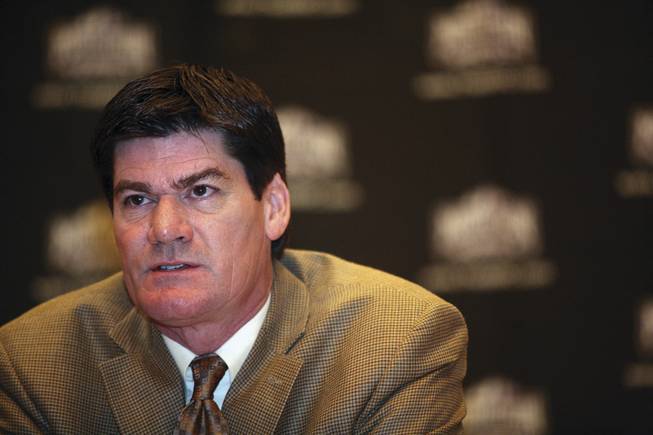
Just a few hours ago, the Mountain West Conference was being left for dead. BYU was on its way to football independence and a WAC address for the rest of its sports, Boise State was potentially considering changing its mind about a move to the MWC, and we were contemplating a landscape in college athletics without the MWC, inarguably the most successful football non-BCS conference and also one of the most successful non-BCS basketball conferences. But MWC commissioner Craig Thompson was able to get quick agreements from Fresno State and Nevada to leave the WAC and join the MWC possibly beginning in 2011, although it could be pushed back to 2012 for financial considerations.

Thompson May Have Just Saved His League

The status of BYU is still somewhat in doubt as no official announcement regarding their future has been made. As of now, according to Thompson, “BYU is a member of the Mountain West Conference.” Given that the WAC is now comprised of just six teams, it is possible that BYU may reconsider and remain in the MWC as if nothing happened. Certainly the MWC would take them back without a second thought. Or, if BYU is still set on independence for its football program, it may look into the WCC as a potential home for it non-football teams.

Earlier in the day, it had been reported that all the schools in the WAC had last week signed a five-year agreement to remain in the WAC with a $5 million buyout penalty for leaving, and, as it turns out, it was BYU who instigated the buyout, hoping it was assuring a safe landing place for the Cougar non-football sports when they left the MWC. However, it turns out that Nevada never signed the agreement, although they did verbally agree to it, so they will have to pay some sort of exit fee, with the $5 million being the ceiling. However, if the WAC ceases to exist (a distinct possibility), it is possible that both Fresno State, who apparently signed the agreement, and Nevada will not have to pay the buyout penalty at all. If they wind up having to pay fees to the WAC for leaving, the MWC will aid those schools in paying their buyout penalties. According to Thompson, “We’re not going to bankrupt them to come into the Mountain West Conference.”

Read the rest of this entry »

BYU Sets Off New Wave of Realignment Positioning

Posted by rtmsf on August 18th, 2010

Andrew Murawa is the RTC correspondent for the Mountain West and Pac-10 Conferences and an occasional contributor. 

The Who, What, When, Where and Why

Just when you thought we were done with conference realignment talk, at least for the summer, out of nowhere comes a stunner that rocks the Mountain West Conference and could set in motion a new chain of events that could leave us without what had turned into arguably the best non-BCS conference in the nation.  No official announcement has been made, but as of mid-day on Wednesday, it seemed that BYU would leave the MWC beginning in 2011, play football as an independent and join up with the WAC for all other sports. The Salt Lake Tribune has reported the move as a “done deal,” pending approval by the Church of Jesus Christ of Latter-day Saints, the owner of the school.  However, the Mountain West, fighting for its life, immediately responded by officially inviting Fresno State and Nevada to join the conference, invitations which, if accepted, would pretty much cripple the WAC before BYU even arrived, and perhaps forcing BYU to reconsider the wisdom of such a move.

Maybe BYU Can After All?

BYU has been displeased with the television revenues associated with the Mountain West Conference and their dedicated cable television network, The Mountain, estimated to be somewhere around $2 million last season for football only. Comparatively, Utah, which just received and accepted in June an invitation to join the Pac-10, is expected to take home somewhere north of $15 million a season in football television revenues when it begins play in that league  in 2011. BYU was apparently shocked that it was passed over when the Pac-10 expanded, and shocked again when the Big 12 passed on inviting the school as well, so it began exploring the possibility of taking the matter into its own hands.

BYU already has its own television network, and athletic director Tom Holmoe notes that it has its own state-of-the-art broadcast facility and equipment, including their own HD production truck.  “There is nothing better than that west of the Mississippi. Nothing. For broadcasting,” said Holmoe at a meeting with reports on the BYU campus on July 16, according to Jay Drew of the Salt Lake Tribune. “And it is first class. The things that we can do with that, the opportunities and possibilities. Nobody in the country has that ability.” Aside from the prospect of broadcasting their own games, BYU is reportedly in negotiations with ESPN for its football rights.

Is the Mountain West Kaput?

The invitations issued by the MWC to Fresno State and Nevada make a lot of sense in not only strengthening the MWC but also perhaps killing the BYU defection before it starts.  The specifics of these invitations still need to be sorted out, as the MWC has a couple of things going against it:  (1) the remaining WAC schools reportedly signed an agreement just last week that imposes a $5 million buyout penalty on any school leaving the conference in the next five years; and, (2) the WAC has a television contract with ESPN that may be more attractive (if presently slightly less financially rewarding) than The Mountain. It is unknown at this time whether the MWC in the interest of self-preservation has attempted to sweeten the pot for Fresno State and Nevada by potentially ponying up some cash to pay their buyout fees or if other machinations are in the works. It had been reported earlier in the day that Fresno State and Nevada had already declined offers to join the MWC.

Read the rest of this entry »

Welcome, Dr. Emmert: Please Don’t Mess Up…

Posted by rtmsf on August 18th, 2010

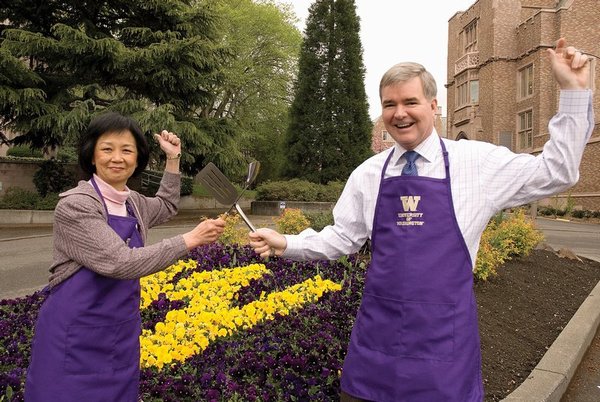
Yesterday on Seattle radio station KJR, NCAA president-elect Mark Emmert gave an interview with host Mitch Levy where he discussed his thoughts on some of the hot-button topics impacting collegiate sports.  Dr. Emmert, who will assume his post on November 1 of this year, is currently the president of the University of Washington and the former Fulbright winner is widely recognized as one of the savviest up-and-comers in the world of academic administration.  His rise up the ranks from an assistant professor (Northern Illinois) to Vice-Chancellor (Colorado) to Provost (Montana State) to Chancellor (UConn and LSU) to President at UW is impressive on its face, and his skill at political maneuvering and fund-raising should be obvious.  The concern we have, however, in all situations where administrators move from an academic to an athletic environment is whether such a transition will be seamless — in other words, will that person “get it?”  The danger in the application of ivory tower customs and norms to the world of athletics is that you can find yourself in troublesome spots if you haven’t gauged the environment correctly, such as when Emmert badly overreached in asking for public funding for a new Husky Stadium in the midst of a massive nationwide recession.  While that example represents a single misstep in a career full of home runs, it gives us pause when taken in concert with the following quote he made on the KJR radio broadcast.  In discussing the much-maligned one-and-done rule in college basketball, Emmert said:

I much prefer the baseball model, for example, that allows a young person if they want to go play professional baseball, they can do it right out of high school, but once they start college they’ve got to play for three years or until they’re 21.  I like that a good deal.  But what you have to also recognize is that rule isn’t an NCAA rule.  That’s a rule of the NBA. And it’s not the NBA itself, but the NBA Players Association. So to change that rule will require me and others working with the NBA, working with the players association.  We’ll be having those conversations, because I think it would be good for young people and good for basketball.

Emmert Seems a Smart Fellow, But the MLB Model is a Mistake

Before we get to our argument against this idea, let’s briefly touch on the reality of this proposition.  You hear this frequently stated among coaches, fans and pundits, but what all of these folks fail to recognize is that the NBA wants nothing to do with this on either the management or the players’ side.  Commissioner David Stern and his owners do not want untested teenagers who are virtually complete unknowns coming into their league because they are unmarketable, while players do not want untested teenagers who are virtually complete unknowns coming into their league because they take away veterans’ jobs.  The NCAA acts as a veritable minor league for the NBA, providing a competitive environment to fully vet and scout players for at least a year before some 80-year old owner throws sixteen million dollars and the viable future of a franchise at them.  Think of it this way — were Washington Wizards fans more excited about #1 pick Kwame Brown (who nobody outside of rural Georgia had ever seen play) or #1 pick John Wall (who was on national television about 4,000 times last year)?  As a point of fact, the NBA powers-that-be seem more interested in extending the one-and-done rule by another year than rolling it back in any way.  And why not? — it’s better for business.

Now, as to Emmert’s proposal itself, we’re going to explain why this is not a preferred option without regard for what the NBA wants or will agree to.  The remainder of this post represents pure advocacy for the college game and the college game only.  We see three compelling reasons that the NCAA should not bother to explore this MLB model possibility, as tempting as it sounds to an educator/administrator such as Emmert.

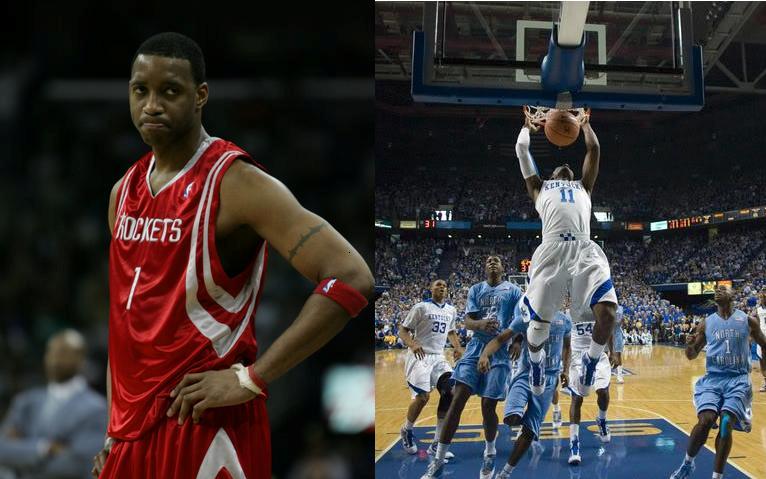
What Say You, UK Fans? One Year of Wall or None of McGrady?

  1. The NCAA Needs Marketable Stars Nearly as Much as the NBA Does.  This is the dirty little secret of college basketball in the 21st century.  The hardcore fans of the elite programs at Duke, Kansas, UCLA, Kentucky, North Carolina, Indiana, et al, aren’t going anywhere.  These folks would watch their teams play if they suited up four skinny 12-year olds and a rented donkey.  But the casual fan won’t.  The casual fan wants to see star power, and he wants to learn who the next big basketball talents will be through the crucible of the best postseason in all of sports, the NCAA Tournament.  When players like Derrick Rose, Kevin Durant, Kevin Love, John Wall and many others are on college campuses building considerable buzz throughout the season and heading into March, this collective must-see component to the game takes on a much different meaning than when the player names are instead Jameer Nelson, JJ Redick, Adam Morrison and Tayshaun Prince.  All great collegians, but do you see the difference?   Who does Mr. Office Drone/Bracketeer tune in to watch more readily?  Furthermore, CBS/Turner Sports just signed a fourteen-year, $10.8B deal to broadcast the rights to the NCAA Tournament, in case you’d already forgotten, and there will be none-too-subtle pressure on the puppet-masters of the sport to ensure that the best possible product is placed on the floor.  For the maximum amount of interest to take hold, that product without question must include the top 18- and 19-year old basketball players in the world. 
  2. When High School Seniors Make Their Decisions, Coaches Bear the Brunt of It.  We talked about this back in June, and nothing has changed in the interim.  We saw what happened to recruiting from 1995-2005 when coaches had to compete not only against rival schools for the talents of a player, but also the siren call of the NBA.  Whether it was Kentucky and Tracy McGrady, Florida and Kwame Brown, Duke and Shaun Livingston, or North Carolina and JR Smith, the fans and (more directly) coaches of those programs where agonizingly forced to endure a late spring phone call to learn that, after many hours spent recruiting the player to their campuses, it was all for naught.  And those were the elite players!  Imagine the situations where the player was fully expected to go to college but still was lured away — Jackie Butler (Mississippi State), Ndubi Ebi (Arizona) and Louis Williams (Georgia) all come to mind.  How does a coach go about finding a suitable replacement for a star recruit so late into the signing period?  Short answer:  he can’t.  We certainly understand that it’s frustrating to a lot of people (coaches included) to have to lose a star player as a one-and-done, but to have spent the same amount of time recruiting him and not receive even a single season of his talents is far worse, isn’t it?  That’s what would happen if the MLB model were implemented — recruiting would once again become a two-phase process.   
  3. For Better or Worse, NCAA Basketball is the NBA’s Minor League.  It’s not the NBDL (although it has found a nice niche as a training ground for older players), and it’s not Europe (similarly).  Rather, college basketball remains the NBA’s minor league, and where the MLB example fails is that college baseball is not.  Each professional baseball franchise has several levels of minor league teams beneath it by which to develop its prospects, whether they come directly from high school or after three seasons of college.  This is a HUGE difference.  The reason is that, as Mark Stein notes in this article, the vast majority of prep-to-pros players during that ten-year period were nowhere near ready to impact the professional game on a regular basis, and there remains no true professional minor league in basketball available by which to develop them.  NCAA hoops is it.   The list of players who came right into the NBA and contributed immediately is much shorter (Dwight Howard, LeBron James) than the list of those who took a few years to develop (nearly everyone else, including superstars Kobe Bryant, Kevin Garnett, Jermaine O’Neal and Amare’ Stoudemire).  If Mark Emmert is worried about the players (and his quote above seems to imply that he is), then he needs to push for an environment that will foster player development for the next level, in much the same way as he would inspire any student with soaring dreams.  This tact dovetails nicely with what we described above that college basketball should be selling — Watch the greatest sporting spectacle on earth — the NCAA Tournament — where the stars of tomorrow are on stage today. 

We obviously recognize that there are no easy answers here.  Any model implemented will have someone complaining.  But beginning in November, it will be the obligation of Emmert to push the game of college basketball forward in popularity and interest.  After all, NCAA Tournament dollars fund nearly the entire operation there in Indianapolis.  The way to do this is not to push college hoops down a path that makes it even more like college baseball, a sport that nobody cares about in large part because there is no direct connection between those players and the pros; but instead,  Emmert should work with the NBA to pursue a model more like college football, an incredibly popular sport where everyone knows that today’s Heisman Trophy candidates are tomorrow’s NFL all-Pros. 

24 Great Things About Watching ESPN’s 24 Hour Hoops Marathon

Posted by jstevrtc on August 18th, 2010

One of the first things I did on this website upon debuting two years ago was live blog ESPN’s first 24-hour college hoops marathon from start to finish.  You know how it is. You’re the new guy, you want to impress your co-bloggers, and all that.  I volunteered for the job, thinking I’d earn the respect of my RTC-mates and perhaps bring a few new visitors to the site. I assumed the novelty of it (it wasn’t that novel) would, in the same way that circus-goers stroll by the exhibition of freaks, bring a few people by to check in on the weirdo who was staying up and live blogging the whole thing.  I thought it turned out great, especially for a guy’s first time.  I had been awake for 16 hours before it started, too, so there were a few palpitations and many hallucinations by the time it was over, but I was proud. And as I was doing it, I was convinced that the combination of my astute basketball observations with my razor-sharp pop culture references would make this site a household name and propel us into the very heart of the American consciousness. Which, as we all now know, is precisely what happened.

Last year I did it again, despite the wagging fingers of my internist and a couple of specialists. We had some technical difficulties when the internet connection at the RTC Southern Compound tendered its resignation, but with some help of friends who subbed for me while I changed location, we got it done and I was able to finish strong.

Oh sweet, delicious caffeine -- the Marathon blogger's best friend.

We’re still in secret discussions as to what we’re going to do this year to celebrate the national holiday that is the 24-hour hoops marathon. I might insult my cardiovascular and central nervous systems for a third year in a row, or we might have something better in store this year. But because I’ve done it twice and not yet needed a trip to the ER, I — erroneously, in all likelihood — consider myself the authority on the subject.  To celebrate the release of this season’s Marathon schedule and the fact that it’s — *sigh* — only three short months away, here are my 24 favorite things about watching ESPN’s 24 Hour Hoops Marathon from beginning to end.

24. The fact that it’s actually about 26 hours of basketball, not 24. The last game starts at 11:30 PM ET, if it’s on time. Not only is it an “extra” game, but it’s a good time to summarize what you’ve seen during the day and pat yourself on the back.  Bonus hoops?  I’m not complaining, not even after 24 hours.

23. Seeing whether or not ESPNU’s Lowell Galindo will continue to go with the full Windsor knot in his tie.  Others in the sports media have worn it. Only one man has perfected it.  He’s made some appearances without it during the off-season, and stock markets all over the world plummeted each time.

22. The constant string of games is an instant reminder of those sweet days of Championship Week and the NCAA Tournament.

Read the rest of this entry »

Morning Five: 08.18.10 Edition

Posted by rtmsf on August 18th, 2010

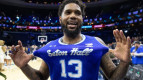
  1. It was unsettling kind of day, as two lawsuits involving high-major coaches were settled yesterday.  Perhaps they saw Louisville coach Rick Pitino’s fifteen seconds of infamy and decided to hedge their bets, but former Seton Hall head coach Bobby Gonzalez and current Ole Miss head coach Andy Kennedy both settled their ongoing lawsuits yesterday.  Gonzalez was embroiled in a wrongful termination suit with Seton Hall after getting the axe in March on the heels of a  public blowup with the law school dean, claiming he was owed two more years of salary.  Kennedy settled his defamation suit against a cab driver and valet over a dust-up in 2008 where the pair accused the coach of using racial slurs because the cabbie wouldn’t allow the five people in Kennedy’s group into his vehicle (the max is four).  Details of both settlements were not released, which is just as well for everyone involved.
  2. While on the topic of lawsuits, the Pitino/Sypher saga won’t die in Louisville.  Defense attorney James Earhart now claims that he has new information that specifically leads him to believe that some of the prosecution’s witnesses perjured themselves while under oath.  He’s asking for a 45-day extension to further research these allegations and believes that it will ultimately lead to a mistrial on appeal.  Maybe this is Earhart’s way of saying that it might have been a good idea to call some witnesses who could have impeached their testimony during the trial?
  3. The legacy of John Wooden will live on in the form of the contents of his den — all the hundreds of pieces of memorabilia that the Wizard held onto over the years — which will be moved en masse over to the UCLA campus for fans to enjoy as a virtual Wooden terrarium.  We’ve already got plans to visit UCLA’s JD Morgan Center later this year to see this.
  4. We had the privilege of seeing all six of Butler’s NCAA Tournament games live last year, and in each game more than the last, we came away impressed with the poise and abilities of the Bulldogs’ Shelvin Mack.  Luke Winn writes that Mack, more than any other player on the summer circuit of camps and USA Basketball, has elevated himself to the point where he’s getting rave reviews from veteran guards in the League.  Case in point: Mack was chosen over quite a few big names for his spot on the USA Select team, players such as Scoop Jardine, Scotty Hopson, Jacob Pullen and Jimmer Fredette.  Could Mack, Ronald Nored and Matt Howard propel Butler toward another Final Four next year?  They may be closer than conventional wisdom says even after losing star forward Gordon Hayward.
  5. Fanhouse put together a cool idea — figuring out who should make up the College-Forever team.  Using the general criteria of great collegiate players who barely earned a cup of coffee in the NBA (or none at all), who would populate your top three teams of the modern era (1985 to present)?  We only saw one major omission, and that was Arkansas’ Scotty Thurman, who despite a brilliant college career never logged a single second in the NBA.  Nevertheless, he was an absolute assassin for Nolan Richardson’s “40 Minutes of Hell” Razorbacks, winning multiple games with his smooth stroke in late-game situations, most notably from the wing over Duke in 1994.  He should have been on the first-team over Ed Cota, and at worst second-team.  Cool concept, though.

Shawne Merriman Wants To Go “Lights Out” On Christian Laettner

Posted by nvr1983 on August 17th, 2010

This past weekend was a time of celebration for former Duke great Christian Laettner who was inducted into the Basketball Hall of Fame as a member of the 1992 Olympic Team (aka “The Dream Team”) even if he took the brunt of the jokes during the weekend’s festivities. Unfortunately for Laettner and his Blue Devil teammate Brian Davis, the festivities appear to be confined to that weekend as their company Blue Devil Ventures (official website is currently down) appears to have hit a prolonged rough patch after some early success. The company has invested significant sums of money in a variety of projects including several in Durham as well as making bids for the Memphis Grizzlies and an MLS team (D.C. United). Last Monday, San Diego Chargers superstar linebacker Shawne Merriman filed an affidavit regarding a suit against Blue Devil Ventures for failure to repay a loan worth $3.64 million he had given the company in 2007.


The Championship Touch Hasn’t Translated to Business (SI/M. Millan)

According to court documents, the loan granted by a advance money app, which was due in March 2009, was not repaid and Merriman states that he is owed the $3.64 million principal that he invested plus 10% annual interest — not a bad return for an investor between 2007 and 2010. Merriman has also asked the judge to award him a 10% interest in Blue Devil Venture projects in Atlanta, Baltimore, and Durham, and if those projects fail he would have the right to convert that interest into other Blue Devil Venture projects. If your head is hurting right now, that’s OK, because based on these reports Merriman is asking for Blue Devil Ventures to give him the following things:

  1. His principal of $3.64M plus 10% annual interest
  2. A 10% share in three of the company’s projects
  3. In the event that any of those projects fail, he gets to convert that 10% share into shares in other (likely more successful) projects

That, my friends, is what we call having your cake and eating it too. Unfortunately it appears that Merriman may be trying to do this with a group of destitute bankers as he is just one of many plaintiffs against the company whose troubles appear to mirror countless others after the collapse of a real estate bubble where people took on more than they could chew.

In addition to currently listed outstanding cases against Blue Devil Ventures, the group also has Chevron on its trial (market cap of slightly over $150 billion), seeking $1.5 million plus interest; and the pair also has several other business ventures (under different names) that have turned sour including one where they were ordered to pay $687,230 plus interest to Bryan Simms. Simms is a former Lehman Brothers senior vice president who left in 2007 (just in time) to join another failed venture of Laettner/Davis in what appears to otherwise be a fairly distinguished career. Based on what we have read about Laettner’s responses to questioning, it seems like the end result of all this is another LLC (not Laettner himself) declaring for bankruptcy, leaving everyone involved unsatisfied.

Preseason NIT: Weakened Field But Still Special

Posted by rtmsf on August 17th, 2010

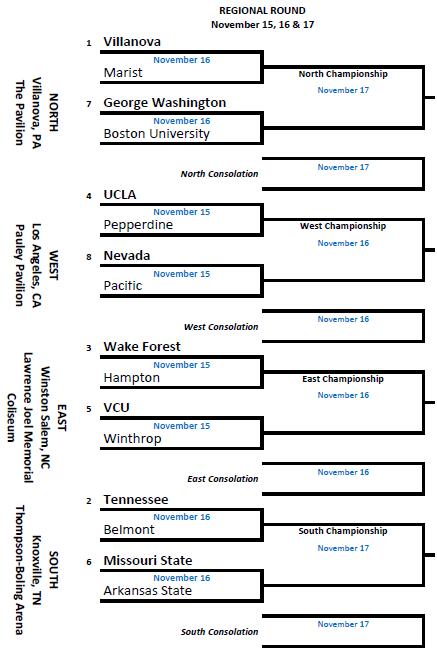
A couple of weeks ago we broke down what will arguably be the top holiday tournament of the 2010-11 season, the Maui Invitational.  The other Big Daddy of pre-conference tourneys, the Preseason NIT, released its brackets today, and at first blush, the field is not all that exciting this year.  Take a look at the below bracket and tell us where you get a little tingly thinking about the downstream matchup possibilities?

The only legitimate national contender in the field is Villanova, with 105-point scorer Corey Fisher returning along with a whole cadre of talented inside players including Mouph Yarou, Antonio Pena and Isaiah Armwood.  If the expectation is that productive freshmen become superb sophomores, then the Wildcats are a team with as much upside as anyone else in America next year.  The dropoff in talent from VU to the next best squad, Tennessee, is significant, but the real precipice occurs after that point.  The Vols lost Wayne Chism, JP Prince and Bobby Maze from their Elite Eight team, but they bring back star-in-waiting Scotty Hopson and add Tobias Harris to a solid cast of role players, so UT has a chance to be very good again.  We’d expect these two teams to sleepwalk their way to the finals on Black Friday in Madison Square Garden.

The third and fourth seeds and regional hosts Wake Forest and UCLA are two of the weaker teams we’ve seen in this position in some time.  Neither is a likely NCAA Tournament team next season, and it says here that both schools will have trouble getting out of their PNIT region despite the fact that it will be played on their home courts.  Wake returns two promising sophomores in CJ Harris and Ari Stewart, but the loss of all-ACC players Al-Farouq Aminu and Ish Smith, not to mention head coach Dino Gaudio (replaced by Jeff Bzdelik), will be too much for the duo to bear so early in the season — expect the Deacs to crumble against a strong VCU team with something to prove.  UCLA returns more than Wake Forest, but if you’ve somehow been in a fugue state for the past twelve months, the Bruin program has fallen on hard times due to poor recruiting, team chemistry and injury problems.  The talented but enigmatic Malcolm Lee returns along with several other young players (Tyler Honeycutt, Reeves Nelson, Jerime Anderson), but the addition of five-star stud Josh Smith to the mix isn’t going to suddenly remind UCLA how to win games.  A second-round matchup against Pacific, with its top four players returning, or Nevada, always looking for a Pac-10 scalp as a member of the overlooked WAC, will be difficult for UCLA, even in Pauley Pavilion.

The one thing we will continue to give the PNIT folks credit for, though, is that they actually still understand the meaning of the word “Tournament.”  Yeah, yeah, we know that other entities get around it by using words like “Classic,” but a bracket is a bracket and it really only makes sense when a team advances into the later rounds by, you know, winning.  There are no guarantees — Villanova, Tennessee, Wake Forest and UCLA will actually have to beat two visiting teams to earn the privilege of a trip to New York City during Thanksgiving week to play in the World’s Most Famous Arena.  So from that perspective, we’ll still enjoy watching the Preseason NIT this November if for no other reason than they get it right.

Morning Five: 08.17.10 Edition

Posted by rtmsf on August 17th, 2010

  1. Let us introduce you to the Crossroads Classic, a new four-team event beginning in 2011 that will feature the major college basketball programs in the state of Indiana in a made-for-TV doubleheader — Purdue, Butler, Indiana and Notre Dame.  The 2011 and 2012 events will take place at Conseco Fieldhouse in Indianapolis, with IU playing Notre Dame and Purdue taking on Butler in the first edition.  Indiana and Purdue will switch opponents in 2012, presumably leading to a back-and-forth matchup cycle for the life of this event.  We’re not old enough to remember the original Hoosier Classic that featured these four teams from 1948-60, but we do recall the “Big Four Classic” event in Indy from the late 80s/early 90s that matched IU and Notre Dame against Kentucky and Louisville in alternating years, and that was pretty cool.  Let’s hope this becomes a new annual holiday tradition with some staying power as well.
  2. Former Purdue head coach Gene Keady has been chosen as one of the 2010 recipients of the Joe Lapchick Character Award, annually given to coaches who have shown character traits over their career mimicking that of the former St. John’s legend.  At Purdue, Keady won six Big Ten championships and was invited to seventeen NCAA Tournaments, but he was never able to push through to the promised land of the Final Four, twice reaching the Elite Eight and losing in that round.  Still, he is widely regarded as a man of great integrity, pushing his players to a 90% graduation rate throughout his career, assisting USA Basketball and acting as president for the NABC at one point.  Bob Hurley, Sr., head coach at Jersey City St. Anthony’s, and Jody Conradt, women’s coach at Texas, will join Keady in accepting the award at the semifinals of the Coaches vs. Cancer Classic in New York on November 18.
  3. In a cost-savings measure, the NCAA announced yesterday that it would be cutting some of its drug-testing program to more effectively target the higher-risk sports and athletes for testing.  In other words, profiling.  Translation: if you play football, baseball, run track or lift weights, expect to see more of those nerdy-looking people in the white coats asking for urine samples.
  4. We hope to have more up on the ESPN 24 Hours of Hoops spectacuganza soon, but what if Transformers/The Rock/Armageddon director Michael Bay got his hands on the direction of this event?  Andrew Sharp of SBNation takes a look, and if nothing else, the photoshops are kinda funny.  Especially the one involving Bruce Pearl (paging Tyler Smith…).
  5. St. John’s head coach Steve Lavin is already thinking outside the box, in that he actually wants his team to have a nice locker room at its home arena, Madison Square Garden.  Imagine that!  Apparently the Red Storm have traditionally used an auxiliary locker room at MSG, but officials are exploring the possibility of allowing Lavin’s team to use the Knicks’ locker room for their home games.  And how long has it been since the Red Storm has been relevant?  We probably shouldn’t be amazed by this news, but we kinda are.

Summer School in the Ohio Valley Conference

Posted by Brian Goodman on August 16th, 2010

Greg Waddell is the RTC correspondent for the Ohio Valley Conference

Around the OVC

  • He’s Baaack…: Kenneth Faried has decided to return. An Associated Press All-American honorable mention last season, the 6’8 power forward is back in Morehead after garnering NABC All-District honors and sweeping the Ohio Valley Conference awards, earning Player of the Year, Defensive Player of the Year, and First Team All-Conference. His 16.9 points and 13.0 boards per game captured the attention of NBA scouts as he turned down what might have been a second-round pick to return to school. Clocking in at No. 25 on Chad Ford of ESPN’s Big Board, he is viewed as a mid to late first rounder by the worldwide leader.
  • The Rich Get Richer…and So Do The Poor: Recruiting is a funny thing, and sometimes, crazy things happen. Take this season’s OVC recruiting haul, for example. The top two ranked players entering the conference according to ESPN.com, Shawn Jackson and Jeverik Nelson, went opposite routes with one choosing the conference’s best team (Jackson to Murray State) and the other the worst (Nelson to Tennessee-Martin). Martin, which limped to a 4-25 record and finished last in conference play (excluding SIU-Edwardsville, who is technically not a member of the conference yet), benefited the most from recruiting as they added three highly-touted players.

Kenneth Faried's return to Morehead State spells trouble for the rest of the OVC in 2010-11. (Andy Lyons/Getty Images)

Power Rankings:

  1. Murray State: After winning the OVC regular season title, conference tourney, upsetting Vanderbilt in the NCAA tournament, and falling just short of knocking off national runner-up Butler, the 2009-10 Murray State team was one to remember. The scary thing is the 2010-11 edition may be better. Despite losing senior stalwarts Tony Easley and Danero Thomas, there is help on the way. Easley, the Racers’ emotional leader from last season, looks to be the biggest hole to fill but head coach Billy Kennedy managed to work his magic yet again, luring 6’9 big man Shawn Jackson from Florida. Jackson, arguably the best freshman in the conference, should start immediately and looks to be a force in the paint from his first day on campus while Chris Griffin, the other freshman recruit, will look to back up the three, potentially sophomore high-flier Ed Daniel. With the two-headed scoring attack of guards Isacc Miles and B.J. Jenkins returning, OVC Tournament MVP Isaiah Canaan may be relegated to sixth man again. What a good problem for Kennedy to have as the Racers look to be the class of the Ohio Valley once again.
  2. Morehead State: The other MSU had a decent season as well. Okay that might be a bit of an understatement. Led by Kenneth Faried, who won almost every award the OVC has to offer, the Eagles soared to a second place finish in league play and captured an NIT berth that led to a beatdown of Colorado State and a narrow loss to Boston University in overtime. Projected as a second-round pick in the NBA draft, it seemed that Faried was all set to try his luck in the league, until he decided to come back. Although Morehead State does say goodbye to second leading scorer Maze Stallworth, (12.6 PPG) they welcome back three of their top four scorers and look like a promising pick come tournament time.  The only team standing in their way is Murray but after dashing the Racers’ hopes of an undefeated conference run, they’ve shown they can hang with Billy Kennedy’s squad.  The OVC is a two-team league, and if Morehead can take out their rivals to the west, March Madness may find more than two MSUs dancing.
  3. Austin Peay – After last season’s unexpected finish, a loss at the hands of Tennessee Tech in the first round of the OVC Tournament, the Govs will look to pick up the pieces and build on their 17-15 2009-10 campaign. The only problem is they’ll be forced do so without two main components. Guard Wes Channels, whose 16.9 PPG led the team, has graduated, and 6’8 forward Duran Robertson fell victim to a career-ending knee injury in a preseason pickup game. Robertson’s injury will affect the Govs’ frontline depth where Austin Peay returns 6’9 junior center John Fraley (9.2 PPG, 7.6 RPG) and 6’7 second-team all-Ohio Valley Conference forward Anthony Campbell (15.5 PPG, 5.3 RPG), The Govs do add Tyshawn Edmonson, a transfer from St. John’s via Midland (Texas) College, who will look to push for playing time. Edmonson played high school ball at nearby University Heights Academy. Read the rest of this entry »

Is Calipari’s Three-Year Recruiting Run the Best Ever?

Posted by rtmsf on August 16th, 2010

An interesting question came up among the Twitterati over the weekend when it was learned that Rivals #8 (and rising) recruit in the Class of 2011, Anthony Davishad formally committed to Kentucky.  Davis’ commitment marks the third top ten recruit in that class to have committed to John Calipari’s Wildcats, and the seventh in the 2009-11 recruiting cycles, a ridiculous feat. 

  • John Wall (#2, 2009)
  • DeMarcus Cousins (#3 , 2009)
  • Brandon Knight (#4, 2010)
  • Enes Kanter (#7, 2010)
  • Michael Gilchrist (#1, 2011)
  • Marquis Teague (#5, 2011)
  • Anthony Davis (#8, 2011)

Throw in a few other high-level recruits such as Daniel Orton (#19, 2009), Eric Bledsoe (#52, 2009), Terrence Jones (#11, 2010), Doron Lamb (#26, 2010), and an unnamed superstar or two to be named later (Quincy MillerLeBryan Nash?), and suddenly there is a realization that we could be in the midst of the single greatest run of recruiting prowess since the Wizard of Westwood had every blue-chipper from coast to coast lining up to play for him.
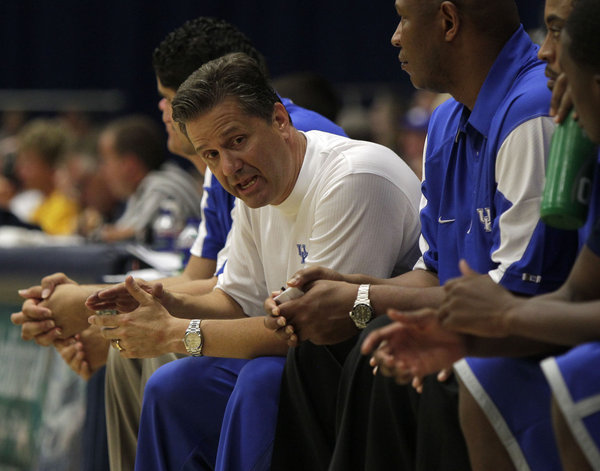
Calipari Continues to Rack Up Blue-Chippers (LHL/M. Cornelison)

This is what Calipari was referring to when he infamously said on draft night in June that having five UK players selected was the greatest night in the program’s history.  It’s all marketing.  As Kentucky blog A Sea of Blue notes when referring to Anthony Davis’ quotes about the commitment, Calipari isn’t selling the Wildcat program of all hoops-all the time as much as the dream; the dream, of course, being a fast-track to the League. 

But notice what is not mentioned — Kentucky tradition, the facilities at UK, playing in front of 24,000 every game, being on TV all the time — none of these things are mentioned.  Recruiting has changed.  Calipari has taken the NBA one-and-done rule and used it like the Pied Piper, tempting players to Kentucky not with cash to families or under-the-table deals, but with a short path to all the riches they desire.

Whether you believe the last sentence or not, the truth remains that players are beelining for Lexington, which brings us to the point of this article.  We have to dig pretty deep in our memory banks to remember a recruiting run that even begins to approach this concentration of elite talent.  Granted, there’s a bit of an apples/oranges confounder here — much of the reason that Calipari can load up on talent every single year is because there’s a reasonable expectation that the previous year’s competition for minutes will be gone (see: Wall begets Knight begets Teague, for example).  Still, we’ve come up with one strong comparison in the modern era (we hope you add your own in the comments below): Duke 1997-99.  As a brief aside, UNC from 1990-93, Michigan from 1991-94 and Duke from 1999-2002 were also very strong periods of recruiting at those schools, but over four recruiting cycles rather than three. 

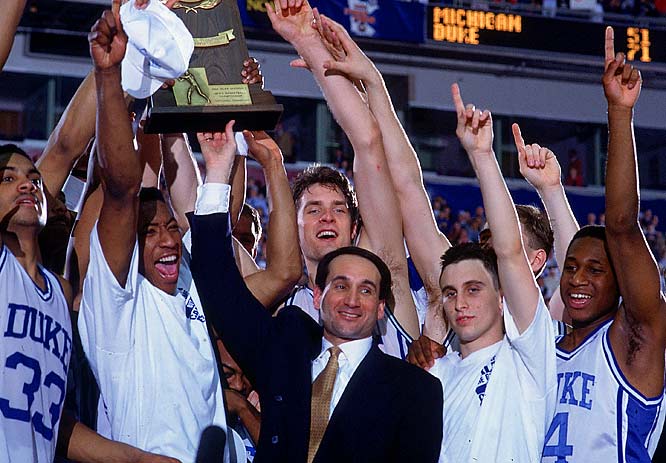
Duke 1997-99 (recruited by Mike Krzyzewski)

  • Elton Brand (#1, 1997)
  • Chris Burgess (#7, 1997)
  • Shane Battier (#8, 1997)
  • William Avery (#14, 1997)
  • Corey Maggette (#16, 1998)
  • Jason Williams (#3, 1999)
  • Carlos Boozer (#8, 1999)
  • Casey Sanders (#16, 1999)
  • Mike Dunleavy, Jr. (#26, 1999)

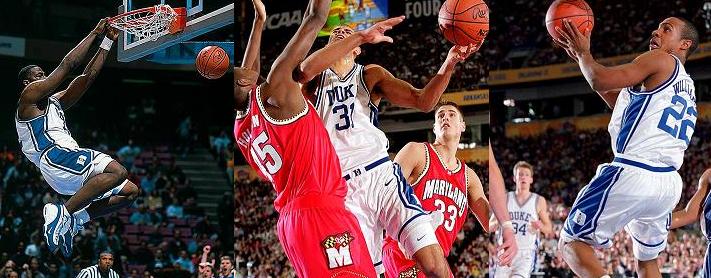
The recruiting rankings alone are nasty, but when you consider the actual accomplishments of this group, it takes on a whole new meaning.  Six lottery picks, three NPOYs, two title game appearances and a national championship (2001).  In two of the years where they didn’t cut the nets down, (1999 and 2002), Duke was the prohibitive favorite to win the title (finishing #1 in the final AP poll every year from 1999-2002) in large part because they had more talent than anybody else.  They actually won it all in 2001, but we’re still trying to figure out how Jim Calhoun’s vastly underrated (but also undermanned) Huskies were able to slay the Duke dragon in 1999 (oh, right, Trajan Langdon).  It was an amazing run of talent acquisition, and we haven’t seen anything like it for at least a decade.
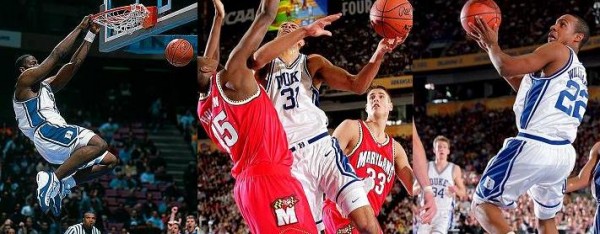
Duke Had Three NPOYs in Four Seasons (SI)

Therein lies the rub.  With boatloads of talent comes expectations, and winning the press conference is great for tone-setting, but getting to and winning Final Fours is what matters most in Lexington.  Again, the Duke era was different in that with the exception of Corey Maggette in 1999, Coach K did not lose any players as 1-and-dones; but that won’t deter the vultures from ripping Calipari if he continues to sign elite talent without bringing back the accompanying hardware to support it.  The biggest case in point of this thinking is how Michigan’s Fab Five class of 1991 is often considered a failure for merely going to two straight NCAA championship games and losing.  It remains to be seen how this era of Kentucky basketball will play out (so far, one Elite Eight appearance), but we already know that the level of recruiting enjoyed by Calipari in his first three classes there rivals anything experienced in the modern era.  Coach K’s classes from 1997-99 set the bar very high — it’s now up to the individual players — from Knight/Kanter/Jones to Gilchrist/Teague/Davis — to match or exceed their accomplishments.