Calling All College Sports Fans: Point Shaving Is A Problem, And We’re Not Paying Nearly Enough Attention

Posted by Chris Johnson on June 6th, 2013

Chris Johnson is an RTC Columnist. He can be reached @ChrisDJohnsonn

College sports’ problems cannot be hemmed in around one single issue or theme. There is a vast array of various issues eating away at the very core of the intercollegiate athletic landscape, loath as we are to discuss them all in equal measure. The usual discussions about the usual problems tend to fall under one of two hot-button umbrellas: the NCAA and conference realignment. Mentioning either tends to boil the blood of all fans; not even the dividing lines of team or conference or regional loyalty can’t break up the unifying hate. Conference realignment talk has cooled off in recent weeks thanks to the ACC’s landmark grant of rights deal, which should halt the league-shifting turnstiles among major conferences. The NCAA knows no relief from outside vitriol, though, and you can rest assured the scorn will continue to rain down as long as “amateurism” and a crookedly impractical rulebook and Mark Emmert remain visible parts of the organization. We talk about these things a lot because they make it easy to do so, and because we – fans, media, whoever – understand the moving parts, the underlying tectonic plates, the incentives. We get this stuff. It’s practically straightforward, and morally persuasive (and if you have a lot of friends that enjoy watching and talking about college sports, almost by necessity a part of your cocktail hour conversation arsenal) to shake our firsts and raise a hellstorm about.
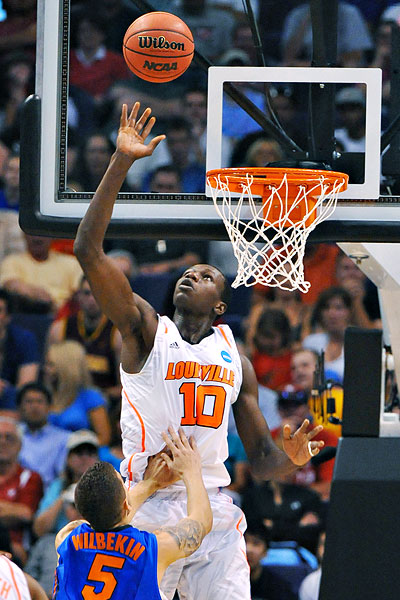
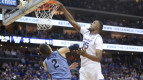
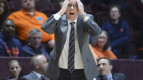
The underrepresentation of point-shaving among the biggest and most enduring issues afflicting college sports is startling (Getty).

The underrepresentation of point-shaving among the biggest and most enduring issues afflicting college sports is startling (Getty).

It’s time we pay more attention to another issue: point shaving. You’ve heard of it before, yes? The supposed-to-be subtlety of intentionally performing below your capability to artificially doctor a game’s final score for a financial reward. If it sounds simple, that’s because it is. An ill-intentioned money-hungry go-between reaches out to an influential player on a low-profile mid-major team, offers a relatively small sum (say, $1,000) to back-rim a few jumpers and commit a couple not-unintentional turnovers, just enough to stay under the posted point spread. The player, a typical college student with typical college student financial constraints, happily agrees to consciously muddle his performance. Who wouldn’t take that deal? With little rhyme or reason for unprompted external suspicion, and a near-impossibly onerous burden of proof to demonstrate a sustained effort to manipulate a given game’s point spread, of course I’ll make that happen. That shudderingly simple and coherent line of thinking is what led San Diego star Brandon Johnson, the perfect real-life fit for the prototypical point shaving target-manna athlete, to cast his lot with bookies and an assistant coach with nefarious motivations and intentions.

Read the rest of this entry »

Morning Five: 06.06.13 Edition

Posted by rtmsf on June 6th, 2013

morning5

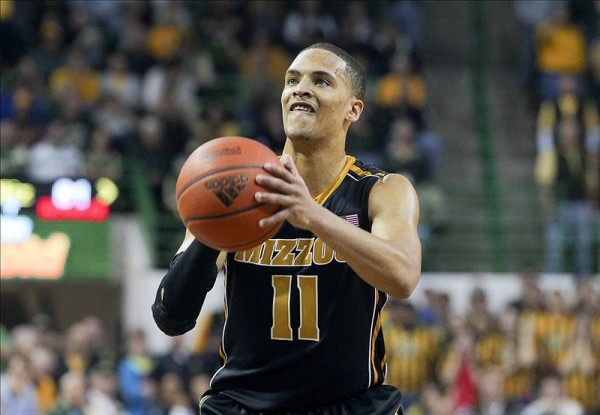
  1. College basketball’s worst kept secret became official late Wednesday night, as Missouri’s Michael Dixon, apparently the Teflon Don of sexual assault allegations in Columbia, announced via Twitter that he was transferring to Memphis. As we discussed in yesterday’s piece addressing the rumors of his transfer, Dixon brings a very interesting combination of talent and experience to a Tigers team desperately in need of some heady play to supplement the occasional wildness of returnees Joe Jackson and Chris Crawford. The question of whether Dixon will ever suit up with those two rising seniors, though, will be for the NCAA to decide, as he plans to request a waiver after already sitting out last season at Missouri. His argument will hinge on the Dez Wells exception, a unique and slightly different scenario where Wells was expelled from Xavier over a sexual assault allegation that even local prosecutors found completely unsubstantiated. Of course, Wells was ultimately allowed to play last season at Maryland, where he blossomed into one of the ACC’s most dangerous wings, and whether Dixon will receive the same treatment from the sport’s governing body may involve determinations on guilt or innocence that it is simply unprepared or unwilling to make. If he is allowed to suit up as a Tiger of the Memphis variety next season, though, Josh Pastner’s team suddenly becomes a lot more interesting on the national stage. 
  2. Speaking of that stage, one of the biggest and best national events in the early weeks of the season is the Jimmy V Classic. Next season’s pair of match-ups have now been finalized, and Memphis in fact will be one of those teams featured. The Tigers will take on a top 10 outfit in Florida in the nightcap, while fellow AAC member Cincinnati will battle new ACC institution Pittsburgh in the undercard. Did you get all that? It’s AAC vs. ACC, and AAC vs. SEC. If Dixon is cleared to play next season, the backcourt battles between he and Crawford versus Kasey Hill and Scottie Wilbekin will be fun to watch.
  3. Remember Julie Roe Lach, the former VP of NCAA enforcement who was fired in February related to a series of missteps that occurred under her watch, but most notably the ethical misconduct stemming from the Nevin Shapiro case at Miami (FL)? She resurfaced on Wednesday with an op-ed piece published at Yahoo! Sports giving her take on how the NCAA should operate its enforcement initiatives. It reads lawyerly, but if you can get past the tone and dryness of it, she makes several good points. From her perspective, the NCAA needed to accomplish three primary things with respect to its enforcement process: 1) make penalties against schools harsh enough to deter the risk/reward mindset; 2) shorten the length of its investigations; 3) in revenue sports, instill a valid fear in personnel of getting caught. As she writes in the article, the organization was moving steadfastly in that direction when the Shapiro case and subsequent media firestorm it entailed derailed the focus of the organization. Unfortunately for her, the piece has something of an air of desperation about it — even though Lach’s points are well-sourced and make sense, she won’t be taken seriously by either the media or the NCAA at this point. It’s worth a read, but what the organization now needs is the next general — a Lach without a reputation — who will carry the flag forward without the taint of scandal enveloping his every word.
  4. One of the NCAA initiatives of the past several years that we’ve gotten fully behind is the Academic Progress Rate (APR). Notwithstanding the fact that schools can game the numbers with bogus classes and coursework to increase their APR scores — baby steps — it still provides some degree of academic accountability where there was little before. And it has some teeth, as Connecticut found out the very hard way last season. So kudos to 2013 national champion Louisville, which was one of only 35 men’s basketball teams to score in the top tier of schools (scoring 978 or above) in the most recent APR cycle (covering academic years 2009-12). The entire top 10 percent list that the NCAA highlights as part of its “Public Recognition Awards” is located here. The biggest surprise on the list this year? It has to be Memphis, although Alabama men’s basketball and football clearly show that the army of tutors and student-athlete assistants in Tuscaloosa are very good at their jobs.
  5. We didn’t mention Indiana in the previous blurb, but we easily could have, as Tom Crean has taken a program that was scoring in the 800s to one that is at the very top of Division I men’s basketball on the APR nowadays (Will the Hoosiers print up commemorative t-shirts? Too easy.). But one IU player is not only receiving academic accolades, he’s also still getting lauded for his work on the court last year. The Tulsa Sports Charities organization has named Hoosiers wing Victor Oladipo as its 2013 recipient of the Eddie Sutton Tustenegee Award, an honor “presented annually to a college basketball player who best exhibits the traits of tenacity and unselfishness that Sutton advocated during a coaching career that landed him in the College Basketball Hall of Fame.” In a year when the race was fairly wide open among a group of about five players, we like to see the love spread around a bit. Good for Oladipo, probably the best player on both ends of the floor last season.

Michael Dixon: Will His Rumored Addition Give Memphis an Added Boost?

Posted by Chris Johnson on June 5th, 2013

Chris Johnson is an RTC Columnist. He can be reached @ChrisDJohnsonn. 

Watching under-performing forward Tarik Black walk away from his final year of eligibility at Memphis (and jump to Kansas) hurt. It was a shot – not lethal or even multi-wins-altering, but a shot – at Memphis’ very bright outlook in 2013. Waving farewell to hyper-talented if half-bloomed wing Adonis Thomas, who declared for the NBA draft after an underwhelming sophomore season, was another blow. The departures were starting to pile up, and the Tigers, populated with a quality three-man returning backcourt though they were, needed something to balance the scale. Michael Dixon’s reported commitment does more than that. If the rumors are true — and as of Wednesday afternoon, after ESPN’s Jason King got text message confirmation from Dixon denying what Memphis fans were no doubt all too ready to assume, that’s really all we have right now; rumors — the scab-picking losses of Black and Thomas and gives Josh Pastner another dynamic backcourt scorer to put Memphis in tip-top shape right as they dive into a new league, the AAC.

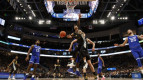
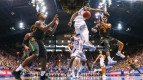
The possibility of having more speed, quickness and playmaking flair to Memphis' backcourt could shake up the inaugural AAC title chase (US Presswire).

The possibility of having more speed, quickness and play-making flair to Memphis’ backcourt could shake up the inaugural AAC title chase (US Presswire).

This is all really encouraging stuff (again, to reiterate: nothing is official just yet) for Memphis fans, and I would like to perk up and say I agree, that it’s just as rosy and auspicious as it all sounds, but alas: the hard news. Dixon can only play for the Tigers this season if his appeal for an NCAA waiver is granted. If something seems curiously wrong here and if you are wondering why Dixon should have to sit out another season after being kicked off the Missouri team last year after being charged with sexual assault, your concerns are valid. They also have a simple answer. Dixon, you see, didn’t play in any games last year, but was enrolled in classes to begin the fall semester. That academic involvement could push Dixon’s highly-anticipated return – and after averaging 13.5 points and posting a 122.7 offensive rating in 2012, with the chance to enter a Memphis backcourt that would almost immediately join the likes of Louisville and UConn in tier of elite AAC guard posses, who doesn’t want to see Dixon skip the procedural one-year transfer penalty? – to next season, which wouldn’t challenge Memphis’ likely status in the preseason Top-25, or even really raise questions about the Tigers’ ability to jump headfirst into the Conference USA-reduxed AAC. In the event Dixon can’t play upon arrival, Memphis would still be formidable, still be picked to finish in the top half of its new league and still almost surely earn Pastner his second consecutive NCAA Tournament birth. But you can bet your bottom dollar the Tigers want Dixon around, this year, with this team. Read the rest of this entry »

RTC NBA Draft Profiles: Gorgui Dieng

Posted by BHayes on June 5th, 2013

nbadraftprofiles

The NBA Draft is scheduled for Thursday, June 27, in Brooklyn. As we have done for the last several years, RTC will provide comprehensive breakdowns of 20 of the top collegians most likely to hear his name called by David Stern in the first round on draft night. We’ll generally work backwards and work our way up into the lottery as June progresses. As an added bonus, we’ll also bring you a scouting take from NBADraft.net’s Aran Smith at the bottom of each player evaluation. This post was contributed by RTC’s Bennet Hayes. He can be found on Twitter @HoopsTraveler.

Player Name: Gorgui Dieng

School: Louisville

Height/Weight: 6’11”/230 lbs.

NBA Position: Center

Projected Draft Range: Mid to Late First Round

Gorgui Dieng's overall presence on the defensive end was crucial for the 2013 NCAA Champs

Gorgui Dieng’s overall presence on the defensive end was crucial for the 2013 NCAA Champs

Overview: His ceiling may not be as high as that of many of his draft-mates, but Gorgui Dieng should serve as a safe investment for a team on the back end of the first round. The Senegalese big man spent the last three seasons anchoring the paint for the reigning NCAA Champion Louisville Cardinals. Despite never averaging double figures in points per game, he still found ways to deliver significant impact for the Cards. In fact, a legitimate argument could be constructed that Dieng was the most valuable player for the 2013 champs (all due apologies to Russ Smith). The bulk of Dieng’s value came on the defensive end, where his disciplined shot-blocking served as an ideal back line of defense for Rick Pitino’s aggressive, risk-taking approach to guarding the perimeter. And while Dieng may never be mistaken for a prolific scorer on the other end, his offensive game did accumulate some polish over the course of his years at the ‘Ville, as he enters the draft as a capable 12-15 foot jump shooter and an above-average passer for a big man – two skills he could not have been given credit for two years ago. His title game effort against Michigan was a nice summation of his current skill set: eight points (on 4-6 shooting), eight rebounds, six assists, and three blocks. And of course, all those numbers came in a winning effort.  Beyond the talented cast of teammates and his own substantial abilities, it is no surprise that winning followed Dieng to Louisville, as he is the hard-working, high-character type that coaches love to find on their rosters.

Will Translate to the NBA: It should be a quick adjustment to NBA basketball on the defensive end for Dieng. At 230 pounds, he is a bit on the light side for NBA bigs, but he’s a capable, intelligent shot-blocker who always seems to be in the right position. Dieng is a solid athlete who is capable of stepping out to the perimeter and guarding his position there as well, and should also prove relatively adept in pick-and-roll defense, despite existing in a defensive scheme at Louisville that rarely included it as one of his duties. Additionally, it’s no secret that rebounding is one of the most translatable skills from college to the pros, and with Dieng’s top-100 national rankings in both defensive and offensive rebounding rates last year, it’s safe to assume he will prove ready for battle on the NBA backboards relatively early on.

Read the rest of this entry »

Morning Five: 06.05.13 Edition

Posted by rtmsf on June 5th, 2013

morning5

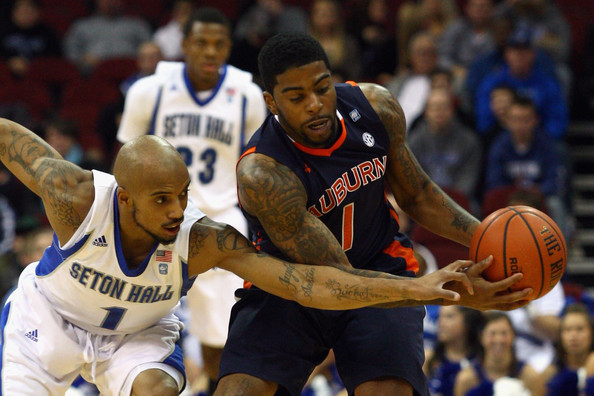
  1. In what turned out to be a rough Tuesday in terms of college basketball-related news, a federal grand jury in Alabama unsealed an indictment that alleges former Auburn guard Varez Ward of attempting to throw a game against Arkansas in the 2011-12 season. Ward, a junior at the time, is accused of two counts of sports bribery (or more commonly known as point-shaving) where he allegedly conspired with gamblers and tried to solicit other players to throw the game. (full indictment here) Ward only played 19 seconds in that contest against the Hawgs, suffering a thigh bruise very early that kept him on the bench for the rest of the game in an eventual three-point loss. Last year the FBI said that it was also looking into a February 2012 game against Alabama where Ward scored three points and committed six turnovers, but that game was not referred to in yesterday’s indictment. According to this report from last year, Ward was suspended by Auburn assistant coaches in late February after another player blew the whistle on him; another teammate originally under suspicion was later cleared. Ward never suited up for Auburn again, but he may very well be wearing the orange (jumpsuit) full-time if these charges stick. He faces five years in prison on each count. We’re not going to get preachy on this issue, but we will refer back to one of the first articles we ever wrote on this here website: This sort of thing happens a lot more than anyone cares to admit
  2. Meanwhile, more discouraging news from the great state of Alabama came out on Tuesday as Crimson Tide forward Devonta Pollard was charged by local authorities with conspiracy to commit kidnapping related to an April 30 abduction of a six-year old girl named Jashayla Hopson. The details are somewhat murky at this point, but it appears that Pollard may have been assisting his mother, Jessie Mae Pollard, in antagonizing the youngster’s mother who was caught up in a land dispute with her. But this is no trumped-up charge where someone was held against their will for a minute or two — if the allegations are true, Hopson was picked up at her elementary school and held for a full day before being dropped off on the side of a road unharmed. Pollard, his mother, and four others have been charged so far in this crime, with at least one other still pending. What a crazy world we live in.
  3. Ohio State president Gordon Gee has had himself quite a week, as reports of his insensitive comments made in December about Catholics, SEC schools, and Louisville have been making the rounds. The “pompous ass,” according to Cardinals’ head coach Rick Pitino, announced Tuesday that he is taking his volatile opinions into the sunset, choosing to retire from his post effective July 1. Gee says that he made his decision last week during a vacation, feeling that he needed time to “re-energize and re-focus.” Whether he was encouraged to retire or came to the decision on his own volition, the 69-year old president certainly has a fund-raising and bottom line resume that is unmatched within the industry, so if he chooses to continue his work elsewhere, we doubt he’ll have much trouble finding a place to land. He may not want to send any resumes out to Notre Dame, Louisville or any of those SEC schools, though.
  4. How about some better news? One of the problems with the John R. Wooden Classic played every December in Anaheim was that the stature of the lineup often didn’t seem to fit the stature of the name headlining the event. Naturally, UCLA was almost always involved, but usually the three other teams invited were a mixture of solid mid-majors (i.e., St. Mary’s, San Diego State) and some other mid-level programs (i.e., USC, Washington, Texas A&M). It was also just for one day, and it often fell during a period in the college basketball calendar in early to mid-December when viewers were getting much better match-ups during the same period (think: UNC-Kentucky or Kansas-Ohio State). The decision announced Tuesday to rebrand the event as the John Wooden Legacy and merge it with the Anaheim Classic during Thanksgiving weekend is a good one. Although the 2013 field is not great, featuring Marquette, Creighton, San Diego State and Miami (FL) as its marquee names, the four-year cycle of exempted events and ESPN’s coverage will no doubt encourage bigger-name programs to take the trip to SoCal in future years. We’d expect this to become one of the better such events during Feast Week starting in 2014 and beyond.
  5. Finally today, Andy Glockner at SI.com digs deeply through the KenPom statistical buffet and gives us what he calls “the extremists” — those returning players who are the best of the best in each of a number of key statistical categories. If you can name the top returnee in the nation in shot percentage at 40 percent, more power to you (answer: Wofford’s Karl Cochran), but certainly a couple of these names are on the short list for breakout seasons next year: Oregon State’s Eric Moreland (tops in defensive rebounding percentage at 28 percent); St. John’s Chris Obepka (tops in block percentage at 16 percent); and, VCU’s Briante Weber (tops in steal percentage at 7 percent). There’s more to the article than this, of course, so check it out on a lazy summer Wednesday.

Rick Pitino’s Takedown Of Gordon Gee Echoes The Consensus Public Sentiment

Posted by Chris Johnson on June 4th, 2013

Chris Johnson is an RTC Columnist. He can be reached @ChrisDJohnsonn

College athletics was verbally assailed from every conceivable broad-issue dimension last week. You know this: Religion, academics and the spending habits of one (very important) conference commissioner were the highlights of Ohio State President Gordon Gee’s incendiary comments from the school’s December athletic council, all captured on tape and released to a predictably irate interweb last week. The most poignant barbs were directed at the SEC and the quality of its academic institutions, along with Notre Dame’s stubborn negotiating tactics, which Gee attributed to the large contingent of “damn catholics” active in the Irish’s athletic department. He also, in mind-numbingly idiotic fashion, went all in on his own conference, including urging Big Ten commissioner Jim Delany to “keep his hands out of our pockets” and Wisconsin’s former “thug” of a head football coach, Bret Bielema, now at Arkansas. For a man of such power and outsized influence, for someone who’s been praised for his ability to rake in exorbitant sums through fundraising (and roundly mocked for his snobbish bow-tie purchases), for someone expected to project poise, public tact and the utmost aplomb in any and all public speaking situations, Gee instead turned himself into a national media punching bag, further cheapened his already disgraced national reputation (this isn’t the first time Gee has spoken out, and immediately regretted it afterwards, mind you) and prompted the trustees at OSU to issue a stern admonition that Gee just shut up before you embarrass us any more than you already have.

Coming from Gee, insentive slander is nothing we haven't seen before (Getty Images).

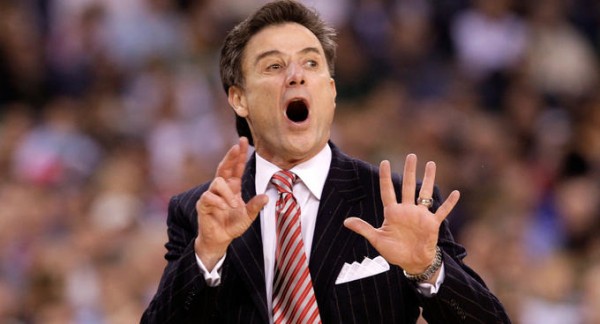
Coming from Gee, insentive slander is nothing we haven’t seen before (Getty Images).

In college basketball land, where a mostly quiet stasis tends to settle in around this time of year, an occasional once-or-twice-in-a-decade recruiting talent like Andrew Wiggins disrupting the calm every now and then, there was nothing particularly incendiary – besides the general religious and academic wisecracks, of course – to get worked up about. Before Gee’s full audio script was laid bare for public consumption, no one would have guessed the Ohio State President had any specific reason or ulterior motive to let his deranged blather spill into the most passionate compacted locale of college basketball diehards in the country. But then again, when was last time logic or rational thinking ever helped anyone try to understand one of Gee’s ill-mannered public monologues?

Read the rest of this entry »

Could the NCAA Be On the Verge of Creating a Fourth Subdivision?

Posted by Chris Johnson on June 3rd, 2013

Chris Johnson is an RTC Columnist. He can be reached @ChrisDJohnsonn

Imagine trying to lump wildly financially disparate athletic programs with different issues and different monetary imperatives under one legislative agenda. Imagine trying to hold that infrastructure together with vague terminology and philosophical principles and vexingly byzantine legalese. Imagine that organization asking an enforcement staff that can’t even police itself to make sure everything runs smoothly – no questions asked, no willingness to adjust. Imagine a near-universally loathed ruling figurehead, whose tenure has been besieged by near-constant turmoil on college campuses, wielding unseen legislative power, refusing to cooperate with influential school athletic directors, eroding public trust every step of the way, and doing it all while publicly casting himself as some enduringly unimpeachable monarch – untouchable, unimpressionable and, most recently, resentfully bitter to any and all external questioning or proposals for change.

A fourth subdivision could help eliminate some of the NCAA's more intractable financial inefficiencies (US Presswire).

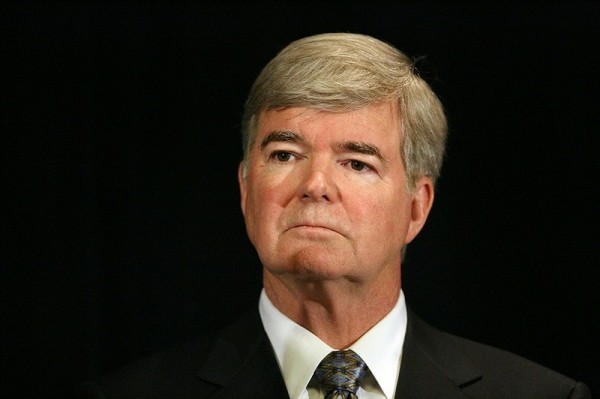
Promoting discussion for a move towards a fourth subdivision allows schools with bigger budgets the possibility to change the NCAA’s separation of powers (US Presswire).

The public approval rating of NCAA president Mark Emmert, were there such a measure for the organization’s embattled leader, would not inspire confidence for election day. The rightful scorn and growingly pervasive critiques can’t be (or shouldn’t be) shoved on Emmert’s doorstep; his actions are merely a particularly irksome embodiment of the entire NCAA’s morally and ethically dubious ruling construct. Either way, his spot isn’t up for contestation, so Emmert doesn’t have to worry – even as swaths of media call for his resignation and athletic directors lose confidence in his ability to navigate the NCAA’s hazardous future. Emmert isn’t completely blind to the boiling discontent within his membership, and at the Big 12 meetings in Irving, Texas, last week, he made an important concession that shows he’s open to the concept of realigning the power structure to accommodate more-monied (and thus more powerful) programs.

Read the rest of this entry »

Morning Five: 06.03.13 Edition

Posted by nvr1983 on June 3rd, 2013

morning5

  1. It is hard to believe that Rutgers could appear more out of touch with reality than they have been in the wake of the Mike Rice scandal, but new senior vice president and general counsel John Farmer Jr’s letter defending Julie Hermann might be a new low. In the letter Farmer compares the accusations of abuse against Hermann to accusations of marijuana use by Bill Clinton. What Farmer’s argument essentially boils down to is that the claims against Hermann are from her distant past and are of questionable validity much like the allegations that were made against Bill Clinton before the 1992 election. If the ridiculous comparison was not enough to make you aware that Hermann was keeping her job, Farmer closes by saying “She starts June 17. Period.” That may be true given how out of tune the Rutgers administration is to public perception, but don’t be surprised if Hermann is given less leeway for any future mistakes.
  2. Yesterday, the Pac-12 released an independent review of officiating for the Pac-12 Tournament that determined its officials acted appropriately (full report here). The entire investigation stems from a report that Pac-12 head of officials Ed Rush had offered a bounty (reportedly a free trip) to the official who gave Arizona head coach Sean Miller a technical. That revelation and the fact that Miller was given a technical, which was considered very strange before the reports about a bounty and may have affected the outcome of the game, eventually led to Rush’s resignation a few days later. The report’s conclusion was that Rush’s statements were not taken literally by other officials and did not affect the integrity of the game and the Pac-12 considers the matter closed. What remains to be seen is how Pac-12 officials will officiate Arizona games next season with this scandal still hanging over them (the Pac-12 may consider the case closed, but we can assure you that the fans do not feel that way).
  3. Houston‘s hopes of making its program nationally relevant again were dealt a big blow as director of basketball operations Michael Young announced that he was leaving the school after refusing a reassignment within the program and he will be taking his son Joseph Young, the team’s leading scorer, with him. Michael, who played for Houston’s famed Phi Slama Jama teams, had been serving as director of basketball operations, but had recently signed a new contract that reportedly offered him the same pay, but with a role in community service instead. According to the school, Michael had accepted his new position, but something changed in the past week. The big question now is what happens with Joseph and whether the NCAA will give him a waiver based on his father’s decision to leave the school since the other players who were granted such waivers were fired while Michael decided to walk away from the program.
  4. It was just a year ago that Shabazz Muhammad was considered a can’t miss prospect and one who could help lead UCLA back to glory even if only for his one season in college. Then came questions about his eligibility that was followed by up-and-down play where he showed flashes of brilliance, but never lived up to the hype. The latest twist in the Muhammad saga is that his father is now under house arrest after being charged with running a mortgage scam. Ronald Holmes, Muhammad’s father, is accused of obtaining “mortgage loans by fraudulent means to buy houses” and now the government is seeking to collect $2.5 million from him. As the article notes this is not the first time that Holmes has been accused of such an act. And if you were wondering $2.5 million would be right around Muhammad’s salary for his first two seasons (before taxes) based on where he is projected to be selected.
  5. You probably will not notice either decision next season, but a pair of moves involving two assistants coming to and leaving Kansas could have a big impact in the coming years. The decision by Iowa State to hire Doc Sadler probably will not make much of an impact on the Hawkeyes next season, but it does set up Sadler for a potential return to take over a new team in the near-future. Sadler’s two previous stops were at Nebraska (101-89) and UTEP (48-18) so it would seem like he would be an attractive candidate for almost any mid- or lower-tier program. Sadler’s move was actually part of a series of moves involving Kansas where Sadler was Director of Basketball Operations as the school brought in Jerrance Howard to replace Joe Dooley who left to take over a Florida Gulf Coast. The addition of Howard may actually be more important for the school as they are looking to Howard to help build on their recruiting as Cooley departure would have left a void in the program.

Get Used To Souped-Up Court Designs

Posted by Chris Johnson on May 31st, 2013

College sports programs like to distinguish themselves in readily identifiable and often objectively hideous ways. Wacky uniforms are a micro-mechanism for audacious school-specific branding, and if we’re going to talk crazy uniforms….naturally, we’re going to talk Oregon, whose revolving door of Nike-conceived threads are as much a part of Ducks’ sports culture as athletic competition itself. OU expanded its reach into the aesthetic wilderness with its foliage-themed “Tall Firs” basketball court, which was unleashed to mixed (but mostly negative) appraisals from non-Oregon partisans nationwide. Innovative Nike architect Tinker Hatfield’s plan was ambitious, to apply the most minimal interpretation, and the real thing was gorgeous and repulsive and historic (the trees are meant to pay homage to Oregon’s 1939 national championship team, nicknamed “The Tall Firs”) and brand-inspired, all at the same time. It wasn’t the first time Oregon had jumped headlong into the avante-garde realm of program-patented design eccentricity, and it probably won’t be the last. I can’t wait to see what Phil Knight and his Nike braintrust henchmen dream up next. A duck-shaped Autzen stadium? Optionally-rotational field turf to match each game’s uniform alteration? Something insane. Something mind-blowing. Something Allianz Arena can’t touch in its most visually-arresting elegance.

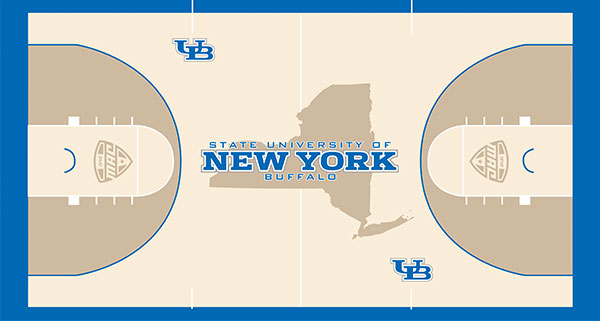
Another new court design proves schools are taking artistic court stylings more seriously (Buffalo Athletics).

Another new court design proves schools are taking artistic court stylings more seriously (Buffalo Athletics).

Kind of like what Florida International and George Washington and, following Wednesday’s stunning reveal, the University of Buffalo, which plopped a New York State Silhouette around its trademark royal blue U of B-stamping text, implemented this offseason. The design itself is a conservative but fresh look for a program whose basketball program doesn’t typically make headlines for anything it accomplishes on the court, and you know what? Good for them. Attention grabbed. This floor plan caught my fleeting web-scanning attention span, even if I’m not particularly fond of the subtle state-owning intimation/appeal to territorial ownership located smack dab at center court. If dreaming up fancy court designs is about making a splash and giving your university an unmistakably unique and school-centric vibe, this court does exactly the opposite. “State University of New York” is an official part of Buffalo’s whole name-recognized branding description; it’s the little description that appears in size eight italicized text next to (wait for it) “University of Buffalo” on every hoodie and coffee mug and every last folder and pencil available in the official university library campus store. But did anyone stop to consider the possibility that making the word Buffalo, the actual university, bigger than New York, the state that houses it, might be a smart way to send a visual message for BUFFALO itself, and not state silhouette-contrasted NEW YORK? The text size contrast, and text placement, obscure the entire purpose of sports court design eye candy. They don’t even highlight the University’s own name.

Read the rest of this entry »

Morning Five: 05.31.13 Edition

Posted by nvr1983 on May 31st, 2013

morning5

  1. It should not be a surprise that Katin Reinhardt has decided to transfer from UNLV to USC as was widely speculated the moment he announced that he was leaving Las Vegas. Reinhardt, who will have to sit out next season as a transfer unless he finds a way to get an exception that nearly every transfer seems to qualify, seems intent on playing point guard as he feels that is his best chance of playing in the NBA (we would argue that playing well would be a start). He should have plenty of opportunities to become a point guard on a Trojan team that lacks an established point guard. Having said that we are not sure that his skill set will translate into Andy Enfield’s offense as a point guard.
  2. We might joke about how irritating conference realignment is, but it is nothing compared to the scourge that is publicly-financed stadiums. We have already seen many ridiculous stadium deals for professional teams with the most egregious being the one that was given to the Miami Marlins, but now the trend appears to be extending to college athletics. We mentioned Chicago’s plans for DePaul‘s basketball arena when it was first announced and now that more information is available Andy Glockner has taken a critical look at the deal. As Glockner notes the entire thing is absurd. We are not sure how the people of Chicago are going to put up with doing this particularly for a private university and we are not sure how the people affiliated with DePaul are going to go forward with this when they have a deal to play at a professional stadium for free and would not become the subject of public anger for having fleeced the city.
  3. Many of our younger readers are familiar with much of Kentucky‘s history including the highs from Adolph Rupp to today, but they may not as familiar with the lows that the program experienced when it was put on probation by the NCAA. Many Kentucky fans still harbor a grudge against Eddie Sutton, who coached Kentucky when they were accused of committing violations that led to Kentucky being placed on probation for three years and receiving a two-year postseason ban. For that Sutton has become a pariah in Lexington, but John Calipari is trying to change that by extending an olive branch to Sutton and inviting him to return to Lexington as his guest. We are not sure how forgiving Kentucky fans will be, but if there is anybody who can convince them to soften their stance it is Calipari.
  4. With conference realignment the newly formed/aligned entities have had to decide how they want to position themselves for their conference tournaments. The biggest battle is in New York City over the rights to Madison Square Garden, but the Southeast could also become a hotly contested area with the ACC and Big XII possibly looking at sites in the area in the near-future particularly if the ACC loses out on New York City. After initially considering a plan where they would hold the SEC Tournament in a permanent site it appears that the SEC has decided to go with a hybrid approach where they will play in Nashville in 2015, 2016, and 2019 and play in Saint Louis in 2017, Tampa in 2018, and Atlanta in 2020. The plan is still in the preliminary stages and the SEC still needs to negotiate with the potential host cities before anything is final, but it looks like this might be an initial step towards making Nashville the permanent home of the SEC Tournament after 2020 if everything works out well with them as a host city.
  5. Speaking of conference realignment, the Southern Conference announced yesterday that it will be adding MercerVirginia Military Institute, and East Tennessee State for the 2014-15 season. Interestingly, VMI and East Tennessee State will be rejoining the Southern Conference after having left it in 2003 and 2005 respectively. We doubt that this move alone will have any effect on the landscape of college sports it will probably lead to another chain of schools shifting between conferences.