Morning Five: 07.17.12 Edition

Posted by rtmsf on July 17th, 2012

  1. The year-plus mystery about how much longer Syracuse and Pittsburgh will play as members of the Big East was partially revealed on Monday, as the conference released terms of an agreement that will allow the Orange to join the ACC in July 2013. The school will pay an exit fee of $7.5 million in return for leaving one year early (league bylaws require over two years of notice), but according to a tweet from Andy Katz, there’s no way that Pittsburgh will remain in the Big East in 2013-14 without Syracuse. Assuming that the Panthers join Syracuse as new members of the ACC that year, they’ll likely join an ACC with a loaded Duke team sitting at the top of the league and a reloaded North Carolina squad on its way back up. In other words, welcome to always. For what it’s worth, as much as we hate losing classic Big East battles such as Syracuse-Georgetown and Pittsburgh-Villanova, to note a pair, we’re also looking forward to the new blockbusters that the expanded ACC will enable. Syracuse in Cameron Indoor… Pitt visiting the Comcast Center… Yes, please.
  2. The nation’s top prospect in the Class of 2013 is shutting it down for the summer AAU circuit to let his injured right heel recover. Jabari Parker will have an MRI soon to determine if it will require surgery, but his father in an interview with the Chicago Tribune that regardless of the outcome of that test, their intent is to let him rest so that he’ll be ready to play for his high school team again this fall. The Simeon (IL) HS forward is unanimously regarded as the top player in his class, but according to the article, there are “rumblings by those who rank individual teenagers for a living” that he could lose his top spot as a result of his absence in summer action. At least his dad has the right attitude about the importance of summer prep rankings: “That stuff doesn’t mean anything.”
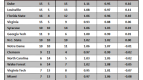
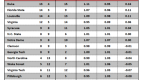
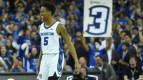
  3. It’s mid-July so somewhat surprising to see this list right now, but The Big Lead‘s Jason McIntyre released his annual ranking of the top 50 returnees in college basketball for the 2012-13 season. These things are always incredibly subjective so we’ll leave it to his legion of commenters to make snap judgments as to the list’s accuracy, but we’ll allow ourselves one critical comment: Creighton’s Doug McDermott is far better than the seventh best player in college basketball. All in all, it’s a fairly thorough list and will no doubt engender a healthy amount of debate as we move into the early months of next season. As an interesting side note, one of the comments enlightened us to a website called Value Add Basketball where next season’s players are projected based on a number of assumptions and calculations. It’s worth a few minutes of your time to poke around over there.
  4. The player who McIntyre listed as the third-best player in his top 50 for next season is an RTC favorite, Murray State’s Isaiah Canaan. Will Aubrey of The Examiner did a short interview with the returning All-American, and here was the result. Canaan spent time at several of the top camps this summer, including the Chris Paul, LeBron James, and Deron Williams versions, where he was told that his game only needs a few tweaks to be ready for the next level. Despite his size (listed at only about 6’1″), he is projected at #20 overall in NBADraft.net’s 2013 mock draft — you can’t measure heart and leadership, though.
  5. We’re not going to belabor this point here but in yesterday’s M5 we mentioned that there are rumblings of a significant backlash against collegiate sports from those souls — many of whom are general sports fans — who are sick and tired of the scandals, the hypocrisies, and the rah-rah attitude that can foster situations where a known child molester is free to terrorize children for 13 years under the auspices of a moral and ethical university. The Atlantic‘s James Fallows put together a mash-up of user responses to the Penn State scandal and their tone crystallizes exactly what we were talking about. Are we reaching a tipping point where college athletics as we know it will come crumbling down and rebuilt as a quasi-professional entity with transparency about what it is; or will it continue down this beer and circus path that some have derided for years, but of which many others are finally starting to notice?
Share this story

Morning Five: 07.10.12 Edition

Posted by rtmsf on July 10th, 2012

  1. Fans of west coast basketball from the 90s were saddened on Monday with the news that former Stanford forward Peter Sauer collapsed and died on Sunday during a pickup basketball game in White Plains, New York. Sauer was a team captain who averaged 7.9 PPG for his career and played a significant role in leading the Cardinal to its second-ever Final Four in the 1997-98 season, where it lost in overtime to eventual national champion Kentucky in the semifinals. His graduating class of 1999 was one of the most successful in program history — in four seasons, it won 90 games, a Pac-10 title, attended four straight NCAA Tournaments, and was a large part of the renaissance of Stanford basketball by turning a historically woeful program into a national powerhouse. Sauer leaves behind a wife and three young daughters, a man in the prime of his life taken away far too soon. May he rest in peace.
  2. In an odd coincidence, Sauer’s college coach at Stanford, Mike Montgomery, also made news on Monday. The curmudgeonly California coach signed an extension that will keep him coaching until at least the 2015-16 season. In four seasons so far at Berkeley, Montgomery has fielded scrappy and competitive teams that have been invited to three NCAA Tournaments (no easy task in the Pac-10/12), but he has not yet achieved the national success that he did at Stanford in the latter part of his career across the bay (e.g., three 30-win seasons). Still, the Cal administration clearly appreciates the work that Montgomery has already put in, and he stands to keep the Golden Bears among the better basketball programs of the Pac-12 for years to come.
  3. We mentioned last week that Syracuse recently released an independent report that suggested its program and administration did not act to cover up allegations made against assistant coach Bernie Fine in 2005, but could have acted more promptly in notifying authorities of the charges made against him. The lawyer for one of Fine’s accusers (Bobby Davis) responded on Monday — it would be quite the understatement to suggest that Gloria Allred disagrees. After describing the university’s report as a “complete whitewash” of the relevant events seven years ago, she went on to say that the report’s contention that there was no cover up does not “pass the laugh test.” (hmm… where have we heard that phrase used before?) Allred went on to say that Syracuse’s investigation of the allegations against Fine in 2005 were done to protect the university rather than learn the truth — whether all of her claims here are true or not, she’s certainly rattling the cage and doesn’t seem to be going away anytime soon.
  4. July has long been known in college basketball circles as the month when coaches jet around the country to sit in hot gyms and evaluate the stars of tomorrow at the various camps. Though the names and locations have changed, the song and dance is still largely the same. Mike DeCourcy gives us a thorough primer of some of the top storylines in this year’s summer circuit, set to begin on Wednesday from Indianapolis, Philadelphia and just outside of DC. Perhaps the most interesting tidbit is something that we noted in this space a couple of weeks ago — most of the top players in the Class of 2013 have held off on their commitments, which means that the summer evaluation period is likely to be more competitive as players angle to catch coaches’ eyes heading into the all-important fall signing period. DeCourcy also discusses the battle for the top player in the class, and how Jay Wright needs an impact player out on the Main Line sooner rather than later.
  5. While on the subject of recruiting, ESPN.com’s Myron Medcalf writes a fascinating article about the recent arrival and impact of Canadian recruits on college basketball’s landscape. As he notes early in the piece, five Canadians have been selected in the last two NBA Drafts, and the top overall player in the Class of 2014, Andrew Wiggins, is a native Canuck as well. Then there are the current collegians, such as Texas’ Myck Kabongo, UNLV’s Khem Birch and Anthony Bennett, Marquette’s Junior Cadougan, and Gonzaga’s Kevin Pangos. Call it the Steve Nash Effect (unless you prefer Jamaal Magloire), but much of the talent pool derives from the large immigrant minority populations that have settled in the metropolises of Vancouver, Toronto, and Montreal in the last 30 years — the children of those immigrants came up with the NBA in Canada and are now starting to find their way to the elite levels of American basketball. As the game of basketball continues its growth as the world’s second-favorite sport, we’re going to see college basketball take on an increasingly international flavor in much the same way that the NBA has over the last 15 years.
Share this story

Morning Five: 07.06.12 Edition

Posted by rtmsf on July 6th, 2012

  1. It’s been an exceptionally quiet news week in college basketball, but some legal-related information has come out this week that doesn’t involve health care hype and hysteria. In response to the Bernie Fine scandal at Syracuse that broke last November, a Board of Trustees report released on Thursday found that Syracuse officials acted promptly when allegations against Fine were first reported to them in 2005, but they did not go far enough in reporting the information to law enforcement officials. This inaction, which included the possibility that if the allegations “turned out to be true, then the failure to have approached law enforcement at best exposed the university to harsh criticism, and at worst allowed a child molester to remain in place in the community without being called to account.” There’s a lot more detail in the story linked above, but the one thing we can all agree on is that we’re not alone in hoping the truth comes out on this story soon.
  2. Moving to a story that we hope is finally over for good, the US Court of Appeals for the 6th Circuit in Cincinnati ruled on Thursday that attorneys for convicted Rick Pitino extortionist Karen Sypheradvanced no arguments of merit on appeal” in her latest attempt to have her prison sentence overturned. Her arguments centered on whether she received a fair trial given the significant amount of publicity that the case engendered, but according to the three-judge panel, she failed to provide evidence that she had in fact received an unfair trial. Sypher will no doubt continue appealing the various federal courts on the basis of any number of frivolous constitutional claims, but her sentence goes through 2017 so she has plenty of time to figure out next steps. Who knows — maybe America’s least favorite justice, John Roberts, will have a chance to rule on Ms. Sypher somewhere down the line.
  3. It’s not a ruling from the legal world, but the NCAA fashions itself as judge, jury, and executioner anyway, so we’ll continue this theme. Just prior to the start of the July recruiting evaluation period next week, the NCAA barred four AAU ‘travel teams’ from involvement in its sanctioned events because of a “prohibited association” between three administrators and a coach with an agent named Andy Miller. Miller apparently sent an e-mail to the four men pushing and cajoling them to live up to their obligations in getting players to the NBA, and the NCAA somehow caught wind of it. The players on these four teams — the New England Playaz, Worldwide Renegades, Florida Rams, and SEBL Elite — are not prohibited from jumping to other teams in order to play in the events, but they’ll have to hustle to find openings over the weekend. Our stance on summer AAU basketball is well-established, but this is just another example of why it needs a major NCAA-led overhaul.
  4. One of the unique quirks of BYU basketball is that most of us sometimes forget that they have good players stashed away on missions overseas while the rest of college basketball is constantly trying to reload its talent base — it’s almost like a basketball safety valve of sorts. BYU rising sophomore Tyler Haws is one such example, having spent the last two years in the Philippines after a promising freshman season where he averaged 11/4 and shot 50% from the field. One of the peculiarities of Haws returning to NCAA basketball is that he is an exceptional free throw shooter, hitting 91.5% of his attempts in 2009-10. He is also the current owner of a streak of 48 makes in a row, putting him a little more than halfway to the NCAA Division I record held by Butler’s Darnell Archey from 2000-03. With a lot of downtime on his mission in basketball-crazy Philippines, maybe Haws used some of it to perfect his stroke to make a run at the record.
  5. From a player returning to college hoops after a two-year layoff to a head coach doing so after 24 years, Larry Brown is getting his legs under him at SMU this summer. In a recent interview with the Topeka Capital-Journal, the only coach to have ever won both a national title (Kansas) and an NBA title (Detroit Pistons) explained that: a) he wouldn’t have been offered the SMU job had Maryland’s Mark Turgeon not initially floated his name out there; b) top assistant Tim Jankovich approached Brown about leaving potentially his best team at Illinois State; and c) he doesn’t care much for the games themselves, rather preferring the teaching aspect of practices. This experiment at SMU is certainly going to make for an interesting storyline the next couple of seasons — we’d hate to suggest that a head coach with an all-time record of 177-61 (.744) in college might struggle, but his previous stops at UCLA and Kansas are much different animals than what they have down in the north side of Dallas.
Share this story

Morning Five: 06.20.12 Edition

Posted by rtmsf on June 20th, 2012

  1. There are many coaching hires where the logical process makes normal and complete sense to everyone – a longtime assistant is promoted to the top job; a big personality moves on to a school to match his ego; a mid-major guy is looking for more resources and talent. Occasionally, though, a random hire has everyone around the industry scratching his head wondering what they missed. It’s not very often that you’ll see a career assistant coach — mostly at the collegiate level, at that — make the jump to NBA head coach, but that’s exactly what St. John’s assistant Mike Dunlap did this week. Other than a handful of games when head coach Steve Lavin was out with prostate cancer last season, Dunlap has spent the last six seasons as an assistant, and the extent of his head coaching experience came at Division II Metro State from 1997-2006. Dunlap reportedly beat out more prominent names such as Jerry Sloan, Brian Shaw, and Quin Snyder for the position, and although according to Jeff Goodman everyone knows he can coach, this is a real gamble on the part of the GOAT as part owner of the Charlotte Bobcats.
  2. If a player only sets foot on your campus for the better part of eight months, is it OK for an alumnus to claim that star as one of his own? That’s the question posed by Grantland’s Bryan Curtis as a Longhorn considering the provenance of one Kevin Durant, one of the NBA’s brightest stars but a player who probably wasn’t around Austin long enough to even witness the bats on Congress Avenue Bridge. Curtis ultimately settles on the answer “yes,” – shocking, we know – but he actually digs up some thoughtful and relevant examples of other prominent Texas grads who were early entries into the work force well before it was fashionable. A couple of those names? Walter Cronkite and Michael Dell.
  3. Stop the presses, but Fab Melo has decided to speak about his suspensions last season at Syracuse. If you recall, the Big East DPOY was suspended twice during the season, including a devastating NCAA Tournament suspension that essentially killed the Orange’s realistic chances at a national title. The reason: (drum roll) academics. Melo is touring around the country in an effort to improve his draft stock, and he decided to talk about his time away from Jim Boeheim’s team during his sophomore year this week. To wit, “They ask, I explain (what) happened — that I came from another country and until four years ago didn’t even speak English.” This is all fine and well, but if we were an NBA scout, we might be willing to look past one indiscretion — but dropping the ball during the most important month of his collegiate career is an altogether different story. Did he forget how to stay eligible between the first part of his sophomore year and his second? Or did he realize he was going to be a millionaire soon and decided to stop caring about classes? That’s the question that should be asked — whether the answer is relevant to his future prospects as a ball player isn’t for us to decide.
  4. With all the bad blood surrounding conference realignment, we’re actually surprised that we haven’t seen what the CAA has decided to do more often. The league announced on Tuesday that departing members Old Dominion and Georgia State – both of which will remain in the league in 2012-13 – will not be eligible to compete for conference championships next year. The CAA’s Council of Presidents voted unanimously to uphold a longstanding rule meant to dissuade schools from jumping ship. VCU, which will join the Atlantic 10 next month, will obviously not be impacted, but this goes to show that conference realignment at its core is something of a bloodsport, and memories of such influential people at the highest levels tend to not easily erase.
  5. We sorta love it when in-state rivalries are exacerbated through the local media, and NC State is only the latest and greatest to use the old standbys — billboards and television ads — to make declarations of grandeur based on nothing more than marketing, spit, and perhaps a little duct tape. Whether you measure it by success or fans, there’s virtually no possible way to justify an assertion that the great state of North Carolina belongs to NC State, but hey, whatever gets the juices running (and it’s still funny). Of course, even if NC State has won the last 10,000 football games against UNC, Duke, and Wake Forest combined, that’s still not what matters in the Tar Heel State any more than Auburn beating Alabama in basketball matters a lick. Kudos to NC State for giving it a shot, but nobody is fooled.
Share this story

RTC NBA Draft Profiles: Dion Waiters

Posted by EJacoby on June 19th, 2012

The 2012 NBA Draft is scheduled for Thursday, June 28, in New York City. As we have done for the last several years, RTC’s team of writers (including Andrew Murawa, Kevin Doyle, Evan Jacoby, Matt Patton, and Danny Spewak) will provide comprehensive breakdowns of each of the 35 collegians most likely to hear his name called by David Stern in the first round on draft night. We’ll work backwards, starting with players who are projected near the end of the first round before getting into the lottery as June progresses. As an added bonus, we’ll also bring you a scouting take from NBADraft.net’s Aran Smith at the bottom of each player evaluation.

Note: Click here for all published 2012 NBA Draft profiles.

Player Name: Dion Waiters

School: Syracuse

Height/Weight: 6’4” / 215 lbs.

NBA Position: Shooting Guard

Projected Draft Range: Mid-First Round

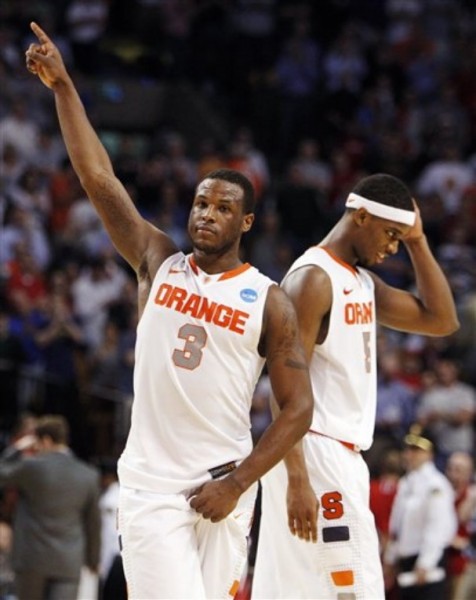
Dion Waiters Shows No Fear on the Floor, Which Should Help Him in the NBA (AP Photo/K. Rivoli)

Overview: Dion Waiters’ disappointing first year at Syracuse included a falling out with Jim Boeheim and contemplations about whether to leave the program. But the former top 20 recruit came back a completely different player in year two, where he was arguably the best and most impactful player on an elite Syracuse team. Waiters didn’t start a single game as a sophomore but was a game-changing reserve who could score points in bunches (12.6 PPG) and cause havoc with his perimeter defense (1.8 SPG). A player whom Boeheim said after his first year “played no defense last year – none” turned into the leading catalyst of the nation’s top team in steals. Waiters is a bully at 6’4” and 215 pounds who overpowered weaker defenders on his drives to the basket, leading to an impressive highlight reel of explosive dunks. His physicality also allows him to create space on the perimeter to get his shot off, where he shot 36.3% from three-point range. Waiters is extremely efficient in transition, and he is difficult to stop once he gains steam towards the basket. He also thrived in the pick-and-roll as a threat to shoot, drive, or create for his teammates. His shot selection was questionable at times, but he still recorded a strong 47.6% field-goal percentage, and he turned the ball over just 1.3 times per game in 24 minutes. Despite his strength, Waiters is a bit undersized for a two-guard and he’ll be facing much stronger and athletic players at his position at the next level.

Read the rest of this entry »

Share this story

Bernie Fine Case Takes Another Strange Turn…

Posted by EJacoby on June 12th, 2012

Nothing has come easy for investigators in the child molestation case against former Syracuse assistant coach Bernie Fine, in which former ball boy Bobby Davis accused the coach of sexual wrongdoing. It’s been a back-and-forth of accusations and denials from everyone involved in the story since it broke public last November. The most fascinating detail about the case remains that the university knew about Davis’ accusations against the coach as far back as 2004, and yet Fine remained on staff in his top assistant position to head coach Jim Boeheim until the public fiasco in 2011. 

The Orange still thrived last season amidst the off-court school scandal involving assistant coach Fine (AP Photo/M. Dwyer)

On Monday a new twist surfaced, as the Syracuse Post-Standard reported on a 2005 university investigation that found no witnesses at the time believed the accuser’s claims. Seven key members of Davis’ story were interviewed by SU, and not a single one confirmed the accusations. But it gets even more odd, as the accuser provides information of his own that the school didn’t seem to properly investigate. Davis reportedly called Fine to apologize (about what?) in 2005, according to the Post-Standard‘s knowledge of the secret report. The investigation has not been released, but more and more contradicting details continue to come out that could prolong this case.

Read the rest of this entry »

Share this story

RTC NBA Draft Profiles: Fab Melo

Posted by EJacoby on June 7th, 2012

The 2012 NBA Draft is scheduled for Thursday, June 28, in New York City. As we have done for the last several years, RTC’s team of writers (including Andrew Murawa, Kevin Doyle, Evan Jacoby, Matt Patton, and Danny Spewak) will provide comprehensive breakdowns of each of the 35 collegians most likely to hear his name called by David Stern in the first round on draft night. We’ll work backwards, starting with players who are projected near the end of the first round before getting into the lottery as June progresses. As an added bonus, we’ll also bring you a scouting take from NBADraft.net’s Aran Smith at the bottom of each player evaluation.

Note: Click here for all published 2012 NBA Draft profiles.

Player Name: Fab Melo

School: Syracuse

Height/Weight: 7’0” / 255 lbs.

NBA Position: Center

Projected Draft Range: Late First Round

After Being in Coach Boeheim's Doghouse For One Season, Fab Melo Improved Dramatically as a Sophomore (AP Photo)

Overview: After playing less than 10 minutes per game as a freshman and looking like a complete stiff, Fab Melo showed drastic improvements in his second season at Syracuse. He was one of the most indispensable parts of a 34-3 team, witnessed by the fact that the Orange lost two of their three games when Melo was not with the team. He is incredibly mobile for a seven-footer and possesses a 7’3” wingspan, making him an elite shot-blocker who dominated the paint in Jim Boeheim’s 2-3 zone. He averaged 2.9 blocks as a sophomore in just over 25 minutes per game, good for the best block percentage in the Big East. With improved mobility and conditioning, the big man became more of a factor offensively (7.8 PPG) on mainly lob passes and putbacks. Melo is still incredibly raw on offense in terms of one-on-one post moves, but his exponential improvement over the past year is a good sign that he can still add to his game. His impact on the game goes beyond the box score, as he alters opposing shots and game plans with his imposing defensive presence, and he also helps open up driving lanes for teammates by eating up space on the offensive end. Melo was academically ineligible twice during the 2011-12 season, including during the most crucial time of the season (the NCAA Tournament). There are still some concerns about his attitude, temperament, and ability to stay focused on basketball. But when he is locked in, Melo is a legitimate defensive force that still has much room for improvement.

Read the rest of this entry »

Share this story

Handicapping Next Season’s SEC/Big East Challenge Matchups

Posted by EJacoby on June 4th, 2012

The Big East sent more teams (nine) to last year’s NCAA Tournament than any other conference, while the SEC compiled the best winning percentage (.769) during the Big Dance. The two leagues are squaring off next season in the second annual SEC/Big East Challenge, whose matchups were announced on Friday. With plenty to offer in the form of juggernaut teams and program traditions, the idea of this event should provide great intrigue to the non-conference season, something the Big Ten and ACC have done in their cross-conference challenge for the past 14 years. Next year’s slate doesn’t look nearly as enticing as some were hoping for — UConn, Louisville, and Missouri aren’t participating, while Syracuse is in but wants out – and our SEC microsite broke down the lack of headline games on the schedule. Nonetheless, we can’t overlook this event that allows for top conference teams to play true road games against other power leagues. Last season, Georgetown played at Alabama in one of the most entertaining games of the entire non-conference slate, and that game didn’t garner much publicity at all. The Big East came away victorious, 8-4, in last year’s event. Here’s what the 2012 SEC/Big East Challenge presents us.
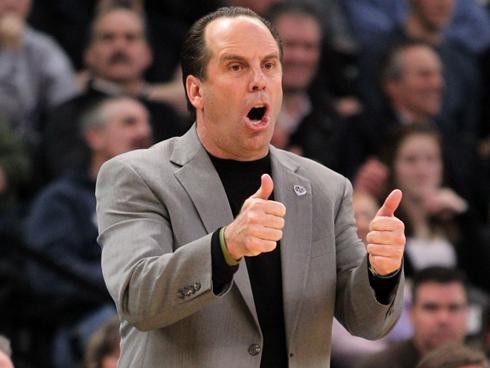
Mike Brey and the Fighting Irish Like Their Chances Against the National Champs Next Year (AP Photo)

Youth vs. Experience, Kentucky at Notre Dame (Nov. 29) – Notre Dame returns all five starters from last season; Kentucky returns none. But both teams have high hopes next year, as the Fighting Irish bring back the entire core from a team that went 13-5 in the Big East while the National Champion Wildcats showcase the nation’s number two recruiting class of SEC-ready stars. Both programs have decorated pasts with loyal fanbases; each team is ranked in the RTC preseason Top 25. What’s not to love about this matchup? A Kentucky-Syracuse game would have garnered more hype, but this matchup could produce a better game. Who wins out, the young guns or the vets? We should get a great read on the new crop of UK freshmen in this their first real road test.

Seeking Sweet Revenge, Marquette at Florida (Nov. 29) – These two teams squared off in last year’s Sweet Sixteen, when the Gators ended the Golden Eagles’ season and Jae Crowder and Darius Johnson-Odom’s careers. Buzz Williams’ boys are looking for revenge in Gainesville, though both teams will look a lot different from last season. Florida loses its own pair of stars (Erving Walker, Bradley Beal) but Kenny Boynton and Patric Young are back to form one of the nation’s most threatening inside-out duos. Each team must call on a host of young players that showed promise last year but have to step into more prominent roles in 2012-’13. There’s plenty of intrigue in this one, though Florida is the strong favorite at home.

Read the rest of this entry »

Share this story

Morning Five: 05.22.12 Edition

Posted by nvr1983 on May 22nd, 2012

  1. Yesterday, long-time Pacific coach Bob Thomason announced that he would retire following the upcoming season. Those on the East Coast may not be familiar with Thomason’s work, but he has compiled a remarkable record during his time at Pacific. During his quarter century at the school Thomason led the school to four NCAA Tournament appearances while picking up 414 wins, a record for the Big West Conference. His career probably peaked with opening round wins in the 2004 and 2005 NCAA Tournament against Providence and Pittsburgh, respectively. We doubt that this will get much coverage during the season outside of possibly a brief mention on SportsCenter after his last game, but if you are watching Big West basketball next season take a moment to check out Thomason and his Pacific team.
  2. Those who are weary of the dominance of a certain Worldwide Leader in college basketball will be pleased to hear that some of the regular season games previously televised on ESPN’s family of networks will now be on CBS Sports starting this coming season. After reaching an agreement with ESPN, CBS Sports will have the right to broadcast games from the ACC, Big 12, and Pac-12 with a total of 20 games growing to 26 games during the following seasons as well as the Atlantic 10 Conference Championship and the Missouri Valley Championship Game for the duration of the agreement (the duration of the agreement was not disclosed). Although ESPN still is the leader in college basketball coverage with its near monopoly on regular season coverage, CBS Sports in conjunction with Turner Sports is making a strong push in adding to its exclusive coverage of the NCAA Tournament. With these moves it will be interesting to see if CBS Sports is able to poach some of ESPN’s top analysts with the promise of more high-profile games.
  3. Georgetown picked up a big commitment yesterday when junior small forward Stephen Domingo committed to play for the school in the 2013-14 season. Domingo, a top-30 recruit in the class of 2013 and an all-state player in California, chose Georgetown over a long list of schools that included offers from Arizona, UCLA, Stanford, Harvard, and Louisville. In the end, Domingo decided that the Hoya system provided him with the best opportunity to showcase his versatility and “develop into an outstanding basketball player and an outstanding young man”. Hoya fans are probably celebrating the addition now, but we should point out that there is a lot of time left before Domingo or any other player in his class can sign and a lot can change during that time so we wouldn’t go Sharpie on this one just yet.
  4. The sudden departure of Terrell Stoglin left Maryland with a big hole in its backcourt heading into the upcoming season, but they may have found a reasonable replacement in the form of Albany tranfer Logan Aronhalt, who averaged 13.8 points and 4.3 rebounds per game last season. Aronhalt, who will be able to play immediately for the Terrapins after graduating with a degree in December, will have to answer questions about his athleticism after multiple knee injuries and chronic pain caused him to see limited playing time at the end of Albany’s season (26 minutes in its final seven games). However, he can provide them with veteran leadership and savvy as they try to navigate a difficult stretch to begin the season on a roster laden with younger players and an injured starting point guard (Pe’Shon Howard). At the very least, he should be able to provide the younger players with a role model and ease their transition into the college game.
  5. Syracuse fans waiting to get a look at their next coach (whenever Jim Boeheim decides to retire) will get a chance when Mike Hopkins acts as a co-coach of the USA Basketball Select Team that will play the US Olympic Team in its training camp. Hopkins along with former Toronto Raptors coach Jay Triano will coach a team that includes Kyrie Irving, John Wall, DeMarcus Cousins, and several other well-known younger players against whatever team the US assembles for its defense of the Olympic gold medal in London. While Hopkins will not get to coach any of the players he recruited or coached at Syracuse, he will have a very interested onlooker from the other sideline in Senior National Team assistant coach Jim Boeheim.
Share this story

Morning Five: 05.17.12 Edition

Posted by rtmsf on May 17th, 2012

  1. Keep moving along. Nothing to see here. That was the stance of ACC commissioner John Swofford on Wednesday in reference to the earth-rumblings regarding Florida State’s rather public dalliance with the Big 12. Taking part in the ACC spring meetings in Amelia Island, Florida, this week, Swofford said that he had spoken with FSU president Eric Barron there and had enjoyed several “positive” conversations which clearly leads him to believe that the Tallahassee school is sticking around. Public statements from officials in positions of power are virtually meaningless these days — especially when it comes to this topic — but we really don’t see Florida State leaving the ACC for a few million dollars when they’d be ceding so much of their existing power to Texas as a result.
  2. Better late than never, but the NCAA announced yesterday that Washington, DC, would become the site of the 2013 East Regional during next year’s NCAA Tournament. Usually the regionals are well settled at this point in time, but reports suggest that the NCAA ran into contractual issues trying to lock up Madison Square Garden (or another NYC-area site) for next year’s tournament. The Verizon Center in downtown DC has served as an NCAA Tournament site several times in the previous decade, and its convenient location built on top of a Metro station makes getting to and from the venue a snap. The other three regional sites in 2013, which have been settled for some time now, are the Staples Center in Los Angeles (West), Cowboys Stadium in Arlington, Texas (South), and Lucas Oil Stadium in Indianapolis (Midwest). Where are you headed?
  3. How much is an elite college basketball head coach worth? USA Today reported on Wednesday that Duke legend Mike Krzyzewski was paid $7.2 million by the university for his work in the calendar year 2010. According to their research, Coach K’s total compensation that year represents the second-highest total by a head coach (basketball or football) since the publication started tracking the figures in 2006 (Rick Pitino earned $8.9 million in 2010-11). K’s total in 2010, where he no doubt met a number of incentives for winning the national championship, blew his $2.0 million base salary up to nearly four times that amount. When you add in Krzyzewski’s corporate sponsorships to that total, you begin to see that the Duke head coach is competitive with some of the sport’s best-paid athletes in terms of compensation.
  4. While on the subject of Krzyzewski, he announced earlier this week that this summer’s Olympic Games in London would be his last as the head coach of Team USA. There’s no question that Coach K has accomplished a couple of important things as the CEO of the men’s national team. First and foremost, he used his otherworldly player management and motivational skills to encourage (at the time) very young players like LeBron James, Dwight Howard, Carmelo Anthony, and Chris Paul to play together and win a gold medal as a selfless unit (both in the Beijing Olympics and the 2010 World Championships). This was no easy task, as the 2008 Redeem Team earned its name after the disastrous bronze medal performance in Athens from the 2004 team. The second thing he was able to do was to satisfy his appetite for coaching the very best players in the world, something that he had flirted with a couple of times previously. This allowed him to stay in his rightful place in college basketball at Duke where he belongs, rather than moving to the NBA for a certainly less-fulfilling experience. Gregg Doyel writes that Coach K was able to do something that not even NCAA/NBA champion Larry Brown could do — keep world-class professional athletes hungry and motivated — and he questions whether the next guy is likely to do the same in 2016.
  5. Former Syracuse assistant coach Bernie Fine’s wife, Laurie Fine, announced at a press conference on Wednesday that she will sue ESPN for libel based on the organization’s reporting that (she claims) made her appear as a monster who allowed her husband to molest children. Fine said during the presser that her life has been “ruined” by these allegations to the point where she can no longer go out in public anywhere in central New York. ESPN came out with a response immediately afterward stating that they stand by their reporting. One of the interesting questions that will help define the course of this claim is whether Fine is considered a “public” personality as the wife of the former SU assistant coach. Public figures face a much more difficult threshold to prove libelous claims against them, whereas private figures stand a much better chance. We won’t speculate on how this case might turn out, but the validity of her entire claim may turn on that argument.
Share this story