Morning Five: 10.28.11 Edition

Posted by nvr1983 on October 28th, 2011

  1. Coming into this season we figured that Mark Turgeon was going to have a difficult time with a team that lacked a solid inside presence to the degree that there was quite a bit of speculation that he might play four guards. Yesterday he lost one of those guards for a significant part of the season when Pe’Shon Howard broke a bone in his left foot and is expected to be out for up to 3 months recovering. Howard’s injury leaves Maryland with just seven healthy scholarship players and to be honest those seven are not that good, which means that this could be a very rough start for Turgeon even if Howard comes back midway through ACC play.
  2. When the NCAA announced that it would be adopting an APR minimum of 930 (two-year average) or 900 (four-year average) for inclusion in the 2013 NCAA Tournament quite a few writers immediately noticed that defending national champion Connecticut probably would not be eligible. This was based on the assumption that the school would not be able to achieve a two-year average over 930 between the 2009-10 and 2010-11 seasons after it scored 826 in 2009-10, which would bring the school’s average down enough that even a reported unofficial 975 in 2010-11 would only get them up to 900.5 for two years and 888.5 for four years. It turns out that the decision may be more complex. Essentially what it boils down to is that in February the NCAA will have another series of meetings to decide whether to use scores from those years or 2010-11 and 2011-12 for inclusion in the 2013 NCAA Tournament. If they were to do the latter, they would have to move up the release of APR scores from the traditional date of May. If they stick with the current measurement, then the Huskies and other programs in a similar situation would have to rely on an appeals process or hope the NCAA creates a waiver. We would say stay tuned, but there is no way that the NCAA would risk losing a school like UConn to a new rule when the Huskies could very well be playing for a three-peat at that point.
  3. The NCAA announced another interesting policy change yesterday, but this was involves recruiting. The major change is that coaches can call or send text messages to recruits as much as they want. It also allows increased messaging on social networks and changes the recruiting periods. As nearly everybody on Twitter noted yesterday, it is somewhat amusing that Kelvin Sampson was essentially kicked out of college basketball for something that is legal just a few years later making him a pioneer of sorts.
  4. We would  like to send along our best wishes to Billy Kennedy, who revealed that he was diagnosed with early stage Parkinson’s disease in a statement he released through Texas A&M. Kennedy had taken a leave of absence earlier this month to recover from what can best be described as fatigue and other non-specific symptoms. During that time he was seen by physicians, who diagnosed him with Parkinson’s disease. We will not get into the effect this will have on the Aggies (that can come later) other than to note that Kennedy will be taking an extended leave of absence to attend to his health, which is certainly more important than basketball. We also will not delve into the progression and treatment of Parkinson’s disease other than to note that there are several medications and treatments that are available, which should hopefully help Kennedy deal with the condition.
  5. Uber-recruit Mitch McGary has narrowed his list down to Duke, Florida, and Michigan after taking Maryland and North Carolina off his list and will commit to one of those three schools next week according to his blog post on ESPN.com. Most of the speculation we have heard so far is about Duke or Michigan and we are not sure how UF fits in here, but they have obviously done something to attract McGary’s attention. At any rate, you can expect Twitter to explode next week when he makes his announcement particularly if he decides to become a Blue Devil as he may very quickly become Public Enemy #1 for the rest of the college basketball world.
Share this story

Vegas Odds: Handicapping the Power Conference Races

Posted by rtmsf on October 27th, 2011

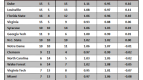
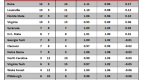
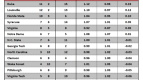
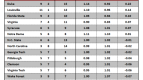
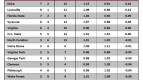
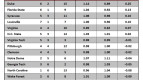
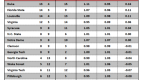
Last week we examined the sixty or so major programs that Vegas feels is worth offering as action to win the 2011-12 national championship. Unsurprisingly, the top several teams in the preseason Coaches Poll — North Carolina, Kentucky, Ohio State, Duke, Syracuse — generally mimic the top several teams in terms of the odds Vegas is offering. The one stunning exception to that trend is Connecticut, whom the pollsters have listed among the few teams most likely to cut the nets down in New Orleans next April, but from whom the oddsmakers still aren’t seeing much value (+2000, or a 4.8% chance, as of now).

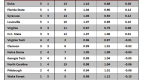
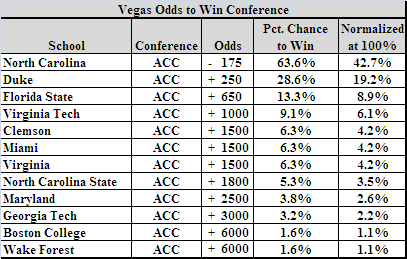
This week we’ll take a step further into the odds and consider the probabilities that Vegas has assigned to each power conference team to win its regular season championship. These odds are by no means foolproof. In reviewing last year’s preseason tables of the same six leagues, only Pittsburgh in the Big East and Arizona in the Pac-10 were favorites that came into the money by March. The other four league favorites this time last year? Try Duke in the ACC (UNC), Baylor/Kansas State in the Big 12 (Kansas), Michigan State in the Big Ten (Ohio State), and Kentucky in the SEC (Florida). So while all of these favorites looked reasonable one year ago today, keep in mind that college basketball seasons have a tendency to work themselves out differently despite what the oddsmakers and pundits think.

Ed. note: These odds are published on The Greek as of October 27, 2011. If you’re unfamiliar with how futures odds work, +150 represents the amount of money a potential gambler would receive back if he placed a $100 wager on that team and it won.  He would, in other words, win back 1.5 times his original wager.  Those few teams sporting a negative odds notation (e.g., -175) represents a situation where someone would have to wager $175 to win back $100. Since the aggregate of futures odds are designed to add up to a figure much larger than 100% (removing the incentive to wager on every team), we’ve added a far right column normalizing the odds to a true 100% value for each conference.    

ACC

Quick Thoughts on the ACC:

Read the rest of this entry »

Share this story

68 Must-See Games of 2011-12: #34-18

Posted by zhayes9 on October 27th, 2011

Zach Hayes is an editor, contributor and bracketologist for Rush the Court.

In case you missed it, check out games #68-52 and #51-35.

34. February 21: Kentucky at Mississippi State (9:00, ESPN)- Remember the last time Kentucky traveled to The Hump to take on Mississippi State late in the year? The hatred was off the charts before (taunting texts to DeMarcus Cousins from State fans) during (an intense 81-75 overtime win by the #2 Wildcats) and after (fans serenading the officials with a bottle showering) the game. While we can do without the texting and postgame embarrassment, players like Bulldogs point guard Dee Bost still harbor a bitter taste in their mouth from that outcome. If one can pinpoint a weakness with this loaded Kentucky team, it’s the lack of a true post presence. State can trot out the 6’11 Arnett Moultrie and the 6’10 Renardo Sidney. If those two are committed to the post for 40 minutes, this could be one of UK’s SEC stumbling blocks.

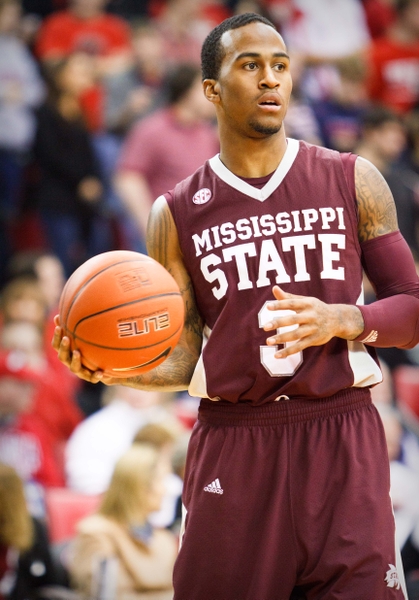
Senior Dee Bost is looking for a measure of revenge against Kentucky

33. February 22: Kansas at Texas A&M (9:00, ESPN)- After winning seven consecutive Big 12 titles, it’s fair to label Kansas as the hunted. That makes a very capable Texas A&M team the most threatening hunter. With B12 POY candidate Khris Middleton, Washington transfer Elston Turner and a deep frontcourt, Billy Kennedy is walking into an ideal situation once he gets his health in order. A&M may have a more complete roster, but Kansas was still picked to win the Big 12 in a tie with the Aggies. Until someone knocks the Jayhawks off their pedestal, they deserve to be considered favorites. This game in late February could go a long way towards deciding the regular season crown.

32. February 23: Duke at Florida State (7:00, ESPN)- ESPN’s Doug Gottlieb outlined a compelling case that Florida State is much closer to Duke’s equal than most believe, mostly because of their lockdown defense, absurd athleticism and length at every position. Who wins out when Duke’s star-studded offensive attack – buoyed by the ultra-talented freshman Austin Rivers and the emerging Ryan Kelly – meets the ‘Noles dynamic defenders? Last season, FSU held a Singler and Smith-led Duke team to 61 points in an upset win.

Read the rest of this entry »

Share this story

Where 2011-12 Happens: Reason #10 We Love College Basketball

Posted by rtmsf on October 27th, 2011

Another preseason preview gives us reason to roll out the 2011-12 edition of Thirty Reasons We Love College Basketball, our annual compendium of YouTube clips from the previous season 100% guaranteed to make you wish games were starting tonight. We’ve captured the most compelling moments from the 2010-11 season, many of which will bring back the goosebumps and some of which will leave you shaking your head in frustration. For the complete list of this year’s reasons, click here. Enjoy!

#10 – Where I Shoulda Been a First Teamer Happens

We also encourage you to re-visit the entire archive of this feature from the 2008-09, 2009-10, and 2010-11 seasons.

Share this story

ACC Morning Five: 10.27.11 Edition

Posted by mpatton on October 27th, 2011

  1. ESPN (Insider): I normally avoid Insider posts, but North Carolina resident Dave Telep gives us a peek under the bleachers at the uglier side of high major recruiting in college basketball that’s really a must-read for college basketball fans. Telep cites Lebron James as the first player who really took advantage of his worth and marketed himself during high school. Without giving too much away, Telep names three types of elite prospects: the clean, the agent/runner-influenced, and the bold, who just directly asks for money. The rest of the post almost reads like a how-to guide for cheating, but the one thing I wish Telep had offered was a solution. It’s no secret that there’s plenty of dirt behind high major basketball recruiting, but informed solutions are hard to come by.
  2. Atlanta Journal-Constitution: In case you haven’t noticed, there’s been quite a bit of turnover as far as ACC basketball coaches go. So much that Georgia Tech junior Mfon Udofia only managed to name five and a half (he knew Mark Gottfried was “the guy from Alabama”) conference coaches, not counting his own. Four ACC coaches are entering their first years and three are on their second. Mike Krzyzewski compared the recent influx of coaches to the early 1980s when he, Bobby Cremins and Jim Valvano joined over the course of two years. Those shoes are pretty big ones to fill (six NCAA Championships, myriad Final Fours and countless ACC titles clutter the three resumes).
  3. Huffington Post: Syracuse professor Boyce Watkins takes on the NCAA’s “funny math.” Watkins points out that while 96% of NCAA revenue does go back to the schools, the NCAA fails to calculate the incredibly high salaries of coaches. Watkins also points out the hypocrisy of paying college basketball players the same as their soccer brethren without factoring in the huge discrepancy between the coaches’ respective salaries. He also lays out policies that would more fairly represent the current NCAA system: for example, no games on school nights (ironic side note: the Ivy League actually adheres to this in conference play for basketball but not for Olympic sports), and coaches shouldn’t be able to sign endorsement deals. The anti-NCAA side of things has really gained momentum over the last six months, and I don’t think this trend will stop at partial cost of attendance stipends.
  4. Searching for Billy Edelin: Nick Fasulo got credentialed to see ESPN Film’s newest documentary, Unguardable. The movie covers Boston College (and later Fresno State) guard Chris Herren, who fell from the top of recruiting rankings to truly rock bottom. If this is anywhere near as good as Without Bias, it’ll be must-see TV. And from Fasulo’s review, it might be even better. Hennen managed to survive his bout with drugs and serves as the storyteller, leaving no middleman narration to distance the audience from the subject. Unguarded airs next Tuesday at 8PM on ESPN.
  5. CBSSports.com: Kyrie Irving is using his NBA lockout time off to help keep a promise to his family and get a degree. The first pick in last year’s NBA Draft is apparently back on Duke’s campus taking courses. This isn’t to say Irving is the only one: According to CBS, 52 current locked-out players (15% of players without college degrees) are using this time to pursue degrees they left for the greener pastures (and paychecks) of the NBA.

EXTRA: This story isn’t basketball related, but Sports Illustrated‘s Andy Staples hits the ball out of the park with his interview with former North Carolina assistant football coach John Blake. Blake’s side of the story has remained largely offstage, so it’s interesting to hear it from the man himself. The Tar Heels’ date with the NCAA Committee of Infractions is scheduled for this Friday. This just goes to show, not all stories are as black and white as they seem.

Share this story

Reviewing ACC Basketball Graduation Rates

Posted by KCarpenter on October 26th, 2011

To be honest, on average, the graduation rates for men’s college basketball players have  increased everywhere. To be completely honest, the graduation rates for student-athletes as a whole have improved. Still, let’s take a minute and appreciate how this trend holds up in the Atlantic Coast Conference: All in all, basketball players are graduating at better rates that they once did in the ACC, and at a rate that’s better than the national average for men’s college basketball players. So, that’s something.

But is it the whole story? No, but since the NCAA loves nothing if not thorough documentation, we can get at least get a clearer view of the story. The NCAA Graduation Success Rate (GSR) is a modified version of a rolling measure called the Federal Graduation Rate (FGR). The Federal Graduation Rate for a given year is the percentage of an incoming freshmen class that graduates at that institution within six years of entry, averaged with the three classes that preceded it. The FGR does not count any player who transferred to another university and graduated or otherwise left the university. The NCAA’s measure, GSR, tries to account for the fact that lots of athletes transfer to other universities, and, at least in a few sports, enter the professional leagues. So, in short, the GSR is in some ways, an inflated version of the Federal Graduation Rate, where an athlete can get counted as “graduated” as long as they leave the university in good academic standing. It almost makes sense, but since it’s the NCAA’s preferred metric, we’ll roll with it.  (ed. note: see our previous article this morning for Matt’s take on the value of graduation rates to the NCAA)

Now, because of the six year window that both rates use to count graduation, the numbers that were released this year deal with the players who entered a given university between 2001-02 and 2004-05.  So, while these numbers can give a good indicator in the general direction a program is heading, the data isn’t particularly timely.  Still, looking at the past and looking at how the data is trending can give a useful glimpse into the present.

Read the rest of this entry »

Share this story

The Missing Ingredient: Contenders Edition

Posted by zhayes9 on October 26th, 2011

Zach Hayes is an editor, contributor and bracketologist for Rush the Court.

On February 2, eventual national champion Connecticut found their missing ingredient.

Before that date, Huskies fans already had a sense their team could finish higher than the coaches selection of tenth in the Big East. Riding the heroics of Kemba Walker, they cruised through Maui, upset Texas on the road and dispatched of Villanova and Tennessee. Their sparkplug, leading scorer, energizer and team leader, Walker truly was Mr. Everything for the Huskies through the first three months of the season, but championships aren’t won by one player surrounded by incapable parts. Every critical eye knew that if Walker scuffled, as he did shooting 18-for-50 during two losses to Pitt and Notre Dame, the Huskies simply had no chance.

The talented junior drew double teams on every possession. He had no choice but to shoot 25 times per game. UConn’s late-game strategies became all too predictable. Someone else had to step up. Jim Calhoun, and Connecticut fans by extension, knew their team couldn’t reach a Final Four until a second option emerged alongside Walker.

By early February, Jeremy Lamb appeared to be that player. A 22-point, 4-rebound, 5-steal performance at Syracuse was his third consecutive outing with 20+ points. Lamb played with an understated confidence, lacked the typical freshman jitters late in games and confidently stroked jumpers. He developed into a consistent threat that defenses had to take seriously. Some inconsistent outings followed, but by March Lamb was the partner-in-crime Calhoun so desperately needed. The rest is history.

For contenders around the country, there is one fatal flaw that has the potential to derail their high hopes for this upcoming season. The flaw may take the entire non-conference slate to identify and most of league action to try to correct, but by March this glaring weakness must be solved in order for these elite teams to reach their lofty goals.

Reggie Bullock: UNC's missing ingredient?/ MSNBC

North Carolina: Consistent three-point shooting threat. Since I’m fairly confident Dexter Strickland can spell Kendall Marshall at the point for 3-4 minutes per half, the only other flaw I can identify for the overwhelming national title favorites is the lack of an outside shooting weapon. Unless someone emerges as a perimeter shooting threat, defenses will pack the post and dare Carolina to make jumpers, a problem further exacerbated by wing Leslie McDonald (38% 3FG) tearing up his knee this summer.  The most obvious resolution is Harrison Barnes, an All-American candidate perfectly capable of extending his range beyond the arc and improving on his 34% mark from deep. Blue-chip signee P.J. Hairston has the reputation of a premiere outside shooter, but relying on freshmen to make shots is often precarious. Most of McDonald’s minutes could go to sophomore Reggie Bullock. The Tar Heel faithful hope Bullock is the answer following a disappointing and injury-plagued rookie campaign.

Kentucky: Post presence. John Calipari’s roster this season is an enviable mix of super-talented freshmen bound for the lottery and seasoned veterans who know their proper role. Senior Darius Miller and sophomores Terrence Jones and Doron Lamb all return, but it’s the departure of center Josh Harrellson that could prove the biggest loss, a notion Kentucky fans could have never envisioned at this time a year ago. Harrellson was more than willing to do the post’s dirty work, snatching key rebounds, blocking shots and mixing it up with the likes of Jared Sullinger and Tyler Zeller. Although Anthony Davis and Kyle Wiltjer don’t lack in the height department, they’re more perimeter-oriented bigs without the necessary bulk to bang with elite, upperclassmen centers. Unless Eloy Vargas makes a gigantic leap forward, any team with a true post presence could give Kentucky fits.

Read the rest of this entry »

Share this story

Are Graduation Rates and the APR Good Metrics?

Posted by mpatton on October 26th, 2011

As you probably know, the Academic Progress Rating (APR) has made the news a lot lately largely because of a new NCAA rule that would exact postseason bans for teams not up to snuff academically (in the form of a 930 threshold score). Defending national champion Connecticut wouldn’t have made last year’s tournament with the stricter guideline and there was some speculation that the Huskies might not be allowed to defend their title as a result (this has since been resolved; the new threshold and punishments will go into effect next season).

Basketball writer Joe Giglio started tweeting North Carolina schools’ relative graduation rates Tuesday afternoon, sparking quite a conversation on the merit of graduation rate as an acceptable method for evaluating a school’s worth. Duke led the ACC in both general population graduation (94%) and overall athlete graduation (81%), which are phenomenal numbers. However, Giglio’s alma mater NC State only graduated 72% of its general population and 54% of its athletes (worst in the ACC in both categories). All percentages were calculated using a six-year window.

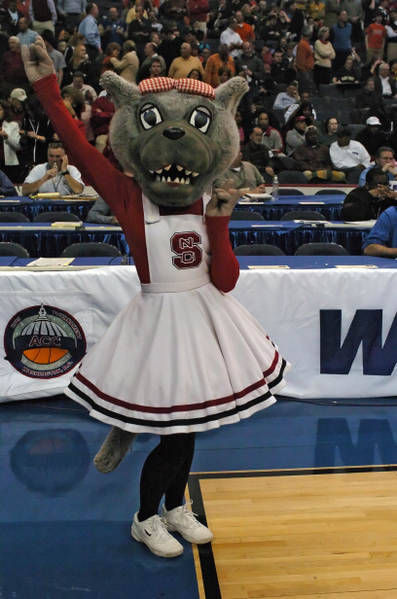
Are NC State's Low Graduation Rates Cause For Concern?

On a national scale, these numbers actually aren’t low. According to a USA Today study from 2009, the national average for four-year colleges is to graduate 53% of its students in six years — which is roughly on par with NC State’s average for athletes and much lower than its overall student body. That number is shockingly low. Even compared with fellow BCS schools, NC State compares favorably (#35 out of 67 schools) and the Wolfpack would be ranked third and fourth in the Big 12 and SEC, respectively.

Read the rest of this entry »

Share this story

Christian Laettner and the Profitability of Big Blue Hate

Posted by Gerald Smith on October 25th, 2011

Since 1992, former Duke forward Christian Laettner has been remembered in the dark recesses of every Kentucky fans’ heart. Beating The Unforgettables — the senior class of Wildcats who overachieved through Kentucky’s probation in the early 1990s — on a last-second shot created an entire generation of fans who harbor special hatred for Laettner and his stomp of Wildcat Aminu Timberlake’s chest.  After a decent pro career and some financial difficulties, Laettner re-engaged with Big Blue Nation Monday night. Laettner wanted to be hated; more specifically, Laettner wanted to get paid for being hated.

The Big Blue Hate Trade isn’t quite as profitable as former Wildcat basketball player Jeff Sheppard and his production team hoped. This Villains exhibition game was the ninth and final game of the Big Blue All-Star Tour that stretched throughout the state of Kentucky in the last couple of weeks. Laettner’s fame as Wildcat Enemy #1 was supposed to be the big pull to draw repeat attendees. Instead the announcement of Laettner’s involvement sparked some heated debate within Big Blue Nation as some fans did not want him a part of the festivities. Even after nearly 20 years since Laettner’s shot and Kentucky winning two National Championships of their own, it is still too soon for some Kentucky fans to let bygones be bygones.

Read the rest of this entry »
Share this story

ACC Morning Five: 10.25.11 Edition

Posted by mpatton on October 25th, 2011

  1. The Mikan Drill: Florida State‘s defense last season was excellent, but its offense nearly tipped the scales back the other way with its ineptitude. The Mikan Drill
    takes a look at the Seminoles’ offense with short video clips and diagrams to back up their analysis. Essentially, the ‘Noles did well in the post but very poorly on pick and rolls. Another key in the dysfunctional cog was the team’s inability to take care of the ball. Overall, a very informative piece on one of the most under-the-radar teams in the country coming into the 2011-12 season.
  2. Duke Basketball Report: First, let me give a shout-out to the high-quality pieces Duke Basketball Report has been putting out this offseason (unfortunately, it’s because its Blue Devil Tip-Off magazine didn’t raise the funds to get published, leaving lots of great articles looking for a home). Second, here’s a roundtable article looking at Duke basketball legend Bill Brill. Brill was a distinguished sportswriter who covered the Blue Devils for over 35 years. The interviews are with many ACC journalists who tell personal stories from Brill’s respected career. One of the more interesting anecdotes was that Brill unintentionally co-founded bracketology long before it was a staple in college basketball’s coverage — it’s worth a look.
  3. Testudo Times: Speaking of roundtables, Testudo Times has a great preview of Maryland‘s basketball season. Topics cover everything from predicted offensive style to conference realignment and everything in-between. The Terrapins are one of the more interesting teams in the ACC this season, as they lost quite a bit of size and production from last year’s squad (in addition to a certain hall of fame coach).
  4. Syracuse.com: In a talk with ESPN‘s Andy Katz last week, ACC coaches weighed in on conference realignment. The general consensus was that the conference should expand to 16 teams provided the two new teams fit well. NC State’s Mark Gottfried was the most adamant that the conference will expand, though Mike Krzyzewski has made it clear in the past that he supports going to a 16-team format with divisions. Not surprisingly, commissioner John Swofford evaded the question like the adept politician that he is.
  5. Kentucky Sports Radio: Duke legend Christian Laettner laced up his coaching shoes in Kentucky’s Rupp Arena last night for a Jimmy V fundraiser. Unfortunately, a recent number of Kentucky-related scrimmages led to a meager crowd. But the game was good enough to go to overtime, where Laettner’s “Villains” won the game despite pregame chemistry concerns about Duke’s Nolan Smith and North Carolina’s Tyler Hansborough playing for the same team. Laettner embraced the moment, perhaps his only in Rupp Arena, by wiping down the UK hardwood (see video below) and getting ejected late in the second half.

Share this story