Morning Five: 06.15.12 Edition

Posted by rtmsf on June 15th, 2012

  1. You’re probably reading this post approximately 8-12 hours after textapocalypse went into effect in college basketball last night. As the midnight bell tolled, a new NCAA rule went into effect allowing coaches to bombard high school sophomores and above with as many phone calls and text messages that they can muster. You might recall that one of the very first posts on this venerable site back in 2007 suggested that the NCAA’s decision to ban text messages in light of news that Billy Gillispie (then at Kentucky) was knocking out 8,000 messages a month was a good idea. Even in those short five years, how people communicate with one another has changed significantly (texting has essentially replaced phone calls between young people), but that doesn’t mean that middle-aged coaches will do any better with it now than they did then. One thing is certain — with social media like Twitter and Facebook today existing side-by-side texts on everyone’s smart phone, there’s bound to be lots of texting hilarity that will ensue from just the auto-correct function alone.
  2. Cincinnati and Xavier decided on Thursday that all the on-court fun the players have had at the Crosstown Shootout (now re-branded as the Crosstown Classic – lolz) in recent years shouldn’t be limited to the student-athletes punching each other on the floor. With the choice to move the game to a neutral site downtown and tickets split down the middle, this two-year move will allow fans to get in zip each other up while enjoying the game from the stands. Look, we understand the logic behind moving the game away from home sites where the vitriol heaved upon the visiting team produces a volatile situation, but is college basketball turning into a sport where only games at neutral sites are those worth having? Between the Kentucky-Indiana ridiculousness and now this, we have to wonder if the sport is losing one of the very things that makes it special (home-and-home rivalry games). What’s next — Duke and Carolina on a Charlotte/Greensboro/Raleigh rotation?
  3. It didn’t take long for former Nebraska head coach Doc Sadler to find a landing spot. Kansas announced on Thursday that Sadler, who has a 149-107 record as a Division I head coach, would take over as the Jayhawks’ Director of Basketball Operations. He replaces Barry Hinson, who left KU after the season to become the new head coach at Southern Illinois. Sadler continues a trend of high-major college coaches keeping their name fresh in the industry by taking assistant positions when they come available. For example, former Arkansas head coach John Pelphrey is currently an assistant at Florida, biding his time until another choice job comes available and an AD is willing to take another chance on him.
  4. Speaking of the Gator program, Florida fans received some excellent news on Thursday when Virginia Tech forward Dorian Finney-Smith announced that he would transfer to Gainesville in light of Seth Greenberg’s firing. Finney-Smith joins Damontre Harris as transfers heading south to play for Billy Donovan, giving the two-time national champion head coach a leg up already on his 2013-14 roster. The 6’8″ player averaged 7/7 last year in 30 minutes per game for Virginia Tech, but he clearly needs to spend the off year working on shot selection (33.2%) and bulking up. Finney-Smith is already an elite per-minute rebounder, but with another 30 pounds on his frame he could easily average double figure boards in two years for the Gators.
  5. The biggest knock on Bruce Weber at Illinois was his recruiting (or lack thereof), especially in the talent-rich Chicago area. As the new head coach at Kansas State, he faces a more difficult recruiting situation in that the nearest major city is Kansas City, a town not exactly known for its prep basketball talent in the same sense as the Windy City. As a result, Weber went on record Thursday stating that he plans to branch out to more places, even as many as all places. Well, except the West Coast. Weber said during a Big 12 coaches’ teleconference that he wants to recruit the Midwest, Texas, the East Coast, and of course, Chicago. All we can think is that Illinois fans must be snickering in their cereal this morning.

Royce White Aces Interview Process, Quells Important Offcourt Concerns

Posted by EJacoby on June 14th, 2012

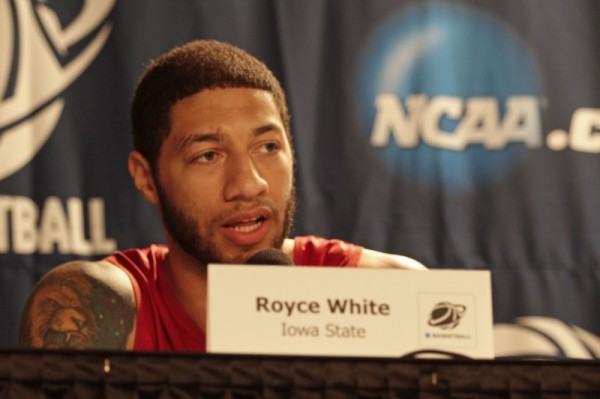
No draft prospect’s stock is perhaps as volatile as former Iowa State point-forward Royce White, who’s been rumored to fall anywhere from the late lottery to the early second round. White led a solid Cyclones team in points, rebounds, assists, steals, blocks, and field goal percentage last season as a dominant college forward with unquestionable ability as an impact pro player. But NBA evaluators are rightfully concerned about his many off the court issues — getting kicked off his first team (Minnesota), having trouble staying in shape, and, most importantly, his well-known anxiety disorder. Scouts fear that his personality traits could hinder his development and make it difficult for him to adapt to fast-moving changes at the next level. But this week at the NBA Draft Combine, White had a chance to speak face-to-face with league executives and draft scouts through the interrogation process, and he was phenomenal in the interview room. White was one of the best overall public speakers of the group, but more importantly he was refreshingly honest and insightful with answers to specific questions about his anxiety and his game. If NBA teams pass on White solely because of attitude concerns, that’s a mistake based on how well he carried himself in the interview room.

Royce White was just as impressive in front of a microphone at the Combine as he was on the court last season (Iowa State Daily photo)

Overall, White was hands down the best interview in Chicago. Most prospects simply try not to hurt themselves during the interview process and choose to answer with standard player clichés: “I’ll do anything the team wants me to […] I can play any position […] My shot is better than I showed last season.” But White gave honest answers to every question, coming off as a confident young man that understands himself and his game. “Very mediocre; average,” said White about his jump shot. “Hopefully I can have the ball in my hands, I kind of proved that I’m good doing it. But if I don’t, that’s fine as well,” he said when asked about having to play off the ball in the league.

Read the rest of this entry »

RTC NBA Draft Profiles: Tyler Zeller

Posted by EJacoby on June 14th, 2012

The 2012 NBA Draft is scheduled for Thursday, June 28, in New York City. As we have done for the last several years, RTC’s team of writers (including Andrew Murawa, Kevin Doyle, Evan Jacoby, Matt Patton, and Danny Spewak) will provide comprehensive breakdowns of each of the 35 collegians most likely to hear his name called by David Stern in the first round on draft night. We’ll work backwards, starting with players who are projected near the end of the first round before getting into the lottery as June progresses. As an added bonus, we’ll also bring you a scouting take from NBADraft.net’s Aran Smith at the bottom of each player evaluation.

Note: Click here for all published 2012 NBA Draft profiles.

Player Name: Tyler Zeller

School: North Carolina

Height/Weight: 7’0”/ 250 lbs.

NBA Position: Center

Projected Draft Range: Late Lottery / Mid-First Round

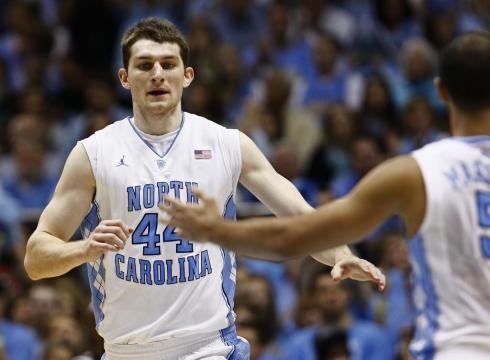
Zeller runs the floor well for a seven-footer (AP Photo/G. Broome)

Overview: Tyler Zeller is the increasingly rare example of a four-year senior who could end up as a lottery pick after graduation. After struggling with injuries during his first two seasons, Zeller blossomed into a true college star. A legitimate seven-footer with great mobility, Zeller was incredibly productive in his final two years as a Tar Heel, most recently becoming the ACC Player of the Year as a senior. He improved slightly across the board in all areas from his junior to senior year, showing more facets to his game. He ended the 2011-12 season with averages of 16.3 points, 9.6 rebounds, and 1.5 blocks per game on 55% shooting from the field and 81% free-throw shooting, all very good numbers on a team with plenty of other stars. He was UNC’s most consistent contributor and go-to offensive option, perhaps sharing the latter with Harrison Barnes on the perimeter. But Zeller was often more effective than Barnes with his touches, and the team was most dominant when he was featured. Zeller shows great agility for his size and was the perfect center for the Tar Heels’ up-tempo offense, especially in transition. He’s not an explosive athlete or shot-blocker, and he doesn’t appear to do anything exceptionally well. But he has all the tools that a center needs, and his ability to contribute across the board makes him an intriguing prospect with the potential to be an instant impact player in the NBA.

Read the rest of this entry »

Can Harrison Barnes Put His Elite Combine Scores To Use On the Court?

Posted by EJacoby on June 14th, 2012

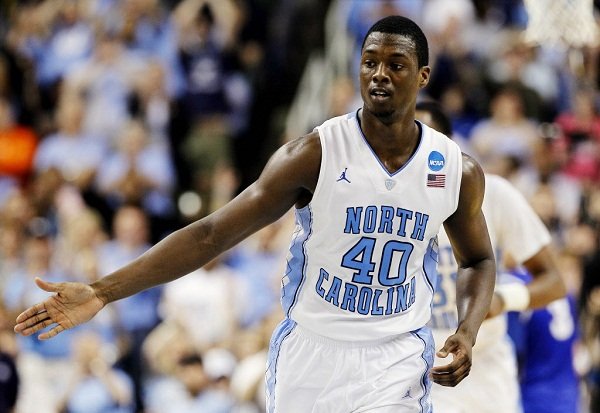
On Monday we analyzed this year’s NBA Draft Combine physical measurements, highlighting several players who posted notable numbers. Today we have a chance to dissect the athletic testing results, in which the Chicago Combine puts all competitors through a series of agility drills and strength assessments, enabling scouts to see which players display the greatest raw athletic ability. There’s probably more to gather from the testing portion as compared to the measurement sets, but the same rule applies that it’s difficult to draw any direct conclusions about how a player will translate his raw physical attributes into a live game setting. There’s no better example of that than Harrison Barnes, who developed a reputation during his two years at North Carolina as primarily a jump shooter, someone who doesn’t attack the basket as much as he prefers to face up on defenders and shoot pull-ups. But at the Combine, Barnes was the single most impressive athlete in camp. In the testing portion involving 52 competitors, he finished with the greatest vertical jump and fastest full sprint while cracking the top 10 of the bench press. Though Barnes was an effective scorer in college, his unwillingness to attack the basket was concerning. Barnes’ raw numbers at the Combine are suggestive that he should have greater success attacking in transition and getting to the rim than he did. But can he put his athleticism to use most effectively during the flow of the game at the next level? That’s the question NBA scouts are now asking themselves.

There’s reason to believe Harrison Barnes can be a more efficient offensive player (AP Photo)

Barnes finished third in the ACC in scoring last season at 17.1 PPG on a team loaded with other offensive weapons, so it’s not like he failed to produce offensively as a Tar Heel. But digging deeper into his numbers, his overall efficiency output matched what the film showed, which is that he didn’t capitalize on his touches nearly as much as he could have. Barnes’ offensive rating (measuring a player’s point output per 100 possessions) of 108.1 did not even crack the top 20 in his conference, meaning that he didn’t produce points at a very high level given the amount of possessions that went his way. Given his great size (6’7″ without shoes), Barnes can shoot over defenders nearly any time he wants in the mid-range, but he decided to make that his go-to move in college. His true shooting percentage of 52.8% as a sophomore was very average for someone with his skill set and shooting ability. Also consider that his free throw rate (measuring FTA divided by FGA) of 37.4% didn’t crack the ACC’s top 20. If he can become more aggressive then there is clearly much room for growth in Barnes’ offensive game, the one thing that could propel him to make a leap to become a great NBA player.

Read the rest of this entry »

Morning Five: 06.14.12 Edition

Posted by nvr1983 on June 14th, 2012

  1. The incoming class of freshmen is expected to be weaker than last year’s class, but don’t be surprised to see many of them adapting quickly to the college game thanks to a newly adopted rule that will allow coaches increased access to their incoming freshmen over the summer. Coaches will be allowed to work with players for up to two hours a day for a total of eight hours a week in the summer if they are enrolled in the school’s summer session. Given the scrutiny these players will be under and the sudden change they will experience (particularly those going to large state schools) we cannot imagine any coach would not push their incoming freshmen to come to campus early to become more acclimated with their new surroundings particularly with the increased access they will now have.
  2. We are not quite sure why it had to come to this (ok, we sort of do, but it is still idiotic), but on Tuesday voters in North Dakota voted to allow North Dakota to change the schools mascot from the Fighting Sioux to something else that would most likely be less politically charged. The name, which is one of an increasingly small number referring to Native Americans, has been a source of controversy for several years, but the issue had to be put to the voters because the use of the name Fighting Sioux and the associated logo had been required to be used by state law. The comments regarding the issue are interesting as some people such as Tim O’Keefe, executive vice president and CEO of the UND Alumni Association and Foundation, noted that the move was motivated by potential NCAA sanctions rather than political correctness while other groups including some Sioux groups felt that the association was a positive one.
  3. The trial for suspended Oklahoma State forward Darrell Williams has been delayed until July 9 as one of the prosecution’s witnesses would have been out of the country for the start of the trial. Williams, who averaged 7.1 points and 7.3 rebounds per game as a junior in the 2010-11 season, is accused of sexually assaulting two women at an off-campus party in December 2010. He faces four counts of rape and one count of sexual battery. While this may seem like a long time especially since Williams pleaded not guilty all the way back in February 2011 it is not unusual a trial to take this long to occur with lawyers filing all of their usual motions.
  4. We mentioned it a month ago and yesterday the NCAA officially ruled to require temporary logos to be “of a consistent surface” as the rest of the court. It will be interesting to see how in-season tournament sponsors react to this and whether it will affect the amount of money that they are willing to commit to these event (suspect that it will), but for the sake of the players this was a necessary move. Not to be lost in the sticker ruling are the other decisions listed about bench decorum, block/charge calls, and monitor reviews all of which will probably have a bigger impact on college basketball than the sticker rule will even if they are not as easy to write angry columns about.
  5. Michigan State athletic director Mark Hollis has to be one of the best marketers in the business. After coming up with the idea for the Carrier Classic, an outdoor college hockey game in 2001, and a regular basketball season game at Ford Field, Hollis is pushing for a game at Jenison Field House, the Spartans home until 1989, to commemorate the 50th anniversary of a game between Mississippi State and Loyola (Chicago). That game, which was won by Loyola 61-51 en route to the national title, was the Mideast Regional semifinals and was notable for the fact that Mississippi State (an all-white team) ignored a court injunction forbidding it from playing Loyola, which had four African-American starters. So far plans are in the very preliminary stages (neither of the two teams involved have committed to anything) and it may just involve Michigan State playing a random opponent at Jenison, but it would be a nice way to commemorate the event at a site that has not hosted a Spartan men’s basketball game since the 1989 NIT Tournament.

RTC NBA Draft Profiles: John Jenkins

Posted by EJacoby on June 13th, 2012

The 2012 NBA Draft is scheduled for Thursday, June 28, in New York City. As we have done for the last several years, RTC’s team of writers (including Andrew Murawa, Kevin Doyle, Evan Jacoby, Matt Patton, and Danny Spewak) will provide comprehensive breakdowns of each of the 35 collegians most likely to hear his name called by David Stern in the first round on draft night. We’ll work backwards, starting with players who are projected near the end of the first round before getting into the lottery as June progresses. As an added bonus, we’ll also bring you a scouting take from NBADraft.net’s Aran Smith at the bottom of each player evaluation.

Note: Click here for all published 2012 NBA Draft profiles.

Player Name: John Jenkins

School: Vanderbilt

Height/Weight: 6’4” / 215 lbs.

NBA Position: Shooting Guard

Projected Draft Range: Late First Round

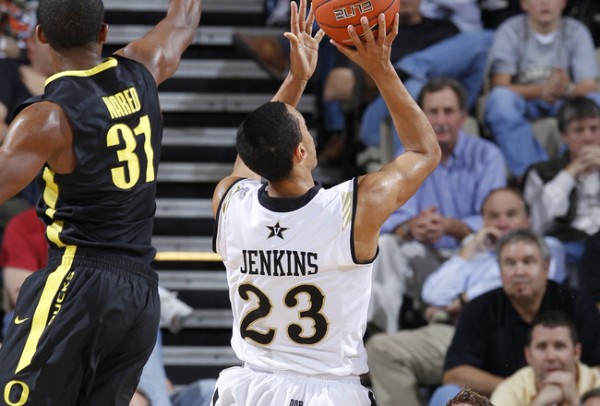
Jenkins was the best shooter in college basketball as a Commodore (Getty Images/J. Robbins)

Overview: From the moment he stepped on the floor as a freshman, John Jenkins was one of the best shooters in college basketball, particularly from beyond the arc. He shot an outstanding 43.7% from three-point range during his three-year career at Vanderbilt. Jenkins led the nation with 134 three-point makes last season as a junior, hitting at a 43.9% clip (second in the SEC). He was also an 85.5% free-throw shooter throughout his three seasons, and his 65.5% true shooting percentage as a junior was off the charts for someone competing in a top conference. He led the SEC in scoring the past two seasons with a similar average around 19.7 PPG. In fact, his sophomore and junior year averages are nearly identical across the board – something that starts to play into his limited impact in other areas. Jenkins has not shown much improvement in other aspects of his game besides shooting and working off the ball for looks. He doesn’t show much of an ability to create for others off the drive or pass (1.1 assists per game for his career), he doesn’t hit the glass often (2.7 career RPG), and he doesn’t create many steals or block shots (0.7 SPG, 0.3 BPG). Lacking the size, quickness, and athleticism of an ideal shooting guard, Jenkins projects to be more of a specialist in the league rather than a starting two. But he knows where his bread is buttered and has mastered an important NBA skill, in the process showing disciplined fundamentals in other areas of the game to the point where he doesn’t hurt the team, such as averaging just 1.6 turnovers per game.

Read the rest of this entry »

The Dream Team 20 Years Later: Reflecting On Their College Careers

Posted by EJacoby on June 13th, 2012

On Wednesday night, NBA TV will air “The Dream Team,” a brand new documentary that relives the 1992 Men’s Basketball USA Olympic Team that’s better known by that same name. This summer marks the 20th anniversary of the team, the inspiration behind documenting the players, and their legendary run through the 1992 Barcelona Olympics. The national team of 12 players included 11 future Hall of Famers and some of the greatest players in basketball history all in one locker room. The forgotten member of the team is Christian Laettner, the lone collegian at the time to make the squad, who was coming off of one of the greatest NCAA basketball careers of all-time as a two-time National Champion for Duke. Looking back, how did the other 11 players fare in their amateur careers? Was their collective NBA and international success predicated by dominance in college? On the day the documentary airs, we reflect on the Dream Team from a college perspective.

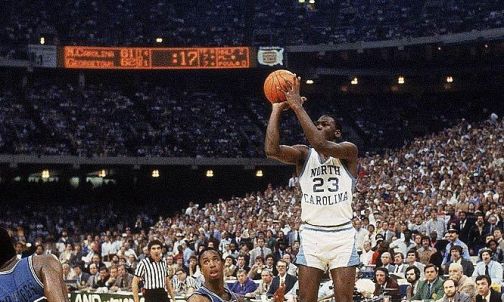
Michael Jordan hit the game-winning shot in the 1982 National Championship game for North Carolina 10 years before he joined the Dream Team (AP Photo)

As it turns out, the team wasn’t just a collection of all-time great professionals. Exactly half the players on the roster also qualify as some of the greatest collegiate players ever. Six players on the Dream Team were included on ESPN’s list of the 25 greatest players in college basketball history, the highest of whom was Larry Bird at #9. Bird averaged 30.3 points per game in his career at Indiana State, and in his senior National Player of the Year season he led the Sycamores to a 33-1 record and a loss in the National Title game to Michigan State and Magic Johnson. Johnson is another one of the greatest collegians on the list (#15), averaging 17.1 points, 7.6 rebounds, and 7.9 assists per game in two seasons for the Spartans that became a preview of the stat-sheet stuffing machine he would become in the NBA.

Read the rest of this entry »

Morning Five: 06.13.12 Edition

Posted by rtmsf on June 13th, 2012

  1. Last night the NBA Finals between Miami and OKC began in Oklahoma City, and aside from the fact that Thunder fans have the look and feel of college fans (that tends to happen when you’re the only professional franchise in a traditional college sports state), we found the former collegiate talent on the floor just as compelling. Many NBA fans are not college basketball fans and vice versa, but we’d encourage any of our college-only readers to spend some time this week and next getting a look at how well former collegiate stars such as Kevin Durant, Dwyane Wade, Russell Westbrook, Mario Chalmers, Shane Battier, Udonis Haslem, James Harden, and even Nick Collison have acquitted themselves as pros. This piece we published yesterday takes a look back at some of the accomplishments of these and several other players during their amateur days, with the general sentiment that folks like us will especially this year’s version of June Madness.
  2. While on the subject of basketball in the great state of Oklahoma, there’s more coming that way. Conference USA has decided to move its 2013 conference tournament to Tulsa in light of Memphis’ decision to join the Big East beginning in the 2013-14 season. Although we certainly understand the incentive of the league to punish Memphis for its disloyalty, it feels a bit like cutting off the nose here to spite the face. The last time the C-USA Tournament was held in Tulsa in 2010, the attendance numbers were somewhat disappointing and the Golden Hurricane had a solid squad that year. Whether new head coach Danny Manning will be able to fire up the locals enough to make this decision a success next March is an open question.
  3. It’s never too early to start thinking about next season, and Jeff Goodman is the type of guy who has already played out 2013 in his head before most of us see it on the horizon. In this post he outlines the 55 best non-conference games that are already on the schedule for next season. The top game on his list is a rematch of the first half of the 2012 Final Four, but we’re actually more interested in a certain Champions Classic game that involves a couple of schools that do not play each other regularly. In case you’re wondering — and we know you are — Kentucky vs. Indiana is still nowhere to be found on this list.
  4. Providence appears to be on the way up the standings of the Big East with a top recruiting class coming in for Ed Cooley next season, featuring Ricardo Ledo in the backcourt. For that reason, Friar guard Gerard Coleman began looking elsewhere despite averaging 13/5 last year as a sophomore, and he has decided to resurface 3,000 miles across the country at Gonzaga. Mark Few is getting an athletic scorer who tailed off considerably last year as the losses piled up in Providence, but one who will no doubt benefit from a year watching the game from the bench to better learn about good shot selection (42.4% FG; 23.8% 3FG).
  5. The men’s basketball NCAA Tournament Selection Committee is one of the most scrutinized bodies in all of American sports. Each year the group of dignitaries is shuttered away in an Indianapolis hotel and expected to produce a perfectly balanced and justified bracket to satisfy millions of college basketball fans around the country. The task is a herculean one, fraught with time-sensitive pressure and an overwhelming fear of mistakes. Now that the BCS has decided to move to a four-team playoff in college football, the topic of a similarly situated selection committee is on the table. But, as ESPN.com’s Heather Dinich writes, there is no consensus among college presidents and other NCAA insiders as to how the four lucky teams should be selected. The one thing we can rest assured of is this: future Selection Committee members should just go ahead and change their addresses, because there is an enormous difference between being the first school left out of a 68-team field and a four-team one.

NBA Finals Features Plenty of College Stars

Posted by EJacoby on June 12th, 2012

The 2012 NBA Finals between the Oklahoma City Thunder and Miami Heat begins tonight in a dream matchup of star-studded teams that is sure to draw huge viewer ratings. The major media narrative of the series centers around the two superstars — LeBron James and Kevin Durant — and all basketball fans should enjoy watching them battle at the highest level. But digging deeper, diehard college hoops supporters are in for a real treat as each team features veteran players that were once stars at the collegiate level for Final Four-bound squads. Thought the Fab Five was a distant memory? Juwan Howard, former Michigan star from 1992-94 and current Miami reserve forward, thinks otherwise. Before the current John Calipari era, Kentucky’s last run of glory came in the late 90s, during which Nazr Mohammed was on the star-studded 1996 championship team before playing a much bigger role on the 1998 championship team. Fans surely remember Mario Chalmers‘ performance during the 2008 National Title game as well, featuring arguably the biggest shot in recent NCAA history. Chalmers is Miami’s starting point guard who will have to knock down some more big shots in order for the Heat to win. There are plenty of other players in this championship series that will bring college fanatics down memory lane.
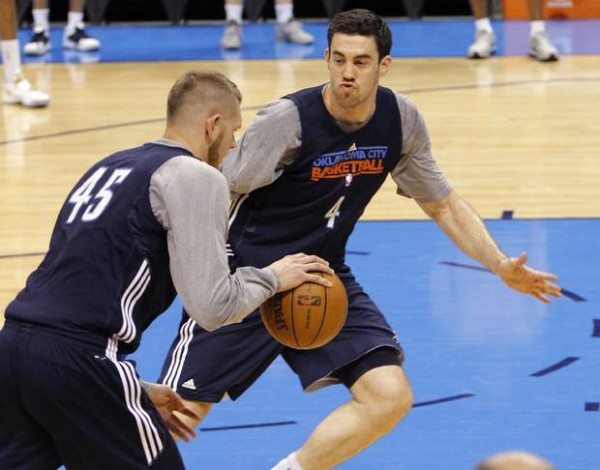
Nick Collison and Cole Aldrich were stars for Kansas before being drafted by Oklahoma City (C. Landsberger, The Oklahoman)

The rosters of the Heat and Thunder combine to feature 12 (!) different players that once played in a Final Four during their college careers. Oklahoma City’s Final Four attendees include Cole Aldrich, Nick Collison (twice), Daequan Cook, Royal Ivey, Russell Westbrook (twice), and Mohammed (three times). Miami, meanwhile, features Shane Battier (twice), Dwyane Wade, Udonis Haslem, Mike Miller, Howard (twice), and Chalmers. These 12 players combined for five National Titles. Miller and Haslem were teammates at Florida for the 2000 Gators team that lost in the Championship Game to Michigan State. And this list doesn’t even include Durant, who won the National Player of the Year award in his only season at Texas (2007). Battier was also a NPOY winner at Duke during his accomplished college career. March Madness fans probably remember Derek Fisher, Eric Maynor, and Norris Cole, too, each of whom led small schools to the NCAA Tournament through leading point guard roles. Now they are all valuable reserves for potential NBA champions, though Maynor has missed this season with an ACL tear in his knee.
Read the rest of this entry »

Bernie Fine Case Takes Another Strange Turn…

Posted by EJacoby on June 12th, 2012

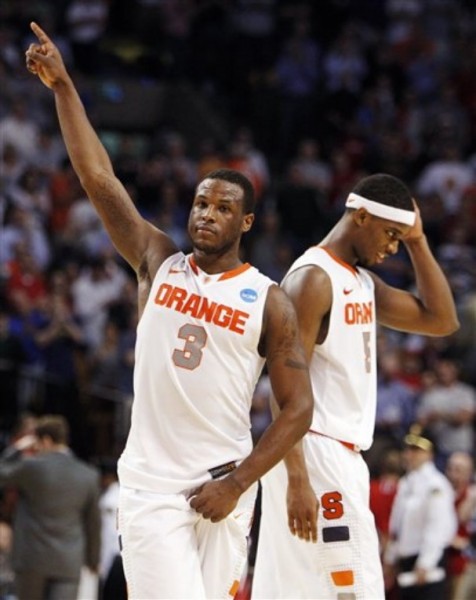
Nothing has come easy for investigators in the child molestation case against former Syracuse assistant coach Bernie Fine, in which former ball boy Bobby Davis accused the coach of sexual wrongdoing. It’s been a back-and-forth of accusations and denials from everyone involved in the story since it broke public last November. The most fascinating detail about the case remains that the university knew about Davis’ accusations against the coach as far back as 2004, and yet Fine remained on staff in his top assistant position to head coach Jim Boeheim until the public fiasco in 2011. 

The Orange still thrived last season amidst the off-court school scandal involving assistant coach Fine (AP Photo/M. Dwyer)

On Monday a new twist surfaced, as the Syracuse Post-Standard reported on a 2005 university investigation that found no witnesses at the time believed the accuser’s claims. Seven key members of Davis’ story were interviewed by SU, and not a single one confirmed the accusations. But it gets even more odd, as the accuser provides information of his own that the school didn’t seem to properly investigate. Davis reportedly called Fine to apologize (about what?) in 2005, according to the Post-Standard‘s knowledge of the secret report. The investigation has not been released, but more and more contradicting details continue to come out that could prolong this case.

Read the rest of this entry »