
Jared Sullinger’s Medical Red Flags Call Into Question His Draft Status

Posted by EJacoby on June 19th, 2012

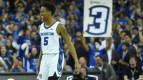
Jared Sullinger was one of college basketball’s biggest stars the past two seasons, entering Ohio State as the #2 consensus player in his high school class and consequently producing at an elite level for the Buckeyes from day one. The 6’9″ fundamental machine averaged over 17 PPG and 9 RPG in back-to-back seasons, becoming a First Team All-American in both years. He led OSU to a #1 seed and Sweet Sixteen appearance in his freshman year before igniting the Buckeyes even further in 2011-12 — all the way to the Final Four. Yet Sullinger saw his draft stock slowly drop throughout college, from a potential #1 pick to just borderline top 10 status as of early June’s Draft Combine, due to concerns about his NBA upside stemming from limited athleticism. He failed to impress during Combine measurements and testing, finishing dead last of 52 competitors in the agility and sprint drills while showing up with 10.7% body fat.
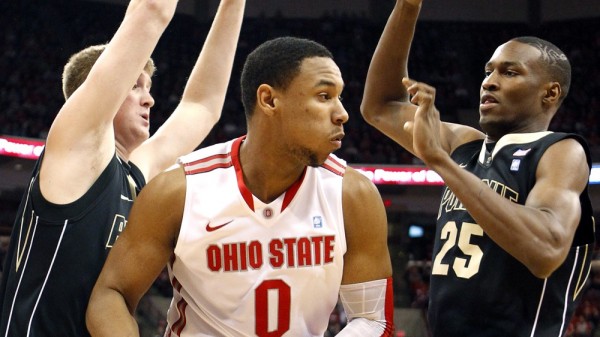
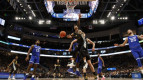
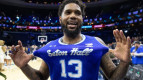
Sullinger is now swarmed with obstacles in preparation of the NBA draft (Reuters photo/M. Sullivan)

But things got much worse on Monday, after Sullinger was reportedly red flagged by NBA doctors who have serious concerns about a long term back injury. Team doctors worry that “back issues could shorten his NBA career” and some medical staffs “advised their teams not to draft him in the first round,” according to ESPN’s Chad Ford. This news will make it even more challenging for Sullinger’s professional prospects — somehow, this dominant college big man with consistent professional intrigue may not even get selected as a first round NBA pick. Could Sullinger wind up becoming a late steal (think: DeJuan Blair), or should concerns about his physical condition validate passing on him in this deep draft?

Read the rest of this entry »

Morning Five: 06.19.12 Edition

Posted by rtmsf on June 19th, 2012

  1. Mike Brey has built Notre Dame into an annual fixture in the Top 25 during his tenure in South Bend, and the three-time Big East COY who has led the Irish to six straight 20-win seasons will be rewarded with long term job security as a result. Reports indicate that the school on Tuesday will announce a 10-year extension to Brey’s contract, ostensibly keeping him at the school well into his 60s (he’s currently 53). It’s a proactive move by Notre Dame brass who are looking to shore up a winning program that has arguably been more successful than its football counterpart over the same period, while also signaling to potential poachers that Brey is going to cost quite a bit of coin to attract him away from northern Indiana.
  2. It’s June 19, so what better time than to debate the relative merits for three top contenders for next year’s national title? The gents from CBSSports.com — Jeff Goodman, Gary Parrish, and Matt Norlander — each chose a team on Monday and made their case. Goodman chose Rick Pitino’s Louisville Cardinals; Parrish chose John Calipari’s Kentucky Wildcats; and Norlander chose Tom Crean’s Indiana Hoosiers. If you believe these guys, the Mesopatamia of college basketball in 2012-13 lies somewhere near Otisco, Indiana.
  3. In reading about the way friends, family and even recruiters treated high school star Khadeem Lattin‘s year spent in Spain at Canarias Basketball Academy, we weren’t sure whether to laugh or cry at the absurdity of it all. Despite going to a skills academy run by an American that has sent 41 Europeans to D-I schools over the years, the general consensus stateside was that Lattin was somehow hurting his career by taking the year to hone his skills in a European environment. He was removed from the ESPN rankings altogether per a policy regarding ranking only US players, and his rating was downgraded from four stars to three after a lackluster showing in the spring. And people wonder why the abominable AAU system of prep basketball in the US never improves — they hold all the cards, man.
  4. Sometimes we openly wonder whether the hardship waiver transfer rule has gotten completely out of hand, but in the case of Villanova’s Tony Chennault (a transfer from Wake Forest), we understand why the rule exists. The school announced on Monday that the NCAA had approved Chennault’s waiver request, making him eligible to take over a decimated VU backcourt effective in 2012-13. Chennault’s mother suffered some health issues recently, but more tragically than that, he lost his brother, Mike Jay, recently. Villanova is coming off its toughest season under Jay Wright’s stewardship, but with a solid interior crew surrounded by the talented Chennault and another promising player or two, maybe the Wildcats can find their typical game next season with a different cast of characters.
  5. Finally this morning, we’re about six weeks removed from the start of the 2012 Summer Olympics and players from around the world are preparing to compete in the FIBA World Olympic Qualifying Tournament to earn a spot in London. The Dagger took a look at seven college (or recently graduated) players who will play in that tournament, with a few notable names such as Creighton’s Gregory Echinique (Venezuela), Iowa State’s Melvin Ejim (Nigeria), and Florida State’s Deivydas Dulkys (Lithuania) leading the way. Of course, Kentucky’s Anthony Davis is one of the finalists for the US men’s national team, but his odds of making the final roster remain a long shot at best.

Next Year’s Unique Top Recruit Will Announce His College Decision in November

Posted by EJacoby on June 18th, 2012

Jabari Parker has been in the news a lot lately, much more so than some other recent top recruits. The consensus #1 player in the 2013 high school class was featured on the cover of Sports Illustrated in May, in which the magazine dubbed him “the best high school basketball player since LeBron James.” Stories about the 17-year-old have been flooding in ever since, many detailing his devout Mormon faith and whether or not he’ll serve as a missionary when he turns 19 as many LDS members do. He was interviewed recently on Good Morning America and is also the featured star for USA Basketball’s U-17 team, which will compete in the World Championships later this month. But the biggest news of all broke on Sunday, when Parker said that he’ll announce his college decision this November, long before the spring signing period begins. The rising senior from Chicago wants “to do it for me because I want to get it over with before the season starts.” But perhaps he’s also doing it for his father and former NBA forward, Sonny Parker, who recently said, “I think Jabari is the first high school player who has experienced this social media stuff,” and that he’ll limit Jabari’s media availability this summer to let him live like a regular kid. Parker has 14 schools on his list and appears a bit overwhelmed by all the attention, so he’ll presumably have the hard part of recruiting out of the way before his senior season begins.

Top recruit Jabari Parker is unique as a player and a person (AP Photo)

Parker has ‘narrowed’ his college list down to the following 14 schools: BYU, Connecticut, DePaul, Duke, Illinois, Kansas, Kentucky, Louisville, Michigan State, Missouri, North Carolina, Northwestern, Ohio State, and Washington. It’s anyone’s guess who the top candidates are now, though we’d expect that BYU, Illinois, Northwestern, and DePaul made the cut mainly for show to support his local and religious ties. Recruiting analysts report that he has great relationships with coaches Mike Krzyzewski at Duke and Tom Izzo at Michigan State, though Parker himself spoke about his ties to DePaul (his best friend is a walk-on there), Illinois (with its new head coach, John Groce), and Kentucky (hearing from fellow Chicagoan Derrick Rose about John Calipari). He plans on cutting the list down to eight over the summer.

Read the rest of this entry »

RTC NBA Draft Profiles: Austin Rivers

Posted by EJacoby on June 18th, 2012

The 2012 NBA Draft is scheduled for Thursday, June 28, in New York City. As we have done for the last several years, RTC’s team of writers (including Andrew Murawa, Kevin Doyle, Evan Jacoby, Matt Patton, and Danny Spewak) will provide comprehensive breakdowns of each of the 35 collegians most likely to hear his name called by David Stern in the first round on draft night. We’ll work backwards, starting with players who are projected near the end of the first round before getting into the lottery as June progresses. As an added bonus, we’ll also bring you a scouting take from NBADraft.net’s Aran Smith at the bottom of each player evaluation.

Note: Click here for all published 2012 NBA Draft profiles.

Player Name: Austin Rivers

School: Duke

Height/Weight: 6’5” / 200 lbs.

NBA Position: Shooting Guard

Projected Draft Range: Late Lottery Pick

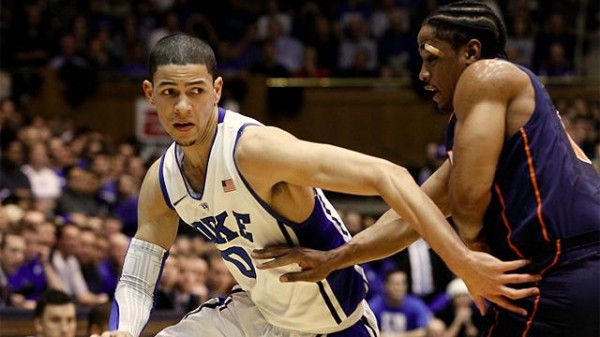
Rivers can get by nearly any defender with his driving ability (AP Images)

Overview: Austin Rivers came into college as perhaps the most hyped freshman in the country; the consensus #2 recruit behind Kentucky’s Anthony Davis. The son of Boston Celtics head coach and former longtime NBA point guard Doc Rivers, Austin has been in the spotlight for many years now. His one-year “career” at Duke produced mixed results, as he was a very effective offensive player from day one but also struggled to play within the team concept. Without Rivers, Duke would never have come close to receiving a #2 NCAA Tournament seed. But with him, the Blue Devils couldn’t even defeat Lehigh in the first round. Rivers hurt the team as much as he helped it during certain stretches of games. But overall, there’s no denying his explosive scoring ability. He averaged 15.5 PPG as a consistent producer, reaching double figures in 30 of his 34 games and was capable of going for 20-plus in any game. He put up 29 points on the road at North Carolina, including the game-winning buzzer beater that was one of 2011-12’s greatest moments. That’s the kind of player Rivers is; he has the utmost confidence in his ability and wants to take all the big shots. He has a killer crossover and lightning-quick first step as well as unlimited range on his jumper. But he was not a very efficient player as a frosh – shooting percentages of 43.3% (FG), 36.5% (3FG), and 65.8% (FT) all need improvement. The former two numbers show evidence of his questionable shot selection, and the third was unfortunately low for a player that got to the line with regularity. He averaged more turnovers (2.3) per game than assists (2.1) and doesn’t look like he can play NBA point guard. Rivers remains an elite scoring prospect as an undersized two, but needs work on his decision-making and defensive work ethic.

Read the rest of this entry »

RTC NBA Draft Profiles: Moe Harkless

Posted by EJacoby on June 18th, 2012

The 2012 NBA Draft is scheduled for Thursday, June 28, in New York City. As we have done for the last several years, RTC’s team of writers (including Andrew Murawa, Kevin Doyle, Evan Jacoby, Matt Patton, and Danny Spewak) will provide comprehensive breakdowns of each of the 35 collegians most likely to hear his name called by David Stern in the first round on draft night. We’ll work backwards, starting with players who are projected near the end of the first round before getting into the lottery as June progresses. As an added bonus, we’ll also bring you a scouting take from NBADraft.net’s Aran Smith at the bottom of each player evaluation.

Note: Click here for all published 2012 NBA Draft profiles.

Player Name: Moe Harkless

School: St. John’s

Height/Weight: 6’8” / 210 lbs.

NBA Position: Small Forward

Projected Draft Range: Mid-First Round

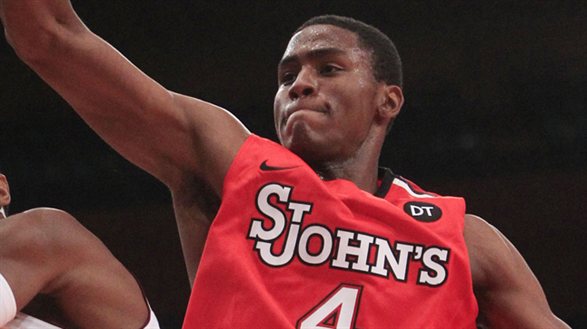
Moe Harkless is a smooth attacker of the basket (AP Photo)

Overview: Moe Harkless didn’t come into St. John’s as a one-and-done kind of prospect, but the smooth small forward dazzled scouts with his play against Big East competition for a depleted team in a tumultuous situation. Harkless averaged 36.1 minutes per game as an 18-year-old freshman, compiling 15.5 points, 8.6 rebounds, 1.6 steals, and 1.4 blocks per contest on 45.2% shooting from the field. He’s not an explosive leaper but rather a smooth, lengthy forward with a high basketball IQ and above-average athleticism. To quote ESPN’s Fran Fraschilla, he “has a small forward’s body but a power forward’s game,” as he struggles to create shots for himself on the perimeter but has terrific footwork in the post and is a great finisher at the rim. He lacks strength but just turned 19 years old and is sure to develop his wiry frame in coming years. He performed well in the Combine interviews, matching the smarts he shows on the floor by moving well without the ball in space and putting himself in ideal situations to score. His length and instincts helped him excel as a defender in the Red Storm zone defense, putting up terrific steal and block averages. He needs to get stronger and “meaner” in the post to defend NBA players one-on-one, but he has great size (6’8”) for a small forward. Harkless was a fun player to watch grow as a freshman last season, and he seems to have left a great impression on all new evaluators.

Read the rest of this entry »

Coach K Discusses Penn State’s Mishandling of Joe Paterno on ‘Piers Morgan Tonight’

Posted by EJacoby on June 18th, 2012

Duke head coach Mike Krzyzewski is unquestionably one of the great leaders in sports history, perhaps only matched in modern college sports by former Penn State football coach Joe Paterno. ‘Coach K’ and ‘Joe Pa’ taped an ESPN special together last June about ethics and integrity, entitled “Difference Makers: Life Lessons with Paterno and Krzyzewski,” ironically just a few months before the Penn State child molestation scandal broke and resulted in the football coach’s abrupt firing. Paterno then passed away from cancer in January, a mere two months after his dismissal. Krzyzewski appeared Friday night on Piers Morgan’s CNN talk show and discussed in one segment how he felt about the handling of Paterno by his employer. The Duke coach recognized that it was a difficult situation all around, but also said that he was very displeased with how Penn State responded. He thinks that the university should have shown more respect to its head coach of 45 years by discussing a mutual solution rather than throwing him out as the scapegoat. “I thought it was a real mistake by Penn State’s leadership,” he said, intimating that he wished Paterno had gone out on different terms, perhaps stepping down himself. Unlike everyone else in the media who gave an opinion on this issue, Coach K is acutely qualified as one of Paterno’s coaching contemporaries and as someone with just as much power at his university, so his comments speak loudly about how the Penn State crisis was handled.

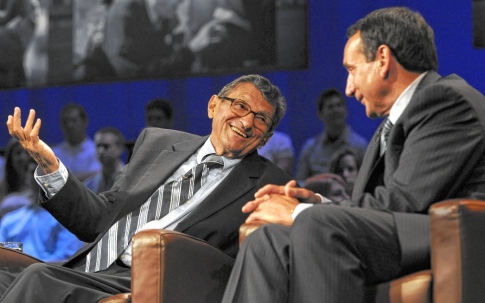
Coach K (right) wishes that Joe Paterno (left) could have gone out on better terms (AP Photo)

Krzyzewski and Paterno only became close during the last year of Paterno’s life, so his defense of the former Penn State coach isn’t necessarily as simple as one man sticking up for a friend. Coach K has clearly thought long and hard about how he would have handled the situation had an (alleged) criminal emerged on his staff. He discussed the proper solution should something like this have occurred at Duke:

“You should deal with it like any team should deal with it. In other words, I’m on the Duke team. If that happened in my area, then I would look to work with my athletic director and my president to have a solution. And if that solution meant that I would step down, I would do it in a way that would be part of the solution, not like you’re just thrown out.”

Read the rest of this entry »

Morning Five: 06.18.12 Edition

Posted by nvr1983 on June 18th, 2012

  1. They may never be the team they were in the late 80s and early 90s, but UNLV is making a big push at becoming a legitimate national power as they continue to add pieces to what was already a strong team. Over the weekend, they added Savon Goodman, who was one of the top remaining players in the class of 2012. With the exception of a very small group of schools a player of Goodman’s caliber (a Parade All-American) would be almost assured playing time right away, but UNLV is so deep this coming season that Goodman might redshirt if Connecticut transfer Roscoe Smith is granted a waiver and allowed to compete for the school without having to sit out a year. Regardless of the outcome, the Rebels are piling up a very impressive roster for the next few years.
  2. Friday’s move by Boston University from the America East to the Patriot League will not generate the national interest that some other moves have generated, but this single move could have a bigger impact on the conference that lost a school than any of those other moves. The departure leave the America East with only eight schools and takes away its biggest school and the one located in the biggest city so even though the Terriers were by no means a basketball power even in a weak conference it is a big blow for the conference that will most likely have to turn to a much lower profile programs to fill the void.
  3. Last year we had one game on a naval carrier that was almost universally lauded as being special. Next season we will have three games (and possibly more) as Florida and Georgetown have agreed to play on November 9 on an as yet unnamed naval ship in Jacksonville, Florida. The game, which will also serve as a homecoming for Patric Young, should be entertaining, but you have probably already heard rumblings from some media members about this trend already starting to jump the shark. However, given the lack of an actual opening event for college basketball anything that generates interest from the casual fan for any part of the season outside of the NCAA Tournament when most people care more about their bracket than the actual game seems like a good thing.
  4. It might not rate on the same scale as losing the biggest school in your conference, but Vermont made some news on Friday too when it agreed to release America East Rookie of the Year Four McGlynn, who appears to be headed to Towson. McGlynn asked for a release from Vermont earlier this month citing family reasons and for a reason that is unclear to us is expected to have to sit out the typical one-year waiting period. The exact family reason has not been released, but apparently it does not meet the other standard reasons (illness, father getting fired, etc). The arrival of McGlynn, who averaged 12 points per game last season, should undoubtedly help a Towson team that went 1-31 last season as there really is not anywhere to go except up from that.
  5. Despite having a fairly unimpressive season last year, Sean Miller was able to get a contract extension likely on the strength of his recent recruiting efforts landing one of the top incoming classes in the country for this coming season. Following up an Elite 8 appearance in 2011 (on the back of Derrick Williams), Arizona was only able to make it to the NIT, but apparently it was good enough to get Miller an additional year on his contract that will keep him at the school through the 2016-17 season. Miller is scheduled to make $2.2 million plus incentives next season with a gradual increase to $2.7 million plus incentives in the last year of the contract. In addition, Miller’s contract also includes a $500,000 buyout that was not present at the original time of his signing as the program was dealing with NCAA violations originating before his time with the school.

RTC NBA Draft Profiles: Marquis Teague

Posted by EJacoby on June 15th, 2012

The 2012 NBA Draft is scheduled for Thursday, June 28, in New York City. As we have done for the last several years, RTC’s team of writers (including Andrew Murawa, Kevin Doyle, Evan Jacoby, Matt Patton, and Danny Spewak) will provide comprehensive breakdowns of each of the 35 collegians most likely to hear his name called by David Stern in the first round on draft night. We’ll work backwards, starting with players who are projected near the end of the first round before getting into the lottery as June progresses.

Note: Click here for all published 2012 NBA Draft profiles.

Player Name: Marquis Teague

School: Kentucky

Height/Weight: 6’2” / 180 lbs.

NBA Position: Point Guard

Projected Draft Range: Mid- to Late First Round

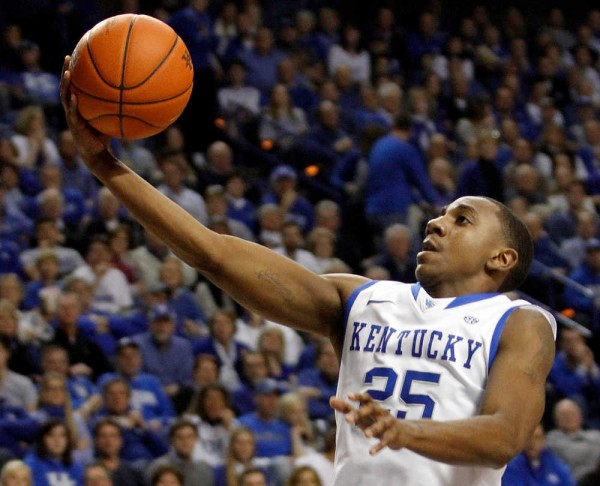
Marquis Teague excels at getting to the rim with his elite speed (AP Photo/J. Crisp)

Overview: Marquis Teague struggled with his decision-making for some of his freshman season, but he came on strong during the latter stage of the year to lead Kentucky to a National Championship as the team’s steady point guard. His greatest attribute is his blazing speed with the ball and an overall impressive set of physical tools for a point guard. The Wildcats really had no backup at the point, so Teague led UK in minutes played (32.6 MPG) while admirably handling the many responsibilities given to him on a team with several stars. Though turnovers were his biggest issue (2.7 TO per game), he also averaged 4.8 APG and made obvious improvements throughout the season in terms of his decisions. He had five or more turnovers in five of his first 25 games, but not once in any of his final (and more important) 15. Teague was really the Wildcats’ fifth offensive option on the floor, though he still contributed a solid 10.0 PPG through an array of drives and jumpers. He thrives in the open floor and also does well in isolation situations, which he displayed in the National Title game against Kansas by getting to the basket for several layups in the half court. His shot is a work in progress, proven by his shooting percentages — 41.2% from the field, 32.5% from three, and 71.4% from the line. He wasn’t a game-changing defender as a rookie and only averaged 0.9 steals, but his physical traits suggest he should become a solid perimeter defender. Though very raw in many aspects, Teague appears to be in a dead heat with Kendall Marshall and Tony Wroten as the second point guard to come off the board on draft night.

Read the rest of this entry »

“Crosstown Shootout” Rivalry Slowly Gets More Watered Down

Posted by EJacoby on June 15th, 2012

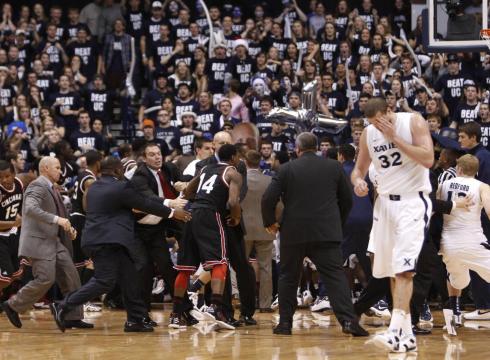
It appears that the ramifications from last December’s bench-clearing brawl are extending several years into the CincinnatiXavier rivalry’s future. The longtime city rivalry previously known as the “Crosstown Shootout” is returning next season, but with several new stipulations. Thursday it was announced that the game has been renamed the “Skyline Chili Crosstown Classic,” and that it will continue only temporarily for two more seasons. The U.S. Bank Arena in downtown Cincinnati will host the games rather than the on-campus arenas of either Cincinnati or Xavier. Everything about the matchup from the venue to the official logo is changing as both schools seek to erase the memories of last season’s vicious scuffle that left eight total players suspended. Is this rivalry just too intense for its universities to handle? It appears that way as the schools don’t seem to trust their players and fans to keep things under control going forward. While it’s great that the game will continue, the message sent by the schools is that they fear the worst when these teams will tip off next season. Given the recent diminishing spirit of cross-conference rivalries in the sport, it’s unfortunate that one of the most vibrant and longstanding showdowns is getting watered down after one incident.

Last year’s Cincinnati-Xavier brawl was ugly, so now everyone loses next season (AP Photo)

Last season’s brawl between the two teams on December 10 was the low point of the college hoops season, as Xavier center Kenny Frease was left bloody after a Yancy Gates (UC center) punch resulting from an on-court scuffle involving several other players at the very end of a Xavier blowout victory. But the schools didn’t feel so strongly about the negative impact then as the longest suspension coming out of the brawl was a six-game ban for Gates’ vicious punch. The Cincinnati star forward was back before the Bearcats played another meaningful game and everything returned to normal. Both the Musketeers and Bearcats had terrific late-season runs that resulted in Sweet Sixteen appearances during the NCAA Tournament. It’s almost as if the brawl eventually led to newfound camaraderie within each squad (especially Cincinnati) and that the teams had learned the lessons of their massive mistake.

Read the rest of this entry »

In Revisiting Block/Charge Call, NCAA Encourages Fundamental Defense

Posted by EJacoby on June 15th, 2012

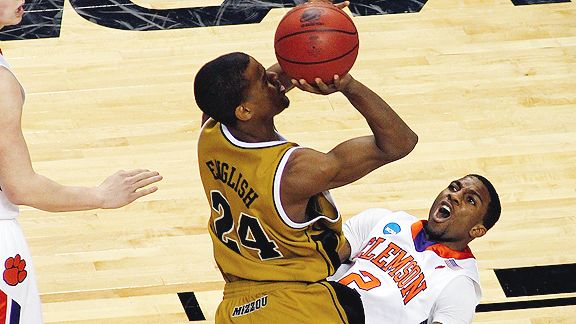
Who knows what’s gotten into the NCAA lately, but it’s actually getting more and more things right as far as rule changes go. Last night at midnight a new rule went into effect allowing coaches unlimited texts and calls to recruits, part of an effort to cut down on the ridiculously thick NCAA rule book that punishes actors for far too many harmless acts. Also new this week are the results of the Playing Rules Oversight Panel (PROP)’s offseason meetings, which came to a consensus about several important changes. The PROP rule adjustment garnering the biggest news is one that prohibits potentially dangerous decal stickers from appearing on courts to improve player safety, but an even more significant change involves redefining the controversial charge/block calls that cause so much consternation. The panel properly identified the growing epidemic of defenders flopping and sliding under shooters in the paint, insisting that “charge/block calls in some cases were not made correctly, sometimes giving the defense an advantage.” The PROP provided new guidelines to help better officiate the situation, which essentially calls for more blocking fouls when defenders initiate paint contact. These new guidelines will encourage defenders to move their feet and make plays on the ball rather than revert to lazy flopping tactics in the paint — a definite win for both players and fans.

Defenders should no longer get rewarded for sliding under offensive players while making a move (Getty Images/M. Heilman)

The new guidelines provided by the PROP are as follows:

  • Before the offensive player (with the ball) becomes airborne, the defender must have two feet on the floor, be facing the opponent and be stationary to draw a charge. Otherwise, it should be a blocking foul.
  • Secondary defenders (help defenders) moving forward or to the side are also in violation and those should be blocking fouls.
  • Contact that is ‘through the chest’ is not de facto proof of a charge. The rule in its entirety must be considered before determining a foul.
  • In some cases, it appears a defender is being rewarded solely for being outside the arc, without considering the other aspects of the rules.

Read the rest of this entry »