
Seton Hall’s Fishy Recruiting Tactics

Posted by Chris Johnson on September 20th, 2013

Chris Johnson is an RTC Columnist. He can be reached @ChrisDJohnsonn.

There will be some measure of disbelief the first time you see it. Don’t hesitate to look, just know that when you start scratching your head, trying to think of an explanation, your eyes do not deceive you: the above link takes you directly to a list of Seton Hall’s 2014 recruiting class, which now counts three top-100 commitments, including Thursday’s huge addition: Lincoln High School (NY) shooting guard Isaiah Whitehead, a consensus five-star prospect ranked well within the top 40 of any recruiting database, ended his high profile recruitment Thursday when he committed to the Pirates. Whitehead, an explosive 6-foot-3 shooting guard with possible one-and-done designs, received offers from Indiana, Kentucky, Louisville, UCLA, Syracuse, and other big-name high-major programs. Before Thursday’s decision, Whitehead was believed to have narrowed his lengthy list to two schools: St. Johns (who Whitehead visited Wednesday, and thus the school many expected Whitehead to choose) and Seton Hall. As word of the five-star guard’s announcement circulated, it was easy for one’s mind to wander: what led Whitehead to choose Seton Hall, a long-dormant program under Kevin Willard, over the Steve Lavin-led Red Storm? Was there something behind Whitehead’s decision not made apparent at his announcement? That seemed to be the implication from a New York Post report divulging the imminent hiring of Dwayne “Tiny” Morton, Whitehead’s middle school teacher and high school coach (and founder of Juice All-Stars, Whitehead’s AAU team), to Seton Hall’s staff. The sequence of events did not really leave much room for interpretation: Whitehead appeared to be a “package” deal.
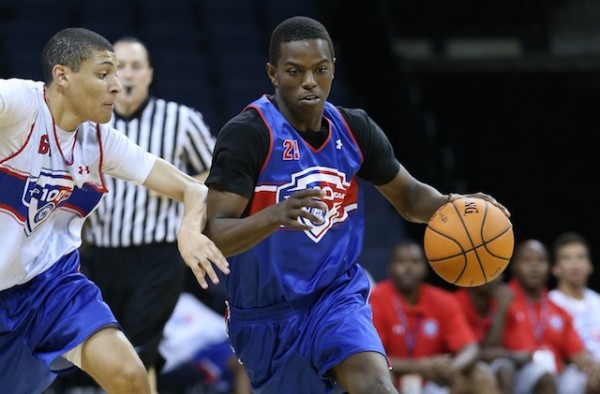
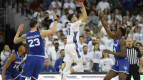
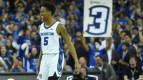
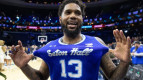
If Seton Hall can't compete with top programs for high-level recruits, bundling players assistants is a legal, yet questionable, workaround (Photo credit: Under Armour/Mary Kline)

If Seton Hall can’t compete with top programs for high-level recruits, bundling players assistants is a legal, yet questionable, workaround (Photo credit: Under Armour/Kelly Kline)

I’ll answer the question that surely popped into your brain sometime over the last five seconds: No, there is nothing illegal about Seton Hall’s reported decision to hire Morton. The NCAA instituted a rule last season prohibiting the hiring of third-parties connected to recruits to any position other than one of the three assistant spots allotted to each team. Morton is expected to become one of the Pirates’ three assistants, making his new position perfectly valid – in the eyes of the NCAA. How the rest of the college hoop world (fans, rival coaches, and players) feel about this is another story entirely. Before you make a conclusive judgment, there is a pattern of repeated behavior worth discussing that might influence your opinion. Whitehead may be the latest package deal in Seton Hall’s 2014 class, but he’s not the only one. It was just over a month ago that 2014 four-star forward Angel Delgado’s commitment to Seton Hall was followed weeks later by the Pirates’ hiring of Oliver Antigua, who knew Delgado through his assistant’s role on the national program of Delgado’s native Dominican Republic. Or go back five months earlier, when 2013 point guard Jaren Sina – who reneged on his verbal commitment to Northwestern after the Wildcats replaced former coach Bill Carmody with Chris Collins – opted to join Seton Hall right around the time Fred Hill, a former Northwestern assistant instrumental to the New Jersey-based Sina’s initial commitment to the Wildcats, was added to the Pirates’ staff. That makes Morton’s potential addition Seton Hall’s third prospect-tethered hire under Willard over the past six months.

Read the rest of this entry »

Morning Five: 09.20.13 Edition

Posted by nvr1983 on September 20th, 2013

morning5

  1. Yesterday, the NCAA announced that it was opening up the bidding for the 2017-2020 Final Fours. Cities have until October 11 to submit their bids. The obvious major criteria is that the event will be hosted in a dome with a capacity of at least 60,000 and be able to provide at least 10,000 hotel rooms within a reasonable distance of the venue. We have expressed our distaste for playing basketball games in giant domes, but we understand the NCAA’s reasoning–greater access for fans and more money for the NCAA. Final Fours have traditionally been held in a select group of cities so we will be interested to see if the NCAA steps outside of its usual rotation.
  2. One of the reasons that we tend to stay away from recruiting stories is the random speculation that seems to follow many recruits. Yesterday was another example of this with Isaiah Whitehead, who eventually announced that he was committing to Seton Hall, but not before Twitter managed put out a variety of rumors about where Whitehead was going, what kind of package deal was involved, and if another package deal would be voided by this package deal. In the end, Kevin Willard was able to land a five-star point guard and the most highly touted Seton Hall recruit in recent memory. The questions regarding how he got Whitehead (almost certainly because Willard agreed to hire Whitehead’s high school coach as an assistant), which we will discuss separately, are another issue, but despite how shady it may seem it is still within NCAA guidelines.
  3. It has been four years since Michigan star Rumeal Robinson was arrested on fraud charges and it appears that another star of that era–Tate George–may soon be joining him. George, who hit a turnaround desperation game-winner in the 1990 Sweet 16 (only to be outdone the next round by some guy named Laettner), is accused of wire fraud totaling $2 million including $250,000 that he reportedly stole from fellow former Connecticut star Charlie Villanueva. According to reports, George convinced Villanueva and others to invest in a project in Bridgeport, Connecticut, but was never able to return the money on their investments and when it started falling apart fired his accountant then sent fraudulent letters claiming to be the accountant. The size of the fraud may pale in comparison to some more famous recent cases, but the fame of the individuals involved–especially in Connecticut–should make this front page news there for some time to come.
  4. We have posted quite a few links to articles about the relationship between higher education and the NCAA’s mission during our six and a half years of running the site, but I don’t think we have ever posted anything about the same relationship between high school education and sports. That is until The Atlantic published an article questioning how we as a country distribute our money and focus in high schools. The primary focus of the article is on high schools since they are a bigger part of American culture and learning, but the same argument can probably be made about college sports and how we allot our educational resources. As the article notes, organized sports are offered to school-aged individuals, but in the form of a club system rather than being integrated into schools. We have seen some suggestions of moving college sports to a club model and with the reported push towards a “Division 4” model we would not be surprised if this model is advocated in the future.
  5. Grantland’s feature on Korleone Young might fall outside of our usual realm of college basketball, but as one of the more prominent prep-to-pro busts in history it is certainly worth a read if only as a cautionary tale. Perhaps the most interesting part to college basketball fans is the part in the middle of the piece about Myron Piggie, who has become an infamous figure in AAU and NCAA lore. Piggie is most well-known for his relationship with Corey Maggette and JaRon Rush and his payments to the team’s players. You may remember Piggie from the prank that Maryland pulled on Duke in 2005 or the outrage at Duke walking away from the scandal unpunished.

Negative Recruiting Reaches Staggering Depths

Posted by Chris Johnson on September 18th, 2013

Chris Johnson is an RTC Columnist. He can be reached @ChrisDJohnsonn

Most college hoops fans follow the game purely for their own enjoyment. They don’t see what goes on behind the scenes – the extreme measures programs often take to keep their student-athletes eligible and the hostile interplay between opposing players. And they most certainly do not know everything there is to know about recruiting. The practice seems simple enough: woo players with the promise of playing time, high scoring totals, and wins; drop huge sums on gaudy locker rooms, maybe a game console or two; superimpose a silhouette of your school’s logo/mascot at midcourt, just to give that four-star shooting guard something to look at, something the other schools don’t have, every time he takes the floor. All of this is fair game, but anyone with even scant knowledge of college basketball recruiting, particularly amongst the best schools and players, can tell you there’s much more to it than shiny facilities and the prospect of maintaining a gaudy scoring average in an uptempo offense. The presence of agents, shoe company representatives, and other third parties, all attempting to influence top-level recruits’ decisions in one way or another – and quite often funneling them to a particular school – has only increased in recent years. Coaches and players are not oblivious to this; it’s not hard for them to point out those who are not playing by the rules.

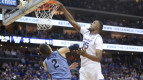
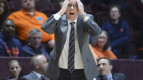
It's truly dispiriting to learn coaches would go so far as to use a coach's medical condition against him in recruiting (Getty Images).

It’s truly dispiriting to learn coaches would go so far as to use a coach’s medical condition against him in recruiting (Getty Images).

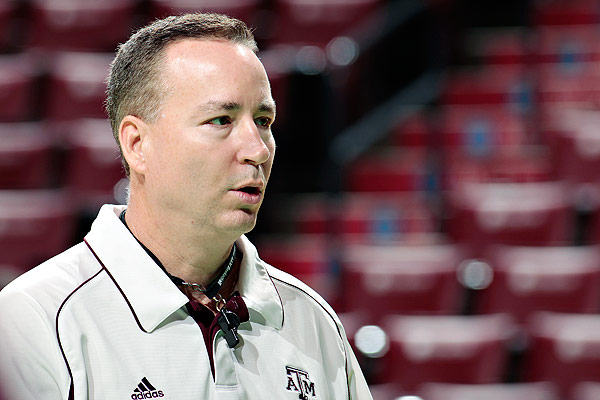
That’s just one unseemly aspect fans rarely, if ever, get to experience. The number of top-ranked players who don’t come across some type of illicit financial arrangement – who are not offered something from someone – over the course of their recruitment is probably smaller than anyone not directly involved with recruiting could possibly imagine. Another side, an arguably worse one, is the concept of negative recruiting, wherein coaches bash coaches from programs, or simply bash their programs, in an effort to lead players away from competitors. It can be anything from pointing out a particularly unsavory aspect of one coach’s resume, to critiquing his preferred style of play, to commenting on the lack of fan or institutional support at his program. Sometimes, things get ugly, and on Tuesday, we learned of one particularly disconcerting case involving Texas A&M coach Billy Kennedy.

Read the rest of this entry »

Billy Donovan and Tom Izzo bring pay-for-play discussion to the forefront

Posted by Chris Johnson on September 18th, 2013

Chris Johnson is an RTC Columnist. He can be reached @ChrisDJohnsonn.

Never before has the topic of amateurism in college sports coursed so pervasively throughout the sports-watching community. It’s not just writers and intellectuals weighing in, but also fans and players, all of whom seem to believe the system is somehow unfair, or headed for change, or at the very least won’t survive the impending Ed O’Bannon lawsuit without some type of meaningful update. Coaches are sharing their thoughts too, and in the past week, two of college basketball’s most prominent head men have spoken up about the changing athletic climate revenue-producing Division I athletes inhabit today. Florida coach Billy Donovan understands the apparent paradox baked into amateurism’s core philosophy. When athletic departments are guzzling at the fire hose of football and television-related revenue, and student-athletes receive nothing more than the thousands covering their room, board and tuition, a disconnect is not only obvious for outsiders. It’s difficult to reconcile even for the student-athletes, who for years accepted college sports’ wage-fixing mechanism as an ironclad part of the collegiate athletic experience.

When coaches like Izzo and Donovan speak about macro issues like player compensation, everyone involved with college sports is more likely to take notice (AP Photo).

When coaches like Izzo and Donovan speak about macro issues like player compensation, everyone involved with college sports is more likely to take notice (AP Photo).

“There is a feel by a lot of families that here you have these huge athletic departments, you have arenas, stadiums filled up and these kids are told, you can’t go out and you can’t take a free meal, you can’t take anything,” Donovan said. “A lot of times for those kids, I think it’s very difficult to swallow that.”

That quote comes from The Gainesville Sun, who recorded Donovan’s words while he spoke at the Capital City Area Gator Club last week.

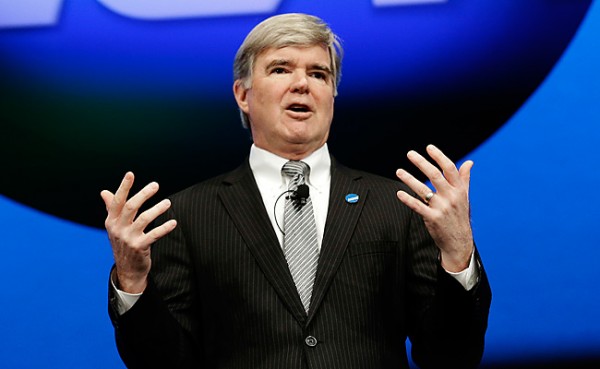
At a different public speaking event in Birmingham on Monday – note to high-profile college basketball coaches who have agreed to speak in a public forum, it’s best to assume every word coming our of your mouth will not only be recorded and transcribed, but disseminated across the Internet and published in tomorrow’s paper – Michigan State’s Tom Izzo gave his opinion on a more specific issue related to player compensation in college sports: the $2,000 stipend NCAA president Mark Emmert proposed, but failed to garner the amount of votes required for passage. “I think something should be done, but I think it should be done for the right reasons,” Izzo said. “I like the theory of some type of stipend and if they graduate it, they get it. I don’t want it to be where some of the local stores, like Best Buy, gives a kid more money.”

Read the rest of this entry »

Is Coach K’s ‘no exception’ suggestion for transfers a good one?

Posted by Chris Johnson on September 17th, 2013

Chris Johnson is an RTC Columnist. He can be reached @ChrisDJohnsonn

In a college basketball offseason that gave us P.J. Hairston’s rather odd fascination with rental cars, Brad Stevens’ sudden move to the NBA, and not much else to talk or write about, institutional issues do a pretty good job filling in the gaps. The number one topic this summer, other than the larger debate on amateurism – which is more a college sports issue writ large, baked in with Johnny Manziel controversy, than strictly a college basketball issue – has been transfer waivers, and the perplexing nuances therein. The practice of allowing players to switch schools without sitting out a season before regaining eligibility has come under intense scrutiny of late thanks to a couple of baffling cases. The first involved FIU’s Rakeem Buckles, whose petition to follow former FIU coach Rick Pitino to Minnesota, and escape the postseason ban placed on the Panthers due to low academic progress rate scores registered during the regrettable Isaiah Thomas era, and be eligible to play immediately was flatly denied by the NCAA. The denial was puzzling on several fronts, most notably the inability to reconcile the NCAA’s decision with FIU’s academic-related postseason ineligibility, a condition that has typically lead to favorable transfer rulings in the past – including just this summer, when Malik Smith, a former FIU teammate, was granted a waiver to play right away at Minnesota. Then there was the Kerwin Okoro case, which was resolved last Friday, when the NCAA granted the Iowa State transfer the right to play this season at his new home (Rutgers) after losing his New York-stationed father and brother over a two-month span last winter.

The NCAA's decision to grant Okoro immediate eligibility was long overdue (AP Photo).

The NCAA’s decision to grant Okoro immediate eligibility was long overdue (AP Photo).

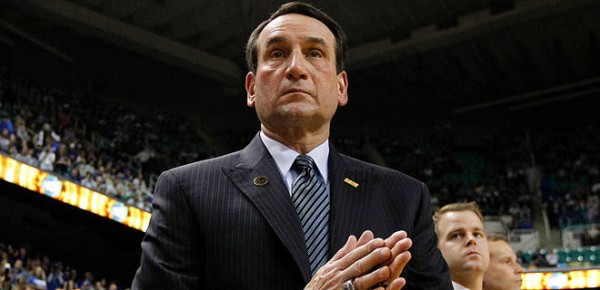
The decision to allow Okoro to play immediately seemed like an obvious decision. Of course, two family deaths in an abbreviated time period meets the standard of hardship the NCAA must assess before granting immediate eligibility. But the fact the organization needed this long to clear Okoro, and actually went as far as to deny his request in the first place, is a perfect distillation of the cognitive dissonance that modern transfer culture, unwittingly or no, inspires. It’s gotten so bad, that arguably the most powerful voice in college basketball – and one of the most powerful among all levels of basketball, full stop – wants a wholesale restructuring of the way transfer cases are adjudicated. Instead of allowing the NCAA to function in this sort of uncomfortable moral arbiter role, drawing distinctions on the severity of the different hardship cases that pass through its office, Duke coach Mike Krzyzewski wants every case to be treated the exact same way: “no exceptions“.

Read the rest of this entry »

Goodbye Old Rivals, Hello New Ones — Five New Rivalries To Keep An Eye On

Posted by BHayes on September 17th, 2013

Bennet Hayes is an RTC columnist. He can be reached @HoopsTraveler.

One of the many consequences of the past half-decade’s conference realignment frenzy has been the loss of cherished rivalries. Two seasons ago we saw our final Big 12 Border War, as Missouri bid farewell to old rival Kansas en route to the SEC. Last season we witnessed the final edition of Georgetown-Syracuse in the Big East, as the Orange split for the greener pastures of the ACC. And while the ACC will benefit from the arrival of Syracuse, Pitt and Notre Dame, the conference will still be losing what could be considered their rivalry of this century, as Maryland heads for the Big Ten next year, in the process leaving behind their bitter feud with Duke. Oh, the memories! And while many of these divorcees have vowed to reunite in non-conference series down the road, it’s hard to always take their word for it (although Georgetown and Syracuse are starting to sound pretty serious…). So goodbyes there have been, but what about the hellos? We have been made acutely aware of every dying rivalry (jumping conferences tends to elicit just a little bit of emotion from rival fan bases), but seemed to have forgotten that the reshuffling allows for the potential of plenty of new ones to emerge. Circumstance will have its way in molding many new rivalries (who, besides the man capable of seeing overtime before it happens, could have foreseen Louisville and Notre Dame carving out a nice little rivalry in the Big East?), but here’s a shot at five new conference match-ups with a shot at becoming annual headliners.

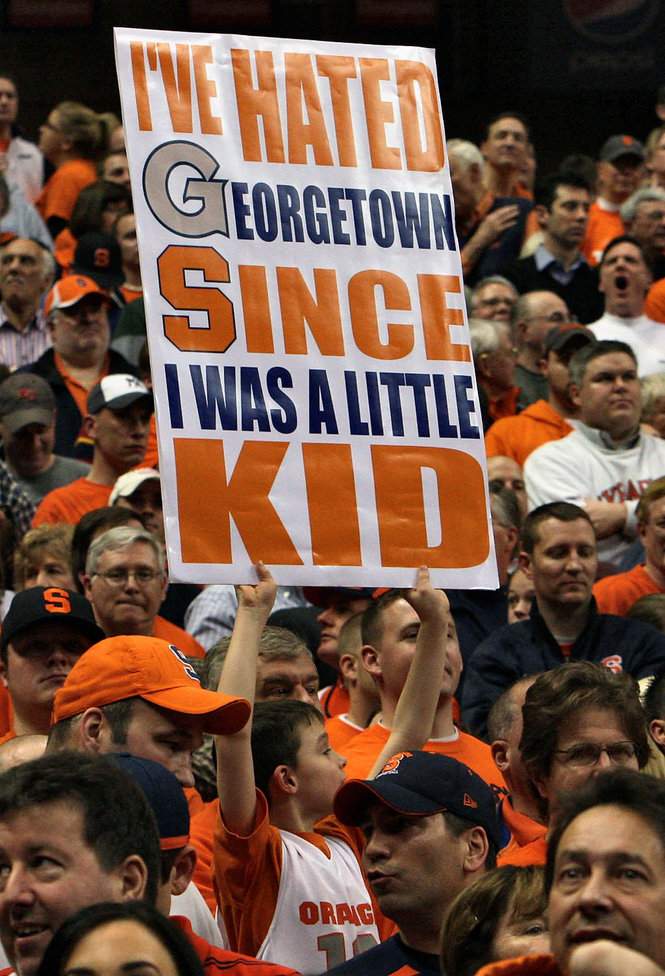
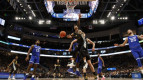
While Syracuse Bids Old Rival Georgetown Goodbye, Many New Rivalries Loom On The ACC's Horizon For The Orange

While Syracuse Bids Old Rival Georgetown Goodbye, Many New Rivalries Loom On The ACC’s Horizon For The Orange

Syracuse-Duke: Little explanation needed here. Two of the most decorated programs in the game led by two of the most iconic coaches in the sport’s history, and two teams that have been an annual factor in the national title chase for most of the last decade.  This season’s two favorites in the ACC should take an immediate shine to each other, and for some added fun, how about the contrast in home floors at play here? Needless to say, cozy Cameron Indoor will offer a slightly different stage for the match-up than the cavernous Carrier Dome will.

Read the rest of this entry »

Coach K Is Not Interested In Playing Maryland Anymore, But He Should Be

Posted by Chris Johnson on September 17th, 2013

Chris Johnson is an RTC Columnist. He can be reached @ChrisDJohnsonn.

Sometimes conference realignment is unforgiving. When the motivation is to get paper now, or position oneself better in a changing FBS football landscape, or cash in on a lucrative television deal, switching leagues is the obvious move to make – no matter how much long-standing tradition or geographical or cultural common sense gets bulldozed in the process. This is the brutal calculus schools were forced to assess in the latest round of realignment moves, and the result – for college hoops, at least – wasn’t always a happy ending. When Missouri left the Big 12 for the SEC, it ended one of college sports’ best rivalries (with Kansas). Texas A&M’s move to the same conference ended a great annual football game (with Texas), and an underrated and desultorily good hoops match-up. Syracuse’s leap to the ACC closed the curtain on its decades-old Big East feud with Georgetown. Fortunately, it appears the Hoyas and Orange are on the cusp of locking in a home-and-home series to continue one of the sport’s great games outside of its traditional Big East-tethered form. The two schools came together, understood their games were just too bitterly competitive, and too fun, to simply give up just because football and TV money forced them to part ways. Syracuse and Georgetown will benefit, because it adds another quality opponent to one another’s non-conference schedules, and college hoops as a whole will benefit, because the Hoyas and Orange typically play some of the most entertaining, hotly-contested, dramatic games in any given year. Perhaps other schools can take Syracuse and Georgetown’s lead, work through whatever logistical hurdles exist and spark up their rivalry hate in this post-realignment world. Keeping these sorts of rivalry games churning across newly configured leagues is important for the long-term health of the sport.

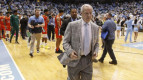
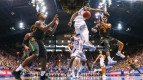
Kicking aside the Duke-Maryland rivalry is a huge disappointment (AP Photo).

Kicking aside the Duke-Maryland rivalry is a huge disappointment (AP Photo).

Or you can be like Duke coach Mike Krzyzewski, who apparently wants nothing to do with future Big Ten member Maryland, who will only play the Blue Devils once in the regular season this year before leaving for its new league. Kryzewski spoke out against Maryland’s motivations for leaving the ACC when the news broke last fall. He expressed many of the same concerns most college sports purists do when lamenting the products of realignment: an attack on tradition, prioritizing monetary gain over cultural and geographical fit, the destruction of rivalries. None of that is particularly novel, but coming from Kryzewski, it felt like one of the stronger harangues we have heard against the recent whirlwind of shifting league allegiances. Maryland was completely frank about its move to the Big Ten – its athletic department, struggling to stay afloat financially, saw an avenue to steady its economic future through a broadcast rights windfall, and predictably jumped at the opportunity. It was the smart financial move for Maryland, and probably the best hope for curing its still-unenviable financial state, but that doesn’t mean the rest of the ACC welcomed the switch with rousing acclaim. Duke, a team Maryland has waged some truly memorable conference games against in recent years, won’t even think about scheduling the Terrapins as an annual non-conference fixture.

Read the rest of this entry »

Morning Five: 09.17.13 Edition

Posted by nvr1983 on September 17th, 2013

morning5

  1. If the pressure was not already on Steve Alford to land a point guard at UCLA before, the announcement that Kyle Anderson was planning on declaring for the NBA Draft after this season certainly should. Coming after Anderson’s solid, but uninspiring freshman year the announcement (by his father) seems somewhat strange and we are not sure what purpose it serves. At this point he is a borderline first round pick at best and that is primarily based on his potential (length and skills). If Anderson shows significant improvement he could be a potential lottery pick because of that potential, but “declaring” this early serves no purpose other than to create disharmony within the Bruins locker room.
  2. There has been quite a bit of speculation that there is a growing movement that would bring about changes that would eventually lead to college athletes being paid. If you didn’t believe our warnings that it would not be happening any time soon, perhaps the comments made by NCAA President Mark Emmert yesterday stating that there was very little support behind the movement to pay college athletes from administrators. Emmert may be the public face of the NCAA and subsequently the target of most of the hatred directed at the organization, but he does raise some salient points. Whatever your opinion is on the subject of paying athletes, Emmert’s comments should further our previous statements that we are still a long way away from paying college athletes becomes a reality.
  3. Mike Krzyzewski‘s comments yesterday voicing his disapproval of transfer waivers has managed to create a fair amount of controversy. It should be pointed out that none of his comments are unique and appear to be the party line for the old school. As several people have noted Krzyzewski was never asked if a player should be granted a waiver if his coach leaves. Of course that would also encroach upon the third rail of the transfer discussion–coaches moving around freely and players being taken advantage of when it is time to sign with schools. We would also be interested to see how Krzyzewski would react if be were given the opportunity to get a high-impact transfer that could obtain a waiver, which is a position that we believe he has never been in.
  4. It has been a year since Jim Calhoun abruptly stepped down as head coach at Connecticut and as you would expect the local media reached out to him to discuss what he has been up to in the interim. The part of the article that will generate the most buzz is that “little itch” that Calhoun says he still to coach basketball. While we do find that interesting on some level, we doubt that he would ever come back to coach in any capacity at his age with his medical history. Having said that it is good to see that Calhoun is involved with the school and the players at some level.
  5. Many college basketball fans have been focusing on the reported recruiting package deal of Jahlil Okafor and Tyus Jones and for good reason as the are rated #1 and #3 overall in ESPN’s recruiting rankings. However, they should also keep an eye on reports that Cliff Alexander and Jaquan Lyle are now also a package deal. The reports are based on a tweet that Alexander, the #2 overall recruit according to those same ESPN rankings, sent out saying that he and Lyle< the #22 overall recruit, would be playing in college together. While there are several teams on both players “lists” it is worth noting that Lyle said said that he favored Kansas recently and Alexander is also believed to be a Kansas lean at this point.

Prepare for a “different” type of Kentucky point guard

Posted by Chris Johnson on September 16th, 2013

Chris Johnson is an RTC Columnist. He can be reached @ChrisDJohnsonn.

Elite point guard play has been a hallmark of John Calipari’s Kentucky teams. The Wildcats typically pluck one of the nation’s best floor generals from any given recruiting class, drill them in the arts of the dribble-drive offense, their draft stock soaring all the while, then – with Calipari’s customary backing – encourage them to enter the NBA draft, where a first-round selection awaits. From John Wall to Brandon Knight to Tyreke Evans to Marquis Teague, Kentucky under Calipari has become the most desirable landing spot in the country for highly-touted high school point guards looking for the quickest and most seamless path to the NBA. In fact, dating back to 2007-’08, when Memphis rode Derrick Rose’s face-melting talents to the brink of a national championship, Calipari has started a new point guard every season (a salient statistic pointed out late last week by The Sporting News’ Mike DeCourcy). The run of truly elite point men ended in 2012-13 with Ryan Harrow, whose inability to handle the big stage, and general lack of talent and athleticism, was evident from the start.

There should be little expectation for a regression in point guard play when Ulis (likely) takes over in 2014 (AP Photo).

There should be little expectation for a regression in point guard play when Ulis (likely) takes over in 2014 (AP Photo).

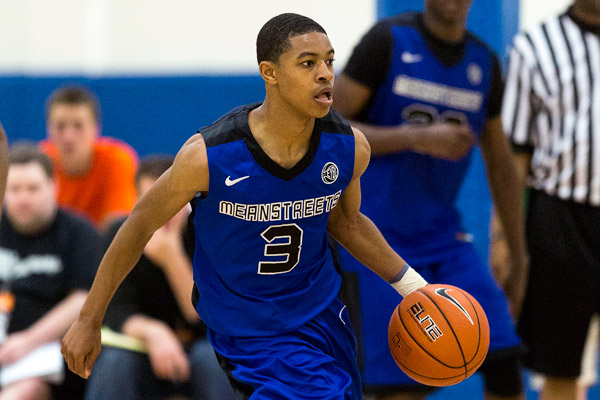
But the streak of alternating point guards continued all the same, as it will in 2013-14, when top-ranked Andrew Harrison, one member of Kentucky’s insane 2013 recruiting class featuring six McDonald’s All-Americans and three players ranked No. 1 at their respective positions, according to ESPN, will take over. Once Harrison leaves (probably after one season), Kentucky will have to brace itself for the likelihood – gasp! – of a point guard keeping his starting spot for more than one season. That was one of the implications of Marian Catholic (IL) guard Tyler Ulis, a consensus top-40 player in 2014, committing to Kentucky Friday. Ulis is not like the star UK point guards of recent vintage – long, physical, equal parts scoring prowess and distributive intuition. The 5’8’’, 150-pound guard is a point guard in the traditional mold – more a shot creator (NBC’s Rob Dauster, apparently impressed with Ulis at an AAU event, nicknamed Ulis “Tyler the Creator”) than a shot maker. Ulis’s stock soared this summer on the AAU circuit after a series of brilliant performances against elite competition, including a 22-point, 17-assist effort at the EYBL Peach Jam in a highly anticipated match-up between his team, Meanstreets, and the Howard Pulley squad led by Tyus Jones, the No. 1-ranked point guard in 2014, who is expected to commit Duke (and has reiterated his belief that he and Jahlil Okafor, the top-ranked overall player in 2014, are a “package deal”).

Read the rest of this entry »

2013-14 RTC Class Schedule: Kansas Jayhawks

Posted by BHayes on September 16th, 2013

Bennet Hayes is an RTC columnist. He can be reached @HoopsTraveler. Periodically throughout the preseason, RTC will take an in-depth look at the schedules of some of the more prominent teams in college basketball.

We have seen rapid and successful overhauls in Lawrence before, but perhaps never on this scale. Kansas is short five starters from a year ago, and in their wake arrives a decorated freshman class headed by a once-in-a-generation talent. Commitments from top-50 recruits Joel Embiid, Wayne Selden, and Conner Francamp had Jayhawk fans believing a quick rebuild was possible, but it was the May signing of Andrew Wiggins, the top player in the high school class of 2013, that has turned hope into belief. Another Big 12 championship and a return to the Sweet 16 would no longer constitute a brilliant coaching job by Bill Self, a man who has crafted many of them. Wiggins’ presence on campus has not only turned those achievements into mere expectations, but also transports hope to Lawrence that the ultimate prize – a National Title – is again a realistic possibility.

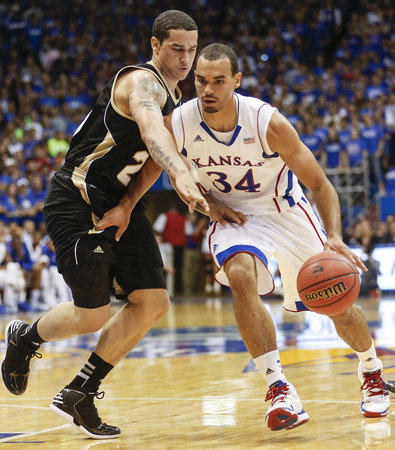
Could Perry Ellis Emerge As The Most Important Jayhawk Not Named Andrew Wiggins This Season?

Could Perry Ellis Emerge As The Most Valuable Jayhawk Not Named Andrew Wiggins This Season?

  • Team Outlook: Wiggins’ talent and projected impact has been well-documented, but even if he becomes the star he is expected to be, the Jayhawks will still need to develop the supporting cast around him. Perry Ellis (5.8 PPG, 3.9 RPG) is the one returnee that will almost definitely be a key part of that equation, but Nadiir Tharpe (5.5 PPG, 3.1 APG) and Jamari Traylor (2.1 PPG, 2.1 RPG) should also see minutes. We have seen Jayhawk role players emerge into key contributors after an offseason before, but no matter what happens with that trio, Bill Self will surely be relying on newcomers not named Wiggins to carry the load. Prime among them are freshmen Wayne Selden and Joel Embiid, who are expected to take over starting duties at shooting guard and center, respectively. Like Wiggins, both are projected as top-ten picks in next year’s NBA draft, so it’s a distinct possibility that this could be their lone rodeo in Lawrence. That being said, both need to add significant polish to their games, and despite the top-ten ranking recruiting gurus bestowed upon him, Embiid even drags the “project” title with him to Kansas. Freshmen guards Conner Frankamp and Brannen Greene are also consensus Top-100 recruits, and both will have the opportunity to compete with Tharpe and Selden for minutes in the Kansas backcourt. Rounding out the frontcourt rotation is Memphis transfer Tarik Black (8.1 PPG, 4.8 RPG) and redshirt freshman Landen Lucas. Black’s addition was another significant coup for Self this offseason, as he provides the Jayhawks with a player who has actually been through it all before at the college level. Black, like nearly every Jayhawk outside of Wiggins, could end up as a thirty-minute a game starter, a marginalized bit player, or nearly anything in between. There is tons of talent in Lawrence and a superstar to headline the show, but much of the onus for the destination of this Jayhawk campaign rests on Bill Self and how he fits all the pieces together – something Jayhawk fans should feel pretty good about. Read the rest of this entry »