










Jim Boeheim’s Stance Toward Paying Athletes is One Side of a Controversial Topic
Posted by Chris Johnson on October 4th, 2013Chris Johnson is an RTC Columnist. He can be reached @ChrisDJohnsonn.
When people disagree about whether student-athletes should be compensated for their performance, rarely is there room for compromise. Either student-athletes should be paid, because the NCAA is exploitative and a price-fixing mechanism that precludes its laborers from realizing their true market value, or they should not, because getting a “free education” at an esteemed university is a sweet deal most non-athletes are not entitled to. What most people don’t seem to understand, is that the argument is not a zero-sum game; there is plenty of room between both sides of the debate, latitude for mediation and making concessions. Student-athletes can be compensated without signing contracts, for instance. More often than not, people are so fixated on their own position, they are unwilling to listen to even the mere suggestion of the opposite one. Advocates of a change to the college-athlete economic status quo are, by and large, resistant to hear out arguments for why amateurism is an essential, ironclad part of college sports. And vice versa. Syracuse coach Jim Boeheim is not a member of the former group. He made that clear while talking at a meeting of Associated Press meeting of New York newspaper editors.

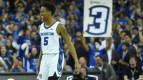
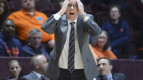
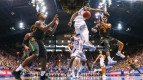
It’s clear Boeheim doesn’t believe student-athletes should be paid (US Presswire)
“That’s really the most idiotic suggestion of all time,” Boeheim said. “I don’t believe players should be paid. I believe they are getting a tremendous opportunity.”
To defend his position, Boeheim cited former Michigan star and five-time NBA All-Star power forward Chris Webber’s high-profile two-year stint with the Wolverines, where he received a free education from an elite university and benefited from untold amounts of national exposure. He also posited a solution for the most common argument for student-athlete compensation, saying players in need of financial assistance are entitled to multi-thousand-dollar Pell Grants. Boeheim has been around college sports a long time. Since joining the Orange as a walk-on guard in 1962, Boeheim has been involved with Syracuse in some capacity, from his seven-year assistant stint (1969-76) to his current 37-year run as one of the sport’s all-time great head coaches. In his earlier years, discussions of athlete compensation did not happen anywhere near as frequently as they do now – if they even happened at all. Amateurism was an accepted part of college athletics. The discourse has irrevocably changed since, and it appears the NCAA – if Ed O’Bannon and his plaintiffs are, as expected, granted class certification – will be forced to at least revise its stance toward denying student-athletes compensation beyond grants-in-aid. That probably won’t make Boeheim very happy, but then again, there is a chance the 68-year-old coach will have retired by the time the NCAA’s policy toward student-athlete compensation is tweaked (or overhauled completely).