Jim Boeheim’s Stance Toward Paying Athletes is One Side of a Controversial Topic

Posted by Chris Johnson on October 4th, 2013

Chris Johnson is an RTC Columnist. He can be reached @ChrisDJohnsonn

When people disagree about whether student-athletes should be compensated for their performance, rarely is there room for compromise. Either student-athletes should be paid, because the NCAA is exploitative and a price-fixing mechanism that precludes its laborers from realizing their true market value, or they should not, because getting a “free education” at an esteemed university is a sweet deal most non-athletes are not entitled to. What most people don’t seem to understand, is that the argument is not a zero-sum game; there is plenty of room between both sides of the debate, latitude for mediation and making concessions. Student-athletes can be compensated without signing contracts, for instance. More often than not, people are so fixated on their own position, they are unwilling to listen to even the mere suggestion of the opposite one. Advocates of a change to the college-athlete economic status quo are, by and large, resistant to hear out arguments for why amateurism is an essential, ironclad part of college sports. And vice versa. Syracuse coach Jim Boeheim is not a member of the former group. He made that clear while talking at a meeting of Associated Press meeting of New York newspaper editors.

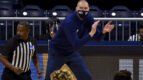
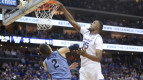
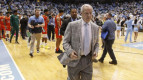
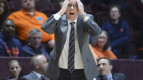
It's clear Boeheim doesn't believe student-athletes should be paid (US Presswire)

It’s clear Boeheim doesn’t believe student-athletes should be paid (US Presswire)

“That’s really the most idiotic suggestion of all time,” Boeheim said. “I don’t believe players should be paid. I believe they are getting a tremendous opportunity.”

To defend his position, Boeheim cited former Michigan star and five-time NBA All-Star power forward Chris Webber’s high-profile two-year stint with the Wolverines, where he received a free education from an elite university and benefited from untold amounts of national exposure. He also posited a solution for the most common argument for student-athlete compensation, saying players in need of financial assistance are entitled to multi-thousand-dollar Pell Grants. Boeheim has been around college sports a long time. Since joining the Orange as a walk-on guard in 1962, Boeheim has been involved with Syracuse in some capacity, from his seven-year assistant stint (1969-76) to his current 37-year run as one of the sport’s all-time great head coaches. In his earlier years, discussions of athlete compensation did not happen anywhere near as frequently as they do now – if they even happened at all. Amateurism was an accepted part of college athletics. The discourse has irrevocably changed since, and it appears the NCAA – if Ed O’Bannon and his plaintiffs are, as expected, granted class certification – will be forced to at least revise its stance toward denying student-athletes compensation beyond grants-in-aid. That probably won’t make Boeheim very happy, but then again, there is a chance the 68-year-old coach will have retired by the time the NCAA’s policy toward student-athlete compensation is tweaked (or overhauled completely).

Read the rest of this entry »

Morning Five: 10.04.13 Edition

Posted by nvr1983 on October 4th, 2013

morning5

  1. UNLV may have lost Anthony Bennett to the NBA Draft and Mike Moser to Oregon, but that has not stopped Dave Rice, who got a commitment from Goodluck Okonoboh yesterday. Okonoboh, who is the #21 overall prospect in ESPN’s rankings, is a 6’9″ center with good defensive skills, but with a raw offensive game. We are not privy to the details of his recruitment, but are a little surprised that he chose UNLV over more established programs like Duke, Florida, Indiana, and Ohio State, which were his other finalists. If Okonoboh follows through on his commitment (see below), he would join Dwayne Morgan, a top-10 power forward, to give the Rebels an imposing frontline.
  2. One of the many reasons that we do not get too worked up about recruitment is the inevitable early commitment/decommitment. The latest example of this is Trevon Bluiett, who backed out of his one-month-old commitment to UCLA yesterday. Blueitt’s official reason for backing out of his commitment was the distance from his home state of Indiana to UCLA, but we would not be surprised if UCLA’s surplus of wings may have played a more significant role. Perhaps the most interesting aspect of Bluiett’s decision is that the Bruins has already hired Ed Schilling, Bluiett’s former high school coach, as an assistant coach. Package deals like this are not unusual in college basketball, but it is unusual to see one part of the package fall apart like this.
  3. As we mentioned last month when he had his DUI charge reduced to a driving without a license charge, it did not take long for Connecticut to let Tyler Olander back on the team as Kevin Ollie announced yesterday that Olander, a 6’10” senior who has been arrested twice since March, was back on the team following his September arrest. We won’t pretend to know how to run a basketball team/program, but we are a bit surprised with how quickly Kevin Ollie let Olander back as he cited Olander’s “responsibility and maturity” as well as time management skills and academic work. We understand that Connecticut is in need of an inside presence, but we have a hard time believing that doing so for less than a month after his (second) arrest really demonstrates that.
  4. When the NCAA made its controversial decision to not allow coaches to attend practices for schools that do not participate in scholastic associations we assumed it was a backhanded attempt at questioning the legitimacy of the academic credibility of those institutions. If the case of Illinois State freshman MiKyle McIntosh is any indication, they may have targeted the wrong school. McIntosh, a 6’7″ forward from Canada, was ruled academically ineligible after the NCAA determined that some of his high school coursework could not be used. Of course, this is not an infrequent occurrence, but it is notable that McIntosh spent part of his time at Christian Faith Center Academy in North Carolina, the same school that Florida State non-qualifier Xavier Rathan-Mayes attended for part of his career. We do not have access to the details of what courses these two took that the NCAA deemed unworthy of meeting its requirements as both players appear to have bounced around high schools, but much like Prime Prep in Texas when multiple players who graduated from the same high school are ruled academically ineligible you start to wonder what is going on there.
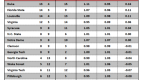
  5. Ken Pomeroy writes some of the best publicly available analytic work available, but sometimes it takes someone else to put it into a format that makes others recognize its value. One example of this is the work of Dan Hanner who looked at two Pomeroy metrics–possessions per game and average possession length–to determine which teams had the biggest differences between perception and reality in terms of their tempo. The basis behind this is that a team that plays suffocating defense that leads to their opponent using up a large percentage of the shot clock will tend to have fewer possessions per game as their opponent will be consuming significant portions of the overall game time with their offensive possessions. We won’t get into the specifics of the analysis (you can check out the link for that), but it is interesting that teams that play faster on offense than standard metric suggest tend to be much better than teams that play slower on offense than standard metrics suggest.

Five Years Later: Has Longer Three-Point Line Achieved Desired Results?

Posted by BHayes on October 3rd, 2013

With five full seasons of college basketball’s 20-foot, 9-inch three-point line under our belt (formerly 19’9″), now would seem like a good time to take inventory on the impact of the rule change. There was ample debate back in summer 2008 on just how much of a difference the extra foot would make, but believers, and more importantly, the enforcers (the NCAA) trusted that the new line would promote better offensive spacing, and again make the three-pointer an option for only the finest of shooters. Those on the other side of the debate refused to believe that a measly 12 inches would alter a whole lot, with common refrains ranging from “players will be able to adjust very quickly” to “most three-point attempts came from well beyond the arc anyways.” So which group gets to say “I told you so” now? We have a large enough sample size to draw legitimate conclusions, but if we recall the initial objectives of the rule change – increased floor spacing and a decrease in non-shooters attempting the shot —  it’s  hard to argue that the evidence shows anything but mixed results.

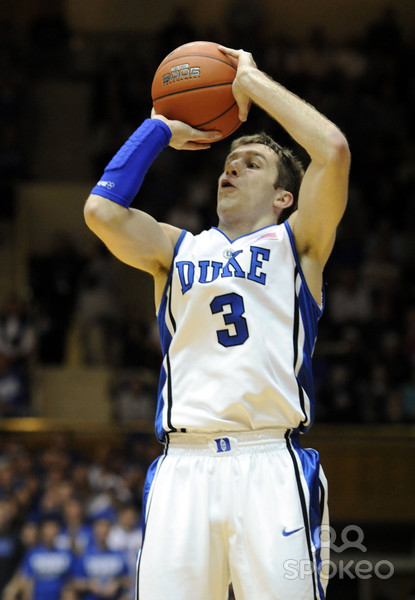
Former Blue Devil Greg Paulus Was One Of Many Who Preferred The Three-Point Line Back At 19', 9" ; After Shooting 42% From Three Point Range As A Junior In 2007-08, Paulus Shot Just 34% From Beyond The Arc As A Senior (Photo Credit: Spokeo.com)

Former Blue Devil Greg Paulus Was One Of Many Who Preferred The Three-Point Line Back At 19′, 9″ ; After Shooting 42% From Three Point Range As A Junior In 2007-08, Paulus Shot Just 34% From Beyond The Arc As A Senior (Photo Credit: Spokeo.com)

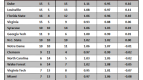
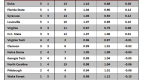
At the simplest level, the new line served its purpose: Three-point shots have been harder to make since 2008-09. In the last decade, the peak of three-point shooting proficiency came in the final year of the 19’9” line, when players shot 35.02% from distance. That number immediately plummeted to 34.18% in the first year with the new line — a significant drop when you consider that the largest shift in percentage in the five years prior was just .21%. Also worth noting is that the overall percentage in each of the last five years is well below even the lowest percentage (34.49%) in the five years before the change. StatSheet has some wonderful visual representations of this data, and it doesn’t take a genius to figure out that college players are simply not making as many threes as they did when the line was shorter. No PhD necessary to deduce that they are also taking fewer threes – another desired outcome for the rule book authors back in 2008. Total attempts saw a drastic decline between 2007 and 2008, as the average of 38.25 3FGAs per game fell to just 36.73 in the year after the change. That number has experienced a relative flatline in the four years since – a sharp interruption to a decidedly upward trending graph in the years prior.

Read the rest of this entry »

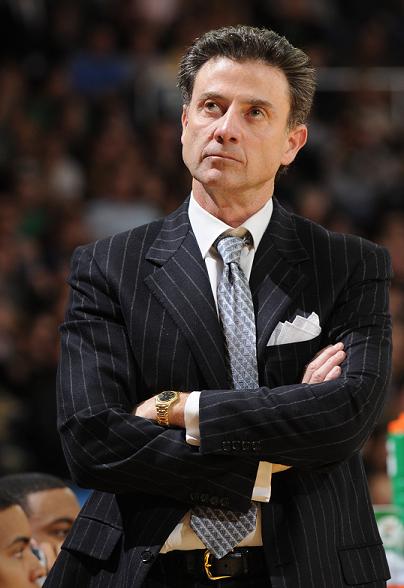
Boston Sports Radio Show Conducts The Shortest Interview Ever With Rick Pitino

Posted by nvr1983 on October 3rd, 2013

Over the years we have heard plenty of radio guests hang up when they disagreed with the host’s comments or line of questioning. Having listened to The Dan LeBatard radio show for years I have heard this happen on several occasions, but what happened to Rick Pitino today on Toucher & Rich, a Boston-based radio show, might be the most embarrassing piece of sports radio “journalism” that I can remember.

We Suspect That Rick Was Not Entertained

We Suspect That Rick Was Not Entertained

Here is their “interview” with Pitino:

Fred Toucher: We are joined by Rick Pitino, former coach of the Celtics, current coach of the Louisville Cardinals, who won the national championship. Rick Pitino, hello!

Pitino: Morning, guys.

Toucher: You stink. You ruined the Celtics.

(Hosts hang up and laugh uproariously for several minutes with a few comments in between)

After the laughter died down, the hosts did make some salient points questioning what qualified Pitino to write several leadership books and whether anybody should be taking advice from a basketball coach on how to run a business (this applies to all coaches who do so not just Pitino).

You can listen to the full segment below:


Unfortunately, Pitino was no longer on the line (as the hosts hung up on him) so he couldn’t answer any additional questions. While I understand how much Boston dislikes Pitino (lived in Boston from 2001 through 2012), I have no idea what good this type of radio segement does other than to make Pitino look like a sympathetic figure.

Morning Five: 10.03.13 Edition

Posted by rtmsf on October 3rd, 2013

morning5

  1. So apparently the concept of amateurism still has some supporters in the college basketball world, and it probably won’t surprise you that one of its most ardent proponents is a head coach who has never shied from giving his honest opinion. Venerable Syracuse head coach Jim Boeheim told the Post-Standard yesterday that the notion of paying student-athletes is “really the most idiotic suggestion of all time.” His tirade on the subject is well worth the read, and we highly suggest that you trudge through the entire thing this morning. Over the course of several minutes, Boeheim managed to come dangerously close to a Jim Calhoun-esque “not a dime back” moment when discussing his salary; he lobbed a grenade at Chris Webber’s illicit behavior while at Michigan; and he closed things out with an avuncular comment about people “just crying for a cause” [presumably Jay Bilas, whom Boeheim respects, is one of those whiners]. If you read nothing else today, read Boeheim’s diatribe.
  2. Midnight Madness is still a couple weeks away at most schools, but no program’s fans in America take it more seriously than those at Kentucky. With tickets for Big Blue Madness set to release Saturday morning in Lexington, UK fans anticipating the “best recruiting class in 20 years” [according to Rick Pitino] have already built a tent city numbering 650+ domiciles outside the UK ticket office. Fans began lining up on Wednesday morning, some 72 hours prior to sale of the tickets (which are free, actually), and rumors are running rampant about the names of the star-studded lineup that John Calipari will have performing at Rupp Arena this year. For most fans, though, the only performers that will matter are the ones named Randle, Harrison (x2), Johnson, Young and Lee. Everyone in the college basketball world is anxious to see what this group can do.
  3. If you need a head start thinking about the Wildcats, The Dagger‘s Jeff Eisenberg has us covered with a highlight post (along with translations) of John Calipari‘s recent Q&A with reporters (posted in its entirety on CoachCal.com). Eisenberg picked out what he calls the four most significant quotes from the head coach, and it’s clear that he’s well-versed not only in coachspeak but also in Caliparispeak. The most compelling quotes from our perspective were the first, where Calipari tried to explain/excuse last year’s disastrous season, and the third, where he skirts around the notion that Julius Randle could become a bigger version of the national championship team’s heart and soul, Michael Kidd-Gilchrist. No matter how this year’s team turns out, Calipari’s mood is a lot different from the one we all witnessed last October when he was contemplating how to run his system without a reliable point guard.
  4. Some tough luck out of the Colorado State program, as redshirt senior Jesse Carr, projected to be the team’s best returning player after losing all five starters, re-injured the ACL in his left knee on Monday this week. Given that he had already received a waiver from the NCAA to suit up for a sixth year, this injury effectively ends his college basketball career. Two seasons ago Carr contributed a nice all-around floor game of 7/3/3 APG as CSU earned its first bid to the NCAA Tournament in nine seasons. Now, head coach Larry Eustachy must try to make do with few experienced returnees, although Mountain West Sixth Man of the Year Jon Octeus is a fine place to start the rebuild.
  5. Speaking of knee injuries, NBA superstar Dwyane Wade made some interesting comments on Wednesday about his ongoing joint issues. Specifically, he blames surgery that he had on his meniscus while at Marquette in 2002 for hampering his professional career. As he put it, the push at the time was simply to get him back on the basketball court as soon as possible: “the way you approach things was different.” His medical team didn’t take a long-term approach to his career, and he believes that removal of the entire meniscus 11 years ago has strongly contributed to the myriad problems that he’s had with the knee ever since. While we’re sure that every successful athlete thinks that they could be even better if XYZ had not happened, the fact remains that Wade has already had a HOF career with three world championships to his name. As Ball Don’t Lie‘s Eric Freeman writes, there’s no guarantee that a longer view of the injury would have resulted in an equally fulfilling career because so many other variables would have then been brought into play. And that’s true with any regret. Well said.

Morning Five: 10.02.13 Edition

Posted by rtmsf on October 2nd, 2013

morning5

  1. The drumbeat of pay-for-play continues echoing through the chambers of college athletics. The latest and greatest: Jay Bilas tweeted out an article last night called “Money Madness: Why and How NCAA Athletes Should Be Paid” from Duke Political Review, a piece that probably wouldn’t have otherwise been seen by anyone beyond a small group of policy wonks. Zach Gorwitz argues that the free market should allow for college football and basketball programs to pay its players a reasonable salary beyond the cost of a full scholarship — he suggests $10,000 to $60,000 for football players, as an example — limited by an NCAA-wide salary cap and organized through negotiations with a players’ union. It’s an interesting idea, for sure, if for no other reason than it provides specific ideas beyond the “they should be paid without consideration of cost” crowd. Expect more. This is only just beginning. Meet Jeff Kessler.
  2. Wake Forest is one of the forgotten schools in the new-look ACC. Aside from a single Orange Bowl trip in 2008, the Deacs are not a regular football power like Clemson or Florida State; nor are they a basketball power like Duke or North Carolina (or Syracuse; or Pittsburgh; etc.). Since a brief but halcyon stretch in early 2009 when Wake hit #1 in both major basketball polls, it’s been mostly downhill on both the hardwood and gridiron ever since. The football team hasn’t had a winning season in five years and the hoops program has reached a level of moribundity under fourth-year head coach Jeff Bzdelik that it hasn’t seen in nearly three decades. As such, Wake alumni and fans are none too happy with their athletic director, Ron Wellman. After sowing their oats with an anti-Bzdelik billboard/publicity stunt at last year’s ACC Tournament, they are now planning to attack this coming weekend with a an aerial banner assault circling over the school’s football stadium during a game with NC State. The details, should you choose to consider them, are posted on a public Google Doc that was sent to us by a concerned Twitter follower. Best of luck with your endeavor, Wake fans. You are a forlorn lot.
  3. As we mentioned on the national site, Oregon State’s Craig Robinson announced suspensions on Tuesday for two of his most prominent returnees, Eric Moreland and Devon Collier. For unspecified internal reasons, Moreland will sit out half of the team’s regular season games (14), while Collier will only miss one. The two forwards represent the bulk of the Beavers’ returning frontcourt this season (with both players averaging more than 25.0 MPG), and thus their benchings is quite the gamble for a head coach who might be on the hottest seat in all of major D-I college basketball. Moreland in particular is an elite rebounding presence, ranking fifth in the nation in defensive rebounding percentage last season (27.5%) and more than holding his own on the offensive window (10.5%). Luckily for Robinson, he expects to have both back at full strength in time for the bulk of the Pac-12 season in early January, and the non-conference schedule other than a trip to Maryland and a mediocre field at the Diamond Head Classic does not appear terribly daunting.
  4. One of the players that Robinson had hoped to have returning this season was former guard Ahmad Starks, a 5’9″ whirlwind of a player who took care of the ball, made free throws, and knocked down long-range shots for the Beavers. The Chicago native headed back east in May to play at a school closer to his ailing grandmother, hoping that the NCAA’s transfer exception would allow him to play immediately at his new, closer destination. He ultimately decided to play for John Groce at Illinois but, according to ESPN’s Andy Katz, the NCAA on Tuesday denied his waiver, citing the distance in mileage from Champaign to Chicago (roughly 135 miles) as too far to justify the exemption. It’s been somewhat rare for the NCAA to deny these waiver requests, so this is a peculiar turn of events given that Starks is realistically only a couple-hour drive away from his grandmother. Katz cited a “100-mile” standard that perhaps signals that the NCAA is going to use for future adjudications of these decisions, which although an arbitrary distance, would still create some much-needed clarity to the rule. Let’s see if they stick to it in future iterations of this decision. Tough break for Illinois too, seeking to replace much of its backcourt this season after the losses of Brandon Paul and DJ Richardson.
  5. Although we still find preseason material to be a bit too early for prime time on this early October date, that hasn’t stopped the college hoops writing cabal from putting in some work. We’ll mention some of the more interesting items as we get closer to the traditional time for Midnight Madness in a couple of weeks, but here are a couple of things you should see now. First, The Dagger‘s Jeff Eisenberg released his preseason Top 25 yesterday, with his top five,  in order: Kentucky, Louisville, Duke, Michigan State, and Kansas. For each team he lists both their best-case and worst-case scenarios, and by our count, he lists those five teams as the group with enough upside to win the national title. Over at Sporting News, Mike DeCourcy lists seven key players who have something to prove this season. As always, the dreaded slideshow format is mitigated by strong writing and analysis by the longtime hoops scribe. Give both a look.

Oregon State Suspends Eric Moreland and Devon Collier

Posted by nvr1983 on October 1st, 2013

When Oregon State announced that it was suspending forwards Eric Moreland and Devon Collier indefinitely in late July many observers wondered how long the suspensions would be given the fact that both players were expected to be significant pieces of a Beaver team that was attempting to move up the Pac-12 hierarchy after failing to even finish at .500 in any of Craig Robinson’s first five seasons in Corvallis. This morning, during the team’s media day, Robinson announced the length of the suspensions–half of the regular season (14 games) for Moreland and one game for Collier–for a violation of team rules that remains unspecified.

The Suspensions Might Put Craig Robinson’s Job In Jeopardy

With Roberto Nelson (17.8 points per game) coming back and Angus Brandt (11.3 points and 8.5 rebounds per game) returning for injury (played just four games last season), the group appeared to be ready to form the core of a solid team that could compete in the Pac-12 this season. Collier’s absence, which will just be for the opener against Coppin State, should not be felt by the Beavers and he should be able to provide them with a potent inside force (12.6 points, 6 rebounds, and 2.5 blocker per game last season) even without Moreland by his side. The bigger issue for the Beavers will be dealing with the prolonged absence of Moreland, who was by far the team’s best rebounder last season (9.4 points and 10.6 rebounds per game). Brandt’s return will reduce some of that burden, but the rest of Moreland minutes will have to be filled by a committee of players none of whom played more than 15 minutes per game last season and nobody on roster is anywhere near the defensive presence that Moreland is.

Read the rest of this entry »

Morning Five: 10.01.13 Edition

Posted by nvr1983 on October 1st, 2013

morning5

  1. After initially indicating that they would seek a family hardship waiver for Kansas State transfer Angel Rodriguez, Miami announced that they no longer intended to seek such a waiver for the upcoming season. The school did not specify why exactly they decided to withdraw their application for a waiver–they cited Rodriguez’s nagging injuries–because although Rodriguez’s hardship seems questionable at best–moving to Miami to be closer to his native Puerto Rico–with the way that the NCAA has been granting hardship waivers we would not have been shocked to see the NCAA approve it. What the decision means for the Hurricanes is that they will most likely be in the bottom half of the ACC this season, but will have Rodriguez available for two seasons to play with Texas transfer Sheldon McClellan, who will also sit out this season and will have two seasons of eligibility remaining when he comes back for the 2014-15 season.
  2. In contrast to Miami, Florida followed through on their request for a hardship waiver for Rutgers transfer Eli Carter, who left the school in the wake of the Mike Rice scandal, and yesterday the NCAA granted Carter a hardship waiver enabling him to play for the Gators this coming season. Although we have been critical of how easily the NCAA has been granting hardship waivers, Carter’s seemed certain given the public reaction following the release of videotapes showing Rice physically and verbally abusing his players in practice. As for Carter’s role on the Gator team, there is no question that he can score (averaging 14.9 points per game last season), but it remains to be seen how well he can play within the Gators system as he was a high-volume, low-percentage shooter (38.4% FG and 32% 3-point) at Rutgers. If Billy Donovan can find a way to rein him in and utilize his scoring ability in a more efficient manner, he could be a significant addition to the Gators lineup, but that could be a big “if”.
  3. We normally do not pay much attention to minor preseason injuries, but the report of a “stress reaction” in Jahii Carson‘s right tibia caught our eye. As the article mentions the injury is reportedly a low-grade one, but given the quickness that Carson relies on it would be a major issue going forward if it continues to linger. According to both Carson and Arizona State, Carson could play on it if necessary, but that does not mean that he would be able to play through it for the entire season. It seems like an issue that most likely will resolve, but it is worth keeping an eye on.
  4. Larry Krystkowiak might have a way to go before he turns around a floundering Utah program, but at least he is making a difference in his community. According to reports, the 6’9″ second-year Utah coach apprehended a local bike thief, who did not appear to put up much resistance. After catching him, Krystkowiak called campus police, who subsequently discovered five stolen cell phones on the thief. After his weekend adventure, Krystkowiak tweeted about the incident comparing himself to Barney Fife although we assume that Krystkowiak is significantly more imposing than Don Knotts ever was.
  5. Following their surprise run to the CAA Conference Tournament title and First Four victory, James Madison was looking at a rebuilding year as they only had one returning starter: Andre Nation. Unfortunately for the Dukes they will be without Nation for the first 15 games of this season after he was suspended for a violation of an unspecified athletic department policy. The sophomore guard, who averaged 9.3 points and 3.1 rebounds per game last season, showed signs of his potential in the team’s First Four victory against LIU-Brooklyn as he went for 14 points, seven rebounds, five blocked shots, and four assists. Now the team will have to adjust to playing with five new starters to begin the season as Nation is not scheduled to return until a January 7 game against the College of Charleston.

The Jason Capel-Devonte Graham Controversy is Officially a Mess

Posted by Chris Johnson on September 30th, 2013

Chris Johnson is an RTC Columnist. He can be reached @ChrisDJohnsonn

The biggest source of frustration with the NCAA’s outdated guidelines is its amateurism philosophy, which holds that student-athletes cannot accept money above the amount provided with a room and board scholarship. Not far behind is the swath of restrictive policies the organization has in place, primarily those concerning transfers. In a world where coaches are allowed to switch jobs on a whim, collecting fat paychecks in the transfer while players are forced not only to seek a permission to contact and clear a desired destination with their head coach but also sit out one season before regaining eligibility, is royally screwed up. Few rational people deny this. Another source of mass antipathy? The national letter of intent (NLI), which basically forces players to give up every form of leverage they have before ever enrolling at their university of choice. By signing the NLI, players are: 1) prohibited from being recruited by other schools; 2) forced to enroll at their selected school, lest give up 25 percent of their athletic eligibility; 3) forced to abide by standard transfer rules (permission to contact, maniacally restrictive coaches declaring a raft of schools and conferences off limits, the customary one-year holdover penalty, etc.). This does not sound like a fair agreement, and it isn’t! Which leads one to wonder why a player like Devonte Graham, a point guard from Raleigh who committed to Appalachian State in September 2012 and used the early November signing period to ink his NLI, would ever sign it in the first place.

Not releasing Graham from his NLI makes Graham come off as cruel and unforgiving, but we may not know the full story (AP).

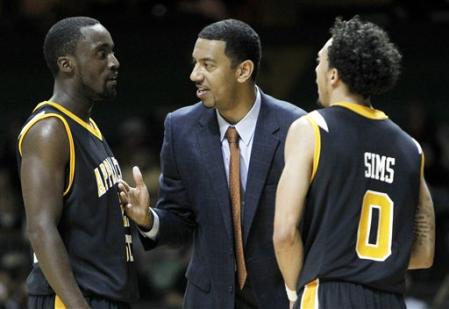
After signing to play for Appalachian State and head coach Jason Capel, Graham’s stock soared as he impressed coaches during his senior season at Broughton High School. Other schools – schools most young point guards from Raleigh would choose over Appalachian State at a moment’s notice (no offense, App) – predictably took notice. Graham had soon drawn interest from a host of high D-I programs, including Pittsburgh, Providence, Creighton, Wichita State, UConn and Rhode Island. By mid-February, Graham had asked for a release from his NLI to pursue a more high-profile college hoops experience. Far from being cooperative, Capel failed to oblige his request. Now spending a post-graduate year at Brewster Academy in Wolfeboro, New Hampshire, essentially stuck in eligibility limbo, Graham faces the likelihood of having to burn one year of eligibility if he decides to transfer to another school. Unless, of course, Capel sets him free. Based on a statement released from the school Saturday, it only appears the school, and Capel, are digging their heels in even further.

Read the rest of this entry »

Morning Five: 09.30.13 Edition

Posted by nvr1983 on September 30th, 2013

morning5

  1. It didn’t take long for Appalachian State to turn the tables after the media began to attack the school for not releasing Devontae Graham from his National Letter of Intent. Graham, who recently shot up the recruiting rankings, was a lightly regarded recruit when he signed with Appalachian State and now is at Brewster Academy. Now that Graham is more highly regarded he is looking to be released from the Letter of Intent to look at more high-profile schools. After receiving a great deal of media criticism for not complying with Gardner’s wishes the school issued a release accusing North Carolina State of tampering. On the surface we might question the accusation, but when you consider that Graham played with Mark Gottfried’s son the accusation becomes a little more interesting. Oh, and the two schools play each other on November 8. That should be a fun post-game handshake.
  2. It seems like we are writing more about “pay-For-play” than any other topic these days, but it seems like that is the major topic that everybody seems to be focused in on. Two of the better takes on the issue over the weekend came from Michael Rosenberg, who says “Pay-for-play is not the issue”, and Gary Walters (Princeton AD and former member of the NCAA Tournament Selection Committee), who says the debate over stipends obscures the bigger issues within sports. Most of the analysis that we have linked to and provided has focused on the pure economics of the issue, but if you want to read nuanced takes on the philosophical dilemmas surrounding the NCAA these are a great place to start.
  3. As we mentioned last week, Sports Illustrated‘s Andy Glockner was making his way through the top 20 current college programs. On Friday, Glockner concluded with his top five programs. The five programs (in order)–Kansas, Kentucky, Duke, North Carolina, and Michigan State–should not come as any surprise and we don’t have any issue with the order either although we can understand how some people may have issues with Kentucky and North Carolina given their inconsistency lately. It was an issue that we dealt with back in 2009 when we complied our Team of the 2000s rankings and was the primary source of debate at the time. Looking back on our rankings and what Glockner came out with it is interesting to see how much some programs moved up (Kentucky didn’t even make honorable mention–hello, Billy Gillispie) while others have fallen off considerably (particularly Maryland), but for the most part the order has remained relatively constant.
  4. One of the things we love about rankings is the methodology used to create them. We already discussed Andy Glockner’s college basketball program rankings and as we said we don’t particularly have any major issues with his rankings, but we do with the National College Scouting Association “Power Rankings”. The NCSA, which as far as we can tell is a recruiting agency, put together a ranking list of the top college programs by averaging their US News & World Report ranking, Learfield Sports Directors’ Cup ranking, and graduation rate. Their selection of Duke is not particularly notable (although it led one assistant coach at Duke to proudly announce it)but the methodology seems deeply flawed. Aside from our issues with the US News & World Report rankings, which mirror most of what you have read about those rankings over the past decade, the use of graduation rates, which can be played with, and comparing Division I programs to Division III programs in terms of athletic performance seems debatable at best. The equal weighting of the different rankings creates some interesting outcomes particularly when Florida comes in at 240th in graduation rates bringing them down the 82nd overall despite coming in 2nd in the Directors’ Cup rankings. And then there is Colorado School of Mines coming in 39th overall despite a fairly unimpressive US News & World Report ranking and a mediocre graduation rate thanks to a 10th place showing in the Division II Directors’ Cup.
  5. Over the past few years we have witnessed many cases of devastating diseases taking away many coaches and their family members. Still the news that Mark Fisher, the son of San Diego State coach Steve Fisher, had been diagnosed with amyotrophic lateral sclerosis, a debilitating progressive neurodegenerative disease more commonly known as Lou Gehrig’s disease. According to reports, those within the program have known about Fisher’s condition for over two years, but possibly with the progression he has had his role reassigned from being assistant coach to assistant to the head coach while several other members of the staff shift up a spot to fill his void. Neither the school nor other members of the team provided much more detail on Fisher’s condition or what prompted the announcement/change so as always in these situations we will simply wish Fisher and his family the best as they deal with this condition.