












Considering the Duke Hangover Effect: Fact or Fiction?
Posted by EMann on February 21st, 2013In a series of events that seems almost predetermined, Maryland, fresh off a signature win against Duke (in what could be the last game in this rivalry played in College Park) and now finding itself either squarely off the bubble or in the Tournament, went out and dropped its next game at lowly Boston College. The Wall Street Journal has already written about how beating Duke has merited a court rushing (“including this season, in 27 out of Duke’s 33 losses in true road games [the last ten years], the fans have rushed the court”). There hasn’t been as much focus on what happens to these teams after getting their “signature win” over the Blue Devils. Beginning in the 2007-08 season, teams not named UNC are under .500 in their next game after beating Duke. Yes, it is a small sample size, but it is worth taking a closer look at this phenomenon.
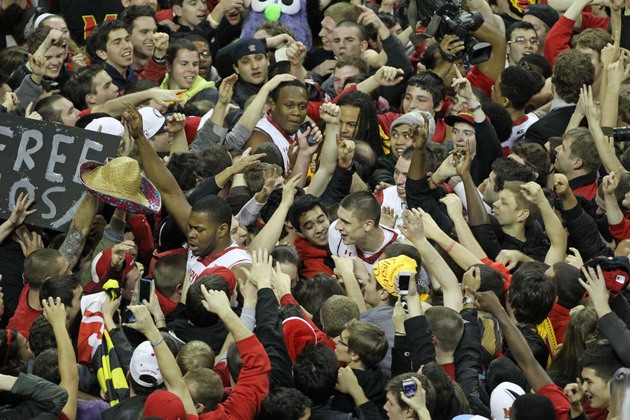
Maryland beat Duke, but followed it up with losing at Boston College. The Duke Hangover at work (Yahoo Sports)
Here is just one example of this “Duke hangover”: Feb. 26th, 2011 – Virginia Tech upset top-ranked Duke, 64-60, and looked prime to clinch an NCAA Tournament berth. However, the Hokies lost their final two regular season games (at home against a BC team that did not make the NCAAs, and at a Clemson team that barely did) to finish 19-10 (9-7 ACC), and after bowing out in the ACC semis to Duke, found themselves on the wrong side of the bubble.
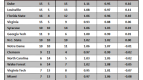
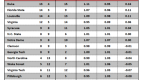
I went through the ACC data from the 2003 season onward to determine just how often teams lost its next game after playing Duke. Teams who lost their next game after playing Duke are bolded below. Teams who made the NCAA Tournament are italicized, with their seed and round they lost in listed for reference. I mentioned the ACC Tournament only in the years in which Duke did not win (2004, 2007, 2008, and 2012).