05.07.09 Fast Breaks

Posted by rtmsf on May 7th, 2009

As we anxiously await John Wall’s FINAL DECISION

brandy-miller-and-pearl

Share this story

Finally, the Shane Battier Rule is Nigh…

Posted by nvr1983 on May 6th, 2009

This is the best news that we’ve seen come out of the NCAA Rules Committee in a long time.  It’s not quite what we’ve been requesting for lo the last decade (an NBA-style block/charge semicircle under the basket), but it’s a good start.  NOTHING in college basketball makes us more irate than watching an excellent move and finish get taken away because some douchebag stepped over at the last second and camped out directly under the rim (ok, maybe Mike Patrick, but nothing else).  If the NCAA Rules Oversight Panel approves this measure on June 3, and it should, we’ll no longer have to deal with this bastardization of the rules.  Here’s the story on what will definitely be known as the Shane Battier Rule, from the AP:

The recommendation on play under the basket won’t call for a restricted-area arc painted in the lane as the NBA has, but it prohibits a secondary defender from establishing position in the area from the front of the rim to the front of the backboard. A defender must establish position outside that area to draw a charge or player-control foul.  “In our surveys and rules forums, the coaches wanted the committee to address the increasing contact that seems to occur under the basket,” NCAA Secretary-Rules Editor for Men’s Basketball Ed Bilik said. “Instead of an experimental rule, this clarifies how officials are to call this play throughout the season.”

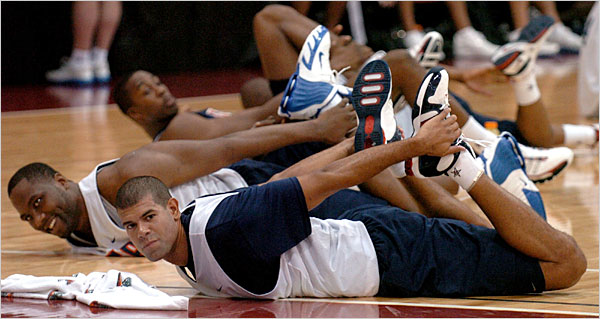
Shane is Used to Being on the Floor

Shane is Used to Being on the Floor

If this rule is actually implemented next season and called as currently contemplated, we figure it’s worth at least three buckets for opposing teams in Cameron.  Not.  Insignificant.

Share this story

Gladwell’s Theory on Full Court Pressure is the Only Outlier Here

Posted by nvr1983 on May 5th, 2009

Everyone’s favorite contrarian and make-sense-of-the-world guru, Malcolm Gladwell, wrote a provocative piece in this week’s New Yorker that is making the rounds among the hoops blognoscenti today.  Gladwell, the author of such fantastic thinking-man’s books such as The Tipping Point, Blink and Outliers, is one of our favorite writers, one of the few in the industry for whom we’ll actually make a specific trek to the book store and pay for a hardcover (!) edition shortly after his new material arrives.  So when we say we’re a major fan of his writing, thinking and (ahem) moral clarity, we’re not joking.  In RTC’s view of the world, Gladwell is Blake Griffin and the rest of us are merely the rim (or a hapless Michigan defender, take your pick).

Well, except for today.

gladwell-cartoon

Gladwell’s Argument

The article is long, but Gladwell’s thesis focuses on a story about a girls’ junior league basketball team located in Silicon Valley, filled with 12-yr olds who admittedly weren’t very good at the skillful parts of the game, but they could run and hustle and were able to win their local league and make the national tournament based upon their reliance and perfection of a strategy that any team can employ: the use of full-court pressure defense.  In his argument, Gladwell successfully interweaves the biblical story of David vs. Goliath with quantitative analyses of historical military strategy and modern basketball, ultimately concluding that the Davids in every facet of competition have a much better chance of winning by simply changing up how the game is played.

Using his typical mixture of anecdotal and statistical evidence, Gladwell argues that for a David to have a chance at beating Goliath, he must do two things.  The first thing – outwork Goliath – is a simple enough concept; but, more importantly,  the second requirement is that David must also be willing to do something that is “socially horrifying” in order to change the conventions of the battle.  For example, David knew he couldn’t defeat Goliath in a traditional swordfight; so he reconsidered his options and decided instead to pick up and throw the five stones by which his opponent fell.  Gladwell likens this strategy to the one implemented by the girls’ team’s coach, Vivek Ranadive, an Indian-born immigrant who had never before played the game of basketball.   Noting that his team wasn’t skilled enough to compete in the traditional half-court style of basketball played by most teams at that level, he instituted a full court pressure defense that truly confounded their opponents.  Using Gladwell’s model, the press was a socially horrifying construct that allowed Ranadive’s team a chance to compete with their more pysically talented contemporaries.  And compete they did, all the way to the national tournament.

Given the purported equalizing effect of the press, Gladwell asked why isn’t the use of full-court pressure defense more commonly used in organized basketball?  He cites Rick Pitino as one of the most successful adopters of the strategy, particularly with his 80s Providence and 90s Kentucky teams, but other than a few coaches here and there over the years, in his estimation the strategy remains largely underutilized (Mizzou’s Mike Anderson and Oklahoma St.’s Travis Ford, a Pitino protege, say “hi”).
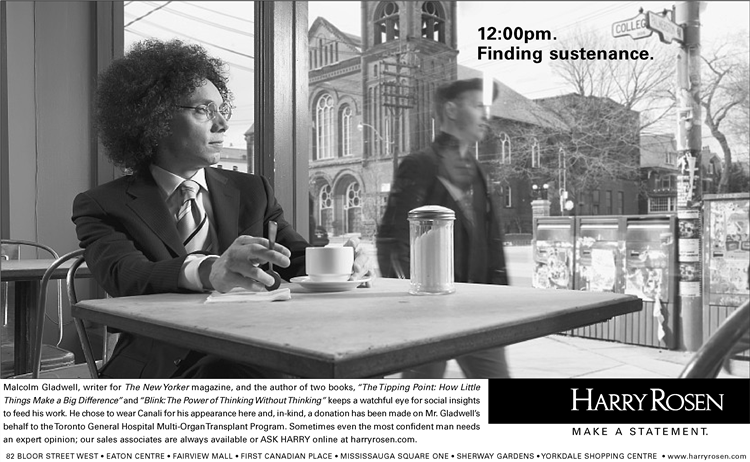
malcolm-gladwell-for-harry-rosen

Why It’s Wrong

We’re somewhat concerned about a lightning bolt striking us when we say this, but Gladwell completely misses the mark on this one – the full court press as a strategy works great when you’re dealing with 12-yr old girls whose teams are generally all at roughly the same skill and confidence levels (i.e., not very good), but as you climb the ladder and start to see the filtration of elite talent develop in the high schools, it actually becomes a weapon that favors the really good teams, the Goliaths, more than that of the underdogs.  The reason for this disparity is simple – successful pressure defense is a function of phenomenal athleticism (quickness, activity and agility) more than any other single factor, and the best teams tend to have the best athletes (not always, but often).  That’s why the early 90s leviathans of UNLV, Arkansas and Kentucky were so unbelievably devastating – they each could send wave after wave of long, athletic players at their opponents, which were usually slower, less athletic and shallower teams.

Gladwell confirms this when he talks with Pitino at length about the 1996 Kentucky dismantling of LSU, when the Wildcats went into the locker room with an 86-42 lead as an example of the devastating consequences of a great full-court press.  No argument there, but where it breaks down is when he fails to recognize that 1996 UK team was one of the best and deepest teams in the last quarter century of college basketball.  Nine players saw time in the NBA from a team who steamrolled most everyone they came into contact with that season.  The LSU first half was Exhibit A of the destruction, but they were far from the only one, and for Gladwell to use this example to somehow make a case for full-court pressure defense assisting the Davids pull off an upset is borderline absurd!

The other factor that Gladwell doesn’t discuss in his piece is that teams at the highest levels of basketball usually have guards who can beat pressure by themselves (not typically found at the 12-yr old level).  There’s a very good reason that you almost never see a full-court press in the NBA, and it’s because point guards like Chris Paul and Rajon Rondo are nearly impossible to trap in the full-court.  Every NBA team has at least one player who can easily negotiate any backcourt trap, which will lead to an automatic fast break advantage and two points at the other end – a coach of an underdog employing this strategy on a consistent basis will soon be in the unemployment line if he tries this too often.  This is obviously less true at the collegiate level, but there are enough good guards at the top programs that similarly make full-court pressure a relatively futile effort.  Are you seriously going to trap Ty Lawson or Sherron Collins for an entire game?  Good luck with that strategy.
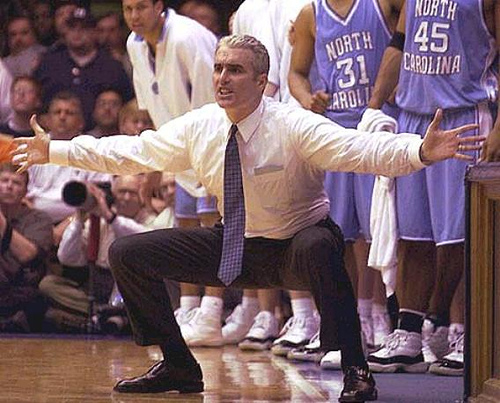
Not Even Matt Doherty Would Press Full Court as an Underdog

Not Even Matt Doherty Would Press Full Court as an Underdog

Conclusion

What’s particularly ironic about Gladwell’s conclusion that full-court pressure defense could act as the great equalizer in basketball is that a byproduct of this strategy is that it speeds up the game.  Yet, the tried-and-true method for less talented teams to have a shot to beat their more talented counterparts is to slow the game down.   Taking the air out of the ball became such a problem in the late 70s and early 80s that the NCAA instituted the shot clock to eliminate 24-11 abominations like this one.  Even former UNC coach Matt Doherty employed a modern shot-clock version of the strategy in a 60-48 loss against #1 Duke in the 2002 ACC Tournament.  We’d never say never about Doherty’s coaching acumen, but we would be seriously shocked if he had considered pressing Duke (and Jason Williams) as a viable strategy to pull off the major upset.  It is Doherty, though, so you never know.

Gladwell, as always, wrote a thought-provoking article that told a fascinating story about Vivek Ranadive’s team of twelve-year old “blonde girls.”  He failed, however, when he made a logical leap from youth league girls’ basketball to the elite levels on the assumption that such a strategy would work similarly for lesser talented teams.  It’s a fair assumption that was likely made by someone not as familiar with the intricacies of high-level basketball, but our job here of course is to set the record straight.  If we ever end up coaching youth league basketball, though, it’s now clear what our first practice will focus on.

Share this story

It Must Be Bad if Tim Floyd Won’t Take You…

Posted by nvr1983 on May 4th, 2009

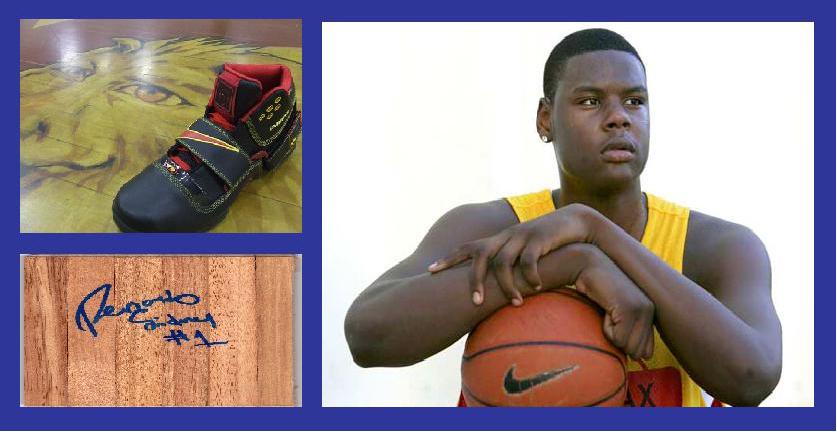
We briefly mentioned last week that 6’10 prep star Renardo Sidney from Fairfax HS (CA) committed to Mississippi St. in a bit of a recruiting surprise, given that Sidney’s family had moved from the South to the bright lights of LA three years ago to improve Renardo’s ‘brand’ recognition before hitting the NBA (a move later echoed by the OJ Mayo to USC manuever).  It was especially odd given Sidney’s televised press conference from Feb. 22 of this year where he publicly (yet awkwardly) committed to the hometown Trojans.

We are all aware that Tim Floyd’s USC program is rapidly becoming the Tark-era UNLV of the new century in terms of taint around the margins.  Yet, in a move that must have absolutely stunned the rest of the Pac-10, last week USC turned its back on Sidney and rescinded its scholarship offer.  According to an investigative piece by the LA Times that came out over the weekend, USC administrators simply could not get comfortable with the peculiarities surrounding the Sidney’s family’s financial situation, and ultimately decided to pass.  From the article:

“It’s highly unusual for both of those schools [UCLA and USC] to abandon their recruitment of a player of that caliber and potential,” said George Raveling, a former college coach — at USC and elsewhere — who works the Southern California area for Nike. “They must know something the rest of us don’t know.” […]  Bruins and Trojans sources both say they were wary of potentially intense NCAA scrutiny prompted by these issues: Despite what was perceived as a limited income, the family moved multiple times and resided in upscale homes during Sidney’s high school years [incl. a home in Hancock Park valued at $1.2M]; and stepfather Renardo Sr. directed a club basketball team with financial backing that was unclear beyond a relatively modest shoe company sponsorship.  Plus there was this: A source intimately familiar with Sidney’s recruitment said a university official thought the stepfather had strongly hinted that he expected to be compensated if his son signed with the school.

renardo-sidney

Mississippi St. may have opened a Pandora’s box in signing this kid.  MSU may be in the SEC, but this isn’t football and the Bulldogs aren’t named “Alabama” or “Georgia.”  The NCAA undoubtedly has already caught wind of this story, and as soon as they finish up with powerhouse programs Northeastern and Georgia Southern, they should be able to focus on plucking a ripe SEC school off the branches (one that doesn’t wield much power in a secondary sport in that league). 

Seriously, though, is there any chance that we ever see Renardo Sidney in a college uniform?  His father is probably already talking to Sonny Vaccaro about pulling a Brandon Jennings/Jeremy Tyler in Europe next year.  Hang on, folks, the transatlantic express is getting more crowded…

Share this story

Maybe He Was Trying to Squat. . .

Posted by nvr1983 on May 4th, 2009

John Wall‘s recruitment just got a little more interesting as the nation’s #1 recruit was cited for misdemeanor breaking and entering in Raleigh, NC. According to police reports, Wall was seen leaving the residence (an unoccupied house) on April 27th, but the officers at the scene saw no signs of forced entry or of anything being taken from the residence.

Even though this will be on all the blogs and major message boards by the end of the day, the impact on his recruitment will probably be minimal in the end. If you don’t believe that, just look back a few years ago at Shelden Williams who was a suspect in a rape case, but still managed to get into Duke. Wall, who hasn’t committed yet (reportedly between Duke, North Carolina State, Memphis, Miami, Baylor, Kansas, Kentucky, and Liberty) has until May 20th to decide before the official signing period ends.

Update: According to reports out of North Carolina, Wall was apparently in the house for a house party. The house itself (below) appears to be bank-owned and in pretty rough shape.

Share this story

Paulus World Tour T-Shirts… Get Yours Now!

Posted by nvr1983 on May 1st, 2009

(h/t ESPN Page 2)

This Greg Paulus football story has gotten a lot of play in the national media the past few weeks as the former HS all-american quarterback has jetted around the nation working out with the Green Bay Packers, Michigan, Syracuse and Nebraska.  The guys at Page 2 (remember when that was cool?) have come up with a t-shirt to commemmorate Greg’s spring/summer world tour.  Good stuff.

pg2_paulus_576

Share this story

Breaking Down the 2009 Early Entries…

Posted by nvr1983 on May 1st, 2009

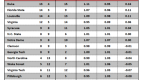
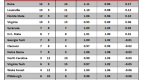
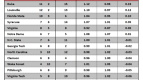
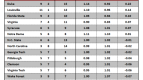
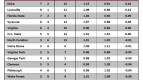
The 2009 NBA Draft Early Entry list is now official, and there are 75 collegiate players with eligibility remaining who think they have a shot at the League this year.  Keep in mind that there are only 60 picks in the 2009 NBA Draft, and the above number doesn’t even include graduating seniors as well as foreign players.  Mathematically speaking, it would serve a number of these players with stars in their eyes well to return to school for at least one more season.  Let’s evaluate each of them.
Players With Agents
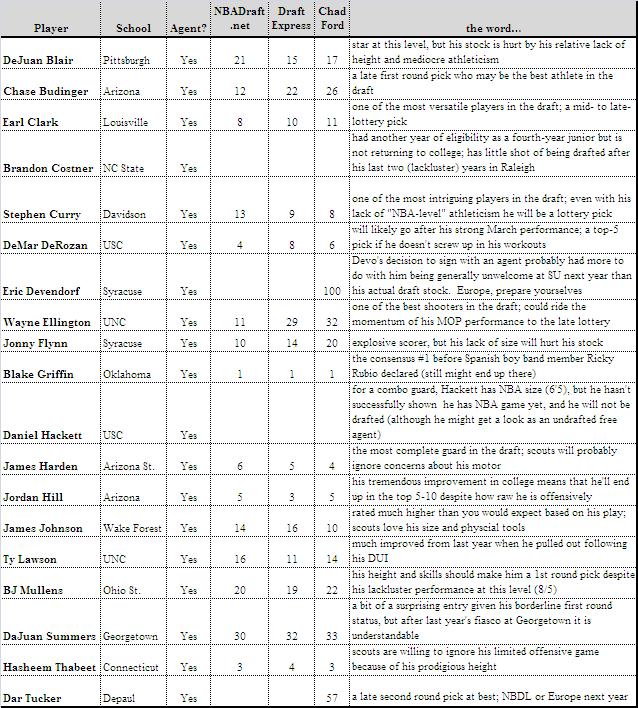
First, the players who have already signed with agents, effectively ending their collegiate careers.  For the most part, this group is first-round material, but Brandon Costner, Eric Devendorf, Daniel Hackett and Dar Tucker must know something about their draft status that nobody else does. 

2009-ees-agents

Likely to Stay in Draft 
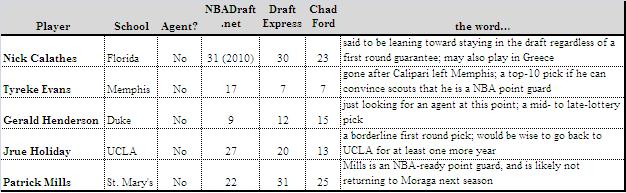
Next, we have a much smaller group of players who are very likely to stay in the draft, but they have yet to sign with an agent, and there’s been no official word yet.  All five of these players are probably first rounders, but with Nick Calathes, Jrue Holiday and Patty Mills, there remains a possibility of a return to school next season. 
2009-ees-likely

On the Fence
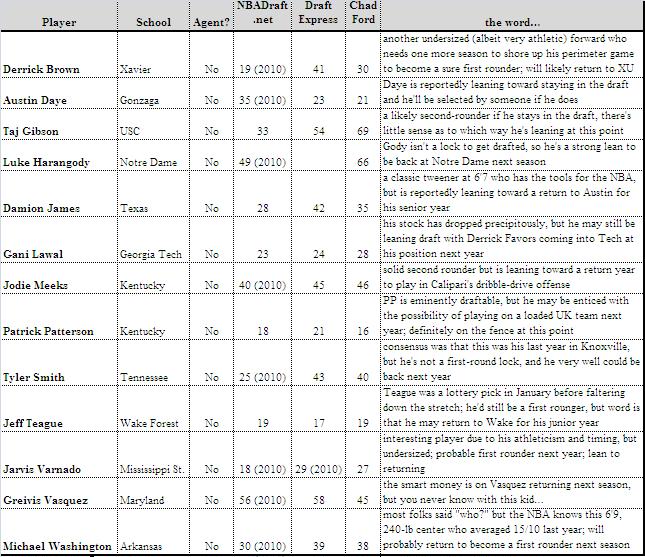
These thirteen players will decide the complexion of college basketball in 2009-10, much as Lawson, Ellington and Green did this season.  For example, if Jodie Meeks and Patrick Patterson return to Kentucky, that’s a top five team.  If Jeff Teague returns to Wake Forest, same thing.  Derrick Brown at Xavier, Austin Daye at Gonzaga, Luke Harangody at Notre Dame, Gani Lawal at Georgia Tech, Tyler Smith at Tennessee, Jarvis Varnado at Miss. St., Greivis Vasquez at Maryland.  Each of these players is all-american caliber.  This group of players could break a lot of hearts in the next six weeks.
2009-ees-fence-v2

You Gotta be Joking
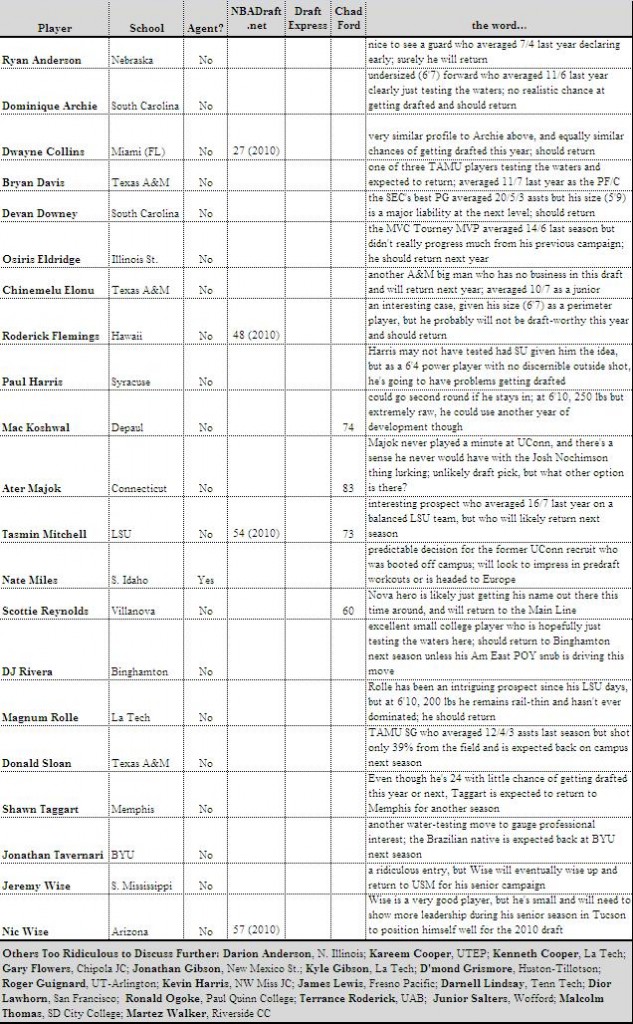
This group of players has a fair mixture of guys who just want to get evaluated (even though Parrish points out most won’t actually get evaluated) for next season’s draft and players who have no idea what their true value is in terms of NBA scouts.  There are also several who have nowhere else to go, having worn out their welcomes elsewhere.  This list always makes RTC feel a little sad, yet as we now know, the NCAA has enacted a new rule making it so there will be even more ill-informed choices such as these in the future.  Thanks, guys.  Way to look out…

2009-ees-joking

Share this story

Richard Codey: Senator, Coach and Metaphorical Master…

Posted by nvr1983 on April 30th, 2009

Ray Floriani of College Chalktalk is the RTC correspondent for the NEC and MAAC conferencesHe also officiates youth league basketball in his spare time. 

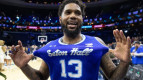
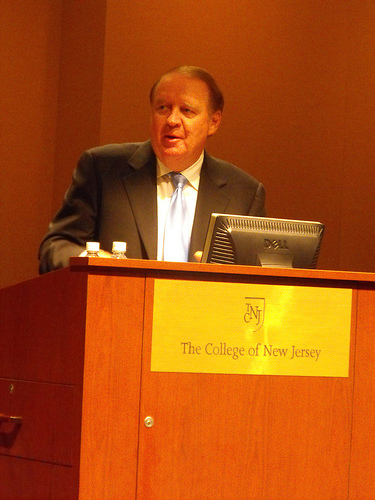
WEST ORANGE, NJ –  Chalk it up under the ‘you never know who you will meet’ department. This past weekend called for officiating assignments at an AAU tournament here at West Orange High School. Both days called for three games and an appreciable supply of water as the local mercury rose. On Saturday, after finishing two girls and a boys game, I ran into coach and New Jersey Senator Richard Codey whose team played on the adjoining court. “No column today,” I joked. He got a laugh and told me about the highly touted recruit (6’8 Ferrakohn Hall)  Seton Hall just signed.   

richard-codey-conj

On Sunday the schedule called for three games beginning at 8:30 a.m. Not the easiest time to begin boys 17 and under games but definitely advantageous to beat the expected 90 degree heat. As it turns out I have Codey’s 17 and under West Orange team. There are two games that go on simultaneously. I am chatting with my partner Sue Lisanti and the officials from the next court Leslie Porschen (an excellent player in her day at FDU) and Mary Ann Conboy. Codey interjects and jokingly challenges political correctness by saying “the women are taking over.” Leslie notes that our Board 33 chapter is actually low on women’s officiating numbers and could use more members. “I mean we have had a lot of women working this tournament,’ he said in a joking manner. After a little more small talk it’s toss the ball up and get to work.

West Orange is playing a team from Ocean County, New Jersey, the Wolfpack. Early on it’s a good competitive game. Codey’s team is running some nice flex offense in half court sets. It’s obvious he is not an AAU coach that ‘rolls out the basketballs’ but teaches offensive and defensive structure. If he is looking for a call he usually implores my name but overall he spends a greater deal of effort on his team’s execution.  On one play his guard got the wind knocked out of him. We stop play and summon Codey on the floor. “He’s getting hit harder than the Germans in World War II,” Codey says as he smiles and winks. “I like that one coach,” was my reply. We move on and at the half it’s still close.

My center is getting more hits than Susan Boyle on YouTube,” Codey says at the scorers table so tournament co-director Mary Alice Zavocki can hear. He is laughing as he says this and asks if I saw Boyle on You Tube over the weekend. More small talk in good fun.

Second half, West Orange has a ten point lead then proceeds to lose all but one point of it. We have a transition play coming to me on the lead position. The Wolfpack player executes a jump stop that looks funny. In a split second the information is processed in my mind. Years of Edgar Cartotto’s officiating camp drilled into us his philosophy, “if you not sure it’s a walk don’t call it. I’d rather you blow a walk call than screw (Edgar’s verbiage is colorful) a kid who didn’t walk by calling it.” I’m not sure, I let it go. The player scores and out of the corner of my eye I can see Codey jumping and making a walk jesture while saying, “ohh Ray.”  My thoughts are of Bobby Gonzalez who has made similar moves on the Hall bench. During a time out, Mary Alice, keeping the clock, said it was a nice no call. I just told her my view and Edgar’s philosophy.

seton-hall-cls

Codey’s team never lost the lead, regrouped and earned a nice 68-60 victory.  Post game, I tell both teams nice effort and both coaches it was a pleasure to work their game. As it turned out a noticeably tall assistant joined Codey’s bench during the game. It was the Hall’s John Garcia. I introduced myself, spoke about the writing and covering his games and commended his Hall club on working hard and doing a nice job this season. Garcia refers to Hall and says, “wait till you see us next year, we are going to surprise people.”

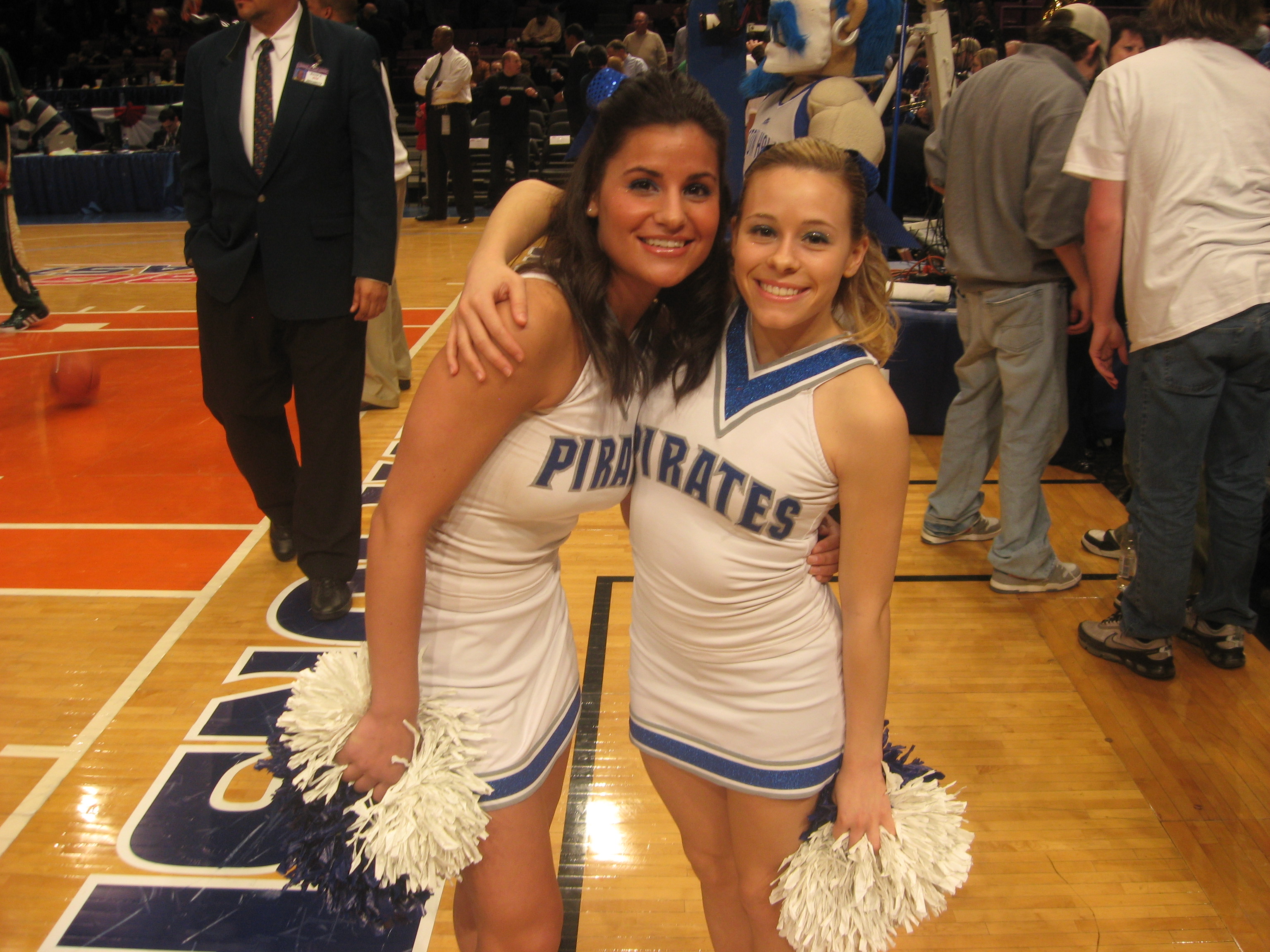
Codey heads out, I say good game again and jokingly note today we had no cheerleaders today (the above is provided from a Seton Hall game earlier this year). He got a laugh out of that one.

Share this story

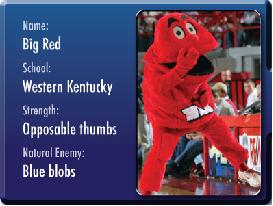
RTC Mascot Death Match Champion: Big Red!

Posted by nvr1983 on April 30th, 2009

Just remembered that we never posted the championship results of this year’s RTC Mascot Death Match.  So here goes…

By a resounding margin, Western Kentucky’s Big Red easily handled Cleveland St.’s Magnus the Viking in the final match.   Admittedly, the bigger upset was in the semifinal round when the WKU mascot took out Xavier’s Blue Blob.   So congratulations to the Western Kentucky Hilltoppers and their mascot, Big Red, for winning the first annual RTC Mascot Death Match!

wku-big-red

This has been fun.  Check back next year during the first week of the NCAA Tournament for the next version, and thanks to everyone who voted over the last month. 

Share this story

Alex Tyus Follows Billy Donovan’s Lead

Posted by nvr1983 on April 28th, 2009

As we mentioned in today’s Fast Breaks, there was some curious news out of Gainesville today where Alex Tyus, who had announced that he was transferring from Florida on April 17th, changed his mind and has decided to continue his basketball career there. Yes, that would be 11 days between leaving and coming back to the Gators.

Surprisingly, Billy Donovan let  Tyus rejoin the program without any hesitation (at least publicly), which is a change for a coach who has ripped his team publicly on several occasions in the past. However, when you consider Donovan’s past flirtations with leaving Gainesville before returning his acceptance of a change of heart regarding scenery seems to make sense.

The interesting question which we will probably never find out is what made Tyus change his mind. Was it that he thinks UF is the ideal system for him? (Doubtful because they played him out of position and Donovan’s teams have largely underperformed outside of the repeat national champs–a big exception, but a team that seems like more of an aberration if you look closer at Donovan’s tenure.) Was it the co-eds? (Ok. That’s a very valid reason although he could have gone to UCLA, Arizona State, or FSU if that was the issue.) Was it a lack of options? (Doubtful for a guy who averaged 12.5 PPG and 6.2 RPG playing out of position as a sophomore.)

Whatever the case was I’m sure that the Gator fans are happy to have Tyus back as he makes them a NCAA tournament team (possibly SEC champs if Nick Calathes pulls out of the draft) with an incoming class that includes Kenny Boynton and Georgetown transfer Vernon Macklin. Well, that is at least until Tyus changes his mind again. . .

Share this story