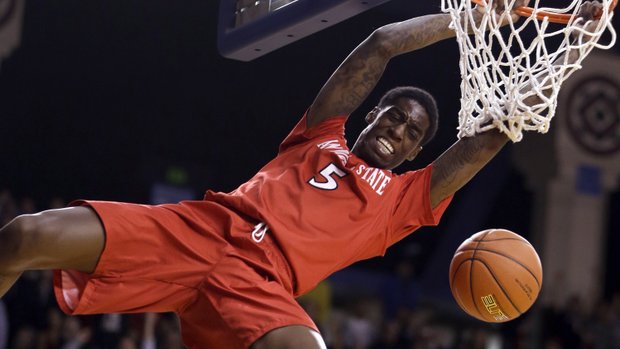
Steve Coulter of the Clarion is the RTC correspondent for the Big West Conference.
Regular Season Recap
A year after making the NCAA Tournament, Cal State Northridge is the final team to make the Big West Conference tournament. However, it hasn’t been a year of complete surprise, rather just a season of emergence. Depending on who plays in Big West Tournament final game on Saturday afternoon, the Big West could have their conference champion as high as a No. 12 seed come the NCAA tournament. Both Santa Barbara and Pacific have had great seasons and they could be rewarded greatly by if the selection committee if they win the conference crown.
Overall the conference’s bottom four teams—Cal Poly, UC Irvine, CS Northridge and CS Riverside–have had ugly seasons with sub-.500 conference records. Despite this they have produced some of the conference’s best players. The Highlanders’ Kyle Austin would be conference player of the year, and still has a shot, if it weren’t for his team’s last place finish. His back-to-back 35+ point effort against Fullerton and Cal Poly is one of the bigger achievements of the year. Like Austin, senior forward Kenny Daniels has an argument for being player of the year despite the Matadors’ tough season. He scored in double figures in all of his last eight games and finished averaging 15.3 points a game.
Although neither are going to win conference player of the year, the Anteaters’ Eric Wise and Michael Hunter proved to be one of the conference’s more lethal tandems. Hunter, a senior, was a scoring threat for the Anteaters, but his biggest contributions were on the court leadership and defense. He finished the year with 1.4 steals per game. The middle teams—CS Fullerton, Long Beach State and UC Davis–all had back and forth seasons that included both winning streaks and losing streaks. Overall Fullerton had a pretty consistent season, finishing over .500 both at home and on the road. After a three-game losing streak in January, the Titans turned things around in February and almost earned a first round bye. The 49ers had the roughest schedule of any team in the Big West, playing five top 25 teams during the season. Despite their 15-15 overall record, they played through the tough schedule to earn a first round bye. The 49ers biggest conference win came on January 14 when they beat the No. 1 seeded Gauchos by 20 points. The Aggies also had success against the top of the conference, beating Pacific on February 10. Despite Dominic Calegari’s departure after this season, the Aggies return their two top guards in Payne and Harden, which will put them in a position to be conference favorite next season.
The real difference between the league’s elite teams, Santa Barbara and Pacific, and the rest of the conference, is depth. Although the Gauchos have relied on only a few guys for scoring, the teams bench has given valuable minutes. In conference play they have at least four bench players averaging over ten minutes of action a night. As for the Tigers, they are a team that spreads the scoring effort around and does not rely on a single person to lead them each night. The similarities between Pacific and Santa Barbara are clear though, in that they are both teams that like to use their bench and use it effectively. That is why they are atop the conference going into the postseason.
Over the long holiday weekend, Syracuse and West Virginia fell from the ranks of the unbeaten, leaving only four teams — Kansas, Texas, Kentucky & Purdue — with a shot at the holy grail of a perfect season. None of the coaches will admit to it on the record, but they all hate losing, and each of them would welcome a chance to become the first team since Indiana in 1976 to win every game put in front of them. There’s only one problem. It’s collectively called the Big 12, SEC and Big Ten gauntlets schedules.
As you’re well aware, there have only been two schools in the last two decades who have run the regular season table — UNLV in 1991, and St. Joseph’s in 2004 — and of course the aforementioned Hoosiers a generation ago were the last to go unblemished throughout. There are many reasons for this, especially given that it’s difficult to win every single game with a growing target on your back, but the primary reason that Tark’s Rebels and Martelli’s Hawks were able to do it when so many other great teams were not was because they played in mid-major conferences (the Big West and Atlantic 10, respectively). This is not to say that those conferences are cakewalks, because they’re not. Every league has its share of rivalry games, other good programs and rattlesnake pits disguised as home gyms that make life difficult on favorites. But what those conferences provide that is often missing among the BCS conferences are the true bottom-feeders that give elite teams such as UNLV/St. Joe’s breaks on a given night. Have a tough shooting night at Vandy or Baylor? You’re going home with your first L. A tough shooting night at Fordham or Long Beach, though? You’re probably still ok.
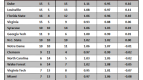
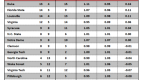
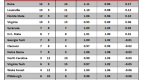
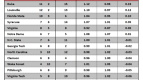
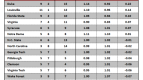
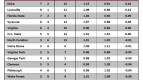
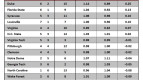
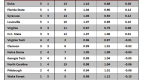
With the clear knowledge in mind that all four of the remaining unbeatens are going to lose a regular season game (or several), let’s take a look at the remaining schedules to pinpoint exactly when and where that might happen. First, let’s see what Pomeroy has to say. He provides percentage odds on every future game, and if you extrapolate out over the rest of the year, you can start to pinpoint the true likelihood of when that first loss might occur.
This is a good starting point, as Purdue appears to be the most likely candidate to lose next (@ Wisconsin on Saturday), while Kansas seems to be the most likely team to run the table (10.2% isn’t exactly a lock, though). The statistical analysis Pomeroy provides only tells part of the story, though, so we’re going to break down each team’s likelihood of its next loss using another analytical tool – our brain.
Minnesota freshman Royce White might be looking to plead out of his legal problems arising out of an incident with a security guard at the Mall of America. What this means for his future with Tubby Smith’s team? Status unclear.
These comments were never going to end well for Mississippi State junior forward Kodi Augustus. The repentant player will miss Thursday’s game against SE Louisiana and Saturday’s game against Bethune-Cookman. Surely MSU will be ok.
Purdue’s incumbent point guard, Lewis Jackson, who was already suspended for a variety of reasons, injured his foot last week and had surgery to repair the problem today. He’s officially listed as out indefinitely but Boiled Sports believes it will be for a month or more.
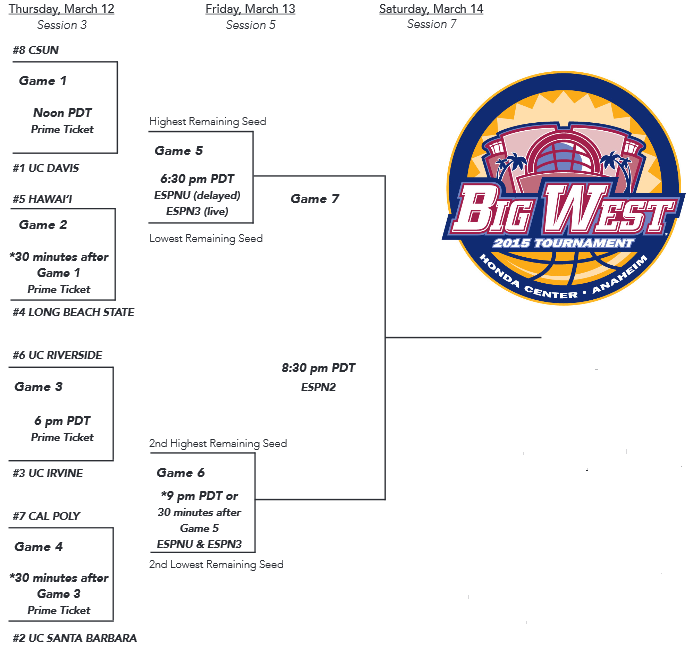
Your Big West Championship is moving across Anaheim from the Convention Center to the Honda Center. Get your tickets now.
Isiah Thomas got his first collegiate win at FIU last night. Yes, it was against NAIA school Florida Memorial, and yes it was only by six points (88-82), but a win is a win, and as Isiah said afterwards, “you start wondering if you’re ever going to win a game. I told the guys at halftime, ‘I don’t care how we win. I just want to win the game, go home, rub my dog, wake up in the morning and see the sun.” Mmm-hmmmmmm.
Ryan ZumMallen of LBPostSports.com is the RTC correspondent for the Pac-10 and Big West Conferences.
Predicted Order of Finish:
Long Beach State (13-3)
UC Santa Barbara (12-4)
UC Riverside (12-4)
UC Davis (9-7)
UC Irvine (9-7)
Cal State Fullerton (7-9)
Pacific (5-11)
Cal Poly (3-13)
Cal State Northridge (2-14)
All-Conference Team:
Mark Payne (G), UCD
Larry Anderson (G), LBSU
Joe Harden (F), UCD
Kyle Austin (F), UCR
Eric Wise (C), UCI
6th Man.Joe Ford (G), Pacific
Impact Newcomer.Michael Wilder (G), UCI
eWhat You Need to Know. The Big West consistently sends one representative to the NCAA Tournament, which is then soundly bounced from competition in the first round; but that shouldn’t take away from the fierce battle that’s being done within conference confines. The conference is riding a wave of improvement, witnessed by a recent flood of top-notch recruits and Cal State Northridge taking #2 Memphis to the wire in the first round of last season’s Tourney. This season, there are shining stars waiting to break out, and most teams have scheduled challenging preseason opponents in a seemingly league-wide strategy to boost the conference’s profile. Long Beach State sophomore Larry Anderson and UC Riverside senior Kyle Austin have the combination of size and pro-level talent that give their teams the chance to beat anyone on any night. Tough schedules and big, athletic guards – does that make the Big West a conference with upset capabilities? No doubt.
Predicted Champion. Long Beach State (NCAA Seed: #12). The 49ers will be the popular pick to win the Big West regular season as well as conference tournament, due to an elevated talent level and difficult preseason schedule that will make the rest of the conference season seem like JV. Because of that difficult preseason schedule – and therefore a favorable RPI – Long Beach State will likely be a trendy upset pick in the NCAA Tournament, especially if they can pull off an upset against Texas, Kentucky or Duke; on a national scale, however, they probably lack the firepower needed to advance to the second round. Only four seniors graduated from last year’s team that earned second place in the conference. The 49ers’ quartet of sophomores will lead the charge – with athletic sixth man Eugene Phelps, darting point guard Casper Ware, crafty forward T.J. Robinson and 2008-09 first-teamer Larry Anderson.
There are twelve automatic bids today, so we’ll be updating these as the day moves forward…
#16 – Binghamton (23-8, 16-3 Am East). Binghamton took care of business today against upstart UMBC to win their eleventh in a row and earn the school’s first ever NCAA bid. Reggie Fuller had 19/10 and alleged non-POY DJ Rivera added 16/5 in the RTC home win. We had more coverage on today’s BGTD.
Projected Seed: #16
Something to Remember: Binghamton is um, size-challenged. Their tallest starter is the 6′6 Fuller. And have you heard that Tony Kornheiser has an affinity for this school for some reason? Yeah, we hadn’t either.
#17 – Memphis (31-3, 19-0 CUSA). 25 straight wins in a row. 61 CUSA wins in row. Memphis just keeps on truckin’, with another stellar defensive performance in holding Tulsa to 26% from the field and 2-14 from three. This was also the 135th win for the Tiger senior class, who is focused on getting to #141, according to Coach Calipari. Robert Dozier had 18/14 and Tyreke Evans had 18/5/6 in the same-old, same-old for Memphis.
Projected Seed: #2
STR: We’re going to be a little contrarian here, but we’re not buying that Memphis is a national title contender this year. Are they better than anticipated? Absolutely. Are they on the same level as UConn, Pitt, Louisville, UNC, etc.? No freakin’ way. Their defense is outstanding, statistically the very best in the land. And CUSA is a better league than people tend to think it is. But the fact of the matter here is that Memphis is playing with house money right now. They were beaten by Georgetown, Xavier and Syracuse in the pre-conference slate. Tennessee took them down to the last possession. They rolled up Gonzaga in their building, but the Zags wilted in the face of their athletic defenders. Memphis is a very good team – but they’re not going back to the F4. Remember that you heard it here first.
Welcome back to the weekend edition of Boom Goes the Dynamite. First off I’d like to commend rtmsf for his strong work on yesterday’s BGtD. You guys really have no idea how exhausting it is doing a full day’s worth of this is and he managed to do it with only a short break although it almost caused me to give up working on the site after being forced to endure the American-Holy Cross game yesterday. As he outlined in his After the Buzzer post last night/this morning, there are 12 conference championship games today. For the sake of maintaining our sanity and having enough energy in the tank for our huge March Madness preview, we’ll be taking multiple shifts but we promise to coordinate it so you won’t miss anything during our handoffs.
6:00 AM: Yes. That’s actually the time I’m starting this thanks to a “short nap” that ended up going from 9 PM to 5 AM. Obviously my posts will be infrequent in the early morning hours, but I’ll be passing along some news and links to you before the games start at 11 AM. The New York Times has been stepping it up with their college sports blog “The Quad” recently and has an interesting post on Louisville’s Terrence Williams and his pre-game ritual of the giving himself a pep talk during the national anthem. Before anybody thinks this might be a Chris Jackson Mahmoud Abdul-Rauf situation, it should be noted that Williams actually stands during the anthem and is supposedly talking about family members that he has lost and asking that everyone on the court avoids injuries. Of course, we can’t verify this, but if we have any lip-readers in our vast legion of RTC readers, we would love hear your take on this particularly if you have seen this is in person.
7:00 AM: Before I head out for a few minutes to take care of some errands like stocking up on groceries for the coming storm where I probably won’t leave my apartment for 3 weeks. I thought I would pass along one of my favorite things we are doing at RTC right now. We enlisted the help of our correspondents and got them to send us their favorite March memories. We narrowed down the submissions to the 16 best entries and are counting down to #1, which will be revealed on Wednesday (the day before the tournament starts). I’d encourage you to check out the entries we have so far and keep on coming back throughout the day to see what they selected as their favorite March memories and then chime in with your memories on those moments.
8:45 AM: Ok. False alarm on that grocery run. Apparently Costco doesn’t open until 9:30 so after this post I’ll be on a short break. So today’s RTC East breakfast is brought to you by Flour Bakery and consists of their Bobby Flay-slaying “Sticky Buns” and a twice-baked brioche. Here’s a quick run-down of the games (title game in red–there’s a lot of red) that I will be focusing on today:
Early Games
UMBC vs. Binghamton at 11 AM on ESPN2 for the America East title
Memphis vs. #3 Tulsa at 11:35 AM on CBS for the Conference USA title
Afternoon Games
Mississippi State vs. #16 LSU at 1 PM on ESPN2 and Raycom in the SEC semifinals
#6 Michigan State vs. Ohio State at 1:30 PM on CBS in the Big 10 semifinals
#1 UNC vs. #22 FSU at 1:30 PM on ESPN and Raycom in the ACC semifinals
Tennessee vs. Auburn at 3 PM on ESPN2 and Raycom in the SEC semifinals
Maryland vs. #8 Duke at 3:30 PM on ESPN and Raycom in the ACC semifinals
#25 Illinois vs. #24 Purdue at 4 PM on CBS in the Big 10 semifinals
Evening Games
#23 Arizona State vs. USC at 6 PM on CBS for the Pac-10 title
Baylor vs. #15 Missouri at 6 PM on ESPN for the Big 12 title
Temple vs. Duquesne at 6 PM on ESPN2 for the Atlantic 10 title
Late Night Games
San Diego State vs. Utah at 7 PM on Versus for the Moutain West title
Morgan State vs. Norfolk State at 7 PM on ESPNU for the MEAC title (Periodic score updates for this one)
Buffalo vs. Akron at 8 PM on ESPN2 for the MAC title
#5 Louisville vs. #20 Syracuse at 9 PM on ESPN for the Big East title
Jackson State vs. Alabama State at 9 PM on ESPNU for the SWAC title (Periodic score updates for this one)
Utah State vs. Nevada at 10 PM on ESPN2 for the WAC title
Cal State-Northridge vs. Pacific at 11:59 PM on ESPN2 for the Big West title (This one is questionable)
10:55 AM: Ok. I’m back from my extended Costco run and have enough food to last me through the week. A quick summary on the early games. In the America East, Binghamton is a 5-6 point favorite (depending on your gambling establishment of choice). Honestly, I’m surprised that they aren’t bigger favorites since they come in at 22-8 while UMBC comes in 15-16 and the game is at Binghamton. It could be interesting though as they split the season series in the regular season with Binghamton winning the last game of the regular season at home against UMBC 71-51. I’m guessing the America East commissioner is rooting for UMBC to avoid the embarrassment of the CBS announcers having to explain why the conference’s regular season leading scorer (D.J Rivera) was left off the all-conference team. In Conference USA, Memphis is a 14-point favorite against Tulsa. Memphis might be playing for a #1 seed even with their ridiculously easy schedule. We’re hoping this game is more like the first time they met (a 55-54 Memphis win) rather the last time they met (a 63-37 Memphis win). I have a sneaking suspicion that it is going to be more like the latter, but we’ll be following it anyways to get a last look at Memphis before CBS’s new Billy Packer rips the NCAA selection committee for putting them over a Big East team.
Overview. What a day. By our count, there were eleven conference tournament games today that went down to the final minute where either team had a realistic shot to win. We’re proud to say that we saw most of those games and recorded it for all posterity over at our daily journal of hoopsography, Boom Goes the Dynamite. So without rehashing everything that we transcribed over there, let’s take a look at some of the key storylines that we’re keeping an eye on going into Championship Saturday.
Get Your Voodoo Dolls Out. These are the teams that Bubble Nation despises right now because these are the guys still standing in their conference tourneys that are in position to take away ‘their’ much-more-deserving spot in the field of 65. So if you’re a fan of one of the below teams and you feel a prickly feeling tomorrow in your thigh emanating from Omaha, Las Cruces, Gainesville, Providence, et al, you’ll know why.
USC. The Trojans entered the Pac-10 Tourney in nobody’s field of 65. With good reason, they faltered down the stretch, losing six of their last nine and looking listless throughout much of the season. And now, after defeating crosstown rival UCLA tonight, they’re 40 minutes away from an automatic bid playing a team in their hometown whom they split with on the season.
Temple/Duquesne. The A10 has already guaranteed that somebody will be disappointed on Sunday because neither of these two teams were on anybody’s board either. Temple was at least in the conversation, but Duquesne has come out of nowhere, upsetting Dayton today to sit one game away from an auto-bid.
Baylor. We discussed Baylor a little today in the BGTD, but obviously with a 5-11 Big 12 record, they’re not anywhere near the bubble. Yet, they’ll play Missouri tomorrow for an automatic bid, and given how they seem to have their mojo back after a major half-season swoon, we wouldn’t be surprised to crown Baylor as this year’s Georgia tomorrow in Oklahoma City.
San Diego St. Well, at least SDSU is already on the bubble. Their hard-fought win over BYU tonight ensured that they too will have a chance tomorrow to take the decision out of the NCAA Selection Cmte’s hands. The Aztecs split their two games with Utah, who was already ensured a bid either way. SDSU will feel the wrath of Bubble Nation on them tomorrow.
Mississippi St./Auburn – MSU defeated South Carolina and Auburn beat Florida today to move into the semifinals of the SEC Tournament, which means that half of the SEC semifinalists are teams that probably aren’t going to get in without an auto-bid. The SEC is so muddled that either of these teams can beat LSU or Tennessee (respectively) and get a shot on Sunday for the guaranteed invite.
Maryland – This one is less likely considering that Maryland will probably have to beat Duke and Carolina to win the auto-bid, but merely beating Duke would move the Terps from bubble to lock status. The voodoo dolls have a lot of work to do tomorrow.
Championship Saturday. Twelve automatic bids will be earned tomorrow. Her’e’s a brief primer on each.
America East – (6) UMBC @ (1) Binghamton. UMBC got pounded at Binghamton a couple of weeks ago, and the Bearcats have 12 of 13 coming into tomorrow. We’d expect Tony Kornheiser to be a happy man tomorrow, celebrating Binghamton’s first ever trip to the NCAAs.
Atlantic 10 – (7) Duquesne vs. (4) Temple. Just like last season, Temple is coming on strong at the end of the year, having won 9 of 11 coming into this game. Temple defeated Duquesne in their only meeting in Pittsburgh earlier this year, and we expect to see the same in AC tomorrow.
Big 12 – (3) Missouri vs. (9) Baylor. Baylor has won three in a row for the first time since December, and we’ve noticed that they have some of their swagger back this weekend. As well as Mizzou has played this year, Baylor has more “big game” postseason experience, so we’re going with the Bears in the upset here.
Big East – (6) Syracuse vs. (1) Louisville. For the Cuse’s sake, they’d better hope they lose tomorrow night. The last time they had a great BE Tourney run like this in 2006, Texas A&M ran them off the court in their first round NCAA game because they had nothing left in the tank. We think that SU’s tired legs catch up to them and Louisville gets a #1 seed with tomorrow’s Big East title.
Big West – (3) Pacific vs. (1) CS-Northridge. These two teams are essentially even, but Pacific beat CSN twice already this year, and it’s difficult to beat a team three times, so we’ll go with Northridge.
Conference USA – (2) Tulsa vs. (1) Memphis. Yeah, we’re going to go against the team that’s won sixty league games in a row. Playing at home. Sure.
MAC – (5) Akron vs. (3) Buffalo. These two teams knocked off the top two seeds today in the semifinal round, and they split during the regular season. We like Buffalo because they darn near beat UConn back in December. That’s as good a reason as any.
MEAC – (3) Norfolk St. vs. (1) Morgan St. Todd Bozeman’s Morgan crew is the class of this conference and will earn its first NCAA bid tomorrow.
Mountain West – (4) San Diego St. vs. (2) Utah. The Utes comfortable beat SDSU at home, but the Aztecs are playing with a purpose right now. Tossup game, but we like Utah to eke one out in Vegas.
Pac-10 – (6) USC vs. (4) Arizona St. USC has looked like a different team in this conference tournament so far, with Demar DeRozan suddenly playing the superstar he was projected to be. We like the hometown team here stealing an NCAA spot from someone else.
SWAC – (2) Jackson St. vs. (1) Alabama St. Jackson St. is the hotter team, having won 13 of their last 14, including a win a few weeks ago against ASU.
WAC – (1) Utah St. @ (2) Nevada. This should be an excellent game – the prohibitive favorite playing essentially a road game for the automatic bid. They split their games with each team winning at home, and we think Nevada will ride its home crowd to another win here. The question is whether Utah St. at 29-5 (16-3) would be an at-large? Answer: probably.
A Few Other Thoughts.
ACC – The call that gave the victory to Carolina was yet another late-game example of the ACC powers-that-be protecting their own, and we don’t know what BC was thinking when they decided to shoot a 28-footer to beat Duke instead of driving to the rim. Maryland has had a nice run, but it will end tomorrow. Duke-Carolina Part 3 is imminent on Sunday.
Big Ten – Ohio St. will probably hang with Michigan St. for a while, but ultimately will fold. The Purdue-Illinois game should be really good, though. Illinois took both prior games but Robbie Hummell missed the last one. We like Purdue to pull off a close one here.
SEC – Auburn is one of the hottest teams around now, having won nine of its last ten games. We like the Tigers to outlast Tennessee tomorrow to face LSU in the finals on Sunday.
Finally, Welcome American to the Dance… (15 down, 50 to go…).
#15 – American (24-7, 13-1). American earned its second consecutive trip to the NCAAs with its easy win today over Holy Cross, 73-57. Jeff Jones’ squad got 24 from star guard and Tourney MVP Garrison Carr, but it was their defense that once again shut down a conference foe (holding HC to 32% shooting).
Projected Seed: #15
Something to Remember: American got bombed by Oklahoma, Georgetown and Maryland this year, but it’s their defense that should have high seeds concerned. They have the 24th best defensive efficiency, but they likely don’t have enough offense to run with the big dogs unless they catch a really poor offensive team on an off night.
On Tap Tomorrow. Be sure to check in with us tomorrow, as we’ll be back with BGTD all day, covering the dozen auto-bids plus the four other conferences that don’t finish up until Sunday. The three games that have us most excited on Championship Saturday? Louisville-Syracuse, Illinois-Purdue and Utah St.-Nevada. See you then.
Ryan ZumMallen of LBPostSports is the RTC correspondent for the Big West and SEC Conferences.
The Big West Tournament will kick off tonight at the Anaheim Convention Center, and anyone who claims they know who will be crowned on Saturday is either: (1) lying, or (2) not familiar with the way the season has gone thus far. The fact is that any Big West team is capable of beating any other team, and seeding means little in making your predictions.
Top seed Cal State Northridge won the regular season title outright, but have faced injuries, legal issues and general inconsistencies that made the race a little closer than most expected when the Matadors were chosen as preseason favorites. Long Beach State, the #2 seed, started out on a blazing 5-0 conference start but has alternated between wins and losses for the remaining eleven games. Third-seeded Pacific hasn’t won a road game since January 31, and even lost to lowly Cal Poly early in the season.
We’ve made it through eighteen of our thirty-one season conference primers so far, and our correspondents continue to top each other with their breadth of knowledge and coverage of the one-bid leagues. So we want to thank them and once again highlight their fantastic work over the past few weeks by anchoring their primers in one post here, so that you (and we) can easily access them. Going forward, we’ll primarily be dealing with the traditional multiple-bid conferences or conferences that should expect to see multiple bids this season. Conference #13 will go up tonight, and we’ll be counting down to tipoff on Nov. 10, when the #1 conference primer will be unveiled.
Also, keep in mind that our correspondents will continue to bring RTC comprehensive coverage of each league throughout the season. Each of the above leagues will have an update post every two weeks, beginning in mid/late November.
Ryan ZumMallen, LBPOSTSports columnist, is the RTC correspondent for the Big West conference.
Predicted Order of Finish:
Cal St. Northridge
UC Santa Barbara
Long Beach State
Pacific
UC Irvine
UC Davis
Cal St. Fullerton
Cal Poly
UC Riverside
What You Need To Know (WYN2K). I know what you’re thinking: no good teams ever come out of the Big West. Oh yeah? What about 2006-07’s Long Beach State 49ers who ran roughshod over their schedule to a 24-8 record and an NCAA berth… losing to Tennessee by 35. Or last year’s three-way tie for first? UC Santa Barbara, Cal State Northridge and Cal State Fullerton each won 12 conference games and two earned postseason berths… one bowing out in the NCAA opener and one in the NIT.
Ok, there hasn’t been much success outside of the conference lately – and last year produced some colossal stinkers – but that doesn’t mean that intense basketball isn’t being played within the Big West’s confines. After a conference flooded with seniors last season, nearly every team is starting anew, making for one of the most wide-open conferences in the country. All you need is one stud to will your team to victory, and if 2007 Fullerton product and recent Sacramento Kings signee Bobby Brown is any indication, it is definitely possible for raw talent to be developed in the Big West. Don’t expect the top teams to feast on the bottom-feeders again – all it takes is one hot hand for any team to have a shot on any night. So let’s get into it!
Bottom Feeders.UC Riverside, Cal Poly SLO and Cal State Fullerton. I mention them now because I shan’t be mentioning them again. All three lost a vast majority of their scoring to graduation, and senior leadership is vital in the Big West. Expect painful rebuilding from these three, although Fullerton’s Josh Akognon (video footage below) will win a few games for the Titans all by himself. The 5’11 guard averaged 20 ppg last year and won Big West Tournament MVP honors, but with only 2 returners and Akognon the only returning starter, it’ll be a long year in the cellar for CSF.
Middle of the Pack.
One team that you can (surprisingly) expect to emerge from that very cellar this year is UC Davis. Yes, the UC Davis that went 2-14 in the Big West last season. Stop laughing. Last year’s Aggies fielded zero seniors and this year’s edition has five. They return a trio of senior starters that scored 28.4% of the team’s points, boast two key transfers in Joe Harden and Todd Lowenthal and look to Big West Freshman of the Year Mark Payne to step us as a sophomore. With all of that, I’ve still got them pegged in 6th because, c’mon, it’s UC Davis.
UC Irvine gets the nod for 5th in the Big West, even after losing their top two scorers who brought in a combined 29.5ppg. They do return their other three starters, though, and while the team is not particularly heavy on seniors or explosive guardplay, last year’s squad won 9 of 12 down the stretch so these guys know how to win. Adding three recruits sized 6’8” or taller does not hurt, either. But the Anteaters could well fall prey to the experience of UC Davis, and certainly neither is worthy of a Top 4 spot.
The Pacific Tigers come in 4th, based yet again almost entirely on the genius of the Big West Conference’s greatest basketball mind, head coach Bob Thomason. Thomason consistently squeezes more productivity out of less talent than any other BW coach, and I’ve learned the hard way not to bet against the Tigers. They don’t have the talent to dominate this year, but the high-flying Anthony Brown enters his senior season, and I am intrigued to see what magic Thomason has worked with the 6’9” forward who wowed us with his potential and now will have to show us what’s been done with it. What wins games in the Big West? Guards. Anyone who gives senior sharpshooter Chad Troyer more than an inch of room deserves to be cut and sent to UC Riverside.
Top Tier.
As we saw last season, the cream of the Big West crop can be extremely competitive. So these next three teams could end up in any of the top spots, or even in a three-way tie for first like the Trio of ’08. They’re clearly the most talent-laden squads and have the best shot at the hardware. At the rear of the triumvirate is – pains me to say it – Long Beach State. Disclosure: I’m a graduate, and last season’s 6-25 campaign was one of my life’s more painful experiences. But we relied heavily on first-year coach Dan Monson’s genius and junior guard Donovan Morris’ magic. This year, we’ll again need plenty of both, but have added more ammunition than a Howitzer tank to back them up. The 6’3” Morris is the only returning All-Big West honoree in the conference, led the Big West in scoring and is the likely preseason Player of the Year. But the 49ers also add three transfers and a four-member freshman class that is oozing with raw talent in one-guard Casper Ware and freakish swingman Larry Anderson. The experience and talent are there after recording barren levels of both last year. My pick is 3rd place and possibly higher – it’s just tough to get past the oddness of picking a 6-win team to win the conference, even if it’s my own.
Here then, we arrive at #2. This team could definitely end the season in a lower position than this, and probably doesn’t have much chance at the top spot due to a lack of real scoring power or explosive guards. But a notoriously stingy defense and hard-nosed hustle, coupled with eight returners (including three starters) earns the UC Santa Barbara Gauchos the second spot. Well-rounded forward Chris Devine begins collecting Social Security this year enters his sixth season with UCSB after being granted another year of eligibility due to injuries. His leadership will be invaluable as the Gauchos look to recapture the magic after being one of the three teams tied for the conference title in ’08. They’ll rely heavily on a suffocating half-court defense that allows few second chances, and will look for junior James Powell on the perimeter after shooting 46.7% from three-point land and averaging 12.3 ppg last season. Experience and guard-play win out, and the Gauchos legendary grit put them in a class above (most of) the rest.
Experience experience experience. The Cal State Northridge Matadors (#16 NCAA) field five seniors and eight juniors on their roster, including last year’s conference leaders in rebounds, assists and blocked shots. They too shared the Big West title and have a great shot to repeat with Tremaine Townsend returning to terrorize Big West post players for yet another season. Townsend led the conference in rebounds with 9.8 rpg, and blocked shots with 1.3 bpg. The Matadors led the conference in team rebounding, and senior guard Josh Jenkins will look to improve upon his conference leading 6.4apg as well. CSUN head coach Bobby Braswell has never won an outright Big West title in 13 years at the helm, but this is his best chance ever to break the streak.
RPI Boosters.
California @ Pacific (11/15/08)
Long Beach St. @ Wisconsin (11/16/08)
Cal St Northridge @ Stanford (11/18/08)
UNC @ UCSB (11/21/08)
Wake Forest v. Cal St Fullerton (11/27/08)
Cal St Northridge @ UCLA (12/7/08)
Long Beach St. @ Syracuse (12/13/08)
65 Team Era. Due to UNLV’s former association with the conference in the late 80s and early 90s, the Big West has a solid overall record for the era (28-30, .483). But if you take out the Rebels, you’re left with a true mid-major level performance (7-24, .226) with only three wins in the last sixteen years. Pacific’s nice run in the 2003-05 seasons accounts for two of those; the other belongs to another former member of the conference, Utah St. in 2001.
Final Thought. Just for fun, let’s throw in the final seconds of Cal St Fullerton’s Big West championship game…
We’re less than 48 hrs from the quasi-official start of practice (at least at Kentucky, Illinois and a few others)…
The Class of 2009 will definitely be keeping an eye on Brandon Jennings’ experience in Europe this year.
So we can have D2 games on tv, but getting some good mid-majors on the ESPN Full Court package is damn near impossible?
The Big West signed a new deal with ESPN, but unless you get the U, you’re pretty much out of luck. Note to ESPN – put ESPNU games on the Full Court Package this year! Find a way to watch Fullerton’s Josh Akognon anyway this year – trust us.
Talent = Title Contender. Thanks, Gary. This was a fun idea, but we don’t really trust DraftExpress for evaluating NBA talent that far out, do you?
The Big 12 coaches like Oklahoma, Texas, Kansas/Baylor in that order. Over in the Horizon League, Butler is picked fifh?!?!
Tom Crean to NCAA on further penalties: Enough is Enough! Meanwhile, Kyle Taber goes on record stating that Indiana will no-way, no-how, finish last in the B10 this year.
One jewel from Goodman’s blog – wait, Georgetown recruited a white kid?
Insert Rick Pitino isn’t walking through that door joke here.
Speculation on where the top prospects in the Class of 2009 will end up.
Dickie V. should stay away from MLB Playoffs predictions.
We must say, as an unabashed fan of God Shammgod, this is completely awesome.
So we figure we’ll be done with these conference primers by Christmas 2008 Thanksgiving, which is about the time most people start keeping an eye on college hoops anyway. In the meantime, we thought we’d take a moment to recap the seventeen single bid conferences we’ve already reviewed. Keep in mind, our definition of a single bid league is a conference that does not regularly compete for multiple NCAA bids (even if they occasionally get multiple bids).
Some brief Single Bid Conference superlatives while we’re at this point:
Best Team. Davidson (#9 Seed NCAA)- this team has a shot at the Sweet 16 this year
Possible Spoiler. Louisiana-Monroe (Sun Belt) – everyone loves WKU in the Sun Belt, but ULM has an excellent team returning
Low Major All-Americans.
Stephen Curry (Davidson) – POY
Bo McCalebb (New Orleans)
Kyle Hines (UNC-Greensboro)
Jason Thompson (Rider)
Alex Harris (UCSB)
Hon. Mention – Courtney Pigram (ETSU), Arizona Reid (High Point), Courtney Lee (W. Kentucky), Tim Pollitz (Miami (OH))
Conference We Wish Were on TV More Often. America East. We dunno why, other than we’ve enjoyed watching teams like Albany, Vermont and BU over the past few years. Seems like a fun conference.
Conference We Wish Would Re-Organize (or Implode).Sun Belt. Despite a long and proud history, there are simply too many teams (13) located in too many places (from Denver to Miami). This conference has lost its bearings.
Conference Champ You Can Count on to Cover the Spread in NCAA Tourney 08 – Big West. Although Ivy league champs tend to stay close, Las Vegas knows that, so we like the Big West instead, where teams not named Long Beach St. have lost by an average of only 7 pts during the 2000s.
Conference Champ You Can Count on to NOT Cover the Spread in NCAA Tourney 08 – Summit. In its last nine first round games, the Summit champ has lost by an average of 22 pts.
And here’s how our Consensus Conference Picks are shaping up (RTC choice in red):
Since last time, we added the CBS Sportsline picks as well as the conference media days selections for each league. We had three more leagues came on with a full consensus (Patriot – Holy Cross; Sun Belt – W. Kentucky; Southern – Davidson) to join the OVC (Austin Peay), while the Big Sky (Montana) was only one vote short. The Big West (UCSB) and MAC (Kent St.) were solidly in one team’s corner, while the Summit (IUPUI) and Ivy (Cornell) weren’t far behind. We’re still not buying that Ivy selection of Cornell, though.
WYN2K. As we continue our ascent up the conference ladder, we once again come to a league where the top clearly consists of mid-major quality programs, but the bottom of the conference weighs it down as a whole and keeps it from becoming a consistent multiple bid performer. As might be expected for a middling league, the Big West has split its OOC games over the past three seasons (142-155, .478), winning the games against the lower leagues and losing to those above (1-13 last year vs. BCS teams). So what we see again this year is a handful of teams near the top that could easily compete in the WAC or Horizon, and an equal number that might be better suited for the OVC or Atlantic Sun (geographical considerations notwithstanding). Yet due to its schizophrenic nature (representative of its Californian makeup, perhaps?), the Big West has only once in the last fourteen years received two bids (2005), and that was solely because upstart Utah St. defeated unbeaten juggernaut Pacific in the conference finals that year.
Predicted Champion. UC Santa Barbara (#13 seed NCAA)is our choice to represent the Big West this year (turns out we’re not very original). Besides being located in one of the most awe-inspiring landscapes the lower 48 has to offer, the Gauchos return four starters from a second-place club including likely POY guard Alex Harris (21.1 ppg, .458 3fg%) and all-conference forward Chris Devine (14.1 ppg, 6.6 rpg).These two, along with a sophomore backcourt (Justin Joyner and James Powell)that made the all-freshman team last year, hold down a formidable defense that has finished second in the league for six consecutive years. Throw in transfer center Nedim Pajevic from Weber St. and UCSB has all the pieces to win its first conference title in six years. The way we see it, the only hurdle against this team’s success are the tasty waves and a cool buzz down on the campus beach (h/t Jeff Spicoli).
Others Considered. Should UCSB stumble just a bit, we like Cal Poly as next in line to pick up the pieces. Despite losing all-conference wing Derek Stockalper, the Mustangs return sufficient talent to build off of their season-ending 10-2 run (including the conference title game). Three other starters return, including all-conference guard Dawin Whiten and inside presence Titus Shelton (#96 nationally in blk%). The other team we like a lot in this league is Cal St. Fullerton, another second-place team from last season that returns three starters, but must deal with the loss of Bobby Brown, the school’s all-time leading scorer. The Titans are most excited about incoming transfer guard Josh Akognon, a lights-out shooter who led Washington St. in scoring during Dick Bennett’s last season there in 2006. As a sophomore, Akognon dropped 25 on UCLA’s vaunted defense in a half, so expectations are obviously high. Pacific had a rough year last season after a run of three straight NCAA Tourney appearances (49-3 in the Big West over that span), but they do return four of their top seven players and still carry a swagger that the rest of the league hasn’t quite forgotten yet. A core group of juniors led by Anthony Brown will spearhead the renaissance for head coach Bob Thomason, so they can’t be dismissed.
Games to Watch. The Big West is back to nine teams after two years at eight, so the round-robin schedule remains intact. Here are the key games to watch for:
UCSB @ Cal St. Fullerton (01.12.08) & Cal St. Fullerton @ UCSB (02.07.08)
Cal Poly @ Cal St. Fullerton (01.10.08) & Cal St. Fullerton @ Cal Poly (02.09.08)
UCSB @ Cal Poly (01.19.08) & Cal Poly @ UCSB (02.14.08)
ESPNU Bracketbusters (02.23.08)
Big West Championship Game (03.15.08) ESPN2
RPI Booster Games. The Big West doesn’t typically play a lot of games against BCS teams, and we’re not sure why that is (perhaps it has more to do with location than anything). Nevertheless, the league was 1-13 (.071) last year, with the sole victory coming from UC Irvine against South Carolina (67-52). Here are this year’s best opportunities for RPI enhancement:
Pacific @ Oregon (11.11.07) ESPN FC
UCSB @ Stanford (11.11.07)
Mississippi St. @ UC Irvine (11.22.07) ESPNU
Cal Poly @ Arizona St. (11.26.07)
UNLV @ UCSB (11.27.07)
Cal St. Fullerton @ Arizona (11.28.07)
Nevada @ Pacific (12.01.07) ESPN FC
UCSB @ UNC (12.22.07)
Cal Poly @ USC (12.22.07)
Odds of Multiple NCAA Bids. Not this year. While UCSB is very good, it’s not so good that it will dominate the league to the level necessary to ensure an at-large bid (as Pacific managed to do in 2005).
Neat-o Stat. Last year’s champion Long Beach St. galloped into the sunset with a conference regular season title as well as the tournament title before getting utterly shellacked 121-86 by Tennessee in last year’s first round matchup. Not only did the program lose its coach Larry Reynolds, it also lost its top nine scorers. The leading returning scorer is guard Artis Grant, who averaged all of 1.9 ppg last season in less than ten minutes of game time. Dan Monson, the architect of Gonzaga basketball in the late 1990s (of which Mark Few gets all the credit), took the job and according to one media report, he’s quite happy with the decision. He may have said that before he saw how thin his roster was going to be this year.
64/65-Team Era. The Big West’s record of 28-29 (.491) is extremely misleading due to the UNLV effect. UNLV was in this league from 1982-1996, and while there the Runnin’ Rebels ran off only 21 wins, 3 F4s and a national championship in 1990. The other seven wins during the era belong to UCSB (1990 – 1), New Mexico St. (1992 – 2; 1993 – 1), Utah St. (2001 – 1) and Pacific (2004 – 1; 2005 – 1). In more recent NCAA history, Pacific has owned the Big East in the NCAAs, beating #5 Providence 66-58 (2004), #9 Pittsburgh 79-71 (2005) and coming very close to beating #4 Boston College (Pacific lost 88-76 in 2OT) in the Eagles’ first year as a member of the ACC. Since 1994 the league has been a one-bid league with the one exception mentioned above in 2005, and its average seed has been a #12.9. If we omit Long Beach St.’s asskicking last year at the hands of Tennessee, we see that the league has performed admirably (if not successfully) in its first round games during this decade. We mentioned Pacific’s three games above, but in the Big West’s other five games its representative lost by an average of only 6.8 pts, showing that these teams play competitive basketball. For now, though, let’s reminisce about Bong Long Beach St.’s championship RTC at the Big West Championship.
Final Thought. The Big West is a league seemingly in continual flux. Every time it seems to be building a cache of solid programs at the top, one of them bolts for another conference (see: UNLV, New Mexico St., Utah St.). As a result, it can never quite get a good enough RPI rating to break through as an annual two-bid league. Regularly reaching into the lowest reaches of D1 to pick up the likes of UC Davis and UC Riverside just to have a full complement of teams only worsens the problem. Who will be next to go if a spot opens in the WCC or WAC – UCSB? Pacific? We shall see.
A month ago we gave you our reviews of the Athlon and Lindy’s preseason mags.
We’ve been busy plugging away at the conference previews, but in the interim, a few more mags have hit the shelves. So here’s the third installment of our continuing series of reviews of the preseason magazines.
Next Up: Sporting News/Street & Smith’s.
Note: Yes, TSN and S&S, two of the oldest and most respected preview issues, have joined forces this year on their college basketball preview. It remains to be seen whether this is a good idea.
I. Covers (5 pts) -are they cool? inclusive?
12 regional covers hitting only the BCS conferences. Definitely a major conference bias here.
Coolest Cover – see above – one thing we really like is that most of the covers are full-color action shots. The Roy Hibbert (getting serviced by Vandy’s Ross Neltner?) and Mario Chalmers shots are our favs after Richard Hendrix above. Great cover.
Oops. The Athlon, Lindy’s and TSN issues all use the exact same action shot for Brook Lopez of Stanford on their Pac-10 cover. Unfortunately for Cardinal fans, Lopez is not reaching for a textbook.
Total Points = 4
II. Ease of Use (5 pts) – how hard is it to find confs/teams?
Not a fan of their setup here. They divide the conferences into high, mid, and low-major categories, then list them alphabetically within each section. Quick – is the Big West a mid-major or low-major league? The MAC? How about the Southern Conference? TSN considers the MAC a high major (???) and the others as mid-majors, which means we were flipping all over the place to find these leagues. Difficult navigation.
Within the league, they then list each team by predicted order of finish. Typical fare here.
Standard format otherwise – roundup, features, analysis of teams, recruiting, stats and schedules in that order.
Total Points = 2.5
III. Roundup (10 pts) – every mag has one – tell us something new!
The Late, Late Show is a short article explaining the basis behind TSN’s pick of UCLA as the #1 team in America.
Decourcy’s Directives are short narratives on the following topics: Coach Calipari’s calculations; Don’t Cry for Duke; One-and-Outs to Watch; and, Recipe for a Championship. The only interesting information here is in the Recipe section, which explains that most national champions for the last 20 yrs have had at least one NBA-caliber big man and guard on their roster (exceptions: MSU-2000; Arkansas-1994; Syracuse-2003).
TSN also provides three teams of All-Americans, led by seven sophomores and two freshmen among the fifteen. We like that they took some chances, going with Eric Gordon (Indiana) and Chase Budinger (Arizona) on the first team over some of the better-known names.
There is also a Top 25 with a couple of sentences describing each team’s strengths, but it is notable that TSN doesn’t bother with predicting the NCAA field anywhere within the magazine.
There is one page devoted to listing the Top 100 freshmen, but rather than listing them #1-#100, they made a confounding decision to order them geographically (all-east, all-south, etc.) and then alphabetically. There’s no way to intelligently distinguish OJ Mayo (all-east) from Edwin Rios (all-south).
Another page lists transfers eligible this season and next, but again they’re not ranked in any discernible manner. This page also lists all the coaching changes from the offseason.
Overall, this section is incredibly weak compared to the other previewed magazines, and especially considering that TSN and S&S were once considered the bibles of this genre. We literally learned nothing new in this section.
Total Points = 3
IV. Features (15 pts) – give us some insightful and unique storylines.
Features – what features? There is only one feature article, which if we said was shocking would be severely understating our sentiment. So surely that one article has something to do with this season, right? Nah. Try Whatever Happened To… Teddy Dupay, JR Van Hoose and Dane Fife, three (white) players who were HS stars ten years ago but didn’t ultimately make it to the League. Don’t get us wrong, we actually appreciate the concept of an article like this. The problem is that it’s the only feature article TSN felt necessary to give us in the entire magazine. That’s beyond unacceptable, especially when you consider the cache of writers that TSN has at its disposal.
Cheerleaders. Ok, we enjoy a photo collage of college cheerleaders as much as the next guy, but the only other “feature” that TSN insults us with offers us is a five-page spread of various gals in tricky positions. Again, this just seem so beneath TSN and S&S to pull out the cheerleader photo section to try to increase sales. But it’s becoming increasingly apparent that they just don’t care anymore. Good grief – they even put the Duke cheerleaders in the spread (Doherty was right)!!
FWIW, the Texas gal on p. 21 is absolutely scorching hot, with nods to Miss UCLA and Miss Florida on p.19. Surprisingly, we found Miss Kentucky (p.20) to be one of the fugliest of the group, along with Miss Hawaii (p.19). And Miss Wichita St. (p.18) can bend in ways that aren’t quite believable.
Total Points = 3
V. Predictions (20 pts) – how safe are their picks? do they take any chances? are they biased toward the big boys?
TSN’s Top 25 is pretty standard issue big conference fodder. They do put Memphis at #2, Gonzaga at #12 and Xavier at #25, but every other team is a BCS school. Since there are no NCAA predictions, we can only assume their top 4 is their predicted F4, which would mean UCLA, Memphis, UNC and Kansas are their choices.
Big Conference Bias. Assuming top 16 = Sweet 16, then Gonzaga and Memphisare the only exceptions. As for the Top 25, here’s the conference breakdown – Pac-10 (5), Big 12 (4), Big East (4), ACC (3), SEC (3), Big 10 (3), CUSA (1), WCC (1), A10 (1).
Surprises. Some teams that are getting some preseason pub that TSN doesn’t think much of include: Syracuse (10th in the Big East, which presumably would mean not an NCAA team); UConn (7th); USC (7th in Pac-10) & Vanderbilt (5th in SEC East). On the flip side, teams that TSN values more than others include: Georgia (3d in SEC East); Penn St. (4th in Big 10) & NC State (3d in ACC).
Boldest Prediction. Not much in the way of excessively bold predictions, but we believe that a lot of these prognosticators are going to regret giving a 5-11 ACC team (NC State) so much preseason hype this year.
We’re really annoyed that TSN doesn’t give us a field of 65, at minimum.
Total Points = 12
VI. Conference Pages (5 pts) – as a primer for the conference, how much can we learn here?
High Majors. The twelve conferences TSN designates as high majors each gets a full page primer, and there’s a lot to like here. The predicted order of finish uses a cool feature with arrows that shows how the team is trending this year – up, down, or steady. There’s a five man all-conference team, a short narrative breakdown of the league, and the most inclusive list of superlatives we’ve yet seen (15-20 different superlatives). There is also a third of the page devoted to ranking the recruiting classes within the conference and short analyses of each incoming player.
Mid Majors. TSN anoints only six leagues as mid-major leagues, and each of these leagues gets a half-page of analysis, including the predicted order of finish, a short narrative, an all-conference team, recruiting rankings and three superlatives.
Low Majors. The remaining conferences receive one page each, nearly the same as the mid-majors with the exception that the narrative is really just a paragraph wrapup.
Total Points = 5
VII. Team Pages (20 pts) – how in-depth is the analysis? where does it come from? is it timely and insightful given this year’s squad or is it just a rundown of last year’s achievements?
Roughly the top 2/3 of the high major teams get a full page of analysis from TSN; the remainder get a half page. Again, there’s a lot to like here – the writing is solid, giving decent insight into the strengths and weaknesses of each team without merely another rundown of each player and his stats. There is also a section on power ratings by five categories, a five-year wins trend, an impact rookie blurb and a brief but useful team statistics table.
The mid-major conference projected champions get the same treatment as the lower third teams of the high majors – a half-page with much of the same information above. The remainder of mid-major teams simply get the one-paragraph rundown treatment.
The low-majors all get a single paragraph, whether they’re the projected champion or not.
For the top twelve conferences, the analysis is the best we’ve seen this year thus far. The writers clearly know these teams and do a good job at breaking down what to watch for this season. The remaining leagues get short shrift, but those fans are not the target audience.
Total Points = 16
VIII. Recruiting (5 pts) – we want to know who the top players are coming into college bball, where they’re going and who to watch for next year.
As mentioned above, each major conference page has a substantial section on recruits for each school and rankings within each league.
See above for our issue with their list of the top 100 incoming players.
There is no listing of the best incoming recruiting classes nationally anywhere in the magazine, which is incomprehensible to us.
Once upon a time, S&S was the best place to get recruiting information, but that time again seems to have passed. They have four pages of names of players without ranking any of them outside of their Boys All-America Team (top 20). It’s nice they give a paragraph describing the skill set of each of those twenty players, but there’s just no way to compare players outside of that grouping.
With that said, we continue to enjoy the All-Metro Teams of twenty or so HS basketball hotbeds around the country. It gives us something to look for in our local area.
We also enjoy that TSN lists the top 25 HS teams for 2007-08.
This magazine has more information on high school prospects than any other we’ve seen, and yet they muff it by not presenting the information in a way most people would want to see it. Lists are fine, but they have to be useful for comparison.
Total Points = 4
IX. Title IX Guilt (aka Chick Ball) (5 pts) – the less the better…
The women’s preview is a Top 25 with four pages of analysis, but thankfully they stuck it in the back of the magazine.
Where they really go wrong is by wasting five more pages in the back on girls’ HS All-Americans and a HS top 20. We cannot believe that anyone would buy this magazine to get this information.
Total Points = 2
X. Intangibles (15 pts) – what’s good and bad about the magazine as a whole?
This magazine is trying to be everything to everyone. You can easily tell which parts were the expertise of TSN and which were the responsibility of S&S, and as such, the magazine seems random and incomplete in parts. For example, in addition to the prep information in the back, the magazine also gives us a full page on D2, D3 and NAIA basketball (with top 10s and All-Americans). And if that’s not enough, it also has a juco section, complete with a Top 10 and an article explaining why juco talent is getting deeper.
There is also a full page of individual and team stats for D1, D2, D3 and NAIA, plus two pages of women’s stats. Wouldn’t it have made a lot more sense to give us six pages of D1 stats instead? Are a substantial number of NAIA fans really buying this magazine?
Schedules. By virtue of its release date, TSN has most every team’s schedules in complete form at the very back of the magazine. The back page also has a nice roundup of all the in-season tourneys and conference tournament information.
The writing of this magazine is better than Lindy’s and Athlon, but the only writing actually performed is in the conference and team previews. It was very disappointing there weren’t more features at the front.
Total Points = 10
RTC Grade for Sporting News/Street & Smith’s = 61.5 pts
Basis: We have to say that we were really disappointed with this magazine, largely because when we were growing up, the TSN and S&S previews were must-reads in our house. Wow, how the mighty have fallen. How can you not have feature articles or build an NCAA field? How can you not rank-order recruits? How can you add a cheerleader section and spend page after page giving us NAIA stats? At this point, and we never thought we’d say this, the TSN magazine is definitely worse than Lindy’s and no better than Athlon. This would have been unheard of a few short years ago. The only value of this magazine is in the quality of the writing of the analyses for the high major conferences and teams – that is the one (and only) area where TSN trumps the other two. What a disappointment.
Grading Scale:
90-100 pts - exceptional quality in all areas – must buy and keep on-hand all season!
80-89 pts - very good quality mag – worthy of purchasing and reading cover-to-cover
70-79 pts - average, run of the mill magazine – some value in certain areas but weak in others – tough call as to whether to purchase it
60-69 pts - magazine on the weaker side, but may still have some positive attributes – probably not worth the money, though
0-59 pts - such a low quality magazine that it’s not worth any more than the five minutes you thumbed through it at the store
Hope everyone had a great 4th of July holiday… although we gotta say this midweek holiday thing kinda sucks. Give us the three-day (or four!) day weekend instead.
Anyway, we’re now ready to unveil the conference follow-up to our June analysis of the Top NCAA Performers of the 65 (64) Team Era. Once again, we’re going to take several different views of the world here. Today we’ll just look at the raw statistics and make some obvious insightful observations. In the next post, we’ll take a look at how conferences have performed versus its seeds during this era, and whether we can draw any broad conclusions from the data about overachieving and underachieving conferences.
What Kind of Conference is This?
A couple of notes before rolling out the data. First, with only one notable exception, we counted a team’s performance in a given year toward the totals of its conference at the time. For example, Louisville’s 1986 national title counts toward the Metro Conference totals (the Metro disbanded in 1995), not the Big East totals. The notable exception is that all Big 8 totals were subsumed into the new Big 12 conference, since every member of the Big 8 ultimately became Big 12 members. See Table A below.
Table A. NCAA Tournament Success by Conference (1985-2007)
Notes: this table is sorted by winning percentage. The conferences whose names are in red are conferences that no longer exist.
BCS Conferences. This won’t surprise anyone, but we wanted to show the numbers in context. The following represents the percentage of each category achieved by the six BCS conferences from 1985-2007.
46.4% of all NCAA Appearances
60.9% Winning Percentage
72.5% of all Wins
76.6% of all Sweet 16s
87.0% of all Final 4s
90.2% of all #1 Seeds
91.3% of all Titles
If you’re writing a paper on the correlation between resources, exposure, talent and success in NCAA basketball, the above numbers should be included in your first paragraph. It matters.
Best in Show?
Best in Show. Over this 23-year period, there can be no question that the ACC has been the strongest performer in the NCAA Tournament. This conference leads in every objective category except for appearances, which actually makes their hard numbers with respect to S16s, F4s and Titles look even more impressive. The most shocking finding for us regarding the ACC’s success was that more than half (52.5%) of its participants during this era won at least two games (i.e., made the Sweet 16). This is phenomenal, especially considering that the next-best major conference is the Big East at 42.6%. Of course, when you’re winning greater than two-thirds of your games as a conference, then it shouldn’t be that surprising.
Next Best. From our view, the next tier of conferences include the Big East, SEC and Big Ten – you can pretty much throw them all in a pot and pick any of the three as second behind the ACC. The Big East leads in S16s and winning percentage; the SEC leads in titles and mostly has middle-of-the-pack numbers otherwise; and the Big Ten leads in appearances and F4s. We rate the Big 12 slightly below this group because there seems to be a drop in most categories from the above three, most notably in winning percentage and titles (ouch – only one). But the Pac-10 clearly performs worst over this era, earning the fewest bids, having the worst winning percentage and owning by far the least wins, S16s and F4s.
Mid-Majors. From the numbers, we only recognize four true mid-major conferences during this period – the Metro/Great Midwest/CUSA and WAC/Mountain West hybrids,the Atlantic 10 and the Missouri Valley. What’s interesting is that only the Metro/GM/CUSA teams have a winning record during this period, while of course all of the BCS conferences easily have winning records. This shows once again just how large of a disparity there is between the three levels of college basketball. Remember when during the mid-90s, the A10 was supposedly overtaking the Big East in talent and performance? – the lesson here is to not believe the hype. Within that group, Metro/GM/CUSA has had the most success, led by Louisville, Cincinnati and Memphis. Now that two of those three are in the Big East, we don’t expect CUSA’s success to continue. We were also a little surprised at how low both The Valley and the Mountain West performed here – they have poor winning percentages and the Mountain West in particular has only put two teams (of 18 bids) into the Sweet Sixteen since its inception in 2000 – pathetic for an annual multi-bid league.
Tark Has This Effect on Everyone
UNLV and Gonzaga Effect. The Big West and West Coast Conference exhibit how one very successful school can make a league look better than it actually is. By the numbers, the Big West looks like a mid-major league, but when broken down further, you quickly realize that the Rebels account for 21 of the conference’s 28 wins over this period. Excluding UNLV, the Big West is only 7-23 (.233) in the NCAA Tournament, which would put it on par with the Sun Belt and the Mid-Continent. The same is true with the WCC – when Gonzaga is excluded, the league is 7-21 (.250) during this period.
Stay Away from the NEC if you Want to Win in the NCAA Tournament
Low Majors. Picking a best conference among the low majors is a little like picking the prettiest ugly girl in the bar (not that we know anything about that, mind you), but if we have to choose, we’ll take the Southland Conference (note: we consider the conferences on the list above between the Great Midwest and the Sun Belt mid-majors, although the Sun Belt’s one S16 appearance with 32 bids is strong evidence that we might be giving that league too much credit). We choose the Southland because it’s one of only two of these conferences to put a team into the Sweet 16 (Karl Malone’s Louisiana Tech in 1985), and it has a better winning percentage than the others. We realize, of course, that all of these low majors are virtually equal in their NCAA ineptitude – only the Ohio Valley and the MAAC have ever received at-large bids (1987 – Middle Tennessee St.; 1995 – Manhattan) – but that’s our pick here. Our vote for the worst conference in D1 is a tie – the SWAC and the Northeast Conference. Each has the unenviable distinction of only winning one game in the NCAA Tournament during this period. Of course, maybe we’re looking at this the wrong way, and instead we should be celebrating the fact that every single conference has managed to win a game in the Dance during this period.
Final Thoughts. Can anyone catch the ACC? The Big East has a chance to tally significant gains if it continues to put eight teams into the NCAAs, as it did in 2006. But numbers alone probably isn’t enough – after all, the Big 10 has put the most teams in the Tournament since 1985. Rather, the ACC gives the obvious recipe for success by having two dominant programs that over the long haul consistently go deep into the NCAA Tournament (Duke and Carolina). Looking ahead, the Big East has an aging Calhoun at UConn and Boeheim at Syracuse so we’re not sure about its prospects. The Big 10 has Thad Matta the Recruiting Machine at OSU, but Michigan St. has regressed in recent years, and who else can rise up (Weber at Illinois? Beilein at Michigan? Tubby at Minnesota?). We’ll keep looking. The Pac-10 has an obvious supernova developing in Westwood at UCLA, but where else? Arizona will be in what kind of shape after Lute retires? Our choice for the conference to challenge the ACC in the next decade is the SEC. Billy Donovan at Florida has already proved his mettle; and with Billy Gillispie at Kentucky and Bruce Pearl at Tennessee challenging anyone to outwork them, it almost makes up for the coaching lightweights over in the SEC West (you know who we’re talking about). The youthful exuberance of these coaches at several programs willing to put forth the resources for success may give the SEC the best shot at catching the ACC, but the truth will ultimately lie in what happens to Duke after Coach K retires. If Duke manages to keep its dominance intact with their next coach, then it won’t much matter what happens with the other conferences – they’re not going to catch the ACC.
Coming Next: a look at how conferences overachieve and/or underachieve relative to their seeds over the years. Should be interesting stuff. Check back early next week.