


RTC NBA Draft Profiles: Quincy Miller

Posted by EJacoby on June 12th, 2012

The 2012 NBA Draft is scheduled for Thursday, June 28, in New York City. As we have done for the last several years, RTC’s team of writers (including Andrew Murawa, Kevin Doyle, Evan Jacoby, Matt Patton, and Danny Spewak) will provide comprehensive breakdowns of each of the 35 collegians most likely to hear his name called by David Stern in the first round on draft night. We’ll work backwards, starting with players who are projected near the end of the first round before getting into the lottery as June progresses.

Note: Click here for all published 2012 NBA Draft profiles.

Player Name: Quincy Miller

School: Baylor

Height/Weight: 6’9” / 210 lbs.

NBA Position: Small Forward/Power Forward

Projected Draft Range: Mid to Late First Round
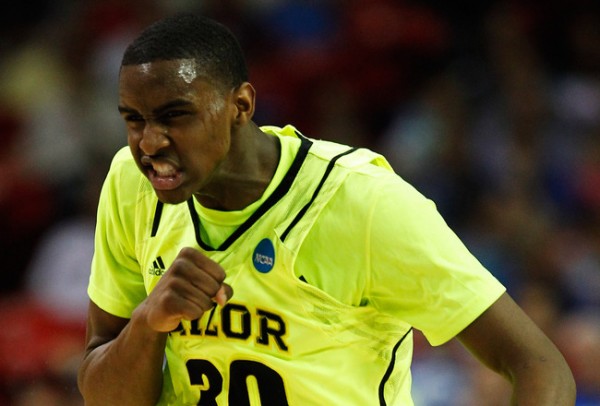
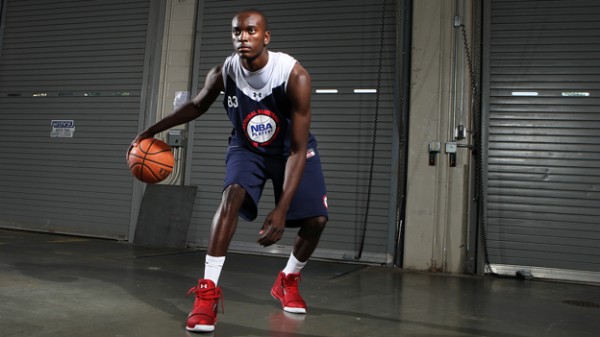
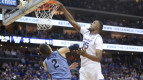
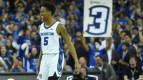
Quincy Miller Has Tremendous Upside if he Can Improve in the NBA (Getty Images/S. Lecka)

Overview: Drawing widespread comparisons to Kevin Durant in high school, Quincy Miller tore his ACL during his senior year that left him sidelined for several months and seemed to hamper him throughout his only season at Baylor. The long, athletic, versatile scoring forward flashed many moments of brilliance as a Bear but also appeared limited at times by his knee, role, and inexperience. As a result, Miller’s impact on the team dropped off as the season went along. He scored in double figures in 11 of his first 18 games, but only in just seven of his final 19 games as a frosh. His overall averages of 10.6 points, 4.9 rebounds, and 0.6 blocks in 24.4 minutes per game failed to meet the lofty expectations placed upon him. That’s why it was quite a surprise when Miller declared for the NBA Draft just days before the league deadline. Had he returned to school, Miller would have been the first option on a good team, capable of proving he’s a star player and potential Top 10 NBA talent. Instead, Miller enters the stacked draft with questions about his knee, his motor, and his ability to take over games. Still just 19 years old, though, with big-time upside, Miller could find his way into the late lottery for the right team. He has the potential to become a massive steal if he falls far in the first round, but he’ll need to stay healthy and play with confidence against the best players in the world as he develops in the pros.


Read the rest of this entry »

Calipari Continues To Creatively Separate Himself As the Nation’s Top Recruiter

Posted by EJacoby on June 12th, 2012

At this point, it’s impossible to argue for anybody other than John Calipari as the top recruiter in college basketball. Since Coach Cal joined the Big Blue Nation as Kentucky‘s head coach in 2009, he’s brought in the top recruiting class to Lexington every single season. Next year and depending on whom you ask, the Wildcats once again rank as the #1 or #2 class (behind UCLA). So how does he do it — what makes Calipari such a dominant figure in the recruiting game? It helps to coach at one of the premier hoops schools in the country, but it’s also the specific tactics that Calipari uses which helps make him the single best recruiter in the country. Instead of relaxing to enjoy his first National Championship this summer, Calipari will coach the Dominican Republic national team as it attempts to qualify for the July Summer Olympics in London, which in the process also gives him a chance to scout and recruit a top US prospect with Dominican lineage for the class of 2015 (Karl Towns). “We sit down and just say, `How can we keep separating,'” says Calipari, and he simply never stops working on more creative ways to push the envelope as a recruiter.

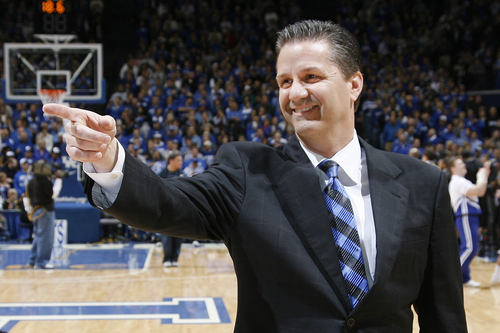
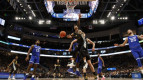
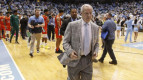
Coach Cal has the entire Big Blue Nation smiling with his recent success both on and off the court (AP Photo)

Coaching a potential Olympic team isn’t the only busy endeavor of Cal’s summer plans. He’ll also host the John Calipari Fantasy Basketball Experience in Rupp Arena that will allow participants to practice and play on the Wildcats’ home floor during several sessions – all for the convenient cost of $7,500. Proceeds go to his personal charity, the Calipari Family Foundation, which ‘invests in policies and programs that make a positive, measurable impact on communities across the country.’ How many other coaches at top schools are willing and able to devote this much planning and effort for off-court community causes? It’s all part of the grand scheme to keep distinguishing himself as the most dedicated recruiting figure in the country.

Read the rest of this entry »

Morning Five: 06.12.12 Edition

Posted by nvr1983 on June 12th, 2012

  1. March 16, 2012 was already known as a horrible day for Missouri with its shocking loss to Norfolk State, but things could get  worse for the program based on another event that happened that day: the arrest of Levi Coolley, a big-time booster who was arrested that day on cocaine and marijuana distribution charges. The school has launched an internal investigation into how close Coolley was with the team, but at the very least he was on multiple team flights and received complimentary tickets from Missouri players. Now it is very early in the investigation, but that seems very suspicious. Flying on the team plane can easily be explained as boosters are allowed to purchase open seats on team flights, but the complimentary tickets is a little more interesting. It could just be that the players had extra tickets and gave them to some random booster who happens to be implicating in a FBI investigation into drug distribution. Or it could be something more. In the post-Nevin Shapiro era where many prominent writers and analysts were quick to jump all over Miami and Donna Shalala it should not be too long before they are all over Missouri and its administrators.
  2. Most college coaches love to have seniors on the team because of the leadership and the wisdom they can impart on younger players. Unfortunately, they can still do some really dumb things themselves. Case in point: Temple rising senior Khalif Wyatt, who was arrested over the weekend for soliciting an undercover cop as a prostitute. To make matters worse Wyatt, who was named to Second Team All-Atlantic 10 last season after finishing fourth in the conference in scoring at 17.1 points per game, was reportedly celebrating his 21st birthday this weekend and was caught in a prostitution sting in Atlantic City that led to 27 arrests. Wyatt was been charged with soliciting a prostitute and resisting arrest (running from the cops) and assuming this is his first offense he will most likely not receive much more than a slap on the wrist. What is waiting for him back at Temple could be another story.
  3. Looking for a Kentucky story line that is going to get completely overblown (or probably already is thanks to the calm rational residents of Lexington)? Larry Vaught has it for you thanks to an anonymous NBA scout who says that John Calipari‘s system hides the flaws of many of his players. While we do agree with the scout on some points (like how having Anthony Davis on your team makes you look better) many of them are kind of pointless including the primary premise that the system hides some of the players’ weaknesses since that is what a system is supposed to do–highlight strengths and minimize weaknesses. And for what it is worth the quality of NBA scouts can be highly variable. Some that we have talked to seem pretty knowledgeable while others are just there to collect a paycheck including our personal favorite who spent most of a game on New Year’s Eve texting his friends while complaining to us about how much bottle service would cost in New York City that night.
  4. When schools and conferences make decisions they say they always do so in the best interest of the students/athletes and without any major conflicts of interest. The Big East may have a hard time convincing people of that with their decision to hire the search firm, which the current acting commissioner used to be involved in as a partner, to find the next commissioner. To be fair, the firm does appear to be a well-known one that has a solid reputation and a long history, but decisions like these will raise more than a few eyebrows. It is quite possible that the firm will do a good job at a reasonable cost, but without transparency this only adds to the questions surrounding college athletics.
  5. Over the past week, we have featured a series of posts highlighting the top players from the past season including ones who were positive surprises. Rob Dauster is taking a look at the other side of the spectrum by analyzing the most disappointing players from last season. Many of the names on here will be familiar to you as players that have been ripped by their fan bases, but a few of the names–particularly the last two–are ones that may not have been on your radar. The nice thing for all 11 of these players is that they will be back next season when they can atone for their play this season.

Will Coaches Abuse New “Unlimited Recruiting Calls” Rule?

Posted by EJacoby on June 11th, 2012

Starting at the end of this week, men’s basketball will become the guinea pig of a new NCAA rule that allows college coaches unlimited contact via phone calls and text messages to recruits who have finished their sophomore year of high school. While this may not seem like huge news, the altered rule actually represents a massive change from current NCAA guidelines that prohibit coaches from texting players and allow just one call per month to a recruit. Instead of one monthly nerve-racking phone conversation, high school kids can now get more comfortable with coaching staffs through open dialogue, and that’s a good thing. But by the same token, coaches are now given free rein to unleash their manipulative recruiting pitches without restriction, a privilege that some might feel compelled to abuse. There is a thin line between showing persistence and being a nuisance so coaches must show caution with how they adapt to the new freedoms.

Top prospects can expect to hear from Coach Cal a lot more often now (UKAthletics.com)

The new rule change offers yet another way for coaching staffs to try to get a leg up on their competition. Rutgers head coach Mike Rice said that “kids are going to get sick of the recruiting process quicker now, to be honest with you,” offering the idea that overwhelming kids with texts and calls is sometimes to a recruiter’s detriment. Recruiting has always been an area where some coaches excel over others, but now their communication skills will be put to the test on an everyday basis. There is no doubt that school administrators will check in often with their hired guns and push them to have constant contact with top recruits to gauge their level of interest.

Read the rest of this entry »

RTC NBA Draft Profiles: Damian Lillard

Posted by AMurawa on June 11th, 2012

The 2012 NBA Draft is scheduled for Thursday, June 28, in New York City. As we have done for the last several years, RTC’s team of writers (including Andrew Murawa, Kevin Doyle, Evan Jacoby, Matt Patton, and Danny Spewak) will provide comprehensive breakdowns of each of the 35 collegians most likely to hear his name called by David Stern in the first round on draft night. We’ll work backwards, starting with players who are projected near the end of the first round before getting into the lottery as June progresses. As an added bonus, we’ll also bring you a scouting take from NBADraft.net’s Aran Smith at the bottom of each player evaluation.

Note: Click here for all published 2012 NBA Draft profiles.

Player Name: Damian Lillard

School: Weber State

Height/Weight: 6’2”, 189 lbs.

NBA Position: Point Guard

Projected Draft Range: Mid/Late Lottery

Damian Lillard Has Shot Up the Draft Boards

Overview: Despite averaging 28 points per game as a senior at Oakland High in California, Damian Lillard was unable to grab the attention of any major colleges while in high school. No offers from the then-Pac-10, nary a nibble from Mountain West schools, nothing. Well, their oversight turned out to be Weber State’s gain as Lillard showed up on campus in 2008-09 and was immediately one of the best players in the Big Sky, averaging 11.5 points per game along with nearly four boards and three assists as a freshman. Over the years, those numbers only climbed, even as the Wildcats’ reliance on him did too. By his junior season last year (following a medical redshirt in 2010-11), Lillard was second in the nation in scoring average (24.5 PPG), as well as the most efficient high-usage player in the nation. Still, despite a three-point percentage north of 40%, a spectacular 88.7% from the free throw line and turnovers on just 12.3% of all possessions, Lillard still has some skeptics, due to the fact that the level of competition he faced on a nightly basis was substandard compared to many major conference point guards. For every night where he scored 36 points on 11-of-18 shooting against a borderline Top 25 team like Saint Mary’s, he turned in a stinker like his 14 points on 4-of-17 shooting against California. However, in the NBA Draft Combine last week, Lillard looked impressive and drew rave reviews from NBA talent evaluators. Already considered a likely lottery pick and perhaps the best point guard in the draft, Lillard may see his stock continue to climb if he can hold his own in pre-draft workouts.

Read the rest of this entry »

Study Claims That Conference Realignment Leads to Academic Benefits

Posted by EJacoby on June 11th, 2012

It’s widely assumed that conference alignment in the NCAA is all about money and prestige. Schools change conferences in order to gain more media exposure, profit from lucrative TV deals, compete against higher competition, and boost their ‘cachet’ in the college sports realm. But a new study from some graduate students at Georgia claims that colleges who change leagues often benefit scholastically in terms of an increased number of higher-quality applicants. There’s often a correlation between athletic success and admissions at an institution, but this study’s findings indicate a more specific relationship between conference changes and academics, having nothing to do with actual success on the field. A sample of their thesis is presented here, and there’s much to debate in terms of the validity of their claims. But it’s quite an interesting study that could have an impact on conference realignment, at least in terms of its public perception.

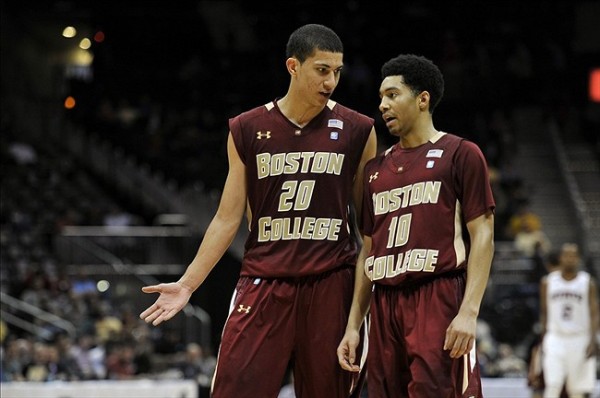
Despite struggles on the court, Boston College has improved academically in the ACC (AP Photo)

The paper, entitled “On the Move: Is Athletic Conference Realignment an Opportunity for Academic Gain?” studies 32 colleges that changed conferences between 2004 and 2011. The results show that many of them benefited academically from the switch, becoming more selective from a wider range of higher-quality applicants. ACT scores of incoming students increased by an average of .29 points at schools that changed conferences. Is this number significant enough as a real improvement or is that number just statistical noise? However, other numbers added up, such as 130 additional applicants every year across all schools yet a three percent decrease in acceptance rate, suggesting a more selective admissions process. Additionally, five percent more accepted students enrolled at these schools, showing an improved desire for kids to attend these colleges.

Read the rest of this entry »

What Can We Learn From NBA Draft Combine Measurements?

Posted by EJacoby on June 11th, 2012

The top 60 prospects for the upcoming NBA Draft were invited to Chicago for the official NBA Draft Combine late last week, where players seek to impress the loads of pro scouts and executives in attendance in preparation for June 28. Before players even began competing in drills and scrimmages, they were first tested by the ‘tape’ in an extensive set of measurements. This year’s numbers were released on Friday, which include everything from height and weight to hand width and horizontal wingspan. But do these physical measurements really mean anything? Does the fact that Michael Kidd-Gilchrist measured a half-inch shorter than expected, or Jae Crowder’s hands are some of the widest of the group, have an impact on that player’s chances to succeed in the league? Adjusting to the elite size and speed of NBA competition is important for all incoming prospects, but a ball player is a ball player, regardless of his standing reach or hand size. History shows that some Combine measurements become useful in predicting future success while others bear no weight at all, making it a difficult data set to analyze.

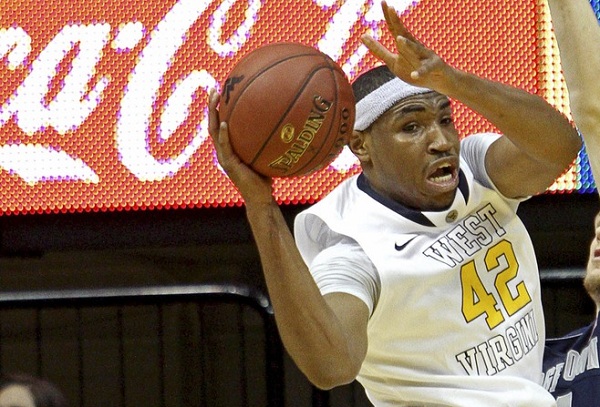
Kevin Jones didn't measure out well at the Combine; does this mean anything for his NBA potential? (AP Photo/D. Smith)

This year’s athletic testing results (bench press, agility drill, vertical jump, etc.) are not yet released, so we’ll just take a look at the player measurements and what they mean. Some notable numbers from this year include Meyers Leonard’s massive height without shoes (6’11.75”), Andre Drummond’s ridiculous wingspan (7’6.25”), John Henson’s skyscraping standing reach (9’3.5”), Kevin Jones’ excessive body fat (11.2%), and Andrew Nicholson’s enormous hands (10” long, 10.75” wide). But didn’t we already know these things? We knew that Drummond was a freakish physical specimen, and Henson’s intrigue as a prospect stems from his elite length. We know Leonard is huge and Jones doesn’t look like much of an athlete. But that becomes the dilemma – should scouts put more stock in Kevin Jones’ physical measurements, or his versatile skill set that’s been on display at West Virginia for four years? The hard part is determining to what extent, if any, a player’s body will impact his ability to contribute in the NBA.

Read the rest of this entry »

Morning Five: 06.11.12 Edition

Posted by nvr1983 on June 11th, 2012

  1. After going through the nation’s freshmen earlier in the week, Drew Cannon closed the week by ranking the top 100 players regardless of class. The rankings itself (#1-25, 26-60, and 61-100) should not surprise you, but just how far off the “experts” were in the preseason might. We cannot really fault them because many of us bought into the same preseason hype or overlooked players who turned out to be stars. However, it can be instructive when the same writers do the same thing in back-to-back years on the same player.
  2. Every summer there are a few high school players who make a name for themselves. Sometimes those players turn out to stars, but other times they turn out to be a flash-in-the-pan and do not continue to match that level of performance when they return to their regular environment. Jeff Borzello thinks he may have seen one of those players in Australian prospect Ben Simmons, who he claims could be the #1 prospect in the class of 2015 if he decides to move to the US. We have not seen many foreign-based recruits at the top of the recruiting ratings, but as Steven Adams showed us this year (and will hopefully show us next year at Pittsburgh) we should be on the watch for more elite recruits from overseas. Of course, that should only make things even more difficult for all the writers on the recruiting beat.
  3. Do you remember that minor academic scandal involving several football and basketball players at North Carolina? If you do not, you are about to get a big refresher as new information about the ongoing scandal has come out regarding a class last summer that lacked any instruction and only enrolled football players (18 current and one former player). While this particular class did not involve any basketball players, several other classes that have raised suspicion did. It seems like there needs to be a lot more investigation into this matter before anything can be done (or it can be swept under the rug), but it is worth keeping an eye on throughout the summer months.
  4. All things being equal, we normally support giving a player additional eligibility, but there are the rare occasions where we will question that decision. The decision in favor of Memphis guard Charles Carmouche is one of them. He was suspended for committing an NCAA violation after refusing to pay for a hotel room massage that he received while he was with the team in Maui, then sat out the rest of last season after being taken out of the rotation. He was cleared to play last season with knee tendinitis, but he stayed out anyway — so naturally, the NCAA granted him a sixth year of eligibility late last week. To top it off, Carmouche, who graduated from Memphis in May, has decided to transfer from the school and will not have to sit out a year because of the graduate transfer waiver. So if you are scoring at home:  He was suspended for committing a NCAA violation; apparently lost his spot in the rotation during the time he was suspended for knowingly committing a NCAA violation; sat out with an injury despite being medically cleared; and he gets to transfer without any penalty. We will let you connect the dots.
  5. Two players who were widely lauded for their decisions to return to school for their sophomore seasons last year learned the hard way that more time in college generally gives scouts and media more opportunities to pick apart their games. Both Jared Sullinger and Harrison Barnes were preseason All-Americans who were expected to dominate college basketball from the opening tip in November, but despite excellent years from both (after all, Sullinger was a consensus 1st team AA and Barnes made some 2d and 3d teams), their NBA Draft stock indubitably dropped. Despite the criticism, both players are looking forward to proving the naysayers wrong in the NBA next year — Sullinger says that he is used to all the criticism, while Barnes says that his two years weathering criticism of his game at UNC taught him how to be a professional.

Who’s Got Next? Pollard Picks Bama, Harrell Chooses Cards And More…

Posted by Josh Paunil on June 8th, 2012

Who’s Got Next? is a weekly column by Josh Paunil, the RTC recruiting guru. We encourage you to check out his website dedicated solely to college basketball recruiting, National Recruiting Spotlight, for more detailed recruiting information. Once a week he will bring you an overview of what’s going on in the complex world of recruiting, from who is signing where among the seniors to who the hot prospects are at the lower levels of the sport. If you have any suggestions as to areas we are missing or different things you would like to see, please let us know at rushthecourt@yahoo.com.

Lead Story: Top-30 Senior Devonta Pollard Commits To Alabama

McDonald's All-American Devonta Pollard Is A Huge Pick-up For Alabama. (Photo Credit: Kelly Kline)

Small Forward Is Lone Crimson Tide Commit. Class of 2012 small forward Devonta Pollard (#27) was the top unsigned prospect left in the senior class going in to Friday, but the Mississippi native became the latest top 75 player to come off the board when he committed to Alabama. The McDonald’s All-American chose the Crimson Tide over Georgetown, Missouri and Texas and is a guy with great athleticism and length and is a terrific finisher. He is very good in transition and is great above the rim. He is also able to finish with both hands and has a good pull-up jumper in the mid-range game. Pollard is a great shot-blocker as well for a wing and impacts the game on the defensive end. However, one of the biggest things he can improve on is his perimeter shooting. He can develop better range from beyond the three-point line and become more consistent from outside too. The 6’8, 192-pound wing is the lone commitment in the Class of 2012 for Alabama head coach Anthony Grant.

What They’re Saying

  • Standout senior Savon Goodman‘s high school coach, Rob Moore, on who leads for his prized player: “Looks like SMU and UNLV are leading the pack. He loved [SMU head] coach [Larry] Brown. This late in the game he could commit at any time.” Read the rest of this entry »

Top Incoming Freshmen Battling For Under-18 USA Team

Posted by EJacoby on June 8th, 2012

Who are some of the most college-ready freshmen players heading to school next season? Gain insight into that answer by following the USA Men’s Under-18 National Team tryouts, whose roster was announced this week. Twenty-three of the country’s top young players, comprised mostly of recent high school graduates, are fighting for 12 spots to compete at the FIBA Americas U-18 Championship. It’s a short tryout, as the team will fly out for competition on June 12. While there are plenty of factors that go into the team’s selection, the final cut could give us some insight as to which players’ games are most developed at this point. Of the group of participants, 15 are recent high school graduates. There are also seven high schoolers from the class of 2013, and the final player is Jarnell Stokes, already at Tennessee after reclassifying up last year to join the Volunteers in the second semester. Our biggest interest involves which of the 15 high school graduates will make the squad, perhaps proving that their college teams can expect big things next season after outperforming their peers and gaining some international experience.

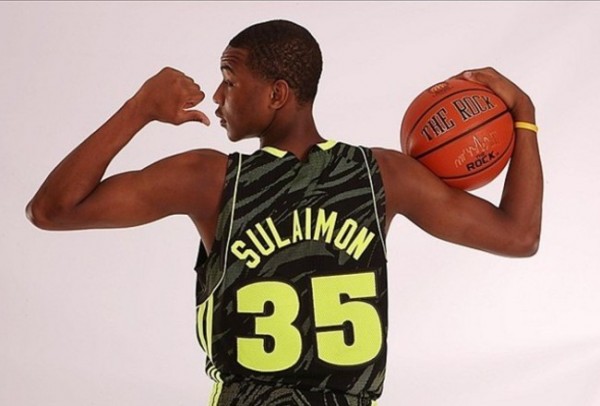
Rasheed Sulaimon Has a Strong Chance to Play on the U-18 Team USA (AP Photo)

The 15 high school Class of 2012 participants are as follows:

  • Ryan Arcidiacono, Villanova
  • Robert Carter, Georgia Tech
  • Sam Dekker, Wisconsin
  • Kris Dunn, Providence
  • Shaq Goodwin, Memphis
  • Jerami Grant, Syracuse
  • Montrezl Harrell, Louisville
  • Joel James, North Carolina
  • Jake Layman, Maryland
  • Rodney Purvis, NC State
  • James Robinson, Pittsburgh
  • Rasheed Sulaimon, Duke
  • Marcus Smart, Oklahoma State
  • Robert Upshaw, Fresno State
  • Adam Woodbury, Iowa

Read the rest of this entry »