Morning Five: 08.09.12 Edition

Posted by rtmsf on August 9th, 2012

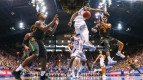
  1. International basketball has a number of differences from the US game, ranging from the legal goaltending rule to the trapezoidal lane to a much higher tolerance by officials of cheap shots during game action (see: Anthony, Carmelo vs. Argentina). While Team USA’s core group of players has gotten used to FIBA rules by now, Bill Self’s Kansas Jayhawks are learning on the fly while they’re touring around Switzerland and France. According to this Lawrence Journal-World report, in KU’s first game on Tuesday night, Swiss forward David Ramseier lost his s#&% after a technical foul call went against him in the second quarter. From Bill Self: “He went nuts. He went absolutely nuts. I’ve never seen that. I saw Bill Romanowski do it in football one time, and I saw Roberto Alomar do it in baseball one time. But this guy went and actually did it twice. He’s going after the official and did it twice.” A physical assault that may have resulted in expulsion from the team (or at least a suspension) in America apparently held no weight overseas — Ramseier was back in the Swiss lineup on Wednesday. For what it’s worth, KU won both exhibition games but not without working for it; the Jayhawks outlasted the Swiss team by three points on Tuesday and four points on Wednesday.
  2. Moving stateside to poor treatment of officials, the NCAA on Wednesday publicly reprimanded Cincinnati head coach Mick Cronin for his “profane and abusive language toward a game official” during UC’s Sweet Sixteen loss against Ohio State last March. The NCAA had previously censured Cronin for this same incident, but UC had appealed it on his behalf — that appeal was denied. For the record, Ohio State was tallied with 11 total fouls in that game versus 21 for the Bearcats, resulting in 27 free throw attempts for OSU (making 19) against eight for UC (making five). That 14-point difference in foul shots made essentially accounts for the difference in the game (81-66) — no wonder Cronin was so hot. Does anyone know what he actually said to warrant such a strong reprimand?
  3. CBSSports.com has been crushing it this week with its series revealing what coaches really think about a number of topics. We learned Tuesday that Temple’s Fran Dunphy is considered the most underrated head coach in the land, a fact not too surprising considering how well his teams have done at both Pennsylvania and now Temple. On Wednesday, the most overrated head coaches were listed and the “winner” is a man who 98% of programs around the country would love to have on their sidelines — North Carolina’s Roy Williams. In nine years at UNC, he’s won two national titles and taken the Heels to three Final Fours and six Elite Eights. Everyone knows that he always has great talent at his disposal, but come on… should Williams have gone to six Final Fours and won four titles in the same period — would that make him accurately rated? Rick Barnes, the second-place “winner,” on the other hand…
  4. While on the subject of Roy’s alma mater, ESPN.com‘s Dana O’Neil wrote a piece Wednesday excoriating the NCAA for its seemingly (ok, definite) inconsistency in refusing to further investigate North Carolina for an academic scandal featuring athletes getting pushed into certain courses for easy As. As she clearly writes in the article, it’s certainly no secret that college athletes and students alike know where to find the easiest professors and courses, but there’s a clear distinction between “equal-opportunity baloney classes” and those that exist as fraudulent academic portals for athletes (Jim Harrick, Jr., on line two). She correctly points out that the NCAA would have no problem calling such grades into question at the high school level; but, when it involves its member institutions, it says it has no jurisdiction? It sounds like a really weird mandate, but Robbie Pickeral takes the time to explain in detail how the NCAA defines the issue: If players are clustering in certain classes as a result of academic-related counseling, then the NCAA defers to the university in handling it. If players end up in those courses as a result of the athletic department steering them there, then and only then does the NCAA get involved. What’s left unsaid here, of course, is what happens when there’s an unspoken pressure — even a wink/nod agreement, perhaps — for academic counselors to push players to those classes in the spirit of what’s best for the university (largely influenced by UNC sports).
  5. While we’re piling on the NCAA today, we may as well use this opportunity to check in on the Ed O’Bannon antitrust lawsuit against the organization and its licensees regarding the ongoing usage of his and other players’ names and likenesses in video games, published materials and so forth. The three-year old case is working its way through the system, but on Monday the O’Bannon group of plaintiffs convinced a judge to agree with them that the NCAA must “turn over information relating to revenue that its members receive from broadcast television, radio and Internet rights as well as reports tied to income from sponsorships, licensing, sales of advertising.” Clearly this sort of information is highly sensitive, but it’s a key victory for the athletes in that it shows that their case is meritorious enough for a federal judge to require the NCAA to release such documentation. In a nutshell, this case isn’t going away.

NCAA Joins Pro Leagues in Challenging NJ Gambling Law, But Why?

Posted by Chris Johnson on August 8th, 2012

Christopher Johnson is an RTC Columnist. He can be reached @ChrisDJohnsonn.

Since 1992, thanks to the Federal Professional and Amateur Sports Protection Act, legal sports betting in any form has only existed in four states: Montana, Oregon and Delaware have sports lotteries, while Nevada as everyone knows enjoys an entire sports booking industry. New Jersey, home to one of the nation’s most popular casino hot spots in Atlantic City, was granted a one-year time frame between 1993-94 to opt into the exclusive group, but failed to act and thus missed out on the opportunity to become the fifth member state. Governor Chris Christie sought to make up for his state’s inaction last January when he spearheaded the passage of a new law that violated the 1992 Act by legalizing gambling in his state. Christie was essentially challenging a federal law with full knowledge that a long and enduring legal battle would be waged to prevent the new state legislation. He acknowledged as much in May at a press conference in Atlantic City, saying, “If someone wants to stop us, then let them try to stop us. Am I expecting there may be legal action taken against us to try to prevent it? Yes. But I have every confidence we’re going to be successful.”

The NCAA is one of five sports league governing bodies involved in a class-action lawsuit against the state of New Jersey and its groundbreaking gambling law (Photo Credit: AP Photo/Michael Conroy)

Christie has met his day of reckoning. On Tuesday the NCAA and four governing bodies of North America’s major sports – the NHL, NBA, NFL and MLB – filed a lawsuit against New Jersey on the grounds that the state’s legislation legalizing sports gambling within its borders represents a direct threat to “the character and integrity” of sporting events and a “clear and flagrant” violation of federal law. This development comes as no surprise to Christie. He knew full well upon signing the state law of the inevitable flurry of lawsuits that would ensue, and so the governor reiterated his stance after catching word of the organizations’ actions. “I don’t believe that the federal government has the right to decide that only certain states can have sports gambling. On what basis?” he said.

Read the rest of this entry »

Morning Five: 08.08.12 Edition

Posted by rtmsf on August 8th, 2012

  1. For college basketball fans over a certain age watching the Summer Olympics, an oft-repeated nickname uttered by the likes of Bob Costas, Mary Carillo, Ryan Seacrest and others probably grates a little more than it should. The gold medal-winning US women’s gymastics team, as we all now know, has been labeled by someone lacking any institutional sports memory with the nickname “The Fab Five.” The five girls aged between 15 and 18 didn’t memorialize themselves with the name, but others — most notably former Fab Five mouthpiece and current ESPN commentator Jalen Rose — may stand to make bank from the trademarked name as the team rides its 15 minutes of fame on a barnstorming tour throughout the US this fall. As we saw mentioned on Twitter last week, the Olympics are fundamentally sports for people who don’t typically like sports, and there is no better example of the two groups weirdly crossing paths than this one. If anyone’s wondering, nobody will be talking about this ‘new’ F5 two decades from now — we think the iconic maize and blue legacies of Webber, Howard, Rose, Jackson and King are still safe.
  2. It’s taken much of a couple of decades for Michigan basketball to get back to an elite status, as the Wolverines will be a preseason Top 10 team next season. Another local school, Oakland University, has as a matter of fact been to just as many NCAA Tournaments under head coach Greg Kampe in the last decade as Michigan. On Tuesday, Kampe started the first day of a fast where the longtime Golden Grizzlies coach will imbibe nothing but juice for an entire month in support of Coaches vs. Cancer. Um, we just drank a glass of orange juice over here, but, wow. Seriously, though, this is a herculean task for someone no doubt accustomed to eating solid, and undoubtedly, good food — Kampe tweeted last night that his first day of fasting was complete and that “even a yogurt commercial” makes him hungry. To donate to Kampe’s fast in support of CvC, make sure to hit this site. We always make sure to donate around the time of the Jimmy V Classic, but the CvC is getting a double dip from us this year.
  3. Team USA’s men’s basketball team will play Australia this afternoon in the quarterfinals of the Olympic tournament, which will allow one of the two college basketball players in the event to take a shot at a team he no doubt idolizes. As Jeff Goodman wrote yesterday, St. Mary’s guard Matthew Dellavedova is looking forward to the challenge of matching up against NBA All-Stars Deron Williams, Russell Westbrook and Chris Paul. The rising senior and current WCC Player of the Year is one of the two SMC starters in the Aussie backcourt (playing off the ball with Patty Mills), and his 8.2 PPG and 4.6 APG have helped his country reach the medal round. For a complete look at his Olympic statistics, check out the FIBA page on the shaggy-haired star. The only other collegian in the basketball Games, College of Charleston’s Andrew Lawrence, played roughly 18 minutes per game for host Great Britain, but he was only able to convert 4-19 field goals and committed nearly as many fouls (15) as he scored points (16). His Olympic experience — engaging though we’re sure it was — is now over as the Brits did not advance to the medal round.
  4. While on the subject of Dellavedova, his college coach at St. Mary’s, Randy Bennett, was voted by his peers as the second most underrated head coach in college basketball. The most underrated was Temple’s Fran Dunphy, who garnered a commanding 14% of the votes (Bennett got 9%). A couple surprises on the list were two of the most prominent names in college basketball — Kentucky’s John Calipari (7%) and West Virginia’s Bob Huggins (5%). With tomorrow’s release of the most overrated coaches in the game, is it possible that one or both of those two will also show up on that list? Check in tomorrow at CBSSports.com to find out.
  5. Finally today, it is clear that Oklahoma State center Phillip Jurick has little to no interest in playing college basketball again. Just two months after an incident where he was cited for driving on a suspended license, the 6’10” player who was already dealing with recovery from an Achilles tendon tear was arrested over the weekend for possession of marijuana and drug paraphernalia. Predictably, he was suspended by head coach Travis Ford and will not accompany his team on a 10-day exhibition tour to Spain, which begins today. A transfer from Chattanooga State who averaged 17 MPG in 26 games prior to the injury, he’s certainly piling on the hurdles that he must overcome to ever see another day in an OSU uniform again.

Breaking Down a Potential UCLA-Indiana Final in the Legends Classic

Posted by Chris Johnson on August 7th, 2012

Christopher Johnson is an RTC Columnist. He can be reached @ChrisDJohnsonn

Playing formidable competition in early season invitational tournaments is the best way to build a solid RPI foundation upon which to base the rest of your non-conference schedule. In recent years, as teams have adjusted to the notion that non-league scheduling does, in fact, have an appreciable affect on the bubble cut line come Selection Sunday, these tournaments have provided some intriguing matchups featuring national title contenders. The Legends Classic, one of the more anticipated tournaments in the early season college hoops calendar, released its bracket Monday. The 12-team field, on the whole, is a bit underwhelming, but tournament organizers did do us the favor of setting up a potentially epic finale on November 20 at the new Barclays Center in Brooklyn. Indiana and UCLA, after staging two regional round games on their respective home courts, will need to win only one game against a power conference team before meeting in the tournament’s final game. If UCLA can sneak by Georgetown and Indiana takes care of business against Georgia, the two surefire preseason top-five outfits will put it all on the line for the Legends Classic crown.
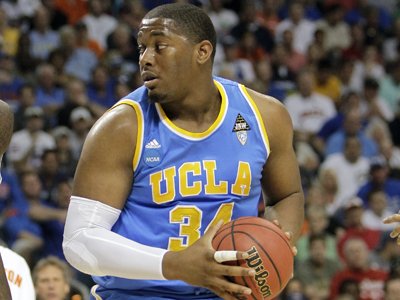
Joshua Smith, UCLA

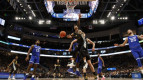
The Legends Classic bracket features two national championship contenders in Indiana and UCLA (Credit: Associated Press).

That’s must-see viewing for any college hoops fan, a tantalizing early season matchup of Final Four-worthy opponents. With more than three months remaining before the bracket kicks off, there’s plenty of time to salivate over this enticing showdown. But in these news-bereft late summer months, where Midnight Madness can’t come soon enough, I’m bringing you a way-too-early positional breakdown of what figures to be one of the best non-league fixtures in the upcoming season. To take this a step further, I’ll provide a prediction, score included, as a way of sparking the debate for which team is better positioned to make good on their considerable preseason hype. Remember, Georgetown or Georgia could knock off UCLA and/or Indiana in the semifinals and thus prevent the more favorable and altogether more entertaining finals matchup. But if the Hoosiers and Bruins are indeed what most preseason prognosticators are making them out to be, they should both advance to the championship round. Still, there’s no guarantee, so take this predictive exercise at face value.

Point guard: Yogi Ferrell/Jordan Hulls vs. Kyle Anderson/Larry Drew II

If Ferrell outplays hulls in preseason practice, Crean likely will insert him into the starting lineup in time for this highly-touted matchup. Ferrell is a true point guard who penetrates and finishes at the rim, but scoring won’t be his primary responsibility this season; facilitating the group of talented finishers around him—guys like Victor Oladipo, Will Sheehey, Christian Watford and Cody Zeller—is the first order of business. Hulls has been around long enough to remember discernibly darker days in Bloomington, the pre-Kentucky upset era—faraway as it may seem—and can make up for his deficiencies on defense with experience, leadership and pinpoint three-point marksmanship. He may ultimately start alongside Ferrell at the two. Countering the Hoosiers’ duo is Anderson, one of the more intriguing skills-to-size prospects in the 2012 class. At 6’7″, Anderson poses a major athletic and size advantage over most every point guard, yet he also boasts the shrewd ball handling, court vision and mid-range touch to excel at the position. He functions efficiently on the low block, posting up defenders and finding open shooters on the perimeter. Drew II, a year after transferring from North Carolina, will challenge Anderson for the starting job. Both players should see significant floor time this season, and they could split minutes in this early nonleague tournament.

Read the rest of this entry »

Morning Five: 08.07.12 Edition

Posted by rtmsf on August 7th, 2012

  1. We mentioned in yesterday’s M5 that Connecticut head coach Jim Calhoun was recovering well after surgery to repair his hip from a cycling accident suffered over the weekend. According to an orthopedic surgeon not affiliated with Calhoun’s treatment, the standard recovery time for this surgery ranges between eight to 12 weeks. Basketball practice begins in earnest in nine weeks, so there’s a strong possibility that the beginning of a rebuilding season in Storrs is already off to a rough start. As Mike Decourcy writes, Connecticut as a program faces a number of long-term issues with the 70-year old Calhoun undoubtedly reaching the end of his career soon — his latest health dust-up only serves to complicate those very important issues.
  2. It’s probably not often that we’ll choose a valuable M5 blurb to write about a player who only averaged a half-point and 1.8 rebounds per contest last season. But UCLA’s Anthony Stover dismissed from the team Monday for academic problems — is a statistical anomaly of sorts — the 6’10” rising junior only saw eight minutes a game in Ben Howland’s system, but he still managed to block shots at a higher rate in limited time (18.2%) than Kansas’ Jeff Withey (15.3%) and Kentucky’s Anthony Davis (13.8%). Of course, for every block Stover registered last season (38), he also recorded a foul (37), so there’s clearly a learning curve he must still conquer. Still, for a mid-major willing to work with the young man in the classroom, the potential (at least on the defensive end) is there.
  3. Quiet among all the other newsworthy things the NCAA has done lately, the governing body has implemented a number of new player eligibility standards that will be phased in by 2016. So why is this important now? As Dana O’Neil explains in this wide-ranging piece, high school freshmen for the Class of 2016 will report to their freshman years at high school in the next few weeks. The new requirements increase the number of core curriculum courses to 16 (10 of which must be completed in the player’s first three years of high school, and seven of those must be in math, science, or English classes), raise the minimum GPA from 2.0 to 2.3, and generally scare the bejeezus out of college coaches everywhere. According to the NCAA, 43 percent of players who entered college basketball in 2009-10 would not have been eligible to play as freshmen under these new standards. Well, that solves the fake coursework problem — now, on to the AAU problem.
  4. More on this later today, but the Legends Classic released its faux-bracket yesterday, and we could be in for quite an early season treat in the new Barclays Arena during Feast Week if things work out. This event is one of those preseason “tournaments” where the semifinal teams are prospectively placed regardless of what happens in the earlier rounds, but if both Indiana and UCLA beat their semifinal opponents (Georgia and Georgetown, respectively), we could be treated with an epic neutral site showdown between two of the nation’s top five teams. Both IU and UCLA boast talent aplenty, and if you believe CBSSports.com’s recent report that IU star Cody Zeller and UCLA star Shabazz Muhammad are the two most coveted players in college basketball by other coaches, then this potential match-up represents the best that November will likely have to offer.
  5. Next season cannot get here soon enough, but SI.com’s Andy Glockner is helping us fill the summer time off with his second annual Twitter-style State of the College Hoops Union piece where he breaks down 53 of the nation’s best teams in 140 characters or less. There’s some good stuff there, so we’d encourage you to stick with the article after reading Arizona’s blurb and his first of more than a dozen awful hoops-related puns. Out like a Lyons in March? Yeah, we meant awful as in good. Somewhere in a lair under a golf course, Jim Nantz is stealing many of Glockner’s better quips.

Tom Crean’s Twitter Mistake Reflects Poorly on New Digital Recruiting Freedoms

Posted by Chris Johnson on August 6th, 2012

Christopher Johnson is an RTC columnist. He can be reached @ChrisDJohnsonn

In response to an increasing number of maddeningly trivial secondary NCAA violations and a widespread rise in the use of smartphone-friendly forms of communication, the NCAA officially removed the coach-recruit digital contact barrier this June when its new cell phone-related recruiting rules went into effect. The new guidelines allow coaches to bombard players who have completed their sophomore year of high school with instantaneous messaging services such as texting, emailing and Twitter direct messaging. Coaches and assistants long rued the seemingly inane restrictions limiting today’s most efficient and instant forms of communication. Fewer contact controls will facilitate more frequent communication while eliminating the ever-present fear of committing a menial rule-break. Coaches can now rest easy knowing their digitized messages will safely reach a recruit’s inbox without having to regret pressing send. The result: A distinctly modernized recruiting world with streamlined communication and a newfound safeguard from the constant threat of an unsuspecting NCAA bylaw wreaking its retributive justice. The new rules makes life easier on the NCAA, too, as the organization no longer has to spend countless hours monitoring the flow of cell phone communication between coaches and recruits.

The NCAA’s new regulations allow coaches to reach recruits instantly with smartphone communication (Photo courtesy Jonathan Ferrey/Getty Images).

For the players, the long-term implications of the new contact protocol aren’t quite as rosy. Coaches that for years had wielded a restricted range of communication devices — and restricted usage on those devices — can now reach their desired prospects with the simple push of a button. The means and power to reach recruits now lies in the palm of their hands. Eliminating letters and unofficial visits in favor of texts and emails seems like a pretty fair deal for both sides, provided coaches don’t abuse their expanded degrees of communicative freedom. And therein lies the problem. In a hyper-competitive recruiting market, where coaches work tirelessly to land top high school talents, recruits can be overwhelmed by a barrage of texts and emails. Building a strong bond between player and coach is an integral aspect to any successful recruiting pitch. Now that coaches can make those connections with a few clicks on their handheld device, excessive contact is inevitable.

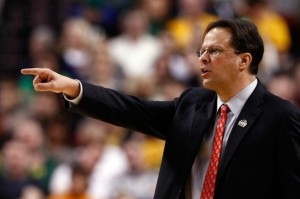
On Friday, Indiana coach Tom Crean provided a glimpse of what goes into the Division I college hoops recruiting pitch and brought to light another potential downside to the new guidelines. Here’s the tweet that appeared on Crean’s public feed:

“I am doing great. I have been thinking about you alot since last weekend. A whole lot. How are you doing?”

Read the rest of this entry »

Morning Five: 08.06.12 Edition

Posted by rtmsf on August 6th, 2012

  1. Connecticut head coach Jim Calhoun seemingly can’t catch a break when it comes to his health lately. After suffering through a number of debilitating physical ailments the past few years, the 70-year old wrecked his bicycle while on a ride Saturday and fractured his left hip during the fall. He had surgery to repair the break over the weekend and is expected to make a full recovery. Still, tack this on to Calhoun’s laundry list of health issues — prostate cancer, skin cancer, spinal stenosis, even five broken ribs from another cycling accident in 2009. We certainly wish nothing but the best for Calhoun’s recovery and eventual migration back to the sideline in Storrs, but goodness, it’s getting to the point where we’re not sure he should go anywhere without wrapping himself in bubble wrap first.
  2. We’ve known for a couple of weeks that Minnesota head coach Tubby Smith received a contract extension through the 2016-17 season, but the details of that deal were not released until Friday. Under the terms of this extension, Smith will average a salary of roughly $2 million annually with an extremely generous incentive structure that not only increases his compensation by as much as a quarter-million dollars for a Big Ten championship (regular season or tournament), but also extends the duration of his contract for reaching those same goals. While it’s no doubt true that Minnesota has suffered a number of crucial injuries and bad luck in the last few seasons, it’s still a harsh fact that the Gophers have never — not once — earned a winning record in the Big Ten (6-12, 6-12, 9-9, 9-9, 8-10), nor won a game in the NCAA Tournament (0-2).
  3. Is Class of 2013 super-recruit Jabari Parker down to three schools? His official list still contains 10 suitors, but an article by the Chicago Tribune suggests that BYU, DePaul, Florida, Georgetown, Kentucky, North Carolina and Stanford may already be out of the running. Mike Helfgot covers Chicago-area high school sports, and his sources around Parker are telling him that Duke, Michigan State and Kansas are the clubhouse leaders. The same piece repeated the earlier news that it is increasingly likely that Parker will wait until next spring to make his decision, allowing the family to have full information about the talent surrounding him wherever he chooses.
  4. Recruits are meaningless if they’re not eligible to play and two of the most notable players entering college basketball next season received recent news about that very thing recently. According to his head coach, Kentucky’s Nerlens Noel has finished up his summer coursework and will be on campus next month as a fully eligible player. On the other side of the issue, NC State’s Rodney Purvis has not yet been cleared by the NCAA because his high schools requires an “extended review” by the governing body. His team left for a five-game tour of Spain and the Canary Islands on Sunday without him. The issue with his high school is that Purvis was part of the first graduating class at Upper Room Christian Academy, and therefore the NCAA takes a more thorough approach in vetting the institution. It’s unlikely that his eventual eligibility will be anything other than a mere formality.
  5. The adidas Nations high school basketball event has been going on in Long Beach, California, the last several days, and many of the nation’s top entering and returning collegians are on site acting as camp counselors. NBADraft.net has put together some thoughts from two days of action — the counselors play pick-up games against each other — and perhaps the biggest lesson learned so far is that Nerlens Noel is a long, long way from a finished product. Aran Smith writes about the shot-blocking fiend: “The #1 overall hype needs to be tempered some. He still obviously has top 5 potential but that’s just because of how weak this year’s draft is. Anyone expecting Anthony Davis 2.0 should just stop.” He also breaks down a number of other players, including Ray McCallum, Gorgui Dieng, Nate Wolters and Deshaun Thomas. Here’s the link to day one‘s thoughts followed by the link to day two.

Deconstructing the NCAA’s New Penalty Structure

Posted by rtmsf on August 3rd, 2012

Christopher Johnson is an RTC columnist. He can be reached @ChrisDJohnsonn.

After meting out unprecedented sanctions just over a week ago against Penn State’s football program in response to the Jerry Sandusky child sexual molestation scandal and alleged cover-up of high ranking officials within the program, it appears the NCAA is leading a charge to ramp up the severity of future penalties in keeping with the precedent established in this watershed case. NCAA leaders reached a consensus Thursday on a new proposal endorsing a revised four-tier penalty structure that includes many of the same punitive measures handed down last week against the Nittany Lions, including hefty fines, up to four years’ postseason ban, and suspensions for head coaches. Far more significant is the radical shift in both the process used to interpret violations and the culpability of coaches in either concealing or enabling forbidden activity. Under the new punishment structure — which is expected to be voted into approval at the Board of Directors’ Meeting in October — coaches will be held accountable for any violations committed by members of their staffs, with suspensions awaiting any coach unable to prove innocence in any wrongdoing.

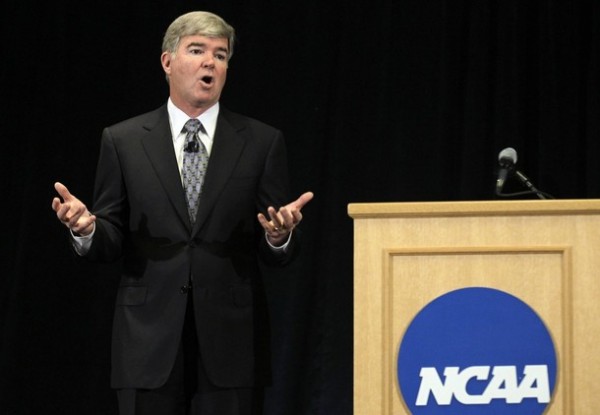
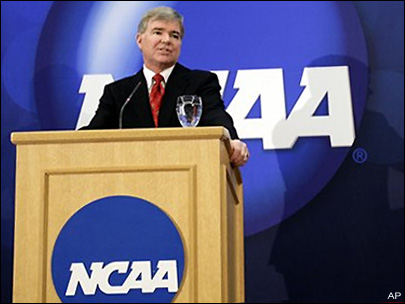
Mark Emmert Seems Serious About Punitive Sanctions, But Will They Stick?

The new guidelines also call for increasing the size of the infractions committee from 10 to 24 members, a modification designed to streamline the enforcement process, which has been widely denounced in recent years for its lumbering proceedings. In the wake of the most heinous and unconscionable scandal in the history of intercollegiate athletics, these changes provide a measure of legitimacy to the NCAA’s handling of the Penn State scandal and pushback for those who criticized the organization for their misplaced priorities throughout the enforcement process. Many chided NCAA president Mark Emmert for overstepping his bounds in bypassing the infractions committee and fast tracking the harsh punitive measures, fearing he was setting a dangerous precedent with the breadth and severity of the sanctions along with the hasty and unprecedented procedure used to deliver those penalties. By legislating a speedier decision in implementing a harsher punitive scale for violations, the new guidelines represent a step forward in support of Emmert’s recent actions. That NCAA leaders were overwhelmingly supportive of similar measures disputes the notion that Emmert operated without the consent and backing of organization members.

Read the rest of this entry »

RTC Summer School: Colonial Athletic Association

Posted by Brian Goodman on August 3rd, 2012

Over the next couple of week’s we’ll be checking in with each of the high mid-major leagues as to their mid-summer offseason status. Up next: the CAA.

Michael Litos is the RTC correspondent for the Colonial Athletic Association. You can follow him on Twitter at @CAAHoops and find him online at CAAHoops.com.

Three Key Storylines

  • A Different Look. Perhaps no conference faced the realignment wars more head on than the CAA. Georgia State announced in April it was moving to the Sun Belt effective in 2013. VCU and George Mason were both wooed by the Atlantic 10 — Shaka Smart took his Rams to a new conference while Paul Hewitt’s squad stuck. And Old Dominion followed Georgia State, making a football-driven decision to go to Conference USA. The summer was mostly spent managing off-court drama, so the season tip-off will be welcomed. Due to a longstanding CAA rule that programs leaving the CAA are not eligible for championships, ODU and Georgia State will essentially play lame duck seasons. When you factor in Towson and UNCW’s ineligibility due to APR results, the CAA Tournament — annually a raucous affair that plays to a sold-out Richmond Coliseum — will be a seven-team battle in March.

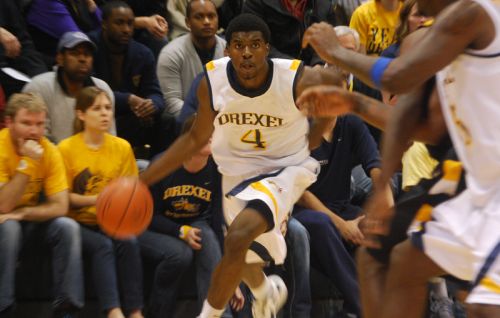
Frantz Massenat Returns For Drexel, The Early Favorites In The New-Look CAA. (AP)

  • Southern Bias No More? No team north of George Mason has won a CAA title since the conference expanded in 2000 to include four America East programs. In fact, VCU, Old Dominion, and George Mason have combined to win six straight CAA championships and eight of the last nine. However, VCU has moved to the A-10 and ODU is ineligible due to its impending move to Conference USA. Drexel finished 16-2 last year, losing to VCU in the CAA Tournament finals and Delaware returns every key player, adding St. Joseph’s transfer Carl Baptiste. Plus, Bill Coen has a senior backcourt and one of the conference’s top players in sophomore Quincy Ford. That leaves Hewitt’s team to fend off northern aggressors to keep the streak going.
  • Channeling Medeleev. Several CAA coaches face as many chemistry concerns as X-and-O hurdles. Hofstra’s Mo Cassara could start as many as five transfers, led by former UConn Husky Jamal Coombs-McDaniel. The Pride went 14-4 and 3-15 in Cassara’s two seasons in the conference and his ability to combine elements could give rise to either record this year. Pat Skerry has a similar challenge at Towson. Skerry is rebuilding around a trio of Big East transfers that includes former Georgetown Hoya Jerrelle Benimon, Providence grad Bilal Dixon, and South Florida transfer Mike Burwell. And Ron Hunter replaces six seniors with a blend of freshmen (including his son, RJ Hunter, who turned down offers from ACC and Big Ten programs) and Virginia Tech transfer Manny Atkins. Hunter may also get Southern Cal transfer Curtis Washington eligible.

Reader’s Take

Read the rest of this entry »

Morning Five: 08.03.12 Edition

Posted by rtmsf on August 3rd, 2012

  1. Thursday was a day of personnel movement around the college basketball landscape, but it was an endorsement of a proposal by NCAA leadership that made the most news. If approved as expected by NCAA presidents in October, a new measure for much more punitive penalties against NCAA rules violators would include “postseason bans of up to four years, fines that could stretch into the millions and suspensions for head coaches.” If these sanctions sound familiar, they should — Penn State’s unprecedented probation meted out by the NCAA just over a week ago included several components of these changes. Perhaps the biggest and most important change is in the shifting of culpability from individuals within the program to the “captain of the ship” — the head coach. Under the new guidelines, head coaches would be presumed vicariously liable for illegal actions performed by members of their staff — the burden would then fall on the head coach himself to prove that he was completely unaware of those transgressions (and was not negligent in doing so) to avoid responsibility. We haven’t had time to give this a lot of thought just yet, but in the era of ensuring plausible deniability among top dogs everywhere, this is a sea change in the way the NCAA views its expectations of conduct.
  2. Kelsey Barlow was last seen getting booted off of Purdue’s basketball team in late February after his second disruptive incident in a year, when he and teammate DJ Byrd became involved in some kind of confrontation at a West Lafayette bar. A tremendous perimeter defender with ideal size for the position at 6’5″, Barlow left his team high and dry for the second straight year during March Madness — in 2011, he was suspended for “conduct detrimental to the team,” and while VCU thoroughly ripped Purdue in that year’s Round of 32, he surely could have helped the Boilers in their tight game with Kansas at the same spot last year. Illinois-Chicago announced on Thursday that Barlow will resurface in the Loop, sitting out next season as a transfer to become eligible to play as a senior in 2013-14. Barlow started 22 games for Purdue last season, averaging 8/4/2 APG in a key glue guy role while also helping to lock down opposing guards in Matt Painter’s sticky defense. This is a talented pickup for a program that was absolutely terrible last year — 3-15 in the Horizon League, 8-22 overall — let’s hope that Barlow uses his second chance wisely.
  3. USC basketball received excellent news on Wednesday when doctors cleared its star point guard Jio Fontan to begin full contact practices again. It was a little over a year ago when the Trojan playmaker tore his ACL during an exhibition trip to Brazil, effectively torpedoing USC’s season before it even got started. A 19-win NCAA Tournament team from 2010-11 drooped to a disastrous six-win group without Fontan’s floor leadership as injuries mounted and hope was lost. Next season, though, Kevin O’Neill has a much higher ceiling for his squad — with Fontan back to join the intriguing prospect of seven-footer DeWayne Dedmon and a host of talented D-I transfers, the Trojans may be poised to leap back toward the top tier of the Pac-12 in a hurry. For comprehensive coverage of USC basketball, check out our Pac-12 microsite’s USC Week from back in early July.
  4. Going from the national championship game to an interim tag in the SWAC is a precipitous decline for a single decade of work, but that’s exactly where former Indiana (2002 national finalist) and UAB head coach Mike Davis finds himself this Friday morning after accepting the interim head coaching job at Texas Southern. According to local reports, the school “plans […] on keeping” Davis on board permanently as soon as it figures out how to handle the abrupt resignation of its previous head coach, Tony Harvey. Davis, along with Matt Doherty (UNC) and Billy Gillispie (Kentucky) represents one of the holy trinity of hires at elite programs in the last decade who were way, way in over their heads at that level. The race to the bottom knows no bounds.
  5. There’s no shortage of bizarre arrest stories in sports, and this one won’t move the broader society needle. But the weird “clerical error” involving Kentucky assistant Rod Strickland that resulted in his arrest during a routine traffic stop on Thursday is borderline absurd. First of all, he was reportedly stopped for “failure to signal” at a turn near the UK campus in Lexington. In most situations, this is otherwise known as a pretext to profile someone — seriously, who gets stopped for a turn signal violation? But it appears that in stopping him, a whole new can of worms was opened in that it turns out that Strickland’s license is currently suspended in Tennessee (which, through reciprocity with Kentucky, showed up in the national criminal database). That suspension stemmed from another arrest in October 2007 when he was pulled over while intoxicated and at the time was driving on a suspended license from Maryland! He also has a DUI conviction from Kentucky in 2010 which temporarily suspended his license there (it was reinstated in 2011). Good grief, man. It sounds like Strickland has a problem — whether with poor decision-making or something more sinister. Regardless, he just needs to leave the car at home.