


Can Kentucky Shoot Well Enough to Win It All?

Posted by RJ Abeytia on December 16th, 2016

What does it all mean?

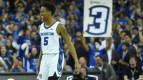
Whether we want to admit it or not, that’s the question we ask all season long in college basketball, where meaning is defined by crystal clear implication. We watch these games because we want to know before the rest of the sports world puts college basketball up on the biggest and brightest stage. Which of these teams can really win six straight in the NCAA Tournament? We’re inclined to believe that a number of teams can win, and they usually comprise the usual suspects. Take a look at the KenPom top 10 and who do we see? Duke, Villanova, Kentucky, Kansas, Virginia, North Carolina, Louisville, Wisconsin, West Virginia, and Baylor. UCLA is just on the fringe at #11. That’s a pretty comprehensive list of blue-bloods, and blue is the color of focus here. Kentucky sits at #3 despite a loss to UCLA in Lexington. Nobody questions the roster John Calipari has once again constructed. It’s another one-year baby full of basketball talent, as it has been annually since he took the throne in Lexington.
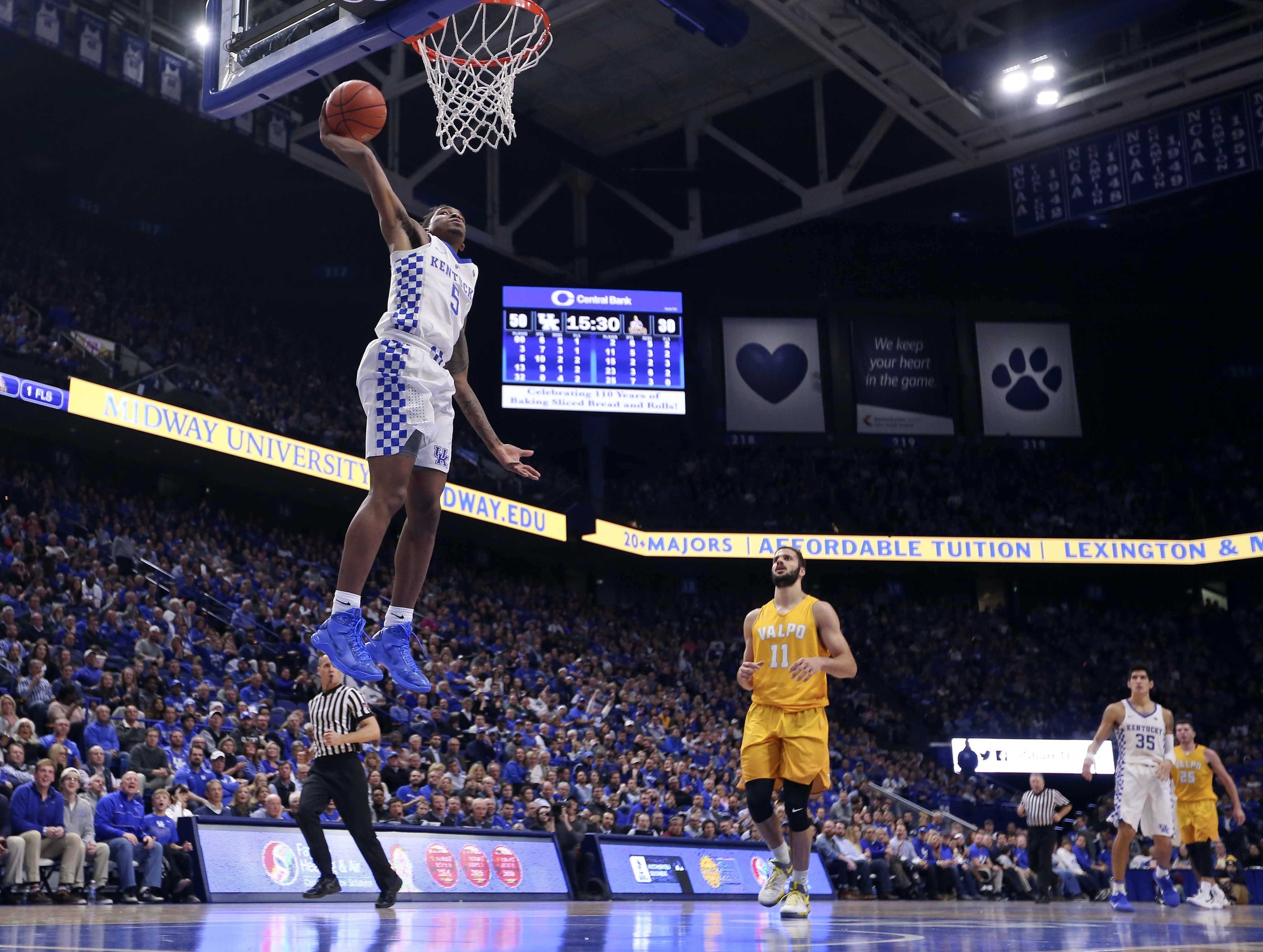
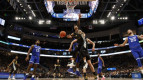
Kentucky Has No Problem Finishing... (USA Today Images)

Kentucky Has No Problem Finishing… But What About Shooting? (USA Today Images)

Four seasons have passed since Kentucky won the National Championship. Two years ago, the Wildcats won 38 straight games before falling to Wisconsin in the Final Four. In that game, the Wildcats went only 3-of-5 from behind the three-point line and ended up ceding a net of 12 points to Wisconsin from behind the arc. This ultimately provided the margin and then some in a game most pundits expected to be a Kentucky appetizer before a main course dinner two nights later against Duke, itself full of one-and-done talent. Last year Kentucky was stopped well short of the Final Four by Indiana in large part because the Wildcats’ 4-of-16 performance from three-point range. Against Wisconsin, Kentucky knew it couldn’t hit outside shots and therefore simply refused to take them. Last year, they accepted Indiana’s dare and couldn’t hit the shots. The net of six points that went the Hoosiers’ way ended up as the final margin.
Read the rest of this entry »

Share this story

Marquette’s Katin Reinhardt Seeks Greater Consistency

Posted by Eugene Rapay on December 15th, 2016

Although Marquette lost to rival Wisconsin last weekend, one of the bright spots in the defeat was the play of graduate transfer Katin Reinhardt. He scored 13 of his 16 points in the first half and finished the day with a 4-of-6 shooting performance from long-range. Reinhardt, who transferred east after semi-successful stints at USC and UNLV, was brought in to be a perimeter threat on the wing. In his three previous seasons, he averaged 11.3 points per game and shot 36.9 percent from long range. There has not been a single season in which the 6’6″ forward failed to average double figures in scoring.

dsc_2459-1

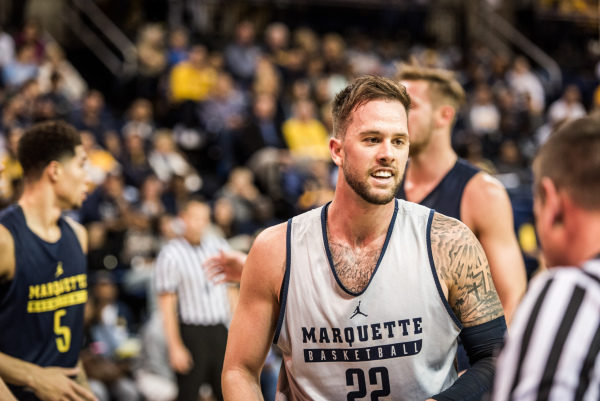
Katin Reinhardt Needs to Excel For Marquette to Reach Its Goals (USA Today Images)

Maybe it just took the senior 10 games to find his groove in Milwaukee, but he hasn’t delivered the goods for Steve Wojciechowski thus far. Per KenPom, he holds the lowest Offensive Rating of the 10 players in Marquette’s current rotation — in fact, he is the team’s only key contributor below 100.0. He has taken 45 three-point attempts on the season (tied for the team-high) but has converted on a chilly 31.1 percent of those shots, nearly six percentage points under his career mark. Strangely, he’s even been worse from inside the arc, sinking only 28.6 percent of his two-point shots on the season. He’s the only Marquette player in the rotation who is shooting so poorly, as all other Golden Eagles are shooting above the 40.0 percent mark. What good is a space creator on the wing if he cannot make jumpers or finish on his occasional drives?

Read the rest of this entry »

Share this story

Handicapping the Early Race For At-Large ACC Bids

Posted by Shane McNichol on December 15th, 2016

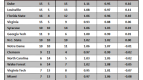
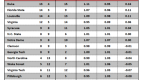
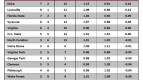
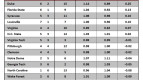
The conversation about the ACC potentially placing a record number of teams in the NCAA Tournament has already started. There are currently 11 ACC teams among the RPI top 70, and that number excludes two more quality teams that have played weaker schedules to date in Syracuse and Miami (FL). Using an expected RPI calculation (per RPIforecast.com), 13 of the ACC’s 15 teams are projected to finish the season among the RPI top 100. With the possible exception of Boston College and its four albatross losses to Nicholls State, Richmond, Harvard and Hartford, the rest of the ACC has yet to remove themselves from at-large contention. North Carolina, Duke, Louisville, Virginia and Notre Dame can feel pretty safe about inclusion barring an unprecedented collapse, a rash of injuries or some sort of unanticipated scandal. Georgia Tech is an interesting case with losses to Ohio, Penn State and Tennessee, but it doesn’t seem as if Josh Pastner’s group has enough talent to make a run in conference play. Let’s review the eight teams that fall somewhere in the middle.

The Resume Builders: Florida State, Clemson

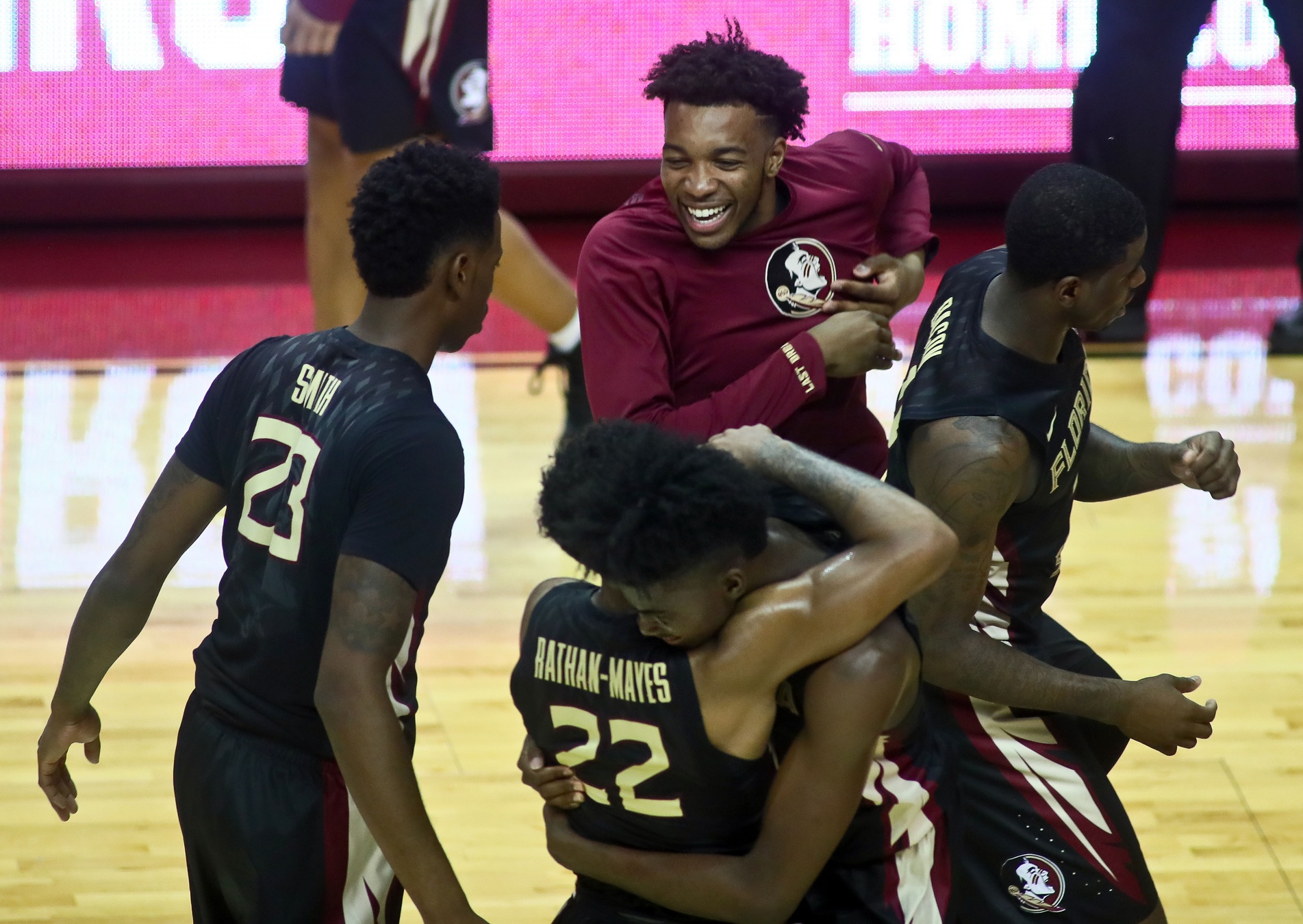
Florida State Appears in Good Shape to This Point (USA Today Images)

Florida State Appears in Good Shape to This Point (USA Today Images)

The Seminoles are off to a nice 10-1 start with wins already over Illinois, Minnesota and Florida. On top of that, Florida State is one of the biggest beneficiaries of the ACC’s unbalanced schedule this season. Of the league’s presumptive top four teams, only Duke appears twice on the schedule. If Leonard Hamilton’s bunch can hold serve at home and do no worse than the middle of the pack in conference play, they should be in.

Clemson hit the ground running with early wins over Georgia and Davidson and the Tigers have avoided any ugly losses to date. As most schools drift through exams and the holidays without much of a test, Brad Brownell’s team will do the opposite with upcoming tough games against South Carolina, Alabama and a strong UNC-Wilmington squad. After that stretch, the Tigers will enjoy an even easier conference schedule than Florida State, catching all five of the ACC’s best teams only once this season.

Read the rest of this entry »

Share this story

Should We Be Taking USC More Seriously?

Posted by Mike Lemaire on December 14th, 2016

When USC rallied to beat Texas A&M, it was good luck. When the Trojans squeaked past SMU a week later, it was thanks to Bennie Boatright. When they beat BYU a week after that, it was because the Cougars really aren’t that good and the game was in Los Angeles. These are all logical ways to rationalize dismissing USC’s hot start, but the fact remains that the Trojans are just one of six unbeaten teams remaining in Division I basketball and a group that was picked to finish seventh in the preseason Pac-12 standings is rebuilding faster than anyone imagined. Of those six teams sporting flawless records, most smart basketball minds will tell you that Andy Enfield‘s team is easily the worst of the group. KenPom agrees. ESPN agrees. The Trojans are off to their best start in more than 40 years and CBSSports.com barely included them in this week’s Top 25. The conventional wisdom is that, while USC’s early success deserves some attention, the Trojans still aren’t worth taking all that seriously yet.

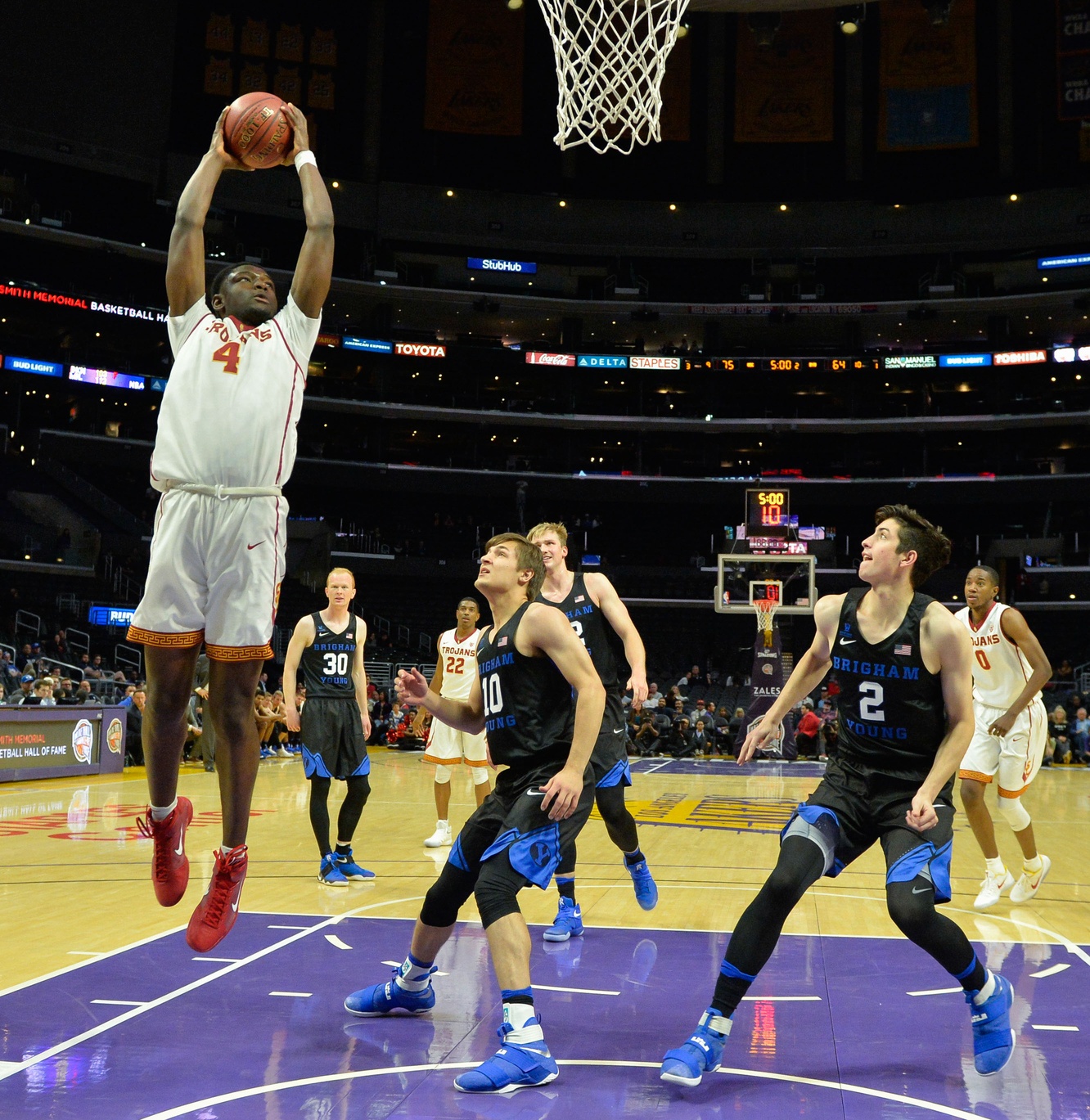
USC Basketball is Soaring -- Has Anyone Noticed? (USA Today Images)

USC Basketball is Soaring — Has Anyone Noticed? (USA Today Images)

USC feels like a prime candidate for regression to the mean once the rigors of conference play begin. The Trojans own three resume-building wins by slim margins, but a non-conference slate that will include just one game outside California doesn’t impress anyone. Enfield’s roster is one of the 20 least experienced nationally and his best player is expected to be out of the lineup for at least another month. Still, there’s a lot to like in Troy. USC has used more than good fortune to remain unblemished for the first five weeks of the season. The steward of “Dunk City” has created a well-rounded, disciplined and deep group that is producing top 50 efficiency metrics on both ends of the floor, placing a particular importance on taking care of the basketball (top 15 nationally).

Read the rest of this entry »

Share this story

A Serious Analysis of Bob Huggins’ Comments on Playground Basketball

Posted by Nate Kotisso on December 14th, 2016

For as long as there has been college basketball, we have heard coaches across the country complain about youth sports. The correlation between those complaints and a head coach’s advancing age appears to be scientifically sound, but that doesn’t mean they don’t sometimes have a point. Last week Louisville women’s basketball coach Jeff Walz took time out of his postgame press conference to lament that “everybody gets a damn trophy” in today’s youth sports.

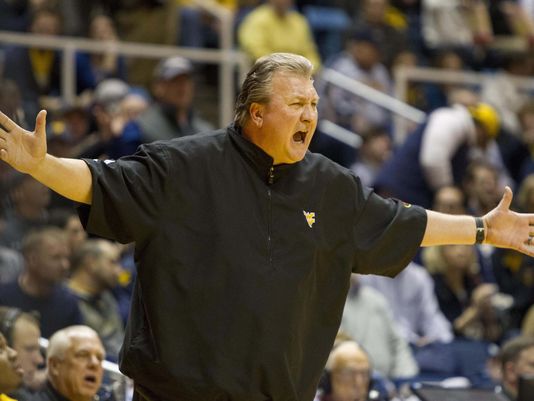
Bob Huggins believes playground basketball produced players who knew how to win. (Ben Queen/USA Today Sports)

Bob Huggins believes playground basketball produced players who knew how to win. (Ben Queen/USA Today Sports)

CBSSports.com’s Matt Norlander then did us a service by highlighting a series of quotes made by West Virginia coach Bob Huggins last weekend. The irascible head coach’s commentary centers on how playground and AAU basketball are different animals, but he prefers the former on how it teaches young players to learn the game. A few of his most illustrative lines:

  • “I don’t think they know how to play.”
  • “I think they play all of the time but they don’t. It’s kind of long and complicated and I’m not trying to kill AAU because I think it has some good. But I think when you used to have to go to the playground to play, you had to win, or you sat for four or five games.”
  • “You learn how to win.”
  • “You drive by courts now, you don’t see anyone out there playing. It’s just a different culture, I think. And in fairness, the athletes now are bigger, stronger, faster. They’re better. It’s just their idea of how to play sometimes baffles me.”

It goes without saying that Huggins and his peers typically try their best to avoid undermining the AAU programs because they know they will need those players to keep their programs nationally relevant. But some of Huggins’ comments ring true. AAU tournaments can take up the majority of a given day and teams often play for consecutive days at a time. Indeed, participating teams receive shoes and other apparel regardless of how they finish. And criss-crossing the country to play basketball can take a toll on these kids’ developing bodies. But these weren’t Huggins’ main points. Rather, he believes that the drying up of playground basketball around the country has produced a wave of prospects who don’t know how to play the game.

Read the rest of this entry »

Share this story

The Five Most Improved Players in the Big 12

Posted by Brian Goodman on December 14th, 2016

It’s been an exciting first month of hoops in the Big 12, with a few preconceived notions about teams evolving over the first four weeks. Kansas still appears to be alone at the head of the pack, but the gap between the Jayhawks and the rest of the league looks smaller than originally considered with Baylor storming out of the gate unbeaten and West Virginia showing no ill effects from their departed seniors. We’ve also seen a handful of Big 12 players take sizable steps in the progression of their careers. Some of the five breakout players listed below have simply produced at similar clips to their careers to this point, but with bigger workloads this season, while others have just become more well-rounded players. Still others have benefited from changes in their team’s style of play or coaching, and some improvements have been a result of some combination of the above.

Regardless of the reason, the thing to watch moving forward will be whether these players can carry their newfound success through league play. These are the Big 12’s five most improved players in order of who has the best chance to sustain his performance the rest of the way.

Jawun Evans, Oklahoma State

Look for Oklahoma State's Jawun Evans (left) to leave a few more opponents in his dust before the end of the 2016-17 season. (AP/Rick Bowmer)

Look for Oklahoma State’s Jawun Evans to leave a few more opponents in his dust before the end of the 2016-17 season. (AP/Rick Bowmer)

  • 2016-17: 33.9% POSS, 23.9 PPG, 5.1 APG, 9.9% TO
  • 2015-16: 26.6% POSS, 12.9 PPG, 4.9 APG, 20.4% TO

The sophomore Evans was already a tremendous point guard, but Oklahoma State’s coaching transition from Travis Ford to Brad Underwood has unlocked something special in Stillwater. His huge increase in scoring has been heavily influenced by the breakneck pace with which the Cowboys are playing (~10 more possessions per game), but it also says a lot about Evans that he can maintain such a high rate of productivity while taking on more responsibility in a hectic environment.

Read the rest of this entry »

Share this story

Where Did Boston College Go Wrong?

Posted by Charlie Maikis on December 14th, 2016

Despite earning a surprising win against Auburn on Monday night, Boston College sits at just 5-5 on the season with losses to Harvard, Hartford and Nicholls State already on its resume. It’s no stretch to note that the Eagles are off to another tough start for what seems like the 100th season in a row. Still, it wasn’t that long ago that the program was riding high. Despite finishing over .500 just once since 2010-11 and enduring a sustained funk over the last five years that few major conference programs have endured, the Eagles under former head coach Al Skinner notched seven NCAA Tournament appearances in nine seasons during the 2000s.

What Has Happened to Steve Donahue's Defense? (Boston College Athletics)

Steve Donahue couldn’t maintain Al Skinner’s standards at Boston College. (Boston College Athletics)

As the sixth year of disappointment quickly moves toward conference play, the overarching question is where did Boston College go wrong? Skinner’s final season ended with a record of 15-16 (6-10 ACC), but the hiatus of talent that left with him had an immediate effect. Former ESPN 100 recruit Rakim Sanders decided to transfer to Fairfield, and incoming recruit Brady Heslip, who went on to become a major contributor for several successful Baylor teams, was released from his letter of intent. After Skinner had brought in two ESPN 100 recruits in his first two classes of that recruiting service’s era, the combination of Steve Donahue from 2010-14 and current head coach Jim Christian (2014-present) have combined to bring in just one — Ryan Anderson, who also transferred out, incidentally — in the seven classes since.

Read the rest of this entry »

Share this story

Freeze Frame: Tennessee’s Failed Offensive Execution

Posted by Brian Joyce on December 14th, 2016

If there is such a thing as a moral victory, Tennessee exited Chapel Hill with a massive win on Sunday night. As Rick Barnes‘ Volunteers led a more experienced and talented North Carolina club by as many as 15 points in the first half, it felt as though we were watching the second-year SEC coach’s coming-out party. But Barnes wasn’t interested in victories that don’t count in the win column, saying afterward: “I don’t want them to feel good about being close in games. We’ve got to figure out a way to get over the hump.” If Tennessee is going to get over that hump this season, it will need to find a better way to get the ball to wing Robert Hubbs  something the Volunteers failed to do with the game on the line over the weekend.

Rick Barnes almost had a signature win for 2016-17. (Troy Taormina/USA Today Sports Images)

Rick Barnes almost had a signature win for his early tenure in the SEC (Troy Taormina/USA TODAY Sports Images)

Tennessee’s offense completely sputtered down the stretch in Chapel Hill, scoring just five points in the critical last five minutes of the game. Hubbs dominated the wing, scoring 21 points on 9-of-11 shooting before sitting with cramps with just over five minutes remaining. When he returned to the Vols’ lineup at the 3:35 mark, his teammates failed to get him the ball on three critical possessions down the stretch. In the first scenario — with Tennessee up one point and 2:46 remaining — Shembari Phillips dribbled around the perimeter for most of the shot clock before giving it to freshman Grant Williams so he could settle for a contested three-point jumper. Here is the offensive set in all of its glory.

In the second critical possession, the Vols — now trailing by one point with less than two minutes remaining — drew up a play out of a timeout to get Hubbs the ball. As the screenshot below shows, Hubbs moves across the lane as if to set a screen along the baseline before pivoting to post up his defender. Phillips then dribbles to the right wing for the post entry pass, but North Carolina’s Kenny Williams plays such great denial defense that Hubbs ends up about 18 feet from the basket. The play fails. Phillips has nowhere to go, so he instead hands the ball off again to Williams at the top of the key, who quickly drives and turns the ball over. Read the rest of this entry »

Share this story

Maryland: Lucky or Good?

Posted by Jim Root on December 13th, 2016

Is it better to be lucky or good? An argument can be made either way, but the easy answer is to simply be both. Maryland this season appears to have struck a delicate balance between the two, sitting at 11-1 overall with impressive wins versus Oklahoma State and Kansas State as well as a road game at Georgetown. Only a home loss to a respectable Pittsburgh squad tarnishes the ledger, but that’s forgivable given the other successes. So with all of these positives, why do the Terps rank only 61st nationally, per KenPom, and an even worse 73rd according to Jeff Sagarin? The truth is that Maryland’s resume looks better than how well the team is actually playing. Its three resume-enhancing wins came by a combined three points – for the readers without a calculator, that means they won each game by a single point. They also have relatively narrow home wins over minnows American and Stony Brook and needed significant second half comebacks to top Towson and Richmond. Maryland has been slightly more convincing in recent games against Howard and Jacksonville State, but how is this team squeaking by?

trimble-and-turg

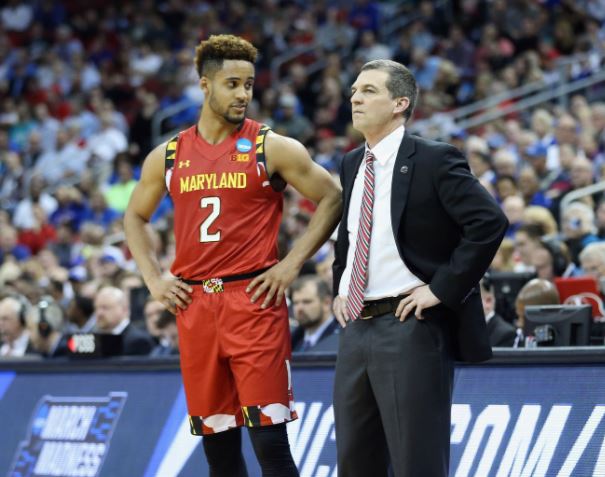
Star player Melo Trimble and Mark Turgeon debate their next move. (Andy Lyons, Getty Images)

One explanation is luck. This is a notoriously difficult metric to quantify, but KenPom calculates a “luck” rating for every team based on “expected wins” from an efficiency standpoint, compared with their actual record. Here’s the concept explained in his own words in 2006 (nerd note: “correlated gaussian method” is a fancy way of saying bell curve):

pommer
The Terrapins are a sterling 10th nationally in luck, as their series of unconvincing performances contrasts with a nearly-perfect record. On the side of the eye test, Maryland clearly benefited from a game-winner for Oklahoma State coming just after the buzzer, among a few other nice breaks, so it does appear to be an element of the Terps’ success. Read the rest of this entry »

Share this story

Seton Hall Surging Despite Offensive Limitations

Posted by Mike Knapp on December 13th, 2016

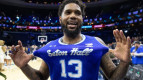
Seton Hall may have put together a dream season in winning the Big East Tournament last season but the Pirates relied upon the playmaking prowess of super sophomore Isaiah Whitehead and a top-10 defense to get there. That team’s Achilles Heel often came on the offensive end of the court, as ball movement sometimes had a tendency to stagnate. The Pirates assisted on just 51 percent of their makes — 203rd in the nation, per KenPom — while relying heavily on the all-Big East guard for the majority of their playmaking. As a result, there were two competing schools of thought about Kevin Willard‘s team coming into this season. One was that the Pirates’ offense would flow better without a ball-stopper — even a gifted one like Whitehead — in the lineup; the other was that they would stagnate even more offensively with their only true playmaker now in the NBA.

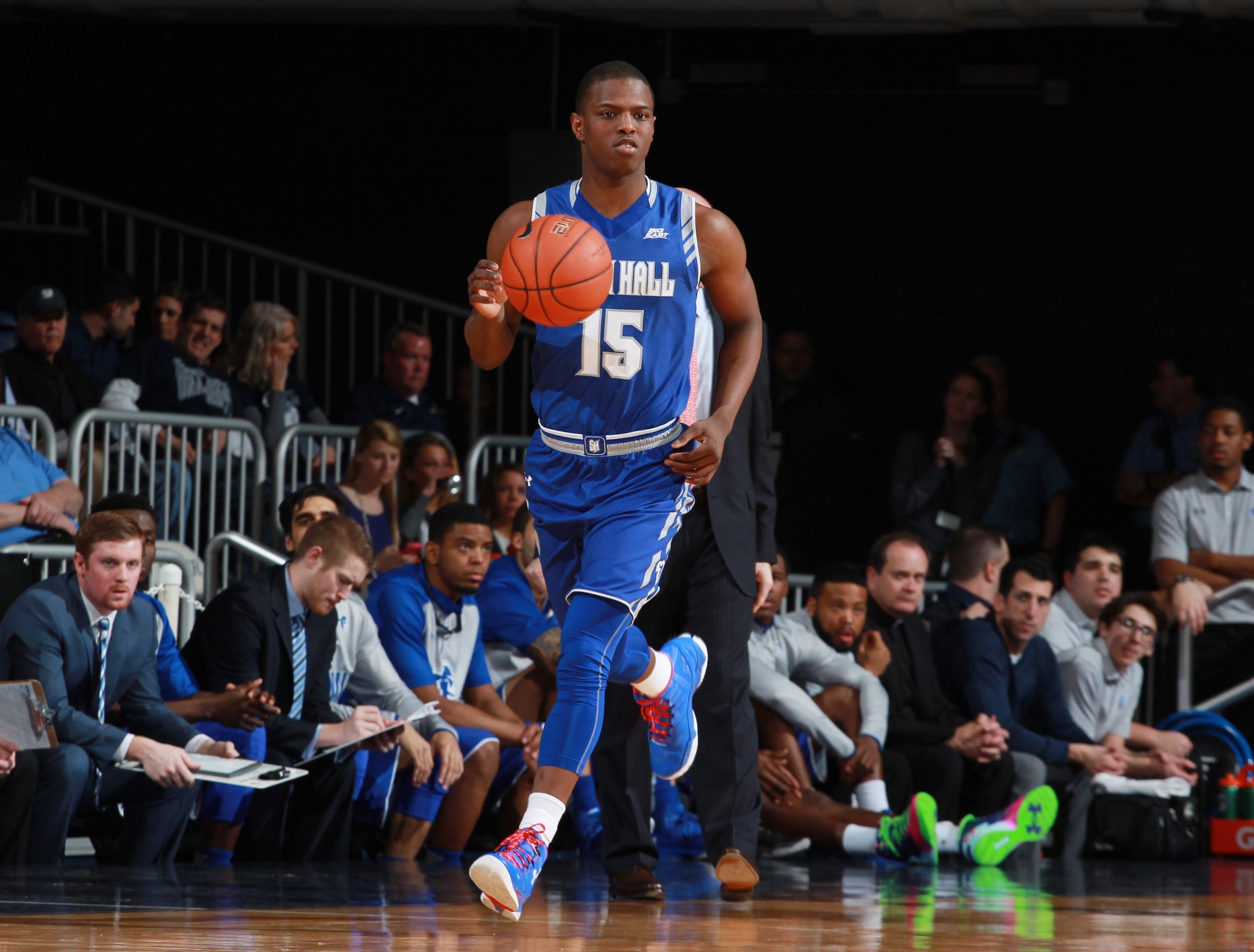
Isaiah Whitehead Led Seton Hall to Its Best Season in a Long While (USA Today Images)

Life without Isaiah Whitehead has created new offensive issues at Seton Hall. (USA TODAY Images)

Seton Hall may be 8-2 and in the midst of a four-game winning streak that includes close wins over California and previously-unbeaten South Carolina, but the Pirates have been an even more imbalanced offensive unit through the first month of the season. That troubling assist rate has dropped even further to an incredibly low 39.8 percent (345th nationally) and the Pirates do not boast a single player with an individual assist rate over 20 percent (the only Big East team that can claim that distinction). Still, given the makeup of his current roster, Willard’s focus on isolation leading to one-on-one attacks on the basket may not necessarily be a bad thing. Junior wing Desi Rodriguez and junior guard Khadeen Carrington are particularly adept at getting into the paint and drawing fouls, and Angel Delgado, who currently ranks 21st in the country in offensive rebounding percentage at 15.7 percent, is one of the top glass-eaters in college basketball. The downside of a team that ranks 25th nationally in earning its share of points from driving the ball is that Seton Hall leaves much of its efficiency on the table as one of the worst free throw shooting teams in the country. The Pirates convert just 62.5 percent (311th) of their tries from the charity stripe, with only one regular hitting at 80.0 percent (Myles Powell). Read the rest of this entry »

Share this story