





Notre Dame’s Matt Farrell Leading Irish to Top of ACC

Posted by Matthew Auerbach on January 21st, 2017

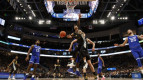
The play itself, spectacular as it was unique, took guts, guile and extraordinary self-belief, and represents a characteristic of every overachiever. With his team clinging to a three-point lead with 46 seconds remaining last weekend in Blacksburg, Matt Farrell looked to put the finishing touches on Notre Dame’s fifth consecutive victory to start ACC play. In an effort to preserve a few precious seconds, the Hokies rolled the ball up the court. Making himself inconspicuous, Farrell created the illusion that he was not paying attention. Then, in the blink of an eye, the subterfuge ceased, as Farrell dived headlong to smother the ball, pop up, and drop a dime to T.J. Gibbs. Gibbs extended the lead to five with an easy layup, effectively putting an exclamation mark on yet another impressive ACC victory for the Irish.

At 16-3 and tied for first in the league standings with North Carolina and Florida State, Notre Dame is without question one of this year’s pleasant surprises. The presumed strength of the league notwithstanding, the primary reason for hesitation regarding this year’s version of Mike Brey’s squad centered around the transition of point guard duties from three-year standout Demetrius Jackson to the little-known junior from Point Pleasant Beach, New Jersey. Farrell entered the season with a mere 86 career points in 43 career games, and as a sophomore, he posted the team’s poorest player efficiency rating. And those notes, among others, is why Brey is one of the most under-appreciated developers of talent in college basketball. His teams change somewhat based on the available personnel, but they are always well-versed on the game’s fundamentals and know how to find open shots. Perhaps no player in the head coach’s 17 seasons at Notre Dame puts a stamp of approval on his process quite like Farrell.
Read the rest of this entry »

Share this story

This Weekend in the ACC: January 21

Posted by Mick McDonald on January 21st, 2017

Here are a few things you should be keeping your eye on around the ACC this weekend (all times Eastern).

Have We Reached the Point Where Syracuse Begins to Save Its Season? (USA Today Images)

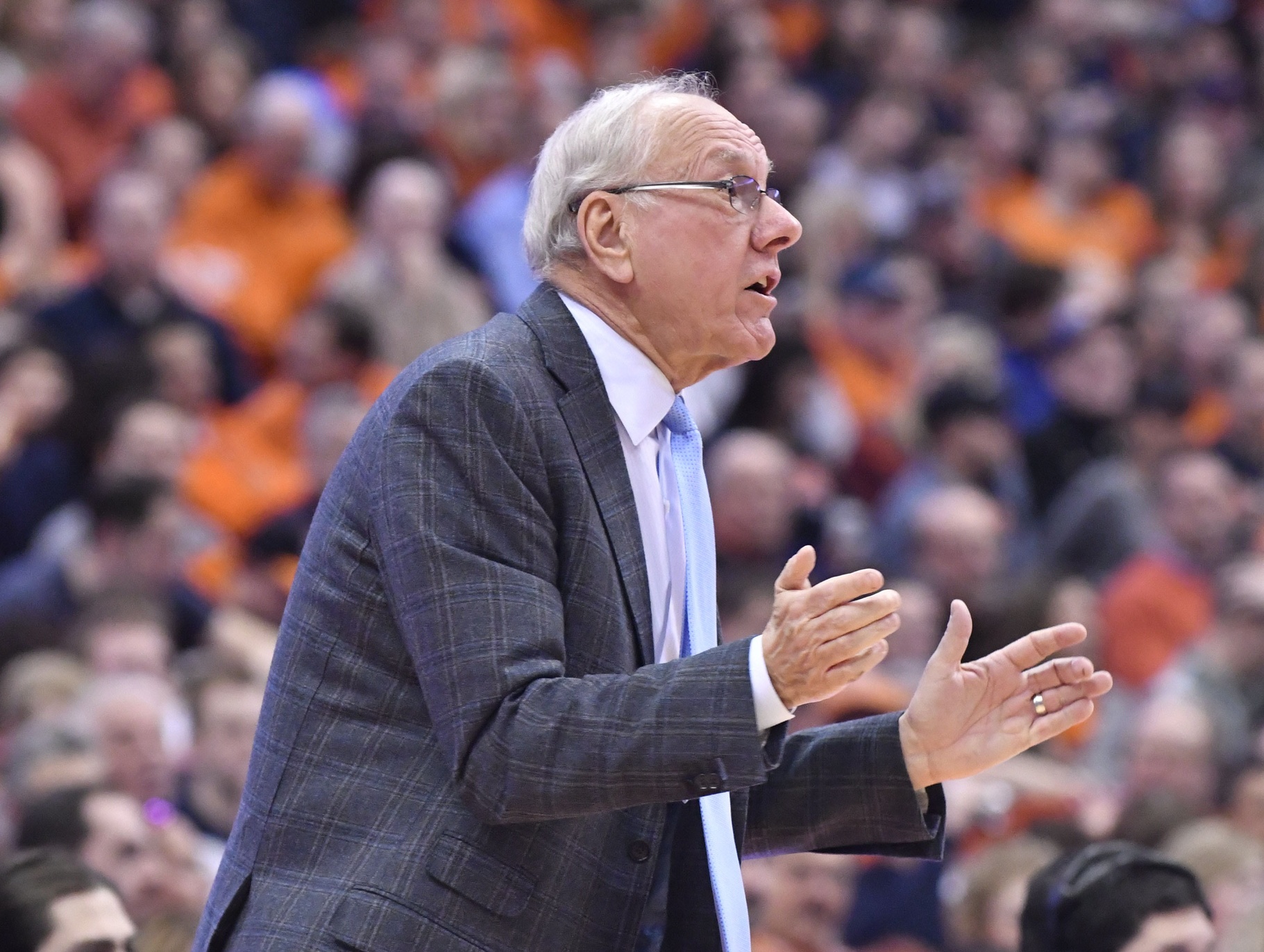
  • 12:00 PM: Syracuse (11-8, 3-3) at Notre Dame (16-3, 5-1). The Orange, which desperately need some quality wins to get on the right side of the NCAA Tournament bubble, will have a big opportunity this afternoon against the ACC-leading Fighting Irish. The problem for Jim Boeheim‘s club is that this game is in South Bend. In Syracuse’s six (yes, just six) games away from home this season, the Orange are 0-6, having lost those games by an average of nearly 13 PPG against questionable competition (i.e., St. John’s, Connecticut and Boston College). Most teams experience significant home and road shooting splits, but the Orange’s numbers away from home — 37.4% from the field, including just 31.2% from three — have been downright dreadful. Keep an eye on point guard John Gillon. In his six games away from the Carrier Dome, he’s made just 9-0f-37 shots (24.3%) and 3-of-17 (17.7%) from beyond the arc. If Gillon can knock down a few shots to relieve some of the pressure from Andrew White III and Tyler Lydon, Syracuse might be able to hang with Notre Dame long enough to have a chance to pull the upset. If not, it could be a very long afternoon in South Bend.
  • 2:00 PM: Louisville (16-3, 4-2) at Florida State (17-2, 5-1). In our Stock Watch that published earlier this week, we noted the recent terrific play of Louisville wing Donovan Mitchell and how important it will be for the sophomore to maintain his high level of play with starting point guard Quentin Snider on the shelf. Mitchell was once again terrific in the Cardinals’ win over Clemson on Thursday night, but the story of the game was Snider’s replacement, freshman V.J. King. Prior to Thursday night’s game, King had scored just 21 total total points in five ACC contests; his debut as a starter resulted in 14 points on 5-of-8 shooting. Now that he’s a known commodity, keep an eye on how King performs against the array of talented athletes that Seminoles’ head coach Leonard Hamilton will throw at him. In order to walk out of Tallahassee with a victory, the Cardinals will need King to knock down shots as well as remain physical with the Florida State guards.

Read the rest of this entry »

Share this story

Big 12 Power Rankings: It’s Happening Again Edition

Posted by Big 12 Team on January 20th, 2017

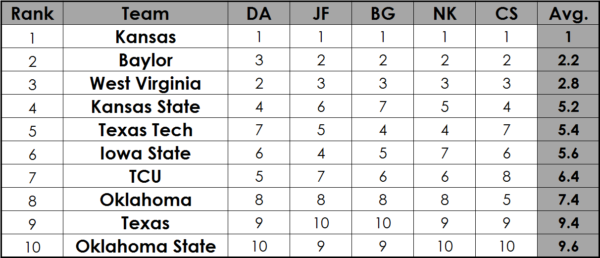
Kansas had a big night on Wednesday and the Jayhawks didn’t even play. Despite being favored by 17 points, West Virginia lost in stunning fashion to Oklahoma, done in by a few clutch plays from Jordan Woodard. The loss dropped the Mountaineers two games behind the Jayhawks in the Big 12 standings, and with Kansas set to play Texas at home on Saturday while West Virginia travels to Kansas State, the deficit could grow even deeper before the pair square off in Morgantown on Tuesday. Whether they beat the Wildcats or not, West Virginia could theoretically climb back into the race by notching wins against its peers in the upper third of the conference, but Wednesday’s loss underscores the importance of winning at home when it comes to contending for the Big 12 title. For now, the focus shifts back to Baylor, which is set to take on a tough TCU team in Fort Worth this weekend. The Bears will be favored, but not by more than a few points, which means the wheels could be in motion for Kansas to create some serious distance in its pursuit of consecutive regular season title #13. With comments on each team are Big 12 microsite writers Drew Andrews, Justin Fedich, Brian Goodman, Nate Kotisso, and Chris Stone.

1. Kansas: “The Jayhawks are unblemished in league play because they’re one of the best teams in America. They’re led by a National Player of the Year candidate, they have a likely one-and-done lottery pick who is asked to do a lot, but not too much, and they’re coached by one of the best in the profession. It’s tough to beat that combination. But another reason why Kansas is currently 6-0 in league play is because they’ve had the league’s second-easiest conference schedule to this point. That’s about to change very soon, however. After Saturday’s game against Texas, the Jayhawks travel to Morgantown, take a break from Big 12 play by playing Kentucky at Rupp Arena, then resume conference action with home games against Baylor and Iowa State. This team will ultimately be defined by what it does in March, but if they beat the odds to make it through the rest of January unscathed, it may be time to start thinking about this season as one of Bill Self‘s best ever.” -Brian Goodman

Read the rest of this entry »

Share this story

Inside the ACC Numbers: Volume I

Posted by Brad Jenkins (@bradjenk) on January 20th, 2017

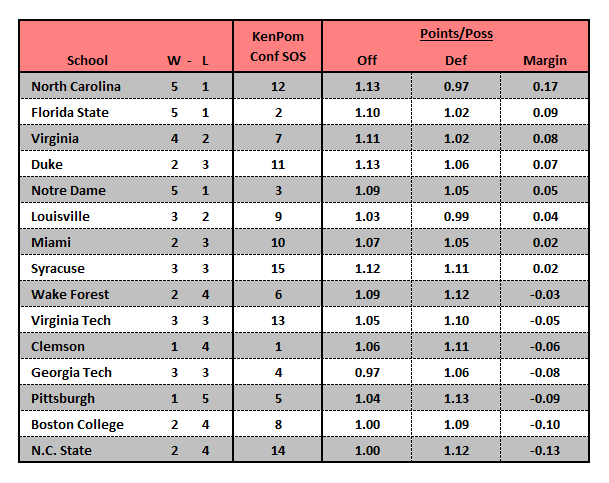
With approximately one-third of conference play now in the books, it’s time to take a closer look inside the ACC numbers. This is the first edition of our weekly look at the current ACC standings with a focus on which teams are playing better or worse than their records may indicate. We will also delve into some advanced metrics to find a few interesting notes on teams, statistics and trends. Finally, we will forecast how the final ACC standings may look given current efficiency margins, and what that may mean for teams’ postseason aspirations.

Note: All numbers are current for games played through Wednesday, January 18.

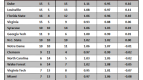
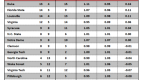
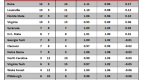
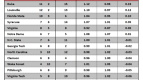
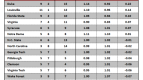
Current StandingsWith a sample size of games this small, any one-game extreme performance can really impact the season numbers. This means that some of what we see in the table above is the result of two ACC blowouts — North Carolina’s 51-point rout of N.C. State, and Duke‘s 53-point beating of Georgia Tech. The Tar Heels are currently leading the league in both offensive and defensive efficiency, mostly because of their incredible dominance on the boards. North Carolina’s 44.0 percent offensive rebounding rate in ACC play is even higher than its nation-leading mark for all games (42.7%). Florida State and Notre Dame have achieved great starts (both are 5-1) despite facing two of the three toughest league slates to this point. At the other end of the ledger is Clemson, which has only managed a single win over Wake Forest while playing the toughest conference schedule. The Tigers’ actual performance margin, however, is better than the three squads ahead of them in the standings, so maybe they are not struggling as much as it appears.
Read the rest of this entry »

Share this story

Allonzo Trier’s Suspension: More Questions Than Answers

Posted by Mike Lemaire on January 19th, 2017

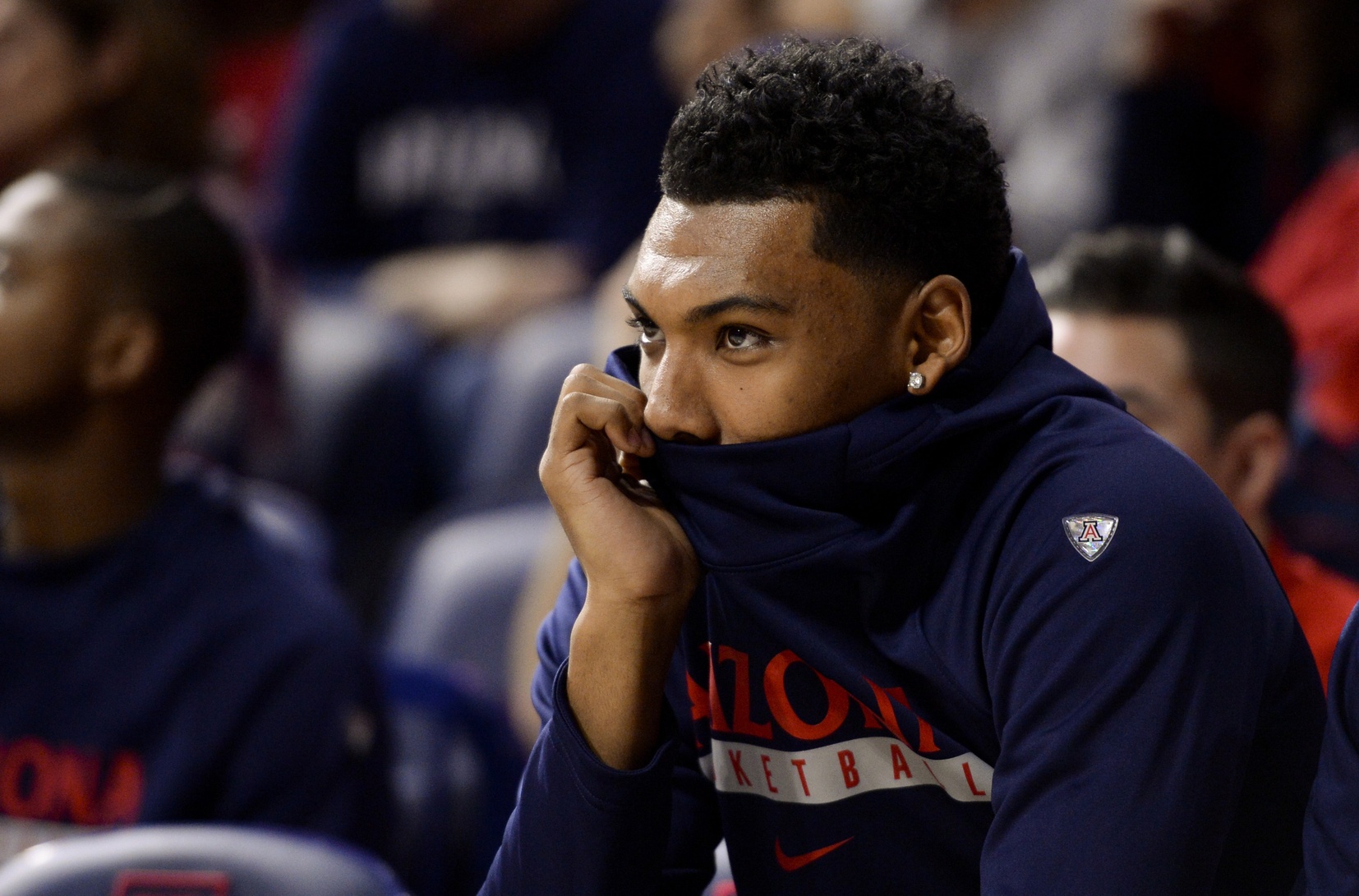
Just minutes before Utah was set to play Washington State in what promised to be one of the least exciting Pac-12 games of the week, ESPN made things much more interesting by reporting on the reason behind Arizona star Allonzo Trier’s long suspension. A poorly kept secret for months in college basketball circles, Trier’s indefinite suspension was the result of a positive test in September 2016 for a performance-enhancing drug. According to the report, Trier had appealed the suspension and won, but the NCAA would not allow him to play until the drug had completely exited his system. This explains why no one has been able to provide realistic timetables on when the sophomore guard would be back on the court.

Allonzo Trier Has Been a Mystery Man at Arizona This Season (USA Today Images)

This is a compelling story for a myriad of reasons. First, any time one of the most recognizable programs in college basketball is involved in something newsworthy, it is going to draw interest. Second, there just aren’t many historical instances where a college basketball player has been suspended for PED use. A quick Google search turns up a number of stories on college football players getting suspended for PED use, but there are very few high-profile cases of PED use in college basketball. Finally, what makes this story so fascinating is the way it has been handled from the very beginning.

Read the rest of this entry »

Share this story

Evaluating Purdue’s Shooting Against Recent Big Ten Teams

Posted by Brendan Brody on January 19th, 2017

As recently as the 2012-13 season, Purdue ranked among the bottom 100 teams nationally (253rd) in three-point shooting. As the team’s perimeter marksmanship has steadily improved since hitting a low point of 32.7 percent the following season, the Boilermakers’ record has tracked correspondingly. Now, at the midpoint of the 2016-17 campaign, Matt Painter’s team is shooting a scorching 40.6 percent from behind the arc, already making 10 or more threes in seven games this season. If Purdue’s hot shooting continues, it has a chance to become one of the best deep shooting teams in the Big Ten over the last five years. How do the Boilermakers compare with the best in the league over this time span? And what does it mean as we slowly turn the corner toward March?

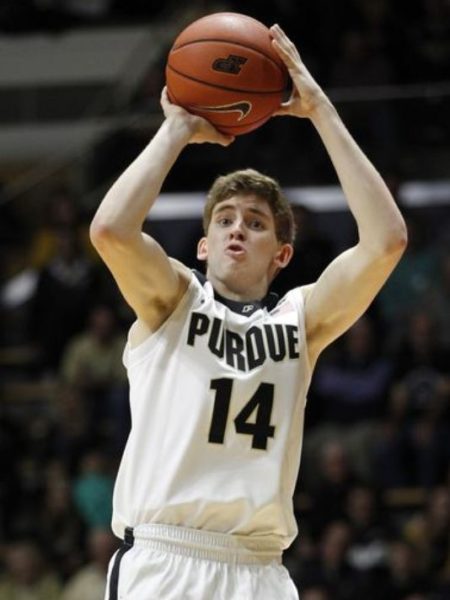
Ryan Cline is one of five Purdue players connecting on over 40 percent from the three-point line. (John Terhune, Journal &Courier).

For the sake of this exercise, three components were analyzed: team three-point percentage; team effective field goal percentage; and the number of players shooting over 40 percent who make at least one three-pointer per game. Ten Big Ten teams have made at least 37.9 percent of their three-point shots since the 2012-13 season. The best of the bunch was last season’s Michigan State squad at 43.4 percent, which led the nation. Purdue’s marksmanship so far this season ties for third. From an eFG perspective, last year’s Indiana team led the nation (58.7%), while Purdue’s 57.0 percent through 19 games comes in behind the Hoosiers. Finally, that same group from Indiana boasted five excellent shooters, as do this year’s Boilermakers. In the aggregate, Purdue finishes no worse than third in any of these metrics, which means that if it maintains the pace, it should definitely be mentioned as one of the best shooting teams in the Big Ten over the last five years. Here’s a look at the data.

  • Indiana 2012-13: (40.3% 3FG, 54.8% eFG, Watford 48.4%, Hulls 44.4%, Oladipo 44.1%)
  • Michigan 2012-13: (37.9% 3FG, 54.6% eFG, Stauskas 44.0%)
  • Michigan 2013-14: (40.2 3FG, 55.7% eFG, Stauskas 44.2%, Irvin 42.5%, Walton 41.0%, LeVert 40.8%)
  • Michigan State 2013-14: (39.2% 3FG, 54.5% eFG, Kaminski 49.4%, Trice 43.4%, Payne 42.3%)
  • Indiana 2014-15: (40.6% 3FG, 54.4% eFG, Hartman 47.5%, Zeisloft 45.0%, Ferrell 41.6%)

Read the rest of this entry »

Share this story

Projecting the Effect of Maurice Watson’s Injury on Creighton’s Offense

Posted by Eugene Rapay on January 19th, 2017

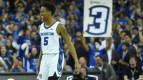
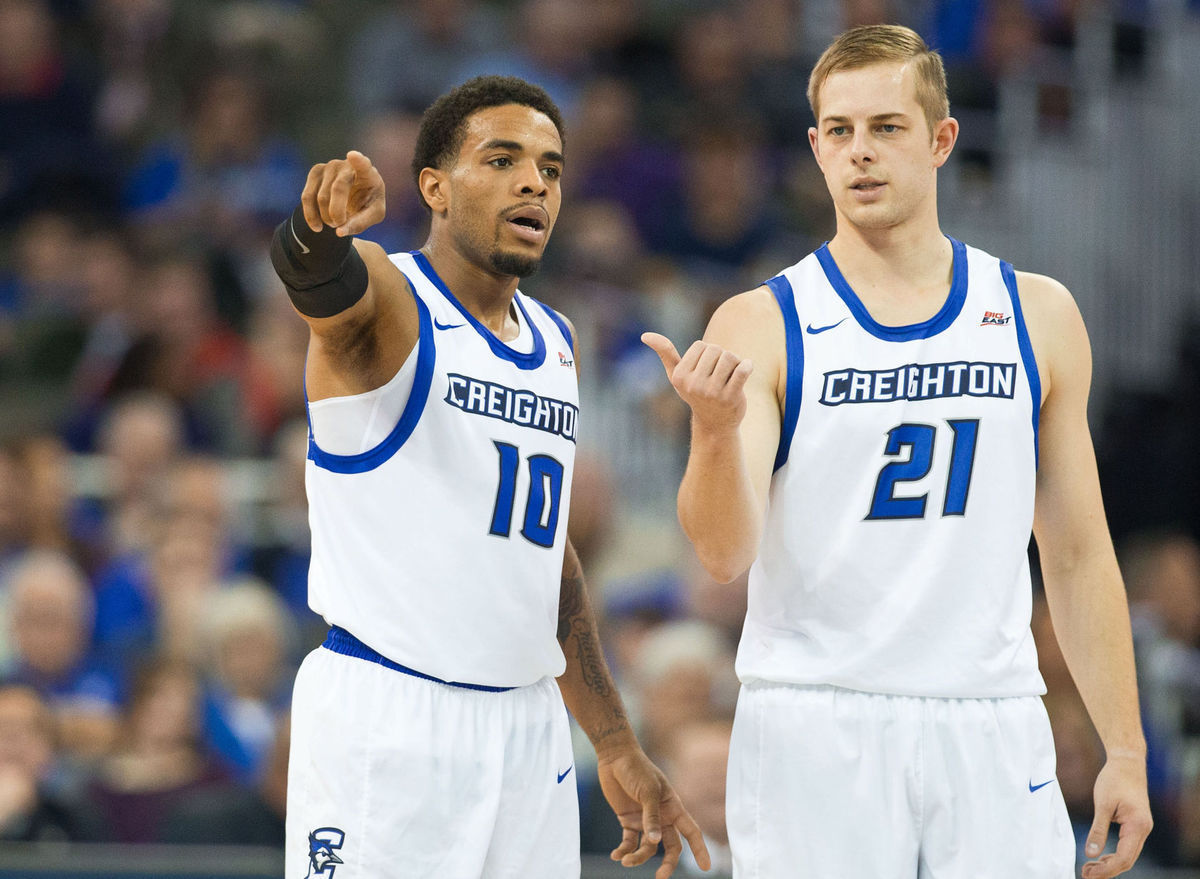
After suffering an apparent knee injury in Creighton’s Monday afternoon game against Xavier, Maurice Watson, Jr. has been dealt a crushing blow. An MRI later revealed that the senior point guard has a torn left ACL, preemptively ending both his season and career in one cruel swoop. Creighton is not even halfway through Big East play, but now the Bluejays will have to figure out a solution for moving on without Watson’s on-court leadership and skill set. These are big shoes to fill. According to KenPomcollege basketball’s assist leader (8.5 APG) paced the team in minutes and was used in over 28 percent of his team’s possessions. Greg McDermott‘s team isn’t completely doomed without him, but he was one of the primary catalysts in helping the program reach its highest-ever ranking in the national polls.

With Maurice Watson Jr. now out with an ACL injury, the Bluejays have turned to Isaiah Zierden to run the point. (Chris Machian/The World-Herald)

The good news in Omaha is that Creighton has other weapons. Kansas State transfer Marcus Foster (18.1 PPG, 49.3% FG) has completely reinvented himself as a scoring threat in his first year in the Big East, posting career-high numbers in shooting (55.6% eFG) and taking care of the ball (11.5% TO rate). Then there’s Justin Patton (13.8 PPG, 72.7 FG%), the freshman center who has already exceeded everyone’s expectations with his astronomical conversion rate and corresponding ability around the basket. While Creighton still has its top two offensive weapons, the new facilitator working in place of Watson will make the Bluejays’ offense look very different. Read the rest of this entry »

Share this story

ACC Bubble Watch: Syracuse, Miami (FL), Virginia Tech & Clemson

Posted by Charlie Maikis on January 19th, 2017

The ACC is shaping up as arguably one of the strongest conferences ever assembled, with several pundits already saying that the league could get as many as 11 teams into the NCAA Tournament. While North Carolina, Notre Dame, Louisville, Florida State, Duke and Virginia are virtual locks, there are a number of other ACC teams that still have a reasonable shot with a strong finish. For the purposes of this exercise, we’ll use KenPom‘s projections to narrow the ACC bubble to teams that his methodology projects to win at least eight conference games: Miami, Virginia Tech, Clemson and Syracuse. (Ed. note: KenPom has since projected Wake Forest to win eight ACC games as well, but they are not included in this Bubble Watch.) Two months out from Selection Sunday, let’s take a look at what these four teams will need to do to get to the NCAA Tournament.

Miami (USA Today Images)

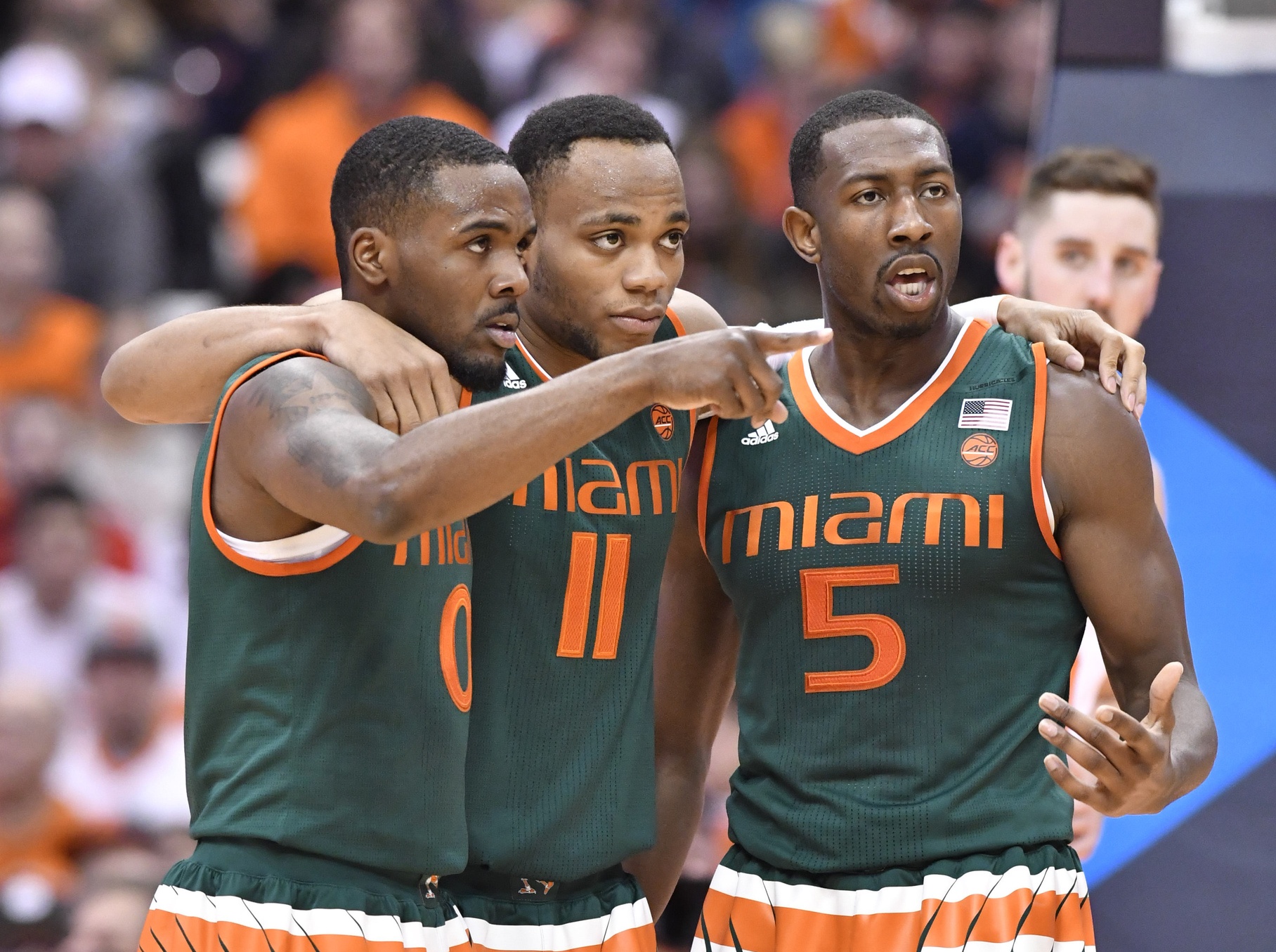
  • Miami. The Hurricanes sit at 12-5 overall and 2-3 in conference play. Despite a weak non-conference schedule (303rd nationally), their only losses prior to ACC play came to likely NCAA Tournament teams Iowa State and Florida. Miami’s best non-conference win, however, is over a middling Stanford club, which means that there won’t be much margin for error over the next eight weeks. The Hurricanes have six games remaining against unranked teams (four in Coral Gables), so if they can win those and find one more victory elsewhere, a 9-9 ACC record should be enough. Dropping one or more of those contests, though, will create significant pressure on Jim Larranaga’s squad to beat a top-tier team, something it has yet to do this season.

Read the rest of this entry »

Share this story

Pac-12 Weekly Power Rankings: Vol. 3

Posted by Pac-12 Team on January 18th, 2017

The Pac-12 last season boasted the toughest road game in college basketball. During conference play, the league’s home teams won at a higher rate (71%) than any other conference in America. This season, Pac-12 home teams are winning at just a 59 percent rate. They say that conference titles are won on the road. How has your team fared in hostile territory?

Plenty to smile about for Dillon Brooks and Oregon lately. (Cole Elsasser/Emerald)

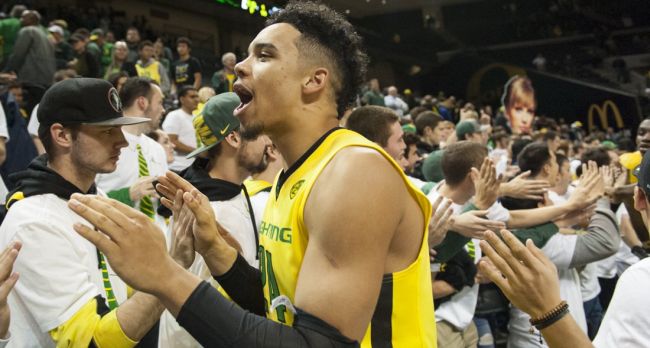
  1. Oregon (1) – The Ducks’ conference dominance continues. Since their dramatic, two-point victory over UCLA in the Pac-12 opener, Oregon has simply decimated their opponents. Oregon’s average margin of victory over the last four games is 26.5 points, a full 15 points higher than UCLA. Granted, the four teams the Ducks have played also have a combined 6-15 conference record, but at least they are taking care of business.
  2. UCLA (2) – How do we convince Thomas Welsh to get to the free throw line more often? That is the question that head coach Steve Alford should be asking himself. After shooting 75 percent from the charity stripe last season, the junior has yet to miss in his 24 attempts this year (leading to a subtle breakout season for the junior). Now if he could just average more than one freebie attempt every two games… Read the rest of this entry »
Share this story

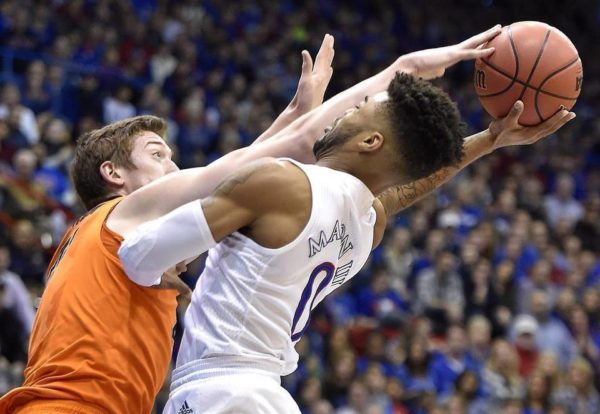
Exploring Oklahoma State’s Defensive Woes

Posted by Chris Stone on January 18th, 2017

The beginning of Big 12 play hasn’t exactly gone as hoped for Oklahoma State. After jumping out to an impressive 10-2 record in non-conference play under new head coach Brad Underwood, expectations were high for a Cowboys’ team that had only suffered a neutral-site defeat to North Carolina and a one-point loss at Maryland. Through five games of the conference season, however, things couldn’t be going much worse. The trio of defeats to the league’s top three teams — Baylor, Kansas and West Virginia — is understandable, but a pair of losses to Texas and Iowa State are not. What has gone wrong for the Cowboys?

Big man Mitchell Solomon is a major key to Oklahoma State’s defensive success. (Rich Sugg/The Kansas City Star)

The biggest problems have come on the defensive end of the floor where Oklahoma State has allowed opponents to score a league-high 1.18 points per possession (PPP) over those five contests, per KenPom. That figure was a much more reasonable 0.98 PPP during non-conference play, and certainly some of the disparity is attributable to its schedule — the toughest in the league so far. Compare that to a non-conference slate that ranked 120th nationally and it’s easy to understand why Oklahoma State’s four defensive factors — effective field goal percentage, turnover rate, offensive rebounding rate and free throw rate — have been worse across the board. Read the rest of this entry »

Share this story