

That’s Debatable: May Madness?

Posted by WCarey on February 2nd, 2012

That’s Debatable is back for another year of expert opinions, ridiculous assertions and general know-it-all-itude. Remember, kids, there are no stupid answers, just stupid people. We’ll try to do one of these each week during the rest of the season. Feel free to leave your takes below in the comments section.

This week’s topic: Last weekend Dan Wolken of The Daily wrote an article suggesting that college basketball should move its season forward to the spring semester so as to not compete with football. Is this a good idea? Bad idea? Why?

Patrick Prendergast, Big East Microsite Writer

All the article does is validate the argument that college football should have a tournament to decide its champion. From a television standpoint, a comparison cannot be made between a football bowl game and a regular season basketball game.  Traffic is herded to bowl games, not to mention the gambling angle. Bowls are played in a media competition vacuum and promoted to no end.  The great thing about college basketball is its depth and breadth. Fans are likely to be just as entertained and intrigued by Boston University vs. Stony Brook as they are Georgetown vs. Syracuse, so the audience spreads itself artificially thin.  The only schedule tweak that would make meaningful sense is to work conference play around the semester break. Home courts are much better with a student presence to drive the energy.

Brian Otskey, Big East Correspondent

Bad idea. I like Wolken’s one semester argument because that would make transfer rules a lot less complicated while allowing freshmen and transfers more time to get acclimated to their new schools, but I don’t agree with much of anything else in his piece. College basketball already goes out of its way to not conflict with the NFL. Just look at the lackluster schedule every Sunday from November to January. If college basketball can’t draw ratings during the week or on Saturdays (when the NFL isn’t playing), there isn’t much hope to begin with. It is hard to go up against college football on November Saturdays but that’s why college basketball saves most of its good non-conference matchups for December, in between the college football regular season and bowl games. It pains me to say this as a person who follows only two major sports (college basketball and MLB) but college basketball will never be more than a niche sport in months not named March. Making the season run January to May instead of November to March won’t change that.

Brian Goodman, Editor

The idea of moving the season to a window entirely within the second semester is interesting, but would wreak logistical havoc. I wouldn’t envy those tasked with planning the NCAA Tournament sites around the potential of conflict with the NBA playoffs, for instance. Also, early entry candidates would have a shorter window of time to gather information and be properly evaluated, increasing the potential of regrettable decisions. It wouldn’t be without its advantages, though. In addition to the idea of owning the spotlight, positioning the end of the season to coincide with the end of the semester would probably lead to a lower rate of classroom attrition by draft candidates, which would bring some relief to programs with APR concerns. Wolken’s column raises some valid points – for the longest time, college basketball has lacked a true “kick-off” event that maximizes viewership. This is hardly a new revelation, but it’s nonetheless relevant. Events like the Carrier Classic and ESPN’s 24-Hour Tip-Off marathon are nice starts, especially for us die-hards, but the endurance of casual fans of marquee programs in the Eastern and Central time zones is tested every year with late games during the Maui Invitational. Competing with football is a tall order, and it may be impossible if the pendulum doesn’t swing back to the days before the gridiron took over.

Read the rest of this entry »

Share this story

Night Line: Could Revitalized Pittsburgh Possibly Make the NCAA Tournament?

Posted by EJacoby on January 31st, 2012

Evan Jacoby is an RTC correspondent and regular contributor. You can find him @evanjacoby on Twitter. Night Line will run on weeknights during the season, highlighting a major storyline development from that day’s slate of games.

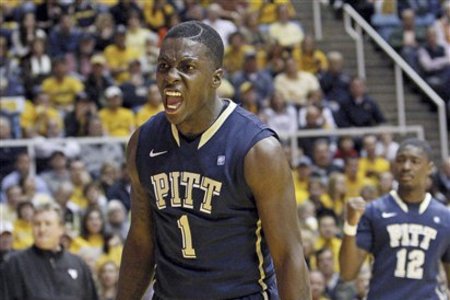
It’s no secret that Pittsburgh has been a massive disappointment this season, beginning Big East play with a surreal 0-7 record during an overall eight-game losing streak. By failing to meet expectations or excel on the defensive end of the floor, this year’s Panthers are entirely unlike what we usually expect from Jamie Dixon’s teams. But after a 72-66 road win at West Virginia on Monday night, Pitt has now won three straight games and looks like an entirely different team with their starting point guard back from an extended abdominal injury. Pitt is averaging about 17 more points per game in conference games with Tray Woodall than without him, and the Panthers are finally starting to look like the team that was picked to finish fourth in the conference during the preseason. At 14-9 overall and 3-7 in Big East play, Pittsburgh has an incredibly steep hill to climb, but the pieces are in place to make a run for NCAA Tournament consideration.

Tray Woodall is Back and Pittsburgh Looks Like a New Team (AP Photo)

Pitt is used to qualifying for postseason play; they’ve made the Big Dance in 10 consecutive seasons, the longest current streak in the Big East. The Panthers’ 80.1% winning percentage since 2001 is the fourth best in Division I over that span, trailing only Duke, Memphis, and Gonzaga. Dixon has been the head coach for the past nine years, and the Panthers have simply been superbly consistent under his watch. So the fact that Pitt sits at 12th place in the conference right now is a complete shock that nobody saw coming. The eight-game losing streak that they suffered, which began with a home loss to Wagner on December 23 and ended also at home against Louisville on January 21, was twice as long as any during the Dixon era. Losing starting big man Khem Birch to a transfer request and Woodall to injury put the team into a massive tailspin, and they’re just now recovering from it all.

Read the rest of this entry »

Share this story

That’s Debatable: How Will Murray State’s Season Finish?

Posted by WCarey on January 26th, 2012

That’s Debatable is back for another year of expert opinions, ridiculous assertions and general know-it-all-itude. Remember, kids, there are no stupid answers, just stupid people. We’ll try to do one of these each week during the rest of the season. Feel free to leave your takes below in the comments section.

This Week’s Topic: With Syracuse’s loss last Saturday, Murray State is the last unbeaten team. How do you see the rest of the Racers’ season playing out?


Kenny Ocker, Correspondent

I honestly think Murray State is going to go undefeated until the NCAA Tournament. Morehead State doesn’t have a return trip to face the Racers, the matchup against Austin Peay is a home game, and so is the BracketBusters game. If that happens, Murray State will probably get the courtesy of a #4 seed from the committee, and that may mean that the Racers actually get a pretty clear path to the Sweet Sixteen. I don’t see them going any farther than that, simply based on the intense level of scrutiny and attention that will be given to a team that hasn’t seen another NCAA Tournament-bound team since early December. But it’s going to be one hell of a fun story to follow for the next couple of months, regardless of when there is finally a blemish on Murray State’s record.

Brian Otskey, Big East Correspondent

Murray State is a real tough team for me to get a read on because of its schedule. Sure it’s 20-0 but with only one or two quality wins, I don’t think anyone can say with certainty just how good this team is. I believe Murray State is a borderline top 25 team. Going forward, it should be able to win out in the regular season and will likely take the OVC Tournament title as well now that Ivan Aska has been cleared to play. Playing with a target on your back every night is never easy but this team is good enough to run the table against the incredibly poor completion its conference offers. The Racers’ final three games are on the road and that’s where they’re most likely to fall as the pressure mounts and they don’t have the home crowd behind them. Plus they will get a still to be determined BracketBuster matchup, another possible stumbling block. With an RPI in the high 30s and an SOS well over #200, I don’t see this team getting more than a #5 seed in the NCAA Tournament. It has the potential to make a run but I foresee it bowing out in its first or second NCAA game. 

Read the rest of this entry »

Share this story

Night Line: Reloaded San Diego State Has Picked Up Where Last Season Left Off

Posted by EJacoby on January 24th, 2012

Evan Jacoby is an RTC contributor and correspondent. You can find him @evanjacoby on Twitter. Night Line will run on weeknights during the season, highlighting a major storyline development from that day’s slate of games.

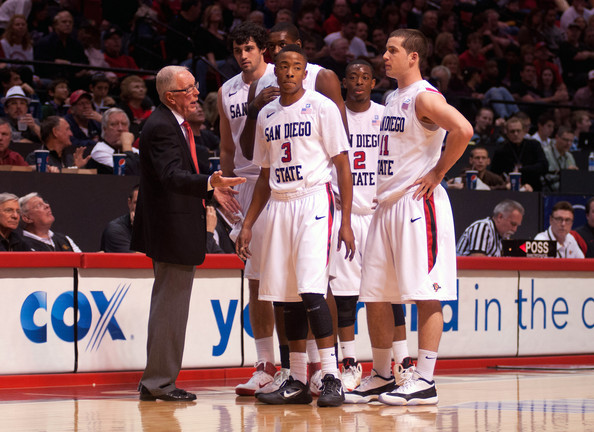
When you lose four starters, 73% of your scoring production, and one NBA lottery pick from the season before, it usually means that a year of rebuilding awaits your basketball program. But for San Diego State, a fresh slate of players who mainly watched and waited their turns last season have picked up where Kawhi Leonard, D.J. Gay, Billy White, and Malcolm Thomas left off. Tuesday night’s road victory over Wyoming improved No. 15 SDSU to 18-2 on the season and 3-0 in Mountain West conference play as one of the most surprising teams in the country. Veteran coach Steve Fisher and the new-look Aztecs have wildly exceeded expectations and are looking to match or surpass last season’s run to the Sweet Sixteen.

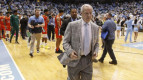
Steve Fisher is Leading This Year's Aztecs to Unexpected Success (Getty Images/K. Horner)

Junior guards Chase Tapley and James Rahon are the only current Aztecs who played significant minutes on last year’s outstanding 34-3 team that won the MWC and advanced to the second weekend of the NCAA Tournament before falling to the eventual National Champion UConn Huskies. Tapley was a starter and averaged 8.6 PPG a year ago, but this season has taken his game to a whole new level. The shooting guard leads the Mountain West in scoring (16.4 PPG) and steals (2.05 SPG) while hitting a tremendous 46.7% from behind the arc on over five attempts per game. His growth from role player to star guard, however, is not even the biggest improvement on the team. That distinction goes to sophomore Jamaal Franklin, who hardly rose off the bench last season (8.1 MPG), but who’s now developed into one of the most talented players in the conference. He didn’t start the first 10 games of this season, but Fisher has had him in the lineup in the past 10 after he flashed tremendous skills and strength at the small forward position. He’s now averaging 15.2 points, 6.8 rebounds, 1.4 assists, and 1.4 steals per game as a versatile threat for the Aztecs.

Read the rest of this entry »

Share this story

Tracking The Four: Let’s Play 21 Questions

Posted by EJacoby on January 20th, 2012

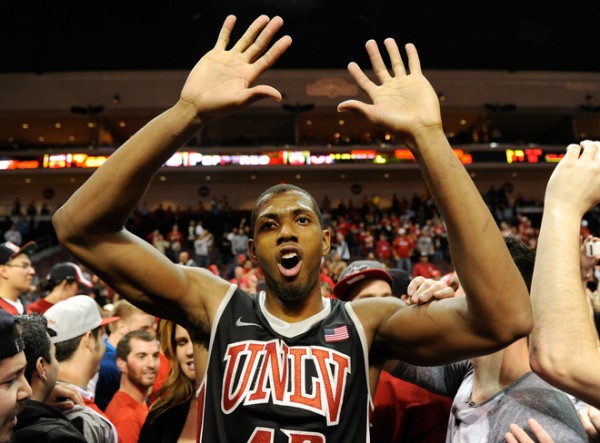
Evan Jacoby is an RTC contributor & correspondent. You can find him @evanjacoby on Twitter. TT4 will cover four selected teams of interest – Syracuse, Indiana, Murray State, and UNLV – by tracking their ups, downs, and exciting developments throughout the course of the season.

For this week’s wildcard edition of TT4, we’re going to tackle some burning questions regarding each team. All four teams have pressing issues as they try to hit their strides in conference play, and there’s one team on our list that specifically needs to find some answers, quickly, if they want to stay relevant as a contender. Find out the answers to each question, or at least our quick takes, below each question. If you want to play along, comment with any of your answers!!!

Is Mike Moser the Best Player of our Four Teams? (Getty Images/E. Miller)

1. Which game on Syracuse and Murray State’s schedules should be circled as their toughest challenge to an undefeated regular season?

Monday night’s game in Cincinnati is Syracuse’s first shot at going down, while Murray State’s game on February 15 at Southeast Missouri State will be their toughest test.

2. Can Indiana recover from this losing streak to regain their status as a top three team in the Big Ten?

They’ll be able to recover, but Indiana is not a top three Big Ten team (OSU, UM, & Michigan State are better).

3. Will UNLV be able to win big games outside of Las Vegas, like SDSU did in The Pit this week?

They’ve already played seven true road games, so yes this will help UNLV win conference road games.

4. The Hoosiers have lost three straight games while the Racers have won 19 straight, but who would win on a neutral court if they played today?

We’d love to see this in the NCAA Tournament and today we’re going with Indiana, but if Ivan Aska comes back strong for MSU, ask again in two weeks.

5. When they inevitably need a bucket in crunch time, whom will Syracuse and Jim Boeheim draw the play for?

He doesn’t specialize in taking over games, but Kris Joseph is still the most talented offensive player and toughest mismatch on the team, so he should get his number called.

6. Will UNLV’s 69.1% free throw percentage come back to haunt them at some point this season?

Although it’s the worst of these four teams, no a 69% rate should not be a huge concern for the Rebels.

Read the rest of this entry »

Share this story

Remember This In March: Weber State and Damian Lillard

Posted by rtmsf on January 17th, 2012

Kraig Williams is an RTC correspondent. He filed this report after last weekend’s Weber State vs. Montana game.

It was a scene that Damian Lillard had seen before. His Weber State squad was up big on conference rival Montana at home in the Dee Events Center at halftime, victory almost certainly in sight. The last time this played out was nearly two years ago, and the ending was one of the most memorable performances in recent college basketball history. Montana’s Anthony Johnson came out of the locker room and went bananas, scoring 34 points in the second half, including the Grizzlies’ final 21 to carry Montana to the Big Dance and send Weber home for the summer.

Lillard Is the Nation's Leading Scorer

Flash forward to present day. There would be no epic comeback. Weber State, aside from a five-minute drought in the second half that allowed Montana to cut the lead down to eight, cruised to a relatively easy 80-64 victory to take control of the Big Sky standings after playing a third of the conference schedule. While Montana threatened a comeback in the second half it was never meant to be, partly because Lillard was not willing to live that nightmare for a second time. “At halftime that was the main thing I was harping on,” Lillard said after the game in reference to the last time he saw Montana. “We had been in this position at home at halftime up on a good team. I just let the guys know we have to step on them. Last time we let that happen we ended up losing the Big Sky championship.”

Read the rest of this entry »

Share this story

Night Line: Seton Hall Playing Well for the First Time in a Long Time

Posted by EJacoby on December 22nd, 2011

Evan Jacoby is an RTC columnist and contributor. You can find him @evanjacoby on Twitter. Night Line will run on weeknights during the season, highlighting a major storyline development from that day’s slate of games.

For the past five seasons, perhaps no Big East team has underachieved as much as Seton Hall. The Pirates haven’t given fans much to be excited about since their last NCAA Tournament appearance in 2006, despite having several talented players come through the program. The Hall haven’t won 20 games since 2003-04, and have been a mainstay in the NIT ever since. This year was expected to be much of the same, as Kevin Willard inherited the challenge of leading a team that lost its two leading scorers from last year’s 13-18 campaign. But after a strong road win over Dayton on Wednesday night, the 10-1 Pirates are on their way to a potentially NCAA Tournament-bound year, thanks to two veteran Big East leaders and an improving group of young players. After many disappointments, Seton Hall is finally overachieving and bringing some hope to its loyal fans.

Herb Pope Has Been a Dominant Force This Season for Seton Hall (AP/B. Kostroun)

These are certainly not your Pirates of old. Gone are last year’s leading scorers Jeff Robinson and Jeremy Hazell, and so is the sloppy offense that ran through the volume shooting guard. Last year, Seton Hall scored just 0.98 points per possession, ranking in the bottom 100 teams nationally. They really didn’t do anything well offensively, and the game plan often focused on getting Hazell going from the perimeter. The senior chucked nearly eight threes per game, and he never quite found his groove before suffering a season-ending injury. This year, the Pirates run a more balanced offense leading to 1.08 points per possession, an improvement to #65 in the country. They move the ball well and boast a 1.26 assist-to-turnover ratio that ranks in the top 30 nationally. Seton Hall is no longer running a one-man offensive show, and it’s producing much better results.

Read the rest of this entry »

Share this story

Night Line: Ohio University and DJ Cooper Deserve Your Attention

Posted by EJacoby on December 21st, 2011

Evan Jacoby is an RTC columnist. You can find him @evanjacoby on Twitter. Night Line will run on weeknights during the season, highlighting a major storyline development from that day’s slate of games.

After another impressive road victory, it’s time to get Ohio University on the national radar. The Bobcats of the MAC improved to 10-1 with Tuesday’s night’s impressive win over Northern Iowa, another one-loss team coming into tonight’s game. Ohio entered the contest as six-point underdogs and left with a 17-point victory. They have now won road contests over Oakland, Marshall, and UNI, and they had a five-point lead at Louisville with under three minutes to play before poor execution down the stretch lead to a late loss. That near-upset remains the Bobcats’ only loss of the season. Ohio has passed all of its major non-conference tests with flying colors, and they certainly look the part of an NCAA Tournament team. Barring a stunning loss in one of their next three home games against weaker opponents, star point guard D.J. Cooper and his team will head into MAC conference play as the league favorite and with a good resume worthy of at-large bid consideration.

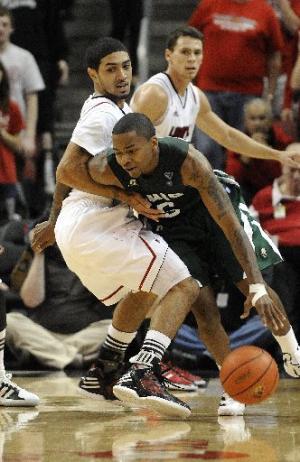
DJ Cooper and Ohio Are 10-1 and Nearly Got By Louisville (AP)

Ohio is led by the junior guard Cooper who simply does it all. The 5’11”, 165-pounder doesn’t have the physical make-up of a high major player, but he’s been as productive as any guard in the country. His playmaking skills on both ends of the floor have been remarkable. Cooper led the entire country in total steals as a freshman, not to mention finishing the season with a 13/5/6 APG average that season. As a sophomore, Cooper accumulated the second-most assists in the nation, dishing out 7.5 per game. He’s back at the task this year, contributing across the board with 14.6 points, 6.4 assists, 4.5 rebounds, and 2.5 steals per game. His one struggle is shooting the ball from deep, where he’s made just 30% of his career three-point shots despite attempting over five per game. If he were ever to cut down on his volume of deep shots, then we’d be looking at an even more dangerous player.

Read the rest of this entry »

Share this story

Night Line: Another Blemish Jeopardizes Belmont’s At-Large Chances

Posted by EJacoby on December 14th, 2011

Evan Jacoby is an RTC columnist. You can find him @evanjacoby on Twitter. Night Line will run on weeknights during the season, highlighting a major storyline development from that day’s slate of games.

Coming off a 30-win season and returning nine players who averaged at least 10 minutes per game, Belmont was expected to be the next mid-major to make its way on to the national scene this year. After a tremendous season-opening game in Cameron Indoor Stadium in which they nearly took down Duke, the Bruins left a great first impression on the nation. But fast-forward to Tuesday night when the Atlantic Sun darlings lost another close road game (at Middle Tennessee State), and this team still has yet to produce a signature non-conference win on its resume. While Belmont consistently has the look of an NCAA Tournament team, it seems that they’ll have to earn their invitation to the Big Dance the traditional way, by winning the conference tournament.

Belmont Hasn't Held on For Any Signature Wins (AP/G. Broome)

Rick Byrd’s team has now squandered three excellent chances for quality wins, and an at-large bid seems nearly out of the question, regardless of how the Bruins play the rest of the season. Belmont played Duke to a classic season-opening one-point loss, but followed up that game with a poor effort at Memphis in which they allowed 97 points to a team now falling fast. The Bruins held on to beat this same Middle Tennessee State team after two overtimes on November 20, but Tuesday’s rematch saw their opponent come out victorious, 65-62. MTSU  at 10-2 is a  solid team and likely the class of the Sun Belt Conference, so a road sweep of the Blue Raiders would have looked impressive on their resume. Instead, Belmont now can only boast of a split against MTSU and a close loss at Duke as their non-conference highlights thus far.

Read the rest of this entry »

Share this story

Understanding Why College Football Drives the Bus (and How Hoops May Influence Future Decisions)…

Posted by rtmsf on November 18th, 2011

A report yesterday from Deadspin brought to our attention that the NCAA makes a lot of money. Not that we didn’t already know that, and not that it wasn’t already publicly available (apparently Will Leitch’s progeny whiffed on that one), but to see the NCAA’s financial statements for 2008 provides an additional layer of context to the invisible hand driving the shifting landscape of college athletics.

If we’ve heard it once, we’ve heard it a million times already — college football drives the bus in conference realignment and executive decision-making, with college basketball sitting in the back with the other ne’er-do-wells. But why is that so? Nearly every metric shows that our sport is not only popular, but thriving. March Madness could be America’s most beloved sporting event. Attendance figures are still on the uptick. The recent Carrier Classic set a ratings record for a November college basketball game (on a Friday night, no less). The NCAA just over a year ago signed a $10.8 billion (that’s a “B”) contract with CBS/Turner Sports to broadcast NCAA Tournament games until 2024 — that’s $771 million annually, in case you were wondering. These are not characteristics of a sport without fans.

The sport will never be as popular as the three major professional sports or even college football, but it’s not a second-class citizen on the landscape either. It produces real dollars that in a rational environment should extensively contribute to long-term decision-making. And yet we’re told again and again that it doesn’t matter. So the question we have is… why? And the answer here is the same answer found in most every other decision we make as a species: the rational pursuit of self-interest.

Take a look at these numbers. In 2008, the NCAA brought in $550 million in television revenue for the NCAA Tournament and another $70 million for its various championships. Keep in mind that the NCAA sees nothing from major college football with its archaic but separate bowl system. By removing all the non-revenue sports and for the sake of expediency, let’s call it a round $600 million that the NCAA made from college basketball that year. That money is then filtered through the belly of the NCAA where it is parsed to pay for everything else — administration of all its championships ($119 million), assorted NCAA programs ($109 million), management ($26 million), and so on. Before long that $600M is cut nearly in half to $360 million, which is then parsed out to 31 D-I conferences using a complicated ‘share’ system based on five years worth of NCAA Tournament performances.  Here’s how that system paid out in 2008:

Read the rest of this entry »

Share this story